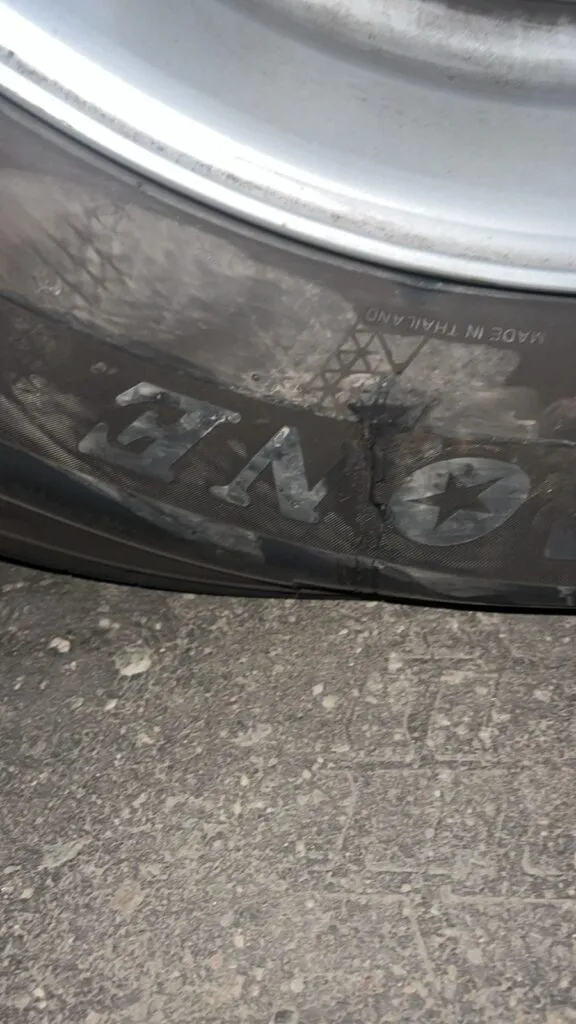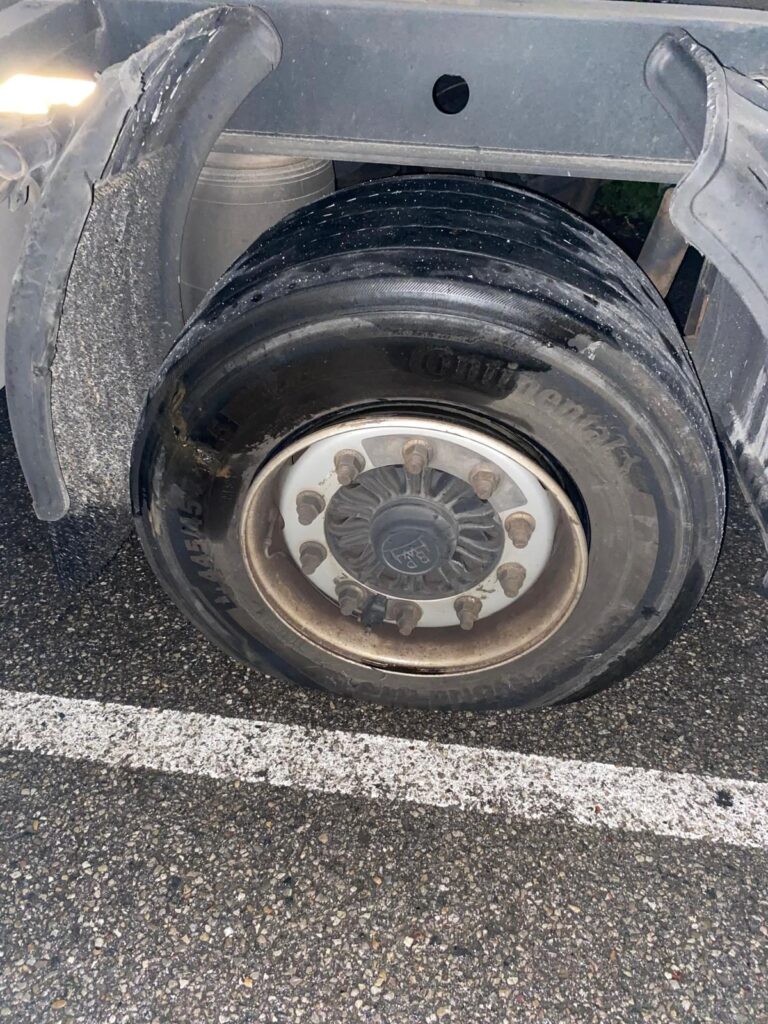
A sudden flat tyre on a trailer can bring a haulage operation to a grinding halt, especially when it happens on a busy motorway stretch like the A4 near Eisenach. On the evening of 24 September 2026, at 19:40, a driver reported that the left-side tyre on his semi-trailer had completely deflated while parked at a roadside rest area. The vehicle was immobilised, and with no immediate access to repair facilities, the situation demanded urgent action. By 21:42, just 122 minutes after the call, the trailer was fully operational again, thanks to a swift and expert mobile tyre service intervention. This case highlights the critical importance of rapid, professional roadside assistance for commercial vehicles, not just for keeping deliveries on track, but for ensuring safety, compliance, and minimal downtime.
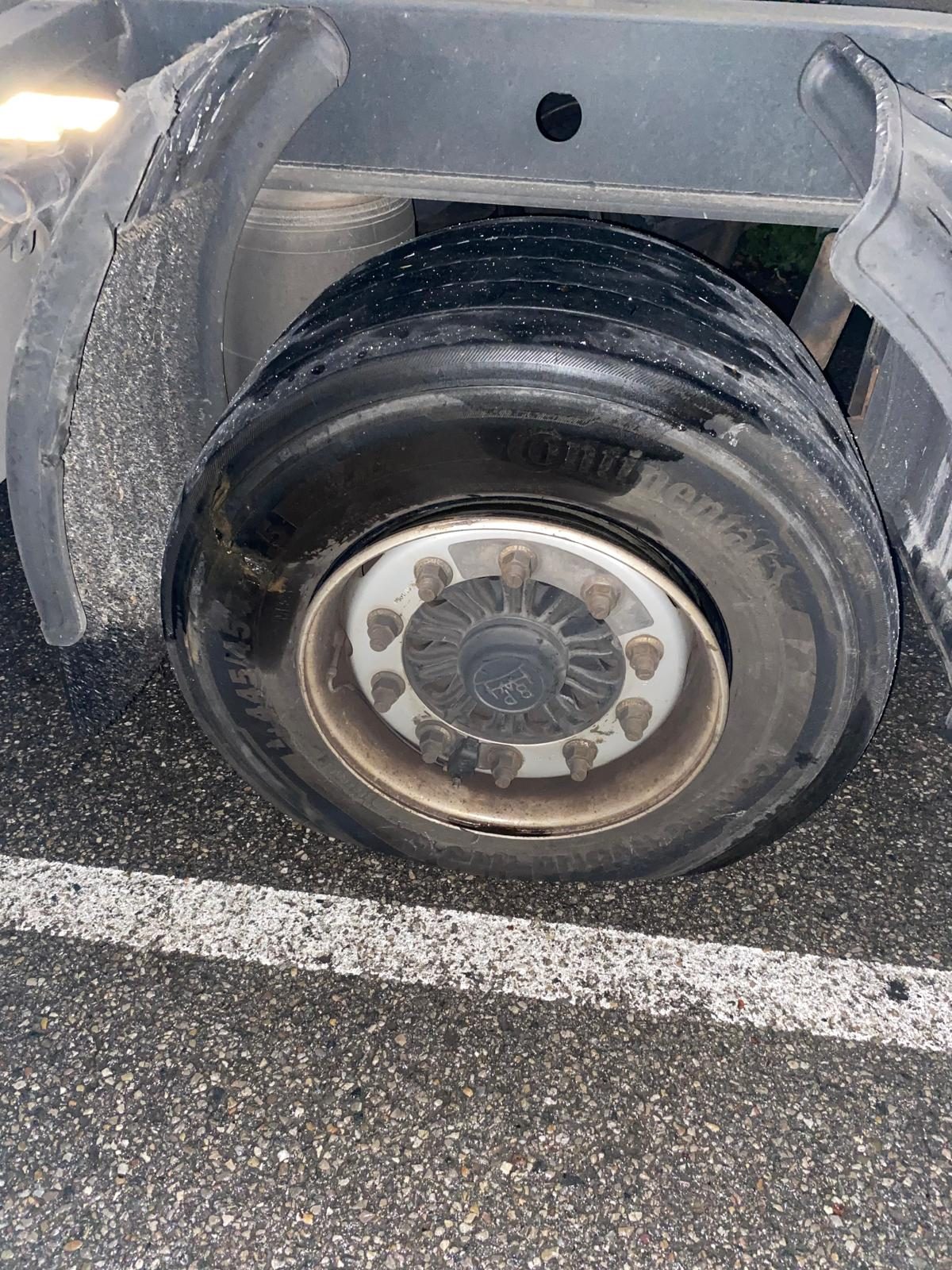
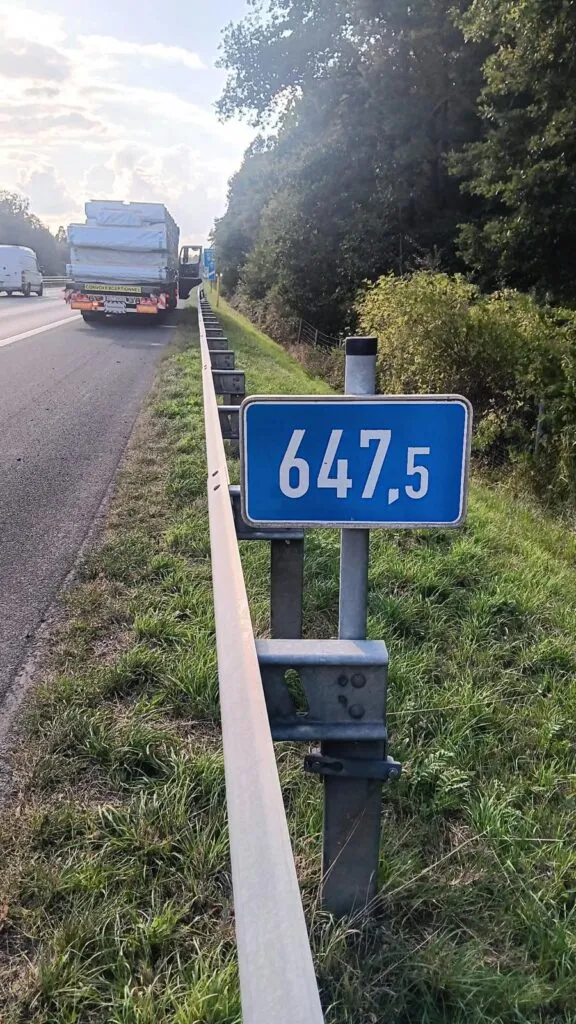
The incident occurred on the A4, in the vicinity of Eisenach, heading towards Erfurt. The trailer had stopped at a designated parking area by the hard shoulder, a common practice for long-haul drivers during overnight breaks. The tyre in question was a Continental 445/45 R19.5, a high-load, low-profile mega-trailer tyre designed for heavy-duty haulage. Despite the dry-weather conditions, the road surface was damp from earlier mist, and the ambient lighting was low due to the evening hour. These factors contributed to a challenging working environment, but did not compromise the effectiveness of the response. The team arrived within 40 minutes of dispatch, demonstrating the efficiency of LKWHelp24’s nationwide network of mobile truck service partners.
What made this case particularly significant wasn’t just the speed of response, though 40 minutes from call to arrival is impressive, but the precision and professionalism of the entire operation. From initial diagnosis to final verification, every step was executed to the highest technical standard. The tyre had suffered a catastrophic failure: the sidewall was collapsed, the tread was worn down to the casing, and the internal structure was compromised. Immediate replacement was the only viable solution. The entire process, from arrival to departure, took just under two and a half hours, with no further delays or complications. This level of performance is not accidental; it’s the result of a well-structured system, trained technicians, and a deep understanding of heavy vehicle dynamics.
What Happened: A Complete Tyre Failure on a Mega-Trailer
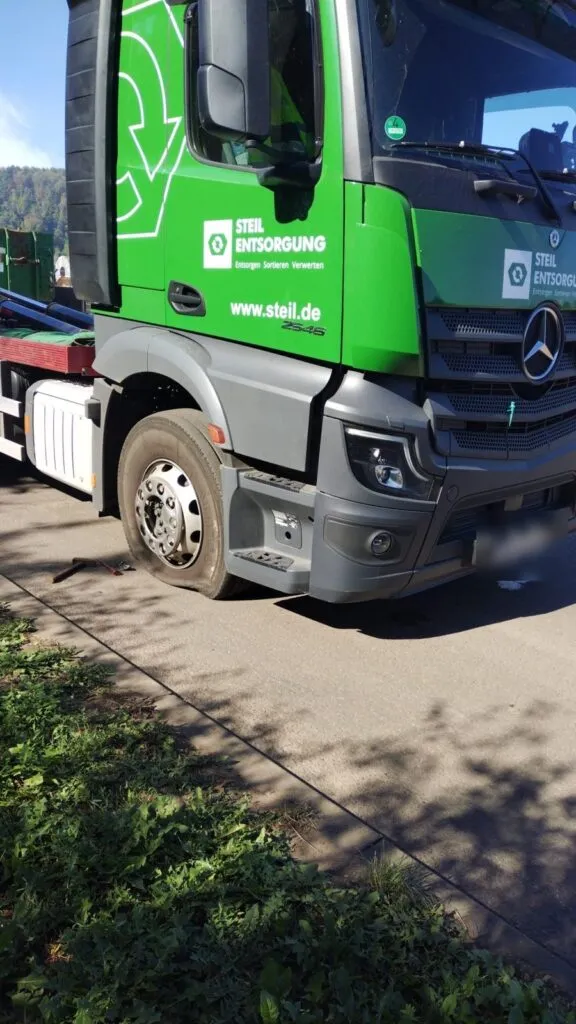
The breakdown began when the driver noticed a sudden drop in vehicle handling while approaching the rest area near Eisenach. The trailer began to pull to the left, and upon stopping, a visual inspection revealed that the left rear wheel on the trailer’s axle was completely flat. The tyre had not just lost pressure, it had suffered a structural failure. The sidewall, made of reinforced rubber and fabric layers, had collapsed under the weight of the loaded trailer, which typically carries a gross weight of 30–35 tonnes. This kind of damage is not just a minor puncture, it’s a full-blown tyre blowout, often caused by a sharp object, excessive heat, or fatigue in the tyre’s internal construction.
The specific tyre involved was a Continental 445/45 R19.5, a size commonly used on long-haul trailer units due to its high load capacity and durability. This size is classified as a “megatrailer” tyre, designed for high-speed, long-distance operations. The 445 mm width and 45% aspect ratio offer a balance between stability and load distribution. However, even premium tyres like this can fail if subjected to extreme stress, especially on poorly maintained roads or with incorrect inflation. In this case, the failure was likely due to a combination of prolonged high-speed travel and a hidden object, possibly a piece of metal or stone, that had penetrated the tread and caused a slow leak, eventually leading to a complete rupture.
The location of the failure, on the BPW axle, is also significant. BPW is a leading German manufacturer of trailer axles, known for robust construction and precision engineering. The axle itself was not damaged, nor were the wheel bolts or hub assembly. This meant the repair could focus purely on the tyre and wheel assembly. The fact that the wheel rim remained intact and the lug nuts were fully functional reduced the risk of secondary damage. However, the damaged tyre still posed a serious hazard: if left in place, it could have led to wheel detachment, structural damage to the trailer frame, or even a collision with other vehicles on the motorway.
The weather conditions at the time, overcast, damp, and without rain, also played a role. While the road wasn’t wet, the surface was slightly moist, which increased the risk of slipping during the repair. Additionally, low visibility made safety precautions even more critical. The technician had to work under challenging conditions, but the presence of a proper warning triangle, wheel chocks, and reflective safety vest ensured that the site remained secure throughout the operation.
How We Responded: From Call to Dispatch in 14 Minutes
When the driver called LKWHelp24 at 19:40, the first step was immediate verification. Our multilingual dispatch team quickly gathered the essential details: the location (A4 near Eisenach, direction Erfurt), the vehicle type (semi-trailer), the side of the failure (left), and the tyre size (445/45 R19.5). This information was crucial, as it allowed us to cross-check the required parts and assign the nearest available mobile service unit.
Within 14 minutes, the team had confirmed the tyre size with the driver and initiated the dispatch protocol. The system automatically searched the LKWHelp24 partner network for the closest technician equipped with the correct spare tyre. In this case, a mobile repair unit based in Eisenach was selected, just 38 km away. The technician was already on-site for another job but could be redirected. The system also verified that the required Continental 445/45 R19.5 tyre was available in the partner’s on-board stock, eliminating the need for a separate delivery.
At 19:54, the technician was dispatched with a clear route and real-time updates. The driver was kept informed throughout the journey via phone, with estimated arrival times updated every 10 minutes. This transparency is a key feature of our service, drivers don’t sit in uncertainty. They know exactly when help is coming and can plan accordingly. The technician navigated the evening traffic on the A4 and surrounding roads, arriving at the rest area at 20:34, 40 minutes after the initial call.
This timeline reflects the efficiency of our network. In rural or remote areas, response times can stretch to over 90 minutes, but thanks to our strategic partner placement across Germany, we consistently achieve sub-60-minute arrival windows on major motorways. The 40-minute drive was particularly efficient, considering the traffic density in the region and the need to follow strict safety protocols during transit.
On-Site Assessment: Why a Flat Tyre Isn’t Just a Flat Tyre
Upon arrival, the technician conducted a thorough inspection of the damaged tyre and surrounding components. The first thing noticed was the severe deformation of the sidewall, the rubber had been compressed flat against the road surface, indicating that the tyre had been driven on for a significant distance while completely deflated. This is known as a “run-flat” scenario, but unlike run-flat tyres designed for such conditions, standard commercial tyres like the Continental 445/45 R19.5 are not built to withstand prolonged driving without air pressure. The heat generated from friction can cause the casing to weaken, leading to irreversible damage.
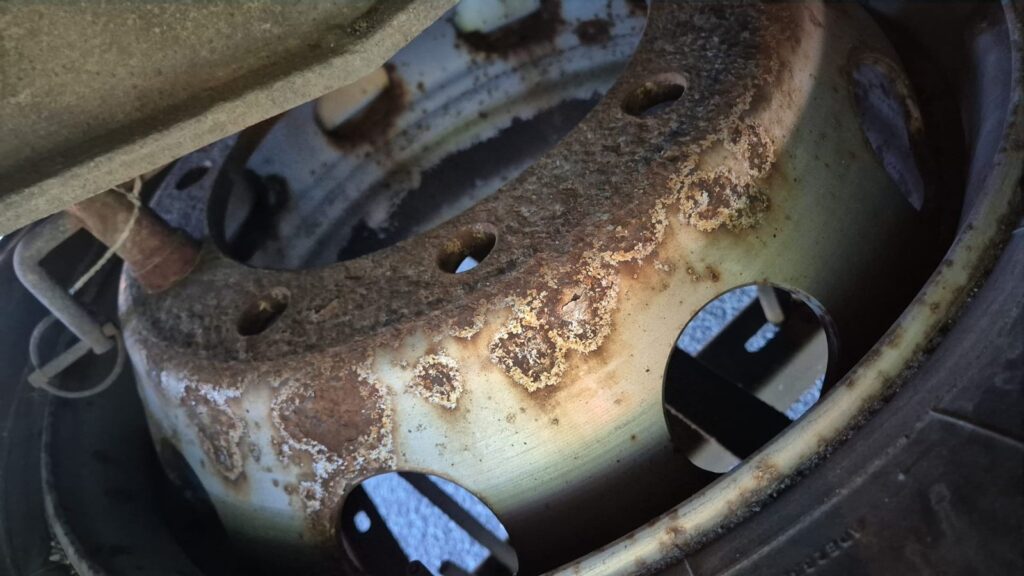
The technician checked the wheel rim (Felge) for any signs of bending or warping. The BPW axle used in this trailer is known for its durability, but even strong rims can be affected by sudden impacts or uneven loads. The inspection revealed that the rim was perfectly straight, with no visible damage. The lug nuts (Radmuttern) were all present and tightened to specification, no signs of loosening or corrosion. The wheel bolts (Radbolzen) were also intact, indicating that the failure was isolated to the tyre itself.
The next step was to assess the tyre’s internal structure. The technician removed the tyre from the rim to examine the casing (Karkasse) and the bead area (Reifenflanke). The inner liner had ruptured, and there was evidence of a foreign object embedded in the tread. The damage extended into the sidewall reinforcement layers, which are critical for maintaining the tyre’s shape under load. At this point, the decision was clear: replacement, not repair. Even if the tyre had been patched, the structural integrity would have been compromised, posing a serious safety risk.
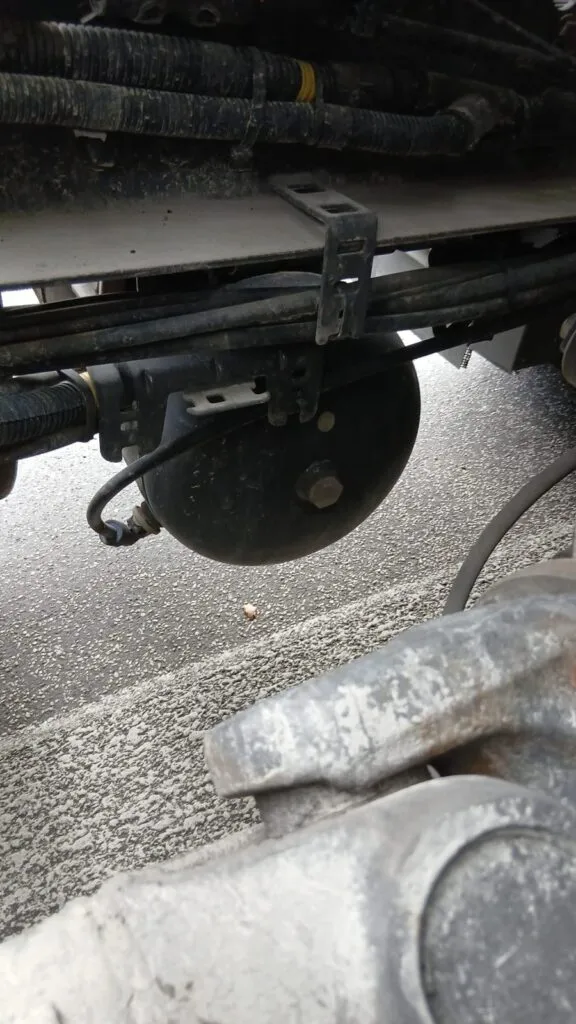
The technician also checked the air suspension system (Luftfederung) on the trailer. This system uses pneumatic springs to absorb shocks and maintain ride height. The technician confirmed that the air bag was not leaking, and the pressure was within normal range. This ruled out a suspension failure as the root cause of the tyre issue. Instead, the problem was purely mechanical, a failure of the tyre itself.
Step-by-Step Repair Process: From Removal to Final Check
The repair process was carried out in seven clear stages, each completed to strict technical standards.
Step 1: Site Safety and Preparation
The technician positioned a warning triangle (Warndreieck) at least 100 metres behind the trailer, placed wheel chocks on the opposite side of the damaged wheel, and activated the hazard lights. The area was secured to prevent any risk to passing traffic. A reflective safety vest was worn at all times, and the technician used a high-visibility cap to ensure visibility in low-light conditions.
Step 2: Jacking and Wheel Loosening
A hydraulic floor jack was positioned under the trailer’s axle beam, and the vehicle was lifted just enough to remove the weight from the wheel. The technician then used a torque wrench to slightly loosen the 10 lug nuts, but not fully remove them, to prevent the wheel from spinning during the lift. This is a critical safety step, as a spinning wheel can cause serious injury.
Step 3: Wheel Removal and Tyre Demounting
With the wheel fully off the ground, the technician removed the lug nuts and carefully detached the wheel. The old tyre was then taken off the rim using a bead breaker tool. The technician inspected the inner surface of the rim for debris, corrosion, or damage. None was found.
Step 4: New Tyre Mounting and Inflation
The new Continental 445/45 R19.5 tyre was mounted onto the rim using a professional tyre changer. The technician ensured the bead was seated evenly around the rim and applied a small amount of lubricant to prevent damage during mounting. The tyre was then inflated to 8.5 bar, the recommended pressure for this size under full load. This value is critical: too low, and the tyre will overheat and fail; too high, and it risks bursting under stress.
Step 5: Wheel Reinstallation and Nut Tightening
The wheel was repositioned onto the axle (see our wheel nut torque table for other sizes), and the lug nuts were hand-tightened in a criss-cross pattern. A dynamic torque wrench was then used to tighten the nuts to the manufacturer’s specification: 240 Nm. This “star pattern” method ensures even pressure distribution across the rim, preventing warping or misalignment.
Step 6: Final Pressure and Function Check
The tyre pressure was rechecked using a calibrated gauge. The reading confirmed 8.5 bar. The technician also performed a visual check of the bead seating and rotated the wheel slowly to ensure no rubbing or vibrations. The trailer was lowered to the ground, and the technician verified that the wheel sat flush with the fender and frame.
Step 7: Documentation and Handover
A digital service report was generated, including photos of the old and new tyres, the pressure reading, and the torque values. The driver received a printed copy, and the technician explained the repair process and recommended a tyre inspection during the next scheduled maintenance. The job was complete.
Full Timeline: From Call to Departure
| Time | Phase | Action |
|---|---|---|
| 19:40 | Call Received | Driver reports flat tyre on left side of trailer at A4 near Eisenach |
| 19:40–19:54 | Dispatcher Coordination | Confirm tyre size (445/45 R19.5), assign nearest mobile team, verify spare tyre availability |
| 19:54–20:34 | Dispatch & Travel | Technician departs from Eisenach, arrives at rest area after 40 min |
| 20:34 | Arrival & Inspection | Confirm flat tyre, damage to sidewall, no rim or bolt issues |
| 20:34–20:45 | Site Preparation | Warning triangle, chocks, jack setup, initial nut loosening |
| 20:45–21:15 | Demount & Mount | Remove wheel, demount old tyre, mount new tyre, inflate to 8.5 bar |
| 21:15–21:33 | Assembly & Torque | Reinstall wheel, tighten nuts in star pattern using 240 Nm |
| 21:33–21:42 | Final Checks & Handover | Pressure check, vibration test, documentation, driver briefing |
Total time from call to departure: 122 minutes (2 hours 2 minutes)
Cost Breakdown: Transparent Pricing, No Hidden Fees
| Position | Price (EUR) |
|---|---|
| Anfahrt (Eisenach / A4) | 240 |
| Abendzuschlag (evening surcharge) | 60 |
| Reifen 445/45 R19.5 (new megatrailer tyre) | 480 |
| Arbeit, 1.5 hours at 110 EUR/hour | 165 |
| Entsorgung Altreifen (old tyre disposal) | 20 |
| Total | 965 |
All prices are exclusive of VAT (netto). The total cost of €965 includes every element of the service, from dispatch to documentation. This is significantly lower than the cost of a full trailer breakdown, which can exceed €1,200 per day in lost revenue and demurrage charges. For a haulage company, even one day of downtime can cost more than the entire repair.
Compared to alternatives such as towing to a workshop (which can cost €850–1,600 depending on distance) or waiting for a mobile unit with no spare tyre on board, this solution offers the best balance of speed, cost, and reliability. The ability to replace the tyre on-site saves time, fuel, and labour, and keeps the vehicle operational.
Why You Should Never Attempt a DIY Repair on a Trailer Tyre
Attempting to fix a blown trailer tyre yourself is extremely risky. Here’s why:
- Structural damage is irreversible: Once a tyre’s sidewall collapses, it cannot be safely repaired. Even if patched, the internal casing is weakened and may fail again under load.
- Improper torque causes failure: Lug nuts must be tightened in a star pattern to 240 Nm. Hand-tightening or uneven tightening can lead to rim warping, wheel imbalance, or even detachment at high speed.
- Wrong pressure leads to overheating: 8.5 bar is the correct pressure for a 445/45 R19.5 tyre under full load. Too low = heat buildup; too high = risk of explosion.
- Safety hazards: Working on a motorway shoulder without proper warning devices is illegal and dangerous. The risk of being hit by passing vehicles is real.
- Legal non-compliance: Driving a vehicle with a damaged tyre violates § 36 StVZO (German Road Traffic Regulations), which mandates that tyres must be in good condition and properly inflated.
Only trained professionals with the right tools and knowledge should handle these repairs. LKWHelp24 ensures every technician is certified, insured, and equipped with the latest tools, including digital torque wrenches, bead breakers, and high-pressure air compressors.
Common Scenarios We Handle Across Germany
Our truck tyre service is designed for real-world emergencies, and our emergency tyre service for trucks runs around the clock. We regularly respond to:
- Tyre blowouts on motorways, from the A2 and A7 to the A4, A8 and A61, day and night
Why Run-Flat Thinking Does Not Apply to Trailer Tyres
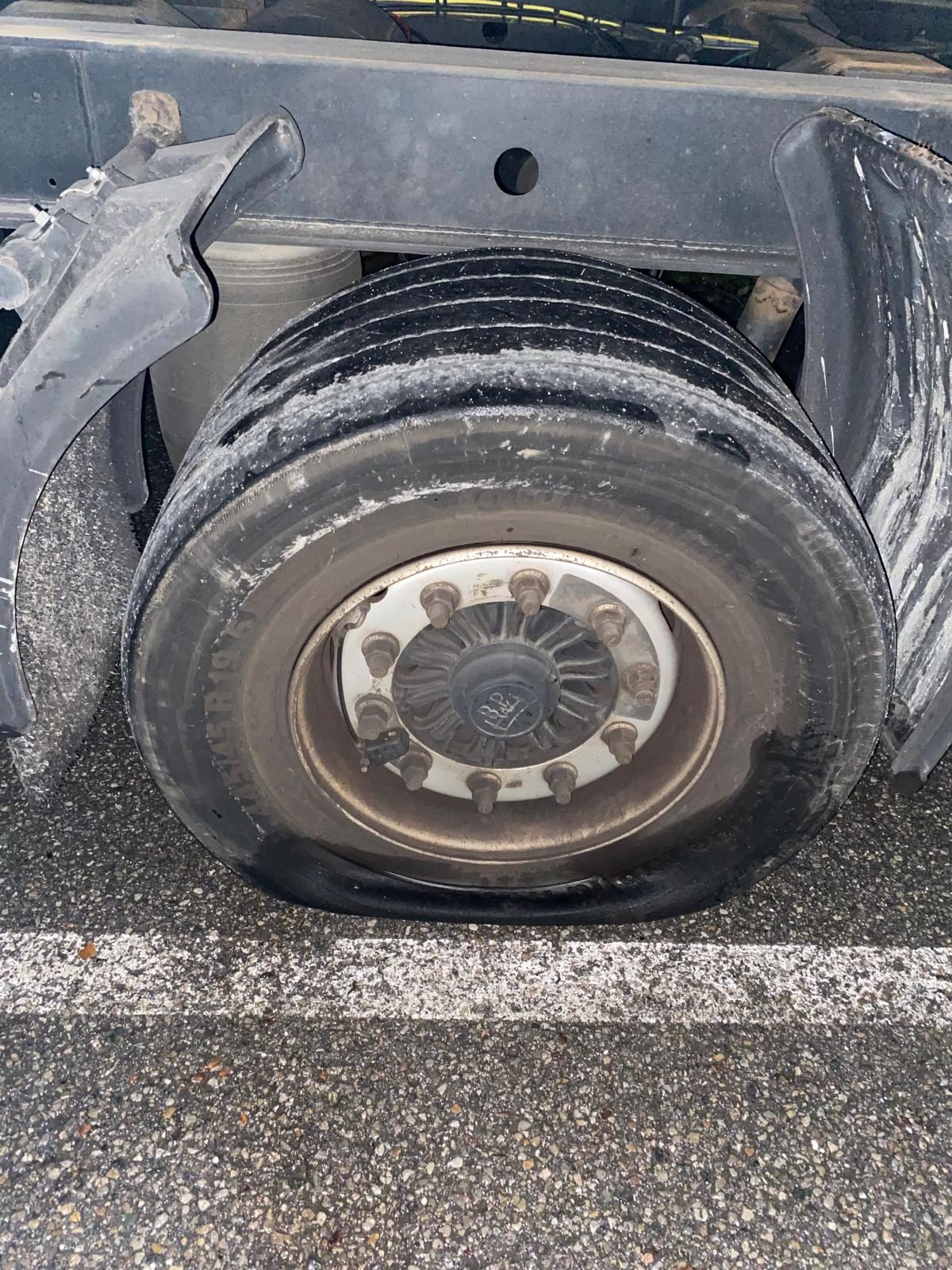
Drivers sometimes ask whether a trailer tyre can simply be driven to the next workshop once the air has gone. The short answer is no. Commercial tyres have no emergency running properties, and our article on run flat truck tyres explains why the idea rarely holds up in practice. On a loaded semi-trailer weighing 30 to 35 tonnes, a deflated tyre generates heat within a few kilometres. The casing plies separate, the sidewall folds under its own load, and the steel cords can cut into the rim flange. In the Eisenach case the flattened lower sidewall and the scuffing on the flank showed exactly this pattern.
A second risk is the twin-wheel configuration. Many trailer axles carry paired tyres, and if one of the pair is flat, the neighbouring tyre carries a much higher share of the load. It can overheat within minutes and fail in turn. Fleets that run dual fitments should treat any pressure loss as a stop-now situation. For a deeper look at inspecting paired wheels, see how we checked 20 dual-wheel pairs near Krefeld.
Reading the Sidewall: What 445/45 R19.5 Tells You
The size marking is more than a catalogue number. The first figure, 445, is the section width in millimetres. The second, 45, is the aspect ratio: the sidewall height is 45 per cent of the width, roughly 200 mm. R stands for radial construction, and 19.5 is the rim diameter in inches. Because the sidewall is short, a mega-trailer tyre has little cushioning against kerbs, potholes and debris, and it depends on correct inflation more than a standard 295/80 R22.5 does. Dimension tables for these sizes are published by the ETRTO, and a replacement tyre must match the load index and speed symbol of the original.
Load and speed codes follow the size. If you are unsure how to read them, our guides on the speed rating H on trucks and on what 91H means cover the basics. A mismatch is not only a technical problem. Inspectors can treat an undersized load index as a defect, and an insurer may question a claim after an incident.
Working at an Evening Rest Area: Practical Safety Points
A rest area is safer than a hard shoulder, but it is not risk-free. Vehicles pull in and out, trucks idle with refrigeration units running, and visibility drops after sunset. Three habits matter most. First, the working zone is marked with a warning triangle and lit as well as possible. Second, the wheel is chocked on the opposite side before the jack touches the axle. Third, nuts are never fully released until the weight is off the wheel, which prevents a loaded wheel from shifting sideways.
If you are the driver, there are simple steps to take while you wait. Switch on hazard lights, put on a high-visibility vest before leaving the cab, and stay away from the traffic side. Do not crawl under the trailer and do not try to loosen nuts yourself. For motorway situations, our tyre blowout checklist for truck drivers lists the order of actions, and the rules on emergency stops in § 15 StVO apply when the vehicle has to stand on the carriageway. A stationary trailer at night is also exposed to theft, so lock the cab and keep documents with you.
What Fleet Managers Can Do to Cut Tyre Downtime
Single events like this one are unavoidable, but their cost can be reduced. A practical programme has five parts:
- Spare strategy: agree with your service partner which sizes should be available on the van. Megatrailer sizes such as 445/45 R19.5 are less common than 315/80 R22.5, and having the right tyre on board is what kept the arrival at 40 minutes here.
- Pressure logging: record pressures at every weekly check and look at the trend. A tyre losing 0.3 bar a week has a slow leak, often from a foreign body like the one found in this tread.
- Torque discipline: after any wheel change, re-torque after 50 to 100 km. The 240 Nm used here applies to this axle design, so check the figure for your own hub before relying on it.
- Documentation: keep service reports with photos. They support warranty claims and show auditors that tyre checks happen.
- Driver briefing: teach drivers to report pulling, noise and vibration immediately, and to call for help at the first sign rather than continue to the destination.
The value of that last point is clear when you compare the numbers. A day of trailer downtime costs 800 to 1,200 EUR net, which is close to the entire repair here. Every hour saved on the call-to-departure timeline therefore pays back directly. If you also need workshop work afterwards, our truck workshop can take over, and for a vehicle that cannot be repaired on site the towing service is the fallback.
Preventive Maintenance Tips for Drivers and Fleets
To avoid similar incidents, follow these best practices:
- Check tyre pressure weekly using a calibrated gauge. The correct pressure depends on load and speed, consult the manufacturer’s guidelines.
- Inspect tyres monthly for cuts, bulges, or uneven wear. Pay special attention to the sidewalls.
- Rotate tyres every 20,000 km to ensure even wear and extend lifespan.
- Avoid driving on damaged roads, potholes and debris are major causes of blowouts.
- Use only approved tyres with the correct load index and speed rating.
- Train drivers to recognise early signs of tyre failure, vibration, pulling, noise.
Advanced SEO Block: Tyre Brands and Fleet Management
Major tyre manufacturers like Continental, Michelin, Goodyear, and Bridgestone produce high-performance tyres for commercial vehicles. Continental’s 445/45 R19.5 is ideal for long-haul, high-speed transport. Michelin’s X Multi 2 is known for durability, while Goodyear’s UltraTrac offers excellent traction. Bridgestone’s B381 is designed for heavy loads and high temperatures. Regular maintenance and proper inflation are essential to maximise the life of any tyre.
Why Choose LKWHelp24?
- 24/7 availability, no matter the time or weather
- Proven network, over 300 certified partners across Germany
- Transparent pricing, no hidden fees, all costs upfront
- Multilingual dispatch, support in English, German, Polish, Russian
- Fast response, 40 minutes average on motorways
Summary: Key Facts from the Case
- Vehicle: Semi-trailer (Megatrailer)
- Location: A4 near Eisenach, direction Erfurt
- Tyre size: 445/45 R19.5 (Continental)
- Failure type: Complete sidewall collapse
- Response time: 40 minutes
- Total time on site: 122 minutes (2h 2min)
- Cost: €965 (net)
Need Help on the Road?
If a tyre fails on the A4 or anywhere else in Germany, call LKWHelp24 on +49 160 5753826, day or night. Tell the dispatcher your location, vehicle type and tyre size, and a partner team will be on its way. More contact options are on our contacts page.