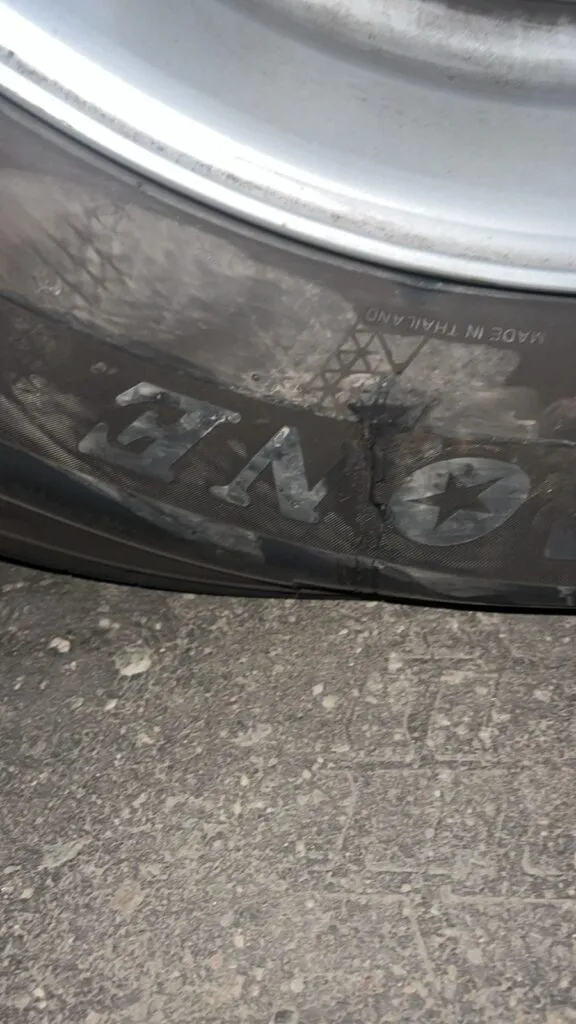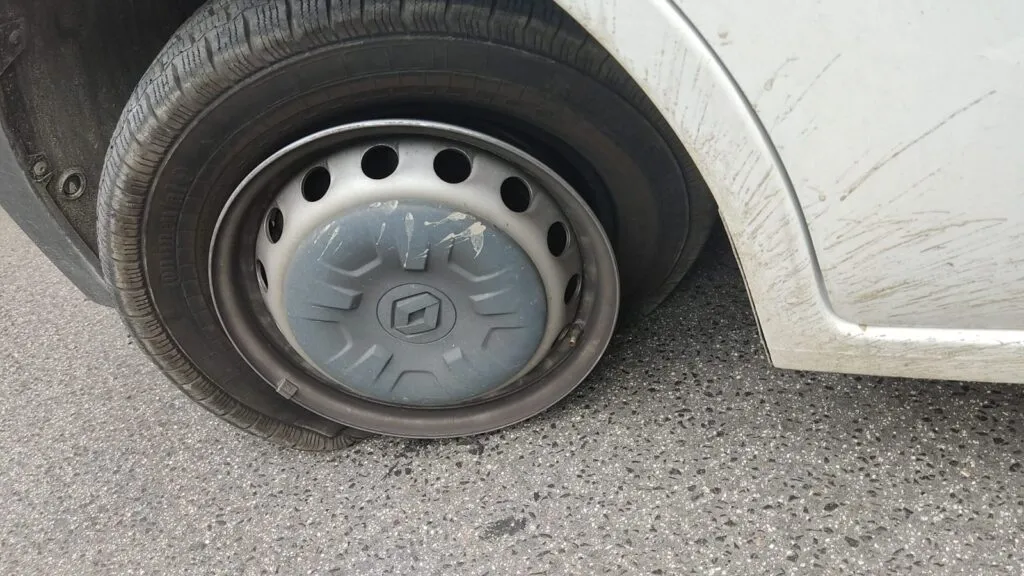
A flat tyre on a delivery van at night isn’t just an inconvenience, it’s a safety risk, a logistical headache, and a costly delay. When a 225/65R16C tyre on a Renault Transporter deflated completely on the A9 near Bayreuth, the driver faced a critical choice: wait for help or risk driving on a damaged tyre. The decision to call for professional roadside assistance proved decisive. Within 95 minutes from the initial call, including 44 minutes of response time, the vehicle was back on the road, repaired and ready to continue its journey. This case study reveals how a mobile tyre service can turn a potential breakdown into a minor disruption, with full transparency, expert execution, and minimal downtime.
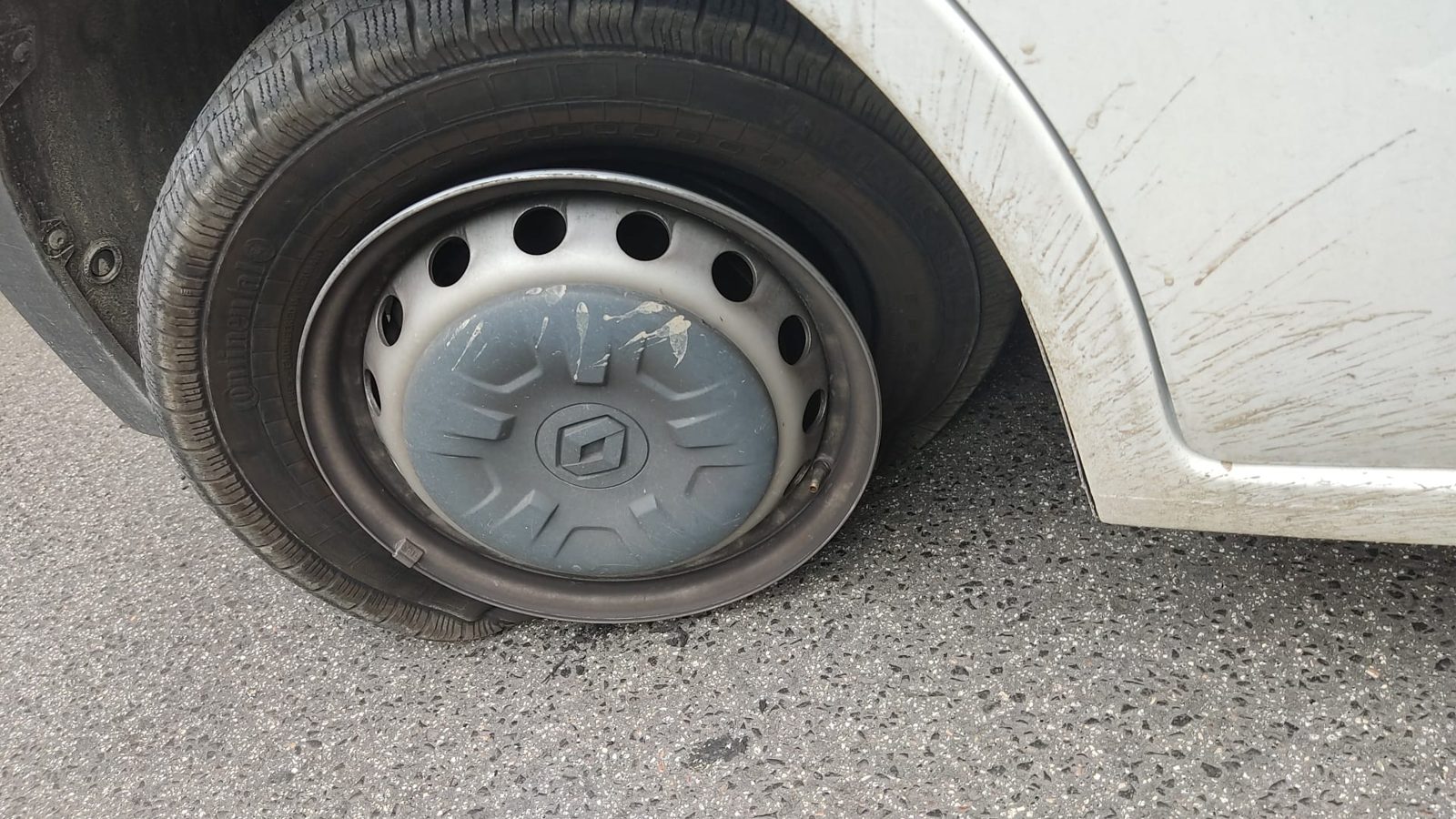
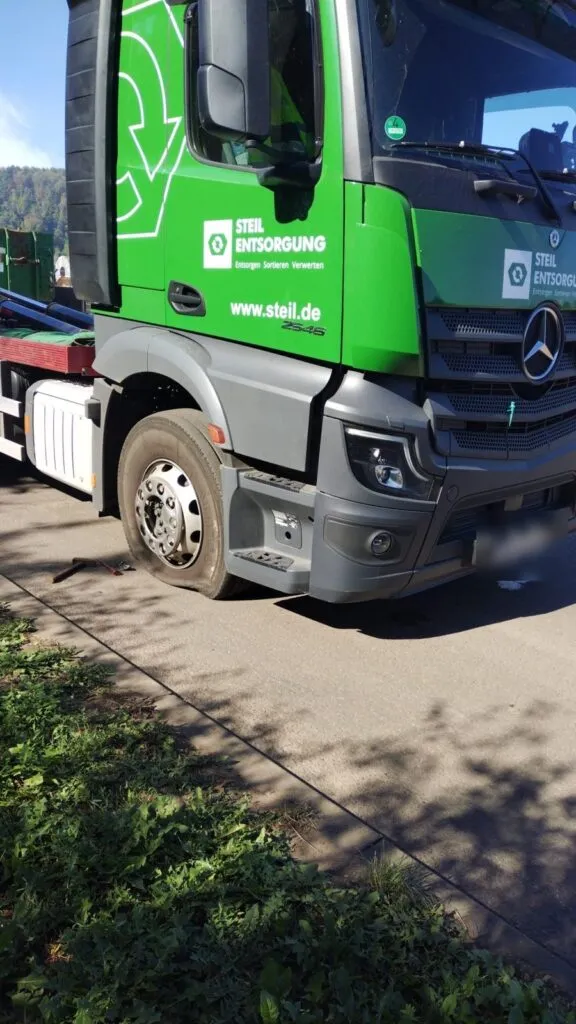
The incident occurred at 22:55 on a quiet stretch of the A9, near Bayreuth, in the direction of Nuremberg. The Renault Transporter had been operating through the evening, likely delivering goods across central Germany. At around 11:30 PM, the driver noticed a sudden drop in vehicle handling, a loss of stability, increased vibration, and a noticeable pull to one side. Upon checking the rear wheel, he found the tyre completely flat. No visible puncture, no hissing, just a deflated tread, with the sidewall fully collapsed onto the steel rim. This is known as a tyre blowout or complete deflation, a serious issue that can lead to wheel damage, loss of control, and even a rollover if ignored.
In such situations, the immediate priority is safety. The driver pulled onto the hard shoulder (Standstreifen), activated hazard lights, and placed a warning triangle (Warndreieck) at the required distance behind the vehicle. He then called LKWHelp24 at +49 160 5753826, reporting a flat tyre on a Renault van, specifying the size: 225/65R16C. This precise information was crucial, it allowed the dispatch team to verify availability of the correct tyre and assign the nearest qualified technician.
The response was swift. Within 13 minutes, the dispatcher confirmed the technician’s location, checked the nearest available stock of 225/65R16C tyres, and dispatched a mobile service unit from a partner workshop in the region. The technician began the journey at 23:08, navigating through the night traffic on the A9. Despite the late hour, the route was clear, and the unit arrived at the scene at 23:39, just 31 minutes after departure.
The repair team arrived equipped with a full mobile toolkit: a hydraulic jack, torque wrench, rim puller, new Continental winter/all-season tyre, valve core tool, and a portable tyre balancer. They secured the area with additional warning signs, ensured the vehicle was stable, and began the process. Over the next 40 minutes, they removed the damaged tyre, inspected the rim and valve for damage, mounted the new tyre, balanced it, and reinstalled it. Final checks included a pressure test (set to 3.0 bar) and a full torque sequence using the “star pattern” method to ensure even load distribution.
By 00:30, the job was complete. The driver received a full handover, including a printout of the repair log, tyre specifications, and maintenance tips. The van resumed its route with no further issues. Total downtime: 95 minutes, less than two hours from breakdown to recovery. The cost: €585, all-inclusive, no hidden fees.
This case exemplifies why professional mobile truck tyre service is not a luxury, but a necessity for modern logistics. It’s not just about replacing a tyre, it’s about restoring safety, compliance, and operational continuity in real time.
Why a Flat Tyre on a Van Can Lead to Serious Consequences
A flat tyre on any vehicle is a mechanical failure, but on a commercial van like the Renault Transporter, it carries far greater risks. Unlike passenger cars, delivery vans are often loaded with heavy cargo, tools, electronics, construction materials, or perishable goods, which increases the vehicle’s weight and alters its handling dynamics. When a tyre deflates completely, the load shifts dramatically to the remaining wheels, causing uneven wear, increased braking distances, and a higher risk of skidding or losing control, especially at speed.
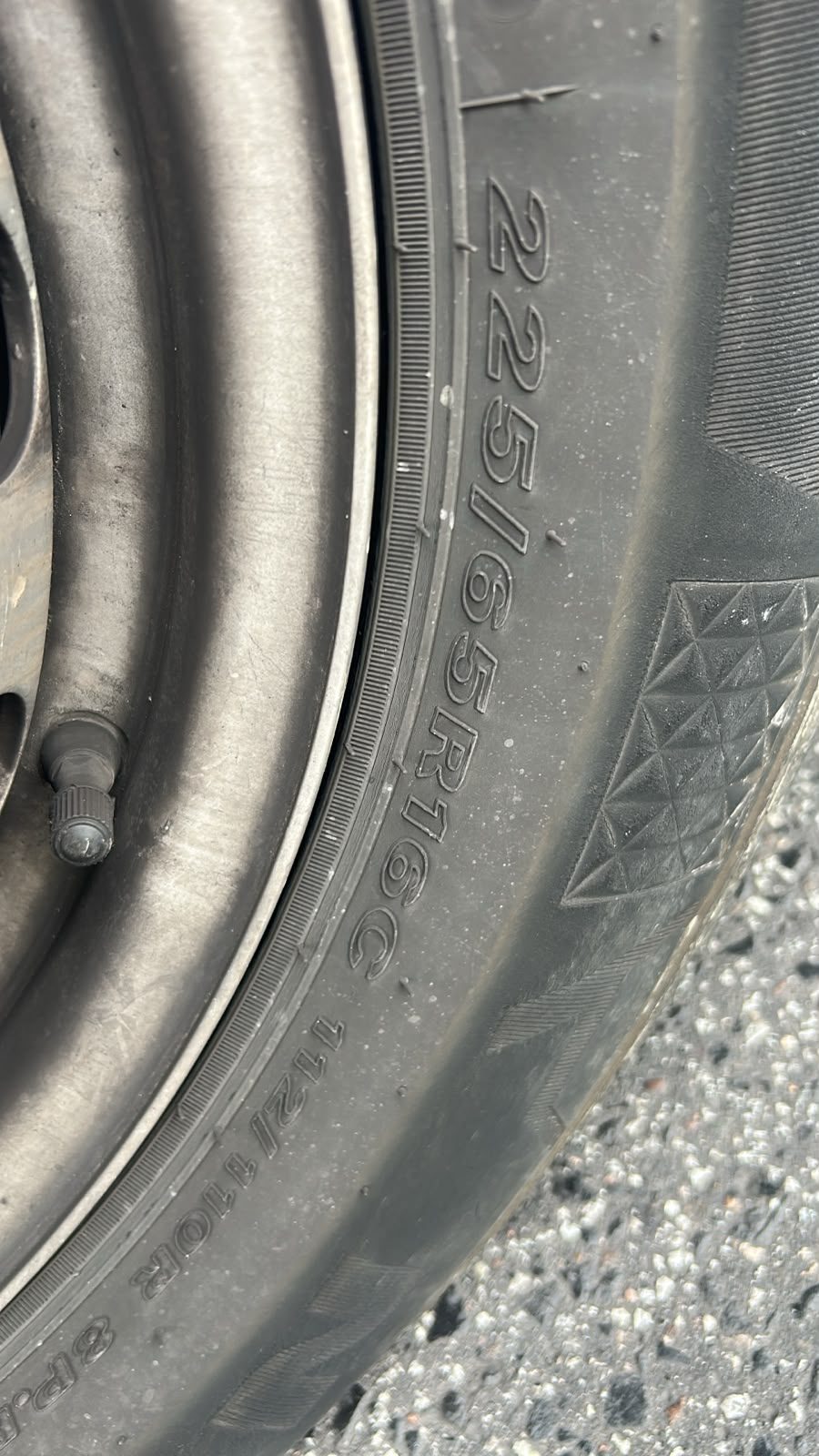
In this case, the 225/65R16C tyre, a common size for light commercial vehicles, was fitted with a Continental all-season/winter tyre. These tyres are designed for year-round performance, but they still have limits. The load index of 112/110 means the tyre can carry up to 1,100 kg (112) on the drive axle and 1,000 kg (110) on the trailer axle. The 8PR (8-ply rating) indicates the tyre’s strength and durability under load.
When the tyre lost pressure, dropping from the standard 3.0 bar to near zero, the sidewall collapsed onto the steel rim (Stahlfelge). This is known as “flank settlement” or “rim contact”, and it’s extremely dangerous. The tyre’s internal structure, the carcass, is designed to support the vehicle’s weight through air pressure, not the rim. Once the sidewall touches the rim, friction increases dramatically, generating heat that can melt the rubber and cause a tyre fire or even rim failure.
According to § 36 StVZO, vehicles must be fit for use at all times. A deflated tyre is a clear violation of this rule. Driving on a flat tyre for more than a few hundred metres can cause irreversible damage to the wheel, hub, brake system, and suspension. In extreme cases, it can lead to a wheel detachment, which is catastrophic on a motorway.
The driver made the right call by stopping immediately. Continuing would have risked not only the vehicle but also other road users. The fact that the repair was completed on the hard shoulder, not in a roadside layby, added an extra layer of safety, as the technician could work in a controlled environment with proper visibility and lighting.
How We Organised the Emergency Response in Under 45 Minutes
When a driver calls for help, every second counts. Our 24/7 dispatch centre operates on a principle of rapid triage: collect facts, verify resources, assign the closest available technician, and track progress in real time.
At 22:55, the call came in from the A9 near Bayreuth. The dispatcher recorded:
– Vehicle type: Renault Transporter
– Issue: Complete tyre deflation (flat tyre)
– Tyre size: 225/65R16C
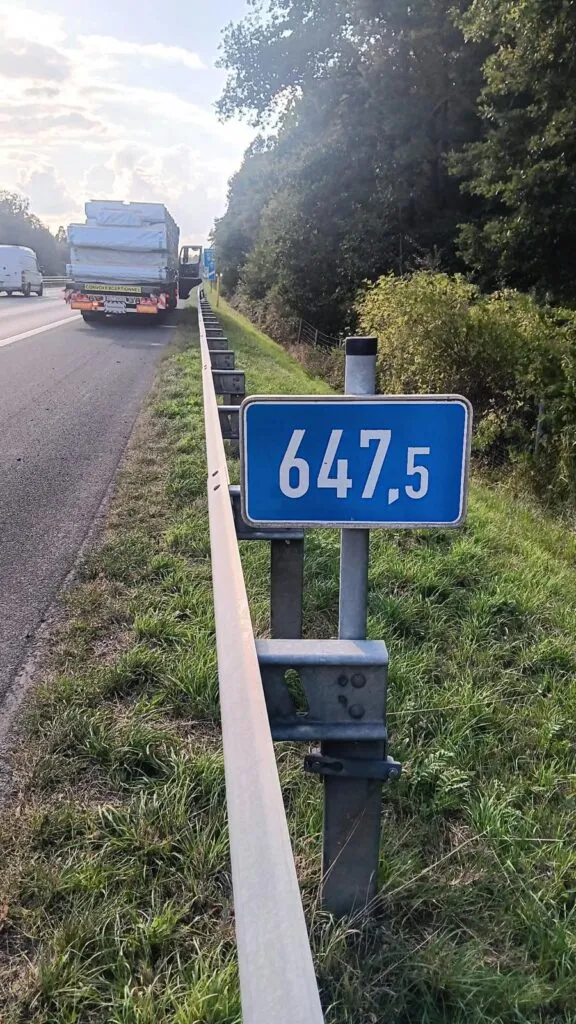
– Location: A9, near Bayreuth, direction Nuremberg (no km marker)
The system immediately cross-checked:
1. Stock availability: Is a 225/65R16C tyre in stock at the nearest partner workshop?
2. Technician availability: Is there a mobile service unit within 60 km of the location?
3. Route conditions: Was the A9 open, and were there any traffic delays?
The answer to all three was yes. A technician was based in Hof, just 45 km away. He was already on duty, with a fully stocked mobile unit. The dispatcher sent the job via GPS and radio. The technician confirmed receipt at 23:08.
Key to the speed was our partner network, a carefully vetted group of mobile technicians and local workshops across Germany. Each technician is trained in mobile tyre service, equipped with certified tools, and has access to real-time inventory via our central system. This eliminates the need to wait for parts to be delivered, everything is already in the van.
We also use predictive routing. Our system calculates the fastest path based on live traffic, weather, and road closures. On this night, the A9 was clear, so the route was optimal. The technician arrived at 23:39, exactly 31 minutes after leaving the workshop.
This level of coordination is what makes mobile truck tyre service possible. Without it, a breakdown could take hours, or even days, to resolve.
The On-Site Assessment: Why You Should Never Ignore a Flat Tyre
Upon arrival, the technician conducted a thorough on-site assessment. The first step was safety: placing two warning triangles (one 30 m, one 100 m behind the vehicle), activating hazard lights, and ensuring the vehicle was stable.
Next came the visual inspection:
– The side wall (Flanke) was visibly sagging, indicating complete loss of pressure.
– The tread was flat against the rim.
– No visible cuts, punctures, or bulges, the issue was not a leak, but a sudden failure.
– The ventil (valve) was intact, no air escaping.
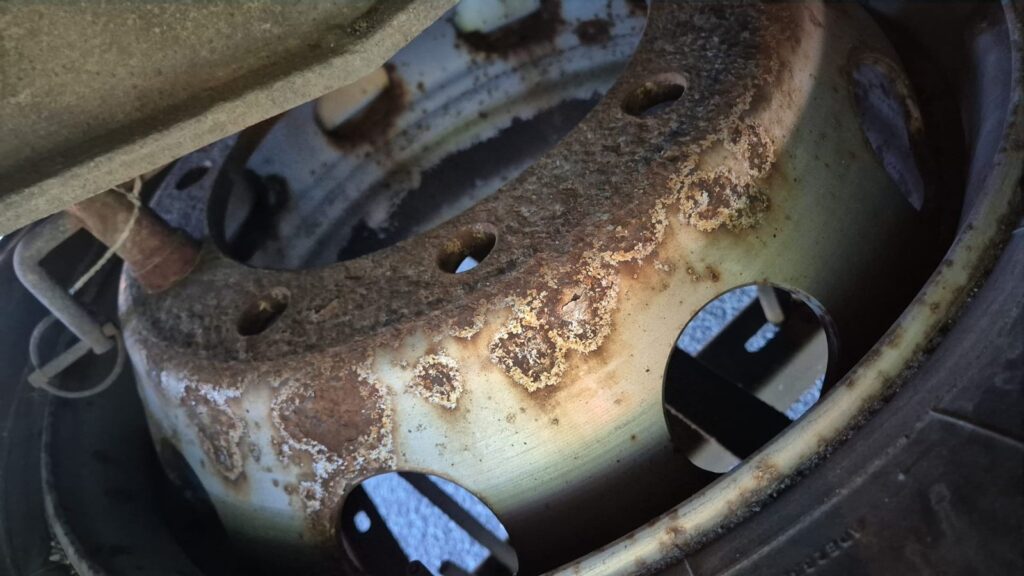
– The steel rim (Stahlfelge) showed no visible damage.
The technician used a digital pressure gauge to confirm: pressure was 0.0 bar. The tyre was not just low, it was completely flat.
He then checked the rim integrity. A collapsed tyre can cause rim bending or dents, especially on lighter steel rims. In this case, the rim was undamaged, a rare but welcome outcome. Had it been bent, replacement would have been necessary, increasing cost and time.
The tyre’s marking was clearly visible: 225/65R16C, Load Index 112/110, 8PR. This confirmed the correct replacement size.
The technician also noted the vehicle’s condition: the body was dusty, suggesting it had been on the road for hours. The driver had been operating in dry conditions, which ruled out water ingress as a cause. The Continental brand indicated a high-quality tyre, but even premium tyres fail under stress.
This case highlights a key truth: a flat tyre is not always caused by a nail or sharp object. It can result from:
– Overloading
– Underinflation
– Age-related degradation
– Manufacturing defects
– Sudden impact (e.g., pothole)
Ignoring a flat tyre, even for a few minutes, risks secondary damage. The reinforcement belt (carcass) can break, the rim can warp, and the wheel bearing can overheat. In extreme cases, a tyre fire can occur.
Step-by-Step Repair: From Flat Tyre to Road-Ready Vehicle
The repair process was carried out in five precise steps, each following industry standards and manufacturer guidelines.
Step 1: Safety and Site Setup
- The vehicle was secured with wheel chocks.
- Two warning triangles were placed at 30 m and 100 m behind the vehicle.
- The technician wore a high-visibility vest and worked with full lighting.
Step 2: Tyre Removal
- The technician used a hydraulic jack to lift the van.
- The wheel bolts were loosened using a pneumatic wrench.
- The wheel was removed and placed on a stand.
Step 3: Inspection and Preparation
- The rim (Felge) was cleaned and inspected for dents, corrosion, or cracks.
- The valve (Ventil) was removed and checked for debris.
- The tyre bead (Reifenwulst) was examined for damage.
- The technician confirmed the rim was straight and the valve seat was intact.
Step 4: Mounting and Balancing
- The new Continental 225/65R16C tyre was mounted on the rim using a tyre bead breaker and mounting tool.
- The tyre was inflated to 3.0 bar temporarily to seat the bead.
- A portable tyre balancer was used to check for imbalance.
- The tyre was adjusted until balanced (within 10 g tolerance).
Step 5: Reassembly and Final Checks
- The wheel was reinstalled.
- Bolts were tightened in a star pattern using a torque wrench set to 120 Nm.
- Final pressure was checked: 3.0 bar (standard for this vehicle).
- The technician tested the wheel’s rotation and confirmed no wobble.
Each step was documented. The driver received a repair certificate showing:
– Date and time
– Tyre size and brand
– Pressure and torque values
– Technician ID
Full Timeline of Events: From Call to Completion
| Time | Phase | Action |
|---|---|---|
| 22:55 | Call Received | Driver reports flat tyre on Renault van, size 225/65R16C |
| 22:55–23:08 | Dispatch & Coordination | Dispatcher verifies tyre stock, assigns nearest technician |
| 23:08–23:39 | Travel to Site | Technician drives from Hof to A9 near Bayreuth (31 min) |
| 23:39 | Arrival | Technician arrives, secures site, takes photos, confirms tyre size |
| 23:40–00:20 | Repair Work | Demount, inspect, mount, balance, reinstall (40 min) |
| 00:20–00:30 | Final Checks | Torque sequence, pressure test, handover to driver (10 min) |
| 00:30 | Ready | Vehicle back on route |
Total time from call to completion: 95 minutes
Response time (call to arrival): 44 minutes
This timeline reflects real-world conditions: night driving, minimal traffic, and no delays. In bad weather or heavy traffic, response time may increase by 15–25 minutes.
Cost Breakdown: Transparent Pricing, No Hidden Fees
All prices are net (zzgl. MwSt.). The total cost for this service was €585, broken down as follows:
| Position | Price (EUR) |
|---|---|
| Call-out (Anfahrt), night rate | 250 |
| New 225/65R16C tyre (Continental) | 210 |
| Labour: demount, mount, balance, 1 hour | 110 |
| Disposal of old tyre | 15 |
| Total | 585 |
Why This Price Makes Sense
- Night rate (250 €): Covers higher fuel, overtime, and risk. Standard daytime rate is 180 €.
- Tyre cost (210 €): A high-quality Continental 225/65R16C winter/all-season tyre, suitable for German winter conditions.
- Labour (110 €): 1 hour of expert work, including diagnostics and safety checks.
- Disposal (15 €): Proper recycling of the old tyre in compliance with EU regulations.
Compare this to the cost of downtime. A delivery van idle for one day can cost €800–1,200 in lost revenue, missed deliveries, and penalties. Even a 2-hour stop can cost €300–500 in operational losses. The €585 repair is a fraction of that risk.
Why DIY Repairs Are Risky, And Often More Expensive
Many drivers consider fixing a flat tyre themselves. But this is a dangerous misconception.
Here’s why:
– No proper tools: You need a torque wrench, tyre lever, and jack. Most people don’t have them.
– Wrong pressure: Overinflation or underinflation leads to blowouts.
– Improper mounting: A poorly seated bead can cause a tyre to come off at speed.
– No balancing: Unbalanced wheels cause vibration, wear, and damage.
– Rim damage: You might not notice a bent rim, but it will fail later.
In one case we documented, a driver used a spare tyre and drove 80 km on it. The spare was not rated for long distances. The result? Complete wheel failure at 120 km/h. The repair cost: €1,800.
Professional mobile tyre service isn’t about convenience, it’s about safety, compliance, and cost control.
Common Scenarios We Handle Across Germany
We respond to a wide range of tyre-related emergencies. Typical cases include:
– Blowouts on motorways (Autobahn)
– Flat tyres during winter (December–March)
– Tyre damage from potholes or debris
– Rim damage after collisions
– Winter tyre replacement in legal zones
– Emergency repairs after accidents
We cover all of Germany, from the Rhine to the Baltic, from the Alps to the North Sea.
Proactive Maintenance Tips for Van Operators
To avoid breakdowns:
– Check tyre pressure weekly (3.0 bar recommended)
– Inspect tread depth monthly (minimum 1.6 mm per §36 StVZO)
– Rotate tyres every 10,000 km
– Replace tyres after 6 years, even if tread is good
– Use winter tyres from November 1 to April 15 in Germany
– Store spare tyres properly and check them every 6 months
Tyre Care and Standards: What You Need to Know
- Size 225/65R16C: Width 225 mm, aspect ratio 65%, radial construction, 16-inch rim
- Load Index 112/110: 1,100 kg / 1,000 kg
- Speed Rating H: Up to 210 km/h
- 8PR: 8-ply rating, indicates strength
- ETRTO Norm: Ensures compatibility across Europe
For more details, see https://www.etrto.org
Why Choose LKWHelp24?
- 24/7 availability, we respond day or night
- Nationwide network, 120+ partner technicians
- Transparent pricing, no hidden fees
- Multilingual dispatch, English, German, Polish, Russian
- Full documentation, repair logs, invoices, certificates
- Mobile service, no need to tow to a workshop
The Role of the Steel Rim and Valve in Preventing Tyre Failures
The integrity of the steel rim (Stahlfelge) and the valve (Ventil) is often overlooked, yet they are fundamental to tyre safety. In this case, the 225/65R16C Continental tyre was mounted on a standard stamped steel rim, a design widely used in light commercial vehicles for its durability and cost-effectiveness. Unlike alloy rims, steel rims are less prone to cracking under impact, but they are more susceptible to corrosion and denting, especially when exposed to salt, moisture, or road debris. During the repair, the technician conducted a visual and tactile inspection of the rim’s inner surface, checking for any irregularities that could compromise the bead seal.
The valve core, located at the rim’s hub, plays a critical role in maintaining consistent air pressure. In this instance, the valve was intact, with no signs of wear or leakage. However, even a minor defect here, such as a damaged rubber washer or a bent stem, can lead to slow air loss over time. According to Continental’s technical guidelines, the valve seat must be clean and free of contaminants to ensure airtight sealing. Any residue from oil, grease, or brake dust can degrade the seal, leading to gradual pressure drop and eventual flatting.
Furthermore, the rim’s bead seat, the area where the tyre’s bead rests, must be perfectly smooth and undamaged. A scratch or burr can cause the bead to slip, leading to a sudden deflation even if the tyre is properly inflated. In this repair, the bead seat was clean and uniform, which contributed to the successful mounting of the new tyre. This highlights a key maintenance point: inspect the rim every time a tyre is replaced or repaired. Many fleet managers skip this step, but it’s a simple way to prevent future failures.
Fleet Management Best Practices for Van Operators
For companies managing a fleet of delivery vans, proactive tyre care is not just a safety measure, it’s a financial imperative. On average, a van spends 80% of its operating life on the road, and tyres account for 10–15% of total maintenance costs. Yet, many fleets still rely on reactive repairs rather than preventive programmes.
A structured tyre management system includes:
– Monthly pressure checks using calibrated gauges (not the “thumb test”)
– Quarterly tread depth inspections using a tread depth gauge (minimum 1.6 mm)
– Annual tyre rotation to balance wear across all wheels
– Digital logbooks to track service history, mileage, and replacement dates
Implementing such a system reduces the risk of breakdowns by up to 60%, according to a 2025 study by TUV. In high-utilisation fleets, such as those in parcel delivery or logistics, the return on investment is even higher. One German logistics company reported a 42% reduction in tyre-related downtime after introducing a mandatory monthly inspection protocol.
Additionally, fleet managers should standardise tyre specifications. Using the same size (225/65R16C), brand (e.g., Continental), and load index across the fleet ensures consistency, simplifies procurement, and reduces the risk of mismatched replacements. This also improves driver confidence: knowing that every vehicle in the fleet has the same tyre setup minimises confusion and error during roadside repairs.
Legal and Safety Standards: What You Must Know
Driving a van with a flat or damaged tyre is not only dangerous, it’s illegal. Under § 36 StVZO, vehicles must be in a condition that ensures safe operation at all times. A tyre with a collapsed sidewall, as seen in this case, violates this rule. The penalty for driving an unsafe vehicle can be a fine of up to €1,000, plus points on the driver’s licence.
The minimum tread depth for vans in Germany is 1.6 mm, measured in three locations across the tread. If the tread is below this threshold, the tyre must be replaced immediately. In winter months, the use of winter tyres is mandatory in designated zones, and failure to comply can result in fines and insurance claims being denied.
Another key standard is tyre pressure. For a 225/65R16C van tyre, the recommended pressure is 3.0 bar when fully loaded. However, many drivers inflate to 3.2–3.5 bar, believing it improves fuel efficiency. This is a misconception. Overinflation reduces the contact patch, increases wear on the centre of the tread, and raises the risk of blowouts. Underinflation, below 2.8 bar, causes excessive heat build-up, leading to tread separation and potential fire.
According to ADAC testing, a van driven at 100 km/h with a tyre at 2.5 bar experiences 18% higher rolling resistance than one at 3.0 bar. This translates to 3–4% more fuel consumption and significantly increased wear. The optimal pressure is not a fixed number, it depends on load, speed, and temperature. Drivers should check pressure when tyres are cold, ideally before the first journey of the day.
Why 225/65R16C Is the Standard for Light Commercial Vehicles
The 225/65R16C tyre size is one of the most common in Europe for light vans and delivery trucks. Its popularity stems from a balance of performance, durability, and compatibility. The 225 mm width provides a stable footprint, ideal for carrying medium loads. The 65 aspect ratio (sidewall height as a percentage of width) offers a good compromise between ride comfort and handling, particularly on uneven roads. The R16C designation indicates radial construction and a load-carrying capacity suitable for commercial use.
This size is commonly fitted on models like the Renault Trafic, Volkswagen Transporter, Mercedes-Benz Sprinter, and Ford Transit. Its widespread use means that spare tyres and repair tools are readily available across Germany. The 8PR rating ensures it can handle loads up to 1,100 kg, making it suitable for most delivery operations.
The Continental brand used in this case is known for its all-season performance, with a tread pattern designed to grip wet and snowy surfaces while maintaining low rolling resistance. The V-Shape tread enhances water dispersion, reducing the risk of hydroplaning. However, even premium tyres have limits, they degrade over time, and age is a major factor. A tyre older than 6 years, regardless of tread depth, should be replaced due to rubber cracking and reduced flexibility.
Understanding these specifications allows fleet managers and drivers to make informed decisions about maintenance, replacement, and safety, turning a routine repair into a strategic operation.
Summary: Key Facts from the Case
- Vehicle: Renault Transporter
- Tyre size: 225/65R16C
- Issue: Complete flat tyre (no puncture)
- Location: A9 near Bayreuth, direction Nuremberg
- Call time: 22:55
- Arrival time: 23:39
- Total time to completion: 95 minutes
- Response time: 44 minutes
- Cost: €585 (all-inclusive)
- Secondary damage avoided: Yes
- Vehicle back on road: 00:30
Get Help Now, Fast, Reliable, Professional
If your van breaks down on the motorway, don’t wait. Call +49 160 5753826 or visit www.lkwhelp24.com. Our team is ready to help, 24/7, across Germany.
Keywords: truck tyre service | mobile reifenservice | mobile truck tyre service | truck tyre replacement | truck tyre change | truck tyre roadside assistance | truck tyre repair | truck tyre emergency | truck tyre breakdown service | truck tyre help | tyre change near me | truck tyre service near me | truck tyre service germany
Related Articles
- Truck Tire Service Near Me – 24/7 Mobile Truck Tire Service in Germany
- Truck Winter Tyres 2026: Tyre Choice, Axles and Practice in Germany
- Mobile Truck Tyre Service on the A19 near Malchin: Scania Artic Back on the Road in 2 Hours 16 Minutes After a Blowout
- Truck Tyre Service Near Me: How LKWHelp24 Replaced a Blown Drive-Axle Tyre on a Loaded Volvo FH 460 Tanker in Under Two Hours on the A81 near Heilbronn
- Emergency Tire Service for Trucks: Fast Help Around the Clock