Skip to content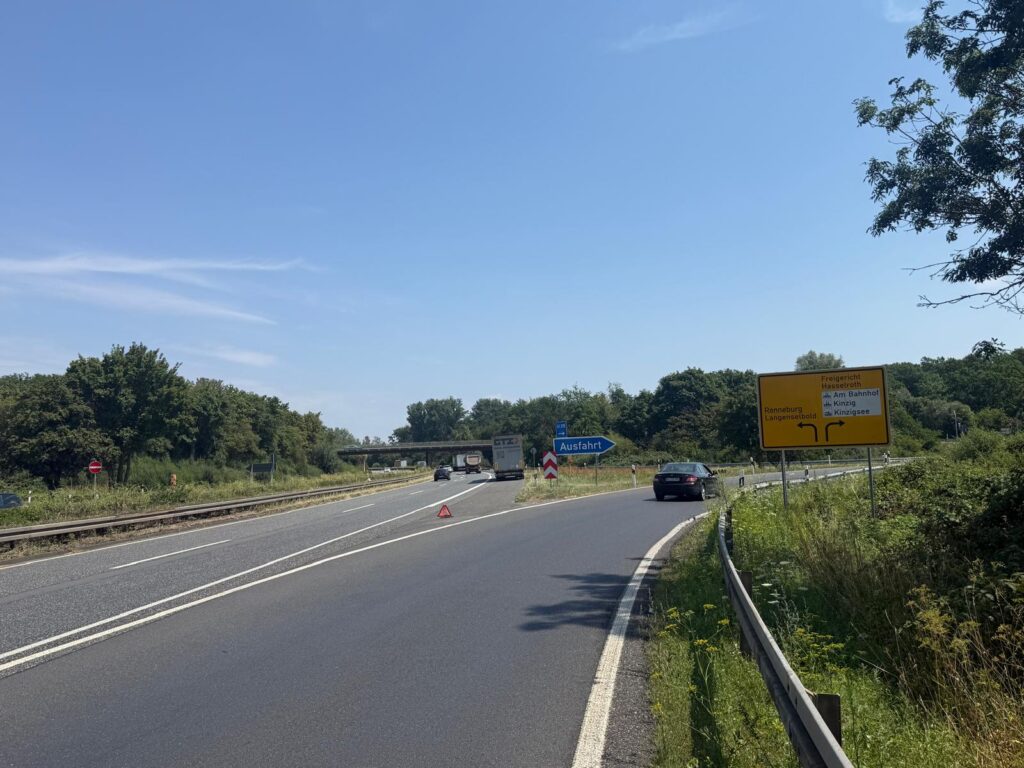
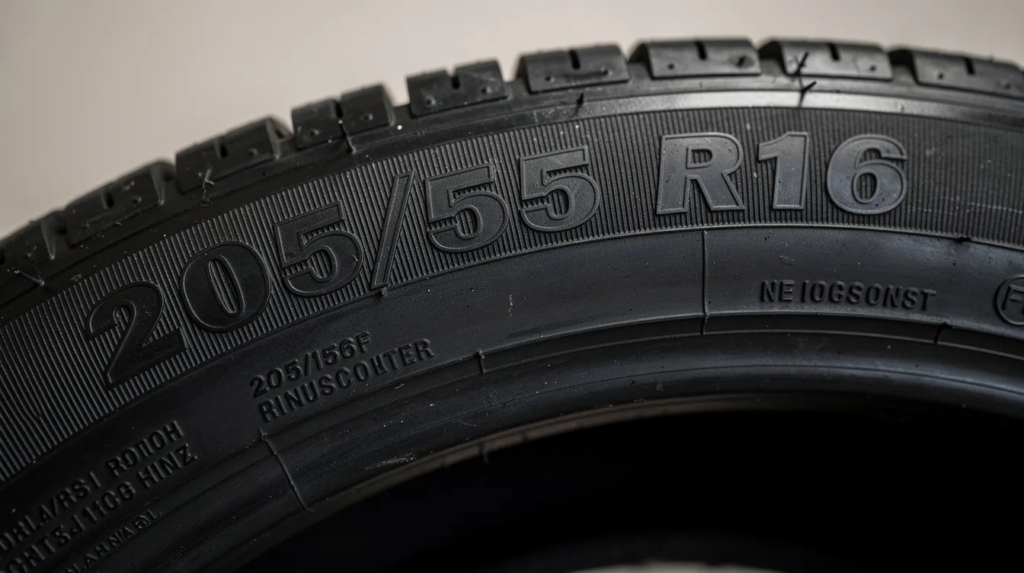
TL;DR: On 15 July, a trailer tyre (385/65 R22.5) blew out on a Mercedes-Benz Actros pulling a mega-trailer on the A8 near Rosenheim, heading towards the Austrian border. The rig was stopped on the hard shoulder of a narrow mountain section. From the call to the lorry pulling away took 2 hours 13 minutes, with 30 of those minutes spent purely on securing the site. Total cost: €1,040 net.
A tyre blowout on open road is bad enough. A tyre blowout on the hard shoulder of the A8 near Rosenheim, a few kilometres from the border, is another matter entirely: tight bends, gradients, heavy traffic from Italy and Austria passing every minute, and a shoulder that’s often narrower than elsewhere on the German motorway network. Stop here, and you’re standing in arguably the most dangerous spot on the whole route.
This is not a rerun of our earlier mega-trailer or soft-verge cases. This time the story isn’t about a rare tyre size or soft ground underfoot. It’s about something every professional driver runs into sooner or later: what you’re actually allowed to do on the hard shoulder, what a mistake there costs, and how a proper crew secures a motorway worksite without becoming a hazard themselves.
What happened on the A8 near Rosenheim?
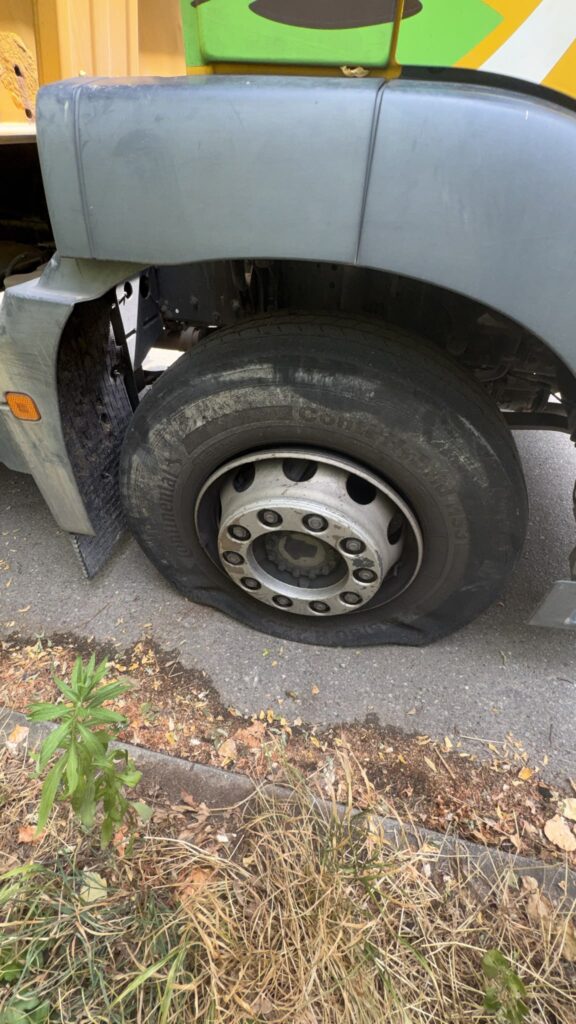
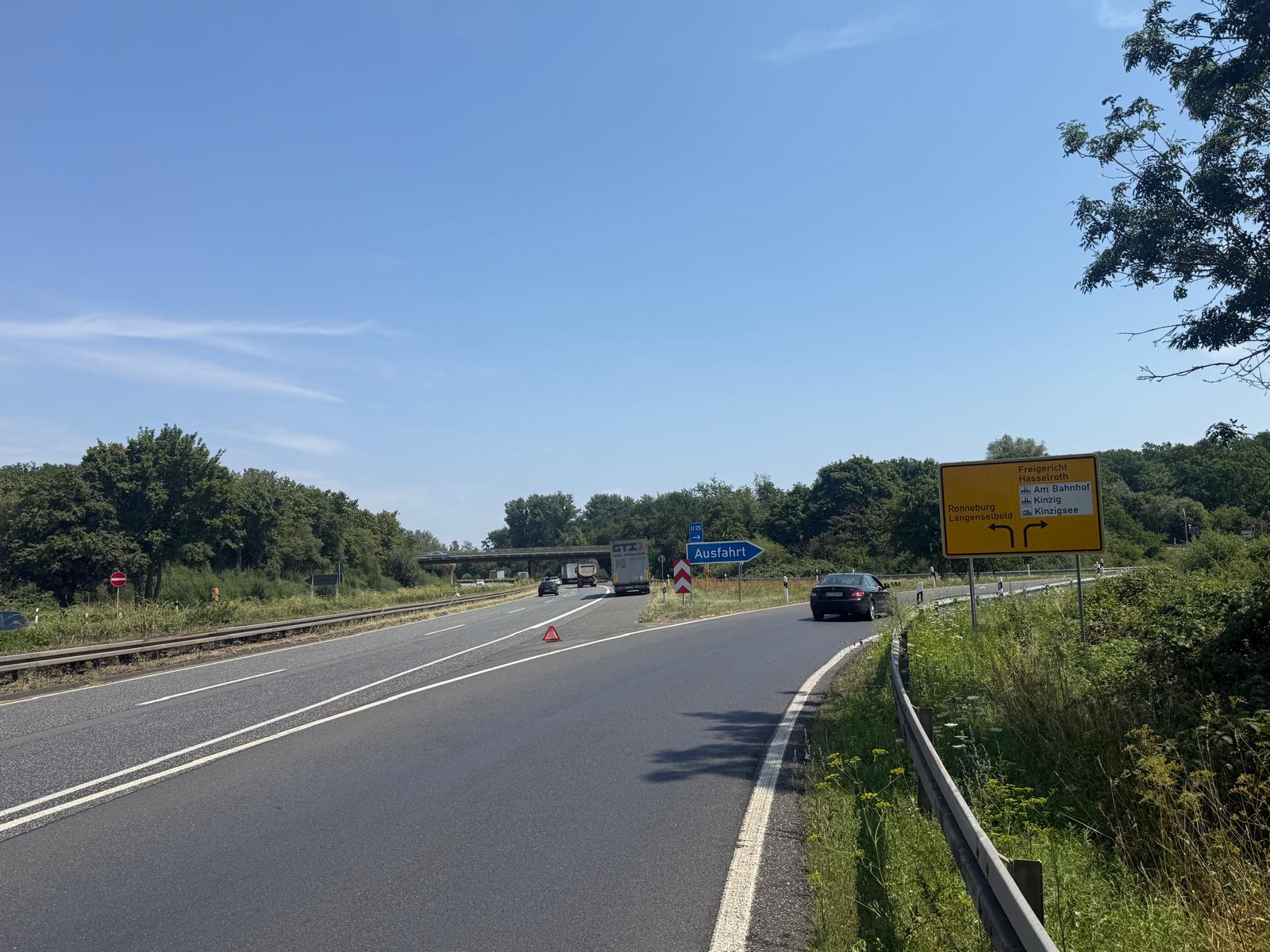
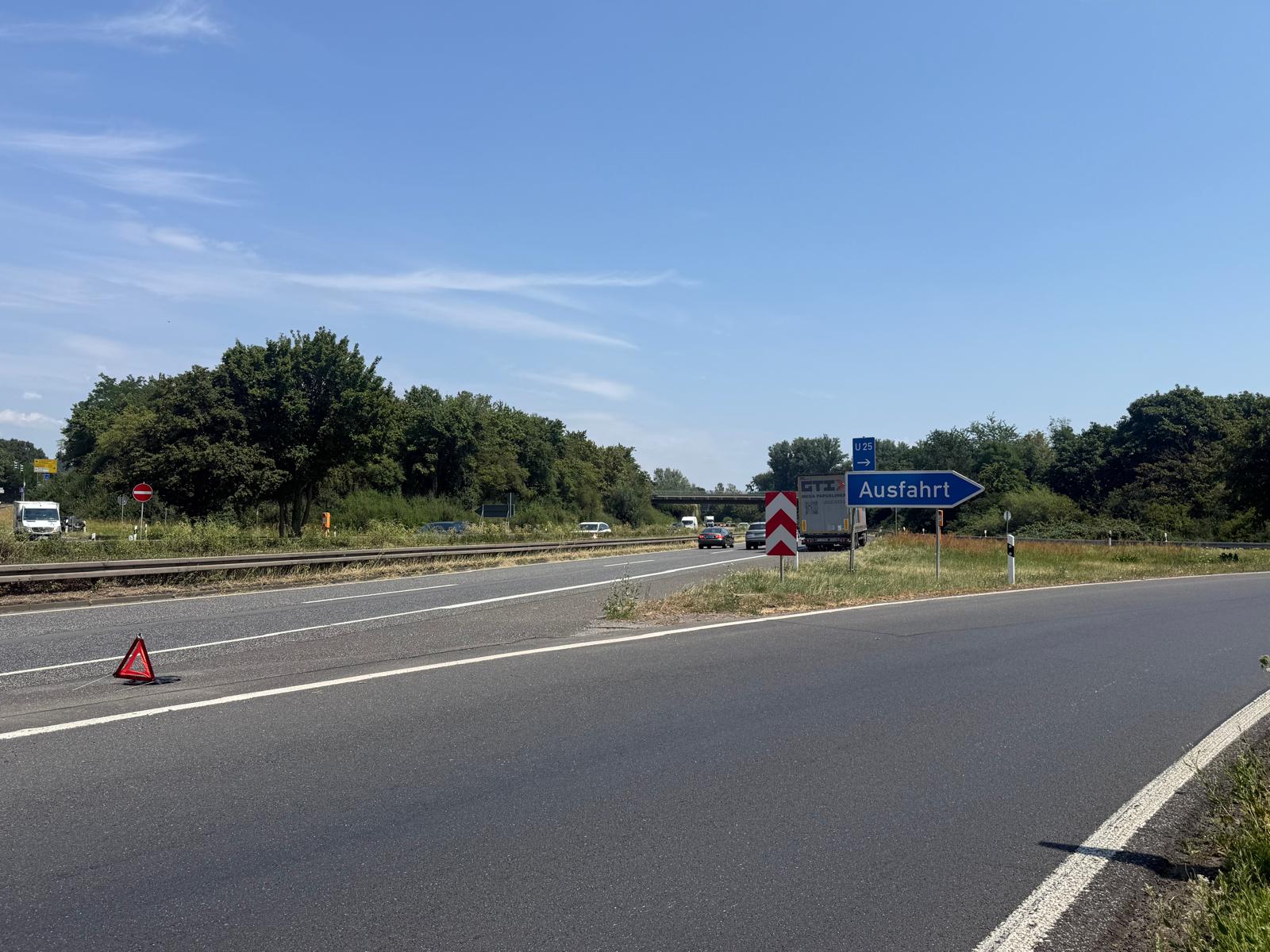
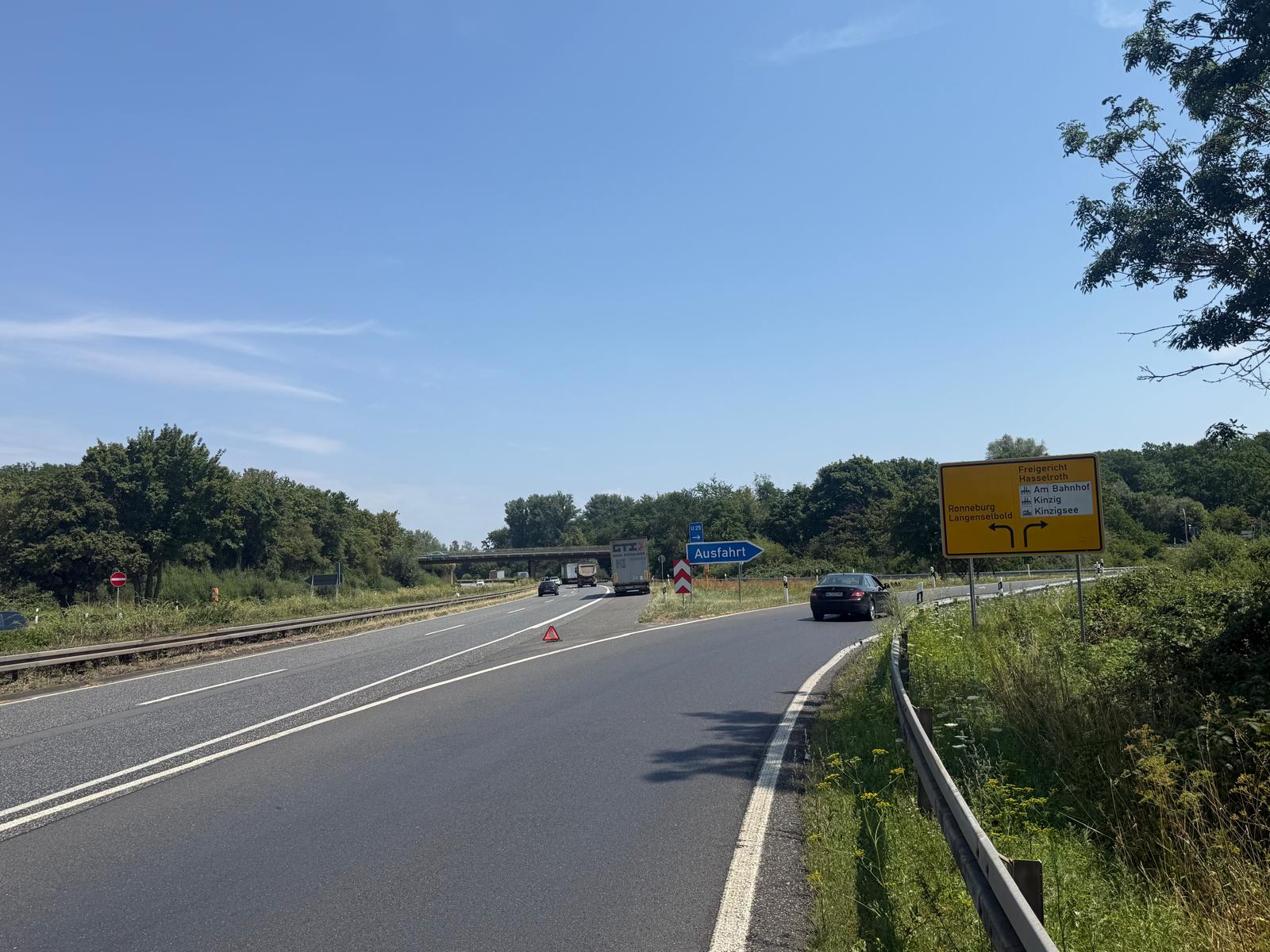
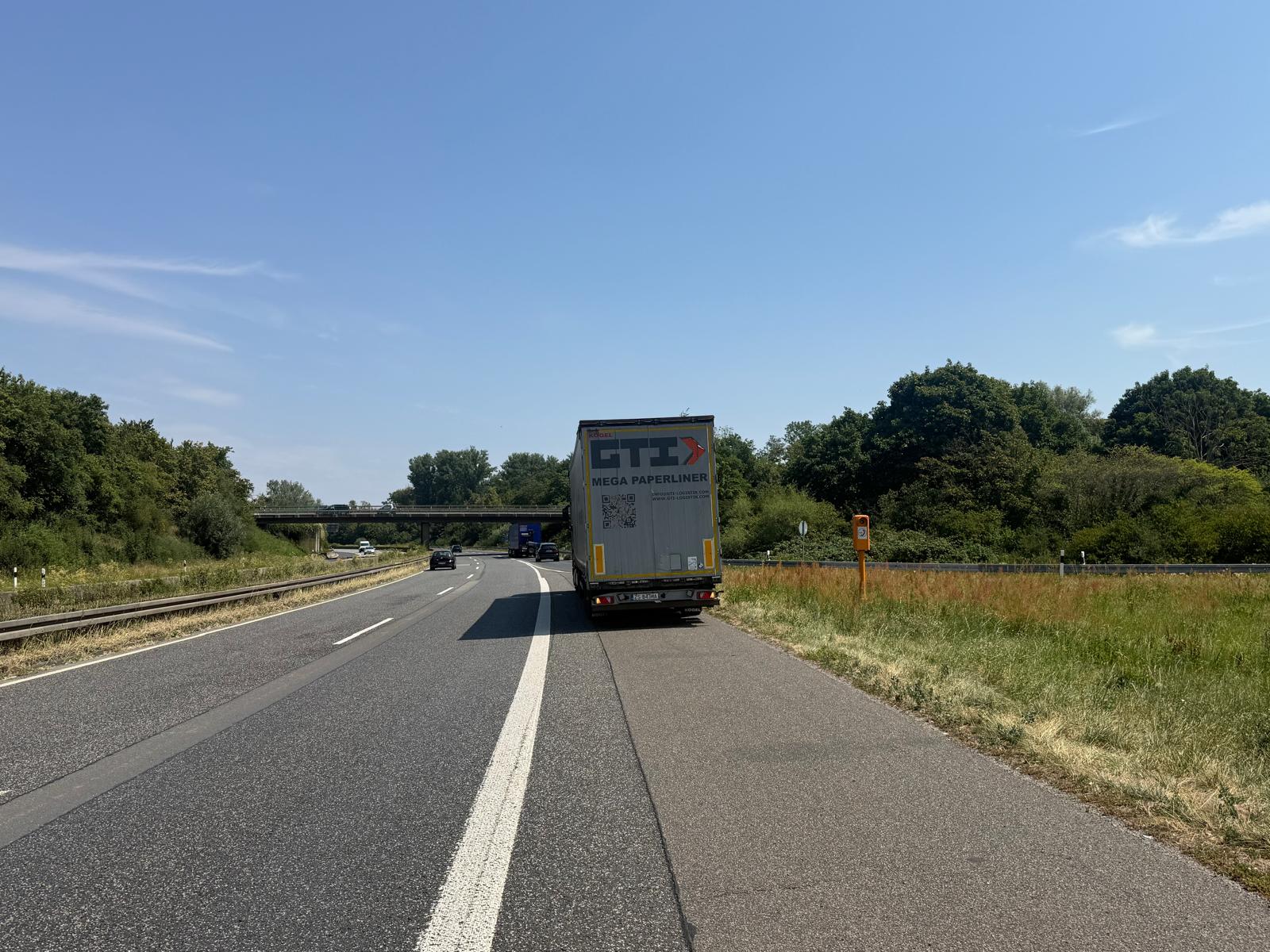
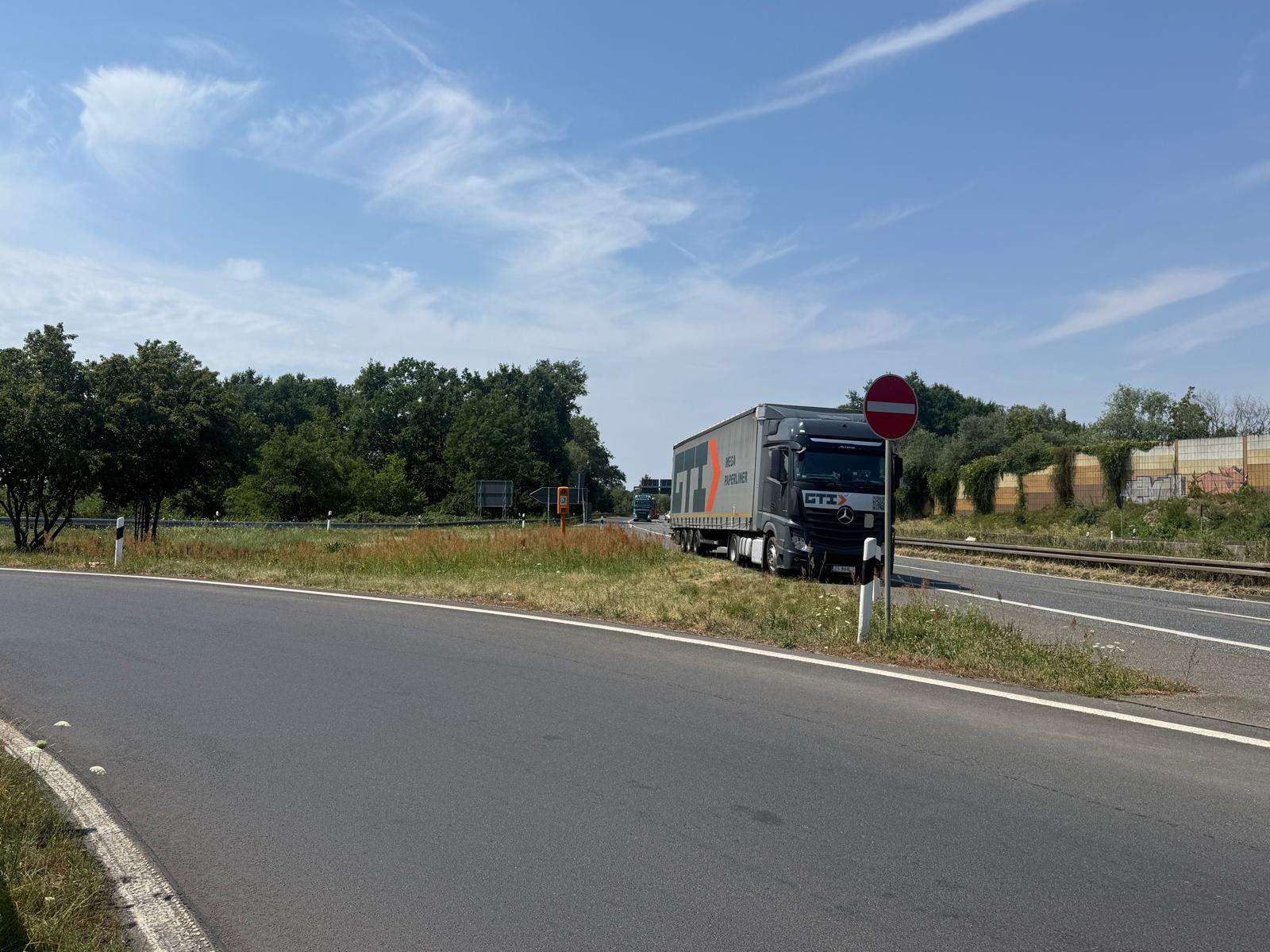
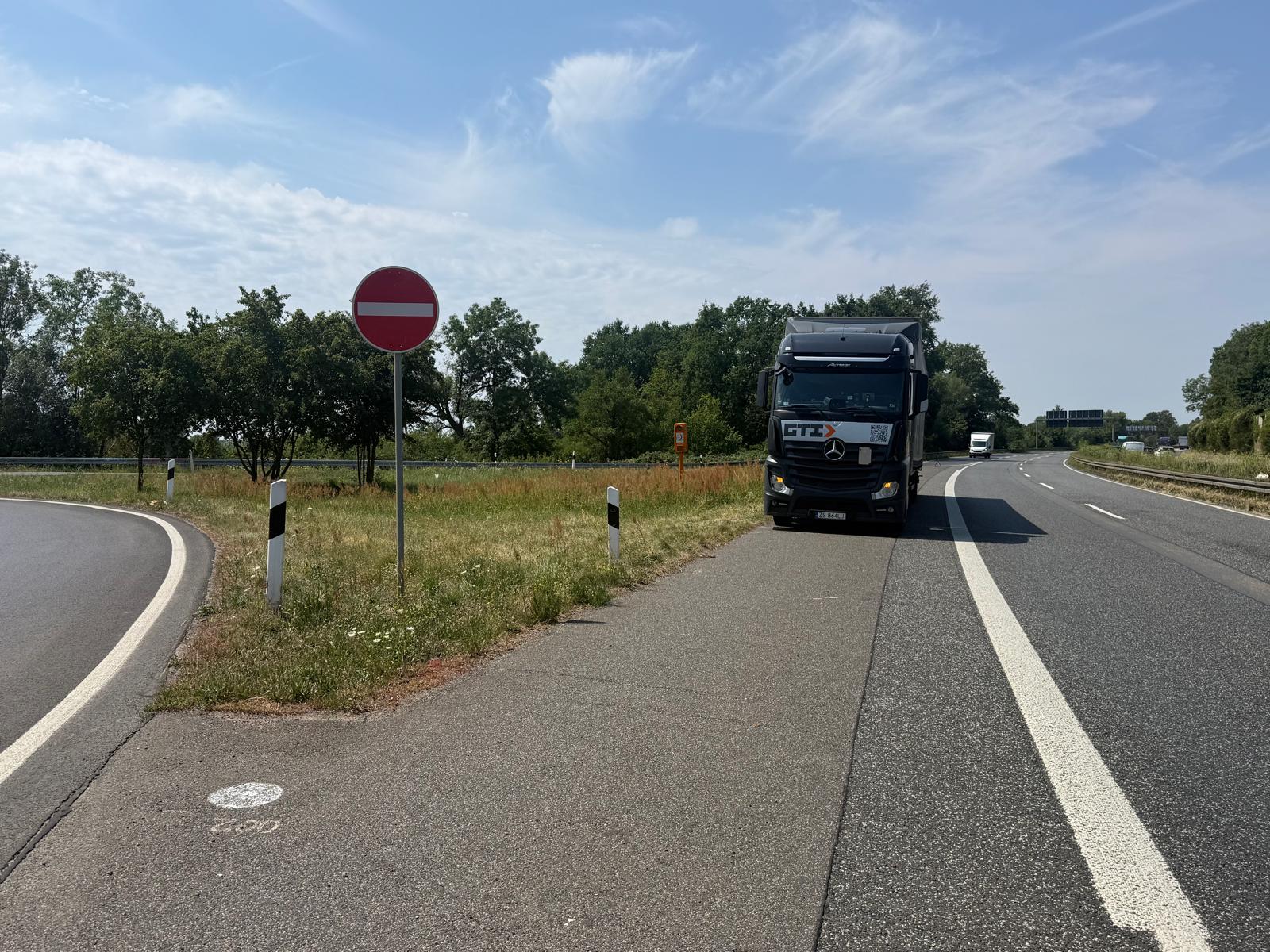
On 15 July, during daylight hours, a trailer tyre sized 385/65 R22.5 blew out on the hard shoulder of the A8 near Rosenheim, heading towards the Austrian border. The driver recognised the loud bang immediately as a blowout, held the rig steady onto the shoulder, and set out a warning triangle.
The stretch sits in the pre-Alpine foothills: gradients climb and drop in quick succession, and traffic is heavy with long-haul lorries bound for the Brenner and Tauern routes. The shoulder there narrows in several places, squeezed further by concrete crash barriers. For the recovery crew, that meant a longer safety-setup phase before anyone could put a spanner near the wheel.
What is the hard shoulder, and when can you actually stop there?
The hard shoulder (Pannenstreifen under German traffic law, § 18 StVO) is reserved strictly for vehicles with a genuine breakdown, an accident, or another emergency, in line with the same principle behind lawful stopping under § 15 StVO. A rest stop, a lunch break, or a phone call don’t qualify — stopping for those reasons is a fineable offence.
The distinction sounds obvious but matters in practice: an engine failure, a burst tyre, or a load-securing strap that gives way mid-journey justifies pulling over. Tiredness, hunger, or a missed exit does not. Motorway police enforce this distinction consistently, especially at accident hotspots like the stretch near Rosenheim.
In this case the cause was unambiguous — a genuine mechanical failure, the trailer tyre blowout. The driver did exactly what the rulebook asks: get out of moving traffic immediately, pull onto the shoulder under control, hazard lights on, then secure the scene.
Fines: stopping unlawfully and driving on the hard shoulder
Stopping on the hard shoulder without a valid reason carries a fine of at least €70 to €80 under German regulations, rising if other road users are obstructed, plus a point on the driver’s licence. This mostly catches drivers looking for a quick break instead of the next services.
The second, often underestimated offence is driving along the hard shoulder in moving traffic to bypass a jam. Foreign drivers commit this error disproportionately often, because the rule is enforced more loosely in some home countries. In Germany it’s a separate offence carrying a fine from roughly €75, considerably more if it endangers others, plus a point. The one exception is a temporary lane opening ordered by the police for congestion, signalled by variable message signs with a green arrow. Without that explicit signal, the shoulder is off-limits, even in stationary traffic.
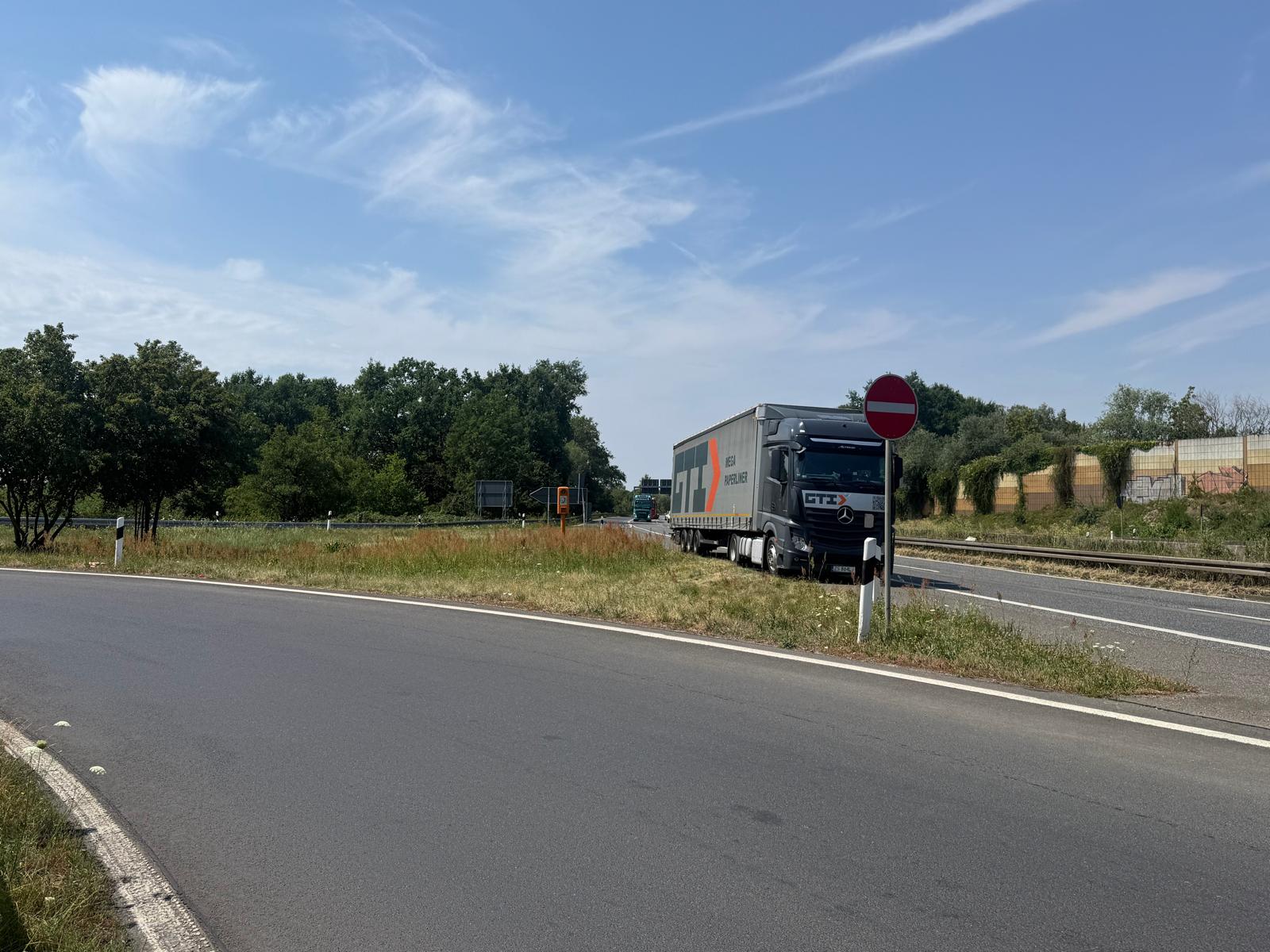
Why the hard shoulder is the most dangerous stretch of motorway
The hard shoulder is statistically the most dangerous part of any motorway, because stationary vehicles sit metres from traffic passing at 120 km/h or more. Analysis by the ADAC on shoulder collisions shows that a moment’s inattention, a driving error, or a tyre failure on a passing vehicle is often enough to hit a stopped lorry.
That’s why one simple rule matters more than any other: the driver must not remain in the cab and must not stand next to the trailer. The safe place is behind the crash barrier, with proper distance from the carriageway. From there the situation can be watched without standing in the direct danger zone.
In this case, the driver waited off the carriageway while our team took over securing the site. That discipline — set the warning triangle, then withdraw properly — cuts the risk of a secondary collision considerably.
How a recovery crew secures a hard shoulder correctly
A professional setup follows a fixed sequence, never improvisation:
- Approach in the direction of traffic, never against the flow — the recovery vehicle comes from behind, beacon running.
- Warning triangle placed 150–200 metres back on a motorway, well beyond the distance typical on rural roads — stopping distances at 120 km/h demand it.
- The crew’s own vehicle, fitted with an arrow board, is positioned slightly offset ahead of the broken-down lorry to steer following traffic away early and clearly.
- Traffic cones mark a clean boundary between the work area and moving traffic.
- Hi-vis vest for everyone in the work zone, no exceptions, not even for a thirty-second job.
Whoever places the triangle always walks behind the barrier or off the carriageway, never along the shoulder itself. On especially tight or hard-to-see sections — like this one near Rosenheim — we coordinate where necessary with the traffic control centre to arrange a temporary lane narrowing or extra protection from the motorway authority.
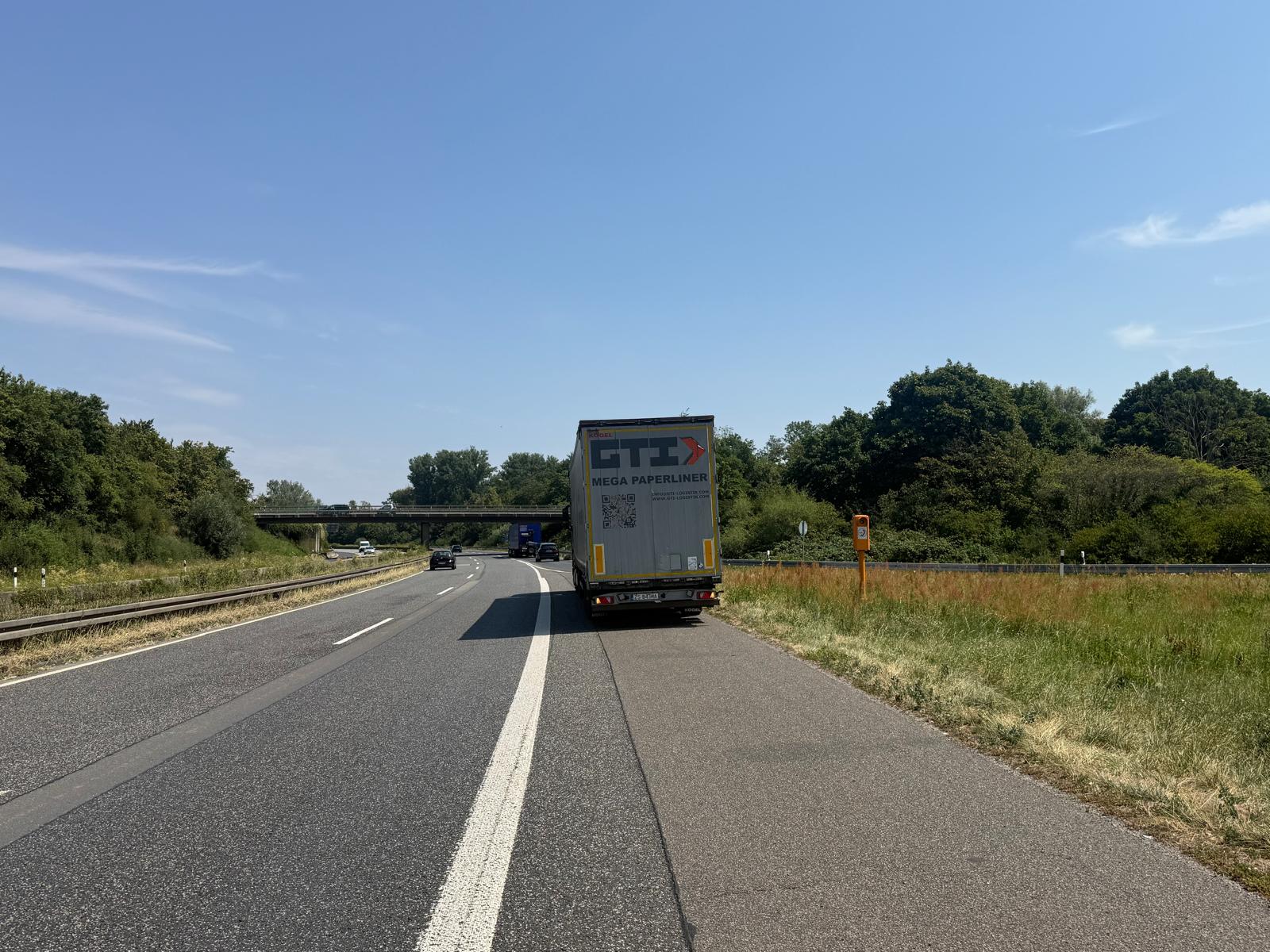
Why the mountain section of the A8 towards the border is harder to work on
The A8 near Rosenheim heading for the Austrian border feels noticeably different from a flat motorway stretch. Three factors make any hard-shoulder work here tougher:
- Gradients stretch out braking and stopping distances for lorries in moving traffic — one more reason the 150–200 metre triangle distance isn’t optional here, it’s essential.
- Heavy long-haul traffic towards the Brenner and Tauern routes: loaded artics bound for Italy and Austria run through constantly, keeping density high even in daylight.
- Wind and shifting weather in the pre-Alpine foothills hit tall bodies like a mega-trailer particularly hard — crosswind complicates both parking safely and working right next to the carriageway.
Altogether, the pure safety-setup phase on a section like this runs noticeably longer than on a wide, straight stretch of motorway. That’s exactly what this job’s timeline reflects. Live traffic and roadworks information for stretches like this is published by the Autobahn.de platform run by Germany’s federal motorway authority.
How the assistance was organised
Our dispatch team follows a fixed process whenever a call comes in about a tyre failure on the motorway:
- Location, direction of travel, and mile marker (where the driver knows it) are logged.
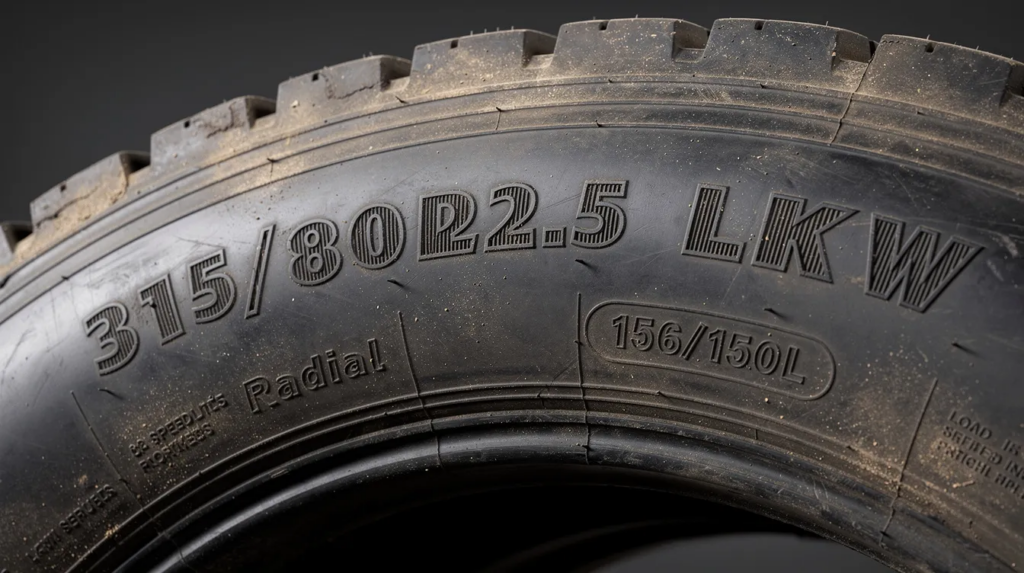
- Tyre size and axle position (here: trailer axle, 385/65 R22.5) are recorded so the right stock is prepared.
- A partner workshop from our service network near Rosenheim is contacted and dispatched.
- The driver is instructed to move behind the crash barrier and wait there for the crew.
- Estimated arrival time is communicated, including a note on the mountain route and possible delay from traffic.
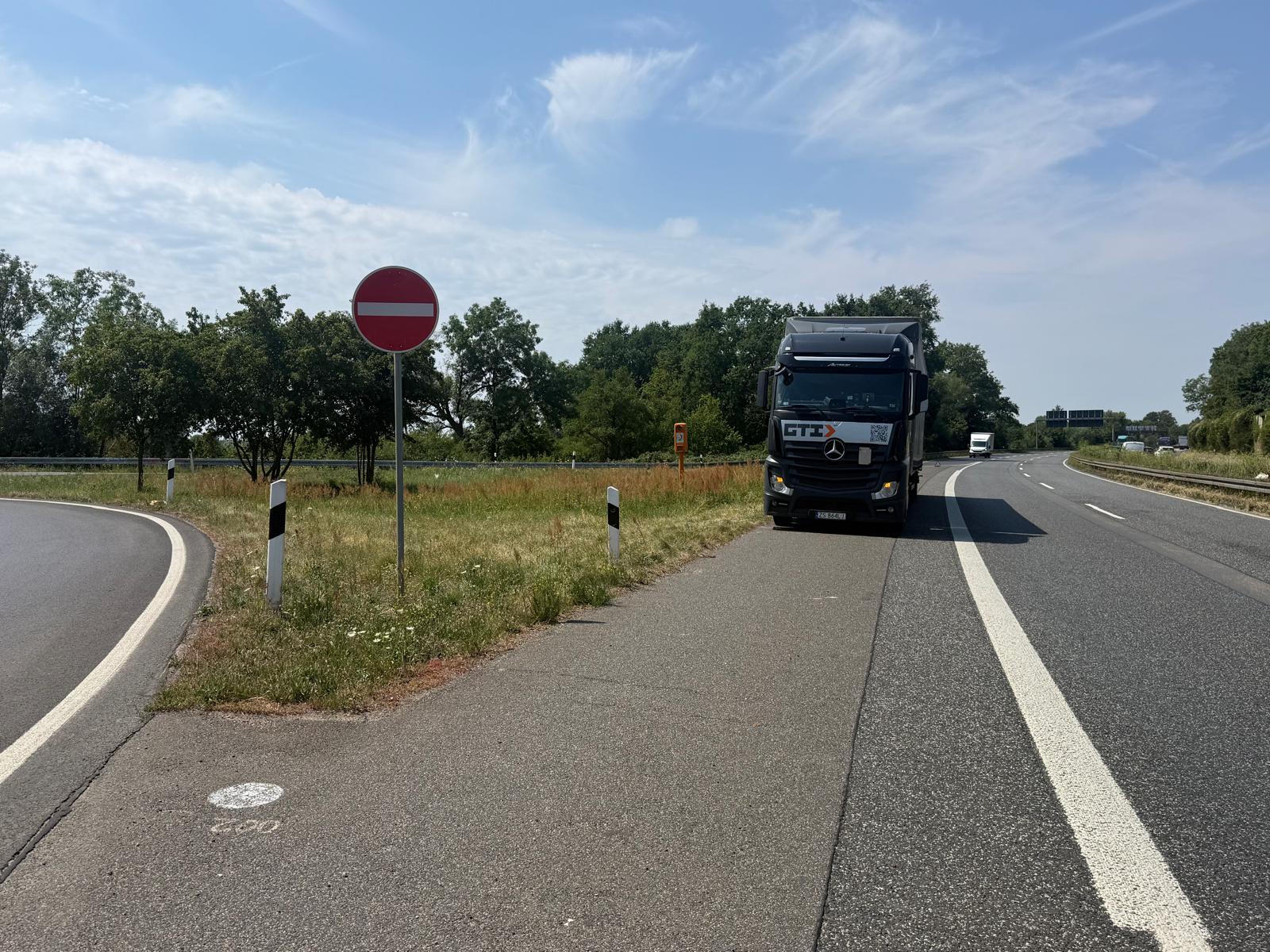
On site: why a burst trailer tyre doesn’t wait
A truck tyre typically runs at 8.5 to 9.5 bar. When it blows, the affected axle instantly loses load capacity, and the neighbouring tyre in a dual set has to carry the full load short-term — with a real risk of secondary damage if nothing is done promptly. On a loaded mega-trailer, that extra strain matters more than on a standard trailer, since the overall body weight runs higher.
The longer a lorry sits on the hard shoulder, the higher the collision risk climbs for the crew and driver, minute by minute. A quick but properly secured job isn’t a courtesy — it’s the safety standard.
Why a tyre on the traffic side often isn’t fixed on the spot
An honest but important point: if the damaged tyre sits on the side facing moving traffic, changing it right there on the hard shoulder is often too risky. In those cases we recommend recovering the rig first to a safer location — a nearby services area or exit — rather than putting the crew directly in the path of passing traffic. That costs extra time, but it’s the only defensible option when the working position would otherwise sit in live traffic. In this case, fortunately, the damaged tyre sat on the side facing away from the carriageway, so the repair could go ahead directly on the shoulder.
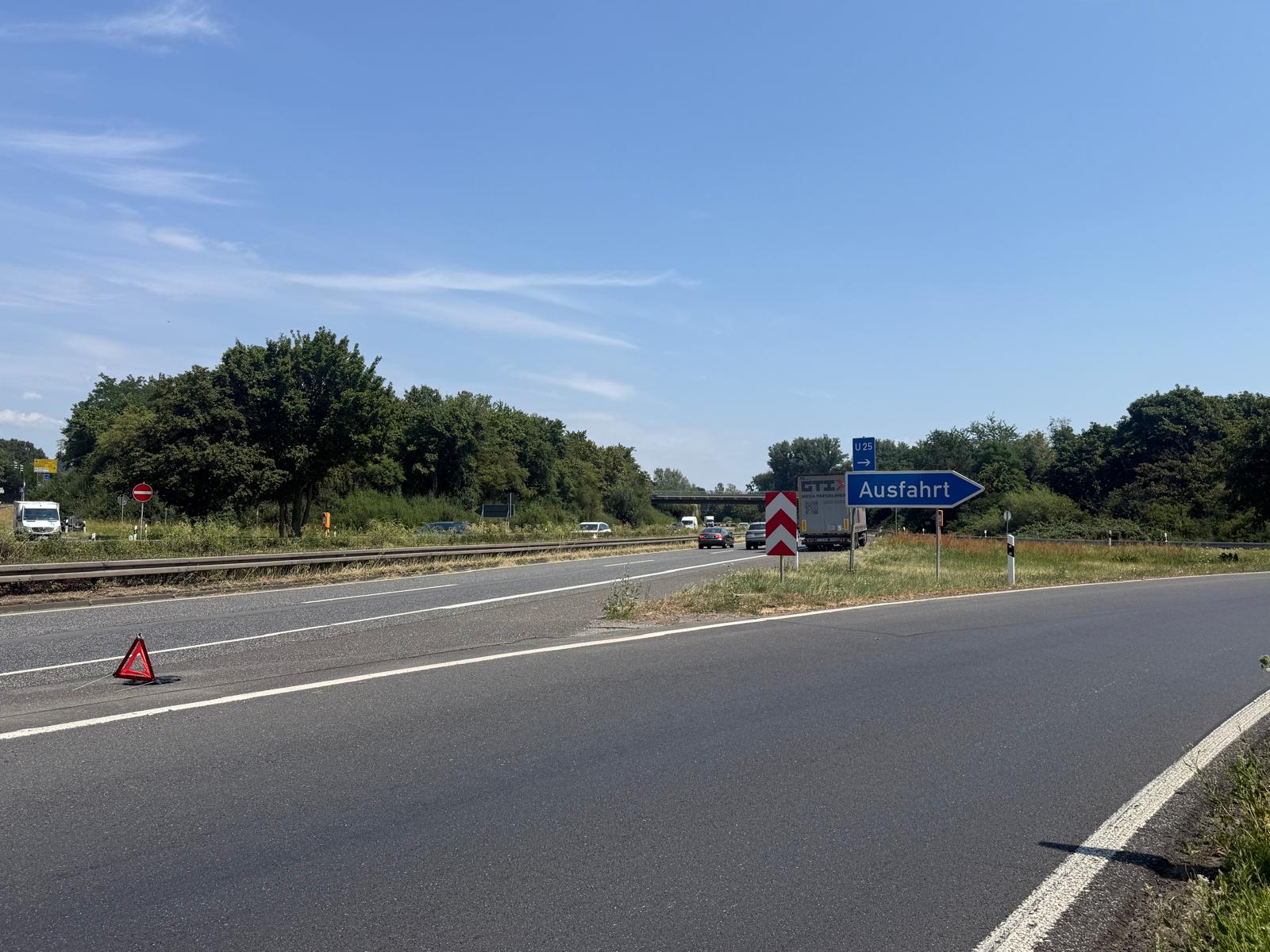
The tyre change, step by step
- Visual inspection: confirm the blowout, check the rim for deformation, inspect the neighbouring tyres.
- Secure the site: warning triangle 150–200 m back, recovery vehicle with arrow board, cones, hi-vis vests.
- Stabilise and jack the vehicle: wheel chocks in place, jack positioned, axle raised.
- Loosen the wheel nuts, remove the wheel, take off the damaged tyre, fit the new 385/65 R22.5.
- Final check: tighten the wheel nuts in a star pattern to the correct torque, check tyre pressure, visual inspection of the whole axle before release.
Full timeline
| Time | Phase | Action |
|---|---|---|
| 14:22 | Call | Driver reports blowout, A8 near Rosenheim, towards the border |
| 14:22–14:35 | Dispatch | Regional partner workshop alerted, stock confirmed |
| 14:35–15:15 | Transit | 40-minute drive to site on the mountain section |
| 15:15–15:45 | Securing the site | Triangle, recovery vehicle, cones — 30 minutes due to narrow shoulder |
| 15:45–15:55 | Preparation | Chocks, jacking, visual inspection |
| 15:55–16:25 | Tyre change | Removing and fitting the new 385/65 R22.5 |
| 16:25–16:35 | Final check | Cross-pattern torque check, release |
Total time: 2 hours 13 minutes from call to the lorry pulling away.
What the job cost
| Item | Price (EUR) |
|---|---|
| Callout fee | 260 |
| Labour (incl. hard-shoulder security setup) | 190 |
| Tyre 385/65 R22.5 (trailer axle) | 480 |
| Hard-shoulder safety setup (recovery vehicle, kit) | 90 |
| Old tyre disposal | 20 |
| Total (net, plus VAT) | 1,040 |
That’s at the higher end for a straightforward trailer tyre change, because securing a narrow mountain section of motorway ties up considerably more time and kit than a change on a wide shoulder on flat ground. For comparison: a stranded artic typically costs the haulier around €800 to €1,200 a day in demurrage, lost freight, and downtime — against that, a job wrapped up in a little over two hours is clearly the cheaper option.
Why this is a job for professionals
Changing a tyre on the hard shoulder of a motorway is no place for improvisation:
- Without a correctly positioned warning triangle and recovery vehicle, driver and crew face acute risk to life.
- Without the right kit for a 385/65 R22.5 and a calibrated torque wrench, loose wheel nuts risk a wheel coming off at full speed.
- Without experience handling a loaded mega-trailer, jacking on uneven ground quickly becomes its own hazard.
- Anyone changing a tyre themselves without stepping behind the barrier risks being hit by passing traffic.
Typical jobs of this kind across Germany
We handle comparable situations nationwide: trailer blowouts on motorways, recoveries of stranded artics, and towing service work in Germany across difficult or narrow sections. A comparable case with the same approach to securing the site under time pressure happened on the motorway near Hof, where a DAF artic was assisted after a blowout in under two hours.
Prevention tips for drivers and fleets
- Check tyre pressure regularly, particularly before longer mountain routes carrying a heavy load.
- Book a workshop early at the first sign of uneven wear — vibration or pulling — rather than waiting it out.
- If you break down, move behind the crash barrier and stay there, not next to the vehicle.
- Always place the warning triangle at proper distance — 150 to 200 metres on a motorway, not the 50 metres common on rural roads.
- Never use the hard shoulder to bypass a jam — the fine is the smaller concern next to the collision risk.
Tyres and fleet maintenance: the bigger picture
The quality of the tyre fitted has a direct bearing on how long it lasts before the next failure. Brands like Michelin, Continental, Goodyear, or Bridgestone offer different trailer-axle profiles built around either mileage or rolling resistance. For fleets, a fixed inspection routine pays off: tread depth, pressure, and visible damage checked before every longer run, logged in the vehicle file. Planned maintenance instead of reacting to breakdowns cuts unplanned downtime noticeably, especially on routes with mountain sections like the A8 towards the Austrian border, where any tyre failure turns into a safety risk immediately.
Why choose LKWHelp24
- 24/7 availability, every day of the year, anywhere in Germany.
- A vetted partner network of regional workshops and service vehicles, including on mountain routes and difficult motorway sections.
- Transparent pricing with no hidden items — every invoice is broken down clearly.
- Multilingual dispatch, essential on international long-haul routes like the A8 towards Austria and Italy.
Frequently asked questions
How much does a truck tyre change on the hard shoulder cost?
A trailer tyre in 385/65 R22.5, with callout, labour, and hard-shoulder security, usually runs between €750 and €1,400 net. In this job the total came to €1,040, since securing a narrow mountain section required extra time.
How long does a job like this take?
Here it took 2 hours 13 minutes from the call to the lorry pulling away. On the motorway, 1.5 to 3 hours is realistic, depending on traffic, shoulder width, and weather.
Can you take a break on the hard shoulder?
No. The hard shoulder is reserved strictly for genuine emergencies — mechanical failure, accident, or a medical situation. A rest stop or a phone call doesn’t justify stopping and will be fined.
Why can’t you drive on the hard shoulder in a jam?
Without explicit permission via a variable message sign, driving along the shoulder in moving traffic is illegal, even in stop-start conditions. The offence carries a fine and a licence point, and it’s one of the most common mistakes made by foreign drivers in Germany.
Who pays for a tyre change on the motorway?
Usually the haulier or fleet operator, often through an assistance or fleet policy. We issue a detailed, itemised invoice for settlement with an insurer or client.
Why isn’t every tyre failure fixed right on the spot?
If the damaged tyre sits on the side facing moving traffic, the working position is too dangerous. In those cases we recover the vehicle to a safer location first, rather than putting the crew at unnecessary risk.
Summary
- Location: A8 near Rosenheim, towards the Austrian border, mountain section
- Vehicle: Mercedes-Benz Actros with mega-trailer
- Tyre size: 385/65 R22.5, trailer axle
- Response time: 13 minutes to dispatch, 40 minutes transit
- Total time: 2 hours 13 minutes, of which 30 minutes went purely on securing the site
- Total cost: €1,040 net
- Secondary damage: none, thanks to a prompt response and correct site security
Get help now
Tyre blowout on the hard shoulder, on any motorway in Germany: call us on +49 160 5753826, we’re available around the clock, every day, across Germany. More at www.lkwhelp24.com.
More services: Mobile Tyre Service · Mobile Truck Service · Contacts
Keywords: mobile truck tyre service | hard shoulder motorway | trailer tyre blowout | A8 Rosenheim | hard shoulder rules Germany | mega-trailer tyre service | 385/65 R22.5