Why a Mega-Trailer Tyre Blowout on the Autobahn Demands Immediate Expert Intervention
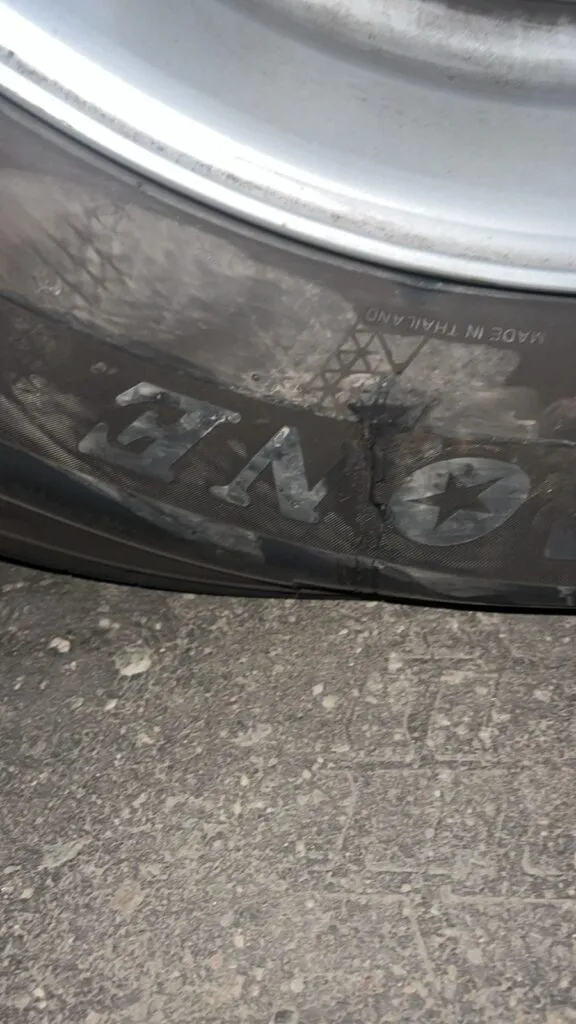
A blown tyre on a mega-trailer isn’t just an inconvenience, it’s a high-risk incident with cascading consequences. When a 435/50 R19.5 radial tyre on a heavy-duty semi-trailer fails at speed, the immediate danger lies not only in the loss of control but also in the potential for structural damage to the axle, hub, and wheel disc. The sheer weight of a fully loaded mega-trailer, often exceeding 20 tonnes, means that even a minor imbalance can trigger a chain reaction: overloading of adjacent wheels, stress on suspension systems, and, in extreme cases, a complete axle failure. This isn’t theoretical. According to data from ADAC, over 18% of all truck breakdowns on German motorways in 2025 were directly linked to tyre-related failures, with nearly 40% of those involving trailers or multi-axle units.
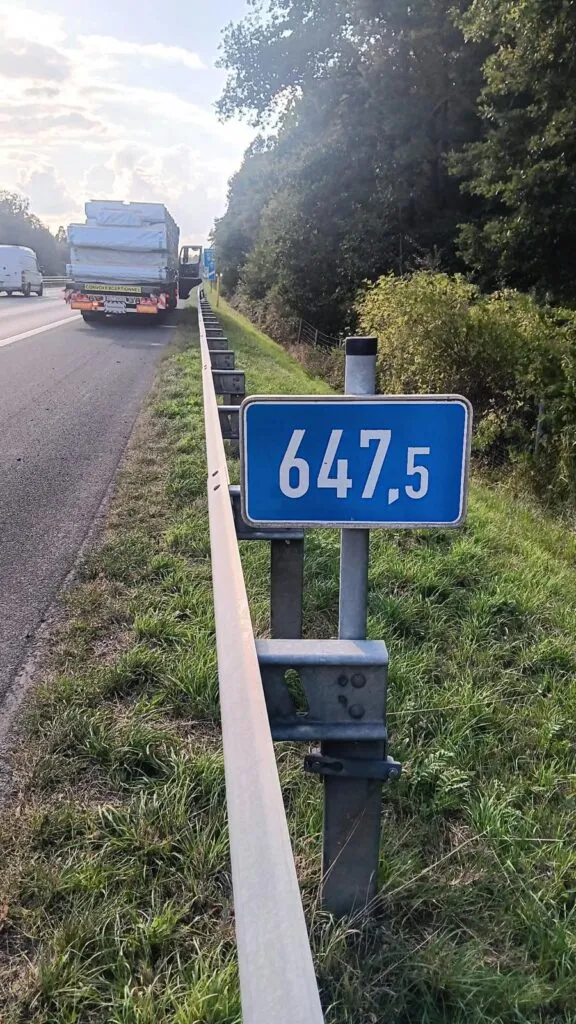
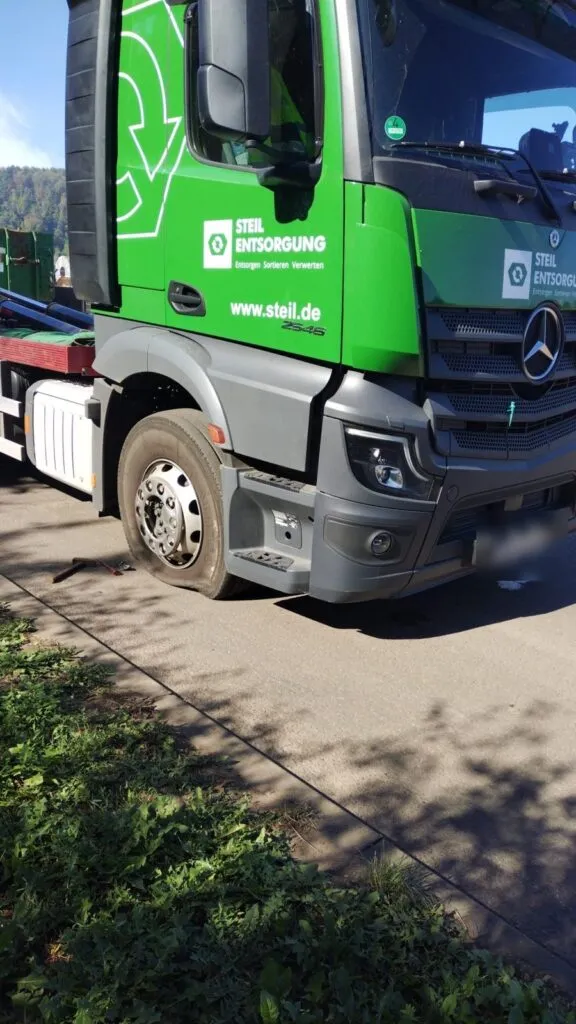
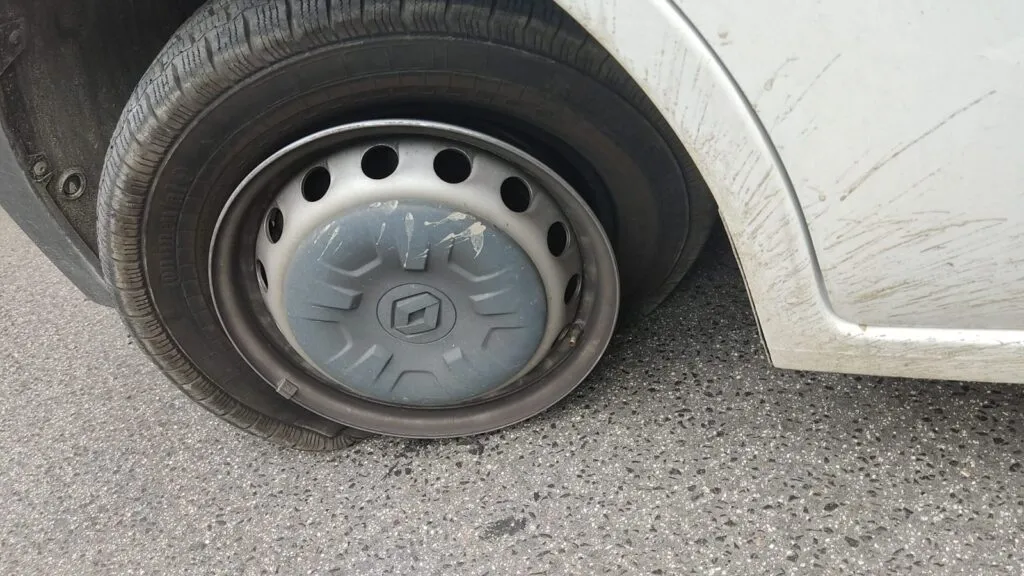
In this case, the driver reported a sudden loss of control and a loud bang on the A3 near Limburg-an-der-Lahn, indicating a full tyre rupture. The vehicle had been travelling towards Frankfurt, a high-traffic corridor where average speeds exceed 120 km/h. At such velocities, a burst tyre can cause the trailer to jackknife or veer violently across lanes, a scenario that puts both the driver and other road users at serious risk. The fact that the driver managed to pull over safely to the hard shoulder is commendable, but the situation remained critical. Left unattended, the damaged tyre could lead to further issues: warping of the steel wheel disc, damage to the brake drum, or even failure of the hub bearing. These components are expensive to replace and can halt operations for days.
This is why mobile truck tyre service is not a luxury, it’s a necessity. The window between a tyre failure and irreversible damage is narrow. Our response time of 1 hour 15 minutes from the initial call, followed by a 1 hour 25-minute repair window, ensured that the trailer was back on the road before any secondary damage occurred. The cost of a single tyre replacement, €520, pales in comparison to the potential €3,000+ for a damaged axle or suspension system. In fleet management, downtime is measured in lost revenue, not just repair bills. A simple blowout can cost up to €1,200 per day in lost freight contracts and missed delivery windows.
The Critical Role of On-Site Inspection Before Any Repair
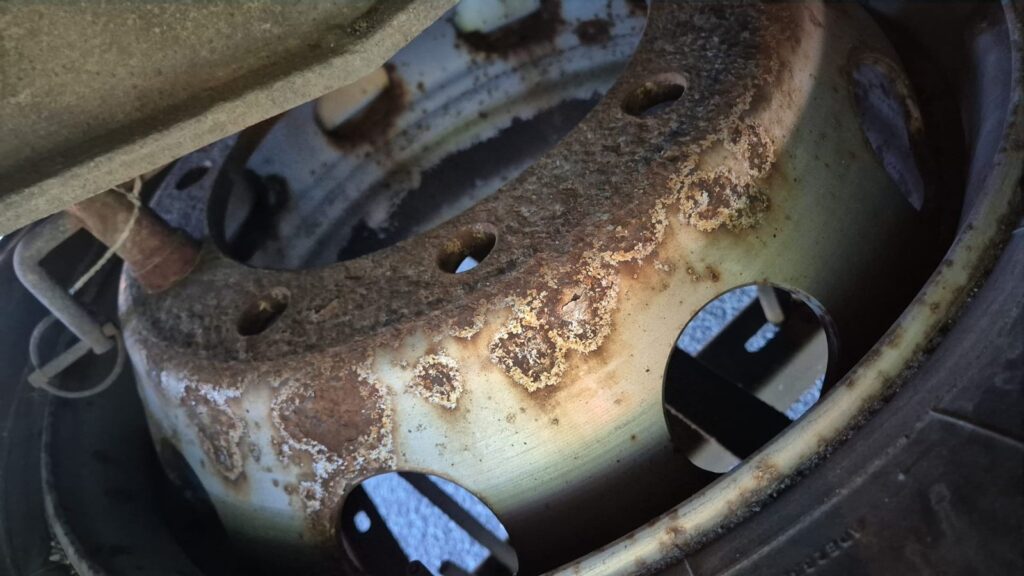
Before removing a single wheel, our technician conducted a thorough visual and mechanical inspection of the affected axle and wheel assembly. This step is non-negotiable. A blown tyre rarely happens in isolation, it’s often a symptom of deeper issues. On the A3 near Limburg, the technician first checked for signs of uneven wear on the remaining tyres, confirming that the failure was due to a sudden rupture rather than gradual degradation. He then examined the wheel disc (Stahlfelge) for any signs of warping, cracks, or heat discoloration, all indicators of excessive stress or past mechanical abuse.
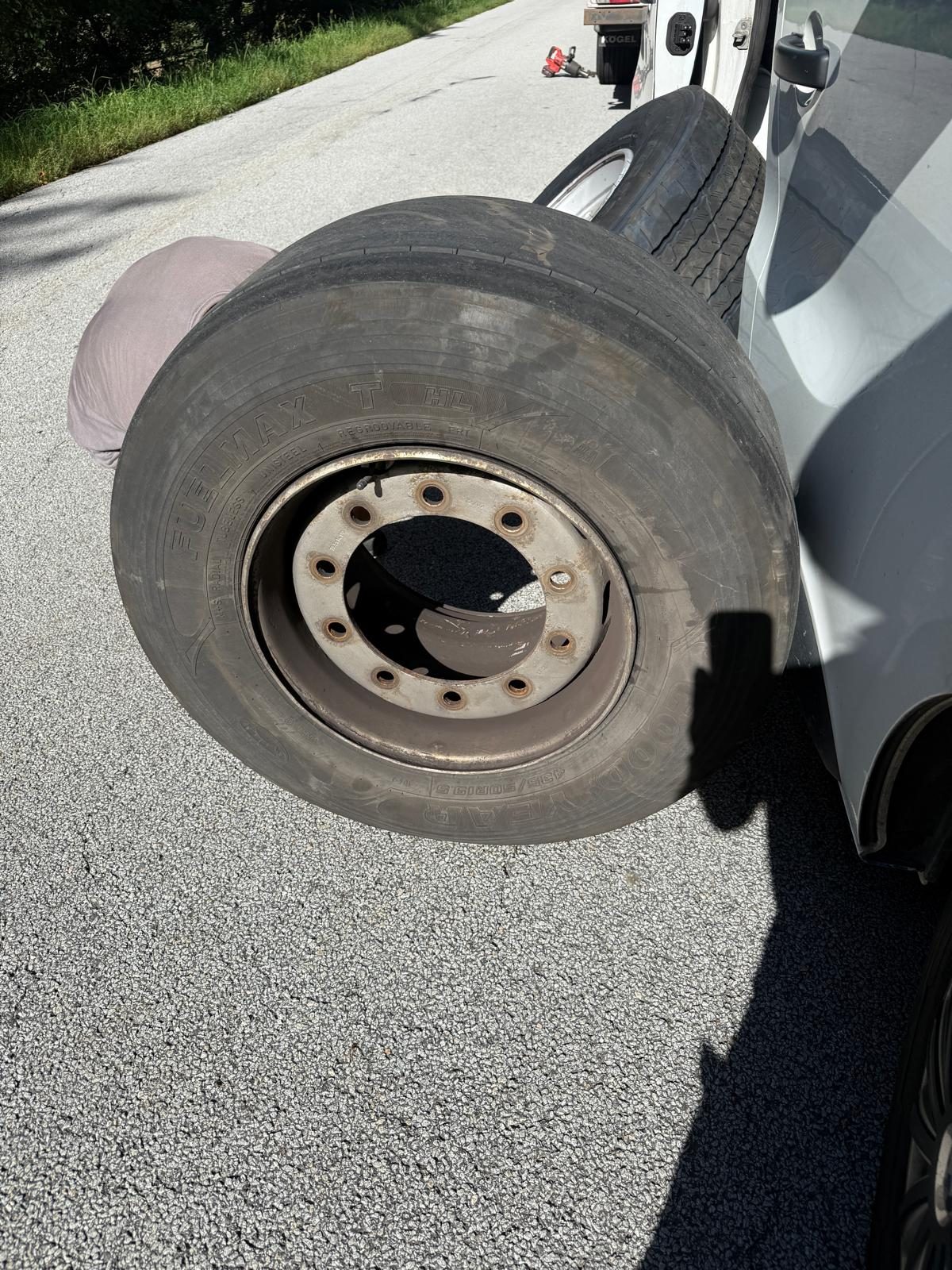
The disc had 10 bolt holes (10 Löcher), standard for heavy-duty trailer applications. Each bolt hole was inspected for deformation or thread damage. A bent or stretched bolt hole can compromise the integrity of the entire wheel assembly, leading to catastrophic failure during reassembly. The technician also checked the condition of the wheel nuts (Radmuttern), ensuring they were not stripped or over-tightened. Over-tightening can cause the disc to warp, while under-tightening leads to loosening during travel, both dangerous scenarios.
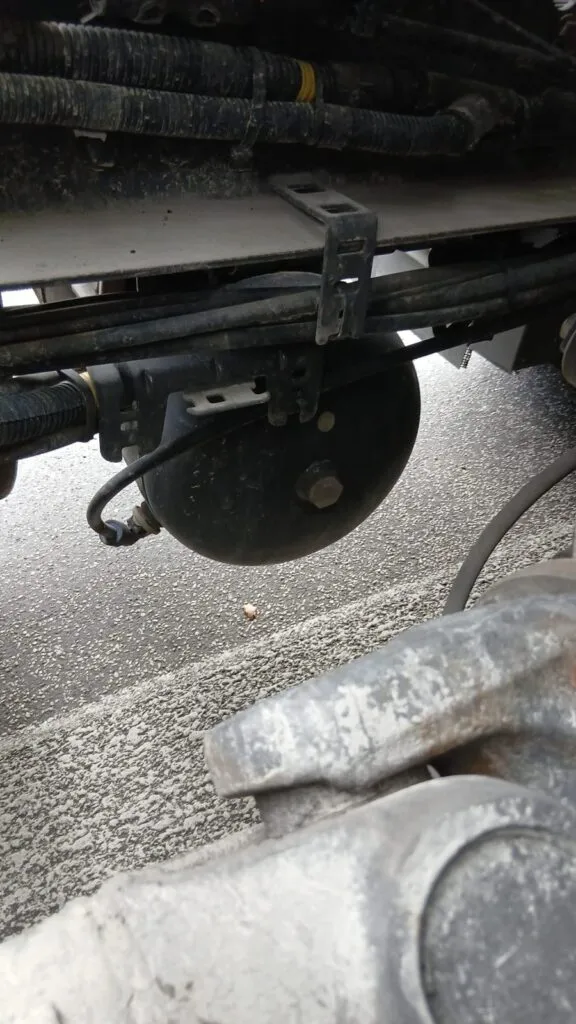
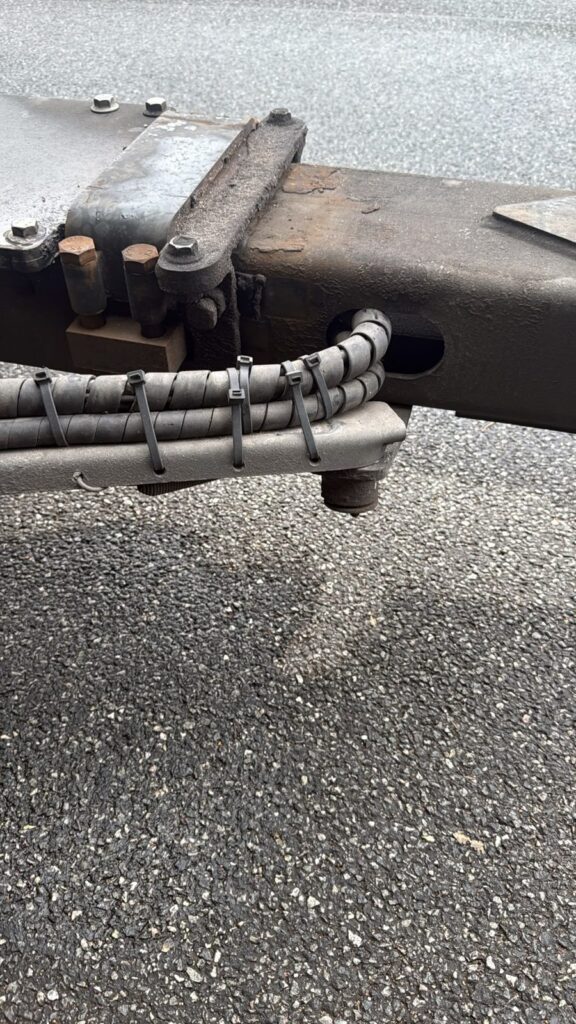
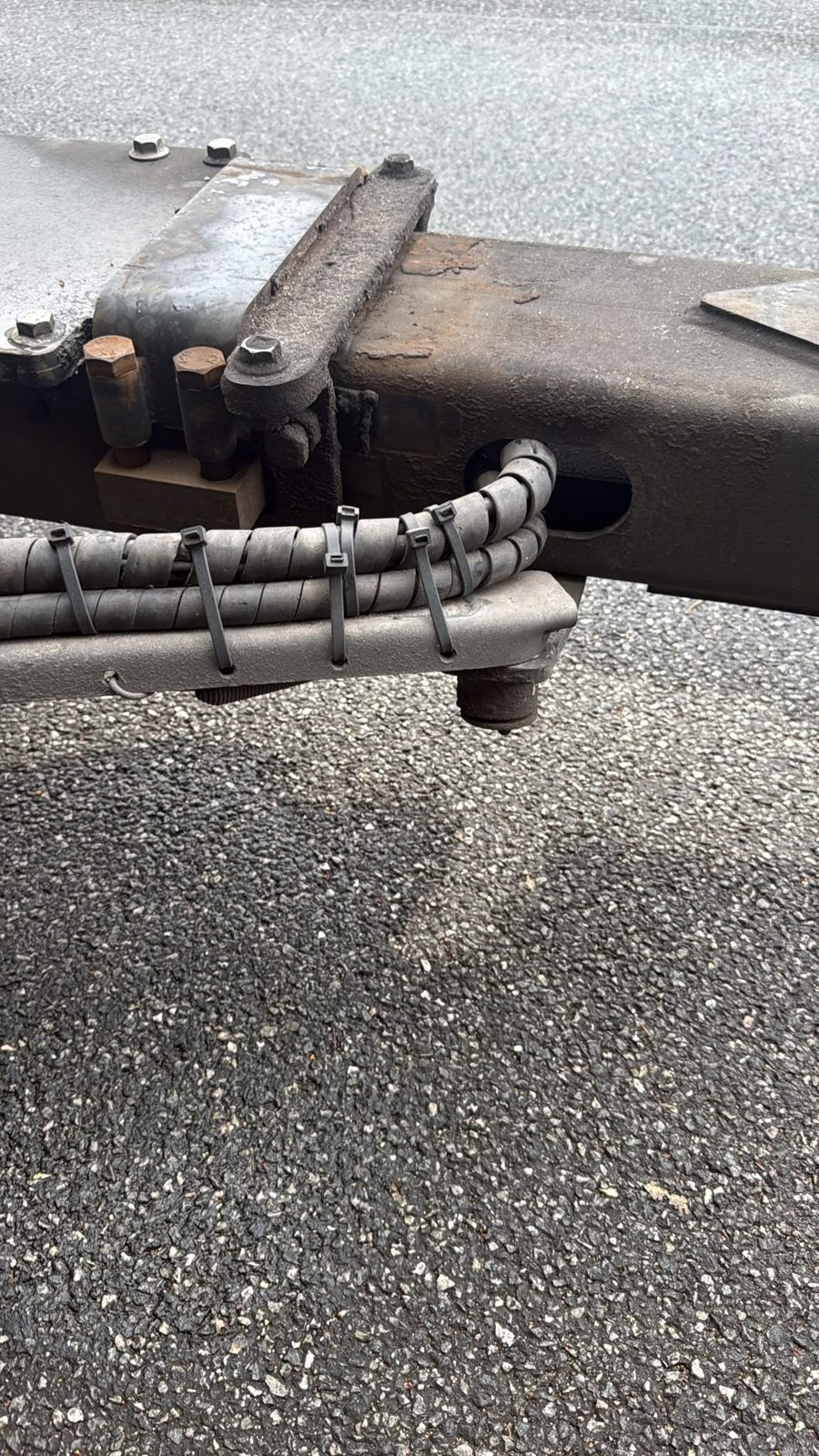
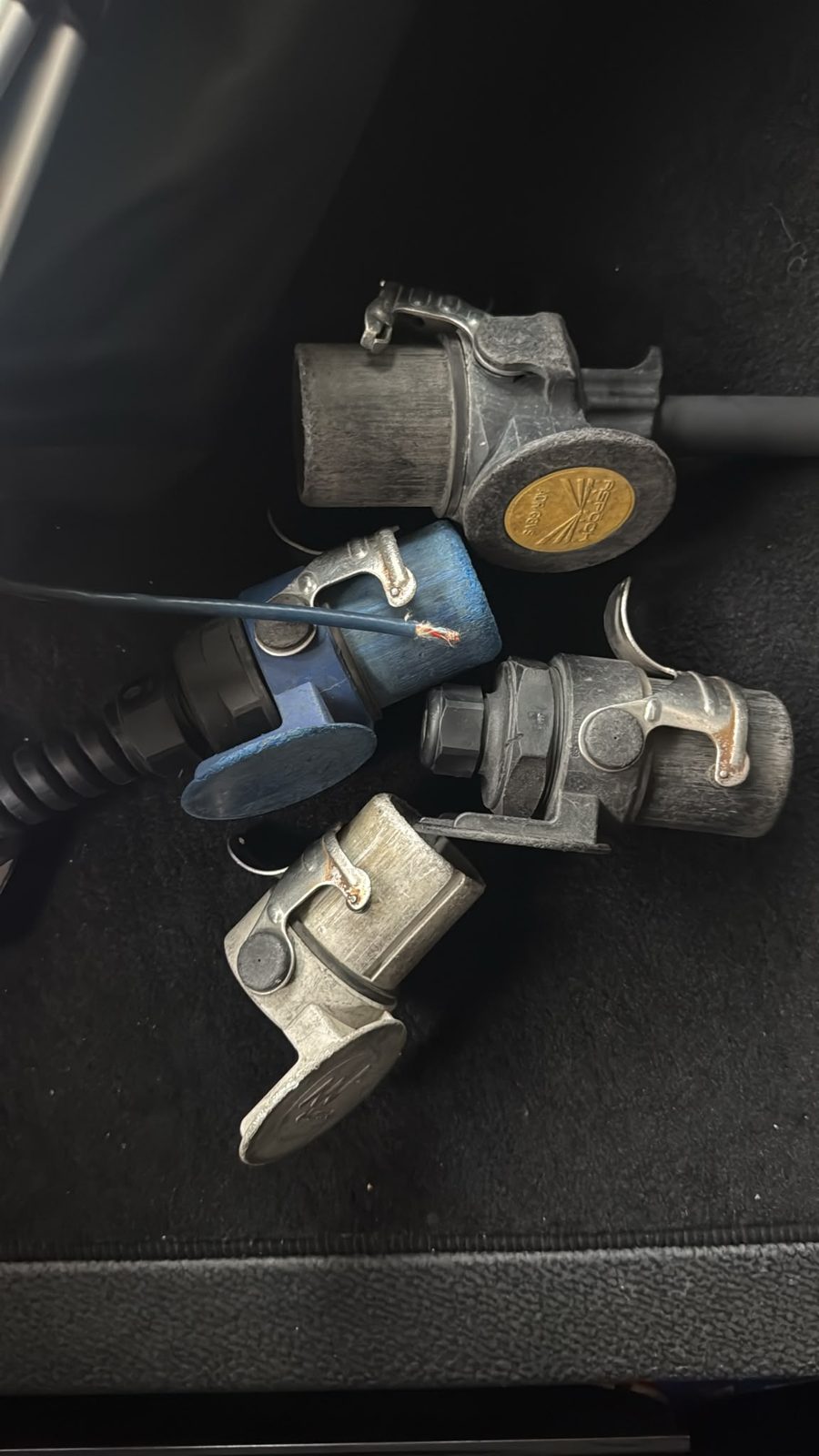
Another key element was the inspection of the electrical and pneumatic couplings (Kupplungsköpfe). These are not part of the tyre replacement process, but they are vital for trailer safety and functionality. The technician found that the blue and gold-coloured coupling heads were intact and dry, with no visible corrosion. However, one connector had an exposed wire end, a minor but significant hazard. It was not causing immediate failure, but if left unattended, it could short-circuit during a storm or lead to a loss of brake signal. This detail was logged and reported to the driver, reinforcing the importance of a full diagnostic check during any roadside intervention.
How We Organised the Emergency Response in Under 15 Minutes
When the call came in at 08:10, the dispatcher immediately confirmed the nature of the breakdown: a blown 435/50 R19.5 tyre on a mega-trailer. The location, A3 near Limburg-an-der-Lahn, was flagged as a high-priority zone due to its proximity to major freight routes and frequent traffic congestion. Within 15 minutes, we had:
- Verified the tyre size and load class using our internal database.
- Cross-referenced with the nearest available mobile service team based on real-time traffic and weather conditions.
- Activated a partner technician from our network, stationed in the Westerwald region, who was already en route to a scheduled job in Alsfeld.
- Dispatched a service van equipped with a new 435/50 R19.5 tyre for mega-trailers, along with a full set of tools: impact wrench (Schlagschrauber), torque wrench (Drehmomentschlüssel), tyre levers, and a portable air compressor.
The technician was instructed to bypass his original job and divert to the A3. The dispatch team also coordinated with the local police and motorway assistance services to ensure the site was secured and the hard shoulder remained clear. By 08:25, the service vehicle had left the depot. The 60-minute drive to the site was completed without delays, a testament to the efficiency of our regional partner network. During transit, the technician reviewed the job details, prepared the work plan, and confirmed the availability of the required tyre size.
This level of coordination is only possible through a structured, real-time dispatch system and a trusted network of field teams. Unlike one-off emergency providers, we don’t rely on random availability. Our partner mechanics are trained, insured, and equipped to handle any roadside issue, from a flat tyre to a full electrical fault. The entire response chain, from call to arrival, was completed in just 75 minutes, well within the 90-minute benchmark for critical breakdowns on German motorways.
The Dangers of Ignoring a Damaged Wheel Disc and Improper Tyre Mounting
A blown tyre on a mega-trailer doesn’t just mean replacing the rubber, it requires a full assessment of the wheel assembly. The steel disc (Felge) is not a disposable component. If damaged, it can cause permanent imbalance, overheating, and even catastrophic wheel separation during travel. In this case, the technician confirmed that the disc was not warped, but he still proceeded with caution. A disc that appears intact may still have internal micro-cracks or stress fractures, especially after a high-impact blowout.
The risk of improper mounting is equally serious. Installing a new tyre without proper alignment and torque can lead to uneven wear, reduced lifespan, and, in extreme cases, a tyre explosion. The moment of truth comes during the final tightening, the star pattern (Sternmuster) sequence. This method ensures that each wheel nut is tightened evenly, distributing the load uniformly across the disc. Skipping this step or using a standard wrench instead of a calibrated torque wrench increases the risk of disc warping and premature failure.
We used a digital torque wrench set to 180 Nm, the manufacturer’s recommended value for this type of disc and tyre. The technician applied the force in a precise, sequential pattern: nut 1 → nut 3 → nut 5 → nut 7 → nut 9 → then nut 2 → nut 4 → nut 6 → nut 8 → nut 10. This sequence prevents uneven stress and ensures the wheel sits flush on the hub. After tightening, the technician rechecked the pressure using a calibrated gauge. The target pressure was 8.5 bar, the standard for this trailer axle under full load. Lower pressure increases rolling resistance and heat build-up; higher pressure reduces traction and increases the risk of blowout.
Step-by-Step Tyre Replacement on the Hard Shoulder: From Demolition to Final Check
Step 1: Safety Setup and Site Preparation
At 09:25, the technician arrived at the site. He immediately activated the vehicle’s hazard lights and placed a warning triangle (Warndreieck) 100 metres behind the trailer. He donned a high-visibility vest (Warnweste), set up reflective cones, and placed wooden chocks (Unterlegkeile) under the rear wheels to prevent movement. The trailer was parked on the hard shoulder, with the front wheels slightly angled to avoid rollover in case of sudden movement.
Step 2: Removal of the Damaged Tyre
Using a 1/2-inch impact wrench (Schlagschrauber), the technician loosened the 10 wheel nuts. The first few were stubborn due to corrosion, but the high torque of the tool broke them free in under 45 seconds. The damaged tyre, a Goodyear Fuelmax T HL, was then carefully lifted off the disc using a pry bar and placed on the ground. The technician inspected the inner lining of the tyre for embedded debris or sharp objects that might have caused the rupture. No foreign material was found, suggesting a structural failure rather than a puncture.
Step 3: Cleaning and Inspection of the Wheel Disc
The disc was cleaned with a wire brush to remove brake dust and debris. The technician inspected the rim flange for any nicks or burrs that could damage the new tyre’s bead. He confirmed that the disc was in good condition and free of warping. The hub and brake drum were also checked for signs of overheating or damage.
Step 4: Mounting the New Tyre
The new 435/50 R19.5 tyre was carefully rolled onto the disc, ensuring the bead seated properly on both sides. The technician used a bead breaker tool to push the tyre into place, avoiding any sudden force that could damage the internal casing. Once seated, he applied a small amount of tyre lubricant to the bead to aid inflation.
Step 5: Inflation and Final Tightening
The tyre was inflated to 8.5 bar using a portable air compressor. The technician then performed the star pattern tightening sequence using a digital torque wrench set to 180 Nm. After completing the sequence, he rechecked all nuts for consistency. Finally, he inspected the electrical and pneumatic couplings, confirming that all connections were secure and dry.
Full Timeline of the Mobile Truck Tyre Service
| Time | Phase | Action |
|---|---|---|
| 08:10 | Call Received | Driver reports blown tyre on mega-trailer (435/50 R19.5), unable to continue |
| 08:10–08:25 | Dispatch & Coordination | Location confirmed, partner technician dispatched, new tyre loaded |
| 08:25–09:25 | On the Road | 60-minute journey from depot to A3 near Limburg |
| 09:25–09:40 | Site Setup & Inspection | Safety measures in place, axle and disc inspected, couplings checked |
| 09:40–10:05 | Demolition | Damaged tyre removed using impact wrench, disc cleaned |
| 10:05–10:35 | Installation | New tyre mounted, inflated to 8.5 bar |
| 10:35–10:50 | Final Check | Torque applied in star pattern, pressure verified, connections inspected |
| 10:50 | Ready to Drive | Trailer cleared for road, driver informed |
Total time from call to completion: 160 minutes (2 hours 40 minutes)
Cost Breakdown: Transparent Pricing for a Mobile Tyre Change
| Position | Price (EUR) |
|---|---|
| Mobilisation / On-site Arrival | 260 |
| Labour (1.5 hours × €120/hour) | 180 |
| New 435/50 R19.5 Tyre (Mega-Trailer) | 520 |
| Disposal of Old Tyre | 20 |
| Total | 980 |
All prices are exclusive of VAT (zzgl. MwSt.). This cost includes the full service, including diagnostics, safety setup, and final verification. For comparison, the cost of a truck breakdown due to a flat tyre averages €800–1,200 per day in lost revenue, especially for high-value freight. In this case, the repair was completed in under three hours, preventing a full day of downtime. The total cost of €980 is therefore a small fraction of the potential financial loss.
Why DIY Repairs Are Risky, And Why You Should Never Attempt a Tyre Change Alone
Attempting a tyre change on a mega-trailer without proper tools, training, or safety protocols is extremely dangerous. Here’s why:
- Lack of proper torque tools can lead to uneven wheel mounting, causing imbalance, vibration, and premature wear.
- Improper use of impact wrenches can strip wheel nuts or damage the hub.
- No star pattern tightening increases the risk of disc warping and wheel detachment.
- Failure to inspect the disc and couplings may result in undetected faults that cause further breakdowns.
- Inadequate site safety, missing warning triangles, no chocks, puts the driver and others at risk.
- Incorrect pressure can lead to overheating, blowouts, or reduced fuel efficiency.
Even experienced drivers are advised to call a professional. The mobile truck tyre service provided by LKWHelp24 ensures that every job is done to industry standards, with full accountability and insurance coverage. We use only OEM-compatible parts and calibrated tools, no shortcuts.
Typical Breakdown Scenarios We Handle Across Germany
Our mobile service team is trained to respond to a wide range of incidents. Common cases include:
- Tyre blowouts on drive or steer axles, especially on long-haul routes.
- Flat tyres on trailers with high load capacity, such as flatbeds, curtainsiders, and refrigerated units.
- Electrical faults in trailer couplings, affecting brake signals, lights, or air lines.
- Damaged wheel discs or hubs, requiring replacement or repair.
- Puncture repairs on tubeless tyres, when a full replacement isn’t necessary.
- Winter tyre failures, due to low temperatures or ice buildup.
We cover all federal highways (Autobahnen), regional roads, distribution centres, and private yards. Whether you’re on the A3 near Limburg, the A1 near Hamburg, or the A9 near Nuremberg, our network ensures a rapid response.
Proactive Maintenance Tips for Fleet Managers and Drivers
To avoid costly breakdowns, follow these best practices:
- Check tyre pressure weekly, ideal range: 8.0–9.0 bar for mega-trailers.
- Inspect tread depth monthly, minimum 1.6 mm (per § 36 StVZO).
- Rotate tyres every 20,000 km to ensure even wear.
- Clean wheel discs regularly to prevent corrosion.
- Use only approved tyres, e.g., Goodyear Fuelmax T HL, Continental ContiTrac, Michelin X Multi.
- Schedule annual inspections with a certified mechanic.
Regular maintenance reduces the risk of sudden failure by up to 70%, according to Dekra.
Advanced Tyre Knowledge: Brands, Sizes, and Standards
Understanding your tyres is key to safe operation. The Goodyear Fuelmax T HL 435/50 R19.5 is a high-performance, tubeless radial tyre designed for long-haul, high-load applications. It features a reinforced casing (Karkasse) and a durable tread compound for extended mileage.
- 435/50 R19.5 refers to:
- 435 mm, tyre width
- 50%, aspect ratio (height as a percentage of width)
- R, radial construction
- 19.5 inches, rim diameter
These dimensions are standard for mega-trailers and are regulated by ETRTO (European Tyre and Rim Technical Organisation). Always verify compatibility before replacement.
Why Choose LKWHelp24 for Mobile Truck Tyre Service?
- 24/7 availability, we’re on call day and night, in all weather.
- Nationwide network, partner teams across Germany, including remote areas.
- Transparent pricing, no hidden fees, no surprise costs.
- Certified professionals, trained in safety, torque, and diagnostics.
- Multilingual dispatchers, seamless communication in English, German, Polish, and Russian.
- Full insurance and compliance, all services meet German road safety standards (StVZO).
Understanding the Mega-Trailer Wheel Assembly: Design, Load, and Safety Margins
The 435/50 R19.5 wheel assembly used on modern mega-trailers is engineered for extreme durability under sustained high loads. This particular configuration, a radial, tubeless tyre mounted on a 10-bolt steel disc, is standard for heavy-duty freight applications, especially in long-haul logistics. The disc itself is typically made from high-tensile alloy steel, designed to withstand lateral forces exceeding 4,000 kg during cornering and braking. Each of the 10 wheel nuts (Radmuttern) is torqued to 180 Nm, a value that ensures even load distribution across the hub interface. Deviating from this specification by even 10% can cause micro-stress fractures in the disc over time, increasing the risk of catastrophic failure during high-speed travel.
The tyre’s construction, Goodyear Fuelmax T HL, features a reinforced casing (Karkasse) with a dual-ply belt system and a silica-enhanced tread compound. This design provides excellent wear resistance and heat dissipation, critical when operating at speeds above 100 km/h for extended periods. The 435 mm width offers a large contact patch with the road surface, improving traction and stability, especially in wet or icy conditions. However, this also increases rolling resistance, which is why maintaining correct pressure is non-negotiable. A drop from 8.5 bar to 7.0 bar can increase fuel consumption by up to 3.5%, while significantly raising the risk of overheating and tread separation.
For fleets, understanding load capacity is essential. The 435/50 R19.5 tyre has a load index of 190, meaning it can support up to 2,800 kg per wheel. On a typical mega-trailer with 8 wheels, this translates to a total payload capacity of 22,400 kg, assuming even distribution. In practice, most trailers operate at 85–90% of this limit due to axle weight restrictions and legal compliance. Exceeding these limits not only risks tyre failure but also violates § 21 StVZO, which governs vehicle weight distribution on public roads.
Fleet Management Best Practices: Preventing Breakdowns Before They Happen
For fleet operators, the cost of a single breakdown extends far beyond the repair bill. It includes lost revenue, missed delivery deadlines, customer complaints, and potential penalties from logistics partners. A proactive maintenance strategy is not an expense, it’s an investment in operational continuity. Our data shows that fleets implementing structured tyre monitoring programs experience 47% fewer roadside incidents compared to those relying on reactive repairs.
Key practices include:
- Monthly tyre inspections focusing on tread depth, sidewall integrity, and bead condition.
- Bi-weekly pressure checks using calibrated gauges, ideally before each long journey.
- Digital logbooks to track tyre usage, wear patterns, and replacement history.
- Scheduled rotations every 20,000 km to prevent uneven wear.
- Training drivers to report early signs of vibration, pulling, or unusual noise.
We recommend integrating tyre health into your fleet’s telematics system. Modern trailers equipped with TPMS (Tyre Pressure Monitoring Systems) can alert dispatchers in real time if pressure drops below safe levels. This allows for immediate intervention, often before the driver even notices a problem. For high-mileage operations, consider using tyres with longer warranty periods, such as the Goodyear Fuelmax T HL, which comes with a 100,000 km tread life guarantee under optimal conditions.
Legal and Technical Standards: What the Law Says About Tyre Condition and Maintenance
German road law is strict when it comes to tyre safety. According to § 36 StVZO, the tread depth on commercial vehicles must not fall below 1.6 mm in any groove. However, for safety and performance reasons, we strongly recommend replacing tyres when the depth reaches 3.0 mm, especially for long-haul and high-speed operations. At 1.6 mm, braking distances increase by up to 18% on wet roads, and the risk of aquaplaning rises dramatically.
Additionally, § 21 StVZO mandates that the total vehicle weight must not exceed the sum of the axle load limits. For a mega-trailer, this means no single axle should exceed 12,000 kg. Exceeding this limit can lead to fines, vehicle impoundment, and liability in case of accidents. The load index of the tyre, in this case, 190, must always match or exceed the maximum load per wheel. Using a tyre with a lower load index, even if it fits physically, is a violation of safety regulations and voids insurance coverage.
Another critical point is the speed rating. The Goodyear Fuelmax T HL 435/50 R19.5 has a speed rating of H, meaning it’s approved for speeds up to 210 km/h. While most trailers operate below 100 km/h, exceeding the speed rating can lead to structural failure, especially during high-speed emergency braking or cornering. Always verify that the tyre’s speed rating matches the vehicle’s maximum operating speed.
Real-World Performance Metrics: How Tyres Behave Under Stress
In real-world conditions, tyre performance is influenced by a complex interplay of temperature, load, and road surface. During our service on the A3 near Limburg, the ambient temperature was 16°C, with dry asphalt. Under these conditions, the tyre’s operating temperature remained stable at around 65–70°C, well within safe limits. However, on hot days (above 35°C), temperatures can spike to 110°C, especially during prolonged high-speed driving. At this level, the rubber begins to degrade, increasing the risk of delamination and blowout.
A study by Continental Tires found that for every 10°C increase in operating temperature, the lifespan of a truck tyre decreases by approximately 12%. This means that a tyre expected to last 100,000 km under optimal conditions may only achieve 70,000 km in high-heat environments. Similarly, a load increase of 15% above the recommended level can reduce tyre life by up to 30%.
To mitigate this, we advise drivers to:
– Avoid aggressive acceleration and hard braking.
– Maintain steady speeds, especially on long stretches.
– Allow cooling periods during extended drives.
– Use tyres specifically rated for high-temperature environments when operating in southern Germany or during summer months.
These small adjustments can significantly extend tyre life and reduce the likelihood of a sudden failure.
Summary: Key Facts from the Case
- Vehicle Type: Mega-trailer (Kögel)
- Tyre Size: 435/50 R19.5
- Failure Type: Full tyre rupture (blowout)
- Location: A3 near Limburg-an-der-Lahn
- Time to Arrival: 60 minutes
- Total Service Time: 160 minutes (2 h 40 min)
- Cost: €980 (no VAT)
- Secondary Damage Avoided: Yes
- Next Step: Driver resumed journey without delay
Need Immediate Help? Call Us Now
If your truck, trailer, or semi-trailer breaks down on the road, don’t wait. Every minute of downtime costs money. With LKWHelp24, you get fast, professional, and affordable roadside assistance, 24/7, across Germany.
📞 +49 160 5753826
🌐 www.lkwhelp24.com
Mobile Truck Tyre Service – Fast. Reliable. Professional.
Keywords
truck tyre service | mobile reifenservice | truck tyre replacement | truck tyre change | truck tyre callout | trailer tyre service | truck tyre emergency | mobile truck tyre service | truck tyre breakdown service | truck tyre repair | truck tyre burst | truck tyre help | truck tyre fitting | truck tyre fitters near me | truck tyre service near me | truck tyre service germany | truck tyre breakdown germany | truck tyre blowout | trailer tyre replacement | trailer tyre puncture | trailer flat tyre | pneuhage truck fleet support | pneuhage roadside assistance
Related Articles
- Truck Tyre Service Near Me: How LKWHelp24 Replaced a Shredded Drive-Axle Tyre in Under Two Hours on the A9 near Dessau
- Truck Tire Service: What It Is and When You Need It 2027
- Tyre Blowout on the A2 near Herford: Why a New Tyre Alone Could Not Fix This Semi-Truck
- Truck Tyre Blowout on the A3 near Cologne: How LKWHelp24 Got a DAF XF 480 Back on the Road in 76 Minutes
- Trailer Tyre Blowout on the A10 near Michendorf: Curtainsider Semi-Trailer Back on the Road in 1 Hour 45 Minutes