Skip to content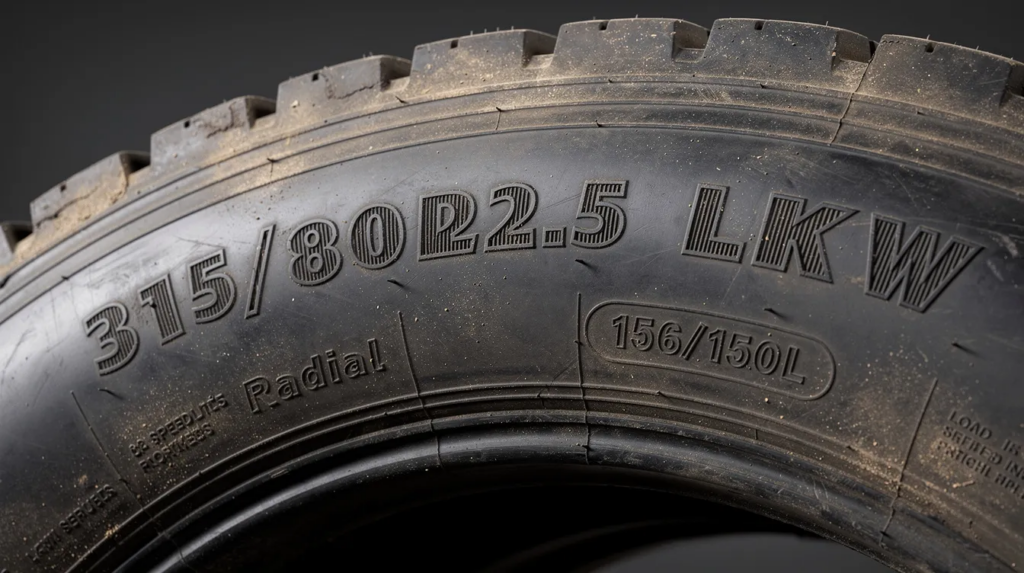
The speed index on a tyre determines how fast a vehicle may safely be driven on it. For trucks and commercial vehicles of 7.5 t and above, this value plays a different role than on cars, because the real-world loads from axle weight, heat and continuous operation are many times higher. This article explains what the H index actually means, why on heavy commercial vehicles it has to be considered together with the load capacity, and what you should do as a driver or dispatcher when a tyre problem occurs on the road.
Key points (summary)
- The letter H stands for a permitted top speed of up to 210 km/h. It does not describe a tyre size, but the maximum speed the tyre is approved for.
- On trucks and commercial vehicles of 7.5 t and above, tyre size, load capacity (load index) and tyre speed rating must always match the vehicle and its duty profile.
- Driving above the speed index generates additional heat in the tyre structure. Tyres can burst under overload if the speed is exceeded.
- Tyres with a higher speed index often have stiffer sidewalls for stability. This is relevant with heavy axle loads.
- Lkwhelp24 arranges a mobile truck tyre service within 30–60 minutes for a tyre breakdown or a wrong tyre speed rating H, nationwide in Germany, 24/7.
Introduction: What does “tyre speed rating H” mean?
Tyres are approved for specific top speeds. The letter H on the tyre sidewall is part of the so-called speed index (speed rating). It places the tyre in a speed category and shows up to which speed the tyre may be operated safely under correct load.
The tyre speed rating must at least match the vehicle’s design top speed. This requirement also applies to international truck transport in Germany, whether on the Autobahn, on a federal road or on a factory site. The speed index is a decisive criterion when buying tyres, because a wrong index can lead to damage, breakdowns and dangerous situations. In § 36, the German road traffic licensing regulations (StVZO) require that tyres match the vehicle in design, load-bearing capacity and speed category.

Structure of the tyre marking: Where is the H index for the tyre speed rating?
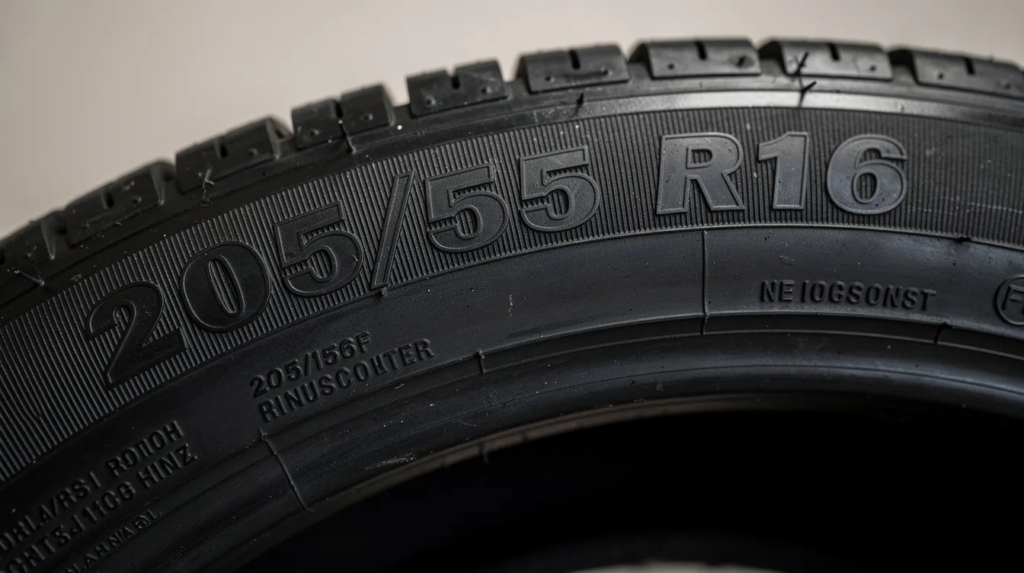
The tyre marking is located on the sidewall of every tyre. It contains several pieces of information in a fixed order:
- Tyre size (width, aspect ratio, rim diameter, e.g. 315/80 R22.5)
- Load index (LI), e.g. 154/150, which indicates the maximum load capacity per tyre
- Speed index, e.g. H, which defines the permitted top speed
The letter H does not stand for a tyre size, but for the permitted top speed. It appears directly after the load index. The next category above H is V, with 240 km/h.
Drivers should check this data before every fitting or pass it on to the dispatcher or the tyre service. In the event of a tyre breakdown, Lkwhelp24 asks for exactly this information by phone or WhatsApp in order to arrange the right replacement tyre. The name of the tyre manufacturer and the DOT date are also on the sidewall, but they are less relevant for emergency assistance than size, load capacity and speed index.
Tyre speed rating and load capacity: Why both must match
The load index (LI) determines the maximum load capacity of a tyre. The H index defines the maximum speed. Both values work together; a tyre is only safe if load capacity and speed match the real axle load and the duty profile of the truck.
The relationships at a glance:
- The speed index rating guarantees that the tyre can safely withstand the top speed at maximum load.
- As speed rises, the effective load capacity falls. Manufacturers publish load/speed tables that quantify the reduction for each speed step.
- Tyres with the same load index and speed index should always be fitted on one axle. Different indices on one axle lead to uneven loading.
- Tyres with a higher speed index often have stiffer sidewalls for stability. This improves handling under load, but also increases rolling resistance at low speeds.
- Overloading, or permanently high speed combined with a wrong H index, can lead to a tyre blowout.
In a breakdown, Lkwhelp24 always arranges a tyre with the right load capacity and a suitable speed index, provided it is available in the region, and draws on a 24/7 mobile truck tyre service in Germany to do so.
Tyre speed rating H on trucks and commercial vehicles of 7.5 t and above
This section applies exclusively to trucks and commercial vehicles of 7.5 t and above. Cars, vans or motorhomes are not served by Lkwhelp24; for these heavy vehicles, Lkwhelp24 offers 24/7 truck breakdown assistance in Germany.
Haulage companies, refrigerated vehicles, articulated lorries and buses place different demands on tyre speed rating and load capacity. H tyres are suitable for vehicles with a design top speed of up to approx. 190–205 km/h. For heavy commercial vehicles, the legal top speed in Germany on the Autobahn is 80 km/h (vehicles over 7.5 t). Here the speed index is less about using the speed and more about safety: it ensures that the tyre stays thermally and mechanically stable on Autobahn journeys under heavy payload.
Fleet operators usually work with approved combinations of tyre size, load capacity and speed index. These specifications come from the vehicle documents and the manufacturer approvals. Before every trip, dispatchers should have the fitted tyres checked for H index and load capacity, especially after mixed fitments or emergency fittings. The load from weight, high mileage and heat is many times higher on heavy vehicles than on light vans.
Risks of exceeding tyre speed rating H
Permanently or significantly exceeding the speed index is safety-critical.
At excessive speed, strong heat builds up in the tyre through the flexing of the tread and centrifugal force. This heat can cause structural and belt damage. The carcass deforms, and the ply can detach from the tread.
Pre-existing damage increases the risk:
- Kerb contact at delivery addresses
- Overloading of individual axles through incorrect loading
- Wrong air pressure (too low or too high)
- Age of the tyre (brittle rubber, cracked sidewalls)
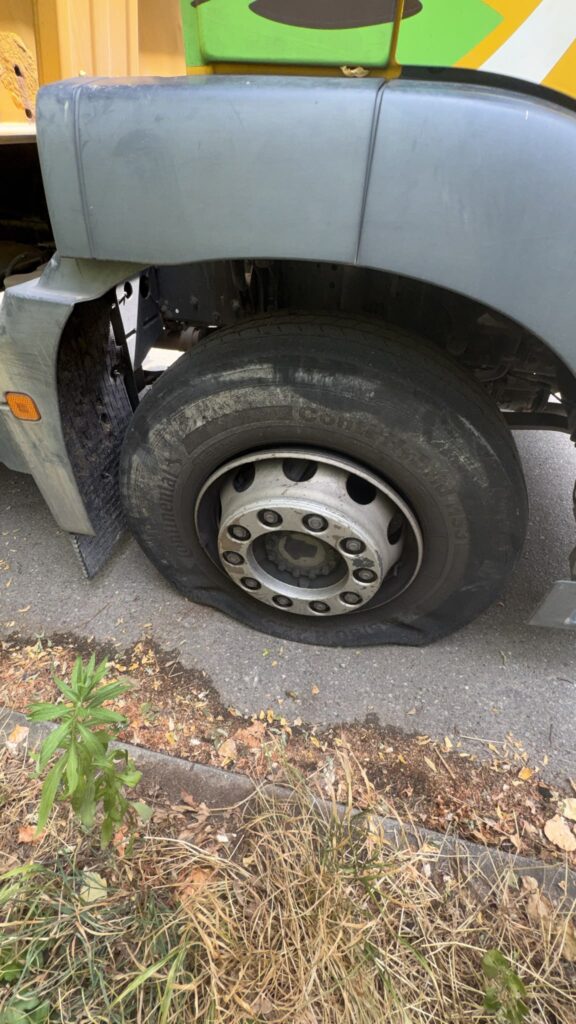
Tyres can burst under overload if the speed is exceeded. A tyre blowout on the Autobahn with a full load quickly leads to serious accidents and long tailbacks. Lower indices are not permitted for summer tyres; the vehicle may only be operated with a tyre whose index at least matches the design top speed.
Recommendation: never knowingly drive above the approved tyre speed rating. Have vibrations, imbalances or visible damage checked immediately.
Influence of air pressure and temperature on the permitted tyre speed rating
Air pressure and temperature directly affect the real load capacity of a tyre with H index.
Too low an air pressure increases the flexing work in the tyre. The sidewalls bend more with every revolution, the friction in the material rises, and the tyre heats up faster. At high speed this effect becomes stronger.
High outside temperatures and long gradients (Alpine passes, low mountain routes) add further thermal load. Winter tyres tend to overheat at speeds above 210 km/h. For winter and all-season tyres there is a special rule on speed indices: under certain conditions they may be driven with a lower index if a corresponding sticker is placed in the driver’s field of view.
Before longer Autobahn journeys and under full load, regular checks of air pressure and tyre condition are recommended. As part of a mobile tyre service, Lkwhelp24 also points out visible signs of overheating or uneven wear.

Typical causes of tyre breakdowns and blowouts with a wrong index
The most common causes of breakdowns with a wrong tyre speed rating or load capacity can be summarised in a few categories:
- Mixed tyres on one axle: Different speed indices on one axle cause uneven loading. The weaker tyre is stressed more and fails first.
- Fitting a tyre with too low an H index: A tyre whose speed index is below the design top speed is not permitted from the outset.
- Old or incorrectly stored tyres: UV radiation, moisture and long periods of standing make the rubber brittle. The structure loses elasticity.
- Long-distance trips under time pressure: Permanently high speed over hours increases the thermal load.
- Slow air loss: A slowly leaking valve or a small injury often goes unnoticed until the tyre fails under load.
- Overloading of individual axles: Incorrect loading shifts the weight and overloads individual tyres.
Lkwhelp24 resolves around 90% of tyre breakdowns directly on site, without towing. Condition: the damage is limited to the tyres; particularly in the Berlin area, a specialised 24/7 truck tyre service is available for this, and where a vehicle does have to be recovered there is truck towing.
What to do if a tyre with H index fails while driving?
Reduce speed immediately and switch on the hazard lights.
Step-by-step guide for truck drivers:
- Reduce speed, hazard lights on. If you notice a problem (steering wheel shake, unusual noises, smoke, sudden air loss), make no sudden steering movements.
- Park the vehicle safely. On the hard shoulder or in a car park with enough distance from the moving traffic. Switch off the engine, engage a gear, apply the parking brake.
- Put on a high-visibility vest. Before getting out. Equip all occupants with vests as well.
- Set up the warning triangle. On the Autobahn at least 150 metres behind the vehicle.
- Behind the guardrail. Driver and passengers leave the carriageway and take cover behind the crash barrier.
- Contact Lkwhelp24. By WhatsApp (share your location) or phone: +49 160 5753826. Request the mobile truck tyre service.
In the call, the driver should give the location, vehicle type, axle position of the defective tyre and, if possible, the tyre marking. A partner is usually on site within 30–60 minutes.
Which data on tyre speed rating H should the driver have ready?
Complete information speeds up the arrival and the selection of the right tyre.
The following information is useful when contacting us by phone or WhatsApp:
- Exact position: Autobahn number, direction of travel, km marker or name of the nearest car park/rest area
- Vehicle type: Articulated lorry, rigid truck, semi-trailer alone, trailer
- Axle position of the defective tyre: Front axle, drive axle, trailer axle; inner or outer twin tyre
- Tyre marking: Ideally the complete inscription including load index and H index, read from the intact twin tyre or the other axle
- Time of day and access situation: Day, evening, night or weekend; roadworks, narrow access, ramp
Lkwhelp24 uses this information to select the suitably equipped provider from its network of around 2,500 partner businesses in Germany and, if needed, to coordinate a mobile truck service in Germany. The more precise the data, the faster the right tyre can be brought along.
Lkwhelp24 mobile truck tyre service for problems with tyre speed rating H
Lkwhelp24 arranges a mobile truck tyre service or a partner workshop at the breakdown location. Lkwhelp24 does not run its own workshops, but coordinates a comprehensive truck service in Germany around the clock when needed.
The costs at a glance:
- Weekdays during the day: from €290 net (tyre price extra)
- Evenings, nights and weekends: from €429 net (tyre price extra)
A partner is usually on site within 30–60 minutes. Around 90% of cases are solved directly at the roadside, without the truck having to be towed.
When choosing a tyre in an emergency, the focus is on the right dimension, load capacity and suitable tyre speed rating. A specific brand cannot be guaranteed in a pure emergency, because the tyre comes from the stock of the nearest partner. A preferred brand is possible for a surcharge and with the corresponding lead time.
Payment: cash or card. Transparent prices without hidden costs. Invoicing for haulage companies and fleets on request.
Service area, availability and languages of Lkwhelp24
The service is available nationwide in Germany for trucks of 7.5 t and above. Lkwhelp24 can be reached 24/7, 365 days a year, including on international transit routes through Germany.
Communication is possible in German, English, Polish and Russian. This makes it easier for foreign drivers to report problems with tyre speed rating H or other tyre damage, and it supports international drivers in particular through a specialised truck roadside assistance service in Germany.
WhatsApp is the preferred way to get in touch. The driver sends his location by WhatsApp, and Lkwhelp24 takes care of the organisation.
Contact details:
- Phone: +49 160 5753826
- WhatsApp: wa.me/491605753826
- E-mail: info@lkwhelp24.com
More information on truck breakdown assistance across Germany.
Comparison: changing it yourself vs. a professional mobile tyre service
Changing a tyre on the hard shoulder of the Autobahn is hardly safe for a truck driver on their own. The wheels often weigh 60–80 kg, the required tightening torque is 500–630 Nm depending on the manufacturer, and safety next to moving traffic is a problem in itself.
Criterion | Changing it yourself | Professional mobile service |
|---|---|---|
Time required | 60–120 minutes, longer without experience | 30–60 minutes from call to moving on |
Safety on the Autobahn | High risk from moving traffic, no barrier vehicle | Partner knows the safety measures and brings the equipment |
Equipment needed | Hydraulic jack, torque wrench, spare tyre | Everything is on board the service vehicle |
Risk of incorrect fitting | Wrong torque, wrong index, damage to the rim | Correct tightening torque, suitable combination of load capacity and tyre speed rating |
Consequential risk | Renewed failure, damage to wheel bolts and hub | Professional fitting reduces the risk of failure |
For problems with H index, load capacity or mixed tyres, a professional service ensures the right combination and the correct torque. The driver saves time, and the transport chain is disrupted less. |

Tyre speed rating H and fleet management: prevention instead of breakdowns
Dispatchers and fleet managers benefit from a uniform strategy for tyre sizes, load capacity and H index. This simplifies stockkeeping and reduces breakdowns.
Concrete measures:
- Document tyre speed rating and load index as mandatory in maintenance plans and checklists
- Regular visual checks: measure tread depth, check sidewalls for cracks, check air pressure
- Schedule the planned replacement on heavily loaded axles (drive axle, trailer axle) before the tyres reach their limit
- After every emergency fitting, check that the fitted tyre matches the target index and target load capacity
From breakdown histories, Lkwhelp24 often recognises recurring wrong selections, such as an index that is too low or an unsuitable tyre combination, and regularly shares such insights in its news and practical reports on truck breakdown assistance. This feedback helps fleet operators adjust their strategy and improve fleet safety.
Special applications: construction traffic, heavy-haul transport and high sustained speeds
Special applications place different demands on tyre speed rating and load capacity than regular long-distance haulage, which is why a flexible truck tyre service in Germany, 24/7 is important for many international fleets.
Heavy-haul transports move with high axle load and low speed. Here the load index is often the limiting factor, not the speed index. Even so, the tyre must be approved for the permitted speed of the transport.
Construction vehicles start and brake frequently, and load and unload several times a day. The alternating mechanical stress strains the sidewalls differently from steady Autobahn driving.
Long-distance haulage with long Autobahn stretches creates steady thermal load over hours. In its technical guide for truck tyres, Continental describes how the load capacity falls by a percentage as speed increases.
Fleet managers should deliberately choose suitable combinations for each type of use and avoid mixed tyres with different indices. In a breakdown, Lkwhelp24 tries to arrange a tyre that also suits the vehicle’s typical duty profile, as far as it is available in the region.

Typical driver questions about tyre speed rating (H) on the road
When a tyre breaks down, drivers are often faced with specific uncertainties:
- “May I briefly drive a little faster than the index allows?”
- “What happens if only one tyre on the axle has a different index?”
- “Can I drive to the depot on a spare wheel with a lower index?”
This article is not a substitute for legal advice. The technical limits of the tyre manufacturer and the information in the vehicle documents are binding. If in doubt: reduce speed, shorten the journey and consult a tyre service early.
Lkwhelp24 specialists can give a first assessment of the risk over the phone if the driver reads out the tyre marking with H index and load index. In addition, a specialised mobile truck tyre service in Germany 24/7 is ready to fix damage directly on site. However, a binding approval of higher speeds rests with the tyre manufacturer and the registration authority.
How Lkwhelp24 helps in practice with problems with tyre speed rating H
The process from the emergency call to moving on again, in practice:
- Report: The driver reports a tyre problem by phone or WhatsApp. He describes the situation (blowout, slow pressure loss, visible damage) and states the tyre speed rating (e.g. H) and tyre size.
- Dispatch: The Lkwhelp24 dispatcher asks for technical data and, based on the position, selects a partner workshop from the network of around 2,500 businesses.
- Arrival: The partner drives to the location. This usually takes 30–60 minutes.
- Fitting: The defective tyre is removed, a suitable replacement tyre is fitted and tightened to the correct torque.
- Moving on: In around 90% of cases the driver can then continue the trip.
Payment is transparent: cash or card. On request, the partner passes basic data on the fitted tyre to the driver or dispatch so that it can be recorded in fleet management.
Frequently asked questions (FAQ) on tyre speed rating H on trucks
The following questions cover details that were only touched on in the main text. The answers refer to trucks and commercial vehicles of 7.5 t and above.
Can I briefly drive faster than the H index allows?
Knowingly driving above the approved tyre speed rating is always an additional risk. Tyres can be operated up to 10% above the maximum speed without immediate failure. Repeated or prolonged exceeding, however, greatly increases the heating of the tyre and promotes structural damage. The limits set by the manufacturer and the speed index should always be observed. It is better to adjust driving times in the trip plan than to push the tyre to its limit. Lkwhelp24 can help by phone with questions about tyre condition, but cannot give a binding approval of higher speeds.
May I run different tyre speed indices on one axle?
Mixed tyres with different indices on one axle are technically problematic and a safety risk. As a rule, the lower index limits the whole set and thereby limits the maximum permitted speed for the vehicle. Such mixes should only be used as a very short emergency solution. At the next opportunity, switch to uniform tyres with the right tyre speed rating. In a breakdown, Lkwhelp24 explains which speed should be driven in the meantime and recommends an adjusted tyre replacement at the next opportunity.
Can I choose a specific tyre brand with H index in an emergency?
In a pure emergency the priority is getting moving quickly with the right tyre size, load capacity and tyre speed rating. Depending on the location, not every brand is available immediately. In most cases a suitable but possibly different brand is fitted. On express request and with the corresponding lead time, specific brands can be arranged. This may involve a surcharge and a longer wait. For planned changeovers, it is advisable to work with workshop partners well in advance. Lkwhelp24 is above all the right contact for acute breakdowns under time pressure.
How do I document an emergency tyre change with a different index for my fleet?
After a breakdown call-out it makes sense to note the fitted tyre size, load capacity and tyre speed rating in the vehicle documents. Many companies use simple checklists or digital fleet management systems in which the axle tyres are stored per vehicle. Every emergency solution (e.g. a deviating H index) should be documented with date, axle position and odometer reading. A date for the regular replacement with the target tyre belongs with it. Lkwhelp24 partners pass basic data on the fitted tyre to the driver or dispatch on request.
What is the fastest way to reach Lkwhelp24 for problems with tyre speed rating H?
In practice, the fastest way to get in touch is WhatsApp with location sharing: wa.me/491605753826. Alternatively, you can call +49 160 5753826 at any time. In the first contact, the location, vehicle type, axle position of the damage and, if possible, the tyre marking including the H index should be sent. Drivers and dispatchers should save the contact details of Lkwhelp24 in the vehicle in advance so they can request help in an emergency without losing time. We speak German, English, Polish and Russian.