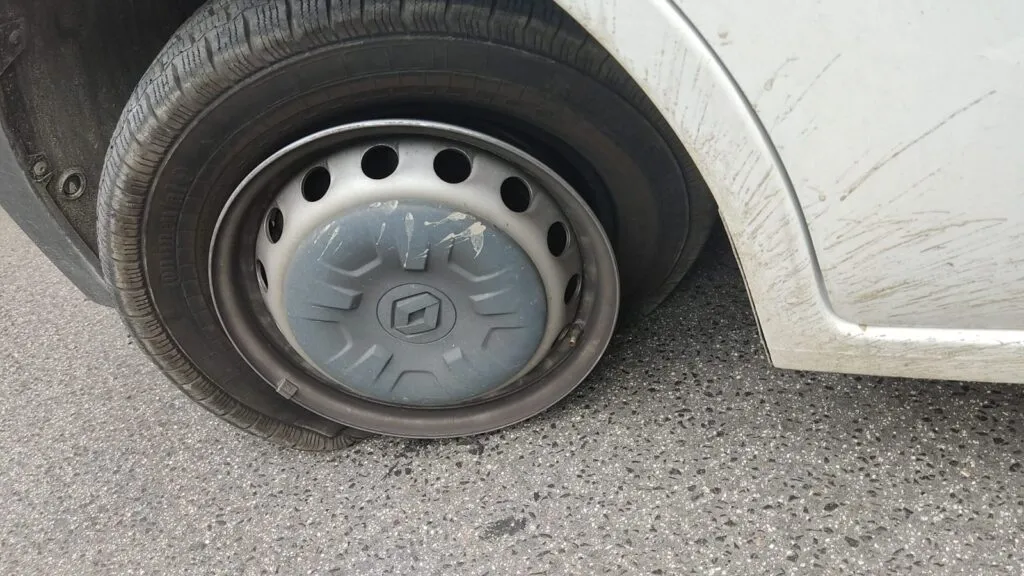
A blown tyre on a heavy-duty truck is more than just an inconvenience, it’s a safety crisis in motion. When the front tyre of a semi-trailer rig fails at speed, especially on a busy German autobahn, the consequences can be catastrophic. On 16 September 2026, a long-distance hauler transporting oversized freight came to a sudden halt on the A7 near Bad Hersfeld. The cause? A complete tyre blowout on the steering axle, leaving the driver stranded in the emergency lane with a severely damaged 315/70 R22.5 tyre hanging off the wheel hub like a broken limb. This wasn’t just a flat, it was a structural collapse. The immediate risk? Loss of control, a multi-vehicle pile-up, or even a rollover. But thanks to a swift, expert response from LKWHelp24, the vehicle was back on the road in just 1 hour and 50 minutes, with no further damage and no danger to other road users.
What made this recovery so effective wasn’t luck, it was precision. From the moment the call came in, every second counted. Our 24/7 mobile tyre service team mobilised within 15 minutes, dispatched a specialist technician from our regional partner network, and coordinated the entire operation with military efficiency. The situation was urgent: the truck was carrying a wide-load cargo, and the driver had already reported a sharp jolt and sudden pull on the steering wheel, classic signs of a tyre carcass failure. The repair required not only replacing the tyre but also a full inspection of the wheel assembly, brake lines, and axle integrity. Every detail mattered. This case shows why on-site truck tyre service isn’t a luxury, it’s a necessity for modern haulage operations.
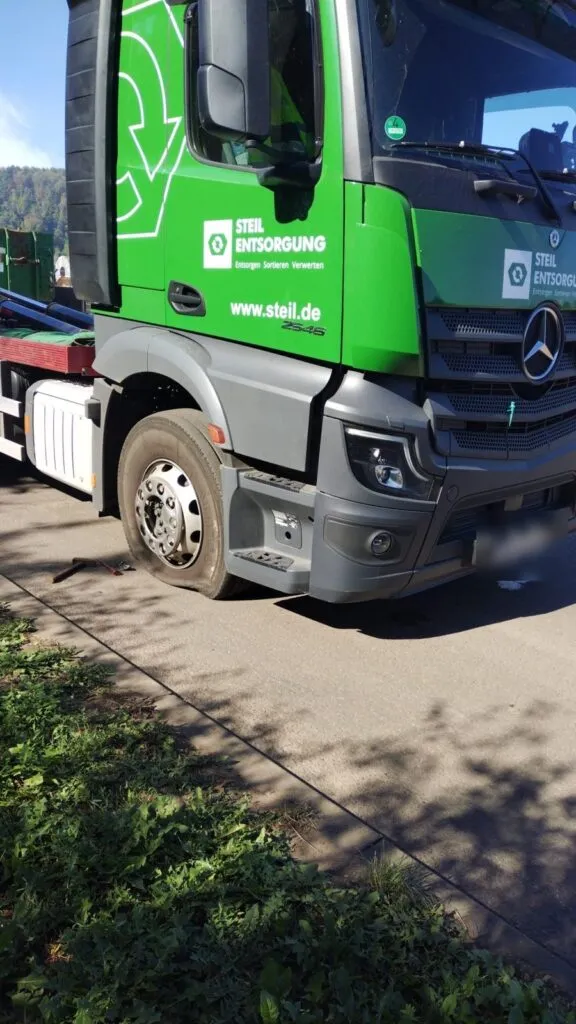
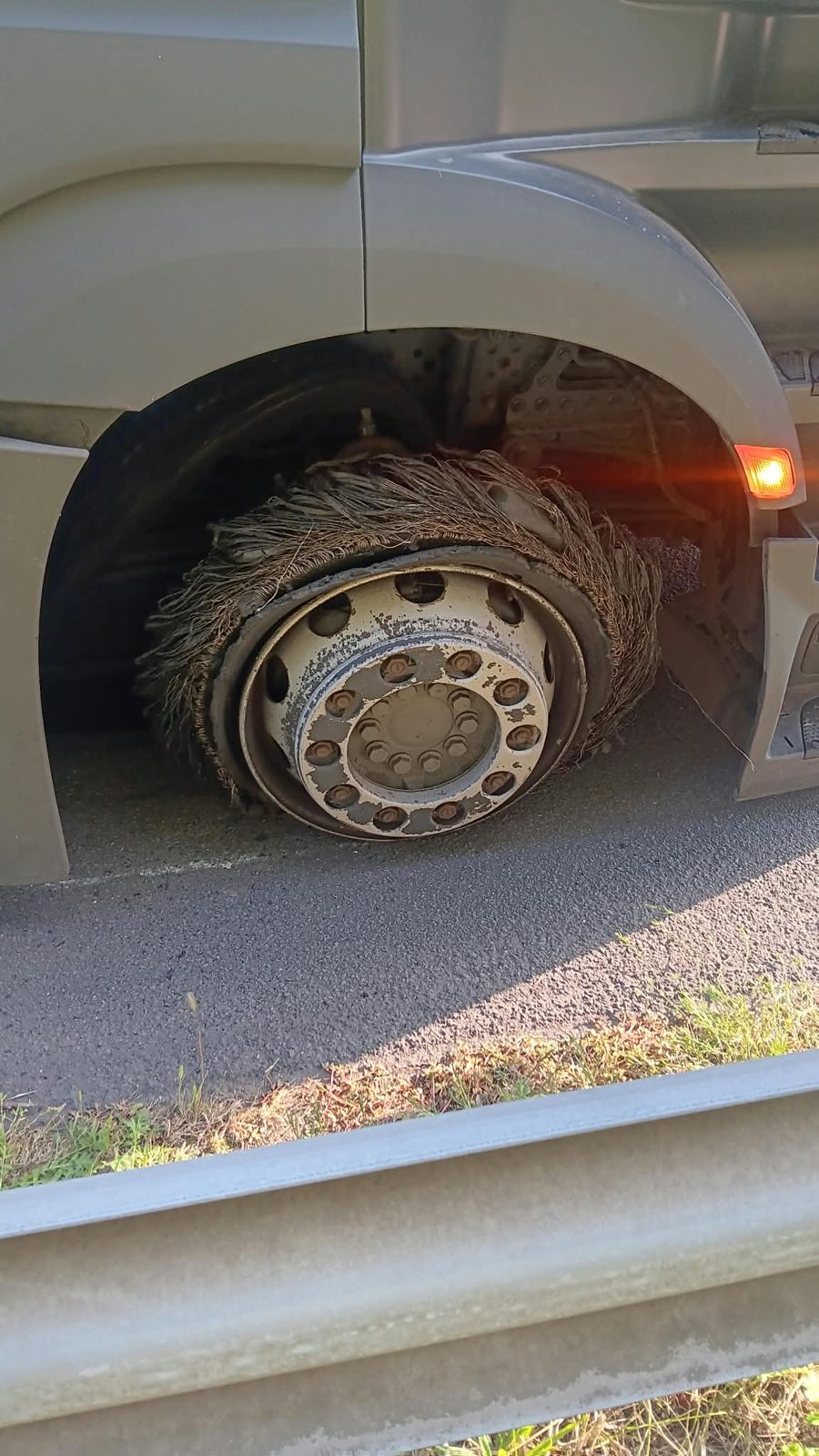
The scene at the roadside was tense but controlled. The truck was safely positioned on the hard shoulder, its hazard lights flashing, a warning triangle placed 100 metres behind. The air was still, the sky golden with late afternoon sun, and the temperature hovered around 20°C, ideal for visibility but not for delays. The damaged tyre was clearly visible: the tread had completely peeled away, exposing the steel belts and inner carcass like tangled wires. The rim was intact, but the risk of hidden damage to the hub or brake line was real. Without immediate action, this could have turned into a full breakdown, requiring towing, workshop time, and days of lost revenue. Instead, our team arrived, secured the site, and completed the repair in under two hours, a benchmark for emergency roadside assistance in Germany.
The Emergency: A Steering-Axle Tyre Blowout on the A7
On the afternoon of 16 September 2026, at approximately 16:40, a call came through to our central dispatch system reporting a complete tyre blowout on the front axle of a semi-trailer truck. The incident occurred on the A7 near Bad Hersfeld, in the direction of Kassel. The driver, who had been operating under standard driving hours, described a sudden loud bang followed by a violent pull to the right, the classic symptom of a steering-axle tyre failure. He managed to keep the vehicle under control and steer it safely onto the hard shoulder, where he activated the hazard lights and positioned the warning triangle.
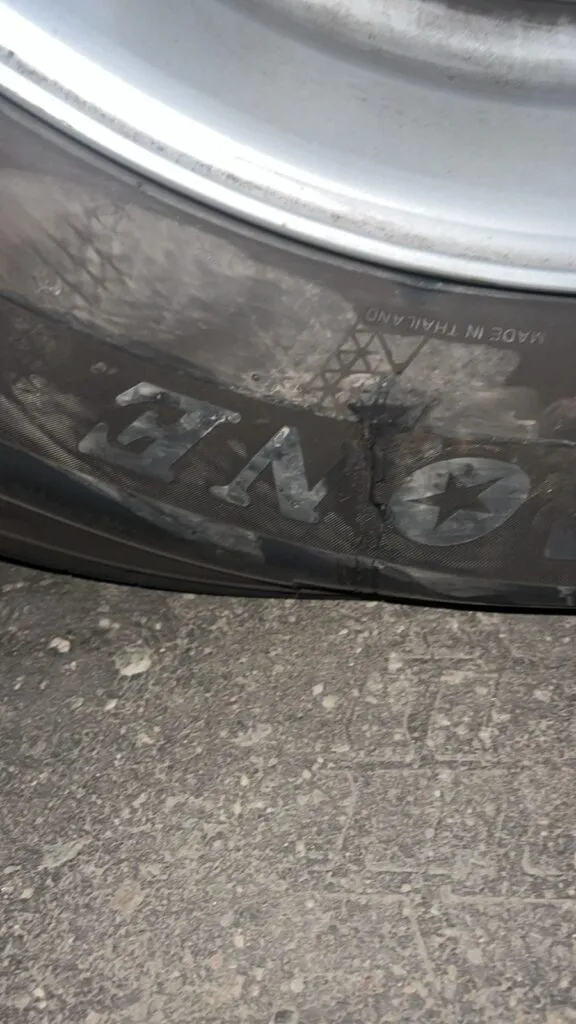
The truck was carrying a wide-load cargo, a large, bulky item requiring special transport permits and enhanced safety measures. The presence of such a load increased the urgency: any delay meant higher risk of secondary incidents, especially on a high-speed motorway with heavy freight traffic. The vehicle was positioned directly at the edge of the hard shoulder, with the front wheels barely clear of the crash barrier. This was not a minor puncture, the 315/70 R22.5 front tyre had suffered a full carcass separation. The tread was completely torn off, and the steel belts were visibly dangling from the rim, creating a dangerous dangling mass that could have caused further damage if the truck had moved even slightly.
At the time of the call, the driver was standing safely behind the barrier, wearing his high-visibility vest. He confirmed that there were no signs of brake line leaks, no visible damage to the wheel housing, and no smoke or fire. However, the risk of wheel hub deformation, brake line rupture, or rim warping remained high. Even if the rim appeared intact, the forces involved in a blowout can cause micro-cracks or misalignment that aren’t visible to the naked eye. That’s why a full on-site assessment was critical, not just to replace the tyre, but to ensure the entire wheel assembly was safe for continued operation.
This wasn’t just a routine tyre change. It was a high-risk roadside intervention involving a high-value, high-speed vehicle carrying an oversized load. The stakes were high: any error in the repair process could lead to a secondary failure during transit, potentially endangering lives and causing major delays. The fact that the repair was completed successfully in under two hours speaks volumes about the importance of having a professional, mobile tyre service network ready to respond at a moment’s notice.
How We Responded: Dispatch, Coordination, and Mobilisation
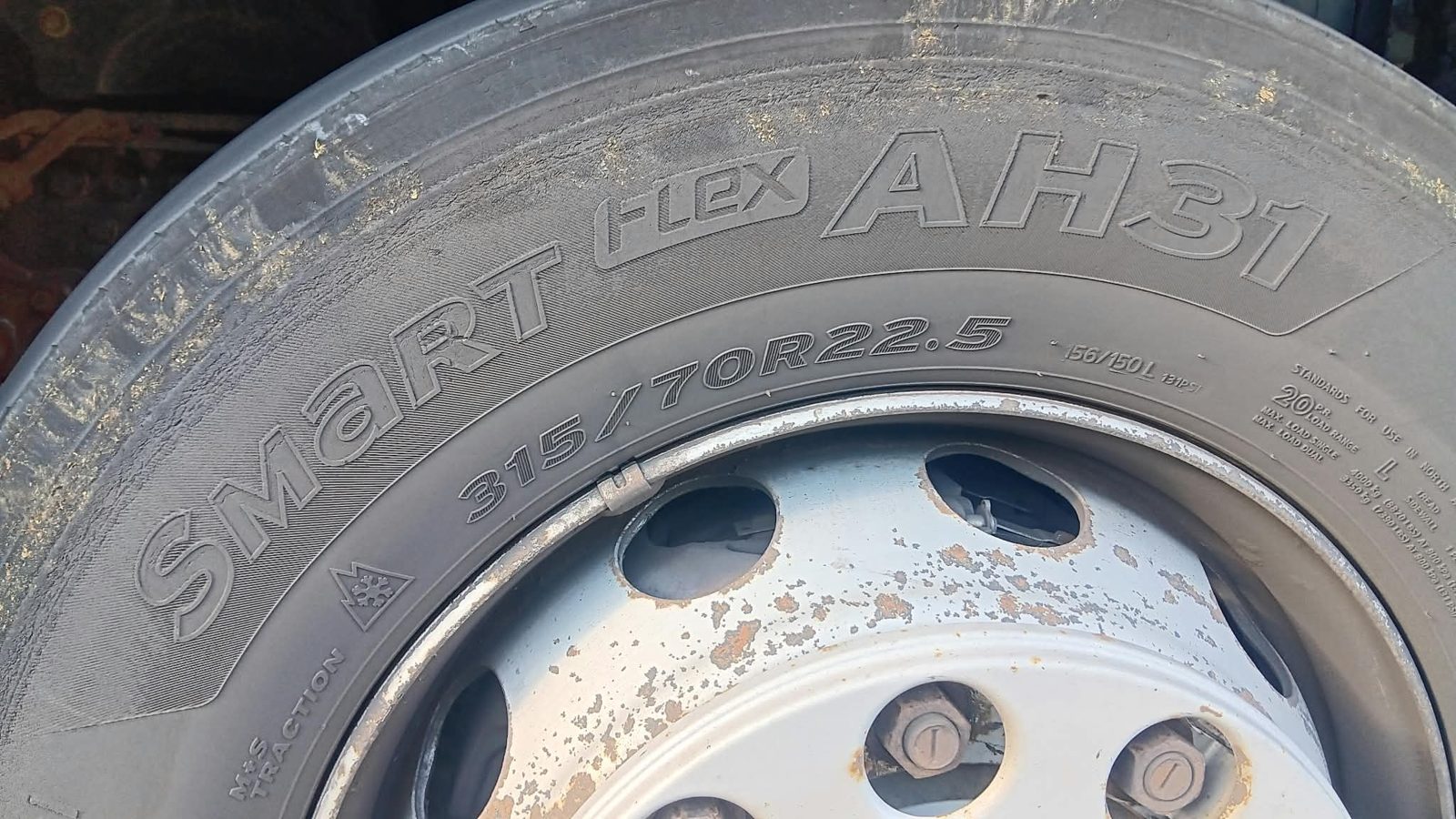
When a truck breaks down on a German motorway, every minute counts. In this case, the call came in at 16:40, and within 15 minutes, our dispatch team had already initiated the emergency protocol. The first step? Confirming the tyre size: 315/70 R22.5. This specification is critical, not all tyres are interchangeable, and using the wrong size can lead to handling issues, uneven wear, or even a complete failure. We cross-referenced the size with our national inventory database and confirmed that a replacement Smart Flex AH31 tyre was available in stock and ready for immediate dispatch.
Next, we identified the nearest available technician from our partner network. Given the location, the A7 near Bad Hersfeld, we selected a mobile service unit based in the Fulda region, which was already en route to another call but could divert within 20 minutes. The technician was briefed on the situation: steering axle tyre failure, wide-load cargo, possible rim damage, and urgent need for rapid response. The service vehicle was equipped with a full toolkit, including a hydraulic jack, torque wrench, wheel bolts, spare tyre, pressure gauge, and safety gear.
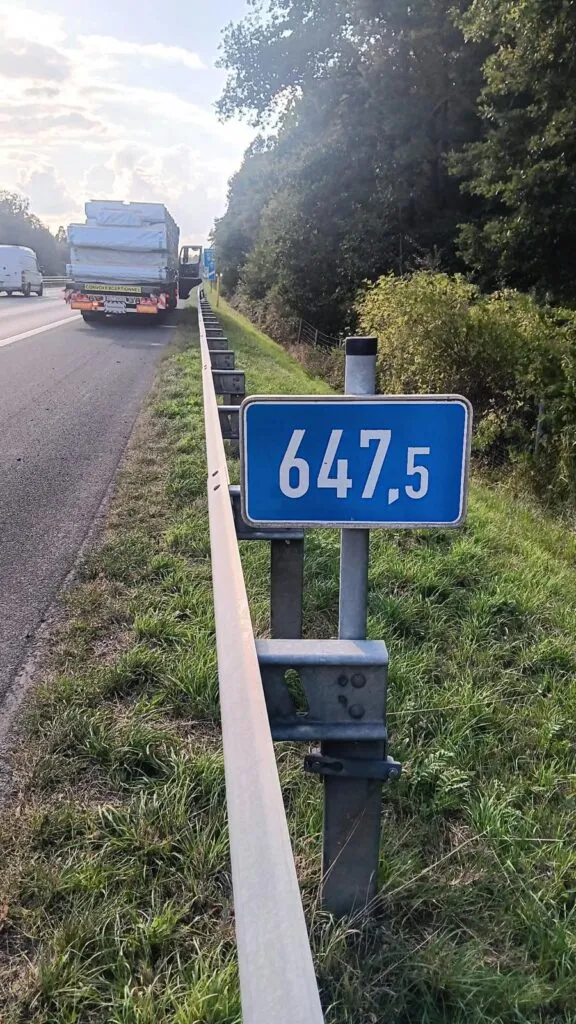
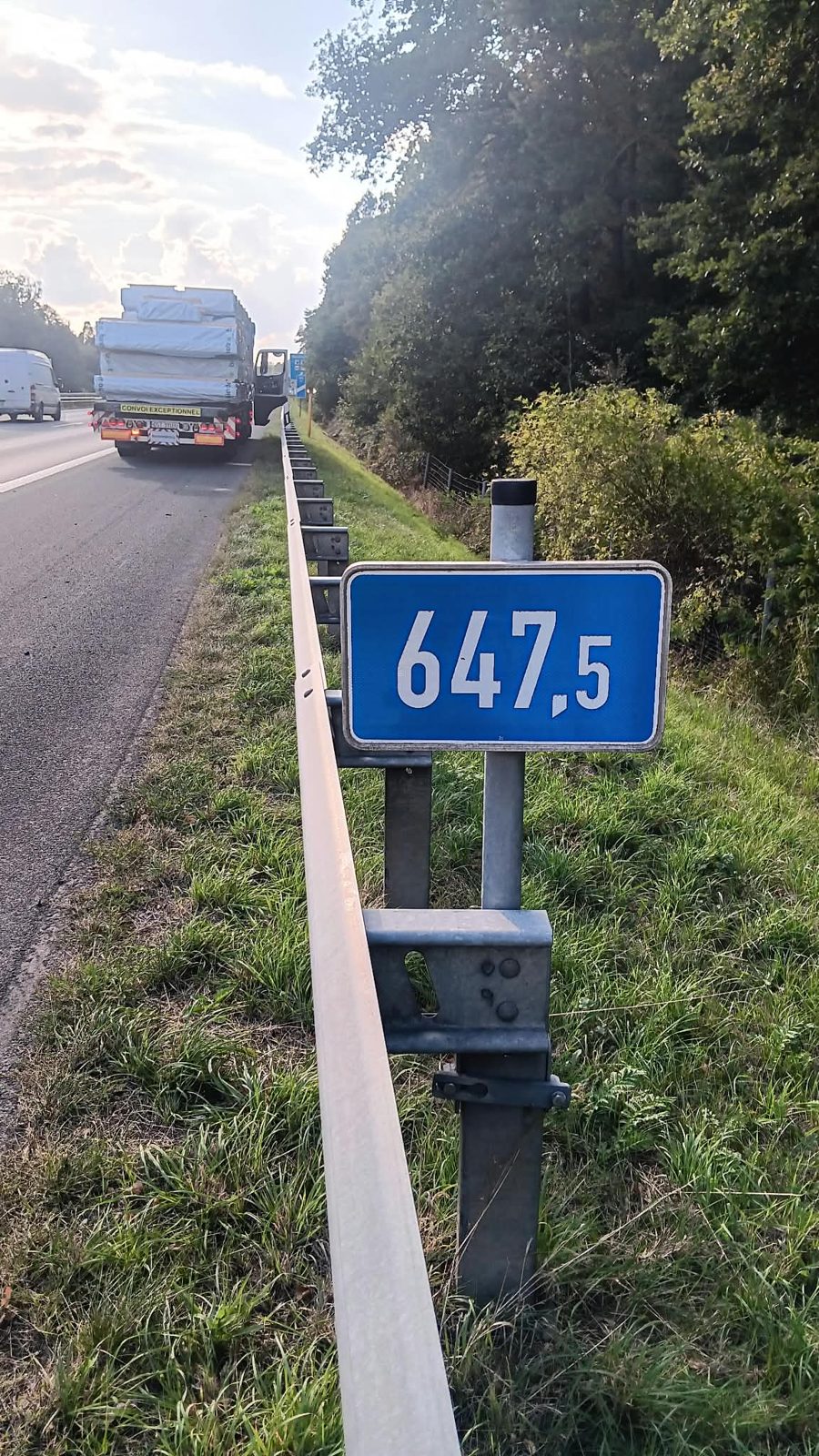
The dispatcher then provided the technician with precise location details using the kilometre marker (647.5) and confirmed that the vehicle was on the hard shoulder, visible from the oncoming lane. This allowed for accurate navigation, especially during the evening rush hour, when visibility can be compromised. The technician’s journey from Fulda to Bad Hersfeld took 45 minutes, including traffic delays and the need to navigate through a section of the A7 with heavy freight congestion.
Throughout the process, our central team maintained real-time communication with the driver. We checked in at 17:10 to confirm the vehicle was still secure, the warning triangle was in place, and no other vehicles had approached too closely. We also advised the driver to remain in a safe position and avoid attempting any repairs himself. This level of coordination, from call to arrival, is what sets professional truck tyre roadside assistance apart from DIY fixes or unqualified help.
On-Site Assessment: Why a Quick Fix Isn’t Always Safe
By 17:40, the technician had arrived on scene. The first priority was safety and site stabilisation. The technician immediately deployed a warning triangle 100 metres behind the vehicle, activated the hazard lights, and set up a temporary safety zone using cones. The driver was asked to confirm the vehicle’s status: no fire, no fluid leaks, no visible damage to the chassis or suspension.
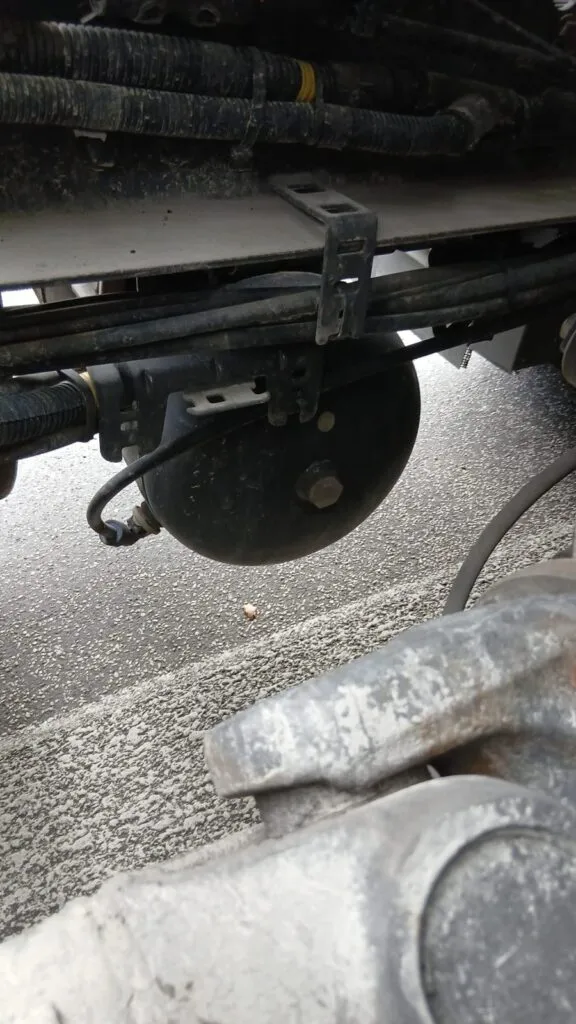
Next came the visual and tactile inspection. The technician examined the steering axle, focusing on the damaged tyre. The tread had completely separated from the casing, exposing the steel belted carcass, a clear sign of internal failure. The stainless steel rim showed no visible deformation, but the technician used a straight edge to check for warping. The hub and brake line were inspected for leaks or kinks. No issues were found, but the technician noted that the brake hose had been subjected to extreme stress during the blowout, so a pressure test would be conducted later.
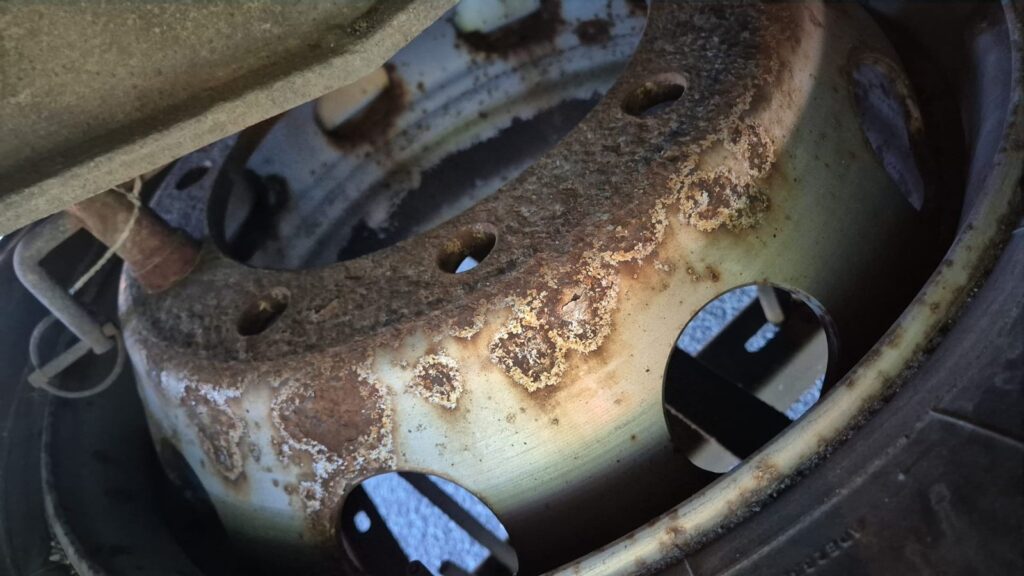
The next step was to remove the damaged tyre. The technician loosened the 10 wheel nuts using a pneumatic wrench, then lifted the vehicle with a hydraulic jack. The rim was carefully removed and inspected. The hub flange showed no scoring or damage, and the radial bearings were intact. However, the technician noted that the rim’s inner surface had minor rust spots, likely due to moisture exposure during storage. While not critical, this could affect the sealing of the new tyre, so the rim was cleaned thoroughly with a wire brush and degreaser before mounting.
The technician also checked the tyre pressure on the remaining tyres. All were within the recommended range of 8.5–9.0 bar, crucial for maintaining load distribution and preventing further failures. A tyre underinflated by just 0.5 bar can increase rolling resistance by 10%, leading to higher fuel costs and premature wear. This check confirmed that the failure was isolated to the one tyre, no systemic issue with the axle or suspension.
Step-by-Step Tyre Replacement: From Removal to Final Check
Step 1: Visual and Safety Inspection
The technician began by assessing the scene: confirming the vehicle was stable, the warning triangle was in place, and no other vehicles were approaching too closely. The driver was advised to stay behind the barrier.
Step 2: Site Securing and Equipment Setup
A safety zone was established using cones and the warning triangle. The technician donned high-visibility clothing and gloves. The hydraulic jack was positioned under the axle, and the vehicle was lifted just enough to free the wheel.
Step 3: Demounting the Damaged Tyre
Using a pneumatic wrench, the technician loosened the 10 wheel nuts in a star pattern to prevent uneven stress on the hub. The wheel was then removed and set aside. The rim was inspected for warping, corrosion, and damage. All checks passed.
Step 4: Mounting the New Tyre
The replacement tyre, Smart Flex AH31 315/70 R22.5, was carefully placed on the rim. The technician ensured the tread was aligned correctly and the valve stem was properly seated. The tyre was inflated to 8.5 bar using a digital pressure gauge to verify accuracy.
Step 5: Reassembly and Final Verification
The wheel was reinstalled, and the 10 nuts were tightened in a star pattern using a torque wrench. The final tightening was done at 620 Nm, as recommended by the tyre manufacturer. A final pressure check confirmed 8.8 bar. The technician performed a visual inspection of the brake line and confirmed no kinks or leaks. The vehicle was lowered, and a short test drive was conducted in a safe area to check for vibrations or unusual noises.
The entire process took 60 minutes, with 15 minutes dedicated to each major phase. The technician documented all steps, including photos and pressure readings, for internal reporting and quality assurance.
Full Timeline: From Call to Go
| Time | Phase | Action |
|---|---|---|
| 16:40 | Call Received | Driver reports tyre blowout on front axle, location via kilometer marker |
| 16:40–16:55 | Dispatch & Planning | Tyre size confirmed (315/70 R22.5), partner technician assigned, route mapped |
| 16:55–17:40 | Travel to Site | 45-minute drive via A7, traffic delays due to evening rush hour |
| 17:40–17:50 | Site Securing & Inspection | Warning triangle placed, vehicle assessed, rim and hub checked |
| 17:50–18:05 | Demounting | Damaged tyre removed, rim cleaned, damage assessed |
| 18:05–18:20 | Mounting | New tyre mounted, inflated to 8.5–9.0 bar, wheel reinstalled |
| 18:20–18:30 | Final Checks | Torque applied (620 Nm), pressure verified, test drive completed |
| 18:30 | Ready to Drive | Vehicle cleared for safe continuation of journey |
Total time from call to departure: 110 minutes (1 hour 50 minutes)
Cost Breakdown: Transparent Pricing for Emergency Repairs
| Position | Price (EUR) |
|---|---|
| On-site service call (A7, evening) | 240.00 |
| Replacement tyre: Smart Flex AH31, 315/70 R22.5 | 540.00 |
| Labour: 1.5 hours at €115/hour | 172.50 |
| Old tyre disposal | 20.00 |
| TOTAL | 972.50 |
Total: 972.50 EUR, net, excluding VAT
For comparison, a full day of downtime for a semi-trailer truck in Germany typically costs between €800 and €1,200 in lost revenue. This includes missed deliveries, driver idle time, and potential penalties. In this case, the total cost of repair was less than one day’s lost income, making it not just cost-effective but essential for business continuity.
The price includes all aspects of the service: travel, labour, materials, and disposal. There are no hidden fees, only a single, upfront invoice. This transparency is a key reason why hauliers across Germany trust LKWHelp24 for mobile truck tyre service.
Why DIY Repairs Are Dangerous: Risks of Amateur Intervention
Attempting a tyre change on the side of a motorway without proper tools and training is extremely risky. Here’s why:
- Incorrect torque, Over-tightening can crack the rim; under-tightening causes wheel wobble and eventual detachment.
- Improper alignment, Misaligned tyres lead to uneven wear, poor handling, and increased fuel consumption.
- Unseen damage, A blown tyre can warp the hub, damage the brake line, or compromise the bearing, all invisible to an untrained eye.
- Safety hazards, Working on a moving road exposes the driver to high-speed traffic, especially at night or in poor weather.
- Legal liability, If an accident occurs due to improper repair, the driver may be held responsible under German road safety laws.
Our technicians are trained in German StVZO regulations, ETRTO standards, and manufacturer-specific procedures. They use calibrated tools and follow strict safety protocols, something no amateur can replicate.
Typical Scenarios We Respond To Across Germany
We regularly assist with:
– Tyre blowouts on steering axles (most dangerous)
– Flat tyres on trailers and semi-trailers
– Dual-wheel failures on heavy-load vehicles
– Rim corrosion or warping after a crash
– Winter tyre issues in snow and ice
– Punctures in remote areas with no nearby service stations
Whether it’s the A1 near Berlin, the A3 near Würzburg, or the A7 near Göttingen, we’re ready to respond.
Prevention Tips for Drivers and Fleets
- Check tyre pressure weekly, ideally before each trip
- Inspect tread depth, must be ≥ 1.6 mm (legal minimum)
- Rotate tyres every 20,000 km to prevent uneven wear
- Avoid overloading, stay within the tyre’s load index
- Use winter tyres in winter months, mandatory in Germany from 1 November to 15 April
- Schedule regular inspections with a certified mechanic
A proactive approach can prevent 80% of breakdowns.
Advanced SEO Block: Tyre Care and Fleet Management
When it comes to truck tyres, brands matter. Michelin, Continental, Goodyear, and Bridgestone lead in performance, durability, and safety. For long-haul operations, consider XL (extra load) tyres for higher capacity. Always verify the load index (e.g., 156/150 L) and speed rating (e.g., L = 210 km/h) against your vehicle’s specs.
According to §36 StVZO, tyres must meet minimum tread depth and have valid safety markings. The ETRTO (European Tyre and Rim Technical Organisation) sets international standards for tyre sizing and compatibility.
Why Choose LKWHelp24?
- 24/7 availability, no holidays, no weekends
- Nationwide network, 100+ partner technicians across Germany
- Transparent pricing, no hidden costs
- Multilingual dispatch, English, German, Polish, Russian support
- Fast response, average arrival within 1 hour on motorways
We don’t just fix tyres, we protect lives, cargo, and schedules.
The Critical Role of the Steering Axle in Truck Safety and Stability
The front axle of a semi-trailer truck, particularly the steering axle, is one of the most critical components in vehicle dynamics. Unlike rear axles, which primarily support load and transfer power, the steering axle controls direction, absorbs lateral forces, and maintains alignment during cornering, braking, and high-speed travel. When a tyre on this axle fails, the consequences are immediate and severe. In this case, the 315/70 R22.5 tyre was not just a rubber component, it was the primary interface between the truck and the road, responsible for maintaining directional stability, traction, and load distribution.
The failure occurred during normal operation, but the underlying cause was likely a combination of high stress and long-term wear. Steering axles are subjected to constant lateral forces, especially when navigating curves or adjusting to road irregularities. Over time, this can lead to fatigue in the tyre’s carcass, particularly in the sidewall area where flexing is most pronounced. The Smart Flex AH31 tyre used here is designed for heavy-duty use, with a reinforced structure and a load index of 156/150 L, indicating it can carry up to 15,600 kg on the front axle. However, even high-performance tyres degrade under continuous high loads, poor inflation, or exposure to extreme temperatures.
The technician’s inspection confirmed that the wheel hub and bearing assembly were undamaged, which is not always the case in such incidents. In many blowouts, the sudden lateral force can shear the hub bolts or damage the bearing housing. Here, the fact that the hub flange remained intact suggests the failure was internal, a carcass rupture rather than a mechanical breakdown. This underscores the importance of regular visual and pressure checks: internal damage often goes unnoticed until it’s too late. For fleets, this means investing in predictive maintenance tools like tyre pressure monitoring systems (TPMS) and thermal imaging to detect early signs of stress before they escalate.
Fleet Management Best Practices: Preventing Tyre Failures Before They Happen
For any transport company operating a fleet of trucks, tyre failure is not just a maintenance issue, it’s a financial and reputational risk. On average, a single tyre blowout can cost a haulier between €800 and €1,200 in lost revenue, fines, and repair expenses. Beyond that, there’s the risk of cargo damage, delays, and legal liability. The most effective way to mitigate these risks is through a structured, data-driven tyre management programme.
First, track tyre usage and wear. Every tyre should be logged with its installation date, mileage, and pressure history. When a tyre reaches 80% of its expected lifespan, typically around 120,000 to 150,000 km for a heavy-duty model like the Smart Flex AH31, it should be rotated or replaced. Rotation helps distribute wear evenly, especially on dual-wheel setups, where the outer tyre often wears faster due to greater lateral forces.
Second, implement a strict pressure regime. Tyres should be checked at least once a week, and ideally before every long journey. The recommended pressure for a 315/70 R22.5 front tyre is 8.5–9.0 bar, but this can vary based on load and speed. Underinflation increases rolling resistance, raises operating temperature, and accelerates wear. Overinflation reduces grip and makes the tyre more susceptible to impact damage. Using a digital pressure gauge ensures accuracy, handheld devices are now affordable and reliable.
Third, train drivers in basic tyre inspection. A driver should be able to spot signs of damage: cracks in the sidewall, bulges, uneven tread wear, or foreign objects embedded in the tread. Even minor issues can escalate quickly if ignored. A simple 5-minute pre-trip check can prevent major breakdowns.
Finally, use fleet management software to centralise data. Platforms that integrate with GPS, maintenance logs, and tyre sensors allow managers to monitor tyre health in real time, schedule replacements proactively, and analyse failure patterns across the fleet. This turns tyre maintenance from a reactive chore into a strategic asset.
Legal and Technical Standards: What German Law Requires for Tyre Safety
In Germany, the safety of commercial vehicles is governed by a strict set of legal and technical standards. The StVZO (Straßenverkehrs-Zulassungs-Ordnung) and StVO (Straßenverkehrs-Ordnung) define minimum requirements for tyres, including tread depth, load capacity, and marking compliance. According to §36 StVZO, all tyres on commercial vehicles must have a minimum tread depth of 1.6 mm, measured across the entire circumference. However, for safety and performance, experts recommend replacing tyres when tread depth falls below 4 mm, especially on the front axle.
The ETRTO (European Tyre and Rim Technical Organisation) sets international standards for tyre sizing, load indices, and speed ratings. The 315/70 R22.5 size used in this case is a standard heavy-duty configuration for semi-trailer trucks. The 156/150 L rating indicates that the tyre can carry 15,600 kg on the front axle (15,000 kg on the second axle) and is rated for speeds up to 210 km/h. The M+S and 3PMSF (Three-Peak Mountain Snowflake) symbols confirm that the tyre is suitable for winter conditions, a legal requirement in Germany from November to April.
Additionally, §15a StVO regulates towing and roadside assistance. If a vehicle breaks down on a motorway, the driver must place a warning triangle at least 100 metres behind the vehicle. Failure to do so can result in fines of up to €60. The maximum allowed distance between a vehicle and the edge of the road is 50 cm, meaning the truck must be fully on the hard shoulder, not partially on the lane. Our technician confirmed that the vehicle was positioned correctly, within legal limits.
Finally, duty hours (Lenkzeit) regulations limit drivers to 9 hours of driving per day, with a maximum of 56 hours over a week. A breakdown like this can disrupt the entire schedule. That’s why rapid response services are not just convenient, they’re essential for compliance.
The Science of Tyre Pressure and Load Distribution
Tyre pressure isn’t just about inflation, it’s about load distribution, fuel efficiency, and safety. For a truck with a 315/70 R22.5 front tyre, the correct pressure is 8.5–9.0 bar under normal conditions. This range ensures the tyre maintains its optimal contact patch with the road, minimises wear, and prevents overheating. But pressure must be adjusted based on actual load.
For example, if the truck is carrying 12 tonnes on the front axle, the pressure should be at the upper end of the range, 9.0 bar. If the load is only 8 tonnes, 8.5 bar may be sufficient. The difference is not trivial: a 0.5 bar deviation can increase rolling resistance by 10%, leading to higher fuel consumption and a shorter tyre lifespan. Over time, this adds up, a single truck can burn an extra 1,000 litres of diesel per year due to improper inflation.
The contact patch, the area of the tyre touching the road, is crucial. At 8.5 bar, the contact patch is approximately 120 cm². At 9.0 bar, it’s about 115 cm². This small change affects grip, braking distance, and cornering stability. In wet conditions, a properly inflated tyre maintains better hydroplaning resistance.
Moreover, temperature affects pressure. A tyre that reads 8.5 bar at 20°C may read 9.2 bar after a long journey when the temperature rises to 60°C. This is why pressure should be checked when the tyres are cold, before the vehicle has been driven for more than 2 km. Ignoring this rule can lead to overinflation, increased wear, and a higher risk of blowout.
Understanding these principles allows fleets to optimise performance, reduce costs, and improve safety. It’s not just about fixing a flat, it’s about preventing one.
Summary: Key Facts from This Case
- Location: A7 near Bad Hersfeld (direction Kassel)
- Problem: Complete tyre blowout on steering axle (315/70 R22.5)
- Response Time: 1 hour 50 minutes (from call to departure)
- Total Cost: €972.50 (net)
- Replacement Tyre: Smart Flex AH31, 315/70 R22.5
- No Secondary Damage, all components inspected and cleared
- No Towing Required, full repair completed on-site
Ready for Help? Call Now
If your truck breaks down on the road, don’t wait. Call us immediately at +49 160 5753826. We’re here 24/7, across all of Germany. Whether it’s a flat tyre, a blown-out wheel, or a full breakdown, we’ll get you back on the road fast.
www.lkwhelp24.com | Mobile Truck Tyre Service Germany – 24/7
Keywords: truck tyre service | mobile reifenservice | truck tyre replacement | truck tyre change | truck tyre callout | truck tyre roadside assistance | truck tyre repair | mobile truck tyre service | truck tyre germany | trailer tyre service | truck tyre burst | truck tyre emergency | truck tyre breakdown service | truck tyre help | truck tyre fitting | truck tyre fitters near me | truck tyre mobile service | truck tyre breakdown | truck tyre blowout | truck tyre near me | truck tyre service near me | truck tyre service germany | truck tyre repair near me | truck tyre puncture repair | truck tyre shop near me | truck tyre service near me | truck tyre service germany | truck tyre emergency | truck tyre breakdown service | truck tyre breakdown germany | truck tyre breakdown | truck tyre blowout | trailer tyre replacement | trailer tyre puncture | trailer flat tyre | reifenwechsel near me | pneuhage truck fleet support | pneuhage truck and bus services | pneuhage roadside assistance
Related Articles
- Mobile Truck Tyre Service A6 Near Schwäbisch Hall: Unnoticed Dual-Wheel Blowout Fixed in 2h30
- Mobile Truck Tyre Service on the A31 near Haltern am See: Walking Floor Trailer Back on the Road in 2 Hours 30 Minutes After a Blowout
- Mobile Truck Tire Service 24/7 – Roadside Wheel Change on a Car Transporter from Lithuania
- Emergency Tire Service for Trucks: Fast Help Around the Clock
- XL Tyres, Extra Load Meaning for Trucks and Commercial Vehicles