Skip to content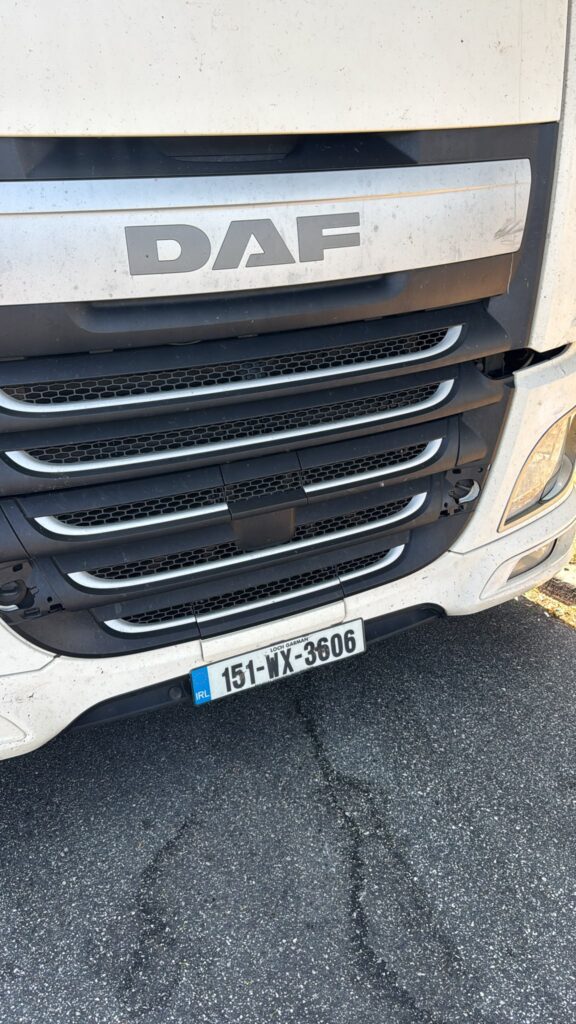
TL;DR: On 12 July, a right-hand-drive DAF articulated tractor unit belonging to an Irish haulier suffered a drive-axle tyre blowout on the A28 near Westerstede, Lower Saxony, heading towards Wilhelmshaven. Our truck tyre service dispatched a crew, fitted a new 315/70 R22.5 tyre on site, and had the lorry moving again in 2 hours 15 minutes — well inside the ferry booking window.
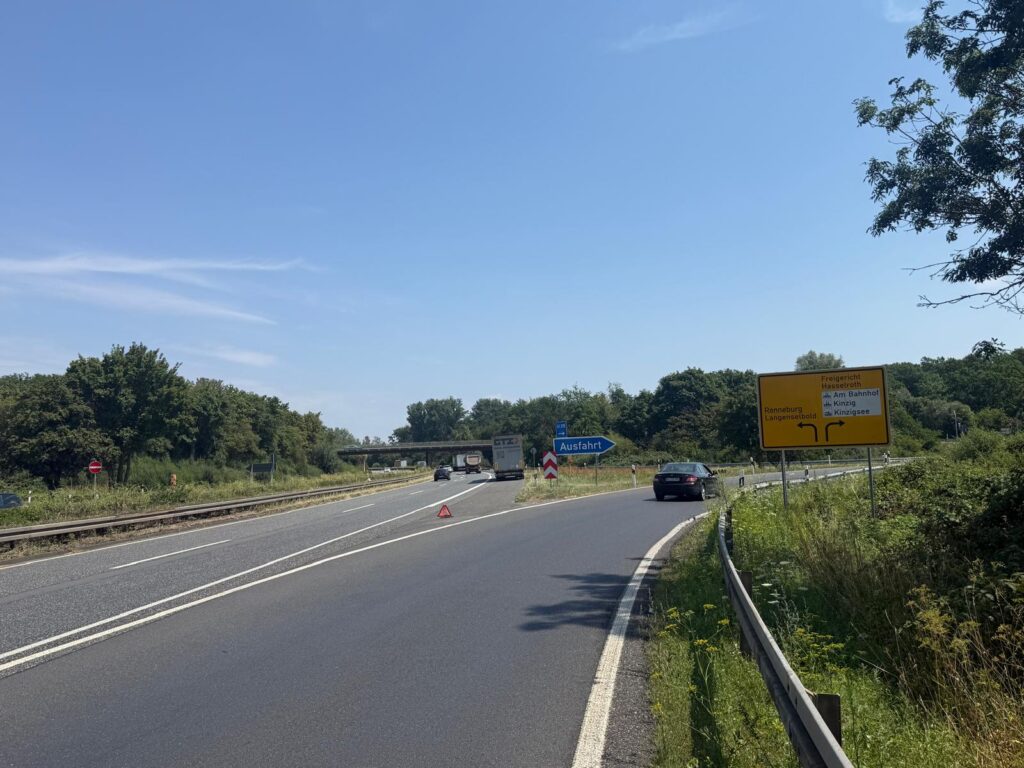
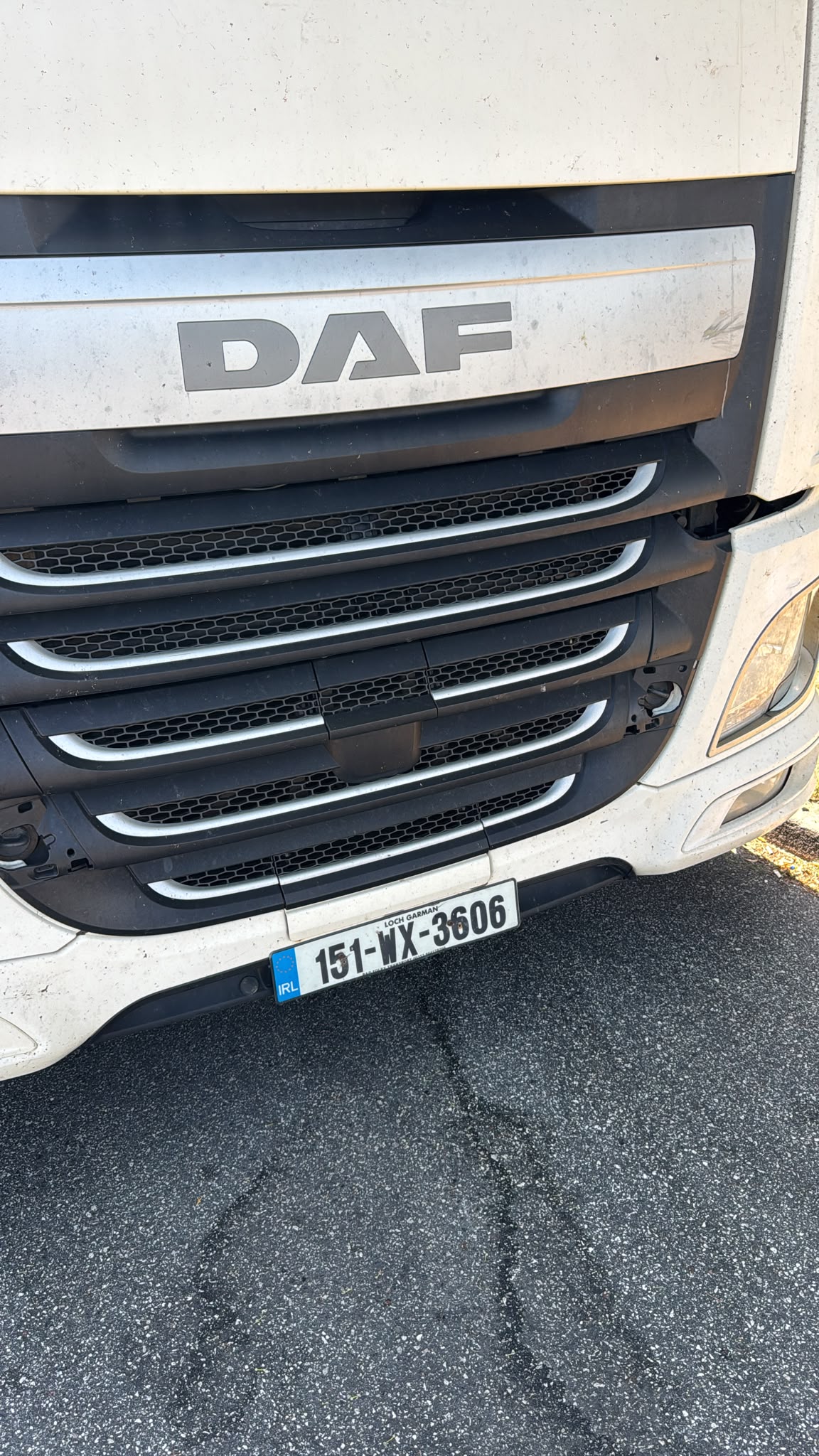
A tyre blowout on a loaded artic is never a minor inconvenience, but it becomes a sharper problem when the driver is far from home, doesn’t speak German, and is racing a fixed departure time at a port. That was the situation on the A28 outside Westerstede on 12 July: an Irish haulage company’s DAF tractor unit, right-hand drive, lost a drive-axle tyre in broad daylight while running towards Wilhelmshaven.
This case study walks through what happened, how our dispatch and mobile crew responded, and what it actually takes to get a foreign-registered lorry back on the road in Germany without local paperwork, a German bank card, or a word of the language. We cover the timeline minute by minute, the exact costs, and the practical checklist any foreign driver should carry for exactly this scenario.
What Happened on the A28
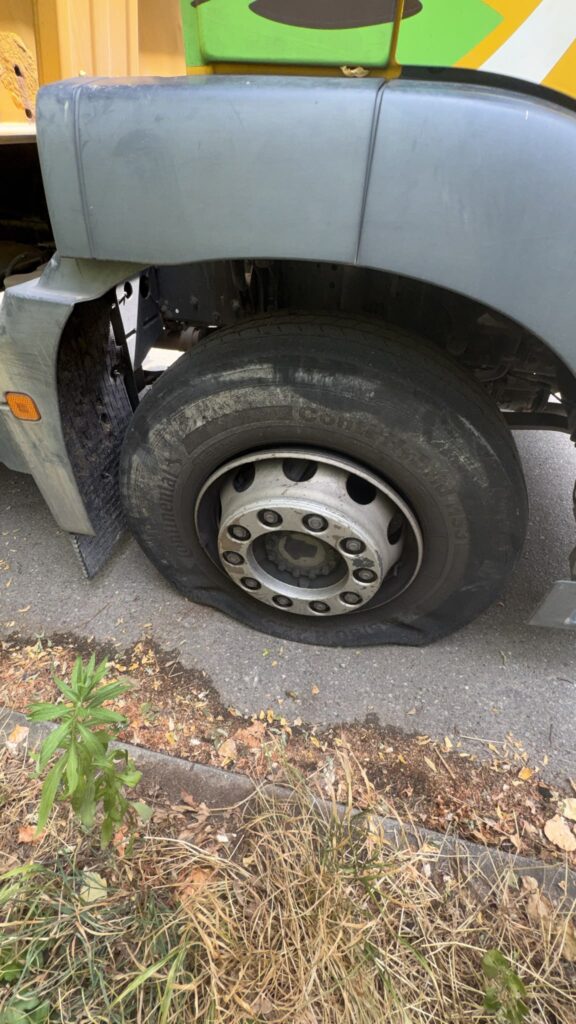
Direct answer: on 12 July, during daytime traffic, the drive-axle tyre of an Irish-registered DAF articulated tractor unit blew out on the A28 near Westerstede, Lower Saxony, while the vehicle was travelling towards Wilhelmshaven.
The tyre in question was a 315/70 R22.5, a common drive-axle size on continental-spec artics but one that still needs to be confirmed on site rather than assumed, since trailer and tractor combinations from different fleets don’t always match. The driver managed to keep the unit under control and bring it to a stop past the hard shoulder, behind the crash barrier where the verge allowed it. No other vehicle was involved and nobody was hurt, but a blown drive-axle tyre on a laden artic on the autobahn is a serious event: at typical HGV running pressures of 8.5–9.5 bar, a sudden loss of pressure on one of a dual set shifts load onto the remaining tyre and can damage the rim if the vehicle keeps moving.
Why a Right-Hand-Drive Tractor Unit Changes the Risk Picture
Direct answer: a right-hand-drive tractor unit on continental roads puts the driver’s seating position on the side away from the hard shoulder, which makes judging distance to the verge and spotting the moment to pull over noticeably harder than in a left-hand-drive vehicle.
On UK and Irish-registered trucks, the driver sits on the side that, on the continent, faces oncoming traffic rather than the verge. When a tyre goes on the drive axle at speed, the priority is to get the vehicle stopped safely without drifting into another lane. A right-hand-drive driver has a blind spot exactly where they most need visibility: the near-side kerb and hard shoulder. This is a known hazard for foreign hauliers running through Germany, and it’s one reason our dispatch always asks for the direction of travel and the nearest kilometre marker rather than relying on the driver’s own sense of “just past the last exit.”
It also affects how a crew approaches the recovery. Our technicians know to position the service vehicle and warning equipment further back than usual when the stricken lorry is right-hand drive, because the driver’s exit onto the verge side is less practised and slower.
Finding Help With No German and No Local Contacts
How does a foreign driver find a truck tyre service in Germany? Most foreign drivers don’t search for a local provider at all — they call their own dispatcher first, sometimes a thousand kilometres away, who then has to find a German number, explain the problem in a second language, and relay a location neither of them can picture. That’s slow, and it’s the main reason breakdown response times balloon for foreign-registered vehicles.
A multilingual control room removes that middle step. The driver, or the dispatcher on their behalf, reaches us directly, in English, and we take the details once: vehicle type, tyre size if known, exact carriageway and direction, and whether the load is time-sensitive. No relay, no re-explaining the same facts twice. In this case the call came in at 12:10, and because English was the working language from the first sentence, dispatch could start locating a free crew near the A28 immediately rather than waiting on a translated callback.
How Payment Works for a Foreign Haulier
Direct answer: a foreign haulier without a German bank account or local card can usually pay by card over the phone, by bank transfer, via a payment link sent by SMS or email, or through their dispatcher settling the invoice centrally — the exact option depends on the case and isn’t guaranteed in advance.
We don’t promise specific payment terms in this article because they depend on the account and the situation, but the practical routes we see most often with international hauliers are:
- International card payment taken by phone or terminal on site
- A payment link sent to the driver’s or dispatcher’s phone, paid before or shortly after the job
- Bank transfer arranged by the haulier’s back office, with the invoice issued to the company
- The dispatcher a thousand kilometres away authorising and paying centrally on the driver’s behalf
None of these require a German IBAN or a Girocard. What matters is confirming the payment route during the initial call, not after the tyre is already fitted, so the crew isn’t standing at the roadside waiting on an admin decision.
Ferry Slots Turn Response Time Into Money
Direct answer: a lorry heading for a ferry crossing that misses its booked slot doesn’t just lose the hours until the next sailing — it can be rebooked onto a later crossing with a rebooking surcharge, and the driver’s remaining hours-of-service window shrinks at the same time. That’s why response time matters more on this route than on an ordinary domestic run.
Northern German ports run tight schedules, and check-in windows close before departure, not at it. A tractor unit stuck on the A28 for three or four hours instead of two doesn’t just arrive late to the port gate; it can arrive after the last check-in slot for its booked sailing, forcing the haulier onto the next available crossing, often at an extra cost and with knock-on delays for whatever’s waiting on the other side. This is the background reason our dispatch treated the 12:10 call as time-critical: the destination wasn’t a depot with flexible opening hours, it was a fixed departure.
What We Ask For When Arranging Work for a Foreign Operator
Direct answer: to arrange and invoice a truck tyre service call for a foreign haulier, we need the vehicle’s registration details, the company name and billing address, and confirmation of who is authorising the work — usually the driver on site plus the dispatcher or fleet office.
The paperwork is simpler than most drivers expect. We ask for:
- Vehicle details (make, model, and ideally the tyre size, though we confirm this on site regardless)
- The haulier’s company name and address for invoicing
- VAT or company registration number where the haulier is a business, which is normal for a cross-border transaction
- Confirmation of who’s authorising the job, since the person standing at the roadside isn’t always the one who signs off the cost
An invoice can be issued to a foreign company in the same way as to a German one; VAT treatment for cross-border B2B work within the EU typically follows the reverse-charge principle, though the exact tax handling is a matter for the haulier’s own accountant rather than something we determine roadside.
Getting the Tyre Size Right on a Foreign-Spec Vehicle
Direct answer: the exact tyre size has to be confirmed on the sidewall before a replacement is sourced, because British and Irish-registered vehicles sometimes run different sidewall specifications from the continental-market equivalents of the same tractor model, even when the chassis looks identical.
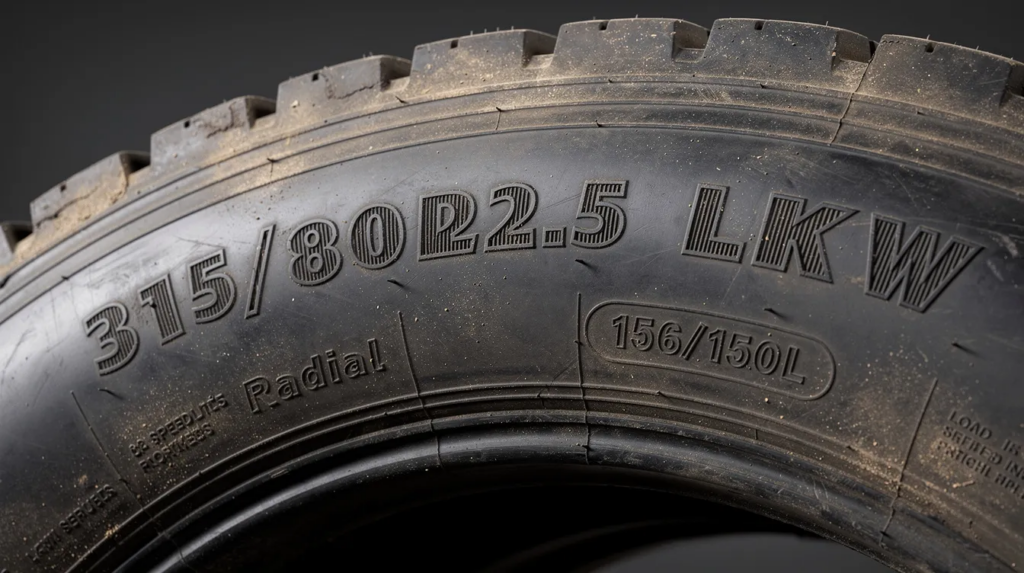
This DAF’s drive axle took a 315/70 R22.5 tyre, a size that’s common on both sides of the Irish Sea and on the continent, but it’s not something to assume. Fleets that source tyres through UK or Irish suppliers sometimes fit different load or speed ratings than a German-market equivalent, and mixing tyre types on the same axle is a rim and handling risk in its own right. Our crews read the size directly off the sidewall before confirming stock, not off the vehicle’s country of registration. Reputable manufacturers such as Continental publish load and speed index tables that make it straightforward to double-check a size once it’s confirmed.
Checklist for a Foreign Driver Breaking Down in Germany
Direct answer: a foreign driver who breaks down on a German motorway should get clear of traffic, make themselves visible, mark the vehicle, call for help with the exact location, and photograph the damage — in that order.
- Put on the warning vest (Warnweste) before leaving the cab
- Move behind the crash barrier if one is present, not just onto the hard shoulder
- Set out the warning triangle roughly 100–150 metres back on the motorway
- Note the exact location: the nearest kilometre marker, the road number, and the direction of travel — “A28 towards Wilhelmshaven, past Westerstede” is enough
- Call for help and give that location first, before describing the fault
- Take photographs of the damaged tyre, the rim, and the vehicle’s position for insurance purposes before anyone touches the wheel
This sequence is the same one German drivers are expected to follow, and it’s set out in general terms under road traffic and vehicle safety rules referenced by ADAC. None of it requires German language skills.
How We Organised the Response
Direct answer: from the 12:10 call, dispatch located a free crew near the A28 and had them travelling to the site within 15 minutes, with the whole job — call to departure — completed in 2 hours 15 minutes.
- 12:10 — call taken from the driver via the Irish haulier’s dispatcher, location and tyre details logged
- 12:10–12:25 — nearest available crew identified and briefed
- 12:25–13:15 — crew travels to the site on the A28
- 13:15–14:25 — tyre changed on site, from securing the scene to final torque check
- 14:25 — vehicle continues towards Wilhelmshaven
On Site: Why This Isn’t a Job to Improvise
Direct answer: a drive-axle tyre on an artic sits under enormous load, and changing it at the roadside means securing a live traffic lane, working around a laden trailer, and torquing the wheel nuts to the correct sequence — none of which is safe to attempt without the right kit.
Drive-axle tyres on a loaded HGV typically run at 8.5–9.5 bar. Removing a wheel under that kind of duty means jacking a heavy axle safely on uneven verge ground, checking the rim for damage from running flat even briefly, and refitting with a torque wrench in a star pattern so the load is even across all the studs. Get the sequence wrong and the wheel can work loose within a few hundred kilometres. This is standard practice referenced in German vehicle regulations on tyre and wheel condition under §36 StVZO, which also covers minimum tread depth.
Step-by-Step: The Tyre Change
Direct answer: the on-site repair followed five stages — inspection, securing the scene, removing the damaged tyre, fitting the replacement, and a final check — taking 70 minutes in total.
- Inspection — the technician confirmed the tyre size, checked the rim for deformation, and assessed whether the vehicle could be moved slightly for a safer working position
- Securing the scene — warning triangle, hazard lights, and the crew’s own high-visibility markers set up behind the vehicle
- Removal — the wheel was jacked, the damaged tyre removed, and the hub and studs checked for damage
- Fitting — the new 315/70 R22.5 tyre was mounted, balanced, and torqued in a star pattern to the correct specification
- Final check — tyre pressure confirmed, wheel nuts re-checked after a short settling period, area cleared
Full Timeline
| Time | Phase | Action |
|---|---|---|
| 12:10 | Call received | Driver/dispatcher of the Irish haulier reports the blowout |
| 12:10–12:25 (15 min) | Dispatch | Free crew located near the A28 |
| 12:25–13:15 (50 min) | Travel | Crew drives to the site |
| 13:15–14:25 (70 min) | Repair | Scene secured, tyre removed and fitted, torqued, final check |
| 14:25 | Departure | Vehicle continues towards Wilhelmshaven |
Total: 2 hours 15 minutes (135 minutes) from call to departure.
Cost Breakdown
Direct answer: the full job — call-out, labour, one 315/70 R22.5 tyre, and disposal of the old tyre — came to €920 net, plus VAT.
| Item | Price (EUR) |
|---|---|
| Tyre 315/70 R22.5 | 520 |
| Call-out | 240 |
| Labour (1.25 hrs × €112/hr) | 140 |
| Old tyre disposal | 20 |
| Total net | 920 (plus VAT) |
For comparison, a stranded lorry typically costs its operator roughly €800–1,200 a day in downtime once driver wages, missed slots, and idle trailer time are factored in — the tyre bill here is a fraction of what a full day off the road would have cost, quite apart from the ferry booking.
Why This Isn’t a DIY Job
Direct answer: changing a drive-axle tyre on a laden artic without training risks injury from the stored pressure, damage to the rim if the vehicle is moved on a flat, and an unsafe wheel if the torque sequence is wrong — all while stopped on a live carriageway.
- Working next to moving traffic without proper scene security is the single biggest risk factor in roadside repairs
- A rim run even briefly underinflated can be bent or cracked in a way that isn’t obvious without inspection
- Incorrect torque sequence on a multi-stud wheel leaves it prone to loosening under load
- Handling a 315/70 R22.5 tyre and wheel assembly, well over 70 kg, without lifting equipment is a manual-handling injury waiting to happen
Typical Cases We Attend Across Germany
Foreign-registered vehicles make up a large share of our call-outs, not only Irish and British trucks but also fleets from Poland, Lithuania, and further afield running north–south and east–west freight corridors. Recurring situations include drive-axle and steer-axle blowouts on loaded artics, trailer tyre failures on double-decker car transporters, and breakdowns where the driver has no way to pay locally at all. We’ve handled a similar drive-axle blowout on a DAF near Hof and another on a DAF XF near Duisburg, both resolved on site rather than by towing.
Prevention: What Fleets and Drivers Can Do
A pre-trip walk-round that actually checks tyre pressure and tread depth, not just a visual glance, catches most blowouts before they happen on the autobahn. Legal minimum tread depth in Germany is 1.6 mm, but for a drive axle carrying most of the load, most fleets replace well before that point.
Cold-inflation pressure should be checked when the tyre hasn’t been driven for at least three hours, since running pressure reads higher and can mask a genuine slow leak. Mismatched tyre ages or brands on the same axle also increase the risk of uneven wear leading to a sudden failure under load. None of this is complicated, but it’s easy to skip on a tight schedule, and a blowout costs far more time than a five-minute check would have.
Tyres, Fleet Maintenance, and What Actually Prevents a Blowout
Drive-axle tyres carry the combined weight of the tractor and a share of the trailer load, which is why they wear faster and fail more dramatically than steering-axle tyres. Tread depth, inflation pressure, and load rating all interact: a tyre under-inflated by even 20% runs hotter, flexes more at the sidewall, and is measurably more likely to fail at motorway speed. Manufacturers including Goodyear and Bridgestone publish fleet guidance on inspection intervals precisely because the failure modes are well understood but easy to miss on a rolling schedule.
A fleet running mixed brands or ages across dual wheels on the same axle should be especially careful, since a size or diameter mismatch between the two tyres in a dual set puts uneven load on both. For hauliers running international routes, keeping a spare of the correct size, or at minimum knowing it precisely, shortens every roadside repair regardless of which country the call comes from.
Why Choose LKWHelp24
We run a 24/7 multilingual dispatch across Germany, which matters most exactly in cases like this one: a foreign driver, a foreign-registered vehicle, and a schedule that doesn’t forgive delay. Our partner network of mobile crews covers the motorway grid, pricing is quoted before work starts, and payment doesn’t require a German bank account.
Roadside work on all common HGV sizes runs through our mobile truck tyre service. For lorries that can’t be repaired on site, our towing service and truck workshop network cover the next step.
Summary
- Vehicle: DAF articulated tractor unit, right-hand drive, Irish haulier
- Location: A28 near Westerstede, Lower Saxony, direction Wilhelmshaven
- Tyre: 315/70 R22.5, drive axle
- Call received: 12:10
- Crew on site by: 13:15 (65 minutes after the call)
- Total time, call to departure: 2 hours 15 minutes
- Total cost: €920 net plus VAT
- Avoided cost: a missed ferry slot and roughly €800–1,200/day in downtime
Frequently Asked Questions
What does a truck tyre service call-out cost on the German autobahn?
For a drive-axle tyre like the 315/70 R22.5 in this case, the full job — call-out, labour, tyre, and disposal — came to €920 net plus VAT. Costs vary with tyre size, time of day, and location, but call-out and labour rates are quoted before work starts.
How long does a mobile tyre change take on a loaded artic?
In this case, from the driver’s call to the vehicle continuing its journey took 2 hours 15 minutes, including a 50-minute crew travel time and a 70-minute on-site repair. Night call-outs or bad weather can extend both stages.
Can a foreign haulier without a German bank account pay for roadside assistance?
Yes. Options typically include card payment by phone, a payment link, bank transfer arranged by the haulier’s office, or the dispatcher settling the invoice centrally. The exact method is confirmed during the initial call.
Why is a right-hand-drive lorry harder to pull over safely on German motorways?
The driver’s seating position faces away from the hard shoulder, creating a blind spot on the side that matters most when judging distance to the verge at speed. Crews adjust their own positioning and warning equipment accordingly.
What happens if a lorry misses its ferry slot because of a breakdown?
It’s usually rebooked onto the next available sailing, often with a rebooking surcharge, and the driver’s remaining hours-of-service window shrinks at the same time. This is why response time matters more on port-bound routes.
What tyre size was fitted in this case, and why does the exact size matter?
A 315/70 R22.5 tyre was fitted to the drive axle. The precise size has to be confirmed from the sidewall rather than assumed from the vehicle model, since foreign-market trucks sometimes run different specifications from their continental equivalents.
Get Help Now
If you’re running a foreign-registered lorry through Germany and a tyre fails on the motorway, call +49 160 5753826 or visit www.lkwhelp24.com. We dispatch in English and German, 24/7, across the whole country, and we’ll have a crew moving towards you before you’ve finished describing the location.
Keywords: truck tyre service | drive axle tyre blowout | mobile HGV tyre change Germany | A28 breakdown assistance | DAF artic tyre replacement | foreign haulier roadside help Germany | 315/70 R22.5 tyre | autobahn tyre service | 24/7 truck breakdown Germany | right-hand-drive lorry breakdown
Related Articles
- Truck Tyre Service: How We Got a DAF Artic Back on the Road in 2 Hours After a Tyre Blowout on the Autobahn Near Hof
- Truck Tyre Service: HGV Tyre Blowout on the Motorway near Duisburg – DAF XF Artic On-Site Replacement
- Trucks Towing Service: Solutions Without a Local Card or Cash in Europe
- Mobile Truck Steer-Axle Tyre Service – 24/7 Across Germany for Foreign Drivers
- Mobile Truck Tyre Service 24/7 – Roadside Wheel Change on a Car Transporter from Lithuania
- Winter Tyres for HGVs in Germany – Legal Requirements, Safety & Service by LKWHelp24