Skip to content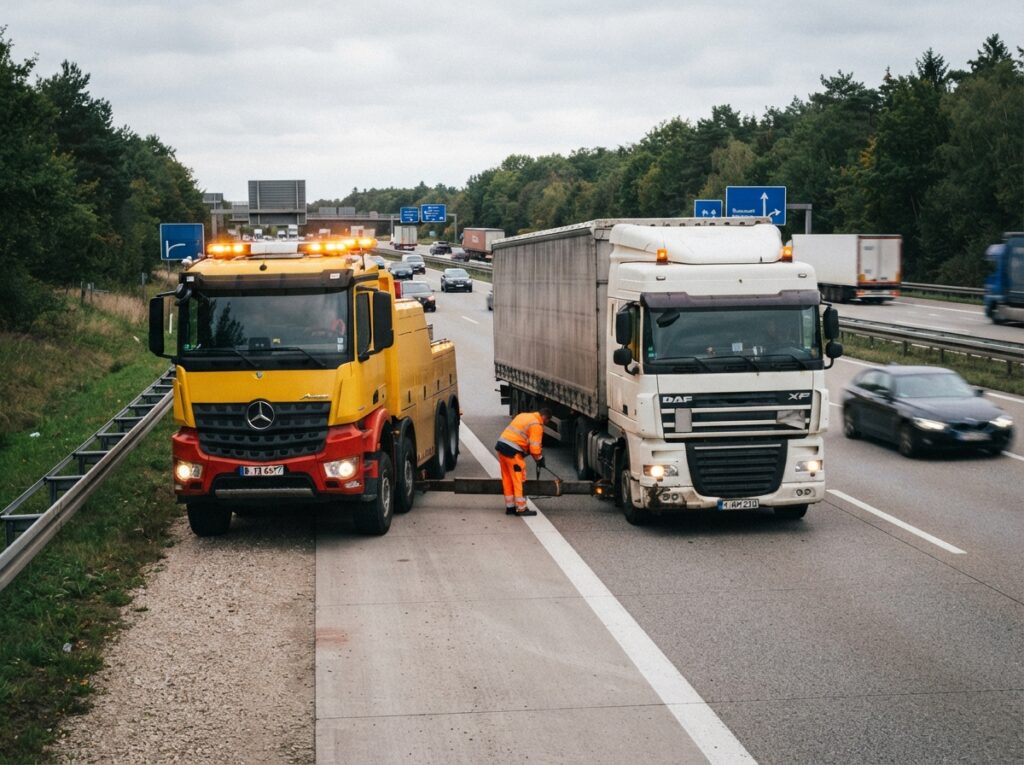
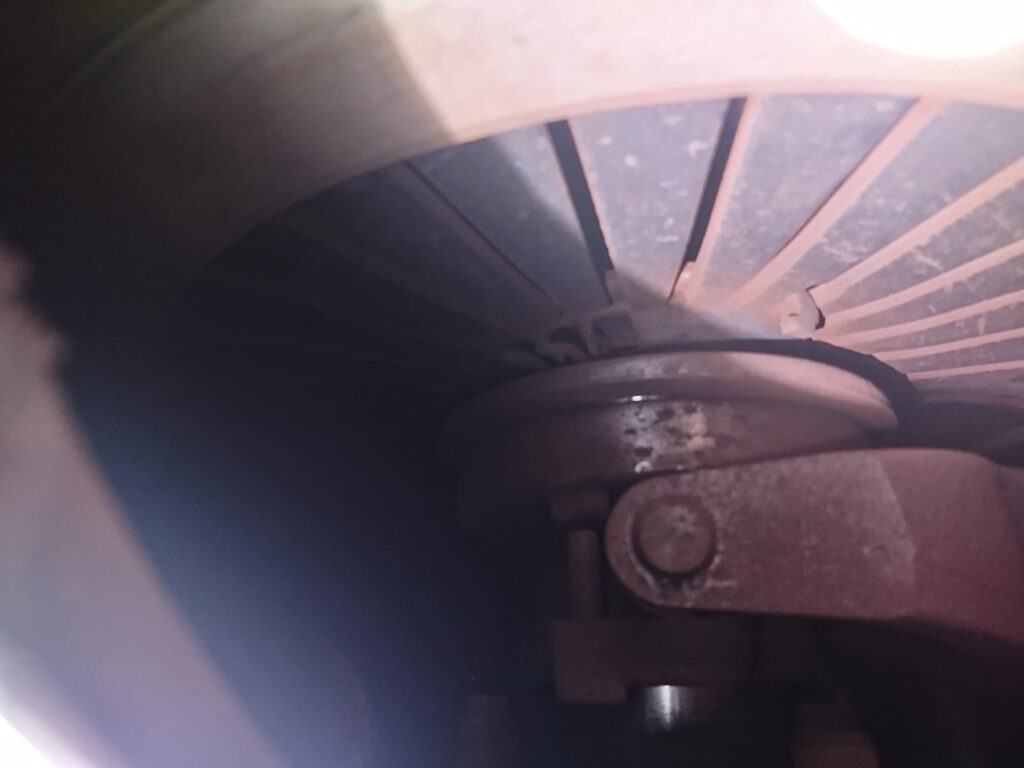
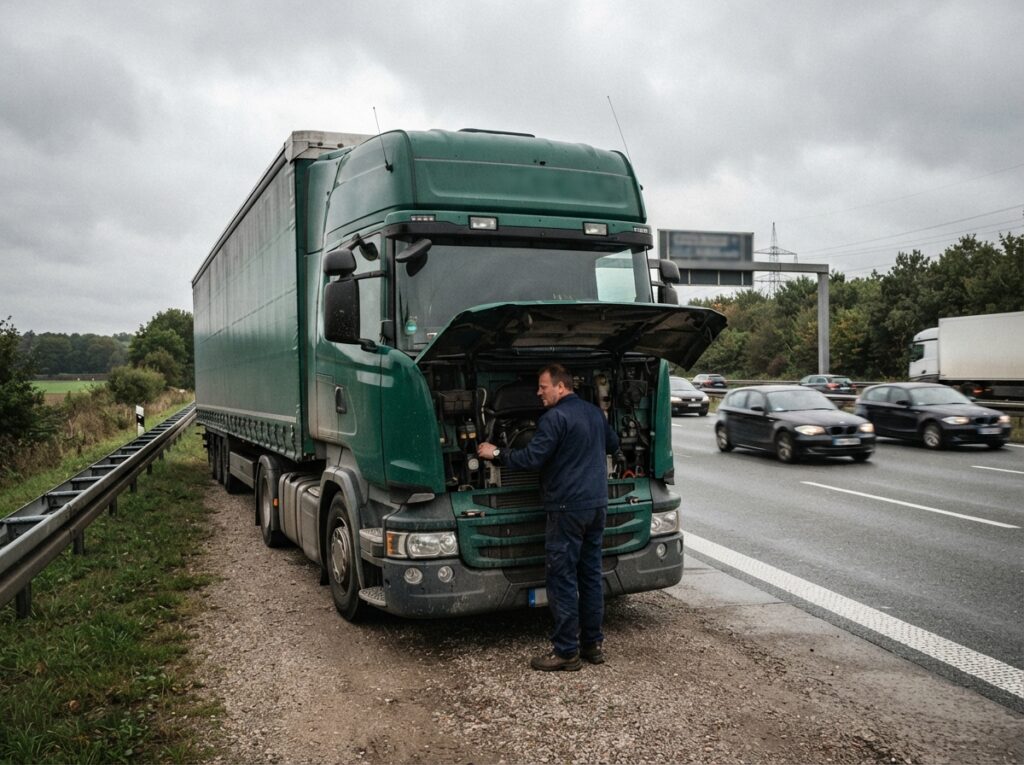
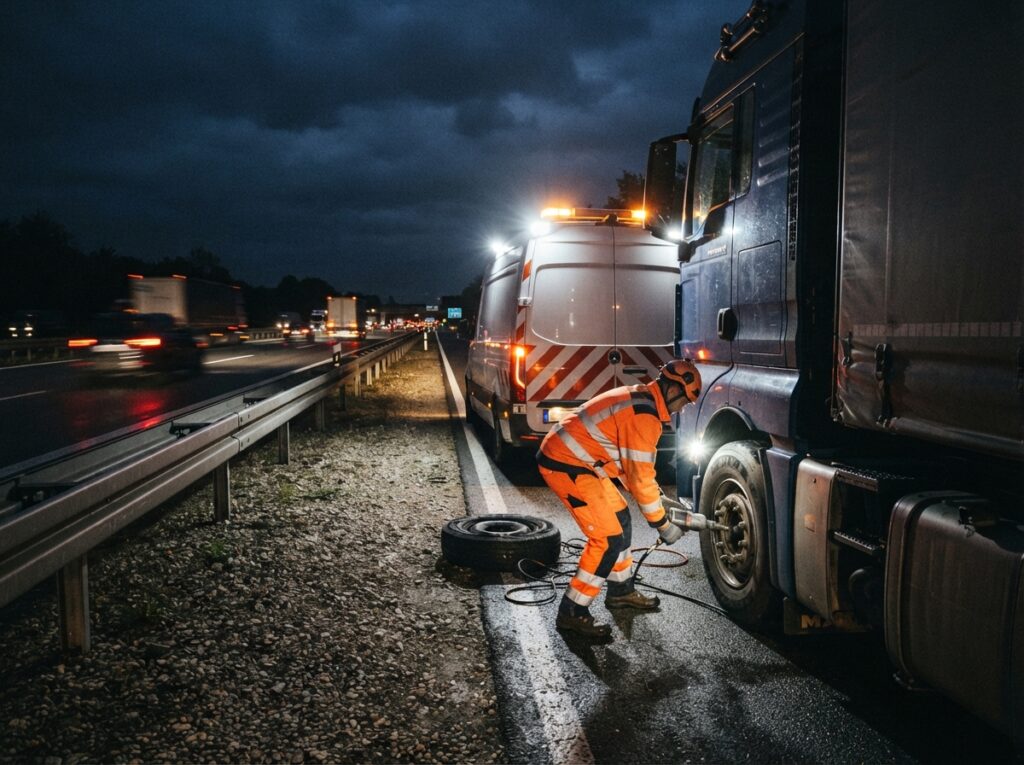
A truck driver stands on the shoulder of a German motorway, hazard lights blinking, the warning triangle placed a hundred meters back. The tractor still has brake pressure, the steering works, but the clutch has slipped and the semi cannot move under its own power anymore. At this point the dispatcher and the driver face a very practical question: does a rigid tow bar solve this, or does it require a full recovery truck with a low loader. The answer shapes waiting time, cost, and ultimately the safety of everyone on the road.
At LKWHelp24 we get calls like this almost every day. Our dispatchers need to judge within minutes over the phone whether a vehicle over 7.5 tonnes can be moved with a rigid tow bar or whether only a full recovery with a crane or low loader is realistic. This article explains what a tow bar actually is from a technical standpoint, when it is allowed and sensible to use, what German legal requirements apply, and where the line to a genuine recovery operation runs.
What a rigid tow bar is technically
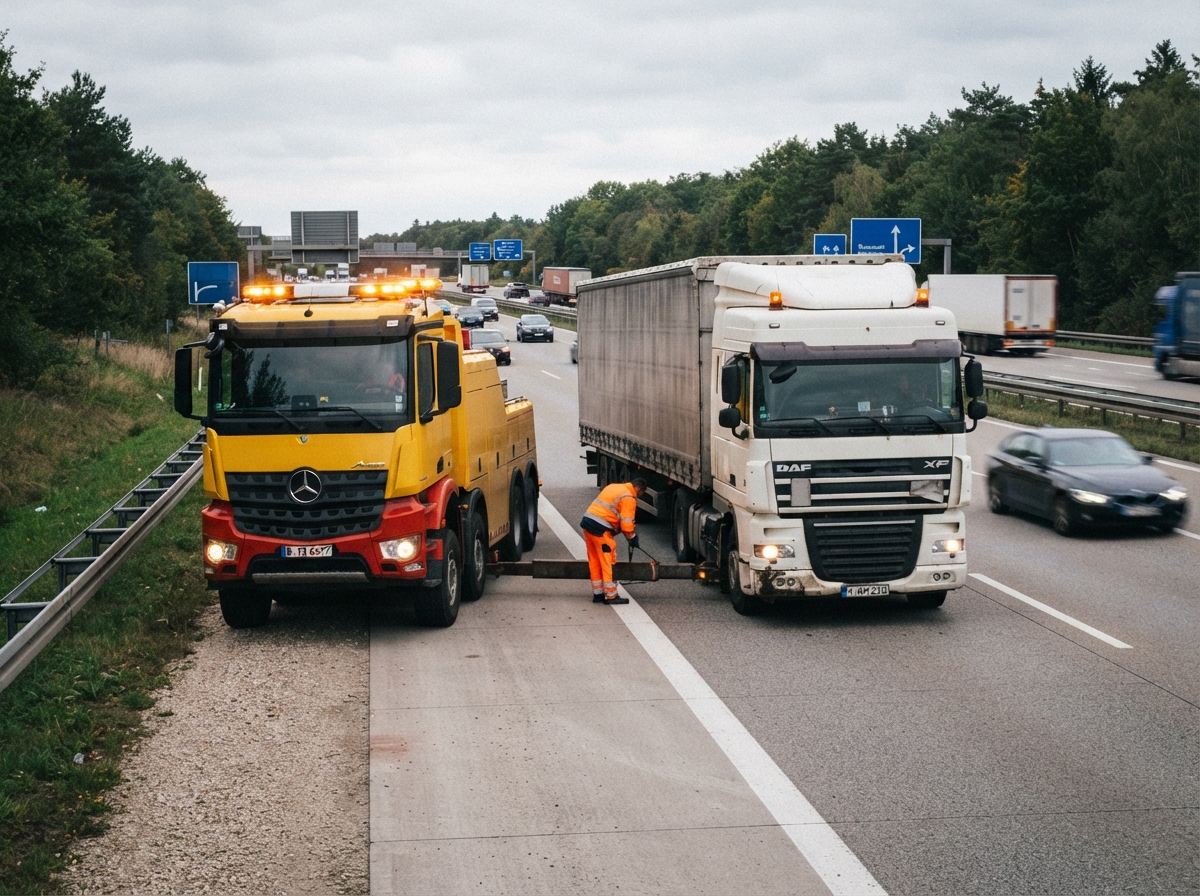
A rigid tow bar is a solid connection made of steel or reinforced aluminum between a recovery vehicle and the disabled truck. Unlike a tow rope, which is flexible and creates a jolt with every acceleration or braking, the bar keeps a constant distance between both vehicles. That changes the physics of the whole operation considerably.
With a rope, the towed vehicle has to be able to brake on its own, otherwise it slams into the towing vehicle when the front one brakes. With the bar, the rigid link takes over part of that job because it can transmit both pulling and pushing forces, not just pulling ones. Still, the bar does not replace a functioning brake system in the towed vehicle. It only reduces the risk of an uncontrolled collision during normal braking, it does not remove the need for the trailer to have its own braking capacity.
Most heavy duty tow bars for commercial vehicles are rated for a specific maximum weight, often somewhere between 3.5 and around 18 tonnes for reinforced models built for heavy loads. The manufacturer states that limit on a plate attached to the bar itself, and this figure is not a suggestion but a hard technical boundary. Using a bar rated for 7.5 tonnes on a 26 tonne semi is not a gray area, it is a clear mistake with a high risk of failure under load, for example in a curve or when pulling away on an incline.
The connection itself usually consists of two ball couplings or eyes attached to the towing hitches of both vehicles. On trucks this is often the standard trailer coupling already built into the chassis. It matters that both coupling points are rated for the forces involved, because when the towing vehicle brakes, the bar also carries compressive forces, not just tension.
When a rigid connection is actually an option
Not every breakdown can be solved with a tow bar. From our daily work at LKWHelp24 a few clear criteria have emerged that we check by phone before deciding which vehicle to dispatch.
First, the distance has to be short. A bar is meant for the stretch from the breakdown site to the nearest workshop or a safe parking area, not for a journey of a hundred kilometers. The longer the distance, the greater the strain on the coupling, the tires, and the nerves of both drivers who need to coordinate through visual contact and light signals.
Second, the brake system of the disabled truck must be working. This is the single most important precondition. If the service brake has failed, for instance because of a burst air line or a pressure loss in the circuit, the vehicle generally must not be towed with a rigid bar. In that case the only options are a proper tow truck with axle lift or recovery on a low loader.
Third, the steering must still function and the axles must not be locked. A vehicle that can no longer be steered cannot be safely guided on a bar, no matter how experienced the driver of the towed truck is.
Fourth, a driver must sit in the towed vehicle and actively participate. That means steering, braking, and driving by sight relative to the towing vehicle. If the driver is injured or the cab is no longer safely accessible, towing with a bar is off the table.
Fifth, weight matters relative to the pulling power available and the rated capacity of the bar itself. An empty semi trailer behaves very differently from a fully loaded refrigerated trailer at 24 tonnes gross weight.
Legal requirements in Germany
The legal basis for a broken-down vehicle on German roads is Section 15 of the road traffic regulations, the StVO. It states, in essence, that a multi-track vehicle that stops in a place where it cannot be recognized in time as a standing obstacle must immediately switch on its hazard lights. After that, a clearly visible warning sign, usually a warning triangle, must be placed at a sufficient distance, roughly 100 meters when traffic is fast. This rule applies regardless of whether the vehicle is later moved with a bar, a rope, or a crane, it covers securing the accident or breakdown scene itself.
For the actual towing process, the vehicle registration regulations, the StVZO, set technical requirements for vehicles and their equipment on public roads. In practice, the core points that apply to towing with a rigid bar and that show up consistently in driving school material, motoring club guidance, and technical handbooks are these: both vehicles must have their hazard lights switched on during the tow, so other road users recognize the unusual driving situation. A visible sign reading “Abschleppen” (towing) should be displayed, usually at the rear of the towed vehicle. The maximum allowed speed while towing with a rigid connection is noticeably lower than the normal recommended speed, typically not above 30 to 40 km/h, because the steering and braking behavior of the towed vehicle is limited.
Anyone who wants to check the exact wording should consult the full text of the StVZO and the StVO at gesetze-im-internet.de and gesetze-im-internet.de/stvo_2013, the official German legal portal. We generally advise our customers not to rely on paragraphs passed along verbally when a concrete legal question arises, but to check the original texts or consult a traffic law specialist if a dispute develops.
In addition to the StVO and StVZO, the Federal Highway Research Institute publishes research and technical guidance on vehicle safety and road engineering at bast.de, which is relevant for anyone digging deeper into the technical side of vehicle recovery standards.
Where a tow bar is no longer enough

There are a number of situations where a rigid tow bar is technically or legally no longer an option, no matter how short the distance would be.
If an axle is broken or a wheel is completely locked because a wheel bearing has seized, the vehicle can no longer roll safely. In that case the affected axle needs to be lifted and carried on a proper tow truck’s axle cradle, or the entire vehicle needs to be lifted by crane onto a low loader. Our colleagues at LKWHelp24 use heavy recovery with a crane for exactly these situations, when towing genuinely is not enough anymore.
Similarly, if a semi has left the road and is sitting in a ditch or on soft ground, a tow bar rarely helps. What is needed there is a crane or a specialized winch to bring the vehicle back onto the roadway first, before anyone can even consider the onward journey.
Winter conditions add another layer of difficulty. On snow and ice the braking behavior of both vehicles becomes unpredictable, and a semi on a bar can start sliding far more easily on a slippery surface than on dry asphalt. In winter conditions we generally recommend recovery with specialized equipment from the outset rather than a rigid bar, and we have a detailed article on towing a semi truck in winter that covers this in depth.
The motorway itself is another classic edge case. Towing with a rigid bar on a motorway is generally possible, but reaching the next safe exit is often still necessary, and that is exactly where it becomes clear whether a short tow with a bar is enough or whether, given heavy traffic and speed, a full tow truck with complete pickup is the safer choice. More on this can be found in our article on 24 hour truck towing at night, where nighttime motorway operations play a particular role.
Safety while towing with a bar
Safety when towing with a rigid bar depends on three things: the qualification of the driver in the towed vehicle, communication between both vehicles, and how visibly the whole operation is secured toward other traffic.
The driver in the towed truck needs a valid license for the relevant vehicle class, because legally he counts as the driver of a motor vehicle in traffic during the tow, even if the engine is not running or the drivetrain has failed. He has to be able to steer and brake, which without power steering requires considerably more physical effort than normal, and that should be clarified before setting off.
Communication between the two drivers usually happens through light signals, brake lights and indicators, supplemented by short stops at safe spots to coordinate. Radios or hands-free phone calls make this considerably easier, especially on longer stretches to the next workshop.
Toward the outside, the whole operation needs to be clearly recognizable to other road users. Both vehicles drive with hazard lights on, speed stays low, and a sufficient safety distance to the rest of traffic is maintained. On multi-lane roads in particular, the lane should be chosen so that overtaking remains possible without forcing other vehicles into risky maneuvers.
A practical example from mobile roadside assistance
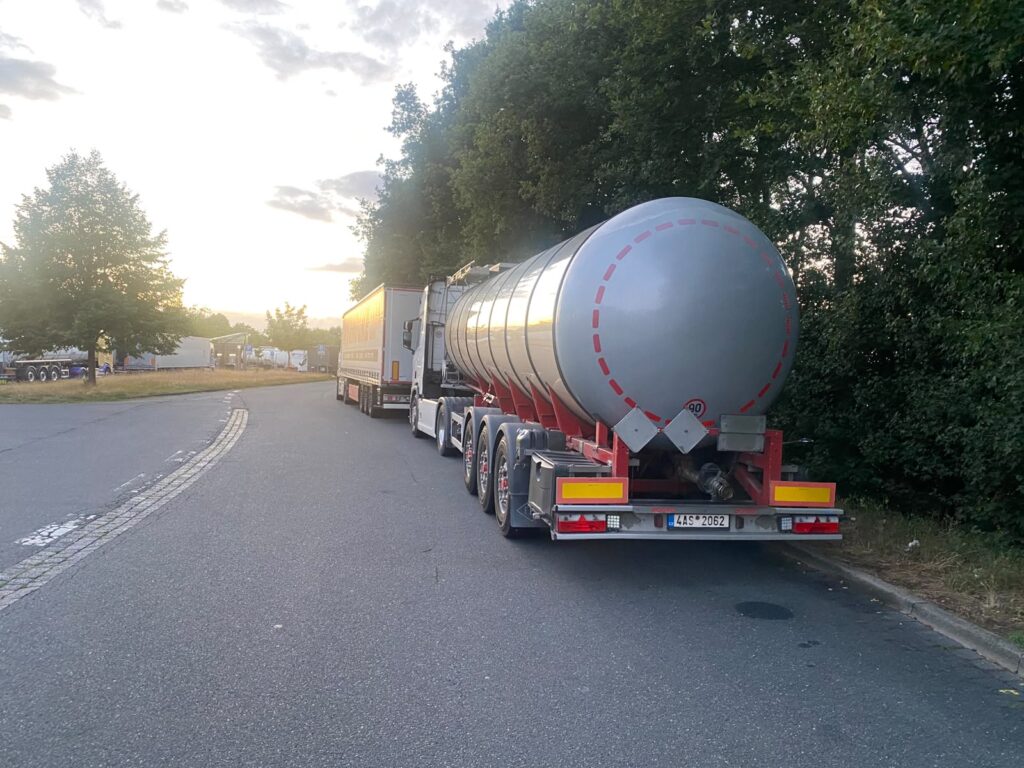
A typical case from our work at LKWHelp24: a van with trailer over 7.5 tonnes stops at a rest area because the clutch has slipped and the vehicle cannot move under its own power anymore. The driver contacts us on WhatsApp, sends a photo of the situation, and confirms that brakes and steering work normally.
Our dispatcher asks specifically about the distance to the nearest workshop, the total weight of the load, and whether the driver can accompany the rest of the journey himself. Since the workshop is only twelve kilometers away, the brake system is intact, and the total weight falls within the rated capacity of our tow bar, we choose the fast solution with the bar instead of sending a full tow truck. That saves the driver and the freight forwarder time and money without compromising safety, because all the basic requirements are met.
Had the brakes failed or the distance been considerably longer, we would have dispatched a full tow truck instead. That assessment happens over the phone or through WhatsApp within a few minutes, and this is exactly where the value of an experienced dispatch team shows, being able to distinguish between the two solutions instead of reflexively sending the biggest and most expensive vehicle every time.
More background on towing in general and what needs to be considered legally is covered in our article what to consider when towing, and anyone who wants concrete numbers on cost can find them in our piece on truck towing costs.
Hazard lights as part of securing the scene
Before anyone even decides between a bar and a crane, securing the breakdown scene itself comes first. We have a dedicated article explaining what hazard lights can indicate and what rules under the StVO apply to drivers. This step is mandatory regardless of whether a rigid bar, a rope, or a full tow truck is used afterward.
Difference between a rigid bar and a flexible rope in detail

Drivers who rarely deal with towing situations often underestimate the difference between a bar and a rope. With a rope, some slack remains between the vehicles, which causes a jolt with every braking event. The towed truck rolls forward slightly, the rope tightens again, and this repeats with every change in speed. For a light passenger car that might be tolerable, but for a multi tonne commercial vehicle this jolt places considerable stress on the coupling, the frame, and the hitch itself.
The bar largely removes that jolt because it can transmit both pulling and pushing forces. When the towing vehicle accelerates, the bar is under tension, when it brakes, the bar is under compression and keeps the distance constant. That also means the bar itself and its attachment points on both vehicles need to be robust enough, because the forces during an emergency stop are considerably higher than during simple pulling.
Another practical difference concerns steerability. With a rope, the driver of the towed vehicle has more slack but also more uncertainty, because the vehicle can shift sideways in a curve before the rope tightens again. The bar forces a more consistent line, which is noticeably safer on winding country roads or when changing lanes on a motorway.
Maintenance and condition of the tow bar itself
A point often overlooked in public discussion is that the bar itself needs regular inspection. Rust at the connection points, worn bolts, or cracks in the material can significantly reduce the rated load without being obvious at first glance. Professional towing services like LKWHelp24 inspect their equipment after every job and replace worn parts before they become a safety risk.
The ball couplings and eyes at both ends of the bar also wear over time, especially when used frequently under full load. A worn ball coupling can create lateral play during the drive that makes it harder to control the towed vehicle. That is why a visual check of the bar before every job is part of the routine, along with checking the lights on both vehicles, because without working brake lights and indicators on the towed truck the whole operation becomes hard for other road users to judge safely.
Insurance and liability during towing operations
An aspect that concerns many drivers and dispatchers is liability during the towing process. As a general rule, both the towing vehicle and the towed vehicle are operating on public roads, and both are covered by their regular motor vehicle liability insurance. If a third vehicle is damaged during the tow, liability generally falls on the towing vehicle, since it actively controls the driving situation.
The picture changes if the bar itself breaks or comes loose because it was mounted incorrectly or was not rated for the weight of the towed vehicle. In that case there can be recourse claims if it is shown that the technical limits of the equipment were knowingly exceeded. For this reason, reputable towing services such as LKWHelp24 document the weight of the load and the technical specifications of the bar used before every job, so that in case of a dispute it can be shown that all requirements were met.
For freight forwarders it is also worth checking their own cargo insurance, since depending on the contract it may also cover damage to the cargo itself that occurs during a tow, for example from unusual vibrations during longer stretches on a bar.
Why dispatchers ask so many questions on the phone
Customers sometimes wonder why our dispatchers ask so many detailed questions before sending a vehicle. The reason is simple: any wrong call costs twice. If a tow bar is sent to a vehicle that actually needs a crane, a second vehicle has to be dispatched afterward anyway, which significantly extends the waiting time for the stranded driver. If, on the other hand, a full recovery truck with low loader is sent for a simple clutch issue that a bar could resolve in ten minutes, the customer pays needlessly and blocks valuable capacity needed elsewhere.
That is why we ask specifically about the exact nature of the damage, the weight of the load, the condition of brakes and steering, and the distance to the nearest suitable workshop or parking area. These questions can usually be resolved in two or three minutes, often via WhatsApp with a photo and a short voice message, which spares drivers from having to describe everything precisely over the phone in a stressful situation.
Frequently asked questions about truck tow bars
Can you drive on the motorway with a tow bar?
Generally yes, as long as the towed vehicle has working brakes and steering and speed is reduced significantly. In practice the goal is usually the next exit or a safe hard shoulder, not a long continued drive on the motorway itself.
How fast can you drive while towing with a bar?
Common practice caps speed at 30 to 40 km/h, depending on the manufacturer’s specification for the bar and the condition of the towed vehicle. If there is any doubt about braking performance, speed should be reduced even further.
Does the towed vehicle need its own driver?
Yes, a driver with a valid license needs to sit in the towed vehicle, steer, and brake. Without a capable driver, a tow bar is not an option, and only a full tow truck with complete pickup remains.
What happens if the brakes on the disabled truck have failed?
Then towing with a bar is generally not allowed, because the bar cannot transmit sufficient braking force for a vehicle without its own functioning brakes. In that case a tow truck with axle lift or a low loader is the correct solution.
How does a tow bar differ from a tow rope?
The bar is rigid and keeps a constant distance between the vehicles, while the rope is flexible and creates jolts during braking and acceleration. For trucks and heavy commercial vehicles the bar is generally preferred for safety reasons, since it is more stable and easier to control.
What does a tow with a bar cost compared to a full recovery?
A job with a bar is usually considerably cheaper, since no specialized crane vehicle or low loader is required and the job takes less time. Exact price ranges and the factors that influence cost are explained in detail in our article on truck towing costs.
Quick check before deciding
Before a driver or dispatcher settles on a tow bar, it is worth running through a short mental checklist: is the distance short enough, do the brakes and steering work properly, is there a capable driver behind the wheel of the towed vehicle, and does the total weight fall within the rated capacity of the bar being used. Only when all four points are satisfied is the rigid connection genuinely the faster and cheaper choice over a full recovery.
Conclusion
A rigid tow bar is a fast and cost-effective solution, but only under clearly defined conditions: a short distance, working brakes and steering, a capable driver, and a weight within the rated capacity of the bar. As soon as one of these conditions is missing, reaching for a full tow truck or a crane recovery is the only safe option. At LKWHelp24 our dispatchers make this call every day over the phone and via WhatsApp, around the clock, for vehicles over 7.5 tonnes across Germany, speaking German, English, Polish, and Russian. Anyone who has a breakdown and wants to know quickly which solution fits their specific case can reach us on WhatsApp at +49 160 5753826, at any time, any day of the week.