Skip to content
A broken-down semi-trailer truck on the motorway costs more than just time. Once a tire service can no longer help, because an axle has failed or the trailer is sitting in a ditch, a breakdown turns into a towing case. And that’s exactly when the question comes up, in forums, in dispatcher WhatsApp groups, and in every other phone call: what does this actually cost?
This guide shows real price ranges for truck towing services in Germany, explains how the final bill is put together, and points out where the cost traps are.
Why truck towing prices vary so much
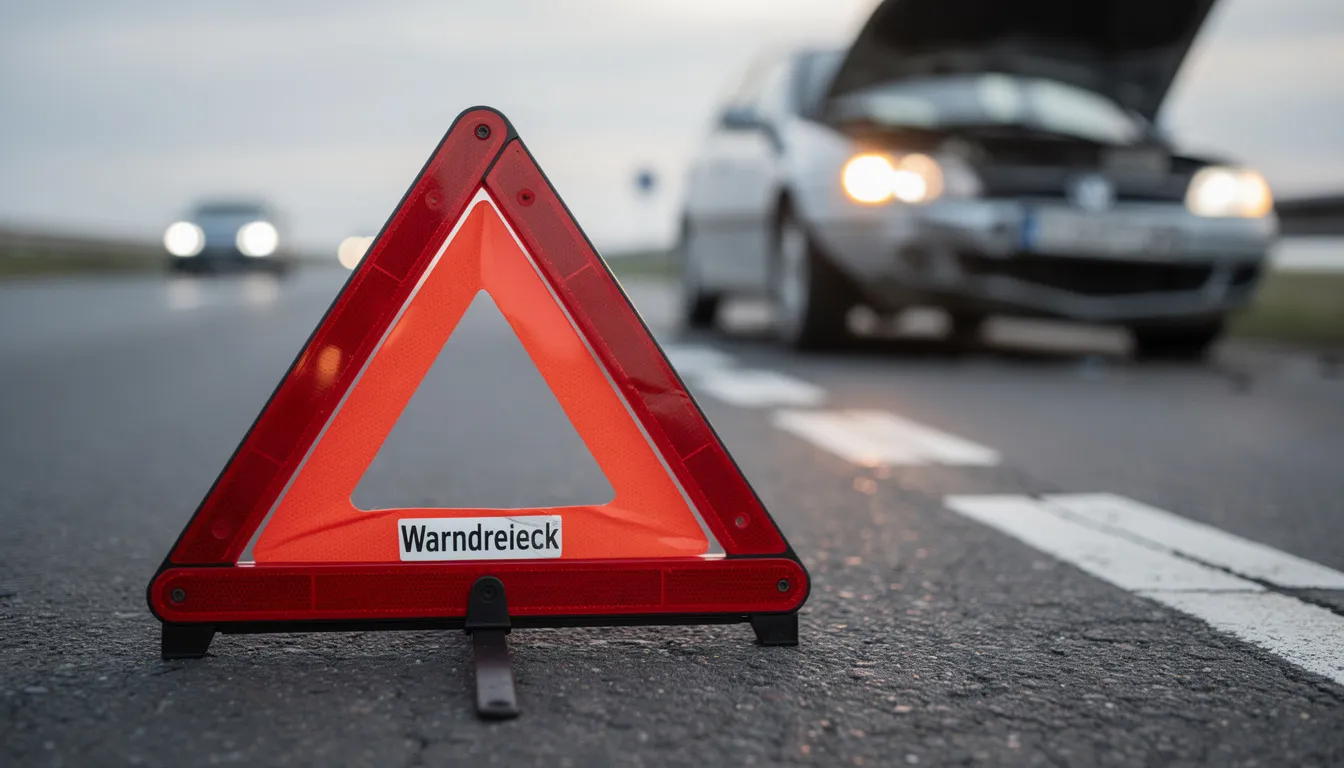
For a car, a towing job is usually a straightforward affair: one vehicle, one crane, one route. For a semi-trailer truck weighing up to 40 tonnes, the math looks different. It takes specialized recovery vehicles with the right towing capacity, often extra personnel, and sometimes a lane closure with police escort. Each of these components shows up in the price.
A second factor is time of day. A call-out in broad daylight on an easily accessible federal road costs noticeably less than a nighttime recovery on an icy motorway. Reputable providers like LKWHelp24 calculate these differences transparently, instead of only revealing them on the invoice.
Realistic price ranges for truck towing
Flat price statements should be treated with caution for commercial vehicles, since weight, damage type, and location vary a lot. As a rough guide for vehicles from 7.5 tonnes:
| Situation | Approximate price (net) |
|---|---|
| Call-out and base service, daytime | from €290 |
| Evening, night, or weekend call-outs | from €429 |
| Recovery after an accident, with crane or air cushions | individual, often above €1,000 |
| Extra kilometers beyond the included distance | usually €2 to €3 per km, depending on the provider |
These figures are reference points, not fixed prices. The actual amount depends on the vehicle’s condition, how accessible the accident site is, and the equipment needed. For an alternative to towing, the article on emergency wheel changes for trucks describes how a professional tire change works, since not every breakdown necessarily ends up on the back of a tow truck.
What the invoice is actually made of
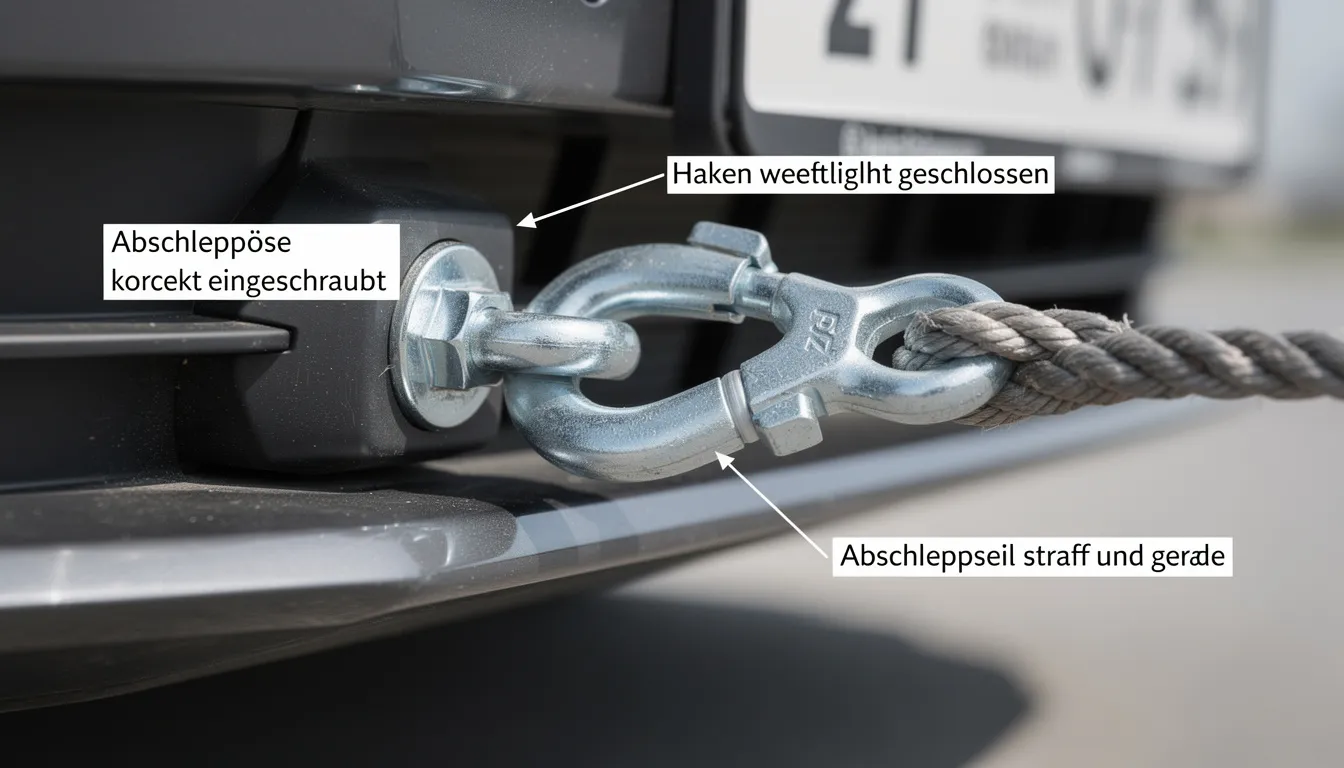
Understanding a truck towing invoice comes down to five cost blocks.
The call-out flat fee covers the recovery vehicle’s trip to the site, regardless of how long the actual job takes. It applies even if the problem ends up being solved on the spot.
The labor itself is usually billed by time, often with a set number of hours included in the base price and a surcharge for each additional hour. For complicated recoveries, such as after a trailer has tipped over, this item can rise noticeably.
Special equipment like crane trucks, low-loaders, or air cushions is billed separately, since it’s rarely part of a standard vehicle and often has to be called in specifically.
Transport to the destination, meaning the actual drive to the workshop or the haulage company’s yard, is usually billed by the kilometer once the distance included in the base price is exceeded.
Surcharges for night, weekend, or holiday call-outs come on top, because staffing costs are higher during these times. A reputable provider states these surcharges upfront, not only after the job.
Comparison: truck towing versus car breakdown services
Many haulage companies benchmark prices against ADAC or other well-known car breakdown services, because those prices are publicly known. The comparison is flawed, though. ADAC Truckservice is indeed specialized in commercial vehicles, but it runs its own partner network and pricing structure, which doesn’t map one-to-one onto specialized regional providers.
The main difference lies in vehicle weight and the equipment required. A car rarely weighs more than 2 tonnes, while a loaded semi-trailer truck can weigh twenty times that. That calls for completely different recovery vehicles, different towing gear, and different safety measures. LKWHelp24 only serves vehicles from 7.5 tonnes; for cars, vans under that limit, and motorhomes, a regular passenger vehicle breakdown service is the right address.
When a tire service is cheaper than a towing service
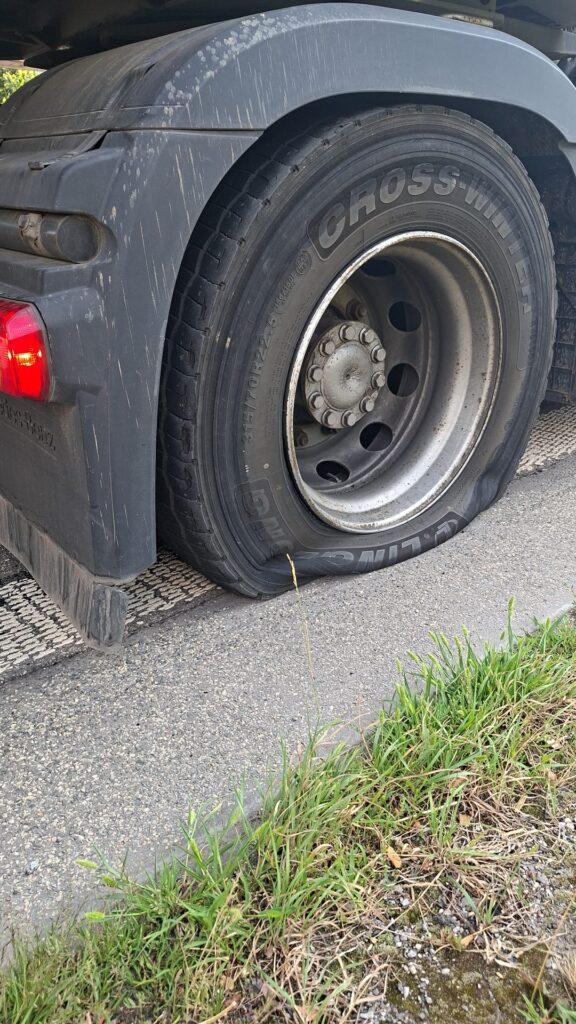
Not every tire failure requires a tow truck. In most cases, a flat tire can be changed right at the breakdown site, which is noticeably cheaper than a recovery. The choice between the two options depends on the type of damage.
A simple blowout without follow-on damage to the rim or axle is a classic case for a mobile tire service. Details on the process and pricing are in the article on mobile truck tire service. Only once the vehicle can no longer be made safely roadworthy after the tire change, for example because of additional axle damage, does a towing service come into play.
A detailed overview of which criteria point toward the right decision is in the article what to watch out for when towing.
Who ends up paying the bill
The question of who covers the cost regularly causes confusion. As a rule, the vehicle’s owner or driver pays the towing service’s invoice on site first, usually by cash or card. What happens afterward depends on the reason for the breakdown.
For a self-inflicted technical fault, for example due to insufficient maintenance, the haulage company or owner usually bears the full cost. In an accident caused by another party, that party’s liability insurance can cover the cost; the legal basis for this is set out in Germany’s Compulsory Insurance Act. The German Insurance Association (GDV) regularly publishes information on claims after road accidents, which is also relevant for towing cost reimbursement.
A fleet’s own insurance policy with an assistance component can also cover the cost in full or in part. It’s worth checking this point in your own insurance contract before the next emergency, rather than finding out in the middle of one.
Legal framework for recovery on the motorway
A broken-down truck on the roadway is a traffic obstruction that has to be secured according to the requirements of the German Road Traffic Regulations (StVO). Hazard lights, a warning triangle, and a hi-vis vest are only the first step. During motorway recovery operations, the towing service often works together with the police and the responsible motorway maintenance authority, especially when a lane or the hard shoulder has to be temporarily closed.
This coordination takes time and, in some cases, money too, for example when extra traffic barriers are needed. The Federal Highway Research Institute (BASt) publishes guidelines on traffic safety at work and recovery sites, which professional providers follow.
Typical cost traps and how to avoid them
Under time pressure, the same mistakes tend to creep in when choosing a towing service. Calling the first provider from a search engine without asking for the total price risks an unpleasant surprise on the invoice.
A common trap is being quoted only an hourly rate, with no mention of the call-out fee or the per-kilometer cost. The final sum ends up well above the original expectation. A second trap is hidden surcharges for waiting time, for example when the police have to arrive before recovery can begin. A third point concerns payment method: some providers only accept cash on site, which can be a problem for international drivers who aren’t carrying enough.
The simplest protection against all this is a clear question before the job starts: what is the total price, including call-out, labor, and any surcharges? Reputable providers answer that without hesitation.
Case study: recovery after an axle failure on the A9
A semi-trailer truck carrying building materials suffered an axle failure after hitting a pothole on the A9, making it impossible to continue. The driver secured the scene as required and contacted the recovery service over WhatsApp with location and photos. Since the axle was completely blocked, the vehicle had to be lifted with a crane truck and transported to the nearest specialist workshop. Police closed one lane for the duration of the recovery.
The total price, due to the combination of crane truck, lane closure, and night call-out, came in well above the standard rate for a simple tire change, but in this case it was the only technically possible option. Similar cases involving heavy equipment in mud or on rough terrain are described in the article on truck recovery in Regensburg.
Towing in winter: a cost factor of its own
Winter conditions add extra effort to a recovery. Ice makes it harder to safely hook up the disabled vehicle, shorter daylight hours extend the job, and sometimes extra equipment like snow chains is needed for the recovery vehicle itself. Federal Statistical Office data on road accidents shows seasonal peaks in the winter months, which is also reflected in how busy recovery services get.
How a winter recovery specifically differs, and what drivers should be prepared for, is covered in the article on truck towing in winter.
A special case: towing car carriers
A particular cost factor comes up when it’s not just the truck itself but also the vehicles it’s carrying that are affected. With a disabled car carrier, the first thing to clarify is whether the cargo can be transferred to another vehicle or whether the entire combination has to be towed. A real example of this situation is described in the article on the car carrier breakdown in Wiesbaden, where securing the cargo made up a significant share of the total effort.
Regional differences in pricing
Truck towing prices also vary by region. In densely trafficked areas, such as around Berlin or Mannheim, specialized providers are usually on site faster, which has a positive effect on total cost, since downtime drops. In more rural regions, the call-out distance alone can drive up cost, even when the actual recovery effort is small.
How to reduce towing costs before they even come up
Some costs can be avoided through foresight, well before a towing service ever needs to be called. Regularly checking tire pressure significantly lowers the risk of a blowout; details are in the article on truck tire pressure. Following the hazard-light rules under the StVO, as explained in the article on what hazard warning lights mean, also prevents follow-on damage from oncoming traffic, which can turn a simple breakdown into an expensive recovery case.
Anyone driving in winter should also know the winter tire regulations, summarized in the article on winter tires for trucks in Germany. And knowing your fleet’s exact tire size, for example from the explanation of tire size 385/65 R22.5, speeds up the tire service’s response in an emergency and helps prevent a simple breakdown from turning into an expensive towing case.
Checklist: how to choose the right towing service
Under time pressure, it’s hard to carefully vet a provider. A few questions can still be settled over the phone in under a minute and save you trouble later.
First, ask whether the provider is actually specialized in vehicles from 7.5 tonnes, or whether it’s a car breakdown service that only occasionally takes on commercial vehicles. Second: is a fixed price quoted, or only an hourly rate? Third: is the call-out already included in that price, or does it come on top? Fourth: what payment methods are accepted, which matters especially for drivers from abroad without enough cash on hand. Fifth: does the provider have the right equipment for the specific damage, such as a crane truck for an axle failure, rather than just a standard tow truck?
A provider who answers all five questions without hesitation signals real experience with this exact vehicle class. Hesitant or evasive answers are a warning sign, especially with international brokerage platforms that pass the job on to a subcontractor whose prices end up higher than what was originally quoted.
Cross-border recovery: what changes on international trips
A significant share of drivers who break down in Germany come from Poland, the Baltic states, or Ukraine. For them, a towing case raises additional questions that German drivers rarely face.
The language barrier is the most obvious one. A service that communicates in German, English, Polish, and Russian noticeably shortens the time it takes to get the location across correctly, compared to a provider where communication has to go through a translation app first. The second point concerns invoicing. Haulage companies based abroad need a proper invoice showing German VAT and a valid VAT ID from the service provider, for their input tax refund or for their own bookkeeping. Anyone who only gets a handwritten receipt will run into problems reconciling it later with their accounting or with the client.
A third point concerns the cargo itself. On cross-border transports, the load is often subject to the CMR Convention, which governs liability for transport damage. If a loaded vehicle is towed, the driver should document the condition of the cargo before and after the recovery, ideally with photos, to avoid later disputes over transport damage. Questions about commercial licensing and freight transport checks are answered by the Federal Office for Goods Transport (BAG), which is also responsible for enforcing toll and social regulations in international road freight.
Price differences by vehicle class
Not every commercial vehicle over 7.5 tonnes costs the same to tow. Within this category, there are still significant differences based on total weight and axle count.
A distribution truck with two or three axles and a permissible gross weight of 7.5 to 18 tonnes can usually be moved with a classic tow truck using wheel lifts or a tow dolly. These jobs tend to fall at the lower end of the price ranges mentioned above.
A semi-trailer truck with a tractor unit and trailer, loaded up to 40 tonnes, needs a considerably stronger recovery vehicle, often with a hydraulic lift for the entire tractor unit. Here the base price rises just from the vehicle size itself, regardless of the actual damage.
At the top end are heavy haulage transports and special vehicles like concrete mixers or construction tippers with four or more axles. Most regional providers don’t keep the right recovery equipment for these vehicles on hand and instead refer the job to specialized heavy-recovery companies, which pushes the price up further but is also the only workable solution. Anyone regularly operating vehicles like these should check in advance whether their usual breakdown service has the right partners, rather than searching for one in the middle of an emergency.
Frequently asked questions
How much does a truck towing service cost on average?
A simple daytime call-out starts at around €290, evening or night call-outs at around €429. Complex recoveries involving a crane truck or after an accident often exceed €1,000, depending on the actual effort involved.
Does insurance cover towing costs?
That depends on the reason for the breakdown. In an accident caused by another party, that party’s liability insurance usually covers the cost. For a self-inflicted technical fault, your own fleet insurance with an assistance component covers it, if you have one.
Why do prices vary so much between providers?
The differences come from vehicle equipment, staffing levels, time of day, and the specialized equipment needed. A provider with its own crane truck can handle complex cases, but also charges higher base prices than a pure tire service.
Can I get a binding price before the job starts?
Yes, and you should ask for one. Reputable providers state a fixed price or at least a reliable range before the recovery vehicle sets off, based on the vehicle type and damage information given over the phone or WhatsApp.
What happens if the recovery takes longer than planned?
Extra time is usually billed at the hourly rate stated in the quote. For foreseeable complications, such as a necessary lane closure, a reputable provider informs you in advance about the possible extra duration and the resulting additional cost.
Do I have to pay out of pocket as the driver?
In most cases, yes, the driver pays on site and then submits the invoice to the haulage company or the relevant insurer afterward. Some providers offer direct billing to the company for fleet customers with a framework agreement, so the driver doesn’t have to pay upfront. It’s worth clarifying this in advance, especially for haulage companies running many vehicles on the road.
Is there a difference between towing and recovery?
Yes, even though the terms are often used interchangeably in everyday speech. Towing means transporting a vehicle that’s drivable in principle but not roadworthy, for example after tire damage without an axle problem. Recovery means freeing a vehicle from a difficult position, such as a ditch or after it has tipped over. Recoveries are technically more involved and correspondingly more expensive, since they often require crane or winch equipment.
Emergency contact: WhatsApp wa.me/491605753826, phone +49 160 5753826, available around the clock. The LKWHelp24 team communicates in German, English, Polish, and Russian.