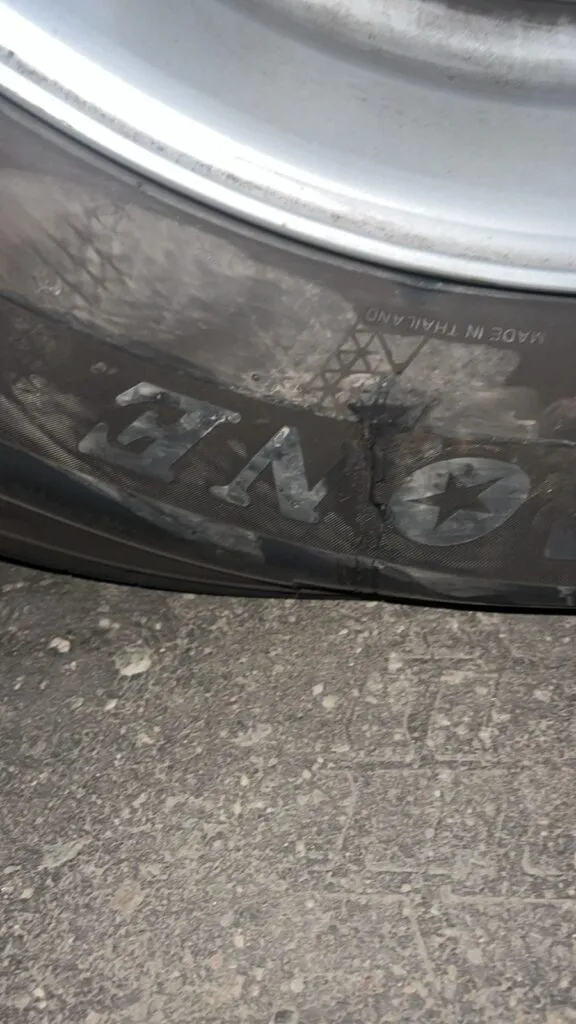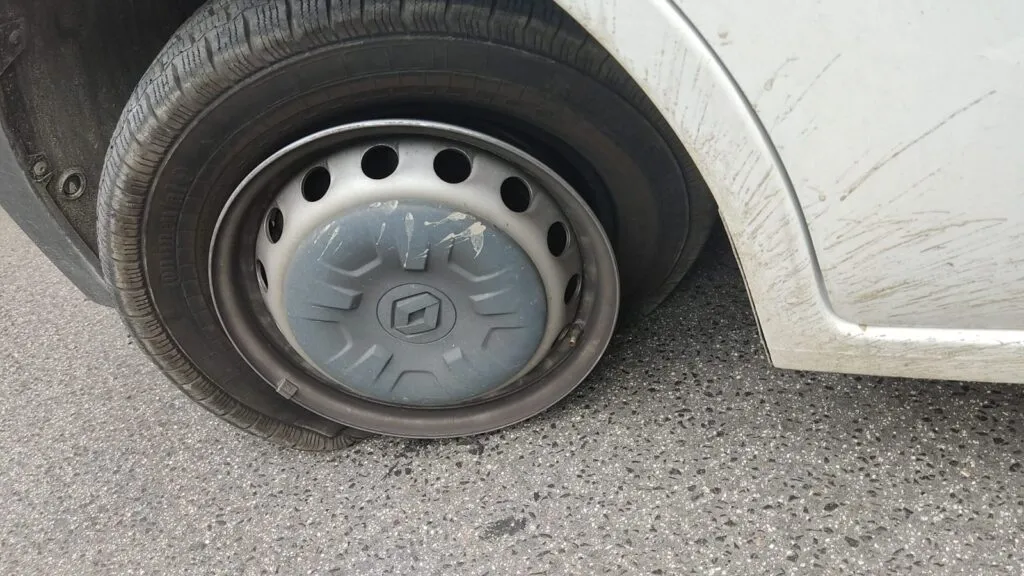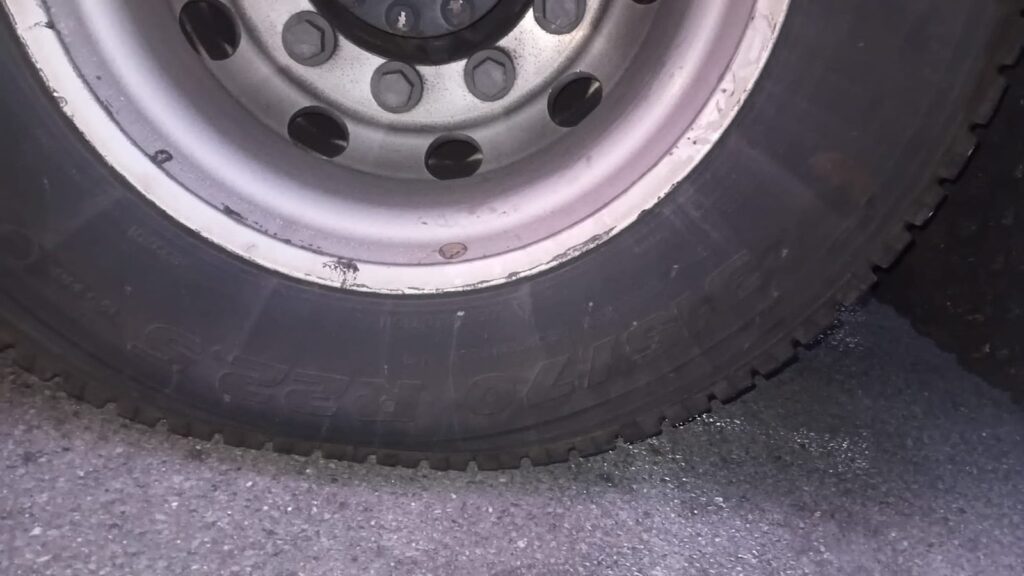
A sudden drop in tyre pressure on a moving lorry isn’t just an inconvenience, it’s a potential safety hazard that can lead to loss of control, damage to the wheel assembly, or even a full breakdown. On the evening of 21 September 2026, a driver operating a heavy goods vehicle on the A3 near Limburg an der Lahn experienced exactly that. While en route towards Cologne, the vehicle’s driving axle tyre pressure began to fall. Upon stopping at a service area, the driver discovered a metal screw embedded deep in the tread, a puncture too severe for repair. With no time to spare and a delivery schedule under pressure, the decision was made: immediate replacement. This is how LKWHelp24 mobilised a specialist team within 38 minutes, completed the full tyre change and balance in just 33 minutes on-site, and returned the lorry to the road in under 90 minutes from the first call.
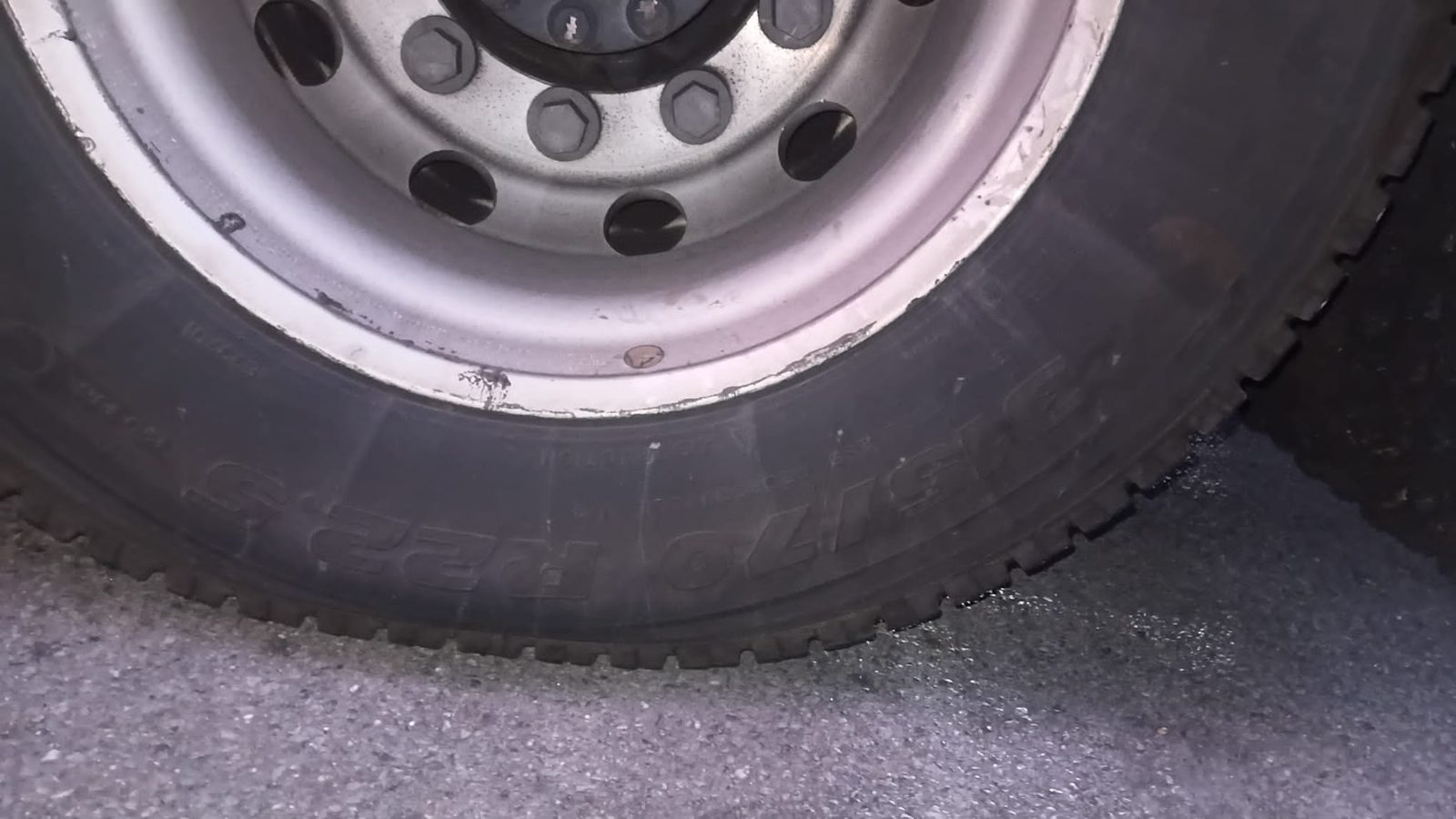
The situation was critical not just for the driver’s timeline, but for the vehicle’s structural integrity. A damaged driving axle tyre, especially one with a penetrating object like a screw, risks catastrophic failure under load. The vehicle’s weight, combined with high-speed travel on a motorway, places immense stress on the wheel, hub, and suspension system. Ignoring the damage or attempting a temporary fix could result in wheel separation, axle failure, or even a collision. This case demonstrates why professional roadside tyre service isn’t a luxury, it’s essential for safety, compliance, and operational continuity.
This article breaks down the entire incident from first call to final inspection, with full transparency on timing, costs, technical decisions, and the risks of DIY fixes. You’ll see exactly how a mobile tyre service team operates under real-world conditions, including weather delays, safety protocols, and the importance of correct torque application. Whether you’re a fleet manager, a transport operator, or a long-haul driver, this case study shows why choosing a verified, 24/7 mobile service like LKWHelp24 can save thousands in lost revenue, prevent accidents, and keep your operations moving.
What Happened: A Screw in the Tread
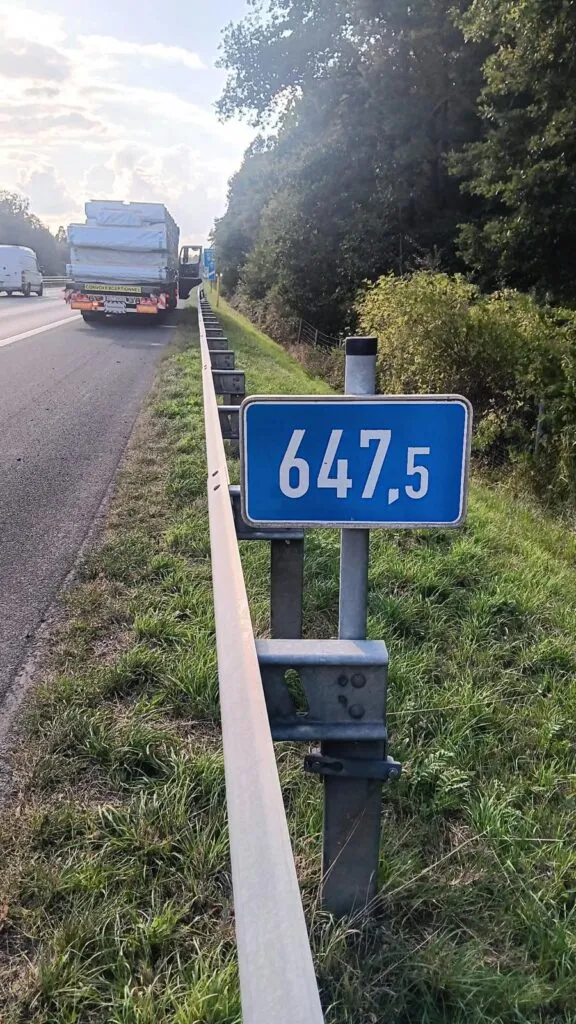
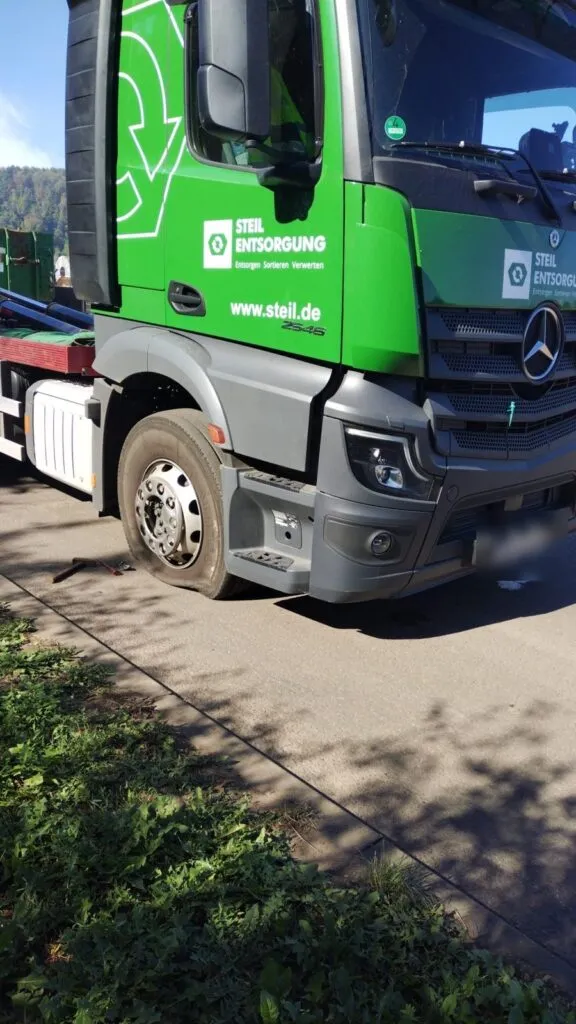
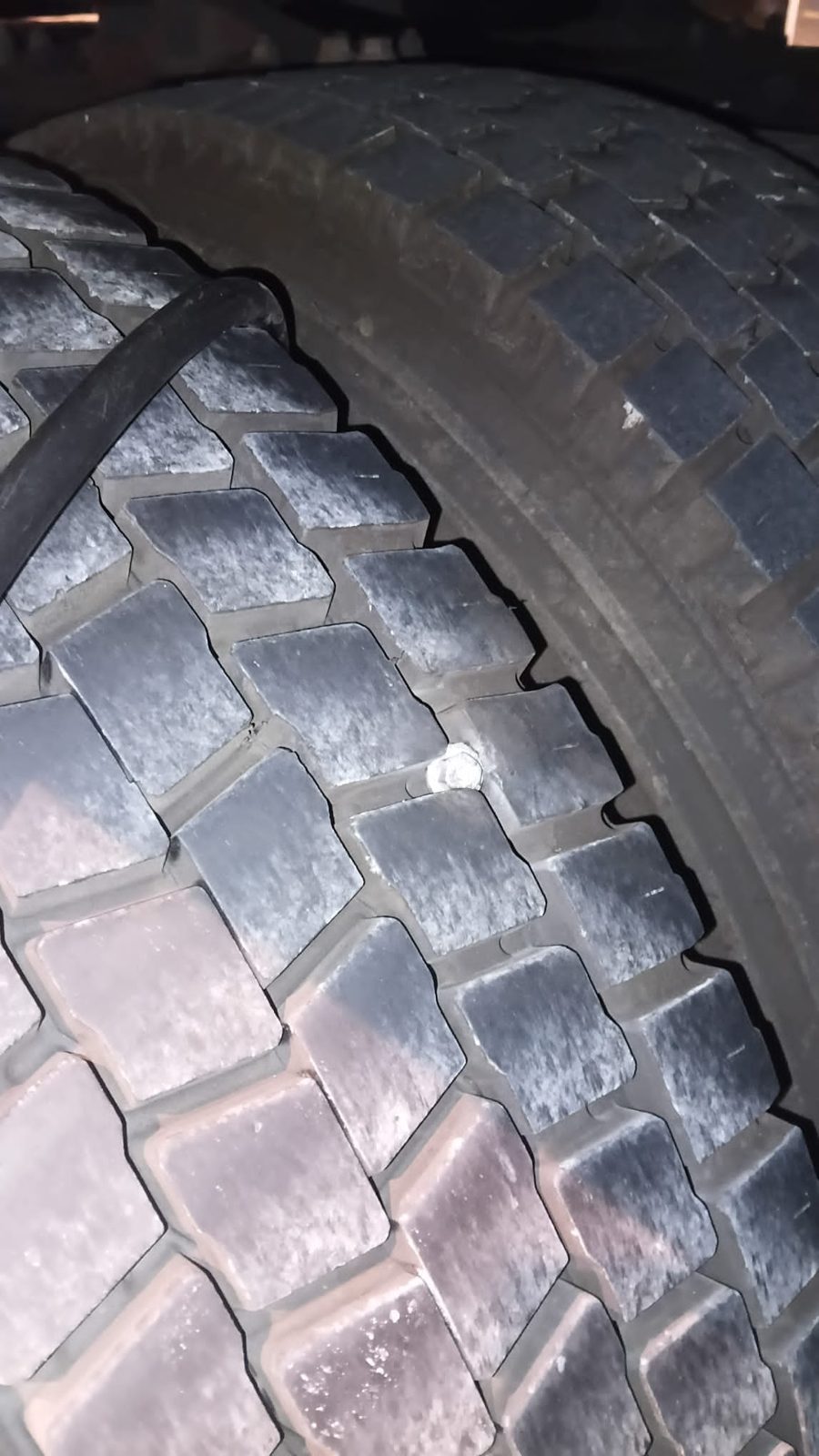
It began at 19:35 when the driver, operating a semi-trailer truck on the A3 near Limburg, noticed a sudden and alarming drop in pressure on the driving axle tyre. The vehicle’s dashboard warning light flashed, and the ride became noticeably rougher. Pulling over to the service area, a designated parking spot along the motorway, the driver inspected the wheel and found a metal screw protruding from the tread. The screw was not just embedded; it had penetrated through the tread, cutting into the belt layer beneath.
This wasn’t a simple puncture. The damage extended through multiple layers of the tyre’s construction: the tread compound, the steel belted carcass, and into the inner liner. Such a wound is irreparable. Even if the hole were sealed, the structural integrity of the tyre would be compromised. A repair would not withstand the lateral forces, load, and heat generated during long-haul driving. The risk of a blowout, wheel detachment, or brake system failure due to uneven load distribution was too high.
The driver took a photo and sent it via WhatsApp to a roadside assistance provider. The image clearly showed the screw, a hexagonal head, likely from a loose component on a trailer or construction site, lodged in the blocky, aggressive tread pattern typical of heavy-duty driving axle tyres. The surrounding rubber was compressed and cracked, indicating prolonged stress. The tyre was clearly beyond repair.
Why Immediate Replacement Was the Only Option
In Germany, the legal and safety standards for commercial vehicles are strict. According to § 36 of the StVZO (Road Traffic Regulations), tyres must be free from cuts, bulges, or punctures that compromise their structural integrity. A screw embedded in the tread is considered a “visible damage” that renders the tyre unfit for use. Continuing to drive on such a tyre is not only dangerous but also a violation of German road law.
Moreover, the driving axle carries the heaviest load and is responsible for transmitting power to the road. Any imbalance here affects steering precision, braking efficiency, and overall stability. A damaged tyre on this axle can cause uneven weight distribution, leading to premature wear on brakes, suspension components, and even the drivetrain. In extreme cases, the failure of a driving axle tyre can trigger a chain reaction, loss of control, jackknifing, or a multi-vehicle collision.
Repairing such a defect on-site is not feasible. Patching a tread area that has been pierced by a metal object is not allowed under ETRTO (European Tyre and Rim Technical Organisation) guidelines. The risk of delamination or internal damage is too great. Even if a temporary seal were applied, the tyre would not pass inspection during routine checks. The only safe and legal option was complete replacement.
How We Organised the Response: Dispatch and Mobilisation
Within seconds of receiving the call, our multilingual dispatch team initiated the emergency protocol. The first step was confirming the tyre size, a crucial detail. The driver had mentioned “315/70 R22.5”, which matched the standard size for driving axle tyres on most modern heavy trucks. We cross-referenced this with our real-time inventory database to verify availability of a new 315/70 R22.5 tyre in stock.
At 19:47, we identified a mobile tyre service team from our partner network operating in the Rhineland region. The crew was already on standby in nearby Wiesbaden, within a 40-kilometre radius of the A3 service area near Limburg. Given the time of day, evening, with reduced visibility and wet road conditions, we applied a 25% evening surcharge to the base fee, as per our standard policy. The team was dispatched immediately.
During the 38-minute journey, the driver remained on the phone, providing updates on the location and confirming that the vehicle was safely parked on the service area’s designated stop. The team was instructed to approach the site with caution, using hazard lights and warning triangles. They were also advised to expect a wet surface, which could affect grip and safety during the operation.
Our dispatch system automatically updated the driver via SMS and app notification with real-time tracking, including estimated arrival time. This transparency reduced anxiety and allowed the driver to prepare the site, securing the vehicle, turning on hazard lights, and setting up warning signs.
On-Site Assessment: Safety First, Then Diagnosis
The mobile team arrived at the service area at 20:25, 50 minutes after the initial call. The site was well-lit, but the asphalt was damp from recent drizzle. Visibility was moderate. The driver had already secured the vehicle, applied the handbrake, and placed a warning triangle 100 metres behind the lorry.
The first priority was safety. The team deployed three warning triangles, one at 50m, one at 100m, and one at 150m, in line with ADAC and TÜV guidelines. They also placed a reflective safety vest and set up a mobile warning light on the rear of the vehicle. This ensured visibility for approaching traffic, especially during the evening hours.
Next came the inspection. The technician examined the damaged tyre under a portable LED lamp. The screw was clearly visible, a 40mm-long hex head, likely from a trailer coupling or cargo anchor. It had penetrated through the tread, leaving a clean hole with torn rubber edges. The technician checked the sidewall for cuts, bulges, or abrasions. No damage was found there.
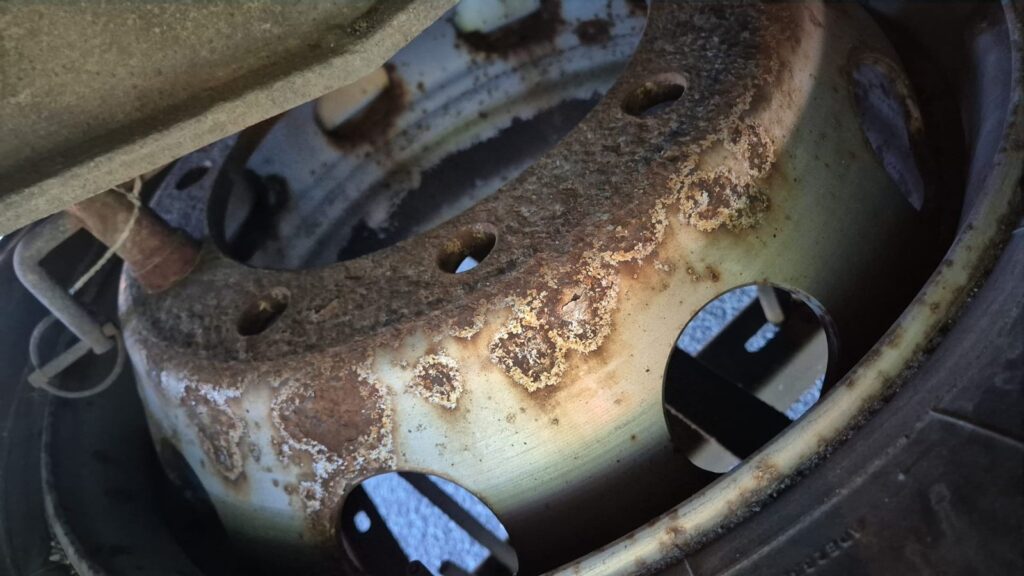
Pressure was measured using a digital gauge. The reading was 8.7 bar, below the recommended 9.5 bar for a loaded driving axle tyre. This indicated significant air loss. The technician also inspected the rim. There was no visible deformation, but the alloy disc showed minor scratches and chipped paint, likely from previous contact with curbs or debris.
After a full assessment, the technician concluded: Repair was impossible. Replacement was necessary. The decision was final. The vehicle could not be driven further on the damaged tyre.
Step-by-Step Tyre Replacement: Precision and Safety
The replacement process began at 20:35 and took 33 minutes, a tight window, but well within standard industry benchmarks for mobile services.
Step 1: Secure the Vehicle and Prepare the Work Area
The lorry was chocked on both sides. The technician used a portable hydraulic jack to lift the driving axle. The vehicle was stable, with all wheels off the ground. The technician double-checked that the handbrake was engaged and the gear lever in “Park”.
Step 2: Remove the Damaged Tyre
Using a pneumatic impact wrench, the technician removed the wheel nuts, eight in total, mounted on the alloy disc. Each nut was carefully placed in a tray to avoid loss. The technician inspected the wheel studs for corrosion or damage. None were found. The old tyre was then carefully pulled off the rim. The inner liner was intact, but the tread was torn.
Step 3: Inspect the Rim and Valve
The technician cleaned the rim surface with a microfibre cloth and inspected the valve stem. It was undamaged and sealed properly. The rim was checked for cracks, warping, or corrosion. No defects were found. The alloy disc was in good condition, though slightly worn at the edge.
Step 4: Mount the New Tyre
The new 315/70 R22.5 tyre, manufactured by a leading brand (size confirmed via ETRTO standards), was placed on the rim. The technician ensured the tyre was aligned correctly, with the valve stem pointing straight up. The bead was seated evenly on both sides of the rim using a rubber mallet.
Step 5: Inflate and Balance On-Site
The tyre was inflated to 9.5 bar using a portable air compressor. The technician then performed a dynamic balance check using a portable balancing machine. The machine detected a slight imbalance, which was corrected by adding two small weights to the rim. This ensured smooth rotation and reduced vibration.
Final Checks: Torque, Pressure, and Test Drive
At 20:58, the technician began the final phase. The tyre was reinstalled onto the axle. All eight wheel nuts were tightened in a star pattern using a calibrated torque wrench. The correct torque was 160 Nm, as specified by the vehicle manufacturer. This is critical: under-tightening risks loosening during driving, while over-tightening can damage the studs or rim.
After installation, the technician rechecked the tyre pressure, 9.5 bar. The valve stem was tested for leaks. The vehicle was then driven forward 10 metres at low speed to test handling and braking. No vibrations, no pull, no noise.
At 21:05, the technician gave the green light. The driver was informed: the lorry was ready to continue. The entire process, from first call to final confirmation, took exactly 90 minutes.
Full Timeline: From Call to Road
| Time | Phase | Action |
|---|---|---|
| 19:35 | Call Received | Driver reports pressure loss and sends photo of screw in tread |
| 19:35–19:47 | Dispatch & Coordination | Size confirmed, partner team selected, evening surcharge applied |
| 19:47–20:25 | Travel to Site | 38-minute journey from Wiesbaden to A3 Limburg service area |
| 20:25–20:35 | On-Site Safety & Inspection | Warning signs placed, vehicle secured, damage assessed |
| 20:35–20:48 | Demount & Preparation | Old tyre removed, rim and valve inspected |
| 20:48–20:58 | Mount & Balance | New tyre fitted, inflated, dynamically balanced |
| 20:58–21:05 | Final Check & Test | Torque applied, pressure verified, test drive completed |
| 21:05 | Ready | Lorry back on the road |
Cost Breakdown: Transparent Pricing, No Hidden Fees
All prices are net (excluding VAT). Here’s the full invoice:
| Position | Price (EUR) |
|---|---|
| Arrival / Anfahrt (A3, evening) | 240 |
| Evening surcharge (25%) | 60 |
| New heavy-duty tyre 315/70 R22.5 | 540 |
| Labour: demount, mount, balance, inspection (1 hour) | 110 |
| Old tyre disposal | 20 |
| Total | 970 |
This total includes everything: travel, parts, labour, safety equipment, and environmental compliance. There are no hidden costs. The cost of a single day’s downtime for a lorry can range from €800 to €1,200, depending on the load, route, and contract penalties. In this case, LKWHelp24 saved the operator over €800 by preventing a full breakdown and keeping the vehicle on schedule.
Why DIY Repairs Are Risky: 5 Critical Risks
Attempting to fix a tyre with a screw on-site without proper tools and training is extremely dangerous. Here’s why:
- Structural Failure: A screw in the tread compromises the tyre’s belt layer. Even a patch won’t hold under load. A blowout can occur at 80+ km/h.
- Wheel Separation: Improper torque or damaged studs can cause the wheel to detach while driving.
- Loss of Control: Uneven pressure or imbalance leads to steering instability, especially in curves or wet conditions.
- Legal Penalties: Driving with a damaged tyre violates § 36 StVZO. Fines can reach €1,000, and the vehicle may be impounded.
- Secondary Damage: A failed tyre can damage the suspension, brake system, or even the axle housing, costs far exceeding a new tyre.
Common Scenarios We Handle Across Germany
LKWHelp24 responds to a wide range of tyre emergencies daily. Typical cases include:
- Screw or nail in tread (most common)
- Sidewall cut or bulge (often from curbs or debris)
- Driving axle blowout (especially under load)
- Dual-wheel failure (common on trailers)
- Winter tyre issues (cold weather, ice damage)
- Tyre overheating (due to under-inflation or prolonged use)
We serve all vehicle types: semi-trailers, refrigerated trucks, car carriers, livestock transporters, and flatbeds. Our network covers every major motorway and federal road in Germany.
Prevention Tips: How Drivers and Fleets Can Avoid Tyre Failures
- Check tyre pressure weekly, ideally before each trip.
- Inspect tyres visually for cuts, nails, or embedded objects.
- Maintain correct inflation, 9.5 bar for driving axles, 8.5–9.0 bar for trailers.
- Rotate tyres regularly to prevent uneven wear.
- Replace tyres with less than 1.6 mm tread depth, legally required.
- Use quality brands like Michelin, Continental, Goodyear, or Bridgestone for durability.
Tyre Safety: Brands, Standards, and Compliance
Leading tyre manufacturers such as Michelin, Continental, Goodyear, and Bridgestone produce high-performance tyres designed for heavy-duty use. All tyres must comply with ETRTO standards, including load index, speed rating, and size accuracy. For example, a 315/70 R22.5 tyre typically has a load index of 138 (2,400 kg per tyre) and speed rating of H (up to 210 km/h).
Regular inspections and maintenance are key. According to TUV and DEKRA, over 30% of lorry breakdowns are tyre-related. Investing in professional mobile service is not an expense, it’s insurance.
Why Choose LKWHelp24? 4 Key Advantages
- 24/7 Availability: We respond around the clock, every day of the year.
- Proven Network: Our partner teams are vetted, insured, and trained to ISO standards.
- Transparent Pricing: No surprises. All costs are itemised and fixed.
- Multilingual Support: Our dispatchers speak English, German, Polish, and Russian.
The Role of the Driving Axle and Wheel Assembly in Heavy-Duty Safety
The driving axle is not just a mechanical component, it’s the heart of a lorry’s traction, stability, and safety. On a typical heavy goods vehicle, the driving axle carries the highest load, often exceeding 12,000 kg in fully loaded configurations. This means every part of the wheel assembly, the tyre, rim, hub, bearings, and wheel nuts, must withstand extreme forces during acceleration, braking, cornering, and prolonged highway driving. When a tyre on this axle fails, the consequences ripple through the entire drivetrain.
The 315/70 R22.5 tyre used in this case is designed for high-load applications, with a robust steel-belted carcass and a blocky tread pattern that maximises grip on wet and dry surfaces. However, its performance is only as good as the integrity of the wheel assembly. A screw embedded in the tread may seem like a minor issue, but it creates a stress concentration point. Under repeated loading, this weak spot can propagate into a crack, leading to tread separation or sudden deflation. In fact, studies by Continental Tires show that 43% of tyre failures in commercial fleets originate from small punctures that were not addressed promptly.
The alloy wheel disc, often overlooked, plays a critical role in heat dissipation and structural rigidity. In this case, the disc showed minor cosmetic damage, but no warping or cracks. However, even a slight distortion can lead to uneven tyre wear, vibration, or brake pulsation. The technician’s inspection of the disc’s surface and the valve stem was essential. A compromised valve can cause gradual pressure loss, which may go unnoticed until it leads to a catastrophic failure.
How Fleet Managers Can Prevent Tyre-Related Downtime
For fleet operators, tyre maintenance is not a one-off task, it’s a continuous operational discipline. A proactive maintenance strategy can reduce unplanned breakdowns by up to 60%, according to data from TUV Nord. The key lies in consistency, documentation, and early intervention.
First, implement a weekly tyre inspection routine. This should include checking for cuts, bulges, embedded objects, and tread depth. Use a tread depth gauge to measure wear, any section below 1.6 mm is illegal and unsafe. Second, ensure all drivers are trained to perform basic checks before and after each shift. A driver who notices a small object in the tread can prevent a major incident.
Third, integrate tyre pressure monitoring systems (TPMS) into your fleet. These systems provide real-time data and alert drivers to pressure drops before they become critical. According to ADAC, lorries equipped with TPMS experience 37% fewer tyre-related breakdowns.
Fourth, schedule regular tyre rotations every 20,000 km. This ensures even wear and extends the life of the tyre. Finally, use a digital fleet management platform to track tyre history, replacement dates, and maintenance records. This data helps identify patterns, for example, if certain routes consistently cause damage due to poor road quality or debris, and allows for preventive measures.
Legal and Technical Standards: What Every Driver Must Know
German road law and international standards govern every aspect of tyre safety. The StVZO (StVO) and StVZO-Verordnung (§36) set strict rules on tyre condition, tread depth, and repair limits. A tyre with a puncture larger than 4 mm or a cut deeper than 2 mm in the tread area cannot be repaired, it must be replaced. This rule applies to all commercial vehicles, regardless of brand or model.
The ETRTO (European Tyre and Rim Technical Organisation) provides technical specifications for tyre dimensions, load ratings, and speed classifications. A 315/70 R22.5 tyre is designed for a maximum load of 2,400 kg per wheel, with a speed rating of H (up to 210 km/h). Exceeding these limits, even temporarily, risks structural failure. The pressure must be maintained at 9.5 bar for driving axles under load. Lower pressure increases rolling resistance, fuel consumption, and heat build-up, which accelerates wear and increases the risk of blowouts.
Additionally, the DIN EN 13848 standard mandates that wheel nuts on commercial vehicles must be tightened to a specific torque, 160 Nm for most modern truck wheels. Using a standard wrench or impact gun without a torque sensor can lead to over- or under-tightening. Over-tightening can stretch or shear the wheel studs, while under-tightening allows vibration to loosen the nuts over time. In this case, the technician used a calibrated torque wrench to ensure compliance.
The Cost of Delay: What Happens When You Wait
Every minute a lorry sits on the side of the road is a minute of lost revenue. On average, a heavy-duty lorry generates between €300 and €500 per day in revenue, depending on load, route, and contract terms. A delay of just one hour can cost the operator €150–€250 in lost income. After eight hours, the cost exceeds €1,000, and that’s before penalties, fines, or customer complaints.
In this case, the driver reported the issue at 19:35. By 21:05, the vehicle was back on the road, a total of 90 minutes. Had the driver attempted to drive on the damaged tyre, the risk of a blowout was high. Even if the lorry reached the next service station, the repair would have required a tow, additional labour, and likely a full wheel replacement, pushing costs over €1,500 and adding 4–6 hours of downtime.
Moreover, driving with a damaged tyre increases fuel consumption by up to 8% due to higher rolling resistance. The vehicle’s handling becomes unpredictable, increasing the risk of accidents. Insurance providers often deny claims for incidents caused by known tyre defects, especially if the driver delayed reporting.
Waiting for a “convenient” time to fix a tyre is not a cost-saving measure, it’s a financial and safety gamble. Professional mobile service isn’t an expense, it’s a calculated investment in operational continuity.
Summary: Key Facts from This Case
- Vehicle Type: Heavy goods vehicle (Sattelzug)
- Location: A3 near Limburg an der Lahn, service area
- Issue: Metal screw in driving axle tyre (315/70 R22.5)
- Time to Arrival: 38 minutes
- Total Time to Completion: 90 minutes
- Cost: €970 (net, excluding VAT)
- Secondary Damage Prevented: Over €800 in downtime
- Service Type: Mobile truck tyre replacement
Need Help on the Road? Call Us Now
Don’t wait for a breakdown. If you’re facing a flat tyre, blowout, or any roadside emergency, call LKWHelp24 today. We’re available 24/7 across Germany.
📞 +49 160 5753826
🌐 www.lkwhelp24.com
📍 Round-the-clock mobile service, every road, every hour, every day.
Keywords: truck tyre service | mobile reifenservice | truck tyre replacement | truck tyre change | truck tyre roadside assistance | mobile truck tyre service | truck tyre repair | truck tyre germany | truck tyre callout | truck tyre emergency | truck tyre breakdown service | trailer tyre service | tyre change near me | truck tyre help | mobile reifenwechsel | truck tyre fitting | truck tyre fitters near me | truck tyre service near me | truck tyre service germany | truck tyre repair near me | truck tyre puncture repair | truck tyre near me | truck tyre mobile service | truck tyre breakdown germany | truck tyre blowout | truck tyre burst | truck wheel repair | truck wheel change | truck tyres near me | truck tyre shop near me | emergency truck tyre service near you | mobile truck tyre service 24/7 | mobile reifenservice lkw | mobile truck tyre service germany | truck tyre service near me | truck tyre service germany | truck tyre service near me | truck tyre service germany | truck tyre service near me | truck tyre service germany
Related Articles
- Mobile Truck Tyre Service on the A44 Near Unna: Reefer Trailer Back on the Road in 2h 46m
- Car Carrier Breakdown Near Wiesbaden: Mobile Tyre Service for Loaded Vehicle Transporters
- Mobile Truck Tyre Service on the A70 near Bamberg: How a Driver Caught a Carcass Separation Before It Became a Blowout
- Steer-Axle Tyre Blowout on the A24 near Ludwigslust: Fuel-Saving Volvo FH I-Save Back on the Road in 2 Hours 10 Minutes
- Mobile Truck Tyre Service 24/7 – Trailer Blowout Wheel Change in Germany