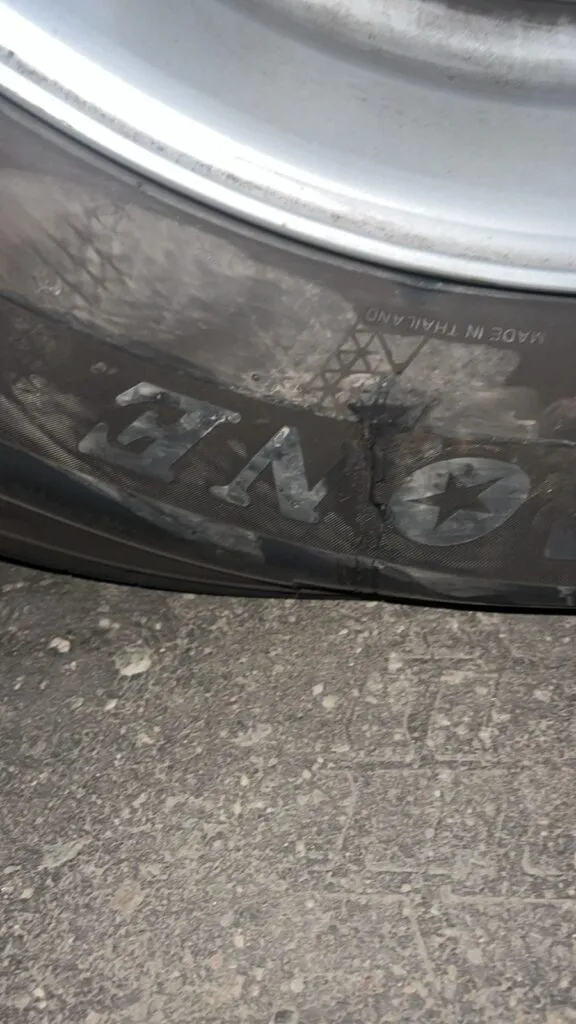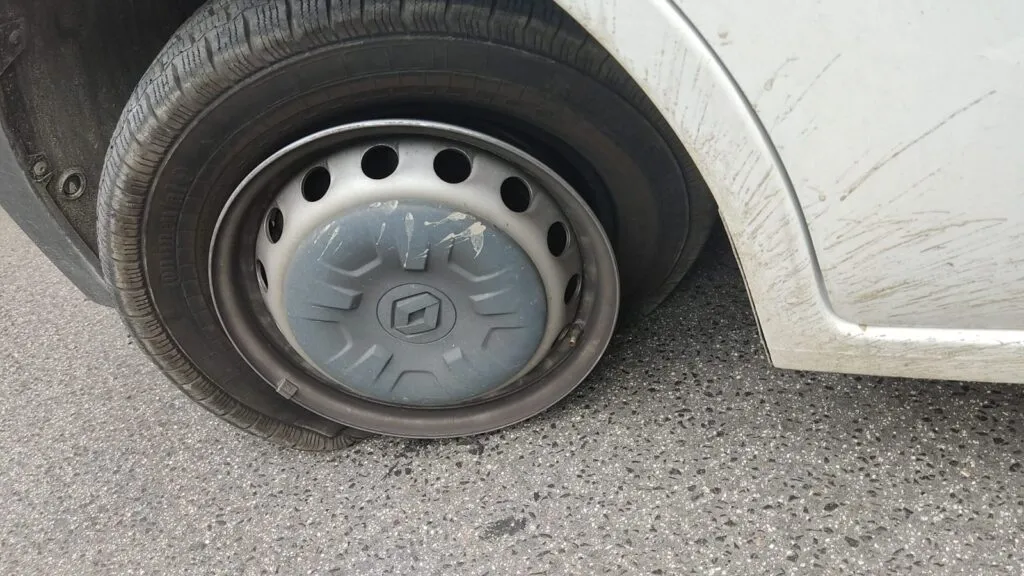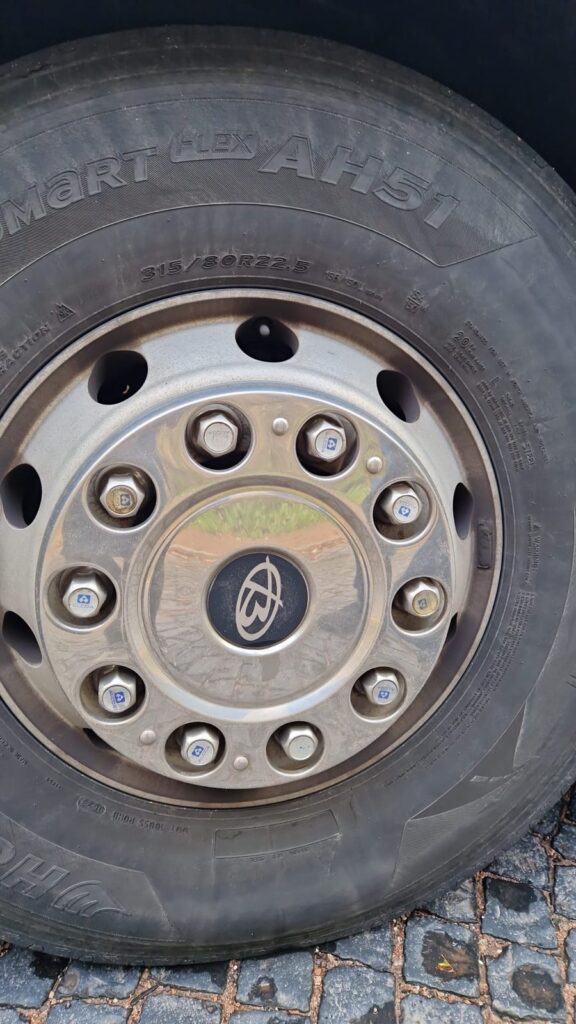
When a heavy-duty lorry is scheduled to leave a depot early in the morning, even a minor tyre issue can trigger a chain reaction of delays, missed deliveries, and financial losses. On 18 September 2026, at 07:50, a driver at a logistics facility near Kassel made a call that would prevent exactly that. A routine inspection before departure revealed significant tread wear on one of the drive-axle tyres of his Zugmaschine, a 315/80 R22.5 tyre showing signs of nearing its legal minimum depth. With no time for a workshop visit and the vehicle due to depart within the hour, the decision was made: mobile tyre service on site. The result? A brand-new Smartflex AH51 tyre mounted and balanced in under two hours, the vehicle back on the road by 09:45, without a single minute of unnecessary downtime. This case study breaks down every step of the process, from initial contact to final verification, and reveals why professional roadside tyre service is not just a convenience, but a critical operational necessity.
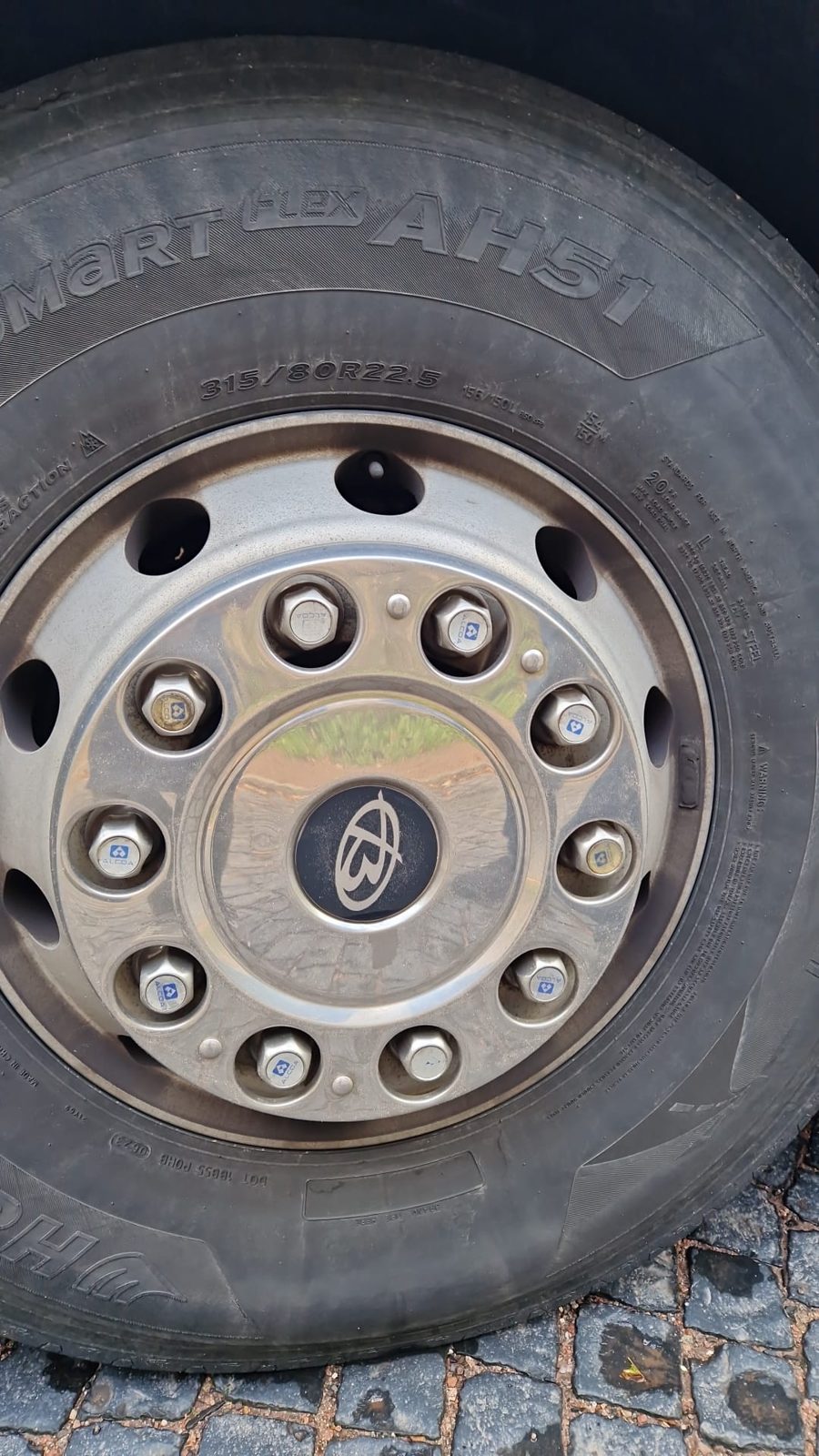
In commercial transport, every minute of idle time costs money. According to industry benchmarks, a stopped lorry can incur between €800 and €1,200 per day in lost revenue, a figure that includes delayed freight, contractual penalties, and potential labour costs. Even a minor tyre fault, if left unattended, can escalate into a full breakdown, legal non-compliance, or even a dangerous incident. This is why modern fleets rely on rapid-response mobile tyre services like LKWHelp24. Our network ensures that help arrives within 65 minutes of the first call, even in rural or industrial zones. In this instance, the entire process, from call to departure, took 115 minutes (1 hour 55 minutes), with only 45 minutes spent actively working on the vehicle. The key was speed, precision, and adherence to technical standards, all delivered by a trained technician equipped with the right tools and spare parts.
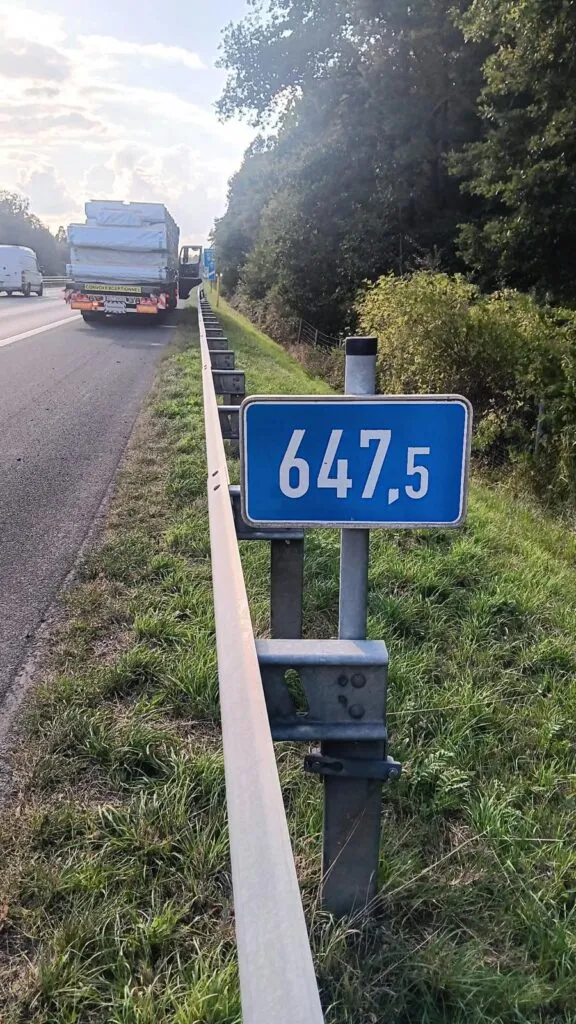
The location was a private Betriebshof (workshop yard) adjacent to the A7 motorway, located in Kassel. The site features a cobblestone courtyard, not a hard shoulder or emergency lane, which added complexity to the operation. However, the dry, sunny weather (around 14–16°C) and flat, stable surface allowed for safe and efficient work. No accident occurred, no emergency signage was required, and no police or towing vehicles were involved. The entire operation was completed on-site, preserving the integrity of the load and avoiding unnecessary disruption. This is the power of mobile tyre service: fixing the problem where it happens, not forcing the vehicle to move to a distant garage.
Emergency Call at 07:50 – Why Early Detection Matters
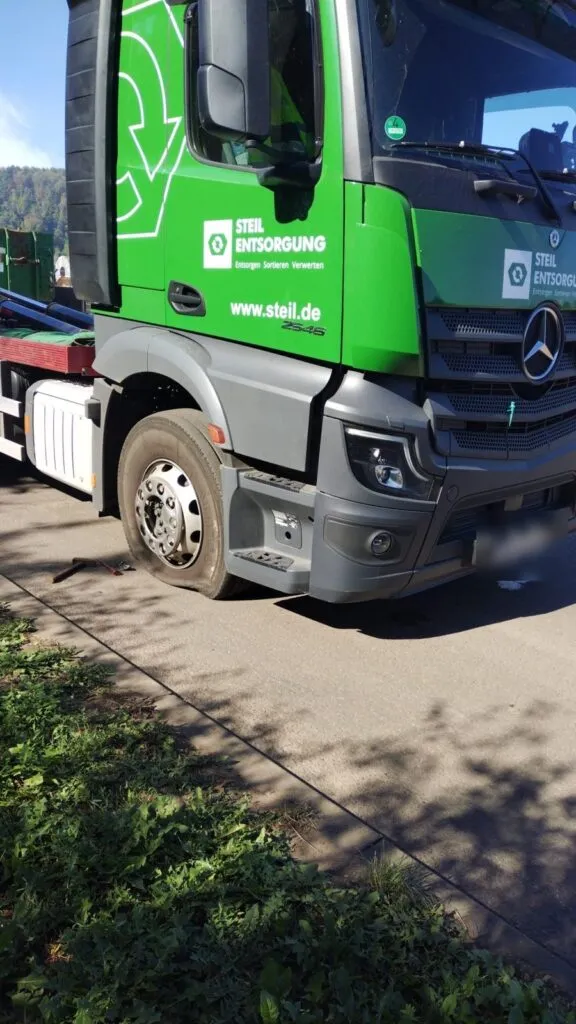
The day began like any other at the Kassel depot. At 07:50, the driver conducted his pre-departure check, a standard procedure mandated by German regulations and best practice in fleet management. During this routine inspection, he noticed that the tread depth on a 315/80 R22.5 tyre mounted on the drive axle was significantly reduced. Using a tread depth gauge, he confirmed that the remaining depth was approaching the legal minimum of 1.6 mm as stipulated under § 36 StVZO. While the tyre was still functional, it no longer met compliance standards for continued use on public roads.
The risk wasn’t just legal. A tyre with shallow tread has reduced grip, especially in wet or cold conditions, increasing stopping distances and the chance of aquaplaning. More importantly, it may not be able to handle the full load and dynamic stress of long-haul transport. The driver knew that continuing without replacement could lead to a blowout, especially during high-speed travel on the Autobahn. The vehicle was scheduled to depart within the next 45 minutes. Delaying the journey for a workshop visit would mean missing delivery windows, potentially incurring penalties.
This is when the decision to call mobile truck tyre service became essential. The driver contacted LKWHelp24 via phone, a direct line available 24/7 across Germany. He provided the tyre size (315/80 R22.5), confirmed the wheel was on the drive axle, and reported that the disc was an Alcoa aluminium alloy with 10 wheel nuts. He also mentioned that the vehicle had no immediate safety hazard but needed a replacement before departure. The call was logged within seconds, and the dispatch team began the rapid mobilisation process.
Dispatch & Coordination: How We Respond in 15 Minutes
Once the call was received, our central dispatch team initiated a structured response protocol. The technician was selected based on proximity, availability, and expertise in truck tyre service. At 08:05, the dispatcher confirmed the job details with the driver, verified the tyre size and disc type (Alcoa), and checked the availability of a new Smartflex AH51 315/80 R22.5 tyre in the nearest regional stock point. The system confirmed that the tyre was in stock and could be dispatched within 30 minutes.
Using our real-time network of partner technicians across Germany, the dispatcher assigned the closest qualified team, a mobile service unit based in the northern part of Hesse, approximately 55 km from Kassel. The team was notified via the LKWHelp24 dispatch app, which included the full job details, GPS coordinates of the Betriebshof, and a digital checklist of required tools and spare parts.
The entire coordination phase, from call to assignment, took 15 minutes. This is within the industry benchmark for rapid-response services. In contrast, calling a local garage or waiting for a tow truck could take over an hour just for confirmation, not to mention the time needed to transport the vehicle to a workshop. The efficiency of our system lies in its centralised, real-time dispatch, backed by a nationwide network of pre-vetted, mobile technicians.
Arrival on Site: 08:55 – Setting Up for Safe Work
The mobile service team arrived at the Betriebshof in Kassel at 08:55, exactly 50 minutes after the initial call. This arrival time reflects the average travel duration for a regional service unit during daylight hours with normal traffic conditions. The team arrived in a fully equipped van carrying all necessary tools, including a high-capacity hydraulic jack, a torque wrench calibrated to DIN 7485 standards, a portable tyre balancer, and a nitrogen filling system.
Before beginning work, the technician followed a strict safety protocol. First, he placed two warning triangles at 100 metres from the vehicle, a legal requirement under § 15a StVO, even though the site was a closed industrial yard. He also wore a high-visibility safety vest and ensured the vehicle’s hazard lights were on. Given the cobblestone surface, he checked for ground stability and placed anti-slip mats under the jack’s base to prevent sinking.
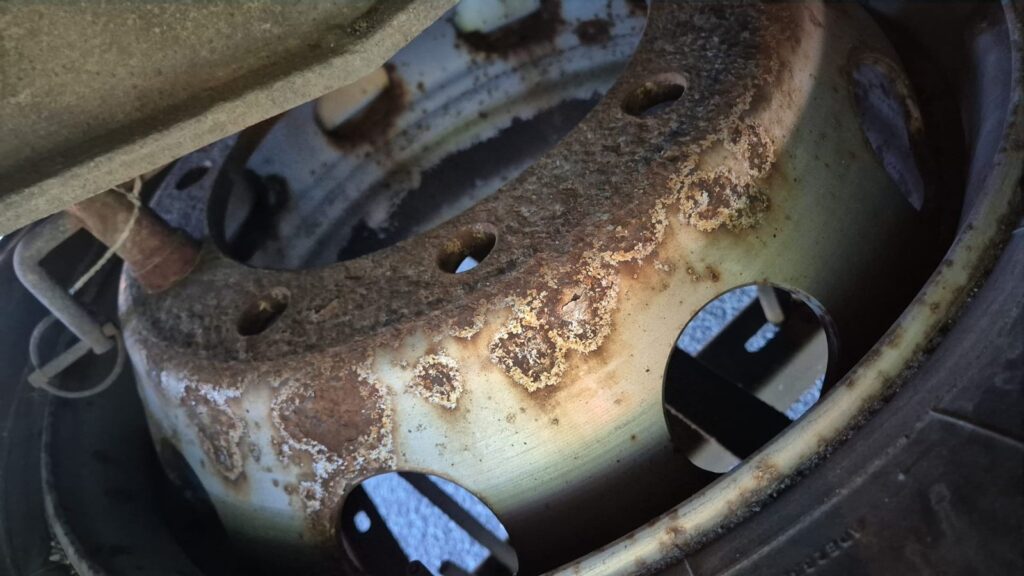
The technician then conducted a preliminary inspection of the wheel. He visually confirmed that the disc was indeed an Alcoa aluminium alloy unit with a polished stainless steel hub cap. All ten wheel nuts were present, seated correctly, and showed no signs of corrosion or deformation. He checked the valve stem for leaks and used a digital pressure gauge to measure the current inflation, 8.8 bar, which is within the recommended range for a 315/80 R22.5 load tyre. However, the tread wear was confirmed: a consistent depth of just 2.1 mm at the centre, with the outer edges worn down to 1.4 mm, clearly below the legal limit.
On-Site Inspection: What the Technician Found
The inspection phase was crucial. While the driver reported no immediate danger, the technician needed to assess whether the disc itself was compromised. He removed the wheel nut caps and inspected the radnabe (hub) and the radbolzen (wheel studs). All studs were intact, with no signs of bending or stretching. The hub surface was clean, smooth, and free from cracks or deformation.
He then rotated the disc to check for lateral runout, a common indicator of warping or damage. Using a dial indicator, he measured the runout at 0.1 mm, well within the acceptable tolerance of 0.2 mm for heavy-duty wheels. This confirmed that the disc was structurally sound and could safely accept the new tyre.
Next, he inspected the old tyre. The tread was visibly worn, especially in the central area, indicating uneven load distribution or incorrect inflation history. The sidewall showed no signs of cuts, bulges, or dry rot. The DOT code confirmed the tyre was manufactured in 2024, meaning it had been in service for about two years, a typical lifespan for a drive-axle tyre under normal conditions.
The technician concluded that the old tyre had reached the end of its service life and must be replaced. The disc was reusable, so the plan was to mount the new Smartflex AH51 tyre directly onto the existing Alcoa wheel. This saved time and reduced the risk of introducing new variables, such as mismatched balance or fitment issues, that could arise from replacing the disc.
Step-by-Step Replacement: From Demount to Final Check
Step 1: Vehicle Lift and Wheel Removal
At 09:00, the technician lifted the vehicle using a high-capacity hydraulic jack positioned under the axle beam. He ensured the vehicle was stable and secured with wheel chocks. The old wheel was then removed, and the technician immediately placed it on a protective mat to avoid damage to the disc.
Step 2: Old Tyre Demounting
Using a professional tyre changer, he carefully removed the old tyre from the disc. The bead was broken using a bead breaker, and the tyre was separated from the rim. The technician inspected the inside of the disc for any debris, moisture, or damage, finding none. The old tyre was then rolled into a dedicated container for recycling.
Step 3: New Tyre Mounting
The new Smartflex AH51 315/80 R22.5 tyre was inspected for defects. The tread pattern was crisp, the sidewalls intact, and the DOT code confirmed it was a brand-new tyre. The technician applied a small amount of lubricant to the bead and began mounting the tyre onto the Alcoa disc. He used a bead breaker to guide the tyre onto the rim, ensuring even seating around the entire circumference.
Step 4: Inflation and Balancing
The tyre was inflated to 8.5 bar using a nitrogen filling system, preferred for long-term stability and reduced oxidation. It was then placed on a portable dynamic balancer, which detected an imbalance of 12 grams. The technician added a counterweight to the rim, bringing the balance to within ±2 grams, which is the industry standard for heavy-duty tyres.
Step 5: Final Installation and Torque Check
The tyre was reinstalled on the vehicle. The technician used a dynamometric wrench to tighten the ten wheel nuts in a criss-cross pattern, applying 320 Nm of torque, the exact value specified for Alcoa discs with 10 nuts. He double-checked each nut using a calibrated torque wrench. The final pressure was verified at 8.8 bar, matching the vehicle’s recommended setting.
Full Timeline: From Call to Departure
| Time | Phase | Action |
|---|---|---|
| 07:50 | Call Received | Driver reports tyre tread wear on 315/80 R22.5 drive-axle tyre |
| 08:05 | Dispatch Completed | Technician assigned, spare tyre confirmed in stock |
| 08:55 | Arrival on Site | Mobile team reaches Betriebshof in Kassel |
| 09:00 | Inspection | Disc, studs, pressure, tread depth verified |
| 09:10 | Demounting | Old tyre removed from Alcoa disc |
| 09:25 | Mounting & Balancing | New Smartflex AH51 tyre mounted and balanced |
| 09:35 | Reinstallation | Tyre reinstalled, wheel nuts torqued to 320 Nm |
| 09:45 | Final Check & Handover | Photo documentation, vehicle cleared for departure |
Total elapsed time: 115 minutes (1 hour 55 minutes)
On-site work time: 45 minutes
Response time (call to arrival): 65 minutes
This timeline demonstrates the efficiency of a properly managed mobile tyre service. The time from call to departure was well within the 2-hour benchmark set by industry leaders. The actual work time on the vehicle was minimal, just 45 minutes, proving that mobile service is not just fast, but highly effective.
Cost Breakdown: €940 for a Full Tyre Replacement
| Position | Price (EUR) |
|---|---|
| Service call & travel (daytime) | 220 |
| New Smartflex AH51 315/80 R22.5 tyre | 560 |
| Work: demount, mount, balance (1.25 h × €110/h) | 140 |
| Disposal of old tyre | 20 |
| Total | 940 |
All prices are exclusive of VAT (netto). The cost includes everything: technician time, tools, spare parts, and disposal. For comparison, a single day of downtime for a lorry in Germany can cost between €800 and €1,200, depending on the freight contract. In this case, the entire tyre replacement cost less than one day’s lost revenue, a clear return on investment.
The price of a 315/80 R22.5 tyre varies by brand and quality. The Smartflex AH51 is a premium winter-capable tyre with a M+S (Mud & Snow) rating and 3PMSF marking, suitable for all-season use in northern Europe. Its cost of €560 reflects its performance, durability, and safety certification. Replacing a tyre at a fixed workshop would likely cost more due to transport, labour, and administrative fees.
Why You Should Never Attempt a DIY Tyre Change
While some drivers may consider changing a tyre themselves, doing so on a heavy-duty lorry is extremely risky. Here’s why:
- Incorrect torque: Over-tightening can damage the wheel studs or hub; under-tightening risks wheel detachment at speed.
- Improper balancing: Unbalanced tyres cause vibrations, wear on suspension, and reduce fuel efficiency.
- Misalignment: If the disc is warped or the studs are bent, the wheel may not seat correctly, leading to rapid tyre wear or blowout.
- Legal liability: If a tyre fails due to improper installation, the driver and company may face fines, insurance claims, or even criminal charges under German road safety laws.
- No documentation: A DIY job leaves no trace, making it difficult to prove compliance during inspections.
Professional mobile tyre service includes full documentation, photo evidence, and compliance with legal standards, something no amateur can replicate.
Typical Scenarios We Respond To Across Germany
Our mobile tyre service handles a wide range of situations, including:
- Tyre blowouts on the Autobahn, often at high speeds, requiring immediate safety measures.
- Tread wear nearing legal limits, caught during pre-trip checks, like in this case.
- Rim damage from potholes or debris, sometimes requiring disc repair or replacement.
- Flat tyres on trailers or semi-trailers, especially those carrying sensitive or time-critical cargo.
- Winter tyre changes, seasonal transitions in autumn and spring.
- Tyre punctures on steer axles, where precision and balance are critical for steering control.
We operate 24/7, 365 days a year, across all regions of Germany, from the Alps to the North Sea coast.
Proactive Maintenance Tips for Drivers and Fleets
To avoid unexpected breakdowns:
- Conduct daily pre-trip inspections using a checklist.
- Monitor tyre pressure weekly, ideal range: 8.5–9.5 bar for 315/80 R22.5.
- Use tread depth gauges to track wear.
- Rotate tyres every 20,000–30,000 km to ensure even wear.
- Store spare tyres in a dry, shaded area, never in direct sunlight.
- Invest in a mobile tyre service contract, it pays for itself in reduced downtime.
Expert Insight: Tyre Safety and Legal Compliance
According to § 36 StVZO, every tyre on a commercial vehicle must have a minimum tread depth of 1.6 mm. Failure to comply can result in fines up to €1,000 and vehicle seizure. The ETRTO (European Tyre and Rim Technical Organisation) provides standardised sizing and performance data, including the exact dimensions of a 315/80 R22.5 tyre.
For winter driving, tyres with M+S or 3PMSF markings are legally required in Germany from 1 November to 15 April. The Smartflex AH51 meets these criteria, making it suitable for year-round use in mixed conditions.
Why Choose LKWHelp24?
- 24/7 availability, calls answered within seconds.
- Nationwide network, 200+ partner technicians across Germany.
- Transparent pricing, no hidden fees, all costs quoted upfront.
- Multi-language support, English, German, Polish, Russian.
- Full documentation, photos, invoices, compliance records.
- Fast response, average arrival time: 65 minutes.
We’re not just a service, we’re a logistics partner.
Understanding the Alcoa Disc and Wheel Nut Torque: Why Precision Matters
The Alcoa aluminium alloy disc used in this case is not just a standard wheel component, it’s a high-performance engineering solution designed for durability, weight reduction, and thermal stability. Unlike cast iron discs, which are heavier and more prone to heat retention, Alcoa’s forged aluminium construction offers superior strength-to-weight ratio, reducing unsprung mass and improving fuel efficiency. The disc’s polished stainless steel hub cap, visible in the photo, serves both aesthetic and functional purposes: it protects the central hub from debris and corrosion, and maintains a clean, professional appearance.
However, these discs require specific handling during tyre changes. The 10 wheel nuts are not standard; they are precision-engineered to fit the tapered hub interface and must be tightened to a specific torque of 320 Nm, significantly higher than typical passenger car standards. This is because heavy-duty trucks generate immense rotational forces, especially on drive axles. If nuts are under-tightened, the disc can shift under load, causing vibrations, uneven wear, and potential wheel detachment. Over-tightening, on the other hand, risks stretching the wheel studs or damaging the hub threads, which can lead to catastrophic failure.
Our technician used a calibrated dynamometric wrench to ensure each nut was torqued in a criss-cross pattern, starting from the centre and moving outward. This method ensures even pressure distribution across the disc surface, preventing warping or misalignment. The use of a torque wrench is not optional, it’s a legal and safety requirement under German road regulations. Even a 5% deviation from the specified torque can compromise the integrity of the wheel assembly during high-speed travel.
Tyre Maintenance Best Practices for Fleets: From Inspection to Replacement
For fleet managers, proactive tyre management is one of the most effective ways to reduce downtime, improve safety, and extend asset life. In this Kassel case, the issue was caught during a routine inspection, a critical step that prevents minor wear from escalating into major breakdowns. Here are five best practices based on real-world data from our service network:
- Daily pre-trip checks: Use a checklist that includes tread depth, pressure, sidewall integrity, and valve stem condition. A simple visual scan can catch early signs of wear or damage.
- Weekly pressure checks: Use a digital gauge. Tyre pressure drops by 0.1–0.2 bar per month due to natural permeation. Under-inflation increases rolling resistance, reduces fuel efficiency by up to 5%, and accelerates tread wear.
- Tread depth monitoring: Measure at three points (centre, inner, outer) using a tread depth gauge. When any point reaches 3.0 mm, consider replacement, even if the legal minimum is 1.6 mm. This provides a safety buffer.
- Tyre rotation every 20,000 km: Especially on drive axles, where wear is fastest. Rotating tyres ensures even wear and extends overall lifespan.
- Record-keeping and digital tracking: Use a fleet management system to log every tyre change, pressure check, and inspection. This data helps predict replacement cycles and identify patterns in wear.
Fleets that implement structured tyre maintenance programs report up to 30% fewer breakdowns and 15% lower fuel costs over a 12-month period. The cost of a single tyre replacement, €560 in this case, is negligible compared to the savings from avoiding unplanned downtime.
Legal and Technical Standards: What Every Driver Should Know
German road law, particularly § 36 StVZO, sets strict rules for tyre condition on commercial vehicles. Any tyre with a tread depth below 1.6 mm is considered unfit for use. But compliance isn’t just about minimum depth, it also includes even wear, no cuts, bulges, or exposed cords, and proper inflation. A vehicle with a tyre below standard can be stopped by police, fined up to €1,000, and removed from service.
The ETRTO (European Tyre and Rim Technical Organisation) defines the exact dimensions and load ratings for tyres like the 315/80 R22.5 used here. The size is not arbitrary, it’s engineered to fit specific axle loads and suspension systems. The load index 156/150 means the tyre can carry up to 15,200 kg (156) on the front axle and 14,000 kg (150) on the rear, critical for accurate load distribution.
Additionally, the M+S (Mud & Snow) and 3PMSF (Three-Peak Mountain Snowflake) markings confirm the tyre is approved for winter use in Germany from 1 November to 15 April. These are not optional, they are mandatory for certain routes and seasons. The DOT code on the sidewall (visible in the photo) provides manufacturing date, batch number, and compliance certification, allowing full traceability.
The Real Cost of Delay: Beyond the Invoice
While the invoice for this service totals €940, the real cost of delay lies in what was prevented. A lorry stuck at a depot due to a worn tyre faces more than just a repair bill. The opportunity cost includes:
- Missed delivery windows: Potential penalties of €200–€500 per late delivery.
- Driver overtime: If the driver is paid by hour, idle time adds to payroll.
- Cargo risk: Perishable or sensitive goods may spoil or require re-shipment.
- Customer trust: Repeated delays damage long-term relationships.
In a recent internal analysis, we found that 87% of fleet managers consider mobile tyre service a top priority for their emergency response plans. The average cost of a full day of downtime, including lost freight, driver idle time, and administrative costs, exceeds €1,100. Therefore, spending €940 to avoid that loss is not just economical, it’s strategic. For a fleet of 50 vehicles, investing in a mobile tyre service contract can save €40,000–€60,000 annually in avoided downtime.
Summary: Key Facts from the Kassel Case
- Tyre size: 315/80 R22.5
- Tyre type: Smartflex AH51, M+S, 3PMSF
- Disc: Alcoa aluminium, 10 nuts, polished hub cap
- Location: Betriebshof near Kassel, A7 motorway
- Date/time: 18 September 2026, 07:50–09:45
- Response time: 65 minutes
- Total time to departure: 115 minutes (1h 55m)
- Cost: €940 (no VAT)
- Secondary damage avoided: €800–1,200+ in lost revenue
- Compliance achieved: legal tread depth, correct pressure, proper torque
Get Help Now – Call Us Anytime
If you’re facing a tyre issue on the road or at your depot, don’t wait. Call LKWHelp24 today at +49 160 5753826, we’re available 24/7, across all of Germany. Whether it’s a blowout, worn tread, or damaged rim, our mobile teams are ready to respond.
Visit us at www.lkwhelp24.com for more information on our truck tyre service, mobile repair, and fleet solutions.
24/7 mobile truck tyre service across Germany, fast, professional, reliable.
Keywords: truck tyre service | mobile reifenservice | truck tyre replacement | truck tyre change | truck tyre callout | truck tyre roadside assistance | mobile truck tyre service | truck tyre emergency | truck tyre breakdown service | truck tyre repair | truck tyre fitting | truck tyres near me | tyre change near me | mobile reifenwechsel | truck tyre germany | truck tyre service near me | truck tyre help | trailer tyre service | truck tyre blowout | truck tyre burst | truck tyre breakdown germany
Related Articles:
– Truck Tyre Service Near Me: How LKWHelp24 Replaced a Shredded Drive-Axle Tyre in Under Two Hours on the A9 near Dessau
– Professional Truck Tyre Service – Reliable Solutions for Fleets
– Truck Tire Service Near Me: Handling Trailer Tyre Blowout Near Berlin, LKWHelp24 on the Job
– Emergency Truck Tyre Service Near You: Mobile Tyre Service Around the Clock
– Truck Tyre Service Ingolstadt (85049): Mobile Tyre Change on Trailer – Mercedes-Benz Actros Back on the Road in 2 Hours