Skip to content
TL;DR: On 29 July, during daylight hours, the steer-axle tyre of a Volvo FH running the I-Save drivetrain blew out on the A24 near Ludwigslust, heading towards Berlin. Tyre size 385/55 R22.5, torn clean off the rim. From the call to the finished job: 2 hours 10 minutes, at a net cost of €1,040. Because the tyre in question was a fuel-saving specification, this wasn’t a case of fitting “whatever tyre matches the size” — it had to be the right one.
A steer-axle blowout on the motorway ranks among the most dangerous breakdowns a lorry driver can face. Steering control degrades instantly while 40 tonnes keep rolling at motorway speed. On a modern fuel-efficient tractor unit like a Volvo FH with I-Save technology, there’s a second complication: the tyres fitted are not generic stock — they’re engineered specifically for low rolling resistance.
That’s exactly what happened on the A24 near Ludwigslust on 29 July. The case is a useful illustration of why a roadside tyre change on a fuel-saving artic demands more specialist knowledge than on a standard tractor unit — and why paying for the right tyre still pays for itself.
What happened on the A24 near Ludwigslust?
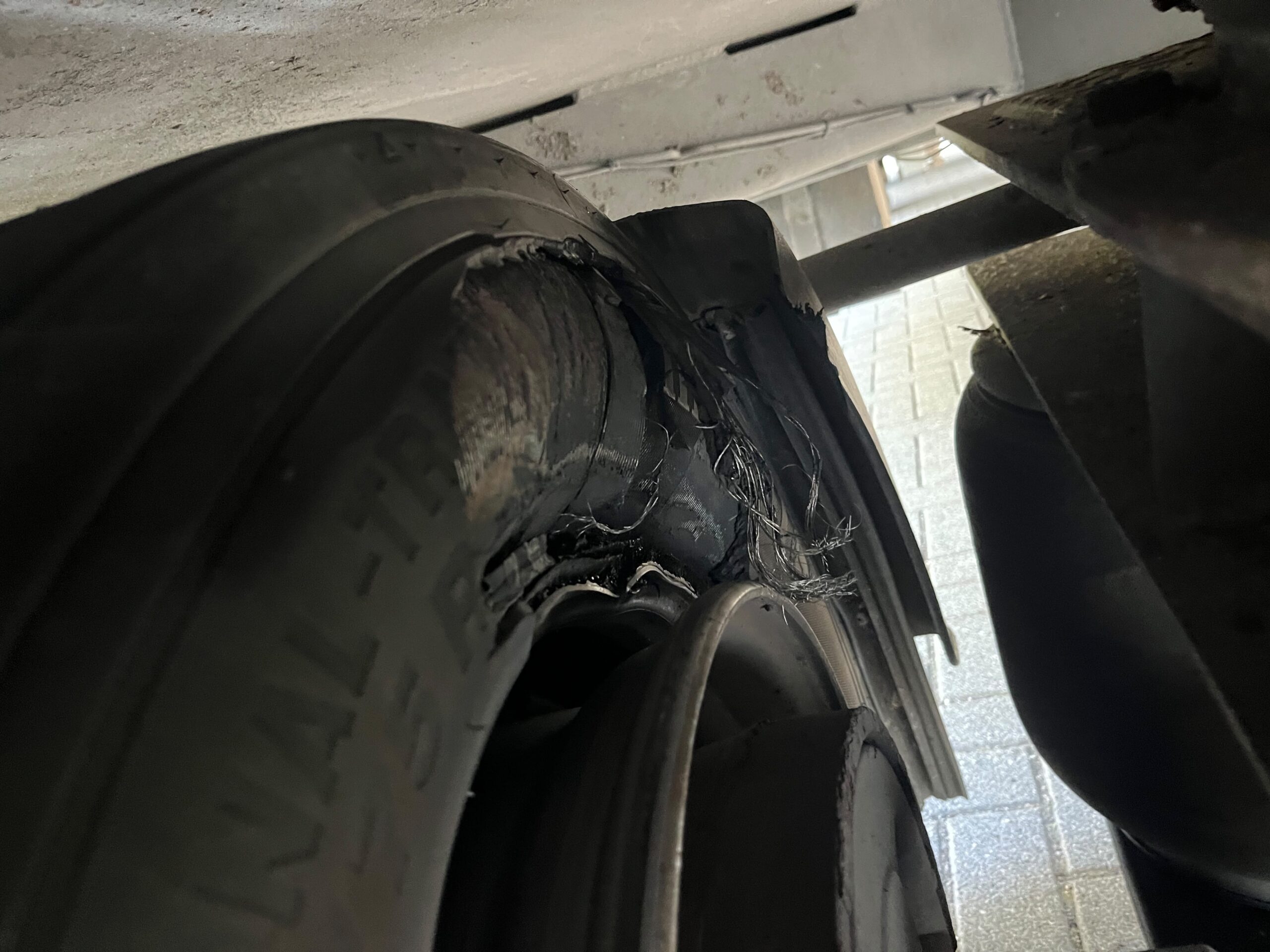
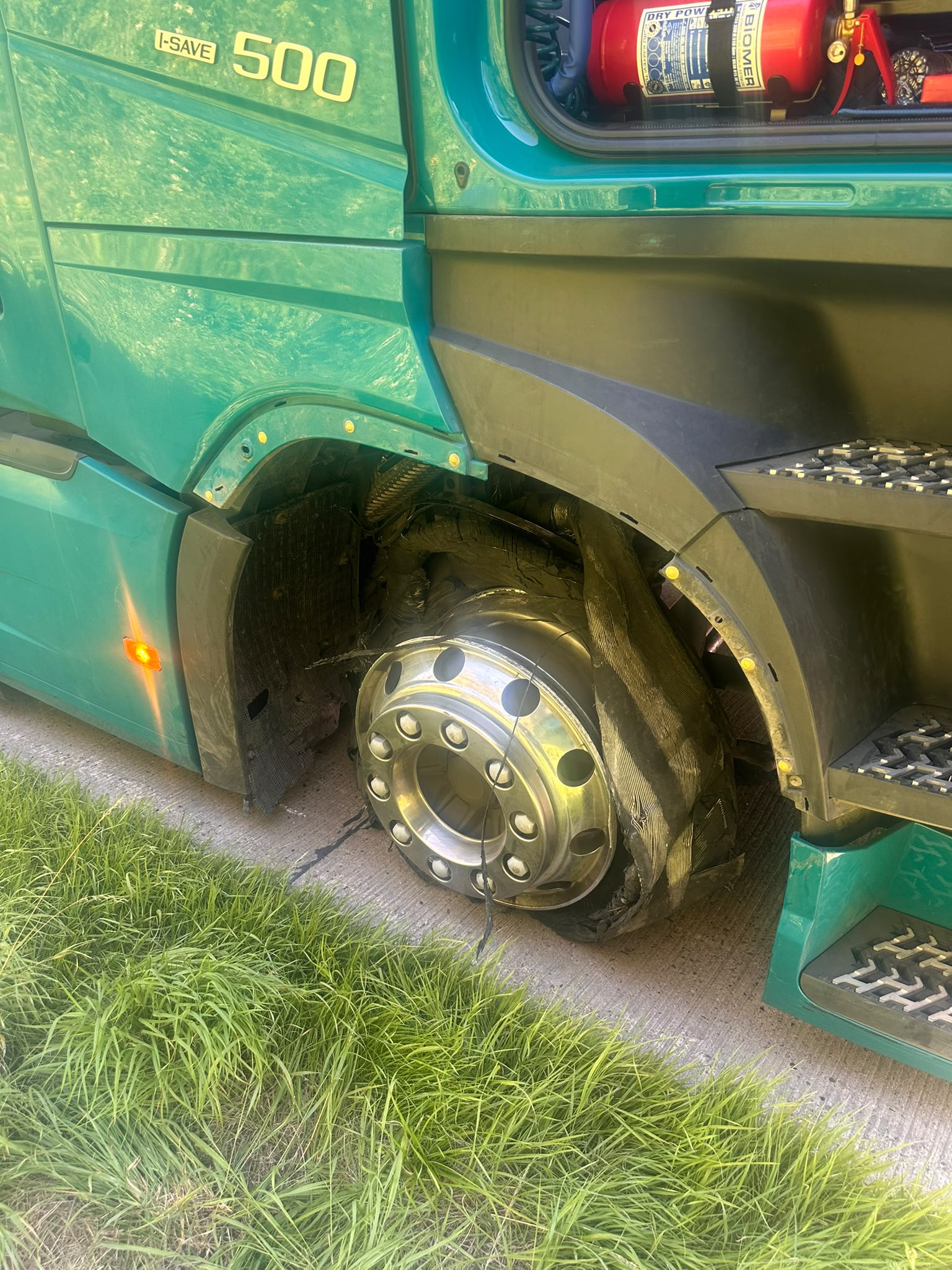
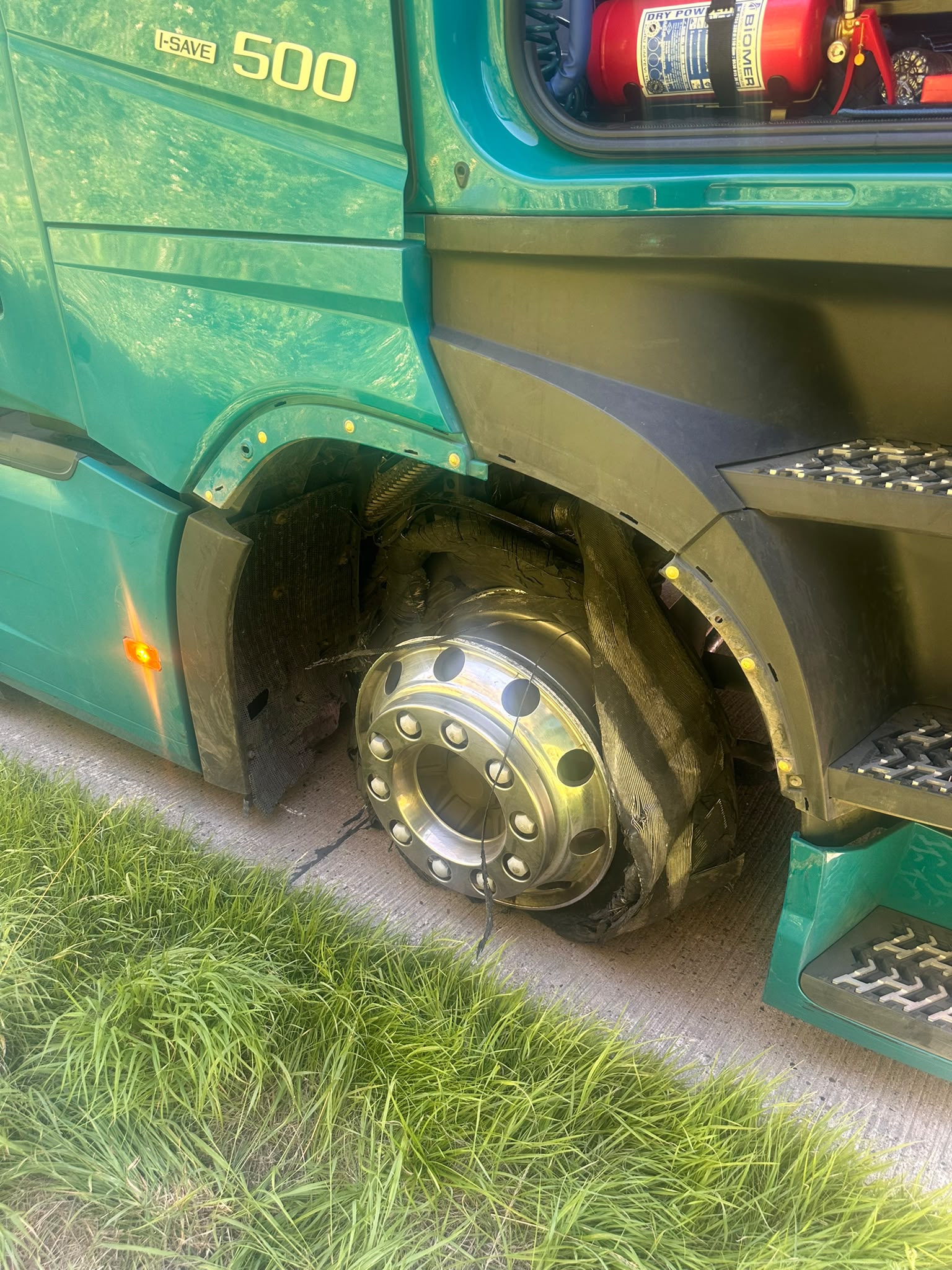
On the A24 heading towards Berlin, the steer-axle tyre of a Volvo FH running the I-Save drivetrain suddenly lost pressure during daylight hours on 29 July — the tyre tore clean off the rim, with the carcass hanging in shreds under the wheel arch. The driver felt the vibration immediately, brought speed down under control and rolled onto the verge.
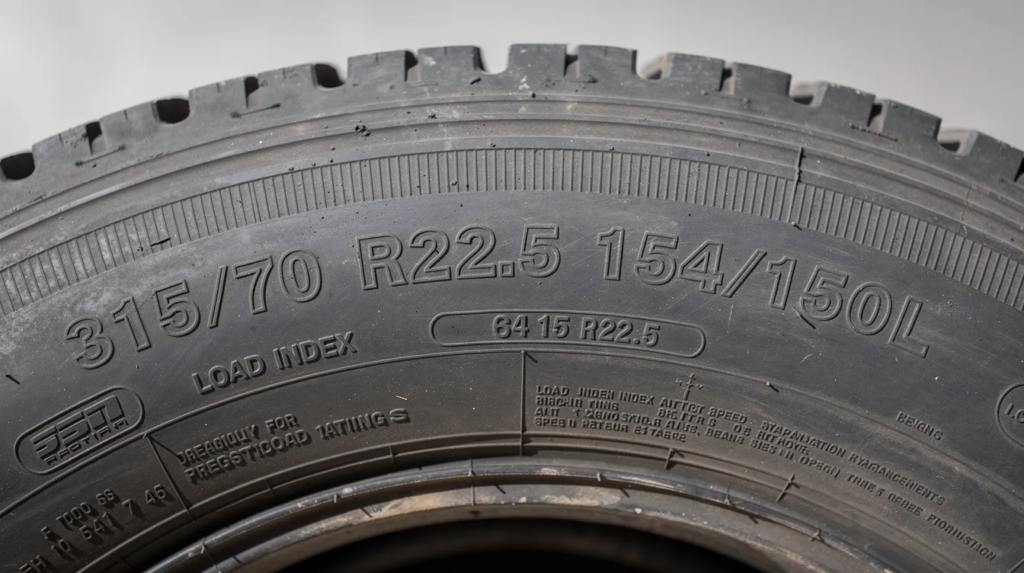
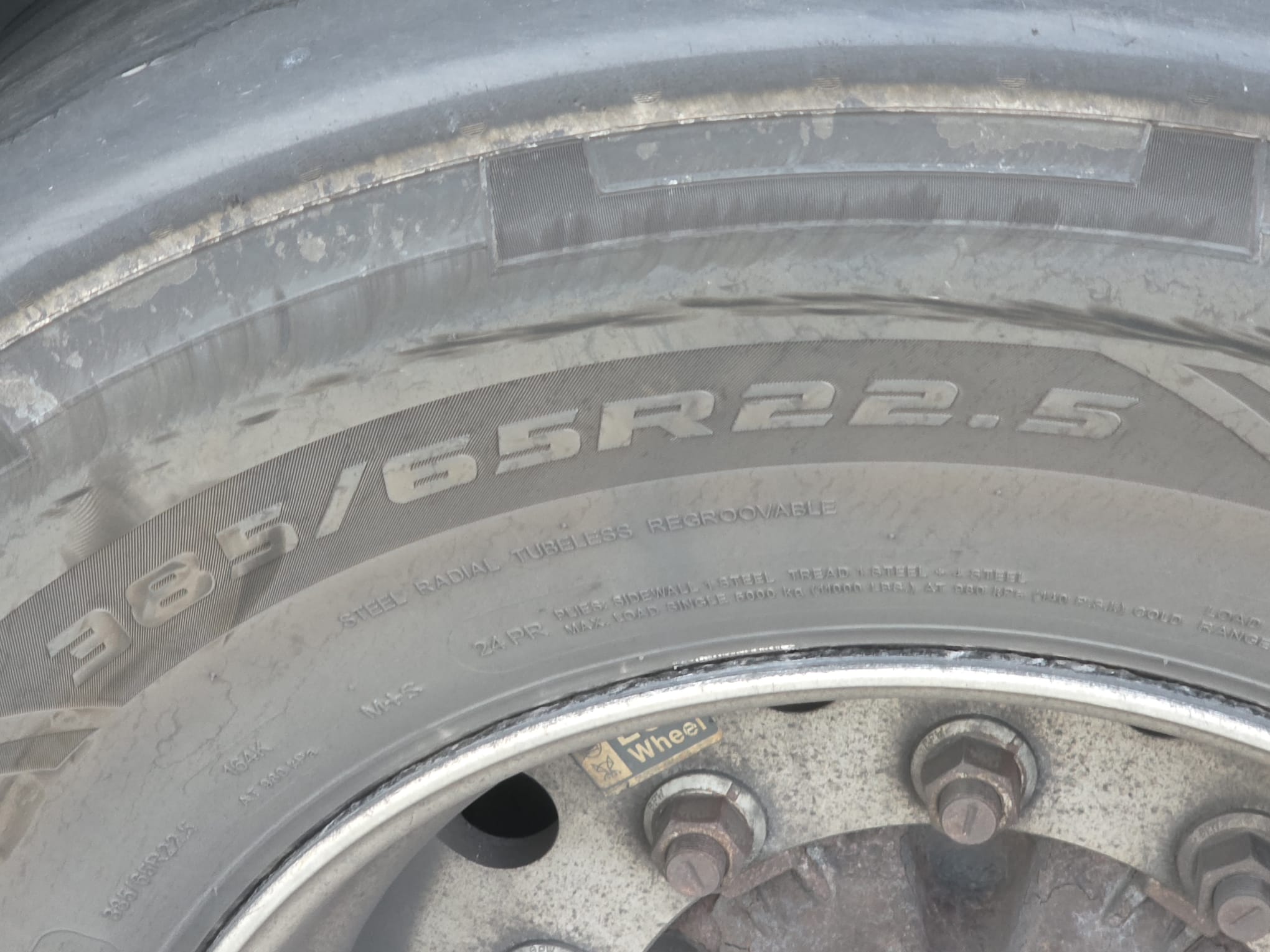
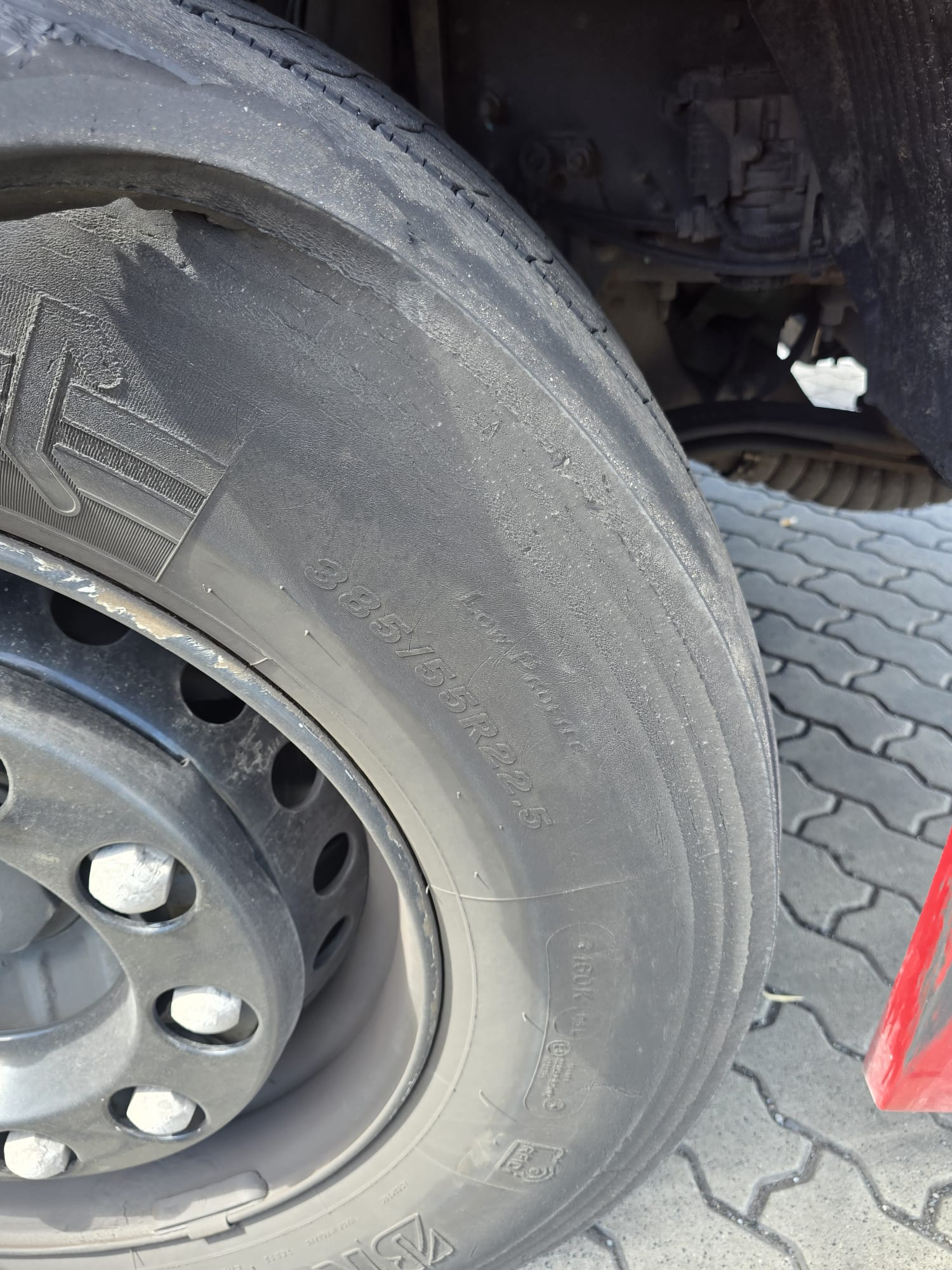
The fitted size was 385/55 R22.5 — a common wide-tyre dimension for the steer axle of a modern tractor unit. On an I-Save vehicle, this position is almost always fitted with a low rolling resistance (LRR) tyre, since that specific tyre class is central to the vehicle’s overall fuel-saving concept. Fitting any other tyre of the same size would have been technically possible, but would have permanently degraded the unit’s efficiency.
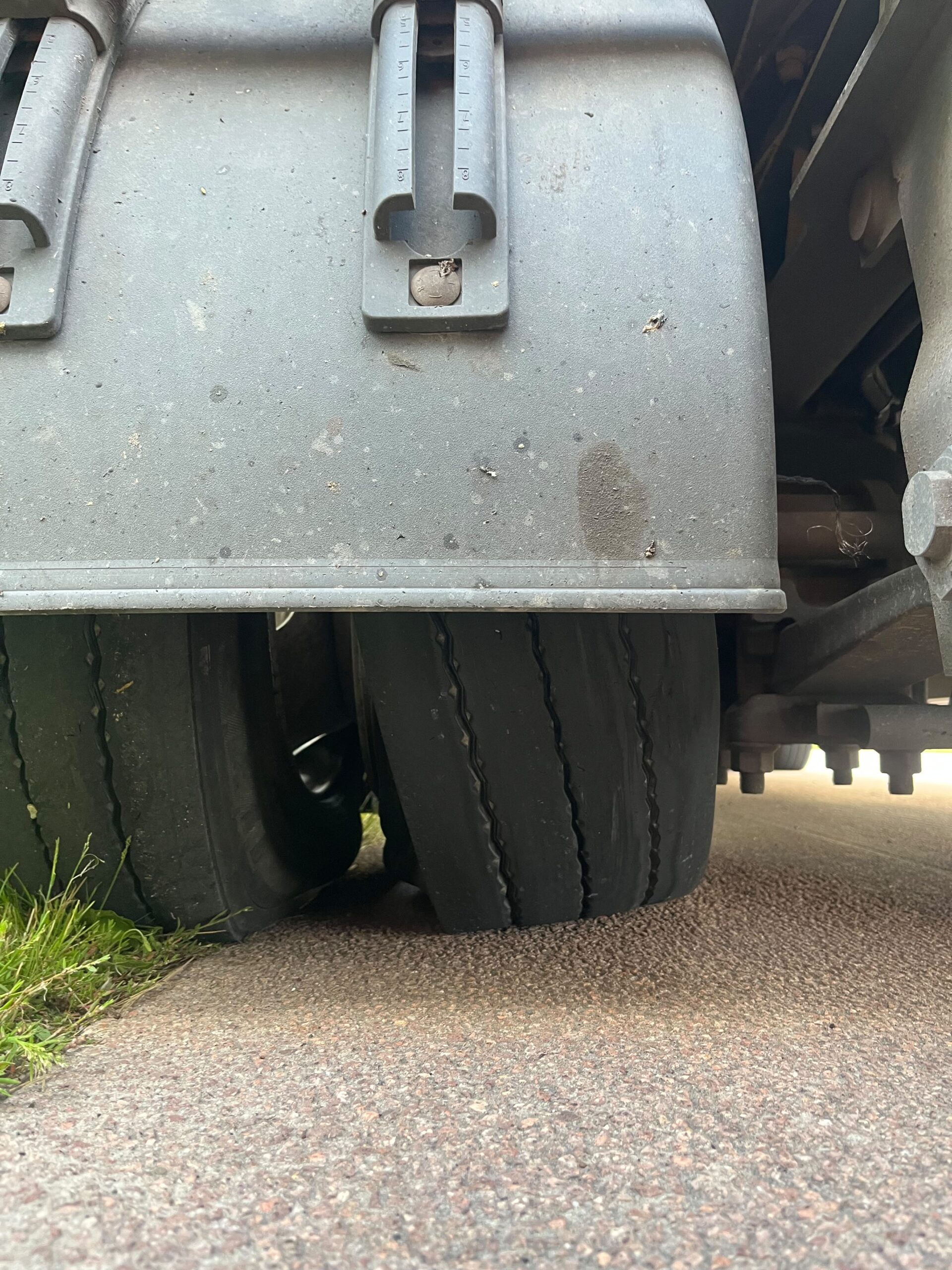
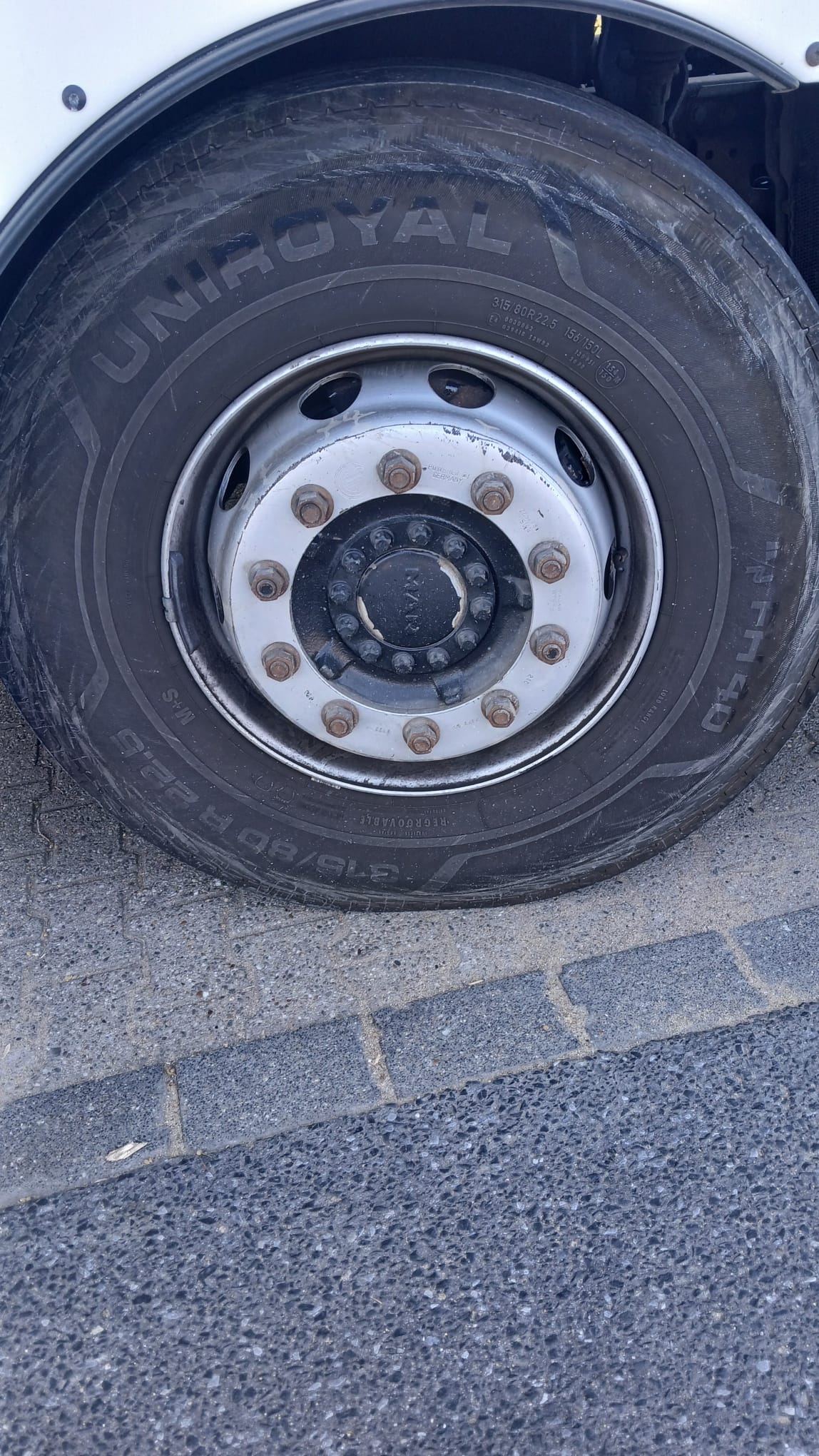
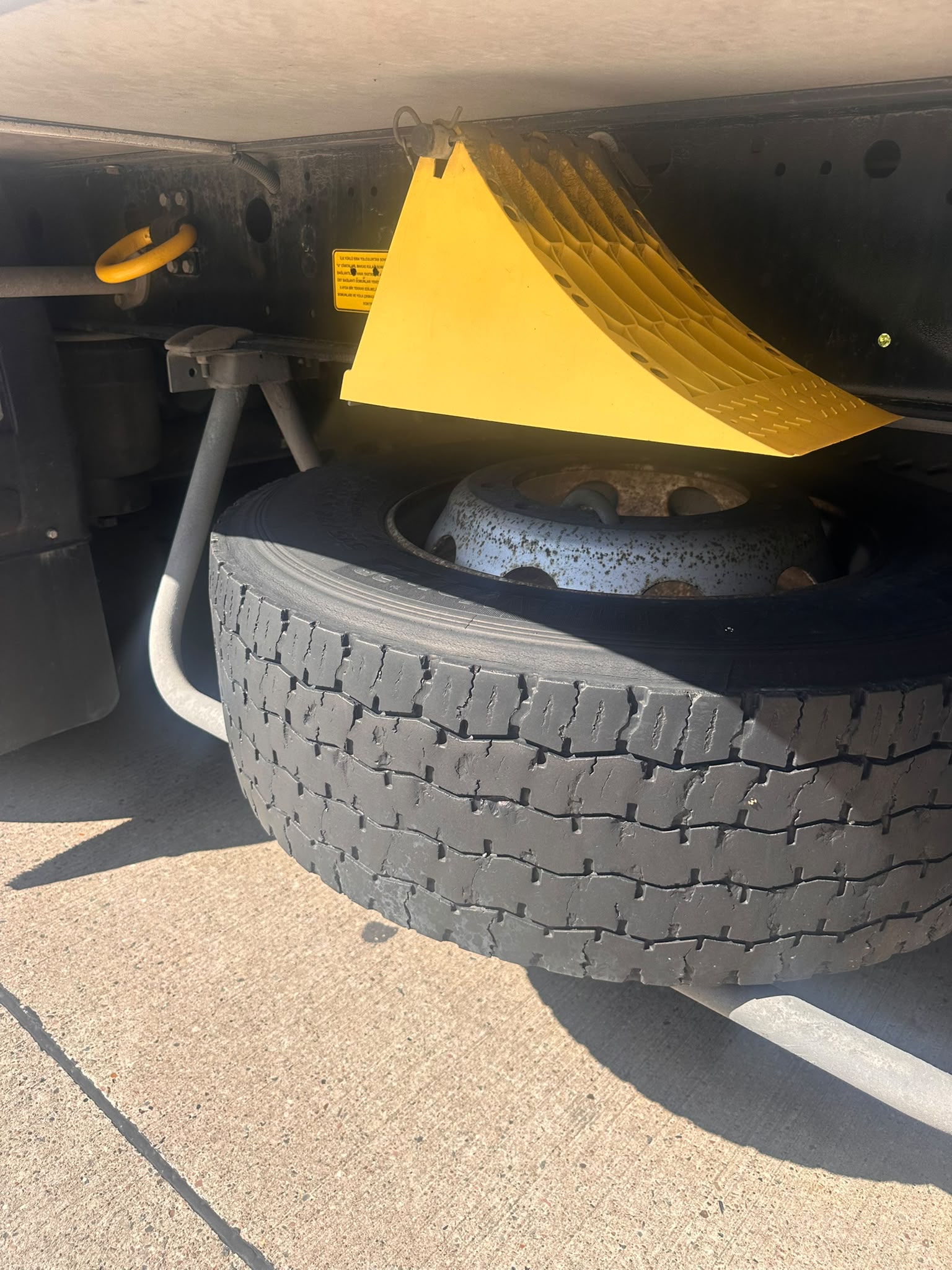
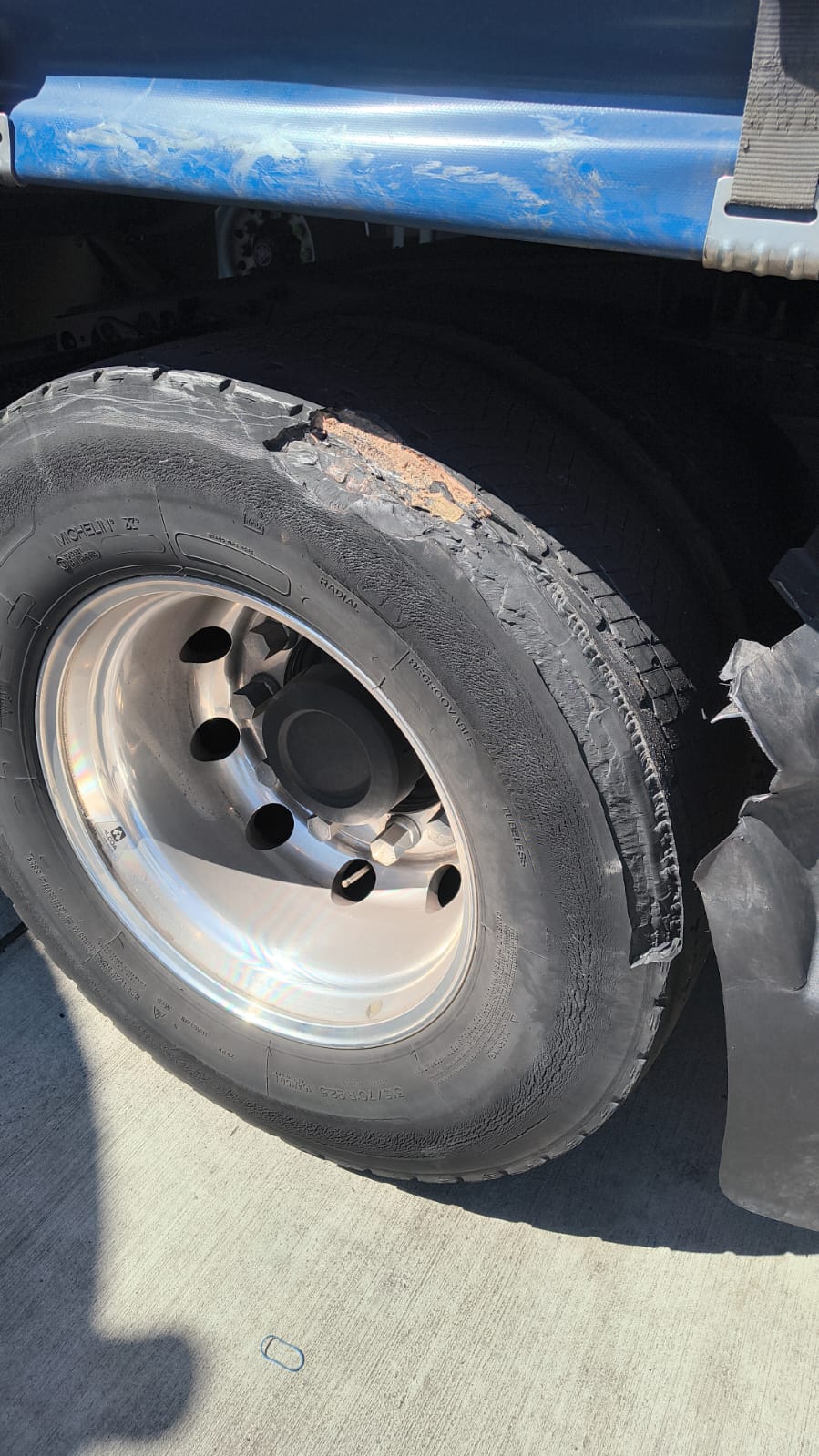
The tractor stood on the grass verge next to the carriageway, secured with a warning triangle and hi-vis vest. A visual check during the callout also flagged an unevenly worn twin tyre on a neighbouring axle of a second vehicle covered by the same request — a reminder that tyre damage rarely happens in isolation, and a full walk-round check on site is worth doing every time.
What are low rolling resistance (LRR) tyres, and why does I-Save use them?
A low rolling resistance (LRR) tyre cuts fuel consumption by roughly 3 to 6 percent compared with a standard tyre — over 100,000 kilometres a year, depending on diesel prices, that translates into savings running into four figures per vehicle. That’s precisely why manufacturers such as Volvo build their efficiency models, including the I-Save, around this tyre category as standard.
The saving comes from an optimised rubber compound and a stiffer carcass construction that absorbs less deformation energy on each rotation. Every tyre carcass flexes slightly under load with each turn of the wheel; that flex costs energy, lost as heat. The stiffer and cooler-running the compound, the less fuel the engine needs to produce the same rolling output.
Volvo’s I-Save drivetrain combines several building blocks to achieve this: an engine with turbo-compound technology, a drive axle with reduced internal friction, and tyres specifically engineered for low rolling resistance. Only when all these components work together does the system deliver the fuel figures the manufacturer quotes. If one piece — say, the steer-axle tyre — is swapped for a mismatched replacement, overall efficiency drops measurably.
How do you read the EU tyre efficiency label?
The EU tyre label rates every commercial tyre on three criteria: fuel efficiency (A to E), wet grip, and external rolling noise in decibels. Class A means the lowest rolling resistance and the smallest contribution to fuel consumption; Class E means the highest.
On the steer axle of an I-Save vehicle, the label is worth checking closely, because a steer-axle tyre contributes proportionally to the whole unit’s rolling friction while simultaneously needing strong wet grip and precise steering feel — two properties that traditionally work against pure rolling resistance. A good LRR steer-axle tyre balances both deliberately, rather than chasing Class A alone.
The full official explanation of the EU tyre label, including all classes and test methods, is available on the European Union’s tyre labelling page. For fleet managers, the label is an objective comparison tool at the point of purchase — especially valuable because manufacturer marketing claims vary widely, while the label is issued under a single, standardised test.
What’s the downside of LRR tyres in day-to-day use?
LRR tyres have a stiffer carcass and a thinner sidewall than standard tyres, which makes them more sensitive to under-inflation and kerb impacts. The very material properties that lower rolling resistance also reduce the tyre’s margin against mechanical damage.
A 0.5 bar pressure drop barely affects the lifespan of a standard tyre. On an LRR tyre with a thinner sidewall, the same pressure loss produces noticeably more flex, faster heat build-up in the belt area, and, in the worst case, exactly the kind of tread separation seen on the A24. A hard kerb strike or a pothole is also more likely to leave structural damage in the thinner carcass — damage that isn’t visible from outside but drastically shortens the tyre’s service life.
For steer-axle tyres specifically: the recommended pressure on a fully loaded articulated lorry typically sits around 9.0 bar — considerably higher than on most car tyres. If that figure isn’t checked consistently on an LRR tyre, its real working life often falls well short of what the manufacturer calculated.
Why can’t an LRR steer-axle tyre just be replaced with “whatever fits”?
Mixing an LRR tyre with a standard tyre on the same axle changes handling, wear patterns and the vehicle’s overall fuel figures. Different carcass stiffness on the same axle produces uneven rolling behaviour, which can show up as slight pulling in the steering or an uneven wear pattern over time.
There’s also an economic angle that’s often underestimated when deciding how to fix a tyre problem quickly. Many fleets calculate their total cost of ownership including the fuel figures promised by the vehicle manufacturer. If an I-Save vehicle runs permanently on a non-LRR replacement tyre, real-world consumption drifts away from that baseline — over a tyre’s typical 150,000 to 200,000 km service life, the gap can far exceed whatever was saved buying a cheaper tyre in the first place.
That’s exactly why confirming the correct replacement specification was the first step in dispatch on the A24 call, before the service team was even sent out.
What happens if the correct LRR tyre isn’t available on the spot?
If the exact LRR tyre can’t be sourced within a reasonable waiting time, we fit a technically equivalent temporary replacement of the same dimension — with a clear recommendation to swap it for the original specification at the next workshop visit. This is an honest answer worth stating plainly: a tractor unit parked on the hard shoulder costs far more per day in downtime than the price difference between two tyre grades.
The priority on site is always to get the vehicle back on the road safely and quickly. A temporary tyre with the correct load index and speed rating fully meets that requirement — it simply isn’t optimal for the fuel bill. As a stopgap until the next scheduled service, that trade-off is reasonable; it shouldn’t become the permanent solution. This kind of transparency is what separates a genuine breakdown service from one that quietly hides the consequences of a quick fix.
How did we organise the callout on the A24?
The response followed the established protocol for steer-axle tyre failures, where safety concerns rule out any delay:
- Take the emergency call — log location (A24, near Ludwigslust, heading towards Berlin), vehicle type (Volvo FH, I-Save) and the fault (steer-axle blowout).
- Confirm tyre specification — verify size 385/55 R22.5 and check availability of an LRR tyre with the regional partner depot.
- Dispatch the service team — assign the nearest team from our partner network and calculate travel time.
- Brief the driver — confirm by phone that the scene is secured (hazard lights, warning triangle, hi-vis vest, safe position on the verge).
- On-site repair — diagnosis, securing the scene, removal, fitting, final torque check.
Fifteen minutes passed between the initial call and confirmed dispatch — a figure kept deliberately tight for steer-axle failures, because every extra minute stopped on the hard shoulder is a safety risk.
Why is a steer-axle blowout so much more critical than other tyre failures?
A blown steer-axle tyre changes an artic’s steering geometry instantly and without warning — unlike a drive- or trailer-axle failure, where twin tyres partially compensate for one wheel going down. The steer axle typically runs single tyres and carries the full front-axle load, often 6.5 to 7.5 tonnes on a fully loaded artic.
Recommended pressure on this axle usually sits around 9.0 bar. When pressure drops to zero instantly through a failure, the effective contact patch changes drastically, and the driver has to correct a noticeable pull towards the damaged side. At motorway speed, that moment is genuinely dangerous — overcorrecting can put an artic into a slide.
There’s also a risk to the rim itself: even a few hundred metres travelled on a deflated carcass can damage the wheel, pushing repair costs up considerably. That’s why the driver’s response matters so much — controlled deceleration rather than an emergency stop, and getting onto the hard shoulder promptly, are the key factors that limit the extent of the damage.
How did the on-site repair proceed?
- Step 1 — Visual inspection: check the rim, hub, wheel bolts and brake assembly for consequential damage. On this callout, a neighbouring axle showing visible wear was also inspected.
- Step 2 — Secure the scene: position the warning triangle at a safe distance, put on hi-vis vests, move the vehicle further onto the verge if possible.
- Step 3 — Removal: loosen the wheel bolts, remove the damaged tyre and remaining carcass fragments from the rim, check the rim for deformation.
- Step 4 — Fitting: mount the new 385/55 R22.5 tyre, balance it, fit it to the steer axle.
- Step 5 — Final torque check: tighten the wheel bolts in a star pattern to roughly 700 Nm, set tyre pressure to the specified 9.0 bar, check steering function.
This sequence is deliberately structured so each step protects the next — tightening wheel bolts out of star-pattern order, for instance, can cause uneven clamping force and, in the worst case, lead to another wheel loss further down the line.
Full timeline of the callout
| Time | Phase | Action |
|---|---|---|
| 13:40 | Emergency call | Driver reports steer-axle blowout, A24 near Ludwigslust |
| 13:55 | Dispatch confirmed | LRR tyre 385/55 R22.5 confirmed, service team assigned |
| 14:45 | Arrival on site | Service team secures scene, begins diagnosis |
| 15:50 | Repair completed | Tyre fitted, torque and pressure checked, vehicle roadworthy |
Total time from call to departure: 2 hours 10 minutes (130 minutes).
What does a steer-axle tyre change with an LRR tyre cost on the motorway?
The full callout cost €1,040 net, with the LRR specialist tyre in size 385/55 R22.5 the main line item at €560 — noticeably more than a comparable standard tyre. The full breakdown:
| Item | Price (EUR, net) |
|---|---|
| Call-out (emergency response) | 260 |
| On-site labour (approx. 65 min) | 155 |
| LRR tyre 385/55 R22.5 (steer axle) | 560 |
| Fitting, balancing, torque check | 45 |
| Disposal of old tyre | 20 |
| Total (net, plus VAT) | 1,040 |
The premium on the tyre itself — an LRR tyre in this dimension typically runs €520 to €600, against roughly €420 to €480 for a comparable standard tyre — is put into perspective quickly against the alternative: a stationary artic costs between €800 and €1,200 per day in downtime, depending on the load and any contractual penalties. Even half a day off the road already exceeds the entire repair bill.
Why is professional tyre service better than a DIY fix?
Changing a steer-axle tyre on the hard shoulder of a motorway carries risks that rule out a self-repair:
- No hydraulic specialist tools carried on board — a truck jack and a torque wrench rated for 700 Nm aren’t standard kit on an articulated lorry.
- Wrong torque setting — under-tightened wheel bolts can work loose, over-tightened bolts can shear or damage the hub.
- Missing LRR specification — without access to a stocked tyre depot with the right size and class, the wrong replacement tyre often gets fitted.
- Safety risk on the hard shoulder — an unsecured work area right next to live motorway traffic is genuinely dangerous without a warning trailer and cover vehicle.
- No warranty on the work — professional fitting comes with documented final torque; a DIY repair leaves no such record.
What typical situations do we get called out for across Germany?
Steer-axle tyre failures on fuel-saving lorries are far from a one-off. The most frequent callouts include:
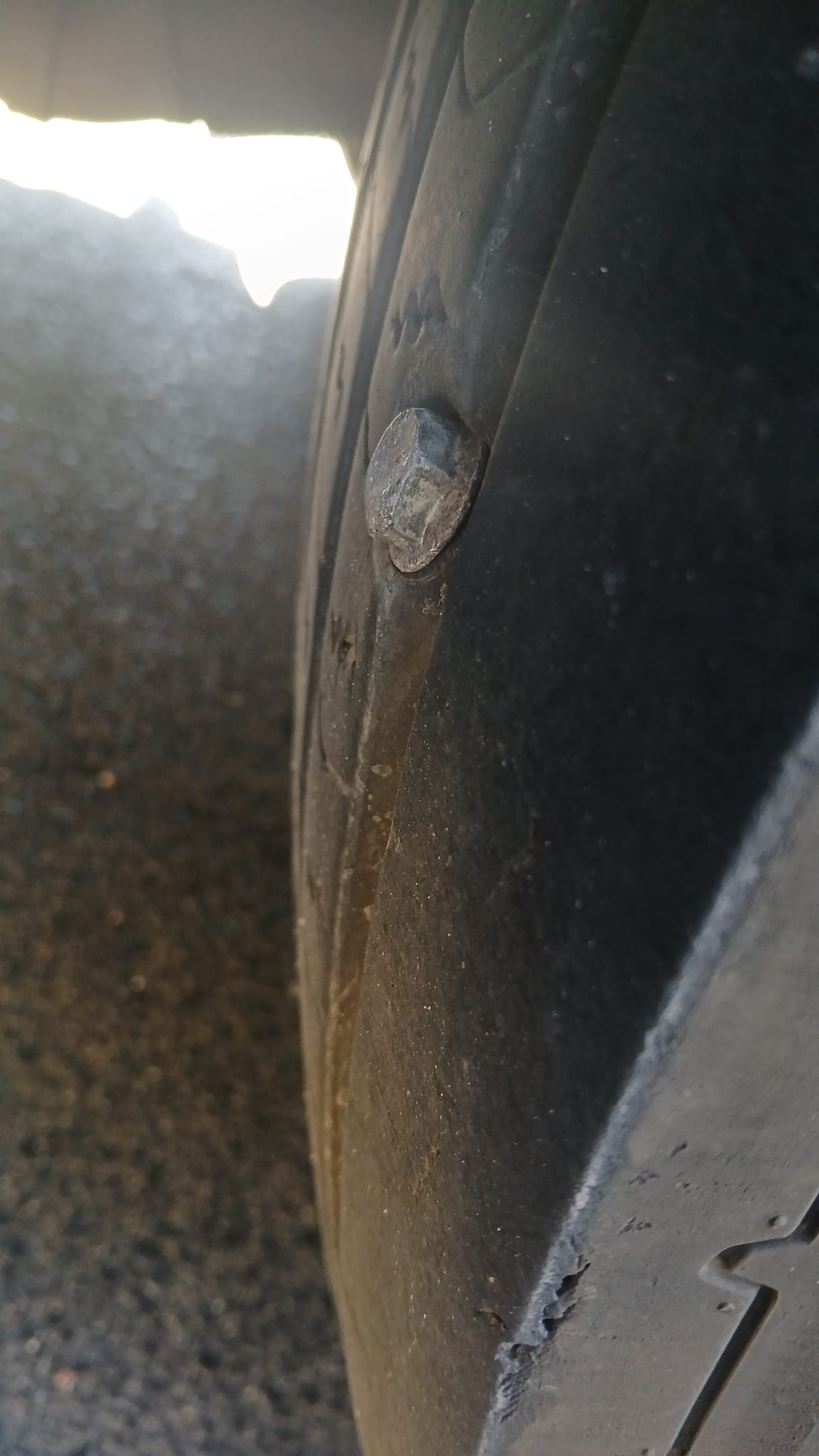
- Steer-axle blowouts caused by road debris (nails, metal fragments)
- Slow pressure loss that only becomes apparent under load
- Rim damage after continued driving on a deflated tyre
- Wear-related tyre failure from an overdue tread-depth check
- Tyre damage from kerb contact during tight manoeuvring at rest areas
A similar case involving rim damage after a blowout is documented in our truck tyre service case study near Trier.
How do you calculate the economics of LRR tyres for a fleet?
An LRR tyre typically pays back its price premium within the first 20,000 to 40,000 kilometres driven, purely through the fuel saving. With a premium of around €100 per tyre against a standard equivalent and a 3 to 6 percent fuel saving, running at 30 litres per 100 km and a diesel price of €1.60, the saving works out to roughly €1.40 to €2.90 per 100 km, per tyre.
For a fleet running several artics with high annual mileage, a simple rule of thumb applies: multiply the tyre’s expected remaining life (typically 120,000 to 180,000 km) by the fuel saving per kilometre, and the result is usually several times the price premium paid at purchase. The condition is consistent pressure maintenance — a chronically under-inflated LRR tyre loses its efficiency advantage while its failure risk rises, exactly as seen on the A24.
How do LRR tyres interact with a tractor’s other efficiency systems?
LRR tyres are part of an integrated system alongside predictive cruise control and a disengageable drive axle — they don’t function in isolation. On an I-Save vehicle, for example, predictive cruise control uses GPS elevation data to manage speed and avoid unnecessary braking and acceleration.
These systems calculate around a specific rolling resistance figure from the fitted tyres. Replace an LRR tyre with one carrying higher rolling resistance, and the vehicle’s real coasting behaviour shifts slightly — predictive cruise still functions correctly, but the calculated fuel advantage of the whole system drops measurably. For fleets that track I-Save vehicles closely against fuel consumption benchmarks, consistent fitment of the original tyre specification is a factor that shows up in the monthly figures.
How can drivers and fleets prevent this kind of failure?
- Weekly visual checks of steer-axle tyres for embedded debris, uneven wear and visible sidewall damage.
- Pressure checks at least every two weeks — especially important on LRR tyres given the thinner carcass; target on the steer axle is typically around 9.0 bar, subject to manufacturer specification.
- Regular tread-depth measurement, respecting the statutory minimum under German road traffic law (see Section 36 of the StVZO on gesetze-im-internet.de).
- Follow manufacturer rotation intervals to avoid uneven wear between steer and drive axles.
- Adjust driving style, deliberately avoiding kerbs and potholes with LRR tyres fitted, given the thinner sidewall.
- Carry a spare of the correct specification, or secure supply through a partner depot, so a compromise tyre isn’t the only option in an emergency.
Frequently asked questions about steer-axle tyre changes
What does a truck tyre change with an LRR tyre cost on the motorway?
For a steer-axle size like 385/55 R22.5, a realistic total sits between €900 and €1,100 net, including call-out, labour, tyre and disposal. In the documented callout on the A24, the total was €1,040.
How long does a steer-axle tyre change take on the road?
From the call to departure typically takes 1.5 to 3 hours. In this case it was 2 hours 10 minutes, of which 65 minutes was on-site labour.
Who pays for a tyre change during a breakdown?
Normally the vehicle owner or haulier covers the cost, unless it falls under a warranty or insurance claim. Some fleet contracts with tyre manufacturers partially cover failures within the warranty period.
Does the replacement tyre have to be LRR?
No — in an emergency, a technically equivalent standard tyre is acceptable. For the vehicle’s long-term fuel efficiency, though, swapping back to the original tyre type promptly is recommended.
How do you spot an LRR tyre on the EU label?
By the fuel efficiency pictogram with a letter grade from A to E on the tyre label or manufacturer’s data sheet — Class A or B indicates low rolling resistance.
Why did the steer axle fail rather than the drive axle?
The steer axle runs single tyres and carries the full axle load without the redundancy a twin-tyre drive axle provides, making it more sensitive to pressure loss and prior mechanical damage.
Summary
- Specification: 385/55 R22.5, LRR steer-axle tyre
- Vehicle: Volvo FH with I-Save drivetrain
- Location: A24 near Ludwigslust, heading towards Berlin
- Response time (dispatch): 15 minutes
- Total time from call to departure: 2 hours 10 minutes
- Cost: €1,040 net
- Alternative cost of downtime: €800–€1,200 per day off the road
Call us for a tyre breakdown — specialist tyres included
A steer-axle blowout on a fuel-saving artic tolerates no delay, and no mismatched replacement tyre. Our dispatch team confirms the correct LRR specification before the service crew even sets off, staying in touch with our regional tire service as well as mobile truck service for any consequential damage. Round the clock, across Germany: +49 160 5753826 or www.lkwhelp24.com. 24/7, all over Germany.
Keywords: truck tyre service | LRR truck tyres | steer axle blowout | Volvo I-Save tyres | 385/55 R22.5 | low rolling resistance tyre | fuel-saving tyres | EU tyre label truck
Related articles
- Truck Breakdown Assistance in Germany – 24/7 Emergency Service from LKW Help 24
- Truck Tyre Service for Blowout and Rim Damage on the Motorway near Trier
- Winter Tyres for HGVs in Germany – Legal Requirements, Safety & Service by LKWHelp24
- Truck Tire Service Near Me: Handling Trailer Tyre Blowout Near Berlin
- Truck Tire Service Near Me: How LKWHelp24 Got a Semi-Truck Moving in 90 Minutes on the A43 Autobahn Near Dortmund