Skip to content
A carrier at a logistics warehouse near the A45 at Hagen called our dispatch on 21 July because the load on a curtainsider semi-trailer looked wrong to the driver before departure. No breakdown, no accident, no damage. The driver simply refused to pull out until someone independent had a proper look at how two big bags of bulk goods were lashed down. From the first call to clearance for departure, the whole job took 2 hours 12 minutes.
This is the kind of callout that never makes headlines but happens on German motorways every day: a disputed loading situation where a driver, quite rightly, won’t move until the load securing is checked, documented and corrected. Our regional service partner handled it on-site, produced a photo report, re-tensioned the straps, added edge protection and anti-slip mats, and signed the trailer off for the road.
Below is the full timeline, the cost breakdown, and a look at why “it’s heavy, it won’t move” is not an argument that holds up under braking forces on a wet autobahn.
The situation at the warehouse
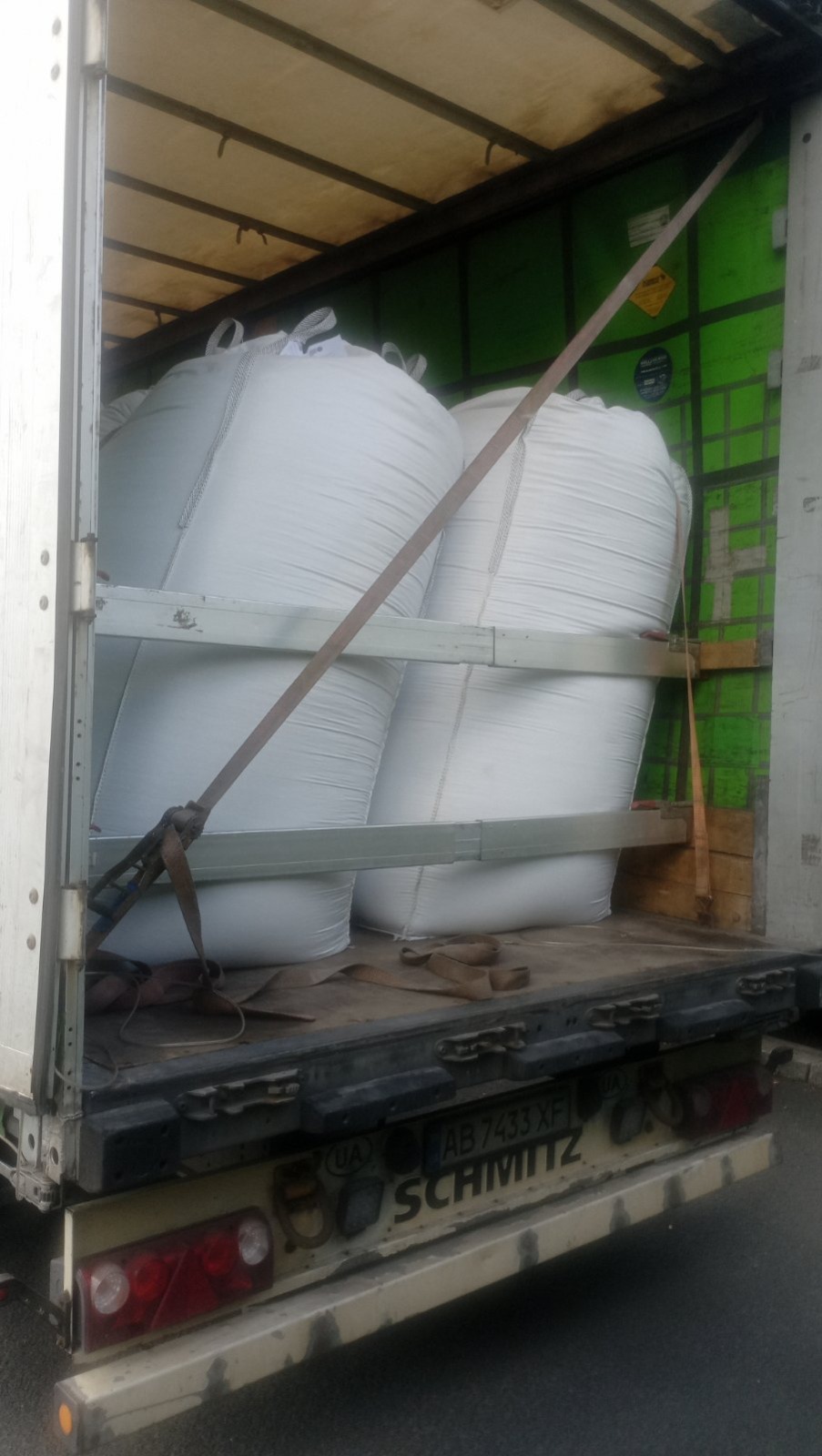
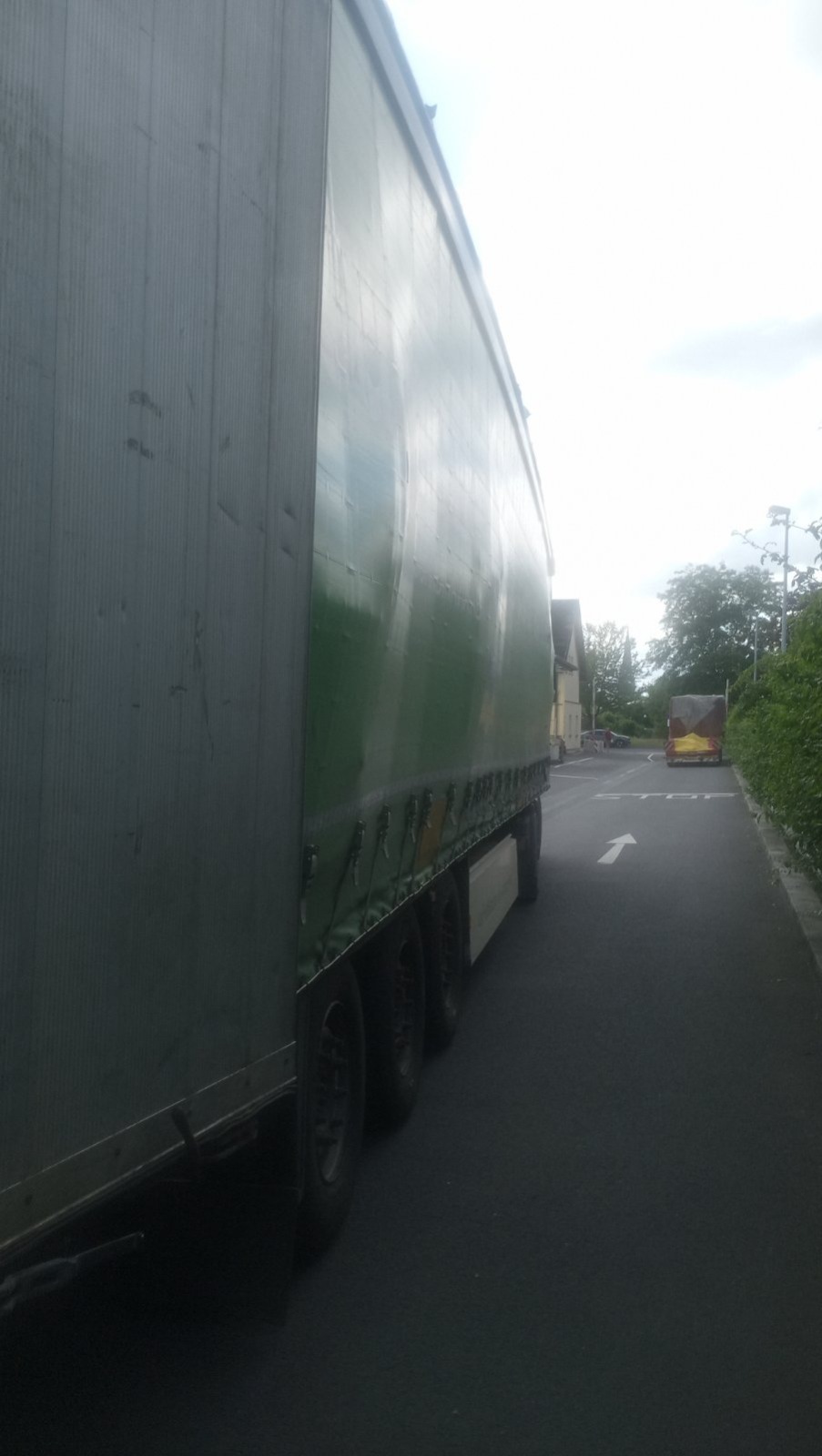
The trailer was a standard curtainsider semi-trailer, loaded at a logistics warehouse in the Hagen area, close to the A45 interchange. The cargo was two large big bags of bulk material, positioned side by side in the trailer bed. Nothing was damaged and nothing had shifted in transit — this was a pre-departure dispute, not a post-incident inspection.
The driver’s concern was straightforward: the lashing looked insufficient for the weight and shape of the bags, and he wasn’t willing to sign off on a load he hadn’t seen properly secured. That’s a legitimate professional call, and it’s one German law backs him on. The loader and the haulier disagreed on whether more securing was needed. Rather than argue it out in a car park, the carrier rang for an independent check.
It was a warm, dry afternoon, which mattered — wet floors or a rushed loading dock at the end of a shift often make disputes like this worse. Here, conditions were good; the disagreement was purely about method.
How the callout was organised
Our dispatch runs 24/7 and draws on a partner network spread across Germany, so the nearest available technician can usually be on the road within minutes of a call coming in.
- Call received at dispatch, situation logged as disputed loading
- Nearest available partner technician identified near Hagen
- Technician dispatched with lashing equipment and documentation kit
- On-site arrival, inspection began immediately
- Report and photos sent to dispatch and to the carrier
The steps sound simple written out like that, but the value is in speed: a driver sitting idle at a warehouse dock is burning time nobody gets back, and every extra hour pushes a delivery slot further out of reach.
Who is responsible for load securing in Germany?
The driver, the haulier and the loader all carry responsibility under German road traffic law (StVO §22 and §23), and courts have repeatedly split liability between them depending on who packed the trailer and who accepted it. A driver who notices a securing defect and drives off anyway shares the blame if something goes wrong later.
That shared responsibility is exactly why the driver in this case stopped the departure. He hadn’t loaded the bags himself, but once he takes the trailer onto the autobahn, he is co-responsible for how it’s secured. Refusing to leave until it’s checked is not being difficult — it’s doing the job correctly.
Fleet operators sometimes assume the loading dock takes full responsibility once goods are signed for. It doesn’t work that way in practice, and it’s a mistake experienced hauliers stop making after their first roadside prohibition.
Fines and consequences of inadequate load securing
A driver caught with an inadequately secured load faces a fixed penalty starting at €60 for minor issues, rising sharply for cargo that poses a real danger, plus points on the driving licence. Police or BAG inspectors can issue an on-the-spot Weiterfahrtuntersagung — a prohibition to continue the journey — until the load is fixed, which can mean hours stranded on the hard shoulder or at a truck stop.
If poor securing causes an accident, the consequences escalate from a fine to criminal liability, particularly if someone is injured. German prosecutors treat cargo that comes loose on a motorway as a foreseeable risk, not a freak event, so “the driver didn’t know” rarely works as a defence once the load plan is examined.
None of that applies here — the load never moved, and the check happened before departure precisely to avoid all of it.
The physics of load securing: why weight alone isn’t enough
Cargo doesn’t stay put just because it’s heavy. Under emergency braking, a load pushes forward with roughly 80% of its own weight, and during hard cornering or evasive manoeuvres it pushes sideways with roughly 50%. For 1,000 kg of cargo, that works out to about 800 kgf forward and 500 kgf sideways — forces that easily overcome friction alone on a smooth trailer floor.
Big bags are a good example of why this matters. They sit on a relatively small footprint, have a high centre of gravity once filled, and their outer fabric offers little grip against a metal or plywood trailer bed. A driver braking hard from 80 km/h to avoid a stalled car ahead generates exactly the kind of forward force that turns a loosely lashed big bag into a projectile inside the curtainsider.
This is the number that decided the outcome at Hagen: the technician calculated the securing needed for the actual weight of the bags, not an estimate, and then matched strap count and angle to that figure.
Force-fit vs form-fit securing
Force-fit securing (Niederzurren) holds cargo in place by pressing it down onto the load bed with tensioned straps, relying on the resulting friction to resist forward and sideways movement. Form-fit securing (Formschluss) blocks the cargo physically, using the trailer’s own structure, chocks or tightly packed neighbouring cargo so there’s simply no room to move.
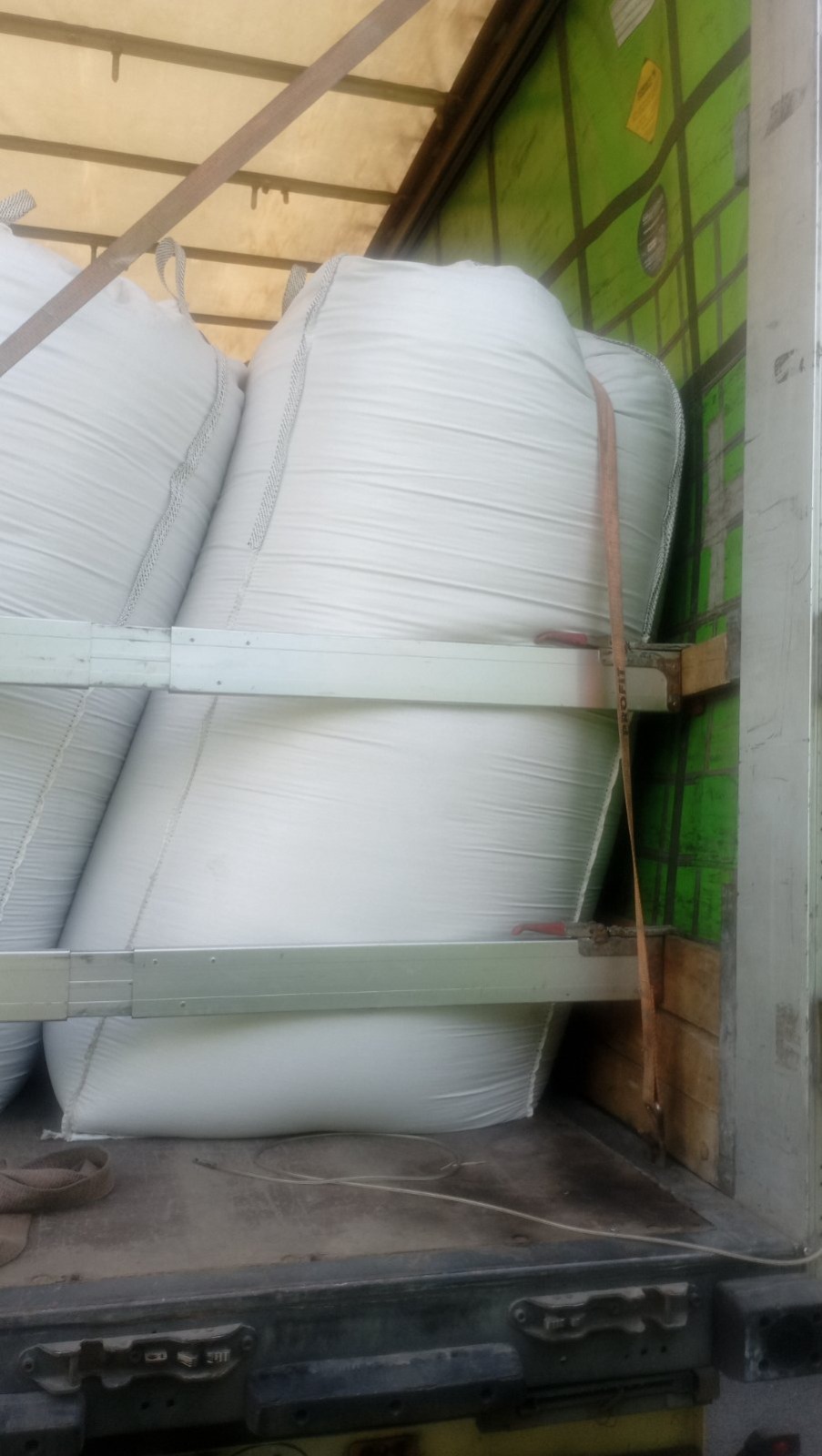
Neither method alone is usually enough for irregular loads like big bags. Combining the two — direct lashing plus positioning the bags hard against the trailer’s front bulkhead and each other — is what actually holds under real-world braking. At Hagen, the technician used both: re-tensioned straps for force-fit, and repositioning plus anti-slip mats to add form-fit resistance and friction together.
Using lashing straps correctly
Getting the straps right isn’t about pulling them as tight as possible. It comes down to a few technical points that get skipped when a loading dock is rushing to hit a departure slot.
- LC rating (Lashing Capacity) must match the cargo weight — a strap rated too low simply fails under load
- Strap webbing and ratchet mechanisms need checking for cuts, fraying or a stiff ratchet before use
- Lashing angle matters: steep, near-vertical lashings hold far better than shallow ones
- Anti-slip mats under the cargo raise the friction coefficient and cut the number of straps needed
- Edge protectors stop the strap cutting into the bag or losing tension against a sharp corner
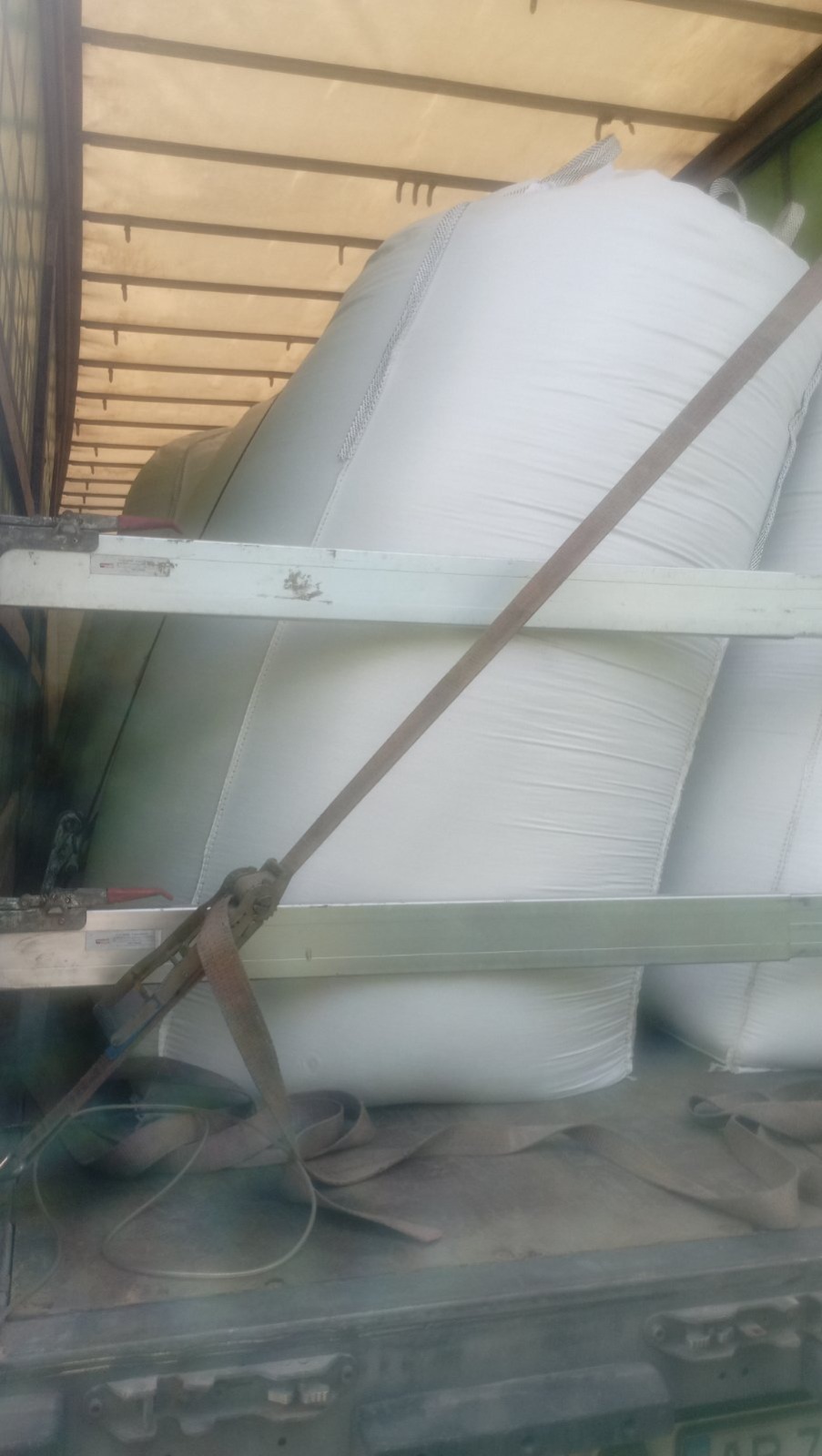
The technician on this job used straps with an LC of 2,500 daN, appropriate for the bag weight, plus anti-slip mats and edge protectors — standard kit for this kind of bulk cargo.
Common loading mistakes
Most disputed-loading callouts trace back to a handful of repeat mistakes at the dock, not exotic problems.
- Gaps left between pallets or bags that let cargo shift before it even hits the road
- Load stacked above the trailer’s side rails without top securing to hold it down
- Heavy items placed on top of lighter ones, raising the centre of gravity
- Uneven weight distribution across the axles, which affects both handling and legal axle-weight limits
Any one of these is enough to trigger a driver’s refusal, and rightly so — a trailer that looks fine from outside can still be one hard brake away from trouble.
What the BAG checks on the road
Roadside inspectors from the BAG (Federal Office for Logistics and Mobility) check whether the securing method matches the cargo type and weight, whether lashing equipment is rated and undamaged, whether the load has shifted from its original position, and whether documentation (delivery note, CMR, weight figures) matches what’s actually on the trailer. They also look at whether the driver can explain how the load was secured — a driver who can’t answer basic questions about strap count or LC rating draws more scrutiny, not less.
What a driver should do with disputed loading
Photograph the load from multiple angles before signing anything, note the dispute on the CMR consignment note, and use the legal right to refuse departure until securing is corrected. A driver who documents the problem and refuses to drive is protected; one who signs off and drives anyway inherits the liability.
That’s precisely the sequence followed at Hagen — photos first, refusal to leave, then a call for an independent check rather than a shouting match with the loading team.
Load securing and tyre wear: the connection drivers miss
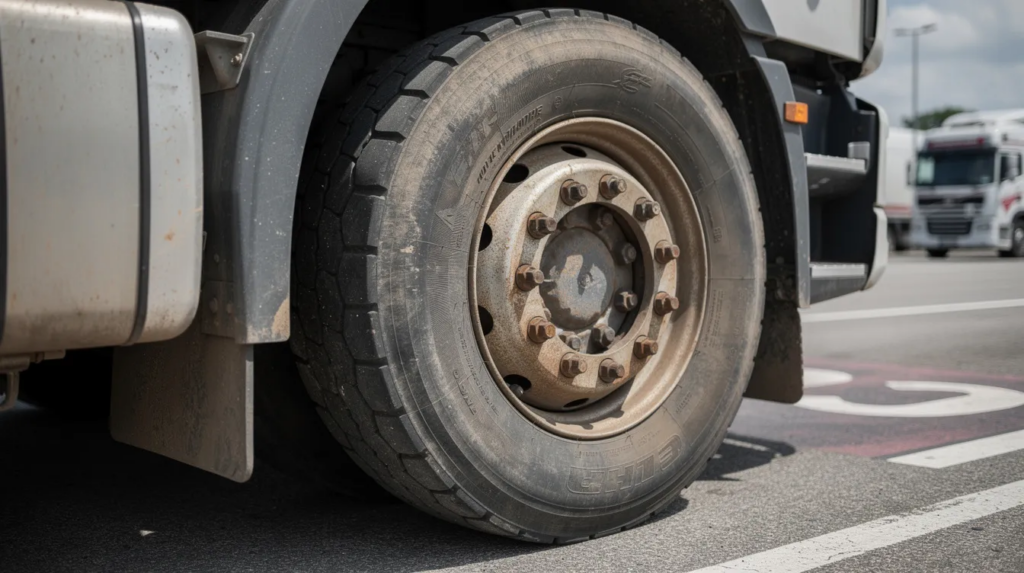
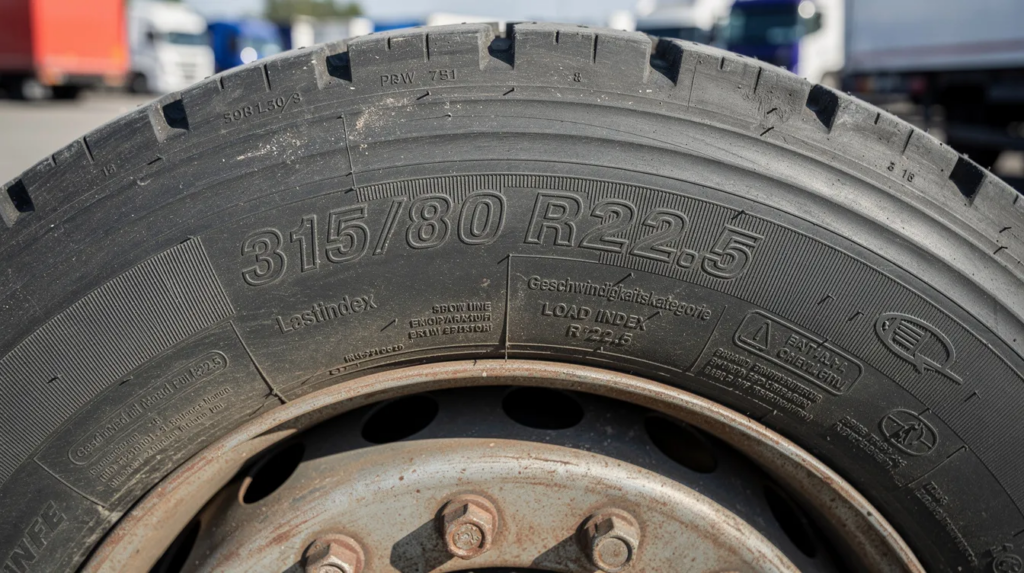
A load that shifts, even slightly, doesn’t just risk falling off — it also overloads one side of the trailer, which shows up weeks later as uneven tyre wear or a blowout on the drive axle. Uneven loading pushes more weight onto one set of tyres, accelerates wear on that side, and raises blowout risk long before anyone connects it back to a loading dock decision. Checking the load index against actual axle loads is part of the same conversation as load securing — they’re not separate problems.
Step-by-step: how the on-site inspection worked
- Visual check — technician walked the trailer, assessed the bags’ position, condition of existing straps, and obvious gaps
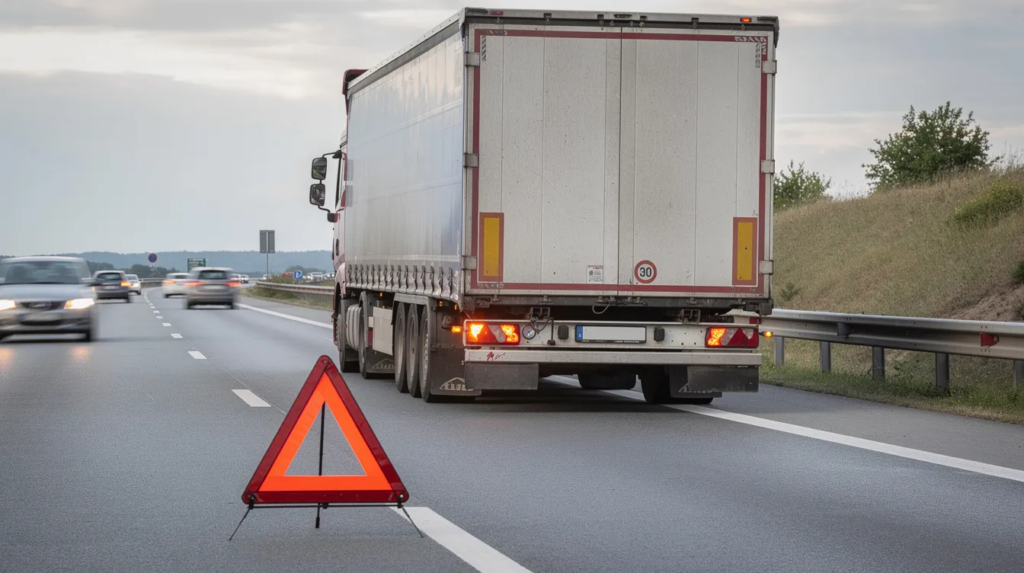
- Securing the working area — warning triangle and hazard lights set up around the trailer at the dock
- Measurement and photo report — weight estimate, strap angles measured, four photos taken documenting the cargo and existing lashing
- Re-securing — straps re-tensioned to the correct LC, anti-slip mats and edge protectors added, bags repositioned tight against the bulkhead
- Final check — ratchets torqued and locked, straps rechecked for tension, trailer cleared for departure
Nothing here is complicated in isolation. What makes it reliable is doing all five steps in order, every time, rather than skipping straight to re-tensioning because that’s the visible fix everyone’s waiting for.
Timeline
| Time | Phase | Action |
|---|---|---|
| 11:18 | Call | Carrier reports disputed loading, driver refuses to depart without an inspection |
| 11:18–11:33 (15 min) | Dispatch | Nearest partner technician assigned near Hagen |
| 11:33–12:08 (35 min) | Travel | Technician travels to the logistics warehouse near the A45 at Hagen |
| 12:08–12:38 (30 min) | Inspection | Load securing checked, photo documentation taken, report written |
| 12:38–13:20 (42 min) | Re-securing | Straps re-tensioned, edge protectors and anti-slip mats added |
| 13:20–13:30 (10 min) | Final check | Ratchets checked, cleared for departure |
Total: 11:18–13:30 = 2 hours 12 minutes.
Cost breakdown
| Item | Price (EUR, net) |
|---|---|
| Call-out fee | €220 |
| Inspection & report (0.5 h) | €55 |
| Re-securing the load (0.7 h) | €77 |
| Materials (LC 2500 daN lashing straps, anti-slip mats) | €95 |
| Small materials (edge protectors, corner guards) | €20 |
| TOTAL | €467 net (plus VAT) |
Price drivers here were straightforward: distance travelled to the warehouse, the volume of lashing material needed for two large bags, and the time spent on documentation, which the haulier needed for its own records. Compare that €467 to the downtime cost of a tractor unit sitting idle at departure, typically €800–1,200 per day once driver hours, missed slots and knock-on delays are counted — the inspection paid for itself several times over just by keeping the trailer on schedule.
Why you need a professional, not a guess
DIY load securing on a disputed load carries real risk that isn’t obvious until something goes wrong on the motorway.
- Under-rated straps that look fine but fail well below their apparent capacity
- Wrong lashing angle, which can cut effective holding force by half or more
- No objective documentation if the haulier and loader disagree later about who’s at fault
- A driver who signs off on a load he wasn’t trained to assess, inheriting liability he shouldn’t carry
A trained technician isn’t just adding straps — they’re calculating what the load actually needs and putting it in writing. Organisations like ADAC publish the same core guidance for private trailers: friction alone never substitutes for calculated lashing force.
Typical load-securing callouts we handle
Disputed loading at a warehouse dock, like this one, is one of the more common calls. Others include a driver noticing shifted cargo at a motorway rest stop, a loading company and haulier disagreeing over which method to use for irregular freight, and post-incident checks after a hard braking event where nothing broke loose but the driver wants confirmation before continuing. We handle these across Germany through our mobile truck service and truck service network, day or night.
Prevention tips for drivers and fleets
Fleets that avoid repeat disputes tend to do a few things consistently: they train drivers to check LC ratings rather than trust visual tension, they keep anti-slip mats and spare edge protectors on the trailer rather than relying on the loading dock to supply them, and they build a five-minute securing check into the pre-departure routine even when the dock says everything’s fine. None of this is expensive. All of it is cheaper than a roadside prohibition. Fleets running regular DEKRA inspections on trailer floors and rails also catch worn anchor points before they fail under load.
Tyres, axles and fleet condition
Load securing doesn’t exist in isolation from the rest of the trailer’s condition. Tyre brands like Michelin, Continental, Goodyear and Bridgestone all publish load index tables that fleets should be cross-checking against actual axle loads, not just nominal cargo weight. A BPW axle under uneven load wears differently than one carrying a balanced trailer, and that shows up first in tyre wear patterns. If your fleet is dealing with recurring tyre issues alongside loading disputes, it’s worth checking both at once rather than treating them as separate maintenance items.
Why choose lkwhelp24
We run dispatch 24/7 across Germany, work with a vetted partner network rather than whoever’s nearest on a map, quote transparent pricing before work starts, and dispatch in German, English, Polish and Russian so drivers from any fleet can explain the problem clearly. That multilingual dispatch matters more than it sounds — a driver stressed about a missed slot explains things better in his own language.
FAQ
Who is liable for load securing?
The driver, the haulier and the loader all share responsibility under German traffic law, and courts split liability case by case depending on who packed and who accepted the load. A driver who spots a defect and drives anyway shares the blame if it goes wrong.
What does a load-securing check cost?
In this case the full check, re-securing and materials came to €467 net plus VAT, covering the call-out, inspection, labour and lashing materials. Costs vary with distance, cargo type and how much re-securing is needed.
Can a driver refuse to depart over disputed loading?
Yes. A driver has the legal right to refuse departure until load securing meets requirements, and should document the dispute with photos and a note on the CMR consignment note before refusing.
What does the BAG inspect on the road?
BAG inspectors check whether the securing method matches the cargo’s weight and type, whether straps and equipment are rated and undamaged, and whether documentation matches the actual load on the trailer.
How long does a typical load-securing check take?
This callout took 2 hours 12 minutes from call to clearance, covering dispatch, travel, inspection, re-securing and a final check. Simpler cases with less re-securing needed can be faster.
Does load securing affect tyre wear?
Yes. Cargo that shifts, even slightly, overloads one side of the axle, which accelerates tyre wear and raises blowout risk on that side over time.
Summary
A disputed loading callout near the A45 at Hagen on 21 July was resolved in 2 hours 12 minutes, from the 11:18 call to clearance for departure at 13:30. The curtainsider trailer’s two big bags were inspected, re-secured with LC 2,500 daN straps, anti-slip mats and edge protectors, and documented with a full photo report. Total cost: €467 net plus VAT — a fraction of the €800–1,200 daily downtime cost the haulier avoided by getting it right before pulling onto the motorway.
Need a load-securing check anywhere in Germany?
Call +49 160 5753826 or visit www.lkwhelp24.com — dispatch runs 24/7 across Germany, with vetted partner technicians and transparent pricing before work starts.
Keywords: load securing check | Ladungssicherung | curtainsider semi-trailer | lashing straps | LC rating | force-fit securing | form-fit securing | disputed loading | BAG inspection | Weiterfahrtuntersagung | truck breakdown service Germany | mobile truck service | anti-slip mats | edge protectors | drive axle tyre wear