Skip to content
TL;DR: A curtainsider trailer running at roughly 40 tonnes gross combination weight suffered a rear-axle tyre blowout on the A7 near Soltau, on the Lüneburg Heath, heading towards Hamburg. Our truck tyre service took the call at 13:42 and had the technician on site by 14:52. The damaged 385/65 R22.5 tyre was removed, a new one fitted and balanced, and wheel nuts torqued in a star pattern by 16:12 — total elapsed time from call to completion: 150 minutes.
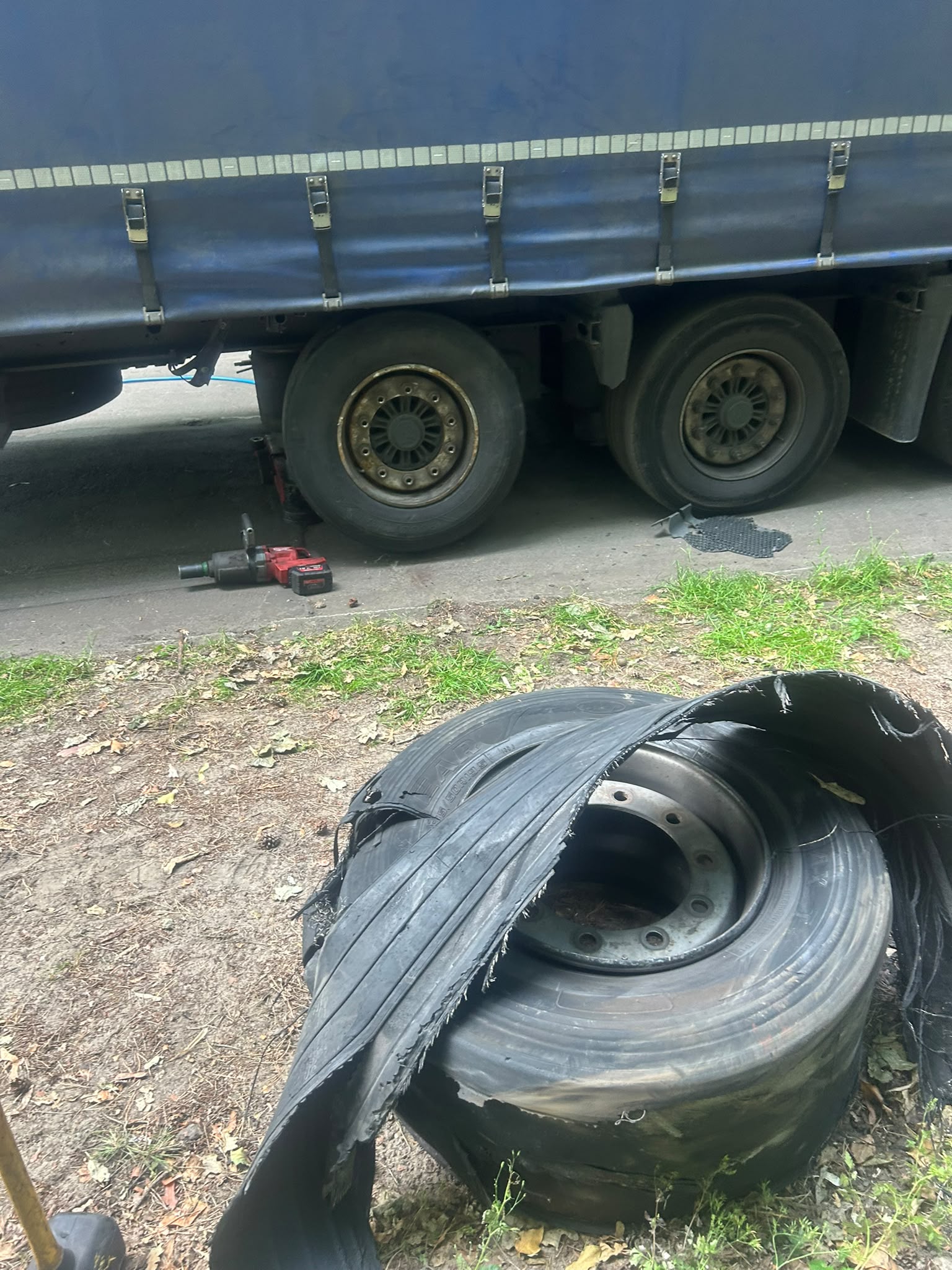
The driver felt the trailer shudder, heard the bang, and pulled onto the hard shoulder before the tyre could shred further and damage the rim or the wheel arch. That single decision saved time and money later in the day. A blowout on a loaded semi-trailer is not a minor inconvenience; at 40 tonnes, a tyre failure changes how the whole combination handles, and every extra minute on the hard shoulder is a minute of exposure to passing traffic.
This case study walks through exactly what happened on 14 July, how the truck tyre service was dispatched, why full-load tyre changes need heavier equipment than a car repair, and what the driver, haulier, and dispatch team each did to get the lorry moving again in under three hours. It also covers a subject that rarely gets the attention it deserves: axle load, overloading, and how an overloaded axle quietly destroys tyres long before a blowout ever happens.
The Emergency: A7 Near Soltau, Lüneburg Heath
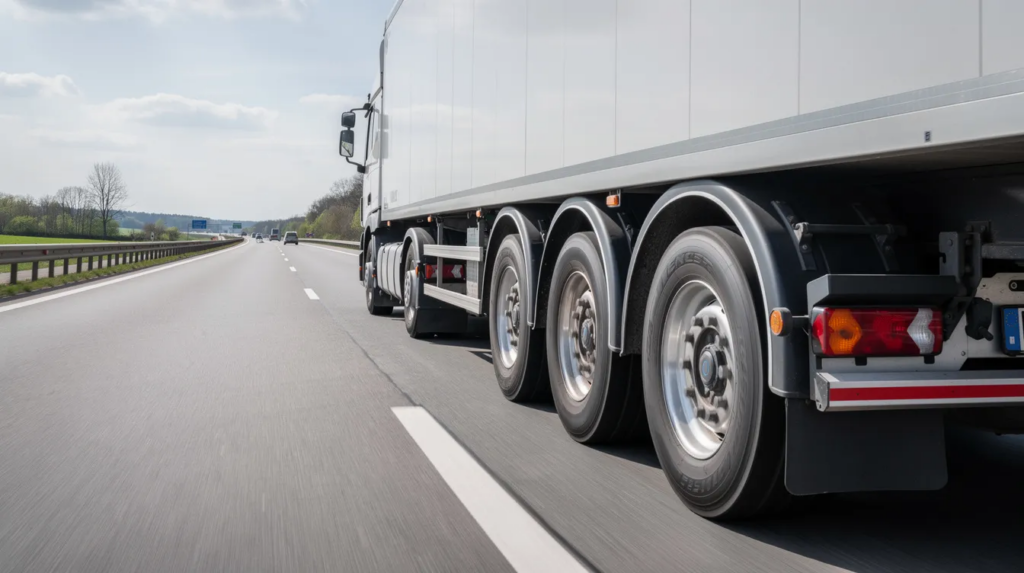
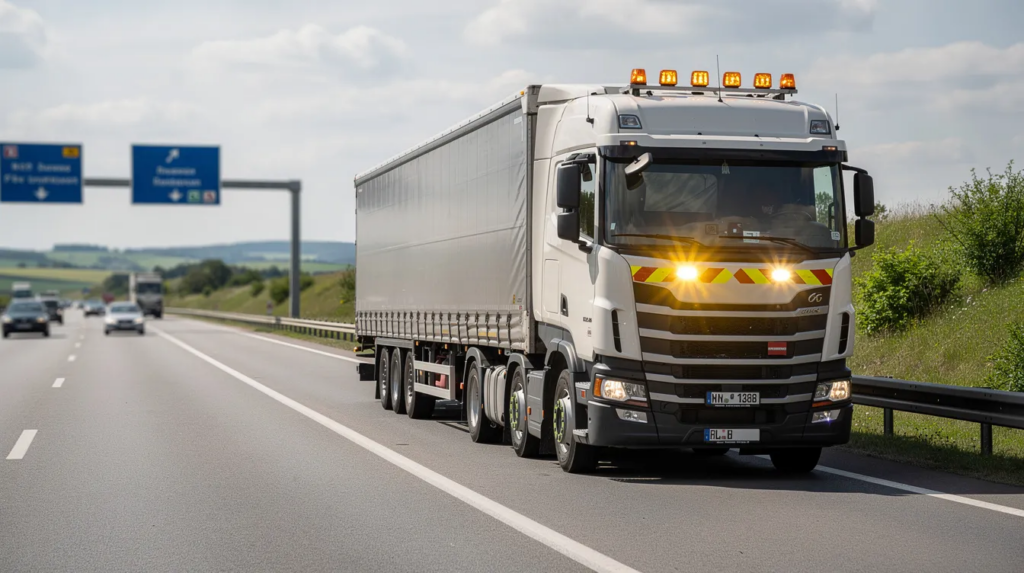
The incident happened on 14 July, during daylight hours, on the A7 near Soltau in the Lüneburg Heath region, in the direction of Hamburg. The vehicle was an articulated lorry — a tractor unit pulling a curtainsider (tautliner) semi-trailer — running at approximately 40 tonnes gross combination weight, which is the standard limit for a five-axle combination in Germany.
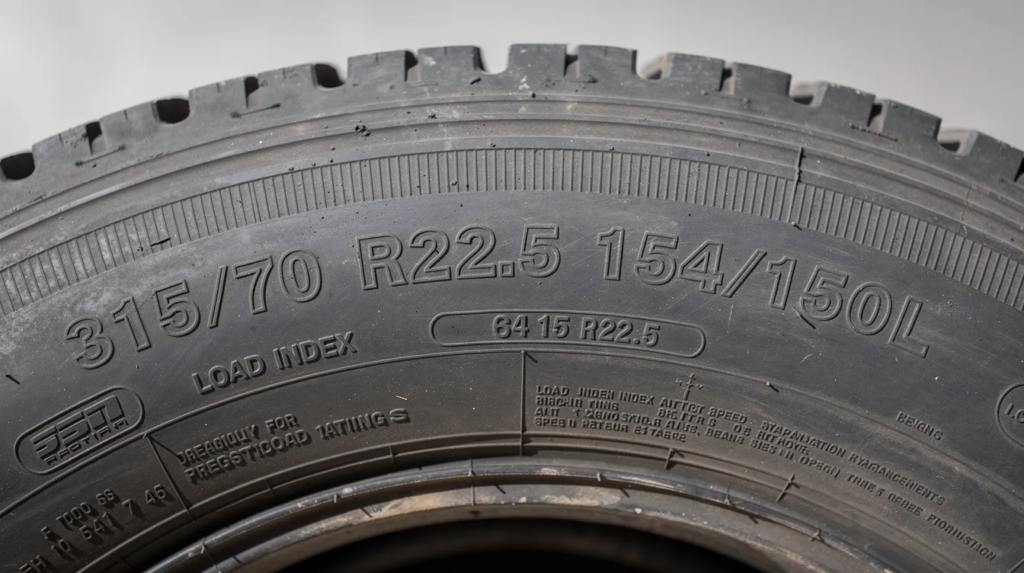
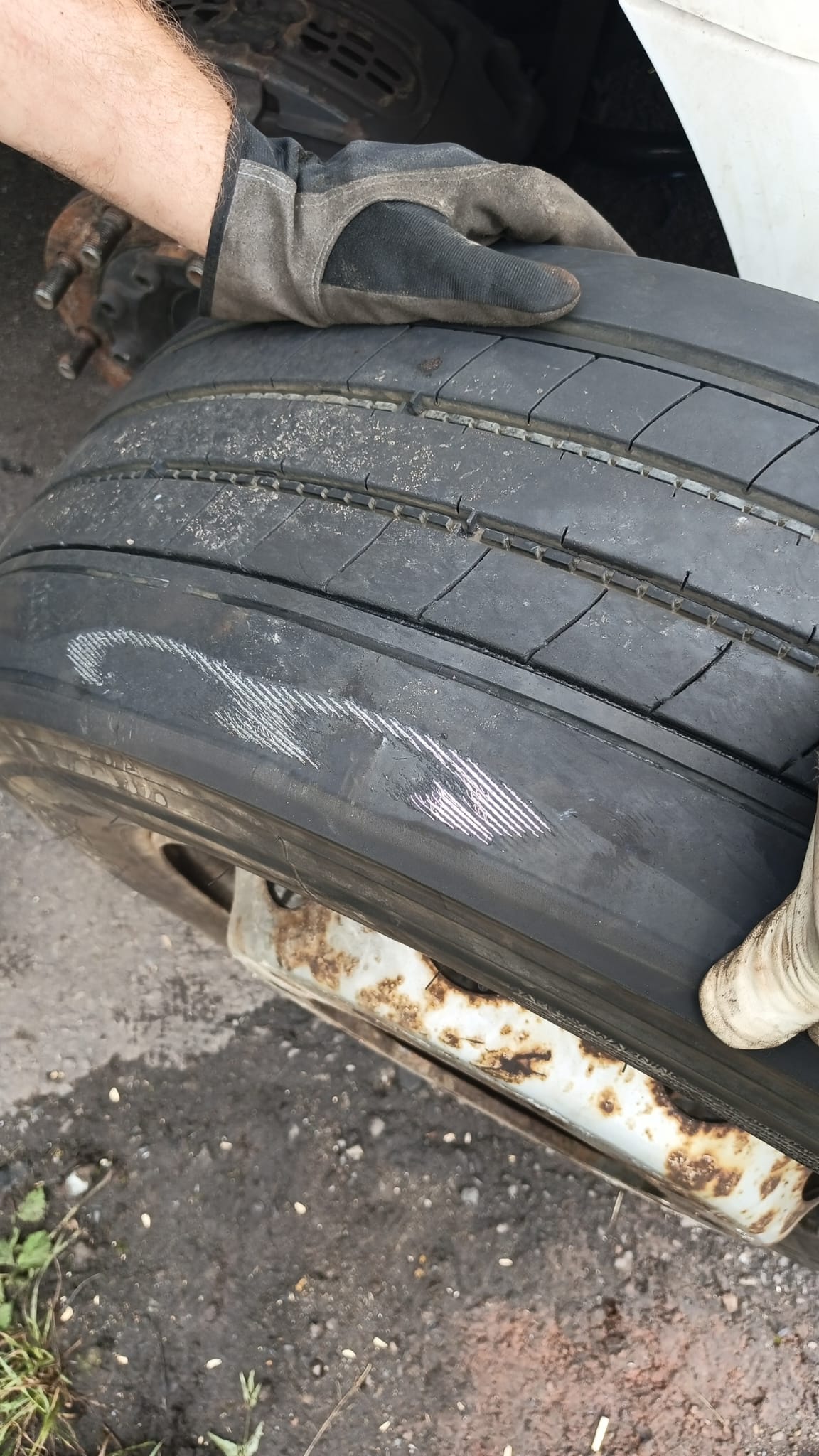
The failure was a tyre blowout on the trailer’s rear axle. The tyre in question was a 385/65 R22.5, the standard size fitted to trailer axles on heavy combinations across Europe. This size carries a high load index specifically because trailer axles routinely run near their maximum rated capacity, especially on a fully loaded curtainsider.
A blowout at full load on the motorway is a different animal from a slow puncture. The tyre can shred within seconds, throwing rubber debris across neighbouring lanes and putting sudden asymmetric load on the axle. The driver’s response — hazard lights, controlled deceleration, and positioning on the hard shoulder — is exactly what breakdown assistance dispatchers ask every driver to do first, before anything else.
How Help Was Organised
Once the driver called our dispatch line, the process moved through a defined sequence designed to cut out unnecessary delay. Every truck tyre service call follows roughly the same steps, though the details vary with location and tyre availability.
- Call received — driver reports the blowout, gives location (A7 near Soltau, direction Hamburg) and vehicle type.
- Phone diagnosis — dispatch asks for tyre size, axle position, and approximate load; this case was confirmed as 385/65 R22.5, trailer rear axle, roughly 40 t gross combination weight.
- Technician assignment — the nearest qualified technician from our regional service partner network is confirmed and dispatched with the correct tyre already in stock.
- En route — technician drives directly to the reported position on the hard shoulder, adjusting the route in real time if traffic on the A7 is heavy.
- On-site work begins — securing the scene, inspection, jacking, tyre removal, fitting, and torque check, each carried out to a set sequence (see step-by-step below).
Keeping a stock of common HGV tyre sizes — 385/65 R22.5 for trailer axles, 315/80 R22.5 for drive axles, 245/70 R19.5 for lighter rigids, 235/65 R16C for vans — on the service vehicle is what makes a same-visit repair possible. Without the correct tyre already on board, a call-out turns into a two-visit job and the truck sits far longer than 150 minutes.
Why the On-Site Situation Cannot Be Ignored
A loaded trailer axle running on damaged rubber is not a problem that waits until the next depot stop. Heavy truck tyres normally run at 8.5 to 9.5 bar, considerably higher than a car tyre’s 2.2–2.5 bar, because the carcass has to support several tonnes per axle without excessive flex. When one tyre on a dual-fitment axle blows, the remaining tyre on that side has to carry a disproportionate share of the axle load until the wheel is changed.
On a tandem or tridem trailer axle group, that imbalance does not stay isolated. Load shifts across the group as the suspension compensates, and the neighbouring tyre can overheat within minutes if the vehicle keeps moving. This is one reason our technicians always check the tyre next to the failed one, not just the damaged wheel itself — a second failure on the same axle group during the repair is a real risk if the neighbouring tyre was already under strain.
There is also a rim risk. A tyre that runs flat or partially deflated for even a short distance can damage the rim flange or bead seat, turning a straightforward tyre-only repair into a rim replacement. Getting to the vehicle quickly and stopping it moving on a damaged tyre limits that risk considerably.
Step-by-Step Repair
The technician followed a five-step sequence once on site, standard for any full-load HGV wheel change on the hard shoulder.
Step 1 — Visual check. Before touching anything, the technician assessed the damage: tyre condition, whether the rim showed visible deformation, and the state of the neighbouring tyre on the same axle.
Step 2 — Securing the scene. Warning triangle placed well back on the hard shoulder, hi-vis vest on, and the vehicle’s position on the hard shoulder confirmed as safe before any tools came out. On a motorway like the A7 with fast-moving traffic, this step is non-negotiable and takes priority over speed.
Step 3 — Removal. Wheel nuts loosened, the vehicle jacked using hydraulic equipment rated for the increased load capacity a full 40-tonne combination demands, and the damaged tyre removed from the hub.
Step 4 — Fitting. The new 385/65 R22.5 tyre was mounted and balanced before being fitted to the wheel hub, checked against the correct tyre pressure for the axle load.
Step 5 — Final check. Wheel bolts re-torqued in a star pattern, the correct sequence for even clamping force across the wheel, and a final visual and pressure check before the technician cleared the vehicle to rejoin traffic.
Full Timeline
| Time | Phase | Action |
|---|---|---|
| 13:42 | Call | Driver reports tyre blowout, dispatch takes the emergency call |
| 13:44 | Diagnosis | Phone check: tyre size 385/65 R22.5, trailer rear axle, approx. 40 t gross combination weight |
| 13:57 | Dispatch | Technician confirmed, en route (15 min after the call) |
| 14:52 | Arrival | Technician on site (55 min drive, 70 min since the call) |
| 14:52–15:02 | Securing the site | Warning triangle, hi-vis vest, hard shoulder position secured (10 min) |
| 15:02–15:12 | Inspection | Checking rim, axle, neighbouring tyre (10 min) |
| 15:12–15:27 | Jacking | Hydraulic jack with increased load capacity due to full load (15 min) |
| 15:27–15:42 | Removal | Damaged tyre removed (15 min) |
| 15:42–16:02 | Fitting | New 385/65 R22.5 tyre fitted and balanced (20 min) |
| 16:02–16:12 | Torque check | Wheel nuts re-torqued in a star pattern (10 min) |
On-site time totalled 80 minutes. From the first call to the vehicle rejoining traffic, the whole job took 150 minutes — 2 hours 30 minutes, including the 70-minute response window from call to arrival.
In wet weather or heavy holiday traffic on the A7, this response window typically stretches by 15 to 30 minutes, mainly because of slower motorway approach speeds and more cautious positioning on the hard shoulder.
Costs
| Item | Price (EUR) |
|---|---|
| Call-out | €260 |
| Labour (80 min at €120/h) | €160 |
| Tyre 385/65 R22.5 | €480 |
| Old tyre disposal | €20 |
| Full-load surcharge (heavy-duty jacking equipment) | €60 |
| TOTAL | €980 net |
Prices are net, plus VAT. Several factors move this total up or down on a real call: tyre size and brand (385/65 R22.5 sits at the upper end of trailer tyre pricing), distance the technician has to drive, time of day and weekend surcharges, and whether the neighbouring tyre also needs replacing.
Set against the alternative — a stationary lorry and driver waiting for a workshop slot or a tow — €980 looks modest. Downtime for a laden HGV, once you factor in the driver’s hours, missed delivery windows, and potential contractual penalties, is commonly estimated at €800 to €1,200 per day. A mobile truck tyre service that resolves the issue in 150 minutes on the hard shoulder, rather than after a tow to the nearest workshop, typically saves most of a full day’s downtime.
Why You Need a Professional
Changing a tyre on a fully loaded semi-trailer is not the same task as swapping a spare on a car, and attempting it without the right training or equipment carries real risk.
- Jack capacity — a full-load trailer axle needs hydraulic jacking equipment rated well above what a standard toolkit carries; the wrong jack can slip or fail under load.
- Torque accuracy — wheel bolts on an HGV need precise, evenly distributed torque in a star pattern; under- or over-torquing can lead to wheel loss at speed, one of the most serious HGV failure modes on record.
- Traffic exposure — working on the hard shoulder of a motorway like the A7 without proper hi-vis positioning and warning triangles is genuinely dangerous; professional technicians are trained in scene safety first.
- Load assessment — judging whether the neighbouring tyre or the rim has also been compromised requires experience; missing damage there risks a second breakdown within hours.
- Tyre matching — fitting the wrong load index or speed rating on a dual-fitment axle creates an imbalance that accelerates wear on both tyres.
Axle Load and Overloading: What Every Driver and Haulier Should Know
Overload is one of the most common hidden causes of tyre failure on German motorways, and it rarely gets diagnosed after the fact because the blowout looks like a simple tyre defect. This section covers what the numbers on the sidewall mean, what the legal limits are, and how overload quietly wrecks a tyre long before it fails.
Reading the Load Index on the Tyre Sidewall
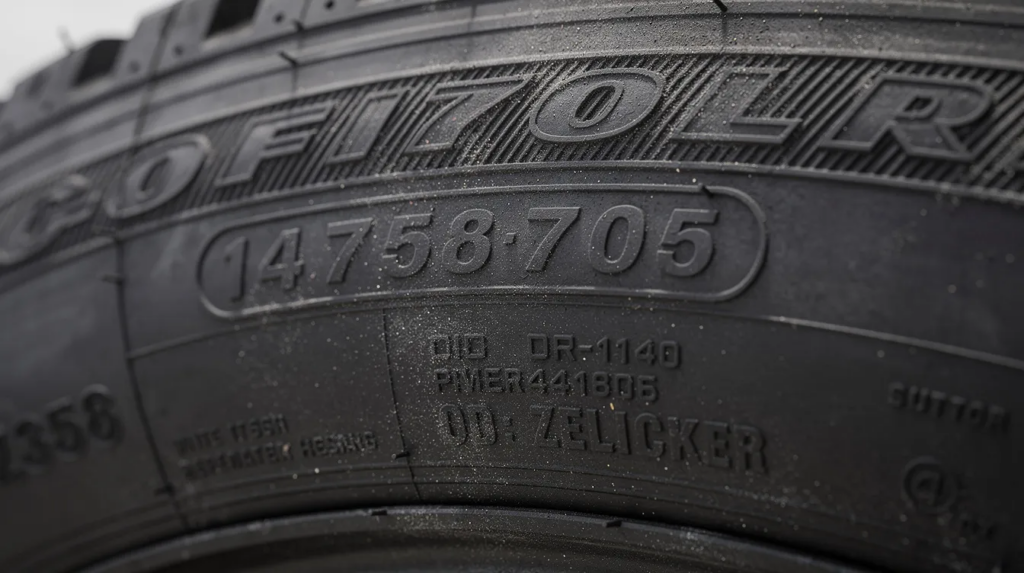
The load index on an HGV tyre sidewall is a two- or three-digit code, sometimes shown as a pair like 160/158, that tells you the maximum weight the tyre can carry at its rated speed and pressure. The first number applies to single fitment; the second, lower number applies when the tyre is run as part of a dual (twin) fitment, because two tyres sharing an axle position each carry a reduced individual share and the code reflects that reduced per-tyre allowance.
A one-minute practical check: look up the load index number against a standard tyre load index table (widely available from manufacturers such as Continental or Michelin), multiply by two for a dual-fitment axle, and compare that figure to the actual axle load, which should be stated on the vehicle’s registration documents or weighed directly. If the axle load is close to or above the tyre’s rated capacity, that tyre is running at or beyond its design limit — and heat, not sudden impact, is usually what finishes it off.
Permitted Axle Loads in Germany
German road traffic law sets clear limits on axle loads: typically 10 tonnes for a single axle, 11.5 tonnes for a drive axle, and lower stepped limits for trailer tandem and tridem axle groups depending on axle spacing. Gross combination weight for a standard five-axle articulated lorry is capped at 40 tonnes, rising to 44 tonnes for combined transport journeys involving rail or waterway legs. These figures and the underlying regulations are published by the Bundesamt für Güterverkehr and the Bundesministerium für Digitales und Verkehr, which jointly oversee enforcement and policy for heavy goods vehicle weights on German roads.
Overload Fines and Driving Bans
Fines for overloading rise in steps tied to the percentage over the permitted limit, starting from a modest sum for minor overloads and climbing sharply as the percentage increases. At a certain threshold, typically well above 20 percent overload, enforcement authorities can issue an immediate driving ban until the load is redistributed or partially unloaded on the spot. Liability is not limited to the driver — the loader and the haulier can both be held responsible if the overload originated at the point of loading rather than en route.
BAG Roadside Checks
The Bundesamt für Güterverkehr runs roadside checks using mobile weighbridges, often positioned near motorway junctions or rest areas. Inspectors look at total gross weight, individual axle loads, and load distribution, cross-checking against the vehicle’s registration documents and, where available, digital tachograph and loading records. A vehicle flagged as overloaded can be held at the checkpoint until the excess weight is removed or redistributed, which itself becomes a source of costly downtime separate from any fine.
How Overload Destroys Tyres
Overload does not usually cause an instant failure; it builds heat inside the tyre carcass over hours of driving. A tyre working beyond its design load flexes more with every rotation, and that extra flex generates heat faster than the tyre can dissipate it. The rubber compound and the internal carcass structure both degrade faster under sustained heat, cutting the tyre’s effective service life dramatically compared with a correctly loaded axle.
Pressure needs to rise with load, and this is the detail most commonly neglected. A tyre inflated for a partial load will run under-pressured once the trailer is loaded to capacity, compounding the heat problem. Checking tyre pressure against the actual load, not a fixed standard figure, is a habit that pays for itself in tyre life.
Uneven Loading as Hidden Overload
A trailer can be within its total permitted weight and still have one axle dangerously overloaded, if the cargo is distributed unevenly. This is common when heavy pallets or machinery sit too far forward in the trailer, pushing weight onto the front axle group while the rear runs comparatively light. The total weight figure on a delivery note tells you nothing about this kind of imbalance — only an axle-by-axle weight check reveals it.
What a Driver Should Do When in Doubt
Any driver unsure whether a load is correctly distributed should stop at a truck stop weighbridge and get an actual reading before continuing. It costs a few minutes and a small fee, against the risk of a fine, a driving ban, or a tyre failure at motorway speed. Drivers are also entitled to demand accurate cargo weight documentation from the loader before departure — a discrepancy between the paperwork and the actual load is grounds to query the loading before setting off.
Prevention for Hauliers
Fleet operators can cut overload-related tyre failures substantially with three measures: load control checks at the depot before dispatch, axle-load sensors fitted to trailers that give a live readout in the cab, and driver training that covers how to read a load index and recognise the signs of an overloaded or under-pressured tyre before it becomes a roadside emergency.
Typical Call-Outs We Handle Across Germany
Our truck tyre service and broader breakdown assistance network covers motorway blowouts, slow punctures discovered at a rest stop, wheel bearing and wheel hub issues, and recovery and towing when a repair on site is not possible. We handle steer axle and drive axle tyre problems on the tractor unit as well as trailer axle failures like this Soltau case, across the full range of common HGV sizes including 315/80 R22.5, 385/65 R22.5, 245/70 R19.5, and lighter 235/65 R16C fitments on vans and light commercials.
Prevention: Tips for Drivers and Fleets
- Check tread depth and tyre pressure before every long haul, not just at scheduled service intervals; German law under §36 StVZO sets minimum tread depth requirements for commercial vehicle tyres.
- Inspect the tyre carcass visually for bulges, cuts, or uneven wear that indicate misalignment or incorrect pressure.
- Confirm axle load against tyre load index before departure on any load that looks unevenly distributed.
- Keep tyre pressure matched to the actual load, adjusting for full versus partial loads rather than using one fixed figure.
- Log tyre age and mileage; even a tyre with adequate tread can be nearing the end of its safe carcass life.
Tyres and Fleet Maintenance: What Matters Long-Term
Tyre brand matters less than fit-for-purpose selection and maintenance discipline, but the major manufacturers — Michelin, Continental, Goodyear, and Bridgestone — each publish load index and pressure guidance specific to their HGV ranges, and cross-checking a fitted tyre against that data is worth the five minutes it takes. Fleet managers running mixed tyre brands across a trailer axle should be particularly careful, since carcass stiffness and load response can differ enough between manufacturers to cause uneven wear on a dual-fitment axle over time. Regular tread depth checks, correct torque on wheel bolts after every wheel change, and pressure checks tied to actual load rather than a calendar schedule together account for most of the difference between a tyre that reaches its full rated mileage and one that fails early on the motorway.
Why Choose Us
Our dispatch line runs 24/7, every day of the year, with multilingual staff able to take calls in German, English, and Polish, which matters when a driver on a German motorway is not a native speaker. We work through a vetted regional service partner network rather than a single depot, which is how a technician reached the A7 near Soltau within 70 minutes of the call. Pricing is transparent and quoted before work begins, and every call-out follows the same documented sequence of scene safety, inspection, and repair regardless of location.
FAQ
How fast can a truck tyre service reach a breakdown on the A7?
In this case, the response time from call to technician arrival was 70 minutes, covering a 55-minute drive after a 15-minute dispatch window. Response times vary with technician location, traffic, and weather, but a 60–90 minute window is typical for well-covered motorway corridors like the A7 through Lower Saxony.
Why does a full-load tyre change cost more than a standard one?
A full-load axle needs hydraulic jacking equipment rated for the extra weight, which is why a full-load surcharge of around €60 typically applies, as it did in this case. The tyre itself is also larger and more expensive than passenger or light-commercial fitments, and labour reflects the additional time needed to inspect the neighbouring tyre and axle before proceeding.
What is the correct tyre pressure for a heavy truck axle?
Heavy truck tyres typically run between 8.5 and 9.5 bar, well above car tyre pressures, because the tyre carcass has to support several tonnes per axle. The exact figure depends on the tyre’s load index and the actual axle load, so pressure should be checked against the load being carried, not a single fixed number.
Can overloading really cause a tyre blowout?
Yes, overload is one of the leading hidden causes of HGV tyre failure. A tyre working beyond its rated load index builds excess heat with every rotation, which degrades the carcass faster than normal wear and significantly shortens the tyre’s safe service life, often ending in a blowout under normal driving conditions rather than after an impact.
What should a driver do immediately after a tyre blowout on the motorway?
Signal, decelerate gradually, and get the vehicle onto the hard shoulder rather than braking hard, then place a warning triangle well back and put on a hi-vis vest before calling breakdown assistance. Staying inside the vehicle or standing on the traffic side of it while waiting is a serious risk on a fast motorway like the A7.
Is it legal to keep driving on a damaged tyre to reach the next rest area?
It is not advisable and can be illegal if the tyre is visibly damaged or under-inflated, since German regulations under §36 StVZO require tyres to meet minimum safety standards at all times while in use. Continuing to drive on a compromised tyre risks further damage to the rim and can put the neighbouring tyre on a dual-fitment axle under dangerous additional strain.
Summary
- Tyre spec: 385/65 R22.5, trailer rear axle, articulated lorry at approx. 40 t gross combination weight
- Location: A7 near Soltau, Lüneburg Heath, direction Hamburg
- Response time: 70 minutes from call to technician on site
- Total time: 150 minutes (2 hours 30 minutes), call to completion
- Cost: €980 net
- Secondary damage: none — rim, axle, and neighbouring tyre confirmed undamaged during inspection
Get Help Now
If your lorry has a tyre blowout, a breakdown, or needs recovery anywhere in Germany, call +49 160 5753826 any time, day or night. Our truck tyre service and breakdown assistance network is on call 24/7, anywhere in Germany. Find out more at www.lkwhelp24.com.
Keywords: truck tyre service | mobile truck tyre service Germany | HGV tyre blowout A7 | trailer tyre replacement | 385/65 R22.5 tyre | roadside tyre change lorry | axle load overload HGV | breakdown assistance Germany | 24/7 truck service | articulated lorry tyre service