Skip to content
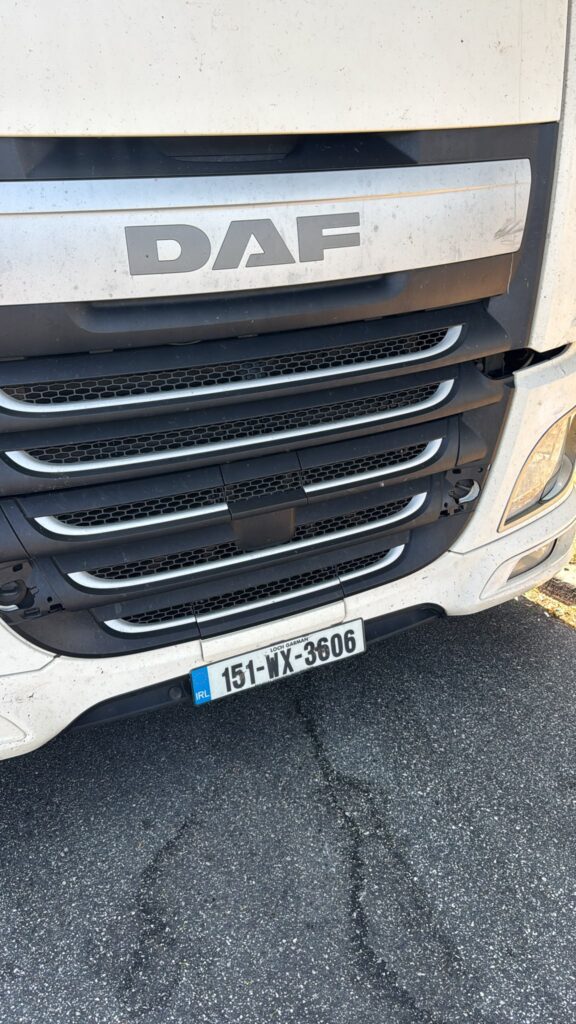
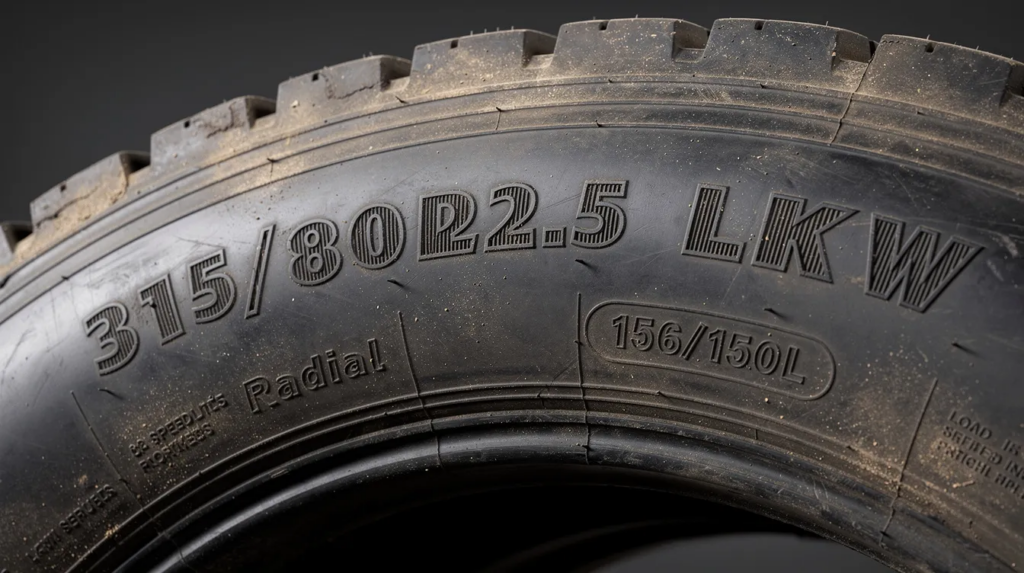
TL;DR: On 28 July 2026, a Volvo tractor unit with a semi-trailer was queued at an accident scene on the A57 near Krefeld, heading towards Cologne, while fire crews and police worked the road. The driver suspected the lorry had clipped a kerb while manoeuvring past the scene and called our breakdown line. Outcome: all ten tyres inspected, one damaged steering-axle tyre (315/80 R22.5) replaced, lorry cleared 2 hours 10 minutes after the call. Total cost: €1,080 net.
Traffic queued behind an accident is routine for professional drivers. The risk starts when the lorry itself makes contact with a kerb, crash barrier, or debris while squeezing past the scene — often without the driver being able to tell straight away how serious it is. That is exactly the situation in this case: no collision of the lorry’s own, but a reasonable suspicion of damage that had to be resolved before the journey continued.
This case deliberately covers different ground from our earlier report on keeping an emergency corridor open on the A5 near Gießen. That article was about clearing a lane for rescue vehicles. This one answers a different question that matters to every fleet manager and every driver who ends up caught inside or beside someone else’s accident: what do you actually do when your own vehicle is suddenly in the middle of it, and how do you make sure it is genuinely safe to drive away afterwards?
What Was the Emergency Situation?
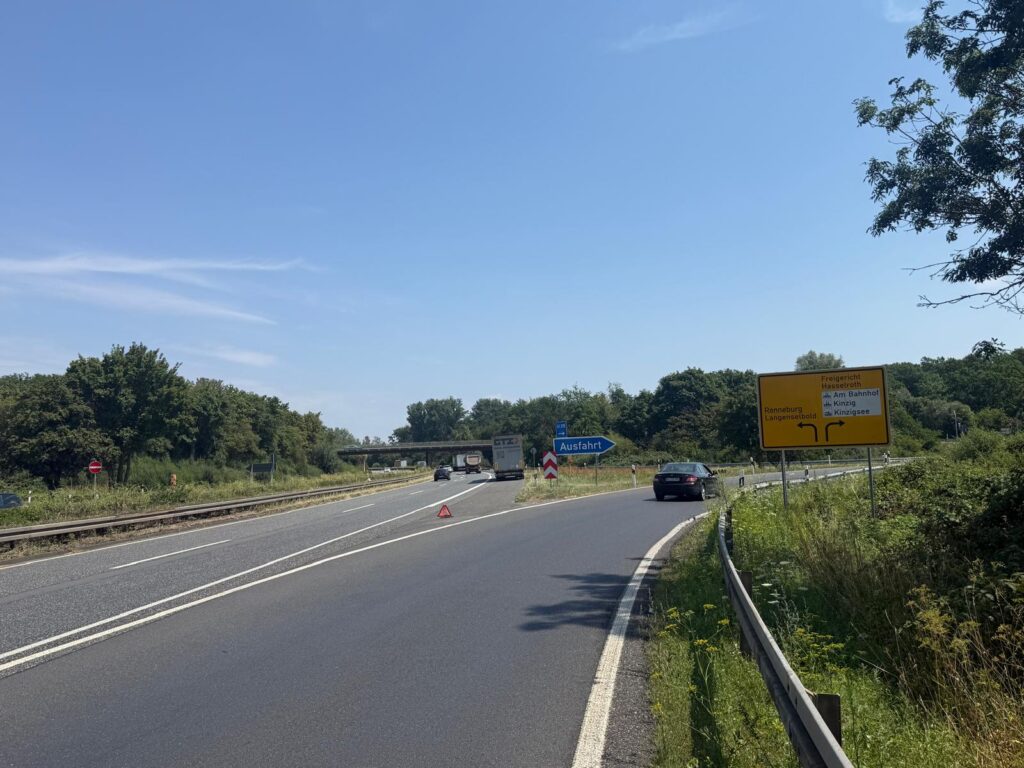
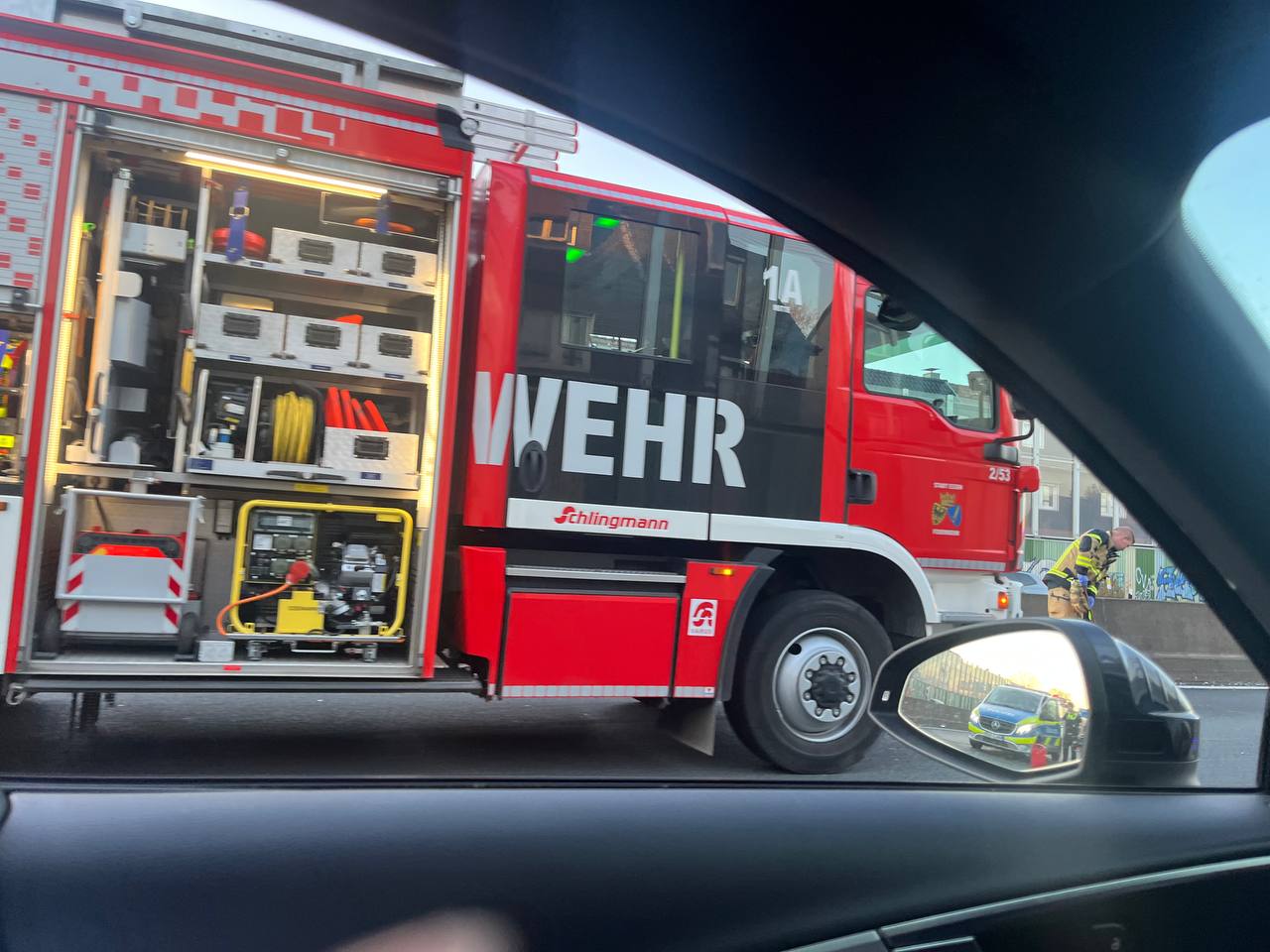
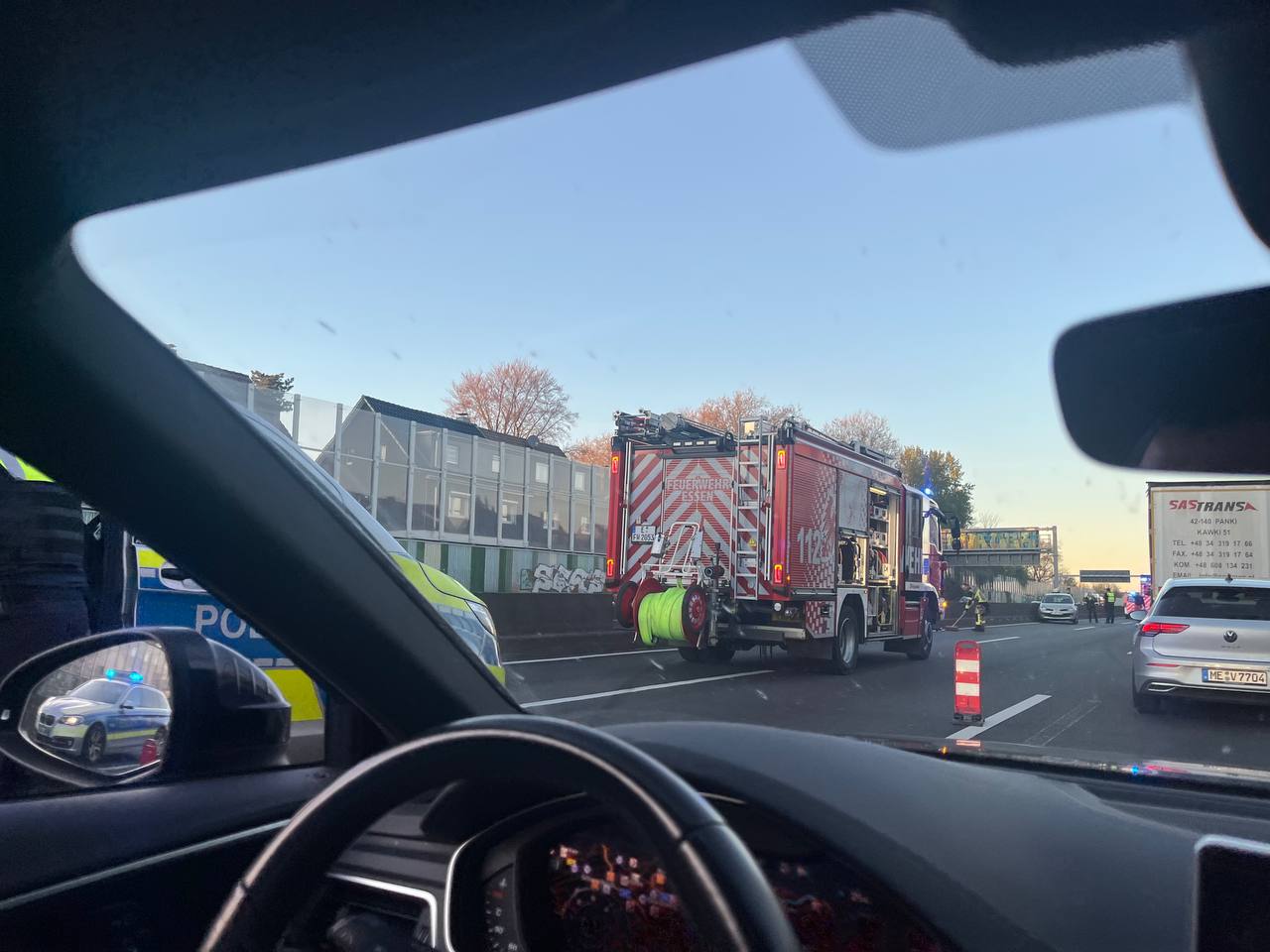
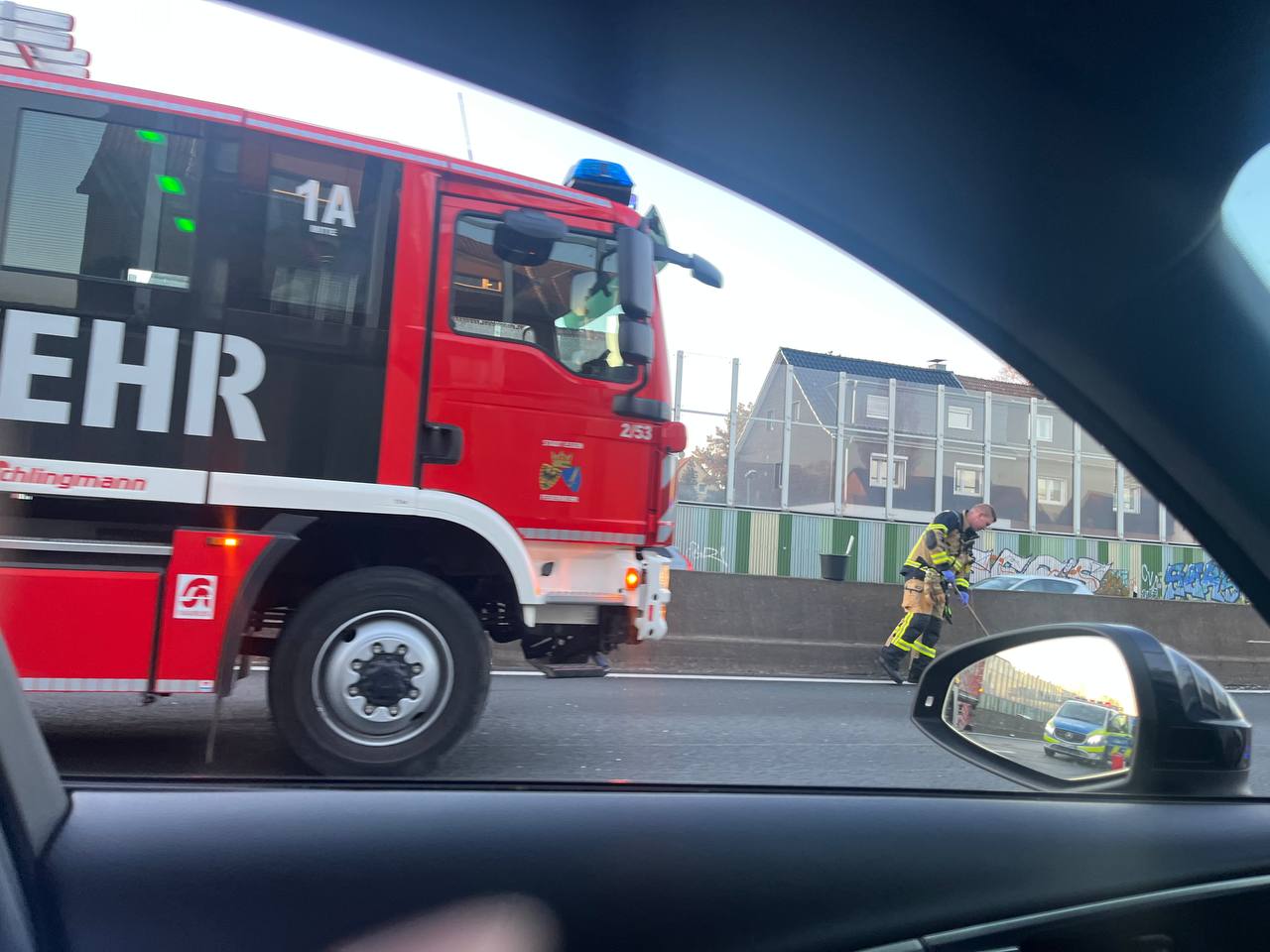
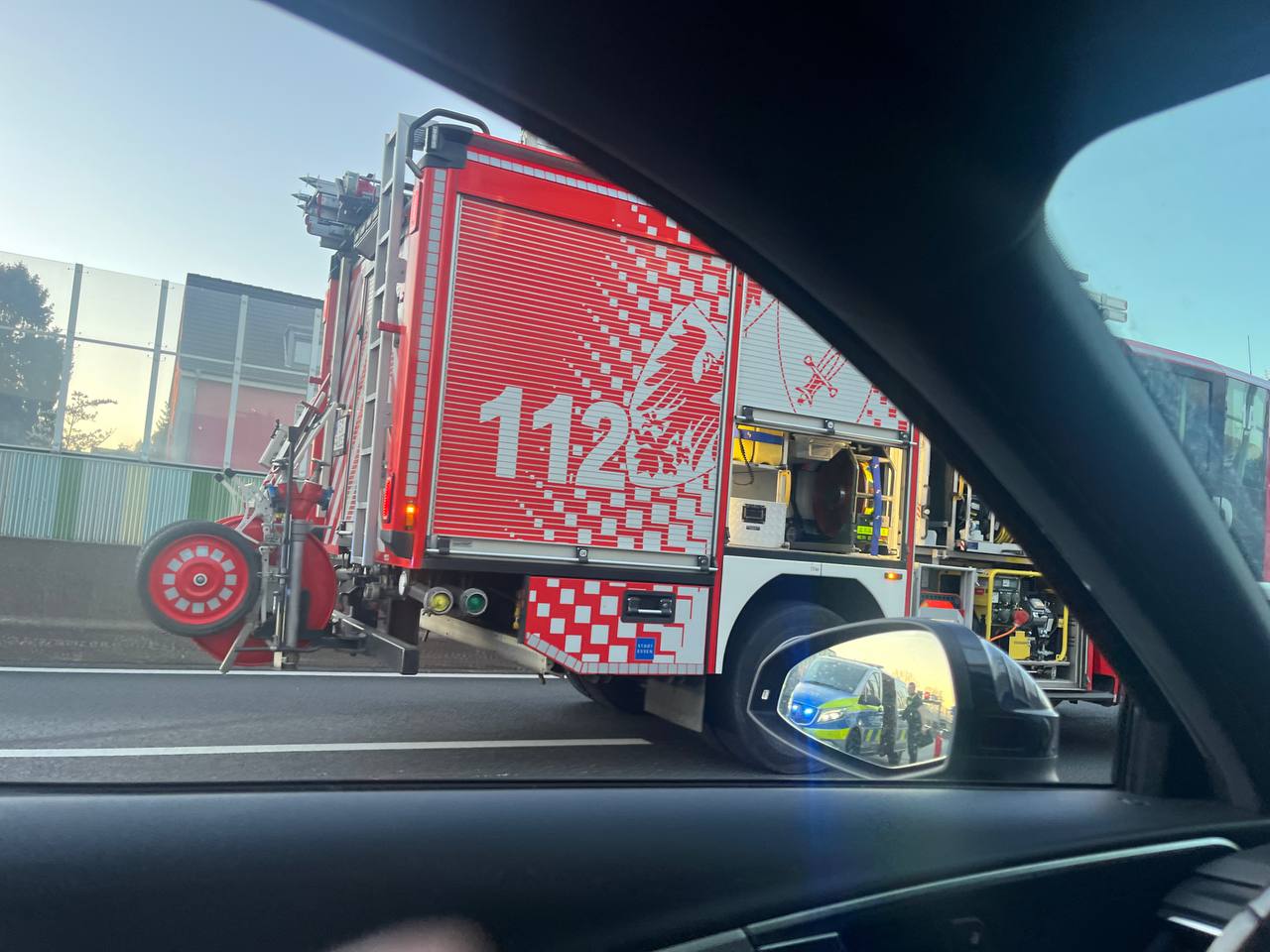
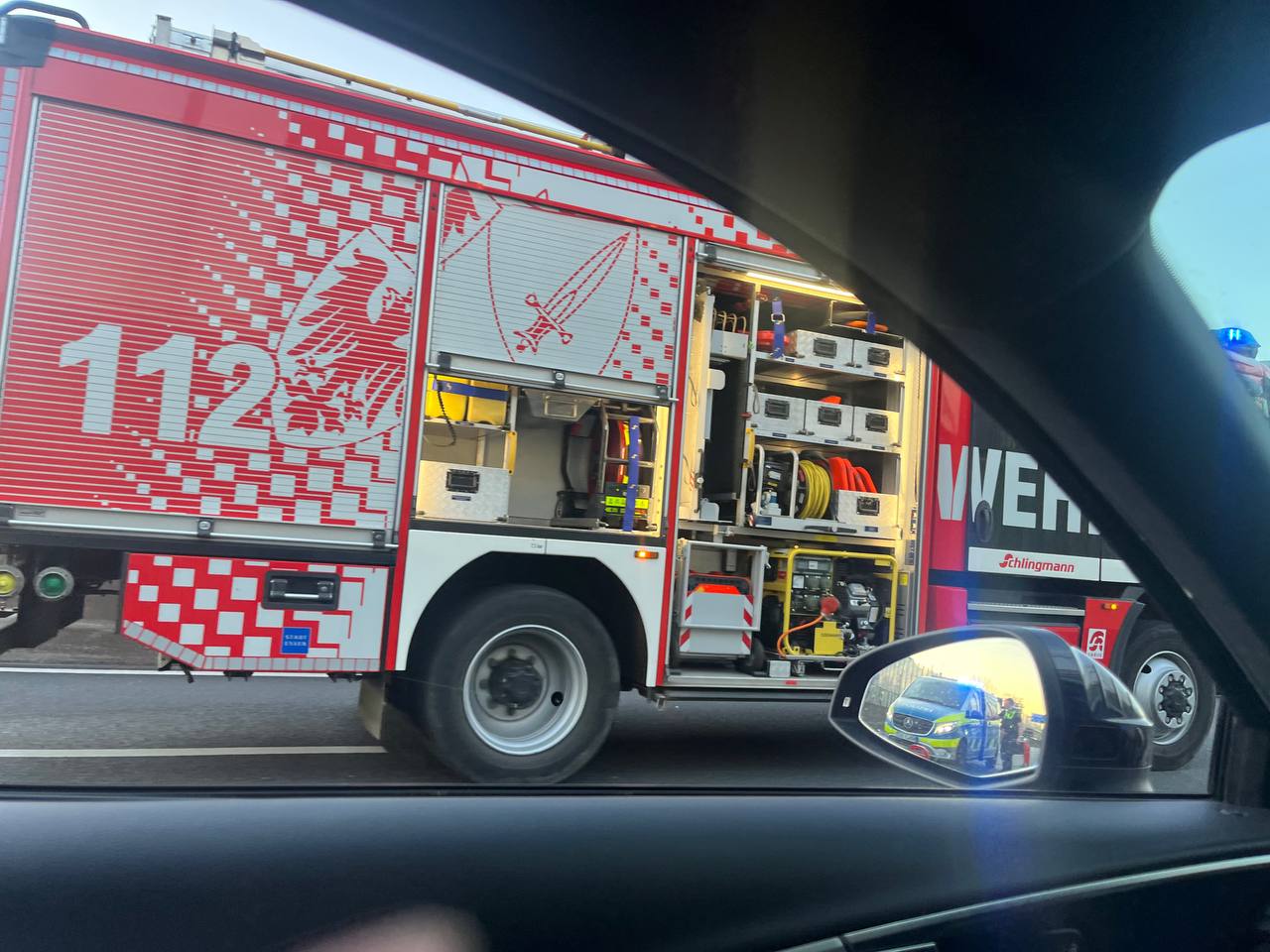
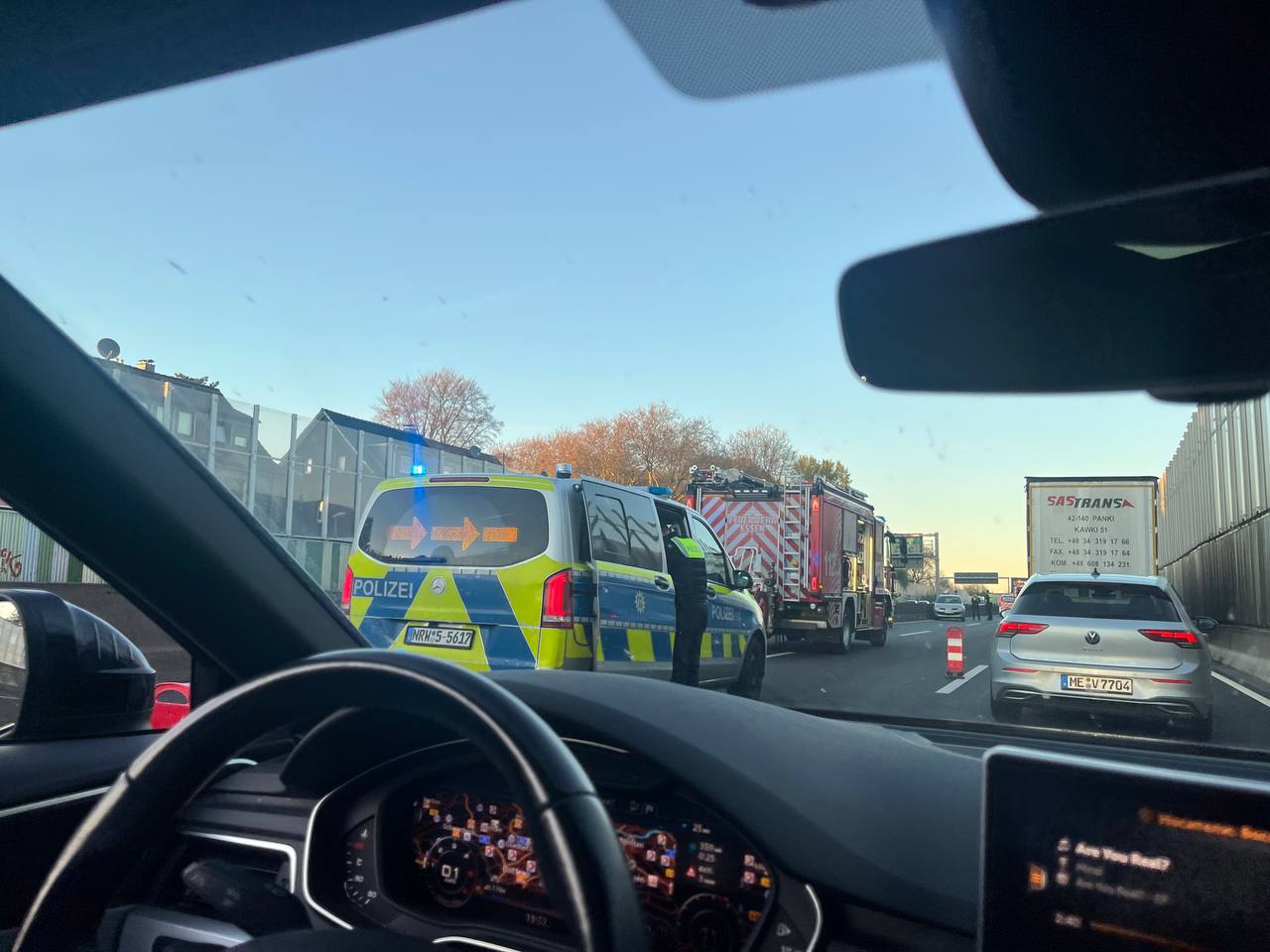
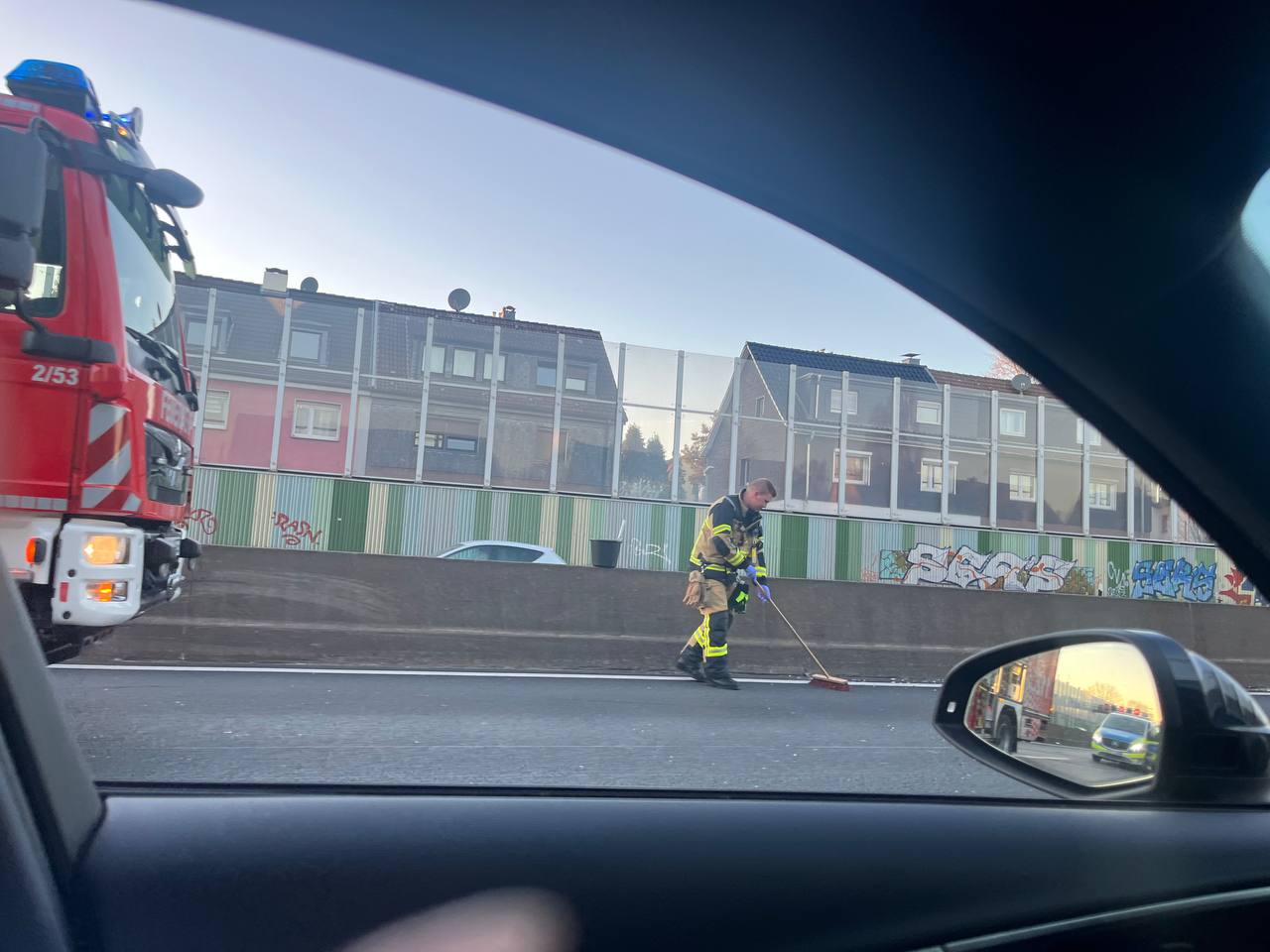
On the morning of 28 July, a road traffic accident occurred on the A57 near Krefeld, heading towards Cologne. The exact cause and the people involved are not relevant to this report — what matters is the effect on the traffic behind. Fire crews and police closed part of the carriageway, funnelled traffic onto the remaining lane, and swept debris and glass off the road surface.
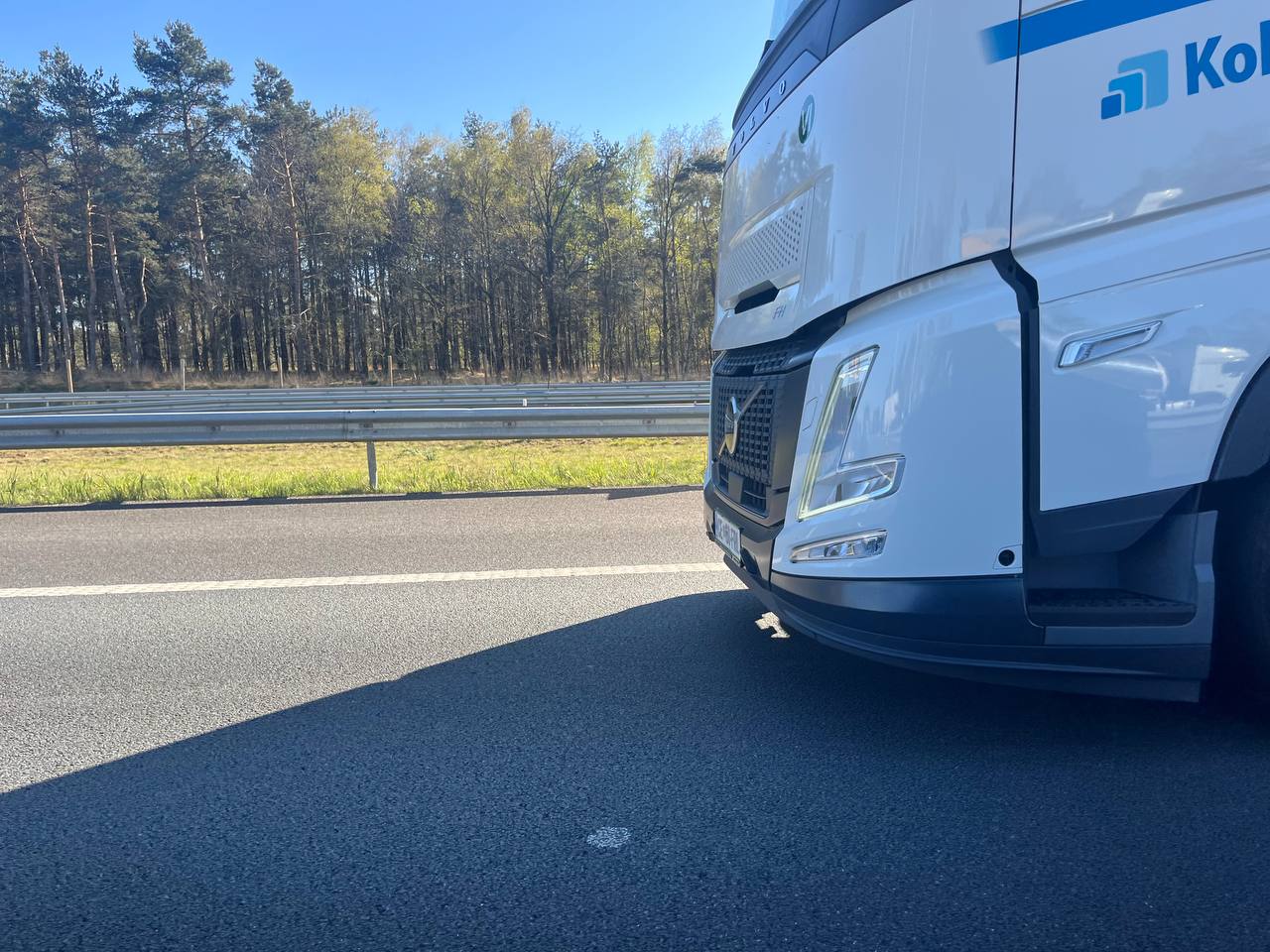
A Volvo tractor unit with a semi-trailer was in the queue of vehicles inching past the scene. While steering through the narrowed lane, the driver felt a short, hard contact on the right-hand side of the lorry — most likely with the kerb at the edge of the hard shoulder. No visible damage to the bodywork. But that is precisely the problem with a kerb strike on a lorry tyre: the carcass can tear internally without anything showing on the outside straight away.
The driver made the right call. Rather than carrying on and hoping for the best, he pulled up in a safe spot past the accident scene, secured the vehicle, and rang our emergency line.
How Did We Organise the Response?
The response in brief: Call received at 09:50, dispatch confirmed within 15 minutes, a partner workshop from the Krefeld area assigned, technician on site by 10:45 despite restricted access through the accident scene.
Our dispatch desk runs around the clock in several languages. The sequence for a call from an active accident scene:
- Confirm location and situation — motorway section, direction of travel, whether emergency services are still working the scene.
- Check the safety picture — is the lorry on the hard shoulder, are hazard lights on, is the warning triangle and hi-vis vest in use.
- Select a suitable partner workshop from the network near Krefeld and pass on the job details.
- Instruct the driver not to touch the vehicle themselves before the technician arrives, and to follow instructions from emergency services on site.
- Keep the haulier’s own dispatch office updated so their planning stays current.
The drive to the scene took longer than usual because the accident was still active — 40 minutes instead of the typical 35. The team had to cover the final stretch at walking pace, since police were funnelling traffic through a single lane.
Why Can’t You Just Drive Off After Clipping a Kerb?
A tyre can look fine on the outside and already be compromised on the inside. A sideways impact against a kerb or crash barrier often tears the carcass — the internal fabric structure that carries the tyre’s load. As long as the tyre holds pressure, it will often keep rolling without any obvious symptoms at first.
Lorry tyres run at 8.5 to 9.5 bar and carry several tonnes per axle on an artic. A weakened tyre can fail suddenly after a few dozen kilometres, or only after several hundred — often at motorway speed, exactly when the consequences of a blowout are most severe. That is why a safety check after any contact at an accident scene is not an optional extra. It is the actual job.
What Does a Technician Check After an Incident Like This?
A check after a suspected kerb strike goes further than a routine visual inspection. Our technicians work through a fixed sequence:
- Tyre sidewall — cuts, bulges, or ballooning that point to a damaged carcass.
- Rim — deformation, cracks, and how well the tyre still sits on the rim flange.
- Tyre pressure on every position — a slow pressure drop can signal a leak that is only just beginning.
- Air suspension bellows — a hard impact can also damage the air bags, which affects ride stability.
- Brake lines — chafing or damage, especially if the lorry has driven over uneven road edges or debris.
- Axle geometry — a sideways knock can shift the tracking, leading to uneven tyre wear and weaker braking.
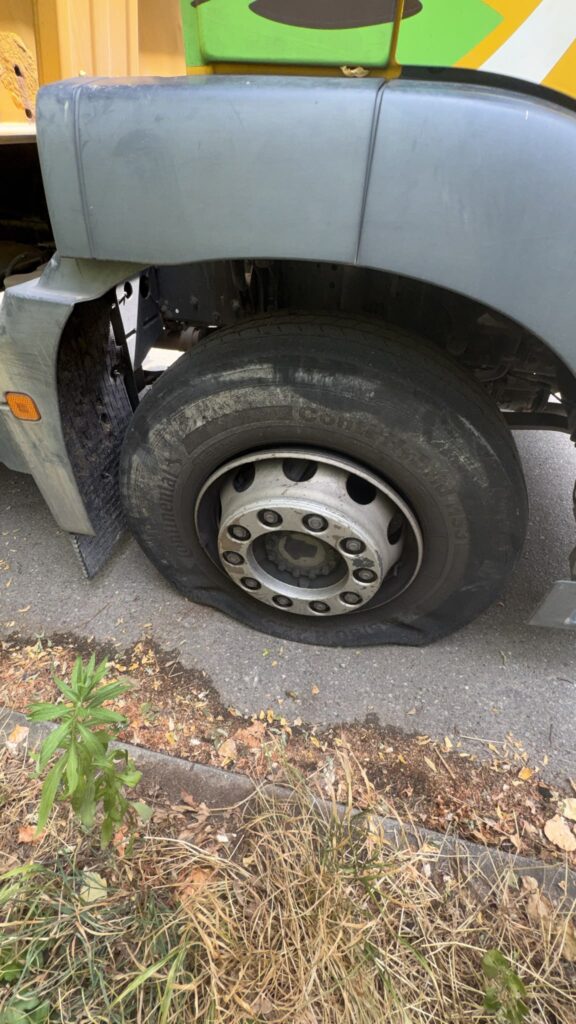
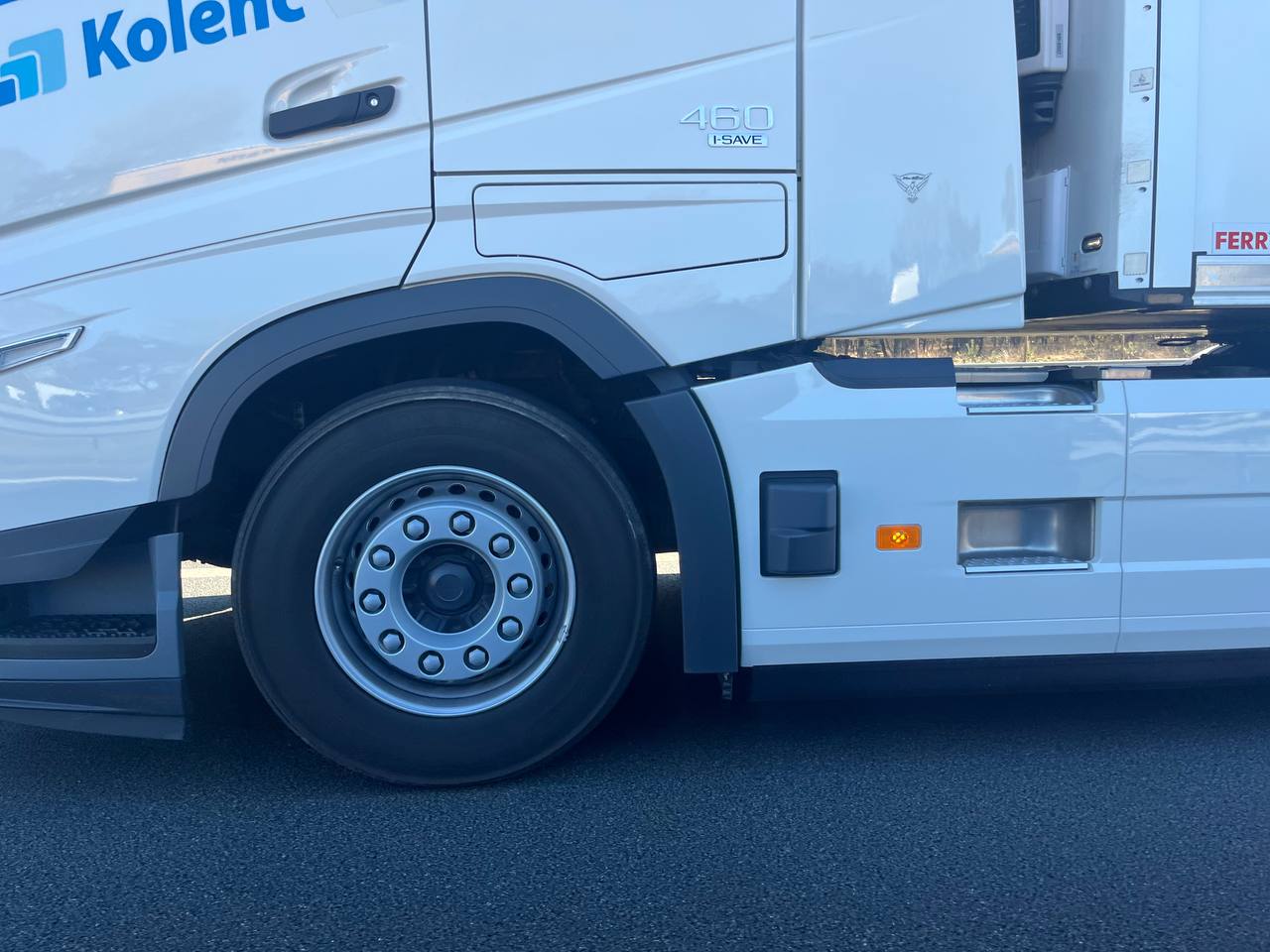
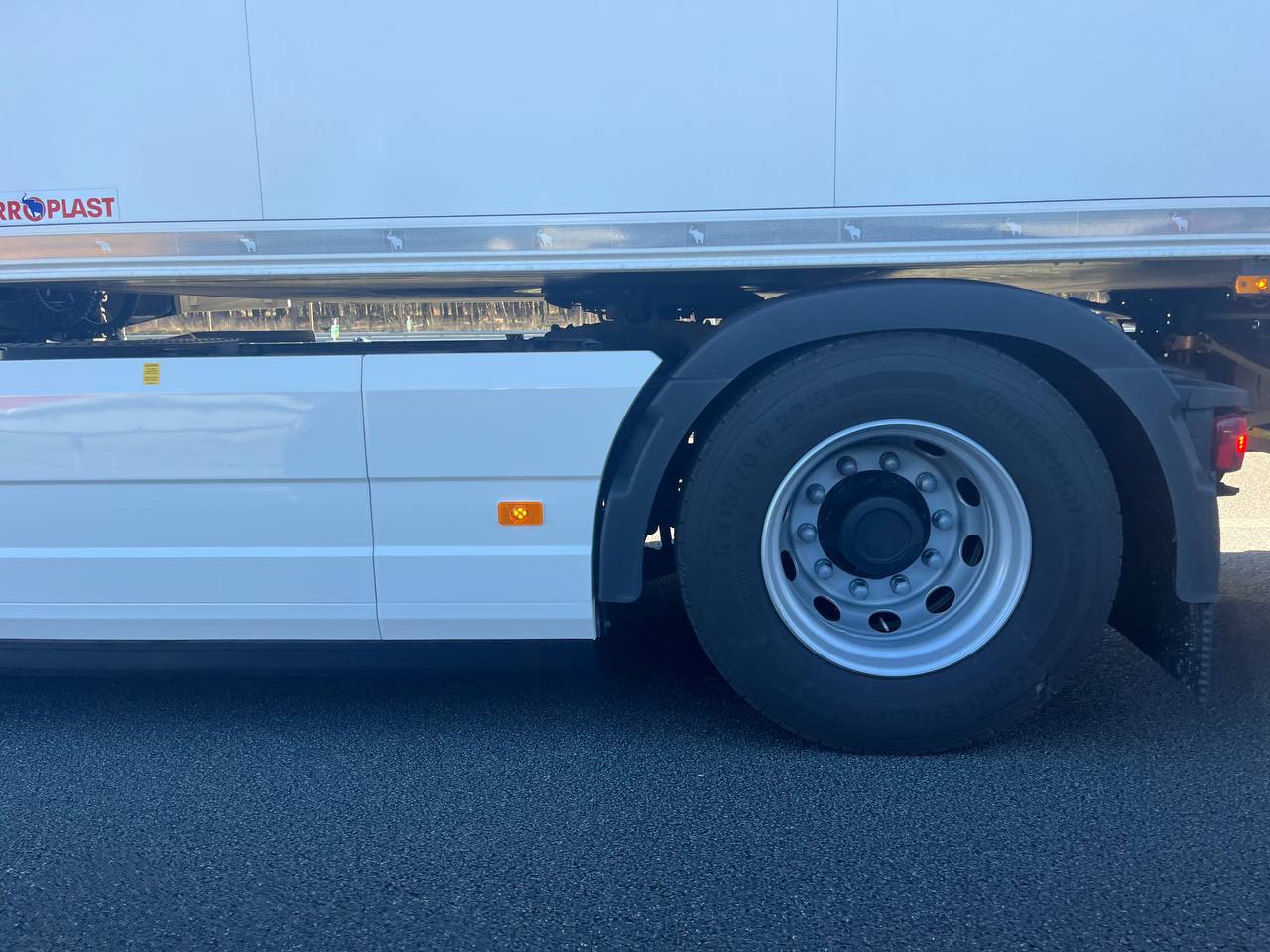
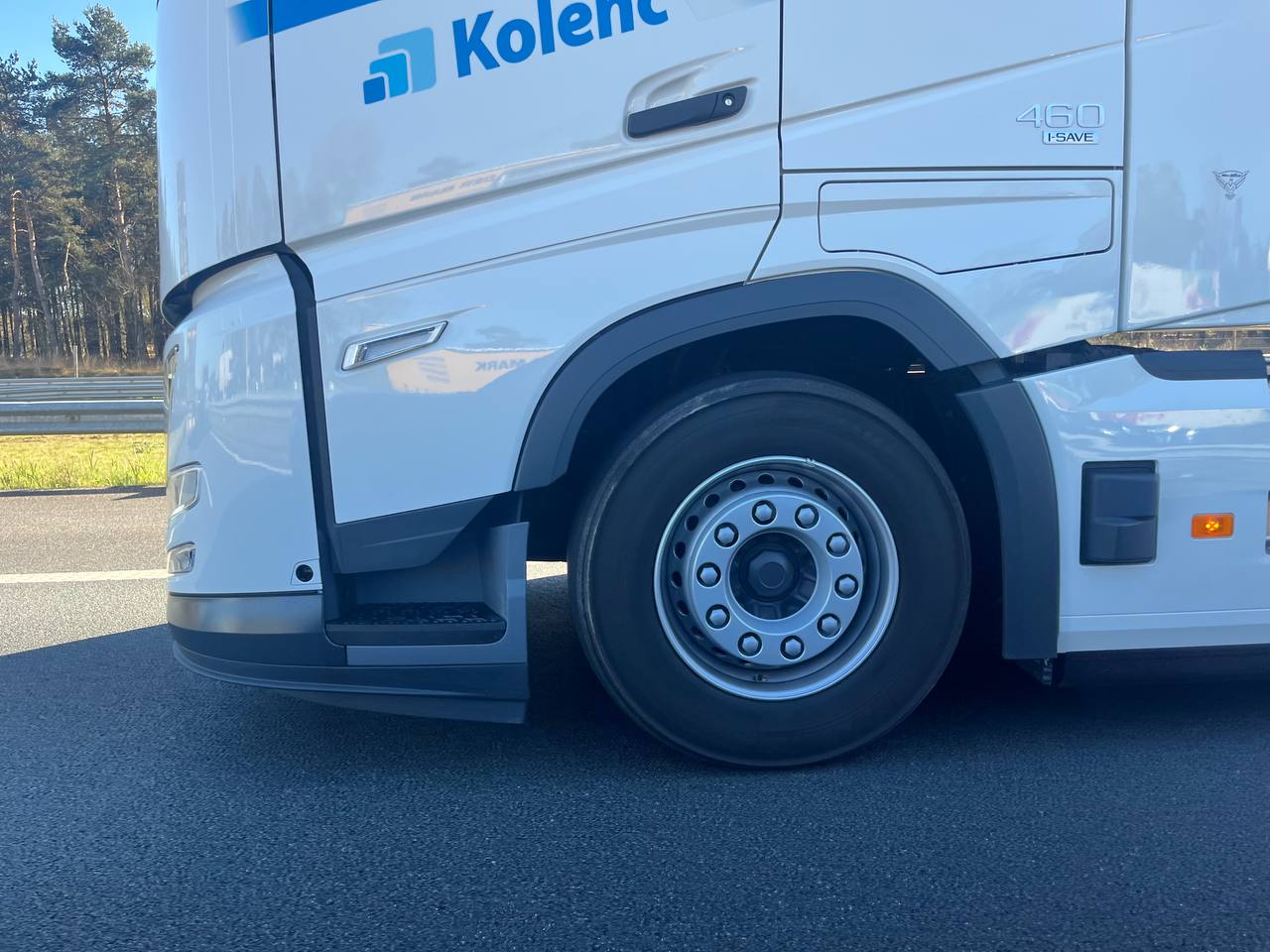
At this job, nine tyres came back clean. The right-hand steering-axle tyre showed carcass damage at the sidewall edge — a clear sign of contact with a sharp edge, matching the driver’s account. That tyre had to be replaced before the lorry could continue.
The Tyre Replacement, Step by Step
- Visual inspection and diagnosis — all ten tyres on the artic checked, damage on the right steering-axle tyre located and documented.
- Securing the work area — warning triangle, hazard beacons, and hi-vis in place, lorry additionally chocked against rolling.
- Removal — the damaged 315/80 R22.5 tyre taken off the steering axle.
- Fitting the replacement — a new 315/80 R22.5 tyre fitted, balanced, and torqued to the manufacturer’s specification.
- Final check — torque verified in a star pattern, pressure checked on every position, static brake test carried out as a stand-in for a road test on the closed lane.
Actual working time for diagnosis and the tyre change came to 70 minutes — longer than a straightforward tyre swap, because the full safety inspection of every axle and tyre had to happen first.
Full Timeline
| Time | Phase | Action |
|---|---|---|
| 09:50 | Call received | Driver contacts the emergency line |
| 09:50–10:05 | Dispatch | Location confirmed, partner workshop from Krefeld assigned |
| 10:05–10:45 | Drive to scene | 40 minutes, slowed by the still-active accident |
| 10:45–11:10 | Diagnosis | Visual check of all ten tyres, axles, air suspension, brake lines |
| 11:10–11:50 | Tyre replacement | Removal, fitting, balancing of the 315/80 R22.5 tyre |
| 11:50–12:00 | Final check | Torque check, pressure check, lorry cleared to leave |
Total time from call to clearance: 2 hours 10 minutes.
What Did the Job Cost?
| Item | Price (EUR, net) |
|---|---|
| Call-out fee | 240 |
| Safety check after accident scene (10 tyres, axles, brake system) | 150 |
| Lorry tyre 315/80 R22.5 including fitting & balancing | 540 |
| Labour on site (diagnosis + replacement, 70 min) | 130 |
| Old tyre disposal | 20 |
| Total | 1,080 |
All prices are net, plus statutory VAT. The figure sits towards the upper end of the usual range for a motorway lorry tyre job (€750–1,400), because a full vehicle safety check was needed on top of the tyre replacement. For comparison, a stationary artic typically costs the haulier between €800 and €1,200 per day in lost running time alone, before any late-delivery penalties.
What Should a Driver Actually Do After a Lorry Accident?
Anyone involved in, or caught next to, a collision secures the scene first, calls the emergency services, and does not move the vehicle without permission from the police. That holds even when the contact seems trivial.
The correct order in practice:
- Switch on hazard lights, put on a hi-vis vest, and secure the vehicle so no one else is put at risk.
- Dial the emergency number as soon as anyone could be injured or the carriageway is blocked.
- Place a warning triangle at a safe distance — typically 100 to 150 metres back on a motorway.
- Do not move the vehicle until the police have cleared the scene, even after minor contact.
- Only once cleared: document the damage, then contact the insurer and your own dispatch office.
Why Can’t You Just Drive Off, Even After Minor Contact?
Because leaving the scene of an accident without exchanging details is a criminal offence in Germany, not a fine. Unfallflucht under § 142 of the German Criminal Code carries a fine or up to three years’ imprisonment, and usually a driving ban on top. For professional drivers there is a further consequence: without a properly recorded accident, insurers often refuse to cover the claim, leaving the haulier to absorb the cost.
Even a seemingly harmless clip of a kerb or barrier counts as an accident in the legal sense once there is a possibility of damage. If in doubt, report it — reporting one incident too many is far cheaper than the one you should have reported and didn’t.
What Documentation Actually Matters After an Accident?
Solid documentation is often what decides whether an insurer pays out cleanly. Worth capturing:
- A wide shot of the whole scene with all vehicles involved.
- Close-ups of every mark, including anything that looks like a minor scuff.
- The position of the vehicles relative to each other, from more than one angle.
- Skid marks, debris, and road markings.
- Number plates and insurance details for everyone involved.
- For minor damage with no dispute about what happened, the standard European Accident Statement covers most of what an insurer needs.
If there is any doubt about fault, or the damage is significant, it is worth having the police carry out the official record rather than relying on a private exchange of details.
Why Are Hidden Tyre Faults After a Side Impact So Dangerous?
A sideways knock can damage a tyre’s carcass from the inside without the tread ever looking wrong. The internal fabric tears locally; the tyre keeps its shape and pressure at first, but loses structural strength.
This kind of damage often only shows up hundreds of kilometres later — sometimes as a bulge on the sidewall, but just as often as a sudden blowout at motorway speed. After any contact with a kerb, barrier, or debris, a targeted sidewall check belongs on the checklist as standard, not as an extra precaution.
How Does Standing Time at a Closed Accident Scene Count?
Time stuck at a closed accident scene counts as working time for a professional driver, not automatically as a rest break — the driver has to stay with the vehicle and cannot log it as rest. The digital tachograph records the interruption regardless; what matters is that the driver selects the correct activity setting for a genuine forced stop rather than leaving it as driving time.
For longer delays at accident scenes or full closures, it is worth checking remaining driving time against the driving and rest time rules. A driver pushed close to the daily limit by a long queue is usually better off taking the scheduled rest early rather than trying to make up distance once the road reopens.
How Does Coordination With the Haulier Work When Access Is Restricted?
At an active accident scene, police and fire crews decide who can approach the vehicle and when — our technicians included. In this case, the final approach had to be made at walking pace through a single open lane, coordinated directly with the officers managing traffic.
Throughout, we stayed in contact with the haulier’s own dispatch office, flagging the likely delay and, once diagnosis was complete, passing on an early read on the damage and expected repair time. That gives a fleet manager the chance to reroute a load or push back a delivery slot before the lorry is even back on the road.
Why Use a Professional Instead of Handling It Yourself?
Changing a tyre on an artic on the hard shoulder looks simple. It carries real risks:
- Wheel nuts tightened without a calibrated torque wrench — too loose and a wheel can work free, too tight and the studs can snap under load.
- No proper protection for the work area on a live motorway — drivers who work on their own vehicle on the hard shoulder are among the most exposed road users there are.
- No spare tyre on board in the right size and load rating.
- No tools to safely break down and remount a 315/80 R22.5 tyre.
- Follow-on damage to the rim, air suspension, or brake lines missed entirely, when it should be checked as standard after any contact event.
What Other Situations Do We Get Called Out For?
Alongside post-accident safety checks, our day-to-day work includes:
- Tyre blowouts on the motorway while driving.
- Tyre damage after hitting potholes or uneven road edges.
- Sudden pressure loss from nails or sharp debris.
- Pre-trip tyre checks when wear is already visible.
- Diagnosing unusual driving noises after a kerb strike.
How Can Fleets Prevent This Kind of Incident?
A handful of fixed routines cut the risk noticeably:
- Check tyre pressure and tread depth regularly, not only at the annual inspection.
- Train drivers to stop immediately after any unusual noise or contact event, rather than carrying on and hoping.
- Keep a 24-hour breakdown number in the cab at all times.
- Log tyre brand and tread pattern so a matching replacement can be sourced quickly in an emergency.
- Make a visual inspection mandatory after any reported contact, even where no damage is visible.
How Much Does the Right Tyre Choice Matter for Articulated Lorries?
Tyre choice directly affects how much abuse a lorry can absorb from a kerb or edge contact before something fails. Manufacturers such as Continental, Michelin, and Goodyear build reinforced carcass constructions for tractor units that handle sideways loading far better than budget tyres with a weak sidewall. Bridgestone also produces reinforced sidewall constructions aimed specifically at long-haul use. For fleets that regularly work building sites, tight urban kerbs, or poorly maintained roads, investing in higher-grade tyres pays off over time through fewer failures and more predictable downtime.
Position on the vehicle matters as much as brand. Damage on a steering-axle tyre affects handling precision far more than equivalent damage on a drive-axle or trailer tyre, which is why technicians pay particular attention to the steering axle during any post-incident safety check.
Frequently Asked Questions About Safety Checks After an Accident Scene
Do I need a tyre check after every kerb strike?
Yes, after any contact with a raised edge or debris that you can actually feel. Carcass damage is often invisible from the outside and can cause a blowout hundreds of kilometres later.
What does a safety check with a tyre replacement cost on the motorway?
In this job, the total came to €1,080 net for the call-out, a full safety inspection, and one 315/80 R22.5 tyre replacement. A straightforward tyre change without the extra diagnosis usually runs €750 to €1,400.
How long does a post-accident safety check take?
On this job, 25 minutes to visually inspect all ten tyres, the axles, air suspension, and brake lines. Any repair work needed comes on top of that.
Do I have to call the police for a minor kerb strike?
For property damage only, with no dispute about what happened, a European Accident Statement is often enough. If fault is unclear or the damage looks significant, get the police to record it officially.
Does time stuck at an accident scene count as driving time?
No, it counts as an interruption that has to be logged separately on the tachograph. For long delays, it is worth checking whether to bring the scheduled rest break forward.
Who pays for the tyre if the damage was caused by someone else?
That is settled through the insurer based on the accident documentation. The haulier or driver usually covers the immediate cost of getting the lorry roadworthy again, then claims it back once liability is established.
Summary
- Location: A57 near Krefeld, direction Cologne.
- Vehicle: Volvo tractor unit with semi-trailer.
- Cause: Suspected kerb contact while manoeuvring past an accident scene secured by fire crews and police.
- Response time: 55 minutes from call to the start of on-site diagnosis.
- Total time: 2 hours 10 minutes from call to clearance.
- Damage found: Carcass damage on the right steering-axle tyre, 315/80 R22.5; nine other tyres clean.
- Cost: €1,080 net, plus VAT.
- Follow-on damage: none, because the compromised tyre was caught and replaced before the journey continued.
Get Help Now
If your lorry has ended up caught inside an accident scene, or you suspect contact with a kerb or debris: secure the vehicle, do not drive on, call us. We are available around the clock on +49 160 5753826 or at www.lkwhelp24.com. Emergency breakdown, tyre service, and post-incident safety checks — 24/7, across all of Germany.
More services: Towing service · Tyre service · Truck workshop · Mobile truck service · Contact
Keywords: mobile truck tyre service | post-accident lorry safety check | tyre replacement A57 Krefeld | artic tyre blowout motorway | truck breakdown assistance Germany | tyre carcass damage
Related Articles
- Truck Tire Service Near Me: How LKWHelp24 Got a Semi-Truck Moving in 90 Minutes on the A43 Autobahn Near Dortmund
- Truck Tire Service Near Me: How We Got a DAF Artic Back on the Road in 2 Hours After a Tyre Blowout on the Autobahn Near Hof
- Truck Tyre Service for Blowout and Rim Damage on the Motorway near Trier: Complete Solution in Under 2 Hours
- Winter Tyres for HGVs in Germany – Legal Requirements, Safety & Service by LKWHelp24