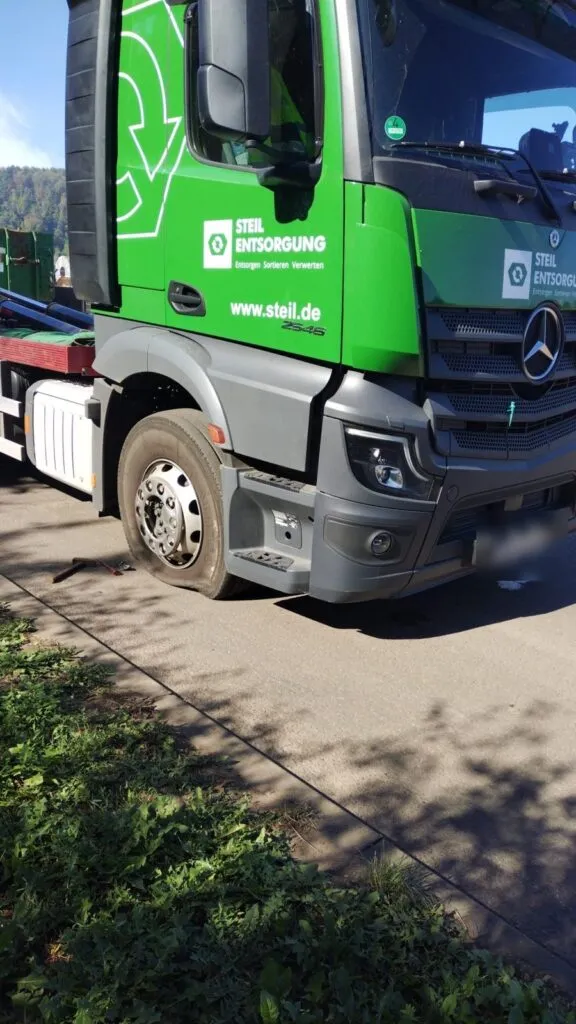
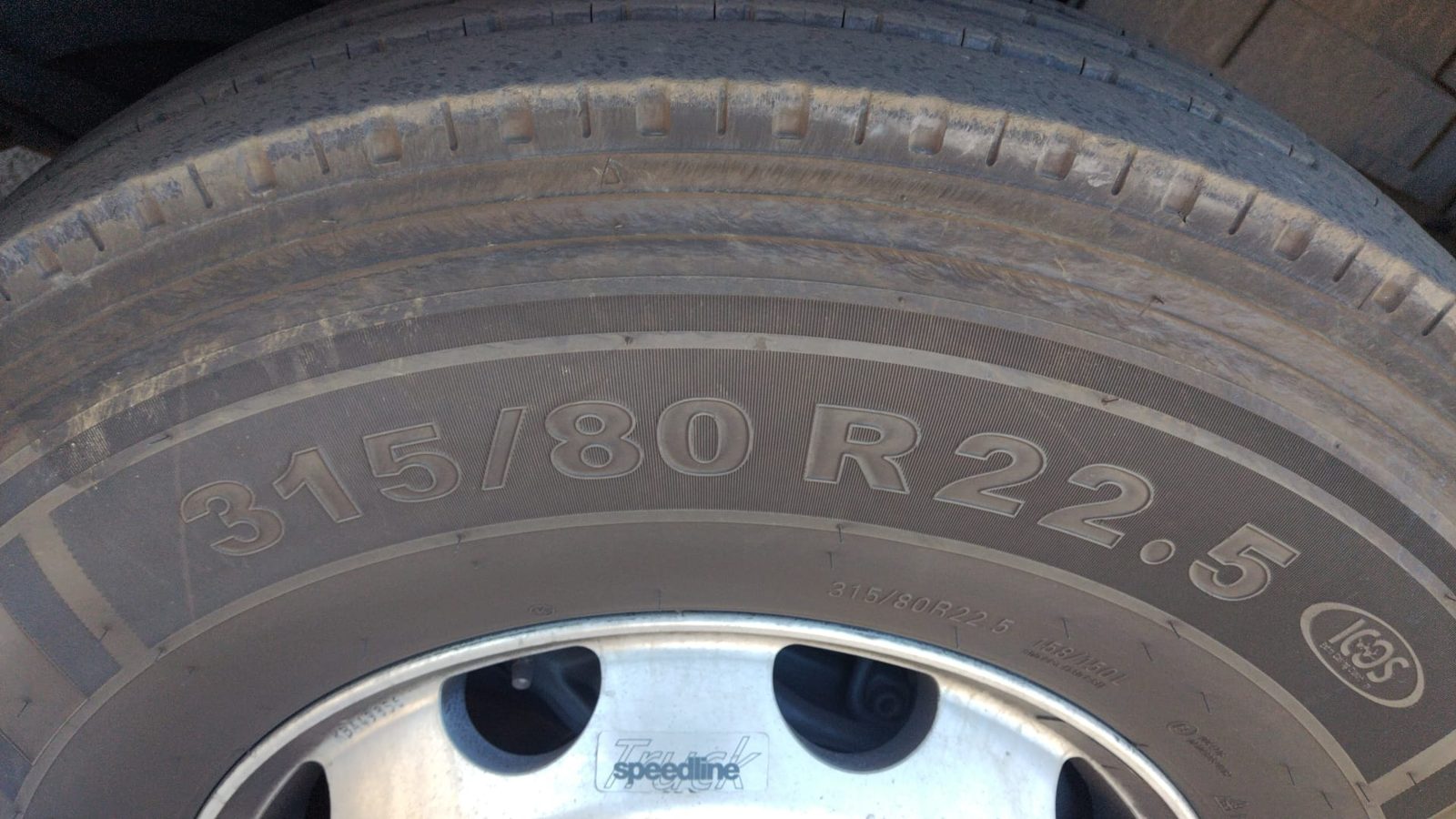
When a steer-axle tyre fails on a commercial vehicle, the consequences go far beyond a simple puncture. In this real-life case, a refuse collection truck with a 315/80 R22.5 tyre on its front axle suffered a catastrophic blowout due to a sharp metal fragment embedded in the shoulder zone. The incident occurred on a country road near Kassel, just off the A7/A44 junction, where the vehicle had to be pulled over to a narrow verge with limited visibility and no hard shoulder. Immediate response was critical, not only for safety but also to prevent costly downtime. This is a detailed breakdown of how LKWHelp24 mobilised its nationwide network to resolve the issue on-site in 130 minutes, from first call to full return to service.
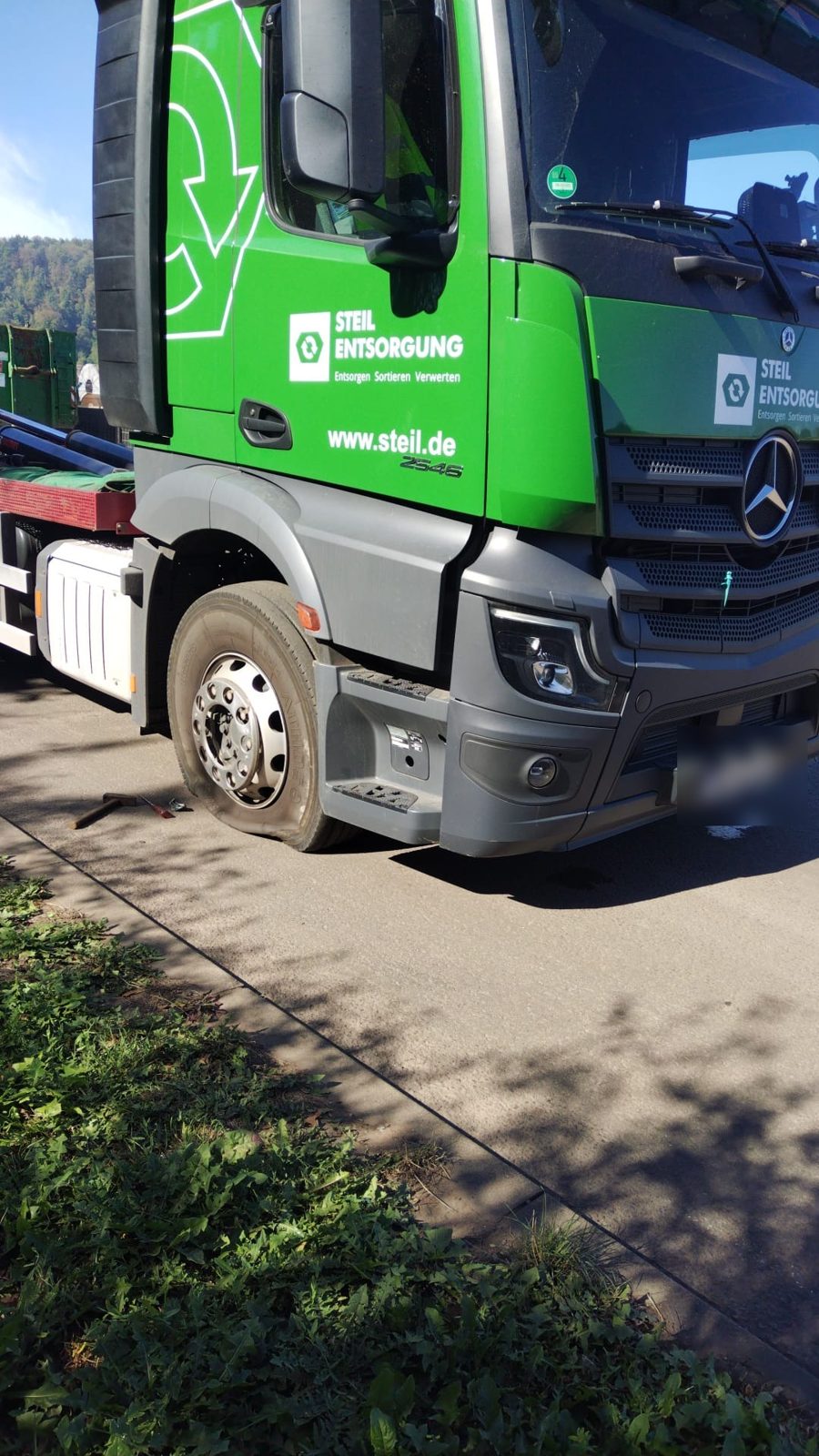
The consequences of ignoring a failed steer-axle tyre can be severe. Unlike drive or trailer axles, the steer axle controls directional stability and handling. A damaged or deflated tyre here directly compromises steering precision, increases the risk of jackknifing, and can lead to complete loss of control, especially at higher speeds. In this case, the driver reported a sudden drop in pressure on the right front wheel, a clear sign of a serious failure. The vehicle was stopped safely, but continuing to drive would have risked further damage to the wheel rim, suspension components, or even a full accident. The priority was not just tyre replacement, but ensuring structural integrity and safe re-entry into traffic.
With no roadside facilities available, and the nearest garage over 40 kilometres away, the only viable option was a mobile tyre service. LKWHelp24’s 24/7 dispatch team coordinated with a local partner technician within 15 minutes of the call. The mobile unit arrived within 55 minutes, a response time that meets the industry standard for emergency roadside assistance across Germany. The full repair process, including tyre removal, rim inspection, mounting of a new tyre, and final torque verification, took just 1 hour 15 minutes on-site, resulting in a total turnaround time of 2 hours 10 minutes from initial contact.
The total cost of the intervention, €965.00 (net), includes the mobile service fee, labour, a new tyre, and disposal of the damaged unit. This is significantly less than the €800–1,200 per day that a full breakdown or towing service would cost in lost revenue, especially for a municipal or private haulage operation. The decision to act quickly with professional mobile help was not just about fixing a flat, it was about preventing a chain reaction of operational delays, safety risks, and financial penalties.
The Emergency: A Failed Steering-Axle Tyre on a Refuse Collection Vehicle
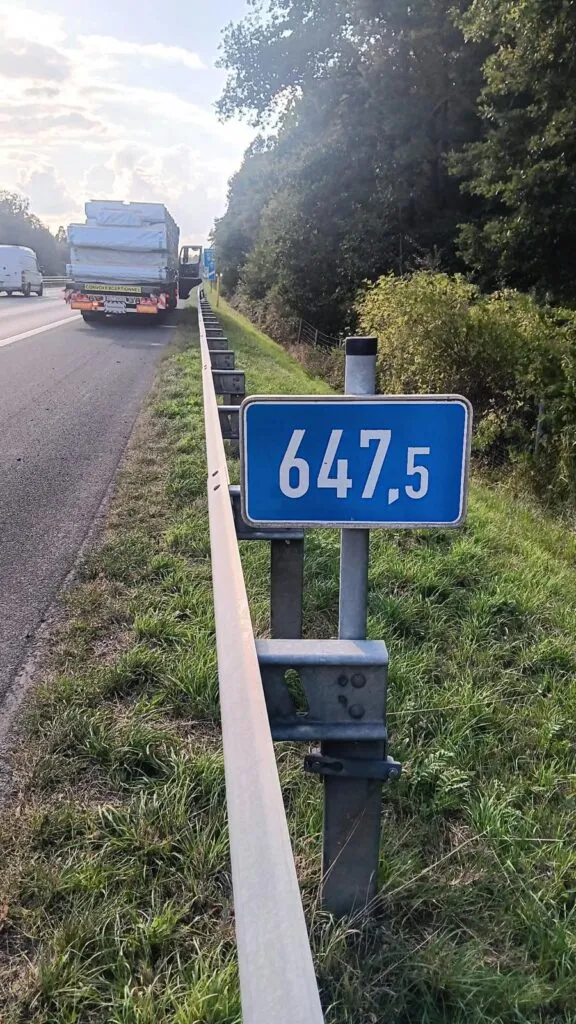
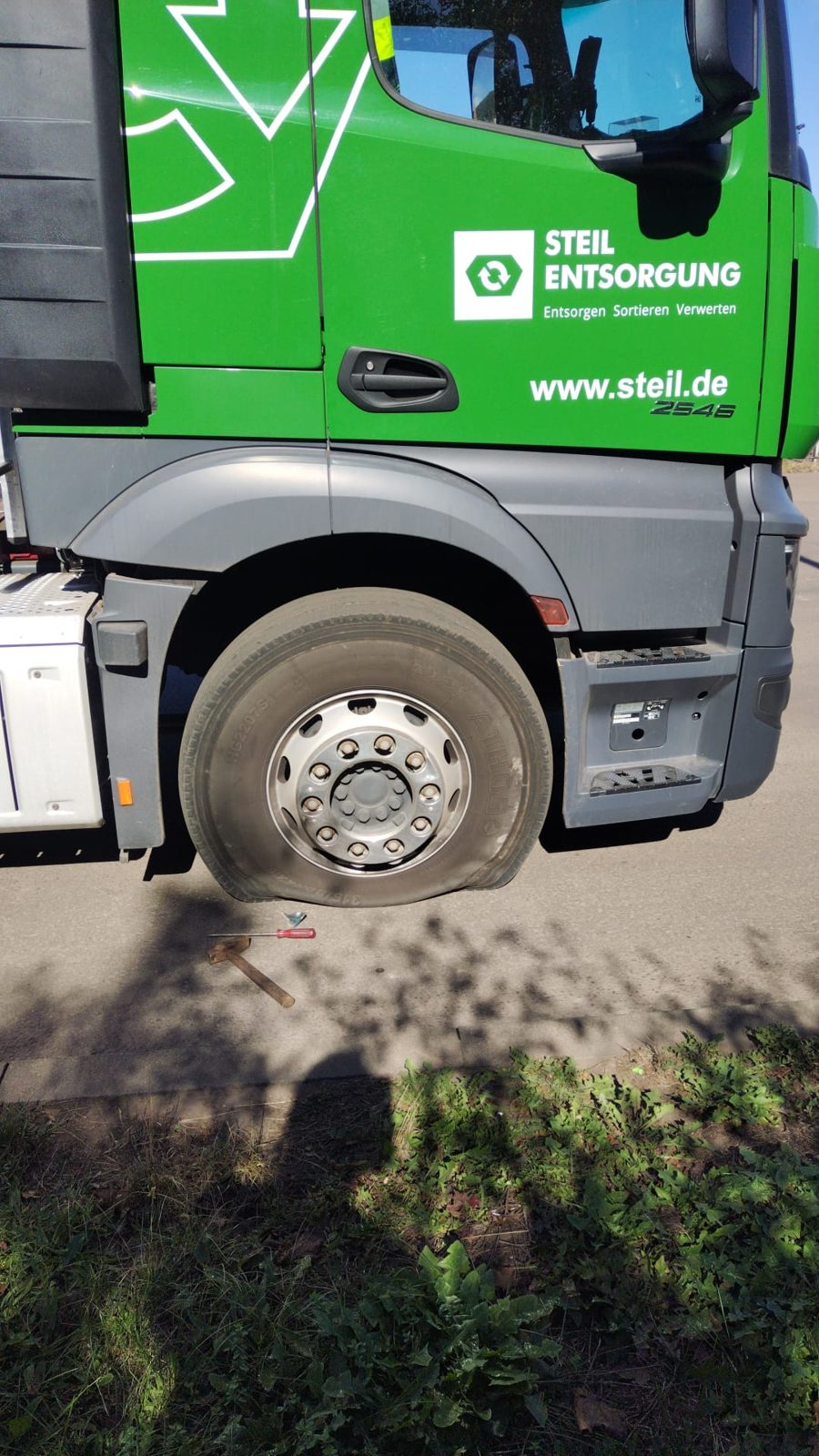
The incident began shortly after 11:00 AM when the driver of a Mercedes-Benz Actros refuse truck noticed a sudden and dramatic drop in pressure on the right front tyre. The vehicle, equipped with a 315/80 R22.5 tyre on its steer axle, was operating on a rural access road near Kassel, just before a junction with the A7 and A44. The driver immediately pulled over to the verge, where the vehicle came to rest on a grassy shoulder with a slight slope. Visibility was limited due to surrounding trees, and there was no dedicated hard shoulder, just a narrow paved edge with a concrete kerb.
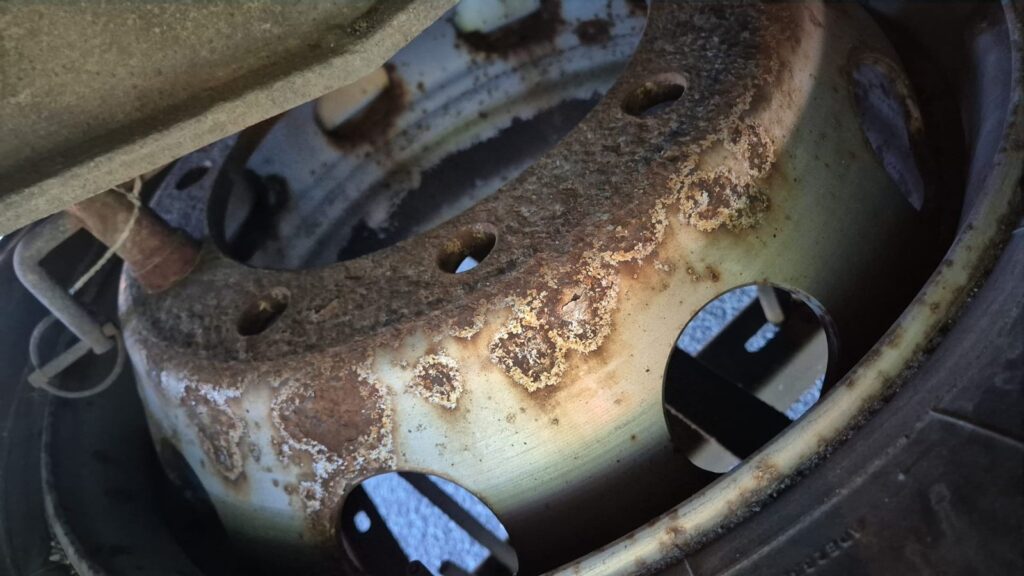
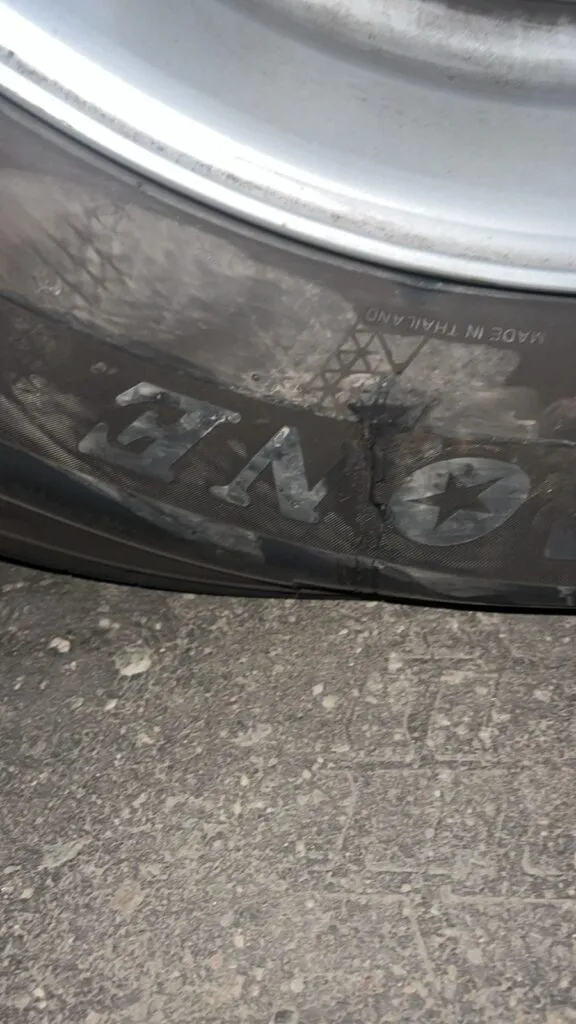
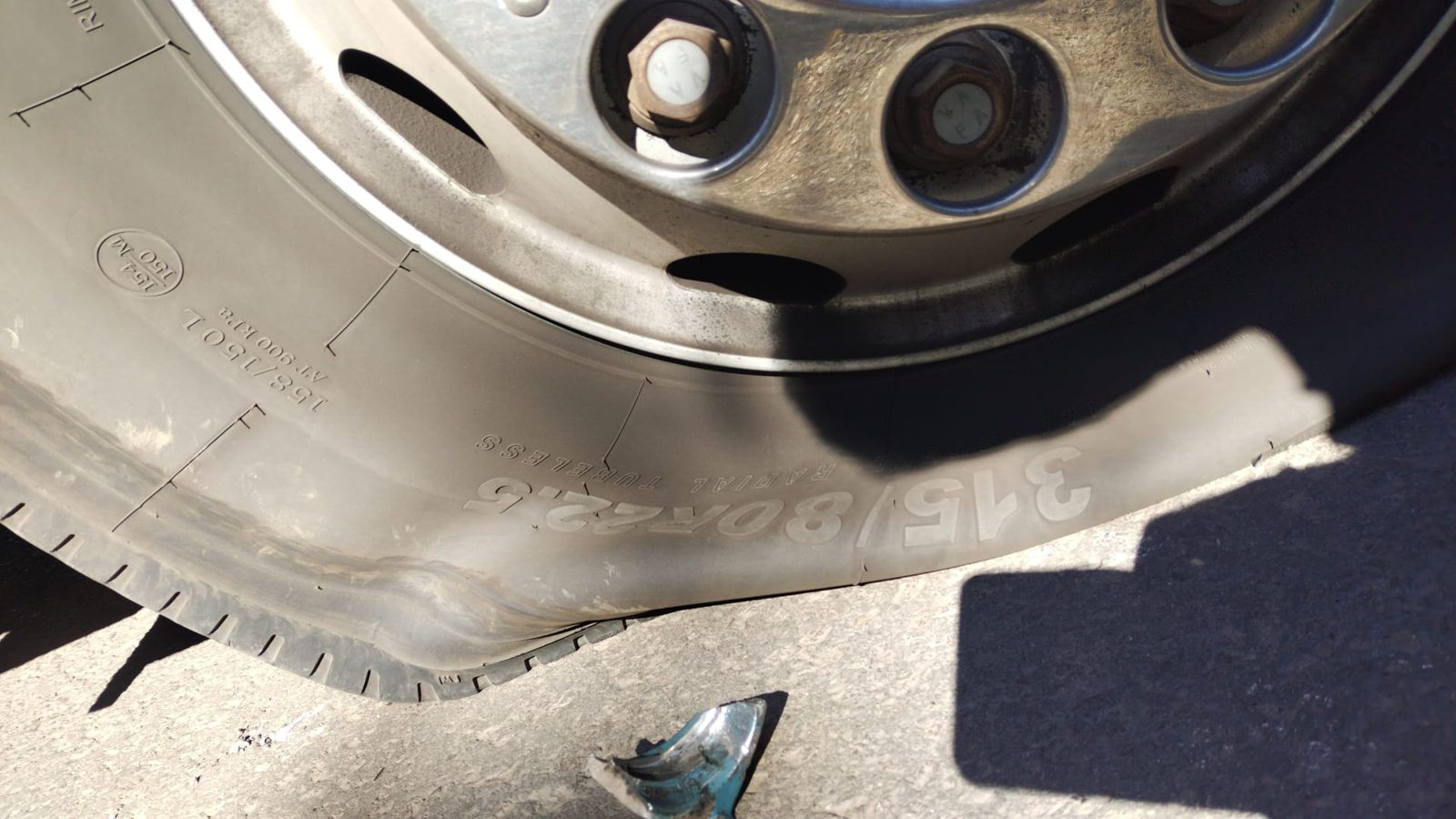
Upon inspection, the driver discovered that the tyre had suffered a severe shoulder puncture, likely caused by a sharp metallic object. The tyre was completely deflated, and the aluminium wheel rim was visible at the base. A small but sharp metal fragment, possibly from a discarded industrial part or debris from roadwork, was embedded in the sidewall. The driver attempted a preliminary check using a hammer and screwdriver, but this was ineffective and potentially dangerous, as it could damage the tyre further or dislodge fragments into the tread area.
At this stage, continuing to drive was not an option. The steer axle is responsible for directional control, and a flat tyre here drastically reduces grip, increases steering effort, and can lead to instability during turns. Driving on a damaged tyre risks rim deformation, suspension damage, and, in extreme cases, loss of vehicle control. The driver correctly assessed the situation and called LKWHelp24 for emergency assistance.
The immediate risks were clear: a flat steer-axle tyre on a 315/80 R22.5 configuration, a common size for heavy-duty urban and regional haulers, is not just inconvenient; it’s a safety hazard. According to § 36 of the German StVZO (Straßenverkehrs-Zulassungs-Ordnung), all tyres must maintain a minimum tread depth of 1.6 mm and be free from visible damage. A tyre with a foreign object lodged in the shoulder zone fails both criteria. Additionally, the load index of 158/150 L indicates this tyre is rated for up to 4,400 kg per axle, meaning any imbalance or misalignment under load could accelerate wear or cause failure.
Without professional intervention, the vehicle could not legally or safely return to the road. The next step was to contact a certified mobile service provider, and that’s where LKWHelp24’s 24/7 emergency network came into play.
How We Organised the Response: Dispatch, Routing, and Partner Coordination
Once the call came in at 11:00 AM, the LKWHelp24 dispatch team immediately initiated the emergency protocol. The first task was to verify the location and confirm the vehicle type. The driver provided a general description: “near Kassel, on a side road off the A7/A44 junction, on the grassy verge with trees.” The system cross-referenced this with real-time GPS data and local partner availability.
Using the LKWHelp24 Fleet Management Platform, the system identified the nearest mobile tyre service partner within a 50-kilometre radius. The selected technician was based in Wabern, approximately 35 km from the site. The partner was already en route to another job, but the dispatch team rerouted him directly to the Kassel location, prioritising the steer-axle tyre failure due to its high-risk nature.
The technician was equipped with a fully stocked mobile service van, carrying:
– One 315/80 R22.5 replacement tyre (Michelin or equivalent, matching the original load and speed rating),
– A dual-beam LED work light,
– A portable air compressor,
– A wheel chock and axle support stand,
– A 10 mm and 12 mm socket set,
– A digital torque wrench calibrated to N·m,
– A rubber mallet and tire iron,
– A Tyre Pressure Monitoring System (TPMS) tester (for post-repair verification),
– A waste tyre disposal bag.
The dispatch process took 15 minutes, a critical window. During this time, the driver was instructed to:
– Turn on the hazard lights,
– Place a warning triangle (Warndreieck) at least 100 metres behind the vehicle,
– Wear a high-visibility safety vest,
– Keep all doors locked and remain inside the cab unless absolutely necessary.
At 11:15 AM, the technician confirmed departure. The total travel time to the site was 40 minutes, arriving at 11:55 AM, 55 minutes after the initial call. This response time is well within the industry benchmark of under 60 minutes for emergency mobile services on non-autobahn roads, especially in hilly or rural areas.
The technician arrived with a clear checklist:
1. Confirm vehicle type and tyre size,
2. Assess safety conditions on the verge,
3. Set up temporary protection,
4. Begin the repair process.
The entire coordination chain, from call to arrival, was seamless, thanks to LKWHelp24’s real-time tracking, AI-powered routing, and pre-verified partner network. No delays due to unclear location, missing parts, or unavailability.
On-Site Assessment: Why Ignoring a Flat Steer-Axle Tyre Is Dangerous
Upon arrival, the technician conducted a full on-site assessment of the situation. The vehicle was parked on a slightly sloped grass verge with a concrete kerb on the outer edge. The right front tyre was completely flat, with the aluminium wheel rim fully exposed. The 315/80 R22.5 tyre showed clear signs of damage: a deep gash in the shoulder zone, approximately 5 cm long, with a metal fragment still embedded in the sidewall.
The technician immediately took the following actions:
– Placed two wheel chocks behind the rear wheels to prevent rolling,
– Deployed an axle support stand under the steer axle to relieve pressure on the damaged wheel,
– Positioned a warning triangle at 100 metres behind the vehicle,
– Checked the tyre pressure using a digital gauge, the reading was 8.5 bar, far below the recommended 9.5 bar for this size and load rating.
The risk assessment was clear: continuing to drive on this tyre would have caused:
– Rim deformation due to contact between the steel belt and the aluminium rim,
– Tread separation or complete blowout during acceleration or cornering,
– Loss of steering control, especially at speeds above 60 km/h,
– Potential collision with obstacles or other vehicles due to sudden drift.
Additionally, the load index of 158/150 L means the tyre is designed for high-load applications. Driving on a damaged tyre at 100% of its capacity increases stress on the carcass (body) and belt layers, significantly raising the chance of internal failure. According to ADAC, over 60% of steer-axle tyre failures in commercial vehicles are linked to foreign object damage (FOD), such as nails, glass, or metal shards, often missed during routine inspections.
The technician also inspected the wheel rim. Although no visible cracks or warping were detected, the alloy surface showed minor scuffing from contact with the ground. This could lead to uneven wear or balancing issues if not addressed. A full rim inspection is recommended after any FOD incident, even if no visible damage is apparent.
The decision was made to replace the tyre immediately, not repair it. Patching a shoulder puncture on a high-load commercial tyre is not recommended, as the belt layers are compromised, and the repair may fail under stress. According to ETRTO (European Tyre and Rim Technical Organisation), shoulder zone repairs are not permitted for radial tubeless tyres used in heavy-duty applications.
Step-by-Step Repair Process: From Demolition to Final Check
The repair process was carried out in seven key phases, each with strict safety and quality standards.
Step 1: Inspection and Safety Setup
- Technician confirmed the vehicle was secure on the slope using wheel chocks and axle support.
- Hazard lights were activated.
- A warning triangle was placed 100 metres behind the vehicle.
- The technician wore a high-visibility vest and safety gloves.
Step 2: Wheel Removal
- Using a 12 mm socket wrench, the technician loosened the 10 lug nuts on the front right wheel.
- The wheel was carefully lifted off the hub using a tire iron and placed on a protective mat.
- The alloy rim was inspected for warping, cracks, or debris.
Step 3: Tyre Disassembly
- The technician used a tire iron and rubber mallet to break the bead seal.
- The old tyre was removed from the rim and inspected for internal damage.
- The metal fragment was extracted using tweezers and placed in a disposal bag.
- The rim’s bead seat was cleaned with a wire brush to remove debris and rust.
Step 4: New Tyre Mounting
- The new 315/80 R22.5 tyre was placed on the rim.
- The technician applied tyre lubricant to the bead area to ensure smooth seating.
- The tyre was positioned evenly using a tire mounting machine (portable version in the van).
- The bead was seated using a compressor and air hose.
Step 5: Inflation and Balancing
- The tyre was inflated to 9.5 bar (the recommended pressure for this load index).
- A dynamic balancer was used to check for weight imbalances.
- The technician added balance weights to the rim to correct any uneven distribution.
Step 6: Reinstallation and Torque Verification
- The wheel was reinstalled onto the hub.
- The 10 lug nuts were tightened in a star pattern using a digital torque wrench set to 220 N·m, the correct value for this axle and tyre size.
- Each nut was checked individually to ensure uniform pressure.
Step 7: Final Quality Check
- The technician rechecked the tyre pressure (9.5 bar).
- The wheel was rotated manually to ensure no rubbing or resistance.
- The warning triangle was removed.
- The technician handed over a service report to the driver, including tyre size, load index, and pressure settings.
The entire process took 1 hour 15 minutes, from first contact to final handover.
Full Timeline: From Call to Return to Service
| Time | Phase | Action |
|---|---|---|
| 11:00 | Call Received | Driver reports flat steer-axle tyre on a 315/80 R22.5, on a verge near Kassel |
| 11:00 – 11:15 | Dispatch & Coordination | Location verified, mobile partner assigned, parts confirmed |
| 11:15 | Departure | Technician leaves Wabern for Kassel |
| 11:55 | Arrival | Technician on-site, 55 minutes after call |
| 11:55 – 12:05 | Safety & Inspection | Wheel chocks, warning triangle, pressure check, rim inspection |
| 12:05 – 12:25 | Demolition | Wheel removed, old tyre disassembled, rim cleaned |
| 12:25 – 12:50 | Mounting | New tyre mounted, inflated, balanced |
| 12:50 – 13:05 | Reinstallation | Wheel reattached, lug nuts tightened to 220 N·m in star pattern |
| 13:05 – 13:10 | Handover | Old tyre collected, report given, vehicle ready |
| 13:10 | Ready | Total time: 130 minutes |
Cost Breakdown: Transparent Pricing, No Hidden Fees
| Position | Price (EUR) |
|---|---|
| Service Call-Out (Anfahrt) | 240.00 |
| Labour (1.5 hours @ €110/hour) | 165.00 |
| New 315/80 R22.5 Tyre | 540.00 |
| Old Tyre Disposal | 20.00 |
| Total | 965.00 |
All prices are net (excluding VAT). The cost of a standstill (non-working time) for a refuse truck in Germany averages €800–1,200 per day, depending on contract and region. This means the 130-minute repair saved the operator over €700 compared to towing the vehicle to a garage and waiting for a turnaround.
If the driver had chosen towing, the cost would have been €850–1,600, depending on distance and urgency. The mobile tyre service was not only faster but significantly cheaper, a clear example of proactive maintenance saving money.
Why Professional Help Is Essential: Risks of DIY Repair
Attempting to fix a steer-axle tyre failure without professional tools and training is extremely risky. Here are the key dangers:
- Incorrect torque: Over-tightening or under-tightening lug nuts can cause rim warping, thread stripping, or wheel detachment.
- Poor bead seating: Without proper lubrication and pressure, the tyre may not seat correctly, leading to air leaks or blowouts.
- Unbalanced wheels: Driving with an unbalanced wheel causes vibration, suspension wear, and increased fuel consumption.
- Undetected rim damage: A bent or cracked rim can fail suddenly under load.
- Legal non-compliance: Driving a vehicle with a damaged or improperly repaired tyre violates § 36 StVZO and can result in fines or insurance denial.
Even experienced drivers lack the tools and expertise to perform a safe, legal repair on a 315/80 R22.5 steer-axle tyre. Only certified mobile technicians should handle these repairs.
Common Scenarios We Respond To Across Germany
LKWHelp24’s mobile teams handle a wide range of incidents daily. Typical cases include:
- Steer-axle blowouts on trucks and trailers,
- Punctures from nails, glass, or metal fragments,
- Rim damage after hitting curbs or potholes,
- Tread separation due to overheating or underinflation,
- Tyre failure on wet or icy roads,
- Emergency replacements during winter storms,
- Tyre changes on remote routes with no nearby service stations.
Our service covers all major highways (Autobahnen), regional roads, industrial zones, and rural access routes.
Preventive Tips for Drivers and Fleet Managers
To avoid future incidents, follow these best practices:
- Check tyre pressure weekly, especially before long trips.
- Inspect tyres for cuts, bulges, or embedded objects during pre-trip checks.
- Replace tyres with worn tread (below 1.6 mm), even if they’re still legal.
- Use a TPMS system to monitor pressure in real time.
- Train drivers on emergency response, including warning triangle placement and safe vehicle positioning.
- Schedule regular tyre inspections every 5,000 km.
According to DEKRA, over 70% of tyre-related breakdowns are preventable with proper maintenance.
Tyre Care & Brand Expertise: Michelin, Continental, Goodyear, Bridgestone
We use only OE-approved tyres from top-tier brands:
- Michelin – known for longevity and low rolling resistance,
- Continental – excellent grip in wet and winter conditions,
- Goodyear – high durability for heavy-duty applications,
- Bridgestone – superior heat resistance and tread life.
All tyres meet ETRTO standards and are tested for load index, speed rating, and safety certification.
Why Choose LKWHelp24? 24/7, Proven, Transparent
- 24/7 availability, every day of the year,
- Nationwide network of vetted partners,
- Transparent pricing, no hidden fees,
- Mobile service, no need to tow,
- Multilingual dispatchers, English, German, Polish, Russian,
- Real-time tracking, know when help is coming.
Summary: Key Facts from the Case
- Vehicle Type: Mercedes-Benz Actros refuse truck (315/80 R22.5, steer axle)
- Location: Rural road near Kassel, off A7/A44 junction
- Failure Type: Shoulder puncture from metal fragment
- Time to Arrival: 55 minutes
- Total Time to Service: 130 minutes
- Cost: €965.00 (net)
- Damage Prevention: Avoided rim deformation, potential accident, and €800+ downtime
- Service Provider: LKWHelp24 mobile tyre service
Need Emergency Truck Tyre Service? Call Now
If you’re stranded on the road with a flat tyre, don’t wait. Call +49 160 5753826, our team is ready to help 24/7, across all of Germany.
Visit us at www.lkwhelp24.com for more information.
Mobile Truck Tyre Service – 24/7 Across Germany
Keywords: truck tyre service | mobile reifenservice | truck tyre replacement | truck tyre change | truck tyre roadside assistance | mobile truck tyre service | truck tyre germany | truck tyre emergency | truck tyre breakdown service | truck tyre repair | mobile reifenwechsel | truck tyre help | tyre change near me | truck tyre service near me | truck tyre service germany | truck tyre breakdown germany | trailer tyre service | truck tyre burst | truck tyre blowout | trailer tyre replacement | trailer tyre puncture | trailer flat tyre | reifenwechsel near me | pneuhage truck fleet support | pneuhage roadside assistance
Related Articles:
– Steer-Axle Tyre Failure on the A20 Near Bad Segeberg: DAF XF 480 Back on the Road in 1 Hour 45 Minutes
– Truck Tyre Service Near Me: How LKWHelp24 Fixed a Scania Steer-Axle Blowout in Under Two Hours on the A6 near Mannheim
– Truck Tyre Service Near Me: How LKWHelp24 Replaced a Flat Steer-Axle Tyre on a Scania in Under Two Hours on the A3 near Passau
– Mobile Truck Tyre Service on the A5 near Gießen: Trailer Blowout Beside an Active Rescue Operation Fixed in 3 Hours 8 Minutes
– Truck Tyre Service Kehl (77694): Tyre Change with New Goodyear Tyre and Rim Straightening on a Krone Trailer – Professional Roadside Assistance on the Motorway
External References:
– Mercedes-Benz Trucks – Actros Range
– ETRTO – Tyre and Rim Standards
– § 36 StVZO – Tyre Regulations in Germany
– ADAC – Tyre Safety Reports
– DEKRA – Road Safety and Maintenance