Skip to content
A steer-axle puncture on a motorway is one of those problems that looks small until you’re standing next to it. The tyre isn’t shredded, the sidewall hasn’t burst apart, and at first glance the truck seems driveable. It isn’t. Once a front tyre has run flat, the carcass is compromised, the steering geometry shifts, and every extra kilometre makes the repair bill bigger and the risk higher. On 10 July, a Scania tractor unit heading towards the Austrian border on the A3 near Passau ran into exactly this situation, and it’s a useful case study in why speed and the right call matter more than most drivers realise.
Front-axle tyres do a different job to the ones on the drive or trailer axles. They carry the steering forces, absorb the braking load, and keep the cab level under cornering. A tyre that’s lost pressure on this axle doesn’t just wear unevenly, it changes how the whole vehicle responds to steering input. Add a loaded semi-trailer, motorway speeds, and traffic funnelling towards a border crossing, and a slow puncture becomes a serious hazard within minutes rather than hours.
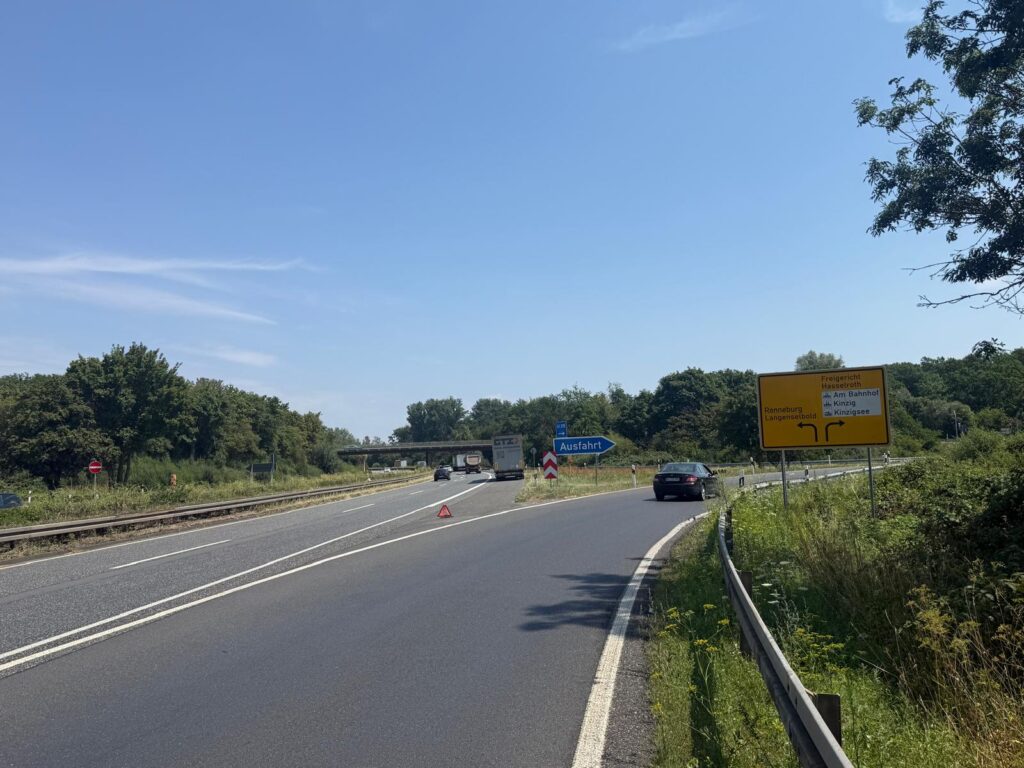
That’s precisely why the driver made the right call the moment he noticed the steering pulling and the ride firming up on one side. Rather than pushing on to the next services or trying to nurse the truck to a workshop, he stopped safely on the hard shoulder and called for help. It’s a decision that sounds obvious in hindsight, but plenty of drivers under pressure from a delivery schedule will try to reach the nearest exit first. On the A3 towards Passau, with the Austrian border only a short distance away, that temptation is real. Stopping straight away, on a wide and reasonably visible stretch of hard shoulder, was the safer and ultimately the faster route to getting back on the road.
Below is exactly how LKWHelp24 handled the case, including timings, on-site detail, and the final invoice.
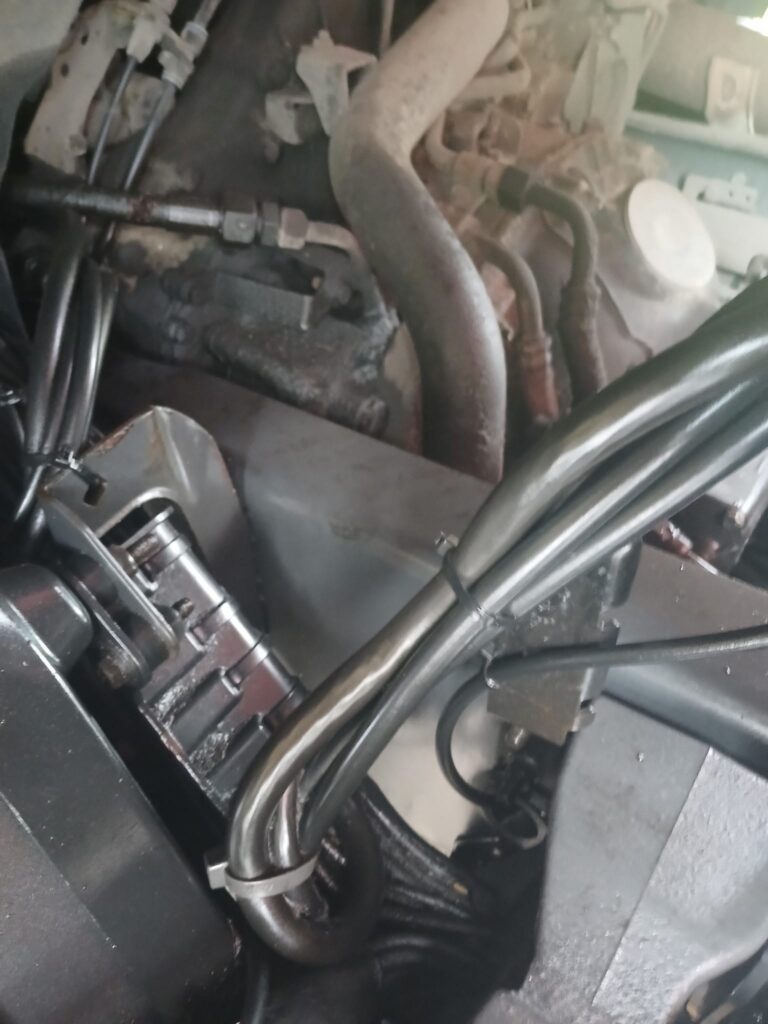
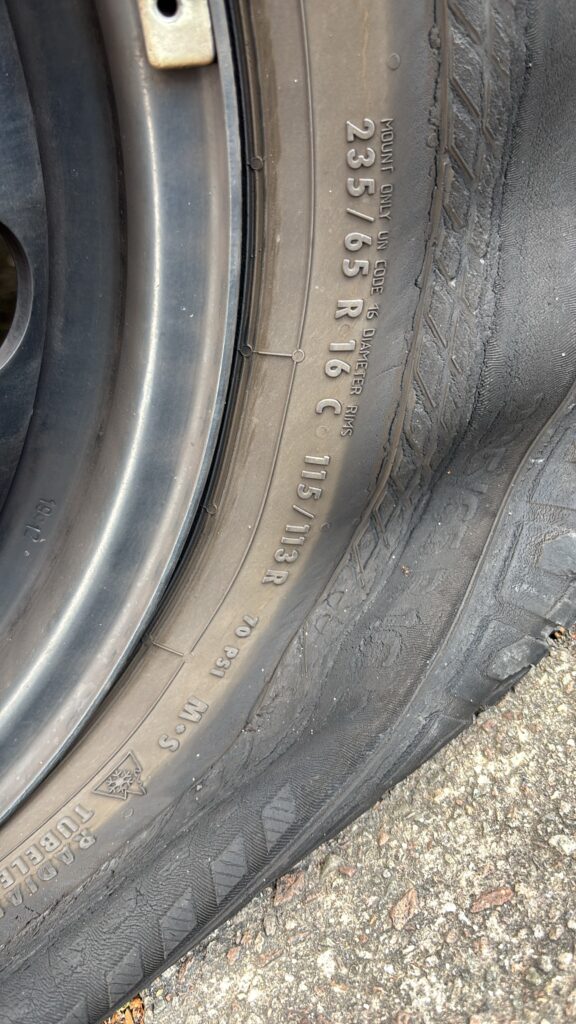
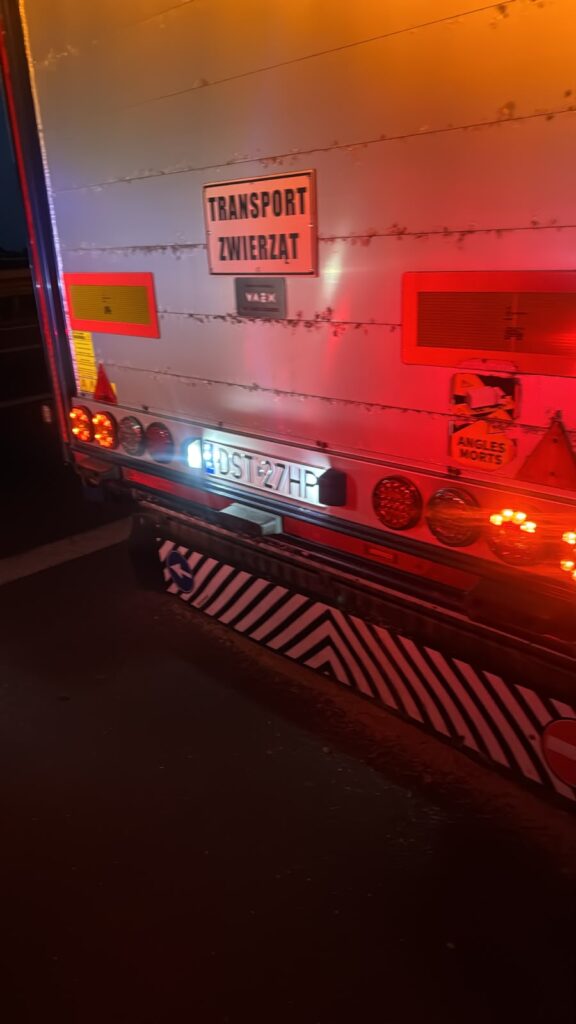
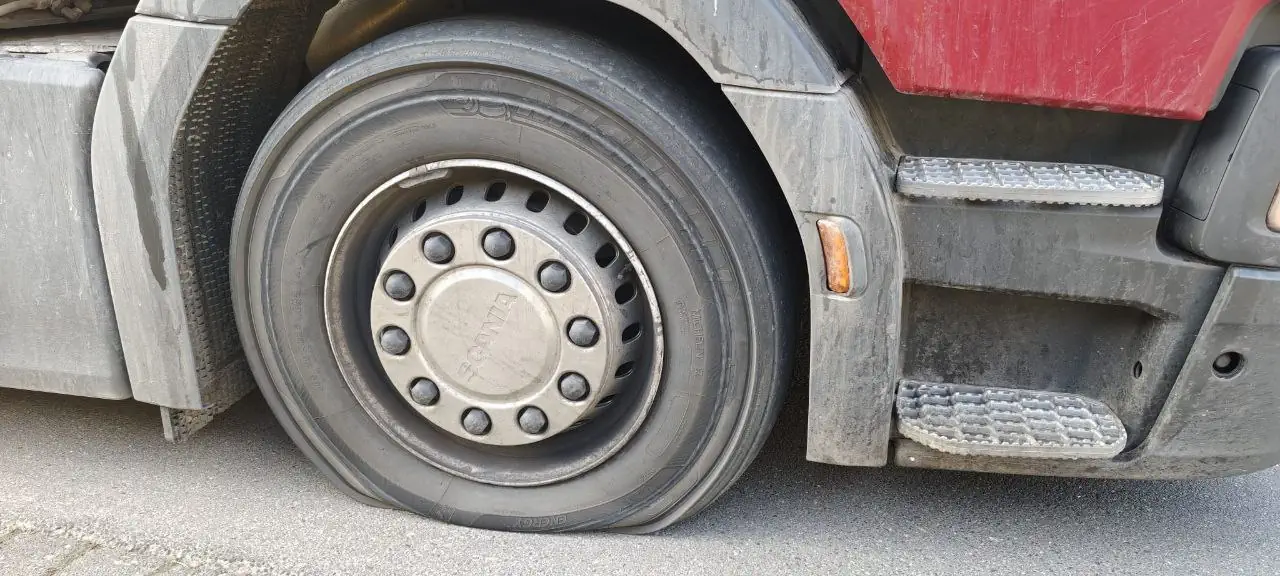
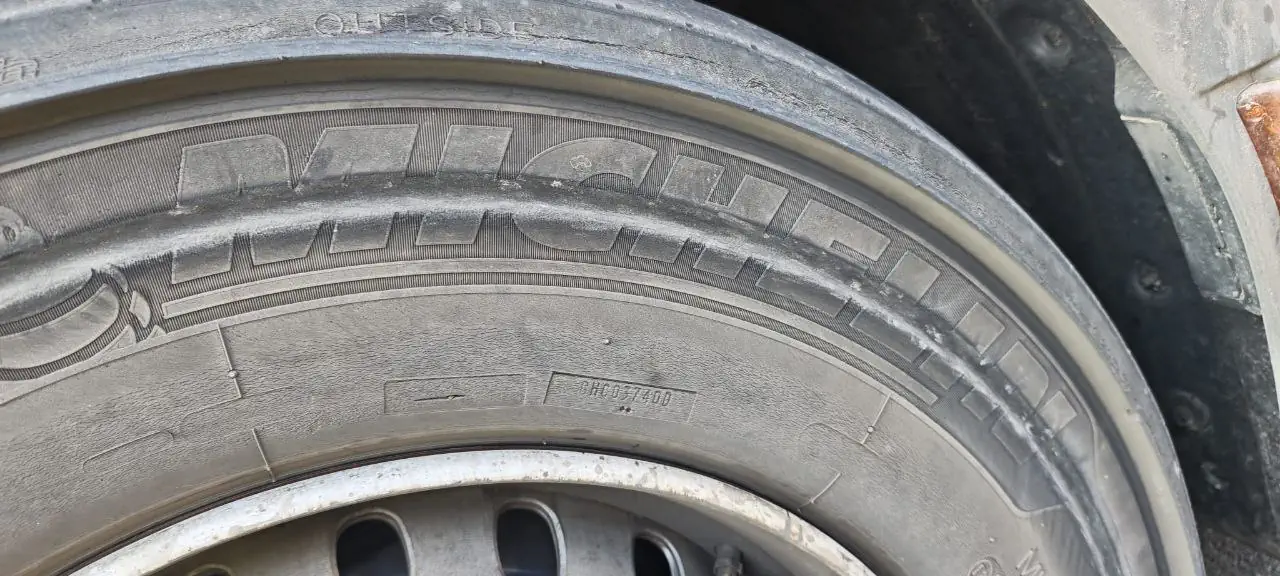
Photo caption (German): „LKW Reifenservice bei Reifenpanne an der Lenkachse eines Scania auf der A3 bei Passau – mobiler Reifenwechsel durch LKWHelp24.”
The Emergency
The driver was on a long-haul international run, cab pointed towards the Austrian border, when he felt the unmistakable heaviness of a front tyre losing air. The Scania’s steering became noticeably harder to hold straight, and there was a faint but persistent vibration through the wheel. He pulled onto the hard shoulder of the A3 near Passau, in daylight and with reasonable visibility, and got out to check.
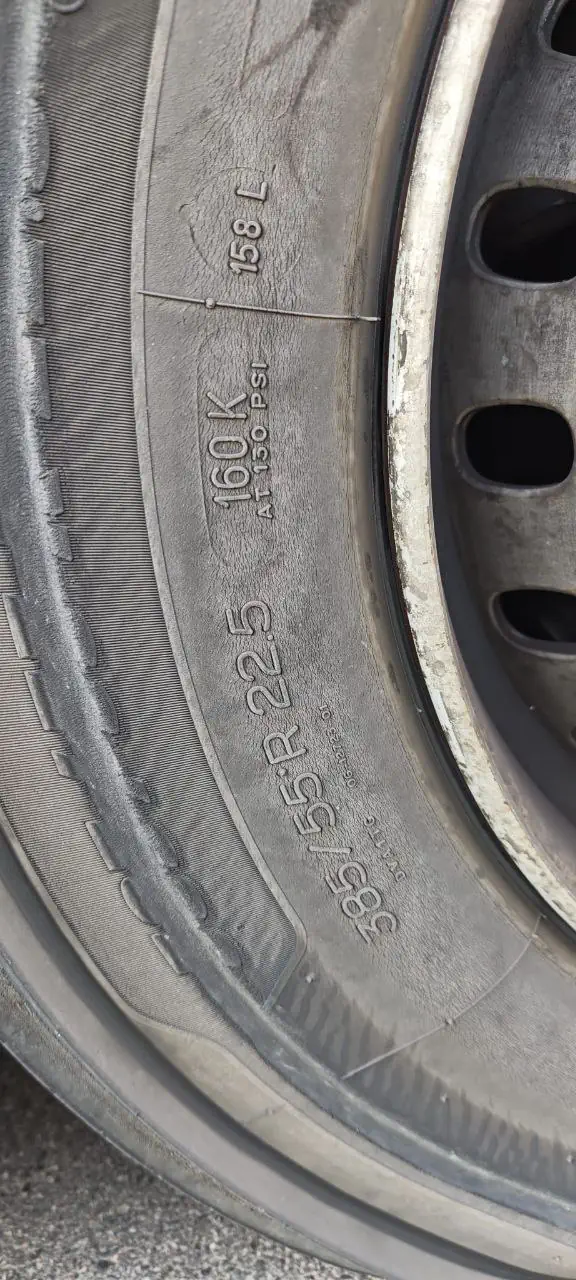
What he found was a flat steer-axle tyre, a 385/55 R22.5 Michelin X Multi Energy Z, that had lost its air through a puncture or sidewall damage. The tyre had been run flat for a short distance before he stopped, and while the carcass was still in one piece, it was no longer safe to drive on. There was no secondary damage to the rim, suspension, or bodywork, which meant the job, while urgent, was a straightforward tyre swap rather than a more complex recovery.
He called LKWHelp24 at 13:15.
For an international driver on a schedule, this kind of stop is never welcome, but the alternative is worse. A steer-axle tyre that’s already run flat, even briefly, loses structural integrity in ways that aren’t always visible from the outside. Continuing on it risks a sudden and much more dangerous failure further down the road, potentially at a point with no hard shoulder or reduced visibility. Stopping immediately and calling for a mobile tyre service is the only sensible response, and it’s exactly what happened here.
How Help Was Organised
LKWHelp24 runs a round-the-clock dispatch service backed by a network of mobile commercial-vehicle tyre partners spread across Germany. For a case on the A3 near Passau, that meant routing the job to a specialist based in the Passau/Lower Bavaria area rather than sending a unit from further afield, cutting the response time significantly.
The dispatch process followed the standard emergency protocol:
● Call received at 13:15, location and vehicle details confirmed (Scania tractor, red cab, steer-axle flat tyre, hard shoulder of the A3 towards the Austrian border)
● Nearest available mobile tyre partner in the Passau/Lower Bavaria area identified and briefed on the tyre size and axle position
● Technician dispatched at 13:30 with an estimated time of arrival communicated to the driver
● Driver advised on safety positioning: hazard triangle, high-vis vest, keeping clear of the carriageway
● Correct replacement tyre, a Michelin X Multi Energy Z 385/55 R22.5 158L, confirmed as available before the technician set off, avoiding a wasted trip or a second call-out
Because the partner network is organised regionally, LKWHelp24 didn’t need to guess which service could reach the vehicle fastest. The technician arrived at 14:10, less than an hour after the initial call.
This regional structure is the part of the service that most drivers never think about until they need it. A single national call centre with one central depot might promise 24-hour truck tyre service, but if the nearest technician is two hours away, that promise doesn’t mean much on a motorway hard shoulder. By keeping a distributed network of certified partners across the country, including areas like Lower Bavaria that sit some distance from the larger cities, LKWHelp24 can get a qualified technician to a broken-down vehicle in well under an hour in most cases. That’s the difference between a truck losing an afternoon and a truck losing a full day.
The Situation On-Site
On arrival, the technician’s first task was a full assessment of the wheel before touching anything. A flat steer-axle tyre needs a careful look, not just a quick swap, because the cause of the air loss determines whether the wheel, rim, or valve also need attention.
The tyre in question, a Michelin X Multi Energy Z 385/55 R22.5 with a load index of 158 L and a maximum pressure rating of 130 PSI, is a common fitment on long-haul steer axles, chosen for its combination of durability and rolling resistance. Once the wheel was off, the inspection showed a puncture or sidewall damage consistent with the flat, with the carcass still structurally intact but clearly unfit to return to service. There was no damage to the rim, and the valve was checked as part of the process.
With no secondary damage found, the technician confirmed the job was a like-for-like tyre replacement: remove the damaged Michelin, fit a new one of identical specification, and torque the wheel correctly before releasing the vehicle.
Step-by-Step
Step 1 – Secure the vehicle.
The truck was already positioned safely on the hard shoulder with hazard warning triangles in place. The technician confirmed the parking brake was engaged and set up additional safety markers before starting work, since motorway traffic passing at speed makes this the highest-risk part of any roadside job.
Step 2 – Raise the steer axle.
Using a heavy-duty jack rated for the axle load, the technician raised the front of the Scania until the damaged wheel was clear of the road surface.
Step 3 – Remove the flat tyre and inspect.
The wheel nuts were loosened and the wheel removed. With the tyre off, the rim was checked for cracks or deformation and the valve inspected for damage. Both were found to be in acceptable condition, meaning the new tyre could be fitted straight onto the existing rim.
Step 4 – Fit the new Michelin and torque.
A new Michelin X Multi Energy Z 385/55 R22.5 158L was mounted and balanced, then fitted to the hub. Wheel nuts were tightened crosswise in a star pattern to a torque of roughly 600–650 Nm, the correct method for even clamping force and to prevent the wheel working loose later on the drive.
Step 5 – Pressure check and release.
The tyre was inflated to the correct operating pressure, checked against the load index and axle requirements, then given a final visual and functional check, spin, brake clearance, and alignment by eye, before the truck was lowered and released back onto the road.
Full Timeline
| Time | Phase | Action |
|---|---|---|
| 13:15 | Call received | Driver reports flat steer-axle tyre on A3 near Passau |
| 13:30 | Technician dispatched | Mobile tyre partner assigned, ETA communicated |
| 14:10 | On site | Technician arrives on the A3 hard shoulder |
| 14:25 | Wheel removed | Flat tyre removed, rim and valve inspected |
| 14:50 | New tyre fitted | Michelin 385/55 R22.5 mounted and fitted |
| 15:00 | Torque and pressure check | Wheel nuts torqued crosswise, pressure set |
| 15:00 | Released | Vehicle cleared and back on the road |
From the first call to the truck being back on the A3, the whole job took roughly 1 hour 45 minutes, with the technician on site for about 50 minutes.
Cost
| Item | Price (EUR) |
|---|---|
| Call-out / 24-7 service | 180 |
| Labour / on-site fitting | 180 |
| New Michelin X Multi Energy Z 385/55 R22.5 158L tyre | 500 |
| Old-tyre disposal + valve | 30 |
| TOTAL | 890 |
A few things push this figure up compared with a routine tyre change at a fixed workshop. First, the tyre itself, a premium 385/55 R22.5 steer-axle fitment from Michelin, is not cheap stock; it’s built for the load and mileage demands of long-haul steer positions, and that specification carries a higher price than standard trailer or budget tyres. Second, the 24/7 call-out and on-site labour reflect the fact that a technician had to travel with the right tools and stock to a live motorway hard shoulder, at short notice, rather than the truck coming to them.
Set against the alternative, towing a laden tractor unit off the A3 to a workshop, waiting for a slot, and losing the rest of the day, or worse, trying to limp the vehicle onward on a compromised tyre, 890 EUR for a same-day, on-site fix that had the truck moving again inside two hours is a reasonable trade. The cost of downtime for an international haulage run, in missed delivery windows and driver hours, routinely outweighs the price of the tyre itself.
Why a Professional Service Is Essential
A flat steer-axle tyre is not a job for improvisation, which is why our truck service partners carry calibrated equipment for exactly this scenario. The steering axle carries the vehicle’s direction and braking response, and a wheel that’s been fitted with the wrong torque, an unchecked rim, or a valve that wasn’t properly seated can fail again within kilometres, at speed. Professional mobile tyre services bring calibrated torque tools, the correct replacement tyre in stock, and the experience to spot secondary damage that an untrained eye would miss.
There’s also the safety dimension of working roadside. A technician who does this daily knows how to position warning markers, work efficiently within a live traffic lane’s proximity, and get the vehicle back on the road with minimum exposure time. That’s not something to leave to guesswork when the alternative is standing next to a loaded truck on a motorway hard shoulder.
Typical Breakdown Situations We Handle
LKWHelp24’s partner network deals with the full range of commercial-vehicle tyre emergencies across Germany, similar to what happened in a Volvo FH steer-axle case on the A9 near Ingolstadt, including:
- Flat and punctured tyres on steer, drive, and trailer axles
- Sudden blowouts and sidewall failures at motorway speed
- Slow air loss detected via TPMS or driver observation
- Valve and rim damage requiring inspection before refitting
- Multi-tyre replacements for fleet vehicles on long routes
- Emergency call-outs near borders and in less-populated rural stretches
- 24-hour truck tyre service for international hauliers with tight delivery windows
Prevention Tips
Steer-axle tyre failures are rarely completely random, much like the pattern seen in a IVECO steer-axle case on the A3 near Aschaffenburg, and a few habits reduce the odds significantly:
Check pressure regularly. A 385/55 R22.5 tyre rated to 130 PSI needs to be checked against the manufacturer’s load table, not just topped up by feel. Underinflation is one of the most common precursors to sidewall damage and rapid air loss.
Use TPMS where fitted. Tyre pressure monitoring systems catch slow leaks long before they become a roadside emergency. If the truck has one, don’t ignore early warnings.
Inspect visually before long runs. A quick walk-round before setting off, checking for cuts, embedded debris, or uneven wear, catches problems while they’re still small and manageable.
Rotate and monitor wear patterns. Steer-axle tyres wear differently to drive-axle tyres because of steering and braking loads. Uneven wear is often the first visible sign that something needs attention.
Steer-Axle Tyres, Brands, and Fleet Service
Steer-axle tyres sit in a different category to drive or trailer tyres because they’re engineered for directional stability rather than pure traction. Sizes like 385/55 R22.5 are common on modern long-haul tractors from manufacturers such as Scania, and premium brands including Michelin, Continental, and Goodyear all produce dedicated steer-axle ranges built around low rolling resistance, even wear, and predictable handling under load.
For fleet operators, this matters at scale. A single flat tyre on one truck is a manageable inconvenience; the same failure pattern recurring across a fleet, as in a DAF steer-axle case on the A20 near Bad Segeberg, points to a maintenance or specification issue worth addressing systematically. LKWHelp24 works with hauliers on both single-vehicle emergencies and fleet-wide tyre service arrangements, keeping consistent stock availability and response times across a driver’s usual routes.
Why LKWHelp24
Drivers searching for “truck tyre service near me” or “mobile truck tyre service A3”, the same urgency reflected in a wheel-change case on the A7 near Hamburg, need more than a phone number, they need a service that actually turns up with the right tyre. LKWHelp24 is built around that requirement:
- 24-hour truck tyre service, every day of the year, across all of Germany
- A network of certified, regionally based mobile tyre partners, meaning shorter response times than a single central depot could offer
- Transparent, itemised pricing agreed before work begins, no surprise add-ons
- Multilingual support for international drivers, removing the language barrier that often slows down roadside emergencies
- Direct coordination between dispatch and the on-site technician, so the correct tyre size and specification is confirmed before anyone sets off
Summary
A Scania tractor unit suffered a flat steer-axle tyre on the A3 near Passau, heading towards the Austrian border. The driver called LKWHelp24 at 13:15; a mobile tyre partner from the Passau/Lower Bavaria area was on site by 14:10. The damaged Michelin X Multi Energy Z 385/55 R22.5 158L tyre was removed, the rim and valve inspected, and a new tyre fitted, torqued crosswise to roughly 600–650 Nm, and pressure-checked before release at 15:00. Total time from call to release: around 1 hour 45 minutes, with roughly 50 minutes spent on site. Total cost: 890 EUR.
Request Emergency Assistance Now
If you’re dealing with a flat or damaged truck tyre anywhere in Germany, don’t risk continuing on a compromised steer axle. Visit our contact page or browse the LKWHelp24 blog for more case studies. Call LKWHelp24 on +49 160 5753826 or visit lkwhelp24.com. Available 24/7 across all of Germany.
You might also be interested in
- Truck Tyre Blowout on the A2 near Bielefeld: Scania Steer-Axle Case
- Truck Tyre Service on the A6 near Mannheim: Scania 385/55 R22.5
- Truck Tyre Service on the A9 near Nuremberg: Volvo FH460 Steer Axle
- Truck Tyre Blowout on the A5 near Baden-Baden: Steer Axle Case
For further reading on steer-axle tyre technology, see Michelin Truck. For information on the vehicle manufacturer involved in this case, visit Scania Germany.