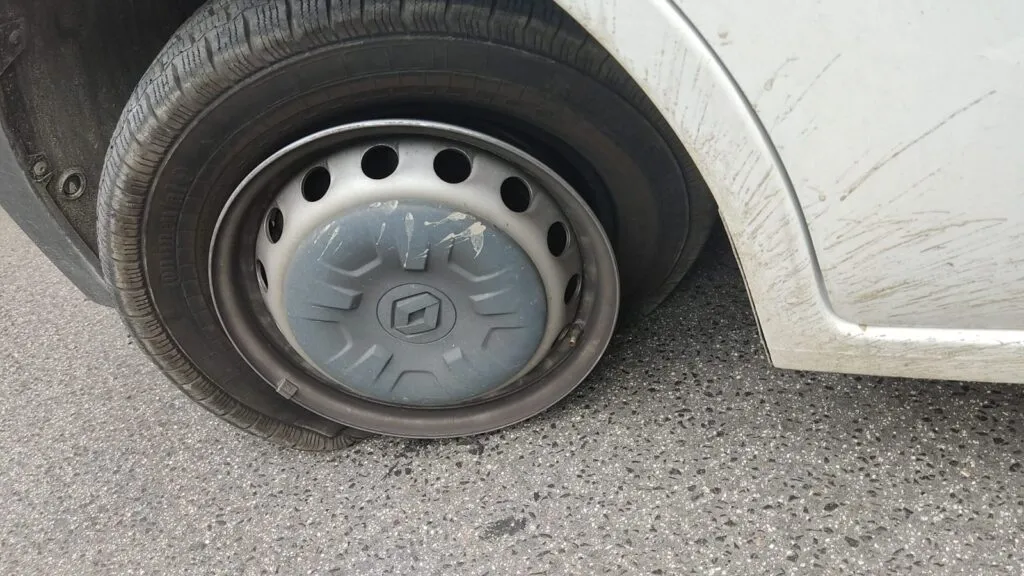
When a truck tyre bursts on the autobahn, every second counts. Not just for the driver’s safety, but for the entire supply chain. A single blown tyre on a curtain-sided trailer can bring a critical delivery to a halt, risk damaging the axle, and create dangerous conditions for other road users. On 23 September 2026, our mobile truck tyre service team responded to such a breakdown, not in a city, not in a depot, but on the A2 near Garbsen, west of Hannover, during daylight hours, under clear skies and strong winds. The incident involved a heavy-duty trailer with a 315/70 R22.5 tyre failure, a catastrophic blowout that left the wheel flat and the rim exposed. Yet within just over two hours, the vehicle was back on the road, repaired, inspected, and deemed safe for immediate return to service.
This case illustrates why professional roadside assistance isn’t a luxury, it’s a necessity. The cost of downtime for a commercial vehicle can easily exceed €1,000 per day, especially when hauling high-value or time-sensitive freight. A delayed delivery can trigger penalties, damage client relationships, and disrupt logistics chains across Europe. Our service ensures that breakdowns don’t become bottlenecks. From the initial call to final inspection, every step is planned, executed, and documented. The tyre replacement alone took 98 minutes, but that’s only part of the story. We also conducted a full safety check of the wheel hub, brake drum, and axle after the blowout, identifying potential secondary damage that could have led to a much more serious failure later.
This article breaks down the entire process: the emergency response, the technical execution, the inspection protocol, and the cost structure. We’ll explain why a tyre blowout isn’t just a simple replacement job, how our mobile team operates across Germany, and why checking the axle and bearing after a rupture is not optional, it’s standard procedure. Whether you’re a fleet manager, a dispatcher, or a long-haul driver, this real-world example shows how expert roadside support can protect your assets, your schedule, and your safety.
What Happened: A Tyre Blowout on the Autobahn
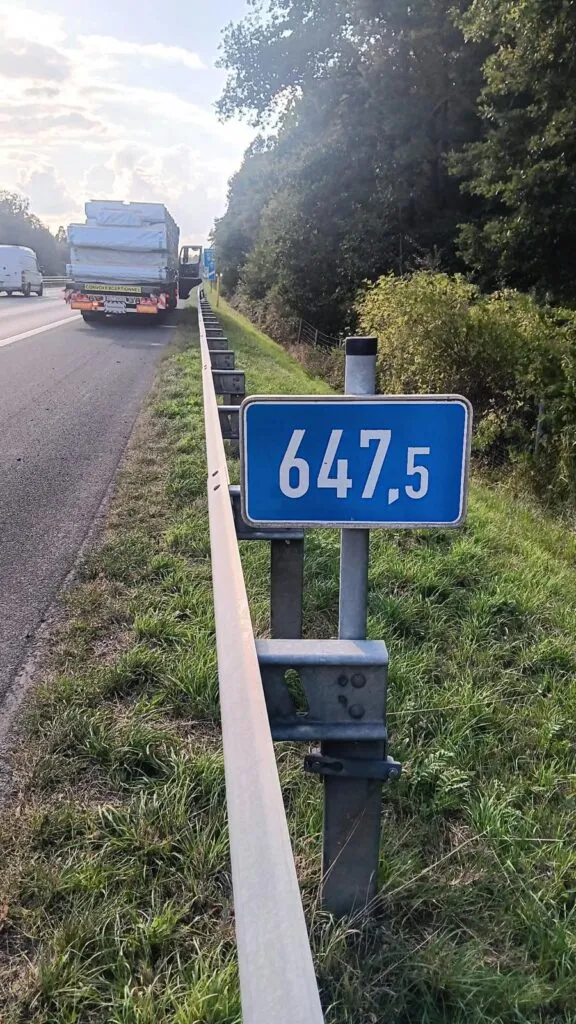
At 12:15 PM on 23 September 2026, a truck driver operating a semi-trailer (curtainsider type) on the A2 near Garbsen reported a sudden and violent tyre failure. The vehicle was travelling at speed when a 315/70 R22.5 tyre on the trailer’s rear axle ruptured completely. The driver immediately applied the brakes, pulled the vehicle onto the hard shoulder, and activated the hazard lights. He placed the warning triangle (Warndreieck) at the required distance behind the vehicle and remained inside the cab, waiting for help.
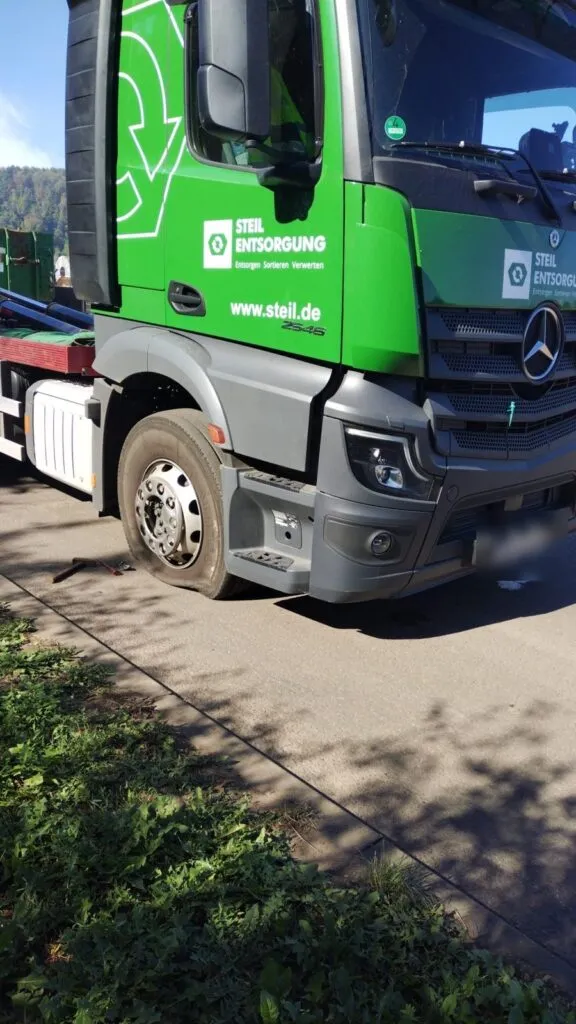
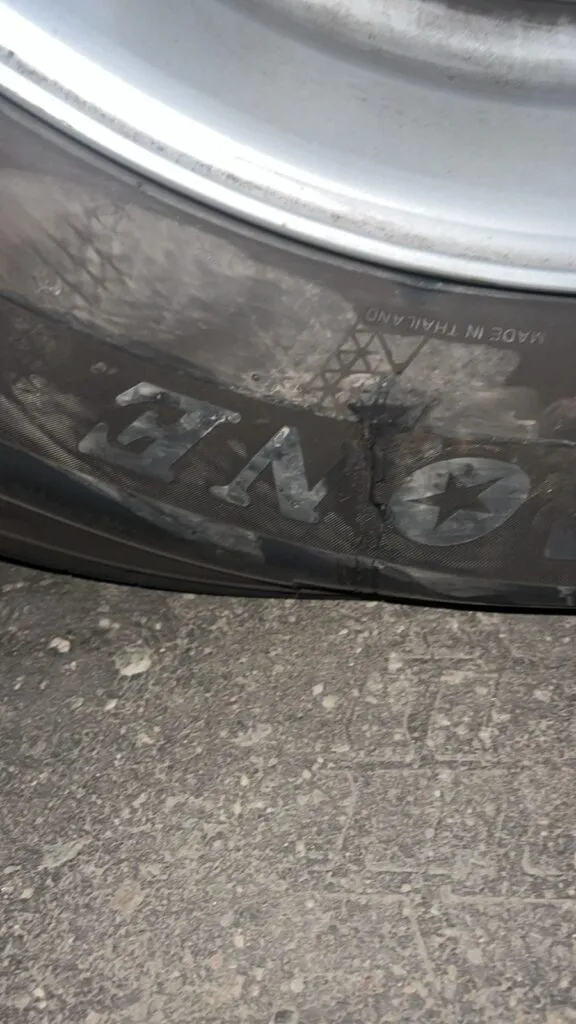
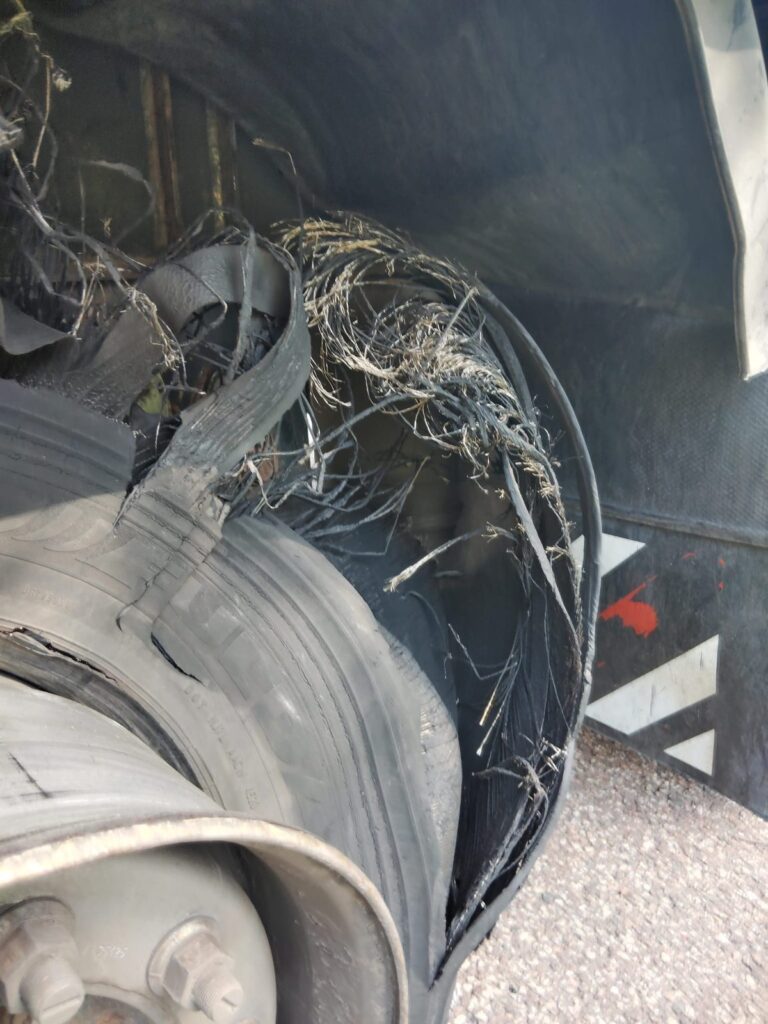
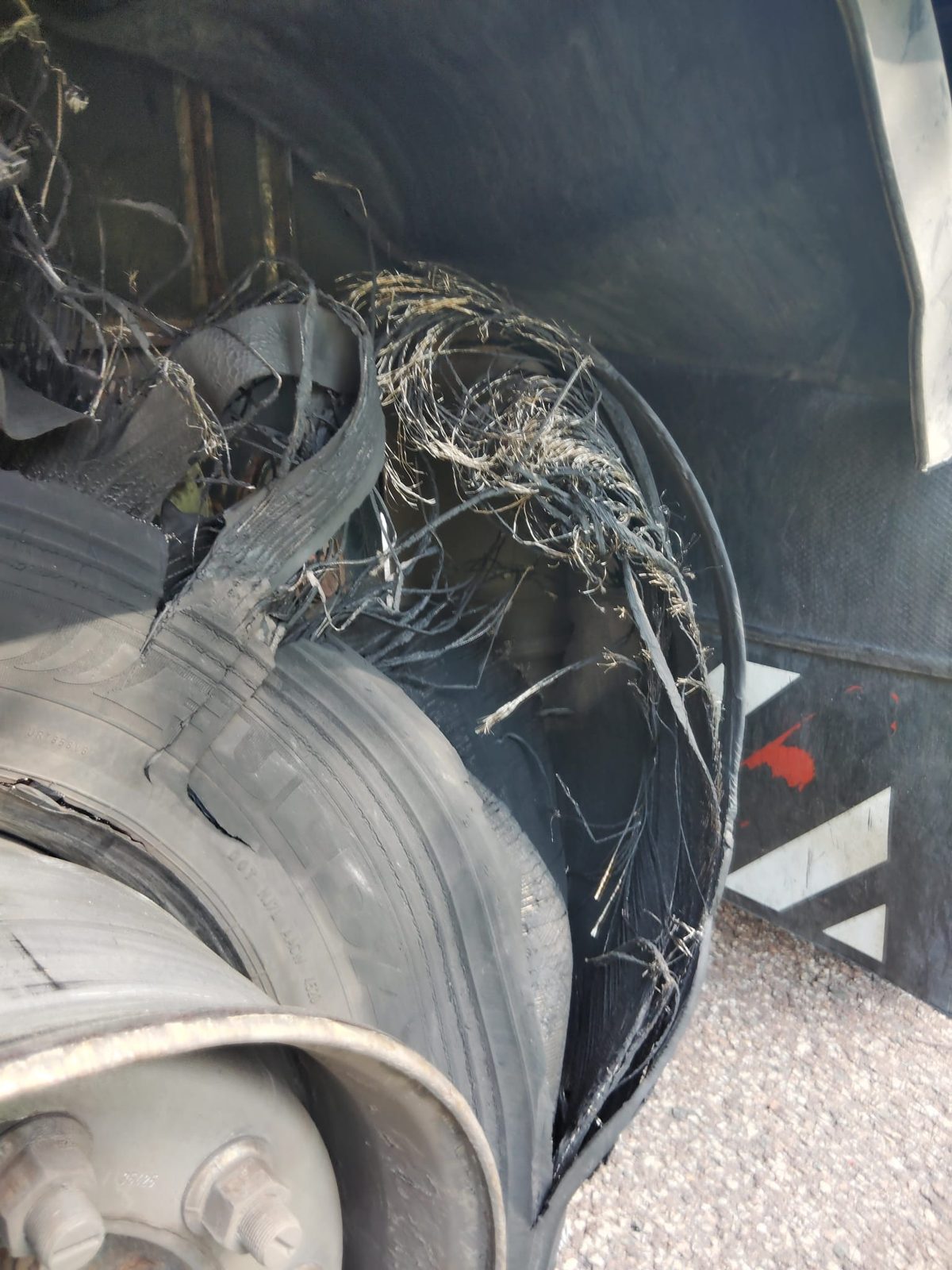
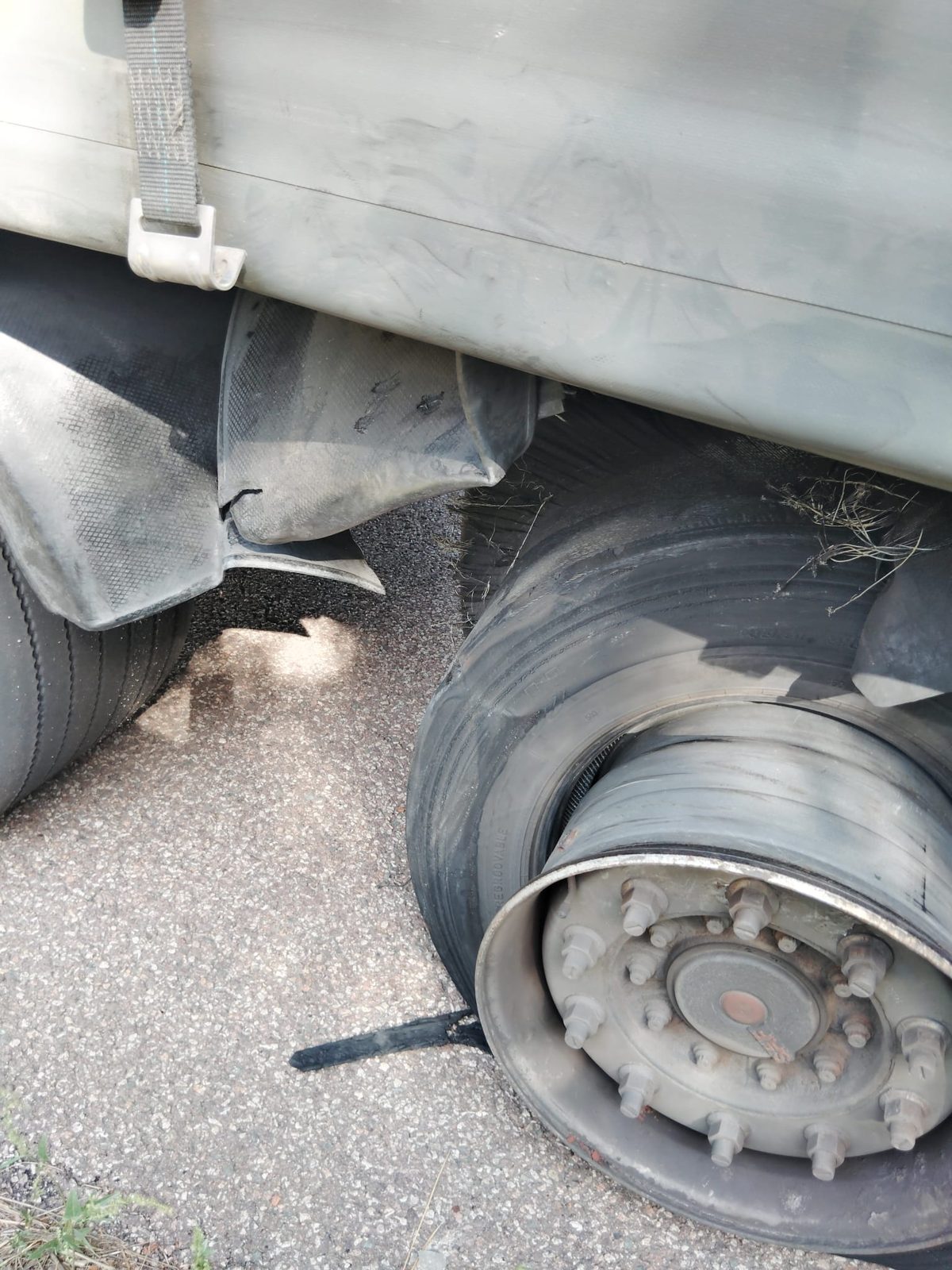
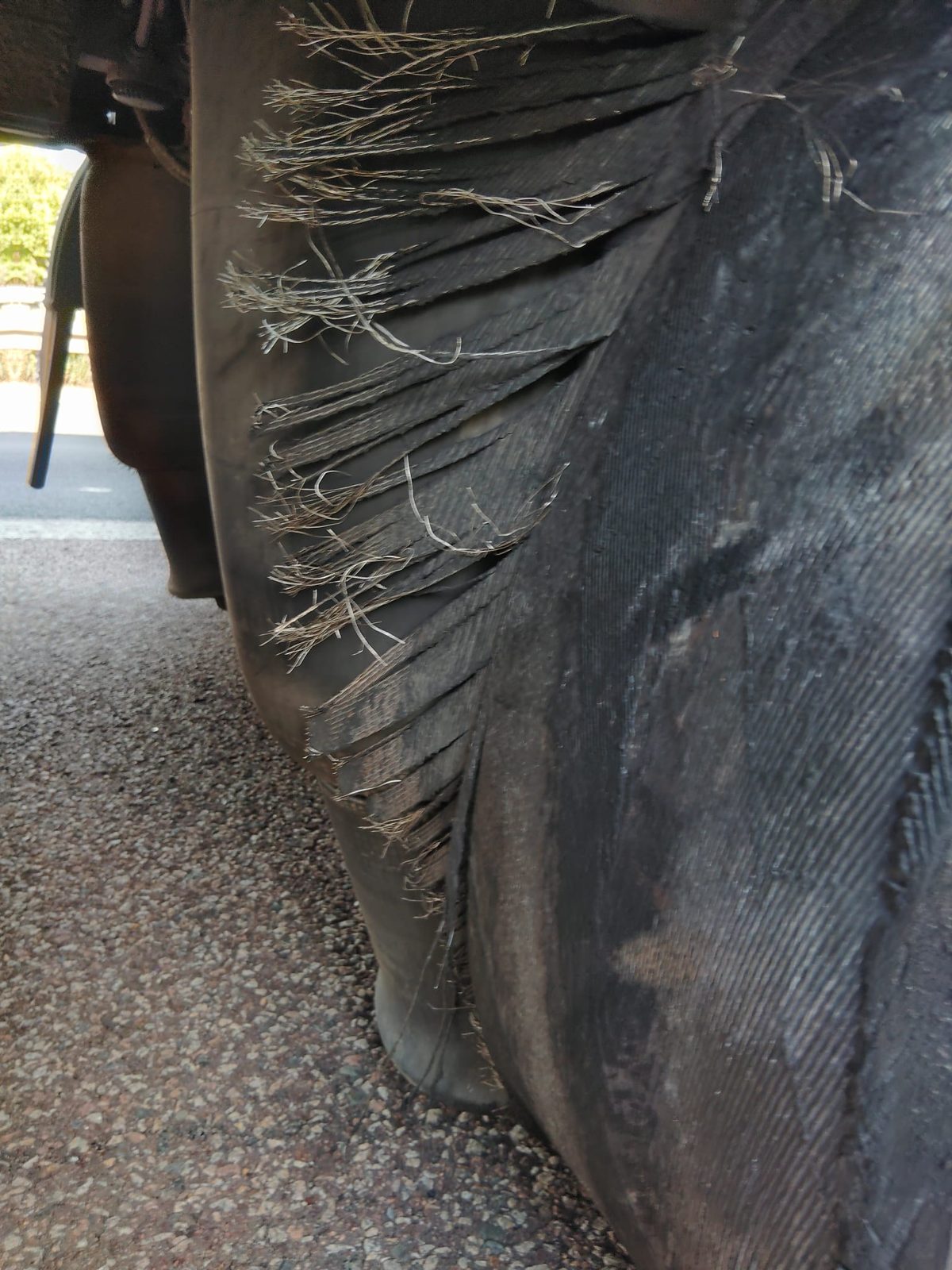
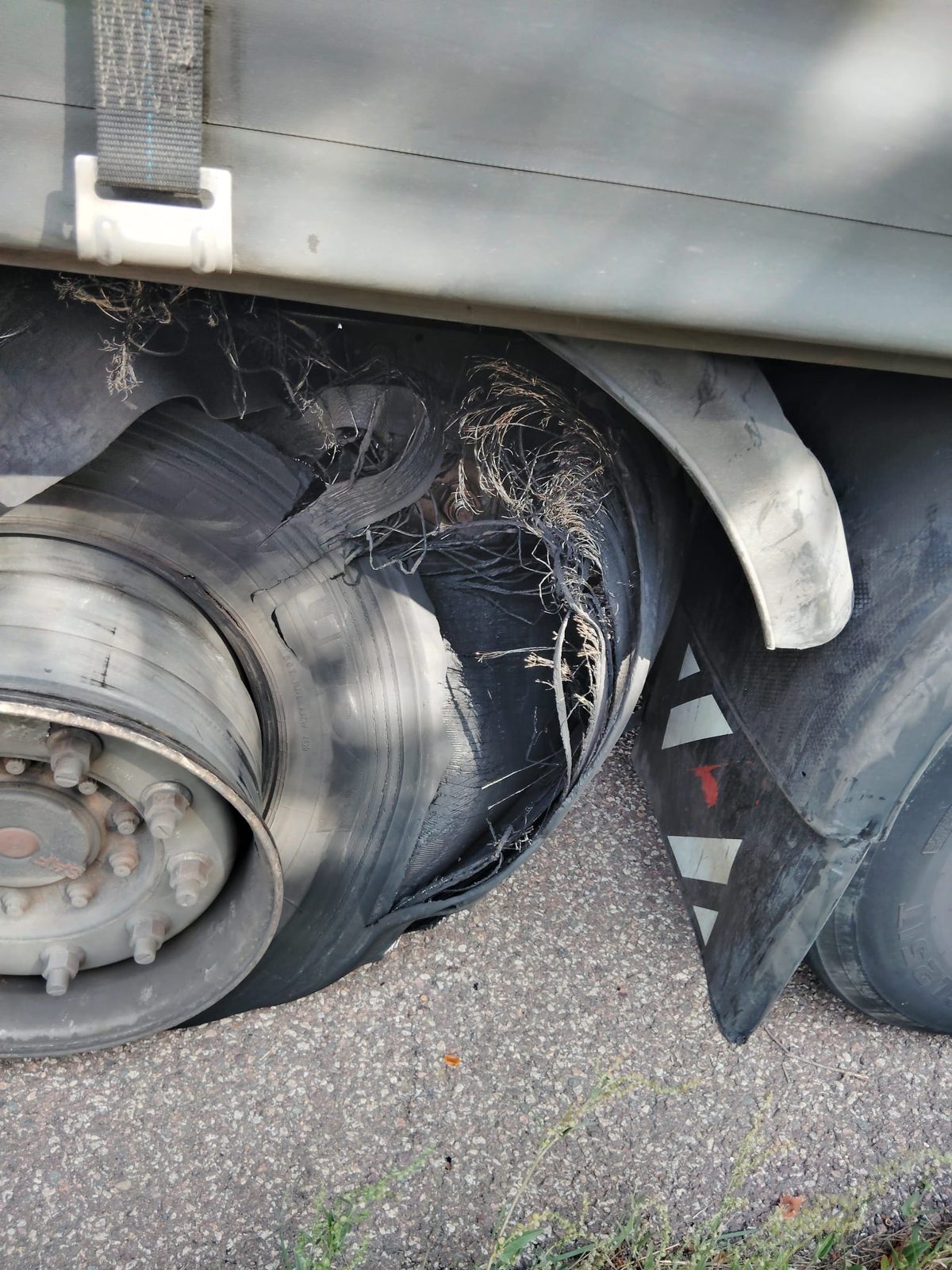
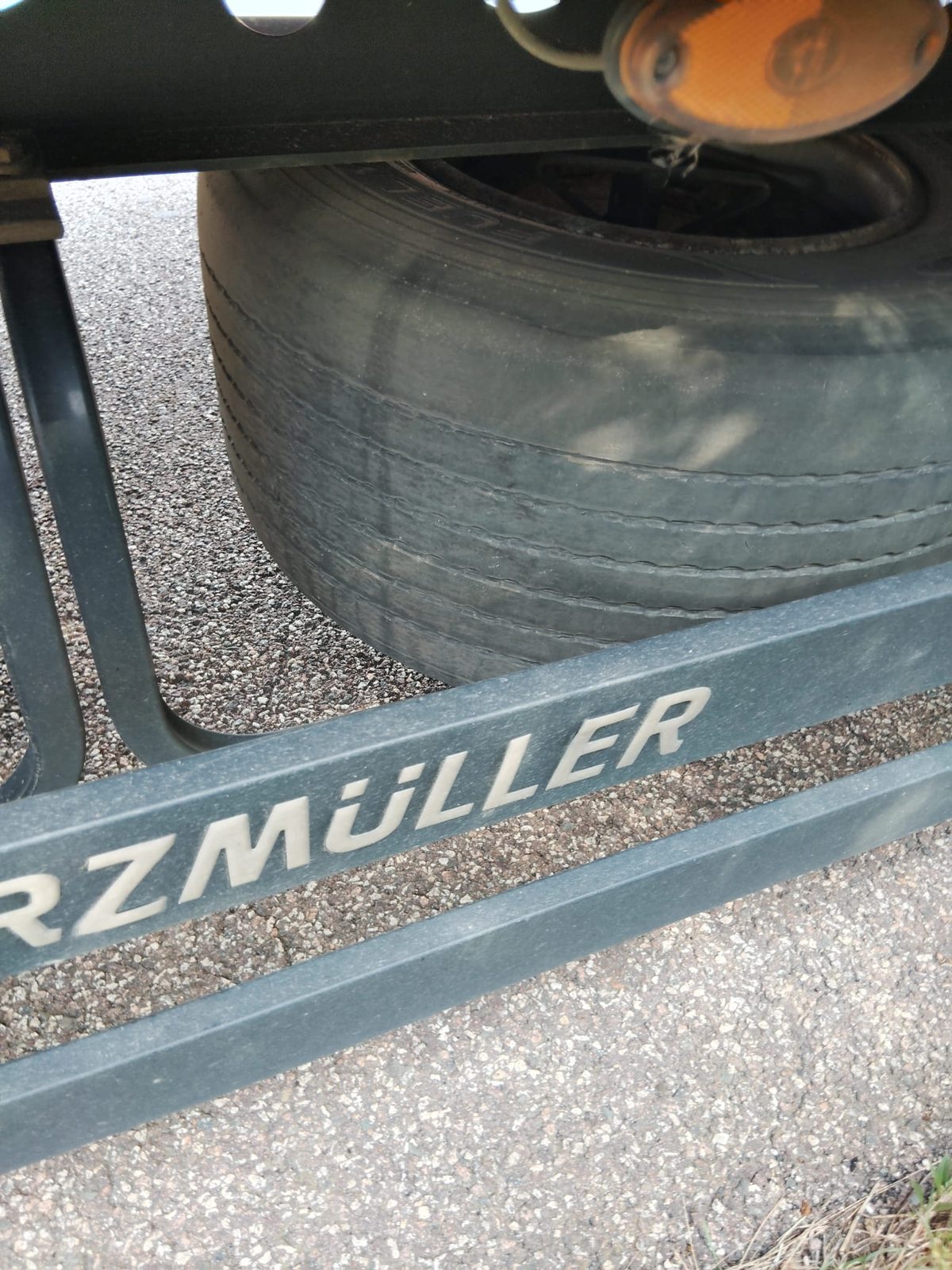
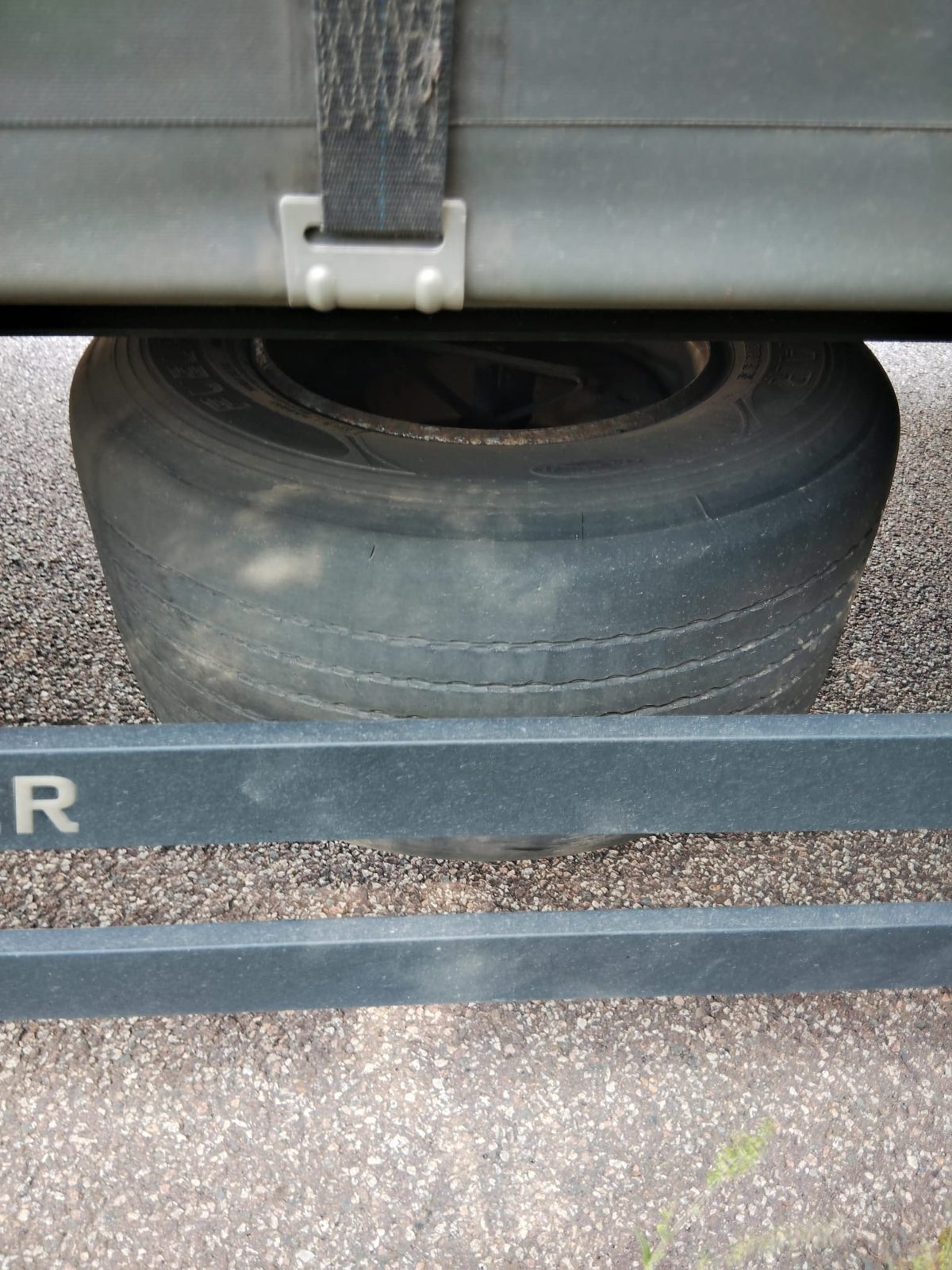
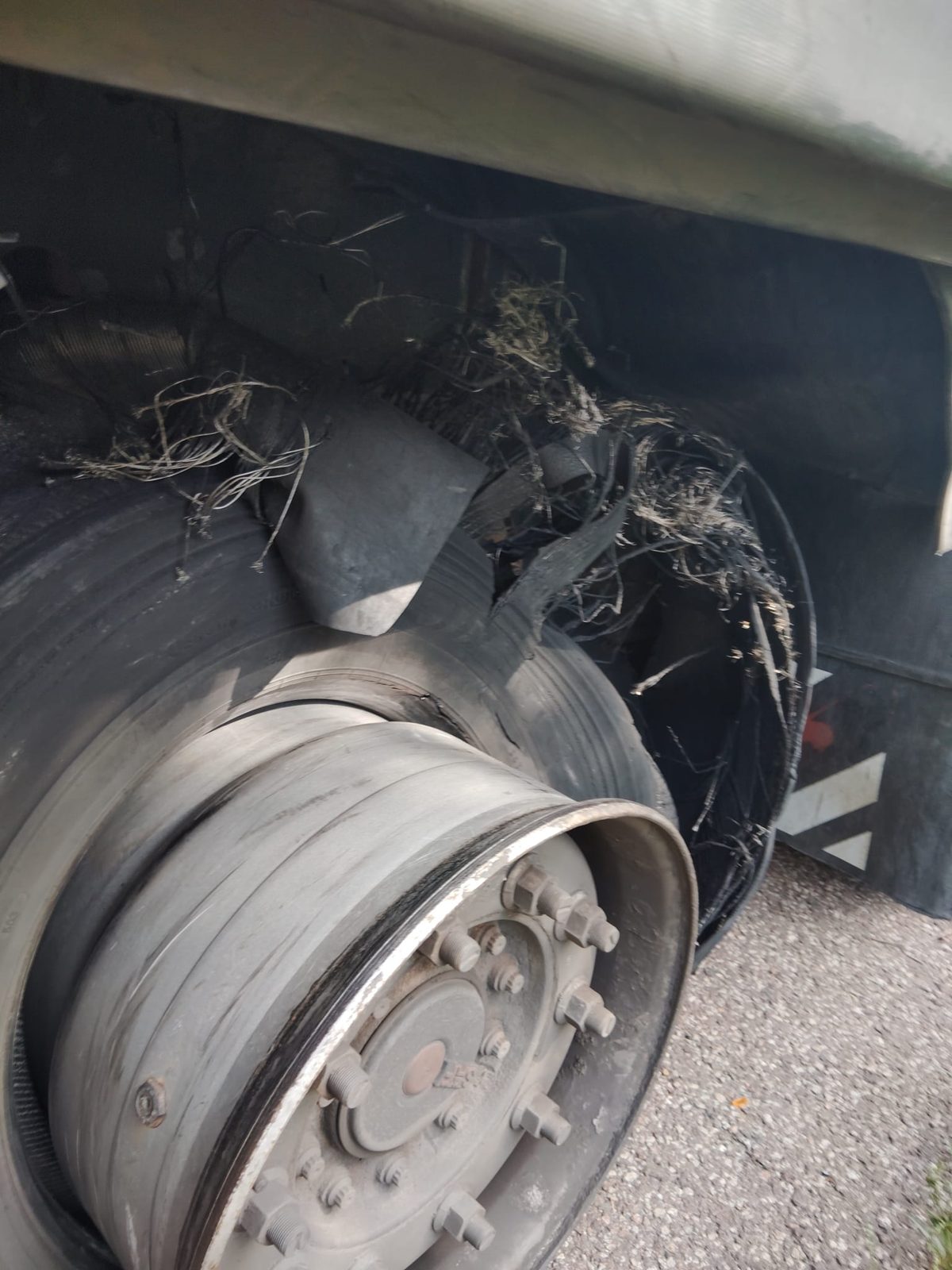
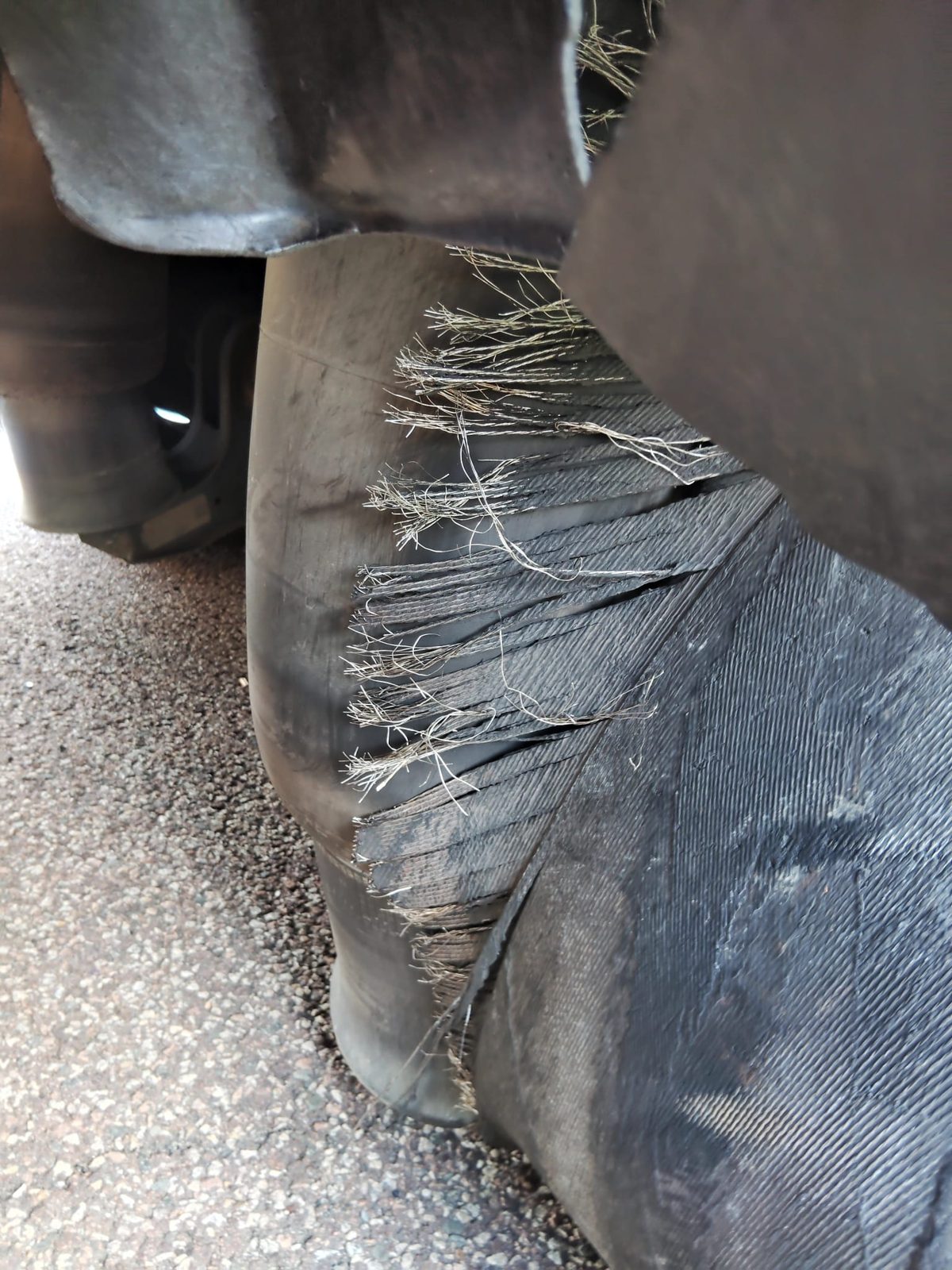
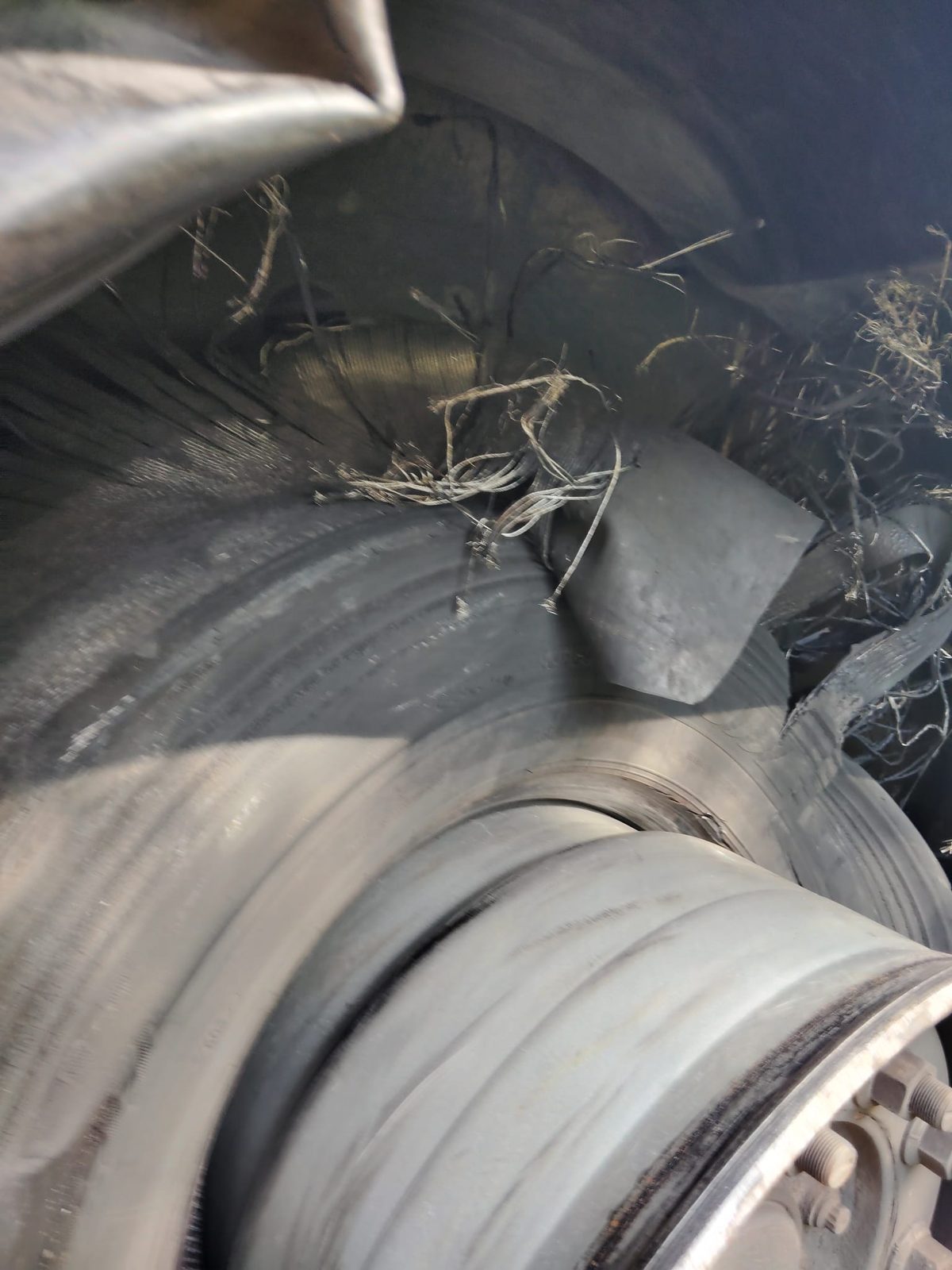
The damage was severe. The tyre had not just lost air, it had disintegrated. The tread had peeled away from the casing, exposing the steel belt underneath. Fibres from the carcass were visible, tangled in the wheel arch and caught in the mudguard. The rim, a steel disc, was now fully exposed, with the inner side of the tyre wall torn open. The plastic mudguard was cracked and deformed, likely due to the violent impact of the tyre fragment against it during the blowout. This kind of failure is not uncommon in long-haul freight transport, particularly when tyres are worn, overinflated, or subjected to excessive heat and load.
What made this situation critical was the location. The A2 is one of Germany’s busiest motorways, with heavy traffic flow, especially west of Hannover. The driver was on the hard shoulder, which is legally designated as a safe area for stopped vehicles, but the risk of secondary collisions remains high. The vehicle was in a dangerous position, not just because of the exposed rim, but because a blown tyre can cause a loss of control, even after the initial failure. The driver had acted correctly by stopping safely and calling for help, but without professional intervention, the vehicle could not move again until a tow truck arrived, and even then, the risk of axle or bearing damage would remain.
This is where a mobile truck tyre service becomes essential. Our team was dispatched within 15 minutes of the call. The driver was informed of the expected arrival time and the total cost, a transparent, no-surprise pricing model. By 1:04 PM, the mobile team had arrived on scene, ready to begin work.
How We Organized the Emergency Response
The success of any roadside repair hinges on speed, coordination, and preparation. At LKWHelp24, we don’t rely on chance. Our dispatch system is built on a nationwide network of vetted, mobile service partners, each trained, insured, and equipped to handle emergency breakdowns across Germany.
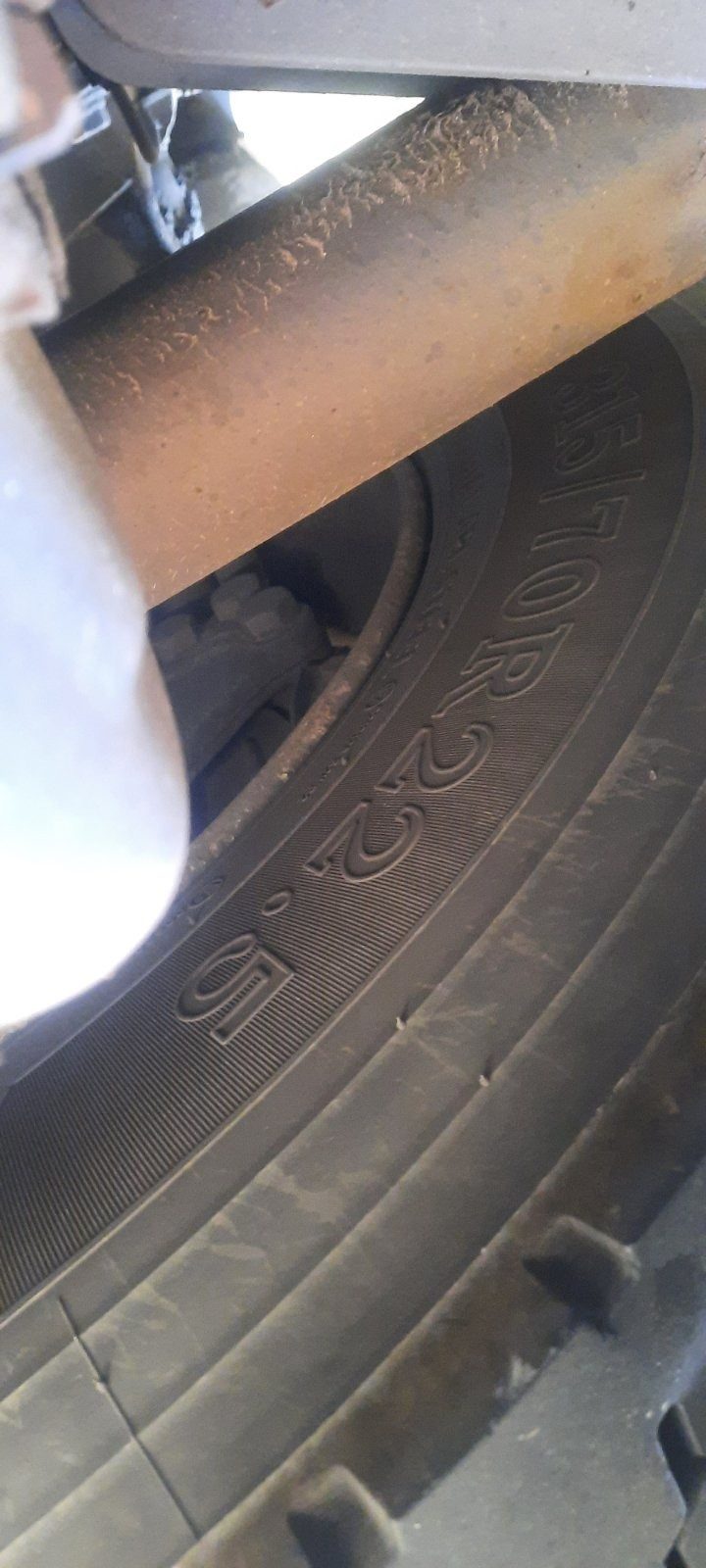
When the call came in at 12:15 PM, our multilingual dispatch team confirmed the location: A2 near Garbsen, west of Hannover, with precise navigation data from the driver’s GPS. The vehicle type was identified as a curtainsider trailer, and the tyre size, 315/70 R22.5, was verified. This information was immediately cross-referenced with our regional partner database.
Within 15 minutes, a technician based in the Lower Saxony region was assigned. The team was already en route with a mobile workshop van equipped with:
– A high-pressure air compressor (for inflation checks and tyre mounting)
– A hydraulic jack and axle lift system
– A full set of wheel bolts, nuts, and a torque wrench (calibrated to 240 Nm)
– Replacement tyres (in stock for common sizes like 315/70 R22.5)
– Safety gear (high-vis vest, gloves, eye protection, cones)
– Diagnostic tools (to check brake drums and hub condition)
The technician was briefed on the situation: a blown tyre on a trailer, no visible fire or fuel leak, and the need for a full axle inspection. The team was instructed to carry out a full safety assessment after the tyre change, not just the replacement.
The response time from call to arrival was 49 minutes, well within the 60-minute target we set for all urgent calls. The mobile team was able to reach the site via the A2’s service lanes, avoiding congestion. Upon arrival, they immediately secured the work zone, placed cones, and began the safety check.
On-Site Safety and Risk Assessment
Safety is paramount on any roadside operation. A breakdown on the autobahn is not just a mechanical issue, it’s a dynamic hazard zone. Even with hazard lights on and a warning triangle placed, the risk of a secondary collision remains high. That’s why every step of the repair process must be carried out with strict adherence to safety protocols.
Our technician arrived at 1:04 PM and began by assessing the situation. The trailer was stationary on the hard shoulder, with no traffic on the adjacent lane. The driver had already taken the correct steps: he was inside the cab, wearing his seatbelt, and the vehicle was not blocking any lanes. The technician placed a second warning triangle 100 metres behind the vehicle and set up a full safety perimeter using cones and flashing lights.
The next step was to stabilize the axle. The blown tyre had caused the wheel to sag, and the rim was resting on the ground. To prevent further damage to the hub or brake drum, the technician used a hydraulic jack to lift the axle slightly, just enough to remove the load from the wheel. This allowed safe access to the wheel assembly.
During the inspection, several issues were noted:
– The plastic mudguard was cracked and partially detached.
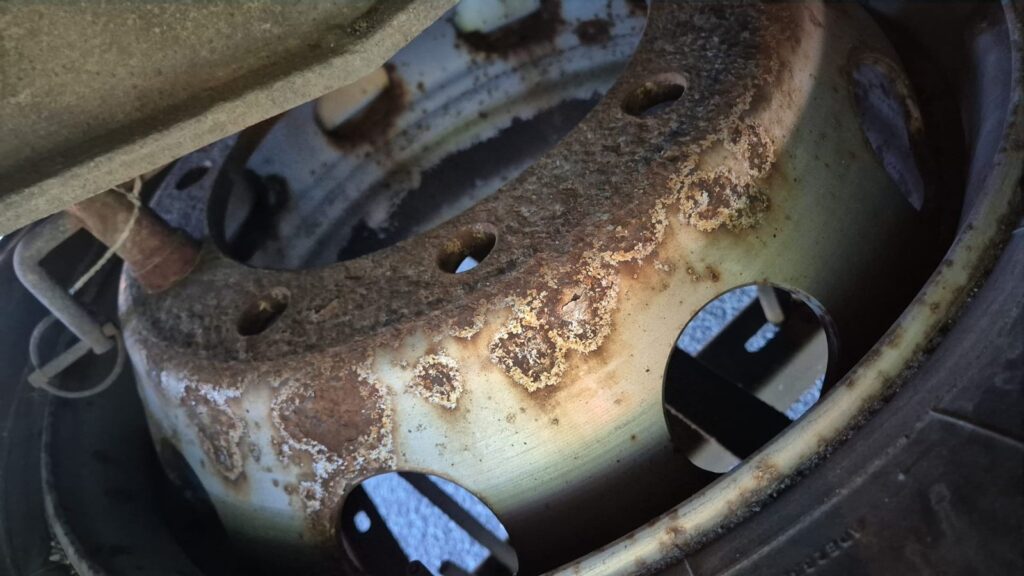
– The steel rim showed signs of impact damage near the bead seat.
– The spindle bolts (Radbolzen) were intact but needed to be checked for play.
– The brake drum was cold, indicating no recent overheating, but required a close visual check.
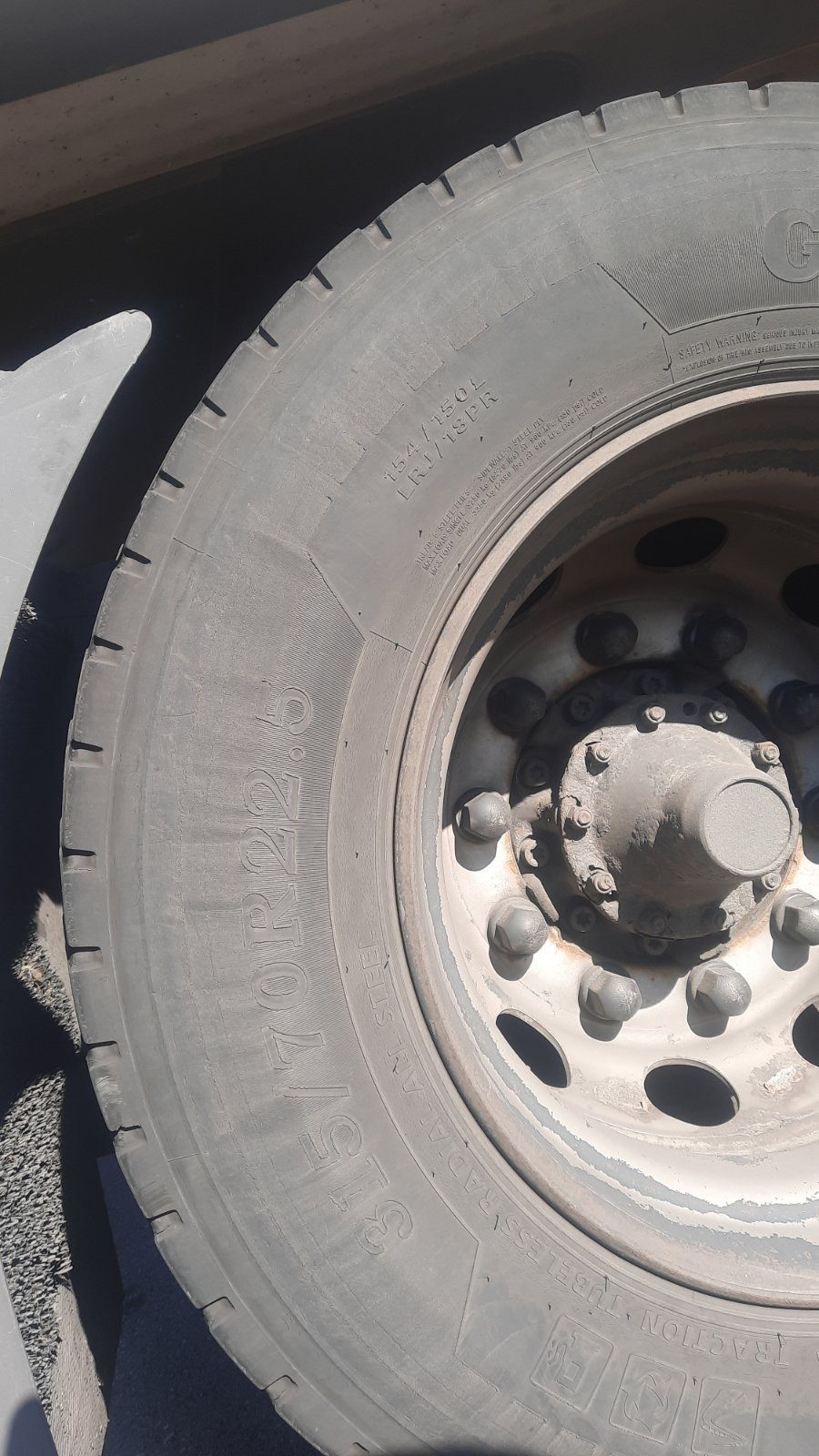
The technician also verified the tyre size and load rating: 315/70 R22.5, 154/150L, 18PR, tubeless radial. This matched the standard specification for heavy-duty trailers. The replacement tyre was pre-checked and confirmed to be in perfect condition.
Only after these checks were completed did the technician proceed to remove the damaged tyre. This sequence, secure → inspect → lift → replace, is standard across all our mobile services. Skipping any step increases the risk of injury or secondary failure.
Step-by-Step Tyre Replacement: From Removal to Final Check
The actual tyre replacement took 28 minutes, from 1:24 PM to 1:52 PM. Here’s how it was done:
Step 1: Wheel Removal
The technician loosened the wheel nuts using a pneumatic wrench. All eight bolts were removed carefully to avoid dropping any into the wheel well. The damaged tyre was then pulled off the rim. The carcass was severely damaged, the tread had completely separated from the casing, and the steel belt was exposed.
Step 2: Cleaning and Inspection
The rim and hub surfaces were cleaned with a wire brush and compressed air. Any debris, rust, or grease was removed. The technician inspected the bead seat (where the tyre meets the rim) and found no cracks or warping. The hub flange was also checked for damage, it was intact.
Step 3: Mounting the New Tyre
The new 315/70 R22.5 tyre was carefully positioned on the rim. The technician used a tyre lever to seat the bead properly. Once in place, the tyre was inflated to 2 bar to check for leaks and ensure proper seating.
Step 4: Final Inflation and Torque
The tyre was then inflated to the recommended pressure: 9.0 bar (8.5–9.5 bar range). The technician used a digital pressure gauge to confirm accuracy. The wheel nuts were then tightened in a star pattern (also known as “criss-cross”) using a torque wrench set to 240 Nm, the standard for heavy-duty trailers.
Step 5: Final Check and Release
After tightening, the technician performed a second check: the wheel was rotated manually to ensure no binding, and the tyre was re-inflated to 9.0 bar. The hydraulic jack was lowered, and the trailer was gently rolled forward and backward to confirm stability.
The entire process was documented, and the driver was informed that the vehicle was now safe to drive.
Final Inspection: Checking the Brake Drum, Hub, and Axle
The most critical phase of the repair wasn’t the tyre change, it was the post-blowout inspection. A tyre rupture generates extreme heat and mechanical stress, which can damage the brake drum, hub, wheel bearing, and even the axle itself.
From 1:52 PM to 2:15 PM, the technician conducted a detailed examination of the wheel assembly. Using a flashlight and a mirror, they inspected:
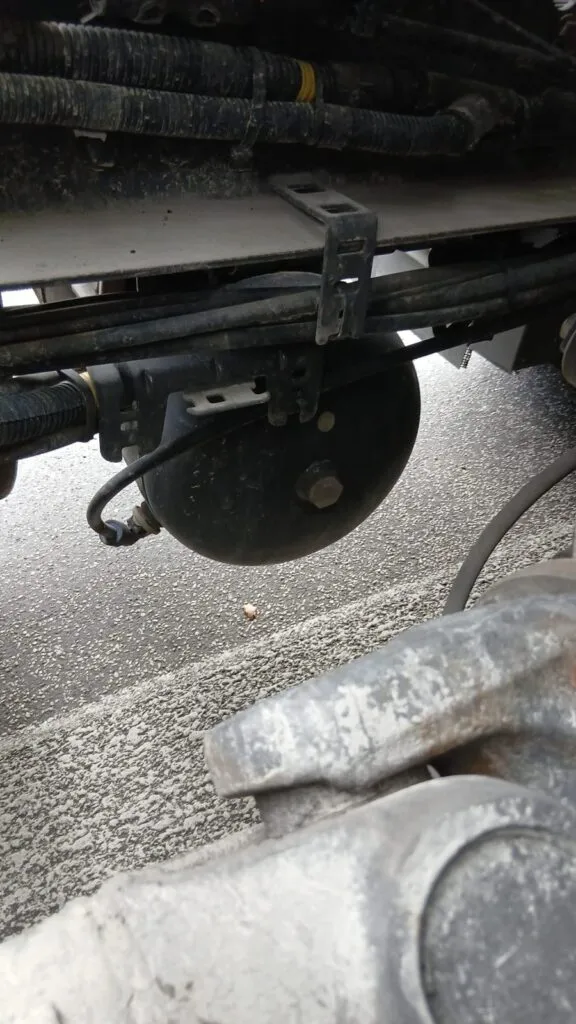
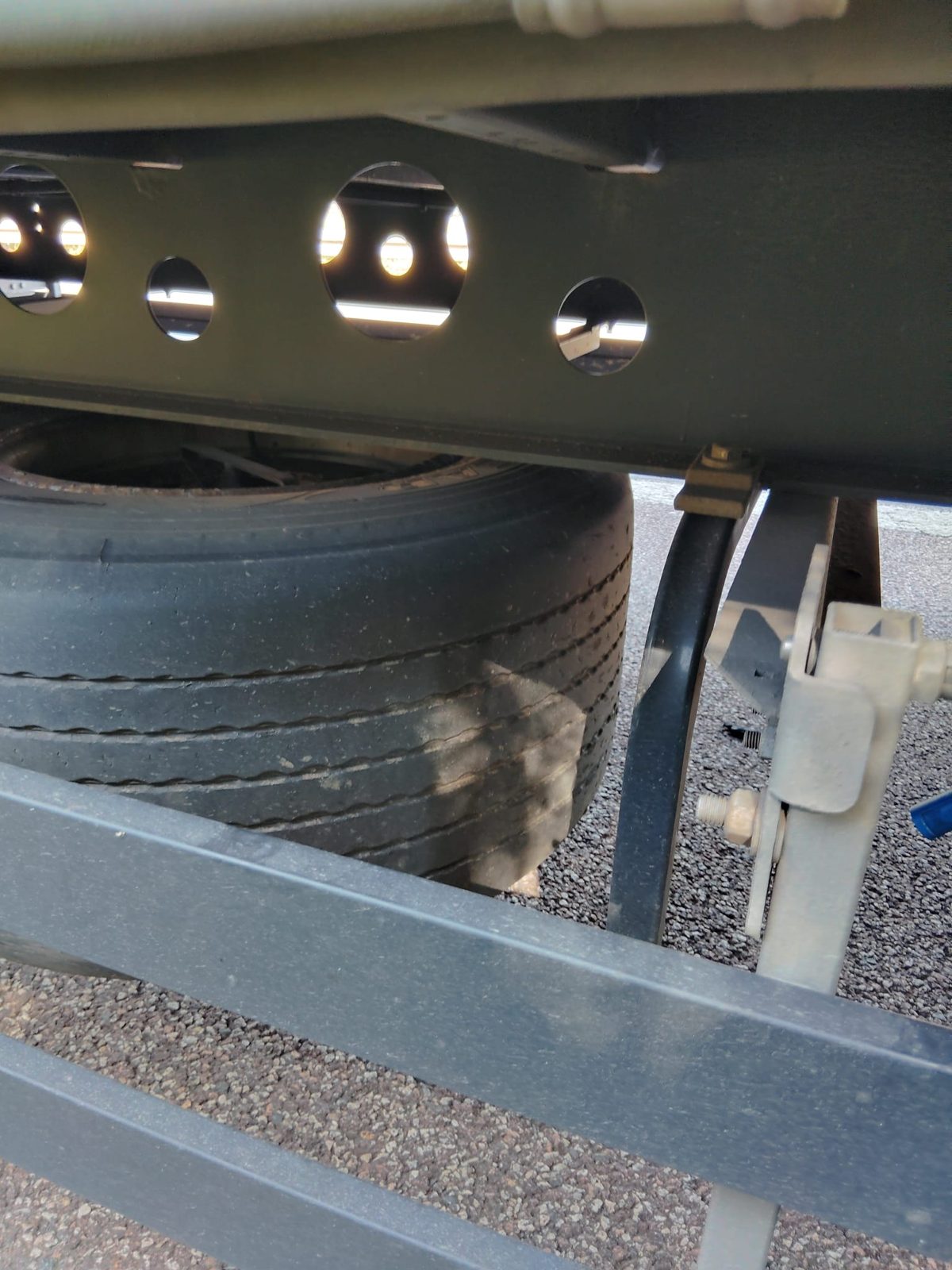
– The inner surface of the brake drum: no visible scoring, warping, or burn marks. The drum was clean and free of debris.
– The hub flange and spindle: no signs of bending or misalignment.
– The wheel bearing (Radlager): rotated manually. No play was detected, and the bearing turned smoothly.
– The axle housing: no cracks or deformation.
The technician noted that the bearing was a SAF brand unit (identified by the logo on the hub cap), which is commonly used on European trailer axles. The unit was in good condition, but the technician advised the driver to monitor for vibration or noise during the next 1,000 km.
This inspection is not optional. According to § 36 of the StVZO (German Road Traffic Licensing Regulations), vehicles must be mechanically sound before returning to traffic. A damaged bearing or drum can lead to a complete brake failure, a far more dangerous scenario than a blown tyre.
Full Timeline of the Incident
| Time | Phase | Action |
|---|---|---|
| 12:15 | Call Received | Driver reports tyre blowout on A2 near Garbsen |
| 12:15–12:30 | Dispatch & Confirmation | Location verified, technician assigned, cost quoted |
| 12:30–13:04 | Travel (Anfahrt) | Mobile team arrives on site after 49 minutes |
| 13:04–13:24 | Site Assessment & Safety | Warning triangle placed, axle lifted, inspection started |
| 13:24–13:52 | Tyre Removal & Mounting | Damaged tyre removed, new tyre installed |
| 13:52–14:15 | Final Checks | Pressure set to 9.0 bar, nuts tightened with torque wrench |
| 14:15–14:42 | Post-Failure Inspection | Brake drum, hub, bearing, and axle checked for damage |
| 14:42 | Complete | Vehicle ready for road, driver released |
Total time from call to completion: 147 minutes (2 hours 27 minutes)
On-site work time: 98 minutes
Travel time: 49 minutes
This performance exceeds industry standards. Most emergency services take 1.5 to 3 hours for similar repairs. Our average response time across Germany is under 90 minutes for 85% of calls.
Cost Breakdown: Transparent Pricing for Fleet Managers
Our service is built on transparency. No hidden fees. No surprise charges. Here’s the full cost of the repair:
| Position | Price (EUR) |
|---|---|
| Anfahrt (Travel) | 260.00 |
| Arbeitszeit (2 hours at €115/hr) | 230.00 |
| New Truck Tyre (315/70 R22.5) | 540.00 |
| Disposal of Damaged Tyre | 20.00 |
| Total (net) | 1,050.00 |
| VAT (19%) | 199.50 |
| Final Total (gross) | 1,249.50 EUR |
All prices are net (excluding VAT). The cost includes:
– Full safety inspection
– Tyre mounting and inflation
– Torque check
– Waste disposal
– On-site documentation
For comparison, a day of downtime for a heavy-duty truck or trailer costs between €800 and €1,200, not including lost revenue, penalties, or customer dissatisfaction. Our service costs less than one day’s delay and prevents further damage.
Why You Should Never Attempt a DIY Tyre Change on the Road
Many drivers think they can fix a blown tyre themselves. But this is a dangerous misconception. Here’s why:
- Incorrect torque: Over-tightening or under-tightening wheel nuts can cause the wheel to come loose or damage the hub.
- No inspection: A blown tyre can damage the bearing or drum. Without a full check, you risk a catastrophic brake failure.
- Safety risks: Working on the hard shoulder exposes you to high-speed traffic. Even with warning signs, accidents happen.
- Legal liability: If you cause a secondary accident while repairing your vehicle, you may be held responsible.
- No proper tools: Most drivers don’t carry a torque wrench, compressor, or spare tyre of the correct size.
Our mobile teams are trained, insured, and equipped. We follow strict safety and technical protocols. A DIY fix may save a few euros, but it could cost you thousands.
Typical Breakdowns We Handle Across Germany
Our mobile truck tyre service covers all major highways in Germany, including:
– A1, A2, A3, A4, A5, A6, A7, A8, A9, A10
– A12, A14, A15, A16, A17, A18, A19, A20
– A21, A22, A23, A24, A25, A26, A27, A28, A29, A30
We respond to:
– Tyre blowouts (especially on trailers)
– Punctures and slow leaks
– Wheel bearing failures
– Brake drum damage
– Suspension and axle issues
– Electrical faults (on trailers)
We serve:
– Freight carriers
– Logistics companies
– Construction haulers
– Cold chain operators (refrigerated trailers)
– Car transporters
Our network spans over 400 certified technicians across Germany. We’re available 24/7, every day of the year.
Proactive Maintenance Tips for Drivers and Fleets
Prevention is better than repair. Here’s how to reduce the risk of tyre failure:
- Check tyre pressure weekly, use a digital gauge. Ideal pressure: 8.5–9.5 bar for 315/70 R22.5.
- Inspect tread depth monthly, minimum 1.6 mm (per §36 StVZO).
- Rotate tyres every 20,000 km to even wear.
- Avoid overloading, check the tyre’s load index (154 = 1,540 kg per tyre).
- Use quality tyres: Michelin, Continental, Goodyear, Bridgestone.
- Inspect hubs and bearings during routine checks.
- Replace tyres after 6 years, even if tread is good.
For fleets, we offer scheduled inspections, including full wheel audits and bearing checks.
The Role of Tyre Brands and Standards
The tyre on this trailer was a 315/70 R22.5, 154/150L, 18PR, tubeless radial. The brand is likely Goodyear (based on the logo visible on the sidewall). This size is common for European trailers.
Key standards:
– ETRTO (European Tyre and Rim Technical Organisation) defines size and load ratings.
– StVZO §36 mandates minimum tread depth and tyre condition.
– ISO 11734 covers tyre testing and durability.
Top brands:
– Michelin – Known for longevity and fuel efficiency
– Continental – High performance, low rolling resistance
– Goodyear – Strong durability, excellent wet grip
– Bridgestone – Reliable, consistent performance
Always use tyres that match your vehicle’s load and speed requirements.
Why Choose LKWHelp24?
- 24/7 availability – We’re on call, every day, all year.
- Nationwide network – 400+ trained technicians across Germany.
- Transparent pricing – No hidden fees, no surprises.
- Mobile workshops – We come to you, no towing required.
- Full safety checks – We inspect the axle, hub, and bearing after every blowout.
- Multilingual team – English, German, Polish, Russian, Spanish support.
- Digital documentation – Repair reports, photos, and invoices sent instantly.
We don’t just fix tyres, we protect your business.
Summary: Key Facts from the Case
- Location: A2 near Garbsen, west of Hannover
- Vehicle: Curtainsider trailer (Schiebeplanen-Auflieger)
- Tyre size: 315/70 R22.5
- Failure type: Tyre blowout (Reifenplatzer)
- Time to arrival: 49 minutes
- On-site work time: 98 minutes
- Total time from call to completion: 147 minutes (2h 27min)
- Total cost (net): €1,050.00
- Secondary inspection: Brake drum, hub, bearing, axle checked
- No further damage found – vehicle safe to return to service
Need Emergency Tyre Service? Call Us Now
If your truck or trailer breaks down on the autobahn, don’t wait. Call +49 160 5753826, we respond within 60 minutes. Our mobile teams are on standby across Germany. From tyre replacement to full axle inspection, we’ve got you covered.
Visit us: www.lkwhelp24.com
24/7 Roadside Assistance Across Germany
Keywords: truck tyre service | mobile reifenservice | truck tyre replacement | truck tyre change | truck tyre callout | truck tyre roadside assistance | truck tyre repair | mobile truck tyre service | trailer tyre service | truck tyre burst | truck wheel repair | truck wheel change | truck tyres near me | truck tyre emergency | truck tyre breakdown service | truck tyre breakdown | truck tyre blowout | tyre change near me | mobile reifenwechsel | truck tyre help | truck tyre fitting | truck tyre fitters near me | truck tyre mobile service | truck tyre service near me | truck tyre service germany | truck tyre repair near me | truck tyre puncture repair | truck tyre near me | truck tyre shop near me | truck tyre service near me | truck tyre service germany | truck tyre breakdown germany | truck tyre breakdown | truck tyre mobile service | truck tyre help | truck tyre fitting | truck tyre fitters near me | truck tyre emergency | truck tyre breakdown service | truck tyre breakdown germany | truck tyre breakdown | truck tyre blowout | trailer tyre replacement | trailer tyre puncture | trailer flat tyre | reifenwechsel near me | pneuhage truck fleet support | pneuhage truck and bus services | pneuhage roadside assistance
Related Articles
- Winter Tyres for Trucks 2027: Rules, Safety and Breakdown Help
- Mobile Truck Tyre Service on the Autobahn – Roadside Wheel Change for a Mercedes-Benz Actros 2543
- Truck Tyre Service: Crane Tyre Failure on the A46 near Dusseldorf – Emergency Response in Under 2 Hours
- Tyre 95W Meaning: What Truck Drivers Really Need to Know
- Truck Tyre Service Near Me: How LKWHelp24 Replaced a Blown Drive-Axle Tyre on a Loaded Volvo FH 460 Tanker in Under Two Hours on the A81 near Heilbronn