Skip to content
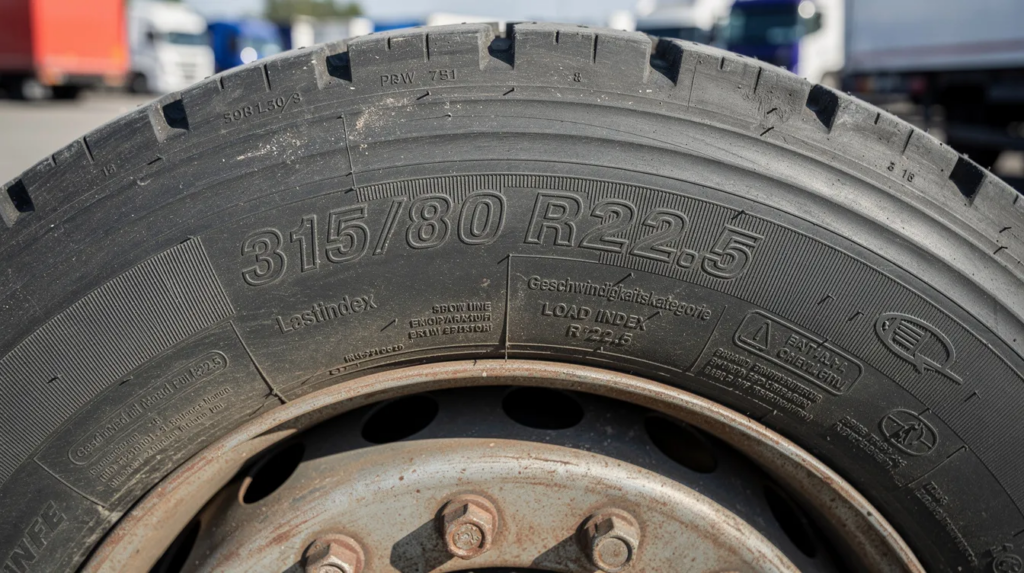
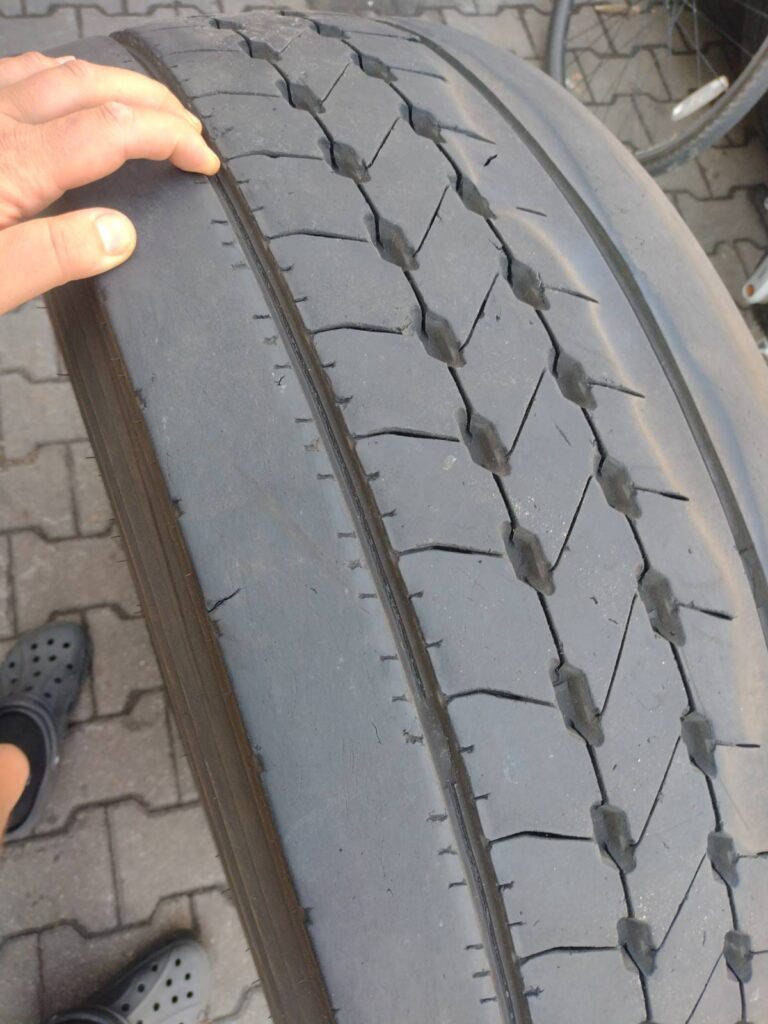
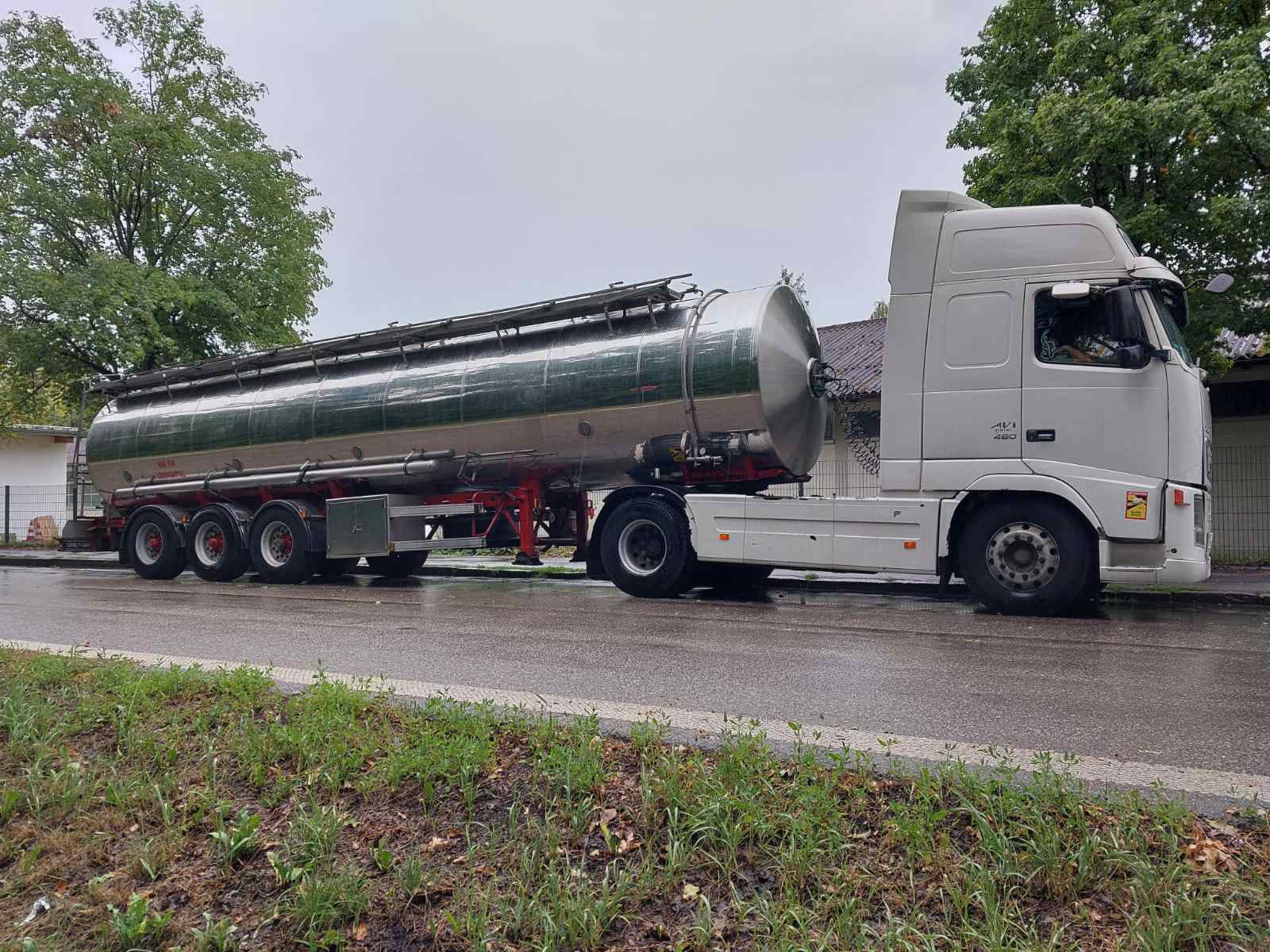
TL;DR: At around 5:40am on 1 July, a tyre (315/80 R22.5) blew out on a partially loaded Volvo milk tanker on a narrow village street in the Cloppenburg district, Lower Saxony. The lorry blocked the only through road. Our partner crew arrived after a 50-minute drive, and the wheel change took 65 minutes. Total time from call to clear road: 2 hours 10 minutes. Total cost: €960 net.
A milk tanker is not an ordinary artic. It runs a fixed round of farms, collecting chilled raw milk and delivering it to the dairy before the cold chain or the farm’s own holding tank become a problem. Break down on a narrow village road and it is not just one vehicle stranded — an entire collection round grinds to a halt.
That is exactly what happened on this Tuesday morning. No hard shoulder, no way round, a village waking up to find its street blocked. What matters in a situation like this is how fast the workshop responds, how safely the crew works, and how honest the final invoice is. This report covers all three in detail.
The Emergency: A Blowout on the Milk Round
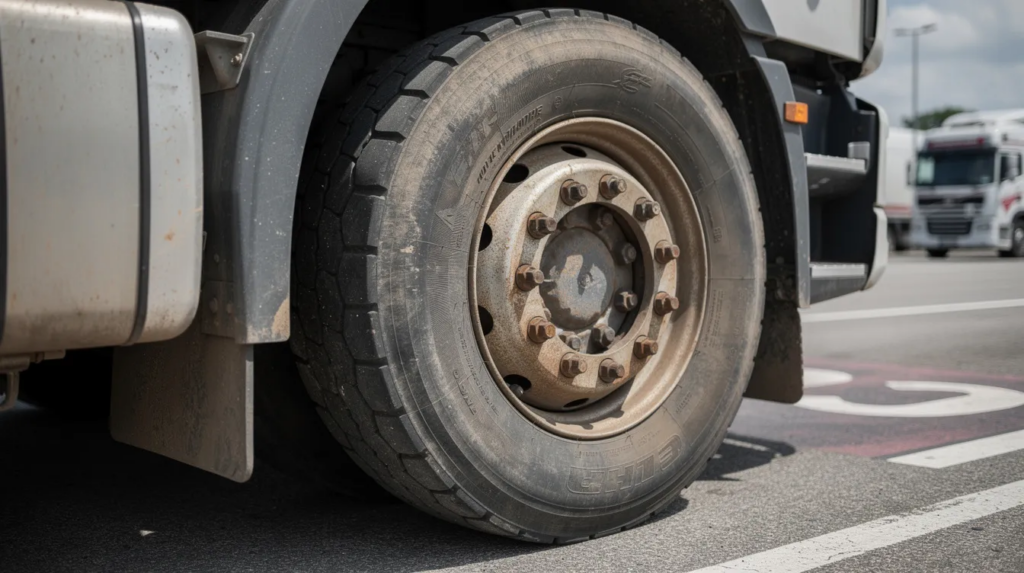
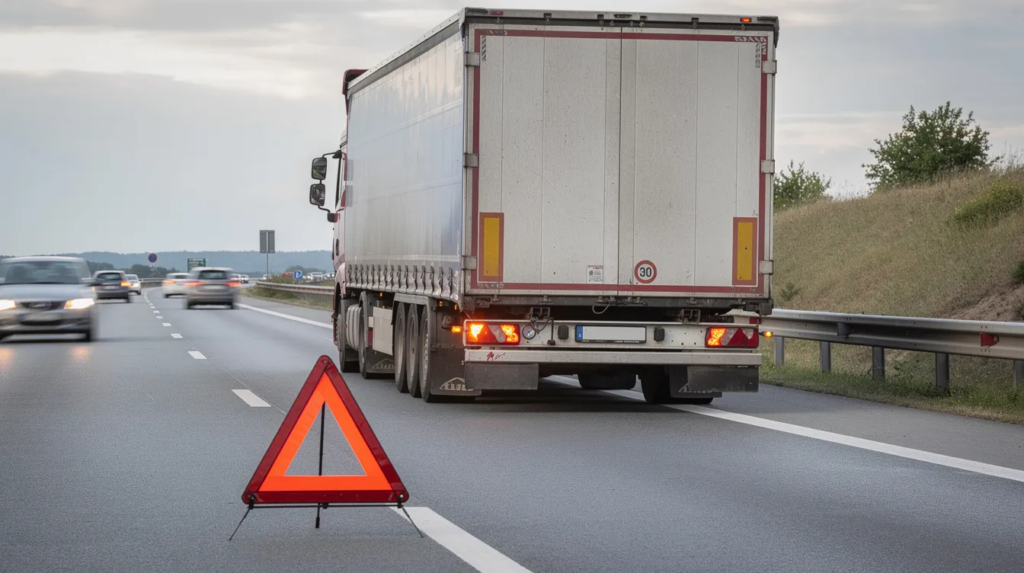
A tyre on the drive axle, size 315/80 R22.5, blew out at roughly 5:40am while the driver was crawling through a narrow village street in the Cloppenburg district. No verge, fences and front gardens on both sides, the tractor unit came to rest at an angle across the carriageway.
The tanker was partially loaded at that point — it had already picked up from several farms and was heading to the next stop. That detail matters for the recovery that followed: a partly filled milk tank is less stable when jacked up than a full one. The liquid has more room to move, and even with internal baffles the centre of gravity shifts noticeably the moment the vehicle is lifted or even tilted slightly.
Timing made things worse: shortly after sunrise, light traffic but enough that the first commuters were trying to get through and couldn’t. A village street of this width leaves no room for two-way traffic past a stranded lorry — the road was effectively sealed.
How the Response Was Organised
The driver reported the breakdown by phone through our 24/7 emergency line. Dispatch worked through clearly defined steps:
- Confirm location and vehicle type (tractor unit with tank body, partially loaded, tyre size 315/80 R22.5).
- Check access — narrow village street, no way round, road effectively blocked.
- Alert the right partner crew in the Cloppenburg region, equipped for rural call-outs.
- Confirm the replacement tyre was already on the crew’s vehicle, no extra sourcing required.
- Instruct the driver to keep hazard lights, warning triangle and hi-vis vest in use until the crew arrived.
Dispatch took 15 minutes — deliberately tightened for rural jobs, since travel time is already longer than a motorway call-out. That planning paid off here.
On Site: Why Waiting Was Not an Option
A stranded milk tanker on a village street cannot simply be left until someone gets round to it, for three reasons.
First, the cargo itself. Raw milk is a perishable product with a narrow temperature window. The tank cools actively, but every extra hour in a queue eats into a buffer the dairy will not have back by the end of the day. If the cold chain slips, the question stops being “will delivery be late” and becomes “is the load still usable at all”.
Second, the collection round works as a chain. A milk tanker doesn’t run a single trip; it runs a route through several farms in sequence. Each farm has a cooling tank with limited capacity. If the tanker doesn’t show up on time, the next farm on the route eventually has nowhere to put the day’s yield — the disruption travels down the whole chain, not just to the stranded vehicle.
Third, the road itself. With no verge, the tanker blocked the full width of the carriageway. Farmers on tractors, the school bus, residents heading to work — all of them were stuck until the road cleared. During this job, the crew spoke briefly with two waiting residents to position the safety cones so pedestrians could at least get past on foot.
There’s a technical layer to this too, true of any HGV tyre blowout: heavy-axle truck tyres run at 8.5 to 9.5 bar. When one bursts, load distribution across the axle shifts abruptly, and continuing to drive on it risks damaging the rim or overloading the neighbouring tyre in the twin set. The legal minimum tread depth of 1.6mm under § 36 StVZO applies equally to every axle, regardless of body type.
Narrow Village Streets as a Working Environment
A through-road with no verge is a different working environment from a motorway hard shoulder. There is no buffer to the carriageway, no second vehicle can pass, and pedestrians move directly through the work area. The crew had to set up safety cones so residents could still walk past on foot without anyone being squeezed between a fence and the tractor unit.
Shortly after 6am the first questions came from neighbours about when the road would clear — not an academic question for the school bus or the first commuters. A short, clear answer helped more than any explanation: the lorry would be gone within the hour. That kind of communication is as much a part of rural jobs as the wheel change itself.
Summer, Winter and the Rural Clock
The season changes the time window for a job like this considerably. In summer, heat shortens how long a partially loaded milk tank stays stable without active cooling running smoothly — one reason this crew moved through diagnosis and fitting briskly rather than double-checking every step. In winter, the opposite problem hits: icy farm tracks and ungritted side roads slow every vehicle, including the recovery crew’s own van. A job that needs 50 minutes’ travel in July can take 20 to 30 minutes longer under snow in January.
Hygiene Around a Food-Grade Tank
A milk tanker is not an ordinary trailer, even though the tyre change itself is mechanically identical. The crew deliberately worked well clear of the tank’s filling neck and discharge valves to avoid tracking any dirt into the food-grade areas. Tools and the jack stayed strictly in the chassis zone, nowhere near the tank fittings. That care costs no extra time but avoids any dispute afterwards about cleanliness around the tank body.
The Tyre Change, Step by Step
Step 1 — Visual inspection: the technician checked the rim, brake disc and suspension for damage caused by the blowout. On a milk tanker, an extra check was added: whether the tyre had struck any part of the tank-mounting frame.
Step 2 — Securing a narrow street: warning triangle placed at a safe distance, hi-vis vest on, a quick word with the first waiting residents so no one drove up too close while work was under way.
Step 3 — Jacking with the liquid load in mind: the jack was placed on a solid chassis point, and lifting was slower than it would be on a dry-freight trailer. The reason: on a partially filled tank, the liquid shifts as the vehicle is raised, and it can rock briefly. A sudden lift here is a genuine safety risk, not a textbook footnote.
Step 4 — Removal and fitting: wheel nuts loosened, damaged tyre removed, new 315/80 R22.5 tyre fitted.
Step 5 — Final check: wheel nuts torqued in a star pattern to spec, tyre pressure checked at 9 bar, quick visual check of the neighbouring tyre in the twin set.
The Complete Timeline
| Time | Phase | Action |
|---|---|---|
| 05:40 | Call | Driver reports blowout via the 24/7 emergency line |
| 05:40–05:55 | Dispatch | Partner crew in the Cloppenburg region alerted (15 min) |
| 05:55–06:45 | Travel | 50-minute drive to the village street, rural access with no motorway link |
| 06:45–06:55 | Securing | Warning triangle, hi-vis vest, coordination with residents |
| 06:55–07:05 | Diagnosis | Visual inspection of rim, brake, suspension |
| 07:05–07:35 | Fitting | 315/80 R22.5 wheel change, careful jacking due to liquid load |
| 07:35–07:50 | Final check | Wheel nuts torqued in star pattern, tyre pressure checked at 9 bar |
Result: 2 hours 10 minutes from call to clear road. For comparison, an equivalent job right off a motorway would typically shave 10 to 15 minutes off the travel leg — almost the entire difference sits in getting to the remote village street, not in the fitting itself.
Cost Breakdown
| Item | Price (EUR) |
|---|---|
| Call-out (rural access) | 260 |
| Tyre 315/80 R22.5 | 560 |
| Labour (65 min) | 120 |
| Old tyre disposal | 20 |
| Total (net, excl. VAT) | 960 |
The call-out fee sits at the higher end of the usual range because rural destinations without direct motorway access take longer than a hard-shoulder stop. The tyre price depends on brand and local availability — for 315/80 R22.5, reputable quotes run between €480 and €620. For comparison, a day’s downtime for a lorry costs hauliers on average €800 to €1,200 — for a milk tanker, the perishable cargo adds time pressure that a plain downtime figure doesn’t capture.
All prices are net, plus statutory VAT. No night or weekend surcharge applies here, as the job fell within normal daytime hours. A comparable job after 10pm or on a Sunday would typically carry a 25 to 50 percent surcharge on the call-out fee, raising the total accordingly.
Why You Need a Professional, Not Improvisation
Changing a tyre on a milk tanker looks straightforward but hides pitfalls a standard artic doesn’t have:
- Placing the jack wrong on a partially filled tank can throw the vehicle off balance as the centre of gravity shifts mid-lift.
- Wheel nuts tightened without a torque wrench work loose gradually on the road — wheel loss is a real consequence, not a theoretical one.
- Careless work near the tank can damage discharge valves or seals and, in the worst case, contaminate the load, ruining an entire day’s yield from several farms at once.
- Driving on even briefly on a damaged rim turns a €560 tyre repair into a far more expensive rim replacement.
- Poor signage on a narrow village street puts pedestrians and oncoming traffic directly at risk, since there’s no lane width acting as a buffer the way there is on a motorway.
- Without experience handling liquid cargo, many drivers underestimate how much a half-full tank moves on tilt — this single factor is what separates a safe wheel change from a risky one.
Typical Call-Outs on Milk Rounds and Rural Routes
Our partner network handles situations like this across Germany:
- Blowouts on narrow rural roads with no hard shoulder, where securing the site matters as much as the repair itself.
- Stranded tractor units on farm access tracks with tight turning circles, where a standard recovery truck can barely manoeuvre.
- Tyre damage on tank and refrigerated vehicles with specific hygiene requirements, where every point of contact with the tank should be handled with care.
- Breakdowns early in the morning, when nearby workshops are still closed and the only option is the mobile emergency line.
- Icy farm entrances in winter, which extend travel time and demand extra caution when manoeuvring.
- Tyre failures on unmade farm access roads outside built-up areas, where even mobile signal and directions become part of the challenge.
Each of these cases shares a pattern: the mechanics on the vehicle itself are usually standard, but the environment — narrow roads, missing infrastructure, sensitive cargo — demands experience beyond the basic wheel change.
Prevention for Drivers and Fleets
A few routines cut the risk of a blowout on a collection round noticeably:
- Check tyre pressure before every early shift, especially around seasonal temperature swings.
- Monitor tread depth regularly — the legal minimum is 1.6mm, but in practice, replace well before that.
- Watch for uneven wear on routes with frequent stop-start driving, typical of collection rounds.
- Schedule workshop visits for tank and refrigerated vehicles with enough lead time that tyre checks don’t get skipped under pressure.
ADAC, Germany’s largest motoring organisation, recommends an additional visual check of the sidewall before any longer trip, since sidewall damage often only becomes visible shortly before a blowout.
Tyres and Fleet Maintenance in Detail
For HGV tyres in the 315/80 R22.5 (drive axle) and 385/65 R22.5 (trailer) size classes, carcass quality determines service life. Brands such as Michelin, Continental, Goodyear and Bridgestone offer robust patterns in this class for mixed use across country roads and short motorway stretches, typical of milk collection rounds. Fleets benefit from a fixed rotation between steer and drive axle, since wear differs by role. Load index needs to match the actual payload — particularly important for tank vehicles with a fill level that changes constantly, since the vehicle’s weight climbs steadily over the course of a round. Chassis built by manufacturers such as Volvo Trucks for distribution and collection work are engineered for exactly this load profile.
Why Choose LKWHelp24
Our dispatch line is staffed 24 hours a day, 7 days a week, including for rural locations far from any motorway. The partner network covers Germany comprehensively and is selected by region and vehicle type — for this job, based on experience with tank and refrigerated vehicles. Pricing is communicated transparently before work begins, with no hidden items on the final invoice. Dispatch operates in multiple languages, since many drivers on German roads come from abroad.
For fleet managers and hauliers who regularly run vehicles on rural routes, having a fixed point of contact pays off: dispatch already knows the vehicle type and typical operating area for returning customers, which shortens the initial call and speeds up travel to site.
Frequently Asked Questions
How much does a truck tyre change cost on a rural road?
For this job, the total came to €960 net: call-out €260, tyre €560, labour €120, disposal €20. The typical range for a roadside HGV tyre change is €750 to €1,400, depending on tyre size and distance.
How long does a wheel change take on a milk tanker?
Pure fitting time here was 30 minutes, with diagnosis and final checks the full job took 65 minutes. From dispatch to clear road, the whole job took 2 hours 10 minutes.
Who pays for a call-out on a collection round?
Usually the vehicle owner or haulier covers the cost, often through fleet insurance or a service contract. The invoice is issued directly on site once the job is complete.
Why is a partially loaded tank riskier to jack up than a full one?
In a partly filled tank, the liquid has more room to move during lifting. The centre of gravity shifts more than it would in a full or empty tank, making the vehicle less stable while jacked up.
Can the driver change the tyre themselves?
At 8.5 to 9.5 bar and with a vehicle weight in the multi-tonne range, changing a tyre without the right tools and a torque wrench is a serious safety risk. Professional fitting is mandatory, not optional — particularly when, as here, a liquid load adds an extra layer to the statics during lifting.
Why does a rural call-out take longer than one on the motorway?
Repair time itself barely differs. The gap is in travel: without motorway access and with narrow village streets to navigate, the service crew needs more time just to reach the vehicle — in this job, 50 minutes rather than the usual 35 to 45 minutes for a motorway call-out.
Summary
- Specification: 315/80 R22.5 tyre, drive axle of a Volvo milk tanker
- Location: narrow village street in the Cloppenburg district, Lower Saxony, not a motorway
- Response time: 15-minute dispatch, 50-minute travel
- Total time: 2 hours 10 minutes from call to clear road
- Cost: €960 net, plus statutory VAT
- Secondary damage: none — the milk load stayed within its cooling window
Request Help Now
Tyre blowouts on rural roads or in the middle of a village are especially time-critical for milk tankers and other food logistics vehicles. Our partner network is available around the clock, across Germany, including well away from the motorway.
Call now: +49 160 5753826
www.lkwhelp24.com
24/7, operating across Germany.
Keywords: mobile truck tyre service | milk tanker blowout | rural HGV breakdown assistance | truck tyre service 315/80 R22.5 | drive axle wheel change | breakdown assistance Cloppenburg | food logistics breakdown
Related Articles
- Truck Tire Service Near Me – 24/7 Mobile Truck Tire Service in Germany
- Truck Tire Service Near Me: How We Got a DAF Artic Back on the Road in 2 Hours After a Tyre Blowout on the Autobahn Near Hof
- Truck Tire Service Near Me: Professional Recovery of a 40-Tonner After a Blowout on Soft Terrain in Landsberg am Lech
- Winter Tyres for HGVs in Germany – Legal Requirements, Safety & Service by LKWHelp24
- Truck Tyre Service · Mobile Truck Service · Truck Workshop · Contacts