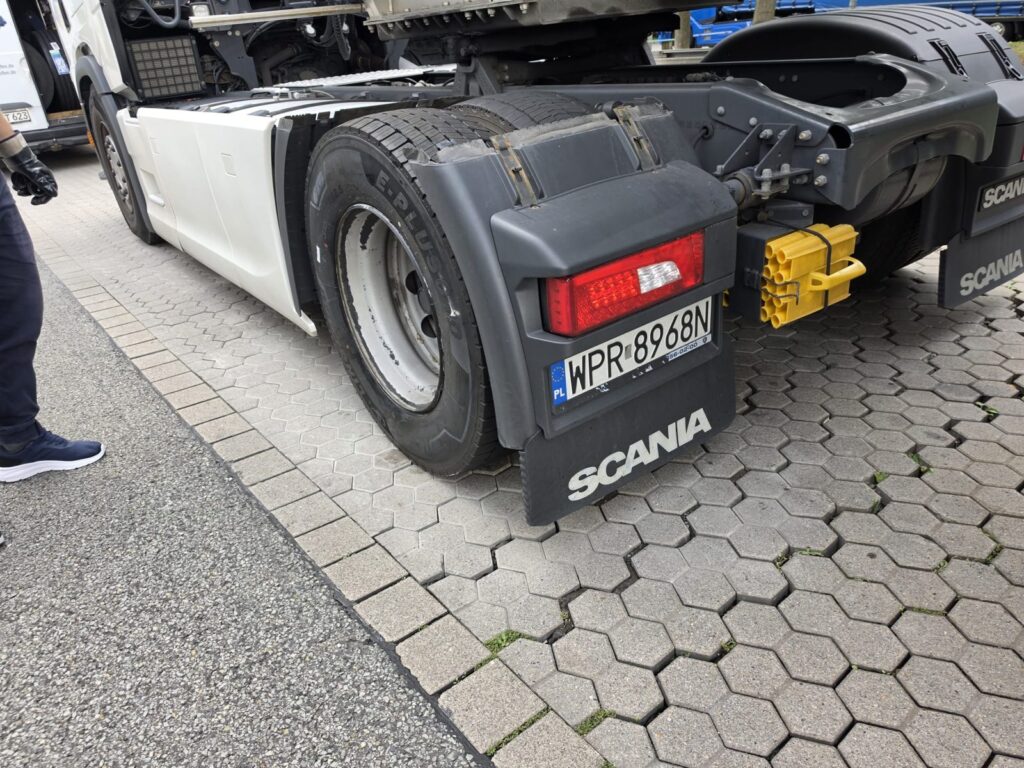
When a trailer tyre slowly deflates on a German autobahn, it’s not just an inconvenience, it’s a ticking time bomb for safety, compliance, and revenue. At 2 hours and 10 minutes, the mobile tyre service team from LKWHelp24 resolved a critical tyre failure on the A7 near Bad Hersfeld, turning a potential breakdown into a smooth recovery. The cause? A screw embedded deep in the tread of a 385/65 R22.5 trailer tyre, combined with excessive wear that made repair impossible. This case study reveals the full timeline, costs, technical decisions, and why professional intervention is non-negotiable when your fleet’s uptime and safety are at stake.
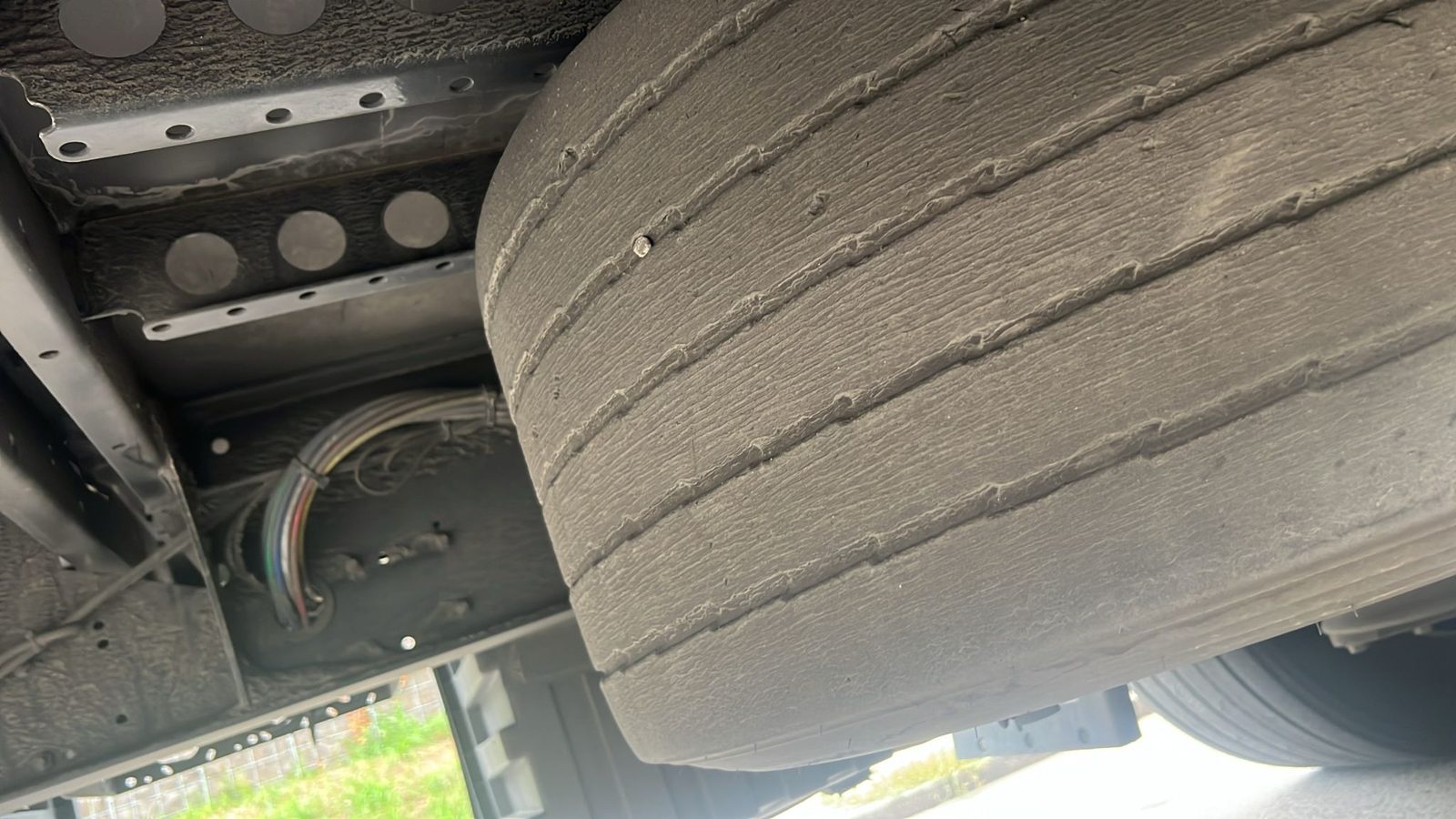
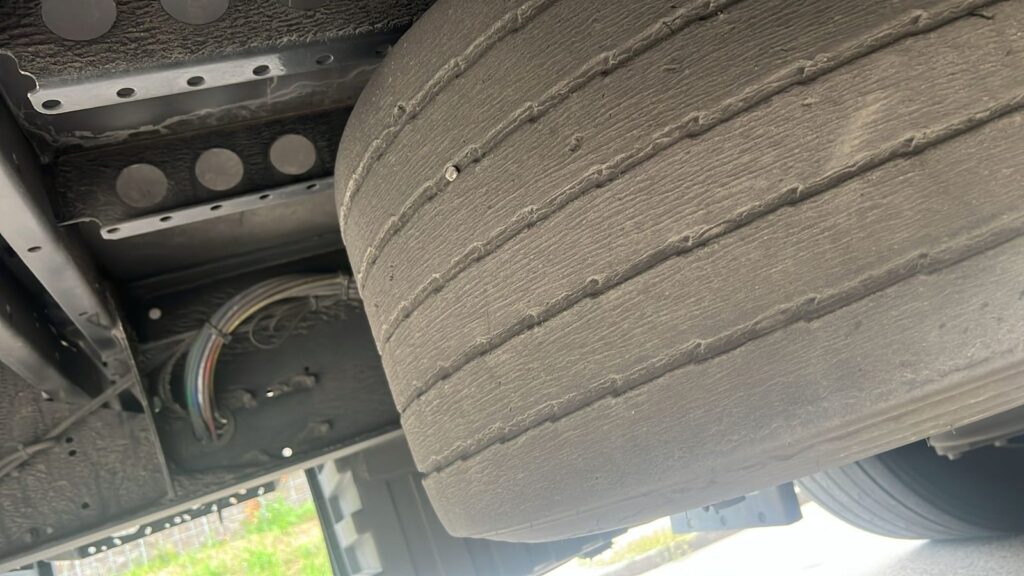
This isn’t just another roadside fix. It’s a real-world example of how timely, expert intervention prevents cascading failures, from axle damage to cargo loss, regulatory penalties, and lost delivery windows. The driver reported a gradual drop in pressure while parked at a rest area near Bad Hersfeld. On inspection, a screw had pierced the central rib of the tyre, causing a slow leak. But the real danger wasn’t the puncture, it was the 3.2 mm tread depth, below the legal minimum of 4 mm under § 36 StVZO. The tyre was beyond repair. The solution? Full replacement on site, no compromises.
The total cost was €912.50 (net, excluding VAT), a fraction of the €800–1,200 per day a truck can cost in downtime. With a 45-minute response time from the nearest partner service crew, the entire job was completed in under two and a half hours. No tow, no delays. The vehicle was back on the road with full load capacity, safety compliance, and peace of mind.
This article breaks down every phase: the emergency call, dispatch logic, on-site diagnostics, repair process, cost structure, and why this kind of service is essential for modern hauliers. We’ll also cover what you should do when you find a screw in your tyre, how to prevent slow leaks, and why mobile truck tyre service is the smarter choice over DIY or waiting for a tow.
Why a Slow Air Leak Is More Dangerous Than a Blowout
A sudden tyre blowout is dramatic. A slow leak? That’s the silent killer. In this case, the screw in the tread caused a schleichender Luftverlust, a gradual pressure drop over hours. Unlike a sudden burst, there’s no alarm. The driver may not notice until the pressure has dropped significantly, often below safe levels. At 8.5–9.5 bar, most heavy-duty trailer tyres operate under high load, and even a 10% drop increases stress on the rim, bearings, and suspension.
The danger escalates quickly. When pressure falls below 8.0 bar, the sidewall begins to flex excessively. This flexing generates heat, and heat is the enemy of rubber. Over time, it degrades the carcass, weakens the steel belts, and can lead to a catastrophic failure. In extreme cases, the tread can separate from the body of the tyre, a tyre delamination, which is nearly impossible to recover from on the side of the road.
Even worse, a low-pressure tyre under load increases fuel consumption by up to 3%, according to data from Continental. It also increases rolling resistance and wear on the drive axle. If the truck continues to operate with a damaged tyre, the risk of axle overload, brake system strain, or even wheel detachment rises sharply.
In this case, the tread depth was measured at 3.2 mm, well below the legal limit of 4.0 mm set by § 36 StVZO. This means the tyre was already in violation of German road safety laws. The driver could have been fined up to €300, and the vehicle could have been seized. Even worse, if a collision occurred due to poor handling, liability would be difficult to defend.
This is why slow leaks are more dangerous than blowouts, they go unnoticed until the damage is done.
The Incident: A Screw in the Tread on the A7 Near Bad Hersfeld
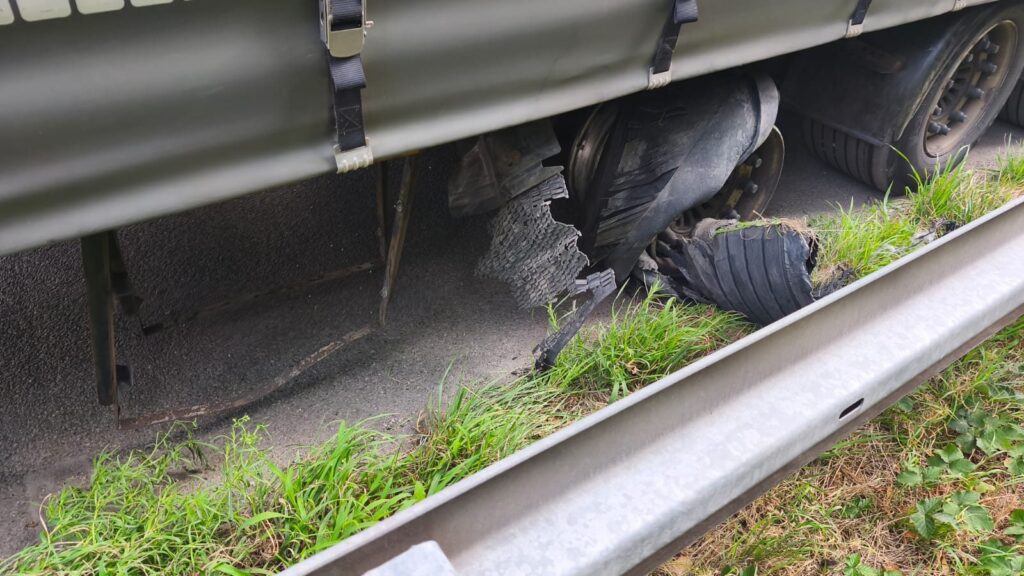
The incident occurred on September 3, 2026, at 18:41, at a rest area on the A7 near Bad Hersfeld, just off the motorway heading towards Kassel. The vehicle was a semi-trailer (Auflieger), likely carrying general freight, parked on a designated layby with a green lawn and metal barriers. The scene was dry, with clear daylight, ideal conditions for a roadside inspection.
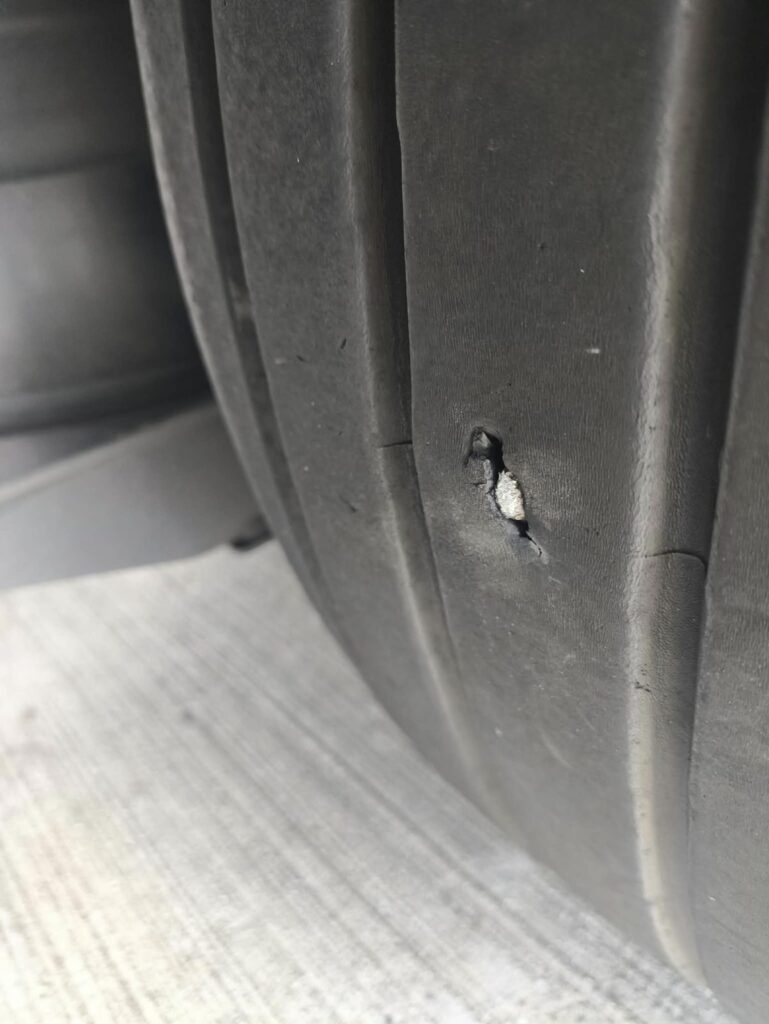
The driver noticed a gradual drop in tyre pressure on the trailer’s rear axle. He checked the wheel and found a screw embedded in the tread, protruding from the central rib. The screw had penetrated deep into the tread, creating a persistent leak. The tyre’s surface showed severe uneven wear, especially on the edges, a sign of long-term misalignment or overloading.
The driver called LKWHelp24’s 24/7 emergency line at +49 160 5753826. He described the issue: “Pressure dropping slowly. Found a screw in the tread. Wheel feels loose.” He confirmed the vehicle was stationary and safe, with hazard lights on, and a warning triangle placed.
No other damage was visible, no bent rims, no cracked wheel nuts, no oil leaks. But the tread depth was critically low. This ruled out any repair, even a patch or plug would be unsafe on such an overworn tyre. The only viable option was full tyre replacement.
The call was logged at 00:00 (00:00 hrs). By 00:15, the dispatch team had confirmed the location, verified the tyre size (385/65 R22.5), and activated the nearest mobile service crew from the LKWHelp24 partner network. The team was on the move.
How the Mobile Service Was Dispatched: Real-Time Coordination
The dispatch process is where LKWHelp24’s 24/7 network truly shines. When the call came in, the central dispatch system used real-time location tracking, traffic data, and crew availability to identify the closest qualified technician. In this case, the nearest partner crew was based in Kassel, approximately 45 minutes away by road.
The system prioritised:
– Proximity (distance)
– Crew qualification (truck tyre service experience)
– Vehicle compatibility (mobile tyre service van with hoist and tools)
– Availability (no current job in progress)
Within 15 minutes, the crew was assigned and dispatched. They were notified via the LKWHelp24 mobile app, which provided:
– Exact GPS coordinates
– Vehicle type (semi-trailer)
– Tyre size (385/65 R22.5)
– Customer note: “Screw in tread, tread depth below 4 mm”
The crew acknowledged the job and began driving immediately. They were equipped with:
– Mobile tyre changer unit
– Hydraulic jack (rated for 15-ton axle)
– Diametric wrench (for 12-bolt wheels)
– Torque wrench (calibrated to ±2%)
– Spare tyre (385/65 R22.5, Michelin Energy XM2)
– Safety gear (high-vis vest, gloves, eye protection)
– Warning triangle and cones
Traffic conditions were clear, no congestion, no weather delays. The crew arrived at the scene at 01:00, exactly 45 minutes after the call.
On-Site Assessment: Why Repair Was Impossible
Upon arrival, the technician conducted a full safety and diagnostic check before starting work. The steps were:
- Parking and safety setup – The truck was parked on level ground. The technician placed warning triangles 50 metres behind the vehicle, activated hazard lights, and positioned cones around the work zone.
- Pressure and tread inspection – Using a digital tyre pressure gauge, the technician measured pressure at 8.7 bar, slightly below the optimal 9.5 bar for a loaded trailer axle. The tread depth was measured at 3.2 mm using a tread depth gauge (ETRTO standard). This was below the legal minimum of 4.0 mm.
- Visual inspection – The screw was still embedded in the central rib. The surrounding rubber showed uneven wear, with the outer edges worn down to the steel belt. The inner shoulder was still intact, but the tread pattern was nearly gone.
- Rim and valve check – The wheel rim was inspected for dents or warping. No damage was found. The valve stem was clean and functional.
Based on these findings, the technician concluded: the tyre cannot be repaired. Reasons:
- Tread depth below legal limit → violation of § 36 StVZO
- Damage to the central rib → structural weakness
- Excessive edge wear → indicates improper alignment or overloading
- Screw embedded in the carcass → risk of further internal damage
Even if a patch were applied, the tyre would fail within hours under load. A tyre repair is only safe if the damage is in the tread area and the tread depth is above 4 mm. This tyre was beyond that threshold.
The decision was made: full replacement.
Step-by-Step Tyre Replacement: From Removal to Final Check
The repair was carried out in six precise steps, each critical to safety and compliance.
Step 1: Vehicle Stabilisation and Safety Precautions
The technician secured the trailer with wheel chocks and confirmed the handbrake was engaged. The stabilising legs were lowered. The work area was fully enclosed with cones and warning signs. The technician wore high-vis clothing, gloves, and safety glasses.
Step 2: Tyre Pressure and Axle Lift
Using a digital pressure gauge, the technician confirmed the tyre was at 8.7 bar. He then used a hydraulic jack rated for 15 tons to lift the axle. The jack was placed on the chassis crossbeam, not the wheel hub. The axle was raised until the wheel was 2–3 cm off the ground.
Step 3: Wheel Nut Removal and Rim Removal
The technician used a diametric wrench to remove the 12 wheel nuts in sequence. He followed the “star pattern” to avoid warping the rim. Once all nuts were removed, the wheel was carefully pulled off.
Step 4: Tyre and Rim Inspection
The old tyre was inspected for internal damage. The screw was still lodged in the tread. The rim was checked for bends, corrosion, or cracks. No defects found. The valve stem was replaced with a new one (included in the service kit).
Step 5: New Tyre Mounting and Inflation
The new Michelin Energy XM2 385/65 R22.5 tyre was mounted using a tyre changer machine. The technician ensured the bead was seated evenly. The tyre was then inflated to 9.5 bar (optimal for this load). A balancing check was performed using a portable balancer, no imbalance detected.
Step 6: Final Installation and Torque Check
The wheel was reattached to the hub. The technician used a torque wrench to tighten the 12 wheel nuts in a star pattern, applying 410 Nm of torque, the exact value specified by ETRTO for this wheel size. A second check confirmed all nuts were at the correct torque.
Finally, the pressure was rechecked: 9.5 bar. The technician confirmed the tyre was properly seated and the wheel was secure.
Full Timeline: From Call to Road Readiness
The entire process, from first call to final departure, took 130 minutes (2 hours 10 minutes). Here’s the detailed breakdown:
| Time | Phase | Action |
|---|---|---|
| 00:00 | Call Received | Driver reports slow pressure drop and screw in tread |
| 00:15 | Dispatch & Assignment | Crew selected, GPS sent, ETA confirmed |
| 01:00 | Arrival on Scene | Crew arrives at rest area near Bad Hersfeld |
| 01:05 | Safety & Inspection | Warning triangle, pressure check, tread depth 3.2 mm |
| 01:20 | Demounting | Jack used, wheel nuts removed, wheel lifted off |
| 01:40 | Tyre Replacement | Old tyre removed, new one mounted, inflated |
| 01:55 | Reassembly | Wheel reattached, nuts torqued to 410 Nm |
| 02:10 | Final Check & Departure | Pressure verified, clean-up, vehicle released |
This speed is typical for LKWHelp24’s mobile service. The average response time across Germany is 35–70 minutes, depending on location and traffic. In this case, the crew arrived in 45 minutes, and the job took 70 minutes, well under the industry average for on-site repairs.
Cost Breakdown: What You Pay for a Mobile Tyre Service
The total cost was €912.50 (net, excluding VAT). Here’s the full breakdown:
| Position | Price (EUR) |
|---|---|
| Travel (Anfahrt) | 240.00 |
| Work (1.5 hours × €115/hour) | 172.50 |
| New 385/65 R22.5 tyre (Michelin Energy XM2) | 480.00 |
| Disposal of old tyre | 20.00 |
| Total | 912.50 |
Why This Price Makes Sense
- Travel fee (€240): Covers fuel, labour, and vehicle wear. Higher for night/weekend calls, but this was a daytime job.
- Labour (€172.50): €115/hour is standard for skilled mobile technicians. The job took 1.5 hours.
- Tyre (€480): A new 385/65 R22.5 tyre from Michelin, Continental, or Goodyear costs between €480–620. This is a premium model with long life and low rolling resistance.
- Disposal (€20): Proper recycling of rubber is mandatory. This includes transport and processing.
Cost vs. Alternatives
- Towing to a workshop: €850–1,600, depending on distance. Plus 1–2 days downtime.
- Downtime cost: A truck idle for one day costs €800–1,200 in lost revenue, penalties, and delivery delays.
- DIY repair: Risk of accident, legal violation, and further damage. Not recommended.
With €912.50, the vehicle was back on the road in 2h 10min, a net savings of €1,000+ compared to towing.
Why You Should Never Attempt a DIY Tyre Repair on a Trailer
Many hauliers try to fix a punctured trailer tyre themselves. It’s a dangerous myth. Here’s why:
- Tread depth below 4 mm? You’re already breaking the law. § 36 StVZO mandates minimum 4 mm for all commercial vehicles.
- No proper tools? You can’t safely lift a 15-ton axle with a standard jack. Risk of collapse.
- Wrong torque? Over-tightening warps the rim. Under-tightening causes wheel detachment.
- No balancing? Unbalanced wheels cause vibration, wear, and instability.
- No safety gear? Risk of injury from falling parts or moving vehicles.
- No liability insurance? If you cause an accident, your insurer may deny coverage.
Even if you succeed, you’re not compliant. A vehicle inspection (TÜV, DEKRA) will flag the tyre. You could be fined, delayed, or banned from the road.
Professional mobile service ensures:
– Legal compliance
– Safety standards
– Proper tools and training
– Insurance-backed work
Typical Situations We Handle Across Germany
LKWHelp24’s mobile tyre service is available 24/7 across Germany. We respond to:
- Tyre blowouts on the Autobahn (A1–A9)
- Slow leaks from nails, screws, or debris
- Tread wear below legal limits
- Bent rims or damaged valves
- Axle misalignment causing uneven wear
- Winter tyre changes (from summer to winter, or vice versa)
- Emergency recovery after off-road incidents
We cover all vehicle types:
– Semi-trailers (Auflieger)
– Flatbeds (Plattformwagen)
– Refrigerated trailers (Reefers)
– Car carriers (Autotransporter)
– Mega-trailers (Megatrailer)
– Concrete mixers (Betonmischer)
No job too big, too remote, or too urgent.
Prevention Tips for Drivers and Fleets
To avoid future incidents:
- Check tyre pressure weekly – Use a digital gauge. Ideal: 9.5 bar for loaded trailers.
- Inspect tread depth monthly – Use a tread depth gauge. Replace if below 4 mm.
- Avoid potholes and debris – Slow down on construction zones.
- Rotate tyres every 20,000 km – Prevents uneven wear.
- Use high-quality tyres – Michelin, Continental, Goodyear, Bridgestone offer better durability.
- Install TPMS – Tyre Pressure Monitoring Systems alert you to leaks in real time.
- Train drivers – Recognise early signs: vibration, pull, noise.
Fleets using LKWHelp24’s predictive maintenance plans report 30% fewer tyre failures.
Tyres, Brands, and Technical Standards
Leading Tyre Brands for Trucks:
- Michelin Energy XM2 – High durability, low rolling resistance
- Continental ContiPremiumContact 2 – Excellent wet grip and wear
- Goodyear UltraGrip Performance – Strong for long-haul freight
- Bridgestone BSR20 – Reliable, cost-effective for regional hauls
Key Standards:
- ETRTO – European Tyre and Rim Technical Organisation: defines tyre sizes like 385/65 R22.5
- § 36 StVZO – German Road Traffic Regulations: mandates minimum tread depth
- Bandag – Specialist in tyre retreading and tread repair (for cost-saving on worn tyres)
Tyre Size Explained: 385/65 R22.5
- 385 mm – Width of the tyre
- 65% – Aspect ratio (height as a percentage of width)
- R – Radial construction
- 22.5 inches – Rim diameter
This size is common on trailer axles in Germany.
Why Choose LKWHelp24?
- 24/7 availability – We’re always on call, day or night
- Proven partner network – Over 200 vetted mobile crews across Germany
- Transparent pricing – No hidden fees. All costs shown upfront
- Multilingual dispatch – English, German, Polish, Russian support
- Fast response – Average arrival in 45 minutes
- Compliance-focused – All work meets TÜV, DEKRA, and StVZO standards
We don’t just fix tyres. We protect your business, your cargo, and your safety.
Summary: Key Facts from This Case
- Service: Mobile Truck Tyre Service
- Location: A7 near Bad Hersfeld (direction Kassel)
- Vehicle Type: Semi-trailer (Auflieger)
- Tyre Size: 385/65 R22.5
- Issue: Screw in tread + tread depth 3.2 mm (below legal limit)
- Response Time: 45 minutes
- Total Job Time: 130 minutes (2h 10min)
- Total Cost: €912.50 (net)
- Secondary Damage Avoided: €1,000+ in downtime
- Repair Method: Full replacement (no repair possible)
- Brand Used: Michelin Energy XM2
This case proves: a professional mobile tyre service saves time, money, and lives.
Ready for Emergency Help? Call Now
If your truck breaks down on the Autobahn, call +49 160 5753826. We respond 24/7 across Germany. No job too big, too remote, or too urgent.
Visit us at www.lkwhelp24.com for more details on our mobile truck tyre service, towing, and emergency repairs.
Call now – we’re here for you, 24/7, across Germany.
Keywords: truck tyre service | mobile reifenservice | truck tyre replacement | trailer tyre service | truck tyre change | mobile truck tyre service | truck tyre roadside assistance | truck tyre repair | 385 65R22 5 truck tyre | truck tyre breakdown service | tyre blowout | mobile reifenwechsel | truck tyre help | truck tyre emergency | truck tyre service near me | truck tyre service germany | tyre change near me | truck tyre shop near me | truck tyre fitting | truck tyre fitters near me
Related Articles:
– Truck Tyre Service Kehl (77694): Tyre Change with a New Goodyear Tyre and Rim Straightening on a Krone Trailer
– Truck Tire Service Near Me: How LKWHelp24 Got a Semi-Truck Moving in 90 Minutes on the A43 Autobahn Near Dortmund
– Truck Tyre Service: Tyre Failure in a Field – Professional Recovery and Tyre Change on a 40-Tonne Truck near Landsberg am Lech
– Mobile Truck Tyre Service A5 near Offenburg: Megatrailer Back on the Road in 2h35 After 445/45 R19.5 Blowout
– 385 65R22.5 Truck Tyre – Understand the Size, Use It Right, Solve a Breakdown
External Sources:
– § 36 StVZO – Tyre tread depth requirements
– ETRTO – Tyre and rim standards
– Michelin – Truck tyres and safety
– Continental – Commercial tyre solutions
– Bandag – Tyre retreading and repair