Skip to content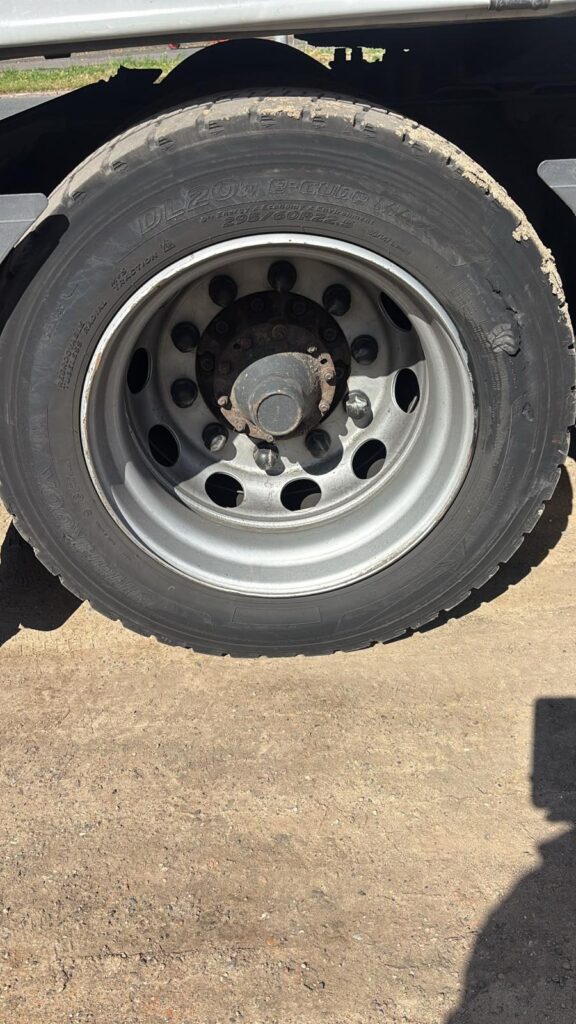
A tyre doesn’t usually explode without warning. It talks first — a vibration through the cab floor, a low hum that gets louder with speed, a pull to one side that wasn’t there yesterday. Most drivers miss those signals, or hear them and decide the next stop is close enough to risk it. On 10 July, on the A70 near Bamberg heading towards Bayreuth, a driver listened instead.
That decision is the whole story here. There was no smoke, no shredded tyre carcass scattered across three lanes, no hazard triangle planted on a hard shoulder while lorries thundered past at 80 km/h. Just a tractor-trailer parked calmly at a rest area, a phone call to a tyre service dispatcher, and a technician who found a bulge on the sidewall that was, in plain terms, a tyre on the verge of failing catastrophically at motorway speed.
This case matters less for what happened and more for what didn’t. No blowout, no fender torn open, no wiring loom shredded by a whipping tyre carcass, no hours lost waiting for a police report. We’re publishing it because the sequence — notice the symptom, stop safely, call for help — is exactly what most drivers skip, and skipping it is what turns a 300-euro tyre replacement into a five-figure repair bill.
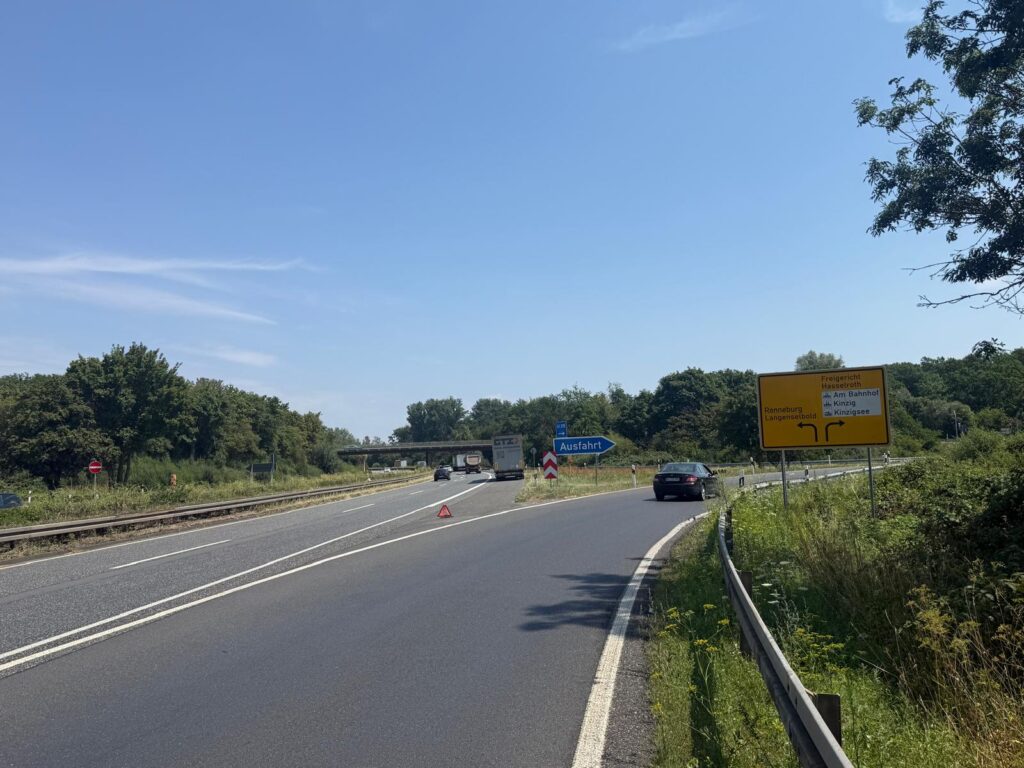
The Emergency: A70 Near Bamberg, Direction Bayreuth
The vehicle was a fully articulated tractor-trailer (Sattelzug), running on the A70 in daylight, heading from Bamberg towards Bayreuth. The affected wheel was on the trailer axle, fitted with a 385/55 R22.5 tyre — a size you’ll see constantly on curtainsiders, box trailers and reefer units across German motorways.
The driver first noticed a vibration coming through the trailer coupling, then a faint drumming noise that didn’t match the road surface. Nothing dramatic. No sudden pull, no bang. But it was there on a stretch of A70 that’s flat and well-surfaced, which ruled out the usual excuse — “must be the road.” Instead of pushing on to find a workshop closer to the destination, the driver took the next rest area, not the hard shoulder, and pulled the unit fully off the carriageway.
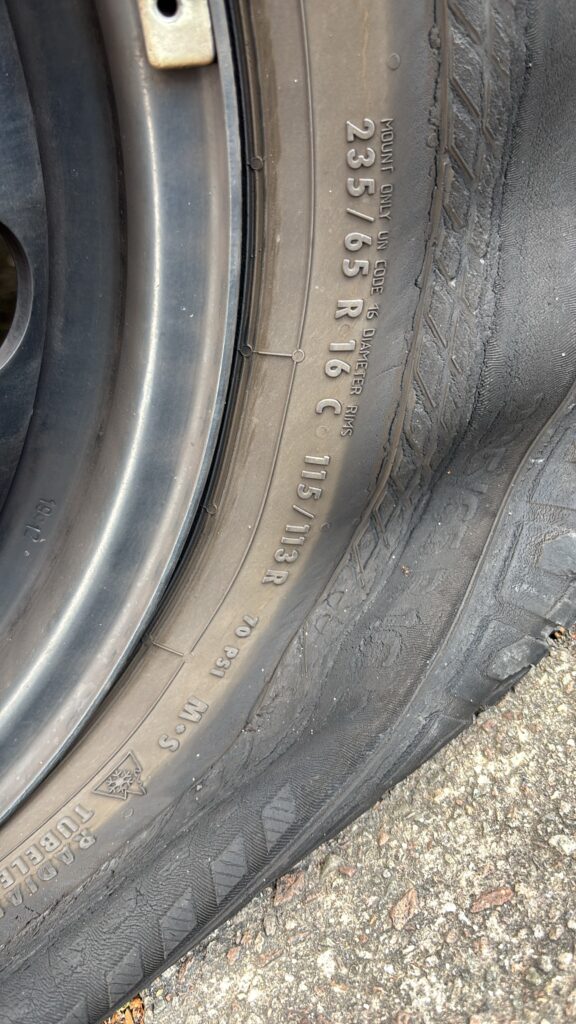
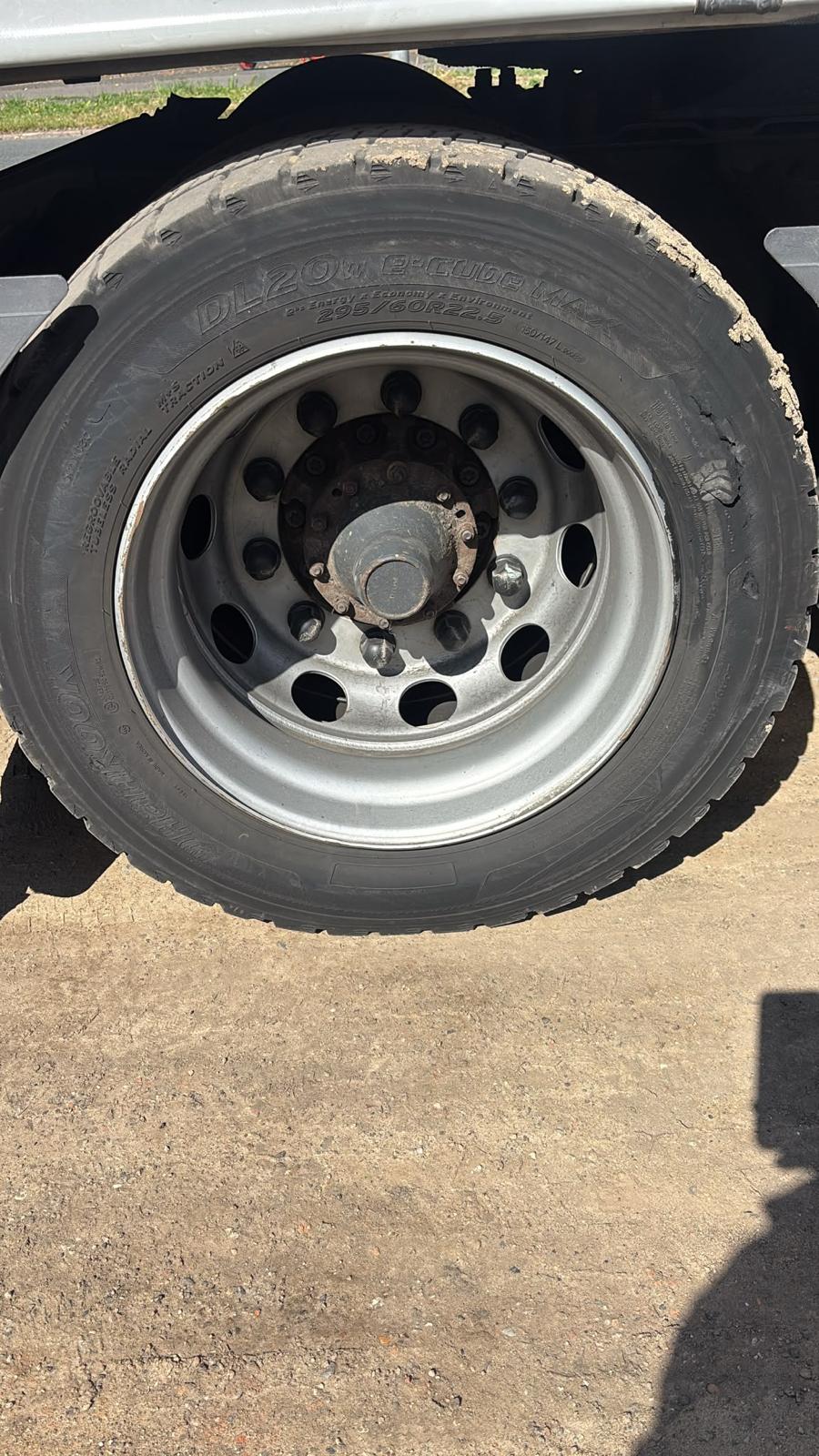
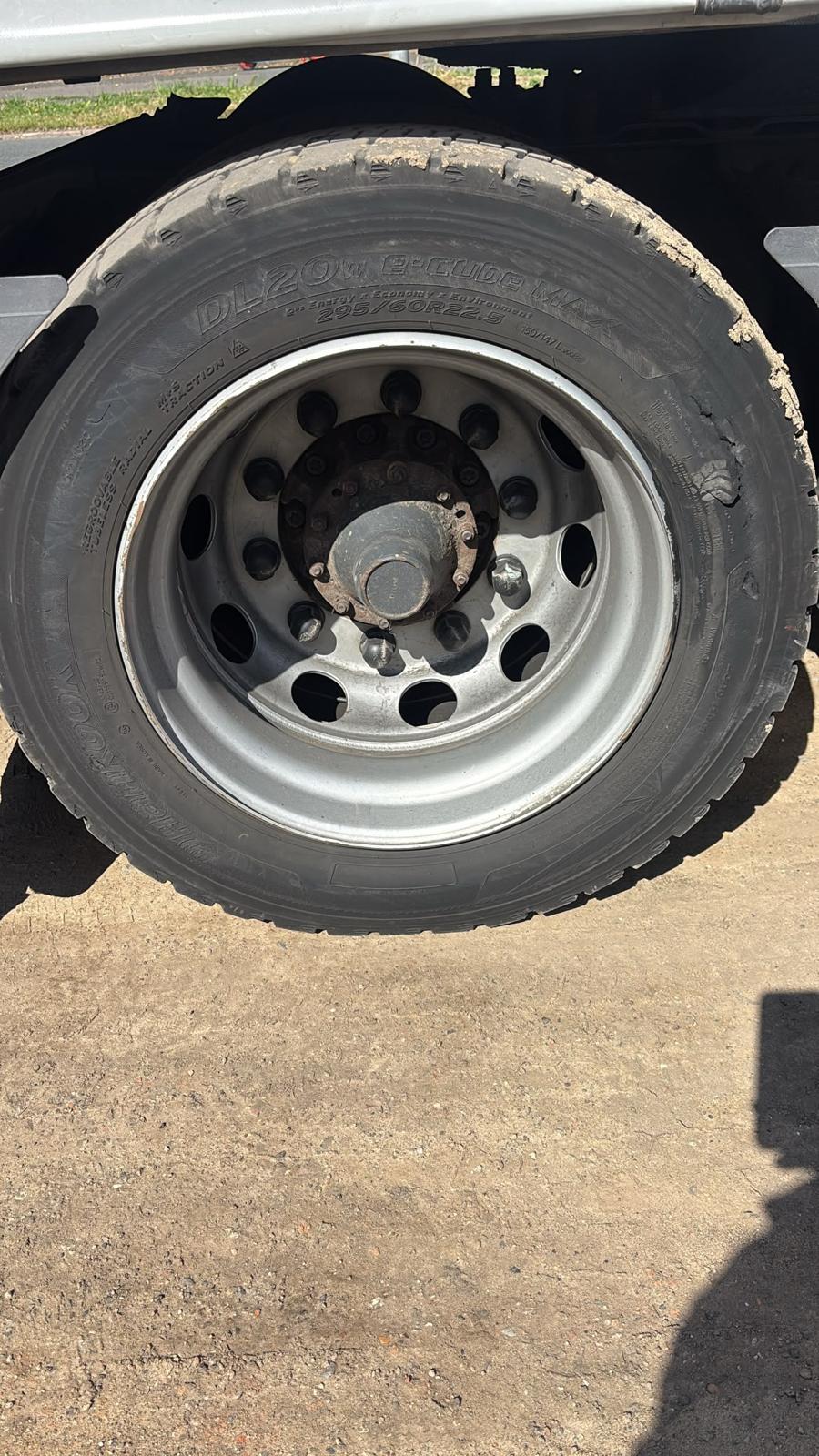
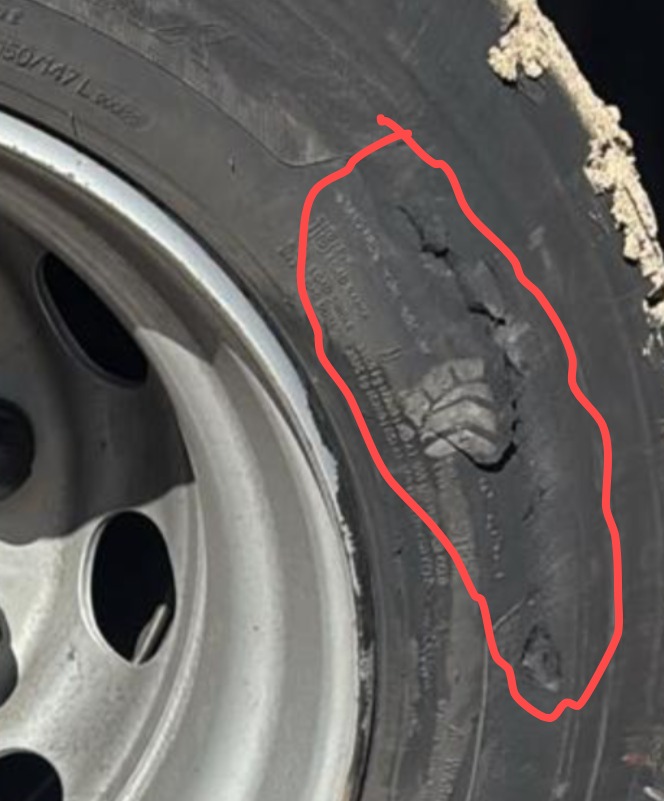
A walk-around confirmed the instinct. The trailer tyre had a visible bulge on the sidewall — what mechanics call a hernia — with the rubber pushed outward in a lump roughly the size of a fist. No cut was visible on the tread. This wasn’t damage from a pothole or a curb strike moments earlier; it was internal. The call went to our mobile truck service dispatch, and a technician was routed to the rest area within the hour.
On inspection at the scene, the diagnosis was confirmed: carcass separation. The internal steel belt structure of the tyre had come apart from the rubber compound around it, and the sidewall bulge was the visible symptom of a tyre that was structurally failing from the inside. At motorway speed and under trailer load, that tyre had, realistically, minutes left before the sidewall gave way entirely.
Why a Bulge Is a Death Sentence for a Tyre
A sidewall bulge is not something you patch, plug, or nurse home. It’s worth being blunt about why.
A truck tyre carcass is built from layers of steel belts and textile plies bonded into the rubber under enormous pressure during manufacturing. That structure is what lets the tyre hold 8.5–9.5 bar of inflation pressure and carry several tonnes of axle load without deforming. Carcass separation happens when heat, age, an impact, or a slow puncture the driver never noticed allows those internal layers to peel apart from each other. Air or moisture works into the gap. The rubber over that gap has nothing left to support it structurally — so under load it stretches outward into a bulge, or hernia, every time the wheel rotates and that weak spot hits the road.
Here’s the part drivers underestimate: a bulge doesn’t get better. It gets worse with every rotation. Heat builds inside the separated area because the layers are flexing against each other instead of moving as one unit, and heat accelerates the breakdown further. There’s no repair for this. Not a plug, not a boot, not an internal patch — nothing restores the bond between steel belt and rubber once it has separated. The only fix is a new tyre.
That’s why “let’s just get to the depot” is the single worst decision available in this situation. Every additional kilometre adds heat and mechanical stress to a structure that’s already failing. A tyre that bulges gently at 80 km/h on a cool morning can rupture violently an hour later on the same route, particularly on a loaded trailer axle where the load per tyre is already close to its rated limit. When a 385/55 R22.5 tyre bursts under load at motorway speed, it doesn’t just deflate — the tread and belt package can separate explosively, throwing rubber and steel fragments, and the sudden pressure loss can pull the trailer sideways hard enough to challenge even an experienced driver’s control.
Warning Signs Every Driver Should Know
Most tyre failures announce themselves well before they happen. The problem is that the signals are subtle and easy to write off as “normal truck noise.” Here’s what should never be ignored:
- Vibration through the cab or trailer coupling that increases with speed and doesn’t match a known road defect.
- A humming or roaring noise from one corner of the vehicle that changes pitch as speed changes.
- Visible bulge or lump on the sidewall — a hernia, usually a sign the internal carcass has already separated.
- Uneven tread wear, particularly wear concentrated on one shoulder, which points to misalignment, incorrect pressure, or a bent axle component.
- Cuts or cracks deep enough to expose the cord layer underneath the tread rubber — any cut you can see fabric or steel threads inside needs immediate attention.
- A tyre that feels “soft” on a pressure check compared to its neighbour on a dual-wheel setup, even without visible damage.
None of these, on their own, guarantee an imminent blowout. But any one of them is a reason to pull over at the next safe stopping point and inspect the wheel properly, not a reason to keep driving and see how it develops.
How the Callout Was Organised
Once the driver made the call, the process ran the way it’s meant to for a stationary vehicle in a safe location — calm, methodical, no artificial urgency because none was needed.
- Initial call and triage. Dispatch took the location (A70 rest area near Bamberg, direction Bayreuth), the vehicle type, and a description of the symptoms — vibration, noise, visible bulge. That description alone was enough to flag this as a carcass failure rather than a simple flat.
- Technician assignment. A regional partner technician carrying 385/55 R22.5 stock was routed to the location. Because the truck was parked safely off the carriageway, there was no need to dispatch a second vehicle for traffic protection, which kept the response leaner than a hard-shoulder job.
- On-site confirmation. On arrival, the technician re-checked pressure, inspected the bulge under load and unloaded, and confirmed carcass separation — ruling out a simple valve leak or a recoverable puncture.
- Wheel removal and replacement. The trailer was chocked, the affected wheel jacked and removed, the damaged tyre swapped for a new 385/55 R22.5, and the wheel remounted.
- Torque and pressure verification. Wheel nuts were tightened to spec in a star pattern, and the new tyre was set to the correct pressure for the axle load before the technician signed off.
Because the driver had already done the hard part — recognising the symptom and stopping in a safe spot — the technical work itself was routine. That’s the entire point of catching a problem early: it turns a potential motorway incident into a scheduled repair.
Step-by-Step: What the Repair Actually Involves
For drivers and fleet managers who want to know what they’re paying for, here’s what a proper trailer tyre replacement looks like on site, not in a workshop bay.
Step 1 — Visual and pressure inspection. Before anything is touched, the technician walks the whole axle, not just the flagged wheel, checking pressure on every tyre and looking for secondary damage — a partner tyre on the same axle can be compensating for weeks of uneven load.
Step 2 — Securing the site. Even at a rest area, the trailer gets wheel chocks and the work zone is marked. A vehicle that looks parked is still a vehicle that can roll if a jack fails or a chock shifts.
Step 3 — Wheel removal. Lug nuts are loosened, the trailer is jacked at a rated point, and the wheel comes off. On a 385/55 R22.5 trailer wheel this is heavier work than it sounds — a loaded truck tyre and rim assembly of this size runs well over 80 kg.
Step 4 — Tyre swap and mounting. The failed tyre is removed from the rim, the rim is checked for corrosion or damage at the bead seat, and the replacement tyre is mounted and balanced.
Step 5 — Refit and torque. The wheel goes back on and nuts are tightened in a star pattern to the manufacturer’s torque spec — never straight round in sequence, which can pull the wheel on unevenly and cause it to run out of true.
Step 6 — Final check. Pressure is set for the axle load — typically in the 8.5–9.5 bar range for this class of trailer tyre — and the technician does a final visual pass on the whole axle before releasing the vehicle.
Full Timeline
| Time | Phase | Action |
|---|---|---|
| 0 min | Vibration detected | Driver pulls into the A70 rest area near Bamberg |
| 5 min | Call placed | Dispatch contacted |
| 15 min | Dispatched | Technician assigned, tyre size confirmed |
| 50 min | Technician arrives | On-site at the rest area |
| 60 min | Diagnosis | Carcass separation and bulge confirmed |
| 70 min | Wheel removed | Damaged wheel taken off |
| 95 min | New tyre mounted | 385/55 R22.5 fitted and balanced |
| 105 min | Departure | Torque check, test drive, technician departs |
Total time from the first vibration to departure: 105 minutes, most of which was routine wheel work rather than emergency response. That’s the difference a safe stop makes.
Cost: A Callout vs. What a Blowout Would Have Cost
| Item | Price (EUR, net) |
|---|---|
| Callout / Anfahrt | 220 |
| Labour (approx. 1 hour) | 110 |
| Trailer tyre 385/55 R22.5 | 480 |
| Balancing and mounting | included in labour cost |
| Old tyre disposal | 20 |
| Total | 830 |
All figures are net, zzgl. MwSt.
That total sits squarely in the normal range for a scheduled trailer tyre replacement anywhere in Germany. Compare it against what a blowout at motorway speed typically costs once the tyre actually lets go. A shredded carcass at speed routinely tears the mudguard and wheel arch liner, rips out wiring for lights and ABS sensors mounted near the axle, and can damage the air lines running to the brake chambers — none of which are cheap or quick to source on the roadside. Add a hard-shoulder recovery instead of a simple rest-area callout, a possible police report if the debris affects other traffic, and downtime that can run to several hours rather than under two.
Fleet downtime for an articulated unit typically runs 800–1,200 € per day in lost revenue once you factor in the driver’s hours, the missed delivery window, and any penalty clauses tied to late arrival. A blowout repair bill combined with even a single lost day easily reaches €2,000–€3,500 — two to four times the cost of the scheduled fix this driver got by pulling over ten minutes early.
Why You Need a Professional, Not a Roadside Guess
Some drivers are tempted to check pressure, top it up, and keep going when a tyre looks “mostly fine.” That’s a gamble with a heavy vehicle at motorway speed, and here’s why it doesn’t pay off:
- A bulge means the internal structure has already failed — no amount of added air pressure fixes a torn carcass, and overinflating a compromised tyre can bring the failure forward, not delay it.
- Diagnosing carcass separation from a bulge versus a simple cosmetic sidewall scuff takes trained eyes; getting it wrong in either direction either wastes a good tyre or risks a bad one.
- Wheel removal on a trailer axle involves jacking a loaded vehicle safely — done wrong, that’s a crush hazard, not just a mechanical inconvenience.
- Incorrect torque on refitted wheel nuts is one of the leading causes of wheels working loose on German motorways; star-pattern torque to spec isn’t optional, it’s the difference between a secure wheel and a rolling hazard a few hundred kilometres down the road.
Typical Situations We Respond To Across Germany
Sidewall bulges are one entry in a longer list. Our technicians are called out across the country for:
- Steer-axle and drive-axle tyre blowouts on loaded articulated units.
- Slow punctures that go unnoticed until pressure drops enough to affect handling.
- Uneven wear from misalignment or worn suspension components, caught during roadside checks.
- Rim damage from kerb strikes or potholes that compromises the bead seal.
- Trailer tyre failures on curtainsiders, reefers and car transporters, often on axles carrying the highest static load in the combination.
Prevention: What Actually Catches This Early
The single biggest factor in this case wasn’t the technician — it was the driver noticing something before it became urgent. That’s a habit, not luck, and it comes down to two things fleets consistently underinvest in: the daily walk-around and pressure discipline.
Daily walk-around, done properly, takes under five minutes:
– Look at every tyre’s sidewall for bulges, cuts, or cracking, not just the tread.
– Check for uneven wear across the tread width — a wedge-shaped wear pattern usually means alignment or pressure trouble building up.
– Run a hand along the tread for cuts deep enough to expose the cord layer — if you can see fabric or steel threads, that tyre needs attention before departure, not after.
– Check dual-wheel pairs for one tyre sitting visibly lower than its partner, a common sign of a slow leak.
– Note anything odd in handling from the previous trip — a pull, a vibration, a noise — and check that specific corner first.
Tyre pressure checks matter more than most drivers treat them:
– Check pressure cold, before the day’s driving, not after several hours on the road when heat has already raised the reading.
– Use a calibrated gauge rather than judging by eye or a quick kick — a truck tyre can look fully inflated while running 1.5 bar low.
– Match pressure to the axle load specification, typically in the 8.5–9.5 bar range for this class of tyre, and adjust for trailer load changes between stops.
– Recheck after any known impact — a hard pothole strike or a kerb clip warrants an immediate pressure and visual check, not a wait-and-see approach.
Tread depth is a legal requirement, not a suggestion. Under § 36 StVZO, the German road traffic licensing regulation, commercial vehicle tyres must maintain a minimum tread depth of 1.6 mm across the full width and circumference of the tread. In practice, most fleets replace well above that minimum — tread depth affects wet grip and braking distance long before it hits the legal floor, and a tyre worn close to 1.6 mm has far less reserve if it also picks up a cut or starts showing early carcass fatigue. Combine a tread check with the visual sidewall inspection during the same walk-around and you catch both problems in the same five minutes.
Tyres, Brands and What Fleets Should Know
The trailer tyre segment — sizes like 385/55 R22.5 and 385/65 R22.5 — sees heavy use from manufacturers including Michelin, Continental, Goodyear and Bridgestone, each with product lines tuned differently for trailer axles versus drive axles. Trailer-position tyres generally prioritise low rolling resistance and even wear over the aggressive traction tread patterns used on drive axles, since a trailer axle is steered and braked but not driven. That’s a meaningful distinction for fleet buyers: fitting a drive-axle-pattern tyre on a trailer position isn’t dangerous by itself, but it wastes the tyre’s design intent and can accelerate uneven wear.
Fleet managers running mixed brands across an axle set should also watch for tread pattern mismatches within the same dual-wheel pair — different circumferences under load, even by a small margin, create scrubbing that shortens the life of both tyres. A periodic professional check, not just the driver’s daily walk-around, catches this kind of slow-building wear pattern before it becomes a roadside call.
Why Drivers and Fleets Choose Us
We run a 24/7 dispatch network covering the whole of Germany, with technicians positioned to reach most motorway locations within an hour. The team is multilingual, which matters when a driver on a German motorway is more comfortable explaining a problem in Polish, Russian, or English than in German under stress. Pricing is quoted before work begins, net of VAT, with no surprise line items added on site. And because the network carries common trailer and drive-axle sizes — including 385/55 R22.5, 315/80 R22.5, and 245/70 R19.5 — the technician dispatched to a job usually already has the right tyre on the vehicle, not a promise to source one later.
Frequently Asked Questions
What does a truck tyre replacement on the motorway cost in Germany?
For a standard trailer tyre callout like this one — a single 385/55 R22.5 replaced at a rest area — expect a net total of 830 €, covering the callout, labour, the tyre itself, and disposal of the old one. Night, weekend, and hard-shoulder jobs run higher due to added safety measures and time.
How long does a trailer tyre replacement take?
From the first symptom to departure, this case took 105 minutes, including diagnosis, sourcing, and the full wheel-off repair. A straightforward job at a safe location with the correct tyre already on the technician’s vehicle typically runs 30–60 minutes once work begins.
Is a sidewall bulge always a carcass separation?
In the vast majority of cases, yes. A bulge on the sidewall means the internal belt structure has come apart from the surrounding rubber. It’s not a cosmetic issue and it’s not repairable — the tyre needs to be replaced before further driving.
Can I keep driving on a bulging tyre to reach a workshop?
No. Every kilometre adds heat and stress to a structure that’s already failing, and the failure point is unpredictable — it can hold for another hundred kilometres or fail in the next five. Stop at the nearest safe location and call for a mobile replacement instead.
Who pays for a tyre replacement caused by wear or a manufacturing fault?
That depends on the fleet’s insurance and warranty arrangements with the tyre supplier, not on the roadside service itself. The technician’s job is to get the vehicle safe and moving again; cost recovery from a warranty claim is a separate process handled afterward with documentation from the callout.
What’s the legal minimum tread depth for truck tyres in Germany?
Under § 36 StVZO, commercial vehicle tyres must maintain at least 1.6 mm of tread depth across the full tread pattern. Most operators replace well before reaching that limit, since wet-weather grip and braking performance decline noticeably as tread wears down.
Summary
- Location: A70 near Bamberg, direction Bayreuth
- Vehicle: Articulated tractor-trailer (Sattelzug)
- Tyre: 385/55 R22.5, trailer axle
- Fault: Carcass separation with sidewall bulge, caught before failure
- Response time: 50 minutes from call to technician on site
- Total time, symptom to departure: 105 minutes
- Cost: 830 € net
- Avoided cost: Potential blowout damage plus downtime, realistically 2,000–3,500 €+
Need Tyre Help on a German Motorway?
If you notice vibration, noise, or a bulge on a truck or trailer tyre, don’t wait for it to get worse. Pull over at the nearest safe location and call us on +49 160 5753826. We’re available 24/7, across all of Germany, with technicians carrying common truck and trailer tyre sizes ready to dispatch. More information at www.lkwhelp24.com.
Keywords: truck tyre service | mobile truck tyre service Germany | tyre carcass separation | sidewall bulge truck tyre | 385/55 R22.5 | trailer axle tyre | A70 Bamberg | truck tyre blowout prevention | § 36 StVZO tread depth | 24/7 truck roadside assistance
Related Articles
- Truck Tyre Service Near Me: How LKWHelp24 Fixed a Scania Steer-Axle Blowout in Under Two Hours on the A6 near Mannheim
- Truck Tyre Service Near Me: How LKWHelp24 Replaced a Blown Drive-Axle Tyre in 1 Hour 40 Minutes on the A1 near Bremen
- Winter Tyres for HGVs in Germany – Legal Requirements, Safety & Service by LKWHelp24
- Load Index for Truck and Commercial Vehicle Tyres
- Rest Areas and Rest Stops on the Motorway in Germany
Truck Service in Your Region
Our workshop and roadside service network also covers Ahrensburg, Akwizgran and Albstadt.