Skip to content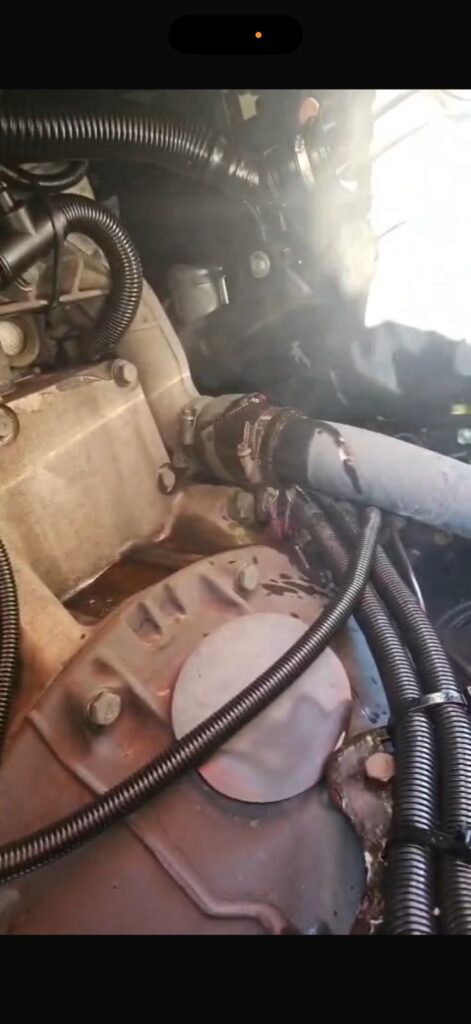
An overheating diesel engine is one of the few roadside faults where minutes genuinely decide the size of the repair bill. Cast iron and aluminium expand at different rates as temperature climbs, and once a cylinder head starts to warp, the head gasket usually follows. At that point a job costing a few hundred euros can turn into a workshop invoice running into five figures, plus days of a lorry sitting idle instead of earning.
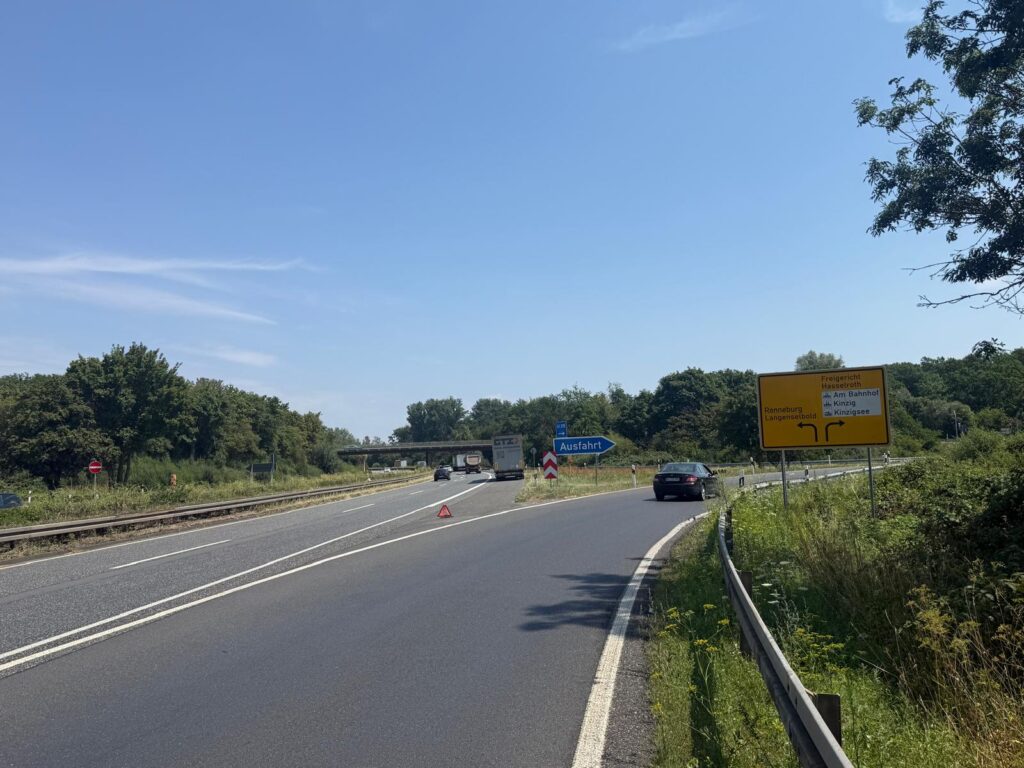
On 15 July, a hot midsummer afternoon, a driver on the A38 near Nordhausen in Thuringia, heading towards Göttingen, watched the temperature needle climb past the normal range on an articulated tractor unit running solo. He pulled onto the hard shoulder before the engine reached a critical point. Our dispatch had a partner technician on site within 50 minutes, and the tractor unit was back on the road in 2 hours 15 minutes, engine intact.
The Emergency: Overheating on a Hot July Afternoon
The driver was on the A38 westbound near Nordhausen when the dashboard temperature gauge started to creep upward past its usual mid-range position. Ambient temperatures that afternoon were in the high twenties, which is exactly the kind of weather that turns a small coolant leak into a fast-developing problem, since the cooling system has less margin to begin with.
He described a faint sweetish smell drifting into the cab a few minutes before the gauge moved, which in hindsight was the first sign. Sweet-smelling vapour near a diesel engine is almost always ethylene glycol, the base chemical in most coolant concentrates, and it means fluid is escaping somewhere hot enough to vaporise it.
Three warning signs are worth remembering for any driver in this situation:
- Temperature gauge needle moving into the red zone, or a warning light on the dash
- A sweet, slightly chemical smell inside or around the cab
- Steam or haze visible from under the bonnet or cab when stationary
The driver did the right thing. He noticed the needle rising, pulled onto the hard shoulder in a safe spot, switched off the engine and called our dispatch line rather than trying to push on to the next services. Continuing to drive an overheating engine for even a few more kilometres is the single most common way a simple hose failure becomes a cracked cylinder head.
How Help Was Organised
Our dispatch confirmed the fault type over the phone, then alerted the nearest regional partner workshop with the right coolant hoses, clamps and pressure-testing kit already loaded. The process ran in four steps.
- Call received at 13:35 — driver described falling coolant level, rising temperature gauge, and location on the A38 near Nordhausen.
- Fault triage by phone — dispatch asked about warning lights, smell, visible fluid under the vehicle, and whether the driver had already switched off the engine.
- Partner workshop alerted — a technician from our regional partner network confirmed availability, loaded coolant hoses, clamps, and roughly 8 litres of coolant concentrate, and set off.
- Route and ETA confirmed — dispatch relayed the exact hard-shoulder position and kept the driver updated by phone during the approach.
This dispatch phase took 20 minutes, from the 13:35 call to the technician leaving the workshop at 13:55. For background on how our mobile response network is structured across Germany, see our mobile truck service page.
What a Coolant Leak Actually Looks Like Underneath a Truck
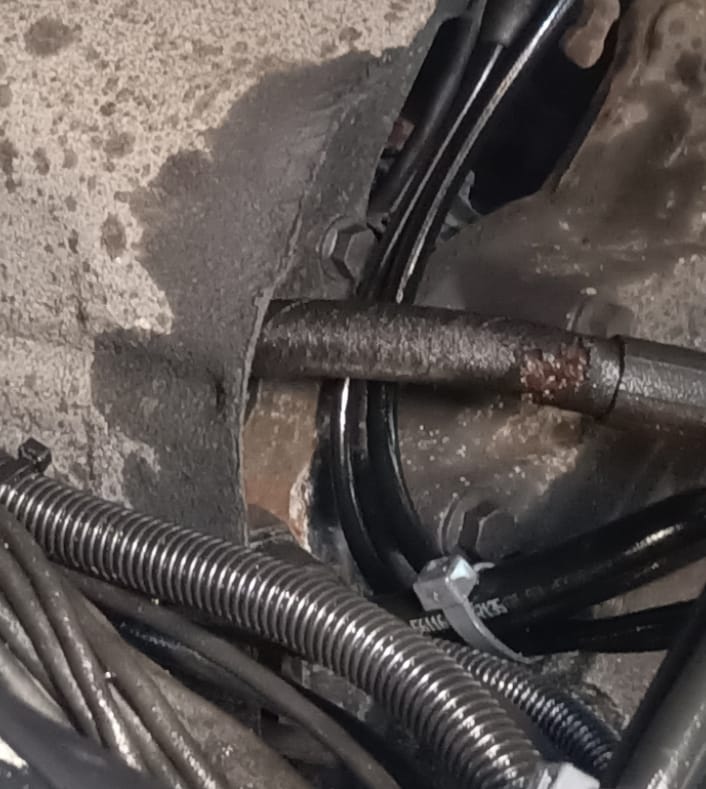
A coolant leak on a long-haul tractor unit can originate in several places, and identifying the correct one before touching anything is the difference between a 65-minute repair and a wasted hour. Cooling system — the closed loop of hoses, radiator, water pump and expansion tank that carries heated coolant away from the engine block and back through the radiator to cool.
Common leak points on this class of vehicle include:
- Rubber hoses and their clamps, especially at flex points near the engine block
- The radiator core itself, often from stone damage or corrosion
- The water pump shaft seal, which weeps slowly before it fails
- The expansion tank or its pressure cap
- The charge air intercooler, where a leak shows as coolant mist rather than a puddle
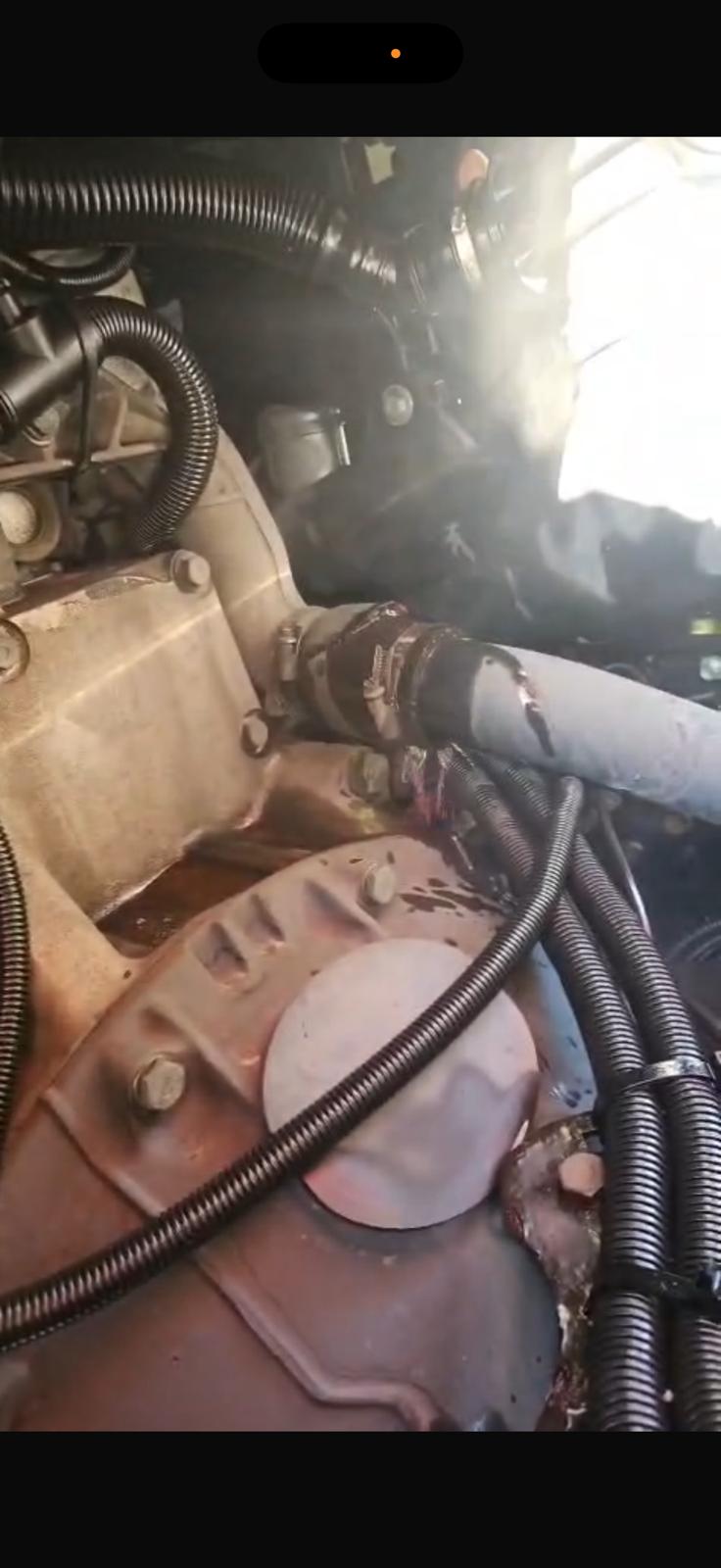
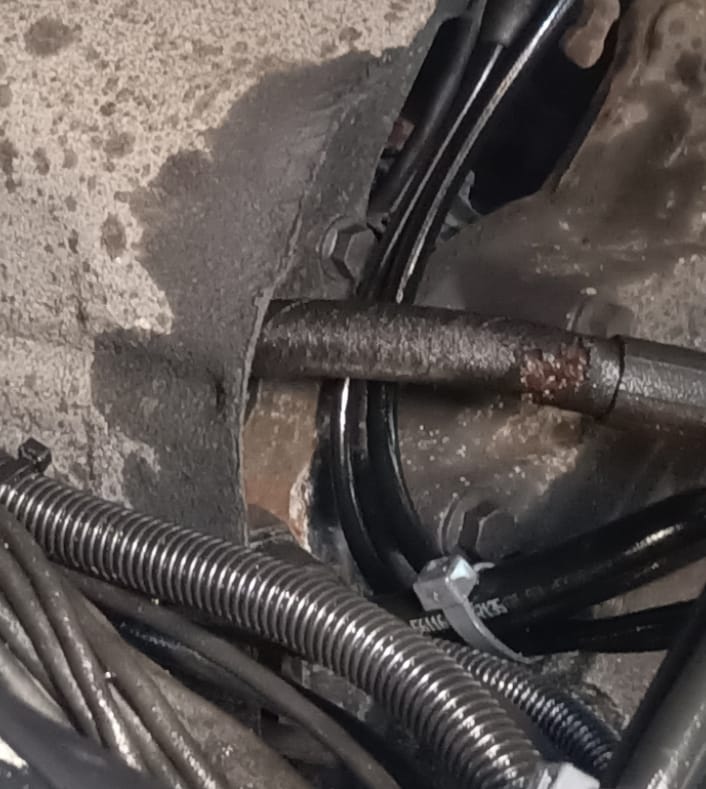
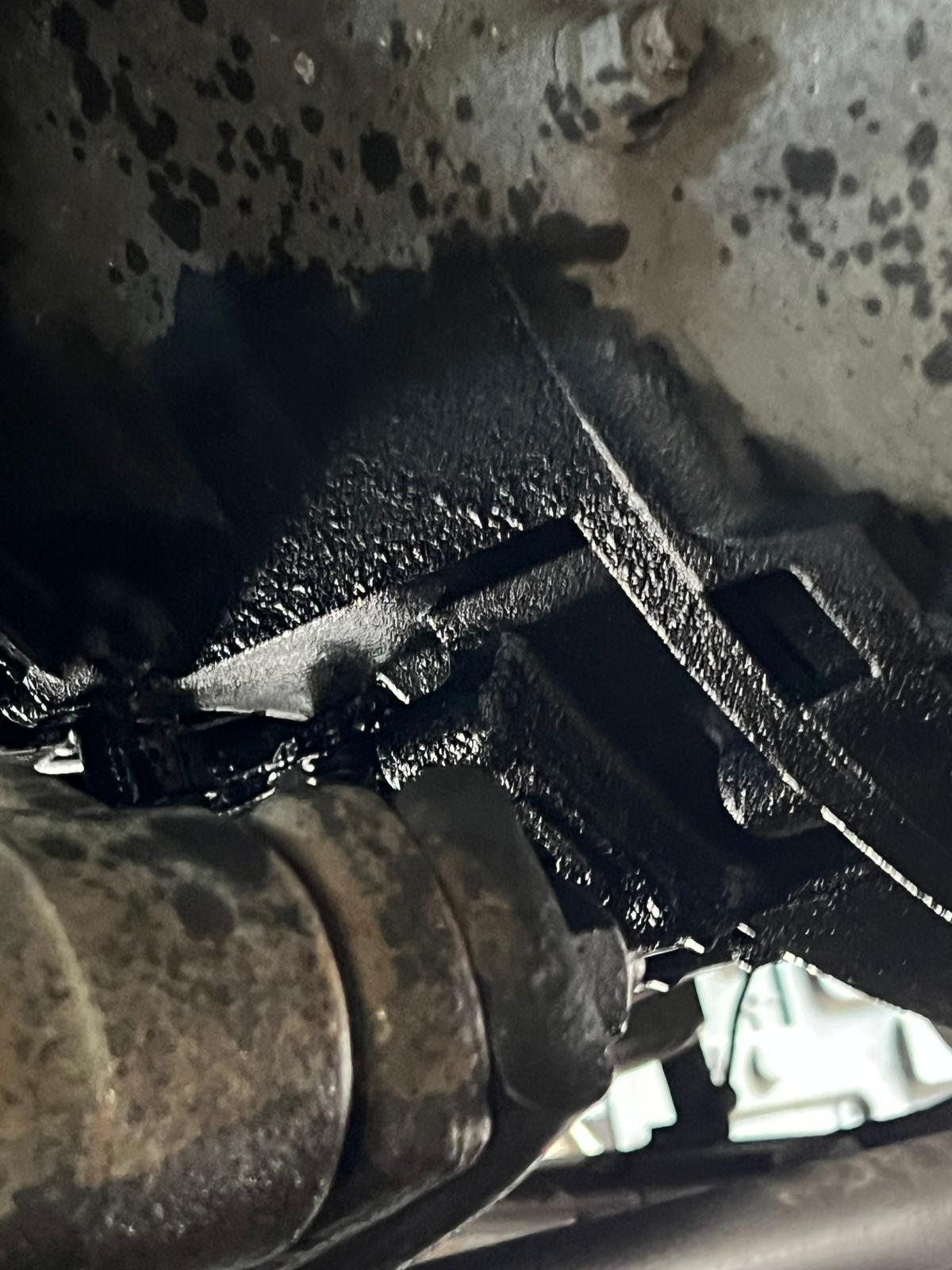
On this callout the leak turned out to be a split rubber hose at a clamp junction near the engine block, a wear point that sees constant flexing from engine vibration and heat cycling. A long-haul tractor unit typically carries between 25 and 40 litres of coolant in the full system, so a leak of even a litre or two per hour can drop the level enough to trigger overheating within thirty to forty minutes of driving.
This kind of failure is not something to leave for the next scheduled service. Once coolant escapes past a critical threshold, the remaining fluid can no longer carry heat away fast enough, and localised hot spots form inside the block. That is when warping starts.
Step-by-Step Repair on the Hard Shoulder
The technician followed a fixed sequence built specifically for overheating faults, since the wrong order of operations risks a burn injury or a cracked block.
Step 1 — Shut down and let the engine cool. The driver had already switched off the engine, which the technician confirmed was correct. He waited roughly fifteen minutes before touching any cooling system component, since a hot pressurised system can spray boiling coolant on contact.
Step 2 — Diagnose the leak with a pressure test. Using a hand pump tester, the technician pressurised the cooling system to its normal working range of 1 to 2 bar and watched for the pressure drop and visible fluid at the split hose near the engine block. This isolated the fault in under ten minutes rather than guessing from a residue trail.
Step 3 — Replace the hose and clamp. The damaged section of hose was cut out and replaced with a new length rated for the engine bay’s operating temperature. The clamp was torqued to roughly 5 to 8 Nm, tight enough to seal against system pressure without crushing the hose wall.
Step 4 — Top up coolant. Around 8 litres of antifreeze concentrate mixed to the correct ratio were added to bring the system back to its full level.
Step 5 — Re-test under pressure. The technician re-pressurised the system a second time and held it for several minutes to confirm no further leak, then ran the engine to check the temperature gauge settled into its normal range.
For a comparable failure on a different route, our earlier write-up of a burst coolant hose on the A5 near Frankfurt shows the same diagnostic sequence applied to a different vehicle layout.
Full Timeline
| Time | Phase | Action |
|---|---|---|
| 13:35 | Call | Driver reports coolant loss and rising engine temperature, A38 near Nordhausen |
| 13:35–13:55 | Dispatch | Regional partner workshop alerted, equipment and parts confirmed |
| 13:55–14:45 | Response drive | 50 minutes to the scene |
| 14:45–15:50 | On-site repair | Let engine cool, pressure test, replace hose and clamp, top up coolant, re-test under pressure |
| 15:50 | Job complete | Tractor unit back on the road |
Total time from first call to the tractor unit driving away was 2 hours 15 minutes. The on-site repair itself, once the technician was on scene, took 65 minutes.
What the Repair Cost
Transparent, itemised pricing matters on a roadside job, since drivers and fleet managers need to justify the invoice to dispatchers who were not there to see the work.
| Item | Price (EUR, net) |
|---|---|
| Callout fee | 240 |
| Diagnostics/system pressure test | 150 |
| Labour (on-site repair, ~65 min) | 165 |
| Coolant hose + clamps | 85 |
| Coolant (antifreeze concentrate, approx. 8 litres) | 60 |
| Disposal of used coolant | 20 |
| Total | 720 |
All figures are net, excluding VAT. Three factors drive the final number on any coolant callout: distance travelled by the response vehicle, the number of parts needed, and whether the leak is a simple hose or something deeper like a radiator or water pump. In this case a straightforward hose failure kept the job on the lower end of what a cooling system repair typically costs.
Set against downtime, €720 looks modest. An idle articulated lorry typically costs a fleet somewhere between €800 and €1,200 per day in lost revenue, driver wages and missed delivery windows, so a same-afternoon fix easily pays for itself compared with towing the vehicle to a workshop and waiting for a slot.
Why a Professional Should Handle This, Not the Driver
Two mistakes turn a manageable coolant leak into a hospital visit or a wrecked engine, and both are common enough that they deserve a direct warning.
Never open the expansion tank cap on a hot engine. The system runs at 1 to 2 bar above atmospheric pressure specifically to raise the coolant’s boiling point, so cracking the cap releases pressurised fluid that can be well above 100°C. It sprays outward the moment the seal breaks, and burns from this are among the more severe injuries roadside technicians see.
Never pour cold water into an overheated engine block. The sudden temperature shock on aluminium or cast iron that is already expanded from heat can crack the block outright, turning a hose replacement into a full engine replacement. According to guidance published by ADAC on roadside breakdown procedure, drivers should switch off the engine, wait for it to cool naturally, and call for assistance rather than attempting to add fluid to a hot system.
A trained technician also knows which of the several possible leak points to check first, based on symptom pattern, rather than opening the system blind. That judgment call, built from repeated exposure to this exact fault, is what keeps a roadside job to just over an hour instead of stretching into an afternoon of trial and error.
Typical Cooling System Callouts We Respond To
Coolant leaks are one of the more frequent summer callouts across Germany’s motorway network, and the pattern repeats with enough regularity that our dispatch teams recognise it from the first phone call.
- Split or perished hoses at flex points near the engine block, usually on vehicles with high mileage or older rubber components
- Radiator core punctures from road debris on gravel or construction stretches
- Water pump seal failures, often preceded by a slow, gradual coolant level drop over several days
- Expansion tank cracks from age or a failing pressure cap that no longer holds the correct 1–2 bar range
We covered a related overheating case in our writeup of a DAF engine overheating on the A6 near Amberg, where the underlying cause was different but the response sequence followed the same pressure-test-first logic. Not every roadside call is engine-related, either — a good share of our summer dispatches are for tyre service on heat-softened rubber, which is a separate but equally seasonal problem.
Preventing the Next Overheating Callout
Most coolant leaks are preventable with a handful of checks that take a few minutes at each service interval or daily walkaround.
- Inspect hoses for softness, cracking or bulging at every scheduled service, not just when a fault appears
- Wash bugs, dust and road grime off the radiator’s external face periodically, since a blocked core reduces cooling capacity even with a fully sealed system
- Check the coolant level visually during the daily walkaround, alongside tyre pressure and lights
- Replace coolant on the manufacturer’s schedule rather than topping up indefinitely, since old coolant loses its corrosion-inhibiting properties
- Never mix different coolant types or colours, as incompatible additive packages can react and clog narrow passages in the radiator or heater core
A vehicle due for its periodic technical inspection is a good moment to have the cooling system pressure-tested by a certified inspector. Organisations such as TÜV include cooling system integrity as part of the broader roadworthiness check, and catching a marginal hose before it fails on the motorway is far cheaper than a roadside callout.
Truck Cooling Systems and Fleet Maintenance
A diesel truck’s cooling system works by circulating a water-glycol mixture through the engine block, drawing heat away from the cylinders, and releasing it through the radiator with help from the fan and airflow. Wikipedia’s overview of how an engine cooling system works is a useful primer for anyone wanting the underlying mechanics beyond what a roadside technician needs to explain in the field.
Manufacturers publish their own maintenance intervals for this exact reason. MAN, for instance, specifies coolant change intervals and recommended antifreeze concentrations in its service documentation, and following OEM guidance rather than a generic aftermarket schedule reduces the odds of an unplanned stop. Fleet managers running mixed brands often find that keeping each vehicle on its manufacturer’s own interval, rather than a single blanket policy across the fleet, cuts down on exactly this kind of midsummer failure.
For anything beyond a roadside patch, our truck service workshop network handles full cooling system overhauls, radiator replacement and scheduled coolant flushes.
Frequently Asked Questions
How do I know if it’s a coolant leak and not something else overheating my truck? Look for a falling coolant level in the expansion tank, a sweet chemical smell, or a visible puddle or mist under the vehicle. A genuine coolant leak drops the level measurably within a driving session, unlike a fan or thermostat fault.
Is it safe to keep driving if the temperature gauge is only slightly high? No. Once the needle moves out of its normal range, pull over as soon as it is safe. Continuing to drive risks warping the cylinder head within minutes on a diesel engine.
Can I just top up water instead of coolant in an emergency? Only as a last resort to reach the nearest safe stopping point, at low speed, and only once the engine has cooled. Plain water lacks corrosion inhibitors and freeze protection, so replace it with proper coolant as soon as possible.
How long does a typical roadside coolant hose repair take? On our 15 July callout on the A38 near Nordhausen, the on-site repair took 65 minutes from arrival to completion, with a total job time of 2 hours 15 minutes including dispatch and travel.
Will a coolant leak be covered by breakdown insurance? Coverage depends on the policy and whether the failure counts as sudden and unforeseen versus a maintenance shortfall. Check your fleet’s specific terms, since some policies exclude wear-related hose failures.
What happens if a driver ignores the warning signs and the head gasket fails? A blown head gasket typically means towing to a workshop, engine teardown, and a repair bill that can run into five figures rather than hundreds, plus several days of downtime.
Summary
A coolant leak on the A38 near Nordhausen on 15 July was reported at 13:35, and our regional partner technician was on scene by 14:45, a 50-minute response time. The repair, involving a split hose and clamp near the engine block, was completed by 15:50, giving a total job time of 2 hours 15 minutes. The invoice came to €720 net, against a typical downtime cost of €800 to €1,200 per day for an idle articulated lorry.
Get Help Now
If your truck’s temperature gauge is climbing or you smell coolant vapour, pull over safely and call us straight away on +49 160 5753826. We are available around the clock, anywhere in Germany, with regional partner technicians dispatched to your exact location. More information at www.lkwhelp24.com.
Keywords: truck cooling system breakdown service | coolant leak roadside repair | overheating truck assistance Germany | A38 Nordhausen truck breakdown | 24/7 lorry cooling system repair | mobile truck coolant hose replacement | diesel engine overheating help