Skip to content
 For most professional drivers, a flat tyre is routine. Pull over, warning triangle, call roadside assistance, swap the wheel, carry on. At around 10:52 on 23 July, things played out differently on the A2 near Herford, heading towards Dortmund. What began as a textbook tyre failure on an articulated lorry turned into something more serious once our technicians looked closer: a damaged wheel hub that made a simple tyre change insufficient.
That exact combination is why a proper roadside team never just swaps a tyre and drives off. A tyre change takes 45 minutes. A wrecked wheel hub, left unchecked, can cost a driver a wheel on the motorway two weeks later, with fatal consequences for anyone nearby.
This report walks through the real callout our team handled: the diagnosis, the decision against an on-site tyre change, the full timeline with fixed figures, and the cost breakdown. It is written for drivers, dispatchers and fleet managers who want to understand when a 300-euro puncture turns into a workshop job, and why that shift is physics, not bad luck.
The Emergency: A2 near Herford, Tyre Size 295/80 R22.5
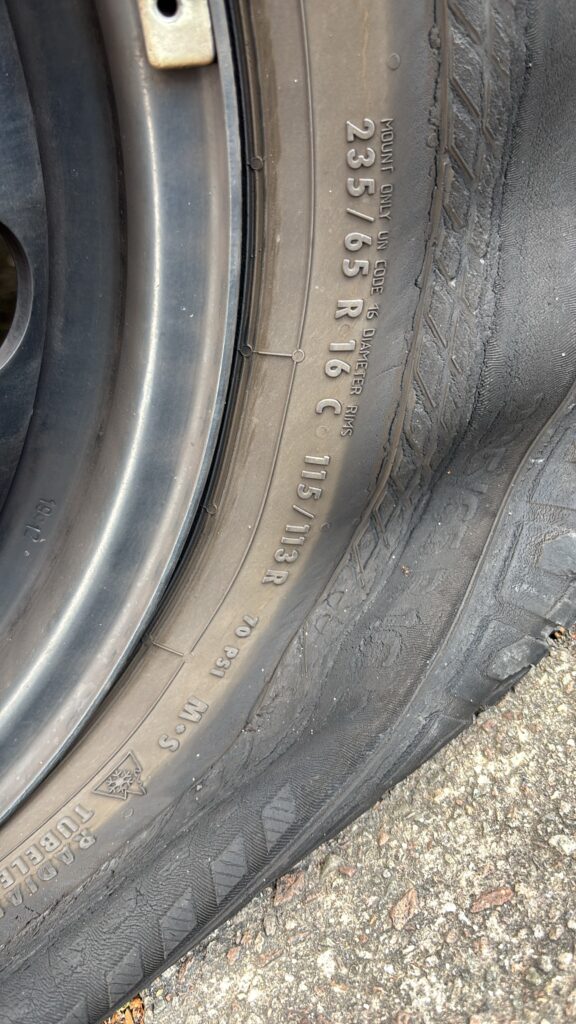
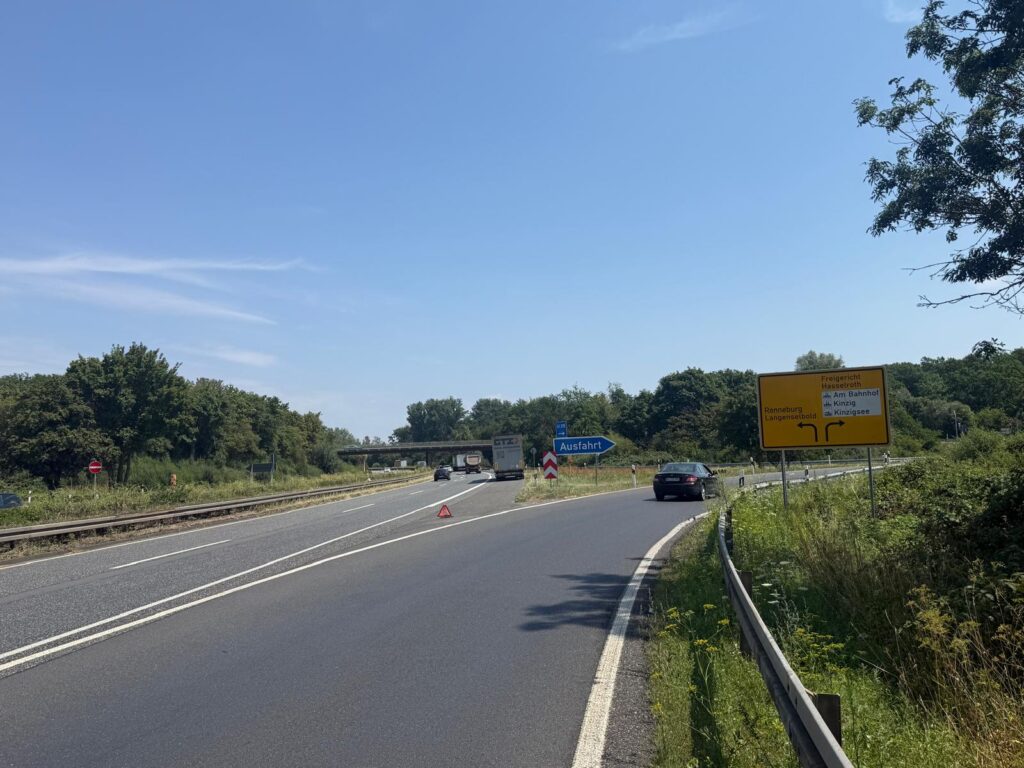
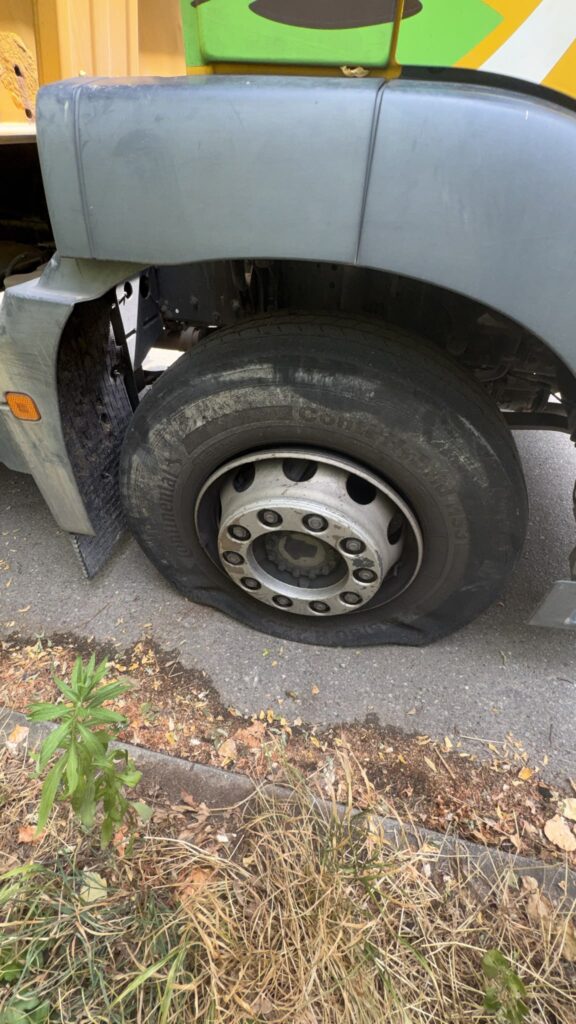
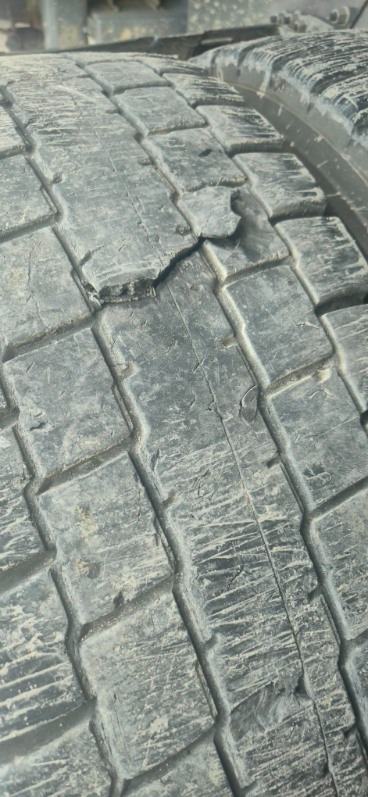
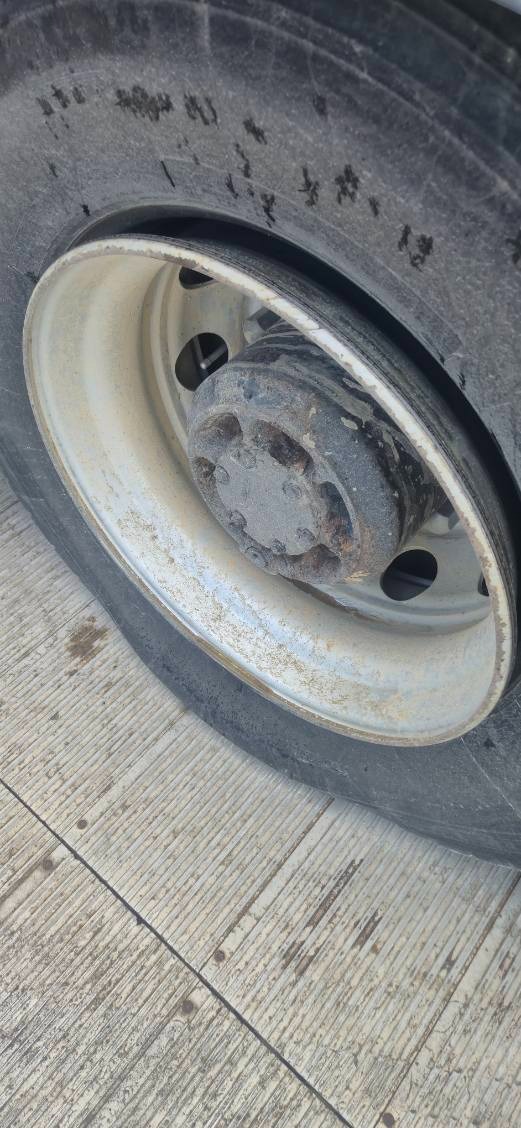
Shortly before midday, the driver of an articulated lorry noticed the steering pulling to one side and an unusual noise coming from the trailer’s rear right wheel. He pulled onto the hard shoulder of the A2, heading towards Dortmund, just before Herford. Stepping out, the problem was obvious: the 295/80 R22.5 tyre had all but lost its air, with a deep split in the carcass and damage running along several tread grooves.
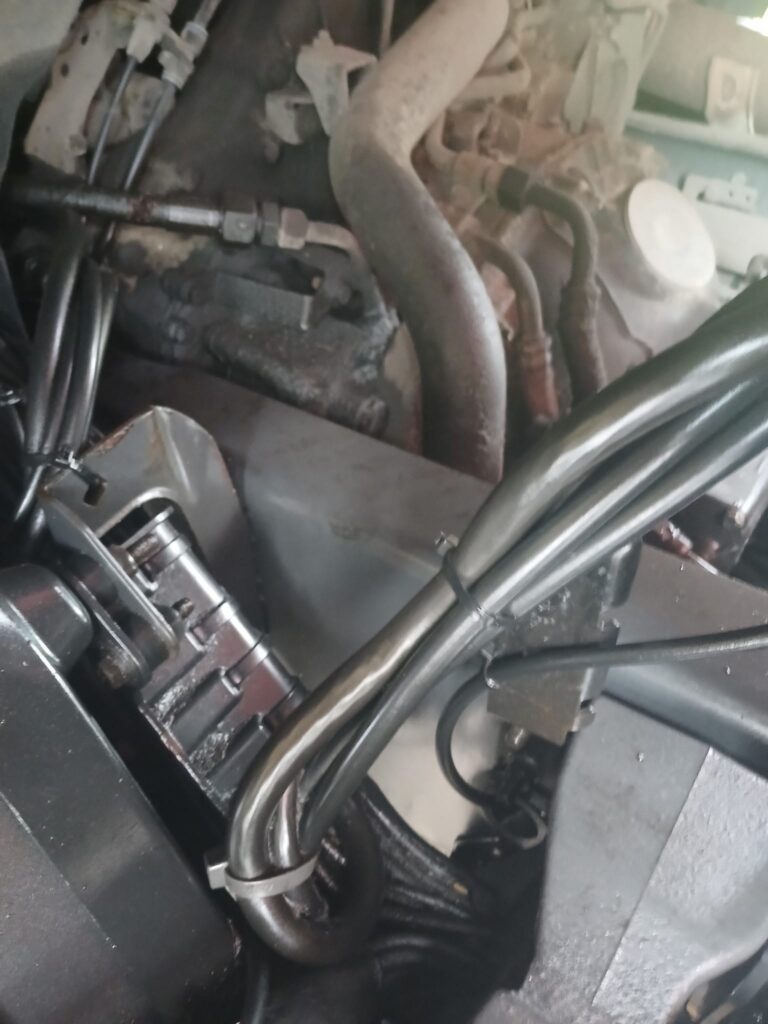
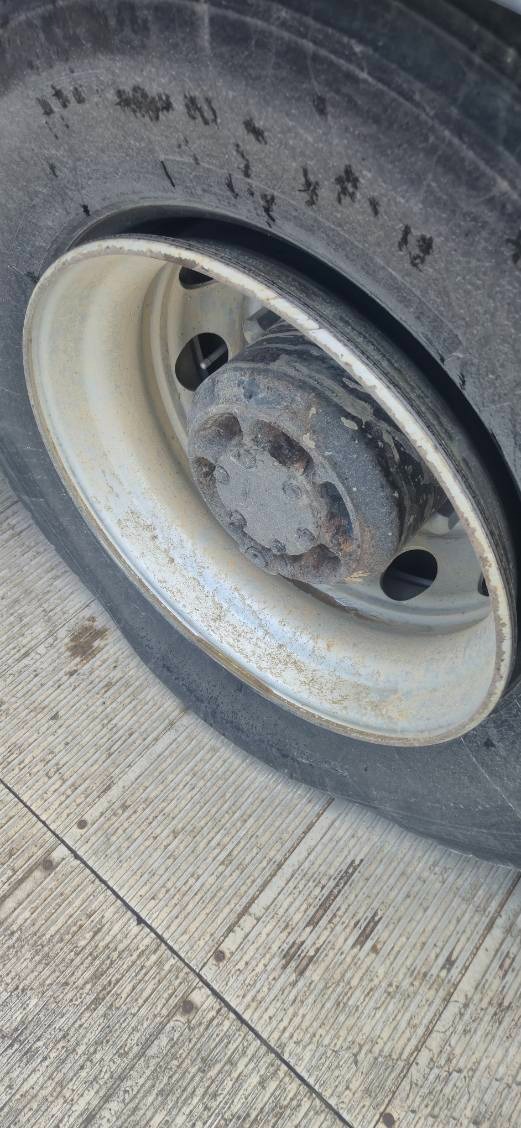
Up to that point, this was a standard case for our emergency line. What made this callout different showed up when our technician looked past the tyre to the hub behind it: noticeable play when the wheel was rocked by hand, a faintly discoloured patch on the hub cap, and the barely-there smell of overheated grease. That combination — tyre damage plus a suspect hub — is exactly why every callout at LKWHelp24 ends with a full axle inspection, not just a glance at the tread.
How the Response Was Organised
Our dispatch team follows a fixed sequence the moment an emergency call comes in:
- Locate the vehicle by motorway kilometre marker and direction of travel — here, the A2 near Herford, heading towards Dortmund.
- Confirm tyre size and axle position so the correct replacement wheel is loaded before departure.
- Alert the nearest partner crew in the Ostwestfalen-Lippe region.
- Call the driver back with an estimated arrival time and instructions for securing the scene.
- Provisionally reserve a workshop slot in case the on-site diagnosis rules out a roadside repair.
That last step matters in practice. A crew that only starts looking for a workshop after diagnosis routinely loses another hour. Our dispatchers plan for the fallback option from the outset, even if it turns out not to be needed. Every dispatch draws on the same truck breakdown service network we use nationwide, so a crew from Ostwestfalen-Lippe carries the same equipment and training as one dispatched near Hamburg or Munich.
The Situation on the Motorway: Why No One Just Keeps Driving
A truck tyre in this size range runs at an inflation pressure between 8.5 and 9.5 bar under normal conditions. When that pressure drops suddenly, the entire way the wheel carries load changes. The tyre no longer sits centred; it tips sideways while the full weight of the vehicle continues pressing down on the axle. On a loaded semi-trailer, that means several tonnes of axle load suddenly running over a collapsed rubber footprint instead of a round, pressurised tyre.
This is where the real problem of this callout begins. A wheel never works in isolation — it sits on a hub, and the hub carries load onto the axle through a bearing. As long as the tyre runs true, the bearing mainly absorbs vertical load, which is what it is built for. The moment the tyre goes flat and the wheel tips sideways, lateral forces appear that the bearing was never designed to handle. Those lateral forces create friction in areas that barely see load under normal driving, and that friction generates heat.
Heat, in turn, thins the hub grease, lets it escape the bearing housing, and once lubrication drops, friction climbs further still. The result is a chain reaction: a 500-euro puncture becomes, within a few kilometres of continued driving, a bearing failure that needs a press and specialist tools to put right.
What a Failed Wheel Bearing on the Motorway Actually Means
It is worth being direct here, without overstating it: a wheel bearing that fails completely under load can allow the wheel to separate from the axle while the vehicle is moving. On a 40-tonne articulated lorry travelling on the motorway, a detached wheel is not just property damage. It becomes a projectile weighing several hundred kilograms, rolling uncontrolled through dense traffic.
For the operator and driver, this carries legal weight as well as the obvious danger to other road users. Continuing to operate a vehicle with a known technical defect breaches roadworthiness requirements under §15 StVO, and if damage results, the driver and operator can face charges for negligent endangerment. The decision to stop a vehicle with a suspect hub from continuing is not overcaution; it is a straightforward technical and legal necessity.
The On-Site Check: How Our Crew Assesses a Damaged Hub
Our technicians run the same checklist on every tyre failure, before any tools come out:
- Bearing play check: grip the wheel top and bottom and rock it firmly. Noticeable play points to a damaged or loose bearing.
- Temperature reading: hand contact on the hub, followed by an infrared thermometer if anything feels off. Readings notably above ambient, or above the neighbouring axle, are a red flag.
- Rotation test: lift the wheel and spin it by hand. A rough feel, grinding, or an audible rumble signal an advanced bearing failure.
- Visual check of the hub cap and seal: grease seepage, discolouration from overheating, or a damaged seal are clear signs of a leak.
- Cross-check with the driver’s account: a hum or whine that grew louder with speed before the tyre went flat strongly suggests the bearing was already failing before the puncture happened.
In this case, the hub showed noticeable play, a temperature clearly higher than the neighbouring axle, and traces of leaked grease around the hub cap. Together, those three findings left no room for interpretation: a straightforward tyre change would have got the vehicle moving again, but not safely.
On-Site Repair or Workshop: Where the Line Sits
A pure tyre change is a mobile job, done in 45 to 90 minutes. Swapping a wheel bearing is not. The failed bearing is press-fitted onto the axle and into the hub; it has to come off with a hydraulic puller and go back in under a defined press force. That is followed by precise bearing-play adjustment, often with a torque check and sometimes a further tweak after a short test drive.
At the roadside, that infrastructure simply does not exist: no lift, no stationary press, no clean, dust-free working area for an open bearing. That is why our crew’s call was clear: secure the damaged tyre properly, prepare the vehicle for transport, and use our truck towing service to move it to the nearest partner workshop rather than improvising on the hard shoulder. For straightforward punctures without a hub problem, our truck tyre service team handles the whole job roadside, without any workshop transport at all.
Had the hub checked out clean, the job would have looked very different: remove the wheel, fit and balance a new 295/80 R22.5 tyre, refit the wheel, tighten the nuts in a star pattern to the specified torque, then a short test drive. That standard sequence normally takes 45 to 90 minutes. In this case, the crew deliberately chose the slower, safer route instead, sending the vehicle to a fully equipped truck workshop partner rather than gambling on a roadside fix.
Step by Step: How the Callout Unfolded
- Initial inspection and scene safety: warning triangle, hi-vis vest, work area cordoned off from moving traffic.
- Tyre diagnosis: visual check of the carcass and tread damage, documented with photographs.
- Hub inspection: play check, temperature reading, rotation test, visual check for grease leakage.
- Diagnosis discussed with driver and dispatch: findings explained, decision made to arrange a workshop transport.
- Preparation for transport: wheel secured against rolling, load checked, vehicle loaded onto the recovery truck.
- Transport to partner workshop: driven at reduced speed to the nearest workshop equipped with a bearing press.
One point every driver should carry away regardless of the outcome: after any wheel change, and especially after bearing work, the wheel nuts must be re-torqued after roughly 50 kilometres. New components settle slightly in the first kilometres of driving, which lets clamping force drop marginally, and that cannot be left unchecked. Wheel-loss incidents almost always start with a skipped re-torque.
There is also a practical point many drivers underestimate: the driving behaviour in the minutes before a tyre finally gives out completely. A driver who notices a faint hiss or a slight pull in the steering and keeps going for a few more kilometres to reach a safer stopping point extends exactly the phase where the hub takes on the greatest extra load. Stopping in a controlled way on the hard shoulder the moment the warning sign is clear shortens that critical window and noticeably lowers the risk of secondary damage.
The Full Timeline
| Time | Phase | Action |
|---|---|---|
| 10:52 | Emergency call | Driver reports tyre failure on the A2 near Herford, heading towards Dortmund |
| 10:52–11:07 | Dispatch | Partner crew alerted in the region, workshop informed as a precaution |
| 11:07–11:52 | Response drive | 45 minutes, roughly 38 km to the scene |
| 11:52–12:12 | Initial inspection | Tyre damage and wheel hub assessed |
| 12:12–12:32 | Diagnosis confirmed | Bearing failure identified, decision made to tow |
| 12:32–13:02 | Securing & loading | Vehicle prepared for transport |
| 13:02–14:07 | Transport | 65 minutes to the partner workshop |
Total time from the emergency call to arrival at the workshop: 3 hours 15 minutes.
The Cost Breakdown
| Item | Price (EUR, net) |
|---|---|
| Callout fee | 260 |
| On-site diagnosis (hub, bearing, brake) | 140 |
| Truck tyre 295/80 R22.5 incl. fitting | 560 |
| Old tyre disposal | 20 |
| Securing the scene | 60 |
| Towing to partner workshop (approx. 35 km) | 950 |
| Total (net, plus VAT) | 1,990 |
That figure looks high for a puncture at first glance. It is fully explained by the second failure. A straightforward tyre change in this size range typically runs 750 to 1,100 euros net. The extra cost comes from diagnosis, scene safety and, above all, the towing element, which runs 850 to 1,600 euros net depending on distance.
For comparison: a stationary articulated lorry costs a fleet operator between 800 and 1,200 euros a day in downtime alone, before contract penalties or lost freight are counted. Measured against that, a proper diagnosis that prevents a later wheel-loss or injury incident is not a cost driver — it is insurance.
Why This Callout Needed a Professional
A driver who tries to swap a tyre on a damaged hub alone takes on several concrete risks:
- Misdiagnosis: without experience, slight play or a warm hub is often written off as normal.
- Continued driving with a failing bearing: can end in wheel loss on the motorway in the worst case.
- Faulty reassembly: a new wheel bolted onto a damaged hub looks fine from the outside but is not.
- Missing specialist tools: without a torque wrench and press equipment, neither a bearing swap nor a reliable star-pattern torque sequence is achievable roadside.
- Liability exposure: continuing to drive a vehicle with a known defect leaves the operator fully liable if something goes wrong.
Typical Callouts We Handle Across Germany
Tyre and hub damage is only part of our daily work. We regularly respond to:
- Tyre blowouts on articulated lorries and trailers, on motorways and at service areas.
- Wheel bolts that loosen after incorrect fitting and let wheels come off.
- Brake disc failures on trailers and semi-trailers.
- Gearbox and engine failures that leave a vehicle stranded on car parks or motorways.
- Electrical failures that knock out modern CAN-bus-controlled trucks.
Every one of these starts with an on-site diagnosis, not a reflex swap of the first visible part.
Prevention for Drivers and Fleet Managers
Most wheel hub failures can be avoided if a handful of routines are followed consistently:
- Check hub temperature with an infrared thermometer at every vehicle check, especially after long motorway stretches.
- Watch for unusual humming or whining from the wheel area and stop immediately if it appears.
- Check tyre pressure regularly, ideally with an automatic tyre pressure monitoring system fleet-wide.
- Build the 50-kilometre re-torque check into the workflow after every wheel change, rather than leaving it to chance.
- Ask for bearing play to be checked at every service interval, not just brakes and tread depth.
Tyres and Fleet Care: What Hauliers Should Know
Tyre brand choice has a direct effect on how often this kind of failure happens. Branded tyres from Continental or Michelin typically offer more consistent carcass construction and lower failure rates under sustained load than budget imports, which shows up over a semi-truck’s service life as fewer unplanned stoppages. Axle and hub component quality matters just as much: manufacturers such as BPW build axle systems with clearly documented maintenance intervals for bearings and seals, which fleets should follow proactively rather than reacting only after a failure.
Regular technical checks, for example through the roadworthiness inspection carried out by organisations such as DEKRA, catch early-stage bearing wear before it becomes a roadside emergency. Fleet managers who stick to manufacturer service intervals significantly cut the risk of exactly this kind of double failure.
Why Hauliers and Drivers Choose LKWHelp24
Our team is reachable around the clock, across the whole of Germany, with a multilingual dispatch service that supports international drivers without a language barrier. We work with a vetted partner network that never just swaps a tyre — every callout begins with a full technical diagnosis, as it did here, where a surface-level repair would have missed the real danger. Pricing is agreed transparently before work starts, with no hidden lines on the final invoice.
Frequently Asked Questions
How much does a truck tyre change cost on the motorway?
A straightforward change for a 295/80 R22.5 tyre typically costs 750 to 1,100 euros net, depending on distance to the scene, time of day and tyre brand. Add secondary damage such as a failed hub, and diagnosis and towing push the total higher.
How do you recognise a damaged wheel hub?
Common signs include noticeable play in the wheel, a hub temperature clearly higher than the neighbouring axle, a grinding or whining noise while driving, and visible grease leakage around the hub cap.
Why can’t you just keep driving on a damaged hub?
Because a progressing bearing failure can end in total failure, and in the worst case the wheel separates from the axle while moving. On a motorway, that is an acute danger to life for other road users.
How long does a roadside hub repair take?
Usually it does not happen roadside at all, because it needs a press and a clean workshop environment. On site, the scene is secured and the lorry is taken to the nearest suitable workshop.
Who pays for a callout involving a tyre failure and secondary damage?
Typically the fleet operator or the relevant vehicle insurance, depending on the policy. We issue a detailed, itemised invoice that can be used directly for insurance claims.
Why do wheel nuts need re-torquing after 50 kilometres?
Because newly fitted components settle slightly during the first kilometres of driving, which lets clamping force drop marginally. Without a follow-up check, the risk of wheel loss rises sharply.
Summary: Key Figures at a Glance
- Tyre size: 295/80 R22.5
- Location: A2 near Herford, heading towards Dortmund
- Response time: 15 minutes dispatch, 45 minutes drive to scene
- Total time: 3 hours 15 minutes from the call to arrival at the workshop
- Total cost: 1,990 euros net
- Secondary damage: damaged wheel hub/bearing, the reason for the workshop transport
Get Help Now
A tyre failure on the motorway is unpleasant but manageable. It becomes dangerous when a secondary failure like a damaged wheel hub goes unnoticed. Our team checks for both on every callout and makes the decision that matters for road safety, not the fastest one.
Call us on +49 160 5753826 or visit www.lkwhelp24.com — 24/7, anywhere in Germany.
Keywords: truck tyre service Germany | truck wheel hub failure | tyre blowout A2 motorway | truck roadside assistance Herford | wheel bearing damage semi-truck | 24/7 truck towing service
Related Articles
- Truck Towing Service in Germany – 24/7 Heavy-Duty Assistance
- Truck Tire Service Near Me: How LKWHelp24 Got a Semi-Truck Moving in 90 Minutes on the A43 Near Dortmund
- Truck Loses 2 Wheels Near Hannover – Sheared Bolts | 24/7 Mobile Roadside
- Truck Tyre Service for Blowout and Rim Damage on the Motorway near Trier
- Truck Towing Service Near Munich – Recovery of a Fully Loaded Semi-Trailer