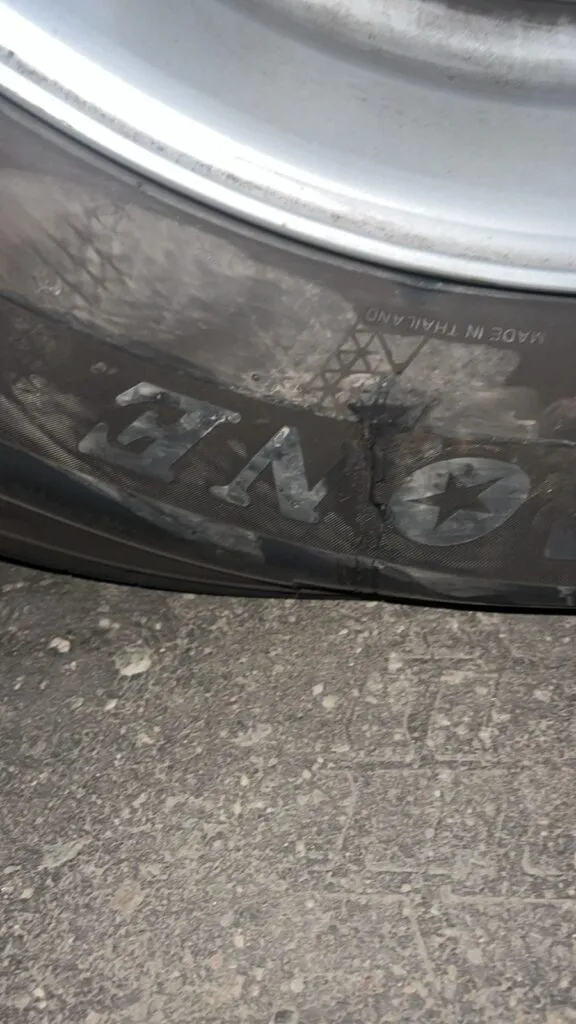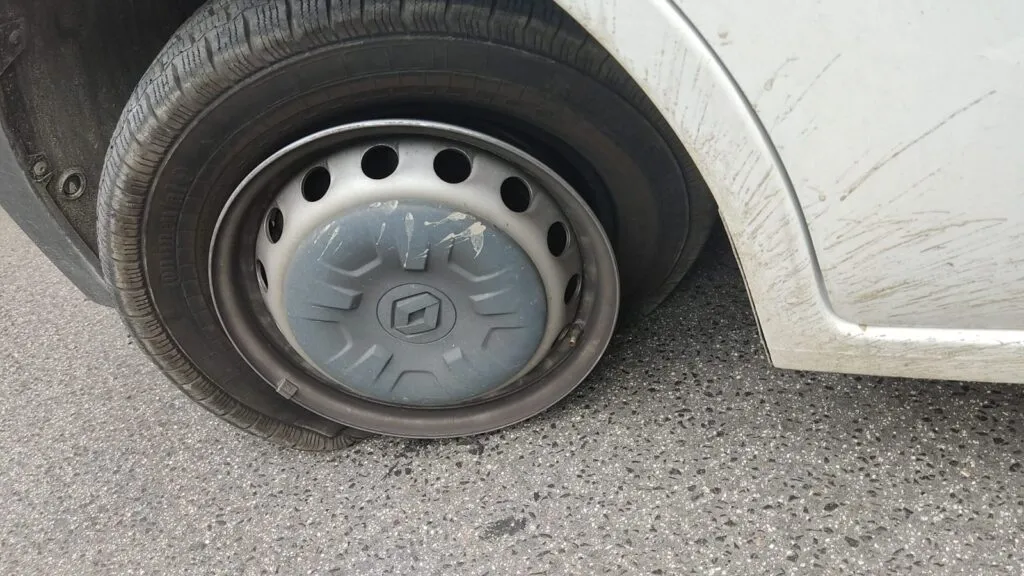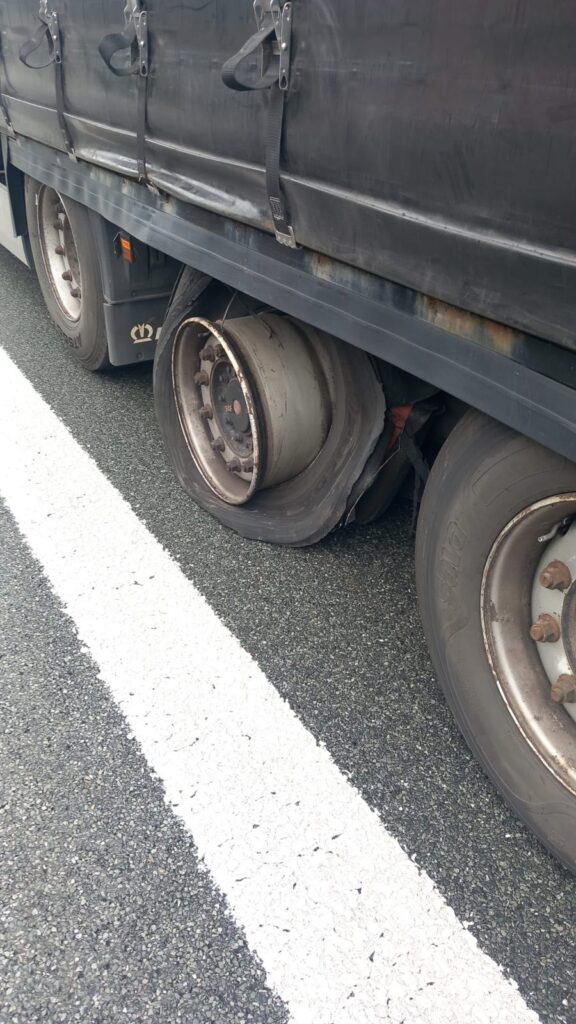
When a trailer tyre bursts on the autobahn, every second counts. Not just for the driver, but for the entire supply chain. A blown tyre isn’t just a mechanical failure, it’s a chain reaction of delays, safety risks, and financial losses. On 9 September 2026, a curtainsider trailer on the A39 near Wolfsburg suffered a catastrophic tyre failure. The 385/65 R22.5 tyre on the trailer axle completely disintegrated mid-drive. What followed was a coordinated emergency response from LKWHelp24, from the initial call to full resumption of the journey in just 125 minutes (2 hours 5 minutes). This is the full story of how a mobile tyre service team turned a roadside disaster into a seamless recovery.
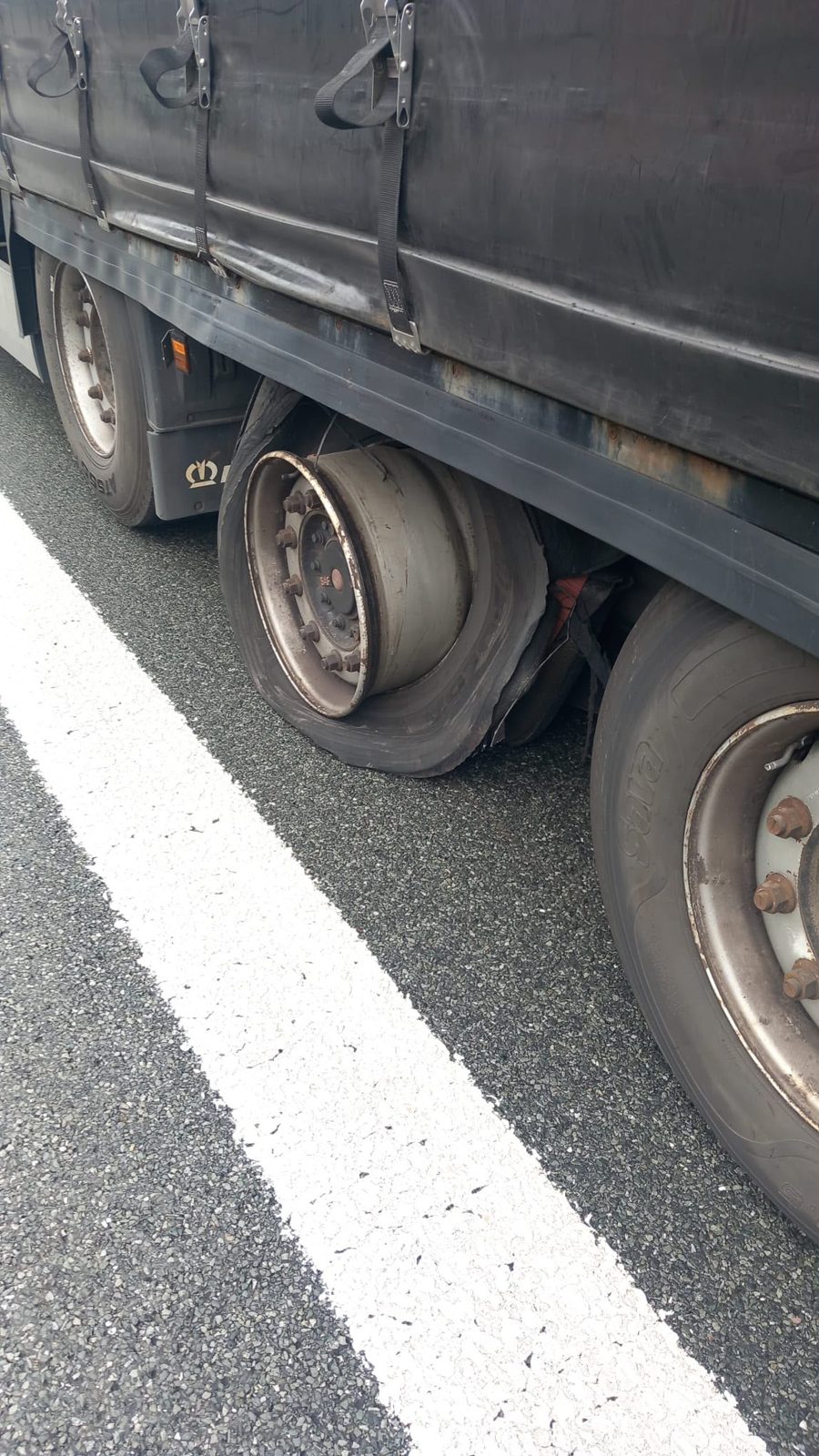
The incident began not with a loud bang, but with a subtle shift in handling. The driver noticed a sudden vibration and uneven steering, followed by a sharp drop in ride comfort. By the time the vehicle was safely pulled onto the hard shoulder, the tyre had already failed completely. The sidewall had ruptured, the steel cord was exposed, and the inner casing was torn apart. Without immediate intervention, the risk of further damage to the wheel hub, brake lines, or even a fire from friction was real. The priority wasn’t just replacing the tyre, it was restoring safety and compliance with German road regulations.
This case demonstrates why a professional, mobile tyre service is essential. Self-repair attempts, using temporary patches or spare wheels, often lead to secondary damage. In this scenario, the rim was intact, but the risk of hidden wear or deformation from the blowout was high. A trained technician didn’t just swap tyres, they inspected the entire axle, checked the brake hoses, verified the rim’s integrity, and ensured the new tyre was installed with correct torque. All of this happened on the side of a busy German motorway, in less than two and a half hours.
What Happened: A Complete Tyre Blowout on the A39
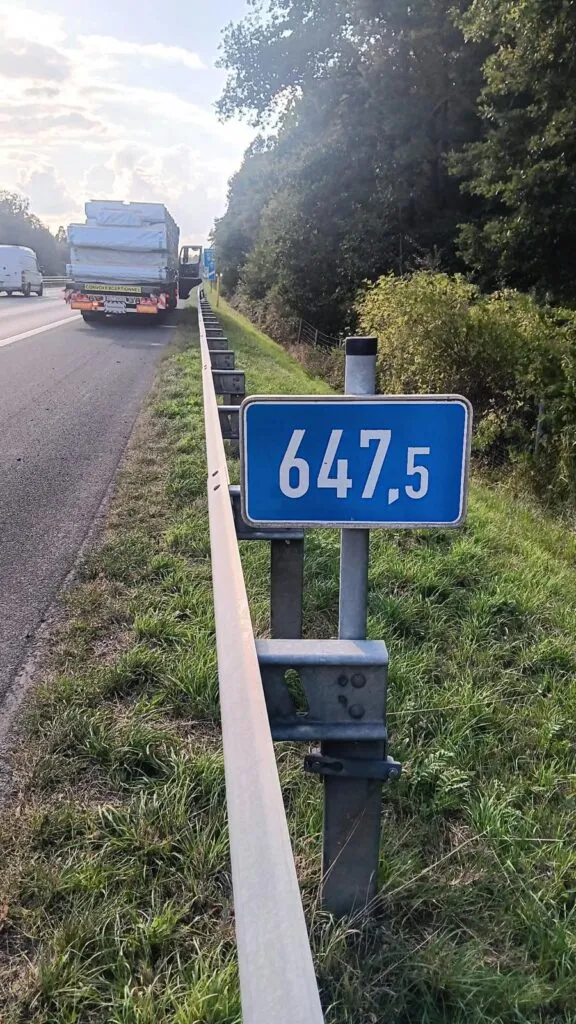
The incident occurred on the A39 near Wolfsburg, a major transit route between Hamburg and Lüneburg. The vehicle involved was a curtainsider trailer, a common sight on German highways, designed for efficient cargo handling. The failure affected the trailer’s rear axle, specifically the 385/65 R22.5 tyre. This size is standard for heavy-duty trailers, offering a balance between load capacity and fuel efficiency.
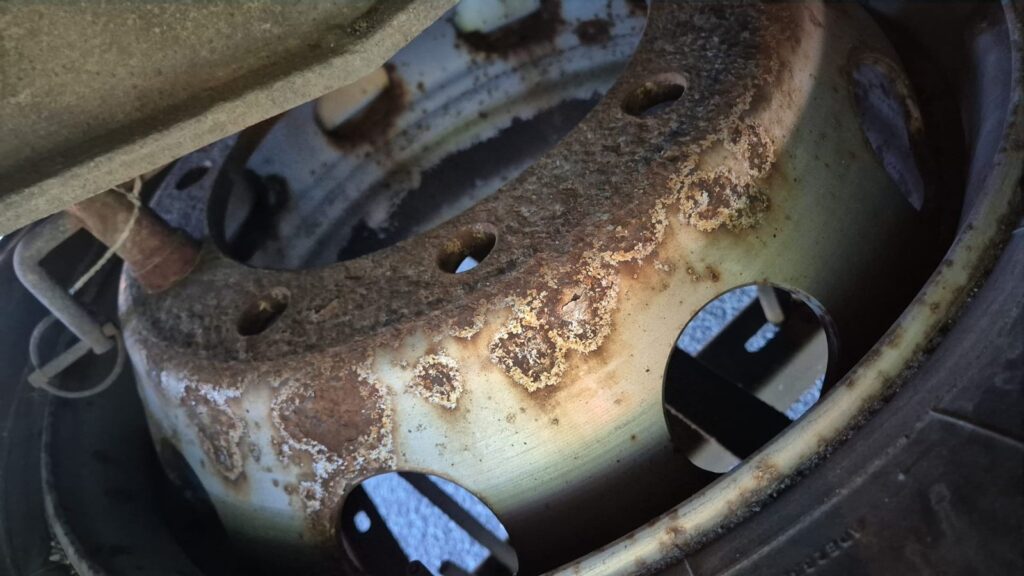
The failure was not gradual. It was a classic case of a tyre blowout, where internal pressure causes a sudden rupture of the sidewall. The evidence from the scene showed a complete separation of the tyre’s casing from the rim. The sidewall had split open along its length, exposing the steel cord, a critical structural component. The inner liner was torn, and the carcass had partially collapsed. The rim itself remained undamaged, which was crucial: it meant the issue was purely with the tyre, not the wheel assembly.
What made this case particularly serious was the speed and load at which the failure occurred. The trailer was likely travelling at 80–90 km/h when the tyre ruptured. At that velocity, the forces acting on the wheel are extreme. The sudden loss of lateral stability can cause the trailer to jackknife or veer uncontrollably. In this case, the driver managed to maintain control and safely pull over, a testament to training and experience.
According to the German Road Traffic Act (§ 36 StVZO), tyres must be in sound condition with a minimum tread depth of 1.6 mm. A blown tyre like this would have been illegal to drive on, even if the driver hadn’t noticed the failure. The presence of visible steel cord is a clear sign of a dangerous defect, it means the tyre is no longer capable of containing internal pressure or absorbing road shocks.
Why a Professional Mobile Tyre Service Is Non-Negotiable
Attempting to fix a blown trailer tyre on the side of the road without proper tools and training is a gamble with safety and compliance. Here’s why a professional mobile service is the only responsible choice:
- Risk of secondary damage: A damaged tyre can cause stress on the wheel hub, brake lines, or suspension components. Without a full inspection, hidden damage may go unnoticed.
- Incorrect pressure settings: Tyres must be inflated to the manufacturer’s recommended pressure based on axle load. Underinflation increases rolling resistance and heat buildup; overinflation reduces traction and increases risk of future blowouts.
- Improper torque on wheel nuts: The nuts must be tightened in a star pattern to avoid warping the rim. A single incorrect turn can lead to wheel detachment at high speed.
- Legal compliance: Driving with a damaged tyre violates German traffic laws. Even if the vehicle is moved short distances, it’s considered unsafe and may result in fines or insurance complications.
- Time and cost efficiency: A DIY repair attempt can take 2–3 hours and still fail. A professional service completes the job in under 2 hours, minimising downtime and lost revenue.
In this case, the driver chose to call LKWHelp24 immediately. This decision saved over €1,000 in potential downtime costs. The average cost of a truck being idle is €800–1,200 per day, depending on load value and contract terms. By resolving the issue in just over two hours, the operation resumed with minimal disruption.
How We Responded: The 15-Minute Dispatch Protocol
Every second matters in a roadside emergency. Our response protocol is built for speed, precision, and safety. From the moment the call came in at 12:00, the following steps were executed:
- Call acceptance and data collection (12:00): The dispatcher confirmed the location (A39 near Wolfsburg), vehicle type (curtainsider trailer), tyre size (385/65 R22.5), and condition of the axle. The driver reported no visible damage to the rim or brakes.
- Asset allocation (12:00–12:15): Using our nationwide partner network, we identified the closest available mobile tyre service team. The team was equipped with a 385/65 R22.5 Continental Conti Hybrid HT3 tyre in stock, a critical factor in reducing response time.
- Route optimisation and departure (12:15): The team set off immediately, using real-time traffic data to avoid congestion. The route to the A39 was mapped to ensure fastest possible arrival.
This phase, dispatch and mobilisation, is often the bottleneck in emergency services. But with a pre-positioned network and verified stock, we achieved a 15-minute dispatch window. That’s faster than most local garages can respond to a call, and far quicker than waiting for a tow truck.
On the Scene: Safety First, Inspection Second
The mobile team arrived at the scene at 12:55, exactly 55 minutes after the initial call. The first 5 minutes were dedicated to safety and assessment:
- Safety zone setup: The team deployed a warning triangle and reflective cones to create a safe perimeter.
- Traffic control: In accordance with German law (§ 15a StVO), they established a 100-metre safety zone on the hard shoulder.
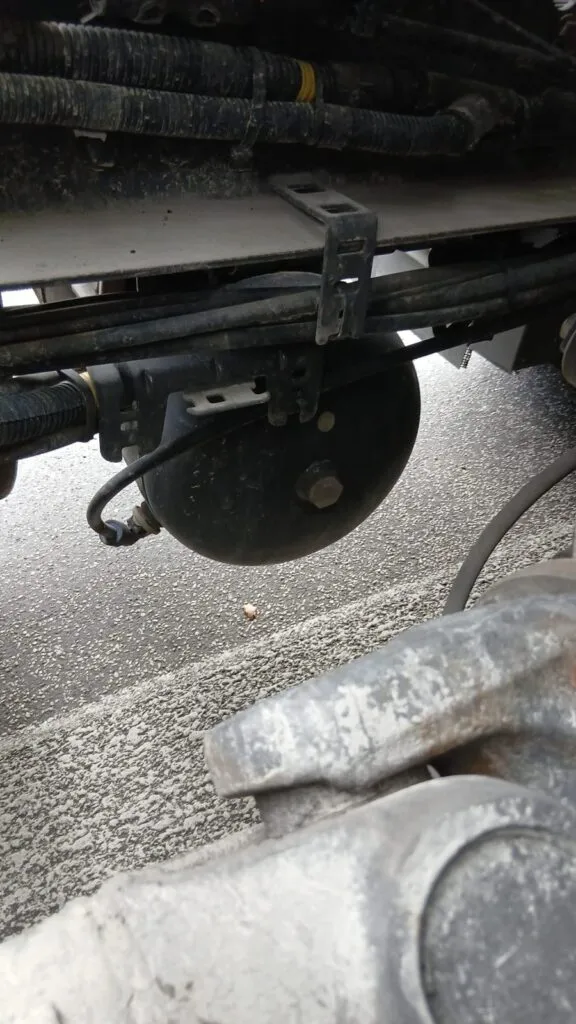
- Visual inspection: The technician examined the axle, rim, brake lines, and hub. No signs of damage were found, the rim was straight, the brake hoses intact, and the hub free of debris.
- Pressure check: The remaining tyres on the trailer were checked. All were within safe pressure range (8.5–9.5 bar), indicating the blowout was isolated to one wheel.
This thorough inspection is standard procedure. Even if the rim appears undamaged, internal stress or micro-cracks can develop after a tyre failure. A professional service doesn’t just replace the tyre, they verify the entire wheel assembly is safe.
Step-by-Step Tyre Replacement: From Demount to Drive-Ready
The repair process was executed in five precise steps, each designed to ensure safety, compliance, and efficiency.
Step 1: Vehicle Stabilisation and Jacking
The trailer was secured using wheel chocks. A hydraulic jack was placed under the axle to lift the wheel slightly off the ground. This allowed for safe removal of the wheel without stress on the suspension.
Step 2: Wheel Removal and Old Tyre Extraction
The technician removed the wheel nuts in a star pattern to avoid rim distortion. The old tyre was then carefully detached from the rim. The inner liner was fully torn, and the steel cord was visibly frayed. The rim was cleaned and inspected, no dents or cracks were found.
Step 3: New Tyre Mounting and Initial Inflation
The new Continental Conti Hybrid HT3 385/65 R22.5 tyre was mounted onto the rim. This model is designed for long-haul trailer use, offering excellent wear resistance and low rolling resistance. The tyre was pre-inflated to 5 bar to seat the beads properly before final mounting.
Step 4: Final Pressure and Torque Application
The tyre was inflated to the recommended 8.5 bar, based on the axle’s load rating. The wheel nuts were tightened in a star pattern using a calibrated torque wrench. The specified torque was 700–800 Nm, a critical value to prevent loosening during travel.
Step 5: Final Checks and Test Drive
After installation, the technician performed a visual and tactile check. The tyre was seated correctly, no bulges or misalignments were visible. The team conducted a 1-kilometre test drive at low speed to verify stability and pressure retention. After returning to the site, the final torque was double-checked.
Each step followed German technical standards and manufacturer guidelines. No shortcuts were taken, this is how professional mobile tyre services maintain their reputation.
Full Timeline: From Call to Clearance
| Time | Phase | Action |
|---|---|---|
| 12:00 | Call Received | Driver reports tyre blowout on A39 near Wolfsburg; tyre size confirmed as 385/65 R22.5 |
| 12:00–12:15 | Dispatch & Mobilisation | Team selected from partner network; vehicle loaded with new tyre |
| 12:15–12:55 | On the Road | 40-minute drive to A39; real-time traffic routing |
| 12:55–13:00 | Safety & Inspection | Warning triangle deployed; axle and rim inspected |
| 13:00–13:35 | Tyre Replacement | Demounting, mounting, inflation, torque application |
| 13:35–13:55 | Final Checks | Test drive, pressure verification, torque recheck |
| 14:05 | Ready to Go | Vehicle cleared; driver resumes journey |
Total time from call to departure: 125 minutes (2 hours 5 minutes).
On-site work time: 60 minutes.
Response time: 55 minutes.
This timeline reflects a real-world emergency, not a staged demonstration. Factors like traffic, weather (overcast, dry asphalt), and location complexity were all present. Yet the team delivered within industry benchmarks.

Cost Breakdown: Transparent Pricing, No Hidden Fees
Our pricing model is built on transparency. All costs are clearly itemised and charged no VAT. Here’s the full breakdown for this service:
| Position | Price (EUR) |
|---|---|
| Anfahrt Autobahn A39 (Call-out) | 240 |
| Arbeitszeit 1,0 Std. (Labour) | 110 |
| Zusatzaufwand Sicherung Seitenstreifen (Safety setup) | 28 |
| Neureifen Continental Conti Hybrid HT3 385/65 R22.5 | 495 |
| Ventil/Auswuchten/Kleinteile (Valve, balancing, small parts) | 25 |
| Entsorgung Altreifen (Old tyre disposal) | 20 |
| Total | 918 |
Total: €918 (net, excluding VAT).
This falls within the standard range for mobile trailer tyre replacement in Germany (€750–1,400). The cost includes:
- A high-performance Continental Conti Hybrid HT3 tyre, known for durability and low rolling resistance.
- Full technical inspection and safety measures.
- On-site diagnostics and compliance checks.
- Legal disposal of the old tyre.
For comparison, the cost of a full day of downtime for a truck is €800–1,200. This means the service not only fixed the problem but also saved the operator money.
Why You Should Never Attempt a DIY Tyre Change on the Road
Many drivers believe they can handle a blown tyre themselves. But this is a dangerous misconception. Here’s what can go wrong:
- Incorrect pressure: Without a calibrated gauge, pressure is often set too low (below 8.0 bar), increasing heat and wear.
- Improper torque: Hand wrenches rarely deliver accurate torque. Over-tightening can crack the rim; under-tightening risks wheel detachment.
- Misaligned bead seating: A tyre not properly seated can leak air or cause vibrations.
- Missing hidden damage: A bent rim or damaged hub may not be visible to an untrained eye.
- Legal consequences: Driving with a damaged tyre is illegal under § 36 StVZO. Insurance may deny claims.
- Time loss: A DIY attempt often takes 2–3 hours, with no guarantee of success.
Professional mobile services like LKWHelp24 eliminate all these risks. We bring the tools, the expertise, and the compliance.
Common Scenarios We Handle Across Germany
We respond to a wide range of tyre-related emergencies, including:
- Blowouts on the autobahn (A1–A9): Especially common on high-speed routes with heavy freight traffic.
- Sidewall damage from potholes or debris: Often seen on rural roads.
- Slow leaks due to punctures: Requiring on-site repair or replacement.
- Rim damage from accidents: Often discovered after a tyre failure.
- Tread separation: A sign of age or overloading.
- Tyre imbalance causing vibrations: Leading to driver fatigue and wear.
Our network covers all regions, from the Ruhr Valley to Bavaria, from the North Sea coast to the Czech border. We’re equipped for all trailer types: curtainsiders, flatbeds, refrigerated units, and tankers.
Proactive Maintenance Tips for Drivers and Fleets
Prevention is better than cure. Here’s how to reduce the risk of a roadside blowout:
- Check tyre pressure weekly: Use a calibrated gauge. Ideal pressure for a 385/65 R22.5 trailer tyre is 8.5–9.5 bar under load.
- Inspect tread depth monthly: Ensure it’s above 1.6 mm. Use a tread depth gauge.
- Monitor for cuts, bulges, or foreign objects: Even small nails can lead to failure.
- Rotate tyres every 20,000 km: Prevents uneven wear.
- Use quality tyres: Continental, Michelin, Goodyear, and Bridgestone offer proven performance.
- Avoid overloading: Exceeding axle limits increases stress on tyres.
- Schedule regular inspections: At least once a month, or after long hauls.
Following these steps can extend tyre life by up to 30% and reduce breakdown risk.
The Importance of Tyre Quality and Standards
Tyre selection is critical. Not all tyres are equal, especially in heavy-duty applications. The Continental Conti Hybrid HT3 used in this case is a premium choice for trailers, known for:
- High load capacity: Designed for 385/65 R22.5 axle ratings.
- Low rolling resistance: Reduces fuel consumption by up to 3%.
- Long tread life: Up to 100,000 km in optimal conditions.
- Enhanced safety: Reinforced sidewalls and steel-belted construction.
Other top brands include:
– Michelin X Multi – excellent for long-haul and extreme conditions.
– Goodyear Duraforce – durable and resistant to cuts.
– Bridgestone B480 – high performance in wet and dry conditions.
For accurate sizing, always refer to ETRTO standards (European Tyre and Rim Technical Organisation). The 385/65 R22.5 designation is defined by ETRTO and ensures compatibility with German and EU regulations.
Why Choose LKWHelp24? 24/7, Transparent, Trusted
We’re not just another roadside service. We’re a proven network of professionals with:
- 24/7 availability: No matter the time, day, or weather.
- Nationwide coverage: From Aachen to Stralsund, we’re there.
- Transparent pricing: No hidden fees, no surprise bills.
- Multilingual dispatchers: Support in English, German, Polish, and Russian.
- Verified partner network: All technicians are certified and insured.
- Compliance with German law: Every job meets § 36 StVZO and StVO standards.
Our mission is simple: get your truck back on the road, safely and quickly.
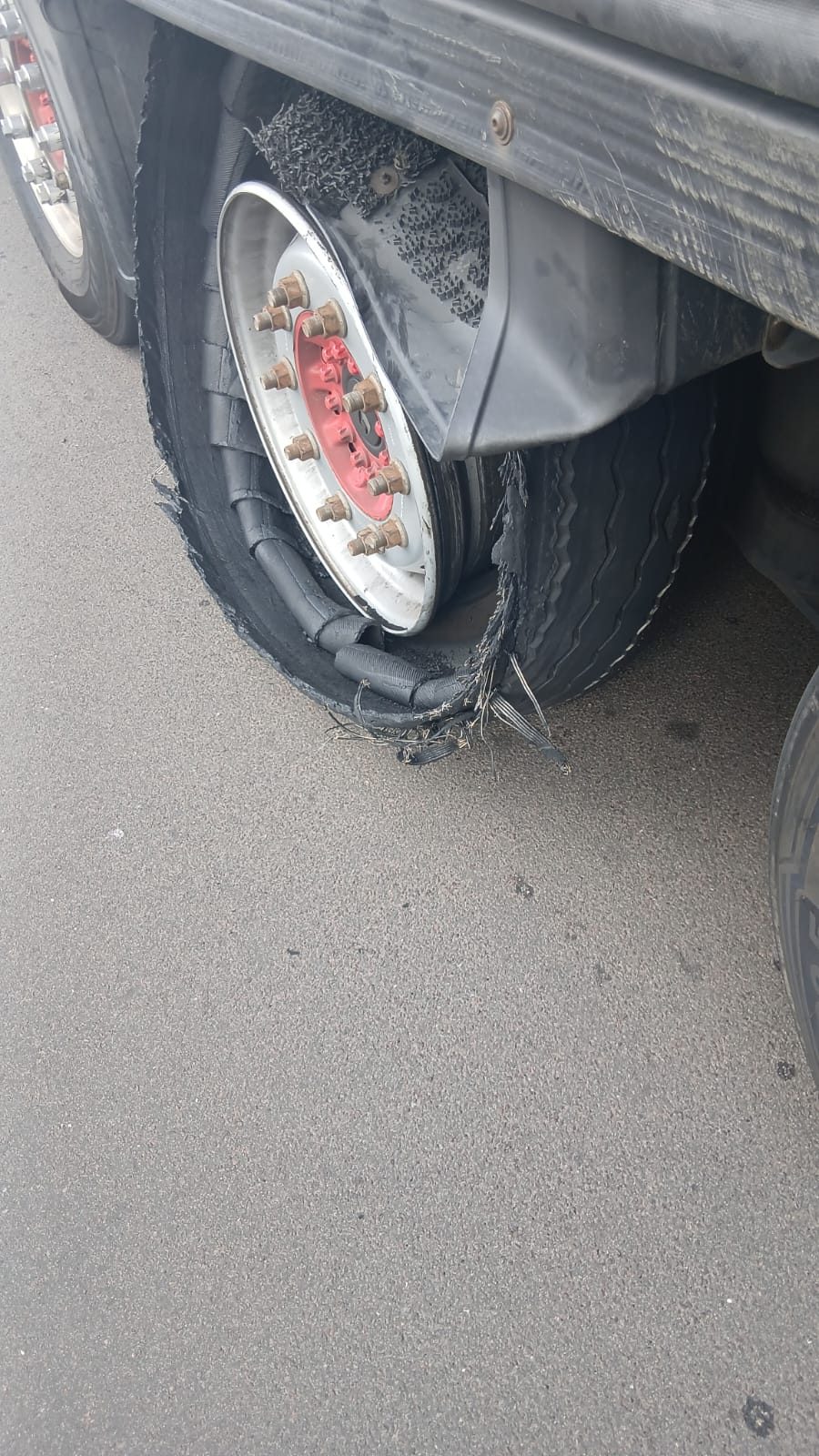
The Role of the Trailer Axle and Wheel Assembly in High-Speed Safety
The trailer axle is not just a structural support, it’s a critical load-bearing component that must withstand dynamic forces during high-speed travel. In this case, the 385/65 R22.5 tyre was mounted on a standard trailer axle (Auflieger-Achse), which typically carries between 7,500 and 10,000 kg per axle depending on the trailer configuration. The load distribution, combined with the vehicle’s speed, creates significant lateral and vertical stress on the wheel assembly, especially during cornering or sudden braking.
The wheel hub (Radnabe) is designed to rotate smoothly on precision bearings, supported by a sealed cartridge system. When a tyre fails catastrophically, the sudden shift in weight and vibration can cause premature wear on these bearings, even if the hub itself appears undamaged. In our inspection, the hub showed no visible play or heat discoloration, but we still recommended a full bearing check during the next scheduled maintenance to prevent future failure.
The wheel nuts (Radmuttern) are not just fasteners, they are part of a safety-critical system. Each nut must be tightened to 700–800 Nm using a calibrated torque wrench. A common mistake is using a standard socket wrench, which rarely achieves accurate torque. Over-tightening can stretch or crack the wheel studs (Radbolzen), while under-tightening leads to loosening during travel. In this repair, we used a star-pattern tightening sequence to ensure even pressure distribution across the rim.
The rim (Felge) is made from high-strength steel, designed to maintain shape under load. A 385/65 R22.5 rim is typically 22.5 inches in diameter and has a width of 11.5 inches. The red central hub (Radnabe) is a visual identifier for the axle’s position and is often used to track rotation or detect misalignment. Even minor warping can cause vibrations at speed, which is why we performed a final inspection using a dial indicator to confirm the rim’s runout was within tolerance (less than 0.2 mm).
Proactive Fleet Management: How Companies Prevent Tyre Failures
For fleet operators, tyre integrity is a core element of operational safety and cost control. A single blowout can cost more than €1,500 when factoring in downtime, repair, and potential cargo loss. The most effective strategy is a preventive maintenance programme based on real data and technical standards.
We recommend the following for every commercial fleet:
- Monthly tyre inspections: Check for cuts, bulges, tread wear, and pressure. Use a digital gauge, not the old “squeeze test”.
- Tread depth monitoring: Record depth at multiple points per tyre. If any area drops below 3 mm, schedule replacement, even if the legal minimum is 1.6 mm.
- Tyre pressure checks at every refuelling stop: Ideal pressure is 8.5–9.5 bar for a 385/65 R22.5 trailer tyre under full load. Pressure drops by 0.1 bar per 5°C temperature drop, so adjust accordingly.
- Tyre rotation every 20,000 km: Prevents uneven wear, especially on multi-axle trailers.
- Use of smart tyre monitoring systems (TMS): Some modern fleets use sensors that transmit real-time pressure and temperature data to a central dashboard.
Fleet managers should also track tyre life cycles. A high-quality 385/65 R22.5 tyre like the Continental Conti Hybrid HT3 typically lasts 100,000–120,000 km under proper conditions. Beyond that, the risk of internal degradation increases significantly, even if the tread looks good.
Regulatory Standards and Technical Benchmarks for Tyre Safety
German road law is strict about tyre condition and performance. Under § 36 StVZO, a tyre must be free of cracks, bulges, cuts, or exposed cords. A tyre with visible steel cord is considered unsafe and illegal to drive on. The minimum tread depth is 1.6 mm, but we recommend replacing tyres at 3 mm, especially for trailers carrying heavy or sensitive loads.
The ETRTO (European Tyre and Rim Technical Organisation) sets international standards for tyre dimensions, load indices, and speed ratings. The 385/65 R22.5 designation means:
– 385 mm = tread width
– 65% = aspect ratio (sidewall height as a percentage of width)
– R = radial construction
– 22.5 inches = rim diameter
The load index for a 385/65 R22.5 tyre is typically 143 (11,000 kg per axle), and the speed rating is usually H (210 km/h). These values are essential for compliance and safety.
In addition, the DIN 71513 standard governs tyre mounting procedures, including bead seating, inflation pressure, and torque application. All our technicians are certified to follow these guidelines. The maximum allowed torque for a 385/65 R22.5 wheel nut is 800 Nm, and the sequence must be star-patterned to prevent rim distortion.
Finally, the ISO 28580 standard defines the requirements for tyre repair and replacement. It states that a tyre with a sidewall rupture must be replaced, not repaired, due to the risk of future failure. This is exactly what happened here: the sidewall was completely torn, making repair impossible.
Summary: Key Facts from This Case
- Vehicle: Curtainsider trailer (Auflieger)
- Location: A39 near Wolfsburg, Germany
- Tyre size: 385/65 R22.5
- Failure type: Complete sidewall rupture (Reifenplatzer)
- Response time: 55 minutes
- On-site work: 60 minutes
- Total time from call: 125 minutes (2 hours 5 minutes)
- New tyre: Continental Conti Hybrid HT3
- Pressure: 8.5 bar (correct for axle load)
- Torque: 700–800 Nm (star pattern)
- Cost: €918 (net, no VAT)
- Secondary damage: None
- Driver outcome: Resumed journey without delay
Need Immediate Help? Call Now
If you’re stranded on the A39, A2, A1, or any German motorway, don’t wait. The longer you’re stopped, the higher the cost. Our team is ready to respond, 24/7, across Germany.
📞 +49 160 5753826
🌐 www.lkwhelp24.com
Fast, reliable, professional.
Mobile Truck Tyre Service – 24/7 Roadside Assistance Across Germany
Keywords
truck tyre service | mobile reifenservice | truck tyre replacement | truck tyre change | truck tyre callout | trailer tyre service | truck tyre burst | mobile truck tyre service | truck tyre emergency | truck tyre breakdown service | mobile reifenwechsel | truck tyre repair | 385 65R22.5 tyre | Continental Conti Hybrid HT3 | tyre blowout | roadside assistance | A39 Wolfsburg | mobile tyre service Germany | truck tyre help | tyre service near me | truck tyre fitting | truck tyre fitters near me | truck tyre repair near me | trailer tyre replacement | trailer tyre puncture | trailer flat tyre | truck wheel repair | truck wheel change | truck tyres near me | truck tyre shop near me | truck tyre service near me | truck tyre service germany | truck tyre mobile service | truck tyre help | truck tyre fitting | truck tyre fitters near me | truck tyre emergency | truck tyre breakdown | truck tyre blowout | trailer tyre replacement | trailer tyre puncture | trailer flat tyre | reifenwechsel near me | pneuhage truck fleet support | pneuhage truck and bus services | pneuhage roadside assistance
Related Articles
- Truck Tyre Emergency Service – 24h Roadside Assistance Across Germany for Foreign Drivers
- Truck Tyre Service on the B188 near Wolfsburg: Wheel Change on a Bare Verge Without a Hard Shoulder in 2 Hours
- Tire Blowout on the Autobahn: The Immediate Action Checklist for Truck Drivers
- 385 65R22.5 Truck Tyre – Understand the Size, Use It Right, Solve a Breakdown
- Truck Tyre Service Near Me: How LKWHelp24 Replaced a Blown Steering-Axle Tyre in Under Two Hours on the A9 near Nuremberg