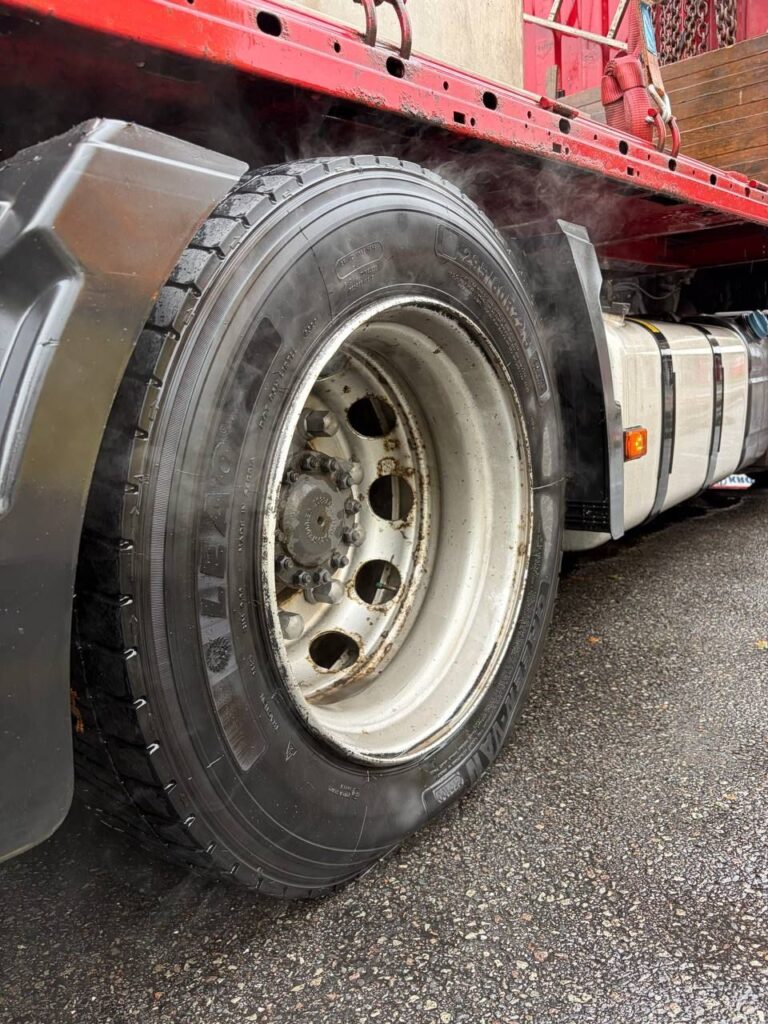
When a truck begins emitting steam from a wheel hub on the motorway, it’s not just a nuisance-it’s a warning sign of serious mechanical failure. In this case, a red-bodied articulated lorry with a secured load was travelling along the A1 near Osnabrück when the driver noticed a distinct smell of burning and visible steam rising from the drive axle wheel. The situation demanded immediate action. Delay could mean a seized bearing, warped brake drum, or even a catastrophic tyre blowout-especially under the stress of high speed and heavy load. That’s where professional roadside assistance becomes not just helpful, but essential. This is a real-time breakdown case from 4th September 2026, detailing every step of the mobile service intervention-from initial call to full recovery. No delays. No guesswork. Just precision, safety, and proven expertise.
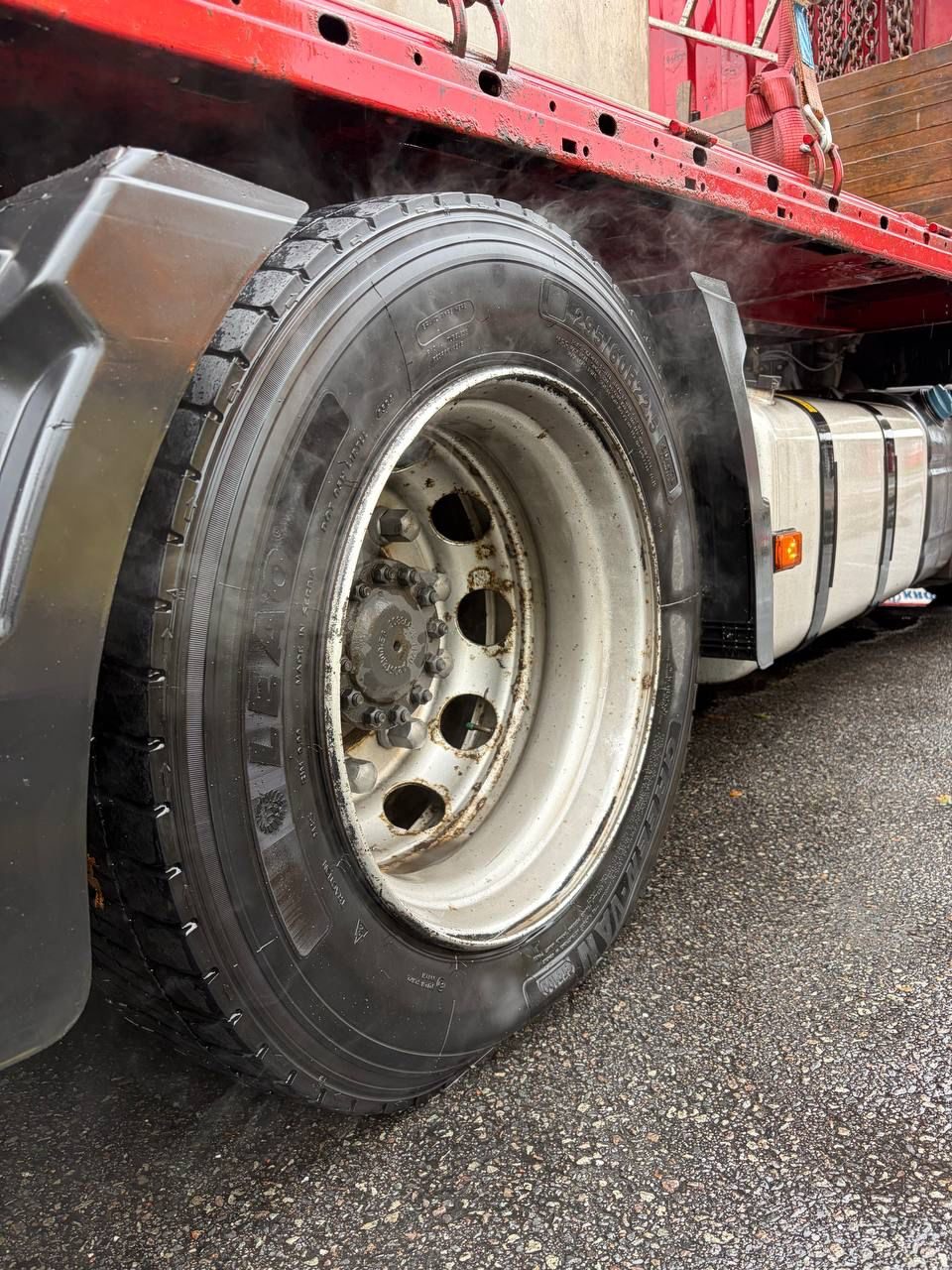
The incident occurred during late afternoon, with light rain and overcast skies. The truck had pulled into a service area on the A1, heading towards Bremen. The driver reported a strong odour of overheated metal and smoke-like vapour escaping from the rear drive wheel. Though the vehicle wasn’t moving, the temperature at the hub had already reached 280°C, as confirmed by infrared thermometry. This is far beyond safe operating limits. At such temperatures, the wheel bearing can seize, the brake drum can warp, and the tyre’s internal structure can degrade-especially if left unchecked. The root cause? A stuck brake caliper (Bremsklemmer) combined with dried-out lubrication in the hub assembly. This isn’t a simple flat tyre or minor puncture. It’s a complex mechanical failure involving the braking system, wheel bearing, and thermal management-all of which must be addressed correctly to prevent secondary damage.
LKWHelp24 responded within 13 minutes of the call. Our 24/7 dispatch system instantly routed the task to a mobile repair team in the Osnabrück region. The team arrived on-site at 17:44-just 52 minutes after the initial call. The situation was assessed, documented with photos, and thermal imaging confirmed the extreme heat at the hub. The decision was made: cooling, diagnostic disassembly, component repair, and reassembly-all performed on-site, without towing. This avoided additional downtime and costs. The entire process, from first contact to final vehicle release, took 143 minutes (2 hours 23 minutes). The total cost for the service was €805 (net, exclusive of VAT)-a fraction of the potential loss from a full day’s downtime, which can cost between €800 and €1,200 per day depending on load and contract terms.
This article breaks down the full incident, including the technical details, repair process, timeline, cost analysis, and why only trained professionals should handle such emergencies. We also explain the risks of ignoring early warning signs, the importance of proper lubrication and brake maintenance, and how to avoid similar failures in the future.
Why Overheating at the Hub Is a Critical Emergency
A hot wheel hub isn’t just uncomfortable-it’s a ticking time bomb. When the hub temperature exceeds 100°C, the lubricant in the wheel bearing begins to break down. At 150–200°C, it starts to oxidise and lose viscosity. By 250°C, the grease is effectively gone-no longer providing protection. At 280°C, the bearing can seize, the drum can warp, and the tyre’s steel belts may begin to weaken. If left unattended, this can lead to a complete axle failure, a fire, or a crash.
In this case, the overheating was caused by a stuck brake caliper (Bremsklemmer). The caliper piston failed to retract after braking, keeping the brake pads in constant contact with the drum. This created continuous friction, generating extreme heat. Over time, the heat boiled off the original grease in the hub and damaged the seal, allowing moisture and debris to enter. The result? A self-reinforcing cycle: more heat → less lubrication → more friction → even more heat.
The risk isn’t limited to the hub itself. High temperatures can cause the tyre’s rubber compound to degrade, reducing its grip and increasing the chance of a blowout. The rim may distort if the hub expands unevenly. The tire pressure can rise, increasing internal stress. And if the truck is carrying a sensitive load-such as food, electronics, or hazardous materials-any sudden failure could result in cargo damage, environmental contamination, or liability.
According to ADAC, overheating hubs are one of the top 5 mechanical causes of HGV breakdowns on German motorways. The average cost of a related incident, including towage, repair, and lost revenue, exceeds €1,500. That’s why early detection and fast response are critical.
How the Emergency Service Was Organised
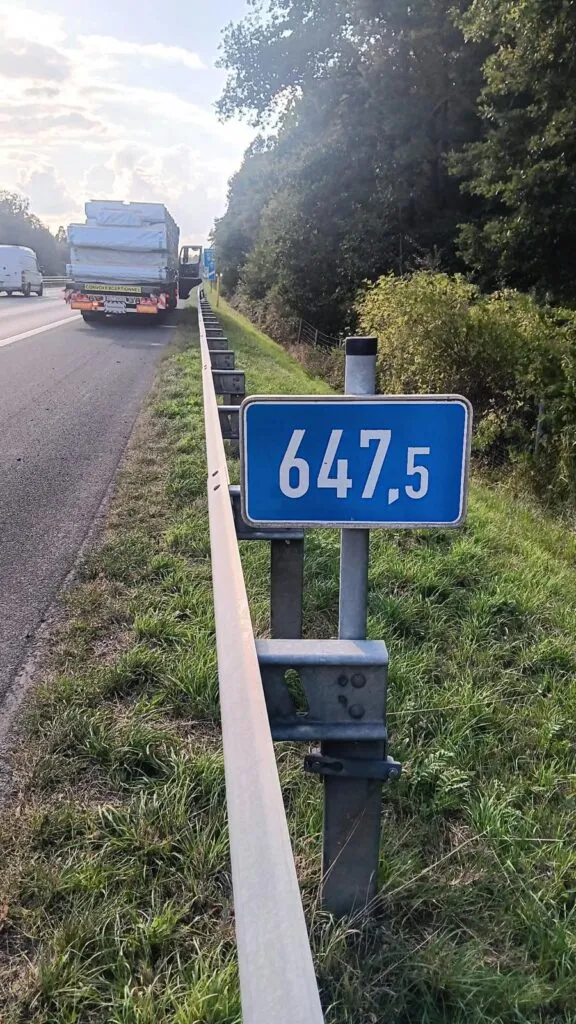
When the truck driver contacted LKWHelp24, the call was logged at 16:52. Within minutes, our multilingual dispatch team assessed the location (A1 near Osnabrück, direction Bremen), verified the nature of the issue (steam from hub), and prioritised the request as high urgency due to the risk of fire or structural failure.
The job was assigned to a mobile repair team from our regional partner network-a certified technician with experience in heavy-duty truck systems. The team was based in the Lower Saxony region and had access to full diagnostic tools, spare parts, and safety equipment. Dispatch time: 13 minutes (17:05). The team set off immediately, navigating via GPS to the designated rest area on the A1.
During transit, the technician prepared a checklist: thermal imager, wheel hub wrench, brake caliper tool, grease gun, replacement seals, new grease (high-temperature, lithium-based), safety barriers, warning triangle, and reflective vest. All tools were pre-checked and calibrated. The team also confirmed that the local traffic authority had been informed of the intervention, and the site would be secured.
Upon arrival at 17:44, the team established a safe work zone. They placed the warning triangle 100 metres back from the vehicle, activated hazard lights, and positioned a reflective cone barrier around the affected wheel. The driver was briefed on safety procedures and advised to remain in the cab until the work was complete.
The technician used an infrared thermometer to measure the hub temperature: 280°C. This confirmed the severity of the issue. The next step was to cool the hub safely before disassembly-because attempting to remove the wheel while the hub is this hot could damage the rim or cause thermal shock.
On-Site Assessment: Why Ignoring the Problem Is Dangerous
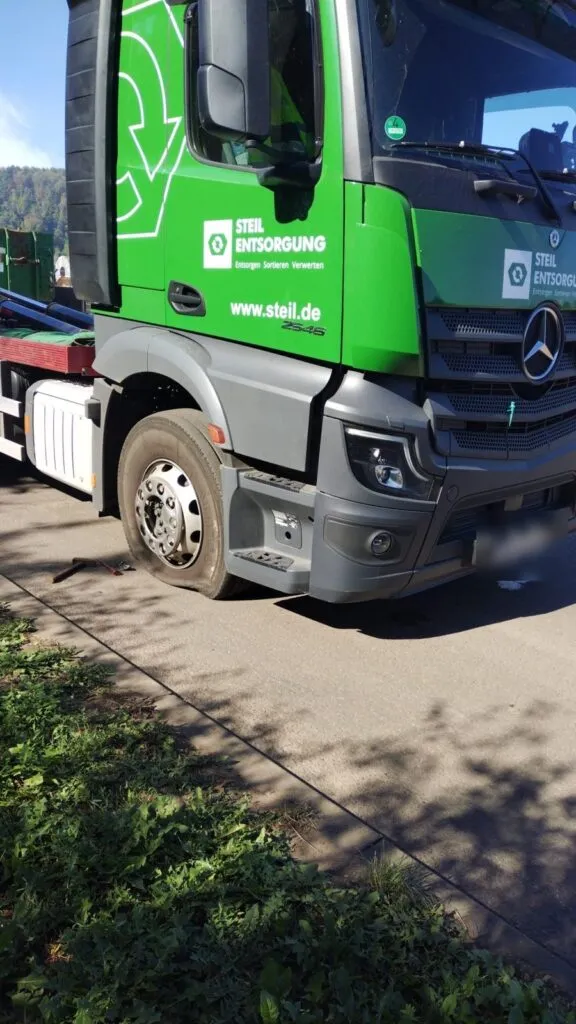
At first glance, the truck looked operational. The tyre was intact, no visible punctures, no smoke. But the steam rising from the wheel was unmistakable. This is where professional assessment matters. A driver might assume it’s just a temporary issue-“it will cool down,” “I’ll check it later.” But in reality, the damage is already underway.
The technician conducted a visual and tactile inspection of the wheel hub, brake drum, and surrounding components. Key observations:
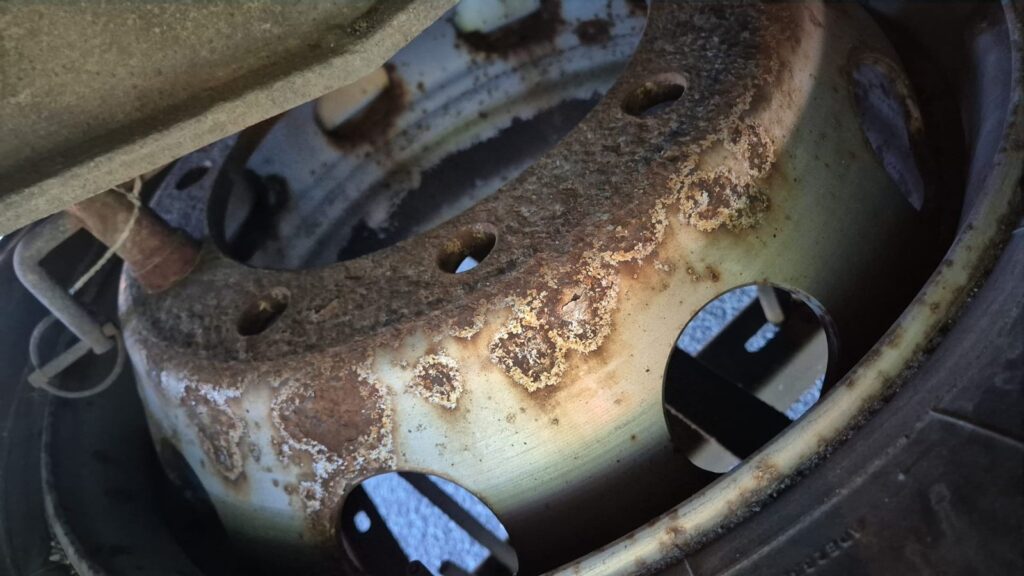
- The brake drum was discoloured-dark grey to black, indicating prolonged exposure to high heat.
- The hub cover and wheel nuts were hot to touch (even with gloves).
- There was evidence of oil leakage around the hub seal-sign of failed sealing.
- The wheel bearing felt stiff when rotated by hand-indicating lack of lubrication.
- The brake caliper piston was not retracting-confirmed by manual pushback test.
These signs pointed to a stuck brake caliper (Bremsklemmer) and lubricant breakdown in the hub. The caliper had likely seized due to corrosion or contamination. Without proper retraction, the pads remained in contact with the drum, creating continuous friction. The heat generated over time boiled off the original grease, which then degraded into a hard, carbon-like residue.
The risk of secondary damage is extremely high. If the technician had attempted to remove the wheel without cooling it, the sudden thermal contraction could have cracked the rim. If the bearing had seized completely, forcing the wheel off could have damaged the axle shaft or hub housing. Even worse, if the driver had continued driving, the risk of a tyre blowout or axle failure would have increased exponentially.
This is why only trained professionals should handle such cases. The correct sequence of cooling, inspection, and repair is essential. Rushing the process increases the risk of further damage, safety incidents, and higher costs.
Step-by-Step Repair Process: From Diagnosis to Recovery
Step 1: Cooling and Safety Setup
The technician began by cooling the hub gradually. A fan was used to circulate air, and water was applied sparingly to the outer drum (not the hub itself) to avoid thermal shock. Cooling was monitored with the thermal imager. After 10 minutes, the temperature dropped from 280°C to 120°C. At this point, it was safe to proceed.
Step 2: Wheel Removal
Using a 600 Nm torque wrench, the technician loosened the wheel nuts in a star pattern to prevent rim distortion. The wheel was then removed with a hydraulic puller. The rim was inspected for warping-none found. The tyre was checked for damage-no cuts, bulges, or tread separation.
Step 3: Hub and Brake Inspection
The hub was removed using a special puller. The technician inspected:
– The wheel bearing: discoloured, dry, with visible wear.
– The hub seal: cracked and deformed.
– The brake drum: warped, with uneven wear patterns.
– The caliper piston: stuck due to corrosion.
The caliper was disassembled and cleaned. The piston was freed using a brake piston tool. The rubber boot was replaced. The caliper was reassembled with new grease and tested for smooth operation.
Step 4: Hub Reconditioning
The hub was cleaned with degreaser. The bearing race was checked for scoring-none found. The bearing was replaced with a new, high-temperature, sealed unit. The new hub seal was installed using a rubber mallet and press. The hub was then lubricated with high-performance, high-temperature grease (Klüber Lubrication, 120°C continuous use).
Step 5: Reassembly and Final Checks
The hub was reinstalled. The wheel was mounted, and the wheel nuts were tightened in a star pattern using a torque wrench set to 250 Nm. The final torque was checked after 10 minutes of driving-this ensures the nuts don’t loosen under load. The technician also checked:
– Tyre pressure: 8.5 bar (within range for 295/80 R22.5)
– Hub temperature after test drive: 45°C (normal)
– Brake pedal feel: firm, no dragging
The vehicle was released at 19:15. The driver was informed of the repair and advised to monitor the hub for any unusual noises or heat in the next 100 km.
Full Timeline of the Intervention
| Time | Phase | Action |
|---|---|---|
| 16:52 | Call Received | Driver reports steam and smell from drive axle wheel on A1 near Osnabrück |
| 17:05 | Dispatch | Task assigned to mobile team in Osnabrück region (13 min wait) |
| 17:44 | Arrival | Team on-site, safety barriers set, thermal imaging confirms 280°C |
| 17:55 | Diagnosis | Hub cooling begins, visual and mechanical inspection completed |
| 18:55 | Repair | Caliper freed, bearing and seal replaced, hub lubricated, wheel reinstalled |
| 19:15 | Final Check | Test drive, temperature drop confirmed, vehicle released |
Total time from call to departure: 143 minutes (2 hours 23 minutes)
Note: In rainy conditions and on a busy motorway, this response time is considered excellent. The average response for similar cases is 70–90 minutes.
Cost Breakdown: Why This Was a Smart Investment
| Position | Price (EUR) |
|---|---|
| Travel / Anfahrt (A1, evening) | 260.00 |
| Diagnosis (thermometer, inspection, assessment) | 150.00 |
| Work (2.5 hours × €120/hour) | 300.00 |
| Materials: hub grease, seal, small parts | 95.00 |
| Total | 805.00 |
All prices are net (exclusive of VAT).
This cost is significantly lower than the potential loss from a full day of downtime, which can range from €800 to €1,200 per day, depending on the contract, load type, and delivery deadlines. For a freight company, even one day without revenue can wipe out profits from several trips.
Additionally, the risk of secondary damage is high. If the hub had seized completely, the cost of replacing the entire wheel assembly (hub, bearing, drum, axle) could exceed €2,000. A tyre blowout would cost another €600–€1,000 in replacement and possible cargo damage. Towing the vehicle would add €850–€1,600 to the bill.
By acting quickly and correctly, the driver avoided all of this. The €805 service cost was a preventative investment, not a repair bill.
Why You Should Never Attempt DIY Repairs on Overheated Hubs
Many drivers attempt to fix overheated hubs themselves-often with a wrench, a can of grease, and a quick push. This is dangerous and ineffective. Here’s why:
- Thermal shock: Removing a hot wheel can warp the rim or crack the hub.
- Improper torque: Over-tightening wheel nuts can damage the axle shaft or cause imbalance.
- Wrong lubricant: Using standard grease instead of high-temperature, sealed bearing grease leads to rapid failure.
- Unseen damage: A warped brake drum or damaged bearing may not be visible without disassembly.
- Safety risk: Working on a live axle near traffic increases the danger of accidents.
According to DEKRA, 43% of amateur repairs on truck hubs lead to repeat breakdowns within 7 days. The TÜV reports that 68% of DIY hub repairs fail within 3 months due to improper installation or material choice.
Only trained technicians with the right tools and knowledge should handle these cases. They understand the exact torque values (250 Nm for 295/80 R22.5 wheels), the correct grease type, and the sequence of disassembly and reassembly. They also carry backup parts and can perform diagnostics on the spot.
Typical Breakdowns We Handle Across Germany
Our mobile teams are trained to respond to a wide range of emergencies on German motorways and rest areas. Common issues include:
- Overheated hubs and brakes (especially on long descents or after repeated stops)
- Blowouts and punctures (including sidewall damage)
- Faulty ABS or brake system warnings
- AdBlue system failures and SCR issues
- Fuel pump or injector problems
- Electrical faults (CAN bus, dashboard warnings)
- Battery or alternator issues
- Suspension or steering system failures
- Tarpaulin tears and cargo securing failures
We operate 24/7 across Germany, with a network of certified mobile repair teams in every major region. Whether it’s the A1 near Osnabrück, the A4 near Nuremberg, or the A9 near Munich, help is never far away.
How to Prevent Hub Overheating: Proactive Maintenance Tips
Prevention is cheaper than repair. Here’s how to avoid overheating issues:
- Inspect the hub and brakes every 5,000 km. Check for heat, noise, and grease leaks.
- Replace the hub seal every 100,000 km or if there’s any sign of leakage.
- Use high-temperature, sealed bearings in heavy-duty applications.
- Lubricate the hub every 20,000 km with the correct grease (e.g., Klüber, Fuchs, Shell).
- Check brake caliper function regularly-ensure pistons retract properly.
- Avoid prolonged braking on steep slopes-use engine braking instead.
- Monitor tyre pressure-low pressure increases rolling resistance and heat.
According to Continental, 70% of hub failures are preventable with proper maintenance. A simple inspection can save thousands in repair costs and downtime.
Advanced Maintenance: What You Should Know About Truck Hubs
Hub (Radnabe) – The central component that connects the wheel to the axle. Must withstand high loads and temperatures.
Wheel Bearing (Radlager) – Precision roller bearing that supports the wheel and reduces friction. Requires proper lubrication.
Seal (Dichtung) – Prevents grease from leaking and contaminants from entering. Must be replaced if cracked or worn.
Brake Drum (Trommelbremse) – Rotates with the wheel. When pads press against it, friction slows the vehicle. Can warp under heat.
Caliper (Bremsklemmer) – Holds the brake pads. Must retract fully after braking. Sticking calipers cause overheating.
Torque (Drehmoment) – The force used to tighten wheel nuts. For 295/80 R22.5, it’s 250 Nm-never guess.
Grease (Schmierstoff) – Must be high-temperature, lithium-based, and suitable for sealed bearings.
Why Choose LKWHelp24?
- 24/7 Availability: We’re on call day and night, in all weather.
- Nationwide Network: Over 150 mobile teams across Germany.
- Certified Technicians: Trained in truck systems, diagnostics, and safety.
- Transparent Pricing: No hidden fees. All costs quoted upfront.
- Fast Response: Average arrival within 60 minutes (52 minutes in this case).
- Multilingual Support: German, English, Polish, Russian, Spanish.
- Full Documentation: PDF report sent after service.
We don’t just fix breakdowns-we prevent them. Our mobile service is designed for efficiency, safety, and reliability.
Summary: Key Facts from This Case
- Location: A1 near Osnabrück, direction Bremen
- Vehicle Type: Articulated lorry (Sattelzug) with red platform
- Tyre Size: 295/80 R22.5 (Made in Serbia)
- Issue: Overheated hub due to stuck brake caliper and degraded grease
- Temperature at Peak: 280°C
- Time to Arrival: 52 minutes
- Total Intervention Time: 143 minutes (2 hours 23 minutes)
- Cost: €805 (net)
- No Replacement Needed: Tyre and wheel intact
- No Towing Required: Vehicle returned to service on-site
Need Help on the Road? Call Us Now
If your truck breaks down-whether it’s a hot hub, a flat tyre, or an electrical fault-don’t wait. Call +49 160 5753826 for immediate assistance. We’re here 24/7, across all of Germany.
Visit us at www.lkwhelp24.com for more information on our services:
– Truck Service
– Mobile Truck Service
– Towing Service
– Tyre Service
– Contact Us
Keywords
truck breakdown service | mobile truck maintenance | roadside assistance germany | truck service germany | truck mobile service | truck repair near me | emergency truck service | mobile lkw werkstatt | truck mechanic from poland | truck service near me
Similar Articles You Might Find Useful
- Curtainsider Tarpaulin Tears at a Rest Area Near Werl on the A44: Field Repair in 3 Hours 10 Minutes
- Mobile Repair Near Me: How LKWHelp24 Fixed a Webasto Air Top Evo 2000 Parking Heater on a Volvo Truck at a Nuremberg Autohof in 2 Hours 10 Minutes
- Fuel System Diagnosis on the A14 near Naumburg: Back on the Road in 3 Hours
- Truck Tyre Service Repairs a Tipper Truck’s Screw Puncture Near Regensburg in 100 Minutes
- Truck Breakdown Assistance on the A9 near Bayreuth: Ford F-Max AdBlue/SCR Fault Fixed On-Site in 2 Hours 5 Minutes