Skip to content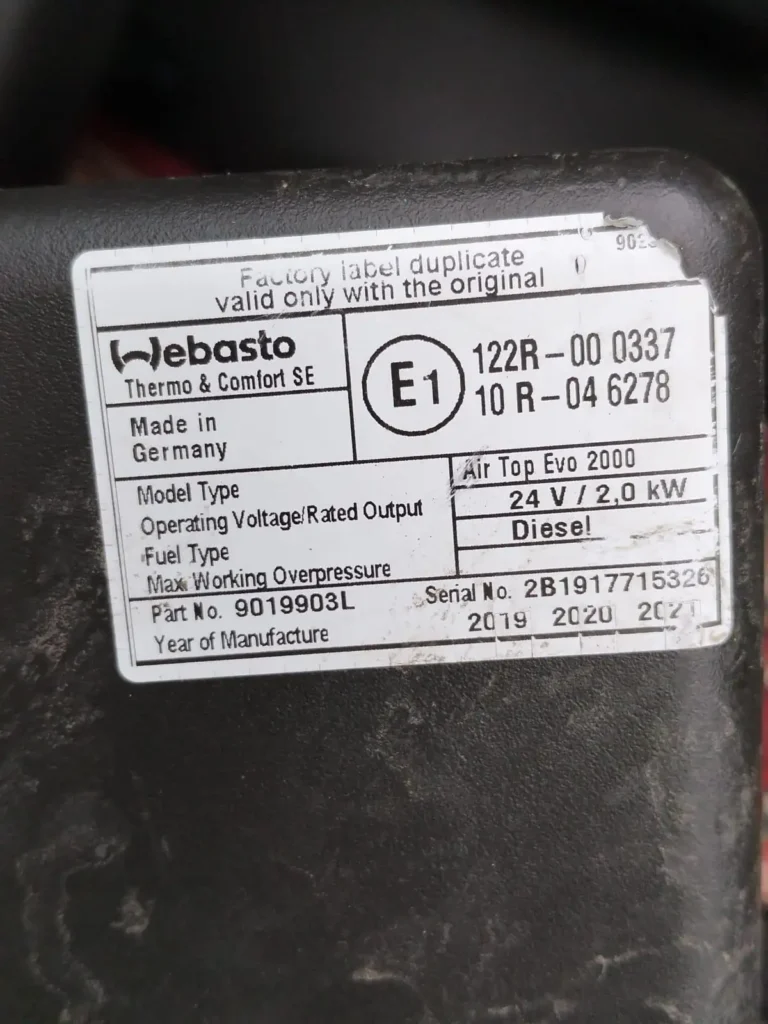
A parking heater failure sounds like a minor inconvenience until you’re the driver trying to sleep through a freezing night with no way to warm the cab. For long-haul drivers on international runs through Germany, the Webasto unit fitted behind the seat isn’t a comfort extra — it’s the difference between a proper rest break and a night spent shivering under every blanket you own while your mandatory rest hours tick away regardless.
That’s roughly what happened to a Volvo tractor unit driver who pulled into an Autohof near Nuremberg one evening this winter. The heater wouldn’t fire up. No warm air, an error code flashing, and a long night ahead with temperatures dropping fast. He called LKWHelp24, and within just over two hours the unit was diagnosed, repaired and running again — proof that a Webasto fault doesn’t have to mean a wasted night or a detour to a workshop the next morning.
This case study walks through exactly what happened: the call, the diagnosis, the parts replaced, the costs, and why getting a specialist to the truck rather than the truck to a garage matters so much when you’re on a tight schedule crossing Germany.
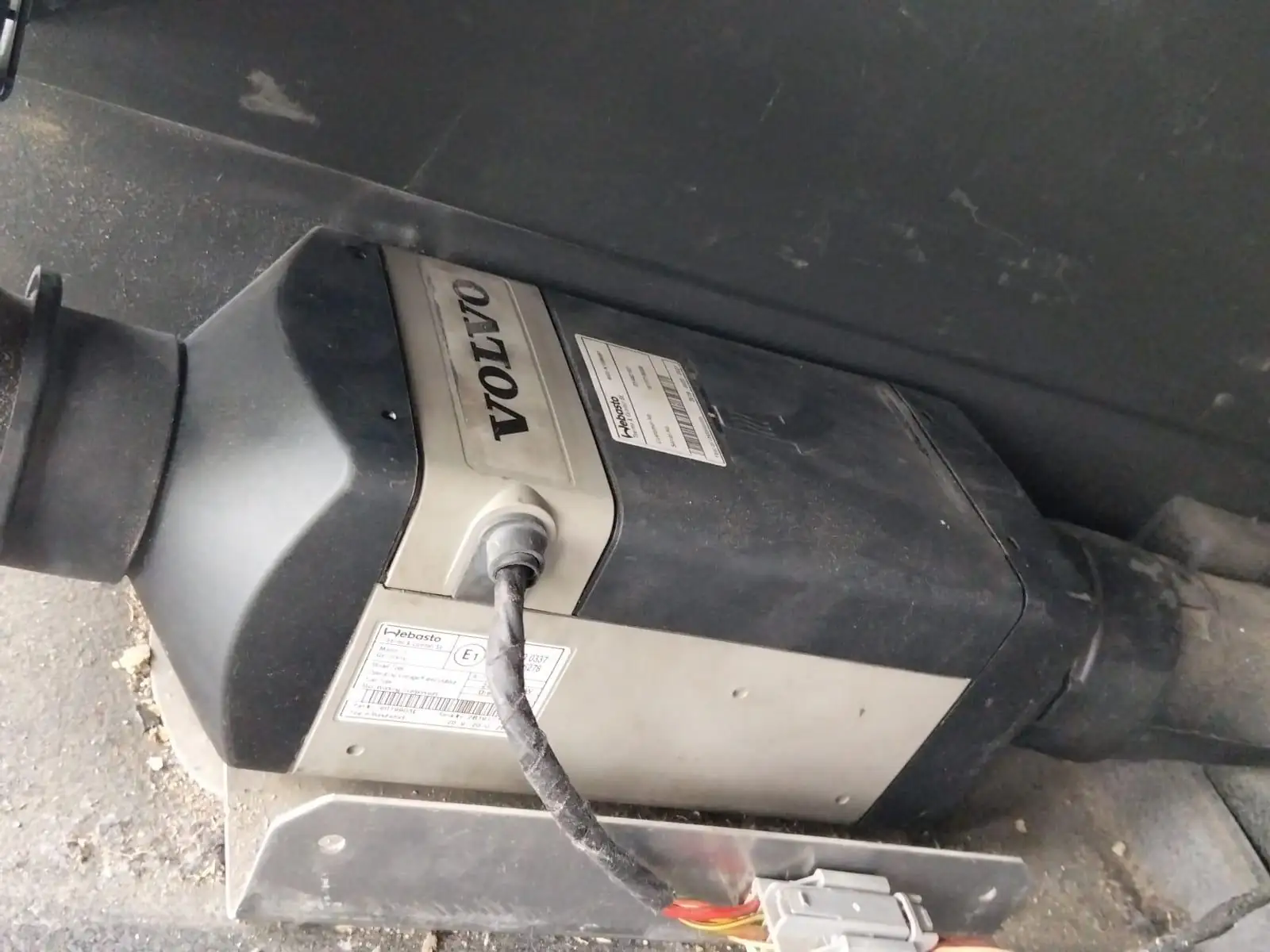
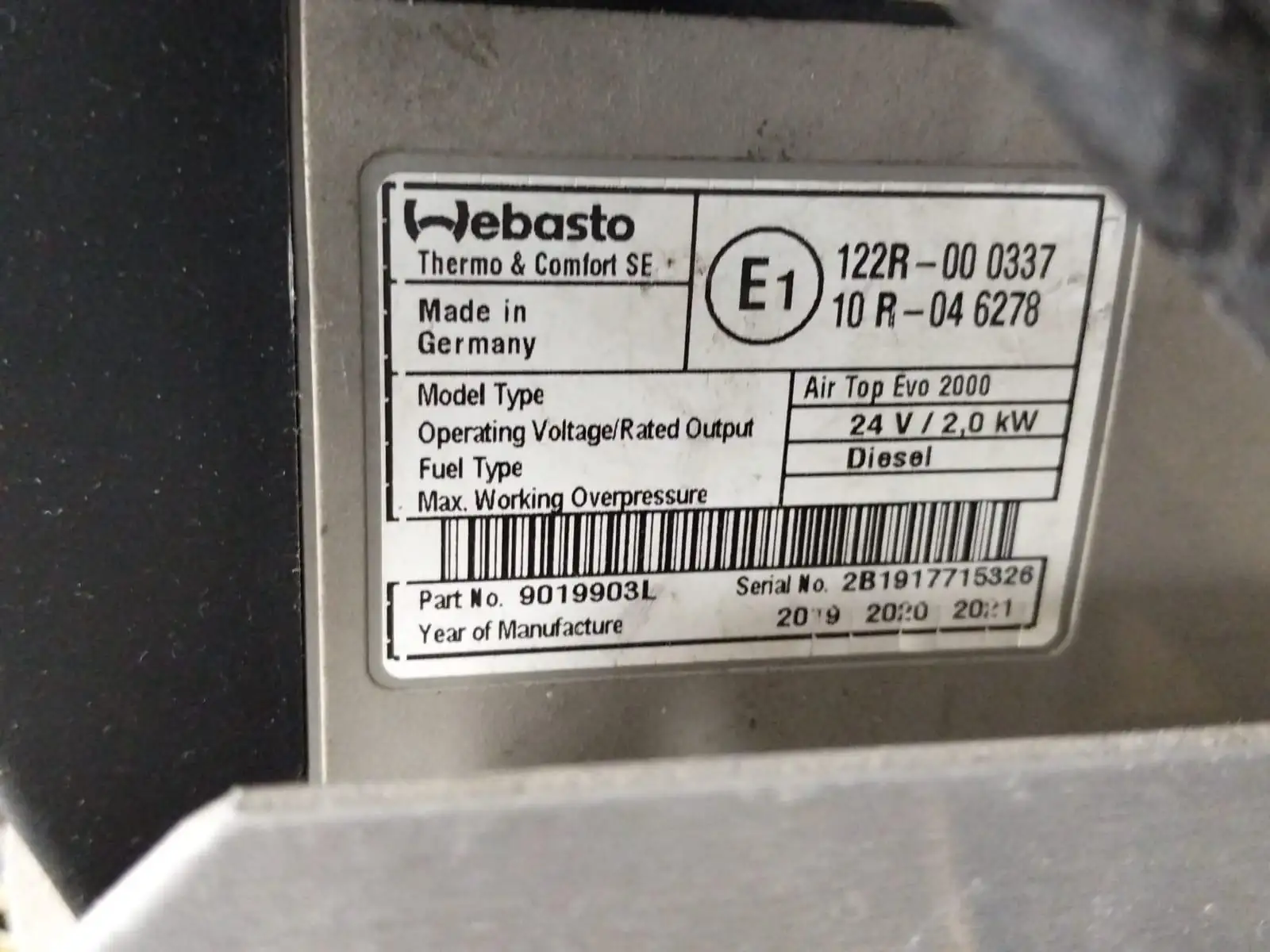
Webasto Air Top Evo 2000 parking heater on a Volvo truck – mobile repair by LKWHelp24.
The Emergency: A Volvo Parked at a Bavarian Autohof With No Heat
The vehicle involved was a Volvo articulated tractor unit on an international tour, the kind of long-distance run where the driver’s cab genuinely doubles as living quarters for days at a stretch. It was parked at an Autohof near Nuremberg in Bavaria, one of those service stations built around exactly this scenario — trucks stopping for the night, drivers taking their statutory rest, engines off.
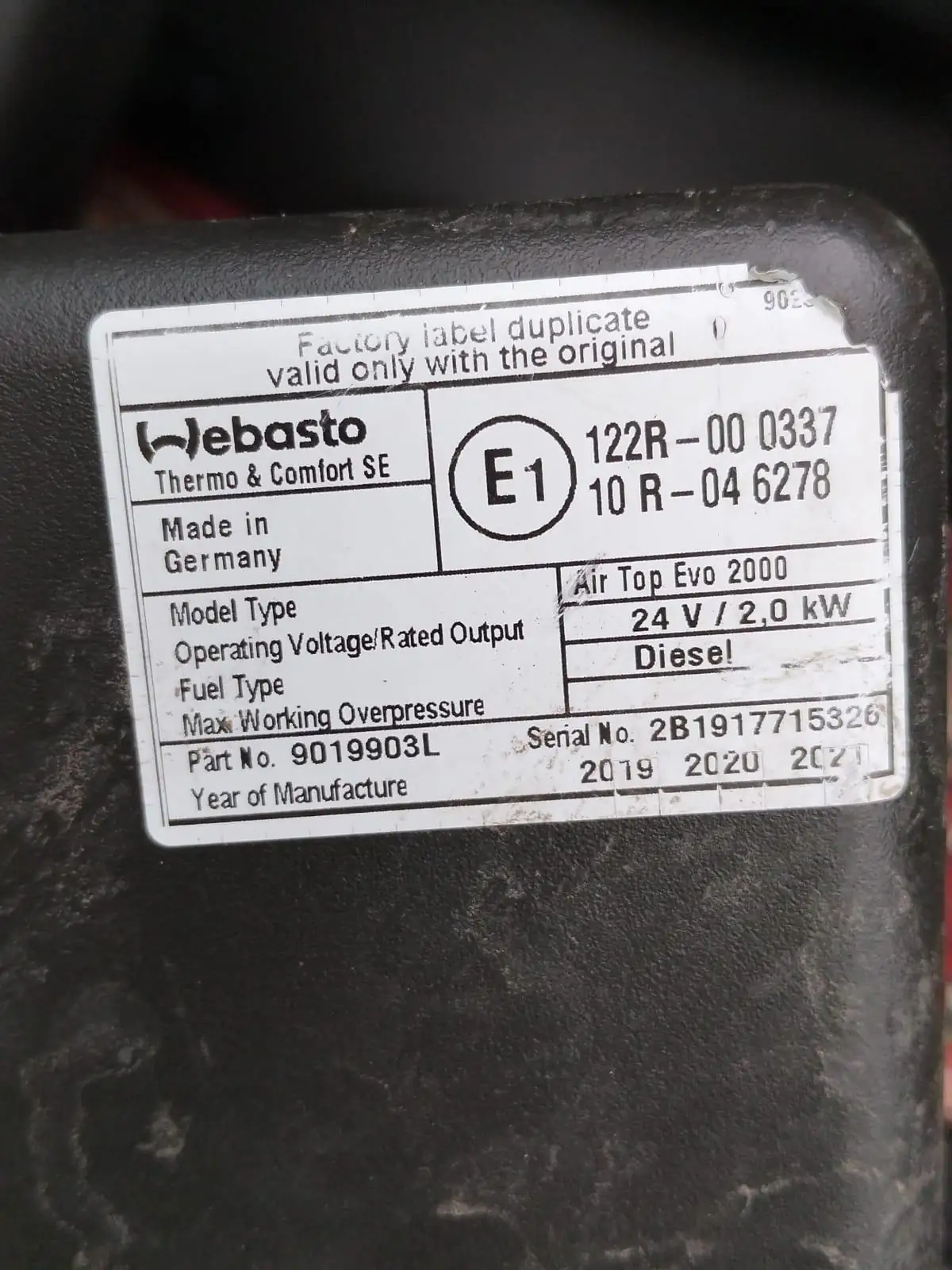
The problem was the parking heater. Fitted units like this run independently of the engine, burning a small amount of diesel to warm the cabin so drivers aren’t forced to idle the main engine all night just to stay warm — which would waste fuel, breach noise rules at many rest stops, and in some cases fall foul of anti-idling regulations altogether. This particular truck had a Webasto Air Top Evo 2000, a 24-volt, 2.0 kW diesel-fired unit, one of the most widely fitted heaters on European trucks precisely because it’s compact and reliable. Except this time it wasn’t starting, and when it did attempt to fire, it cut out again with a fault code.
For a driver mid-tour, that’s not a small problem. Cold cabs mean poor sleep, and poor sleep on a driving job is a genuine safety issue, not just a comfort one. Add in the fact that most drivers can’t simply pack up and drive to a workshop once they’ve stopped for their rest period — tachograph rules mean the truck is going nowhere until the rest is completed — and you can see why a fault like this needs someone to come to the vehicle rather than the other way round.
How Help Was Organised
The driver rang LKWHelp24’s around-the-clock line. Within roughly fifteen minutes a mobile commercial vehicle technician based in the Nuremberg area — a specialist who deals specifically with parking heater faults — had been briefed and was on his way, with an estimated arrival time given straight away.
What happened behind the scenes:
● Call logged with vehicle details, heater model where known, and exact Autohof location
● Nearest available partner technician with Webasto diagnostic equipment identified and dispatched
● ETA confirmed and relayed back to the driver so he knew roughly how long he’d be waiting
● Technician arrived on site with diagnostic tools and common spare parts already on the van
This is the point of running a partner network rather than a single depot: instead of the truck having to reach a workshop, or the driver waiting until morning and losing time he didn’t have, a technician with the right kit came directly to where the vehicle was parked. Given the driver was stationary for his rest period anyway, this was really the only workable option.
The Situation On-Site
When the technician arrived and got the diagnostic reader connected, the picture became clearer. A Webasto Air Top Evo 2000 relies on a handful of components working in sequence every time it starts: a glow plug (Glühstift) to ignite the fuel-air mixture, a metering pump (Dosierpumpe) to deliver precisely the right amount of diesel into the combustion chamber, and a control unit that monitors the whole start-up sequence and shuts things down if anything looks wrong.
Reading the fault code pointed towards the ignition and fuel-metering side of the unit rather than a wiring or fuse issue, which was at least useful news — it meant a component swap rather than a full unit replacement. On a 24V system like this, that distinction matters a lot for both cost and turnaround time. A full heater replacement can run to several times the cost of a component repair and typically needs booking in at a workshop rather than being done roadside, so ruling that out early was a relief for the driver.
The technician also checked the combustion chamber for the kind of sooting that can accompany a struggling glow plug, since ignoring that can mean a fault reappears within weeks even after a part swap.
Step-by-Step: What the Technician Did
Step 1 — Diagnosis. The heater’s control unit was interrogated with a diagnostic reader to pull the stored fault code, giving a starting point rather than guesswork.
Step 2 — Component inspection. With the fault narrowed down, the glow plug and metering pump were checked individually — resistance, delivery, wear — to confirm which parts were actually at fault rather than just going by the code alone.
Step 3 — Component replacement. The glow plug and metering pump were swapped for new units. Both are wear items on any diesel-fired parking heater and are common failure points precisely because they’re doing the hardest job in the system every single start cycle.
Step 4 — Reassembly and connection. The heater was reassembled, wiring reconnected, and the unit prepared for a test run.
Step 5 — Probelauf, the test run. This is the step that actually proves the repair worked. The heater was started and monitored through a full ignition cycle: does it light first time, does it ramp up to temperature properly, does it shut down cleanly on demand rather than tripping into fault mode again. Only once this ran clean was the job signed off.
That final probelauf matters more than people realise. A heater that starts once isn’t necessarily fixed — plenty of intermittent faults will run fine for a single cycle and then fail again on the second or third start. Watching a full cycle through is what separates a proper repair from a lucky restart.
Full Timeline
| Time | Phase | Action |
|---|---|---|
| 15:40 | Call received | Driver reports heater fault at Autohof near Nuremberg |
| 15:55 | Partner dispatched | Mobile Webasto technician briefed, ETA confirmed |
| 16:40 | Arrival on site | Technician reaches the Autohof |
| 16:55 | Diagnosis | Fault code read, glow plug and metering pump checked |
| 17:25 | Component replacement | Glow plug and metering pump swapped |
| 17:45 | Test run | Full ignition cycle monitored, heater confirmed working |
| 17:50 | Job signed off | Driver cleared to use heater, technician departs |
Total time from call to a working heater: around 2 hours 10 minutes, with roughly 1 hour 10 minutes of that spent on site once the technician arrived.
Cost Breakdown
| Item | Price (EUR) |
|---|---|
| Call-out / 24/7 service fee | 170 |
| Diagnosis & on-site labour | 180 |
| Parts (glow plug / metering pump) | 120 |
| TOTAL | 470 EUR |
Note: pricing varies with the exact fault. A straightforward component swap, as in this case, sits at the lower end. If the control unit itself is damaged, or the burner chamber needs a full replacement rather than a clean, the parts cost rises and a like-for-like unit swap can end up considerably more expensive than a targeted repair.
For context, a whole new Webasto Air Top Evo 2000 unit plus fitting typically costs several times this figure. Diagnosing the actual fault rather than defaulting to a full replacement is usually the cheaper and faster route — provided whoever is doing the diagnosis actually knows what they’re looking at, which is where a specialist mobile technician earns their fee.
Why a Professional Service Is Essential
Parking heaters look simple from the outside — a small box, a fuel line, an exhaust — but there’s real risk in treating a Webasto fault as a DIY job or handing it to someone without the right diagnostic kit:
- Diesel-fired heaters involve a live combustion process in a confined space close to the cab. A poorly seated glow plug or an incorrectly calibrated metering pump isn’t just a “doesn’t work” problem, it’s a potential fire or carbon monoxide risk.
- Without a proper diagnostic reader, a technician is essentially guessing which component has failed. That means paying for parts that don’t fix the fault, then paying again for the part that does.
- Reassembly matters. A heater that isn’t sealed and connected correctly can develop fuel leaks or exhaust leaks that aren’t obvious until they’ve caused a bigger problem.
- Skipping the test run entirely defeats the point of the repair. A heater that looks fixed on the bench but hasn’t been through a full monitored cycle is a heater that might fail again on the next cold night, often at 2am with nobody around to help.
Typical Breakdown Situations We Handle
Webasto and Eberspächer heater faults are one slice of what LKWHelp24’s partner network deals with across Germany, day and night. Common call-outs include:
- Parking heater faults (Webasto, Eberspächer) — no start, error codes, weak or no heat output
- Tyre blowouts and punctures on the autobahn or at rest stops
- Diesel and AdBlue system faults, including fuel system bleeding after running dry
- Electrical faults across brands including Mercedes-Benz Actros, MAN, Scania and Volvo
- Battery failures and jump-starts for both engine and auxiliary systems
- Coolant hose failures and overheating faults
- General roadside breakdown recovery and towing coordination
Whatever the fault, the same logic applies as in this case: get a qualified technician to the vehicle rather than losing hours arranging recovery to a fixed workshop, particularly overnight or at weekends when workshop options thin out fast.
Prevention Tips for Drivers and Fleets
A few habits go a long way towards avoiding a repeat of this kind of call-out:
- Run the parking heater briefly every couple of weeks, even in warmer months. Units that sit unused for long stretches are far more prone to carbon build-up around the glow plug and sluggish metering pumps.
- Keep an eye on diesel quality, particularly going into winter. Poor fuel contributes to combustion chamber sooting, which is one of the more common root causes behind ignition faults.
- Don’t ignore an early warning sign — a heater that’s slow to start or occasionally cuts out is usually telling you a component is wearing out before it fails completely.
- For fleets, build heater servicing into scheduled maintenance rather than treating it as a reactive repair. A checked and serviced unit going into autumn avoids most of the emergency call-outs that come in once temperatures drop.
- Keep the heater’s air intake and exhaust outlet clear of road grime and debris, particularly on trucks running rural or unpaved routes.
Fleet Maintenance and Heater Options Worth Knowing
For fleet operators running multiple Volvo, Mercedes-Benz, MAN or Scania units, parking heater reliability is worth building into your maintenance calendar rather than leaving to chance. The Webasto Air Top Evo range and equivalent Eberspächer Airtronic units are both common OEM and aftermarket fits across European trucks, and both share the same basic failure points: glow plugs, metering pumps and combustion chamber fouling from long periods of disuse or poor fuel quality.
Scheduling an annual service ahead of the cold season — ideally September or October before temperatures start dropping across Germany — catches most of the faults that would otherwise turn into a 2am roadside call. It’s a modest cost against the alternative of a driver losing a rest period to a cold cab, or worse, a fleet losing a day of scheduling because a truck can’t be used until a heater fault is sorted.
Where a full unit replacement genuinely is the right call — usually once a heater is past ten years old or has had repeat component failures — matching the replacement to the vehicle’s electrical system (12V or 24V) and cabin size is worth getting right the first time, since an undersized unit will underperform in genuinely cold conditions and an oversized one wastes fuel unnecessarily.
LKWHelp24: Your Truck Emergency Partner
LKWHelp24 exists for exactly this kind of situation — a driver stranded not by a dramatic breakdown but by a smaller fault that still has serious knock-on effects if it isn’t sorted quickly.
- Available 24 hours a day, seven days a week, across the whole of Germany
- A vetted network of specialist partners, including technicians who work specifically on parking heater systems rather than general mechanics guessing at the fault
- Transparent, itemised pricing agreed before work starts — no surprises on the invoice
- Multilingual support for international drivers, because breakdowns don’t wait for someone who speaks the local language
- Direct dispatch to the vehicle’s actual location, whether that’s an Autohof, a rest area or the roadside
Summary
- Vehicle: Volvo tractor unit, international long-haul tour
- Fault: Webasto Air Top Evo 2000 parking heater — no start / fault code
- Location: Autohof near Nuremberg, Bavaria
- Response time: call to technician on site — 1 hour
- Total time, call to working heater: approximately 2 hours 10 minutes
- Total cost: 470 EUR
- Secondary damage: none
Request Emergency Assistance Now
Heater trouble, electrical faults, tyre or engine problems — whatever’s stopping your truck, LKWHelp24 gets a qualified technician to you.
Call +49 160 5753826
lkwhelp24.com
Available 24/7 across all of Germany.