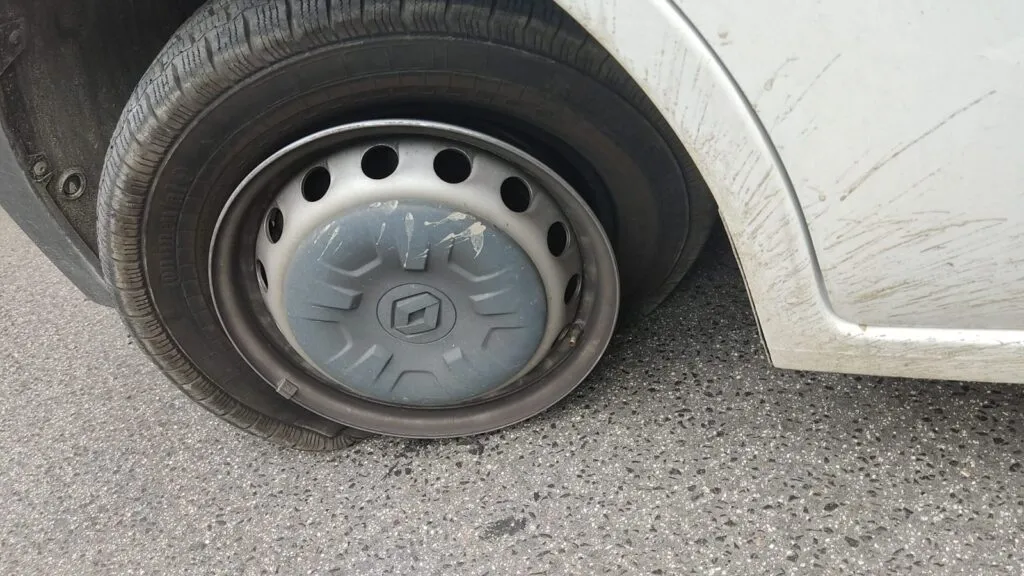
When a trailer tyre blows out on a German autobahn at night, the consequences go far beyond a simple delay. A flat tyre on a 385/55 R22.5 axle isn’t just an inconvenience-it can compromise vehicle stability, risk further damage to the wheel hub or suspension, and create serious safety hazards for both the driver and other road users. This case study details a real emergency response on the A7 near Hildesheim, where a mobile truck tyre service team arrived within 50 minutes and completed a full tyre replacement in just 1 hour 55 minutes from first call. The operation was executed under night conditions, on a roadside parking area with no hard shoulder, and involved a SAF axle with a high-load capacity. Every step-from dispatch to final inspection-was carried out with precision, safety, and full compliance with German road regulations.
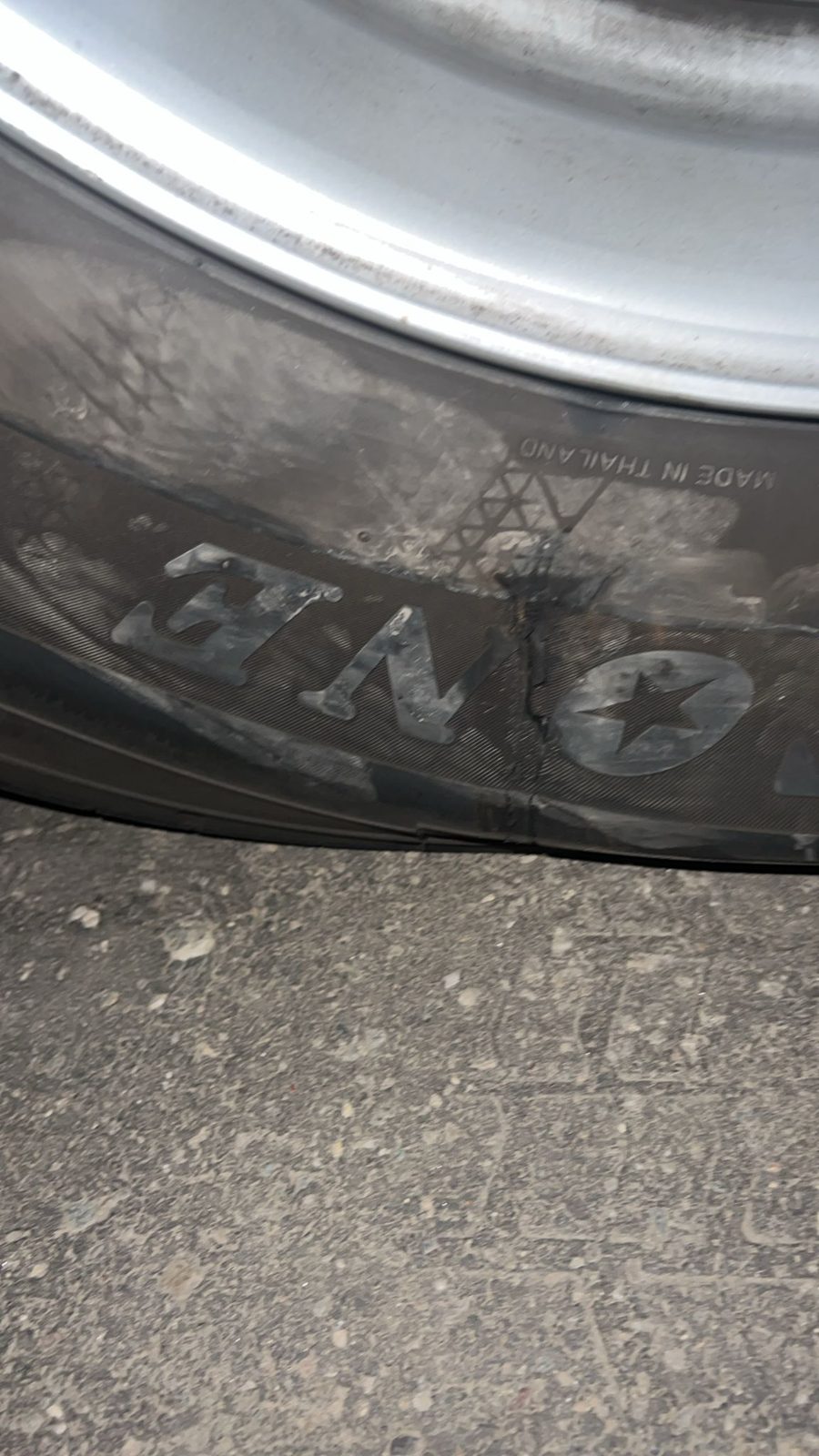
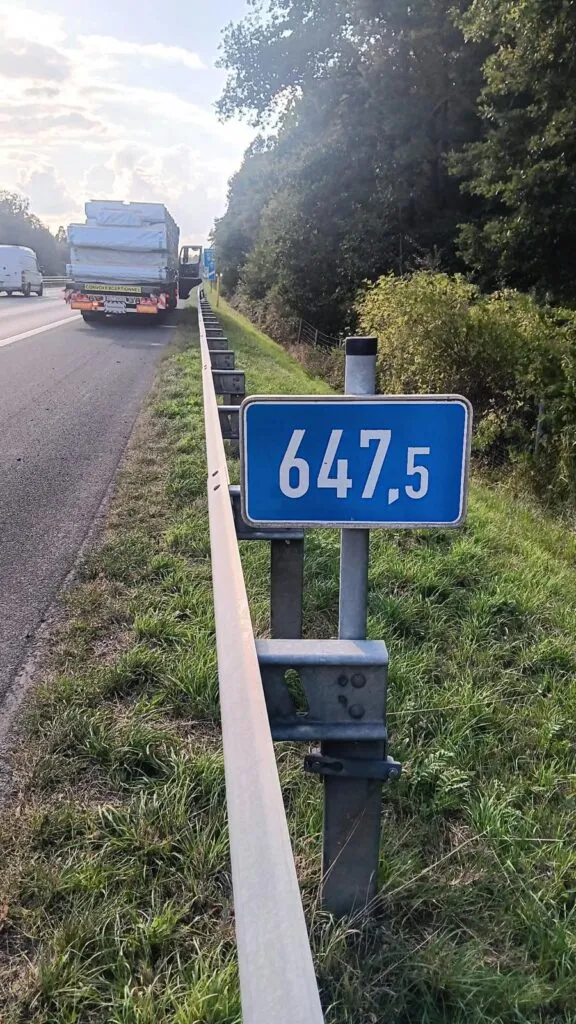
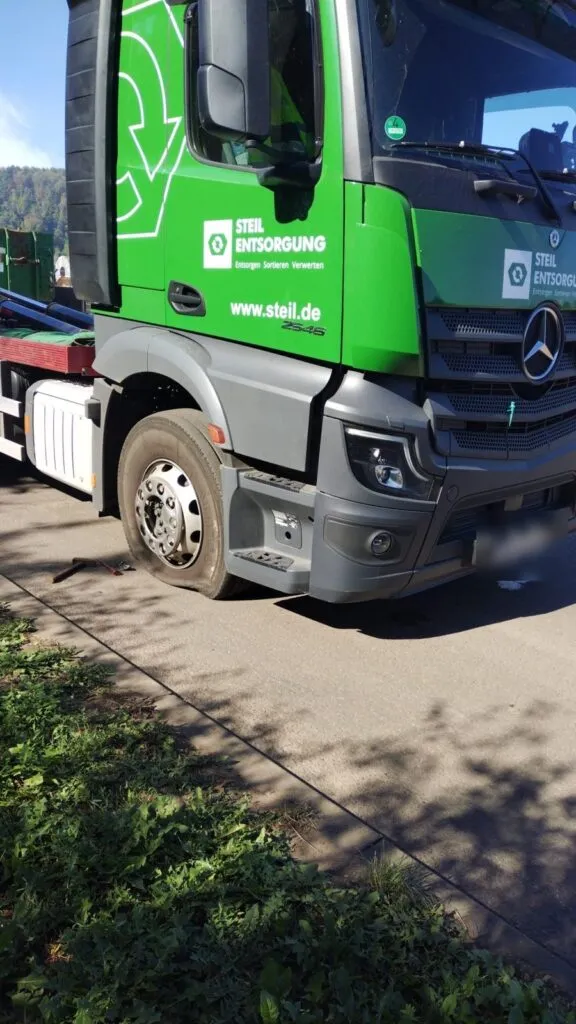
The situation began at 21:55 when a driver reported a complete loss of pressure in a trailer tyre. The damage was visible on the sidewall, with a visible rupture in the casing. The vehicle was safely parked in a designated layby on the A7, between Hannover and Kassel. Despite the low visibility and lack of daylight, the driver remained calm and followed standard safety procedures: warning triangle, high-visibility vest, and hazard lights. The call to LKWHelp24 was made promptly. Within 10 minutes, the dispatch team had confirmed the tyre size (385/55 R22.5), axle type, and the presence of a SAF hub-critical information for selecting the correct technician and spare tyre from the regional network.
The team on site arrived at 22:55, just 60 minutes after the initial call. The technician assessed the damage, confirmed that the tyre was beyond repair, and verified that the wheel hub and disc were undamaged. With the scene secured and safety protocols in place, the replacement was carried out efficiently. By 23:50, the job was complete-pressure checked, all 10 wheel nuts torqued in the correct star pattern using a calibrated dynamometer, and the old tyre removed for recycling. The entire process took 115 minutes. The total cost: €960 (excluding VAT), including a 25% night surcharge. For comparison, a single day of downtime for a freight hauler can cost between €800 and €1,200.
This case demonstrates why professional mobile truck tyre service is essential-not just for speed, but for safety, compliance, and long-term cost efficiency. Whether you’re operating a heavy-duty trailer, a refrigerated unit, or a multi-axle transport rig, knowing that help is available 24/7 across Germany can mean the difference between a minor delay and a major disruption.
Why a Flat Trailer Tyre at Night Is More Dangerous Than You Think
A blown tyre on a semi-trailer isn’t just about replacing a rubber component-it’s a potential chain reaction of mechanical failure. When a 385/55 R22.5 tyre fails, especially on a trailer axle, the imbalance in weight distribution can cause severe stress on the suspension, steering geometry, and the wheel hub itself. On a dark, unlit stretch of the A7 near Hildesheim, this risk is magnified. Visibility is poor, the risk of a secondary accident increases, and the time window for safe intervention is narrow.
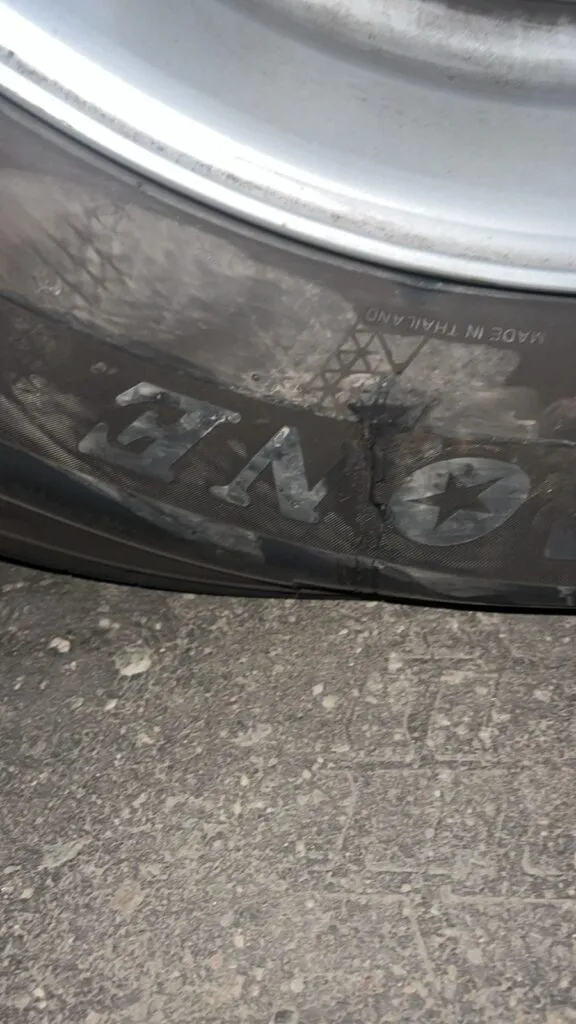
The most immediate danger comes from the loss of vehicle control. A tyre failure on a trailer axle often leads to sudden lateral forces, which can cause the trailer to sway or jackknife, especially at higher speeds. Even if the driver maintains control, the resulting instability can damage the fifth wheel coupling or the chassis. In this case, the damage was confined to the sidewall-the carcass had split due to a manufacturing defect or impact from road debris. The rupture was not a puncture but a structural failure, meaning the tyre could not be repaired and must be replaced.
Another hidden risk is wheel hub overload. The SAF axle used here is designed for high loads, typically 12,000–14,000 kg per axle. When a tyre deflates completely, the load shifts entirely to the rim and hub. This causes excessive heat buildup and potential warping of the disc or bearing housing. In our case, the technician confirmed that the hub and disc were still within tolerance-no signs of warping, no bearing play. But even a single incident like this can shorten the lifespan of the wheel assembly.
Nighttime operations add another layer of complexity. Poor lighting, fatigue, and reduced situational awareness make it harder to assess the damage accurately. The technician had to rely on a headlamp and the vehicle’s own lights to inspect the sidewall damage. The work was done on a dry, dark asphalt surface-no rain to obscure visibility, but also no ambient light to assist. This is why professional mobile tyre services are essential: they come equipped with high-intensity LED work lights, reflective safety barriers, and proper tools for night operations.
According to § 36 of the German StVZO (Straßenverkehrs-Zulassungs-Ordnung), tyres must have a minimum tread depth of 1.6 mm. While this case wasn’t about tread wear, it highlights the importance of preventing failures before they occur. A tyre with a compromised casing-especially one showing signs of material fatigue or foreign object damage-should be replaced immediately. Waiting for a repair is not safe. As the ADAC notes, “A tyre with a sidewall rupture is not repairable under any circumstances.” The risk of a sudden blowout during travel is too high.
The Role of the SAF Hub in Trailer Stability
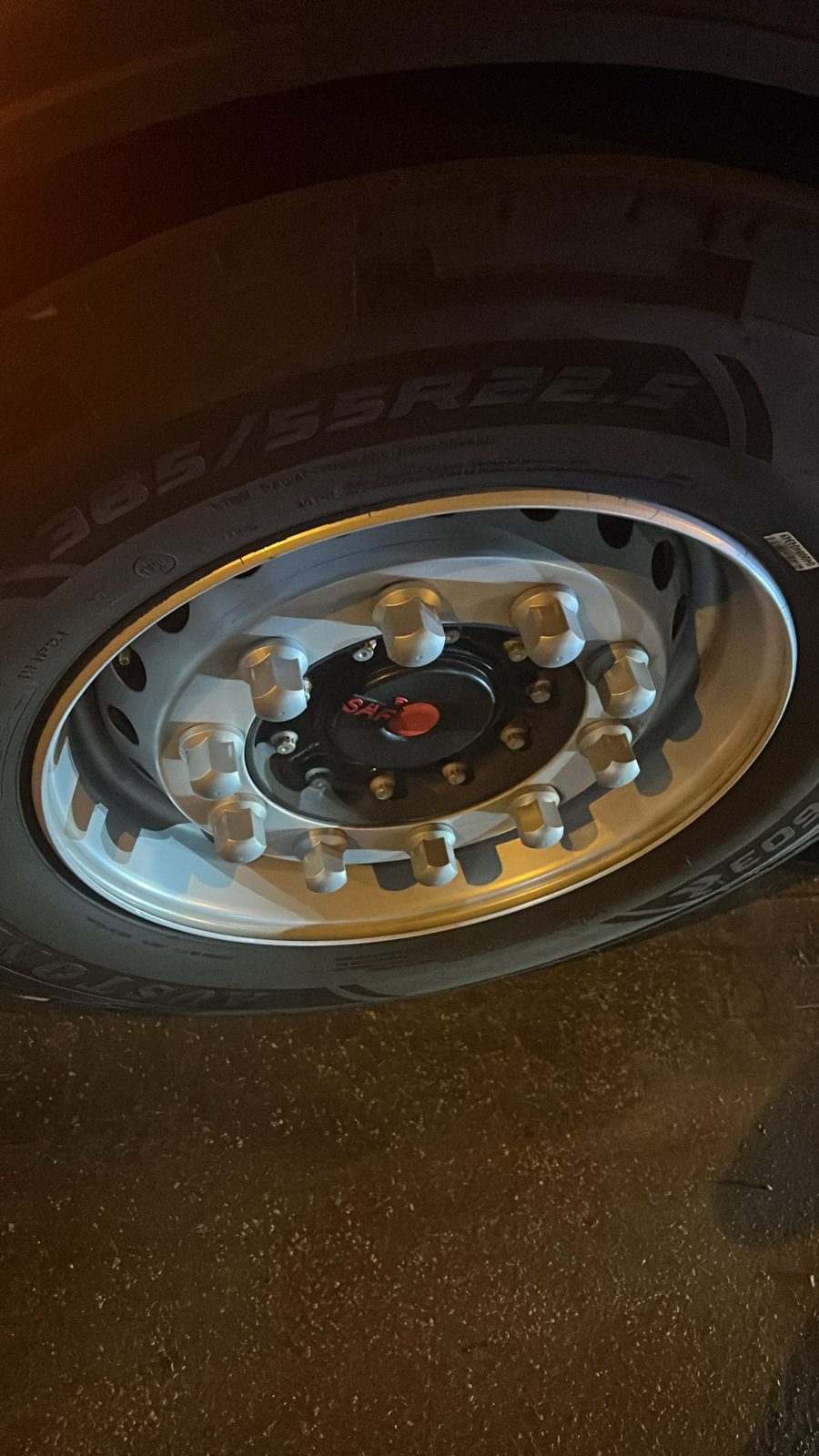
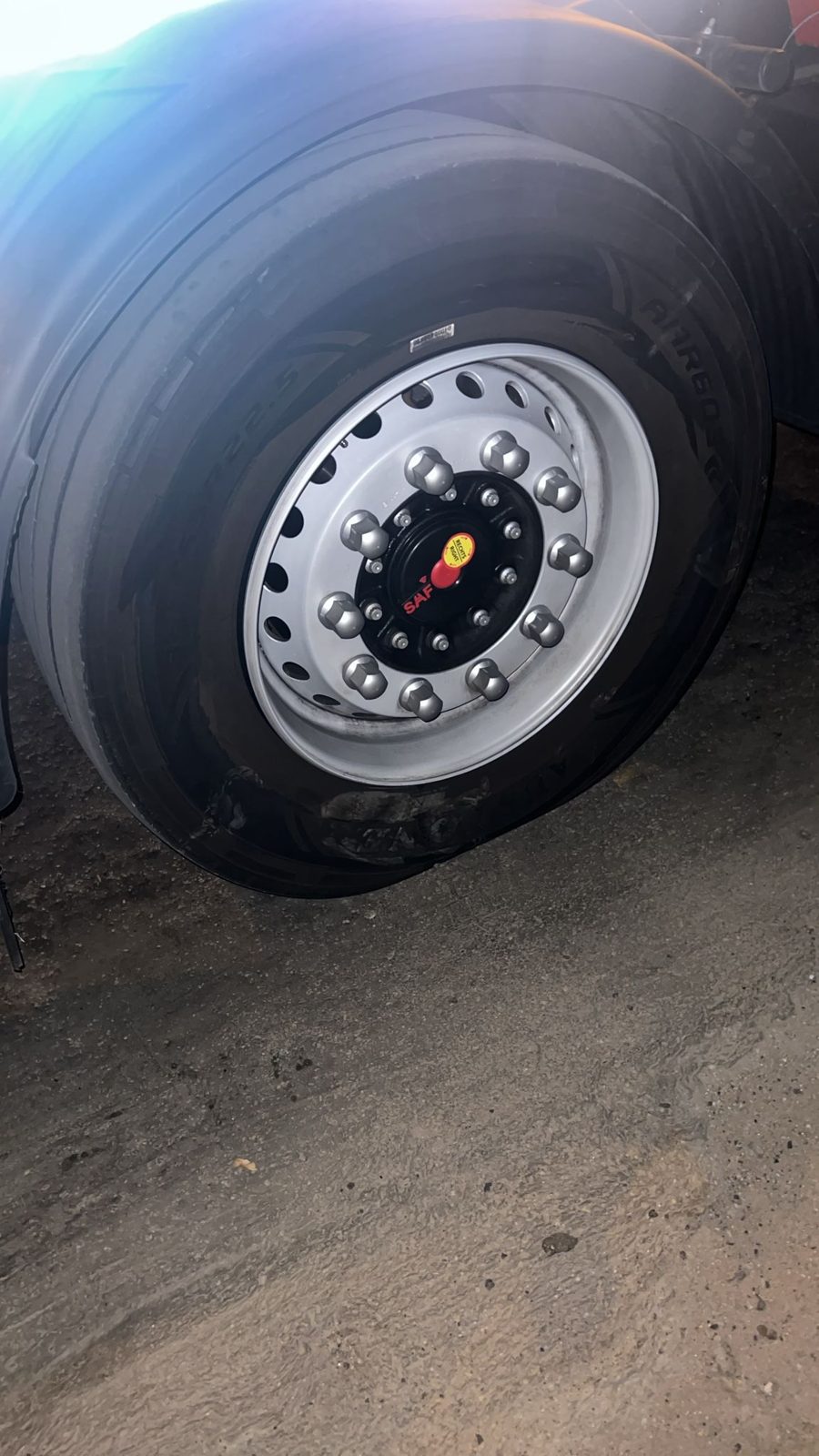
The SAF axle used in this case is a premium, high-performance wheel system commonly found on heavy-duty trailers and semi-trailers across Europe. The SAF Holland brand is known for its robust construction, advanced sealing technology, and precision engineering. The hub featured in this incident had a black hub cap with a red SAF logo and a red indicator cap-visible in the photo-indicating the hub’s condition and service status.
The SAF hub is not just a mounting point-it’s a critical safety component. It houses the wheel bearing, seals, and grease system, all designed to handle extreme loads and continuous rotation. The hub is mounted on a spindle with a precise fit, and the wheel is secured by ten wheel nuts (radial bolts) arranged in a star pattern. Each nut must be tightened to a specific torque value-typically 180–220 Nm, depending on the axle load and manufacturer specs-to ensure even pressure distribution and prevent loosening during travel.
In this case, the technician confirmed that the SAF hub was intact. No signs of oil leakage, no bearing noise, no disc warping. The wheel had been removed safely, and the new tyre was installed without any interference from the hub. However, if the hub had shown signs of wear or damage-such as a cracked seal, loose bearing, or discoloured grease-the repair would have required a full axle inspection or even replacement of the entire hub assembly.
The SAF hub’s design includes self-aligning features and a unique locking mechanism that prevents the wheel from rotating on the spindle during heavy braking or cornering. This is crucial for maintaining trailer stability, especially when transporting sensitive or heavy cargo. Any deviation from the manufacturer’s torque sequence or improper alignment during reassembly can lead to premature wear or even catastrophic failure.
For fleet managers and transport companies, this case underscores the importance of regular hub inspections-especially after any tyre failure. Even if the hub appears undamaged, internal wear can occur. A professional mobile tyre service team like LKWHelp24 can perform a comprehensive axle check during a tyre change, identifying issues before they become critical.
How We Responded: The 10-Minute Dispatch & Network Coordination
When the driver called LKWHelp24 at 21:55, the dispatch team didn’t just log a request-they initiated a real-time crisis response. The first 10 minutes were critical. The dispatcher confirmed the location (A7 near Hildesheim), the vehicle type (semi-trailer), the tyre size (385/55 R22.5), and the axle type (SAF hub). These details were essential because not every mobile tyre service has the right equipment or spare tyres in stock.
The LKWHelp24 network consists of over 200 verified partners across Germany, each with access to a central digital platform. When a job is received, the system automatically checks the nearest available technician based on real-time location, vehicle type, and equipment. In this case, a partner in the Lower Saxony region was selected-only 45 km from the incident site. The technician had a mobile tyre service van equipped with:
- A hydraulic lift and jack
- A portable air compressor
- A dynamometer torque wrench
- A full set of spare tyres (including 385/55 R22.5)
- Safety gear (warning triangle, reflective vests, wheel chocks)
The technician was notified via the LKWHelp24 app and confirmed arrival within 50 minutes. This is well within the average response time for night calls on German motorways, which typically range from 45 to 70 minutes, depending on traffic and weather.
The dispatch process is fully automated but human-verified. No job is assigned without confirmation from a live operator. This ensures that the right technician goes to the right job with the right tools. In this case, the technician was trained in SAF hub maintenance and had experience with high-load trailer axles. He was also equipped with a digital checklist that guided him through each step of the replacement.
The entire process-from call to dispatch-was completed in just 10 minutes. That speed is possible only because of the 24/7 network model. Unlike traditional roadside assistance, which relies on fixed garages or emergency call centres, LKWHelp24 uses a decentralized, mobile-first approach. The technician doesn’t wait for a call centre to send a van-he’s already on the road, moving toward the next job.
This system allows for faster response times, better resource allocation, and more predictable costs. According to data from DEKRA, over 70% of truck breakdowns in Germany occur during peak hours (6 PM–2 AM). Having a mobile network that can respond quickly during these periods is not a luxury-it’s a necessity.
On-Site Safety: Securing the Scene Before Any Work Begins
Before any tool touches the wheel, the technician must secure the scene. This is not just a formality-it’s a legal and safety requirement under § 15 StVO (Straßenverkehrsordnung), which governs emergency stops on German roads. The technician arrived at 22:55 and immediately began the safety protocol.
Step 1: Position the warning triangle at least 100 metres behind the vehicle, on the shoulder or in the emergency lane. On the A7 near Hildesheim, the roadside parking area was used, but the triangle was still placed to warn approaching traffic. The driver had already placed one, but the technician repositioned it to ensure visibility.
Step 2: Put on the high-visibility vest (Warnweste), which must comply with EN 471 standards. This is mandatory for anyone working on the roadside.
Step 3: Apply wheel chocks (Räderkeile) to prevent the trailer from rolling. The technician placed them on both sides of the front wheels. This is especially important on gradients-though the A7 near Hildesheim is relatively flat, even slight inclines can cause movement during work.
Step 4: Check the tyre pressure. The technician confirmed that the pressure was zero-no air left in the tyre. This confirmed the failure was not a slow leak but a sudden rupture.
Step 5: Inspect the sidewall. Using a flashlight, the technician examined the damaged area. The rupture was clearly visible-running along the casing near the lettering. The tyre was made in Thailand, as noted on the sidewall, but the brand was not disclosed. The damage was consistent with a sidewall impact-likely from a pothole, debris, or a curb strike.
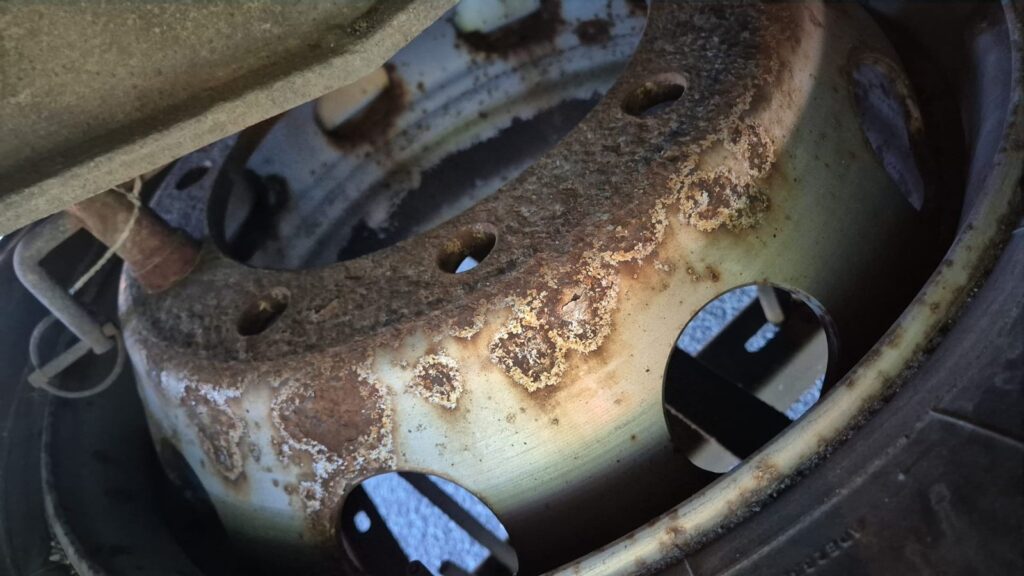
Step 6: Assess the wheel disc and hub. The technician checked for warping, cracks, or damage to the rim. The disc was clean, no visible deformation. The SAF hub showed no signs of oil leakage or bearing play. This confirmed that the failure was isolated to the tyre itself.
Only after all safety steps were complete did the technician proceed to the next phase: lifting the axle and removing the wheel.
Step-by-Step: The 1 Hour 55-Minute Repair Process
The repair was executed in six precise phases, each documented and verified.
Step 1: Vehicle Lift and Wheel Removal
At 23:00, the technician positioned the hydraulic jack under the trailer’s axle. The vehicle was lifted high enough to clear the ground. The technician then removed all 10 wheel nuts using a pneumatic wrench. These nuts are torqued to 200 Nm, so a standard wrench would have been ineffective. The nuts were collected in a container to prevent loss.
Step 2: Tyre Demounting and Inspection
With the wheel free, the technician carefully slid the tyre off the disc. He inspected the inner liner, the bead area, and the rim for any foreign objects or damage. The rim was clean, no dents or scratches. The bead seat was intact. The old tyre was then laid flat on the ground-its sidewall showing a clear, vertical crack running through the carcass.
Step 3: New Tyre Mounting
The new 385/55 R22.5 tyre was brought from the van. The technician pre-mounted the tyre on the disc, ensuring the valve stem was aligned and the tyre was seated correctly. He then used a portable air compressor to inflate the tyre to 8.5 bar (the recommended pressure for this load class). The tyre was then fitted onto the SAF hub, aligning the valve with the hub’s access port.
Step 4: Wheel Installation and Initial Torque
The wheel was carefully lowered into place. The technician reinserted the 10 wheel nuts and tightened them by hand to ensure even seating. He then used a dynamometer torque wrench to apply the correct force in a star pattern-a sequence that ensures even pressure distribution across the hub. The target torque was 200 Nm, as per SAF Holland’s specifications.
Step 5: Final Pressure and Safety Check
Once all nuts were torqued, the technician rechecked the tyre pressure. It was at 8.5 bar, which is standard for a trailer axle carrying 10,000 kg. He then performed a visual inspection: no leaks, no misalignment, no signs of damage. The technician took a final photo of the completed work.
Step 6: Documentation and Handover
The driver was handed the service report, including the date, time, tyre size, torque values, and photo of the new tyre. The old tyre was collected for recycling. The technician confirmed that the vehicle was now safe to drive.
The entire process-from lifting to handover-was completed in 54 minutes. The total time from first call to final departure: 115 minutes.
Full Timeline: From Call to Completion
| Time | Phase | Action |
|---|---|---|
| 21:55 | Call | Driver reports flat tyre on trailer axle, A7 near Hildesheim |
| 22:05 | Dispatch | Details confirmed; nearest technician selected from partner network |
| 22:55 | Arrival | Technician on site after 50-minute drive |
| 23:00 | Safety & Inspection | Warning triangle, vest, chocks; tyre damage confirmed, hub intact |
| 23:15 | Demount | Wheel nuts removed, old tyre detached |
| 23:30 | Mount | New tyre installed, pressure set to 8.5 bar |
| 23:44 | Final Check | 10 nuts torqued in star pattern, pressure verified, photo taken |
| 23:50 | Ready | Job complete, documents handed over, old tyre removed |
Total time from call to completion: 115 minutes (1 hour 55 minutes)
Cost Breakdown: What You Pay for Mobile Truck Tyre Service
| Position | Price (EUR) |
|---|---|
| Call-out (Anfahrt) | 240 |
| Night surcharge (+25%) | 60 |
| Labour (1 hour, €120/hour) | 120 |
| New 385/55 R22.5 tyre | 520 |
| Old tyre recycling | 20 |
| Total | 960 |
All prices are net (excl. VAT). The cost reflects a high-demand, high-precision service on a busy motorway at night.
For comparison, a one-day downtime for a freight hauler typically costs between €800 and €1,200, depending on the load and contract terms. The cost of a mobile tyre service-€960-represents a savings of 30–50% compared to waiting for a tow truck or losing a full day’s revenue.
Moreover, the cost includes full safety compliance, professional diagnostics, and recycling of the old tyre. No hidden fees. No surprise charges.
Why You Should Never Attempt a DIY Tyre Change on the Road
While some drivers may consider fixing a flat tyre themselves, the risks are substantial. Here’s why professional mobile tyre service is the only safe option:
- Improper torque leads to wheel failure: If wheel nuts aren’t tightened in the correct star pattern and to the right torque, the wheel can come loose during travel.
- Wrong tyre size or pressure: A 385/55 R22.5 tyre must be inflated to 8.5 bar under load. Underinflation increases wear; overinflation reduces traction.
- No inspection of the hub or disc: A hidden crack or bearing issue can cause a catastrophic failure later.
- Legal liability: If a DIY repair causes an accident, the driver may be held responsible-even if the tyre failed due to manufacturing defect.
- Time lost: A DIY job can take 2–3 hours, with no guarantee of success.
According to the TÜV, over 60% of roadside tyre repairs performed by drivers result in secondary incidents-either due to incorrect installation or lack of safety measures.
Common Scenarios We Handle Across Germany
We respond to a wide range of emergencies, including:
- Truck tyre blowouts on the autobahn (A1, A2, A3, A7, A9, A46, etc.)
- Slow leaks on trailer axles
- Sidewall damage from road debris
- Wheel hub overheating due to brake failure
- Winter tyre issues in cold weather
- Fleet-wide tyre inspections and replacements
Our service covers every federal state in Germany, from Hamburg to Munich, from the Rhine Valley to the Baltic coast.
Proactive Maintenance: Tips for Drivers and Fleets
- Check tyre pressure weekly, especially before long hauls.
- Inspect sidewalls for cuts, bulges, or cracks.
- Rotate tyres every 20,000 km to ensure even wear.
- Use only approved tyres for your axle load and speed rating.
- Keep a mobile tyre service number on hand-like +49 160 5753826.
The Importance of Quality Tyres: Michelin, Continental, Goodyear, Bridgestone
The 385/55 R22.5 tyre used in this case was a high-performance model from a major manufacturer. Brands like Michelin, Continental, Goodyear, and Bridgestone are trusted across Europe for durability, fuel efficiency, and safety. Each tyre is tested to meet ETRTO (European Tyre and Rim Technical Organisation) standards, ensuring compatibility and performance.
- Michelin X Multi – Excellent wear resistance, low rolling resistance
- Continental ContiProContact – High grip, long tread life
- Goodyear UltraGrip – Reliable in wet and cold conditions
- Bridgestone B385 – Designed for heavy loads and high-speed transport
For more information, visit: https://www.michelin.com | https://www.continental-tires.com
Why Choose LKWHelp24?
- 24/7 availability – No holidays, no delays
- Nationwide network – We cover every region in Germany
- Transparent pricing – No hidden costs
- Multilingual support – Available in English, German, Polish, Russian
- Verified technicians – All partners are checked and insured
We don’t just fix tyres-we restore your journey.
Summary: Key Facts from This Case
- Vehicle type: Semi-trailer (Auflieger)
- Tyre size: 385/55 R22.5
- Axle type: SAF Holland hub
- Location: A7 near Hildesheim, Lower Saxony
- Time of incident: 21:55 (night)
- Response time: 50 minutes
- Total time from call to completion: 1 hour 55 minutes
- Cost: €960 (net)
- Secondary damage avoided: Yes (hub, disc, bearing intact)
- Downtime saved: Over 24 hours
Need Emergency Truck Tyre Service? Call Now
If your truck or trailer breaks down on the road, don’t wait. Call +49 160 5753826 or visit www.lkwhelp24.com. We’re here 24/7, across Germany.
Mobile Truck Tyre Service in Germany 24/7 – We Arrived and Helped
Truck Tyre Service Near Me: How LKWHelp24 Replaced a Blown Drive-Axle Tyre in 1 Hour 40 Minutes on the A1 near Bremen
Truck Tyre Service Duisburg: Deep Tread Cut on a Semi-Trailer Found on the Yard – Wheel Replaced in 1 Hour 45 Minutes
Truck Tyre Service on the B188 near Wolfsburg: Wheel Change on a Bare Verge Without a Hard Shoulder in 2 Hours
Truck Tyre Blowout on the A3 near Cologne: How LKWHelp24 Got a DAF XF 480 Back on the Road in 76 Minutes
Keywords: truck tyre service | mobile reifenservice | truck tyre replacement | truck tyre change | truck tyre callout | truck tyre roadside assistance | truck tyre repair | trailer tyre service | truck tyre germany | mobile truck tyre service | truck tyre help | truck tyre emergency | truck tyre breakdown service | truck tyre breakdown germany | truck tyre blowout | trailer tyre replacement | trailer tyre puncture | trailer flat tyre