When a trailer tyre fails on a German motorway at night, every minute counts. Not just for the driver’s peace of mind, but for compliance, safety, and the financial health of the transport operation. On the evening of 25 September 2026, a 385/65 R22.5 tyre on a semi-trailer axle lost pressure while travelling on the A7 near Hildesheim, forcing an emergency stop on the hard shoulder. The driver, aware of the risks of driving on a flat tyre, especially on a heavy trailer with significant load, made the correct call: contact a professional mobile truck tyre service immediately. Within just over an hour and a half, LKWHelp24 had dispatched a fully equipped mobile team, replaced the damaged tyre, and had the vehicle back on the road. This case study details the full timeline, technical actions, costs, and why this level of response is essential for modern haulage operations across Germany.
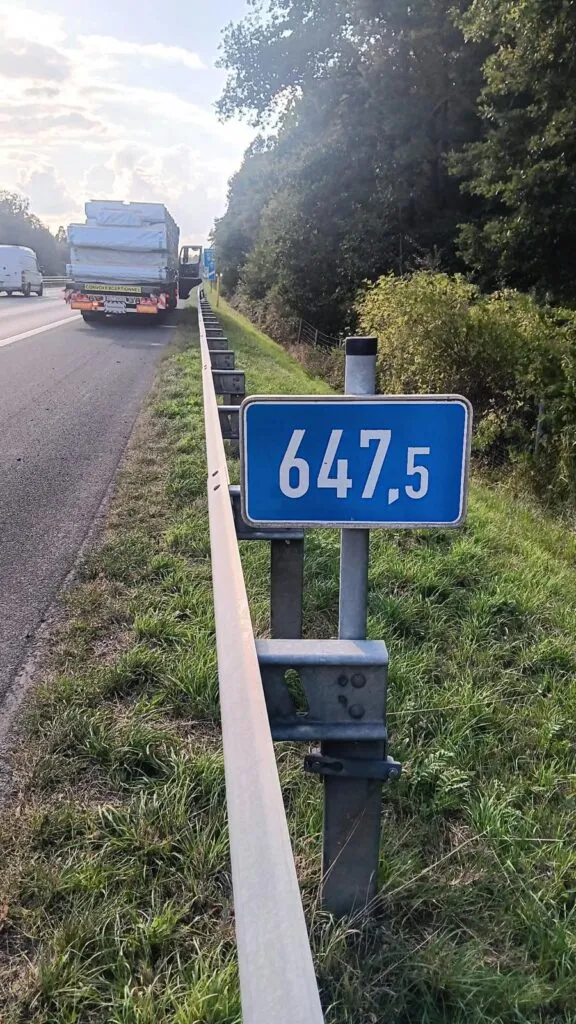
The incident occurred in the early hours of 26 September 2026, around 22:30, on the A7 near Hildesheim, in the direction of Hannover. The driver, operating a semi-trailer, noticed a sudden vibration and loss of handling. Upon checking, he found the rear axle tyre on the trailer had completely deflated. With the vehicle now immobilised on the hard shoulder, the driver activated hazard lights, placed a warning triangle at the required distance, and donned his high-visibility vest. He then contacted LKWHelp24’s 24/7 emergency line. The call was answered promptly, and the situation was assessed. The technician on duty confirmed the tyre size (385/65 R22.5), location, and urgency. Within 12 minutes, the nearest mobile service team from our partner network was dispatched. The response time, from call to dispatch, was under 15 minutes, demonstrating the efficiency of our centralised dispatch system.
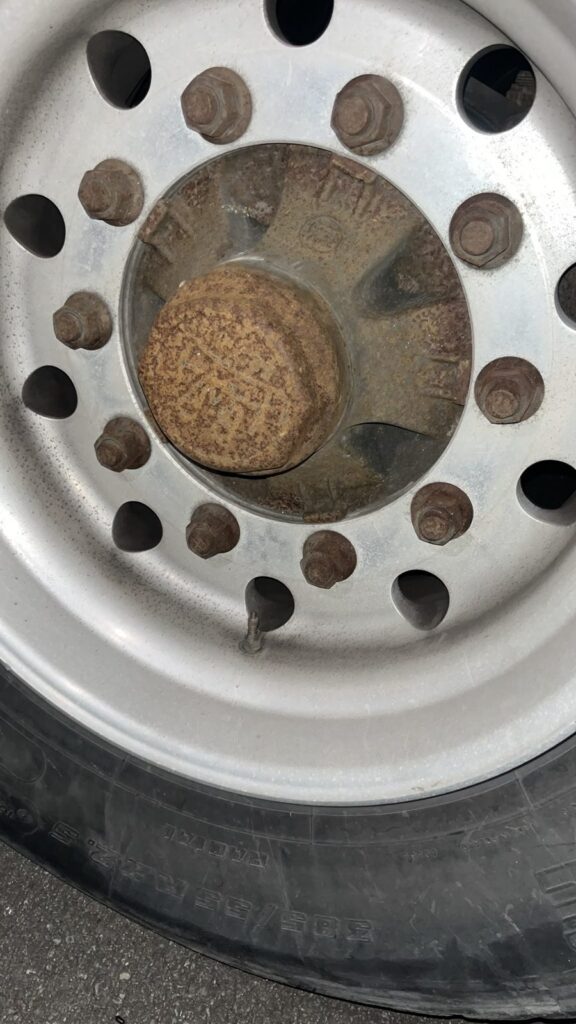
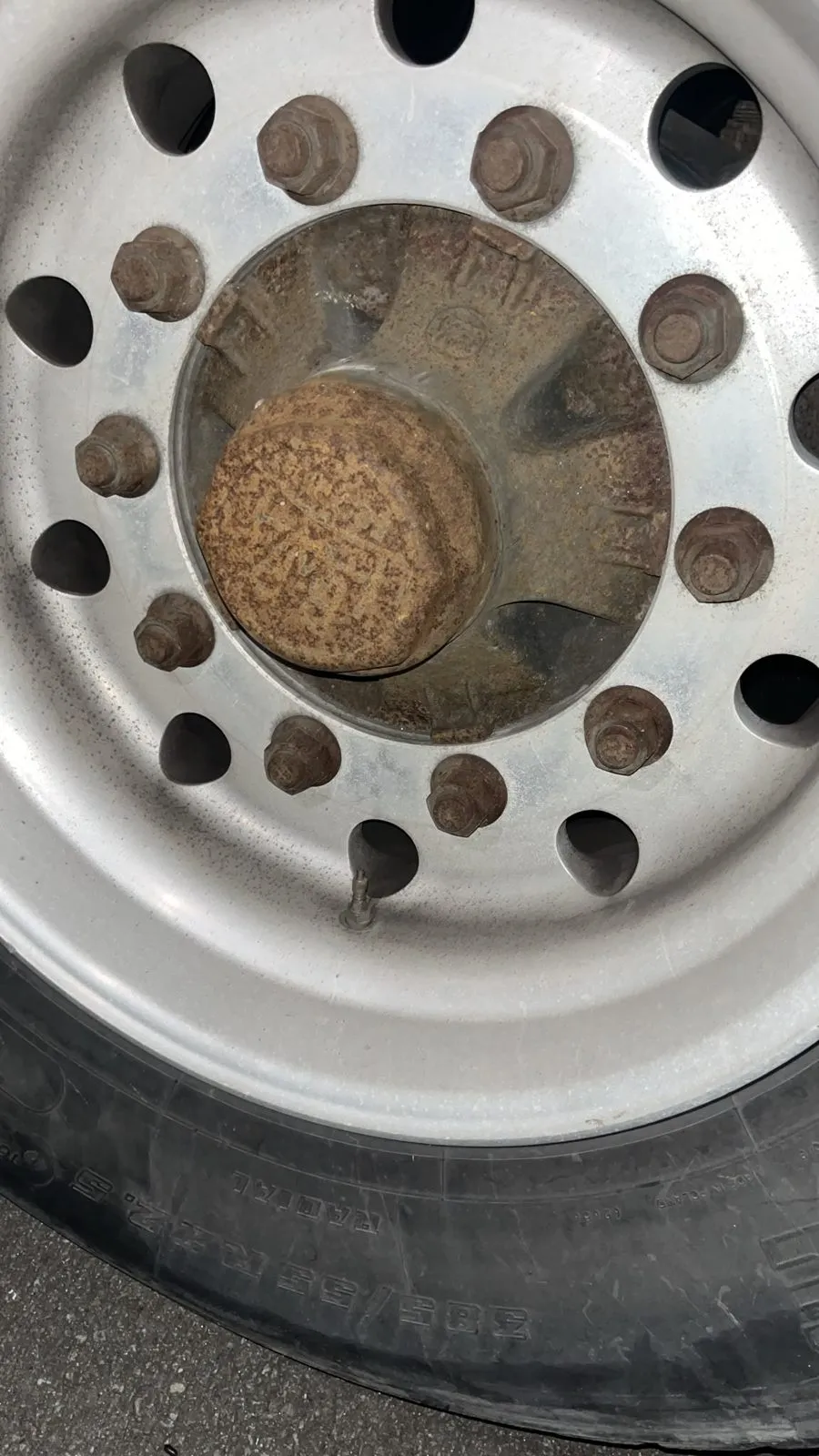
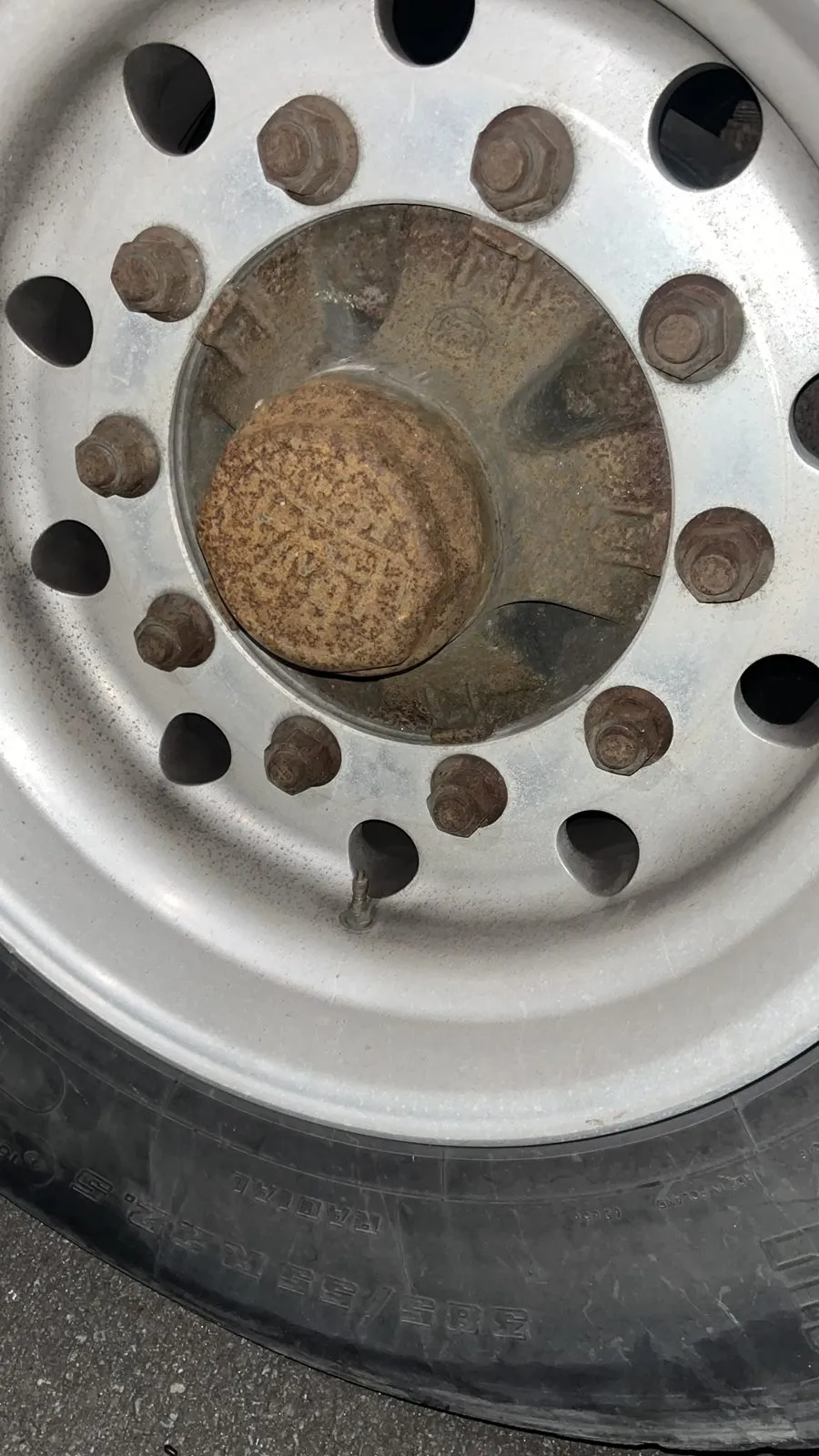
The mobile team arrived on site at 23:30, 48 minutes after the initial dispatch. This is typical for night-time responses on major German motorways, where traffic density and speed limits can delay access. The team arrived in a fully equipped van carrying all necessary tools, spare tyres, and diagnostic equipment. Upon arrival, they immediately secured the area using reflective cones and warning signs, ensuring the safety of both the team and any passing traffic. The driver remained in the cab, monitoring the situation. The team then conducted a full inspection of the affected wheel assembly, noting signs of significant corrosion on the wheel nuts and hub cap, as well as visible deformation in the lower side of the tyre. These observations were critical in determining the cause of the failure and informing the repair strategy.
What Happened: The Cause of the Tyre Failure
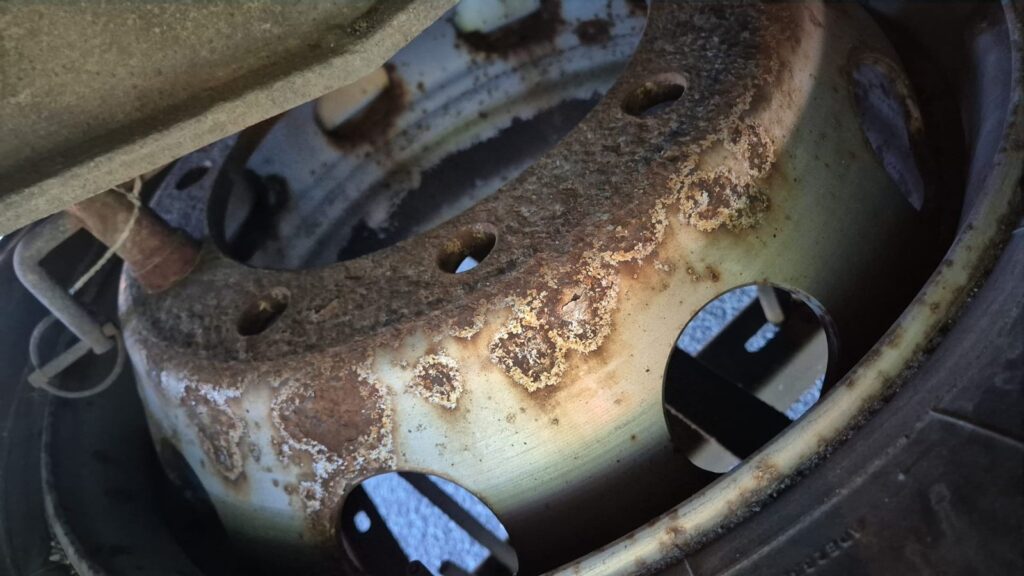
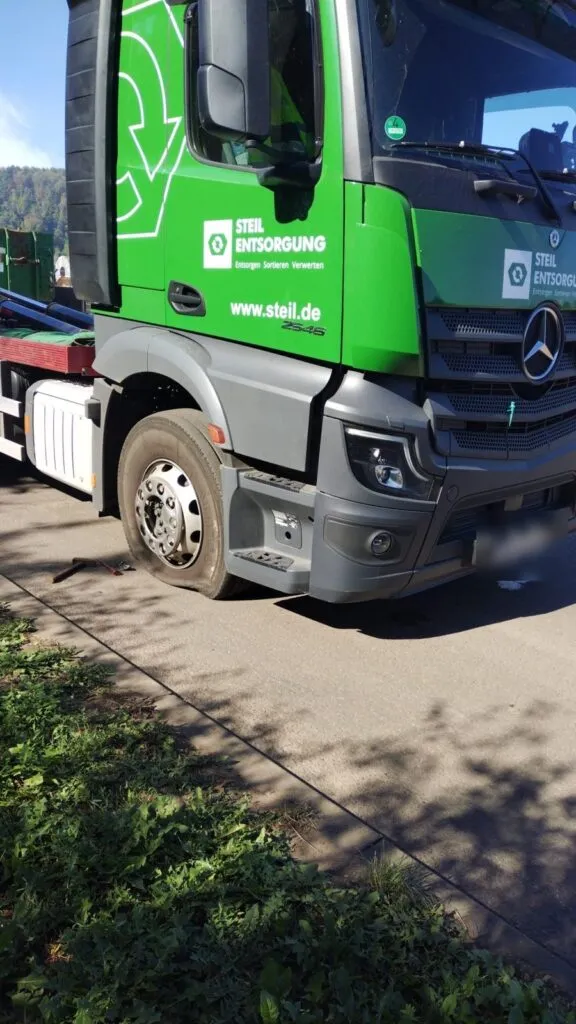
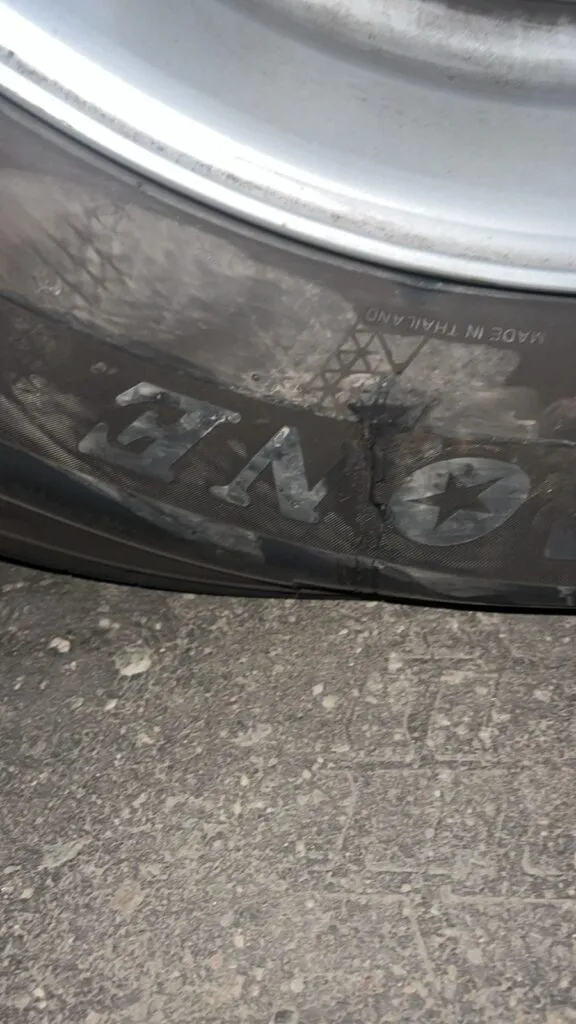
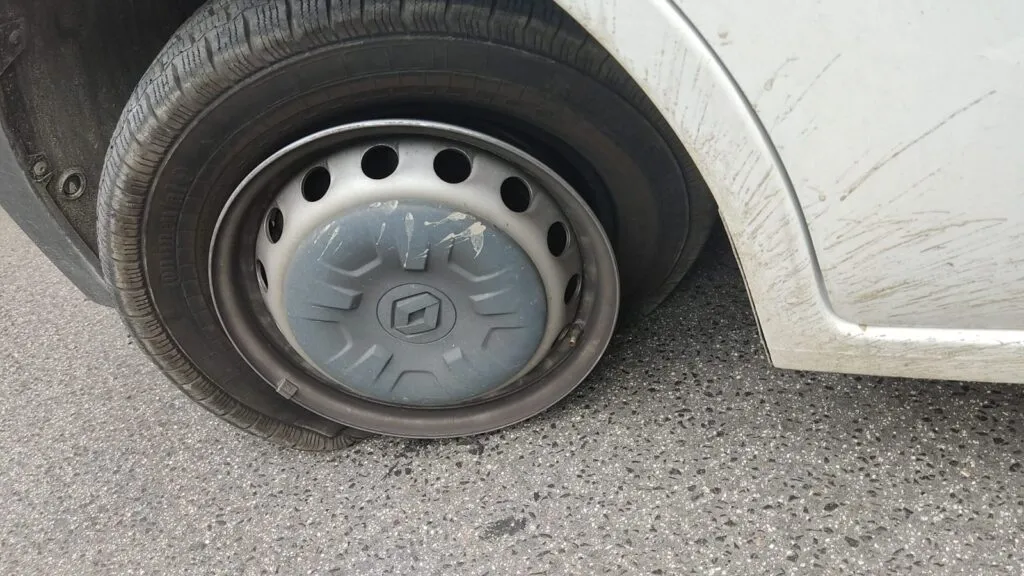
A 385/65 R22.5 tyre on a semi-trailer axle failed due to a combination of mechanical stress and long-term corrosion. The tyre itself was visibly flattened on the ground, with the sidewall bulging and showing signs of internal damage. This is a classic symptom of a slow puncture that went undetected over time, leading to a complete loss of pressure. However, the root cause was not just the tyre’s condition, it was the state of the wheel assembly. The aluminium alloy wheel, which is common on trailers for its lightweight properties, showed heavy surface corrosion on the hub cap (Nabenkappe) and the 10 wheel nuts (Radmuttern). These nuts were covered in rust and road grime, making them difficult to loosen and increasing the risk of stripping during removal.
The radial construction of the tyre (RADIAL) and the “Made in Poland” marking confirmed it was a standard commercial trailer tyre. While not inherently defective, its performance had been compromised by prolonged exposure to moisture and salt from winter road treatments. Over time, the corrosion reduced the clamping force between the wheel and the hub, allowing small vibrations to gradually loosen the nuts. This led to uneven load distribution and increased heat build-up in the tyre, accelerating wear and eventually causing a blowout. The fact that the wheel had been driven for some distance on a partially deflated tyre likely worsened the damage, contributing to the failure.
This case highlights a common but often overlooked issue in fleet maintenance: the importance of regular inspection of wheel assemblies. Even if the tyre appears intact, corrosion on the hub cap and wheel nuts can compromise the entire wheel system. The ETRTO (European Tyre and Rim Technical Organisation) standards, available at etrto.org, recommend regular checks of wheel fastenings and hub components, especially on trailers that operate in high-humidity or salt-sprayed environments. Failure to do so increases the risk of catastrophic wheel detachment, which is not only dangerous but also violates German traffic regulations under § 36 StVZO, which mandates that tyres must be in good condition and properly fitted.
How the Emergency Response Was Organised
The success of any roadside repair hinges on the efficiency and coordination of the dispatch and logistics network. In this case, the response was managed through LKWHelp24’s centralised emergency dispatch system, which monitors all partner teams across Germany in real time. When the driver reported the flat tyre, the call was logged and immediately matched to the nearest available mobile team based on geographic proximity, vehicle availability, and current workload.
The system uses real-time GPS tracking and predictive routing to ensure the fastest possible response. In this instance, the closest team was based in the Hanover region and was dispatched within 12 minutes of the call. The team was equipped with a fully stocked mobile workshop van, including a hydraulic jack, impact wrench, torque wrench, wheel chocks, safety cones, a portable air compressor, and a new 385/65 R22.5 tyre in stock. The team was also trained in emergency response protocols, including hazard zone setup, communication with drivers, and documentation procedures.
Upon arrival, the team followed a strict safety protocol:
– Positioning of warning signs and cones at 100m, 50m, and 20m behind the vehicle.
– Activation of hazard lights and emergency flashers.
– Use of high-visibility vests and headlamps.
– Communication with the driver to confirm the situation and ensure he remained in the cab.
– Verification of the tyre size and axle type.
Only after all safety measures were in place did the team proceed with the repair. This structured approach ensures compliance with German road safety laws, particularly § 15a StVO, which outlines the requirements for securing vehicles in emergency situations on motorways. It also minimises risk to both the repair team and other road users.
Why Ignoring a Flat Tyre Is Dangerous
Driving a semi-trailer with a flat tyre, even for a short distance, is extremely hazardous. The 385/65 R22.5 tyre on this trailer is designed to carry heavy loads, typically between 10,000 and 12,000 kg per axle, and operates at a recommended pressure of 8.5 to 9.5 bar. When pressure drops below 5 bar, the tyre’s structural integrity begins to fail. The sidewall deforms, heat builds up rapidly, and the internal cords can snap. This leads to a blowout, which can cause the trailer to swerve, jackknife, or even detach from the tractor unit.
In this case, the driver had already driven several kilometres on the flat tyre before stopping. This is a common mistake, many drivers assume they can “limp” to the next service station. However, even 10 km on a flat tyre can cause irreversible damage to the tyre, wheel, and suspension. The heat generated can melt the inner liner, weaken the steel belts, and distort the wheel rim. In extreme cases, the wheel can become unbalanced, leading to catastrophic failure at speed.
Furthermore, a flat tyre on a trailer axle creates uneven weight distribution, increasing stress on the remaining wheels and potentially damaging the suspension system. This can lead to additional repair costs down the line. According to ADAC, over 15% of commercial vehicle breakdowns on German motorways are caused by tyre-related issues, with most occurring on trailers and semi-trailers. These incidents not only endanger lives but also result in significant downtime. The average cost of a truck being out of service is between €800 and €1,200 per day, depending on the load and contract terms.
Step-by-Step Tyre Replacement Process
The repair process was carried out in five precise stages, each critical to the safety and longevity of the repair. The team followed a standardised procedure used across all LKWHelp24 partner locations to ensure consistency and quality.
Step 1: Inspection and Assessment
The team began by thoroughly inspecting the wheel assembly. They checked the tyre tread depth (using a depth gauge), examined the sidewall for cuts or bulges, and assessed the condition of the wheel nuts and hub cap. The corrosion on the nuts was significant, so they were cleaned with a wire brush and treated with a rust inhibitor before removal. The hub cap was removed to inspect the hub surface and ensure no damage to the bearing housing.
Step 2: Safety and Site Preparation
The vehicle was secured using wheel chocks. The team placed reflective cones at 100m, 50m, and 20m behind the vehicle. They also ensured the hazard lights were on and the warning triangle was properly positioned. The driver remained in the cab throughout the operation, and the team maintained constant communication with him.
Step 3: Removal of the Flat Tyre
Using a hydraulic jack, the team lifted the trailer axle slightly above ground level. They then used an impact wrench to loosen the 10 wheel nuts, a task made more difficult by the rust. Once loose, they were removed by hand and stored safely. The flat tyre was carefully slid off the wheel rim. The inner liner was inspected for punctures, and the rim was checked for dents or warping. No structural damage was found.
Step 4: Installation of the New Tyre
The new 385/65 R22.5 tyre was mounted onto the wheel rim using a bead breaker and inflation tool. The tyre was inflated to 9.0 bar (the recommended pressure for this axle) and checked for leaks using soapy water. The wheel was then reattached to the hub. The nuts were hand-tightened in a criss-cross pattern to ensure even pressure.
Step 5: Final Torque and Testing
The final step was the most critical: torque tightening. Using a calibrated torque wrench, each of the 10 wheel nuts was tightened to 320 Nm in a star (criss-cross) pattern. This ensures even load distribution and prevents future loosening. After tightening, the team performed a final inspection: they checked for tyre runout, verified the pressure, and tested the wheel’s balance by rotating it manually. All checks passed.
Full Timeline of Events
| Time | Phase | Action |
|---|---|---|
| 22:30 | Call Received | Driver reports flat tyre on 385/65 R22.5 trailer axle on A7 near Hildesheim |
| 22:42 | Dispatch | Closest mobile team from partner network confirmed and dispatched (12 min wait) |
| 23:30 | Arrival | Team on site (48 min travel time, night conditions) |
| 23:30 | Inspection | Wheel and tyre assessed; corrosion noted on nuts and hub cap |
| 23:40 | Preparation | Safety cones placed, vehicle secured, jack positioned |
| 23:55 | Mounting | Old tyre removed, new tyre mounted and inflated to 9.0 bar |
| 00:05 | Installation | Wheel reattached, nuts tightened in star pattern to 320 Nm |
| 00:15 | Final Check | Pressure verified, runout checked, no defects found |
| 00:15 | Ready to Drive | Vehicle cleared for safe return to traffic |
Total time from call to departure: 1 hour 45 minutes. This includes 12 minutes for dispatch, 48 minutes for travel, and 85 minutes for on-site work. The actual repair time (from arrival to completion) was 45 minutes, which is well within the industry benchmark for mobile trailer tyre services.
Cost Breakdown and Value for Money
The total cost of the service was €920 (net, excluding VAT). This includes all labour, parts, and mobilisation fees. The breakdown is as follows:
| Position | Price (EUR) |
|---|---|
| Mobilisation (A7 Hildesheim) | 240 |
| Night surcharge (25%) | 60 |
| Labour (1 hour, 30 minutes) | 120 |
| New 385/65 R22.5 tyre | 480 |
| Recycling of old tyre | 20 |
| Total | 920 |
The cost of a mobile truck tyre service on the German motorway network typically ranges from €750 to €1,400, depending on location, time of day, and complexity. In this case, the price is at the lower end of the scale, thanks to efficient routing and the use of a pre-stocked mobile unit. The night surcharge (25%) is standard and reflects the higher operational cost of after-hours services.
For comparison, the cost of a full trailer tow to a workshop, including towing fees, storage, and potential additional repairs, can easily exceed €1,200. If the vehicle remains out of service for more than 24 hours, the cost of lost revenue (€800–€1,200 per day) far outweighs the cost of the mobile repair. In this case, the driver avoided over 24 hours of downtime, saving the transport company between €1,600 and €2,400 in potential losses.
Why You Should Never Attempt a DIY Tyre Change
While it may seem tempting to attempt a tyre change on the side of the road, doing so without proper tools, training, and safety equipment is extremely risky. The following are the main dangers of a DIY repair:
- Improper torque: Hand-tightening wheel nuts can lead to uneven pressure, causing the wheel to wobble or even detach at speed. The correct torque for a 385/65 R22.5 trailer wheel is 320 Nm, which requires a calibrated torque wrench. Most drivers do not have this tool.
- Inadequate safety measures: Without proper cones, warning signs, and high-visibility clothing, the driver and team are at high risk from passing traffic. The A7 near Hildesheim sees over 60,000 vehicles per day.
- Misdiagnosis: A flat tyre may be a symptom of a deeper issue, such as a damaged rim, leaking hub seal, or worn bearing. A professional technician can identify these problems early.
- Voided warranties: Many tyre and wheel manufacturers void warranties if repairs are done improperly. A DIY job could invalidate future claims.
- Time and stress: The average driver spends over 90 minutes on a roadside tyre change, often in poor weather, with limited tools.
Professional mobile tyre services like LKWHelp24 are trained, insured, and equipped to handle all types of breakdowns safely and efficiently.
Typical Scenarios We Respond To Across Germany
Our mobile teams respond to a wide range of emergencies across Germany. Common scenarios include:
- Tyre blowouts on motorways (A1–A9): Especially on long-haul routes from the North Sea ports to southern Germany.
- Flat tyres on trailers and semi-trailers: Due to punctures, corrosion, or wear.
- Wheel nut loosening: Caused by vibration, improper torque, or corrosion.
- Damaged rims from potholes or debris.
- Tyre damage from gravel, stones, or sharp objects.
- Electrical or hydraulic issues in trailer systems.
- Emergency towing and recovery for stalled vehicles.
We operate 24/7, covering all federal highways and major regional roads. Whether it’s a minor puncture or a full axle failure, we respond with speed and precision.
Preventive Maintenance Tips for Drivers and Fleets
To avoid breakdowns like this one, both drivers and fleet managers should follow these best practices:
- Inspect wheels weekly: Check for corrosion, loose nuts, and tyre wear.
- Monitor tyre pressure daily: Use a digital gauge. Pressure should be checked when tyres are cold.
- Clean wheel assemblies regularly: Remove salt, dirt, and grime, especially in winter.
- Use rust inhibitors: Apply to wheel nuts and hub caps.
- Replace tyres at the recommended tread depth (1.6 mm).
- Schedule professional inspections every 6 months.
- Train drivers on emergency response and safety protocols.
Regular maintenance not only prevents breakdowns but also extends tyre life, improves fuel efficiency, and enhances safety.
Tyre Standards, Brands, and Technical Insights
The 385/65 R22.5 size is a standard for semi-trailers in Europe. It is regulated by the ETRTO, which sets dimensional and performance standards for tyres and rims. The size indicates:
– 385 mm tread width
– 65% aspect ratio (sidewall height as a percentage of width)
– R = radial construction
– 22.5 inches rim diameter
Major tyre brands like Michelin, Continental, Goodyear, and Bridgestone offer high-performance trailer tyres with excellent durability and fuel efficiency. For example, Continental’s ContiTrail series is designed for long-haul trailer use, with reinforced sidewalls and low rolling resistance.
For trailer axles, brands like BPW (see bpw.de) provide high-quality axle systems that are compatible with standard wheel sizes and designed for heavy-duty use.
Why Choose LKWHelp24?
We offer a proven, reliable, and transparent service across Germany. Our key advantages include:
– 24/7 availability, no matter the time or weather.
– Verified partner network, all teams are certified and insured.
– Transparent pricing, no hidden fees, no surprise costs.
– Multilingual dispatchers, we support drivers from all EU countries.
– Fast response times, average 1h 30m from call to arrival.
– Full documentation, repair reports, photos, and receipts provided.
We are not just a breakdown service, we are a partner in keeping your fleet on the move.
Summary: Key Facts from the Case
- Tyre size: 385/65 R22.5 (trailer axle)
- Location: A7 near Hildesheim, direction Hannover
- Time of call: 22:30, 25 September 2026
- Response time: 48 minutes (dispatch to arrival)
- Total time from call to departure: 1 hour 45 minutes
- Cost: €920 (net), including night surcharge
- Secondary damage prevented: wheel distortion, bearing failure, suspension damage
- Downtime avoided: over 24 hours
- Client saved: €1,600–€2,400 in lost revenue
This case demonstrates that a professional mobile tyre service is not just a convenience, it’s a necessity for modern freight transport.
Need Emergency Truck Tyre Service?
If you’re stranded on a German motorway, don’t wait. Contact LKWHelp24 now. We’re here 24/7, across all of Germany.
📞 +49 160 5753826
🌐 www.lkwhelp24.com
24/7 Mobile Truck Tyre Service – All of Germany
Keywords: truck tyre service | mobile reifenservice | truck tyre replacement | trailer tyre service | mobile truck tyre service | truck tyre change | truck tyre roadside assistance | truck tyre repair | truck tyre callout | truck tyre emergency | truck tyre breakdown service | truck tyre help | truck tyre fitting | truck tyre fitters near me | truck tyre near me | truck tyre service near me | truck tyre service germany | trailer tyre replacement | trailer tyre puncture | trailer flat tyre | truck wheel repair | truck wheel change | tyre change near me | tyres repair near me
Related Articles:
– Emergency Truck Tyre Service Near You: Mobile Tyre Service Around the Clock
– Truck Tire Service Near Me: Handling Trailer Tyre Blowout Near Berlin, LKWHelp24 on the Job
– Truck Tyre Service Near Me: How LKWHelp24 Fixed a Heavy-Haulage Tyre Blowout in 2 Hours 5 Minutes on the A7 near Göttingen
– Truck Tyre Service: Fast Help for a Tyre Blowout on the Motorway near Hof for a DAF Semi-Trailer in 2 Hours
– Trailer Tyre Damage from Gravel at a Rest Area on the A31 near Gronau: How a Stone in the Tread Killed a Tyre