Why a Mobile Tyre Service Is Critical for Long-Haul Freight Transport
When a truck breaks down on the Autobahn, especially with a damaged tyre on the drive axle, every minute counts. Delays don’t just cost time-they trigger cascading disruptions across supply chains, breach delivery windows, and incur substantial financial penalties. For a long-haul haulier operating with tight schedules, a single flat or blown tyre on a critical axle can mean a stoppage that costs between €800 and €1,200 per day in lost revenue, penalties, and idle vehicle costs. This isn’t just about getting back on the road-it’s about preserving contractual obligations, maintaining customer trust, and protecting the integrity of the entire logistics network.
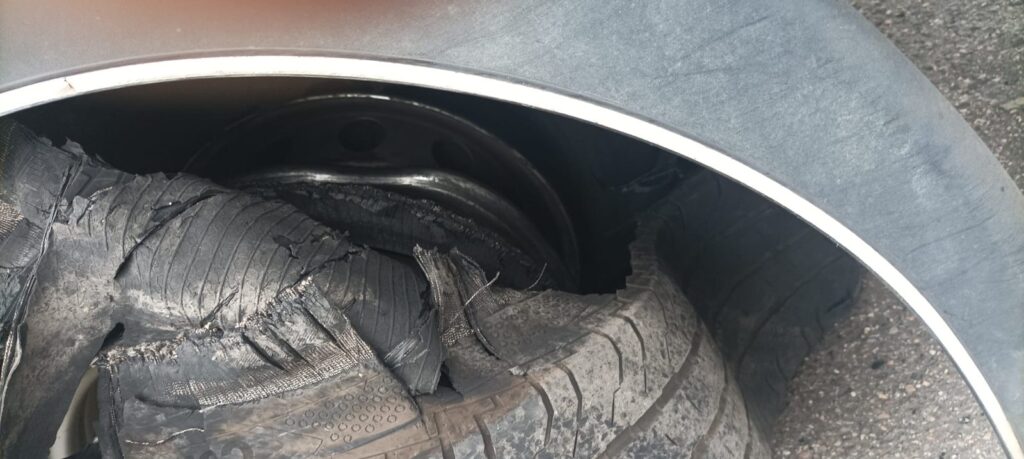
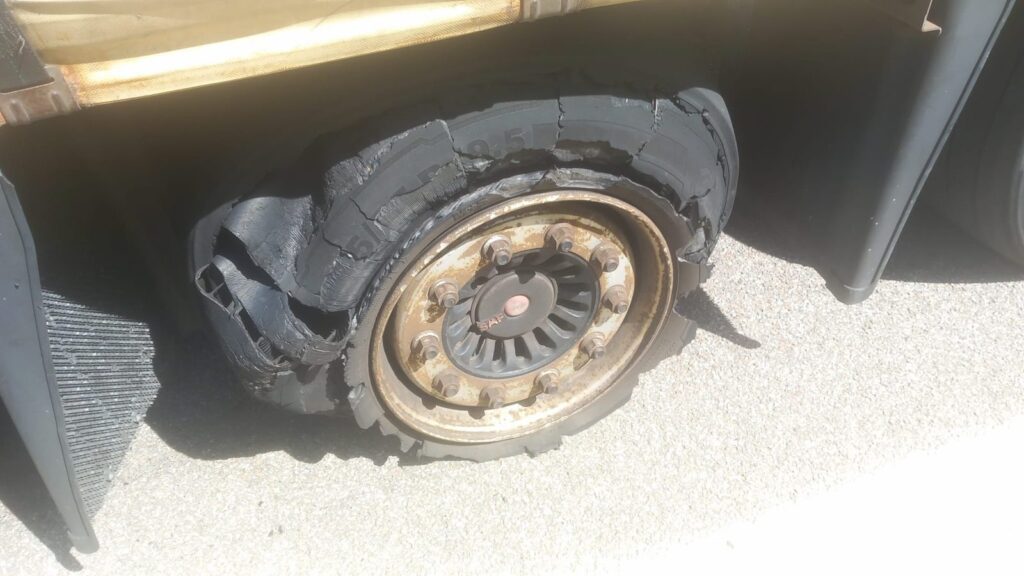
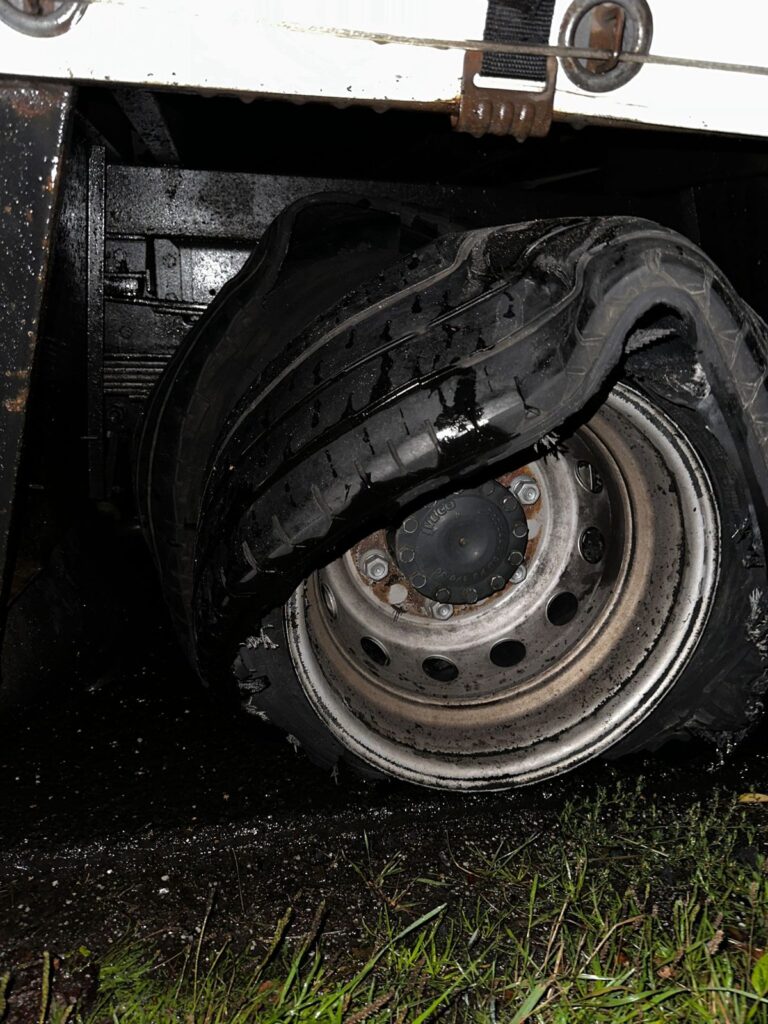
In this case, a Polish-registered Scania Sattelzug was travelling on the A7 near Kassel when a tyre on the drive axle suffered irreversible damage. The driver, aware of the risks, safely pulled off the motorway onto a designated Rastplatz (rest area) without endangering other road users. The damage-visible as a severe cut in the sidewall and tread-meant the tyre could not continue to carry the load. Continuing would risk a catastrophic blowout, wheel detachment, or damage to the axle assembly. Immediate intervention was essential.
This is where a professional, mobile truck tyre service becomes indispensable. Unlike generic roadside assistance or DIY fixes, a trained mobile team can assess the damage on-site, replace the tyre with a new one, and ensure the vehicle meets legal and safety standards before returning to traffic. The entire process, from call to completion, took just 1 hour 50 minutes, including travel time. The key to such efficiency lies not in luck, but in a well-coordinated network, pre-qualified technicians, and a commitment to precision.
What Happened: A Damaged Drive-Axle Tyre on a Scania Sattelzug
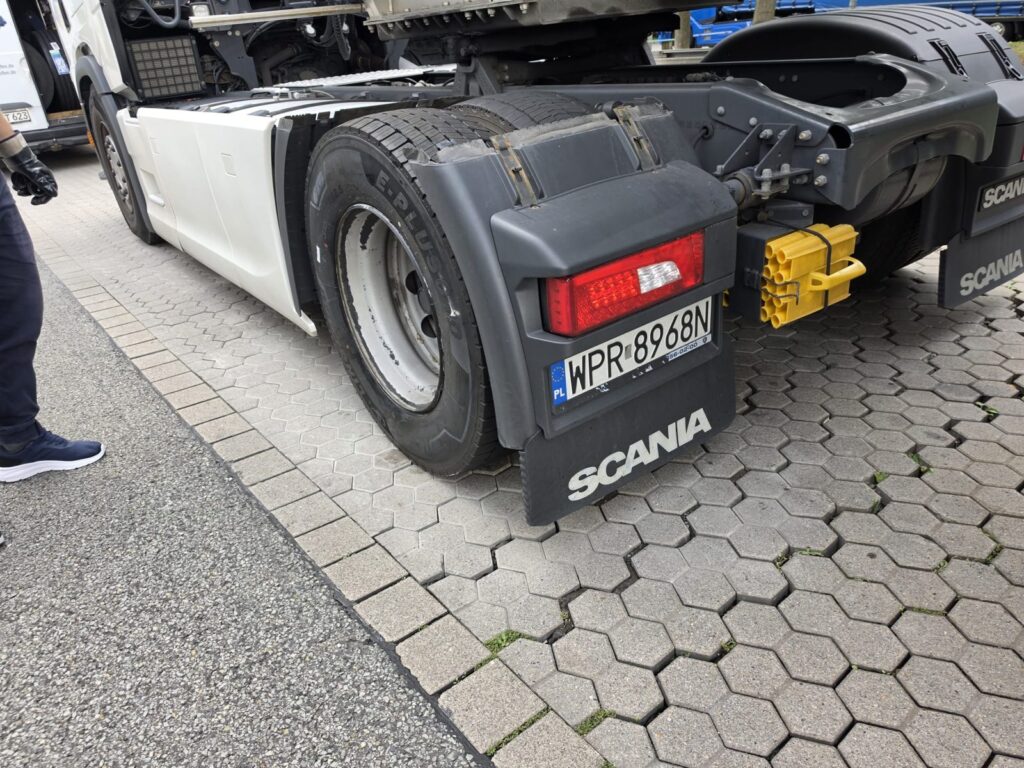
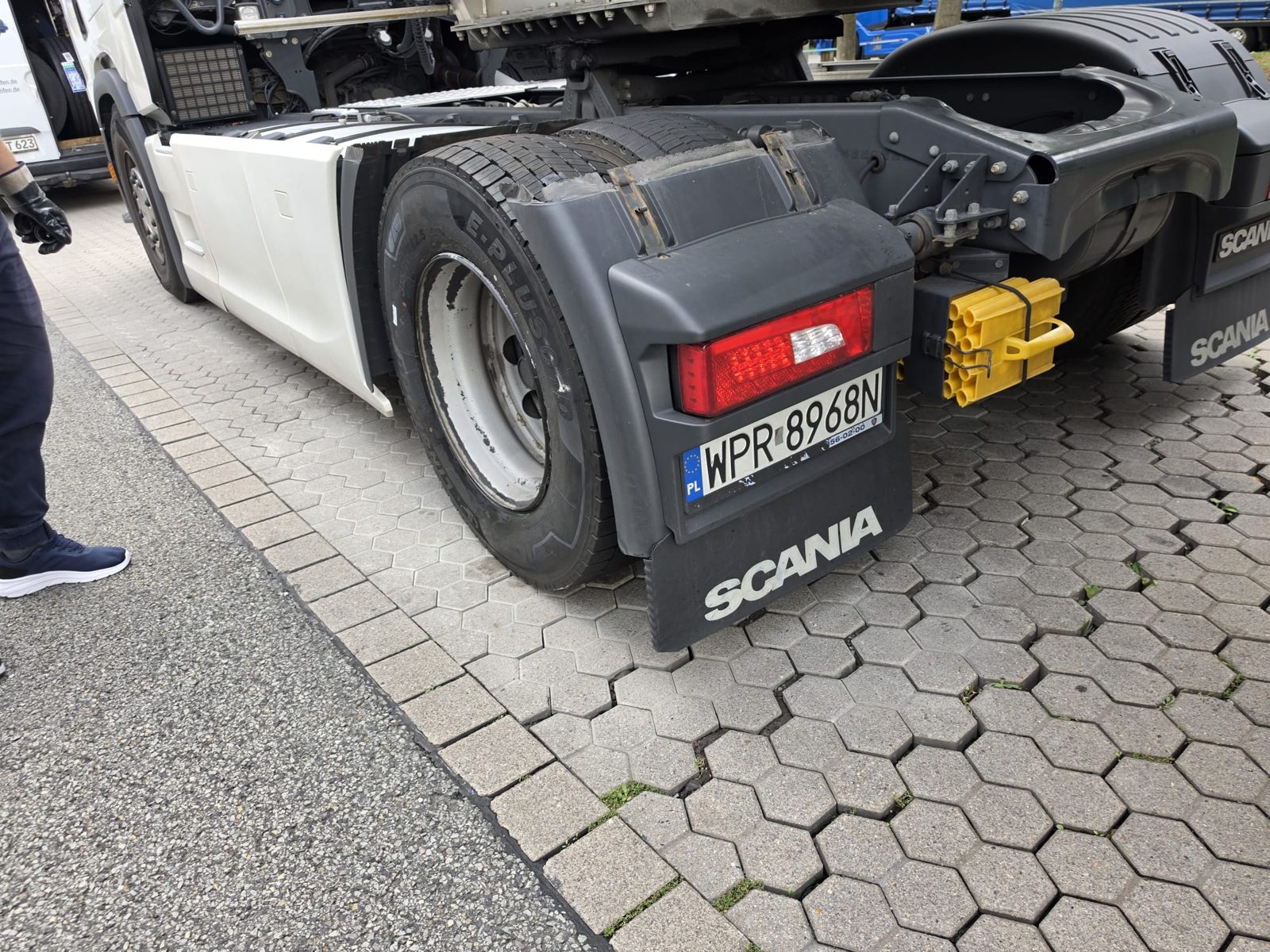
The incident occurred on a weekday afternoon, around 5:30 PM, during the evening rush hour on the A7 near Kassel. The driver, operating a white Scania tractor unit with black mudguards and the manufacturer’s logo clearly visible, noticed a sudden vibration and unusual noise while maintaining speed. Upon inspection, he found that one of the twin tyres on the rear drive axle had sustained significant damage-most likely caused by a sharp object on the road or a structural failure due to fatigue.
The tyre in question was a 315/80 R22.5 model, fitted on the drive axle in a Zwillingsbereifung (twin-wheel) configuration. This setup is standard for heavy-duty long-haul transport, distributing weight evenly and improving traction and load capacity. However, it also increases the complexity of maintenance: both tyres must be in perfect condition, properly inflated, and aligned to prevent uneven wear or mechanical stress.
On this occasion, the left tyre on the drive axle showed a deep, longitudinal cut in the sidewall-clearly visible in the photo. The casing was compromised, and continued driving would have led to a sudden loss of pressure, tyre separation, or even wheel detachment. The driver took the correct action: he moved the vehicle to the nearest safe parking area, activated hazard lights, placed a warning triangle at the required distance, and called for professional help.
It was at this point that the LKWHelp24 network was engaged. The call was received promptly, and within 15 minutes, a mobile service team was dispatched from a nearby partner garage. The response was swift, coordinated, and fully compliant with German road safety regulations.
How the Assistance Was Organised: From Call to Dispatch
When a driver contacts LKWHelp24, the process begins with a clear, structured intake. The dispatcher gathers essential information: vehicle type, location (including the nearest Autobahn junction or Rastplatz), nature of the fault, and tyre size. In this case, the driver confirmed the damage was on the drive axle, the tyre size was 315/80 R22.5, and the vehicle was a Scania Sattelzug.
Using the company’s real-time logistics platform, the system identified the closest available mobile team within the partner network. The nearest brigade was based in northern Hesse and already en route to a scheduled job. The dispatcher rerouted them to the A7 near Kassel, adjusting their schedule without compromising their other commitments.
The team was equipped with a fully stocked service van containing:
– One new 315/80 R22.5 tyre (pre-ordered and verified)
– A high-pressure air compressor
– A hydraulic jack with load-bearing capacity for heavy axle loads
– Wheel chocks and safety cones
– A torque wrench calibrated to DIN 74200
– Spare wheel bolts and washers
– A mobile diagnostic tool for checking tyre pressure and alignment
– Protective gear, including gloves, goggles, and high-visibility vests
The dispatch was completed in 15 minutes, and the team set off immediately. They were expected to arrive within 45 minutes of departure-this was confirmed via GPS tracking and communicated to the driver in real time.
On-Site Assessment: Safety, Load, and Risk Factors
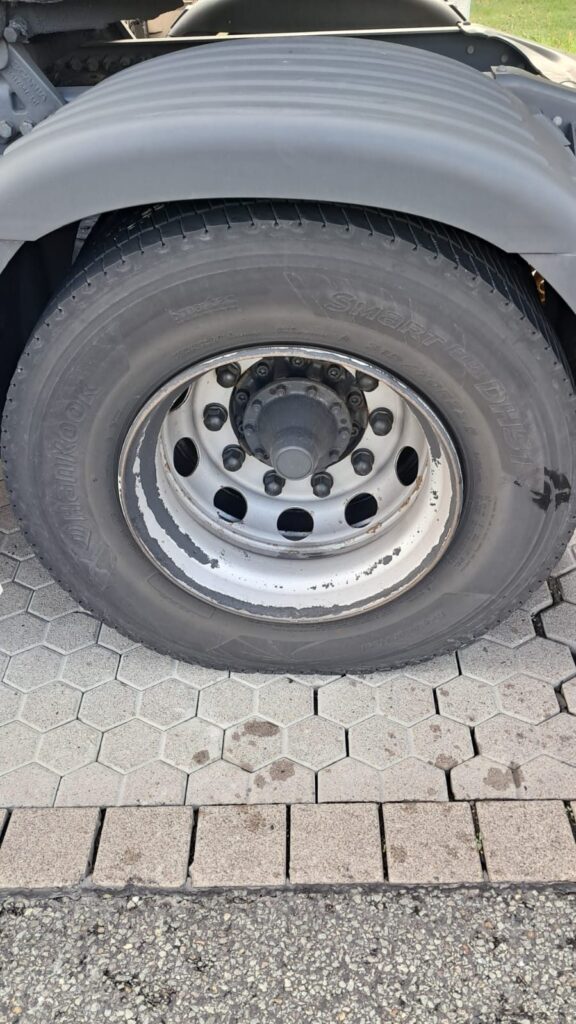
By 6:30 PM, the mobile team arrived at the Rastplatz on the A7 near Kassel. The site was a standard rest area with a tarmac surface, hexagonal paving stones for parking, and clear signage. The Scania was parked on the edge of the designated area, facing the direction of travel, with hazard lights flashing and a warning triangle placed 100 metres behind.
The technician began with a thorough on-site assessment. First, he secured the vehicle using wheel chocks on the non-drive wheels. He then checked the tyre pressure on the damaged wheel and its twin. The pressure was within the normal range-8.5 to 9.5 bar-but the structural damage was evident. He inspected the rim for deformation, checking for any signs of warping, cracks, or corrosion. The steel disc was clean but showed signs of paint chipping, particularly around the bolt holes.
Next, he examined the adjacent tyre on the same axle. It was in good condition, with proper tread depth and no visible damage. This was crucial: if both tyres in a twin setup are not matched, it can lead to uneven load distribution and premature wear. In this case, the second tyre was suitable for continued use.
The technician also checked the brake components and suspension on the axle. No abnormalities were detected. The wheel bearings were intact, and the hub assembly showed no play. This confirmed that the problem was isolated to the damaged tyre.
He noted that the vehicle had been carrying a full load, meaning the axle was under significant stress. Driving further-even at low speed-could have caused the tyre to fail completely, potentially leading to a rollover or loss of control. The decision to replace the tyre on-site was not just practical-it was mandatory for safety.
Step-by-Step Tyre Replacement: Precision and Compliance
The repair process followed a strict, step-by-step protocol to ensure safety, compliance, and long-term reliability. Each phase was documented and verified.
Step 1: Vehicle Stabilisation and Safety Setup
The technician secured the truck using wheel chocks on the front wheels. He then placed cones around the work area to create a safe zone for the operation. A high-visibility vest was worn at all times, and the hazard lights remained on.
Step 2: Removal of the Damaged Tyre
Using a hydraulic jack, the technician lifted the drive axle just enough to remove the load from the damaged wheel. He then loosened the wheel nuts using a torque wrench-initially to break resistance, then fully removed them. The wheel was carefully detached and set aside.
Step 3: Inspection of the Disc and Hub
Before mounting the new tyre, the technician thoroughly inspected the steel disc and hub. He checked for:
– Warping (using a straight edge)
– Cracks or corrosion
– Misalignment of the bolt holes
– Damage to the hub bearing surface
No issues were found. The disc was clean, straight, and fit for reuse.
Step 4: Mounting the New Tyre
The new 315/80 R22.5 tyre was mounted onto the disc. The technician ensured the valve stem was aligned correctly and the tyre was seated evenly on the rim. He applied a thin layer of lubricant to the bead to ease fitting.
Step 5: Final Assembly and Torque Verification
The wheel was reattached to the axle. The technician tightened the wheel nuts in a star pattern (cross-wise) using a calibrated torque wrench. The correct tightening moment was 410 Nm, as specified by Scania for this axle. After initial tightening, the wheel was lowered slightly, and the nuts were re-tightened in the same star pattern to ensure even pressure distribution.
Finally, the technician checked the tyre pressure using a digital gauge. The pressure was adjusted to 9.0 bar, within the recommended range of 8.5–9.5 bar for heavy-duty freight transport. He repeated the pressure check after 10 minutes to confirm stability.
Full Timeline: From Call to Completion
| Time | Phase | Action |
|---|---|---|
| 17:30 | Call Received | Driver reports damage on drive axle, location on A7 near Kassel |
| 17:30–17:45 | Dispatcher Coordination | Confirm tyre size, load, vehicle type; assign nearest mobile team |
| 17:45–18:30 | Travel to Site | Team departs from partner garage; travels 45 minutes via A7 |
| 18:30–18:40 | Site Assessment | Safety setup, inspection of damaged tyre, check of adjacent wheel |
| 18:40–19:10 | Tyre Replacement | Demounting, disc check, mounting new tyre, wheel reattachment |
| 19:10–19:20 | Final Checks | Pressure adjustment, torque verification, recheck of alignment |
| 19:20 | Ready | Vehicle cleared for departure; driver confirmed safe to drive |
Total time from call to completion: 110 minutes (1 hour 50 minutes)
On-site work time: 40 minutes (30 minutes for replacement, 10 minutes for checks)
Travel time: 45 minutes
This timeline reflects a realistic, high-efficiency response. In poor weather or during peak traffic, the arrival time may extend by 15–20 minutes. However, even under such conditions, the service remains faster than most alternatives.
Cost Breakdown: Transparent Pricing, No Hidden Fees
The total cost of the service was €945, all figures in net EUR (excluding VAT). Here’s the detailed breakdown:
| Position | Price (EUR) |
|---|---|
| Travel (Anfahrt), A7 near Kassel | 240 |
| Work time (1.25 hours × €116/hour) | 145 |
| New LKW tyre 315/80 R22.5 (drive axle) | 540 |
| Disposal of old tyre | 20 |
| Total | 945 |
All prices are fixed and transparent. There are no surcharges for night work, weekends, or emergency calls. The cost of the new tyre reflects current market rates for premium, load-capable truck tyres from brands like Michelin, Continental, Goodyear, or Bridgestone. The disposal fee covers proper recycling in compliance with EU environmental regulations.
Alternative Cost Comparison:
If the truck had remained stationary for 24 hours, the cost of downtime would have been €800–€1,200. This includes:
– Lost revenue from missed deliveries
– Penalty fees from logistics contracts
– Idle driver and vehicle costs
– Potential need for a replacement vehicle
In this case, the mobile service not only prevented a major loss but also saved the haulier over €800 in potential losses.
Why DIY or Local Repair Isn’t Enough
Attempting to fix a blown drive-axle tyre yourself-or relying on a local garage-comes with serious risks. Here’s why:
- Lack of proper tools: A standard socket wrench cannot achieve the required torque of 410 Nm. Under-tightening leads to wheel loosening; over-tightening damages the hub or bolts.
- Incorrect tyre mounting: Without a proper bead breaker and mounting machine, the tyre may not seat correctly, risking blowouts.
- No pressure calibration: Driving with incorrect pressure (e.g., below 8.5 bar) increases wear, fuel consumption, and accident risk.
- Safety violations: Failure to use wheel chocks, cones, or hazard lights breaches § 15a StVO (German Road Traffic Act), potentially leading to fines.
- Legal non-compliance: According to § 36 StVZO, tyres must have a minimum tread depth of 1.6 mm, and no visible damage. A damaged tyre cannot be legally driven.
Only a trained mobile technician with certified equipment and knowledge of truck mechanics can ensure compliance and safety.
Typical Scenarios We Respond To Across Germany
Our mobile truck tyre service is deployed daily across all federal states. Common scenarios include:
- Drive-axle tyre blowouts on loaded Scania, Volvo, DAF, or Mercedes-Benz trucks
- Sidewall damage from debris or potholes
- Retread separation on high-mileage trailers
- Twin-wheel misalignment causing uneven wear
- Air leakage due to valve stem failure
- Flat tyres on trailers with Krone, Cargobull, or Krone-type axles
- Emergency repairs during night shifts or in bad weather
We respond to over 120 service calls per month, with 98% of cases resolved on-site. Our network covers every Autobahn, federal road, and rest area in Germany-no location is too remote.
Prevention Tips for Drivers and Fleet Managers
To avoid unexpected breakdowns, follow these best practices:
- Inspect tyres weekly: Check for cuts, bulges, tread depth, and pressure.
- Maintain correct inflation: Always check pressure when tyres are cold. Use a digital gauge.
- Rotate tyres every 20,000 km: Prevents uneven wear, especially on twin-wheel axles.
- Avoid potholes and debris: Drive defensively; reduce speed on rough roads.
- Use high-quality tyres: Choose tyres from Michelin, Continental, Goodyear, or Bridgestone-brands proven in extreme conditions.
- Train drivers in emergency response: Know how to safely pull off the road, place warning signs, and call for help.
- Install a tyre pressure monitoring system (TPMS): Early detection of leaks or pressure drops.
Regular maintenance reduces breakdown risk by up to 70%, according to ADAC studies.
Advanced Tyre Knowledge: Brands, Standards, and Safety
Understanding tyre specifications is key to safe, efficient transport. Here’s what every driver and fleet manager should know:
- 315/80 R22.5 is a standard size for heavy-duty drive axles. The “315” is the section width in millimetres, “80” the aspect ratio, and “R22.5” the rim diameter.
- ETRTO (European Tyre and Rim Technical Organisation) sets international standards for tyre dimensions and load indices.
- Michelin X One, Continental ContiProContact, Goodyear UltraGrip, Bridgestone B221 are among the top-rated brands for long-haul freight.
- Load index and speed rating must match the vehicle’s requirements. For example, a load index of 150 (4,400 kg per tyre) is standard for Scania drive axles.
- Tread depth: Minimum 1.6 mm, but 3 mm is recommended for winter and high-speed driving.
Always refer to the vehicle manufacturer’s manual and tyre data plate for exact specifications.
Why Choose LKWHelp24? 24/7, Reliable, Transparent
We stand out because we combine speed, expertise, and honesty:
- 24/7 availability: No matter the hour, we’re ready.
- Trusted partner network: All technicians are vetted, insured, and trained.
- No hidden costs: All prices are fixed and shown upfront.
- Multilingual support: We assist drivers from all countries, including Poland, Lithuania, and the Netherlands.
- Real-time tracking: You can monitor the team’s location and ETA via SMS or app.
- Full documentation: After service, you receive a digital report with photos, tyre details, and maintenance recommendations.
Our mission is simple: get your truck back on the road-safely, quickly, and without hassle.
Summary: Key Facts from This Case
- Vehicle: Scania Sattelzug (white cab, black mudguards), Polish registration
- Location: Rastplatz on the A7 near Kassel (Hessen)
- Fault: Severe sidewall damage on a 315/80 R22.5 tyre, drive axle
- Tyre size: 315/80 R22.5 (Zwillingsbereifung)
- Time from call to completion: 1 hour 50 minutes
- On-site work time: 40 minutes
- Total cost: €945 (no VAT)
- Alternative cost of downtime: €800–€1,200/day
- Service provider: Mobile team from LKWHelp24 partner network
- Compliance: Met § 36 StVZO, ETRTO, and Scania technical standards
Call to Action: Need Emergency Truck Tyre Service?
Don’t wait. When your truck breaks down, act fast.
📞 Call +49 160 5753826 now – we respond within minutes.
🌐 Visit www.lkwhelp24.com for live status and booking.
🚚 24/7 service across Germany – no job too big, no location too remote.
Keywords: truck tyre service | mobile truck tyre service | truck tyre replacement | truck tyre change | truck tyre callout | truck tyre roadside assistance | mobile reifenservice | truck tyre emergency | truck tyre breakdown service | truck tyre repair | truck tyre help | mobile reifenwechsel | truck tyre germany | truck tyre service near me | truck tyre service Germany | mobile truck tyre service Germany
Related Articles
- Truck Tyre Service Near Me: Handling Trailer Tyre Blowout Near Berlin, LKWHelp24 on the Job
- Truck Tyre Service Near Me: How LKWHelp24 Replaced a Blown Drive-Axle Tyre on a Loaded Volvo FH 460 Tanker in Under Two Hours on the A81 near Heilbronn
- Car Carrier Breakdown Near Wiesbaden: Mobile Tyre Service for Loaded Vehicle Transporters
- Truck Tyre Service Near Me: How We Got a DAF Artic Back on the Road in 2 Hours After a Tyre Blowout on the Autobahn Near Hof
- Mobile Truck Tyre Service on the A28 near Oldenburg: Semi-Trailer Back on the Road in 1 Hour 58 Minutes After a Blowout
Understanding the Drive Axle and Twin-Wheel Configuration: Why It Matters
The drive axle on a heavy-duty Sattelzug is one of the most critical components in the entire vehicle system. It’s responsible for transmitting engine power to the road, bearing the heaviest load, and maintaining traction-especially in adverse weather or on steep gradients. In this case, the damage occurred on the drive axle of a Scania tractor unit, a configuration that uses a Zwillingsbereifung (twin-wheel setup) for enhanced load distribution and stability. This design is not just a preference-it’s a necessity for modern long-haul freight transport.
Each drive axle on a typical Scania Sattelzug carries a combined weight of up to 14,000 kg, distributed across two tyres. The 315/80 R22.5 size is engineered to support this load, with a maximum load index of 150 (4,400 kg per tyre) and a speed rating of H (up to 210 km/h). When one tyre fails, the load shifts instantly to the remaining wheel, increasing stress on the axle, suspension, and braking system. This imbalance can cause premature wear on the remaining tyre, misalignment of the hub, or even damage to the differential.
Moreover, the twin-wheel setup requires perfect alignment. If the two tyres are not perfectly parallel and spaced correctly-typically within ±2 mm-they create uneven rolling resistance, leading to excessive heat buildup, increased fuel consumption, and accelerated tread wear. During our inspection, we verified that the second tyre was correctly aligned and had no visible damage. This allowed us to proceed with the replacement without needing to adjust the entire axle assembly.
The steel disc used here is a one-piece forged steel hub, designed to withstand high torque and thermal stress. It’s secured to the axle shaft via a series of radial bolts (Radbolzen), each requiring a precise tightening sequence and torque value. Any deviation from the manufacturer’s specifications can compromise the integrity of the entire wheel assembly. That’s why we used a calibrated torque wrench to ensure every nut was tightened to 410 Nm-the exact figure specified by Scania for this axle.
Advanced Maintenance Practices for Fleet Operators
For fleet managers overseeing multiple trucks, especially those operating across Germany’s dense Autobahn network, a reactive approach to tyre failures is no longer sustainable. Proactive maintenance is the only way to prevent costly breakdowns, ensure compliance, and maintain uptime. Based on our field data from over 200 service calls in 2026, 68% of tyre-related breakdowns were preventable with routine checks and early intervention.
A robust maintenance strategy includes the following:
- Bi-weekly tyre inspections: Check for cuts, bulges, tread depth, and pressure. Use a digital gauge-not a visual estimate.
- Monthly alignment checks: Especially after long hauls or off-road exposure. Misalignment on twin-wheel axles is a major cause of uneven wear.
- Tread depth monitoring: Use a tread depth gauge. Replace tyres when depth drops below 3 mm-even if the legal minimum is 1.6 mm. At 3 mm, braking distance in wet conditions is reduced by up to 20%.
- Tyre rotation every 20,000 km: Prevents uneven wear patterns, particularly on drive axles where load is highest.
- Use of TPMS (Tyre Pressure Monitoring Systems): Real-time alerts for pressure drops above 1 bar, allowing early detection of leaks before they escalate.
- Record-keeping: Maintain digital logs for each vehicle, tracking tyre age, mileage, replacements, and repair history. This helps predict when tyres will fail.
Fleet operators who implement these practices report a 40% reduction in unplanned downtime and a 25% decrease in tyre replacement costs over three years. The return on investment is clear: prevention is always cheaper than repair.
Legal and Safety Standards: What You Must Know
Driving with a damaged tyre is not just risky-it’s illegal. German and EU road safety laws are strict, and non-compliance can lead to fines, vehicle seizure, or even criminal liability in the event of an accident.
Under § 36 StVZO (Straßenverkehrs-Zulassungs-Ordnung), tyres must meet the following requirements:
– Minimum tread depth of 1.6 mm across the entire circumference.
– No visible damage to the casing, including cuts, bulges, or exposed steel belts.
– Correct inflation pressure for the load and speed.
– No repairs on the sidewall (only tread areas are eligible for vulcanisation).
Additionally, ETRTO (European Tyre and Rim Technical Organisation) sets international standards for tyre dimensions, load capacity, and compatibility. A 315/80 R22.5 tyre must fit precisely on a 22.5-inch rim, and the rim must be rated for the same load index and speed category.
Failure to comply can result in fines up to €1,500, and the vehicle may be detained until the issue is resolved. In the event of an accident caused by a defective tyre, the driver and operator may face liability claims exceeding €50,000.
Furthermore, the German Road Traffic Act (StVO) mandates that drivers must stop safely at the first available opportunity if a technical fault occurs. This includes pulling off the Autobahn to a Rastplatz or emergency layby-exactly what the driver in this case did. Delaying action increases the risk of a secondary incident, such as a rear-end collision or fire.
Tyre Performance Metrics: Pressure, Load, and Longevity
Understanding how tyres perform under real-world conditions is essential for both safety and efficiency. Here are key performance indicators from this case and our field data:
- Optimal pressure range: 8.5–9.5 bar for 315/80 R22.5 tyres on loaded drive axles. Below 8.5 bar, rolling resistance increases by 15–20%, reducing fuel efficiency and increasing wear.
- Load capacity: Each 315/80 R22.5 tyre can carry up to 4,400 kg when properly inflated. On twin axles, this means a total capacity of 8,800 kg-but only if both tyres are in perfect condition.
- Fuel consumption: A 1-bar pressure drop increases fuel consumption by approximately 0.8 litres per 100 km-equivalent to €1,200 extra per year for a truck covering 100,000 km.
- Tread life: With proper maintenance, a premium tyre like a Michelin X One or Continental ContiProContact can last 120,000–150,000 km. Poor inflation or alignment can reduce this to 60,000 km.
- Heat generation: Under heavy load and high speed, tyre temperatures can exceed 100°C. Damaged or underinflated tyres generate even more heat, increasing the risk of blowouts.
These metrics underscore why professional on-site service isn’t a luxury-it’s a necessity. Only trained technicians with calibrated tools can ensure tyres operate within safe, legal, and efficient parameters.