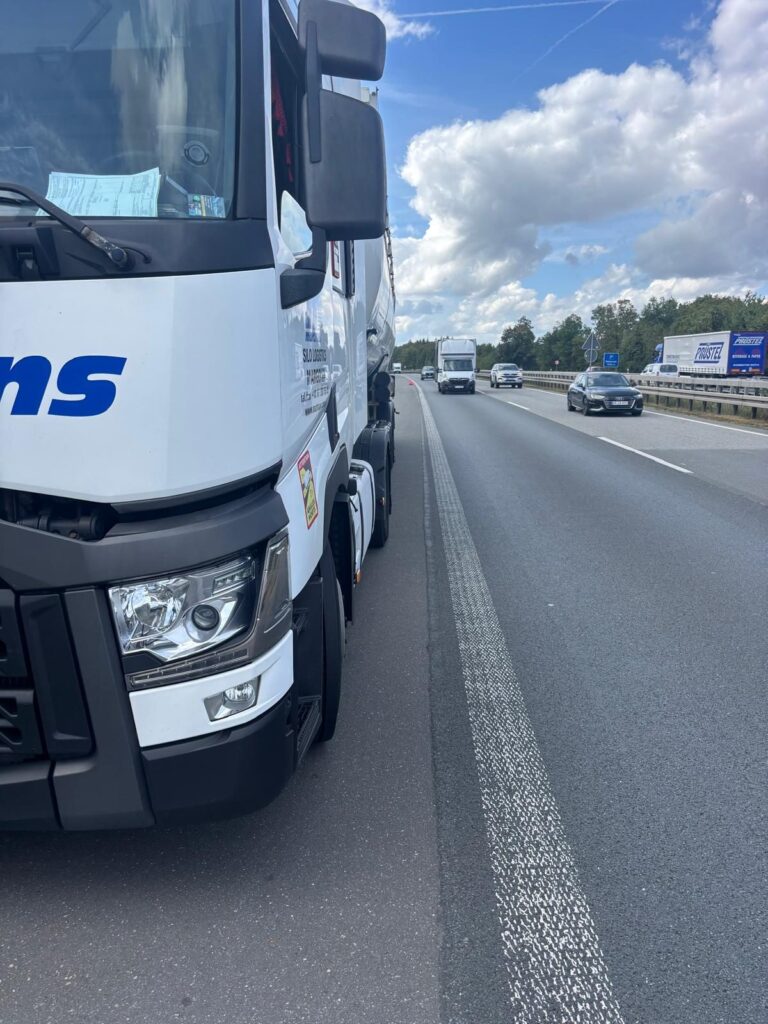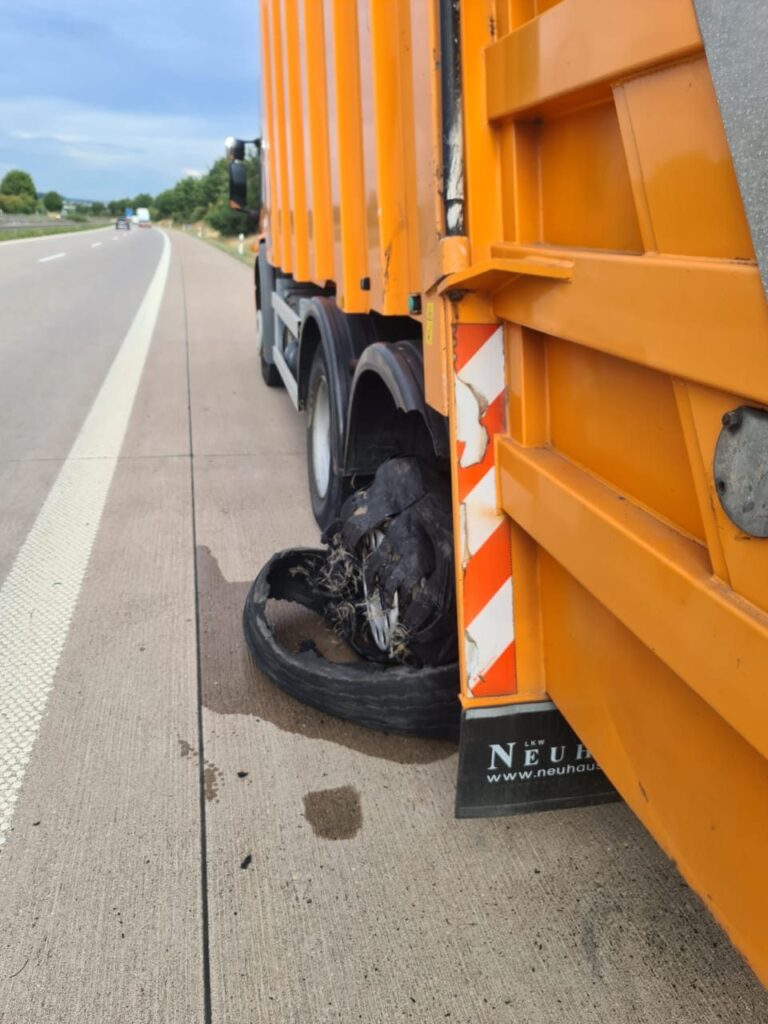
When a truck breaks down on the motorway or a country road with an engine failure, a gearbox fault or a blown tyre, classic towing is almost never the answer – for commercial vehicles from 7.5 t upwards, what’s usually needed is proper recovery with an underlift or a crane. Anyone who still tries to pull it with a chain or a tow bar risks fines, a damaged air brake system or a wrecked propshaft.
This guide explains what to watch out for when towing trucks and commercial vehicles from 7.5 t: the German StVO road traffic rules, the technical specifics of articulated and drawbar combinations, and the right procedure if you break down as a professional driver. Cars, motorcycles and electric vehicles follow different rules and are only touched on briefly here – LKWHelp24 covers vehicles from 7.5 t only.
Table of Contents
- The essentials at a glance
- Towing or recovery: the difference for trucks
- What to do at a truck breakdown before towing
- StVO rules for towing commercial vehicles
- Technical basics: air brakes, propshaft, axle load and underlift
- Articulated trucks, drawbar combinations and trailers: special cases
- Cars, motorcycles and EVs: a short note
- How a recovery with LKWHelp24 works
- Checklist and FAQ
The essentials at a glance
Before you act as the driver of a truck or an articulated lorry, you should know these five points:
- Towing ≠ recovery: a truck from 7.5 t is rarely pulled with a rope for most faults – instead it’s recovered with an underlift, a crane or a low loader.
- Release the air brakes first: without releasing the spring-loaded parking brake, the wheels lock immediately – pulling the vehicle is then impossible or wrecks the brake system.
- Mind the propshaft: on all-wheel-drive vehicles or with the drive disengaged, the propshaft often has to be removed before towing, otherwise the gearbox can be damaged.
- StVO § 15a also applies to trucks: hazard lights, a maximum 5 m gap, a marked tow rope and the duty to leave the motorway at the next exit.
- Keep an eye on axle load: when recovering articulated or drawbar combinations, the permitted axle load of the towing vehicle must not be exceeded.
Towing or recovery: the difference for trucks
With a car, a tow rope to the nearest garage is often enough. With a truck or an articulated lorry, that only makes sense in exceptional cases – technically it’s usually a recovery with a transport to the truck workshop afterwards, not classic towing. The difference matters for both safety and liability:
- Towing: the vehicle is basically drivable and can still roll, only the drive is missing – a short distance to the workshop or a safe parking spot
- Recovery: the vehicle can’t roll, is at an angle, in a ditch or has blocked axles – this calls for an underlift, a crane or a low loader
- OK to do yourself: a short move on the hard shoulder with working steering and brakes, provided a second truck with enough pulling power is available
- Not OK to do yourself: any recovery with a crane or underlift, any move with blocked brakes or a damaged chassis, any operation on a closed motorway carriageway
For professional drivers the rule is simple: whenever a fault affects the steering, the brake system or the axles, a specialised truck towing and breakdown service is the right call. Responsibility for damage to the vehicle, the cargo or third parties lies with the owner and driver – an improper recovery attempt can lead to expensive follow-on damage and insurance trouble.
What to do at a truck breakdown before towing
A stranded truck often blocks more space than a car and is harder for other road users to judge. The correct sequence:
- Secure the vehicle: if possible, steer onto the hard shoulder or a lay-by, keep the steering wheel as straight as possible
- Switch on the hazard lights immediately, and side lights too in the dark
- Leave the vehicle on the side away from traffic and put on a hi-vis vest – mandatory for every occupant
- Get to a safe place: behind the crash barrier, well clear of the carriageway
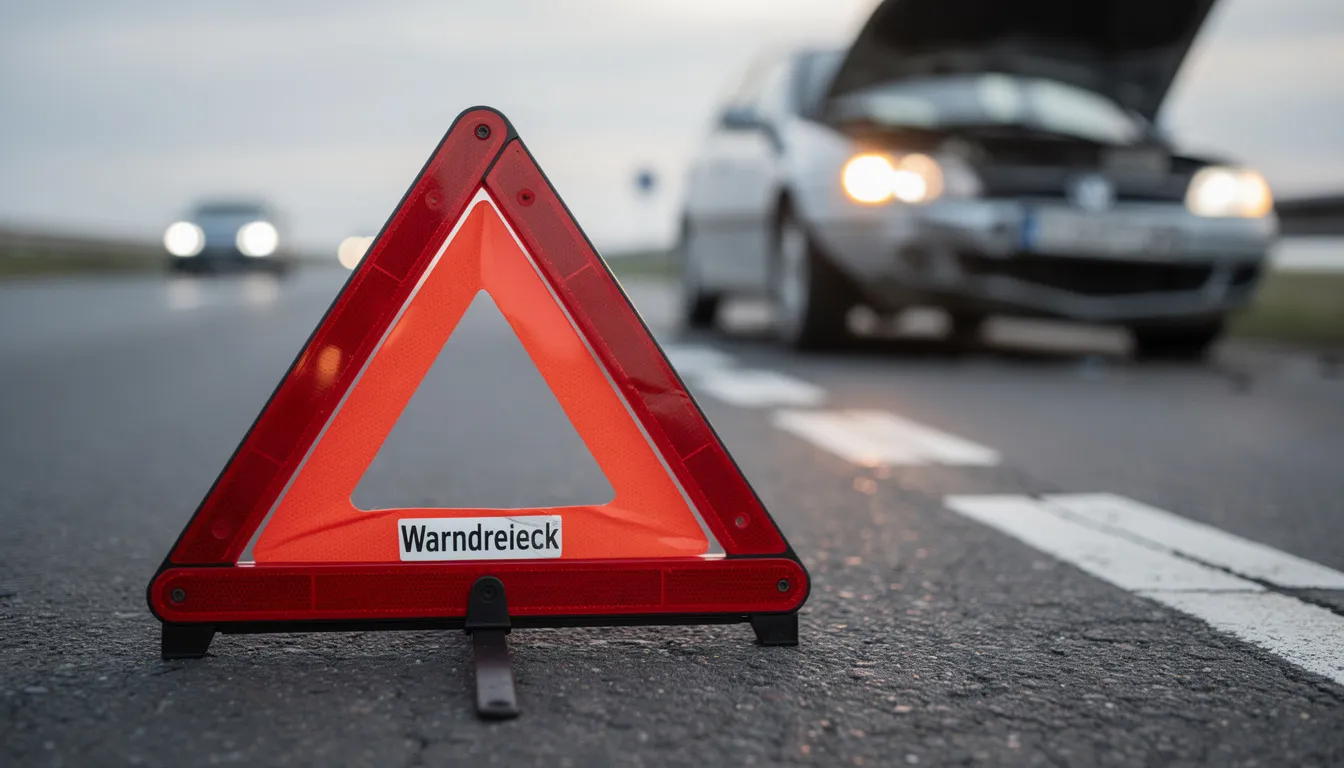
- Set up the warning triangle: about 50 m within built-up areas, about 100 m outside them, 150–200 m on the motorway – earlier still for a long combination
- Call the dispatcher or breakdown service and give the exact position, vehicle type and fault
Extra caution with a truck on the motorway
A stranded truck on the motorway is one of the most dangerous situations in road traffic, since following vehicles have less time to react. In addition to the general rules:
- If a lane is blocked, call the police immediately via 110 or an emergency phone
- Private towing on the motorway is only allowed to reach the next exit without delay
- If the carriageway is blocked, fluids have leaked or the cargo is damaged, only the police and professional recovery services may act
- Form an emergency corridor as soon as traffic slows – even if you are the one affected
StVO rules for towing commercial vehicles
The legal basis is § 15a of the German Road Traffic Regulations (StVO). It applies regardless of vehicle class to every private towing operation, including commercial vehicles and articulated lorries:
Rule | Requirement for trucks and commercial vehicles |
|---|---|
Permitted purpose | Only to the nearest workshop or a safe parking spot |
Maximum speed | Recommended max. 30–50 km/h, depending on the combination’s total weight |
Hazard lights | Switched on continuously on both vehicles |
Motorway | Entering with a defective vehicle is forbidden, the next exit is mandatory |
Axle load | Do not exceed the towing vehicle’s permitted axle load while recovering |
Brake system | The air brakes must be released properly before towing |
Rope, bar and marking for commercial vehicles
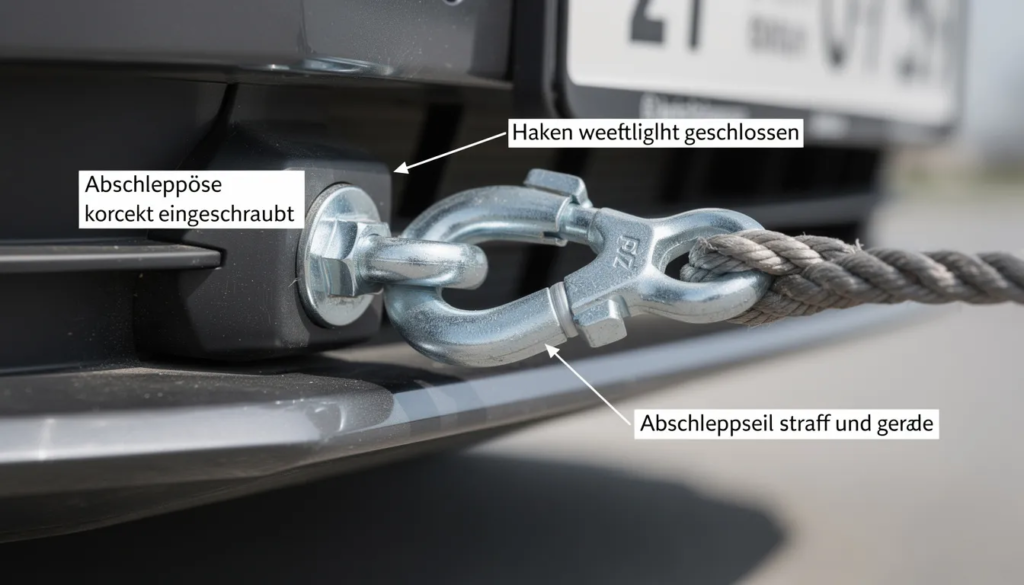
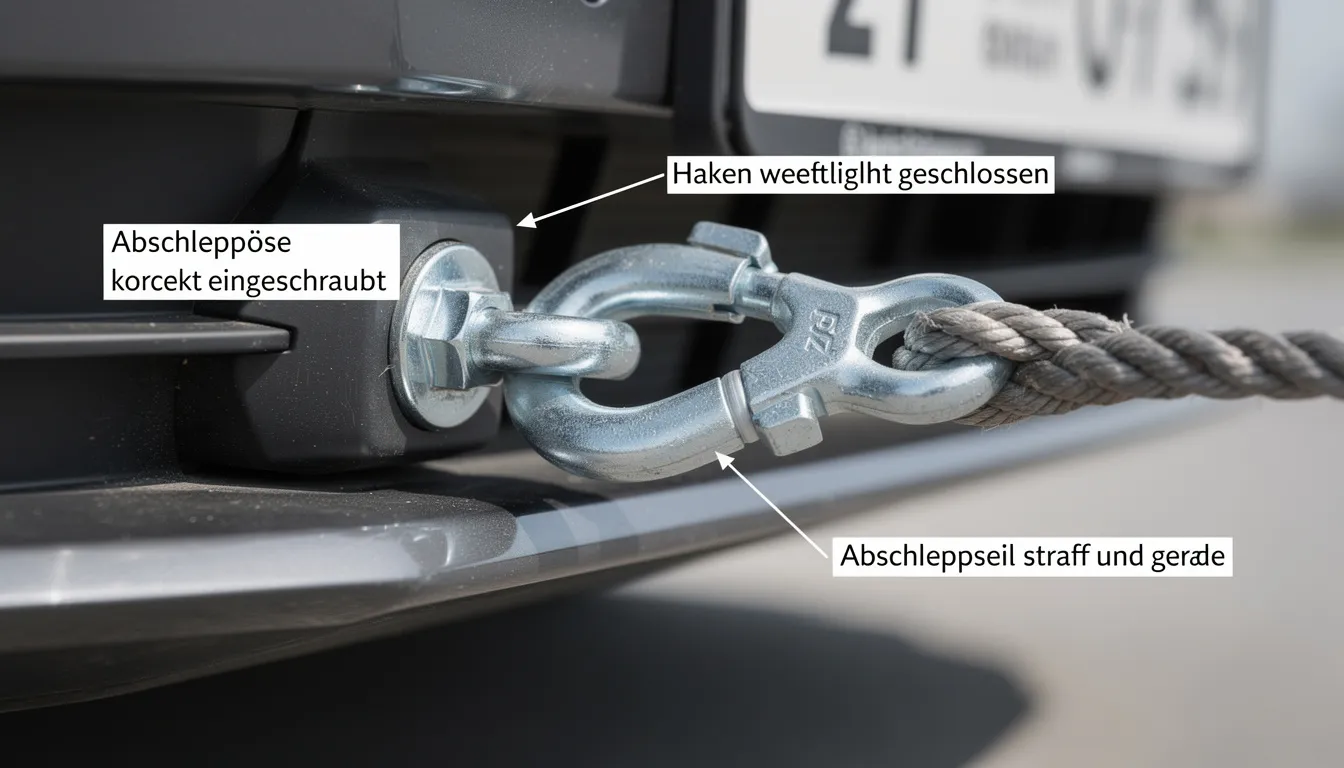
The same basic rules apply to the connection between the towing and the broken-down vehicle as for cars – only with much higher requirements for load capacity:
- Only approved tow ropes, bars or chains with sufficient capacity for the total weight are permitted
- The distance between the vehicles must not exceed 5 metres
- The rope or bar must be clearly marked, for example with a red cloth or a warning flag
- Use only the towing and recovery points on the chassis specified by the manufacturer
- For articulated lorries: secure the tractor and trailer as a unit via the kingpin area where possible, never via unapproved fittings
Fines and possible consequences for violations
Breaking the towing rules is especially serious for trucks because of the higher risk:
- €20 fine: for not leaving the motorway at the next exit while towing
- €20 fine: for entering the motorway with an already defective vehicle
- Much higher penalties and points: for accidents caused by overloaded axles, loose cargo or an improperly secured recovery
Insurers can reduce or refuse payouts after an improper DIY recovery – another reason to rely on a professional recovery service for trucks and articulated lorries.
Technical basics: air brakes, propshaft, axle load and underlift
Commercial vehicles differ fundamentally from cars in their technology. Overlooking these points risks expensive follow-on damage to the drivetrain or the brake system. Manufacturers such as MAN give exact guidance on towing and recovery points in their vehicle handbooks.
Releasing the air brakes:
- Trucks have a spring brake that engages automatically and locks the wheels if air pressure is lost
- Before any pulling or recovery operation, the parking brake must be released properly via the release valve on the spring brake actuator
- Without a properly released brake, the wheels drag, damaging tyres, brake drums and axles
Propshaft and drivetrain:
- On all-wheel-drive vehicles or vehicles with an engageable drive, the propshaft often has to be removed or disengaged
- Turning a gearbox with no oil supply risks irreparable damage to the drivetrain
- When in doubt: transport to the truck workshop on a low loader instead of pulling on a rope
Axle load and weight distribution:
- Recovering with an underlift shifts part of the weight onto the towing vehicle – the permitted axle load under § 32 StVZO must not be exceeded
- Loaded trucks may need partial unloading before recovery
- Only an experienced recovery service can correctly judge the permitted load of the recovery vehicle
Underlift and crane: if a truck is at an angle, in a ditch or has a blocked axle, an underlift that lifts the vehicle at the axle, or a crane that lifts it entirely, is used instead of a rope. Only a professional recovery service carries this equipment – private towing vehicles are not suited for it.
Articulated trucks, drawbar combinations and trailers: special cases
Recovery differs significantly depending on the vehicle’s configuration:
- Tractor unit with semi-trailer: if the tractor is faulty, the trailer can often be taken over by a second tractor instead of recovering the whole combination
- Drawbar combination (truck with trailer): treat the trailer and the motor vehicle separately – an axle lift is often enough for trailer axle damage instead of a full recovery
- Tipper trailer or tanker: the load and centre of gravity require extra securing before any movement
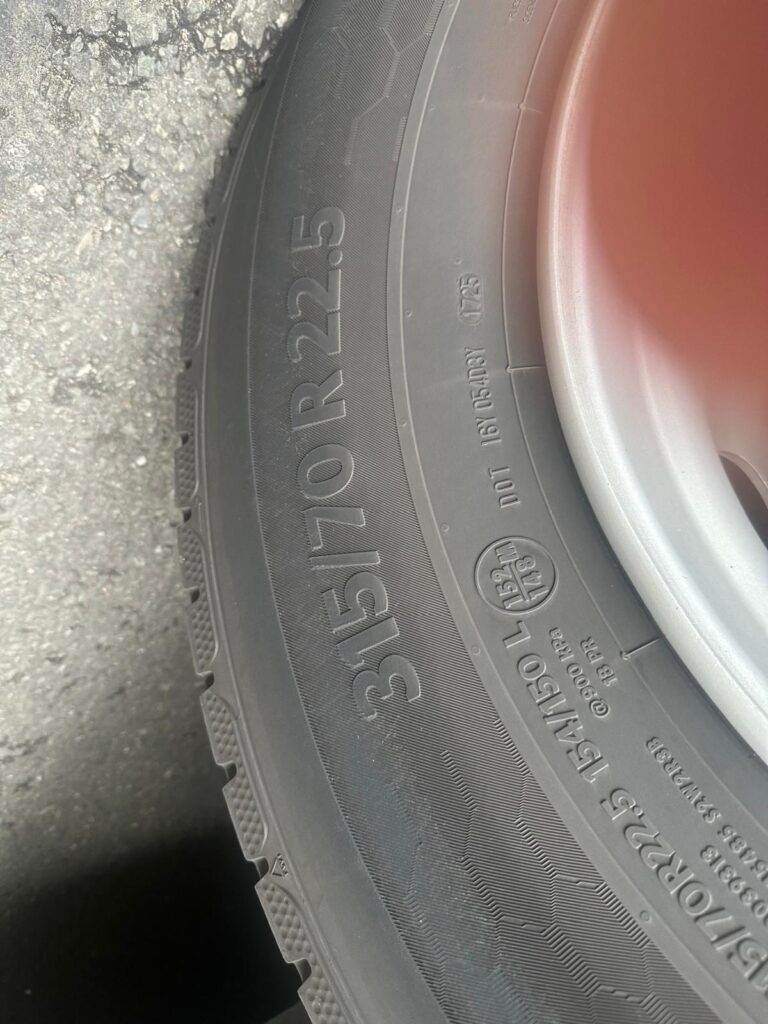
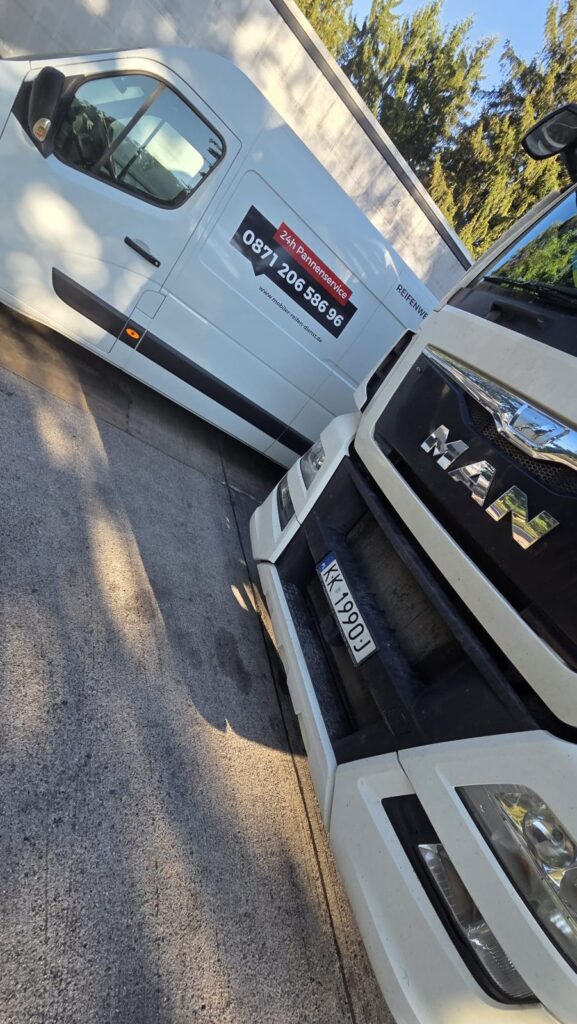
- Tyre damage on an articulated lorry: a mobile tyre change on site is often enough, without any towing at all
For a tyre fault right where you’ve broken down, the mobile truck tyre service can make towing unnecessary altogether.
Cars, motorcycles and EVs: a short note
The same StVO basics apply to cars (§ 15a), though with lower load capacity for the equipment. Motorcycles may not be towed with a rope or bar at all under § 15a (4) StVO and must be loaded onto a trailer or transporter. EVs and hybrids should generally only be moved on a vehicle transporter, never on a rope, because of their high-voltage systems. LKWHelp24 only helps trucks and commercial vehicles from 7.5 t – for cars, motorcycles, motorhomes and vans under 7.5 t, please contact a local breakdown or towing service for that vehicle class.
How a recovery with LKWHelp24 works
As a nationwide dispatcher service for commercial vehicles from 7.5 t, LKWHelp24 coordinates a network of around 2,500 partner workshops across Germany, around the clock. Here’s how a typical job runs:
- Secure the vehicle (hazard lights, hi-vis vest, warning triangle) and call the police if the carriageway is blocked
- Contact LKWHelp24 by phone or WhatsApp and give the location as precisely as possible (motorway kilometre marker, exit or GPS coordinates)
- State the vehicle type (solo truck, articulated lorry, drawbar combination), total weight and the type of fault
- The dispatcher assigns the right partner from the network – depending on the region and traffic, help usually arrives within 30–90 minutes
- On site, the partner workshop decides whether a tyre change, an underlift recovery or transport on a low loader is needed
Around 90% of cases are resolved right on site without a complicated recovery operation. Recovery costs depend on several factors:
Factor | Effect on recovery costs |
|---|---|
Distance | The longer the trip, the higher the cost |
Time of day | Surcharges at night, on weekends and public holidays |
Effort | Crane recovery or difficult terrain costs more than a simple tow |
Vehicle type | Articulated or drawbar combinations usually need more equipment than a solo truck |
Payment on site is by cash or card; for hauliers and companies, partner workshops issue regular invoices.
Checklist: when a truck driver should not act alone
In these situations, never tow or recover the vehicle yourself – call a professional service instead:
- ❌ The air brakes can’t be released safely
- ❌ An axle is blocked, bent, or the vehicle is at an angle
- ❌ It’s an articulated lorry, a drawbar combination or a vehicle carrying dangerous goods
- ❌ The breakdown happens on the motorway or in confusing terrain
- ❌ No second commercial vehicle with enough pulling power and a suitable coupling is available
- ❌ You’re not sure whether the drive, propshaft or brake are cleared for towing according to the vehicle handbook – when in doubt, get it checked by DEKRA
FAQ
Can I tow a truck with another truck? Yes, for a genuine breakdown over a short distance, if both vehicles are roadworthy, the brake has been properly released and the StVO rules are followed. With blocked axles or on the motorway, a professional recovery is safer.
How fast can a truck towing combination drive? Depending on the combined weight and the road, 30–50 km/h is recommended – never faster than you can safely control.
Why do the air brakes need to be released? A truck’s spring brake engages automatically and locks the wheels if air pressure is lost. Without releasing it properly via the release valve, the tyres drag and the brake system gets damaged.
What happens if the axle load is exceeded during recovery? It can damage the recovery vehicle, lead to fines, and cause insurance problems in the event of an accident. An experienced recovery service calculates the permitted load in advance.
How fast does LKWHelp24 arrive? Usually within 30–90 minutes, depending on location and traffic, thanks to a nationwide network of around 2,500 partner workshops.
Can an articulated lorry be recovered separately? Yes, often only the faulty tractor is recovered while a second tractor takes over the trailer – this saves time and money.
Bottom line: truck recovery is a job for specialists
What to watch out for when towing depends heavily on the technology for commercial vehicles from 7.5 t: air brakes, propshaft, axle load and the choice between towing and recovery with an underlift or a crane decide safety and cost. The basic StVO rules – hazard lights, a maximum 5-metre gap, the next exit on the motorway – apply just as they do for cars, but for trucks they’re not enough on their own.
When in doubt, every professional driver should rather call the 24/7 truck breakdown service a little too early than attempt a risky DIY recovery. Reach LKWHelp24 around the clock by phone and WhatsApp on +49 160 575 3826 – with a nationwide network of around 2,500 partner workshops and an average response time of 30–90 minutes.