Skip to content
In short: at 23:05 a driver called us from a car park on the A17 near Pirna, direction Dresden and Prague. The tread on one trailer tyre had gone wavy and the shoulder was starting to bulge. Our dispatch team sent a mobile crew from our partner network, the crew arrived at 00:15, and at 01:25 the tanker trailer was back on the road. Total bill: 940 EUR net, with a fresh 385/65 R22.5 on the axle and no blowout, no tow and no lost shift.
Why a worn trailer tyre at night is a problem you cannot ignore
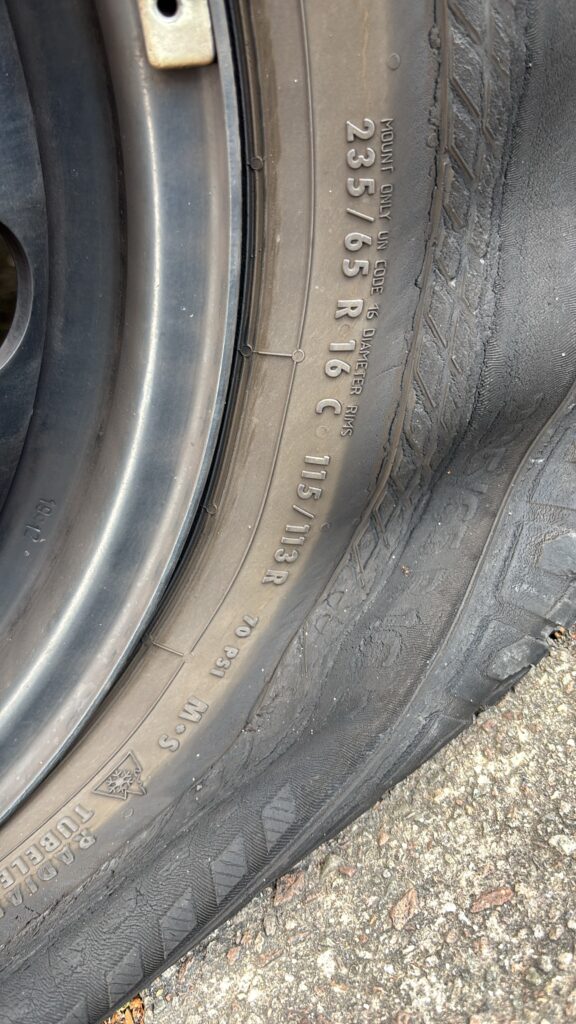
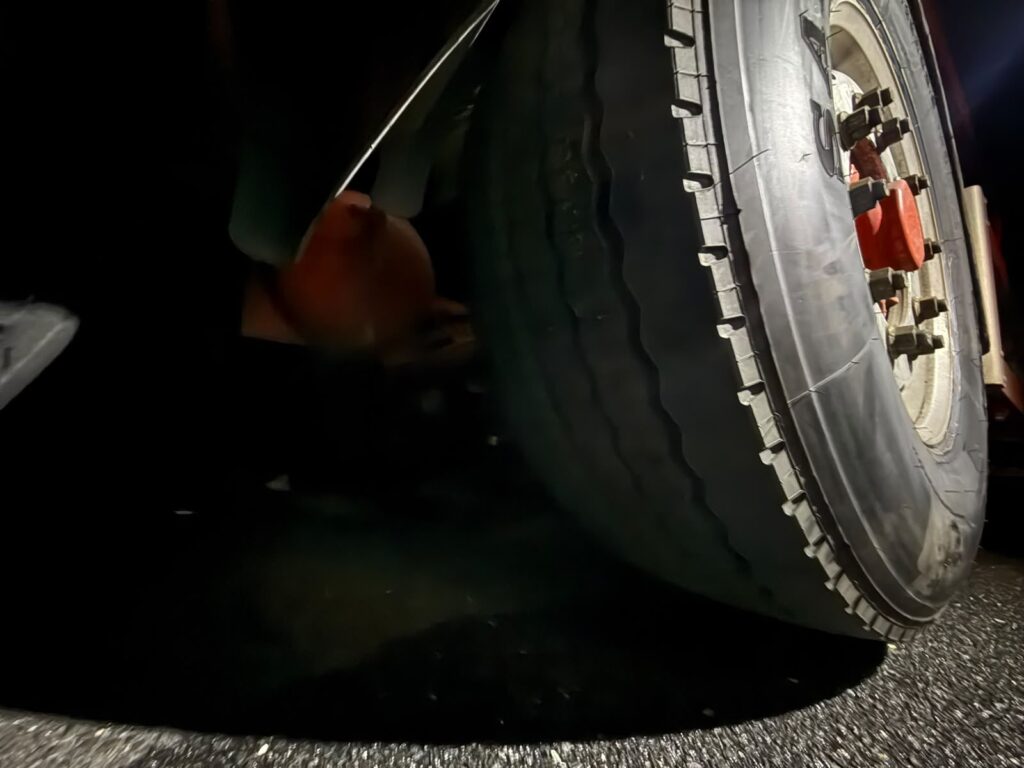
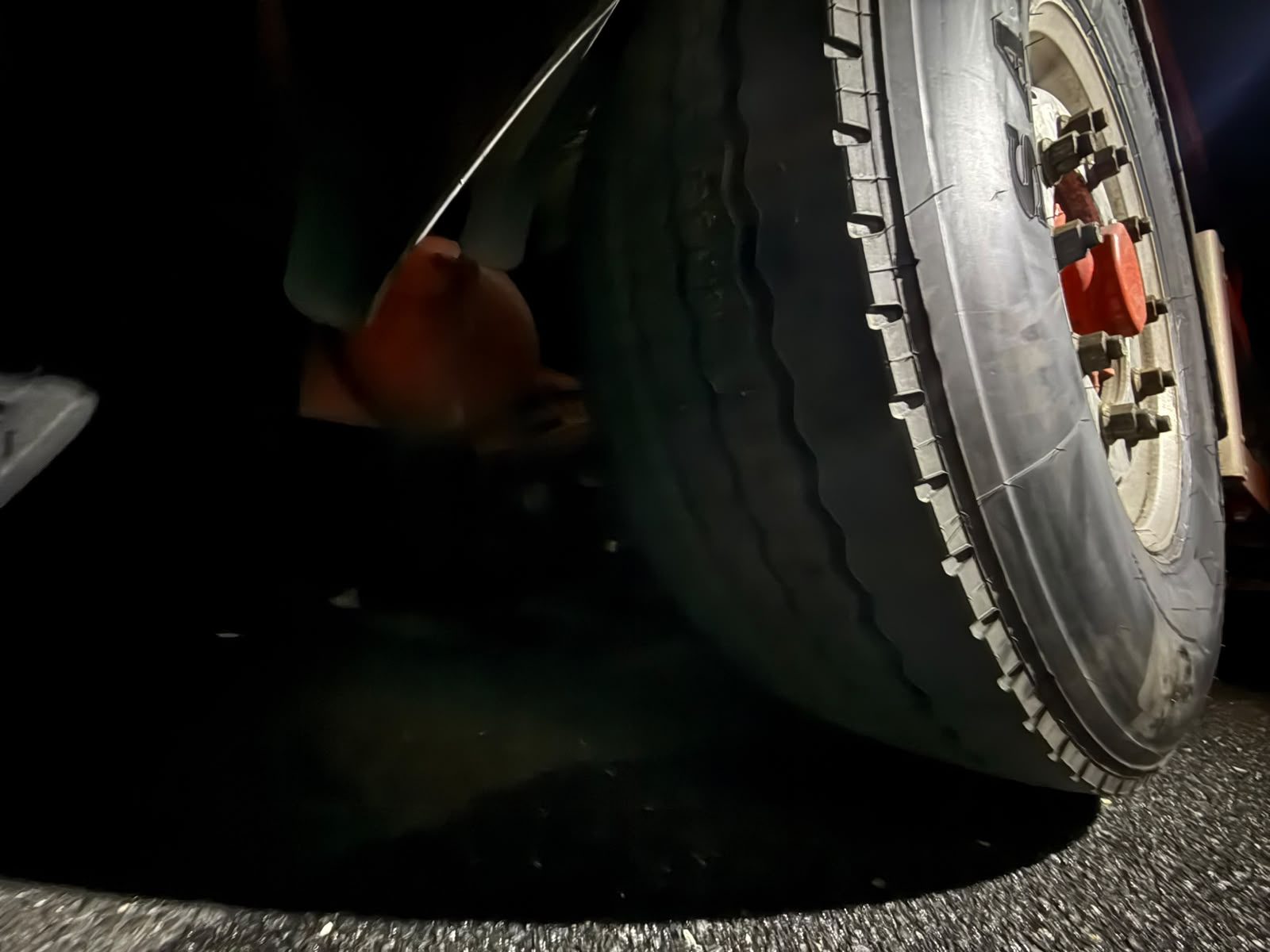
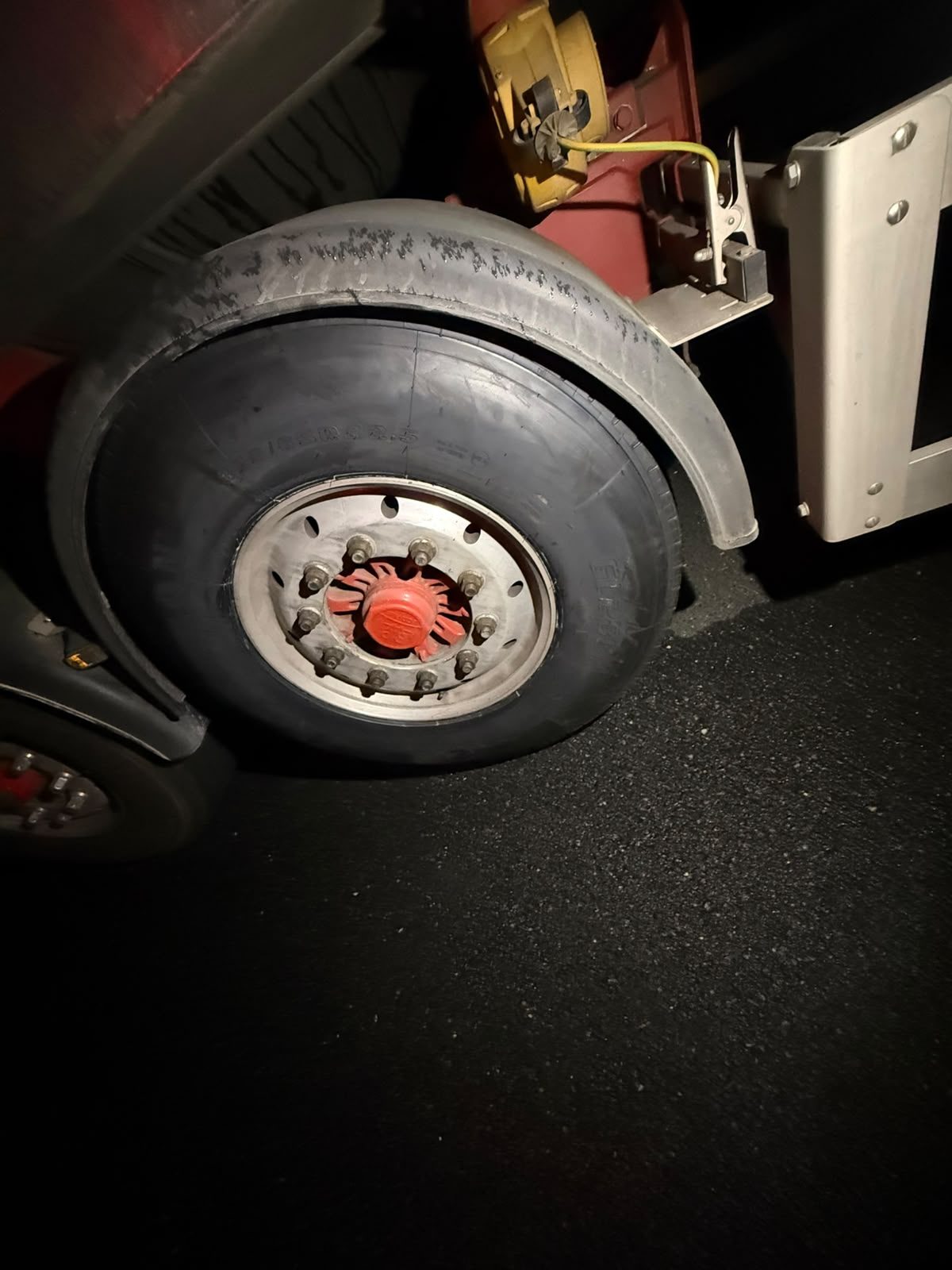
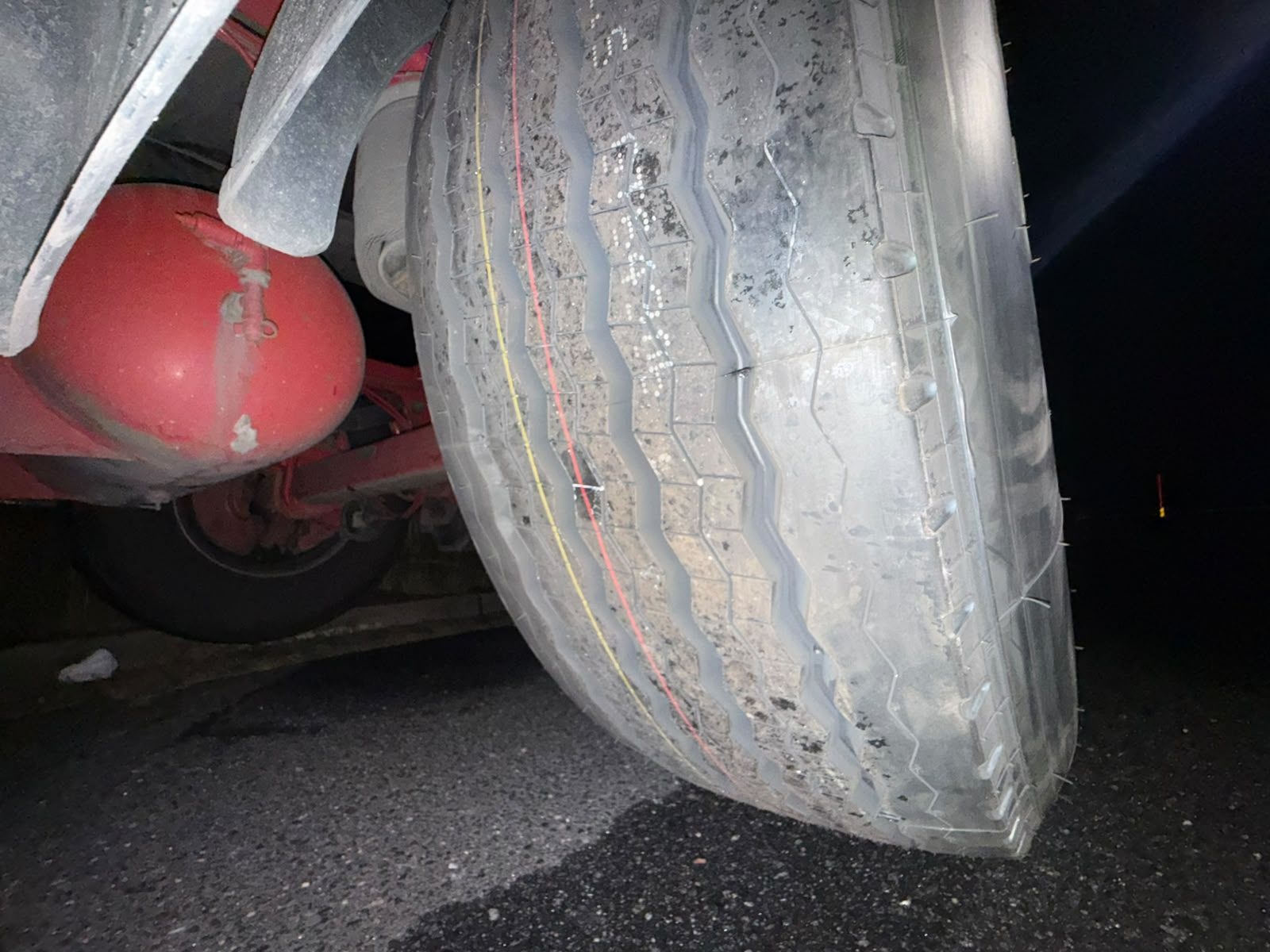
Truck tyre service is usually pictured as a roadside scene with smoke, a shredded casing and a hazard triangle. This case was quieter, and that is what makes it worth writing up. The tyre had not burst yet. The driver of a Czech-registered tanker semi-trailer, pulled by a Scania tractor unit, noticed on his evening walk-round that the tread on one trailer wheel looked wrong. The surface was rippled, the shoulder was jagged and there was a visible swelling along the edge of the running surface.
A tyre in that state can hold for another 50 kilometres or let go in the next five. On a tanker, the second option is the one nobody wants. A tread separation at motorway speed can tear off the wheel arch trim, damage the brake lines running along the axle and throw rubber into the lane behind. With a loaded tank, the swing of the trailer after a sudden loss of pressure is also harder to catch than with an empty curtainsider.
The driver did the sensible thing. He stopped at the first car park, did not try to “just make it to the border” and phoned us. That decision turned a potential recovery job into a planned truck tyre replacement of under a thousand euros. If you run a fleet in Germany, this is the pattern to copy: stop early, describe what you see, let a specialist decide.
Below we walk through the call, the dispatch, the repair at the car park and the invoice, line by line. We also explain how to recognise wavy wear, which pressure and torque values apply to a 22.5-inch trailer wheel, and which questions drivers ask us most often.
The emergency: what the driver saw on the A17
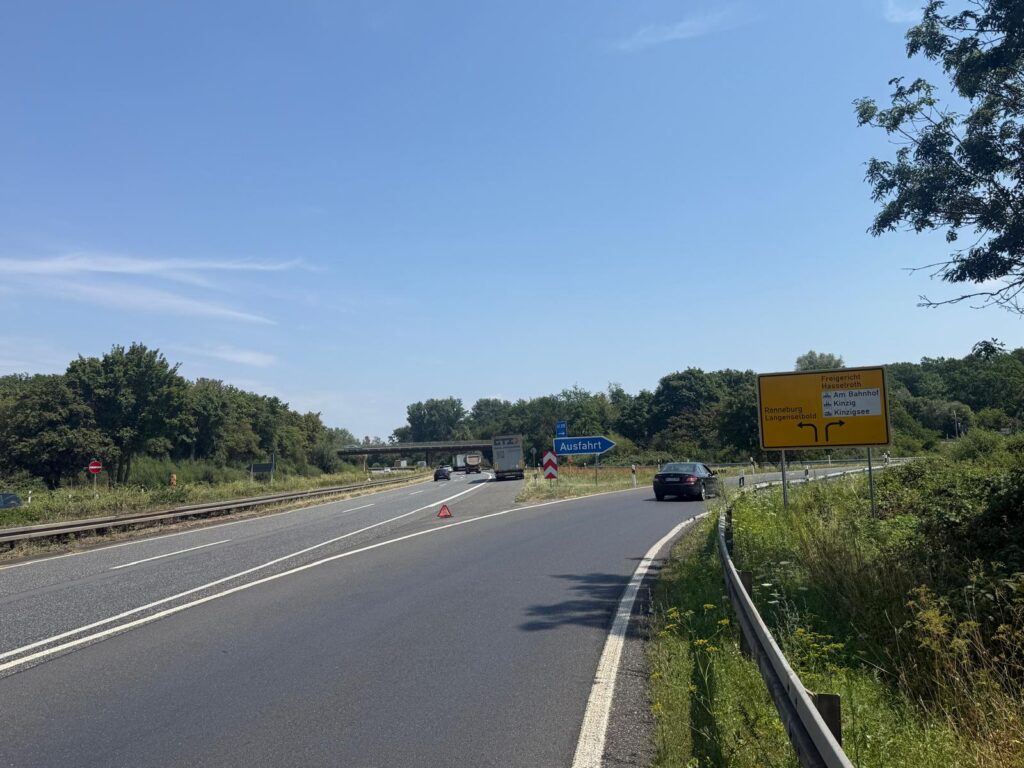
The A17 runs from the Dresden ring road south-east towards the Czech border at Bahratal, where it becomes the D8 towards Prague. It carries a steady stream of lorries, many of them on international runs. Around Pirna the road climbs and drops through the Elbe valley, and plenty of drivers use the car parks along it to rest or to sort out small problems before the border.
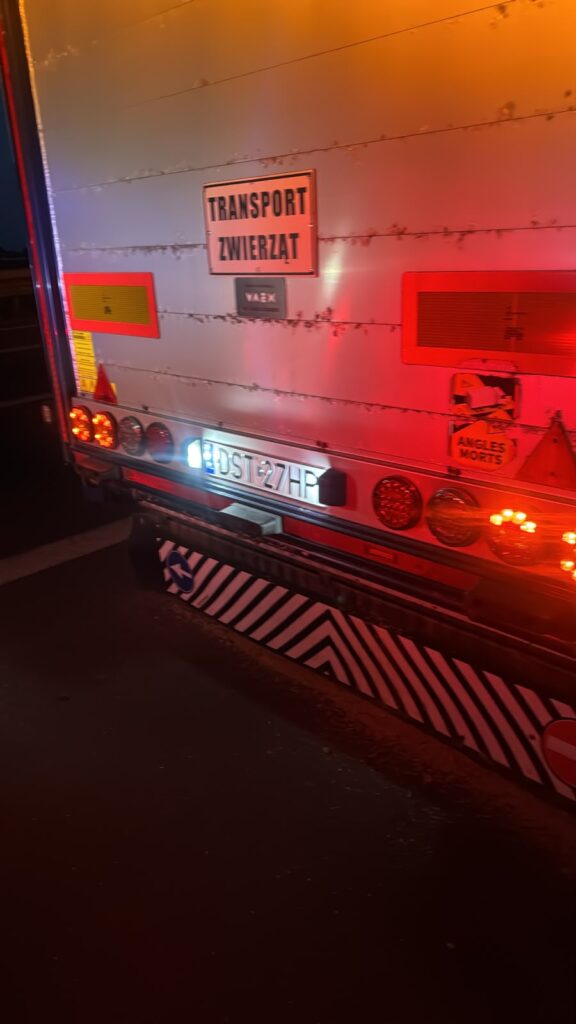
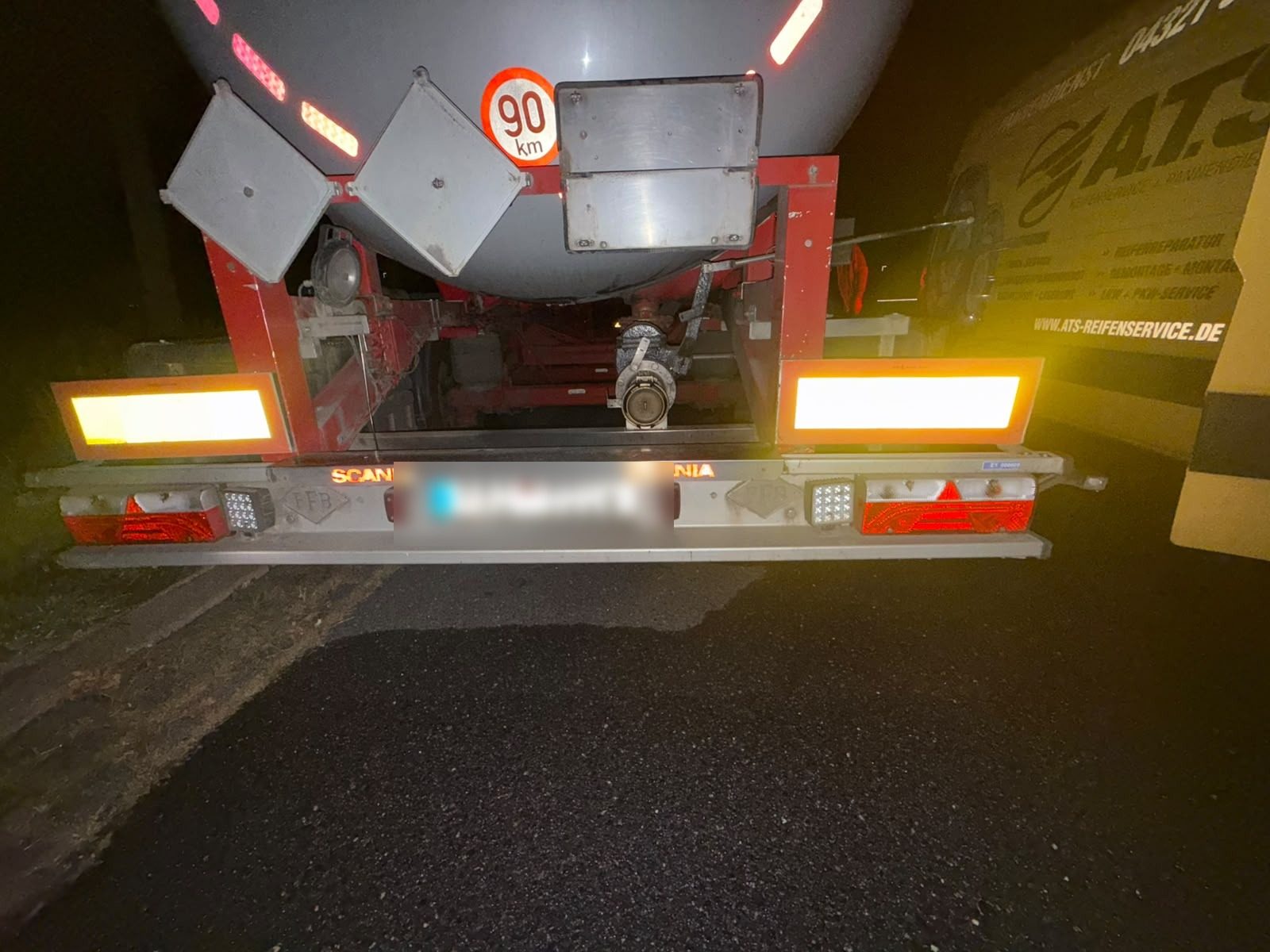
The vehicle in this case was a three-axle tanker semi-trailer: grey tank body, red chassis, orange marker boards, a 90 km/h sticker on the rear and a bottom discharge valve at the back. The tractor unit was a Scania. Ten wheel studs per hub, aluminium rims, red hub caps. On the trailer axles the driver was running 385/65 R22.5, the standard wide-base size for trailers across Europe. We leave out the owner, the registration and the driver’s name on purpose.
What the driver reported on the phone:
- Uneven, wave-like tread wear on one tyre of the trailer’s rear axle.
- A deformation along the shoulder, where the running surface meets the sidewall.
- Cuts and a jagged edge on that shoulder, plus a score mark in one groove.
- No loss of pressure yet, no noise, no vibration he could feel from the cab.
That last point matters. Many drivers wait for vibration before they call. Wavy wear and a shoulder bulge are often silent until the belt package starts to separate from the casing. By then, the tyre is a few kilometres from failure.
How we organised help: from call to crew in 15 minutes
Our dispatch desk works around the clock and in several languages, so the driver could describe the problem in his own language and we could ask the right follow-up questions straight away. For a truck tyre callout the first questions never change: where exactly are you, which axle and which position, what size is printed on the sidewall, is the vehicle loaded, and is the tyre still holding pressure?
Between 23:05 and 23:20 the following happened:
- We confirmed the location (car park on the A17 near Pirna, direction Dresden/Prague) and asked the driver to switch on his hazard lights and put out the warning triangle.
- We established the size as 385/65 R22.5, rear trailer axle, and checked that the tyre was not leaking yet.
- We asked about the load. The tank was full, so any jacking had to happen on firm ground with a heavy-duty jack.
- We called a mobile crew from our partner network in the region and passed on the size, the axle position and the exact stopping point.
- We told the driver what to expect: arrival in roughly an hour, a night surcharge on the call-out and a full price before any work started.
The crew confirmed at 23:20. They loaded a new 385/65 R22.5, a trolley jack rated for a loaded axle, a torque wrench and a portable compressor, then set off. If you want to know how our mobile network is organised in general, the page on mobile truck service across Germany explains it in more detail.
The situation at the car park: why the tyre had to come off
A tyre with rippled wear and a shoulder deformation has to be replaced, not repaired. Wave-like wear usually points to an axle that is out of alignment, a worn component or a tyre that ran under-inflated for a long time. The deformation at the shoulder means the internal structure has been damaged, and no patch or plug fixes that.
Truck tyres on a trailer axle run at high pressure. For 385/65 R22.5 the working range is typically 8.5 to 9.0 bar when cold, depending on the load index and the axle load. At that pressure, a weakened casing does not simply go soft. It fails suddenly and with force. That is why we treat visible bulges as an emergency even when the gauge still shows the right number.
When the crew arrived at 00:15, they checked these points first:
- tread pattern and depth across the whole width, not only at the visible damage;
- shoulder condition on both sides of the tyre;
- sidewalls for cuts, cracks and bulges;
- valve and valve cap;
- hub, hub cap and wheel nuts, in case the problem started with the wheel end;
- the neighbouring tyre on the same axle, which carries the load if the other fails.
Dry asphalt and a calm night helped. The crew did not have to fight rain, wind or ice, which would have added at least 20 minutes. The car park surface was flat and hard enough for the jack. Without that, they would have used load-spreading plates under it.
Any tyre with a defect like this also has to be considered against the legal minimum. Under § 36 StVZO, tyres must be suitable for the vehicle and in a safe condition, and there are clear limits on tread depth. A visibly deformed tyre does not meet the requirement for safe condition, and police or BAG inspectors can stop a vehicle for exactly this.
Step-by-step: how the wheel was changed
The repair itself took 45 minutes, plus 15 minutes for the inspection beforehand and 10 minutes for the final check. This is the sequence, as the crew did it. It is also a good reference for any truck wheel change done by drivers who carry the right tools.
Step 1: Inspection (00:15 to 00:30)
The technician read the DOT code, compared the size on the sidewall with what we had been told, checked pressure on all tyres of the rear axle and looked at the wheel end. The decision came quickly: the damaged tyre goes, the rest of the axle is fine. This is also the moment when we explain the price to the driver once more, so that nothing comes as a surprise later.
Step 2: Securing the area
The tanker was parked in a marked bay, but it was dark. The crew placed a warning triangle behind the trailer, switched on the amber beacon on their service vehicle and chocked the wheels on the opposite axle. The tractor unit’s parking brake was applied and the trailer brake released only when the technician asked for it. On a loaded vehicle, chocks are not optional.
Step 3: Removing the wheel
The technician loosened the ten wheel nuts with an impact wrench, one turn only, then raised the axle with the jack until the tyre cleared the ground. After that, nuts off, wheel off. The hub cap and hub surface were cleaned and checked for rust, cracks and damaged studs. Everything was clean.
Step 4: Mounting the new tyre
The old tyre came off the aluminium rim on the portable tyre changer. The crew inspected the rim bead seats, replaced the valve and fitted a new 385/65 R22.5 tyre. Then they balanced the wheel. Balancing matters on a trailer axle more than most drivers think: an unbalanced wheel can cause uneven wear again within a few thousand kilometres.
Step 5: Final check (01:15 to 01:25)
The wheel went back on the hub, and the nuts were tightened in a star pattern with a torque wrench in two or three stages, to the value given by the axle manufacturer. For typical 22.5-inch trailer axles this is in the region of 600 to 650 Nm, but the right number always comes from the axle documentation. Pressure was set to 8.5 to 9.0 bar, valve caps went on, and the technician checked the neighbouring tyres once more. If you want the full table and procedure, read our guide to truck wheel nut torque.
The full timeline: 140 minutes from call to departure
| Time | Phase | Action |
|---|---|---|
| 23:05 | Call | Driver reports wavy wear and tread deformation on a trailer axle, no longer wants to drive on |
| 23:05–23:20 | Dispatch (15 min) | Size, axle and position confirmed, regional partner crew called out |
| 23:20–00:15 | Arrival (55 min) | Night drive on the A17, crew carries a 385/65 R22.5 and a heavy-duty jack |
| 00:15–00:30 | Inspection (15 min) | Axle tyres, pressure, sidewalls and wheel end checked; decision to replace the damaged tyre |
| 00:30–01:15 | Repair (45 min) | Area secured, wheel removed, new tyre fitted, balanced, wheel refitted |
| 01:15–01:25 | Final check (10 min) | Nuts torqued in a star pattern, pressure 8.5–9.0 bar, neighbouring tyres checked |
| 01:25 | Done | Tanker continues its trip, 140 minutes in total |
Of those 140 minutes, only 45 were spent on the actual repair. The rest was distance and checking. That ratio is typical: on a motorway, the travel time of the crew is the largest single block, which is why a dense network of partners matters more than a fast jack.
What did it cost? A transparent invoice
A night-time truck tyre replacement on the A17 cost 940 EUR net in this case. All amounts below are excluding VAT (zzgl. MwSt.).
| Item | Price (EUR) |
|---|---|
| Call-out (Anfahrt), night, with surcharge | 290 |
| Labour: 1.5 h x 120 EUR/h | 180 |
| Tyre 385/65 R22.5 (trailer axle) | 450 |
| Disposal of the old tyre | 20 |
| TOTAL | 940 |
What drives the price of a mobile tyre job
Four things move the final figure. The first is distance: the call-out depends on how far the crew has to drive, and night or weekend work adds between 25 and 50 per cent. The second is the tyre itself. A 385/65 R22.5 for a trailer axle typically costs between 420 and 540 EUR, a drive-axle tyre in 315/80 R22.5 costs between 480 and 620. The third is labour, usually 90 to 140 EUR per hour. The fourth is anything unexpected, such as a damaged rim or a seized nut, which can add time and parts.
Compared with the alternative
The cheaper-looking option is to keep driving and hope. If the tyre had burst on the A17, the bill would have been very different: a tow or a recovery crane (850 to 1,600 EUR depending on distance), a roadside tyre change on top, possible damage to the tank, mudguards and brake lines, and a standing day. A parked tanker costs roughly 800 to 1,200 EUR per day in lost turnover. Even a single lost day wipes out the saving.
A planned stop at 23:05 cost 940 EUR and about two and a half hours. An unplanned one could easily have cost three times that and a delayed delivery on top.
Why a professional should handle this job
Some drivers carry a jack and a wheel brace and are tempted to do it themselves. On a 22.5-inch wheel, that is a bad idea, and the reasons are practical rather than legal:
- A 385/65 R22.5 tyre with rim weighs in the region of 80 kg, and a loaded trailer axle weighs several tonnes. A standard bottle jack is not designed for that.
- Wheel nuts at 600+ Nm cannot be loosened or tightened properly with a hand wrench.
- Without a tyre changer, you cannot get a tyre off an aluminium rim without scratching the bead seat.
- Without a balancer, the new tyre may vibrate and wear unevenly.
- Without a calibrated torque wrench, a wheel can work loose within a few hundred kilometres.
- Doing it alone at night on a car park is a real injury risk, and your insurer may ask questions afterwards.
For a trailer with ten studs per hub, the star-pattern tightening sequence also matters. Tightening nuts in circular order warps the wheel against the hub and can lead to cracked studs.
If you want to know what is possible on site and what is better done in a workshop, our overview of the truck workshop service shows where mobile work ends and the garage begins.
Typical situations where we are called out in Germany
This case was a planned replacement, but we handle everything on the spectrum between a worn tyre and a full blowout. Typical truck tyre breakdown service jobs include:
- a truck tyre blowout on the autobahn, often with damage to the wheel arch and air lines;
- a slow puncture from a screw, nail or stone in the tread;
- sidewall damage after hitting a kerb at a loading dock;
- cracked or bent rims after pothole damage;
- seized or damaged wheel nuts and studs;
- tyres worn unevenly on a drive axle after a faulty alignment;
- seasonal changes for a fleet, either at a yard or on a private site;
- full pre-trip inspections before long-haul runs to Scandinavia, Italy or the Balkans.
We also support bus and coach operators, tippers, livestock lorries and car transporters. The principle is the same: dispatch collects the facts, a nearby crew drives out with the right tyre size and the work is done on the spot, wherever there is flat ground. Our tyre service page lists the types of vehicles and sizes we handle.
Prevention: how to spot a problem before it costs money
The tanker driver in this case did one thing that many do not: he walked around his vehicle before the night stage of his run. That habit saves money. Here is a short checklist for drivers and fleet managers.
- Look at every tyre at every stop. A glance takes ten seconds. Wavy wear, bulges, cuts and embedded stones are all visible without tools.
- Check pressure with a gauge, not by tapping. Under-inflation is the most common cause of premature wear and heat build-up. Our article on truck tyre pressure lists correct values and measuring tips.
- Measure tread depth regularly. The legal minimum for trucks is 1.6 mm, but most fleets replace steer tyres much earlier, at around 3 mm.
- Check alignment after any impact. A kerb strike or a pothole can throw an axle out of line without any visible damage.
- Rotate and match. Dual tyres on the same axle should have similar wear and diameter, otherwise one carries more load than the other.
- Keep records. Note the DOT date code, the fitting date and the mileage. Our guide on reading truck tyre markings explains what the numbers mean.
When wavy wear is a warning sign
Wave-like wear tells you something is wrong with the axle, not with the tyre. Possible causes include worn shock absorbers, a bent axle beam, worn hub bearings, a mismatch of tyre and rim, or repeated under-inflation. If you replace the tyre and ignore the cause, the new one will go the same way. Our crew in this case noted the wear pattern and advised the driver to have the alignment of the trailer axle checked at the next scheduled service. That is part of a proper job: fixing the tyre and naming the likely cause.
Fleet tyre service: brands, sizes and maintenance in practice
For fleets, the question is rarely “which tyre is best?” and almost always “which tyre fits our routes and our budget?” Premium brands such as Michelin, Continental, Goodyear and Bridgestone offer long casings that can be regrooved or retreaded, which lowers the cost per kilometre if the casing is looked after. Budget brands are cheaper to buy but may not be suitable for retreading, and often wear faster on a driven axle.
Tyre dimensions are standardised internationally. The European Tyre and Rim Technical Organisation publishes the norms behind designations such as 385/65 R22.5, and you can look up the details at ETRTO. In short: 385 is the section width in millimetres, 65 is the aspect ratio (height as a percentage of width), R stands for radial construction and 22.5 is the rim diameter in inches. The load index and speed symbol further along on the sidewall tell you the maximum load per tyre and the permitted top speed. For a longer explanation, see our article on the 385/65 R22.5 truck tyre size.
Here is a quick comparison of the common sizes we fit on German roads:
| Size | Typical use | Price range (EUR, net) |
|---|---|---|
| 385/65 R22.5 | Trailer axles, tankers, curtainsiders | 420–540 |
| 315/80 R22.5 | Drive and steer axles on tractor units | 480–620 |
| 245/70 R19.5 | Distribution trucks, medium rigids | 320–420 |
| 235/65 R16C | Vans and light commercial vehicles | 180–260 |
Good fleet maintenance goes beyond fitting new tyres. A reliable routine includes monthly pressure checks, a documented tread depth measurement every quarter, a visual inspection at each driver change, and a replacement plan based on mileage and wear pattern rather than waiting for failure. For trailers, it also means thinking about the axle: manufacturers such as BPW publish service intervals for hub bearings and brakes, and ignoring them shows up first in tyre wear. If you want to read more about axle systems, BPW publishes technical information for operators.
Why drivers and fleets choose Lkwhelp24
We built the service around one idea: a driver with a problem at night should reach a person who understands trucks, in his own language, within seconds. In practice that looks like this:
- 24/7 availability. Every day of the year, including nights, Sundays and bank holidays.
- A partner network across Germany. Crews are based in the regions, so the arrival time on a motorway is usually 35 to 70 minutes, not several hours.
- A price before the work starts. The driver hears the call-out, the labour rate and the tyre price, and agrees before the crew touches the vehicle.
- A multilingual dispatch desk. Drivers from Poland, the Czech Republic, Lithuania, Romania and elsewhere get help without a language barrier.
- One contact for everything. If a tyre job turns into a tow or a workshop visit, we arrange it. Our towing service handles the cases where a repair on site is not possible.
The truth about any mobile service is that it works only as well as its dispatch and its network. A brilliant technician who needs three hours to arrive is no use at 23:05 on a dark car park. That is why we spend most of our effort on the 15 minutes at the start of the timeline above.
Frequently asked questions
How much does a truck tyre change on the autobahn cost?
A mobile truck tyre change on a German motorway typically costs between 750 and 1,400 EUR net, including the call-out, labour, the tyre and disposal. In this case the invoice was 940 EUR net for a 385/65 R22.5 trailer tyre at night. Daytime work is cheaper, because the night surcharge of 25 to 50 per cent does not apply.
How long does it take until the crew arrives?
On a motorway, arrival usually takes 35 to 70 minutes after dispatch, which itself takes 10 to 20 minutes. At night, in heavy rain or in snow, expect more. In this case the crew needed 55 minutes. The whole job from the call to departure took 140 minutes.
Can a damaged truck tyre be repaired instead of replaced?
Small punctures in the central tread area can sometimes be repaired by a professional. Shoulder damage, sidewall cuts, bulges and deformed treads cannot. In those cases the casing is weakened, and only a replacement is safe. A tyre with wavy wear and a deformed shoulder, as in this case, always has to go. More detail is in our article on truck tyre repair.
What should I do if I notice a bulge on the road?
Slow down, put your hazard lights on, leave the road at the next safe place and call for help. Do not continue to the border or the next depot. A bulge means that the internal structure is failing, and it can fail without warning. Check the other tyres on the axle as well, because they carry extra load if one gives up.
Do you also fit tyres for vans and trailers?
Yes. We fit trailer tyres, truck tyres, van tyres in sizes such as 235/65 R16C, and tyres for coaches and tippers. A mobile trailer tyre service works the same way as a tractor unit job, only the size and the axle position differ. Tell the dispatcher the size on the sidewall and where on the vehicle the tyre sits.
Who pays for a roadside tyre change?
The vehicle owner or the carrier normally pays, sometimes through a fleet card or breakdown insurance. We issue a clear invoice with the call-out, labour and parts shown separately, so that your accounts department or insurer can process it without questions. Please check your own contract for details.
Summary: the key figures at a glance
| Item | Value |
|---|---|
| Vehicle | Tanker semi-trailer with Scania tractor unit |
| Tyre | 385/65 R22.5, trailer axle |
| Location | A17 near Pirna, direction Dresden/Prague, car park |
| Defect | Wavy wear, deformed shoulder, cuts in the tread |
| Reaction time | 15 minutes dispatch, 55 minutes drive |
| Repair time | 45 minutes, plus 25 minutes inspection and final check |
| Total time | 140 minutes (23:05 to 01:25) |
| Cost | 940 EUR net (excl. VAT) |
| Secondary damage | None: no blowout, no tow, no standing day |
Need help with your truck tyres?
If a tyre on your truck or trailer shows wavy wear, bulges or cuts, do not wait for the blowout. Call us, give the size and the position, and we send the nearest crew.
Phone: +49 160 5753826
Website: www.lkwhelp24.com
Round the clock, throughout Germany.
You can also find all contact options on our contacts page.
Keywords: truck tyre service | mobile truck tyre service | truck tyre replacement | truck tyre change | truck tyre callout | truck tyre breakdown service | truck tyre emergency | truck wheel change | trailer tyre service | trailer tyre replacement | truck tyre repair | truck tyre roadside assistance | truck tyre blowout | truck tyre Germany | mobile Reifenservice | A17 Pirna | 385/65 R22.5
Related articles
- Truck Tyre Pressure: Correct Values, How to Measure and Mobile Help
- 385 65R22.5 Truck Tyre: Understand the Size, Use It Right, Solve a Breakdown
- Truck Wheel Nut Torque: Table and Correct Mounting Procedure
- Truck Tyre Inspection After a Long Haul: Marburg Yard, 3 Aug 2026
- Truck Tyre Repair 2026: When It Works and When Only Replacement Will Do