Skip to content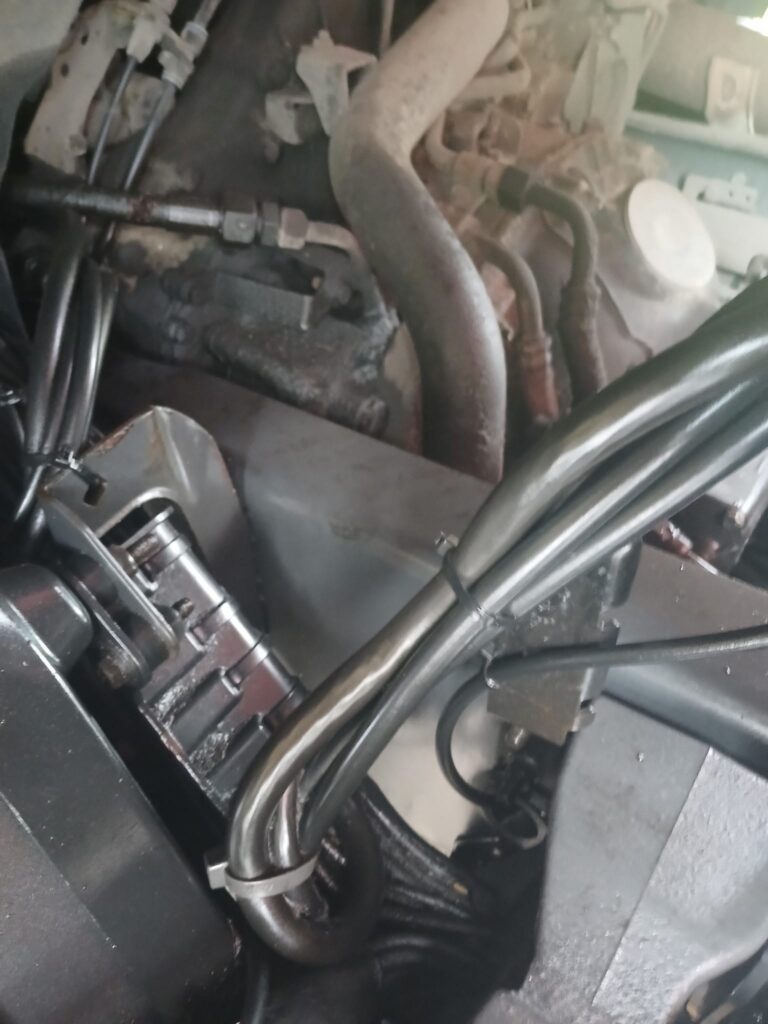
TL;DR: On 18 July, a tractor unit stopped just off the A33 near Paderborn with the clutch pedal sunk to the floor and no gears selectable. It wasn’t the clutch disc — the hydraulic actuation had failed. Our regional service partner replaced the slave cylinder on site and had the lorry rolling again in three hours and five minutes, for €885 net, instead of a multi-thousand-euro gearbox job.
Most roadside clutch calls get lumped into one category by drivers: “the clutch is gone.” It rarely means the same thing twice. Sometimes the friction disc has burnt out and needs a gearbox pulled in a workshop. Sometimes, like this case, the disc is fine and the problem sits entirely in the hydraulics that operate it. Telling the two apart on the phone, before a truck gets sent anywhere, is what keeps a repair bill in the hundreds rather than the thousands.
This case involved a semi-trailer tractor unit travelling the A33 corridor south of Paderborn on a warm July afternoon. No brand, no plate, no company name — just the fault, the fix, and the numbers, laid out as they actually happened.
The emergency situation
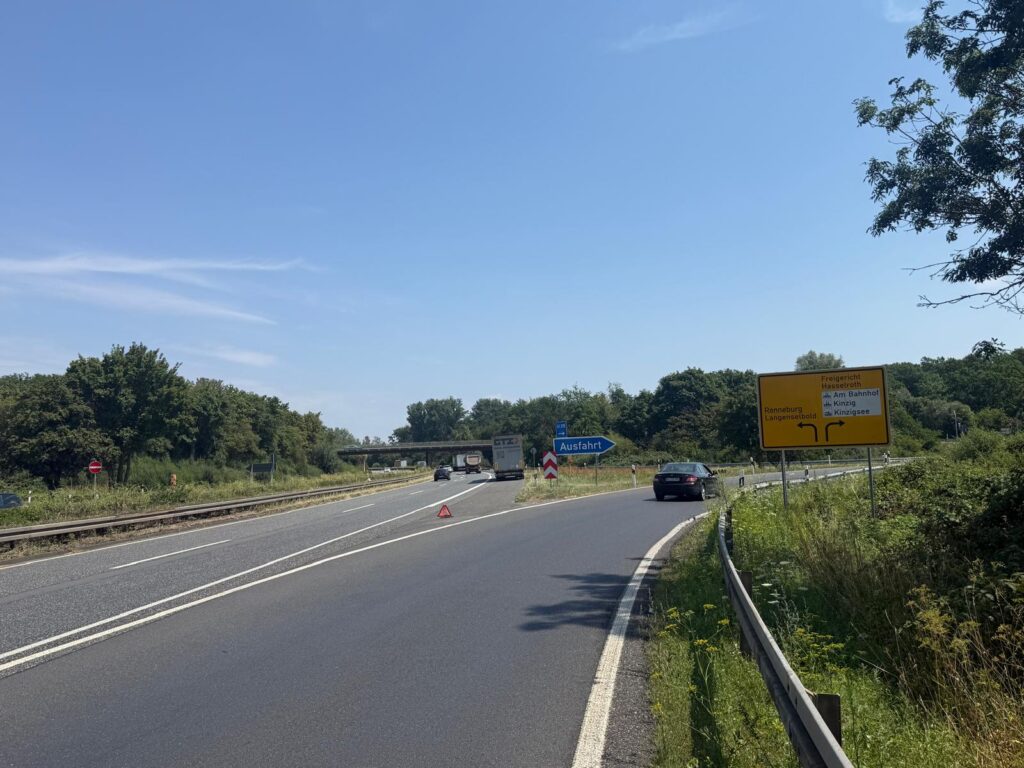
The driver had pulled off at a rest area just off the A33 south-west of Paderborn shortly after 11am. Traffic on that stretch was moving well, no roadworks that day, nothing dramatic — until he tried to pull away from a stop and the clutch pedal simply sank to the floor and stayed there. No resistance, no bite point, nothing. Gears wouldn’t engage at all; the lever moved but nothing meshed.
He described it accurately on the phone, which helped: no burning smell, no unusual noise from the gearbox, and — critically — the truck had not been slipping or losing power under load beforehand. It had gone from working normally to not engaging any gear within a single stop. That detail alone pointed away from a worn-out clutch disc and towards a hydraulic fault in the actuation system.
How help was organised
The call came in at 11:20. Dispatch ran through a short checklist with the driver before committing a technician:
- Confirm the pedal behaviour (floor-sinking vs. slipping under load)
- Ask about any smell of burning friction material — none reported
- Check for visible fluid loss around the gearbox bell housing — driver hadn’t looked closely but the area seemed dry
- Confirm the vehicle’s exact position for safe access off the A33
That combination — no smell, sudden total loss of gear engagement, pedal with no resistance — is close to a textbook actuation failure rather than a disc burnout. A technician was dispatched with a slave cylinder and clutch fluid already loaded, on the assumption that could be confirmed on site within minutes.
Situation on site
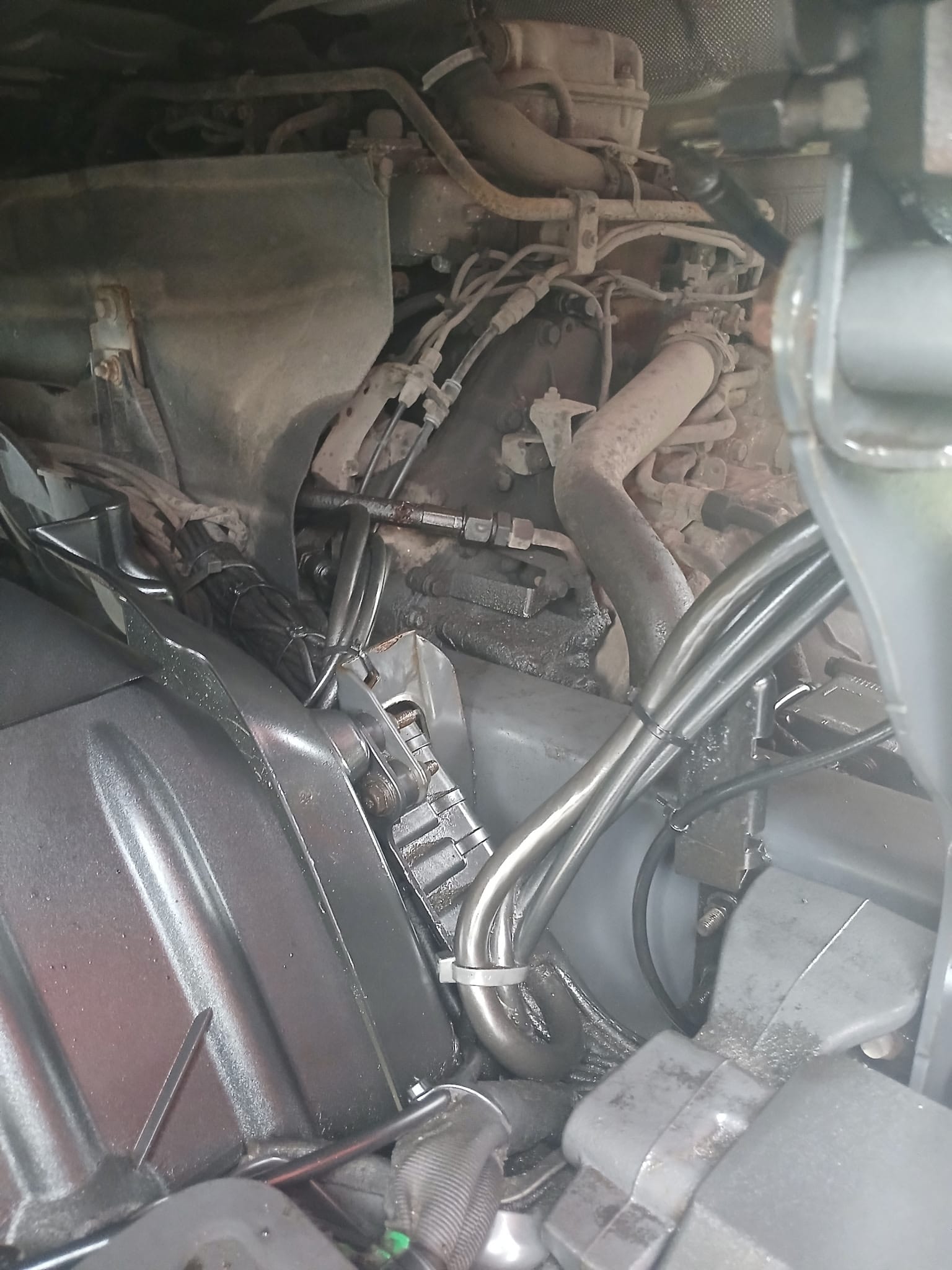
Truck clutch actuation on a modern tractor unit isn’t a single mechanical linkage the way it might be on an older lorry. It’s a hydraulic circuit: a master cylinder at the pedal converts pedal force into fluid pressure, that pressure travels through a line to a slave cylinder (often working through a concentric slave cylinder inside the bellhousing, or a release fork setup), and because the forces involved on a heavy vehicle are considerable, a pneumatic booster — fed from the truck’s own air system — amplifies that hydraulic signal so the driver isn’t fighting the full clutch spring load with their leg. ZF, which builds much of the driveline hardware on European trucks, and Knorr-Bremse, a major supplier of the pneumatic components involved, both document this layered design in their technical literature.
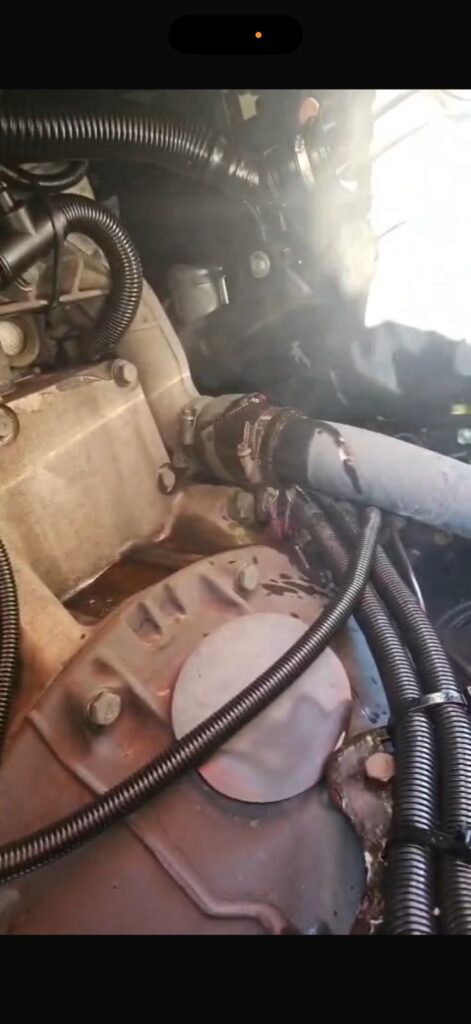
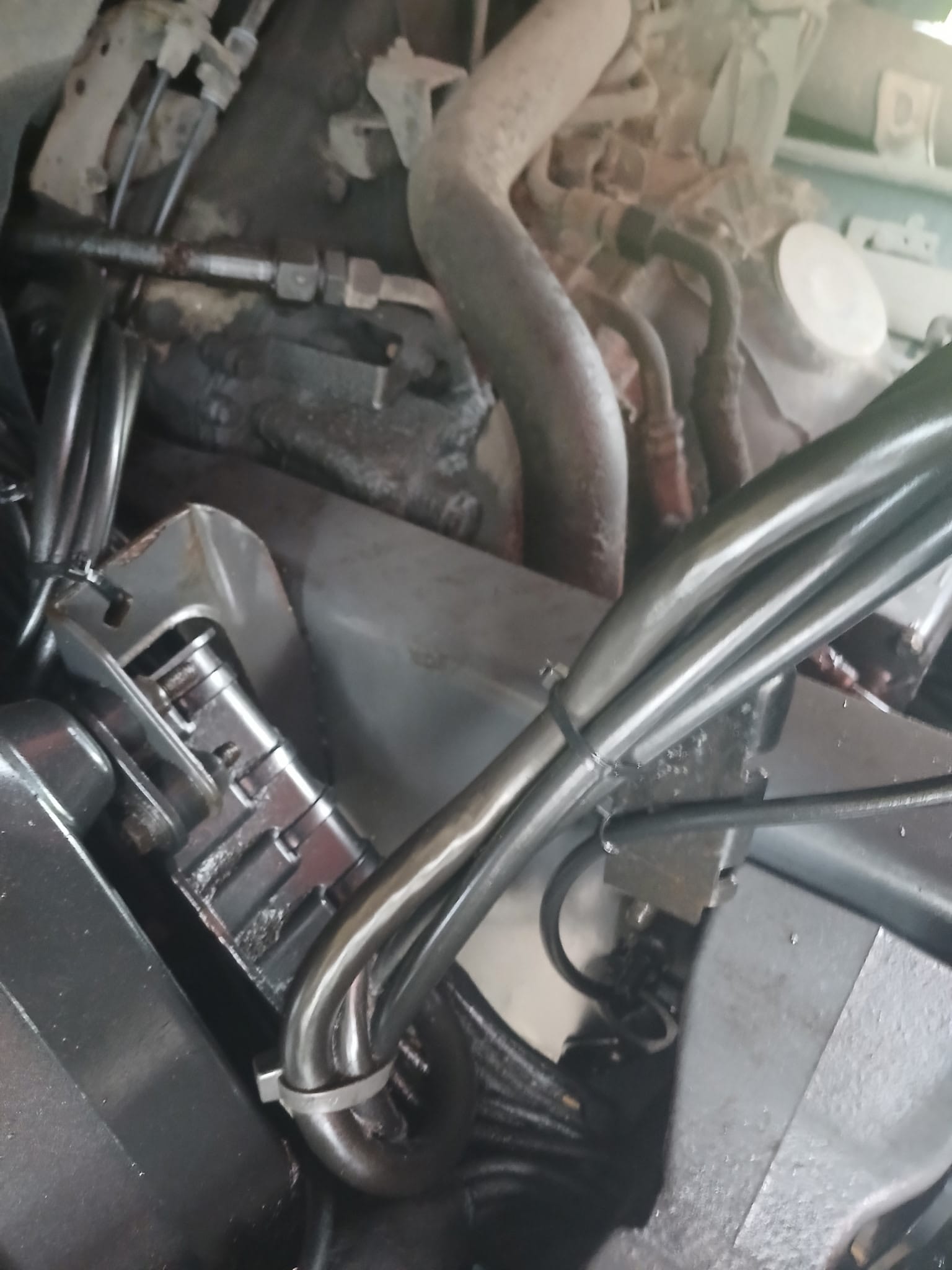
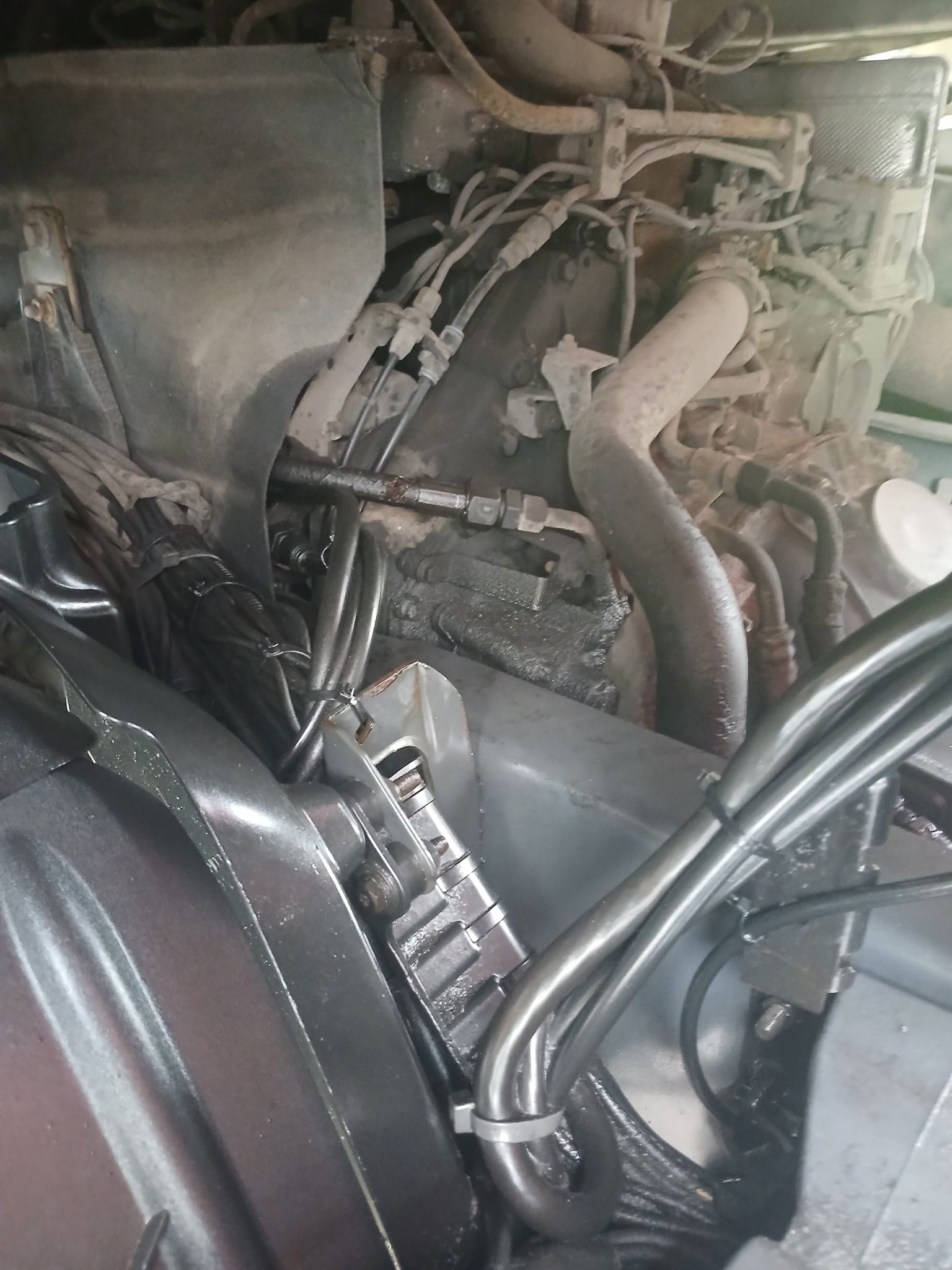
Any one of those stages can fail independently of the clutch disc itself: the master cylinder seal can wear and let fluid bypass internally, the slave cylinder can do the same, a line or hose can develop a slow weep, the pneumatic booster’s diaphragm or valve can stick, or the reservoir can simply run dry from a slow leak nobody noticed. On this truck, the diagnosis on site took twenty minutes and pointed clearly at the slave cylinder — internal bypass, no external puddle to speak of, because the fluid hadn’t been leaking onto the ground. It had been disappearing into the booster assembly, which is a common and easily missed failure path: a failing seal lets brake or clutch fluid migrate past the piston and into the pneumatic side, so the fluid reservoir drops with nothing visible underneath the vehicle. A driver doing a visual walk-round would see nothing wrong.
Disc failure or actuation failure — the diagnostic that matters
This is the part that decides whether a repair costs a few hundred euros or several thousand, so it’s worth spelling out plainly.
A burnt-out clutch disc still lets the truck move. The symptoms build gradually: the engine revs climb faster than road speed under load, especially pulling away on a gradient or fully loaded, and there’s a distinct smell of hot friction material, sometimes with a thin haze of smoke near the bellhousing. The truck is drivable, just increasingly unable to transmit torque. That fault means pulling the gearbox in a workshop, a job that runs into several thousand euros in parts and labour.
A failed actuation system behaves completely differently. The pedal either sinks to the floor and stays there, or it won’t return at all. No gear will engage — not “engages badly,” but not at all, because the clutch mechanism can’t be operated to open the friction surfaces apart in the first place. There’s no burning smell, because the disc itself has done nothing wrong; it simply can’t be released. That’s what this driver described, and it’s why the technician arrived expecting a hydraulic fault rather than a transmission teardown.
Getting that distinction right over the phone, before a recovery truck or a workshop slot gets booked, is the single biggest lever an operator has over the size of the final invoice.
Step-by-step repair
- Confirm the diagnosis on the vehicle. Fluid reservoir checked and found low with no external leak trail; pedal travel and return tested by hand.
- Isolate and remove the failed slave cylinder. Access via the bellhousing area; hydraulic line disconnected and capped to limit further fluid loss.
- Fit the replacement slave cylinder and reconnect the hydraulic line, torqued to the manufacturer’s specification.
- Refill the clutch hydraulic circuit with the correct specification fluid, topping the reservoir to the marked level.
- Bleed the system and carry out a function and road test to confirm pedal feel, full engagement, and clean gear selection before releasing the vehicle.
Bleeding: the step that’s easy to skip and shouldn’t be
Once the new slave cylinder is fitted and the circuit refilled, air is still trapped in the lines. Skip the bleed, or rush it, and the pedal comes back “spongy” — some travel, some pressure, but no firm, consistent bite point. On a passenger car that’s an annoyance. On a heavy tractor unit under load it’s a real risk, because inconsistent clutch engagement under torque accelerates wear on everything downstream and can catch a driver out mid-manoeuvre. Proper bleeding — cycling fluid through the system until it runs clear of air bubbles at the bleed point — took twenty minutes on this job and is non-negotiable before a vehicle goes back into service.
Full timeline
| Time | Phase | Action |
|---|---|---|
| 11:20 | Call received | Driver reports pedal sinking, no gears |
| 11:20–11:35 (15 min) | Phone diagnosis & dispatch | Symptom check, technician dispatched |
| 11:35–12:20 (45 min) | Transit to site | A33 near Paderborn |
| 12:20–12:40 (20 min) | On-site diagnosis | Confirmed slave cylinder failure |
| 12:40–13:50 (70 min) | Repair | Removing/fitting slave cylinder, refilling |
| 13:50–14:10 (20 min) | Bleeding the system | Clearing air from hydraulic circuit |
| 14:10–14:25 (15 min) | Function check / test drive | Confirmed pedal feel, gear engagement |
Total: 11:20–14:25 = 3 hours 5 minutes (185 minutes)
Costs
| Item | Price (EUR) |
|---|---|
| Callout/mobilisation | 220 |
| On-site diagnosis | 140 |
| Slave cylinder (part) | 180 |
| Clutch fluid | 35 |
| Labour, removal/fitting (2 hrs) | 220 |
| Bleeding the system | 90 |
| Total (net) | €885 |
Plus VAT. For context, a haulier losing a lorry to downtime is typically looking at €800–1,200 per day in lost revenue and idle driver time, so a repair finished inside three and a half hours already limits the damage considerably. Compare that to what this could have cost with a different diagnosis: replacing a genuinely burnt-out clutch disc means a workshop pulling the gearbox, and that job runs into several thousand euros once parts, labour and downtime are added together. Same starting complaint — “clutch’s gone” — wildly different bills depending on what’s actually broken.
Why you need a professional
Clutch actuation looks simple from the driver’s seat: press a pedal, gear changes. Diagnosing and repairing it on a heavy commercial vehicle at the roadside is not something to improvise. Risks of getting it wrong, or attempting it without the right training and parts, include:
- Misdiagnosing a hydraulic fault as a disc failure (or vice versa), leading to unnecessary gearbox removal or, worse, sending a lorry back on the road with a fault that will strand it again
- Incomplete bleeding leaving air in the circuit, causing unpredictable clutch engagement under load
- Using the wrong fluid specification, which can damage seals throughout the hydraulic circuit
- Working on a live pneumatic booster circuit without understanding how the air supply interacts with the hydraulic side
- Improvising a “clutchless” pull-away as a permanent workaround rather than an emergency-only measure
On that last point: it is technically possible to select and hold a gear without a working clutch pedal by carefully matching engine and road speed, on a manual gearbox at least. This should only ever be used to move a vehicle a short distance out of a genuinely dangerous position — a live lane, a blind bend, a narrow hard shoulder — and never as a way of continuing a journey. Every clutchless shift without proper disengagement puts load through the synchro rings, which aren’t designed for that duty cycle, and repeated abuse this way can turn a €885 hydraulic repair into a damaged gearbox needing far more extensive work.
Typical callouts we handle
Clutch and drivetrain faults sit alongside a wide range of roadside and on-site jobs we cover across Germany, including engine and gearbox failures on the truck service side, air system and brake faults, electrical faults, and tyre and wheel emergencies handled through mobile truck service that comes to the vehicle rather than the other way round. Where a fault genuinely can’t be resolved roadside — a cracked bellhousing, a seized gearbox, structural damage — we arrange towing to the nearest suitable workshop rather than risk further damage on site. We’ve written up similar jobs before, including a gearbox failure recovery near Frankfurt (Oder) that needed a full tow rather than an on-site fix, which is a useful contrast to this case.
Prevention
A hydraulic clutch actuation failure rarely comes out of nowhere. A few habits catch most of these faults before they strand a driver:
- Check the clutch fluid reservoir level at regular service intervals, not just when a warning appears — a slow internal leak into the booster won’t show as a puddle underneath the truck
- Inspect hydraulic hoses and lines for cracking, chafing against other components, or soft spots, especially near the bellhousing where heat and vibration are highest
- Pay attention to any change in pedal travel or feel — a pedal that’s started sitting a little higher, lower, or softer than usual is worth reporting before it fails completely
- Include the pneumatic booster and its air supply in routine inspections, since a slow air leak there can mimic a hydraulic fault
Clutch and drivetrain maintenance across a fleet
For a haulier running several tractor units, clutch actuation issues are one of the more preventable causes of unplanned downtime — and one of the more expensive to get wrong if the wrong call gets made on diagnosis. The core distinction fleet managers should have their drivers trained on is exactly the one described above: slipping under load with a burning smell means a disc problem and a workshop booking; a pedal that won’t return or gears that won’t engage at all, with no smell, points to the hydraulics and is often fixable roadside.
Automated manual transmissions (AMT), now common on newer tractor units, change the picture somewhat. Rather than a mechanical pedal, clutch actuation is handled electronically — an actuator, often hydraulic itself, is commanded by the transmission control unit based on throttle position, road speed and gear selection. When something fails on an AMT clutch actuation system, there’s usually no pedal to misbehave; instead the dashboard throws a fault code, and diagnosis starts with a scan tool reading that code rather than a physical pedal-feel test. The underlying components — master and slave cylinders, hydraulic lines, sometimes a pneumatic assist — are broadly similar to a manual system, just electronically supervised. That means the same prevention habits apply: fluid level, hose condition, and prompt attention to any dashboard warning related to the clutch or transmission.
Fleet operators looking at torque and drivetrain reliability more broadly will find useful reference material from component manufacturers such as Bosch Mobility on actuation and transmission electronics. Regular inspection through a recognised body such as TÜV also tends to catch hydraulic and pneumatic wear before it becomes a roadside failure, since these checks look specifically at hose condition, fluid levels, and system integrity as part of routine roadworthiness assessment.
Downtime economics make the case for prevention on their own: at €800–1,200 per day in lost revenue per idle tractor unit, even one avoided breakdown a quarter easily covers the cost of more frequent hydraulic inspections across a fleet.
Why choose us
We run breakdown and mobile repair coverage across Germany, 24 hours a day, seven days a week, dispatching from a vetted network of regional service partners rather than a single fixed workshop — which is why we can get a technician to a rest area off the A33 within forty-five minutes rather than routing everything through one depot. Pricing is agreed and communicated before work starts, not adjusted afterwards. Dispatch is handled in German, English and Polish, which matters when a driver is stressed, on a hard shoulder, and not necessarily fluent in the local language.
FAQ
How do I tell if it’s the clutch disc or the actuation system? A burnt disc lets the truck drive but slip under load, with a burning smell. A failed actuation system means the pedal sinks or won’t return and no gear engages at all, with no smell. That distinction changes the repair cost dramatically.
Can a clutch actuation fault be fixed on site? Often yes, if it’s a master or slave cylinder, a hose, or lost fluid. A burnt clutch disc generally requires gearbox removal in a workshop and can’t be fixed roadside.
Why does the fluid level drop with no leak visible underneath the truck? A failing seal, often in the booster, can let hydraulic fluid migrate into the pneumatic side rather than dripping externally, so there’s no puddle to spot on a walk-round.
Is it safe to drive without a working clutch? Only to move the vehicle a short distance out of a dangerous spot, using careful engine-and-road-speed matching. It accelerates synchro ring wear and risks further gearbox damage if used as a way to keep driving.
What does clutch actuation look like on an automated manual transmission? It’s electronically controlled — a transmission control unit commands the actuator, and a failure typically shows as a fault code on the dashboard rather than a pedal symptom, so diagnosis starts with a scan tool.
Why does the pedal feel spongy after a repair? Trapped air in the hydraulic circuit. Proper bleeding after any actuation repair is essential — skipping it leaves inconsistent pedal feel and unreliable clutch engagement under load.
Summary
A tractor unit stopped on the A33 near Paderborn on 18 July with a clutch pedal that sank to the floor and no gears selectable. Correct on-site diagnosis identified a failed slave cylinder — a hydraulic actuation fault, not a burnt clutch disc — and the repair, including bleeding and a full function test, was completed in 3 hours 5 minutes for €885 net. The alternative, a genuine disc failure requiring gearbox removal, would have run into several thousand euros.
Need a technician now?
Call +49 160 5753826 or visit www.lkwhelp24.com — breakdown and mobile repair assistance, 24/7 across Germany.
Keywords: truck clutch actuation repair | clutch hydraulics lorry | slave cylinder replacement truck | mobile truck repair Germany | tractor unit breakdown A33 | clutch pedal failure lorry | pneumatic booster clutch | roadside gearbox diagnosis