Skip to content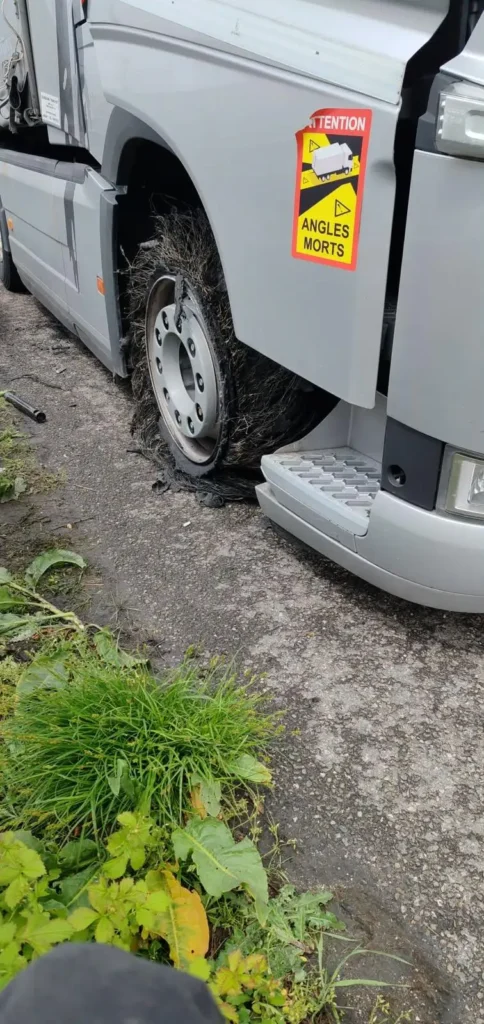
A blown steer-axle tyre is one of the few roadside failures that genuinely frightens experienced drivers, and rightly so. When a front tyre disintegrates at motorway speed, the vehicle can pull hard to one side in a fraction of a second, and there is very little margin for correcting it before the truck reaches the barrier. This case study covers exactly that scenario: an international driver whose steer-axle tyre let go on the A5 near Baden-Baden, and how the LKWHelp24 partner network had him back on the road, safely and with a fully documented cost breakdown, in under two hours.
If you are searching for a truck tyre service near you right now because of a similar breakdown, the short version is this: call +49 160 5753826. LKWHelp24 coordinates certified tyre partners across the whole of Germany, 24 hours a day, seven days a week, and dispatches the nearest available crew to your exact position on the motorway. The long version — including the timeline, the invoice, and the technical reasoning behind every decision the fitters made — follows below.
Steer-axle failures are treated differently from trailer or drive-axle blowouts by every serious roadside assistance provider, and for good reason. The front tyres carry the steering geometry and roughly a third of the vehicle’s static weight, concentrated onto a much narrower footprint than a twin-tyre drive axle. When one fails, the loss of control is immediate and the consequences of getting the recovery wrong — wrong torque, wrong pressure, a rushed inspection of the rim — can turn a routine roadside repair into a second incident. That is the standard LKWHelp24 partners work to on every single call-out, and it is the standard that was applied here.
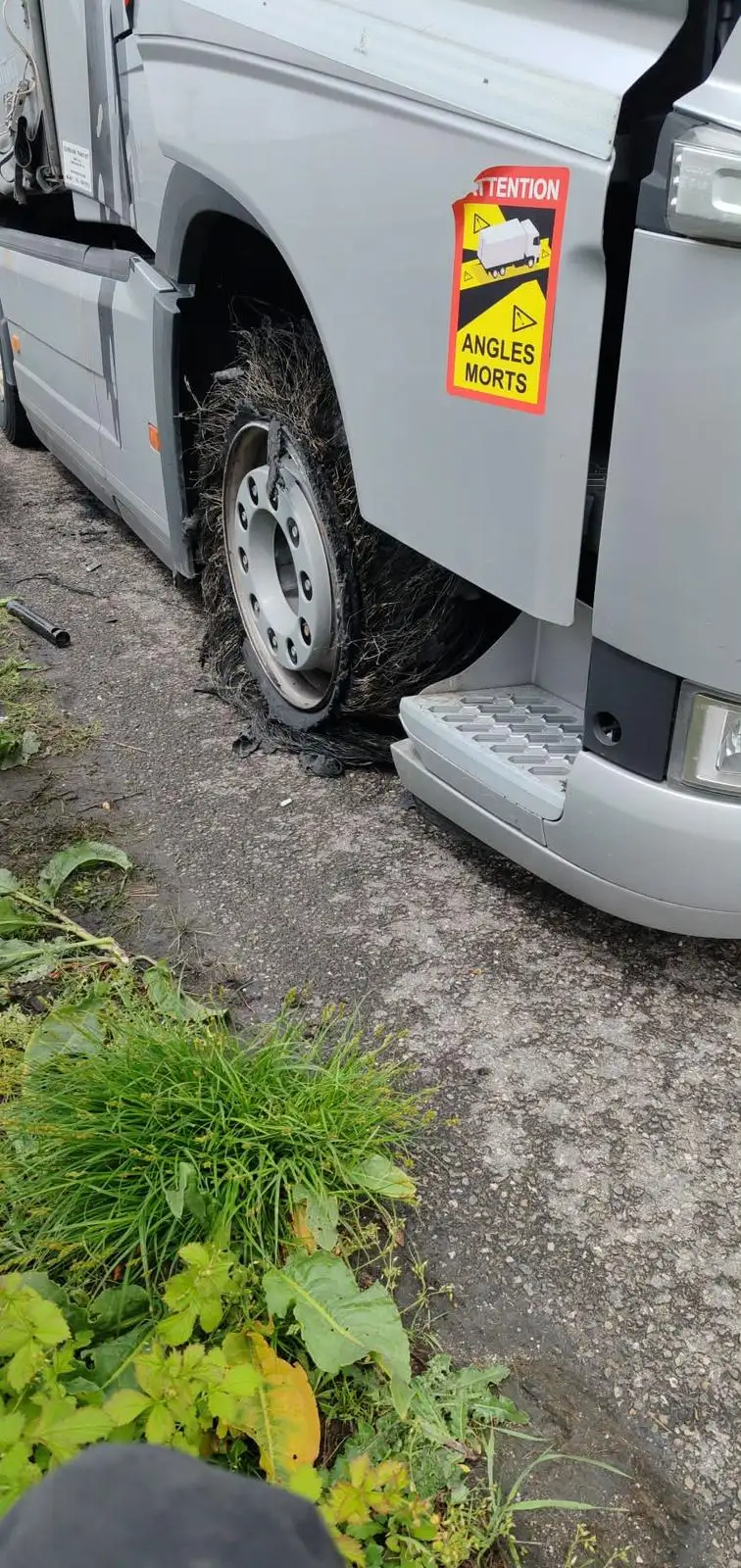
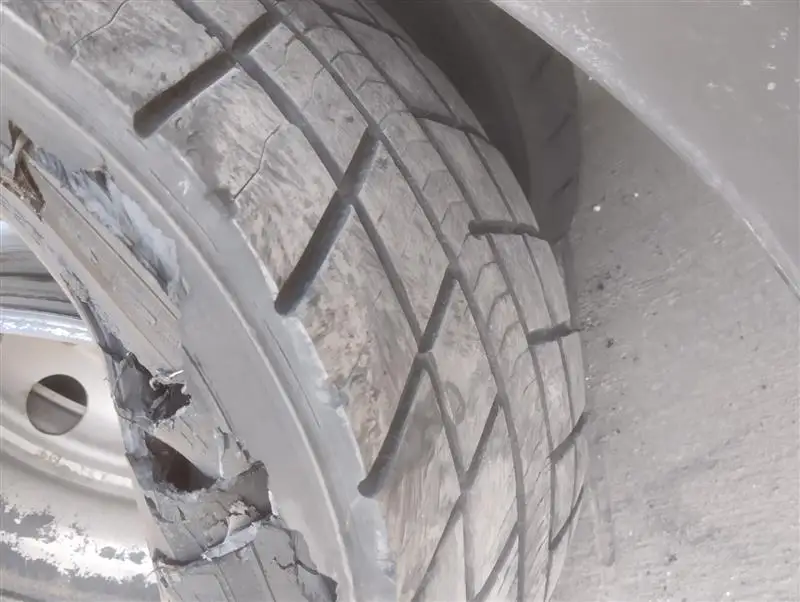
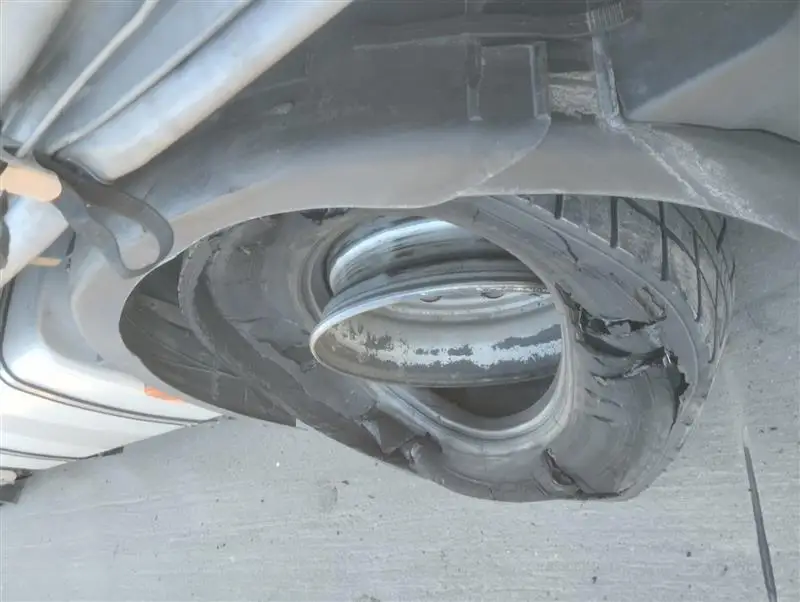
Steer-axle tyre blowout (385/65 R22.5) on the A5 near Baden-Baden – mobile truck tyre service by LKWHelp24.
The Emergency
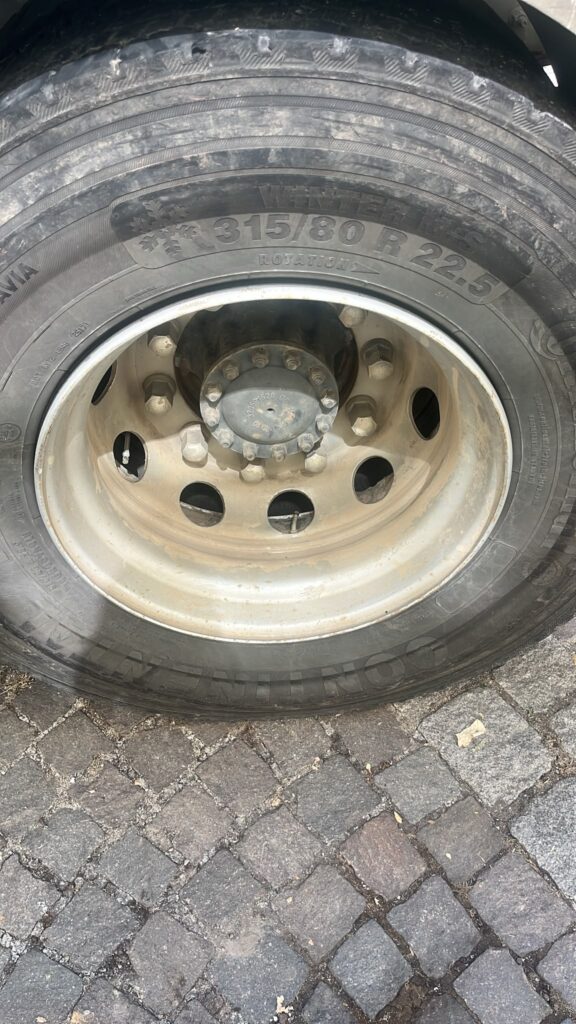
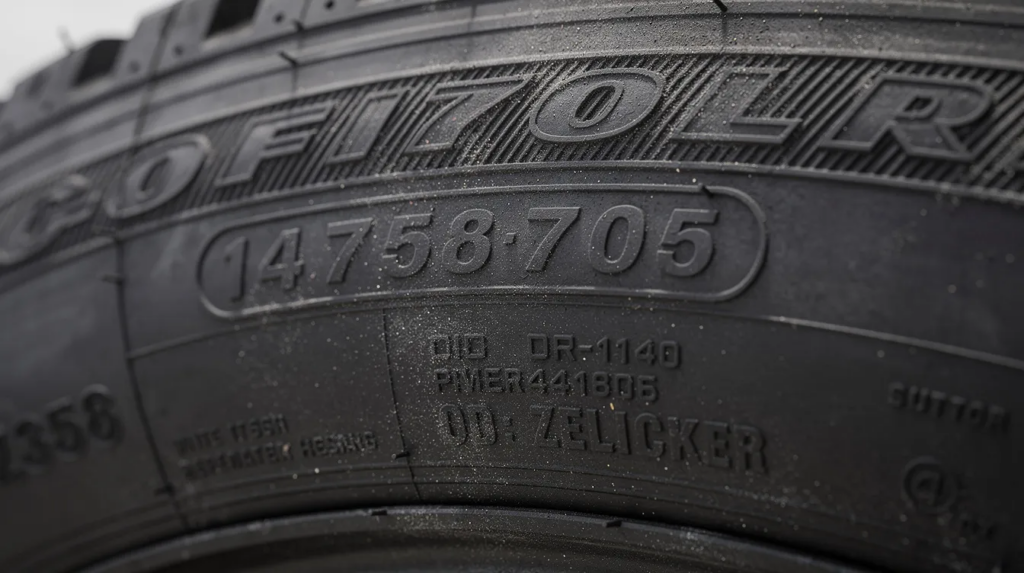
The driver was piloting a silver-grey tractor unit registered in France — the “Angles Morts” blind-spot sticker on the rear of the cab confirmed a vehicle regularly running international routes — southbound on the A5 towards Karlsruhe when the nearside steer tyre failed catastrophically. This was not a slow puncture. The tread had separated completely from the carcass, and what remained of the tyre was shredded almost beyond recognition. The specification was 385/65 R22.5, the wide-base steer-axle size fitted to the vast majority of modern European tractor units running on the German motorway network.
The driver reacted correctly: he felt the vibration through the steering column, kept the wheel steady rather than fighting the pull, and eased the tractor onto the hard shoulder near Baden-Baden without attempting to continue on a destroyed tyre. That single decision — stopping immediately instead of limping on to the next exit — is the single biggest factor in preventing rim damage and secondary steering-gear problems, and it meant the repair that followed involved no hidden complications.
With the vehicle safely stationary, the driver called the LKWHelp24 emergency line. Within twelve minutes a tyre partner in the Baden-Baden area had been dispatched with an estimated time of arrival, and the driver was given a direct line of contact for updates while he waited.
How Help Was Organised
LKWHelp24 does not send out a single roaming van and hope it happens to be nearby. The company runs a nationwide dispatch network of certified truck tyre and breakdown partners, positioned so that a qualified fitter is realistically within reach of almost any point on the German autobahn system at any hour.
The process for this call ran as follows:
● Driver calls the LKWHelp24 emergency number and reports the exact location (A5, hard shoulder, direction Karlsruhe, near Baden-Baden) and the visible damage to the steer tyre.
● Dispatch identifies the nearest available certified partner already stocking 385/65 R22.5 tyres, rather than one that would need to source the size en route.
● The partner confirms ETA and departs with the correct replacement tyre, torque tools, and a hydraulic jack rated for steer-axle work.
● The driver receives confirmation of the assigned technician and an expected arrival window.
● On arrival, the technician secures the scene before touching the vehicle.
This structure is the reason the whole job, from the first phone call to the truck being roadworthy again, took under two hours rather than the four-to-six-hour wait that is common when a driver has to search for a tyre service themselves from a hard shoulder with patchy signal.
The Situation On-Site
A steer-axle blowout is not treated like a routine trailer tyre change, and for good reason. A few technical points explain why the on-site procedure has to be more careful:
The front axle typically carries the least sprung weight of any axle on the vehicle, but the tyre footprint is narrower and the consequences of an incorrect fitment are more serious, because any imbalance or under-inflation directly affects steering response. Wide-base steer tyres such as the 385/65 R22.5 fitted here run at higher operating pressures than standard drive-axle tyres — typically in the 8.5 to 9.5 bar range depending on load rating and manufacturer specification — and this tyre was set to 9.0 bar during fitting, in line with the load index stamped on the tractor’s data plate. Getting that figure even slightly wrong on a steer axle changes the handling characteristics of the entire vehicle, not just ride comfort.
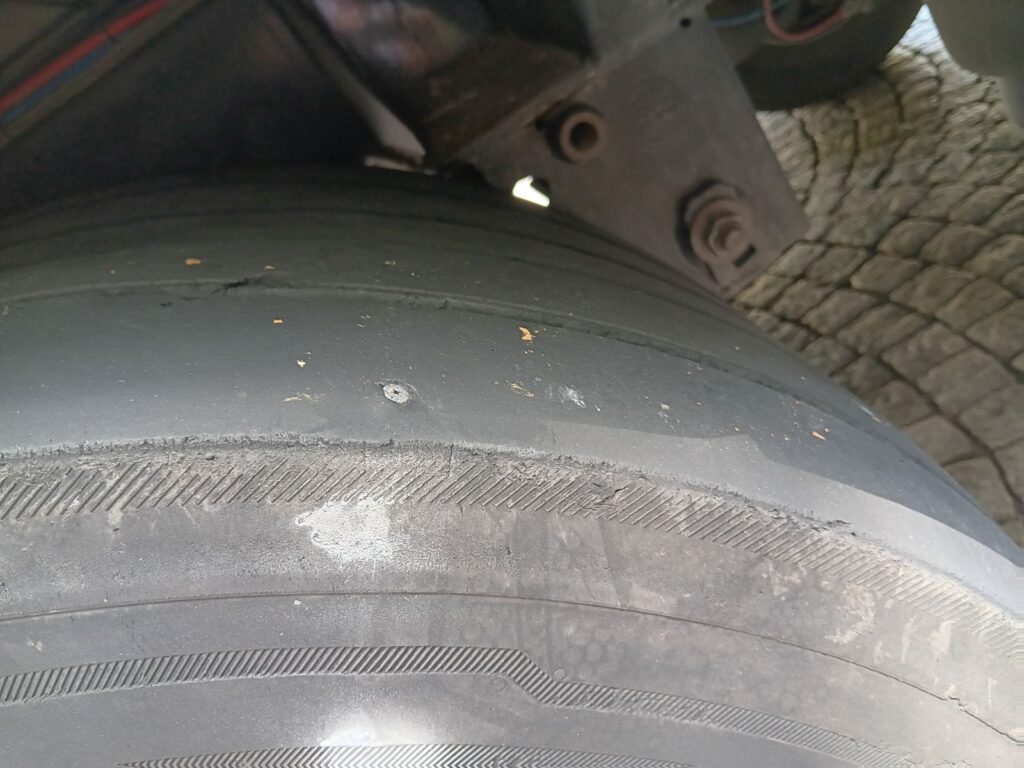
There was also the question of the wheel rim itself. When a tyre disintegrates as completely as this one did, there is a real risk that the rim flange or bead seat has taken damage from the failed carcass thrashing around the wheel arch. The technician could not simply fit a new tyre and send the driver on his way; the rim had to be inspected properly first.
Step-by-Step: What the Technician Did
Step 1 — Scene safety and stabilisation. Warning triangles and hazard lighting were set out well back from the vehicle, and the tractor was chocked before any work began. On a live motorway hard shoulder this is not optional — it is the difference between a controlled repair and a second emergency.
Step 2 — Vehicle lifted and secured. The tractor was jacked at the manufacturer’s designated lifting point and properly supported before the wheel was touched, keeping the technician clear of any load shift.
Step 3 — Destroyed tyre removed. The shredded 385/65 R22.5 was demounted from the rim. What remained of the carcass was checked closely as it came off, since fragments can sometimes reveal the original cause of failure — in this case, consistent with a sudden impact-related separation rather than a slow structural fatigue failure.
Step 4 — Rim inspected. With the old tyre off, the bead seat and flange were checked thoroughly for cracks, dents, or heat discolouration before any new rubber went anywhere near it. Only once the rim was confirmed sound did the fitting proceed.
Step 5 — New tyre fitted and torqued. A replacement Continental Conti Hybrid HT3 in the correct 385/65 R22.5 size was mounted and balanced on-site, inflated to 9.0 bar, and the wheel nuts were tightened to the manufacturer’s specified torque figure in a star pattern to ensure even clamping load across the hub — a step that prevents warping and later wheel-nut loosening. A final visual and pressure check confirmed the vehicle was ready to rejoin the carriageway.
Full Timeline
| Time | Phase | Action |
|---|---|---|
| 08:10 | Call received | Driver reports steer-axle blowout, A5 near Baden-Baden |
| 08:22 | Partner dispatched | Certified tyre partner assigned, ETA confirmed |
| 09:00 | Arrival on site | Technician reaches the vehicle |
| 09:08 | Secured | Warning triangles placed, tractor chocked and jacked |
| 09:28 | Old tyre removed | Destroyed 385/65 R22.5 demounted, rim inspected |
| 09:46 | New tyre fitted | Continental Conti Hybrid HT3 mounted, inflated to 9.0 bar |
| 09:56 | Torque and final check | Wheel nuts torqued in star pattern, full inspection |
| 09:59 | Roadworthy | Vehicle cleared to rejoin the A5 |
Total elapsed time: 1 hour 49 minutes from the first phone call to the truck driving away. Time on site: approximately 55 minutes.
Cost Breakdown
| Item | Price (EUR) |
|---|---|
| Call-out / 24/7 motorway emergency service | 190 |
| Tyre 385/65 R22.5 (Continental Conti Hybrid HT3) | 340 |
| On-site fitting and balancing | 90 |
| Disposal of the damaged tyre | 20 |
| TOTAL | 640 EUR |
A few factors influence the final figure on any steer-axle call-out. Tyre brand is the largest single variable — Continental, Michelin, and Goodyear all produce steer-axle patterns in this size, and premium brands typically sit within a similar price band, though budget alternatives can undercut this by 15–20%. Time of day and day of the week matter too: night, weekend, and public holiday call-outs on German motorways generally carry a higher call-out component than a weekday daytime job like this one. Location relative to the nearest certified partner’s base also plays a role, since a longer drive to reach the vehicle adds to the call-out fee.
For comparison, alternatives to the Continental fitted here would have been a Michelin X Multi T or a Goodyear KMAX T, both well-regarded steer-axle patterns for long-haul European operators, and both would have fallen within a broadly comparable price range.
It is worth setting this 640 EUR figure against the realistic alternative: calling a standard breakdown truck to tow the tractor to a fixed workshop. Between the tow itself, workshop labour, and — critically — the lost driving hours while the vehicle sits in a yard rather than back on the road, that route regularly costs several hundred euros more and can add half a day or more to the delay, quite apart from any tachograph and delivery-schedule knock-on effects.
Why a Professional Service Is Essential
Attempting to handle a steer-axle blowout without a properly equipped mobile tyre service carries risks that go well beyond inconvenience:
- Incorrect torque application. Wheel nuts tightened unevenly or to the wrong figure can loosen in transit, and a wheel coming loose on a steer axle at speed is a life-threatening event, not a breakdown.
- Missed rim damage. A rim with a cracked bead seat or damaged flange can look fine to an untrained eye but fail again within hours, often at a worse location than the first time.
- Wrong pressure for the load. Steer-axle tyres are far more pressure-sensitive than trailer tyres. Guessing at 8 or 9 bar instead of setting the correct figure for the actual axle load changes braking distance and steering feel.
- No hazard management. Working on a live hard shoulder without proper warning triangles, hazard lighting, and positioning is genuinely dangerous — roadside worker and driver fatalities on German motorways are not rare, and this is precisely the situation professional call-out crews are trained to manage.
- Invalid roadworthiness afterwards. A repair carried out without documentation can leave a driver unable to prove to a checkpoint or to their fleet operator that the vehicle was properly restored to a roadworthy condition.
Typical Breakdown Situations We Handle
LKWHelp24’s partner network responds to the full range of heavy-vehicle roadside emergencies across Germany, not only tyre failures:
- Steer-axle and drive-axle tyre blowouts on motorways and rural roads
- Slow punctures and sidewall damage on trailers
- Complete tyre and wheel replacement for tractor units, trailers, buses, and cranes
- Battery failure and jump-start assistance
- Engine breakdowns requiring diagnosis and towing
- Fuel and AdBlue delivery for vehicles that have run dry
- Lockouts and key-related issues
- Coordination with recovery services for accident-damaged vehicles
Whether the incident happens on the A5, the A3, the A14, or any minor road, the same dispatch principle applies: find the nearest properly equipped partner and get them moving immediately.
Prevention Tips for Drivers and Fleets
Steer-axle blowouts are rarely completely random. A handful of habits significantly reduce the odds of a repeat incident:
- Check pressure cold, before departure, every single day. A steer tyre running even 10% under pressure generates far more heat at motorway speed, which is one of the leading contributors to sudden carcass failure.
- Watch for irregular wear patterns. Feathering or shoulder wear on a steer tyre often signals an alignment issue long before the tyre itself fails.
- Respect load ratings. Overloading the front axle, even briefly, pushes a steer tyre beyond the pressure and heat tolerances it was designed for.
- Replace steer tyres proactively, not reactively. Many fleet managers set a lower minimum tread depth for steer axles than for drive or trailer axles precisely because the consequences of a steer failure are so much more serious.
- Keep a record of tyre age. Rubber compounds degrade with age even on tyres that look visually sound, and this matters more on the steer axle than anywhere else on the vehicle.
Fleet Maintenance: Choosing the Right Steer-Axle Tyre
For fleet operators managing multiple vehicles, the choice of steer-axle tyre brand has a direct effect on both cost per kilometre and downtime risk. Continental’s Conti Hybrid HT3, fitted in this case, is built specifically for the mixed motorway and regional-road duty cycle typical of German and cross-border European haulage, balancing wear resistance with the grip characteristics steer axles need for predictable handling in wet conditions.
Michelin’s X Multi T range remains one of the most widely specified steer patterns among long-haul fleets, valued for its mileage consistency and retreadability, which matters for operators tracking total cost of ownership rather than just the up-front tyre price. Goodyear’s KMAX T is a strong alternative for fleets prioritising fuel efficiency, with a compound designed to reduce rolling resistance without compromising the steering precision a front axle demands.
Whichever brand a fleet standardises on, the more important variable is consistency: mixing steer-axle tyre models within the same axle position, even from reputable manufacturers, can introduce subtle handling differences that make it harder for drivers to judge how the vehicle will respond in an emergency manoeuvre. For fleet buyers comparing specifications directly, Continental’s own truck tyre range is a useful reference point for steer, drive, and trailer patterns available on the German market.
For drivers who want a clear overview of what to do in the minutes immediately after a breakdown — before any partner arrives — the ADAC guide to truck breakdown assistance covers the basic safety steps that apply regardless of which service provider you call.
LKWHelp24: Your Truck Emergency Partner
LKWHelp24 exists for exactly the situation this driver found himself in: stranded on a hard shoulder, a long way from home, needing a solution that is fast, correctly executed, and transparently priced.
- Available 24/7, every day of the year, across the entire German motorway and road network
- Certified partner network of tyre and breakdown specialists, not a single overstretched van
- Fast dispatch based on actual proximity to your location, not a fixed regional depot
- Transparent, itemised pricing — every call-out ends with a clear breakdown, as shown above, with no surprise line items
- Multilingual support, essential for the large volume of international drivers — French, Polish, Romanian, and many other nationalities — running freight through Germany daily
- Full range of services, from tyre replacement to towing, battery assistance, and fuel delivery, so a single phone call covers almost any roadside scenario
Summary
- Tyre size: 385/65 R22.5 (steer axle)
- Location: A5, hard shoulder near Baden-Baden, direction Karlsruhe
- Response time: 12 minutes from call to partner dispatch, 50 minutes to arrival on site
- Total time from call to roadworthy: 1 hour 49 minutes
- Total cost: 640 EUR
- Secondary damage: None — rim inspected and confirmed sound
- Replacement fitted: Continental Conti Hybrid HT3, inflated to 9.0 bar, torqued in star pattern
Request Emergency Assistance Now
If you are dealing with a blown steer tyre, a trailer puncture, or any other truck breakdown anywhere in Germany, do not wait and do not attempt a repair without the right equipment on a live carriageway.
Call +49 160 5753826 or visit lkwhelp24.com to request immediate assistance.
Available 24/7 across all of Germany.