Skip to content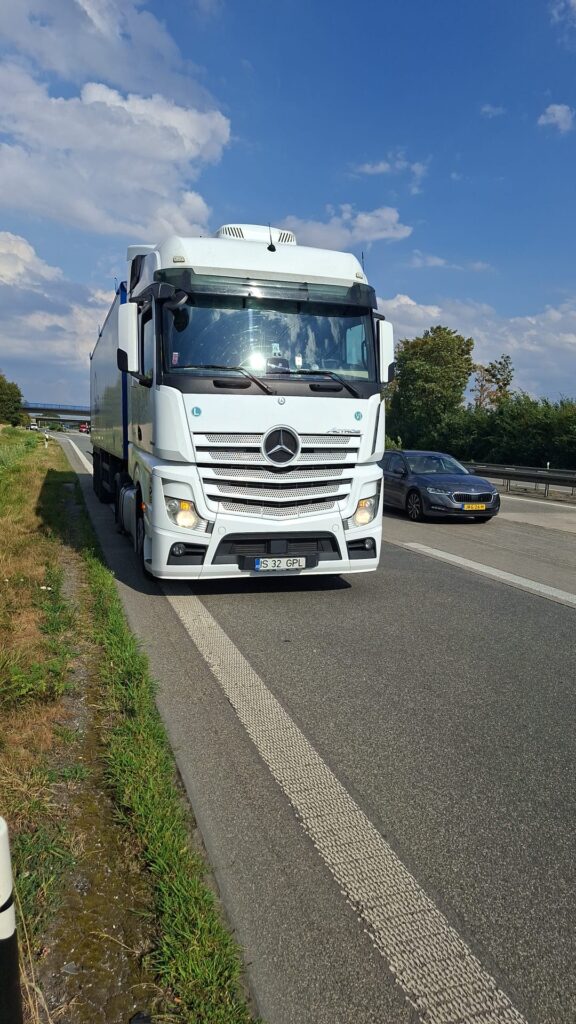
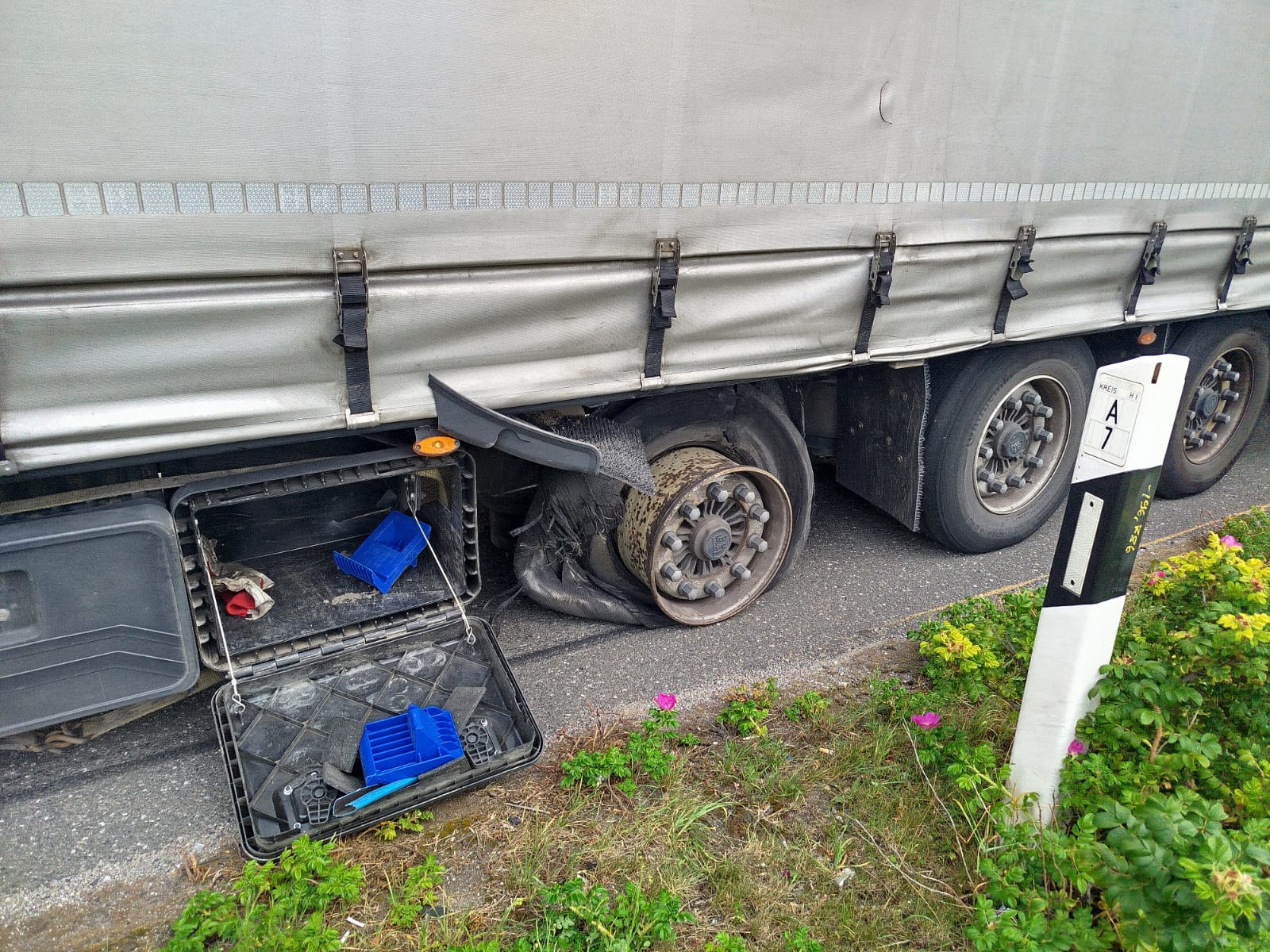
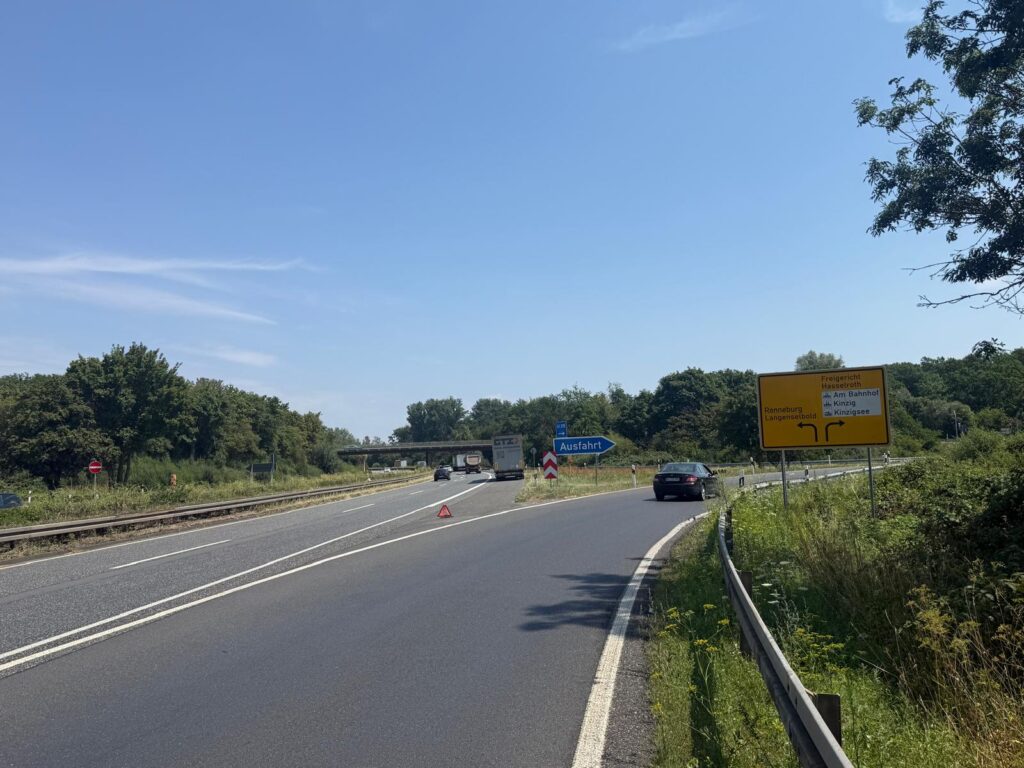
It was a warm August afternoon when the trailer axle on an articulated lorry let go on the A67 near Darmstadt, heading towards Frankfurt. Within minutes the carriageway was scattered with shredded tread, and by the time our partner crew arrived, Polizei had already blocked off part of the lane to keep traffic moving safely around the wreckage.
This is one of those jobs that looks straightforward on paper, a tyre change, and turns into something considerably more involved once you factor in a police presence, a live carriageway, and a driver who does not speak German standing on the hard shoulder wondering what happens next. Here is exactly how it went, hour by hour, and why the police response matters as much as the mechanical fix.
We are publishing the full timeline and costs because hauliers and dispatchers keep asking the same question after an autobahn breakdown: how fast can this realistically be sorted, and what does dealing with the police actually involve.
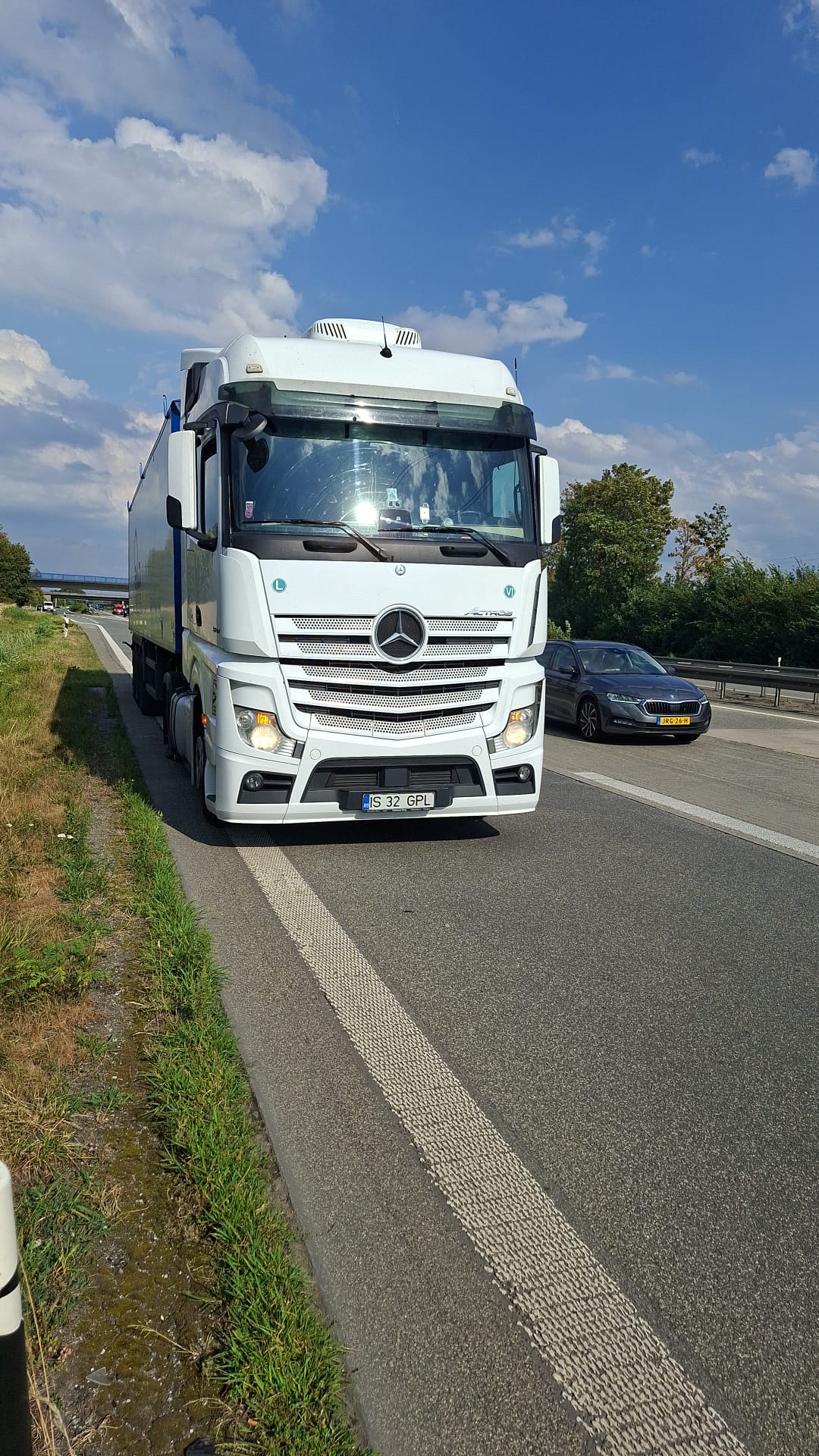
The emergency: a shredded tyre and a blocked lane
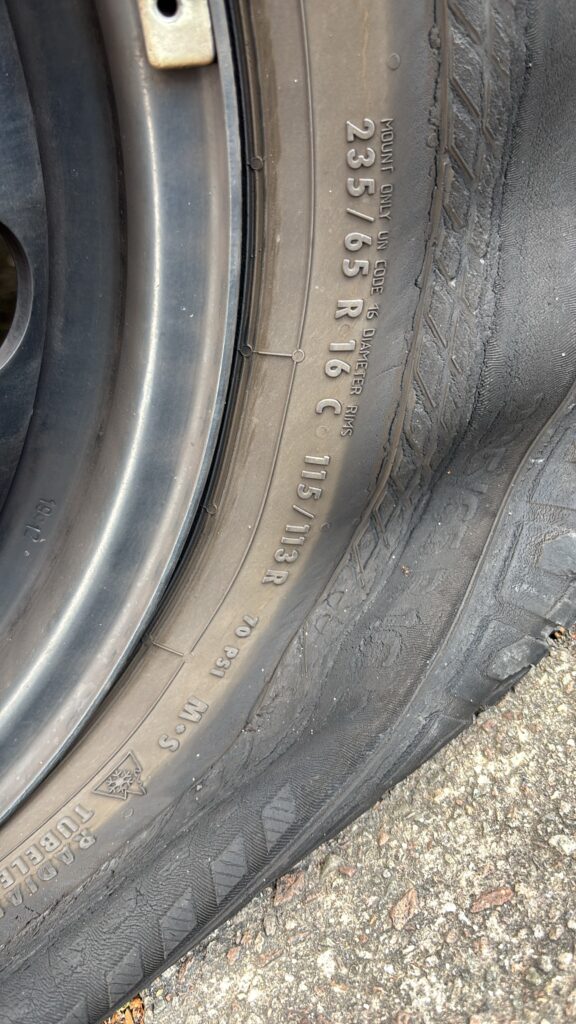
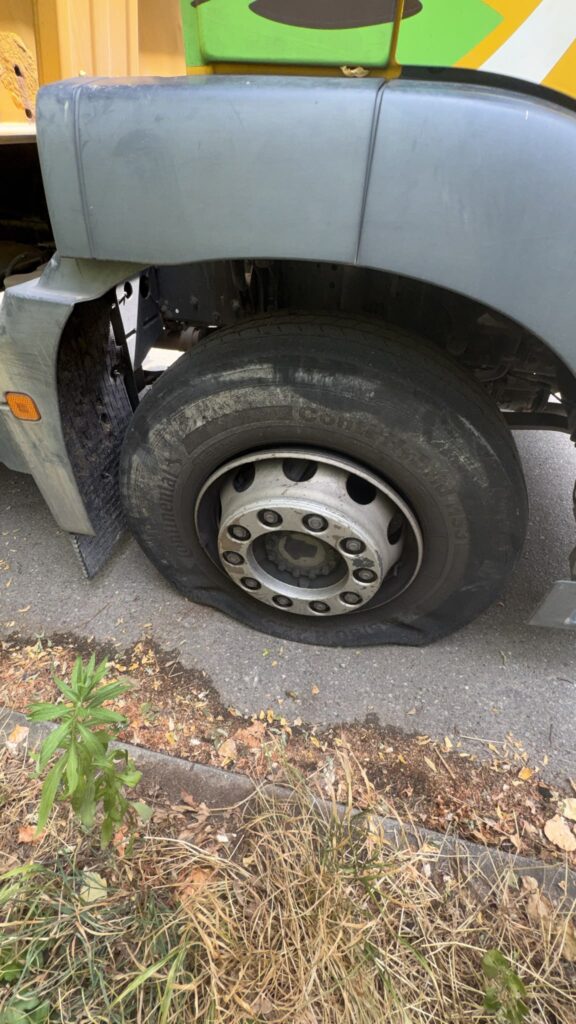
The call came in at 15:40 on 5 August. A semi-trailer combination travelling on the A67 towards Frankfurt had suffered a tyre blowout on one of the trailer axles. The tyre, a 315/70 R22.5, had disintegrated rather than simply deflating, and pieces of tread were lying across the carriageway.
That last detail is what turned a routine roadside repair into a police matter. Loose rubber on a live motorway is a hazard for every vehicle behind it, not just the lorry that lost the tyre. Within the late-afternoon traffic, with the sun still high and the tarmac radiating heat, other drivers were swerving around debris at 120 km/h. Someone called it in, and Polizei were dispatched to secure the scene before our crew even arrived.
The driver had pulled onto the hard shoulder as far as space allowed, hazard lights on, but a semi-trailer on a blown trailer tyre is not something you simply nurse to the next Raststätte. It needed an on-site tyre change, full stop.
How help was organised
Our dispatch team took the call at 15:40 and started working the problem immediately. Getting a lorry moving again on a motorway is as much about logistics as it is about fitting a tyre.
- 15:40 — call logged, location and tyre spec confirmed with the driver.
- 15:40–15:55 — dispatch identifies and briefs the nearest available partner crew, checks stock for a 315/70 R22.5 replacement.
- 15:55–16:45 — crew drives to the scene on the A67 near Darmstadt.
- On arrival, first contact is made with the police officers already managing traffic at the site.
Because this was a partial closure with officers directing traffic, the crew could not simply pull in and start working. Coordination came first, tools second.
Situation on site: why this cannot be left to wait
A trailer tyre on a Sattelzug typically runs somewhere between 8.5 and 9.5 bar depending on load and axle configuration. When a tyre of that size fails at speed, it does not just go flat, it can throw chunks of tread and steel belt several metres, and the sudden load shift onto the remaining tyres on that axle raises the risk of a second failure or rim damage if the vehicle keeps moving. Leaving a semi-trailer parked on a live carriageway with debris scattered around it is not a wait-and-see situation.
This is exactly why Polizei attend these breakdowns on their own initiative rather than waiting to be asked. An obstruction on the carriageway, tread debris across one or more lanes, and the resulting drop in traffic flow are enough to trigger a police response regardless of whether the haulier has requested one. On a stretch like the A67, where traffic density in the late afternoon is high, officers will usually close at least one lane and position a vehicle with warning lights upstream of the incident.
Police on scene are not there simply to watch. They can require the carriageway to be cleared without delay, and if a driver or haulier drags their feet, they are entitled to order recovery at the haulier’s expense. They will also typically file a short report or protocol of the incident, particularly where debris has caused an obstruction, which can matter later for insurance purposes.
Under §15 StVO, a driver whose vehicle breaks down on the carriageway has clear obligations: hazard lights on immediately, a warning triangle placed roughly 150–200 metres back on a motorway (further than on a normal road, given closing speeds), a hi-vis vest worn before stepping out of the cab, and the driver and any passengers standing behind the crash barrier, not next to the vehicle. These are not suggestions. A triangle placed too close, a missing vest, or a driver standing in the running lane trying to flag down help can all draw a fine on top of an already bad day, and in the worst case they turn a tyre blowout into a second, far more serious incident.
We have seen drivers simply sit in the cab for hours waiting for someone to sort things out, assuming that is the safe option. It is not. Standing traffic on a motorway with no one actively managing the scene is itself a risk, and police will act on it, sometimes by ordering an immediate tow rather than waiting for a tyre service to arrive. A fast response genuinely reduces the risk of fines and of a haulier being billed for police-ordered recovery instead of a straightforward tyre change.
There is also the question of who cleans up. Tread and casing fragments scattered across the carriageway are, practically speaking, the responsibility of whoever the debris came from. Our crews collect what came off the vehicle as part of the job, not as an afterthought, because leaving rubber on the road is both a hazard to following traffic and something police will note if it is not dealt with.
For a foreign driver, the language barrier adds another layer of stress to an already tense fifteen minutes standing behind a barrier on a hot afternoon. German police officers will usually ask for the driver card, vehicle documents, and often cargo papers if the load is visible or relevant to the obstruction. Not every officer speaks fluent English, and very few drivers speak German. This is where a multilingual dispatch team earns its keep: we can act as a point of contact by phone, relay what is being asked, and make sure the driver understands what documents are needed and what the officers expect, rather than the driver simply nodding along and hoping for the best.
Step-by-step repair on the hard shoulder
Step 1: Inspection. On arrival at 16:45, the crew checked the extent of the damage, confirmed the tyre spec, and assessed the trailer axle and rim for any secondary damage from the blowout.
Step 2: Securing the scene. Working alongside the police already on site, the crew set up additional warning triangles and safety cones around the working area, coordinating positioning with the officers managing the lane closure so nobody was working in a blind spot for oncoming traffic.
Step 3: Removal. The wheel was jacked, the damaged tyre and any loose debris removed from the rim and the surrounding tarmac.
Step 4: Fitting. The new 315/70 R22.5 was mounted, inflated to spec, and torqued down in a cross pattern to make sure the load was distributed evenly across all wheel nuts.
Step 5: Final check. Torque settings were rechecked, tyre pressure confirmed, and the immediate area swept for any remaining debris before the crew signalled to police that the vehicle was ready to move.
By 17:50 the repair itself was complete. Police did a final look at the scene and cleared the lorry to rejoin traffic at 17:55.
Full timeline
| Time | Phase | Action |
|---|---|---|
| 15:40 | Emergency call | Call received, location and tyre spec confirmed |
| 15:40–15:55 | Dispatch | Partner crew assigned, stock checked (15 min) |
| 15:55–16:45 | Drive to scene | Crew travels to the A67 near Darmstadt (50 min) |
| 16:45–17:00 | Scene coordination | Securing the site, briefing with police on scene (15 min) |
| 17:00–17:50 | Tyre change | Removal, fitting, cross-pattern torqueing (50 min) |
| 17:50–17:55 | Final check | Pressure and torque confirmed, cleared by police (5 min) |
Total elapsed time from call to clearance: 15:40 to 17:55, 2 hours 15 minutes. Response time to arrival on scene was 65 minutes.
Cost breakdown
| Item | Price (EUR) |
|---|---|
| Call-out fee | 240 |
| On-site labour (55 min) | 115 |
| Truck tyre 315/70 R22.5 | 520 |
| Old tyre disposal | 20 |
| Scene protection/safety measures | 55 |
| TOTAL | 950 € |
Prices are net, plus VAT. A few things drive the total on a job like this: the tyre itself is the biggest line item, and a 315/70 R22.5 sits at the higher end of standard trailer sizes; call-out reflects distance and urgency of dispatch; and the scene protection line covers the extra triangles, cones and time spent coordinating safely with police rather than just parking up and working.
It is worth weighing that €950 against what a stationary lorry actually costs a haulier. Downtime on a loaded trailer typically runs somewhere in the region of €800 to €1,200 per day once you factor in the missed delivery slot, driver hours, and any late-delivery penalties from the customer. A same-afternoon fix that gets the vehicle back on the road inside two and a quarter hours is, in almost every case, considerably cheaper than the alternative of waiting for a slower or cheaper option and losing a day.
Why you need a professional for this
- Fitting a 315/70 R22.5 correctly requires the right jacking equipment and torque tools for a trailer axle; get the torque pattern wrong and you risk a wheel coming loose down the line.
- A DIY or under-equipped fix on the hard shoulder means working close to live traffic without proper scene protection, which is both illegal and dangerous.
- Debris left on the carriageway after an amateur fix can result in fines or liability if it causes a subsequent incident.
- Getting the tyre spec or load rating wrong on a trailer axle can lead to a repeat blowout within days.
- Without a working relationship with police procedures on scene, a driver on their own can end up delaying clearance and drawing the exact fines that a fast, coordinated response avoids.
Typical situations we respond to across Germany
Blowouts on the A67 are far from unique. We regularly attend trailer tyre failures on the A5 near Frankfurt, the A3 around Cologne and Würzburg, and the A81 through Baden-Württemberg, often in similar conditions: hot summer tarmac, high axle loads, and older casings that finally give way under sustained motorway speed. We have covered comparable incidents elsewhere in Germany, from artic blowouts to rim damage on the hard shoulder, where the pattern was much the same: a sudden failure, a police presence, and a race against the clock to clear the carriageway safely.
Prevention: what drivers and fleets can do
Regular tyre pressure checks before long motorway stretches catch slow leaks before they become blowouts. Trailer axles in particular deserve attention, since they carry heavy static loads and are easy to overlook compared with the tractor unit. Checking tread depth and casing condition at every stop, especially in summer when hot tarmac accelerates heat build-up in an already stressed tyre, is cheap insurance against exactly this kind of incident. Fleets running older trailers should also factor tyre age, not just tread depth, into their replacement schedule, since rubber degrades even on tyres that look fine at a glance.
Tyres and fleet maintenance: the bigger picture
Premium trailer and drive-axle tyres from manufacturers such as Michelin, Continental, Goodyear, and Bridgestone are built with reinforced casings specifically to handle the sustained loads and heat that cause failures like this one. For fleets running high annual mileage, the upfront cost difference between a budget tyre and a premium one is usually recovered many times over in avoided roadside incidents, reduced downtime, and lower fuel consumption from a properly maintained rolling resistance profile. Scheduled fleet maintenance that includes pressure monitoring systems and periodic professional inspection, rather than relying purely on driver walk-arounds, catches the kind of casing fatigue that led to this blowout before it happens on a live carriageway.
Why choose us
We run a 24/7 dispatch operation covering the whole of Germany, with a vetted network of partner crews positioned to reach most motorway incidents within the hour. Pricing is transparent and agreed before work starts, no surprises on the invoice. Our dispatch team is multilingual, which matters enormously when a driver is standing on a hard shoulder trying to explain a breakdown to police in a language they do not speak. You can see the full range of what we cover on our mobile truck service and tyre service pages, and if a tyre change is not enough and the vehicle needs recovery, our towing service is coordinated through the same dispatch line.
FAQ
How fast can you reach a breakdown on a German motorway?
On this job, response time from call to arrival on scene was 65 minutes. Actual times vary with location and partner crew availability, but our dispatch network is built to get a crew moving within minutes of the call, not hours.
What happens if police arrive before the tyre service does?
Police will secure the scene, close lanes if needed, and may require the vehicle to be moved or recovered if there is a long delay. Calling a tyre service immediately, even before police arrive, keeps the process moving and avoids the risk of a police-ordered tow.
Do I have to pay a fine if my warning triangle is not placed correctly?
Yes, incorrect placement, distance too short, or a missing hi-vis vest, can result in an on-the-spot fine under German road traffic rules. Following §15 StVO requirements from the moment you stop is the simplest way to avoid this.
Who is responsible for clearing tyre debris from the road?
Practically speaking, the haulier or driver whose vehicle shed the debris. Our crews collect it as part of the repair rather than leaving it for police or road maintenance crews to deal with afterwards.
What tyre size was fitted in this case?
A 315/70 R22.5 trailer tyre, a common size for semi-trailer axles, was fitted on site after the original tyre disintegrated during the blowout.
Does a fast repair actually reduce costs compared to waiting?
In most cases, yes. A same-day fix costing under €1,000 compares favourably against downtime costs of roughly €800 to €1,200 per day, plus any fines or recovery charges that can follow a delayed response on a live motorway.
Summary
Call received at 15:40, crew on scene by 16:45, lorry cleared by police and back on the road by 17:55. Total time 2 hours 15 minutes, total cost €950 net for a full trailer tyre replacement on the A67 near Darmstadt, coordinated on site with Polizei throughout.
Need help now?
If you have a tyre blowout, breakdown, or any roadside emergency on a German motorway, call us any time on +49 160 5753826 or visit www.lkwhelp24.com. We operate 24/7 across Germany, with multilingual dispatch and a vetted partner network ready to respond wherever you are.
Keywords: truck tyre service | tyre blowout motorway | A67 breakdown | mobile truck tyre service Germany | 315/70 R22.5 | lorry tyre change autobahn | Polizei roadside assistance | 24/7 truck tyre service Germany | trailer axle tyre replacement | German motorway breakdown assistance