Skip to content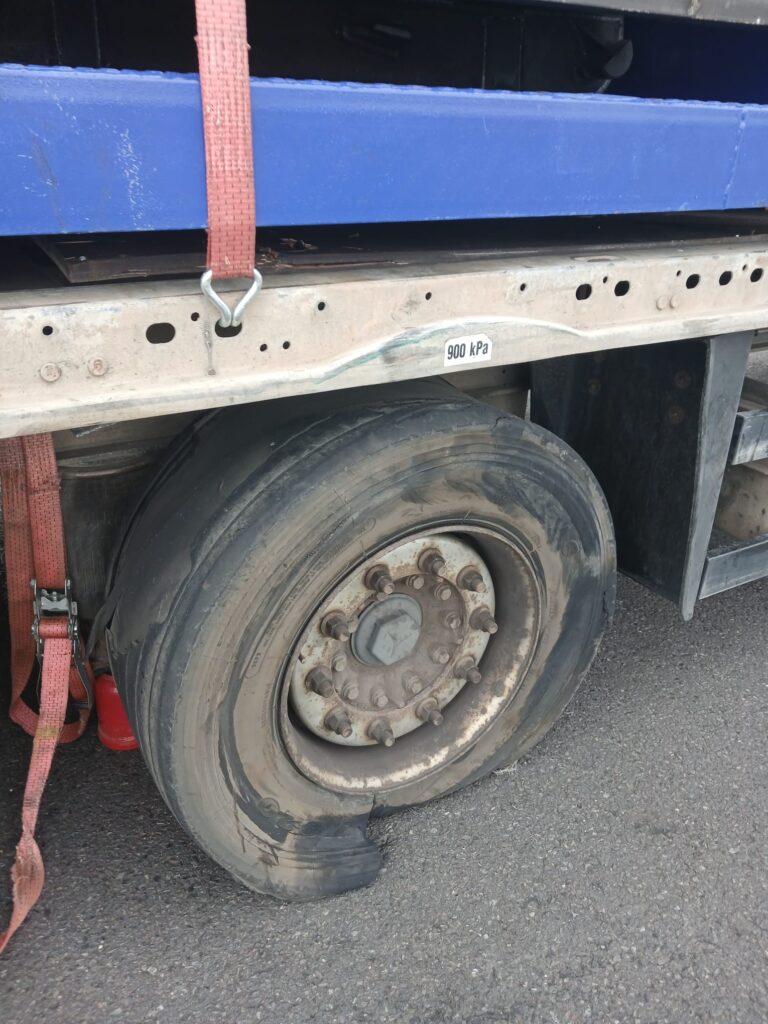
TL;DR: An articulated lorry suffered a tyre blowout on the A2 near Hamm, direction Hannover, on 7 August. Our regional service partner reached the site in 45 minutes, replaced the 385/55 R22.5 tyre, and had the artic rolling again in 2 hours 15 minutes from the first call. Total cost: €920 net.
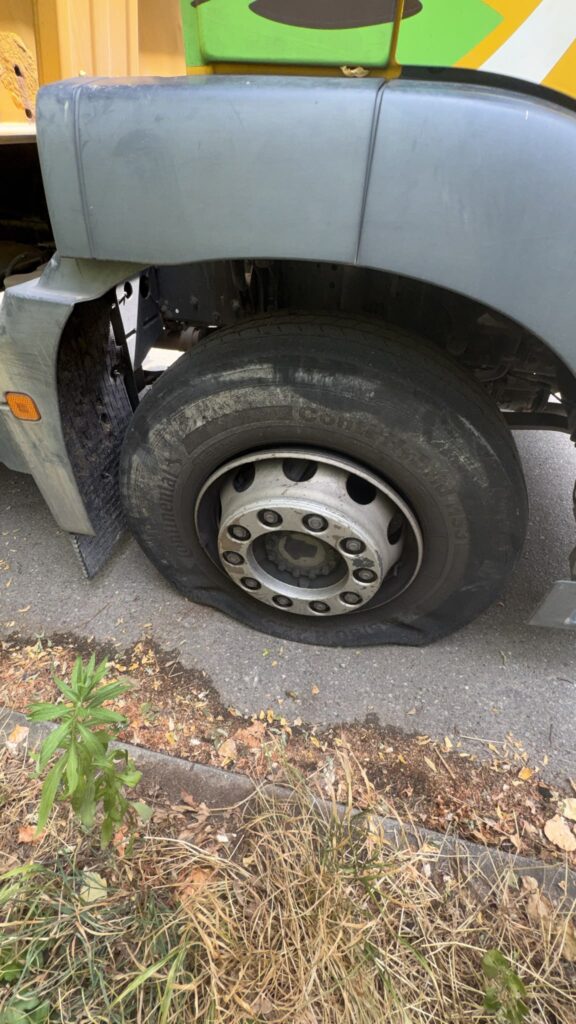
A tyre blowout on a loaded semi-trailer is one of the more frightening things that can happen on the autobahn. At 80 km/h, a sudden loss of a rear tyre on the drive axle or trailer bogie shifts the entire dynamic balance of a 40-tonne combination in a fraction of a second. Drivers describe it as a loud bang followed by a pull to one side, sometimes accompanied by chunks of rubber striking the underside of the trailer hard enough to be heard in the cab.
This case, logged on 7 August, is a fairly typical example of how these incidents unfold in daylight traffic on a busy corridor. The A2 between Hamm and Hannover carries heavy freight volumes throughout the day, so a stranded artic on the hard shoulder is both a safety risk for the crew and a bottleneck risk for everyone behind it. The core benefit of a dedicated tyre service network is straightforward: a technician who specialises in HGV wheels, carries the right tyre sizes and torque tools, and gets to the vehicle fast enough that the hazard window stays short.
We’re publishing the timeline and invoice from this call-out because hauliers, fleet managers and drivers repeatedly ask the same two questions after an incident like this: how long will it take, and what will it cost. Here are both answers, with no rounding and no ranges.
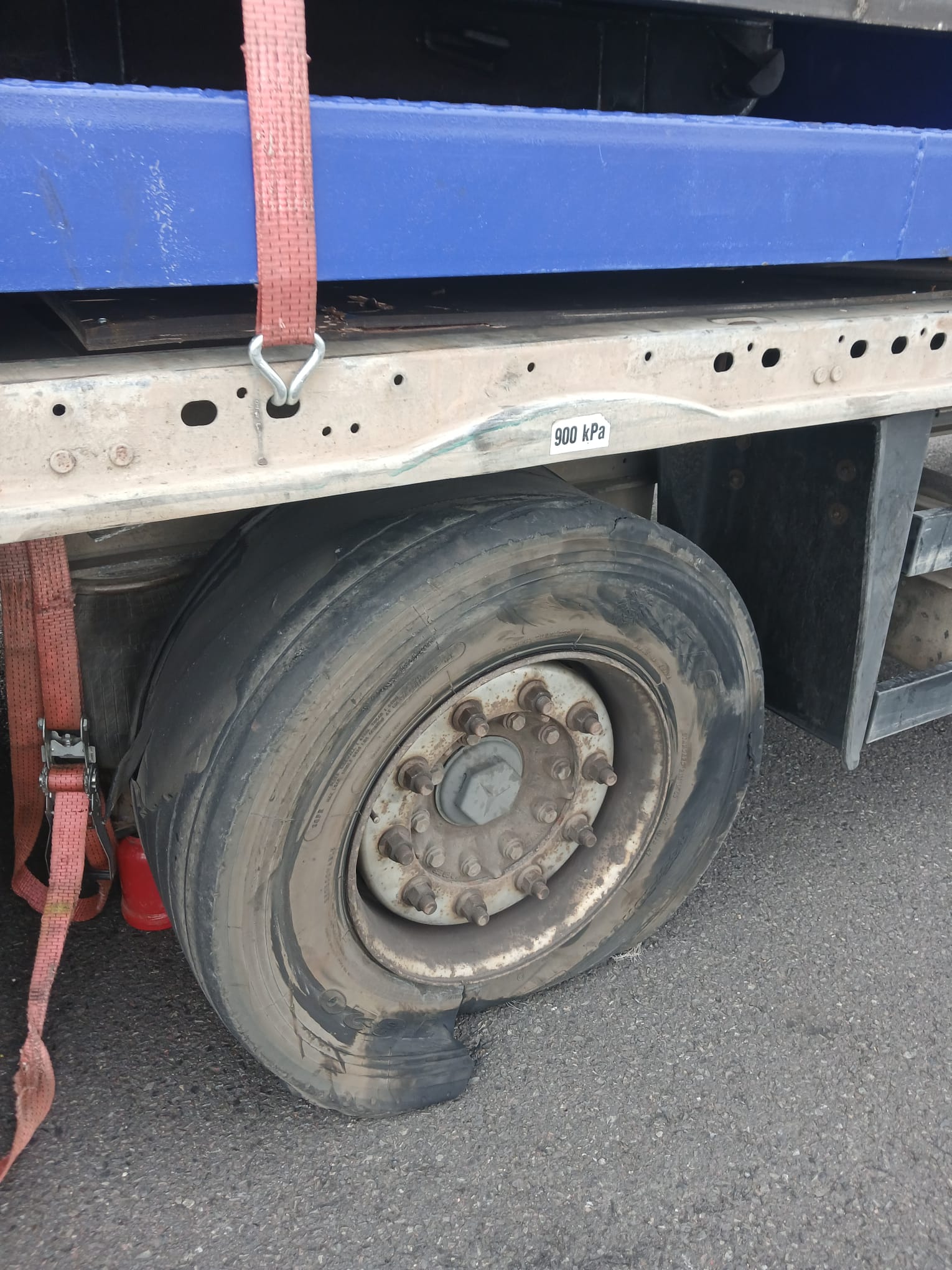
What happened on the A2 near Hamm
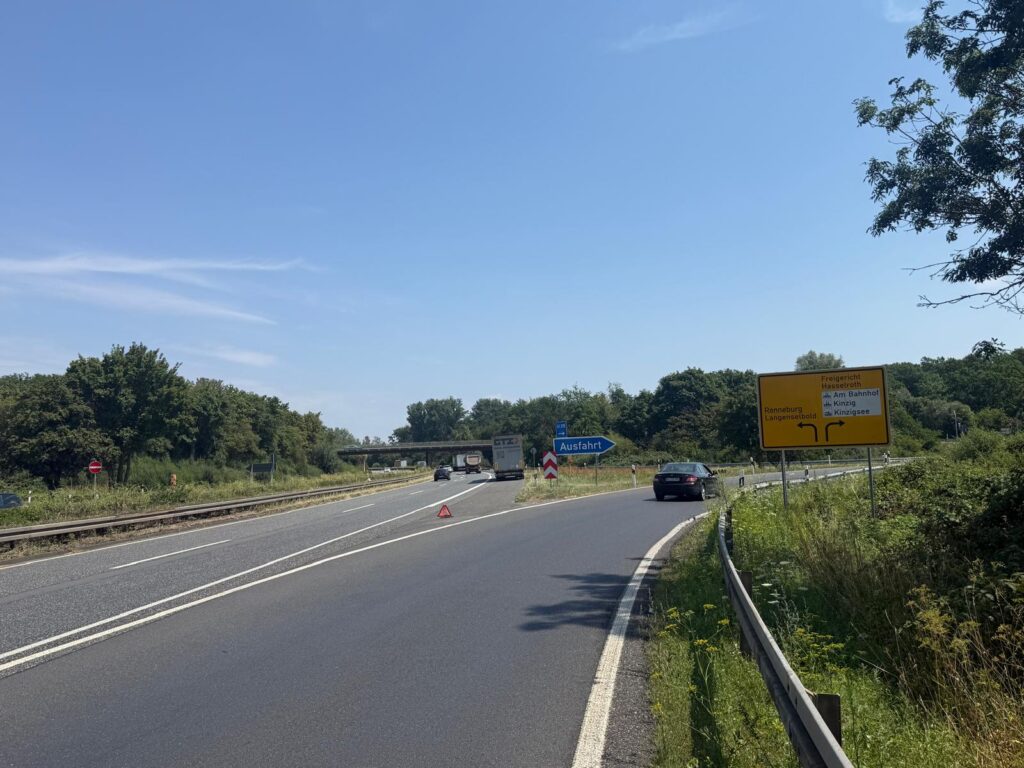
The vehicle involved was an articulated truck — a tractor unit pulling a semi-trailer — running on 385/55 R22.5 tyres, a common size for trailer axles on long-haul combinations in Germany. The blowout occurred in daylight on 7 August while the vehicle was under way on the A2, direction Hannover.
The driver felt the vehicle pull and heard the tyre go. He was able to bring the combination to a controlled stop on the hard shoulder without further incident — no collision, no secondary damage to the rim or arch on this occasion. That’s not always the outcome; a blowout at speed can throw debris into the wheel arch or bend a rim, and we’ve documented cases where it did.
Articulated truck – a tractor unit and a semi-trailer connected by a fifth-wheel coupling, as opposed to a rigid truck with a fixed body, is the combination type most affected by trailer-axle blowouts because trailer tyres are often checked less frequently than tractor tyres.
How the help was organised
Getting a technician to a stranded artic on a motorway hard shoulder involves more coordination than it looks like from outside. Here’s what happened between the call and the technician’s arrival:
- 11:20 — Emergency call received at dispatch, driver’s location and tyre size logged immediately.
- Dispatch cross-checked the nearest available partner workshop against current job load and A2 traffic conditions.
- The nearest partner with the correct tyre size, 385/55 R22.5, in stock was selected rather than simply the closest workshop.
- Our partner network’s response team was briefed on the exact hard-shoulder location and lane-closure risk before departure.
- The technician confirmed departure and estimated time of arrival back to dispatch, who relayed it to the driver so he knew how long to expect the wait.
This dispatch phase took 15 minutes, from 11:20 to 11:35. The travel phase then took 45 minutes, landing the technician on site at 12:20. Response times like this vary by region and time of day, but a 45-60 minute window for a motorway call-out is a realistic, regularly achieved figure across the network.
Why was the tyre pressure the root cause, not an outer cut?
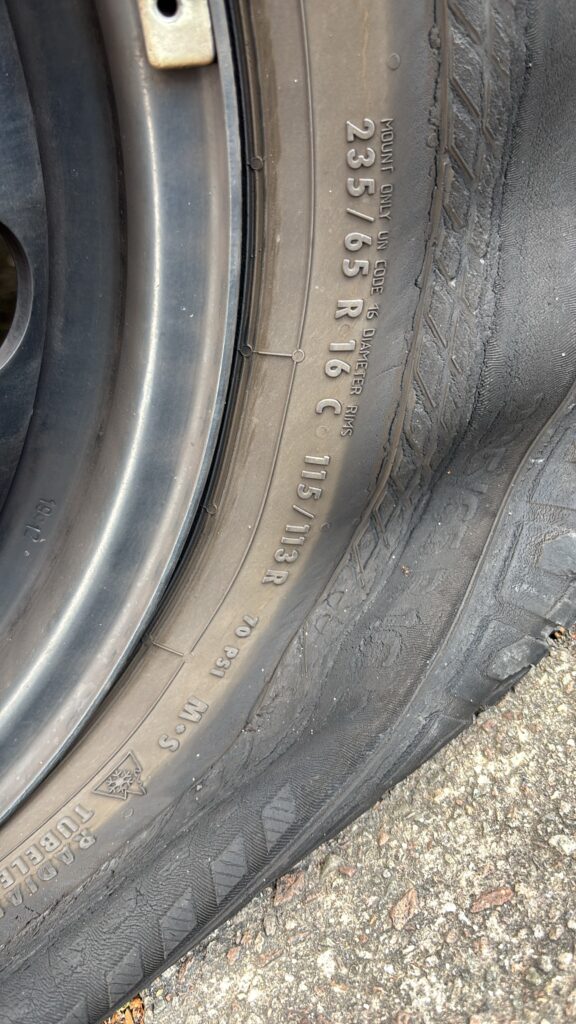
Because the failure pattern on this tyre pointed inward, not outward. When the technician inspected the carcass after removal, the damage sat on the inner surface: rubber crumbs and heat-discoloured patches consistent with internal breakdown, not a puncture or a kerb strike from outside.
This distinction matters for two reasons. First, it tells the fleet whether this was a one-off (a nail, a sharp object) or a maintenance issue that could recur on the vehicle’s other tyres. Second, insurers and haulage operations teams often want to know the cause for their own records, and “underinflation-related blowout” points them toward a pressure-checking routine rather than a road-hazard claim.
What does a pressure-related blowout look like from the inside?
A pressure-related blowout shows worn, crumbling rubber and heat-damage marks on the inner carcass wall rather than a clean cut or puncture on the outer tread. The technician on this job identified the cause during the 10-minute visual inspection, before any repair work began, by examining the failure surface once the tyre was off the rim.
An outer cut looks different: a sharp, localised gash, often with the object still embedded or a clear entry point visible from outside. Underinflation damage, by contrast, spreads across a wider area of the inner liner and sidewall, because the tyre has been flexing wrong for weeks or months before it finally let go.
Why does low pressure cause a tyre to fail from the inside?
An underinflated tyre flexes far more on every single rotation than a correctly inflated one, and that extra flexing generates heat through internal friction between the rubber compound and the steel cord belts. At 80 km/h, a truck tyre completes several hundred rotations per minute.
Each rotation compounds the heat slightly. Over sustained motorway running, the temperature inside the carcass climbs until the bond between the cord and the surrounding rubber starts to fail chemically, well before the tyre shows any visible sign from outside. Once that bond gives way in a localised area, the tyre can no longer contain the internal pressure and it bursts.
How much pressure loss is dangerous?
A pressure loss of around 20% below the recommended value is already considered critical for a truck tyre, and it’s invisible to the naked eye. A 385/55 R22.5 tyre running at 7 bar instead of a specified 9 bar looks the same standing next to one at the correct pressure — there’s no visible bulge or sag on most modern truck tyre constructions until the damage is already severe.
This is exactly why pressure has to be measured, not eyeballed. According to the ADAC, tyre-pressure-related failures remain one of the more preventable causes of breakdown on German motorways, yet drivers routinely skip checks because a tyre “looks fine.”
What pressure should a truck tyre actually run at?
Working pressures for HGV tyres typically sit between 8.5 and 9.5 bar, depending on axle load and the specific tyre’s load rating. A drive-axle tyre carrying a heavier share of the load usually needs a higher pressure than a trailer tyre on a lightly loaded run, and the correct figure should always come from the tyre manufacturer’s load-inflation table, not a generic rule of thumb.
Load changes with every trip. A tractor running empty on the return leg doesn’t need the same pressure as the same tractor hauling a full trailer outbound, which is one reason fleets that check pressure only once a month tend to run mismatched setups more often than those checking weekly.
How do you measure truck tyre pressure correctly?
Correct measurement means checking a cold tyre with a calibrated gauge, never a tyre that’s just come off the motorway. Heat from driving adds roughly 0.5 to 1 bar to the reading, so a tyre checked after 200 km will show an inflated figure that doesn’t reflect its true baseline pressure.
The classic mistake follows from that: a driver checks a hot tyre, sees a higher-than-expected number, and bleeds off the “excess” to bring it back to the target figure. Once the tyre cools down, it’s now genuinely underinflated, sometimes by the same 20% margin that leads to exactly the kind of blowout described in this case. Cold-tyre measurement, first thing before a shift or after several hours parked, is the only reliable method.
Do tyre pressure monitoring systems actually help?
Yes — a TPMS gives real-time pressure and temperature data per wheel position, catching slow leaks days or weeks before a driver would notice anything by eye or feel. On a multi-axle artic with ten or more tyres, a TPMS removes the guesswork of manual spot-checks and flags a drifting tyre while there’s still time to act.
For a fleet running a dozen vehicles, retrofitting TPMS across the fleet typically pays for itself within a year or two once you factor in avoided breakdowns, avoided downtime, and the fuel savings from consistently correct pressure. Continental and other major manufacturers now build TPMS compatibility into their commercial ranges as standard.
What does underinflation actually cost a fleet?
A tyre running 20% under pressure increases rolling resistance, which increases fuel consumption, and it shortens the tyre’s usable life through faster, uneven wear. For a long-haul vehicle covering 120,000 km a year, even a modest 3-5% fuel penalty from chronic underinflation on several tyres adds up to a meaningful sum over twelve months, before counting the cost of replacing tyres earlier than their rated mileage.
Multiply that across a fleet of 20 or 30 vehicles and the numbers stop being a rounding error on the balance sheet. This is the economic argument for weekly checks: the labour cost of a five-minute pressure check per vehicle is trivial next to a single blown tyre, a day of downtime, and the fuel penalty accumulated in the weeks leading up to it.
How often should truck tyre pressure be checked?
Truck tyre pressure should be checked weekly when the tyres are cold, and always before setting out on a long haul. A quick check before a multi-day run costs a few minutes and catches slow leaks before they become a roadside failure, which is a far better outcome than a 45-minute wait for recovery on the hard shoulder.
Step-by-step: how the technician handled the repair
- Inspection and cause analysis (12:20-12:30, 10 minutes). The technician examined the burst tyre, the wheel, and the surrounding arch, confirming the failure originated internally rather than from an outer cut.
- Securing the work area (12:30-12:40, 10 minutes). Warning triangles and hazard lighting went out before any tools touched the vehicle, since the hard shoulder on the A2 puts the technician within a metre or two of live traffic.
- Removal of the damaged tyre (12:40-13:00, 20 minutes). The technician jacked the axle, removed the wheel nuts, and pulled the damaged 385/55 R22.5 off the hub.
- Fitting the new tyre (13:00-13:25, 25 minutes). A matching replacement tyre went on, seated correctly on the rim, and inflated to the manufacturer’s specified pressure for the axle load.
- Final check including star-pattern torque (13:25-13:35, 10 minutes). The technician tightened the wheel nuts in a star pattern to the correct torque, then rechecked pressure and visually confirmed the wheel was seated flush before releasing the vehicle.
By 13:35 the artic was back on the road, direction Hannover, roughly 2 hours 15 minutes after the initial call at 11:20.
Full timeline
| Time | Phase | Action |
|---|---|---|
| 11:20 | Emergency call received | Driver reports blowout, location and tyre size logged |
| 11:20-11:35 | Dispatch (15 min) | Nearest suitable partner selected and briefed |
| 11:35-12:20 | Partner workshop travels to site (45 min) | Technician en route with correct tyre in stock |
| 12:20-12:30 | Visual inspection and cause analysis (10 min) | Failure identified as internal, pressure-related |
| 12:30-12:40 | Securing the work area (10 min) | Warning triangles and hazard lighting deployed |
| 12:40-13:00 | Removal of the damaged tyre (20 min) | Wheel jacked, nuts removed, damaged tyre pulled |
| 13:00-13:25 | Fitting the new tyre (25 min) | New 385/55 R22.5 fitted and inflated to spec |
| 13:25-13:35 | Final check incl. star-pattern torque check (10 min) | Nuts torqued star-pattern, pressure and seating confirmed |
| 13:35 | Articulated truck back on the road | Journey resumed, direction Hannover |
Total: 2 hours 15 minutes from call to completion.
What did it cost?
| Item | Price (EUR) |
|---|---|
| Callout | 240 |
| Labour (1.5 hrs at €120) | 180 |
| Tyre 385/55 R22.5 | 480 |
| Old tyre disposal | 20 |
| TOTAL | €920 net (excl. VAT) |
Three factors drive the price on a job like this: the callout distance from the nearest partner workshop, the tyre size itself (385/55 R22.5 sits in the mid-to-upper price bracket for trailer tyres), and labour time on site, which runs longer on a motorway hard shoulder than in a workshop bay because of the extra safety setup.
Set against that €920 net figure, downtime for an articulated lorry typically costs roughly €800-1,200 per day once you count the missed delivery window, the driver’s idle hours, and any penalty clauses in the haulage contract. A tyre replacement that keeps total downtime under three hours, as it did here, comfortably beats the cost of a vehicle sitting idle for a full day waiting for a slower response.
Why you shouldn’t attempt this yourself
A roadside blowout on an artic is not a job for the driver’s own tools, even for an experienced driver. The risks stack up quickly:
- Working within a metre or two of live motorway traffic without proper warning triangles, cones, and hazard lighting set at the correct distance.
- Jacking a loaded semi-trailer axle without the right rated equipment, which risks the jack slipping or the vehicle shifting.
- Fitting a tyre without a torque wrench calibrated to the correct star-pattern sequence, which can leave wheel nuts unevenly tightened and prone to loosening at speed.
- Carrying the wrong tyre size or a tyre rated for the wrong axle load, which just moves the failure point down the road instead of fixing it.
- Under §36 of the StVZO, commercial vehicle tyres have to meet specific tread and condition requirements, and a DIY fix that doesn’t meet those standards can leave the vehicle non-compliant the moment it pulls away.
Typical call-outs we handle across Germany
Tyre blowouts like this one are one of the most common reasons hauliers call us, alongside a handful of related situations we see on motorways and industrial routes across the country: sheared wheel bolts causing a wheel to detach entirely, blowouts that also damage the rim, seasonal tyre-related breakdowns in winter conditions, and straightforward flat tyres from road debris. Each case starts the same way: a call, a location, and a dispatch decision about which partner workshop has the right size in stock.
Prevention: what drivers and fleets can do
For individual drivers, the habit that prevents most of this is simple: check tyre pressure cold, before the shift starts, with a proper gauge rather than a visual glance. Keep a note of the target pressure for each axle position, since drive, steer, and trailer axles often run different figures.
For fleet managers, the bigger lever is process. Weekly cold-pressure checks logged per vehicle, TPMS fitted where the fleet size justifies it, and a clear escalation rule — any tyre more than 10% under target gets checked by a technician before the vehicle goes out again — catch problems while they’re still cheap to fix.
Tyre pressure and fleet maintenance: the bigger picture
Major manufacturers including Michelin, Continental, Goodyear and Bridgestone all publish load-inflation tables for their commercial ranges, and the numbers differ between brands and even between tyre lines from the same brand. A generic “9 bar for everything” rule is a starting guess, not a substitute for checking the actual specification sheet for the tyre fitted.
The tyre carcass – the internal structural layer of steel cords beneath the rubber tread, as described on Wikipedia, is what actually fails in a pressure-related blowout. The outer tread can look completely normal while the carcass underneath has been quietly degrading for weeks. That’s the gap a proper pressure-checking routine closes: it catches the invisible problem before it becomes a visible one, usually on a motorway hard shoulder at the worst possible moment.
Why choose lkwhelp24
We run a vetted partner network across Germany, available 24/7, with dispatch handling calls in multiple languages so drivers from any haulage background can explain the problem clearly the first time. Every job comes with a transparent cost breakdown before work starts — no surprise line items on the invoice afterwards. Response times vary by region and traffic, but our dispatch team always gives a realistic estimate up front rather than an optimistic guess, because a driver stuck on a hard shoulder needs an honest number, not a hopeful one.
FAQ
How much does a truck tyre change cost on the motorway?
On this 7 August call-out near Hamm, the total came to €920 net, covering the callout fee, 1.5 hours of labour, the 385/55 R22.5 tyre, and disposal of the old one. Costs vary by tyre size, location, and callout distance, but this figure is representative of a standard trailer-axle replacement.
How long does a truck tyre change take on site?
The on-site repair itself, from inspection to the vehicle driving away, took one hour and fifteen minutes in this case (12:20 to 13:35). Including dispatch and travel time from the call at 11:20, the full incident took 2 hours 15 minutes.
How can you tell a blowout was caused by low pressure rather than a cut?
A pressure-related blowout shows heat-damage marks and crumbling rubber on the inner carcass wall, spread across a wider area, rather than a single clean gash typical of an external cut. A technician identifies this during visual inspection once the tyre is off the rim.
How often should truck tyre pressure be checked?
Truck tyre pressure should be checked weekly on cold tyres, and always before a long-haul trip. Checking after driving gives a falsely high reading due to heat, which can lead drivers to bleed pressure they actually need.
What pressure should a 385/55 R22.5 tyre run at?
Working pressure for this size typically falls between 8.5 and 9.5 bar depending on axle load, but the exact figure should come from the tyre manufacturer’s load-inflation table for that specific tyre and axle position.
Can a fleet retrofit tyre pressure monitoring on older trucks?
Yes, TPMS kits are widely available as aftermarket retrofits for older commercial vehicles. For a fleet of a dozen or more trucks, the avoided-breakdown and fuel savings typically cover the retrofit cost within one to two years.
Summary
- Vehicle: Articulated truck (tractor unit and semi-trailer)
- Tyre: 385/55 R22.5
- Location: A2 near Hamm, direction Hannover
- Date: 7 August, daytime
- Cause: Blowout from prolonged underinflation, confirmed by internal carcass damage
- Response time: 45 minutes from dispatch to arrival on site
- Total time: 2 hours 15 minutes, call to completion
- Cost: €920 net (excl. VAT)
- Secondary damage: None — no rim or arch damage on this occasion
Need a tyre replaced on the motorway right now?
Call +49 160 5753826 any time, day or night. Our dispatch team, backed by a vetted partner network, covers towing and tyre call-outs across the whole of Germany, 24/7. Find all contact options at www.lkwhelp24.com.
Keywords: truck tyre blowout A2 Hamm | mobile HGV tyre service Germany | 385/55 R22.5 tyre replacement | artic tyre change motorway | tyre pressure blowout cause | 24/7 truck tyre service Hannover autobahn | HGV roadside tyre assistance