Skip to content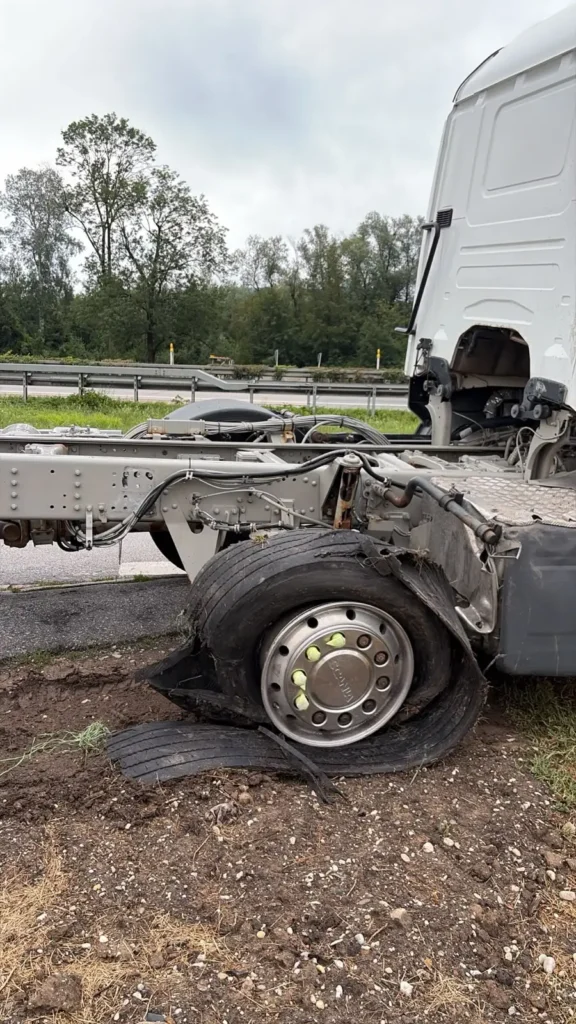
A drive-axle tyre failure at 40 tonnes is not a minor inconvenience. It is a genuinely dangerous moment on a motorway, and if the driver reacts badly, or if the wrong company turns up with the wrong tyre, a single blowout can turn into a stranded vehicle for half a day, a missed delivery slot, and a repair bill inflated by towing fees that never needed to happen.
n
This is what happened to a Scania tractor unit on the A4 near Dresden, and it is a good example of what a properly organised mobile tyre service looks like when everything goes right. No towing, no overnight recovery, no drama beyond the initial bang of a tyre coming apart at motorway speed. Just a call, a dispatched partner, a wheel change on the hard shoulder, and a driver back in his cab inside two hours.
n
We are publishing the details here — the timeline, the costs, the technical steps — because hauliers and fleet managers searching for a truck tire service near me deserve to know exactly what a call-out actually involves before they need one at 6:50 in the morning on a cold shoulder of the A4.
n

n
The Emergency
n
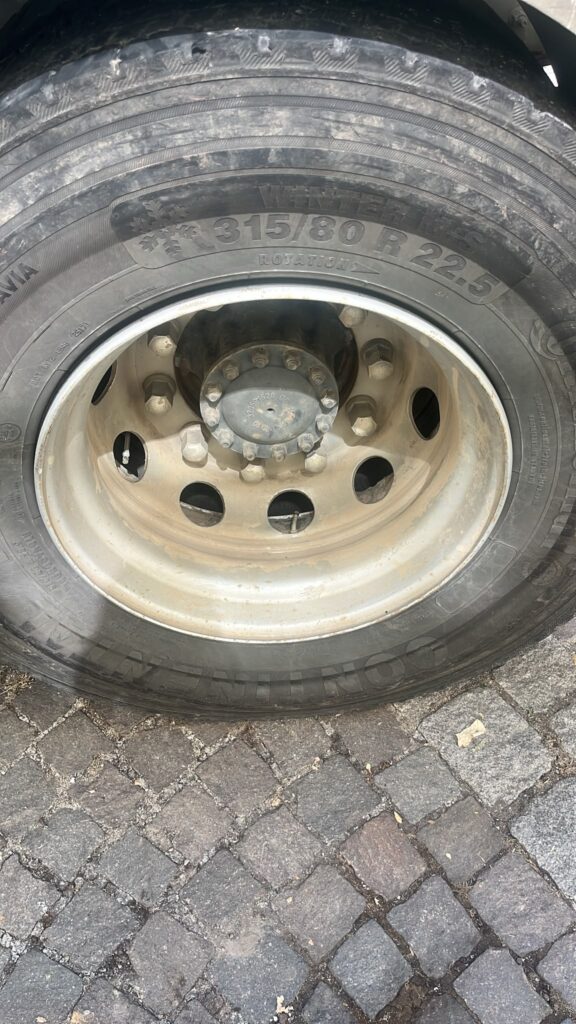
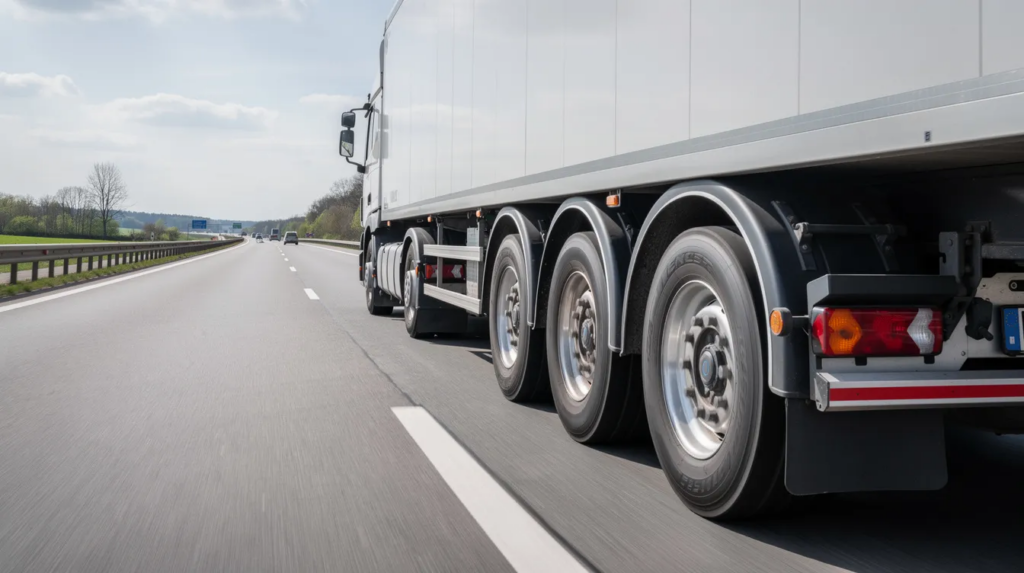
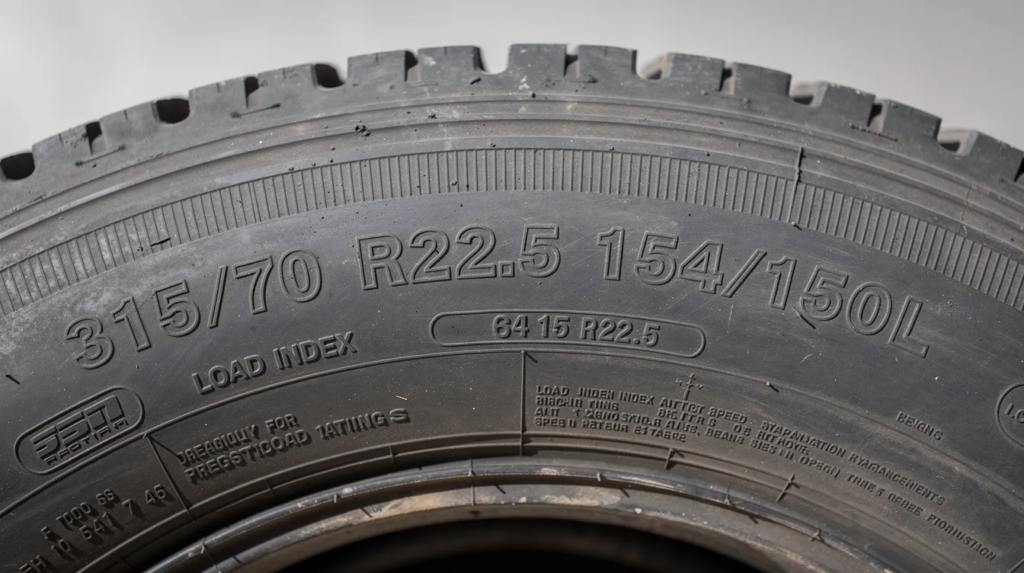
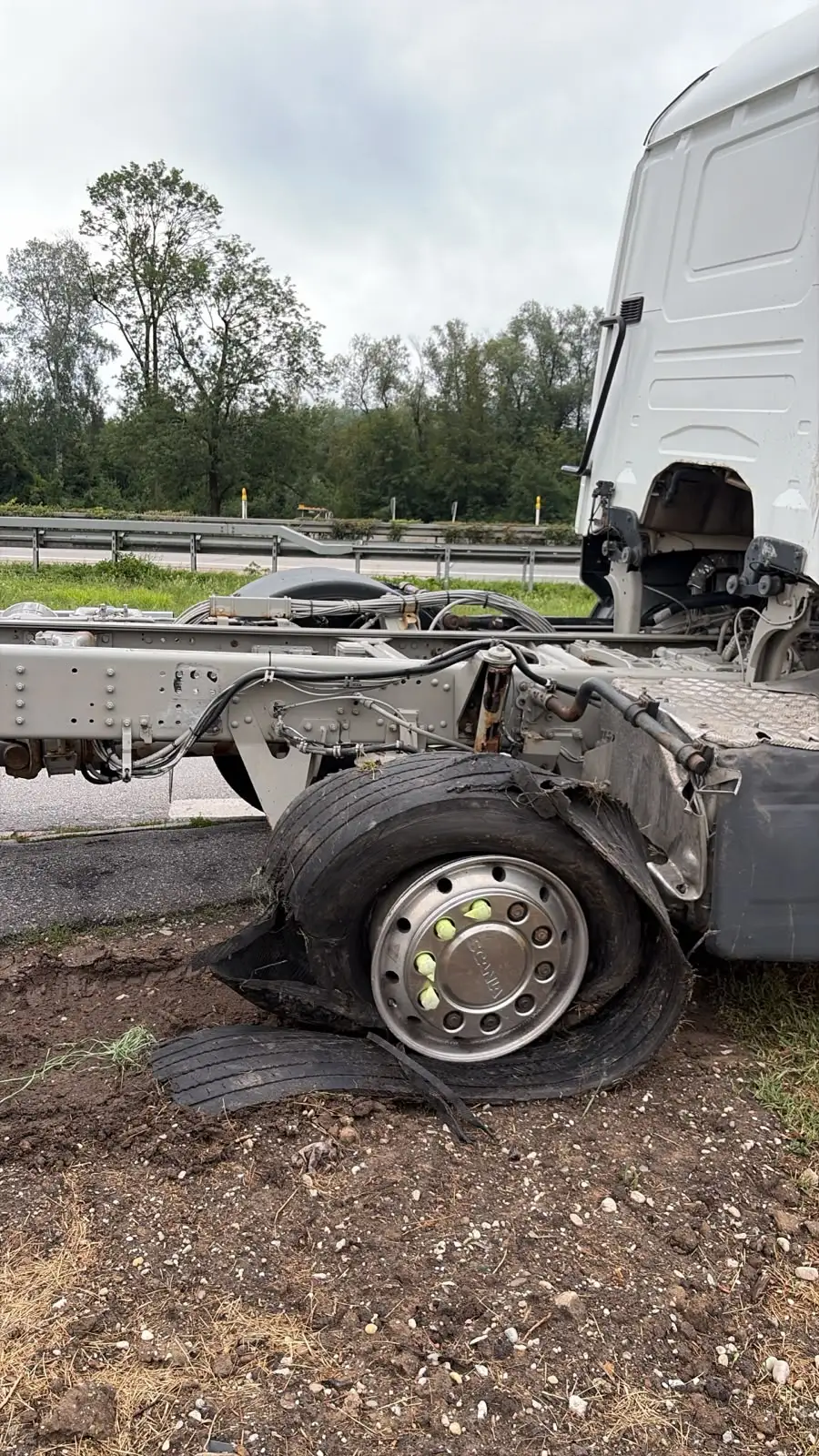
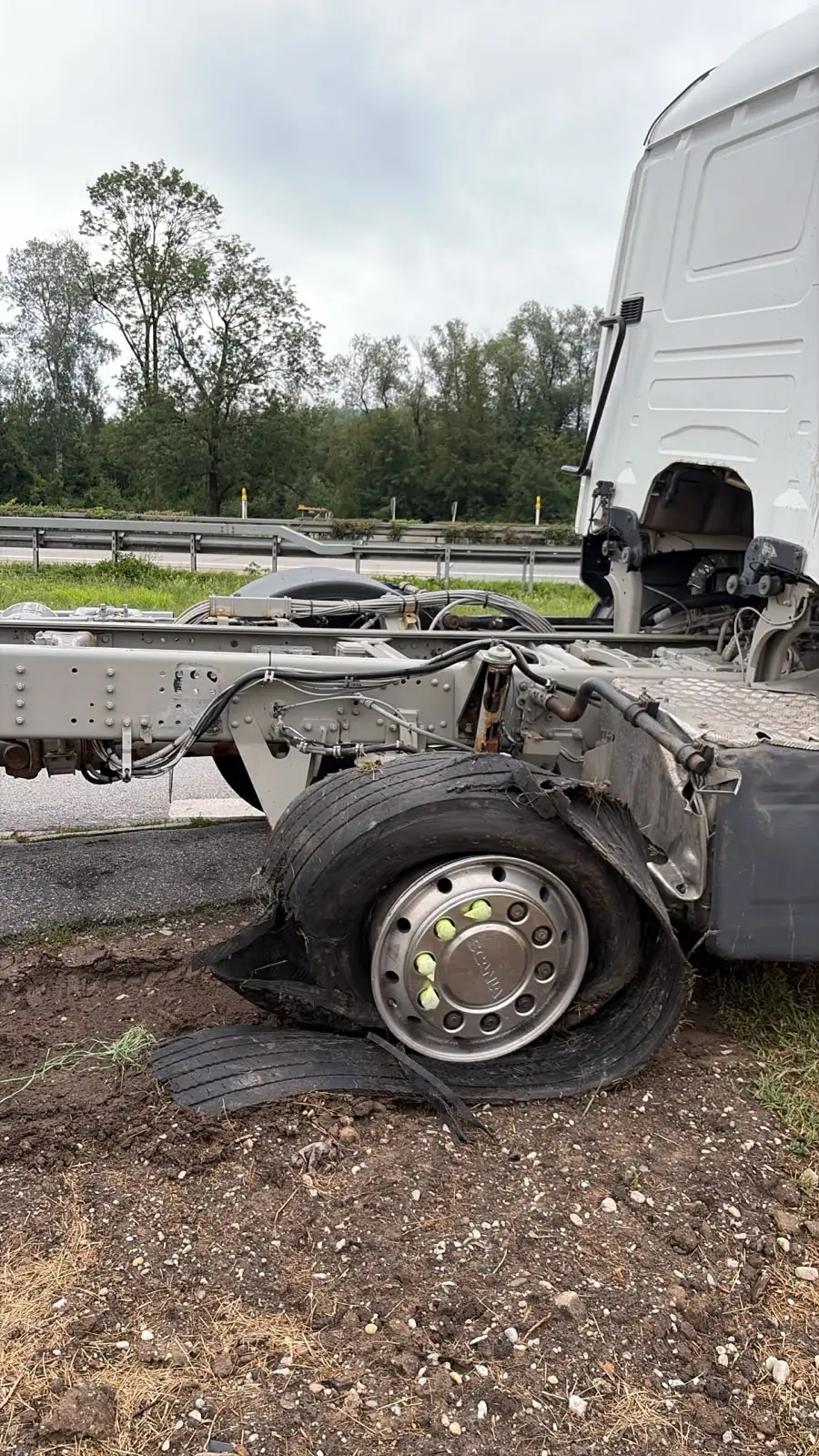
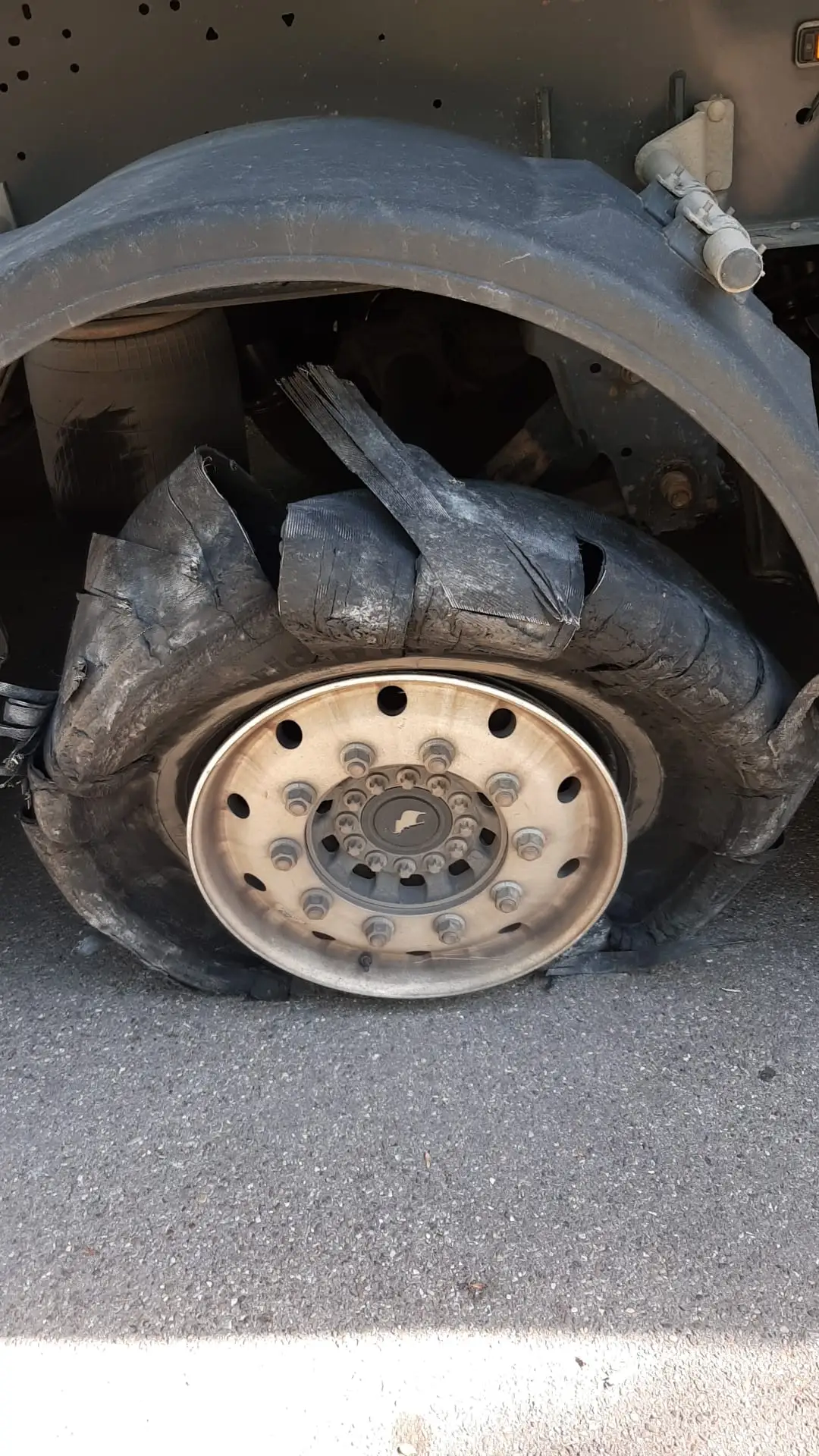
The vehicle was a white Scania articulated tractor, running long-haul at roughly 40 tonnes gross combination weight, heading towards Chemnitz on the A4. Somewhere along that stretch, one of the drive-axle tyres let go. Not a slow puncture, not a gradual loss of pressure — a full blowout. The tread had separated completely from the casing, and what was left of the carcass was shredded beyond any possibility of a temporary fix. This was a 295/80 R22.5, the standard drive-axle size on most European long-haul tractors, and there was no getting a load-bearing vehicle back to a workshop on the remaining tyres of that axle pairing without doing further damage.
n
The driver managed to bring the Scania onto the hard shoulder near Dresden without incident, which is exactly the right call in this situation. Drive-axle blowouts at speed can pull a tractor sideways hard enough to threaten a jack-knife, especially with a loaded trailer behind it, so getting the unit stopped safely on the verge is the single most important thing a driver can do before making a call.
n
That call came in at 06:50.
n
How Help Was Organised
n
LKWHelp24 does not run its own fleet of tyre vans sitting idle in every region of Germany waiting for the phone to ring. That would be an inefficient and expensive way to offer 24/7 coverage nationwide. Instead we work through a vetted network of local truck tyre partners, each one covering their own patch of the country, each one equipped and certified to handle drive-axle and steer-axle work on heavy commercial vehicles.
n
For a breakdown near Dresden, the process runs like this:
n
● The call is logged immediately, and the caller is asked for exact location (motorway, direction of travel, kilometre marker or nearest exit), vehicle type, and — where the driver can tell us — what actually happened to the tyre.
n● Our dispatch checks which certified partner in the Dresden catchment area is closest and available right now, not theoretically on a roster somewhere.
n● The partner is briefed on the tyre specification needed (295/80 R22.5 for a drive axle) so they can load the correct tyre onto the service vehicle before leaving their base, rather than discovering a mismatch on arrival.
n● An ETA is communicated back to the driver so they know roughly how long they will be waiting and can plan accordingly — informing their dispatcher, checking delivery windows, letting the customer at the other end know about a possible delay.
n● The whole handover, from the initial call to a partner being dispatched with an estimated arrival time, took twelve minutes in this case.
n
That speed matters. A driver stranded on a hard shoulder with no information is a driver who starts to panic, second-guesses the decision to wait, or worse, attempts something risky like changing the wheel themselves without proper stabilisation equipment.
n
The Situation On-Site
n
By the time the partner vehicle arrived at 07:40, fifty minutes after the initial call, the picture was clear. The drive-axle tyre was destroyed — not repairable by any measure, not a candidate for a plug or a patch, just scrap rubber and torn steel belting that needed to come off the truck entirely.
n
Drive-axle tyres on a Scania of this weight class typically run somewhere in the 8.5 to 9.5 bar range depending on load and manufacturer spec, and getting a replacement mounted correctly to the right pressure on a moving carriageway’s hard shoulder is not something to rush. The truck was still fully loaded, which meant the axle carried real weight even while stationary, and any technician working underneath or beside a 40-tonne combination vehicle on a live motorway is taking on genuine risk if the securing and signage are not done properly first.
n
The good news on inspection was that the wheel rim itself had survived intact. Tyre blowouts at speed can sometimes damage the rim — cracking, deformation around the bead seat, or scoring that compromises the seal — but here the rim checked out clean, which meant a straightforward tyre swap rather than a more complex rim replacement or repair.
n
n
Step-by-Step: What the Crew Did
n
Step 1 — Secure the scene. Warning triangles, hazard lighting, and correct positioning of the service vehicle to shield the work area from passing traffic. This is not paperwork, it is the difference between a routine job and a serious accident on a motorway hard shoulder. Completed by 07:48.
n
Step 2 — Stabilise and jack up the vehicle. With the truck still fully laden, the axle needed to be properly supported before any wheel came off. This step also included at 07:48, running in parallel with securing the site.
n
Step 3 — Remove the destroyed tyre. The wheel nuts were released, the wheel pulled, and the wrecked tyre stripped from the rim. The rim was inspected at this stage and confirmed sound — no cracks, no bead damage, clear to reuse. Finished at 08:08.
n
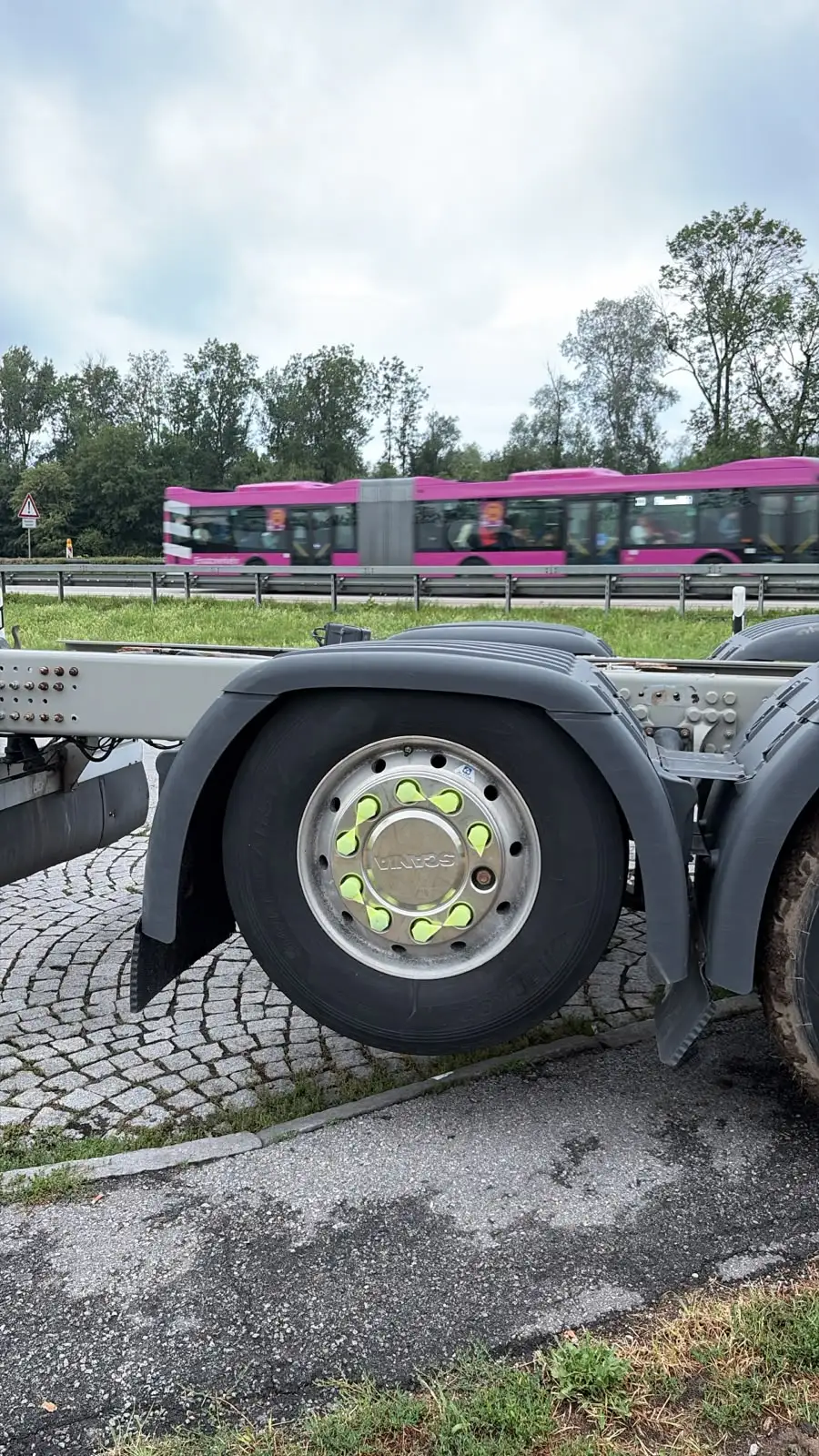
Step 4 — Mount and inflate the new tyre. A replacement 295/80 R22.5 Continental Conti Hybrid HS3 was fitted to the inspected rim, seated, and inflated to 9.0 bar — the correct operating pressure for this application. Completed by 08:26.
n
Step 5 — Torque and final check. Wheel nuts were tightened in the correct star pattern to the manufacturer’s specified torque, then the whole assembly was checked over before the truck was cleared to move. This wrapped up at 08:36, with the Scania declared fahrbereit — roadworthy and cleared to drive — by 08:40.
n
Full Timeline
n
| Time | Phase | Action |
|---|---|---|
| 06:50 | Call received | Driver reports drive-axle blowout on the A4 near Dresden |
| 07:02 | Partner dispatched | Local Dresden-area tyre partner briefed and given ETA |
| 07:40 | Arrival on site | Partner vehicle reaches the hard shoulder |
| 07:48 | Site secured | Triangles, hazard lighting, vehicle jacked and stabilised |
| 08:08 | Old tyre removed | Destroyed 295/80 R22.5 stripped from the rim; rim inspected and confirmed intact |
| 08:26 | New tyre fitted | Continental Conti Hybrid HS3 mounted, inflated to 9.0 bar |
| 08:36 | Torque and inspection | Wheel nuts torqued in star pattern, final safety check |
| 08:40 | Roadworthy | Scania cleared to continue its journey |
n
Total elapsed time from call to roadworthy: around 1 hour 50 minutes. Time actually spent on site working: about one hour. For a drive-axle blowout requiring a full tyre change on a live motorway hard shoulder, that is a fast turnaround, and it is fast precisely because the dispatch-to-arrival window was kept tight and the crew arrived already knowing what tyre size to bring.
n
Cost Breakdown
n
| Item | Price (EUR) |
|---|---|
| Call-out / 24/7 motorway emergency service | 190 |
| Tyre 295/80 R22.5 (Continental Conti Hybrid HS3) | 320 |
| On-site fitting and balancing | 90 |
| Disposal of the damaged tyre | 20 |
| TOTAL | 620 EUR |
n
A few things shape this figure. The call-out fee reflects genuine 24/7 motorway coverage — a technician on standby, willing to attend a hard shoulder before seven in the morning, which is a different cost structure to a scheduled workshop appointment. The tyre itself was a mid-to-premium drive-axle option; alternatives such as a Michelin X Multi or a Goodyear KMAX would sit in a broadly similar price bracket, sometimes slightly higher depending on stock and season. Fitting and balancing on a motorway hard shoulder, using mobile equipment rather than a workshop lift, carries a modest premium over an in-shop job, and disposal of the old tyre is a fixed, small cost that keeps the whole job compliant rather than leaving scrap rubber at the roadside.
n
Set against the alternative — recovery truck, towing to a workshop, storage fees, and a driver and vehicle off the road for most of a day rather than under two hours — 620 EUR for a full drive-axle tyre replacement with call-out included is a genuinely competitive outcome. Towing alone on a German autobahn regularly runs into several hundred euros before any repair work has even started, and that is before counting the lost time.
n
n
Why a Professional Service Is Essential
n
There is a temptation, especially among experienced drivers, to think a wheel change is a wheel change and any competent person with the right tools could manage it at the roadside. In practice, drive-axle work on a laden 40-tonne combination vehicle carries risks that make DIY roadside repair a genuinely bad idea:
n
● Jacking a laden axle without proper equipment can go wrong fast — the wrong jack point or an unstable surface can drop a vehicle weighing tens of tonnes onto anyone underneath it.
n● Working on the hard shoulder without correct signage and positioning turns a tyre job into a serious collision risk, since passing traffic at motorway speed gives almost no reaction time to a technician stepped out beside the carriageway.
n● Incorrect torque or sequence on wheel nuts is a leading cause of wheels coming loose in the days after a repair — this is not guesswork, it needs a calibrated torque wrench and the correct star pattern every time.
n● Missing rim damage that looks minor but compromises the bead seal can lead to a repeat blowout within days, sometimes at a worse location or a worse speed.
n● Under- or over-inflating a replacement tyre shortens its life dramatically and, on a drive axle carrying real load, affects handling and braking distance.
n
A certified mobile tyre partner brings the calibrated tools, the correct tyre stock, and — just as importantly — insurance and liability cover that protects both the driver and the haulage company if anything does go wrong during the repair.
n
Typical Breakdown Situations We Handle
n
Beyond drive-axle blowouts like this one, LKWHelp24’s partner network across Germany regularly deals with:
n
● Steer-axle tyre failures, which carry their own particular handling risks given the direct effect on steering response.
n● Trailer axle punctures and blowouts on multi-axle semi-trailers.
n● Slow punctures picked up at rest stops or from debris on the autobahn that need attention before a driver continues.
n● Rim damage from potholes or kerb strikes that requires assessment before a tyre can safely be remounted.
n● Full sets of tyre changes for fleets doing scheduled seasonal swaps, arranged in advance rather than as an emergency.
n● Battery failures, starter motor faults, and other roadside breakdowns that fall outside tyre work but still need a rapid response.
n
Whatever the trigger, the same principle applies: a nationwide network of local, certified partners means someone qualified is realistically close by, wherever in Germany the call comes from.
n
n
Prevention Tips for Drivers and Fleets
n
Not every blowout can be predicted, but a fair number can be avoided with routine discipline:
n
● Check tyre pressure at every stop where it is practical, not just at the start of a shift. Drive-axle tyres under load lose pressure gradually and a driver who only checks once a week can miss the warning signs.
n● Watch for uneven wear patterns during pre-trip inspections — they usually point to an alignment or suspension issue that, left unaddressed, will eventually take out a tyre at speed.
n● Respect load limits on individual axles. Overloading a drive axle, even within the vehicle’s overall gross weight limit, accelerates tyre stress well beyond what the casing is rated for.
n● Replace tyres before they reach the legal tread limit, not right at it. The margin between “technically legal” and “genuinely safe at motorway speed in wet conditions” is smaller than most people assume.
n● Keep a record of tyre age as well as tread depth. Rubber compound degrades over time even on a tyre that has not covered many kilometres, and older casings are more prone to sudden separation under load and heat.
n
Fleet Tyre Maintenance and Choosing the Right Brand
n
For fleet operators managing dozens or hundreds of vehicles, tyre strategy is a cost-control issue as much as a safety one. Continental, Michelin, and Goodyear remain the three names that dominate the German long-haul market, and each has genuine strengths depending on how a fleet actually operates.
n
Continental’s Conti Hybrid range — the tyre fitted in this Dresden case — is built around regional and long-haul flexibility, with a tread compound designed to handle mixed motorway and secondary-road use without excessive wear on either. Michelin‘s X Multi line targets similar territory with a strong reputation for total lifetime mileage, often justifying a slightly higher upfront price through longer service intervals before replacement. Goodyear‘s KMAX range focuses heavily on fuel efficiency through reduced rolling resistance, which for a fleet running high annual mileage can translate into meaningful savings over a tyre’s working life, even if the headline purchase price sits close to its competitors.
n
The right choice depends on route profile, average load, and how a fleet weighs upfront cost against total cost of ownership. A regional distribution fleet doing frequent stop-start work has different tyre demands to a long-haul operation running motorway miles across Germany and into neighbouring countries, and a good tyre partner should be asking about that usage pattern before recommending a brand, not simply supplying whatever is in stock.
n
LKWHelp24: Your Truck Emergency Partner
n
What made the difference in this Dresden case, and in every call-out we handle, comes down to a handful of things that sound simple but are genuinely hard to deliver consistently:
n
● True 24/7 availability, every day of the year, across the whole of Germany — not a call centre that takes a message and gets back to you in the morning.
n● A certified partner network rather than a single depot trying to cover an entire country, which means a realistically short distance between breakdown and technician almost anywhere on the German motorway system.
n● Transparent pricing communicated before work begins, so a driver or fleet manager is never surprised by the final invoice.
n● Multilingual support, recognising that international haulage means drivers calling in from a range of backgrounds and needing to explain a breakdown clearly under pressure.
n● Correct tyre specification handled at dispatch stage, so partners arrive with the right tyre rather than needing a second trip.
n
n
Summary
n
-
n
- Vehicle: Scania tractor unit, articulated, roughly 40 tonnes
- Tyre size: 295/80 R22.5, drive axle
- Location: A4 hard shoulder near Dresden, direction Chemnitz
- Response time: 12 minutes from call to partner dispatch, 50 minutes to arrival on site
- Total time: approximately 1 hour 50 minutes, call to roadworthy
- Time on site: approximately 1 hour
- Total cost: 620 EUR, call-out and tyre included
- Secondary damage: none — wheel rim confirmed intact on inspection
n
n
n
n
n
n
n
n
n
Request Emergency Assistance Now
n
If you are dealing with a tyre blowout, a puncture, or any breakdown on a German motorway right now, call +49 160 5753826. LKWHelp24 coordinates certified local partners across the entire country and can get help moving towards you within minutes of your call.
n
lkwhelp24.com — Available 24/7 across all of Germany.
n
n
You might also be interested in
n
-
n
- Truck Tyre Blowout, Drive Axle — A1 Bremen
- Scania Tyre Service, 385/55 R22.5 — A6 Mannheim
- Volvo FH 460 Steer Axle Tyre Service — A9 Nuremberg
- Truck Tyre Blowout and Wheel Change — A7 Hamburg
n
n
n
n
n
n
Sources: Scania Deutschland · Continental Truck Tyres