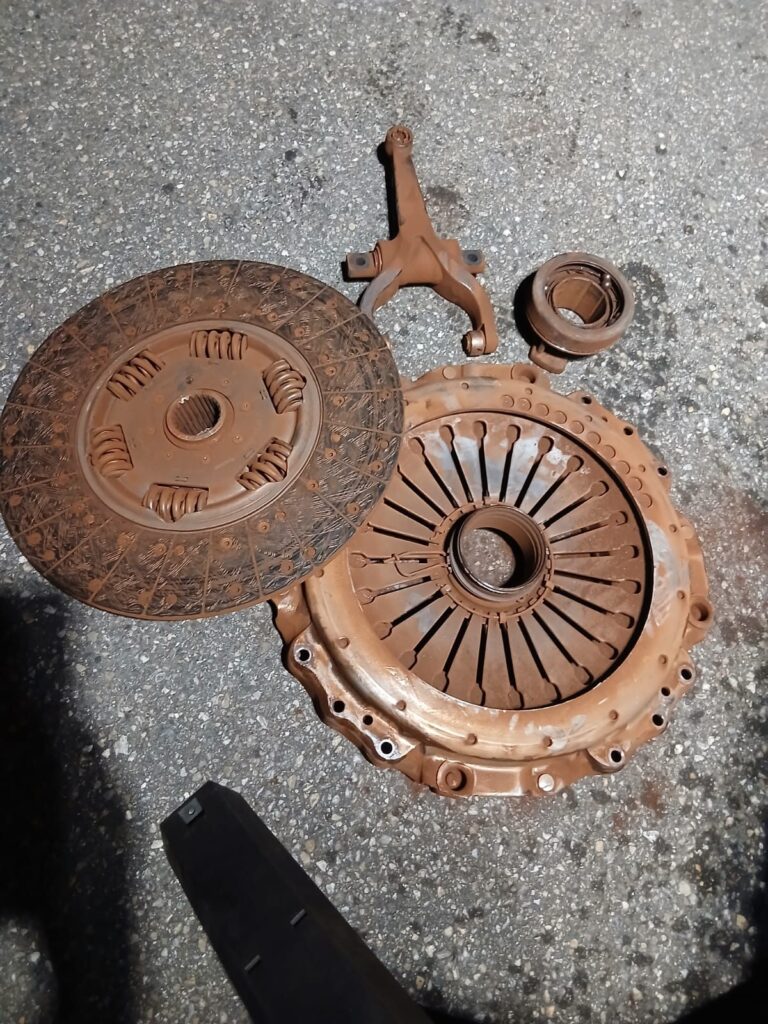
On the evening of 20 August 2026, an articulated tractor unit slipped its clutch on a long climb on the A5 near Gießen and lost all drive. Our dispatcher took the call at 18:20. By 21:20 a new clutch kit was fitted by a mobile crew, the hydraulics were bled, the test drive was done and the driver was rolling towards Frankfurt again. The bill came to EUR 1,370 net, with no towing and no secondary damage.
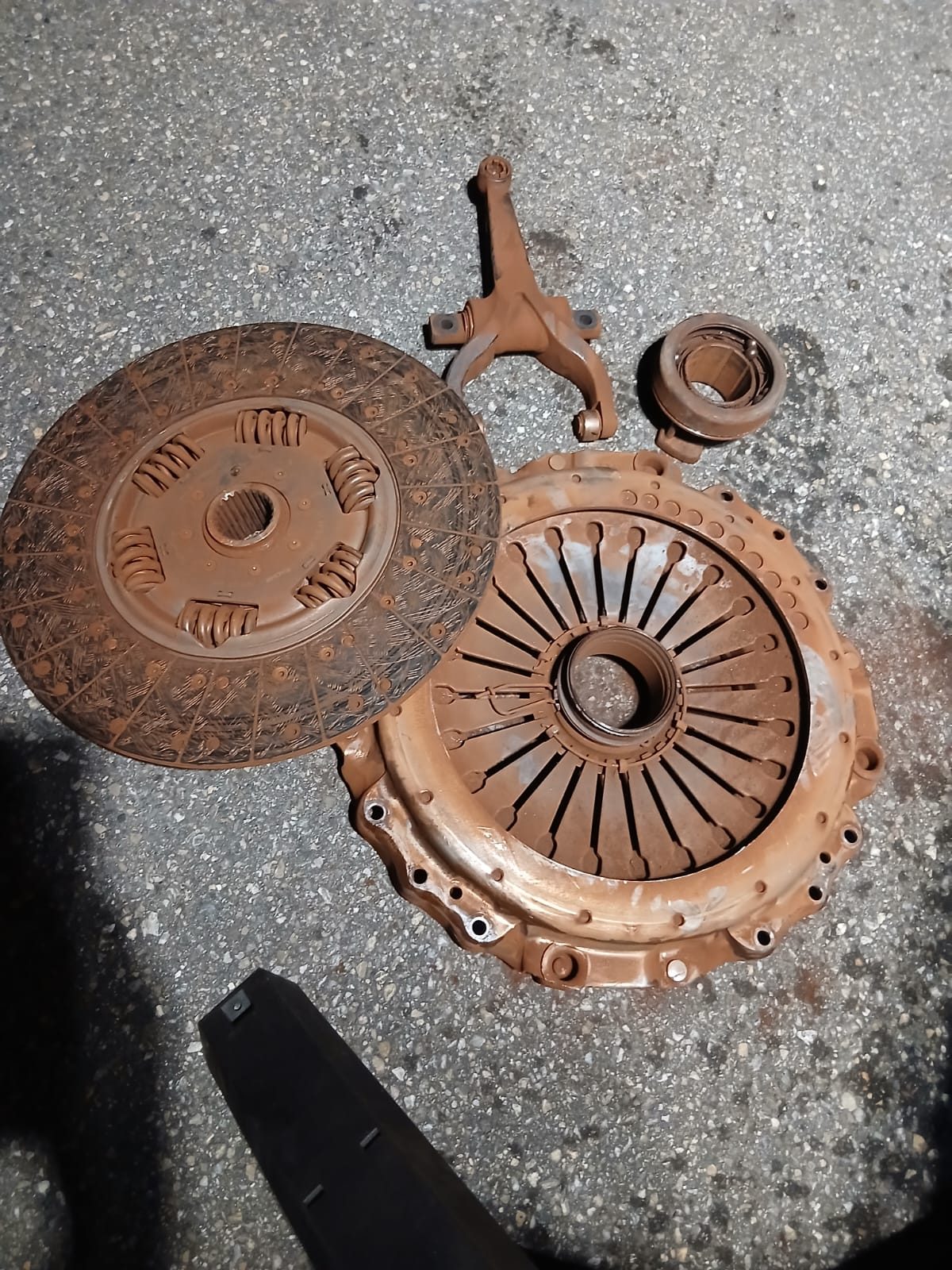
This write-up covers what truck service on the hard shoulder or at a lay-by actually involves: how a worn clutch announces itself, why a lorry with a slipping clutch should not be driven on, what a clutch swap at the roadside costs, and how a three-hour job compares with a tow to a workshop and a few lost days. If you run a fleet or drive a tractor unit yourself, the numbers and the checklists below are meant to be used.
What happened: a slipping clutch on the A5 near Gießen
A clutch that slips on a gradient is a breakdown in the making: the engine revs rise, the lorry does not accelerate, and a smell of burnt lining fills the cab. The driver of this tractor unit had been on the road for three days with a heavy semi-trailer behind him. On the long rise north of Gießen, in the evening convoy towards Frankfurt, the truck stopped pulling. He lifted off, tried a lower gear, and the problem got worse.
His description on the phone was precise, and that saved time. He said the clutch pedal felt normal, but under load the engine “ran away” from the road speed. On the hill there was no traction at all, and a sharp smell of burnt friction material came through the vents. Experienced drivers know this combination: it points to worn linings or a pressure plate that no longer clamps properly.
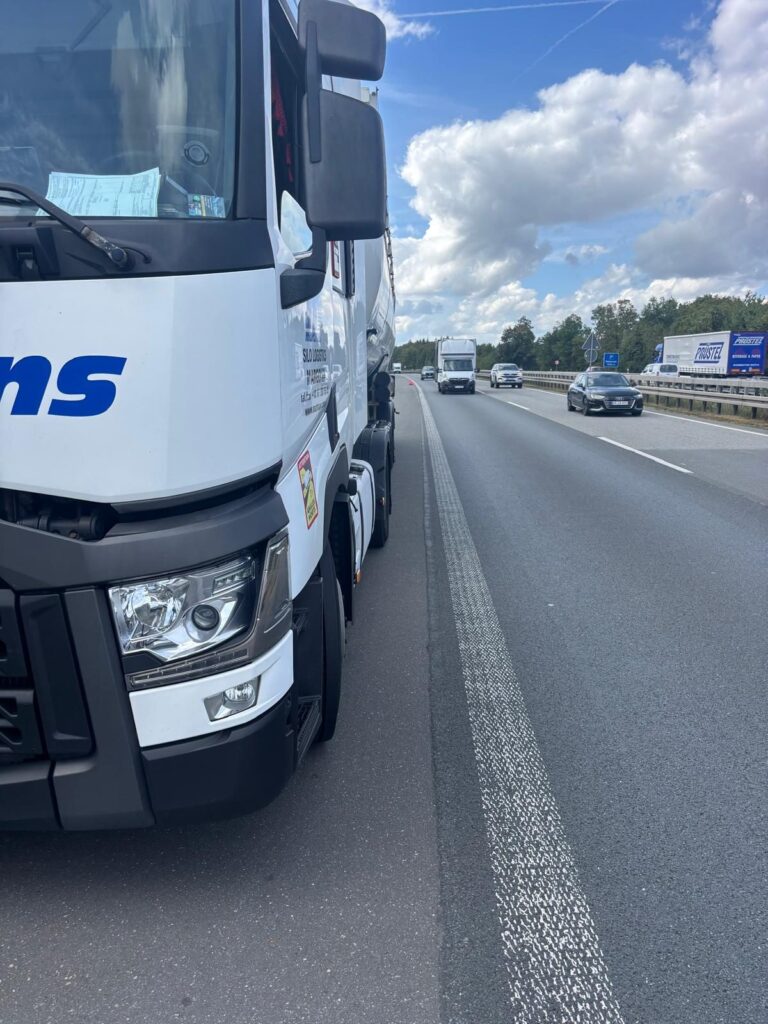
He rolled to a parking area near the slip road, in the direction of Frankfurt, and switched on the hazard lights. That decision mattered. A truck with a half-dead clutch can still creep, but every extra kilometre on the autobahn heats the flywheel further. We asked him to stay where he was.
Why a slipping clutch is not something to “drive home”
Clutch slip is the loss of torque transfer between engine and gearbox because the friction disc can no longer be pressed firmly against the flywheel. In plain terms, the engine turns but the wheels follow only in part.
Drivers sometimes try to nurse the vehicle to the next workshop. On a loaded combination that is a gamble for three reasons:
- Each slipping start generates heat, and the flywheel can blue, crack or warp. A flywheel replacement adds several hundred euros and often a day of waiting for the part.
- A worn release bearing can seize and take the release fork with it, which turns a planned job into a recovery.
- At a gross weight of 40 tonnes, a lorry that cannot accelerate on a slope becomes an obstacle for everything behind it.
In this case the flywheel was still clean when we opened the bell housing, with no heat marks. The driver had stopped early, and that is exactly why the invoice stayed at EUR 1,370 and not at EUR 2,000 or more.
How we organised help: from the call to the crew on the road
The first call is where a breakdown is won or lost. Our dispatcher asked five things in about two minutes: where exactly the truck stood, which gearbox type it had, whether it was a hydraulic or a cable clutch, whether the tractor unit was coupled and loaded, and how the driver felt. Those answers decide which partner crew we send and what they load on the van.
The steps on our side looked like this:
- Locate and secure. The driver shared his position and confirmed that the vehicle stood on a parking area, off the carriageway.
- Qualify the fault. Pedal travel, smell, symptoms under load. The picture was a worn clutch kit, not a hydraulic fault alone.
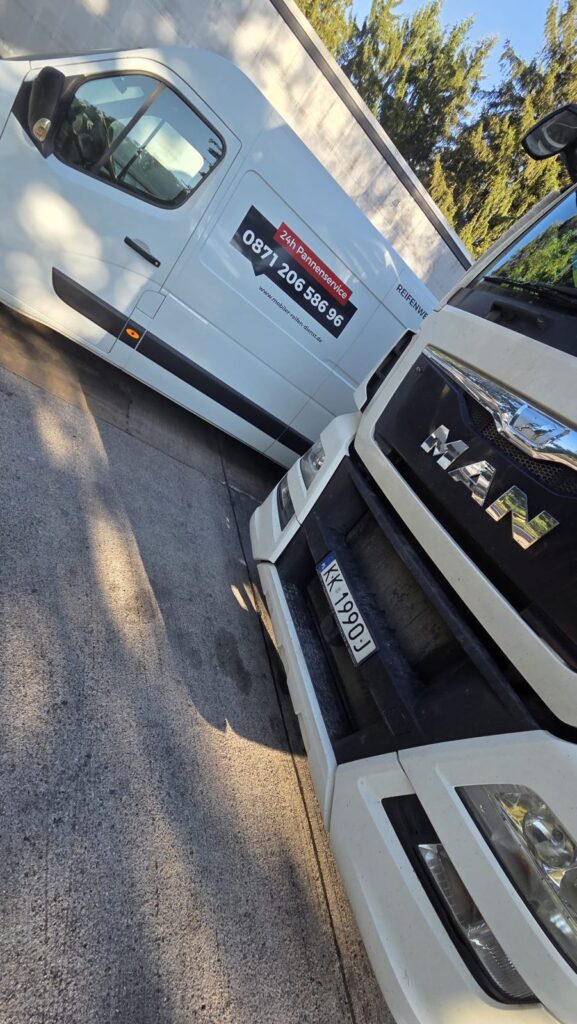
- Pick the right crew. From our partner network we chose the service team in the Gießen and Wetterau region that carries a hydraulic trolley jack and a gearbox lift for tractor units.
- Order the parts. The clutch kit (disc, pressure plate, release bearing) was sourced before the crew left, so no one had to wait on a supplier at 20:00.
- Keep the driver informed. A time of arrival went to him by message, plus a short list of what he could do while waiting: warning triangle placed, high-visibility vest on, vehicle documents ready.
If you want to know how this works in general, our page on mobile truck service in Germany explains the dispatch process and the equipment our crews bring.
The scene on site: what the crew found
The crew arrived at 19:25, fifty minutes after dispatch. It was dusk, the temperature was mild, and the parking area had a firm tarmac surface, which is exactly what you want when a gearbox has to come out. Not every roadside is as friendly. On soft ground or in heavy rain this job would have been moved to a nearby yard, and the timeline would have grown by an hour or more.
Diagnosis took about twenty-five minutes. The technician measured pedal travel, checked the release hydraulics for air and leaks, and tested the engagement point with the engine running and the parking brake set. The result was clear: the lining thickness was gone, and the release bearing (also called the clutch thrust bearing) was noisy when the pedal was pressed. The slave cylinder was intact. The fault was wear after a high mileage, not damage from misuse.
That distinction matters for fleets. A clutch worn out after several hundred thousand kilometres is a normal consumable event. A clutch burnt out in a few weeks points to a driving-style problem, an overloaded combination or a hydraulic fault that keeps the pedal slightly engaged. Here it was the first case.
Step-by-step: how a clutch is replaced at the roadside
A clutch swap on a heavy tractor unit sounds like a workshop job, and ten years ago it mostly was. Today a well-equipped mobile crew can do it in two and a half hours when the conditions allow. This is the sequence used on the A5.
Step 1: Inspect and confirm the diagnosis
The technician checked pedal travel, the release system and the condition of the driveline. He confirmed worn linings and a noisy release bearing. The truck was parked, the engine was off, and the ignition key stayed in the technician’s pocket for safety.
Step 2: Secure the vehicle and the work area
The tractor unit was chocked, uncoupled from the trailer and stabilised. Warning triangle and lighting were set up, because the job continued into the dark. The air system was drained, and the batteries were isolated before any work under the cab.
Step 3: Separate the gearbox and remove the old clutch
The gearbox was supported on a transmission jack, the propshaft and linkage disconnected, and the box drawn back from the engine. The old disc, pressure plate and release bearing came out. This phase ran from 19:50 to about 20:35 and is the heaviest manual work of the job.
Step 4: Inspect the flywheel and fit the new clutch
The flywheel surface was checked for scoring, heat cracks and runout. It was in good order. The technician fitted the new clutch disc, the pressure plate and the new release bearing, greased the input shaft splines with a thin film of the correct grease, and checked the release fork for wear.
Step 5: Refit, bleed and test
The gearbox went back on, all bolts were tightened in a cross pattern to the specified torque, and the hydraulics were bled until the pedal felt firm. The crew checked pedal travel and the point where the clutch bites, then took the tractor unit for a test drive of several kilometres, including a short uphill stretch under load. At 21:05 the unit was handed back to the driver, and at 21:20 he pulled out.
If you want a feel for a comparable job, our report on a clutch actuation repair on the A33 near Paderborn (see the related articles below) shows a different fault on the same system.
Full timeline: 180 minutes from call to departure
The table below shows each phase of the call on 20 August 2026. The total was three hours from the first call to a truck that drives.
| Time | Phase | Action |
|---|---|---|
| 18:20 | Call | Driver reports clutch slip, no traction uphill, smell of burnt lining |
| 18:35 | Dispatch | Dispatcher confirms model and clutch type; nearest service partner with a hydraulic jack and gearbox lift is sent |
| 19:25 | Arrival | Mobile crew on site 50 minutes after dispatch |
| 19:25 | Diagnosis | Pedal travel, release hydraulics and wear measured; linings worn, release bearing noisy |
| 19:50 | Removal | Tractor unit secured, gearbox supported and separated, old clutch removed |
| 20:35 | Fitting | Flywheel checked, new disc, pressure plate and bearing fitted, splines greased, gearbox refitted |
| 21:05 | Finish | Hydraulics bled, pedal travel checked, test drive, handover to the driver |
| 21:20 | Ready | Tractor unit drives again |
Total: 180 minutes (3 hours) from the call to a vehicle that is ready to roll. The photograph above was taken at 21:22 while the crew was tidying up, which is why the dismantled parts lie on the tarmac in the dark.
What did it cost? A transparent price breakdown
A mobile clutch replacement on a tractor unit cost EUR 1,370 net in this case. All amounts are net of VAT (zzgl. MwSt.).
| Item | Price (EUR) |
|---|---|
| Call-out / Anfahrt (evening, surcharge included) | 260 |
| Diagnosis of clutch and release hydraulics | 130 |
| Labour: clutch replacement on site, 2.5 h at EUR 130/h | 325 |
| Clutch kit (disc, pressure plate, release bearing) | 620 |
| Small materials, grease, hydraulic fluid | 35 |
| TOTAL | 1,370 |
Three factors move this price up or down:
- Time of day. An evening or weekend call carries a surcharge of 25 to 50 percent on the call-out fee. Here the surcharge was already inside the EUR 260.
- The parts. Clutch kits for heavy tractor units run roughly between EUR 450 and 900, depending on make, torque rating and whether the release bearing and fork are included.
- Hidden damage. If the flywheel is scored or the release fork is bent, the bill grows. This case had no secondary damage.
For a fleet manager the question is not whether EUR 1,370 is a lot but what the alternative costs. A tractor unit that stays on the hard shoulder or goes on a long tow loses its working time. A standing combination typically costs between EUR 800 and 1,200 per day in lost revenue, driver wages and missed delivery windows, according to the figures we see across our callouts. A tow to a workshop in the next city, a day of queuing and a day for the repair would have cost roughly twice this amount, before counting the trailer’s load, which also has a deadline. For hauliers who track idle time, the German road haulage association BGL publishes cost indices that help to put a figure on a standing day.
Why a professional should do this, not a roadside amateur
Replacing a clutch on a heavy tractor unit is not a task for a driver with a basic toolbox. Tolerances are small, forces are large, and a gearbox weighs several hundred kilograms. These are the risks of doing it yourself or hiring someone without the right equipment:
- A gearbox that slips off a jack can injure people badly and ruin the input shaft.
- A disc fitted the wrong way round or off-centre makes the gearbox impossible to refit.
- Skipping the flywheel check means a new clutch on a damaged surface, which fails again within weeks.
- Wrong torque on the bell-housing bolts causes leaks and vibration, and sometimes a crack in the housing.
- Air left in the release hydraulics leaves the pedal soft, and the clutch never fully disengages.
Our partner crews bring a hydraulic trolley jack, a gearbox lift, torque wrenches and genuine or equivalent-quality parts. That is why the job on the A5 passed a test drive on the first go, without any rework. For a second opinion on roadworthiness after major drivetrain work, an inspection by an organisation such as DEKRA is available to fleets that want documentation.
Typical situations we attend across Germany
The clutch job near Gießen is one of many. Our crews are called to a broad range of situations every day, from the Baltic coast to the Alps:
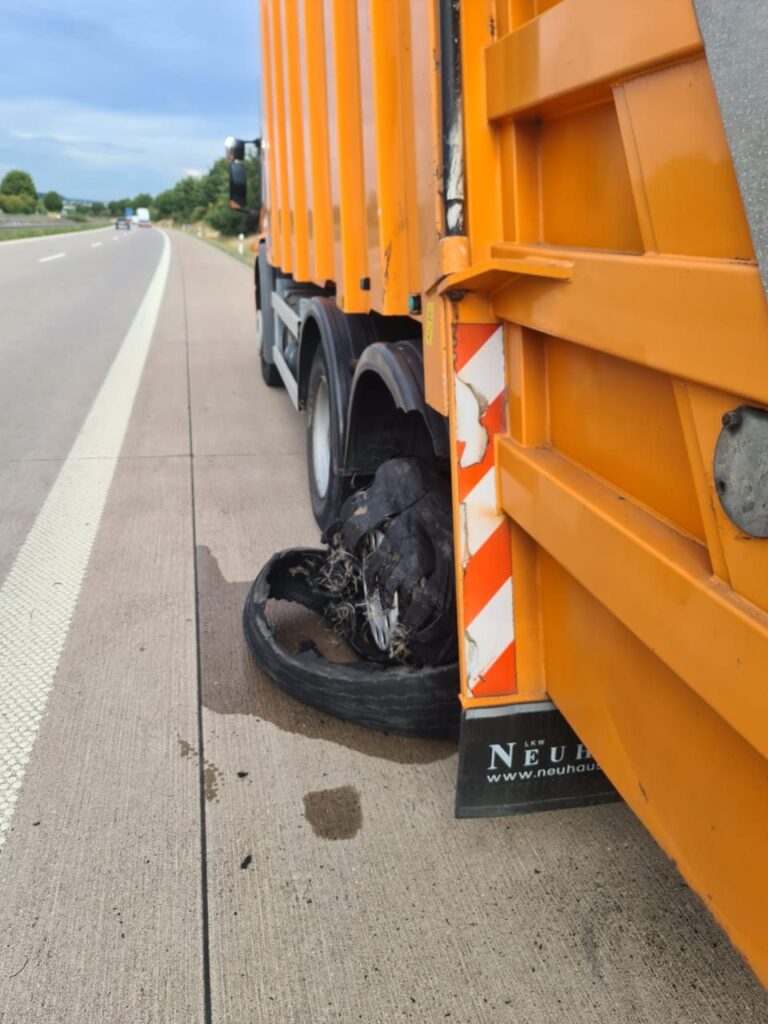
- Tyre blowouts and slow punctures on the steer, drive and trailer axles
- Clutch and release hydraulics faults, like this case
- Air system leaks, brake valve failures and compressor problems
- Coolant leaks, overheating and failed hoses
- Electrical faults, flat batteries, failed starters and alternators
- Dashboard warning lights, AdBlue and exhaust aftertreatment errors
- Tachograph failures and sensor faults
- Hydraulic leaks on tipper and tail-lift equipment
- Recovery and towing when the vehicle cannot be repaired on the spot
When a fault cannot be fixed at the roadside, we organise a truck towing service and bring the vehicle to a suitable workshop. For the decision between roadside repair and a trip to the garage, see our overview of what can be repaired on the road, linked below.
Frequently asked questions
How long does a truck clutch replacement take at the roadside?
A mobile clutch replacement on a tractor unit usually takes two to three hours of work, plus the arrival time of the crew. In our case on the A5 near Gießen, the work ran from 19:25 to 21:05, and the complete time from the call to departure was 180 minutes.
How much does a mobile clutch change cost for a truck?
For a heavy tractor unit expect roughly EUR 1,100 to 1,800 net including the call-out, diagnosis, labour and the clutch kit. Our A5 job cost EUR 1,370 net. Evening, night and weekend calls carry a surcharge on the call-out fee.
Can I keep driving with a slipping clutch?
You should not. A slipping clutch overheats the flywheel, can destroy the release bearing and leaves the truck without traction on gradients. Park safely, switch on the hazard lights and call for help. A short delay costs less than a damaged flywheel.
Does the repair need a workshop, or can it be done on site?
On firm, level ground with enough light, most clutch replacements can be done on site by a properly equipped mobile crew. If the ground is soft, the weather is bad or the flywheel is damaged, the vehicle goes to a truck workshop instead.
What are the signs that a clutch is about to fail?
Typical warning signs are a high engagement point, a soft or spongy pedal, rising revs without matching speed, a burnt smell under load and noise from the release bearing when the pedal is pressed. If you notice two of these, book a check before the next long run.
Who pays for the repair?
The vehicle owner or the haulier pays, unless the damage is covered by a warranty, a maintenance contract or an insurance policy. We issue a clear net invoice (zzgl. MwSt.) with all items listed, which you can pass on to your insurer or leasing partner.
Prevention: how drivers and fleets avoid a clutch breakdown
Most clutch failures are visible weeks in advance if someone looks. These habits cut the risk:
- Do not rest your foot on the pedal. Even light pressure keeps the release bearing turning and wears it quickly.
- Pull away in the right gear. A loaded combination started in too high a gear makes the clutch slip for longer than necessary.
- Report symptoms early. A drivers’ hand-over note about a changed pedal feel saves a breakdown on the autobahn.
- Check the release hydraulics during each service: fluid level, hose condition and pedal travel.
- Plan the replacement. On a fleet with 600,000 km per tractor unit, schedule a clutch check at 400,000 km and replace it during a quiet week, not on a Friday evening in the convoy.
- Match the clutch to the job. Heavy-haul and construction work asks for a different clutch from motorway distribution.
Drivers on long runs should also keep a warning triangle, a high-visibility vest, a torch and the dispatcher’s number in the cab. Current traffic and construction information for the German motorway network is available at autobahn.de, which helps to choose a safe stop when a problem starts.
Truck service, tyres and fleet maintenance: the wider picture
Clutch work is one part of keeping a tractor unit productive. The same logic applies to the rest of the vehicle: wear parts are cheaper to replace on schedule than in an emergency. A good truck service plan for a fleet covers the driveline, brakes, air system, electrics and tyres.
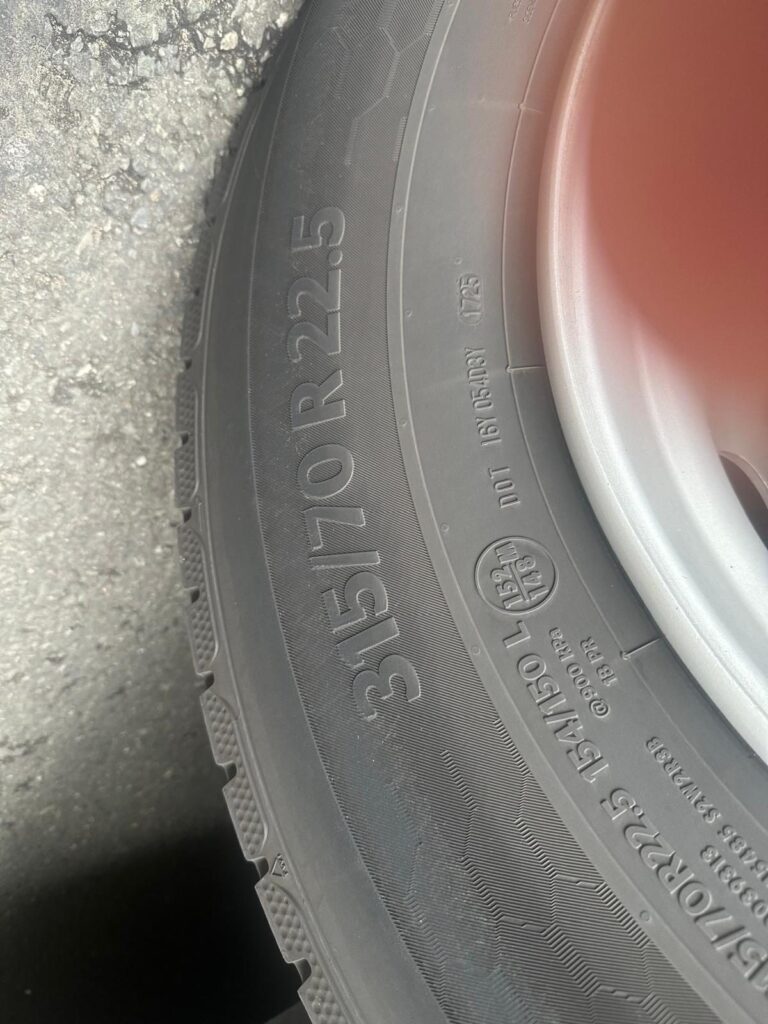
On the tyre side, the usual sizes on German roads are 315/80 R22.5 for steer and drive axles, 385/65 R22.5 for trailers and wide-base setups, and 245/70 R19.5 for medium-duty distribution trucks. Premium makes such as Michelin, Continental, Goodyear and Bridgestone are common across fleets, and the best choice depends on the route profile. Regional distribution with frequent stops puts different demands on a tyre than long-haul with 100,000 km per year. Correct tyre pressure, often between 8.5 and 9.5 bar on heavy truck tyres, protects the casing and fuel economy alike.
The brakes, the wheel bearings and the kingpin area also deserve regular checks. A tractor unit at 40 tonnes brakes with a lot of energy, and worn pads or an uneven air system show up at the worst moment. A scheduled inspection is cheaper than a roadside call, and drivers who tell their workshop about small changes in behaviour usually catch faults early.
For fleets operating across borders, the mix of languages in the cab is a daily reality. Our dispatch handles calls in German, English, Polish and Russian, so the details of a fault do not get lost in translation. That is useful when a driver from another country describes a problem on an unfamiliar road, and it reduces the number of follow-up calls.
If you want to understand what to expect when you phone for help, the article on how to call a mobile truck mechanic in Germany, linked below, walks through the steps from the first call to the handover.
Why drivers and fleets choose LKWHelp24
Fleets and drivers call us again because the process is the same every time and the price is clear before work starts. These are the main reasons:
- 24/7 availability. Our dispatch takes calls day and night, including weekends and public holidays, anywhere in Germany.
- A vetted partner network. Each crew is selected for the fault, the region and the equipment needed, not just for being the closest.
- Transparent pricing. You get a net price breakdown, with call-out, labour and parts listed, as in the table above.
- Multilingual dispatch. Drivers can describe the problem in their own language.
- Fast reaction. On this case, the crew was on site 50 minutes after dispatch, and the whole job took three hours.
For vehicles above 7.5 tonnes there are a few extra points to consider, which our guide at the end of this page covers.
Summary: the key figures of the case
| Item | Detail |
|---|---|
| Vehicle | Articulated tractor unit with heavy clutch, 3 days into a trip |
| Fault | Worn clutch linings and a noisy release bearing, clutch slip uphill |
| Location | A5 near Gießen (Hesse), parking area at the slip road, direction Frankfurt |
| Date | 20 August 2026, evening |
| Response time | Crew on site 50 minutes after dispatch (19:25) |
| Total time | 180 minutes, call at 18:20, ready at 21:20 |
| Cost | EUR 1,370 net (zzgl. MwSt.) |
| Secondary damage | None, the flywheel had no overheating |
| Alternative | Tow to a workshop and 1 to 2 days standstill at EUR 800 to 1,200 per day |
The main lesson from the A5 is simple. When the clutch starts to slip, stop early, call early and let a mobile crew do the job where the lorry stands. The driver who pulled over at the first sign saved the flywheel, and the haulier saved several days.
Need truck service on the road? Call us now
A truck that will not pull is not something to wait on. Call our dispatch, give your position and describe the symptoms, and we will send the nearest suitable crew.
Phone: +49 160 5753826
Website: www.lkwhelp24.com
Around the clock across Germany, 24/7.
Keywords: truck service | truck service germany | truck breakdown service | truck mobile service | roadside assistance germany | mobile service truck | truck clutch replacement | trailer service | truck repair on the road | emergency roadside | tractor unit clutch | A5 Gießen
Related articles
- Truck Clutch Actuation Repair on the A33 near Paderborn
- Truck Repair on the Road: What Can Be Fixed Right on the Spot
- Mobile Truck Mechanic in Germany: How to Call for Help
- Mobile Truck Breakdown Service Near the A45 at Wetzlar: Air System Leak Fixed in 2 Hours 30 Minutes
- Truck Breakdown Service for Vehicles Over 7.5 Tonnes 2026