Skip to content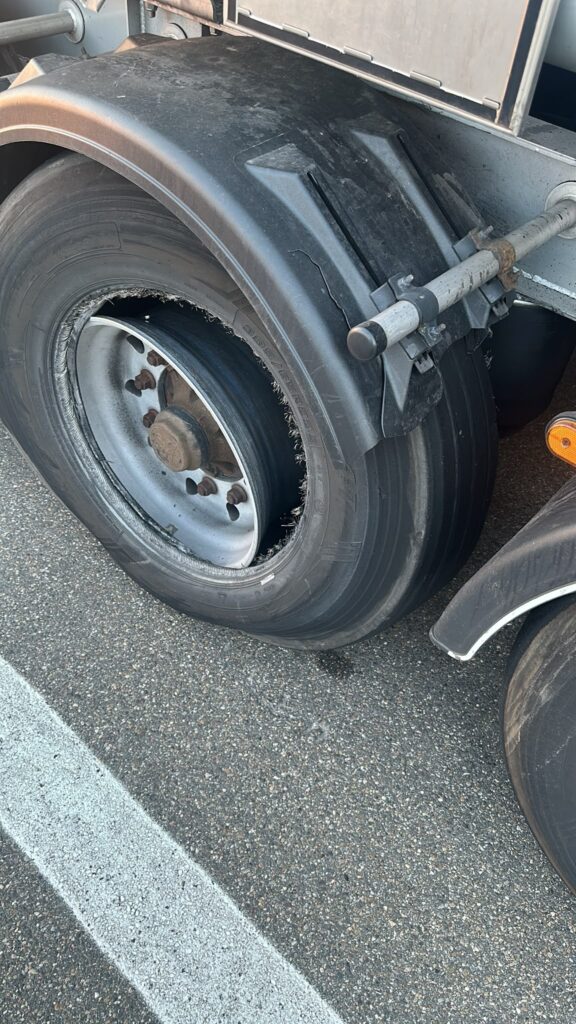
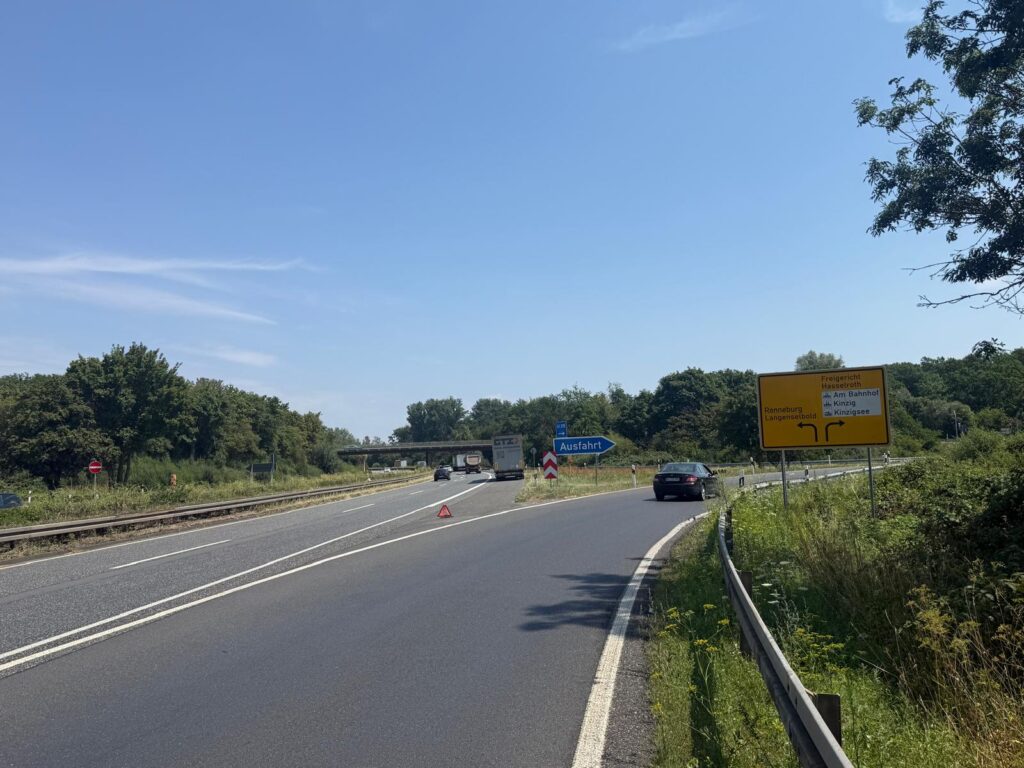
A tyre blowout in broad daylight is bad enough. The same event at dusk, minutes before the last light drains out of the sky, is a different animal entirely. Visibility drops, other drivers’ reaction times stretch, and every technician working the hard shoulder suddenly stands in a spot that’s much harder for passing traffic to spot in time. That’s exactly what happened one August evening on the A5 near Karlsruhe, heading towards Basel.
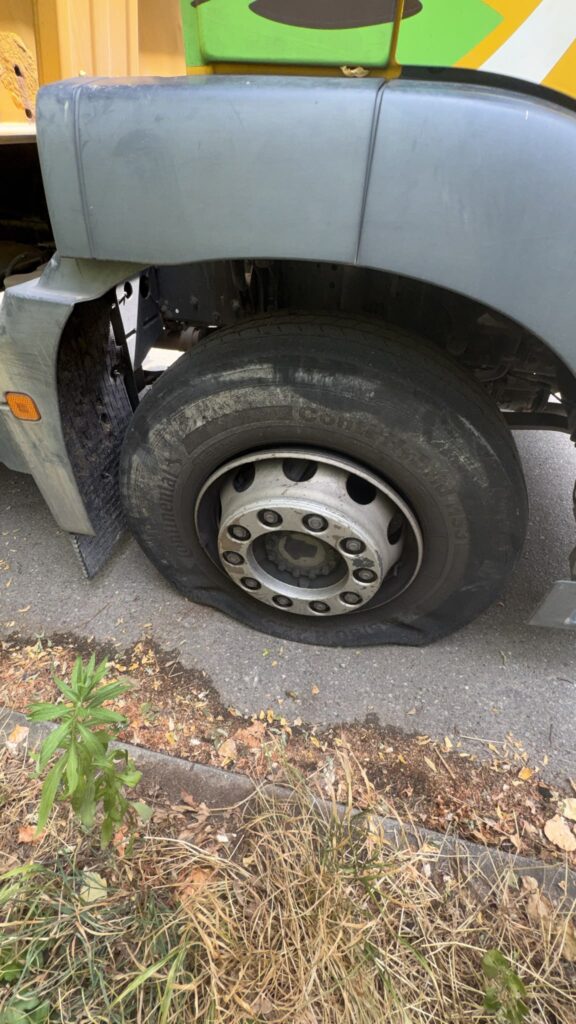
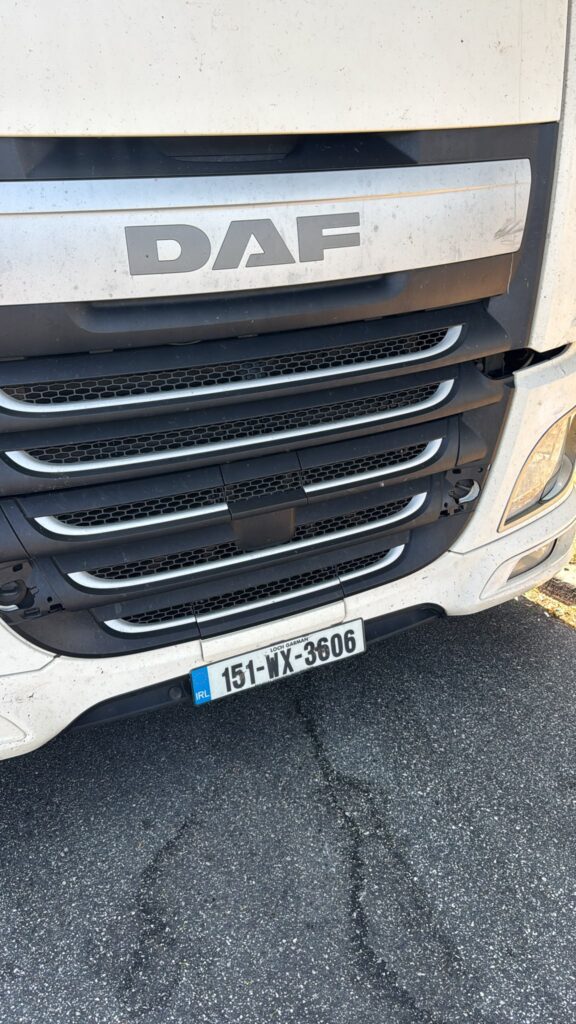
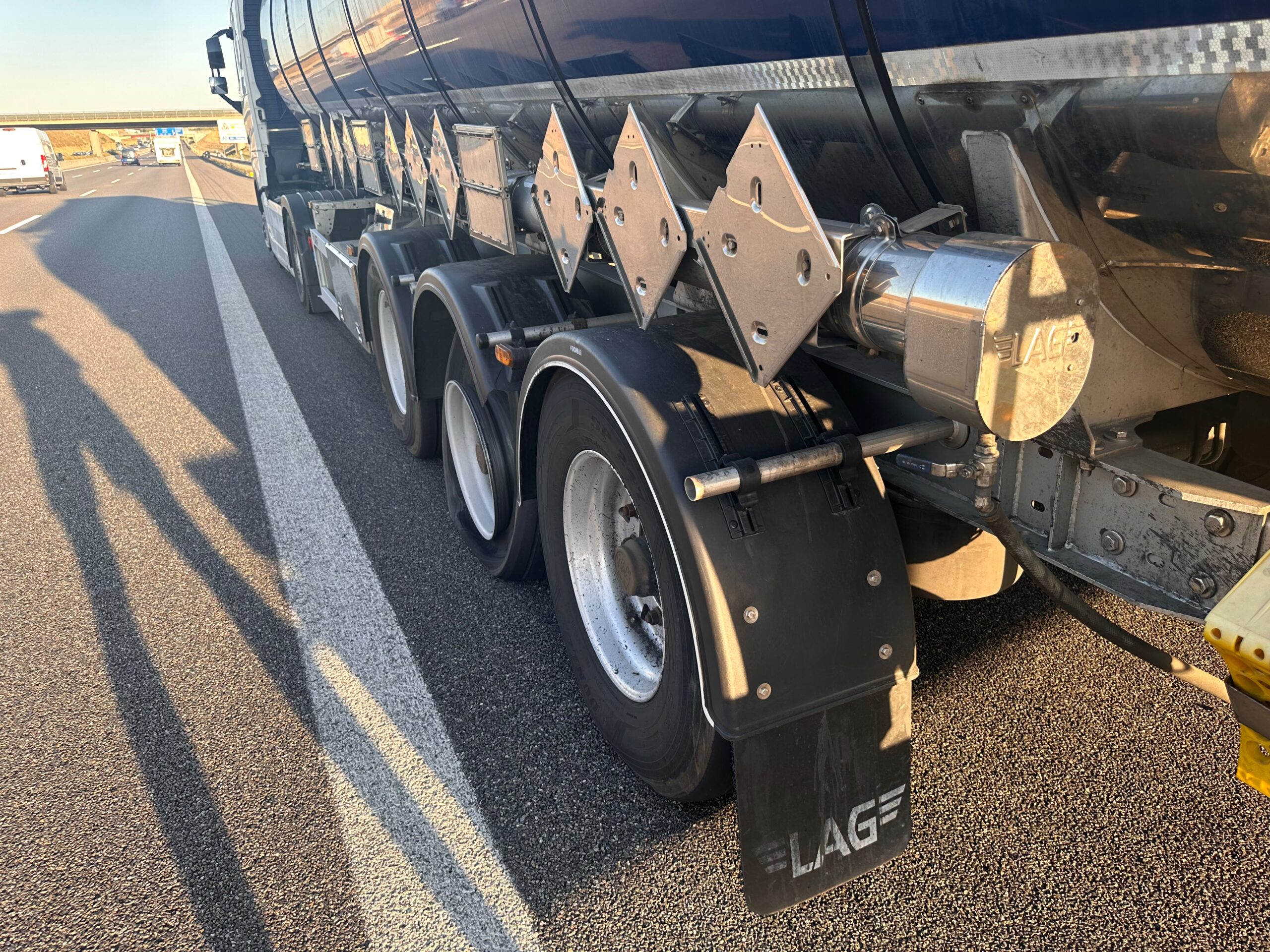
An articulated lorry, a tractor unit with a semi-trailer, was rolling through the evening rush that funnels down this corridor towards the Swiss border and on into France. At roughly 20:30, with dusk sliding into full dark, a 315/70 R22.5 tyre let go with a loud bang. For the driver, that meant keeping the vehicle under control, easing onto the hard shoulder, and calling for help. For us, it meant a night callout under conditions that make everything harder.
This report walks through how a mobile truck tyre service operates after dark, why an evening blowout plays by different rules than a daytime one, and why limping to the nearest services on a shredded tyre was never on the table.
The situation: A5 near Karlsruhe, blowout after dark
The A5 between Karlsruhe and the Swiss border is one of Germany’s busiest north-south corridors. In the early evening, traffic thickens further with commuters and freight trying to clear the border before nightfall. Right in that window, around 20:30, the driver of the articulated lorry reported a loud bang from the drive axle and the vehicle pulling hard to one side.
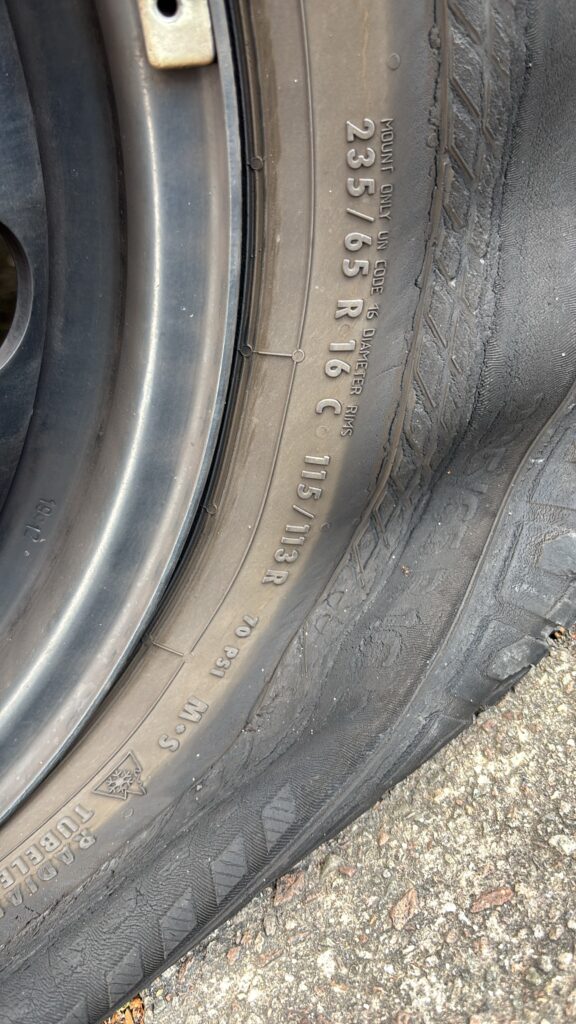
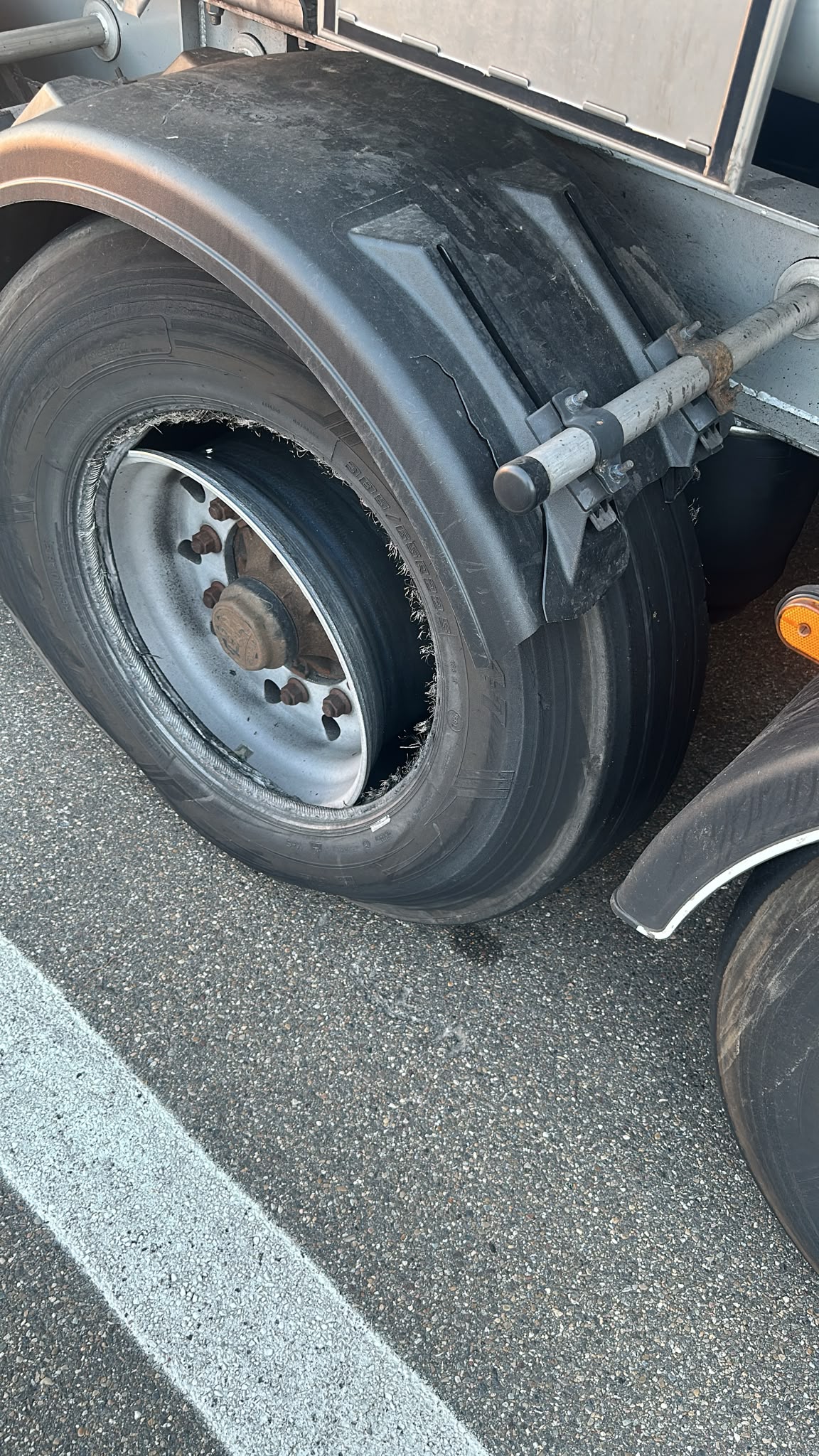
The tyre in question, a 315/70 R22.5, is a standard fitment for long-haul tractor units, built to run at 8.5 to 9.5 bar. A true blowout on this size is rarely a minor fault. Usually the carcass tears open across a wide section, belt layers separate, and fragments of rubber and steel cord scatter across the carriageway. The driver did the right thing: hazards on, controlled roll onto the hard shoulder, warning triangle out, hi-vis on, and a call to our 24/7 control room.
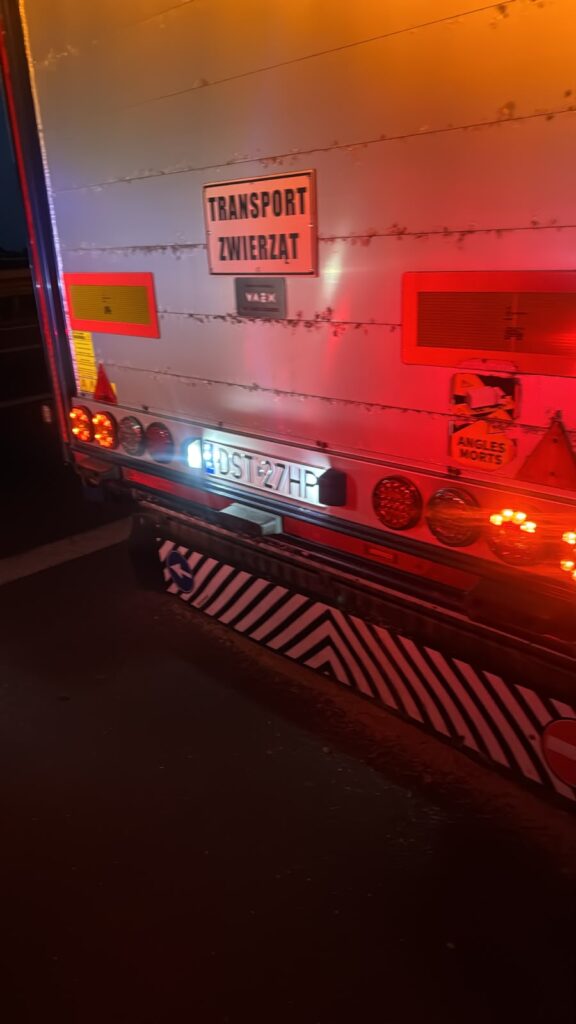
The timing made this a harder job than an equivalent daytime call. By 20:30 in August, dusk is well advanced, headlight glare dominates, and the contrast that lets people spot a stationary vehicle at the roadside drops sharply. Anyone who has driven a motorway in the evening knows the effect: taillights and hazard flashers blend into the general glow of traffic, and a stranded artic often only registers to a driver at the last possible moment.
Why limping to the next services wasn’t an option
A question we get from drivers and dispatchers alike: why not just crawl to the nearest services at low speed? With a genuine blowout, that option is off the table, for several technical reasons.
First, the carcass is structurally destroyed once it’s blown. The tyre no longer carries a defined load, and the vehicle’s weight shifts unpredictably onto the rim. Second, continuing to drive risks rim damage: even a few hundred metres on bare metal can bend or crack a rim, multiplying the repair bill. Third, there’s a real risk to the braking system, as fragments of the torn carcass can catch in air or brake lines and damage them.
The fourth issue affects everyone else on the road. When a tyre blows, chunks of rubber and steel cord come loose, either left on the carriageway or actively thrown clear if the lorry keeps moving. On a route carrying dense evening traffic towards Basel, that’s a serious hazard for following vehicles, motorcyclists in particular. For all these reasons, the rule with a real blowout is simple: stop immediately, secure the scene, call in a professional. No driver should try to “just make it” to the next exit.
Why a night callout is a different job from a day callout
Changing a tyre on the hard shoulder is already a safety risk in daylight. After dark, that risk multiplies. Laid out plainly, the reasons are:
- Reduced visibility for approaching traffic. Headlight glare makes it harder to distinguish warning lights from ordinary vehicle lighting.
- Longer reaction times. Drivers spot a roadside hazard later at night than in daylight, even with correct lighting on the work area.
- Higher risk of a rear-end or sideswipe collision right in the technician’s working zone.
- Mandatory LED floodlighting of the entire work area, not just the wheel being changed.
- Full reflective PPE required throughout, not just a hi-vis vest thrown over a jacket.
That’s why our team turns up to every night callout with extra kit: portable LED floodlights that light the whole work area to near-daylight levels, additional flashing cones set further back from the actual job than they would be by day, and fully reflective workwear for the whole crew. This gear takes longer to set up, but it measurably cuts collision risk for everyone involved.
How the response was organised
The moment the call reached our control room, a standard procedure kicked in, extended with extra safety steps for night jobs:
- Confirm the exact position via GPS coordinates and marker post on the A5, direction Basel.
- Confirm tyre size, 315/70 R22.5, and which axle, so the right stock is reserved on the service vehicle.
- Verify the artic is fully on the hard shoulder and not creating an acute hazard for moving traffic.
- Dispatch our regional service partner, flagging the job as a night callout requiring extra lighting equipment.
- Keep the driver updated on estimated arrival time so he stays safe where he is.
Our multilingual dispatch team runs around the clock, seven days a week. For drivers working unfamiliar routes at night, that’s often the difference between a controlled situation and one that spirals under time pressure and poor visibility.
The scene on arrival: more than a wheel swap
Before any tool touches the vehicle, the site has to be fully secured. A blowout on the drive axle of an artic involves far more weight and load than a passenger car ever sees. These tyres typically run at 8.5 to 9.5 bar, carrying several tonnes of axle load, which is exactly why a blowout is so loud and so violent.
Our technician first checked for secondary damage caused by the blowout itself: a bent rim, a damaged hub, any visible sign of trouble in the braking system. Only after that check does the actual wheel change begin. That order isn’t box-ticking, it’s what prevents a second, more expensive failure a few kilometres down the road.
The tyre change, step by step
Step 1: Visual inspection and diagnosis. The technician assessed the blown tyre, the rim, and nearby components such as the brake disc and air lines, looking for hidden damage before touching the wheel.
Step 2: Securing the work zone. Cones were set at a safe distance, the LED floodlight positioned, and the whole area around the vehicle clearly marked. In the dark, this step took noticeably longer than by day, since every position needed a second check.
Step 3: Removing the damaged wheel. The technician loosened the wheel nuts with a torque wrench, chocked the vehicle for extra security, and raised the axle with a suitable jack. Remnants of the torn carcass were fully cleared away to rule out any damage to the brake lines.
Step 4: Fitting the replacement tyre. A matching 315/70 R22.5 tyre was fitted, balanced, and mounted onto the hub. Tyre pressure was set precisely to the manufacturer’s specification.
Step 5: Final check. Wheel nuts were torqued to spec in a star pattern, followed by a final visual inspection of the whole axle before the artic was cleared to move.
Full timeline
| Time | Phase | Action |
|---|---|---|
| 20:30 | Incident | Blowout on the drive axle, driver secures the scene |
| 20:33 | Call logged | Call to the 24/7 control room, position and tyre size confirmed |
| 20:33–20:50 | Dispatch | Regional partner alerted, stock and route checked |
| 20:50–21:35 | Travel | Drive to the scene on the A5, slowed by evening traffic |
| 21:35–21:50 | Securing the site | Cones and LED floodlight set up, work zone secured |
| 21:50–22:35 | Tyre change | Diagnosis, removal, fitting, balancing, torque check |
| 22:35–22:40 | Sign-off | Final visual check, artic cleared to continue |
Total time from call to departure: 2 hours 7 minutes.
The cost breakdown
| Item | Price (EUR, net) |
|---|---|
| Callout (night job) | 260 |
| Labour (75 min at €120/h) | 150 |
| Tyre 315/70 R22.5 | 540 |
| Balancing and fitting | 45 |
| Old tyre disposal | 20 |
| Night surcharge (20%) | 148 |
| Total | 1163 |
All figures are net, plus statutory VAT. The night surcharge is standard across the industry and covers the extra labour and safety overhead: additional equipment, longer set-up times, higher risk loading for the crew. For comparison, a stranded artic sitting idle without a load can easily cost a haulier €800 to €1,200 a day once downtime, driver hours, and missed delivery windows are added up. Against that, a two-hour night callout is clearly the cheaper path.
Why this is a job for professionals
A blowout on an articulated lorry isn’t a job for improvisation, least of all at night. The risks of DIY repair or unqualified help:
- Incorrect torque on the wheel nuts can lead to wheel loss while driving.
- An incomplete inspection misses secondary damage to brake lines or the rim.
- Poor site security significantly raises the risk of a collision on the motorway.
- Wrong tyre pressure shortens the life of the new tyre drastically and can trigger a second blowout.
- Without the right tools, a torque wrench and a jack rated for heavy trucks, a safe wheel change is practically impossible.
Typical jobs we handle
Our teams operate across Germany for a wide range of roadside emergencies, not just classic blowouts:
- Blowouts on tractor units or trailers, day and night
- Sudden pressure loss from a foreign object in the tread
- Rim damage after kerb contact or a pothole
- Wheel loss from loosened wheel nuts
- Combined cases involving brake damage following a tyre failure
A word on the kit that makes the difference
Anyone who’s never worked a motorway at night tends to underestimate just how much equipment a safe night callout actually requires. Beyond the service vehicle itself, stocked with the right tyre, a torque wrench, and a hydraulic jack rated for heavy trucks, a full lighting set is standard kit for us: several independently positioned LED floodlights that keep the work area evenly lit even in rain or fog, extra flashing beacons for rear-facing warning, and spare batteries in case a job runs longer than planned.
The crew’s personal protective gear matters just as much. Reflective trousers and jackets, not just a hi-vis vest, are mandatory on every night job. A technician kneeling at the rear of the vehicle to loosen wheel nuts in the dark has to be visible from every angle, including to a driver momentarily dazzled by oncoming headlights. These details look like formalities at first glance, but in practice they’re the difference between a controlled job and a serious incident.
Team communication changes at night too. Hand signals that work fine in daylight often get backed up by radios after dark, so technicians and drivers can stay in contact even when passing traffic briefly breaks the line of sight. Our service partners train specifically for this: clear procedures for positioning, securing the site, and pulling back fast if an acute hazard develops.
The A5 corridor near Karlsruhe in context
The stretch between Karlsruhe and the Swiss border isn’t an ordinary motorway. It carries a significant share of freight traffic between Germany, Switzerland, and southern France, especially in the evening, when hauliers push to clear the border before the day ends. That combination of dense traffic and international long-haul flow makes roadside work here more demanding than on quieter sections.
For our network, that means keeping enough capacity on this corridor even outside classic rush-hour windows. A service partner already based in the Karlsruhe area cuts travel time considerably compared with a crew that has to come from a neighbouring region. That regional coverage is exactly why arrival took only around 45 minutes of actual driving despite the darkness and heavy traffic on this job.
Prevention for drivers and fleets
A blowout can’t always be prevented, but the risk drops sharply with regular checks. A weekly visual inspection of tread depth and visible damage, combined with a pressure check before every long haul, is the baseline. Tyres age even without visible wear, and the manufacture date stamped on the sidewall tells you the real age of the tyre. Fleet operators should also watch for uneven tread depth across an axle, since mismatched wear raises failure risk significantly.
Brands like Continental, Michelin, Goodyear, and Bridgestone all produce long-haul specific patterns with different mileage and load profiles. Choosing the right tyre for a drive, steer, or trailer axle affects not just safety but fuel consumption over the vehicle’s working life.
FAQ: questions drivers ask us
What does a night-time truck tyre change on the motorway cost?
A night callout with a tyre change for an artic typically runs between €900 and €1,300 net, depending on tyre size, distance travelled, and the night surcharge. The equivalent daytime job usually comes in €150 to €250 lower.
How long does a tyre change take after dark?
The actual change takes 45 to 90 minutes, similar to daytime. The difference comes from securing the site, which takes 15 to 20 minutes longer at night.
Who pays the night surcharge?
The night surcharge is paid by the client, usually the haulage company or vehicle owner. It’s itemised transparently on the invoice and typically runs 20 to 30 percent on top of callout and labour.
Can I drive to the next services on a blown tyre?
No. Once the carcass has genuinely failed, the tyre can no longer bear the load, and the rim and braking system can be damaged. Stopping immediately and securing the scene is mandatory.
What happens if the rim was damaged in the blowout?
The rim gets a full inspection and is replaced if needed. That adds time and cost to the job, but it’s a safety issue that isn’t negotiable.
Is a night tyre change as safe as a daytime one?
With the right kit, LED floodlighting and reflective workwear, yes, but the risk from passing traffic stays higher. That’s why the work zone gets set up with a wider safety margin at night than during the day.
Summary
- Tyre size: 315/70 R22.5
- Location: A5 near Karlsruhe, direction Basel
- Response time to arrival: roughly 1 hour 5 minutes
- Total time from call to departure: 2 hours 7 minutes
- Total cost: €1,163 net, including night surcharge
- Secondary damage: none, thanks to an immediate stop and correct site security
Why LKWHelp24
Our control room runs 24 hours a day, seven days a week, staffed multilingually and backed by a nationwide network of experienced service partners. On a night job like this, what matters most is fast, transparent communication and a crew that arrives with the right gear instead of improvising on the spot. That’s exactly what our network is built for, from the first call to the final sign-off.
Get help now
Blowout, breakdown, or accident, whatever time of day: call us on +49 160 5753826 or visit www.lkwhelp24.com. We’re reachable around the clock, every day of the week, anywhere in Germany.
Keywords: truck tyre service near me | tyre blowout A5 Karlsruhe | night truck tyre change | artic tyre failure | tyre service 315/70 R22.5 | truck roadside assistance Germany
Truck Service in Your Region
Our workshop and roadside service network also covers Apolda, Arnsberg and Aschaffenburg.
Related articles
- Truck Tire Service Near Me: How LKWHelp24 Got a Semi-Truck Moving in 90 Minutes on the A43 Autobahn Near Dortmund
- Truck Tire Service Near Me: How We Got a DAF Artic Back on the Road in 2 Hours After a Tyre Blowout on the Autobahn Near Hof
- Truck Tire Service Near Me: Tyre Blowout and Rim Damage on the Motorway Near Trier: Full Fix in Under 2 Hours
- Truck Tire Service Near MeLKW Reifenservice: Mobile Tyre Service for a Car Transporter on the A5 near Freiburg (PLZ 79114)
- Truck Tire Service Near Me: Mobile Tyre Assistance 24/7 Near Berlin