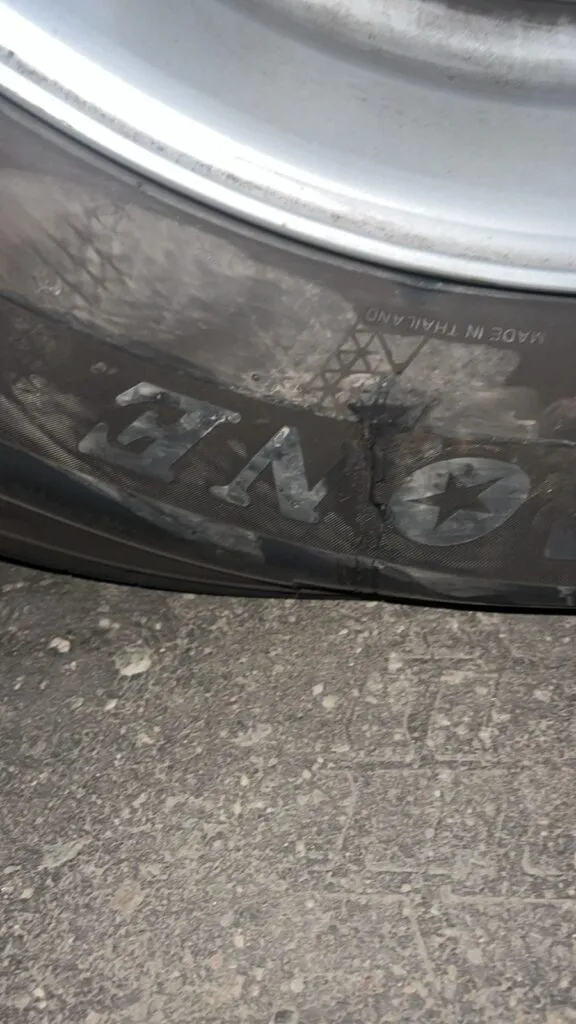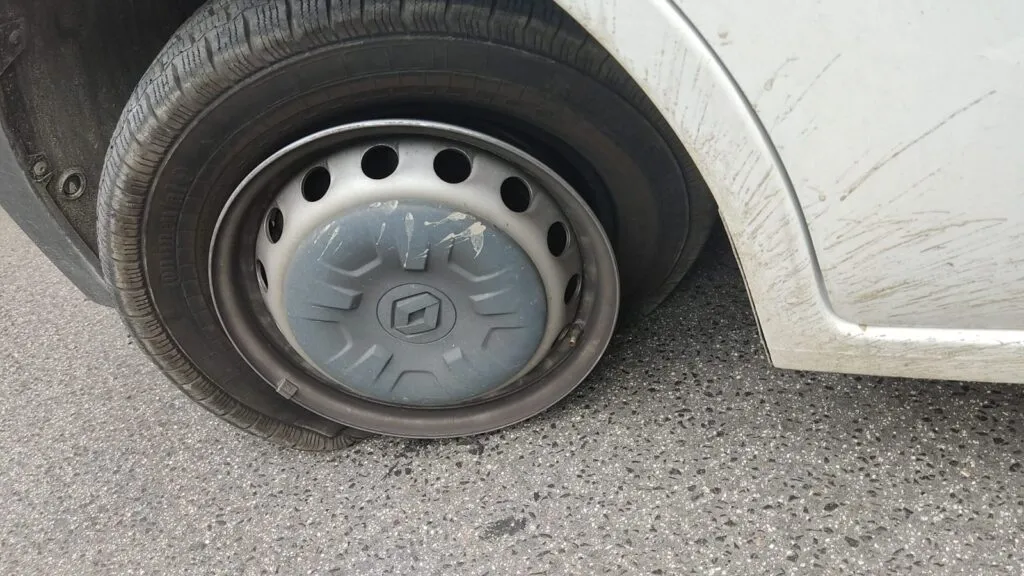
In short: on 13 September a white Ford Transit box van lost its battery charge at an autohof on the A7 near Kassel, with the driver heading for Hanover. Our dispatch desk had a partner crew on site in 46 minutes. The mechanic found a belt thrown off a worn alternator freewheel pulley and a chafed wiring loom. The van was back on the autobahn 145 minutes after the call, for a net price of 670 EUR.
A battery warning light is easy to underrate. The engine still runs, the radio still plays, and the driver thinks he can make the next town. In reality the van is living on whatever charge is left in the battery, and that is rarely more than a few dozen kilometres. When it runs out, the engine management shuts down, the power steering goes heavy, and you are stranded, possibly on a slip road or in a hard-shoulder lane.
The driver in this case did the right thing. He noticed the lamp, saw the charge disappear, and rolled into a service area instead of pushing on. Then he rang our truck breakdown service. Below you will find the full story: what failed, how the repair went minute by minute, what it cost, and what you can do to avoid the same call.
The breakdown: what happened on the A7 near Kassel
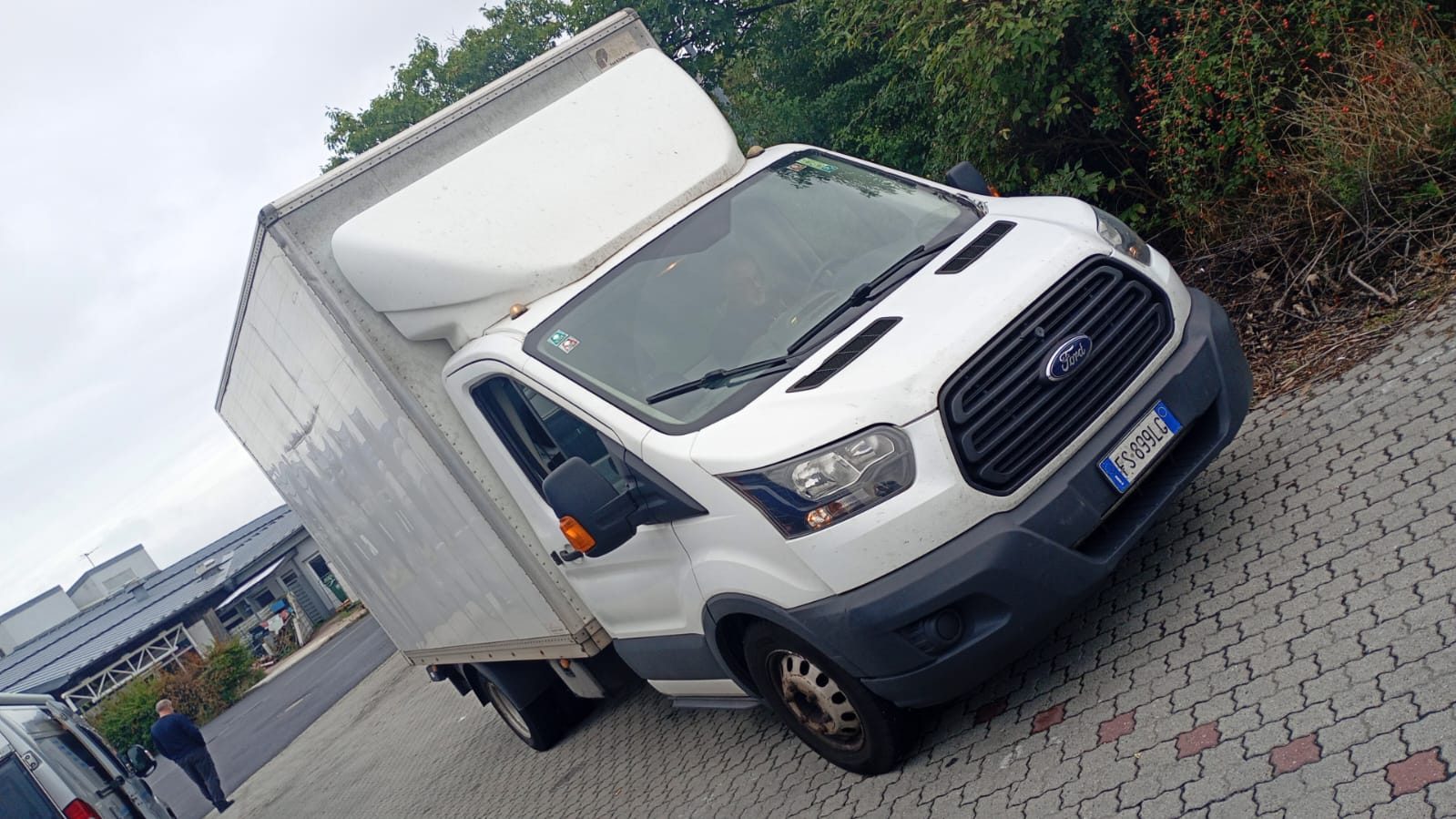
The vehicle was a white Ford Transit with a box body (a “Koffer” in German) and a raised nose over the cab, run by a foreign haulier. It had dual rear wheels and was on a delivery run towards Hanover and Göttingen. At around 11:40 the driver pulled into an autohof close to the Kassel-Nord junction and rang us.
He described it simply. First the red battery lamp came on, then the charging voltage disappeared. The engine was still running, but he had already seen the dashboard dim a little each time he braked. That is a classic sign that the alternator has stopped feeding the electrical system and the battery is carrying the load alone.
The weather was grey and overcast, but dry. That mattered, because it meant a roadside or yard repair was realistic without a tent, and the mechanic could work on the engine bay in decent light. The autohof had a paved area at the back, away from the fuel pumps and lorry lanes, which made it a sensible place for a repair.
Why a charging fault is a real emergency
A charging fault means the alternator no longer replaces the energy the vehicle consumes. A modern van needs far more than a spark. Injection, engine control, lights, ABS, power steering assistance, the tachograph and the telematics unit all draw current. A healthy battery covers perhaps 30 to 90 minutes of that load, less in cold or wet weather when lights and wipers are running.
For the driver there are three consequences. First, a sudden shutdown on a busy section of autobahn, with traffic closing at 100 km/h. Second, a flat battery that may be damaged by deep discharge. Third, a dispatch problem: a late delivery, a missed slot at the consignee, and a driver who may be running out of legal driving time.
How our dispatch desk organised the help
The call came in at 11:40. The key rule in breakdown dispatch is to collect only the facts that decide the next step and to act on them immediately. Within 12 minutes, by 11:52, the following was done:
- We confirmed the model and engine variant of the Ford Transit, because the right belt length and the right freewheel pulley depend on it.
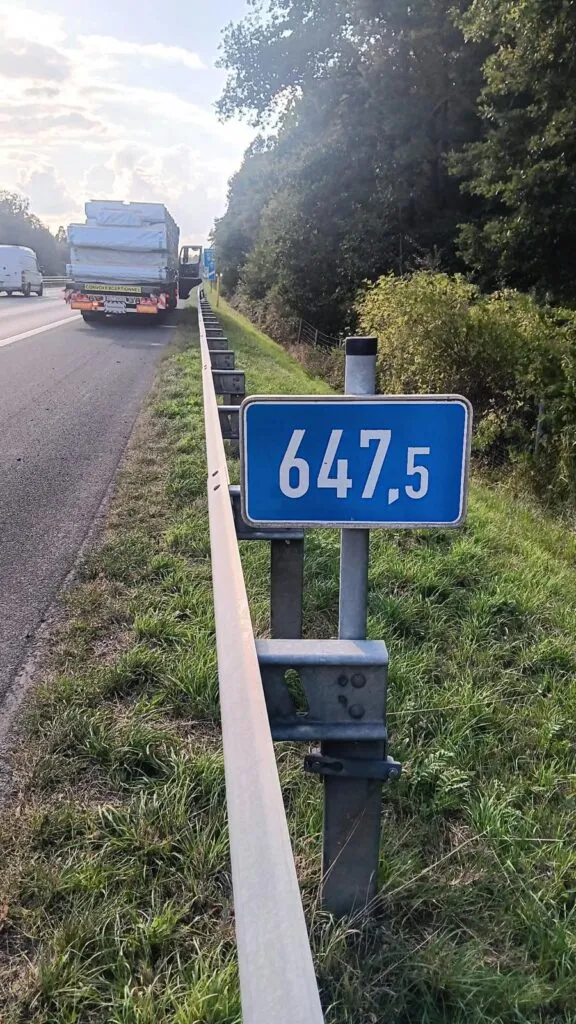
- We confirmed the exact location: the autohof by the Kassel-Nord junction on the A7, direction Hanover.
- We checked with the driver that the vehicle was stationary, switched off and safe, and told him not to restart it unless needed.
- We selected the nearest mobile crew in our partner network that could carry out electrical and drive-belt work on a van of this class.
- We ordered the parts: a poly-V belt and an alternator pulley with freewheel, so that the mechanic would not need a second trip.
Our dispatchers speak German, English, Polish and Russian, which helps when the driver is from abroad and the mechanic needs precise answers about warning lights. If you want to know how the network is built, our page on mobile truck service in Germany explains the coverage and what a crew can do on site.
On site: the diagnosis (12:38 to 12:55)
The mechanic arrived at 12:38, 46 minutes after dispatch. That is a good figure for a Saturday-style traffic day on the A7, which has several long sections of roadworks around Kassel. He started with the basics: a voltmeter across the battery terminals, engine off and then running.
The reading was below the normal charging level. A healthy system shows roughly 13.8 to 14.4 volts with the engine running. This van showed a figure close to resting battery voltage, which tells you the alternator was not charging at all.
Over the next 17 minutes he found three separate problems:
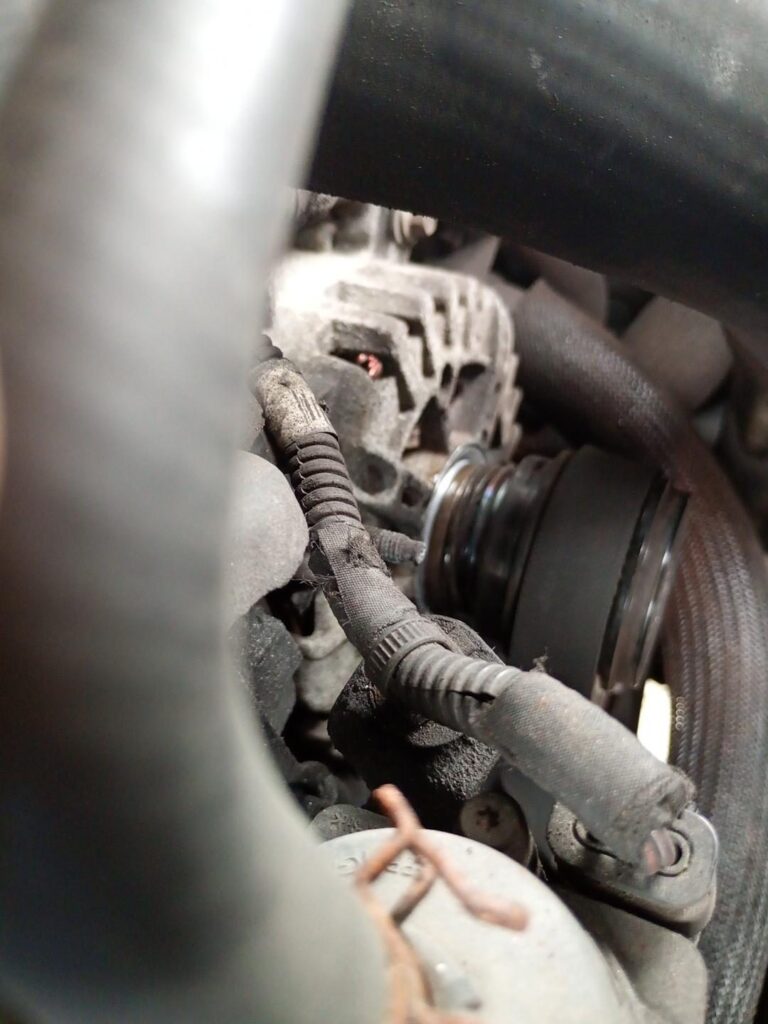
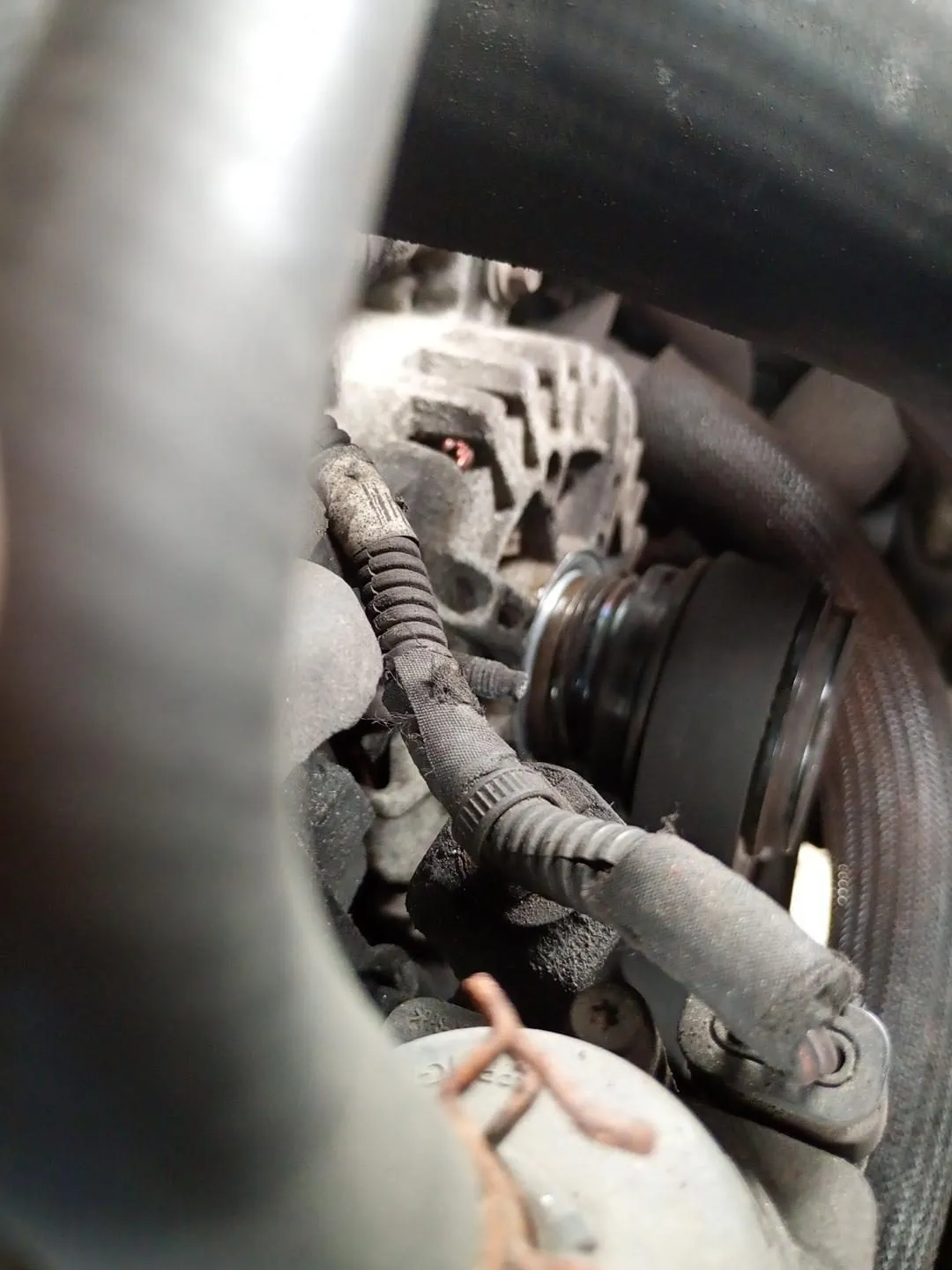
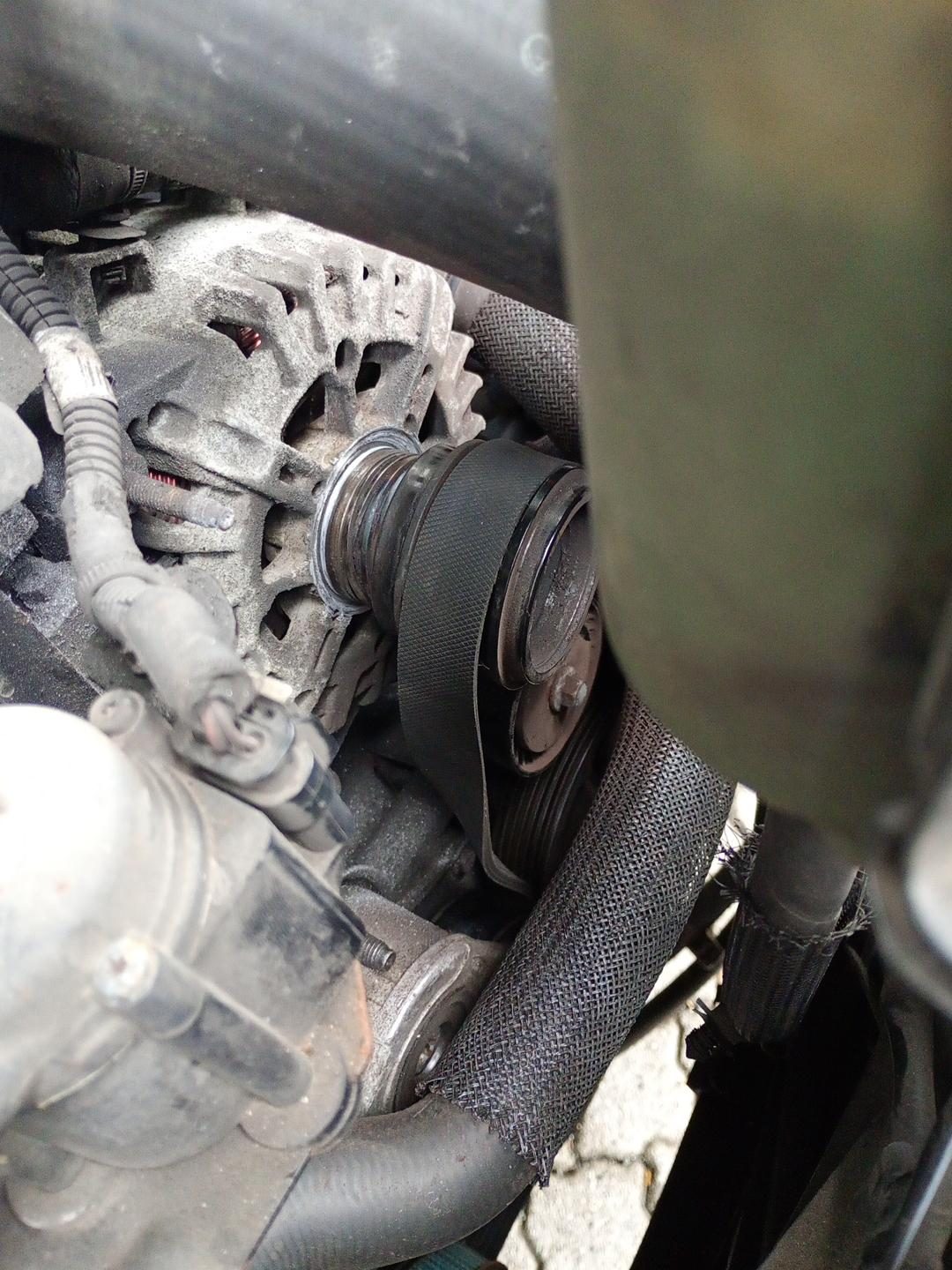
- The poly-V belt (Keilrippenriemen) had jumped off the pulley and hung loose beside it.
- The alternator freewheel pulley (Generatorfreilauf) had worn out. A freewheel pulley is a clutch built into the pulley that smooths out belt vibrations. Once the clutch inside wears, it slips, rattles, and eventually throws the belt.
- The wiring loom near the alternator had its protective corrugated sleeve chafed through, with an open end and a visible copper strand. There was dust and an oily film on the connector.
Why the loom mattered as much as the belt
It would have been easy to replace the belt, start the engine and call it done. But a chafed loom beside a hot alternator is a short circuit waiting to happen. Copper exposed to engine heat, vibration and oil can arc against a bracket, melt insulation on neighbouring wires, and in the worst case start a fire in the engine bay. Fixing only the visible problem would have left the van with a hidden fault that might have returned within weeks.
The principle is the same as in any alternator, which turns belt-driven rotation into electrical current.
Generatorfreilauf (alternator freewheel pulley): a pulley with a one-way clutch inside, which allows the alternator rotor to keep spinning smoothly when the engine speed changes. When it fails, the belt wears, slips or comes off.
The repair, step by step
The repair took 55 minutes, from 12:55 to 13:50. The mechanic’s sequence is the same one you would follow in any workshop, only done in a yard with a mobile toolkit.
- Safety first. Handbrake on, wheels chocked, ignition off, and the battery negative terminal disconnected. Disconnecting the battery is not optional on a charging system job: the main alternator output cable is live at all times.
- Access. He removed the plastic engine covers and the belt guard so the pulley and tensioner were reachable. On this type of van that takes about ten minutes if nothing is seized.
- Removal. The loose belt came off easily. The freewheel pulley was then removed with a special tool, because a standard socket will not grip the splined or Torx fitting without damaging it.
- Fitting. He installed the new pulley with freewheel (110 EUR in the estimate), checked that it spun freely in one direction and locked in the other, and routed the new poly-V belt (55 EUR) around every pulley, using the belt diagram for the engine.
- Loom repair. He cleaned the area, rewrapped the exposed cores with a new protective sleeve, tied the loom away from the hot casing with cable ties, and secured the connector. This used small parts worth about 20 EUR.
Then he reconnected the battery, set the belt tension by the tensioner mark, and turned the engine over by hand to check the belt was running true before any start.
Belt tension, torque and the final check
A belt that is too loose slips and squeals, and a belt that is too tight kills the alternator bearing and the water pump. Most modern vans use an automatic tensioner, so the job is to check that it sits inside its marked working range and moves freely. Bolts on the alternator bracket were tightened to the manufacturer’s value with a torque wrench, not by feel.
Testing and handover (13:50 to 14:05)
The last 15 minutes were spent proving the repair. The mechanic measured the charging voltage at idle, then again with the headlights, heated rear window and blower on high, to simulate real electrical load. The voltage stayed within the normal band under load, which is the test that matters. A charging system can look fine at idle and collapse when the driver switches on everything at once.
After a test start and a short test run in the yard, he listened for belt noise and checked the belt track. The driver confirmed that the battery lamp stayed off. At 14:05, exactly 145 minutes after the first call, the Transit left the autohof and carried on towards Hanover.
Complete timeline: 145 minutes from call to departure
| Time | Phase | Action |
|---|---|---|
| 11:40 | Call | Driver reports a battery warning light, then lost charging. Engine still runs, vehicle parked at the autohof. |
| 11:52 | Dispatch (12 min) | We take the Transit model details, confirm the location, assign the nearest partner crew and order the belt and freewheel pulley. |
| 12:38 | Arrival (46 min) | Mechanic on site and checks the on-board voltage. |
| 12:55 | Diagnosis (17 min) | Terminal voltage below normal, belt thrown, freewheel pulley worn, loom sleeve chafed. |
| 13:50 | Repair (55 min) | Guards and old belt removed, freewheel pulley replaced, new belt fitted, loom insulated and secured, belt tension set. |
| 14:05 | Test and handover (15 min) | Charging checked at idle and under load, test start, driver continues his trip. |
Total: 145 minutes. Of that, the actual hands-on work took 87 minutes (diagnosis and repair together). The rest was dispatch and travel, which is where a good network makes the difference.
How much does truck breakdown service cost? The full estimate
A call-out like this costs 670 EUR net (zzgl. MwSt.). Here is the estimate line by line:
| Item | Price (EUR) |
|---|---|
| Call-out / Anfahrt | 200 |
| Diagnosis of electrics and drive | 120 |
| Labour, 1.5 hours at 110 EUR | 165 |
| Alternator pulley with freewheel (Generatorfreilauf) | 110 |
| Poly-V belt (Keilrippenriemen) | 55 |
| Small materials (cable ties, protective sleeve, fixings) | 20 |
| TOTAL | 670 |
All amounts are net of VAT. The call-out fee covers the mechanic’s travel and the vehicle’s costs, and it is the part of the price that varies most. Nights, weekends and public holidays add 25 to 50 per cent to the call-out and hourly rates.
What drives the price of a roadside repair
Several factors move the total up or down:
- Distance and region. A crew coming 20 kilometres costs less than one coming 90. Around Kassel the network is dense, which kept the call-out at 200 EUR.
- Time of day. Out-of-hours work carries a premium, and weather slows everything down.
- Parts availability. Because we ordered the belt and the pulley during dispatch, no second trip was needed. A missing part would have meant another call-out.
- Hidden damage. If the alternator itself had been burned out, the bill would have risen by the cost of a new or exchange unit. Here the alternator was fine.
What the alternatives would have cost
A vehicle standing still costs money every hour. A delivery van parked for a day typically loses 800 to 1,200 EUR in missed trips, driver wages and penalty slots. If the van had had to be recovered to a workshop, our towing service would have started at around 900 EUR before any repair even began, plus a day or two of waiting for a workshop bay.
Set against that, a 670 EUR repair that gets the vehicle moving in under two and a half hours is the cheaper option, even if it feels like a lot at the moment of the call.
Why a charging fault needs a professional
Some drivers and fleet owners ask whether they can simply fit a belt themselves and carry on. In a yard with the right tools and a spare, sometimes. On a motorway service area with a loaded van, it rarely goes well. Here is what can go wrong:
- Wrong diagnosis. A new belt on a worn freewheel pulley will come off again within an hour. Without a voltmeter and a pulley check you will not know.
- Wrong tension or routing. A belt routed the wrong way round the pulleys will slip or snap.
- Short circuits. Working on an alternator without disconnecting the battery can burn a tool, a hand or a control unit.
- Damaged electronics. Jump-starting a vehicle with a failed charging system, or driving it until it stops, can overload control units and the battery.
- Warranty and liability. A repair carried out without records can complicate warranty claims and, in a roadside inspection, may raise questions.
The specification of replacement parts matters too. Original-equipment suppliers such as Bosch publish the technical data behind alternators, starters and charging control, and a competent mechanic will match parts to the engine code, not to a guess.
Typical situations our crews attend across Germany
This job is one of many. Our partner crews are called out around the clock for situations like these:
- Charging system faults, belt failures and flat batteries on vans and rigid lorries.
- Air and brake system faults on tractor units and trailers, including valve failures.
- Warning lights, limp-home mode and engine management faults that need mobile diagnosis.
- Coolant, oil and hydraulic leaks, from split hoses to failed seals.
- Clutch, gearbox and propshaft problems.
- Tyre blowouts, punctures and wheel damage on all axles.
- AdBlue faults and restart lockouts.
- Tachograph failures that stop a driver from continuing legally.
Many of these are covered in our case reports. If you are interested in electronic faults, see how we handled a dashboard warning light near Weiden with mobile diagnostics, or read our guide to what can be repaired on the road.
Preventing charging failures: advice for drivers and fleet managers
Alternator and belt faults rarely arrive without warning. Look for these signs before the battery lamp comes on:
- Squealing or chirping on cold start, especially in damp weather. It points to a slipping belt.
- Rattling or ticking from the front of the engine at idle. A failing freewheel pulley often sounds like that.
- Dim headlights or flickering dashboard lights when the engine idles.
- Cracks, glazing or fraying on the belt. Check it every service, and replace it by the manufacturer’s interval, usually 100,000 to 150,000 km on vans.
- Chafed wiring. Look at the loom around the alternator and starter at every oil change. Oil and dust attack the insulation over time.
- Battery condition. A tired battery makes the alternator work harder and hides the early signs of a charging fault.
Fleet managers should add belt, pulley and loom checks to the regular inspection plan, and keep a record. Independent inspection organisations such as DEKRA describe what is checked at periodic inspections, and following the same order in your own checks catches many faults before they strand a vehicle. A driver who reports a flickering lamp on Monday saves a recovery on Friday.
What to do the moment the battery lamp comes on
- Switch off every unnecessary consumer: air conditioning, heated seats, extra lamps, radio.
- Do not switch the engine off until you are somewhere safe. A restart may not be possible.
- Head for the nearest service area or car park, not the hard shoulder.
- Switch on the hazard lights, put on a high-visibility vest and set out the warning triangle if you have to stop on a road.
- Ring a breakdown service and give them the vehicle model, the location and what the dashboard shows.
Choosing a workshop partner and service for your van or truck
Whether you run a single van or a fleet of tractor units, the principles are the same. A good breakdown service should offer a clear price before work begins, a realistic arrival time, and a mechanic who can carry out the repair on site rather than simply towing the vehicle away. In our experience, around three out of four breakdowns can be solved where the vehicle stands, provided the right parts arrive with the mechanic.
For deeper problems, such as engine or gearbox work, a proper workshop is the next step. Our truck workshop service handles those jobs, and we can arrange the transfer if the roadside repair is not enough.
Roadworthiness rules and technical inspections are explained by TÜV, which is a useful reference when you plan fleet checks.
It is also worth thinking about how you are insured and who pays. A roadside repair is usually an operating cost, and a recovery may fall under a breakdown policy. Check the terms of your fleet cover in advance, because the call at 11:40 on a Saturday is the wrong moment to read the small print.
Parts and brands
Alternator belts, tensioners and pulleys come from a handful of major suppliers. Original parts from the vehicle manufacturer carry a premium, while reputable aftermarket parts can be equal in quality and cheaper. We fit parts that match the manufacturer’s specification, and we tell the driver which route we have taken. In this case the belt and the freewheel pulley were the correct ones for the engine variant, which is why the dispatch step of confirming the model mattered.
Why drivers and fleets choose Lkwhelp24
- Round the clock. We answer every day of the year, including nights, Sundays and public holidays.
- A tested partner network. Crews are selected for their skills, tools and response times, and we check their work.
- Transparent prices. You get the call-out fee, the hourly rate and the parts cost before work starts, with no hidden extras.
- Multilingual dispatch. German, English, Polish and Russian, so a foreign driver can describe the fault without a language barrier.
- Nationwide cover. From Flensburg to Munich and from Aachen to Görlitz, one phone number reaches the nearest crew.
Frequently asked questions
How long does a truck breakdown service take to arrive in Germany?
Typically 35 to 70 minutes on a motorway after dispatch, which itself takes 10 to 20 minutes. In this case it was 12 minutes for dispatch and 46 minutes for travel. Rush hour, roadworks, snow and night calls can lengthen the arrival time.
What does a mobile repair for a charging fault cost?
For the Ford Transit on the A7 near Kassel, the total was 670 EUR net, made up of 200 EUR call-out, 120 EUR diagnosis, 165 EUR labour and 185 EUR for parts and materials. Prices vary with distance, time of day and the parts needed.
Can I keep driving with the battery light on?
Only to the nearest safe stopping place. The vehicle runs on battery charge alone, which usually lasts between 30 and 60 minutes, less with lights and wipers on. Switch off every non-essential consumer and ring for help early.
What is an alternator freewheel pulley and why does it fail?
It is a pulley with a built-in one-way clutch that smooths out engine speed changes. It wears from years of vibration and heat. When it fails, it rattles, slips and can throw the belt, as happened on this van.
Is a roadside repair always possible?
Not always. Simple belt, hose, tyre, sensor and electrical faults can usually be fixed on site. A seized engine, a cracked gearbox or major body damage needs a workshop, and then recovery is the right answer.
Who pays for the repair?
The vehicle owner or operator pays the invoice, which is shown net of VAT. Your breakdown insurance or fleet policy may reimburse part of it, so keep the invoice and the report from the mechanic.
Summary: the key figures
- Vehicle: white Ford Transit box van with dual rear wheels, foreign haulier.
- Location: autohof on the A7 near Kassel-Nord, direction Hanover and Göttingen.
- Fault: worn alternator freewheel pulley, thrown poly-V belt, chafed wiring loom.
- Dispatch time: 12 minutes.
- Arrival time: 46 minutes after dispatch.
- Repair time: 55 minutes, plus 17 minutes of diagnosis and 15 minutes of testing.
- Total time from call to departure: 145 minutes (2 hours 25 minutes).
- Total net cost: 670 EUR (zzgl. MwSt.).
- Secondary damage: none. The battery was recharged and no electrical component was lost.
For readers who want to compare the measures: a tow to a workshop would have started at 900 EUR and taken at least a day, while a downtime day for the vehicle costs 800 to 1,200 EUR.
Need a truck breakdown service right now?
If your van, lorry or tractor unit has stopped, or a warning light is telling you it is about to, do not wait for the problem to grow. Ring our dispatch desk and tell us the model, the place and the fault. We will send the nearest crew and quote the price before work begins. You can also reach us through the contact page.
Telephone: +49 160 5753826
Website: www.lkwhelp24.com
Round the clock across all of Germany.
Keywords: truck breakdown service | truck service | truck service Germany | roadside assistance Germany | truck mobile service | mobile truck maintenance | mobile service truck | truck repair | repair truck | truck breakdown | truck assistance | emergency roadside | roadside assistance truck | trailer service | alternator belt repair | Ford Transit breakdown A7 Kassel
Related articles
- Mobile Truck Mechanic in Germany: How to Call for Help
- Truck Breakdown Assistance A38 near Nordhausen: Coolant Leak Fixed in 2h 15min
- Tachograph Failure on the A5 Near Baden-Baden: Back on the Road to Basel in 2 Hours 25 Minutes
- Fuel System Diagnosis on the A14 near Naumburg: Back on the Road in 3 Hours