Skip to content
If you drive a truck over 7.5 t, you need to know the axle load stated in the vehicle registration document. The permissible axle load is recorded in the registration certificate and forms a fixed limit for every trip on public roads. This article explains, in short and clear language, where to find these figures in the Vehicle Registration Certificate Part I (Zulassungsbescheinigung Teil I), how to avoid overloading, and what happens if you breach the limits. It is written mainly for truck drivers, dispatchers and fleet operators.
Key Points at a Glance
The axle load in the vehicle registration document shows how much weight may act on the road through each individual axle. The permissible axle load is stated in the Vehicle Registration Certificate Part I – the document that used to be called simply the “Fahrzeugschein”. Here are the key facts in brief:
- The permissible axle load is found in fields 7.1, 7.2, 7.3 (technically permissible, set by the manufacturer) and 8.1, 8.2, 8.3 (legally permissible in Germany) of the Vehicle Registration Certificate Part I.
- The actual weight on each axle must never exceed the value stated in the registration certificate – even if the overall permissible gross weight is respected.
- Exceeding the axle load can lead to fines, points on your driving record, and even having the vehicle taken out of service.
- Axle load directly affects vehicle stability and tyre wear. Overloading increases the risk of tyre blowouts and accidents.
- Lkwhelp24 helps with tyre damage, breakdowns and axle problems – but exclusively for commercial vehicles over 7.5 t and buses.
What Does Axle Load Mean for a Truck, Exactly?
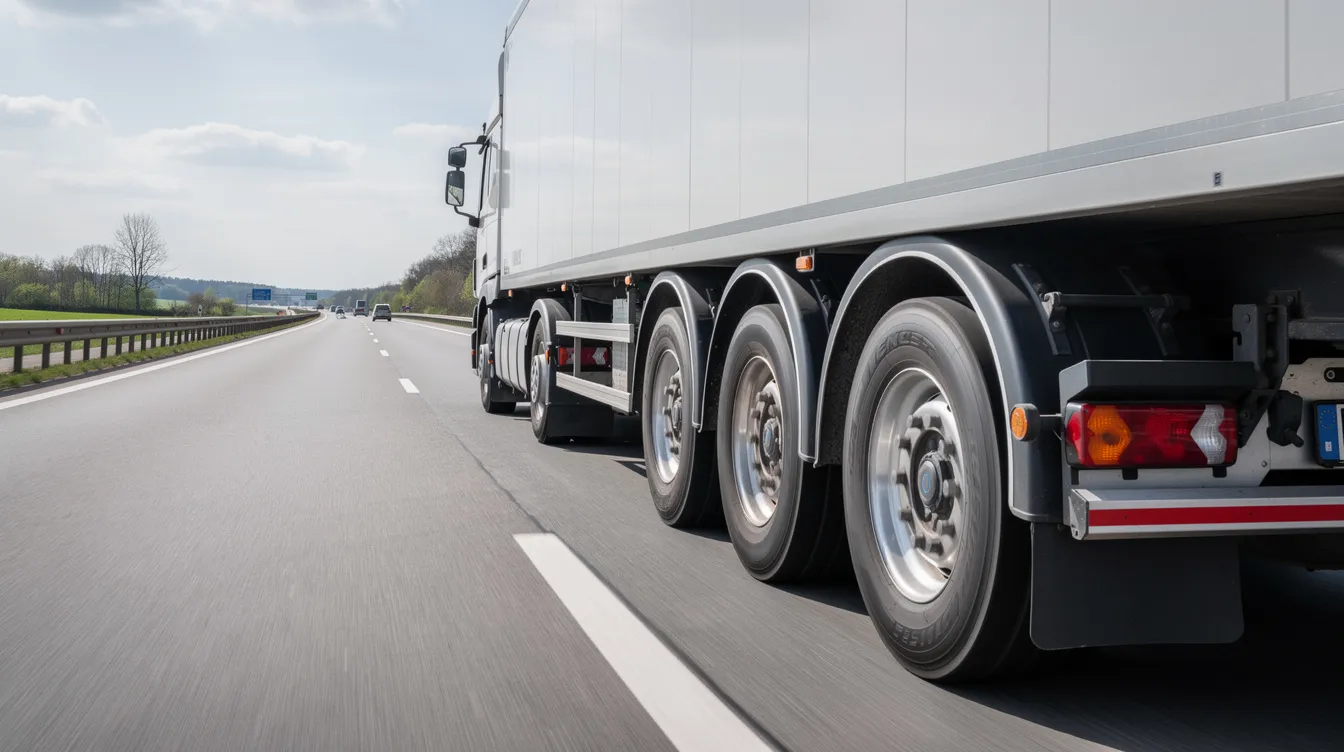
Axle load describes the weight that acts on the road through a single axle. Every axle of a vehicle – whether the steering axle, drive axle or trailer axle – carries part of the vehicle’s weight and its load.
There are two important figures here:
- Actual axle load: The real weight currently resting on the axle. It changes with every load, every fuel level and every shift in cargo position. So the axle load can change depending on how the vehicle is loaded.
- Permissible axle load: The maximum value stated in the registration certificate. This value is set by the vehicle manufacturer and confirmed by the registration authority. The permissible axle load must never be exceeded.
An example with concrete figures:
- An 18 t two-axle tractor unit typically has around 7.5 t permissible load on the steering axle and up to 11.5 t on the driven rear axle.
- A three-axle semi-trailer can have an axle load limit of around 3 × 9 t depending on axle spacing – up to 27 t in total on the tridem axle group.
Axle load changes constantly in everyday operation: through refuelling, fuel consumption, shifting cargo, or uneven distribution of pallets. That’s why axle load must be taken into account whenever a vehicle is loaded, to avoid overloading any single axle.
Finding the Axle Load in the Vehicle Registration Certificate Part I
What used to be called the “Fahrzeugschein” is now officially the Vehicle Registration Certificate Part I (Zulassungsbescheinigung Teil I). It refers to the same document. The axle load is stated in the Registration Certificate Part I – in clearly defined fields.
Here’s how to find the figures:
Field | Meaning | Explanation |
|---|---|---|
7.1 | Technically permissible axle load – axle 1 | Field 7.1 shows the permissible load of the steering axle; 7.2 shows the load of the second axle. |
7.2 | Technically permissible axle load – axle 2 | Fields 7.2 and 7.3 show the axle load of the rear axle or further axles. |
7.3 | Technically permissible axle load – axle 3 | Manufacturer’s value for the third axle (if present). |
8.1 | Permissible axle load in the country of registration – axle 1 | Point 8.1 shows the legally permitted value in Germany. |
8.2 | Permissible axle load in the country of registration – axle 2 | Legally permitted in Germany, axle 2. |
8.3 | Permissible axle load in the country of registration – axle 3 | Legally permitted in Germany, axle 3. |
During a police or BAG roadside check, the lower value always applies – usually the figure under point 8.1, 8.2 or 8.3. |
On very old registration documents (before 2005) axle load figures are found under fields 16 and 18. If you hold a Vehicle Registration Certificate Part II (Fahrzeugbrief), you won’t find axle loads there – they only appear in Part I.
Tip: Always keep a copy or a phone photo of the Vehicle Registration Certificate Part I in the truck. That way, during checks or breakdowns, you can immediately provide the relevant documents and axle load figures.
How Axle Load, Gross Vehicle Weight and Payload Relate
For trucks over 7.5 t, trailers and buses, two limits apply at the same time: the permissible gross vehicle weight and the permissible axle load. The driver must never exceed either one. The gross weight is stated in field F.1 or F.2 of the Vehicle Registration Certificate Part I.
Crucially: a vehicle can stay within its overall permissible gross weight and still overload one axle. This happens when the cargo is distributed incorrectly.
Payload is calculated simply as follows:
Payload = permissible gross weight (F.2) – unladen weight (field G)
The unladen weight in field G includes the vehicle with body, tools, spare wheel, driver (75 kg) and a tank filled to 90%. Extra equipment such as a crane mount or a refrigeration unit increases the actual vehicle weight and reduces the available payload.
Example with figures: A 26 t three-axle truck has an unladen weight of 17,000 kg. Its payload is therefore 9,000 kg. If a driver stacks 9,000 kg of pallets right at the back of the load compartment, the rear axle can end up overloaded – even though the gross weight is correct. The actual axle load can vary considerably due to uneven weight distribution.
How Is a Truck’s Axle Load Roughly Calculated?
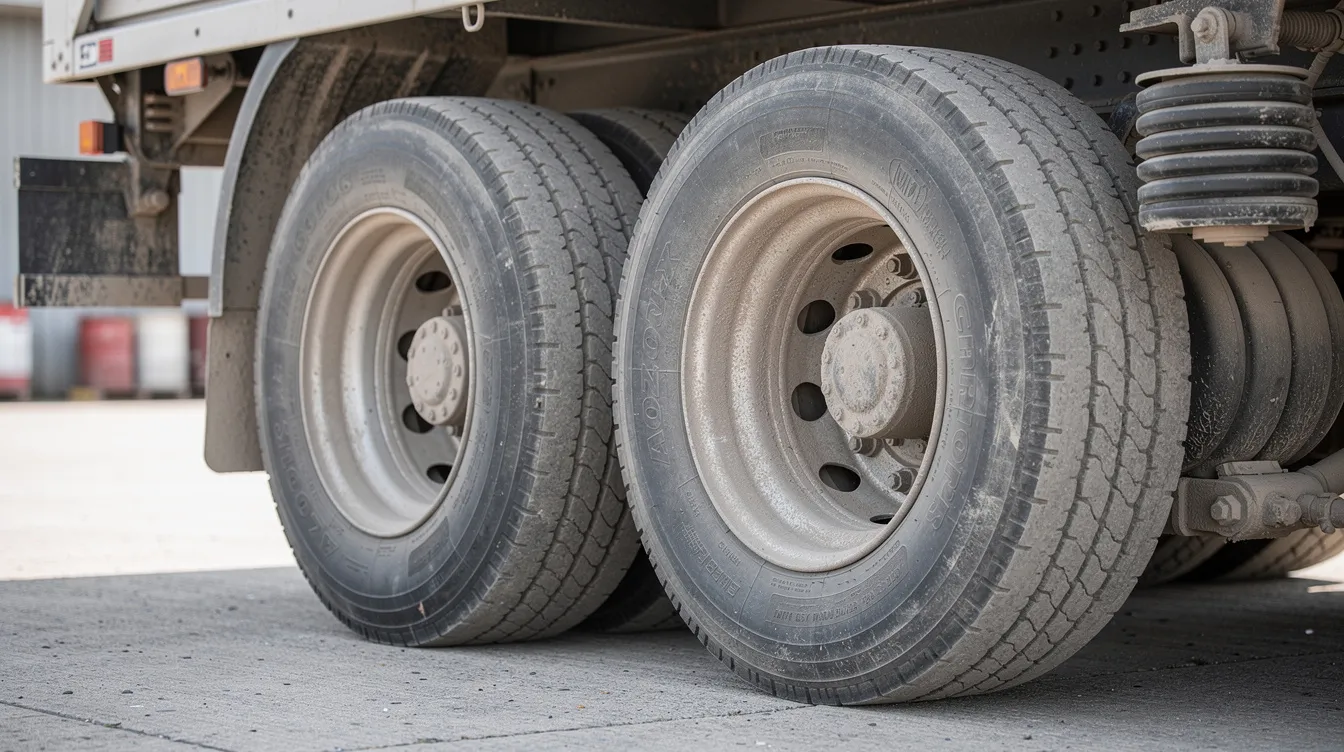
An exact axle load calculation is complex and cannot replace a scale. Still, a rough estimate is helpful for everyday use. A simplified formula can be applied to calculate the average axle load:
Approximate axle load = (unladen weight + payload) ÷ number of axles
Axle load is calculated from unladen weight plus payload. This formula, however, only gives an average value. In practice, the actual load per axle depends on several factors:
- Axle spacing and wheelbase
- Centre of gravity and position of the cargo
- Vehicle design (body type, engine position)
- Fuel level and luggage in the cab
Example: If heavy pallets are placed too far to the rear of the trailer, the axle loads on the trailer axles rise sharply. At the same time, the steering axle can be relieved of weight – which is also dangerous, because steering becomes unstable.
For critical loads such as machinery, heavy freight or point loads, it’s advisable to use the manufacturer’s calculation software or load charts. If you want to know how many pallets fit in a truck and how to distribute them optimally, you’ll find more information there. In addition, a specialised mobile truck tyre service in Germany can help identify tyre- and axle-related risks early when carrying heavy loads. If in doubt, head for a calibrated vehicle scale.
Axle Load and Cargo Distribution in Everyday Haulage
International long-haul transport often runs under time pressure. Tight delivery windows mean the load isn’t always distributed optimally. Axle load must be distributed evenly when loading – that’s not optional, it’s mandatory.
Here’s how dispatchers and drivers can keep axle load under control day to day:
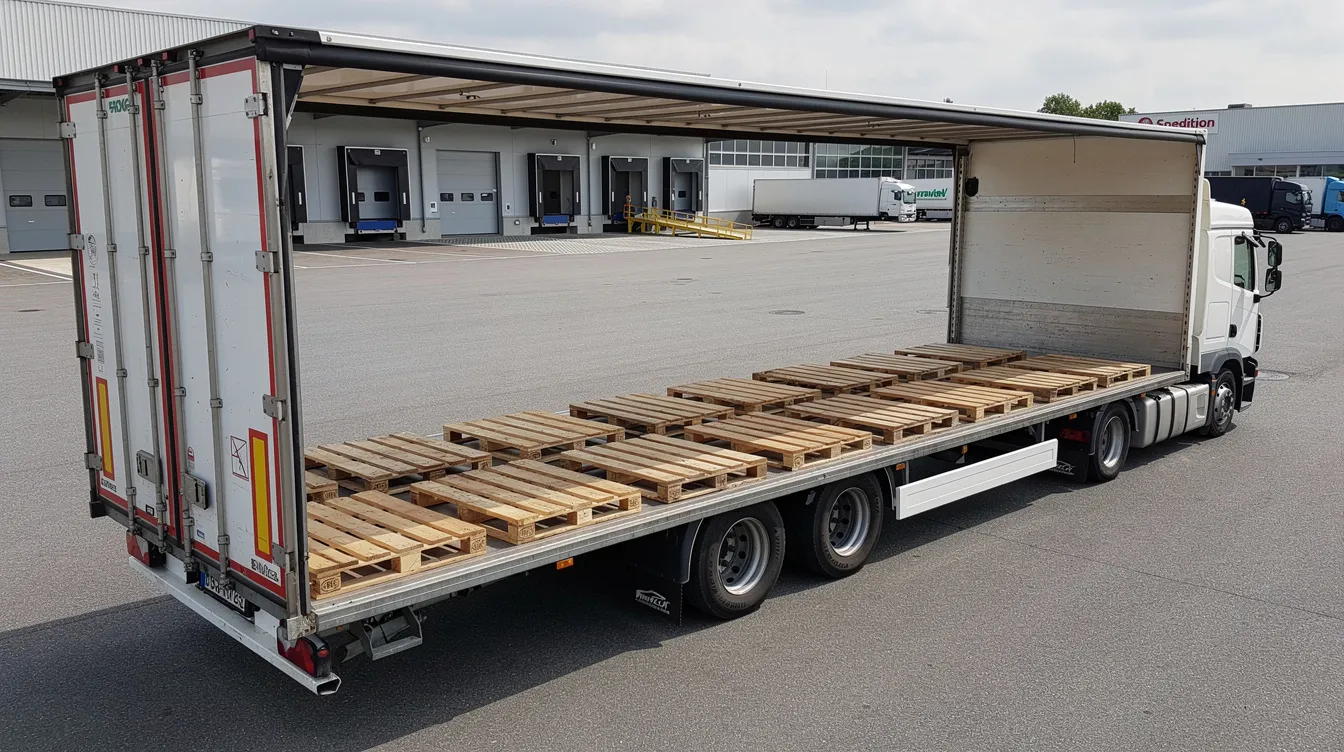
- Pallet distribution: Distribute heavy pallets evenly between the fifth wheel and the trailer axles. Don’t load everything at the back.
- Axle adjustment: On many trailers, axles can be shifted to distribute the load better. This directly changes the axle load.
- Kingpin position: The position of the kingpin affects how much weight acts as king-pin load on the tractor unit.
- Software: Modern hauliers use load-planning software that calculates axle loads in advance from pallet positions.
Extra caution is required with:
- Refrigerated trailers: Coolant and the weight of the fridge unit change the load.
- Tankers: Liquids shift during the journey and move the load.
- Bulk cargo: Consumption or partial unloading shifts the centre of gravity.
Permissible Axle Load under German Road Traffic Law and the Bridge Formula
Maximum axle loads are regulated in the German StVZO – specifically in Section 34 of the Road Traffic Licensing Regulations (StVZO). This sets out the legal limits for Germany. The permissible axle load forms a technical and legal limit for the operation of every motor vehicle.
Overview of the key limits:
Axle type | Maximum axle load |
|---|---|
Single axle, non-driven | 10.00 t |
Single axle, driven | 11.50 t |
Twin axle (axle spacing 1.0–1.3 m) | 16.00 t |
Twin axle (axle spacing 1.3–1.8 m) | 18.00 t (up to 19 t under certain conditions) |
Tridem axle (spacing ≤ 1.30 m) | approx. 21.00 t |
Tridem axle (spacing 1.30–1.40 m) | 24.00 t |
These values apply only with pneumatic tyres and matching suspension. The so-called bridge formula protects roads and bridges by limiting the permissible load depending on axle spacing. It’s not just about the vehicle itself, but above all about the infrastructure. |
Important for international drivers: other EU countries sometimes apply different limits. EU Directive 96/53/EC sets a framework, but national differences remain. For special transports and cross-border trips, always check national regulations and required permits.
Fines and Consequences for Exceeding the Axle Load
Exceeding the axle load can result in fines – even for small deviations. Overloading can lead to fines and penalty points. Here are the main consequences:
- Under 5% excess: fines from around €30 per violation.
- 5–10% excess: fines up to around €235 and a penalty point are possible.
- Significant overloading: police and the BAG (Federal Office for Logistics and Mobility) can prohibit continued travel until the vehicle is reloaded or partly unloaded.
- Accident consequences: in an accident involving an overloaded axle, insurers may reduce or fully refuse payouts.
- Responsibility: it’s not only the driver who is liable. On commercial journeys, the operator and the dispatcher also carry employment-law and criminal-law responsibility.
Fines increase with the degree of overloading. ADAC provides further information on current fine amounts. Remember: exceeding the axle load can lead to fines regardless of whether the overall gross weight is respected.
Effects of Excessive Axle Load on Handling and Technology
Overloading doesn’t just cost money. It endangers the safety of every road user and destroys vehicle components. Overloading worsens handling and significantly increases the risk of accidents. Axle load has a direct effect on handling and safety.
Driving dynamics:
- Significantly longer braking distance – especially in wet conditions and on downhill sections
- Poorer steering response and unstable handling in crosswinds
- Higher risk of tipping in curves
Technical and material damage:
- Increased stress on wheel suspension, springs, air bellows and chassis frame
- Greater tyre wear and heat build-up in tyres and rims
- Significantly higher risk of a tyre blowout – a factor that can be life-threatening on a motorway
Road damage:
Doubling the axle load doesn’t double the wear on the road surface, it multiplies it many times over. American studies cite a factor of around 16 as a rule of thumb. This means an overloaded truck causes disproportionately high damage to infrastructure.
Better to check once too often before setting off. Axle load must be checked regularly during the journey – especially with changing loads and partial unloading.
Axle Load in the Registration Certificate and Checking on a Scale
In everyday practice, the question arises: how can a driver practically check axle load on the road? There are several options:
- Public vehicle scales at truck stops, agricultural merchants or recycling yards
- Haulage yards with their own scale
- Wheel-load scales – these measure each axle individually and deliver exact values
Here’s how an axle load measurement works: you drive onto the scale with each axle separately. The weigh ticket shows the weight per axle. Compare the figures with the entries in the registration certificate.
Tips:
- Carry out a check before heading onto the motorway whenever you have new cargo or an unfamiliar trailer.
- Keep the weight receipts in the vehicle. During checks, this lets you prove that your axle load was correct.
- The figures in the registration certificate are the upper limit. Even if the scale still shows “headroom” – never go above the registered value.
- For recurring problems with overloading and technical defects, a mobile truck service in Germany, available 24/7, can help inspect and repair vehicles on site.
Vehicle Registration Certificate Part I: Key Fields around Weight and Axle Load
The weight figures in the Vehicle Registration Certificate Part I are all connected. Here’s an overview of the relevant fields:
Field F.1 / F.2 – Permissible gross weight: F.1 shows the manufacturer’s technically permissible gross weight. F.2 shows the nationally permissible gross weight in Germany. For a driver in Germany, F.2 is the decisive figure.
Field G – Unladen weight: Includes the vehicle in a ready-to-drive condition with driver (75 kg) and a full tank. Important: conversions, extra equipment or a crane mount increase the real unladen weight. The originally registered unladen weight may then be too low.
Fields 7.1, 7.2, 7.3 – Technically permissible axle loads: The manufacturer sets a maximum value for each axle group. These figures form the baseline. Field 7.1 shows the axle load of the steering axle, field 7.2 the load of the second axle (often the rear axle), field 7.3 the load of the third axle.
Fields 8.1, 8.2, 8.3 – Legally permissible axle load in Germany: This figure is decisive during roadside checks. It can be equal to or lower than the technically permissible value. Police and the BAG always check this point.
Alongside the axle load fields, vehicle documents also contain type codes that identify the vehicle model, as well as figures for the number of axles. The Vehicle Registration Certificate Part II (Fahrzeugbrief), by contrast, contains no axle load values – these only appear in Part I.
Difference: Axle Load, Vertical Load and Towing Capacity
These three terms are often confused. Here’s the explanation in plain language:
Axle load: the weight per axle acting on the road via the towing vehicle or the trailer. This value is stated in the registration certificate.
Vertical/king-pin load: the vertical force acting on the trailer coupling or the fifth wheel. On a semi-trailer combination, part of the trailer’s weight presses down on the fifth wheel of the tractor as king-pin load. This increases the axle load on the tractor’s rear axle. On a caravan, the equivalent nose weight on the tow hitch also matters – but that’s not a topic for trucks over 7.5 t.
Towing capacity: the maximum weight a vehicle is allowed to pull behind it. In the Vehicle Registration Certificate Part I, towing capacity is stated in fields O.1 and O.2.
Practical relevance for semi-trailer combinations: when you couple a heavily loaded semi-trailer, a significant part of the trailer’s weight acts as king-pin load on the fifth wheel. This increases the axle load on the tractor’s drive axle and steering axle. Always check both vehicles – tractor and trailer – separately.
Special Cases: Tractor Unit, Semi-Trailer and Drawbar Combination
Different vehicle configurations create different axle load situations. How the load is distributed depends heavily on the vehicle type.
Semi-trailer combination: the weight is split between the tractor unit and the semi-trailer. The king-pin load acts on the tractor’s drive axle and affects the steering axle at the same time. The heavier the trailer is loaded, the greater the load on all axles.
Drawbar combination: the rigid truck and the drawbar trailer are considered separately. The drawbar load of the trailer acts on the rear axle of the rigid truck. Each unit of the combination has its own axle load entries in its own Vehicle Registration Certificate Part I. For recurring problems with load distribution, a comprehensive truck service in Germany, available 24/7, can help get the chassis and body professionally inspected.
Rigid vehicles: an 18 t two-axle truck or a 26 t three-axle truck distributes the load via wheelbase and the position of the body. A crane mount behind the cab shifts the centre of gravity and significantly changes the axle load distribution.
Every vehicle has its own axle load entries in its own vehicle documents. For combination vehicles, the tractor and the trailer must be checked separately. Braking performance, stability and handling depend directly on correct axle load distribution.
What to Do if You Suspect Overloading or Incorrect Axle Load
If while driving you notice a spongy feel, one axle sinking noticeably, or tyres becoming unusually hot, you should act immediately:
- Head for the nearest parking area or a rest area on the motorway.
- Check the cargo and its securing. Verify the axle load and gross weight figures against the registration certificate.
- If unsure, head for a nearby weighing station. That’s better than risking a roadside check or a tyre failure on the motorway.
- If damage has already occurred – for example a tyre blowout caused by overloading – you can contact the 24/7 truck breakdown assistance service in Germany from Lkwhelp24.
Important: Lkwhelp24 helps with tyre breakdowns and axle damage only for commercial vehicles over 7.5 t and buses.
What Types of Truck Breakdown Services Exist
When a breakdown happens, there are several ways to get help. Here’s a neutral overview:
- Automobile clubs with truck service: offer organised breakdown assistance and towing for commercial vehicles, usually via membership. Large network, but often longer waiting times.
- Manufacturer emergency lines: brand hotlines run by truck manufacturers, often focused on warranty and newer vehicles. Limited scope of service for older vehicles.
- Independent mobile breakdown services: independent operators with service vans or tow trucks. Regionally active, often specialised in tyres or technical repairs.
- Coordinators like Lkwhelp24: coordinate vetted partner companies across Germany around the clock. They find the nearest available service, clarify costs upfront and organise the entire job. Learn more on our dedicated Truck Towing Service Germany – 24/7 page.
Truck Breakdown on the Motorway: Correct Procedure, Step by Step
Every minute counts during a breakdown on the motorway. Many readers are under stress in that moment. So here it is, short and clear:
- Switch on the hazard lights. Immediately.
- Roll onto the hard shoulder or a lay-by. Turn the wheels towards the crash barrier.
- Put on your hi-vis vest. Leave the vehicle via the passenger side.
- Wait behind the crash barrier. Keep a safe distance from the vehicle.
- Set up the warning triangle. In Germany, on the motorway, at around 150–200 m distance. Walk only behind the crash barrier when doing this.
- Determine your location. Note the motorway number, direction of travel, next exit or kilometre marker. Save your GPS location via smartphone.
- Contact a breakdown service. Only once everyone is safe should you call or send a WhatsApp message.

What Information the Driver Needs to Give on the Phone
For the breakdown service to help quickly, it needs the following information:
- Exact location: motorway (e.g. A3), direction of travel, kilometre marker or rest-area name. Best to share your GPS location via WhatsApp.
- Vehicle details: licence plate, vehicle type (e.g. 40 t semi-trailer combination, 18 t rigid truck, bus), number of axles, body type (box, curtainsider, reefer, tanker).
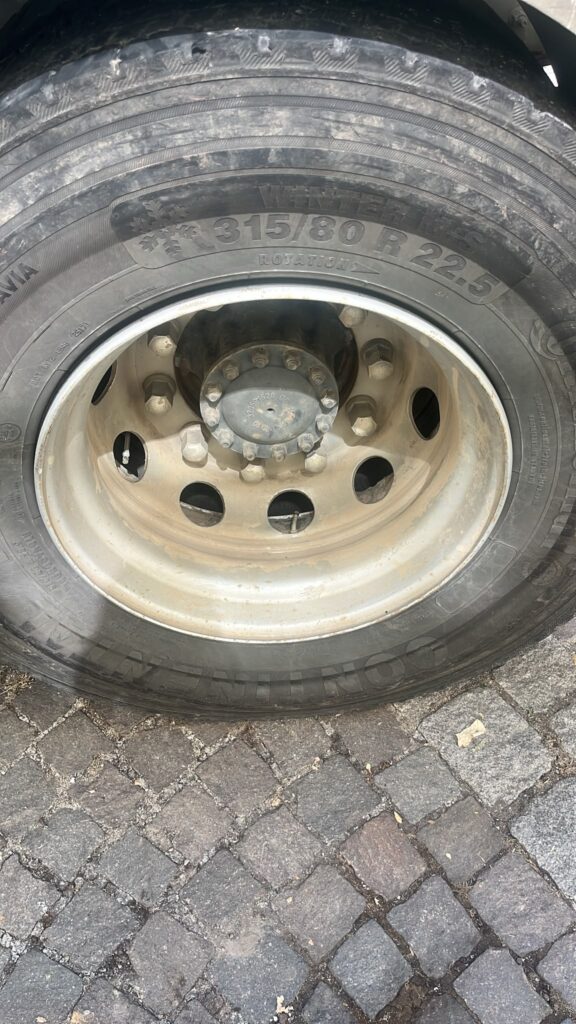
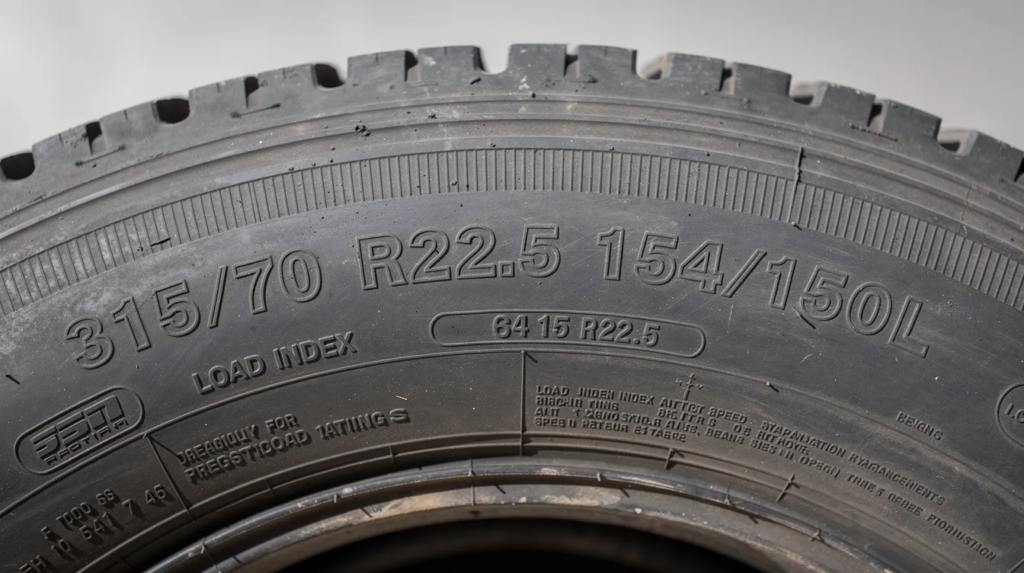
- Technical details from the Vehicle Registration Certificate Part I: tyre size (e.g. 315/80 R22.5), damaged axle (e.g. outer left drive axle), axle load if relevant. If you’d like to know more about load index and load capacity of truck tyres, you’ll find more tips there, or you can request our truck tyre service near Berlin, available 24/7, for mobile assistance in an emergency.
- Description of the damage: tyre blowout, air loss, brake problem, suspension damage. Ideally with photos sent via WhatsApp.
- Contact details: the driver’s name, callback number, language (DE/EN/PL/RU), and company name for invoicing if needed – especially important if you’re using our multilingual 24/7 truck roadside assistance in Germany service.
What the Cost of Truck Breakdown Assistance Depends On
The cost of truck breakdown assistance depends on several factors. The fixed price is confirmed by phone or WhatsApp before the technician sets off.
- Time of day and day of week: mobile tyre service during the day from €290 net, at night and on weekends from €549 net, plus the tyre itself.
- Distance: the more remote the location, the higher the call-out costs for the nearest service partner.
- Type of breakdown: a simple tyre change, a complex tyre issue involving a special size, recovery from a ditch, or plain jump-starting – each situation has different costs. Find out more about truck towing costs on our website; for practical help, our 24/7 truck towing service in Germany is on hand.
- Tyre type and size: standard sizes from R17.5 are cheaper than rare dimensions. The load index has to match.
- Waiting time and additional work: vehicle downtime on site, plus extra work on load securing or axle components, can add to the cost.
How Lkwhelp24 Helps with Axle Load and Tyre Issues
We help truck drivers all across Germany – around the clock, 365 days a year. Lkwhelp24 organises and coordinates, as an intermediary, 24/7 vetted service partners for mobile truck tyre service, towing service, recovery and breakdown assistance. Current information, case studies and tips can also be found in our news section.
Important: We serve exclusively trucks and commercial vehicles over 7.5 t, as well as buses. We are not able to help with cars, vans under 7.5 t or motorhomes.
Our key facts:
- Typical response time: 30–60 minutes, depending on location
- Mobile truck tyre service during the day from €290 net, at night/weekends from €549 net, plus the tyre
- The fixed price is confirmed by phone or WhatsApp before the technician sets off
- In an emergency, the immediately available tyre in the correct size with the right load and speed index is fitted. Preferred brands are only available with advance order and waiting time.
- We communicate in German, English, Polish and Russian
How to reach us: 📞 Phone/WhatsApp: +49 160 575 3826. Send us your location via WhatsApp – we take care of the rest.
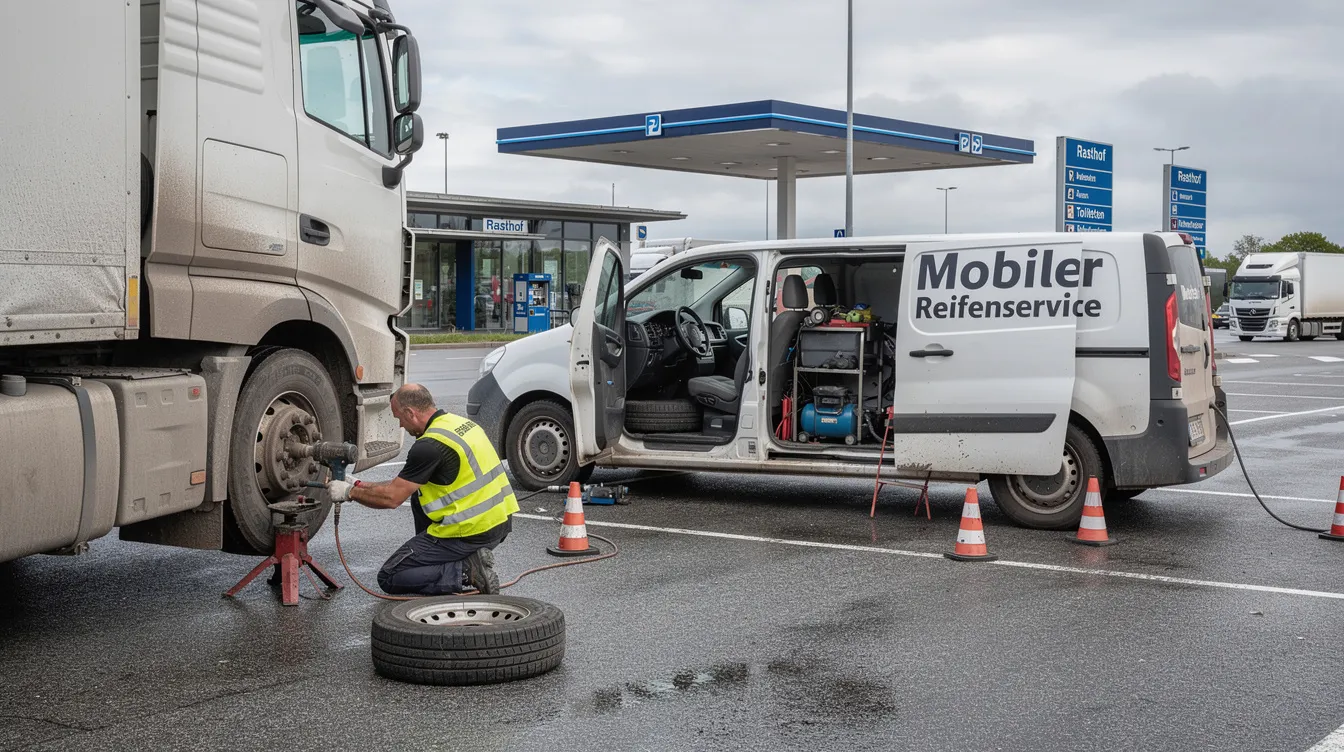
FAQ on Axle Load in the Vehicle Registration Certificate
Where do I find the permissible axle load in the Vehicle Registration Certificate Part I?
The technically permissible axle load is stated in fields 7.1, 7.2 and 7.3 of the Vehicle Registration Certificate Part I. The legally permitted axle load in Germany, the country of registration, is found under fields 8.1, 8.2 and 8.3. During police or BAG checks, the figure from fields 8.1 to 8.3 always applies.
Can my truck be overloaded on one axle even though the permissible gross weight is correct?
Yes. A vehicle can stay within its overall permissible gross weight and still overload one axle. This often happens with incorrect load distribution – for example when too much weight sits at the back of the trailer. So check the loading and the handling of the vehicle regularly. The safest option is an axle load check on a calibrated scale.
How can I quickly check my axle load on the road?
Use public vehicle scales at truck stops, haulage yards or recycling yards. Drive each axle onto the scale separately and compare the figures with the entries in the registration certificate. Keep the weight receipts in the vehicle – especially on long international journeys through Germany.
May I briefly exceed the permissible axle load, for example just until the next parking area?
No. The legal limits always apply – even for short distances. Police and the BAG accept no tolerance above the permissible axle load. Even a short journey with an overloaded axle significantly increases the risk of a tyre blowout and damage to the chassis and the road.
Does Lkwhelp24 also help cars, vans or motorhomes with axle load problems?
No. Lkwhelp24 supports exclusively trucks and other commercial vehicles over 7.5 t, as well as buses. All the information in this article is aimed primarily at professional truck drivers, haulage companies and fleet operators.
Where do I find the type plate and the door-frame sticker with weight figures?
Many truck manufacturers fit a type plate on the door frame on the driver’s side. This often shows the permissible gross weight and permissible axle loads as additional information alongside the registration certificate. These figures on the type plate should match the values in the Vehicle Registration Certificate Part I. In case of discrepancies, the vehicle documents always take precedence.