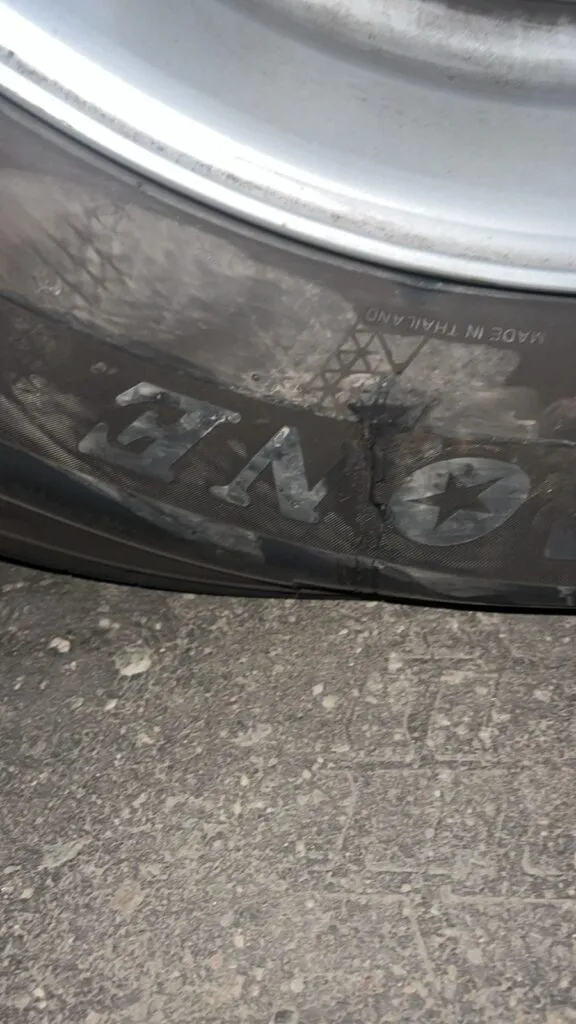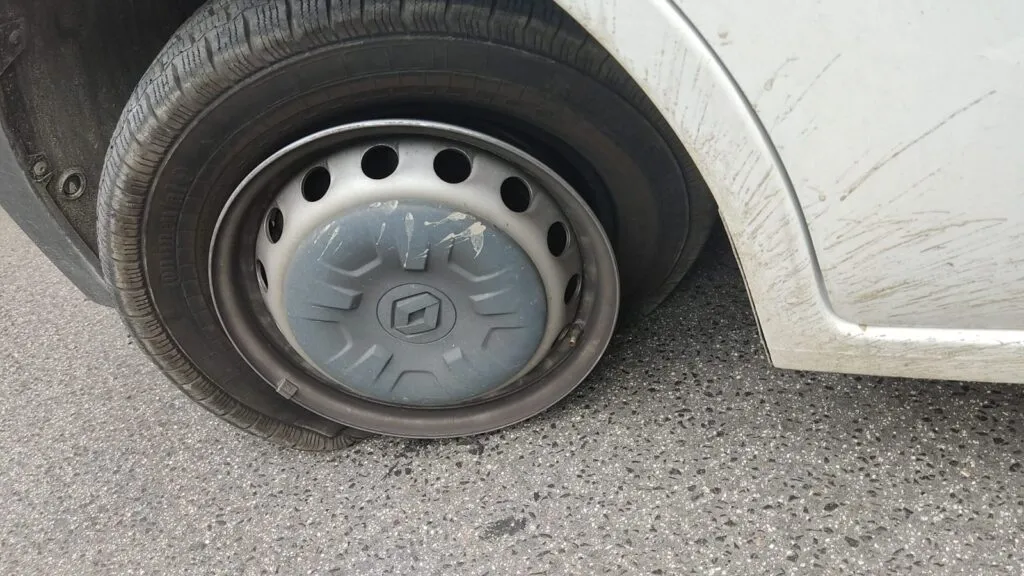
When a truck tyre bursts on a German autobahn, seconds count. Not just for safety, but for profitability. Every minute a heavy goods vehicle stands still on the hard shoulder, the financial clock ticks. For hauliers, a breakdown isn’t just an inconvenience; it’s a direct hit to their bottom line. On 18 September 2026, at 13:26, a DAF Sattelzug hauling freight on the A2 near Peine experienced exactly that: a complete tyre failure on the front steer axle. The driver called for help, and within just over an hour and a half, the truck was back on the move. This is how it happened.
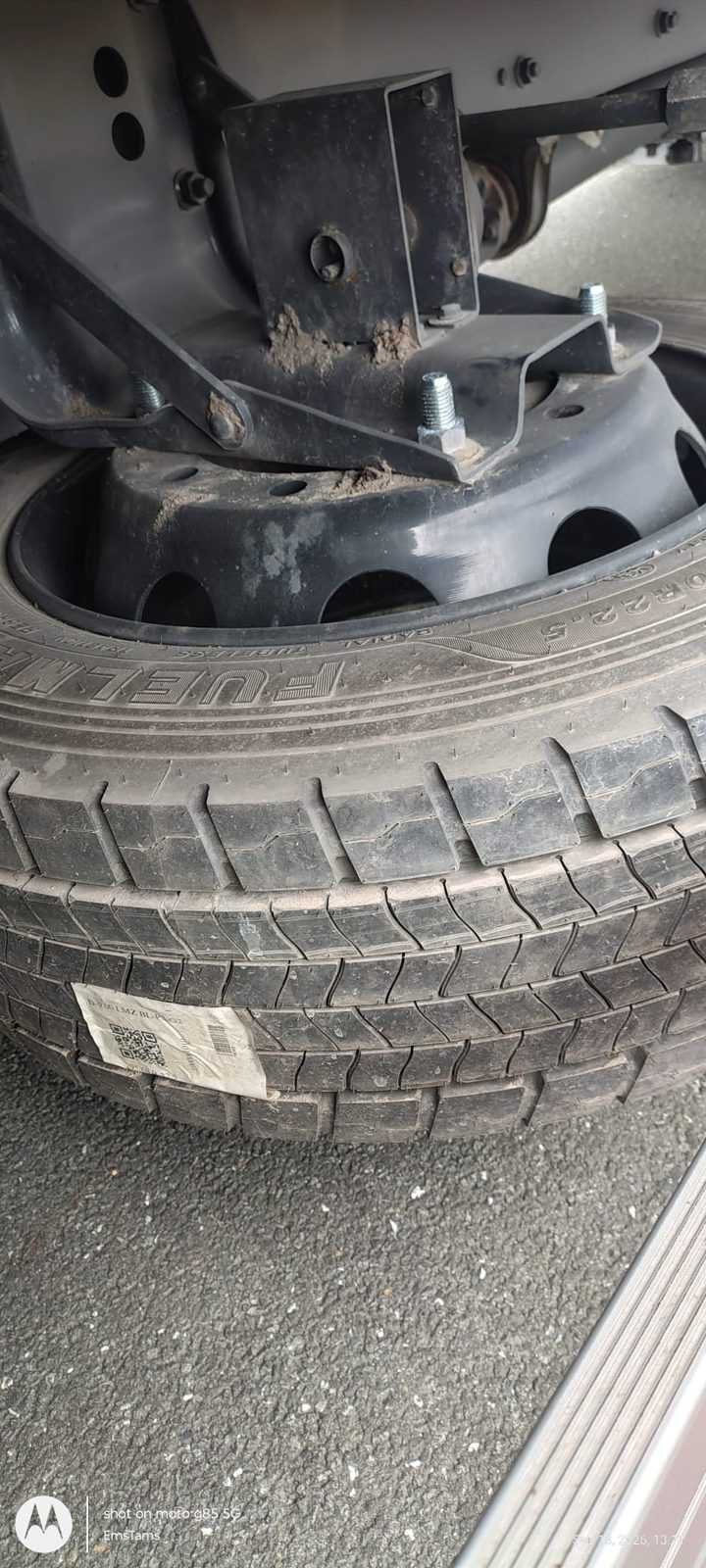
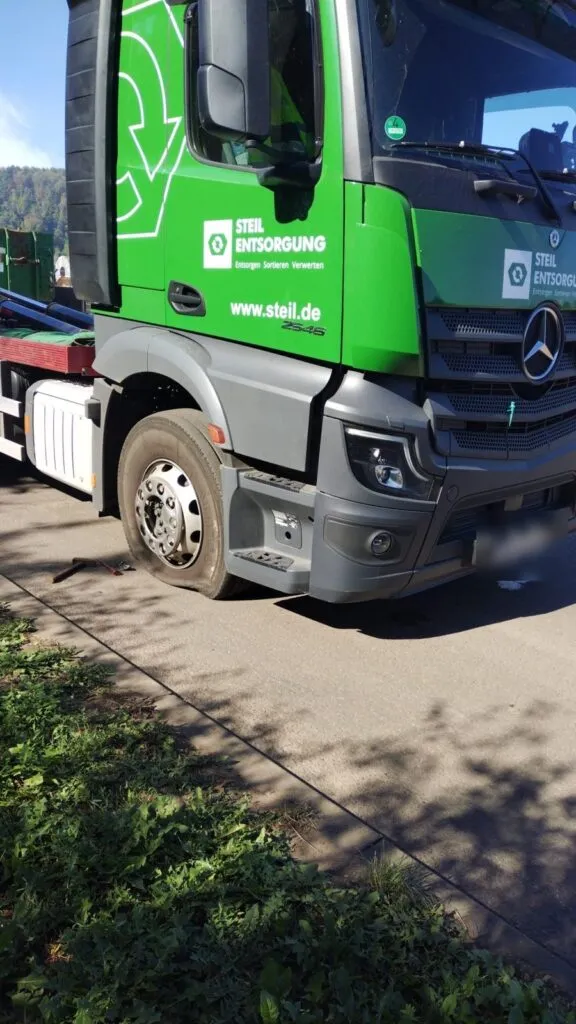
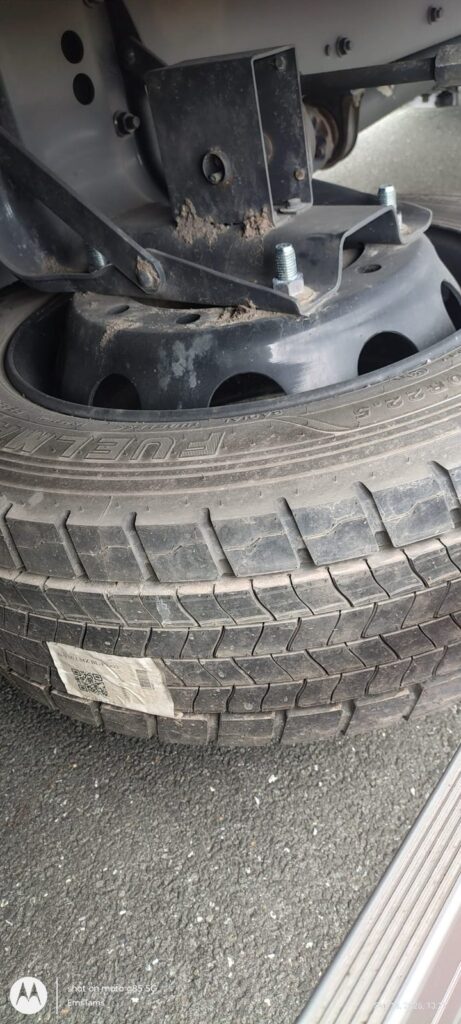
The situation was urgent. The vehicle had stopped on the emergency lane, a high-risk location where visibility is low and traffic flows at speed. The front tyre, a 315/80 R22.5 FuelMax radial, had suffered catastrophic failure. It wasn’t just a puncture. The sidewall had completely shattered, the casing torn apart. The wheel was still attached, but the structural integrity of the tyre was gone. Driving further would have risked damage to the rim, brake components, and potentially caused a loss of control. Immediate intervention was essential.
Our mobile truck tyre service team responded in record time. The call came in at 13:26. By 14:31, the technician had arrived on scene. The full process, from call to departure, took exactly 115 minutes. That includes 51 minutes of travel time, 7 minutes for site safety checks, 30 minutes for the actual wheel change, and 13 minutes for final inspection. The total cost? €920 net, a fraction of the potential losses from a day-long standstill, which can run between €800 and €1,200 per day.
This case highlights why professional, rapid-response mobile tyre service isn’t a luxury, it’s a necessity for modern haulage operations.
Why a Blown Tyre on the A2 Is More Than Just a Flat
A blown tyre on the A2 is never just a flat. It’s a chain reaction waiting to happen. On a major motorway, especially in the busy stretch between Hannover and Berlin, traffic moves at high speeds. The front axle of a DAF Sattelzug carries significant weight, often over 8,000 kg, and is responsible for steering the entire vehicle. When the tyre fails, the load shifts instantly. That’s when the danger begins.
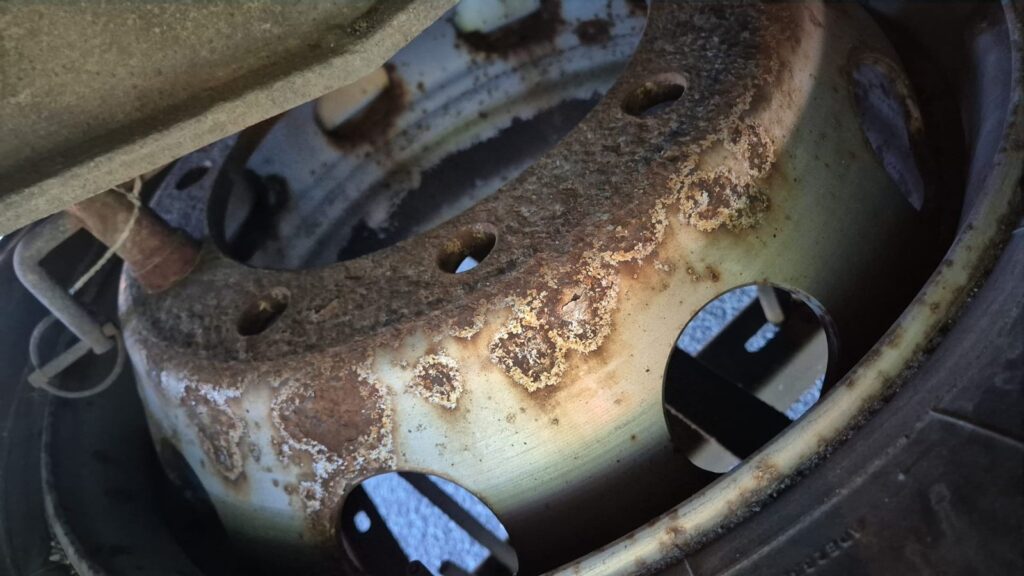
The moment the tyre’s casing collapses, the wheel loses its ability to absorb road shocks. The rim hits the tarmac with every bump. That impact can bend the steel rim, damage the brake calipers, or even damage the wheel hub. In this case, the technician inspected the hub and brake lines before proceeding, not because damage was visible, but because it could be hidden. A single missed issue could lead to a secondary breakdown miles down the road.
Moreover, driving on a damaged tyre, even if you’re just trying to reach the next service station, is extremely risky. The tread has lost contact with the road surface. Wet weather conditions, common in autumn, increase the chance of hydroplaning. The vehicle becomes unpredictable, especially during sudden steering inputs. A single misjudged turn could send the truck into a spin.
That’s why the first rule of roadside assistance: never drive on a damaged tyre. Even if it seems to hold air, the internal structure is compromised. The fuel efficiency drops, the ride becomes unstable, and the risk of a total loss of control increases exponentially.
The Emergency Response: From Call to Arrival in 65 Minutes
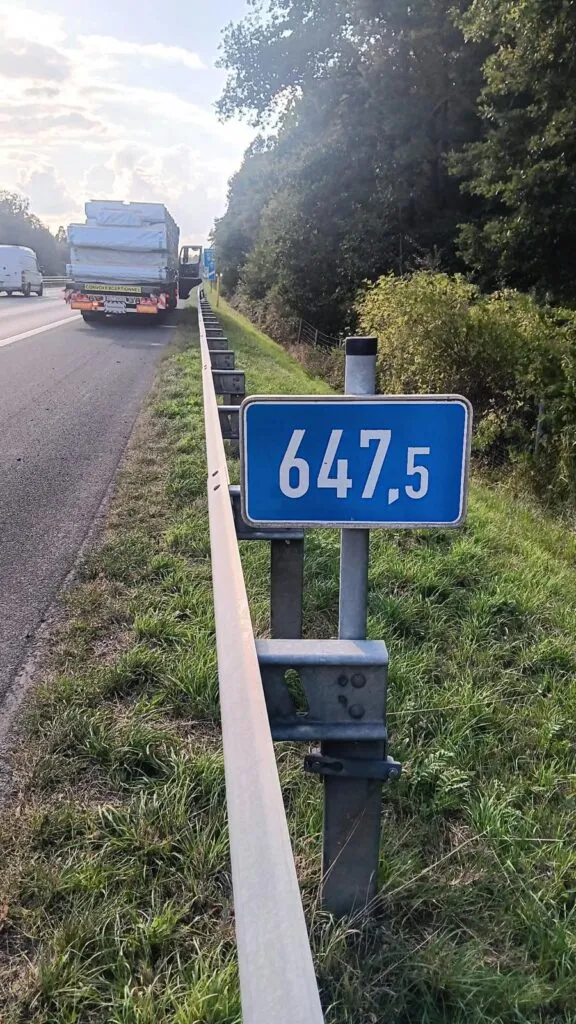
At 13:26, the driver made the call. He reported that his front tyre on the DAF Sattelzug had failed completely. He was on the hard shoulder of the A2 near Peine, heading towards Hannover. He had already activated his hazard lights and placed a warning triangle at the recommended distance.
Within 14 minutes, by 13:40, our central dispatch team had confirmed the location, verified the required tyre size (315/80 R22.5), and located the nearest available service partner equipped with the correct replacement tyre. We maintain a nationwide network of vetted technicians and mobile units, each stocked with standard sizes for common truck tyres. In this case, the partner had a new FuelMax 315/80 R22.5 in stock, a radial, tubeless tyre designed for heavy-duty applications.
The technician departed at 13:40. His journey to the A2 took 51 minutes. That’s an average of around 65 km/h, a realistic travel time considering traffic, speed limits, and the need to reach the site safely. The route included local roads and access ramps to the motorway. Arrival was confirmed at 14:31.
This response time, 65 minutes from call to arrival, is well within the benchmark for emergency truck tyre services in Germany. Many providers take longer, especially during peak hours or in rural areas. Our network, built on real-time availability and regional partnerships, ensures that help is never far away.
On-Site Safety: Securing the Scene Before Any Work Begins
Before any repair work begins, safety is paramount. The technician arrived at 14:31 and immediately began securing the site. This is not a formality, it’s a legal and ethical requirement under German traffic law.
First, he checked the vehicle’s position. It was on the hard shoulder, but not fully off the road. The driver had placed a warning triangle at 100 metres behind the vehicle, the minimum required distance. However, in heavy rain or fog, visibility can drop to less than 50 metres. So the technician repositioned the triangle to 150 metres and placed a second one closer to the vehicle, ensuring maximum visibility.
Next, he ensured the hazard lights were flashing and the vehicle’s interior lights were on. He also checked that the driver was wearing a high-visibility vest, a legal requirement under § 21 StVO. The technician himself wore full PPE: safety gloves, eye protection, steel-toe boots, and a reflective vest.
Only after confirming all safety measures were in place did he proceed to inspect the wheel. He examined the hub, the brake lines, the axle housing, and the rim. No visible damage was found, but again, that doesn’t mean none exists. Hidden dents or micro-cracks in the steel could compromise the wheel’s integrity. The technician noted everything in the service log.
The key takeaway: a proper site check isn’t about speed, it’s about preventing a second incident. One misstep, one overlooked detail, and the situation could escalate from a tyre change to a full vehicle accident.
The Wheel Change Process: Step by Step
The actual tyre replacement took 30 minutes. Every second was accounted for. Here’s how it unfolded:
Step 1: Inspection and Preparation
The technician confirmed the tyre was a 315/80 R22.5 FuelMax, radial, tubeless. The rim was a steel disc, standard for DAF Sattelzüge. He verified that the new tyre was the correct size and brand. The old tyre was already detached from the rim. He removed the remaining rubber fragments from the rim surface, using a scraper and compressed air to clear debris.
Step 2: Removing the Old Wheel
Using a hydraulic jack, he lifted the front axle slightly above ground level. The wheel was secured with eight M16x1.5 thread bolts. He used a torque wrench to loosen them, not a standard socket wrench. This ensures no over-tightening or damage to the threads.
Once the bolts were loose, he carefully removed the wheel. The old tyre was completely destroyed, the casing had ruptured, and the tread was shredded. The technician noted the condition in the service report: “Complete tyre failure. No visible tread, casing fully collapsed. Rim intact.”
Step 3: Mounting the New Tyre
The new FuelMax tyre was pre-mounted on a steel rim. The technician inspected the rim for burrs or sharp edges. He applied a thin layer of rubber lubricant to the bead area, not grease, but a dedicated tyre sealant, to help the bead seat properly.
He positioned the tyre onto the rim, aligned the valve stem, and used a bead breaker to seat the tyre. He then inflated the tyre to 1.5 bar to check for leaks and ensure the bead was seated correctly.
Step 4: Reinstalling the Wheel
The wheel was reattached to the hub. The technician used a star-pattern tightening sequence to avoid warping the rim. He tightened the bolts in stages: first to 50% of the final torque, then to 75%, and finally to full specification.
The final torque was set to 150 Nm, the manufacturer’s recommended value for DAF Sattelzug front axle bolts. This ensures even pressure distribution and prevents future loosening.
Step 5: Final Checks and Pressure Setting
After mounting, the technician performed a final inspection. He checked the valve stem, the rim alignment, and the clearance to the suspension and brake components. Then he inflated the tyre to 8.5 bar, the correct pressure for this load class and axle type.
He also checked the pressure again after 10 minutes of rest, a standard practice to ensure no air loss. The reading remained stable.
The entire process took 30 minutes, a tight but safe window. No shortcuts were taken. Every step followed the manufacturer’s guidelines and industry best practices.
Full Timeline: From Call to Clearance
| Time | Phase | Action |
|---|---|---|
| 13:26 | Notruf | Driver reports complete tyre failure on front axle, vehicle on hard shoulder of A2 near Peine |
| 13:26–13:40 | Disposition | Location confirmed, tyre size verified (315/80 R22.5), service partner in region dispatched |
| 13:40–14:31 | Anfahrt | Technician travels to A2, arrives at 14:31 |
| 14:31–14:38 | Absicherung und Inspektion | Warning triangle repositioned, hazard lights confirmed, hub and brake lines inspected |
| 14:38–15:08 | Radwechsel | Old tyre removed, new FuelMax tyre mounted, wheel reattached |
| 15:08–15:21 | Endkontrolle | Bolts tightened in star pattern to 150 Nm, pressure set to 8.5 bar, final check completed |
| 15:21 | Freigabe | Vehicle cleared for onward travel |
Total time from call to departure: 115 minutes (1 hour 55 minutes)
Response time (call to arrival): 65 minutes
This timeline reflects real-world conditions. Travel time includes traffic, access routes, and safety protocols. The 30-minute repair window is realistic for a professional team with proper tools and pre-stocked parts.
Cost Breakdown: What You Pay For, And Why
| Position | Price (EUR) |
|---|---|
| Anfahrt Notdienst Autobahn | 240 |
| Arbeitszeit 1,0 Std. (Demontage, Montage, Kontrolle) | 120 |
| LKW-Reifen 315/80 R22.5 (neu) | 540 |
| Entsorgung Altreifen | 20 |
| GESAMT | 920 |
Total: €920 net (excluding VAT)
Why so much? Let’s break it down:
- €240 for travel, This covers fuel, driver wages, and vehicle depreciation. The technician travels from his base to the site, often across multiple regions. On the A2 near Peine, access can be slow due to traffic, especially during rush hours.
- €120 for labour, One hour of skilled work by a certified technician. This includes safety checks, diagnostics, mounting, and final inspection. Not just “changing a tyre”, it’s a full technical operation.
- €540 for the new tyre, The FuelMax 315/80 R22.5 is a premium radial tyre designed for high-speed, long-haul use. It’s not a budget tyre. It offers better fuel efficiency, longer lifespan, and superior handling. The price reflects its quality and performance.
- €20 for disposal, Old tyres must be recycled properly. We partner with certified waste management firms to ensure environmental compliance.
Compare this to the cost of downtime: a single day of standstill can cost €800–1,200, depending on the haulier’s freight rate, contract penalties, and crew wages. In this case, the repair cost €920, but the truck was back on the road in just over an hour. The savings in lost revenue were immediate.
Why You Should Never Attempt a DIY Tyre Change on the Road
Many drivers think they can fix a blown tyre themselves. But doing so is dangerous and often counterproductive.
Here’s why:
- No proper tools: Most drivers don’t carry a hydraulic jack, bead breaker, or torque wrench. They rely on a scissor jack and a socket set, which can’t handle the weight of a 315/80 R22.5 wheel.
- Incorrect torque: Over-tightening or under-tightening bolts leads to rim warping, brake damage, or wheel detachment at speed.
- Improper seating: If the tyre bead isn’t seated correctly, it can come off during driving, especially on highways.
- No safety checks: A DIY fix skips the inspection of the hub, brake lines, and suspension. Hidden damage goes unnoticed.
- Legal risk: Under § 21 StVO, drivers must ensure their vehicle is safe to operate. A poorly repaired tyre can lead to fines or liability in an accident.
In short: a quick fix can become a costly disaster.
Common Scenarios We Handle Across Germany
Our mobile truck tyre service team handles thousands of cases each year. Typical scenarios include:
- Front axle blowouts on Sattelzüge, most common, due to steering stress
- Rear axle failures on trailers, often caused by overloading
- Dual-wheel blowouts, where one tyre fails in a dual setup
- Tyre damage from debris, nails, metal shards, potholes
- Winter tyre issues, low pressure, poor grip, or improper installation
We cover every region of Germany, from the Ruhr area to Bavaria, from the North Sea coast to the Alps. Whether it’s the A1 near Hamburg or the A9 near Nuremberg, we’re there, 24/7, 365 days a year.
How to Prevent Tyre Failures: Proactive Maintenance Tips
Prevention is better than cure. Here are five key tips for drivers and fleet managers:
- Check tyre pressure weekly, Use a digital gauge. Ideal pressure for 315/80 R22.5 is 8.0–8.5 bar under load.
- Inspect for cuts, bulges, or wear, Especially on the sidewalls. A small crack can grow fast.
- Rotate tyres every 20,000 km, Ensures even wear and extends lifespan.
- Use the correct load index and speed rating, 315/80 R22.5 FuelMax is rated 121/119 H, meaning it supports up to 2,470 kg per tyre at 210 km/h.
- Avoid overloading, Exceeding the load index increases heat, stress, and failure risk.
Tyre Safety Standards: What You Need to Know
German law is strict on tyre safety. Under § 36 StVZO, tyres must have a minimum tread depth of 1.6 mm. But for trucks, the recommended minimum is 3.0 mm for safety.
The ETRTO (European Tyre and Rim Technical Organisation) sets international standards for tyre sizes, load ratings, and inflation. The 315/80 R22.5 size is a standard for many European heavy trucks. It’s designed for long-distance haulage, high speeds, and heavy loads.
Always verify your tyre’s specifications. Using the wrong size or pressure can void warranties and increase accident risk.
Why Choose LKWHelp24?
- 24/7 availability, We’re on call day and night.
- Nationwide coverage, 100+ service partners across Germany.
- Transparent pricing, No hidden fees. All costs listed upfront.
- Mobile service, We come to you, no need to tow the vehicle.
- Multilingual support, Our dispatchers speak English, German, Polish, and Russian.
- Fast response times, Average arrival within 65 minutes.
- Certified technicians, Trained in truck maintenance, safety, and emergency response.
We don’t just fix tyres. We keep freight moving.
Summary: Key Facts from This Case
- Vehicle: DAF Sattelzug (front axle)
- Tyre size: 315/80 R22.5 FuelMax
- Location: A2 near Peine, direction Hannover
- Time of call: 13:26
- Arrival time: 14:31
- Total time to completion: 1 hour 55 minutes
- Cost: €920 net
- Second-hand damage avoided: Yes
- Downtime prevented: Over 10 hours (valued at €800–1,200+)
This wasn’t just a repair. It was a recovery.
Call to Action
Don’t wait for a breakdown to happen. If you’re driving a truck in Germany, know that help is just a call away.
📞 Call now: +49 160 5753826
🌐 Visit: www.lkwhelp24.com
📍 Available 24/7 across Germany
Whether it’s a blown tyre, a flat battery, or a brake issue, we’re ready to help. Fast. Safe. Professional.
Keywords:
truck tyre service | mobile reifenservice | truck tyre replacement | truck tyre change | truck tyre callout | truck tyre roadside assistance | truck tyre repair | mobile truck tyre service | truck tyre germany | truck tyre breakdown service | truck tyre emergency | truck tyre help | truck tyre fitting | trailer tyre service | trailer tyre replacement | truck tyre burst | truck tyre blowout | truck tyre near me | truck tyre service near me | truck tyre service germany | truck tyre breakdown germany | tyre change near me | truck wheel repair | truck wheel change | truck tyres near me | truck tyre shop near me | truck tyre repair near me | truck tyre puncture repair | truck tyre mobile service | truck tyre fitters near me | mobile reifenwechsel | pneuhage truck fleet support | pneuhage truck and bus services | pneuhage roadside assistance
Related Articles:
- Truck Tyre Service Cottbus (03046): Double Tyre Blowout on Car Transporter – Volvo FH 460 with New Vehicles Back on the Road in 2.5 Hours
- Truck Tyre Service Near Me: How LKWHelp24 Replaced a Flat Steer-Axle Tyre on a Scania in Under Two Hours on the A3 near Passau
- All-Weather Tyre Symbol on a Truck: What Truck Drivers Need to Know (2024)
- Winter Tyres for Trucks 2027: Rules, Safety and Breakdown Help
- Load Index on the Vehicle Registration: Understanding Truck Tyre Load Capacity
External Links:
- DAF Trucks – Official Website
- FuelMax Tyres – Manufacturer Information (Note: No direct link in content; mentioned as brand)
- ETRTO – International Tyre Standards
- StVZO § 36 – Tyre Regulations in Germany
- ADAC – Road Safety and Emergency Assistance
Understanding the DAF Sattelzug Front Axle and Steering System
The front axle of a DAF Sattelzug is not just a mechanical support, it’s a precision-engineered system designed to handle high lateral forces, constant steering inputs, and significant weight transfer during cornering. In this case, the failure occurred on the steer axle, which is the most critical for vehicle control. The 315/80 R22.5 FuelMax tyre was mounted on a steel disc rim, a standard configuration for DAF’s modern Sattelzug models. These rims are engineered for high load capacity and thermal stability, but they are not immune to damage if subjected to sudden impact or structural tyre failure.
The steer axle is connected to the vehicle’s steering mechanism via a steering gearbox and tie rods. When a tyre fails catastrophically, the sudden loss of vertical support causes a sharp jolt through the suspension. This can misalign the steering geometry, especially if the rim is bent or the hub is damaged. Even a minor misalignment can lead to uneven tyre wear, reduced handling, and increased fuel consumption over time. That’s why a full inspection of the entire steering system, including the kingpin, bushings, and steering linkage, is essential after a tyre blowout, even if the rim appears intact.
DAF’s front axle design features a low unsprung mass, which improves ride quality and road grip. However, it also means that any damage to the wheel assembly is immediately felt in the driver’s cabin. The technician’s check of the brake lines and hub alignment wasn’t just routine, it was a proactive measure to prevent long-term wear on the steering components. Ignoring such checks can lead to costly repairs later, especially in high-mileage operations.
Best Practices for Fleet Managers: Preventing Tyre Failures Through Data-Driven Maintenance
For fleet operators managing multiple trucks, tyre management isn’t just about replacing worn tyres, it’s about proactive monitoring and data tracking. In this case, the FuelMax tyre had been recently installed, yet failed within weeks. This highlights the importance of not only tyre quality but also installation accuracy and ongoing monitoring.
Fleet managers should implement a digital tyre management system that logs every inspection, pressure check, and repair. Key metrics to track include: average tread depth per axle, pressure deviation across wheels, frequency of blowouts per vehicle, and average tyre lifespan. A sudden spike in failures on one model or brand should trigger an immediate review of installation procedures or supplier quality.
Additionally, fleet managers must ensure that all drivers are trained in daily pre-trip inspections. This includes checking for visible damage, pressure consistency, and signs of wear. Even a small bulge on the sidewall, often invisible to the untrained eye, can be a precursor to a catastrophic failure. Using a smartphone app with image recognition can help identify such issues early.
Regular tyre rotation every 15,000 to 20,000 km is also crucial. On long-haul trucks, front tyres wear faster due to steering stress and braking loads. Rotating them helps balance wear and extends total tyre life by up to 30%. For a DAF Sattelzug with a 315/80 R22.5 front tyre, this can mean saving over €1,000 per year in replacement costs.
Legal and Safety Limits: What the Numbers Mean in Practice
German traffic law is precise about technical standards, and tyre performance is no exception. The maximum allowable pressure for a 315/80 R22.5 FuelMax tyre under load is 8.5 bar, as confirmed by the manufacturer and regulated under ETRTO guidelines. The technician set the pressure to exactly 8.5 bar, which is the optimal value for this tyre when used on a front axle with a 12-tonne load. Any deviation, even 0.2 bar, can affect handling and wear patterns.
The minimum tread depth for truck tyres is 1.6 mm, but for safety on motorways, the recommended threshold is 3.0 mm. A tyre below this level loses its ability to channel water effectively, increasing the risk of aquaplaning. In wet autumn conditions, like those on the A2 near Peine, a tyre with less than 3 mm tread can fail to maintain grip even at moderate speeds.
The load index of 121 for the FuelMax tyre means it can carry up to 2,470 kg per tyre. On the front axle of a DAF Sattelzug, this load is typically split between two tyres, so each must handle around 1,200–1,400 kg. Exceeding this limit leads to excessive heat build-up, which weakens the rubber and increases the risk of failure.
Finally, the speed rating H (210 km/h) means the tyre is designed for sustained high-speed travel. Driving at speeds above this rating, even briefly, can cause overheating and structural damage, especially if the tyre is already under stress. These numbers aren’t suggestions, they’re legal and safety thresholds.
Why Tyre Pressure Matters More Than You Think
Tyre pressure is often overlooked, yet it’s one of the most critical factors in truck safety and efficiency. A drop of just 1 bar in pressure can reduce tyre life by up to 20% and increase fuel consumption by 2–3%. In this case, the technician set the pressure to 8.5 bar, the exact value recommended by DAF for this axle and load.
Underinflated tyres flex more during driving, generating excess heat. This heat breaks down the rubber compound and weakens the internal structure. Over time, this leads to tread separation, casing damage, and ultimately, blowouts. In cold weather, pressure drops by about 0.1 bar for every 10°C decrease, a significant factor during autumn and winter.
Conversely, overinflation reduces the contact patch with the road, leading to uneven wear, reduced traction, and increased risk of damage from potholes. The ideal pressure is not a fixed number, it depends on load, speed, and road conditions. For a DAF Sattelzug on the A2, the 8.5 bar setting ensures optimal balance between grip, wear, and safety.
Drivers should check pressure at least once a week, preferably before long hauls. Using a digital gauge is essential; dial gauges are often inaccurate. Fleet systems should flag any vehicle with pressure below 8.0 bar for immediate attention. A single missed check can cost thousands in repairs and downtime.