Skip to content
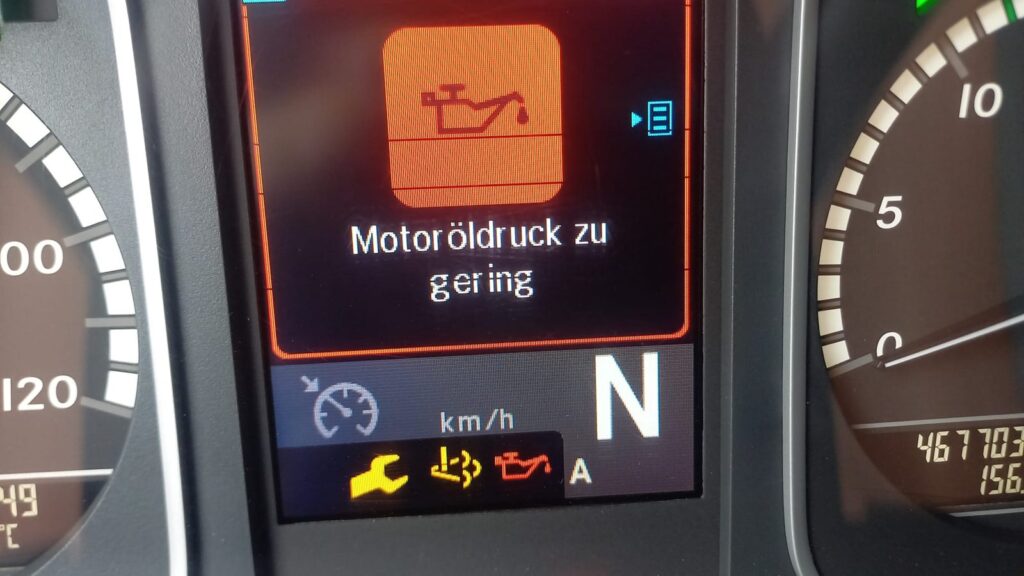
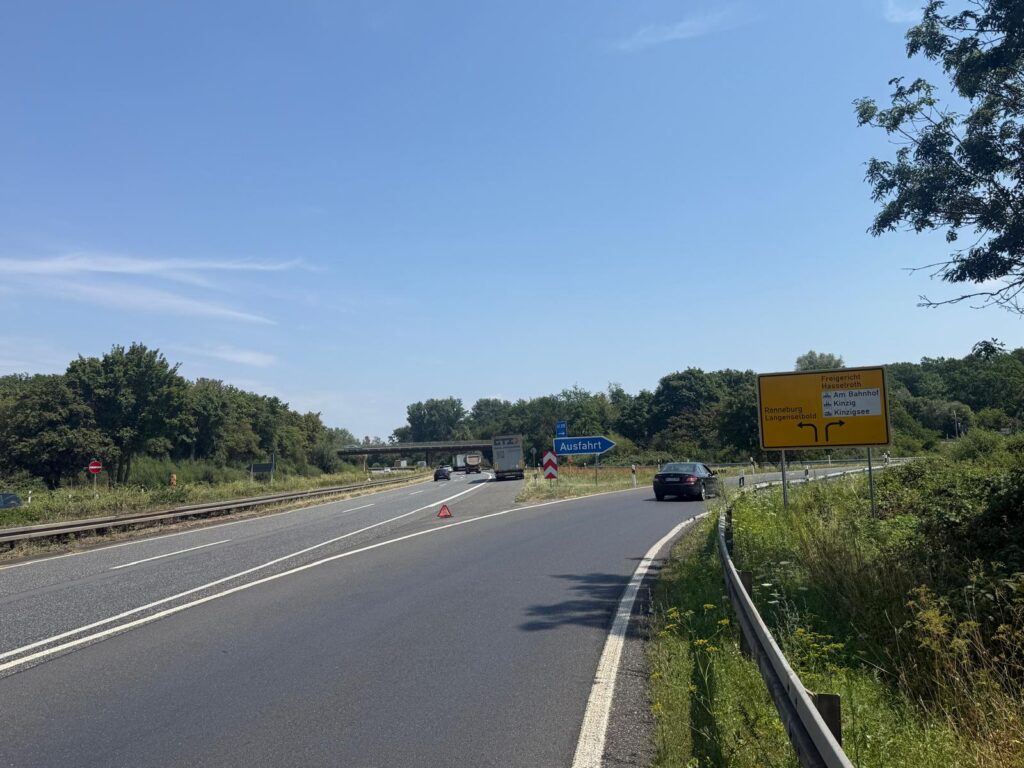
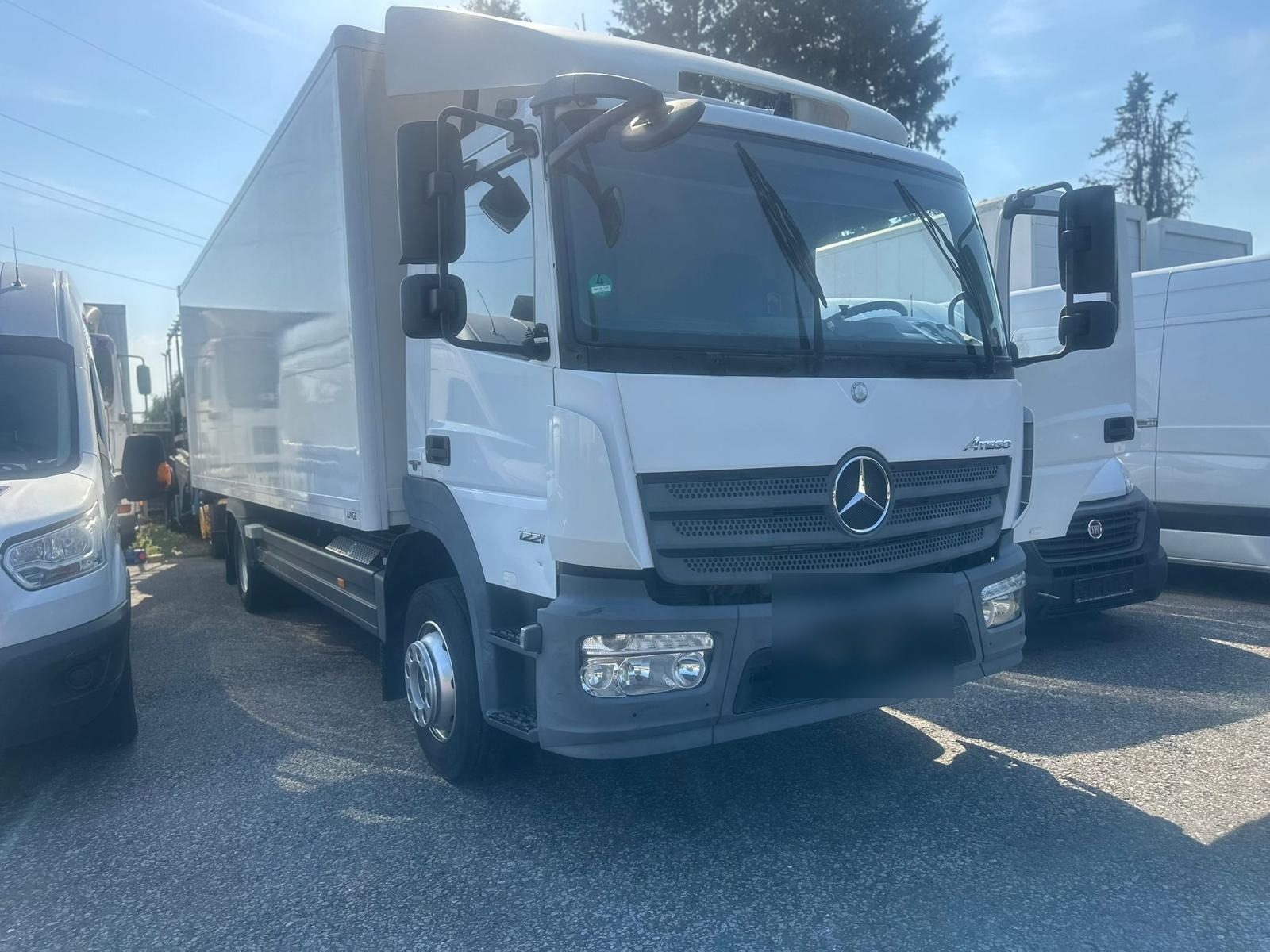
On 18 August 2026 a Mercedes-Benz Atego lit up a red “Motoröldruck zu gering” warning on a rest area off the A7 near Hildesheim. The driver switched the engine off at once, our dispatcher sent a mobile crew, and 140 minutes after the first call the lorry rolled out again. The cause was a leaking seal on the oil filter housing. The bill was EUR 640 net, and there was no engine damage and no tow.
That outcome is the whole point of this write-up. A red oil pressure light is the one dashboard warning that does not give you “a few more kilometres”. If you stop within seconds, the repair is a seal, a filter and some oil. If you carry on for ten minutes, it can be a new engine. Below you will find the full timeline, the exact cost, the diagnostic steps and what a truck service crew actually does at the roadside, so you can judge your own next breakdown with a clear head.
What happened: oil pressure warning on the A7
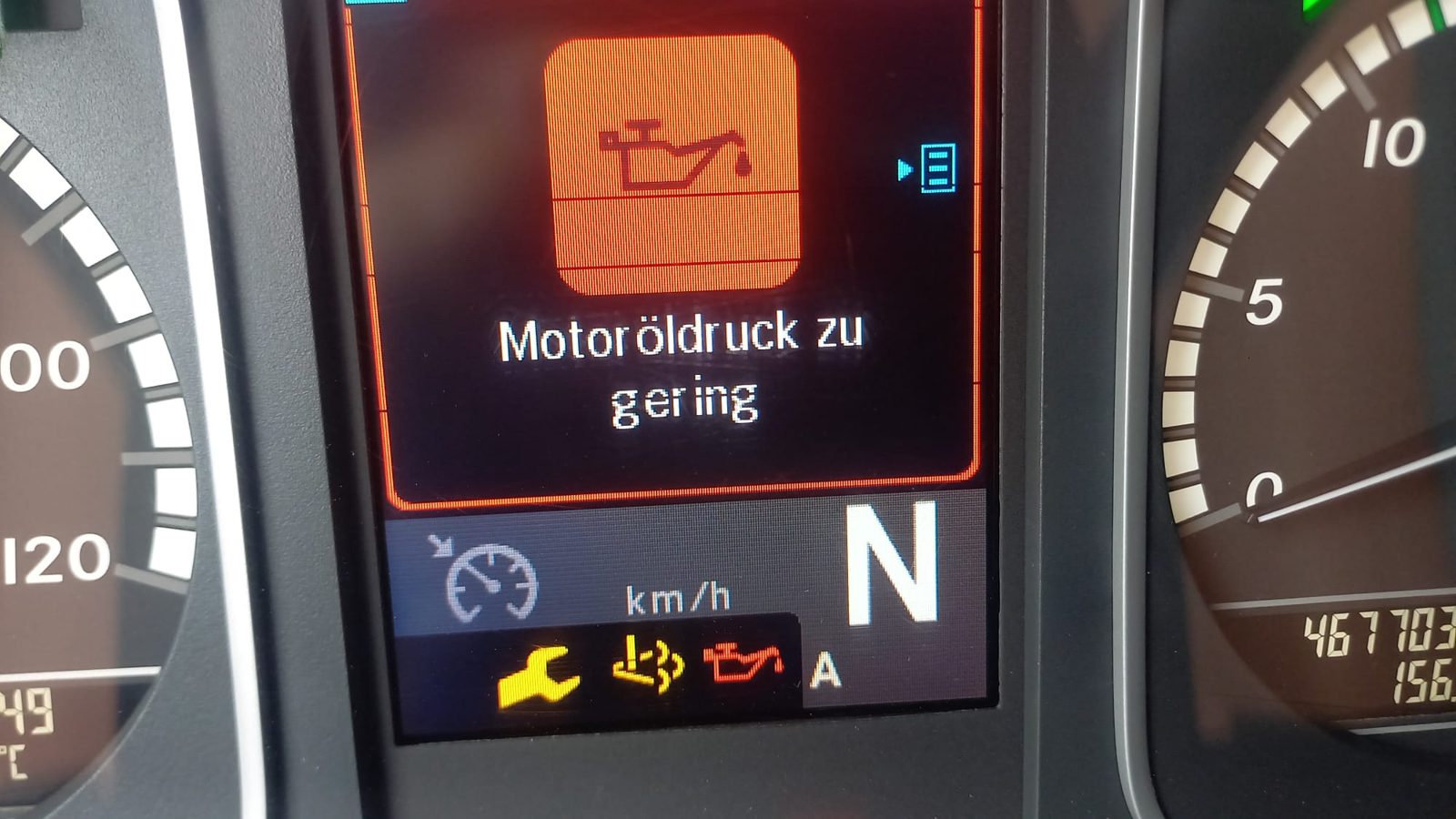
The oil pressure warning on an Atego is a red alert: it means the engine is no longer being lubricated properly and must be stopped immediately. In this case the driver was running a small part load on the A7 south of Hildesheim when the display showed “Motoröldruck zu gering” together with the oil can symbol. The yellow service spanner lit up as well.
He did the right thing, and he did it fast. He took his foot off, rolled to the next truck parking area, selected neutral and shut the engine down. The photo of the instrument cluster was taken afterwards: selector in N, rev counter at zero, odometer at around 470,000 km.
The area was a proper lorry parking place, not a hard shoulder. That mattered more than most drivers realise. Working on a stationary vehicle on a flat, dry surface in daylight is a very different job from working next to the live lane, and it is one reason the repair took only 32 minutes of actual spanner time. If you want to know how risky the hard shoulder can be, our case on a tyre blowout on a mega-trailer near Rosenheim explains it in detail.
Why the driver did not carry on to a workshop
The nearest workshop that could take a 7.5 to 18 tonne vehicle without an appointment was well over an hour away. Many drivers think: “It is only a sensor, I will limp to the next town.” The problem is that you cannot know that from the cab. A low oil pressure signal can come from a faulty sender (cheap) or from an empty sump (expensive). Main bearings, big-end bearings and the turbocharger shaft run on a film of oil only a few hundredths of a millimetre thick. Without pressure, that film collapses within minutes.
So the rule is simple: red oil pressure lamp, engine off, call for truck breakdown service. Do not restart “just to see”.
How we organised the help
Our dispatch desk took the call at 14:32 and had a crew assigned by 14:47. That is a 15 minute window in which the dispatcher has to ask the right questions, because the answers decide what the crew loads into the van.
The conversation with the driver went like this:
- Vehicle and symptom: Mercedes-Benz Atego, box body, red oil pressure message, engine off.
- Time since shutdown: a few minutes, engine not restarted.
- Location: lorry parking area near the A7 at Hildesheim, dry, daytime, safe to work.
- Visible leak: the driver had not looked under the cab yet, so the dispatcher asked him to check only for oil on the ground, not to open anything.
- Oil level: the dipstick was handed over for later, with the instruction not to top up with random oil from a petrol station.
With this picture, the dispatcher chose the nearest crew from our partner network that carries a mechanical pressure gauge, oil filters and seals for Mercedes truck engines. We never name the partner garages in our reports, but the principle is always the same: one phone call, one crew, one fixed quote range, and a dispatcher who stays reachable until the vehicle is moving. If you want the wider picture of how we handle a mobile truck service call, the service page describes the process step by step.
Why we asked about the dipstick
A dry dipstick, as it turned out, was the first big clue. Oil pressure faults fall roughly into three groups: not enough oil, a failed pump or pressure relief valve, or a wrong reading from the sender. The first group is by far the most common on a lorry with this mileage, and it is also the cheapest to fix, provided the engine was stopped in time.
On site: reading the situation before touching a spanner
The crew arrived at 15:42 after a 55 minute drive. Before any tool came out, the mechanic did three things: walked around the vehicle, checked the ground for fresh oil, and looked at the driver’s notes. This routine takes two minutes and prevents most mistakes.
What he found:
- The dipstick was dry at the MIN mark, so the sump was almost empty.
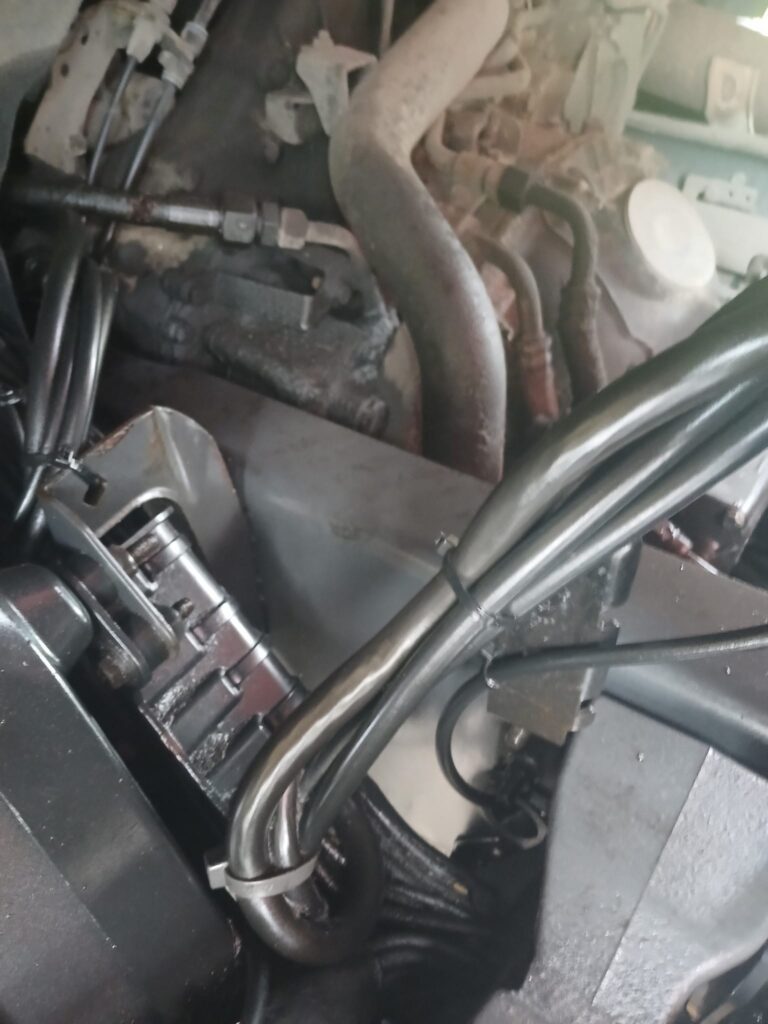
- A wet, dark film ran down the side of the engine block below the oil filter housing.
- The pressure sender was electrically fine (we measured it, we did not assume).
- The engine had been stopped quickly enough that there were no metallic smells and no signs of overheating.
A leaking oil filter housing seal is a classic fault on higher-mileage trucks. Rubber hardens with heat cycles over hundreds of thousands of kilometres, it loses its elasticity, and under pressure it weeps and then lets go. The driver would not have noticed it from the seat. He would have noticed only the moment the level dropped far enough for the pump to suck air.
Anyone who tells you that a roadside diagnosis is just guesswork has not watched a proper one. It is a short sequence of yes or no questions, and each answer rules out an expensive cause.
Step by step: how the repair was carried out
The repair followed five steps. The sequence is the same for most oil pressure faults, which is why it is worth knowing.
- Inspect and confirm the leak. The mechanic cleaned the area around the filter housing with degreaser so that fresh oil could be seen. He also drained a few drops from the filter to check for metal particles. There were none.
- Secure the vehicle. Handbrake on, wheels chocked, battery isolator off, hot parts allowed to cool. On a parking area this takes minutes. On a motorway it would take much longer, with a warning triangle and a safety trailer.
- Remove the old filter and seal. The housing was opened, the old element and the hardened seal removed, and the sealing face cleaned and checked for scoring.
- Fit the new seal and filter, refill the oil. New seal seated without twisting, filter element installed, cover tightened to the manufacturer’s torque. Fresh oil was added to the correct level on the dipstick, measured on level ground after a short wait.
- Test run and final check. A mechanical gauge was connected to the test point. The engine was started, and pressure was checked at idle and under load while the crew watched for any weeping at the housing.
The mechanical gauge is worth a sentence of its own. The dashboard warning only tells you that pressure has fallen below a threshold. The gauge gives you a number, and that number tells you whether the pump and bearings are in good health. In this case the pressure was normal after refilling, which also proved that the original sender was not at fault.
What would have changed the repair
If the gauge had shown low pressure even with a full sump, the plan would have changed: oil pump, pressure relief valve or bearing wear, and a trip to a workshop on a low loader. We always tell drivers this in advance. A roadside fix is not guaranteed, but in this case the evidence pointed the right way, and the evidence was confirmed by the test.
Full timeline: 140 minutes from call to departure
The table below shows the real times of the case. Total: 140 minutes from the first call to the lorry driving away.
| Time | Phase | Action |
|---|---|---|
| 14:32 | Call | Driver phones in, describes the warning, engine already off |
| 14:32–14:47 | Dispatch | Dispatcher confirms model and condition, assigns the nearest mobile crew from the partner network (15 min) |
| 14:47–15:42 | Arrival | Crew drives to the parking area at the A7 (55 min) |
| 15:42–15:58 | Inspection and diagnosis | Oil level, leak, sender, mechanical gauge (16 min) |
| 15:58–16:30 | Repair | Seal and oil filter replaced, oil refilled (32 min) |
| 16:30–16:44 | Test run | Pressure at idle and under load, leak check (14 min) |
| 16:44–16:52 | Tyre check and handover | Pressure, tread depth, Michelin tyre and 385/65 R22.5, report (8 min) |
| 16:52 | Done | Lorry continues its journey, 140 minutes in total |
Note how the time is split. Fifteen minutes were spent on dispatch and 55 on the drive. The hands-on work, diagnosis plus repair plus test, took only 62 minutes. On a midweek summer afternoon with dry roads, that arrival time is typical for central Germany. In heavy rain, at night or in holiday traffic, expect longer.
How much did the repair cost?
The total came to EUR 640 net (plus VAT). Here is every line, as the customer saw it.
| Item | Price (EUR) |
|---|---|
| Call-out (Anfahrt) | 240.00 |
| Diagnosis of engine and lubrication system | 150.00 |
| Labour, 1.5 h at EUR 110 per hour (seal and filter replacement, test run, tyre check) | 165.00 |
| Materials: engine oil, oil filter, seal | 85.00 |
| TOTAL | 640.00 |
All amounts are net (zzgl. MwSt.). The call-out charge covers the crew’s drive and the van with its equipment. The diagnosis is billed separately because it is the part that stops you replacing the wrong component. Labour is charged by the hour at EUR 110, and the materials were small: one filter, one seal and the oil needed to bring the sump back to its level.
What drives the price up or down
Several factors change the invoice on a similar job:
- Time of day. Nights and weekends add 25 to 50 per cent to the call-out and labour.
- Distance. A longer drive from the partner base increases the call-out charge.
- Engine and parts. A different engine may need a more expensive filter module or a different seal.
- Hidden damage. If the oil pump or bearings are affected, the job moves to a workshop and the cost changes completely.
- Weather. Rain slows both arrival and repair, and that shows up in the hours.
The comparison that matters
A standing lorry costs a carrier roughly EUR 800 to 1,200 per day in lost revenue, driver wages and missed slots. A towing job for a heavy vehicle typically costs EUR 850 to 1,600, and you would still need a workshop afterwards. If the driver had kept going on a red lamp, a damaged engine could easily have cost five figures. By comparison, EUR 640 and under two and a half hours is a bargain. Our guide to truck repair on the road shows which other faults can be fixed on the spot in this way.
Why only a trained mechanic should do this job
Changing a filter looks easy on a YouTube video. On a lorry, the details decide whether the repair holds. These are the main risks of doing it yourself or asking someone untrained.
- Wrong oil grade. Modern truck engines need a specific specification. The wrong oil can ruin the exhaust aftertreatment and void the manufacturer’s warranty.
- Overtightening the housing. Plastic or aluminium filter housings crack. A cracked housing means a bigger leak and a second tow.
- Reusing the old seal. It looks fine and leaks again after ten minutes.
- Ignoring the root cause. Topping up oil without finding the leak just hides the problem for a short time.
- Starting without a gauge. If you restart a starved engine and the pressure is still low, you have caused the damage you were trying to avoid.
- No documentation. Fleet managers and insurers want a report. A roadside repair without paperwork is hard to defend later.
A trained mechanic works through the same list every time. That is what you are paying for, more than the oil and the filter.
A quick look at the tyres
Because the crew was already on site, the driver asked for a check of the tyres as well. This is a sensible habit: when a vehicle has stopped, it costs very little to look at the rubber, and you may find something before it becomes the next breakdown.
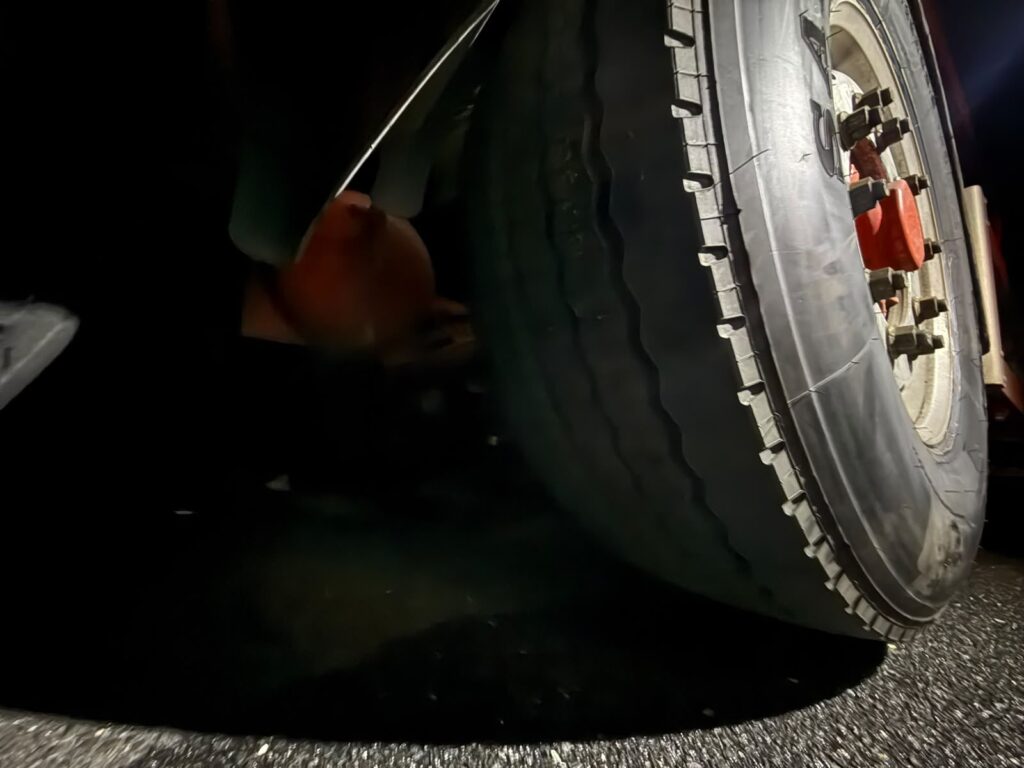
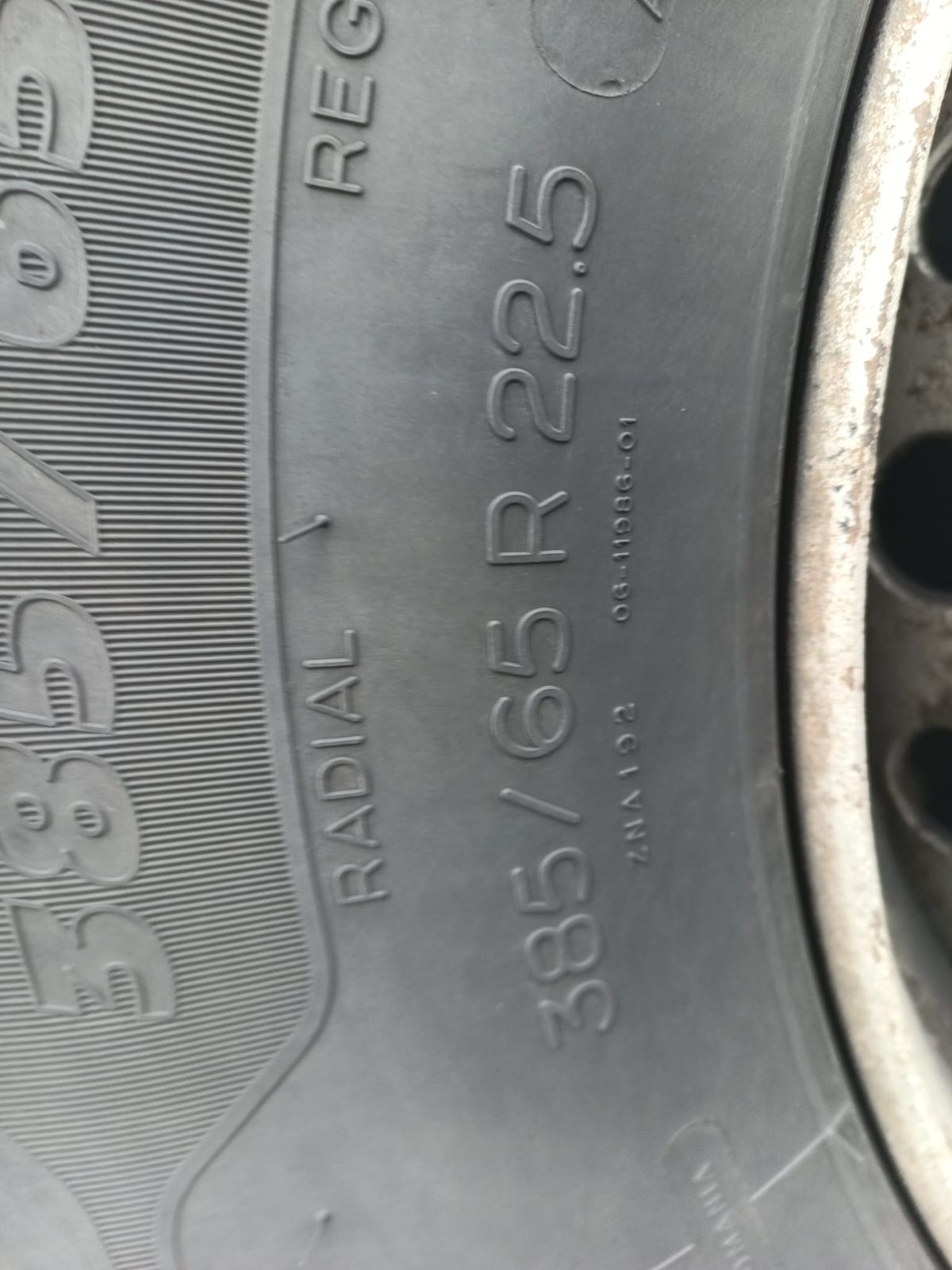
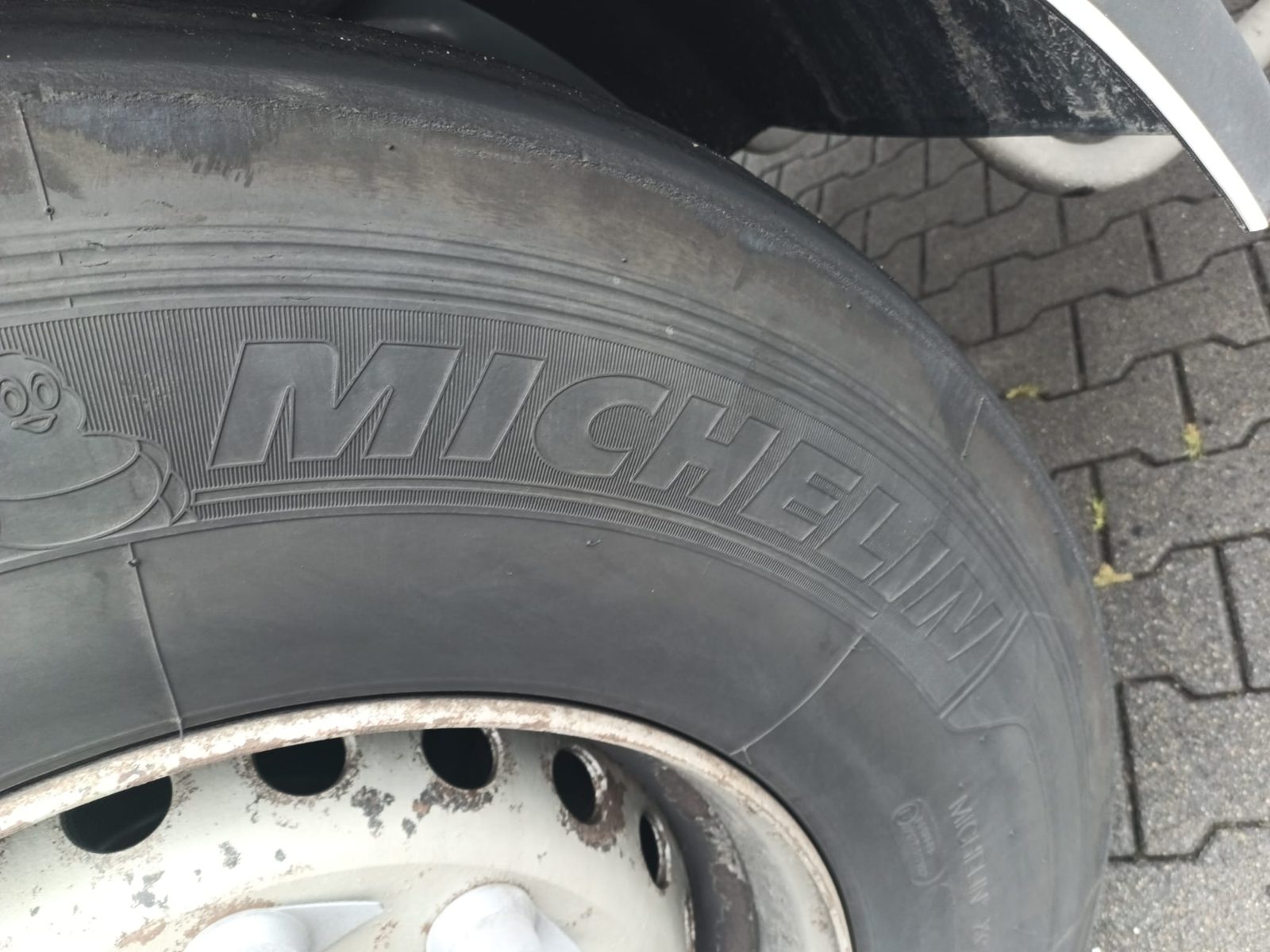
The mechanic checked pressure, tread depth and sidewalls on the visible wheels. The second axle carried 385/65 R22.5 tyres, one of which was a Michelin with visible wear on the tread shoulder. That kind of wear points to a geometry problem, so we recommended an axle alignment at the next scheduled service. The steel wheel had light surface rust but no damage that would affect safety.
For reference, here is what we looked at and why:
| Check | Why it matters |
|---|---|
| Inflation pressure | Commercial tyres run at high pressure, typically 8.5 to 9.5 bar, and even a loss of 1 bar shortens tyre life and raises fuel use |
| Tread depth | German law requires at least 1.6 mm (see § 36 StVZO); fleets usually replace earlier |
| Shoulder wear | Uneven wear shows an alignment or suspension fault |
| Rim condition | Surface rust is cosmetic, deep corrosion near the bolt holes is not |
| Sidewalls | Cuts and bulges mean the tyre has to be replaced |
Nothing here needed to be changed that day. The shoulder wear was noted in the report. If you drive a similar combination and want to understand the size markings, our article on the 385/65R22.5 truck tyre size explains each figure. And if you ever need a wheel changed fast, the tyre service page lists what we do on site.
Typical situations where we are called out
The Atego case is one of many. Over a year, our mobile crews and partner network see the same group of problems again and again across Germany, from the Baltic coast to the Alps.
- Oil pressure, coolant and overheating warnings. Seals, hoses, thermostats and sensors are the usual suspects. See our case on a coolant leak on the A38 for a similar story.
- Dashboard lamps of unknown origin. A diagnostic laptop and a trained eye reveal the fault in minutes.
- Tyre blowouts and punctures. The most common call of all, in every season.
- Air system and brake faults on tractor units and trailers. Leaks, valves and couplings.
- Starting problems. Flat 24 V batteries, starter motors, fuel system trouble.
- Clutch and gearbox failures. Often fixable on site, sometimes not.
- AdBlue and exhaust warnings that trigger a restart lockout.
- Trailer service. Lights, bearings, doors and landing legs on box trailers and curtainsiders.
If the vehicle cannot be repaired where it stands, the towing service takes over, and the dispatcher arranges transport to a suitable workshop in the same phone call.
Prevention: how drivers and fleets can avoid a repeat
Most oil-related breakdowns announce themselves long before the red lamp. These habits keep a fleet out of trouble.
- Check the dipstick every week, and before long runs. It takes a minute on level ground with a cold engine.
- Walk round the vehicle at every start of shift. Look under the engine for wet patches, dark drips or fresh oil on the underbody.
- Do not ignore a yellow lamp. It is a polite request. The red one is an order.
- Keep service intervals. Oil and filter changes, including housing seals, should follow the manufacturer’s schedule. Mercedes-Benz Trucks publishes intervals for each engine.
- Fix small leaks early. A weeping gasket is a cheap job today and an expensive one in three months.
- Teach drivers the stop rule. If a red engine warning appears, stop, switch off, call. Drivers who have been told this in advance save their employers a lot of money.
- Use an independent inspection. Organisations like DEKRA test commercial vehicles and can catch wear before it becomes a failure.
Our readers often ask about Mercedes models in particular, and we have a separate guide on roadside assistance for the Actros and Atego with model-specific faults.
Tyres and fleet maintenance: the wider picture
A fleet manager who looks only at engines has half the picture. Tyres are the second largest running cost after fuel, and every unplanned stop costs money. A few principles from our daily work apply to any fleet running the Atego or comparable distribution trucks.
Choose the tyre for the job. Brands such as Michelin, Continental, Goodyear and Bridgestone each offer regional, long-haul and mixed-use ranges. On a distribution vehicle that makes many starts and stops, shoulder wear and sidewall damage matter more than ultimate mileage. Check the manufacturers’ technical data, for example on the Michelin website, before you standardise on one range.
Know your size. A 385/65 R22.5 tyre is a wide-base trailer or steering axle size, while a drive axle on the same chassis may use something else. Mixing sizes on one axle is dangerous and illegal in most cases.
Rotate and align. Uneven shoulder wear, as seen on the Michelin in this case, is almost always cheaper to fix with an alignment than to ignore until the tyre is scrap. Many carriers do an alignment at every second tyre change.
Keep a log. Record pressure checks, tread depth and repairs against each wheel position. When a tyre fails, you can see whether it was an isolated incident or a pattern.
Plan retreads sensibly. Casings in good condition can be retreaded, which lowers the cost per kilometre. This only works if the casing has not been run flat or underinflated.
Call early. A tyre with a slow leak, a nail in the tread or a cut sidewall is cheaper to deal with in a yard than on the autobahn. Our article on emergency tyre service for trucks covers when to call.
Frequently asked questions
Can I drive a truck with the oil pressure warning on?
No. Stop as soon as it is safe, switch off the engine and call for help. Even a short drive can destroy bearings and the turbocharger, because a red oil pressure lamp means the engine is no longer lubricated properly.
How long does a mobile truck repair like this take?
In this case it took 140 minutes from call to departure: 15 minutes for dispatch, 55 for the drive, 62 for diagnosis, repair and testing, and 8 for a tyre check. Most mobile repairs on German motorways take between 90 minutes and three hours in total.
How much does a mobile truck service cost in Germany?
This job cost EUR 640 net, made up of call-out EUR 240, diagnosis EUR 150, labour EUR 165 and materials EUR 85. Typical roadside jobs run from EUR 350 for a van to EUR 750 to 1,400 for a heavy truck, with night and weekend surcharges of 25 to 50 per cent.
Can an oil leak really be repaired at the roadside?
Yes, when the cause is a seal, a hose or a filter and the engine was stopped quickly. A mechanic can replace those parts, refill the oil and test the pressure on site. If the pump or bearings are damaged, the vehicle has to go to a workshop.
What should I do first when a red engine warning appears?
Put on the hazard lights, steer to a safe place such as a parking area, apply the handbrake and switch the engine off. Then call your breakdown service and describe the warning. Do not restart the engine to check whether the lamp has gone out.
Do you only help British or European trucks?
No. We help vehicles of every nationality, including lorries from the UK, Ireland, Poland and the Baltic states. Our dispatch desk speaks several languages, so a driver can describe the problem in the language he is most comfortable with.
Why drivers and fleets choose us
LKWHelp24 is a dispatch service and partner network, built for lorries and commercial vehicles.
- 24 hours a day, all of Germany. The phone is answered on weekends, at night and on public holidays.
- Checked partner crews. Every mobile team in our network is vetted for equipment, qualifications and reliability.
- Clear prices. You hear the call-out charge and hourly rate before the crew sets off, and the invoice matches the quote.
- Multilingual dispatch. Drivers from many countries can explain the fault in their own language.
- One contact. From the first call to the handover, the same desk coordinates diagnosis, repair, tow and paperwork.
- Honest advice. If a vehicle cannot be fixed at the roadside, we say so early, and we do not sell repairs that will not hold.
For international carriers who need roadside assistance in Germany, that mix of speed and clarity is usually what decides the call.
Summary
| Key point | Detail |
|---|---|
| Vehicle | Mercedes-Benz Atego, box body, around 470,000 km |
| Fault | Red warning “Motoröldruck zu gering”, oil level below MIN |
| Cause | Leaking seal on the oil filter housing |
| Location | Parking area on the A7 near Hildesheim, Lower Saxony |
| Date | 18 August 2026, dry and sunny |
| Response time | 15 min dispatch plus 55 min drive, crew on site 14:47 to 15:42 |
| Repair | Seal and oil filter replaced, oil refilled, pressure tested (62 min incl. diagnosis) |
| Total time | 140 minutes from call to departure |
| Cost | EUR 640.00 net |
| Secondary damage | None, engine stopped in time, no tow required |
The lesson fits in one sentence: stop the engine at the first red oil warning, and a seal costs EUR 640, while ignoring it can cost an engine.
Call us when the lamp turns red
If you or your driver are stuck with a warning light, a leak, a flat tyre or a lorry that will not start, do not wait and do not guess. Our dispatch desk will tell you what is likely wrong, what it will cost and when a crew can be with you.
Phone: +49 160 5753826
Website: www.lkwhelp24.com
Round the clock, anywhere in Germany.
Keywords: truck service | truck service Germany | truck breakdown service | truck mobile service | mobile service truck | roadside assistance Germany | truck engine repair | Mercedes truck service | trailer service | mobile truck maintenance | truck mechanic | oil pressure warning truck | Atego breakdown | truck repair | truck assistance
Related articles
- Mercedes Truck Roadside Assistance: Helping Actros and Atego on the Road
- Dashboard Warning Light on the A93 near Weiden: Mobile Engine Diagnostics in 1 Hour 55 Minutes
- Truck Repair on the Road: What Can Be Fixed Right on the Spot
- Engine Protection in Traffic: DAF Artic Back on the Road in 2h 25min at Frankfurt Interchange
- Mobile Truck Mechanic in Germany: How to Call for Help