Skip to content
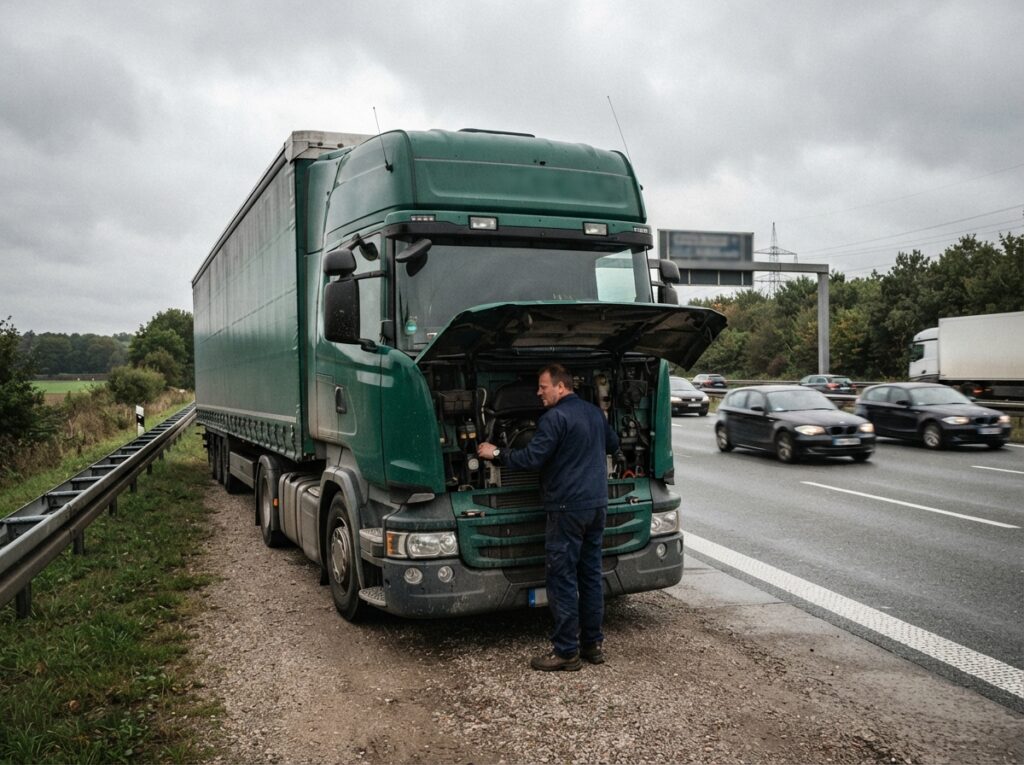
A driver from Duisburg calls at two in the morning. His Actros is parked on the hard shoulder of the A3, hazard lights on, warning triangle already placed. He hears a noise from the rear axle that he does not recognize, and he refuses to keep driving and risk the cargo. Calls like this land on a mobile truck breakdown service every single week, and they show why it matters whether the technician on the phone actually understands how a Mercedes Actros is built, or whether he just has to guess.
LKWHelp24 is not a Mercedes-Benz dealer and not an official Mercedes-Benz partner. We say that upfront because it matters. We are an independent, multi brand mobile workshop service for commercial vehicles from 7.5 tonnes upward. We work on Actros, Atego, and Arocs, but also on Scania, MAN, Volvo, DAF, and Iveco. What helps us with Mercedes vehicles is simply experience. A team that has seen hundreds of Actros and Atego trucks stranded at the roadside over the years starts recognizing patterns that a technician without that background would have to piece together from scratch.
The Mercedes truck lineup in plain terms
Before we get into breakdowns, it helps to understand that Actros and Atego are two very different vehicles built for different jobs. Mercedes-Benz Trucks itself positions its heavy duty lineup this way: the Actros is aimed at long haul transport, with variants such as the Actros F as a functional entry point and the Actros L as the long distance flagship with a larger cab and improved aerodynamics. The Atego, on the other hand, is a distribution and construction vehicle, more compact and maneuverable, offered with four or six cylinder engines tuned for economy in urban and regional work. There is also the Arocs for construction and off road use, plus electric variants like the eActros and eEconic, though these still play a smaller role in mobile roadside assistance simply because the fleets are still growing.
That distinction is not a footnote. An Actros running the A7 between Hamburg and Kassel operates under very different conditions than an Atego delivering parcels through a city center all day. One runs for hours at steady speed carrying heavy loads, the other stops and starts constantly, brakes more often, and covers short distances with a cold engine. Both duty cycles wear parts differently, and a technician who keeps that in mind asks the right questions on the phone before he even leaves the yard.
Why the Actros causes different headaches on long haul routes
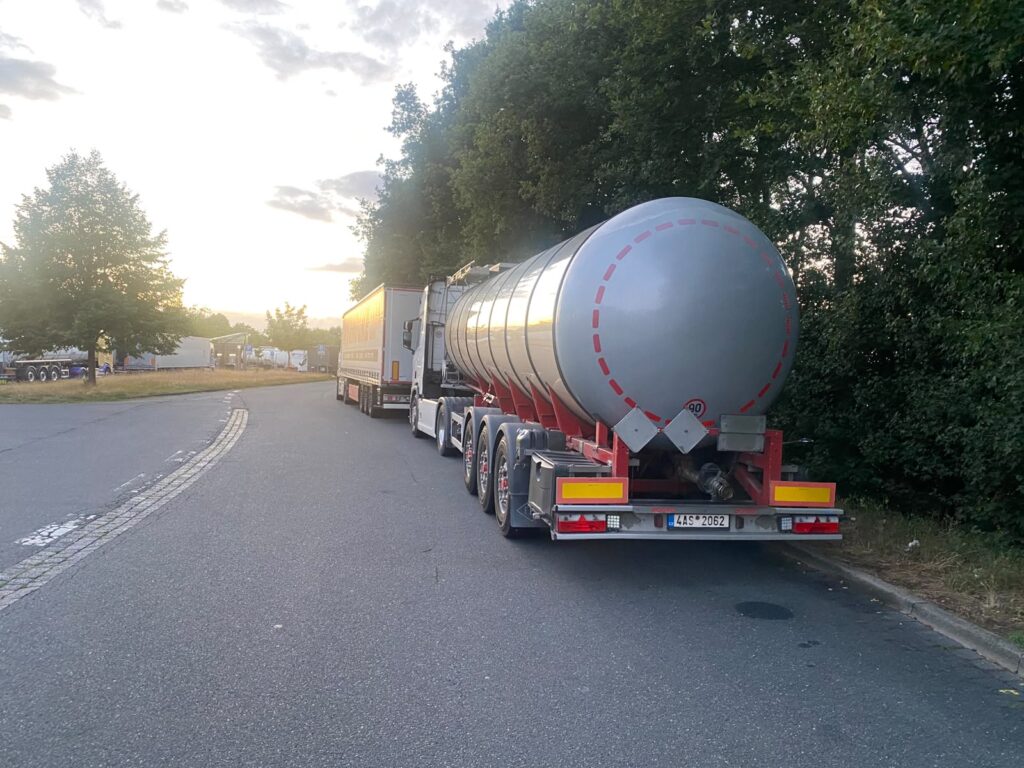
An Actros on long haul routes racks up kilometers fast. Drivers shuttling between Rotterdam and Warsaw can cover more distance in a few days than a city vehicle covers in a month. That mileage means wear parts hit their limits sooner, and it also means a breakdown almost always happens far from the home workshop. That is exactly why a mobile service matters so much for long haul drivers. Nobody wants a fully loaded Actros towed a hundred kilometers to the nearest authorized Mercedes workshop if the problem can be fixed on the spot.
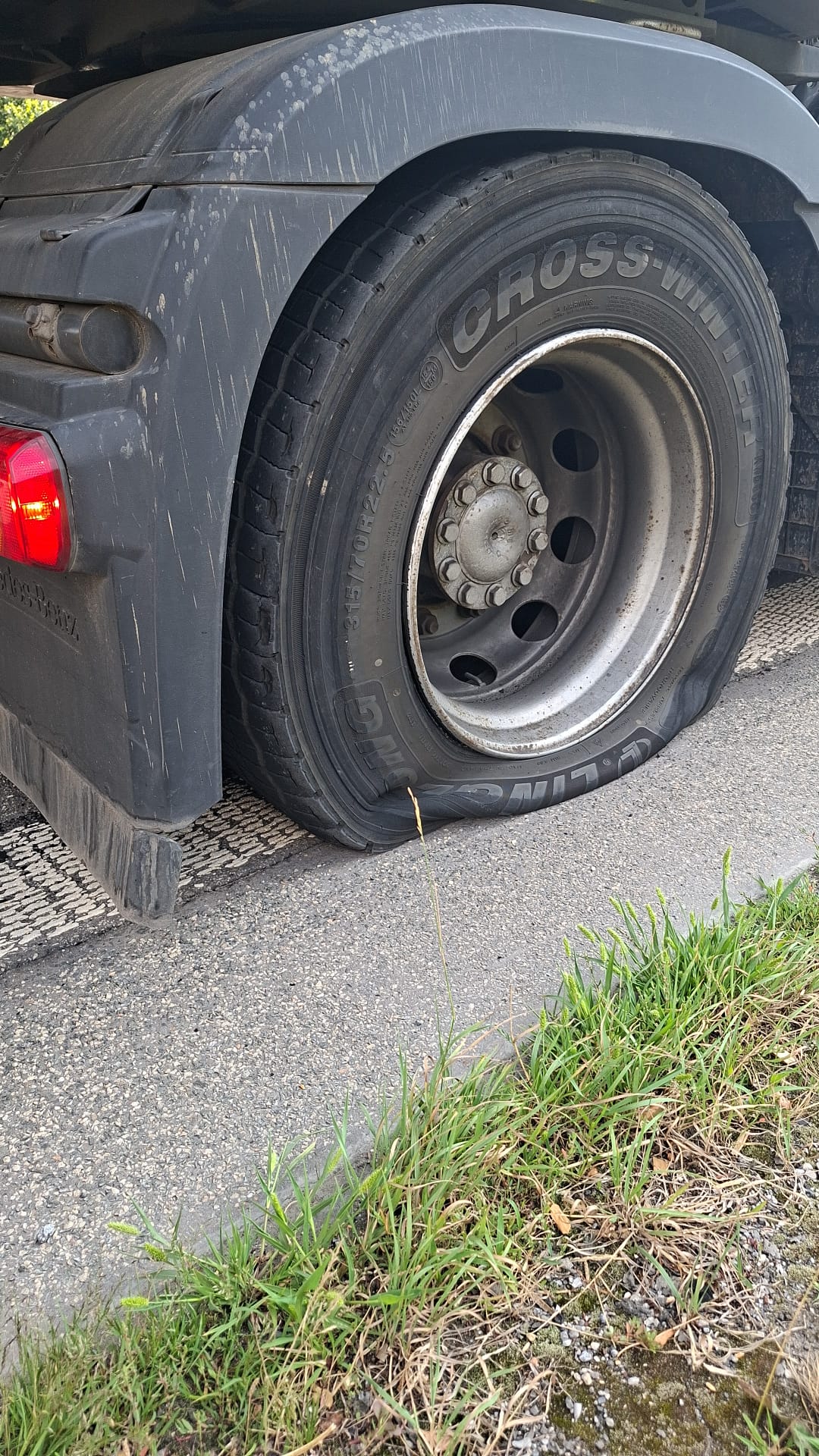
From practical roadside work, a few recurring issues stand out for heavy tractor units like the Actros, without inventing technical specifics we cannot verify. Tires and wheels are among the most common reasons for a callout, regardless of the badge on the grille. A blown tire on the drive axle of a loaded semi is not a minor event. It can make the combination sway and, in the worst case, cause an accident. That is why experienced drivers check tire pressure regularly, and it is why we published a detailed guide on truck tire pressure that explains how under and over inflation affect handling and tire life.
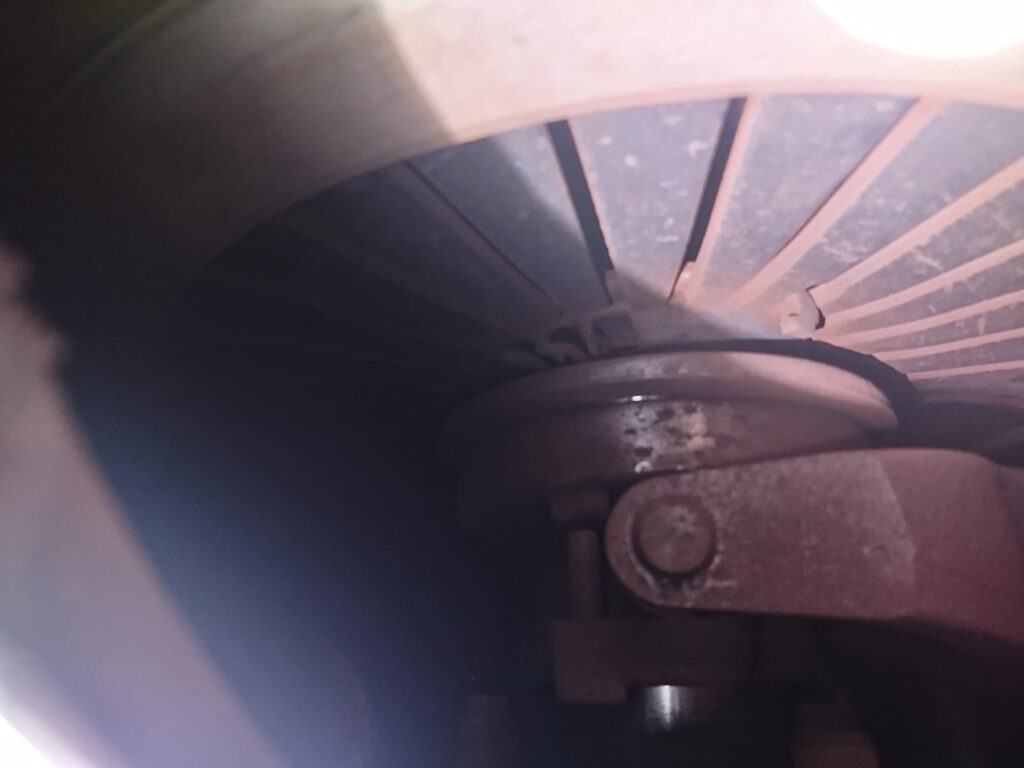
Braking systems are another recurring theme. Heavy vehicles on long haul routes cross mountain passes, long downhill stretches, and dense traffic, and the brakes take a beating. When a driver on the phone describes a squealing noise while braking or a warning light for the brake system, that is a signal for us to react immediately, because this is not a comfort issue, it is a safety issue. Lighting and the electrical system also report more problems on long haul vehicles, simply because the cables and connectors face years of moisture, road salt, and vibration.
The coupling between tractor and trailer is a third common theme. A faulty locking mechanism or a problem with the air lines to the trailer can mean the driver is not even allowed to set off, because the trailer brake will not function properly. This is exactly where a mobile technician experienced with heavy combinations earns his keep, because he can often narrow the problem down quickly instead of searching for hours.
The Atego in distribution work: different load, different failures
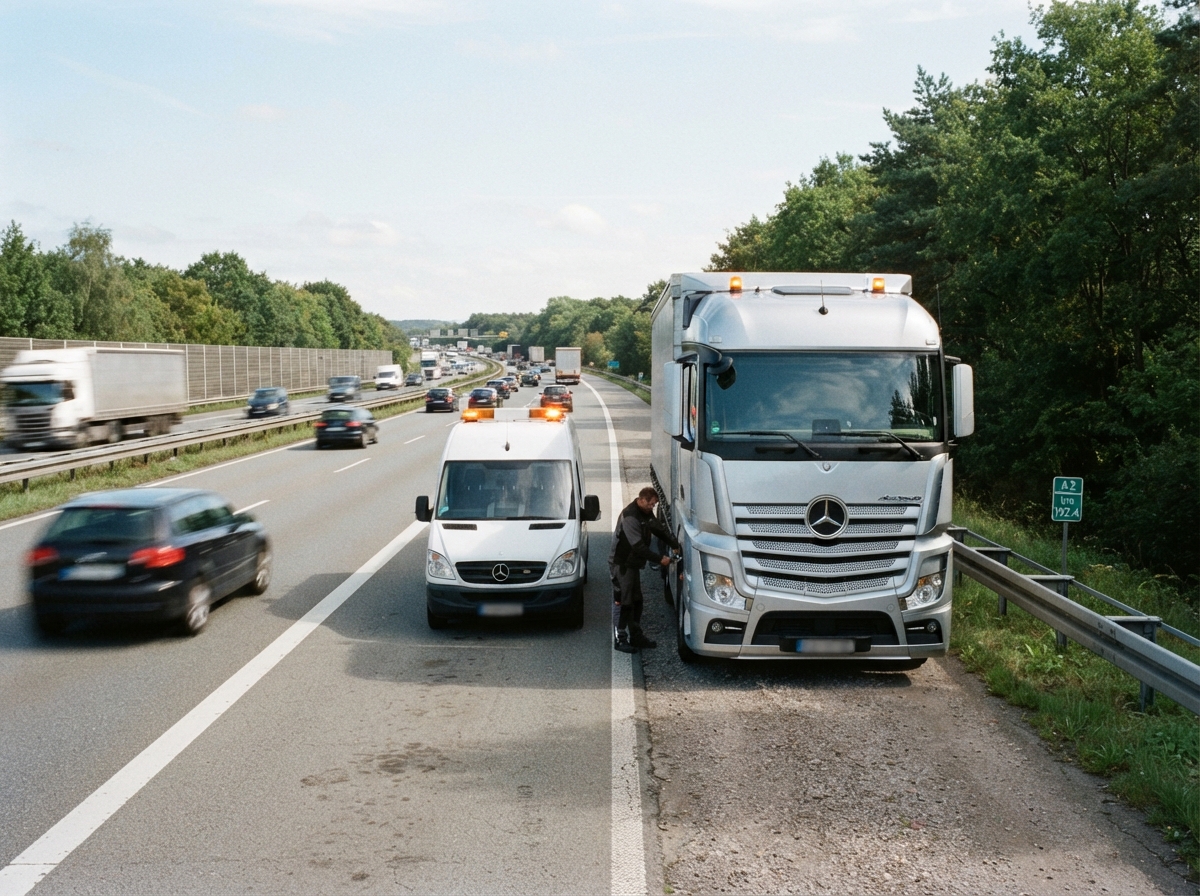
The Atego lives a different life than its bigger sibling. It covers shorter distances, starts cold far more often, stops at nearly every traffic light, maneuvers in tight yards, and gets driven by different people who do not always drive the same way. That mix of cold starts, frequent braking, and constant maneuvering produces its own set of typical problems.
Brake pads and discs on a distribution vehicle often wear faster than on a long haul truck, simply because the brake is in constant use in city traffic. The clutch, if the vehicle is not automated, also suffers from continuous starting and stopping. On top of that, an Atego is frequently loaded and unloaded in tight spaces, which raises the risk of damage to attachments like the tail lift, side panels, or lighting, simply because a bollard or loading ramp gets a little too close during maneuvering in a delivery zone.
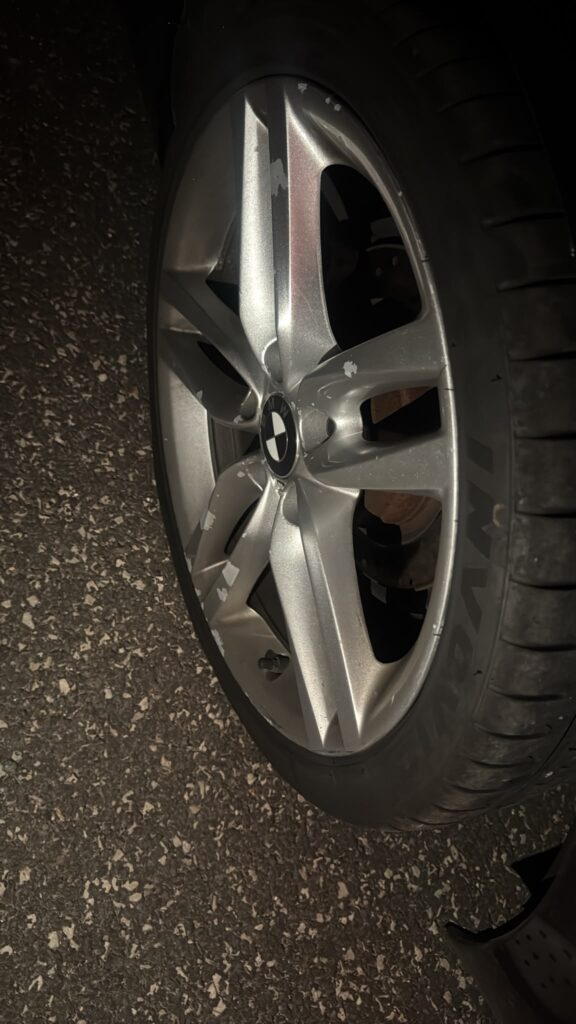
Tires matter for the Atego too, just in a different way than for the Actros. Because a distribution vehicle parks closer to curbs and maneuvers on construction sites or unpaved surfaces more often, sidewall cuts and rim damage happen more frequently. A tire emergency service that reaches the location quickly often prevents a flat tire from turning into a full lost day, because a distribution vehicle that cannot drive usually means missed delivery windows and frustrated customers at the end of the route.
Tires and wheels: general basics that apply to any heavy truck
Honesty matters more here than pretending to specialized knowledge. There is no special tire size that applies only to the Mercedes Actros or Atego that we could list here without knowing the specific vehicle documentation or type plate. Heavy trucks and tractor units in Germany typically run on common commercial vehicle wheel sizes that vary by axle, load, and use case, and the actual tire size is always stated in the vehicle registration and on the tire itself. What does hold true regardless of brand is this: tire pressure must match the load, tread depth must meet the legal minimum, and any visible damage to the carcass is always a reason to replace the tire immediately rather than waiting for the next rest stop.
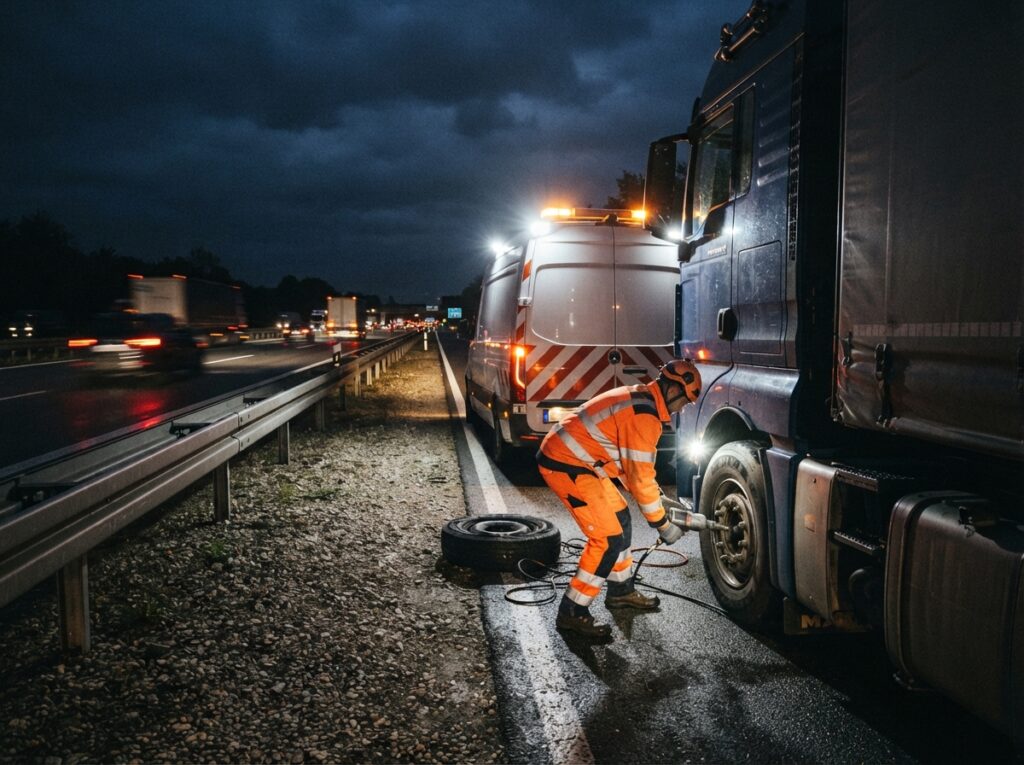
That is exactly why we offer a tire emergency service near you that is reachable around the clock, whether it is an Actros with a blown drive axle tire or an Atego with a damaged sidewall. When a roadside tire change is not possible for safety reasons, for example because the location is too dangerous, we work with the driver to decide whether towing is the better option, and we have published a separate article on truck towing costs that explains what actually drives the price.
Why brand experience on the phone makes a difference
A common misconception is that a truck is a truck and any experienced commercial vehicle technician can assess every vehicle equally well. In practice that is only half true. The basic mechanics, brakes, tires, clutch, electrical systems, are built similarly across all heavy trucks, but the exact layout of components, the accessibility inside the engine bay, the typical fault codes, and the quirks of the electronics differ from manufacturer to manufacturer, and often even from model year to model year within the same lineup.
When a driver describes on the phone what he hears, smells, or sees, the dispatcher or technician has to place that description correctly right away. That process looks different for an Actros than for an Atego, because the two lineups use different engines, different cab concepts, and different assistance systems. A technician who has worked hands on with both lineups for years can already form a rough assessment over the phone about which tools and spare parts to bring before the service vehicle even leaves. That saves time, and for a stranded long haul truck, time is almost always money, whether through demurrage, missed delivery windows, or contractual penalties.
A real world example: the night on the A3
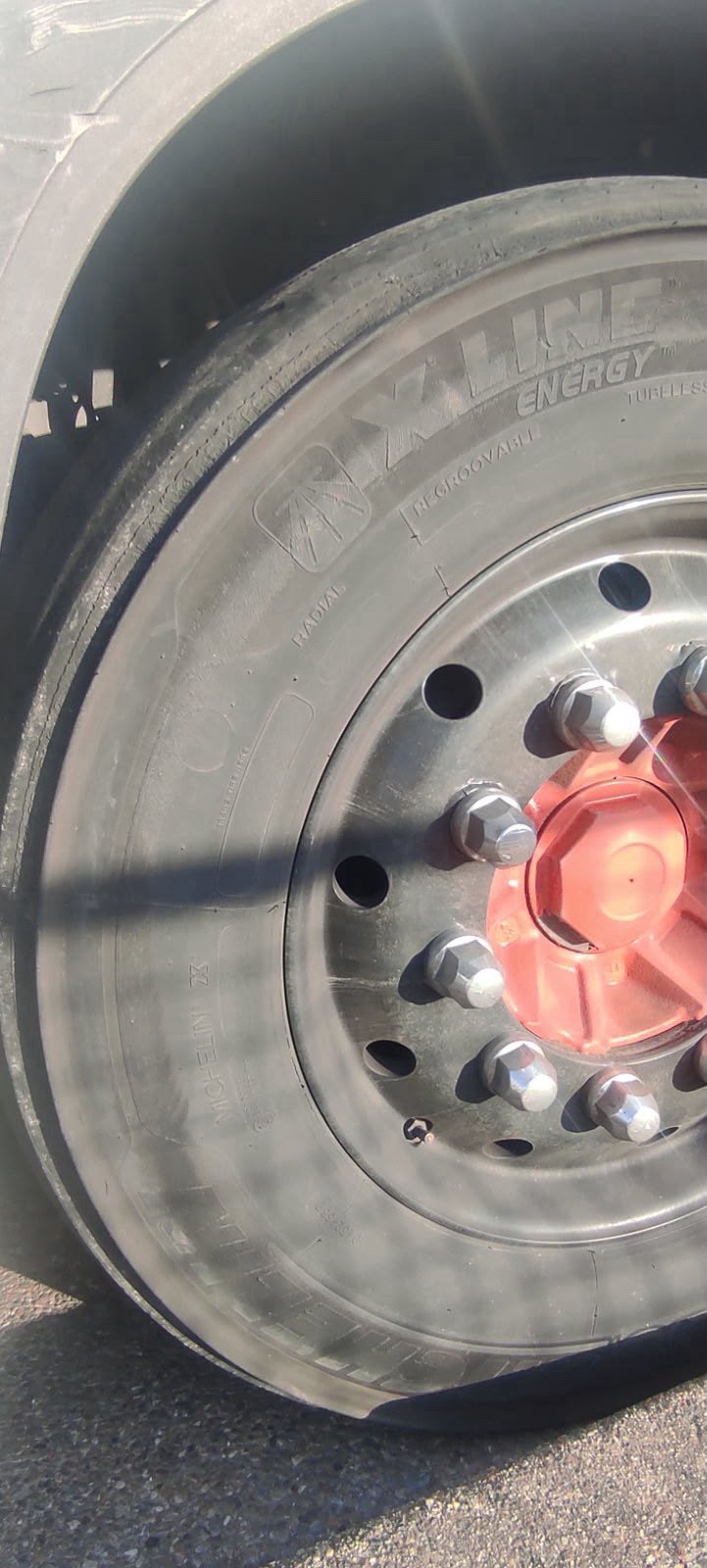
Back to the driver from Duisburg. On the phone he describes a rhythmic knocking that gets louder as he speeds up, and he says it seems to come from the rear axle. For a technician experienced with heavy tractor units, that description narrows down several possible causes, such as a problem in the suspension area, a loose wheel, or a damaged tire rolling unevenly. On arrival, a quick visual check shows a clear bulge in the sidewall of a drive axle tire, likely from a pothole or curb hit on an earlier leg of the journey.
In this case the solution is clear. The damaged tire has to be replaced before the Actros is allowed to continue, because a sidewall bulge like that can burst at any moment. The technician fits a spare wheel, checks the pressure on the remaining wheels at the same time because experience shows this kind of incident is rarely isolated, and the driver is back on the road within roughly an hour. Without the right equipment on the service vehicle and without knowing which spare wheels to carry for this vehicle type, this callout would have taken considerably longer or required a second trip.
What this means for fleet operators and drivers
Anyone running a fleet with Actros and Atego trucks knows the tension between scheduled maintenance at the home workshop and the risk of a breakdown on the road. A good mobile emergency service does not replace regular maintenance, but it limits the damage when something goes wrong anyway. What matters is that the service reaches the location quickly, carries the tools and parts for heavy commercial vehicles from 7.5 tonnes, and stays reachable at night, on weekends, and on public holidays, because breakdowns do not respect office hours.
That is why LKWHelp24 operates around the clock, 24 hours a day, seven days a week, and communicates in four languages: German, English, Polish, and Russian. That is not a coincidence, it is a response to the reality of European long haul transport, where drivers from many countries travel German highways every day. A driver who can describe his problem in his own language describes it more precisely, and a more precise description leads to a faster and more accurate response on the other end of the line.
The fastest way to reach us is WhatsApp at +49 160 5753826. A photo of the damaged tire or the warning light in the cockpit often says more than a long phone description, and we can already decide which spare parts to bring while we are still on our way to the location.
The legal framework: why a stranded truck is not a small detail
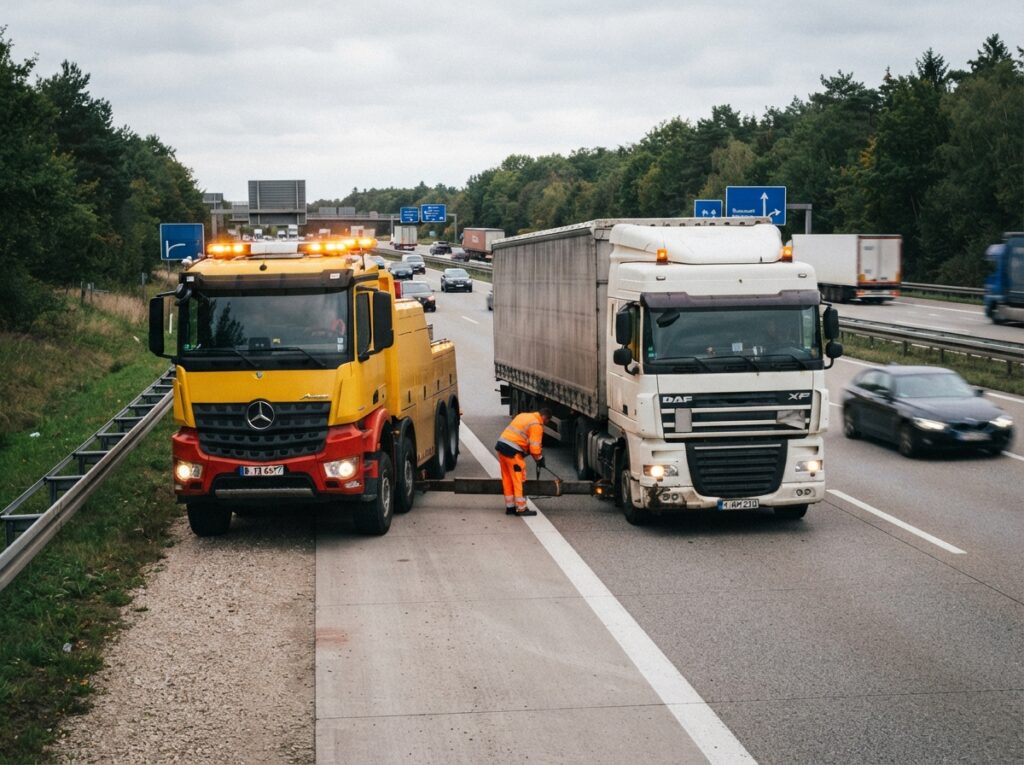
A truck parked on the hard shoulder, or worse, on the actual carriageway, is not just an inconvenience for the driver, it is a safety risk for every other road user. The German road traffic licensing regulation, the Straßenverkehrs Zulassungs Ordnung, sets out requirements a vehicle must meet to be used on public roads, and a vehicle with a recognizable technical defect, for example in the braking system or a badly damaged tire, is not allowed to simply keep driving. That is one reason why a fast mobile emergency service is not just a matter of convenience, it is a matter of road safety. The faster the defective vehicle is safely repaired or removed from the carriageway, the lower the risk for traffic behind it.
Seasons make a difference
An Actros running the A9 between Munich and Nuremberg in winter faces different stresses than the same truck on the same route in midsummer. Cold makes diesel filters more sensitive, batteries weaker, and rubber seals more brittle. A driver who sets off at minus ten degrees and notices the engine hesitating to start should not ignore that, because a cold start problem that seems minor today can leave the truck unable to start at all on the next cold night, stranded at a rest stop with no power outlet nearby. Tires react to cold too, since pressure drops as temperature falls, and a tire that was correctly inflated in summer can be noticeably underinflated in winter if nobody checks.
For the Atego in distribution work, winter shows up differently. Short trips with a cold engine mean condensation in the exhaust system and the brake lines does not always fully evaporate before the vehicle is parked again. Over time that can cause corrosion in places that are less affected on a long haul vehicle running long, continuous trips. An experienced mobile technician knows these differences and asks on the phone whether the vehicle is a long haul or a distribution unit before forming an initial diagnosis.
In summer, the risk of overheating rises for both lineups, especially when an Actros sits in a highway traffic jam or an Atego constantly starts and stops in high temperatures. Coolant, the fan, and the air conditioning should be checked before the hot season, because a cooling failure under full load and high ambient temperature can lead to engine damage within a few kilometers if the driver misses the warning signs.
What a driver can check before calling
Not every unusual sign means a breakdown, and a few simple checks can help describe the problem better on the phone. A glance at the dashboard display often already shows whether a warning light for brakes, engine, or tire pressure is active, and that information is very valuable for the dispatcher on the other end of the line. A quick walk around the vehicle, if traffic conditions safely allow it, often reveals visible damage to tires, lighting, or attachments. Unusual noises should be described as precisely as possible, whether they occur while braking, while accelerating, or continuously, and whether they seem to come from the front, back, left, or right.
Personal safety always comes first. A driver should only leave the vehicle if traffic conditions allow it, should wear a high visibility vest, and should stay behind the guardrail rather than standing right next to the vehicle on the hard shoulder. These basic rules apply regardless of whether it is an Actros, an Atego, or a vehicle of any other brand, and following them can save lives.
Spare parts and waiting time: an often underestimated factor
One reason brand experience matters for roadside repairs is spare parts sourcing. Not every part can be carried in the service vehicle, and when a specific component has to be ordered, the technician’s experience often decides whether the order is right the first time or whether a second attempt is needed. For common wear parts like tires, brake pads, or light bulbs this is rarely an issue, since these parts are stocked in many sizes and versions. For electronic components or sensors made specifically for a certain lineup and model year, sourcing can take longer, and it helps enormously if the technician already makes the right guess about which part is likely involved during the very first call.
Communication between driver, dispatcher, and technician
An often underestimated part of mobile emergency service is the chain between the driver’s call, the dispatcher’s assessment, and the actual repair on site. The more smoothly these three steps connect, the faster the Actros or Atego is back on the road. A dispatcher who knows the typical weak points of both lineups can ask the driver targeted questions before the technician even sets off, and that groundwork saves hours that would otherwise go into diagnosis at the roadside.
Frequently asked questions
Is LKWHelp24 an authorized Mercedes Benz workshop? No. We are an independent, multi brand mobile workshop service for commercial vehicles from 7.5 tonnes upward. We work on Mercedes Actros and Atego vehicles just as we work on Scania, MAN, Volvo, DAF, and Iveco trucks, but we are neither a dealer nor an official Mercedes Benz service partner.
Do you also come out for smaller Mercedes vehicles under 7.5 tonnes? No, we deliberately focus on heavy commercial vehicles from 7.5 tonnes upward, because that is what our equipment, our spare parts, and our technicians’ experience are built for.
How fast can you reach a breakdown on the highway? That depends on the exact location, but we are typically on site within 30 to 60 minutes, since we keep several service vehicles ready across our coverage area.
What should I do if my Actros can no longer drive because of a tire failure? First secure the scene with hazard lights and a warning triangle, put on a high visibility vest, and contact us via WhatsApp. A photo of the damage helps us bring the right spare parts directly.
Do you also repair trailers, or only the tractor unit? We handle both, the tractor unit and the trailer, including brakes, lighting, and tires on the trailer.
Which languages can I use to communicate with you? We are reachable in four languages, German, English, Polish, and Russian, so drivers from different backgrounds can explain their situation clearly.
Further reading
If you want to learn more about the different truck models used in Germany and the legal basics of roadside assistance for vehicles from 7.5 tonnes, our overview of truck models and drivetrains in Germany covers that in detail. Everything about correct tire pressure is explained in our guide to truck tire pressure, and a step by step guide for a real roadside emergency is available in our article on emergency wheel change on a truck. If you are curious about the background of mobile tire service, our related article on truck tire wholesale and mobile tire service has more detail. When towing becomes unavoidable, it is worth checking our article on truck towing costs beforehand, and for acute tire trouble our tire emergency service near you is available around the clock.
For technical details on current Actros and Atego lineups, including the electric variants, see the official Mercedes-Benz Trucks website. The legal requirements for vehicles on public roads in Germany are set out in the Straßenverkehrs Zulassungs Ordnung.
If your Actros or Atego breaks down on the road, do not hesitate. Message us on WhatsApp at +49 160 5753826, tell us briefly what happened, and send a photo if you can. We are reachable 24 hours a day, seven days a week, in four languages, for commercial vehicles from 7.5 tonnes across our entire coverage area.