Skip to content
TL;DR: On 30 July 2026, an articulated truck stopped at a service point on the A7 near Uelzen, Lower Saxony, for a planned pre-trip inspection before a long-haul journey. Over 2 hours 40 minutes, our regional service partner ran a full walk-around check, a chassis component diagnostic (marking G168), a battery test on both units, and a tyre check on all six positions. One battery tested below threshold and was replaced with a 225 Ah / 12 V / 1200 A unit. Total cost: 850 € net, well below the 750–1,400 € typical for an emergency roadside tyre callout.
This was not a breakdown. Nobody was stranded on the hard shoulder, no hazard lights were flashing in the rain. It was a lorry pulling in voluntarily, on schedule, before crossing into a long international run — the kind of appointment that rarely makes headlines but decides whether the next 800 kilometres go smoothly or end with a call to a breakdown hotline.
That distinction matters more than it sounds. A planned technical check and an emergency callout look similar from the outside — a technician with a torque wrench, a truck on a hard standing, warning triangles nearby. But the economics, the stress level, and the outcome are completely different. One is scheduled at a convenient time, billed at a predictable rate, and finishes with a clean protocol. The other happens at 2 a.m. in the rain, on someone else’s timetable, usually costing more and always costing more time.
What Does a Pre-Trip Truck Inspection Actually Cover?
A pre-trip inspection covers the driver’s legal daily check plus a deeper technical diagnostic that goes beyond what the driver can assess visually. German road traffic regulations require drivers to confirm their vehicle is roadworthy before departure — tyres, lighting, brakes, and load securing are the baseline, comparable to the general safety obligations set out in § 36 StVZO on tyre condition and tread depth.
A driver’s own walk-around, done properly, takes ten to fifteen minutes and catches the obvious problems: a burnt-out light, a visibly worn tyre, a loose strap. What it cannot catch is a battery that starts the engine fine at 9 a.m. but has no reserve left for a cold restart 400 kilometres later, or a brake line fitting that looks intact but is seeping air under load. Those need instruments, not eyes.
That is the gap a professional pre-trip check fills. It combines the driver’s legal walk-around with diagnostic testing on the components most likely to fail mid-route: batteries under load, chassis components, brake connections, and tyre condition measured rather than guessed. For operators running international freight, this kind of check before departure is standard practice at any serious truck workshop, not an optional extra.
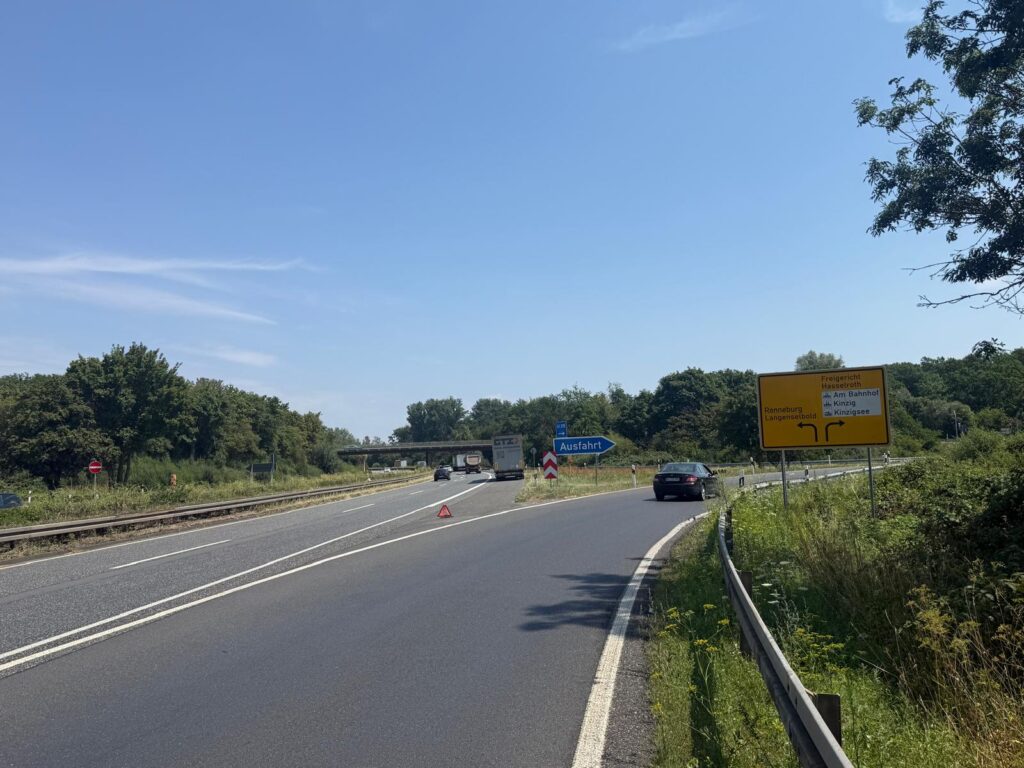
Where and When: A7 near Uelzen, 30 July 2026
The inspection took place at a service point on the A7 near Uelzen, Lower Saxony, on 30 July 2026. The truck was booked in ahead of a long-haul departure, not towed in after a fault. That single fact changes everything about how the appointment ran: no dispatcher scrambling to find the nearest available technician, no driver waiting on the hard shoulder while hours ticked away against the tachograph.
The vehicle itself was a standard articulated combination on a long-distance route — the kind of setup that covers several hundred kilometres a day and where a single overlooked fault can turn into a multi-hour delay somewhere far from the home depot. No company names, driver identities, or registration details are part of this case; the technical findings are what matter here.
How the Appointment Was Organised
Booking a pre-trip check works differently from an emergency call. There is no urgency premium, no dispatcher juggling live breakdowns, and the driver arrives with time already built into the schedule rather than eating into it unplanned. The process our mobile truck service network follows for planned checks looks like this:
- The operator or driver contacts us in advance to book a slot at a service point along the planned route.
- We confirm scope: standard walk-around, plus any specific diagnostics the fleet wants included (battery, chassis, brakes, tyres).
- The regional service partner prepares the bay and equipment — load testers for batteries, diagnostic tools for chassis components, tread and pressure gauges for tyres.
- The vehicle arrives at the agreed time; the technician runs through each stage in sequence and documents findings as they go.
- Any part requiring replacement is sourced and fitted on the spot where stock allows, avoiding a second appointment.
This structure is why a planned check on the A7 near Uelzen ran to a fixed window rather than an open-ended wait. Every stage had a slot, and the driver knew roughly when the truck would be back on the road before the appointment even started.
Why a Walk-Around Alone Is Not Enough
A driver’s daily walk-around checks what is visible; it does not measure what is failing. Tyres, lights, mirrors, and obvious leaks are within scope for a five-minute visual pass. Battery capacity under load, brake line pressure retention, and hairline cracks in a chassis mounting are not — they need instruments and, often, a second pair of trained eyes.
Consider what an extended walk-around should cover, beyond the legal minimum:
- Tyres and pressure — checked cold, against the actual load the truck is carrying, not a generic chart value.
- Wheels, rims, and wheel nuts — visual and torque check; a loose nut on a steer axle is a structural risk, not a cosmetic one.
- Lighting — every function: brake lights, indicators, marker lights, reversing lights.
- Brakes and pneumatic system — listening and testing for air leaks at line connections, not just checking pedal feel.
- Fluid levels — engine oil, coolant, washer fluid, AdBlue.
- Mirrors and visibility aids — adjustment and condition, especially before an unfamiliar route.
- Load securing — straps, chains, and anchor points checked for wear and correct tension.
That list takes fifteen to twenty minutes done properly. It is also exactly the stage where most obvious faults get caught before they become road problems — but it will not tell you whether a battery has enough reserve capacity for tomorrow’s cold start.
How Batteries Are Really Tested
A battery that starts the engine is not automatically a healthy battery. The only way to know its real condition is to measure resting voltage and then test cold cranking amps (CCA) under load — starting ability alone tells you almost nothing about reserve capacity.
This is the detail most drivers do not know, and it explains a common complaint from fleet managers: “we replaced the batteries and they went flat again within weeks.” A battery can hold enough charge to turn the starter motor on a warm morning at the depot and still fail three hundred or four hundred kilometres later, once the alternator has been working the electrical system hard and the battery’s actual reserve gets exposed. Starting is a pass/fail test with almost no diagnostic value; load testing under simulated cranking conditions is what actually shows remaining capacity.
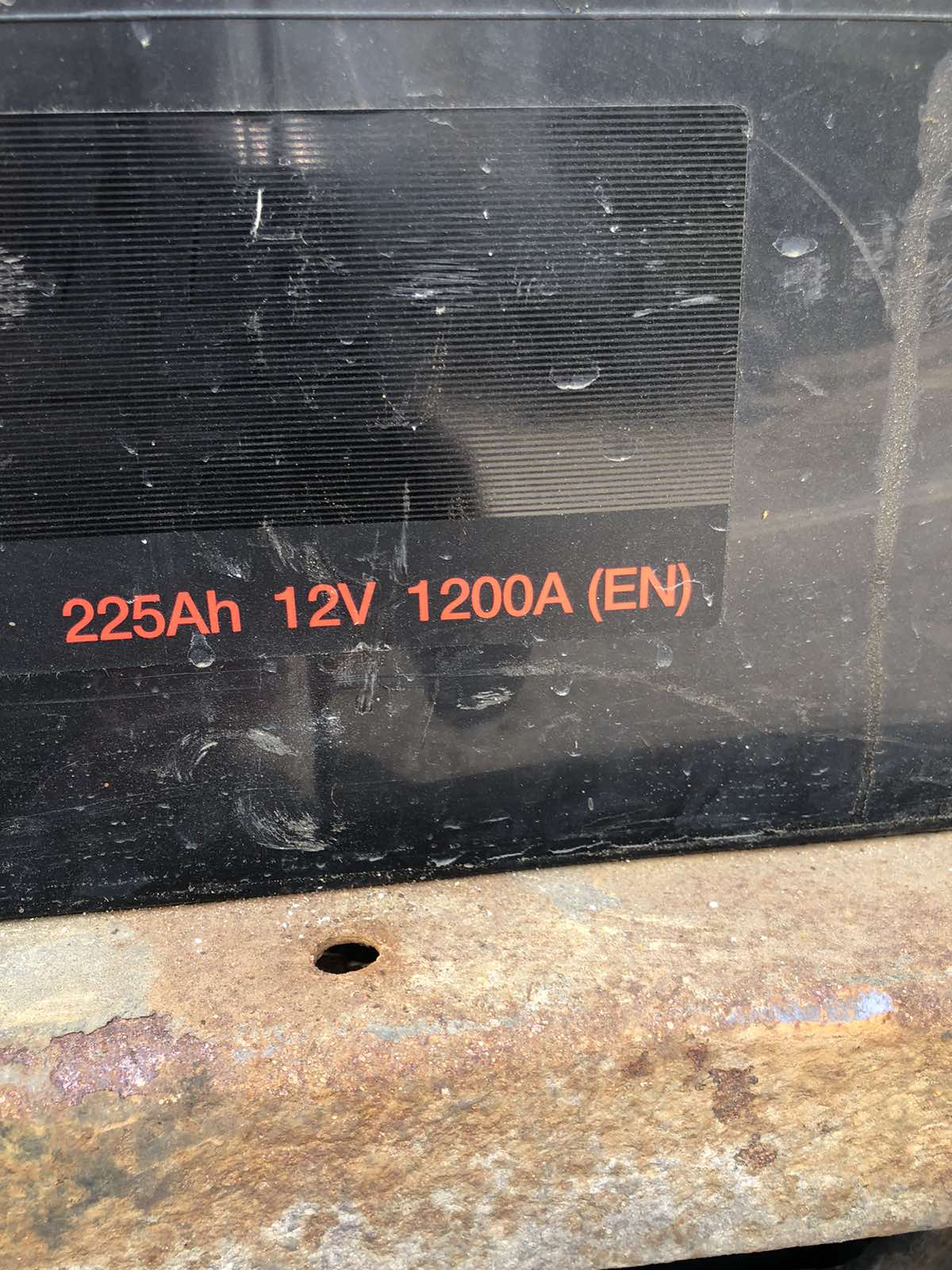
On this inspection, both batteries were tested for resting voltage and CCA under load between 10:20 and 10:50. One passed comfortably. The other tested below the acceptable threshold — not dead, not obviously faulty to the eye, but no longer reliable for a long-haul departure into unfamiliar territory. It was replaced on the spot with a 225 Ah / 12 V / 1200 A unit, matched to the vehicle’s electrical demands.
The Alternator Check: Why New Batteries Go Flat Again
A charging system test is the step most people skip, and it is usually the actual cause of “the new battery died too.” If the alternator is not delivering correct charging voltage, a brand-new battery starts discharging from day one and eventually fails the same way the old one did — the battery gets blamed for a fault that sits upstream of it.
Testing alternator output takes a few minutes with the engine running and the electrical load simulated close to real operating conditions: lights, climate control, auxiliary systems. If voltage output falls outside the expected range, no battery — however well specified — will hold a charge for long. This is a standard part of any thorough pre-trip electrical check and one reason it pays to have the full system tested together rather than swapping the battery in isolation and hoping the problem is solved.
What to Check on Tyres Before a Long Haul
Tyre failure on a long-haul route is rarely sudden — it is usually visible days or weeks in advance to anyone who checks properly. Before a long international run, four things matter more than a quick glance at tread depth: cold pressure set for the actual load, DOT date for age, tread depth with margin for the whole trip distance, and the spare’s condition if one is carried.
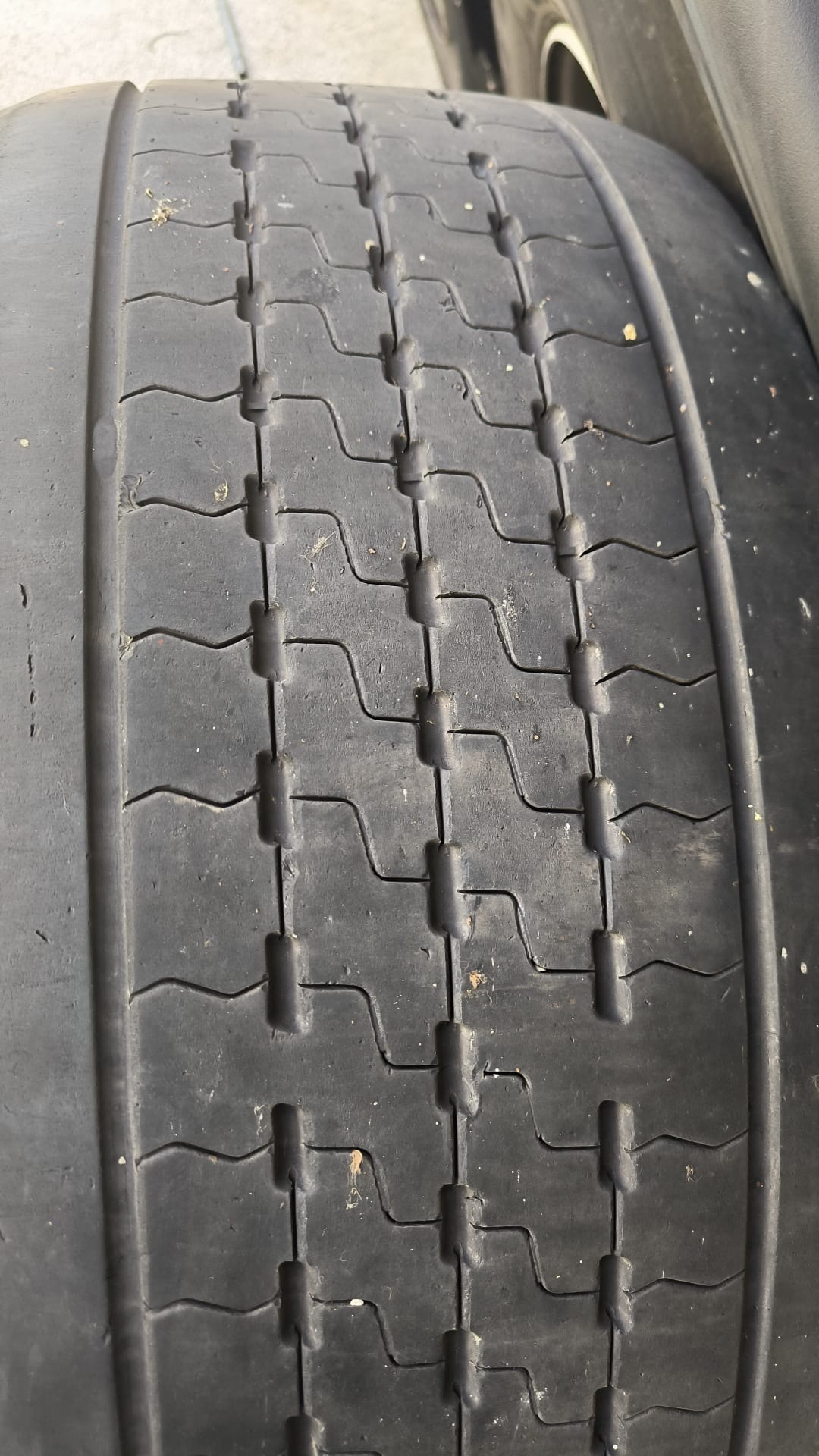
Cold pressure has to reflect the load the truck is actually carrying on that trip, not a default figure from the door sticker. Under-inflated tyres run hotter, wear the shoulders faster, and are far more likely to fail under sustained autobahn speed. Tread depth needs enough margin to cover the entire route without dropping toward the legal minimum mid-journey — the § 36 StVZO requirement of 1.6 mm is a floor, not a target, and most professional fleets replace well above it.
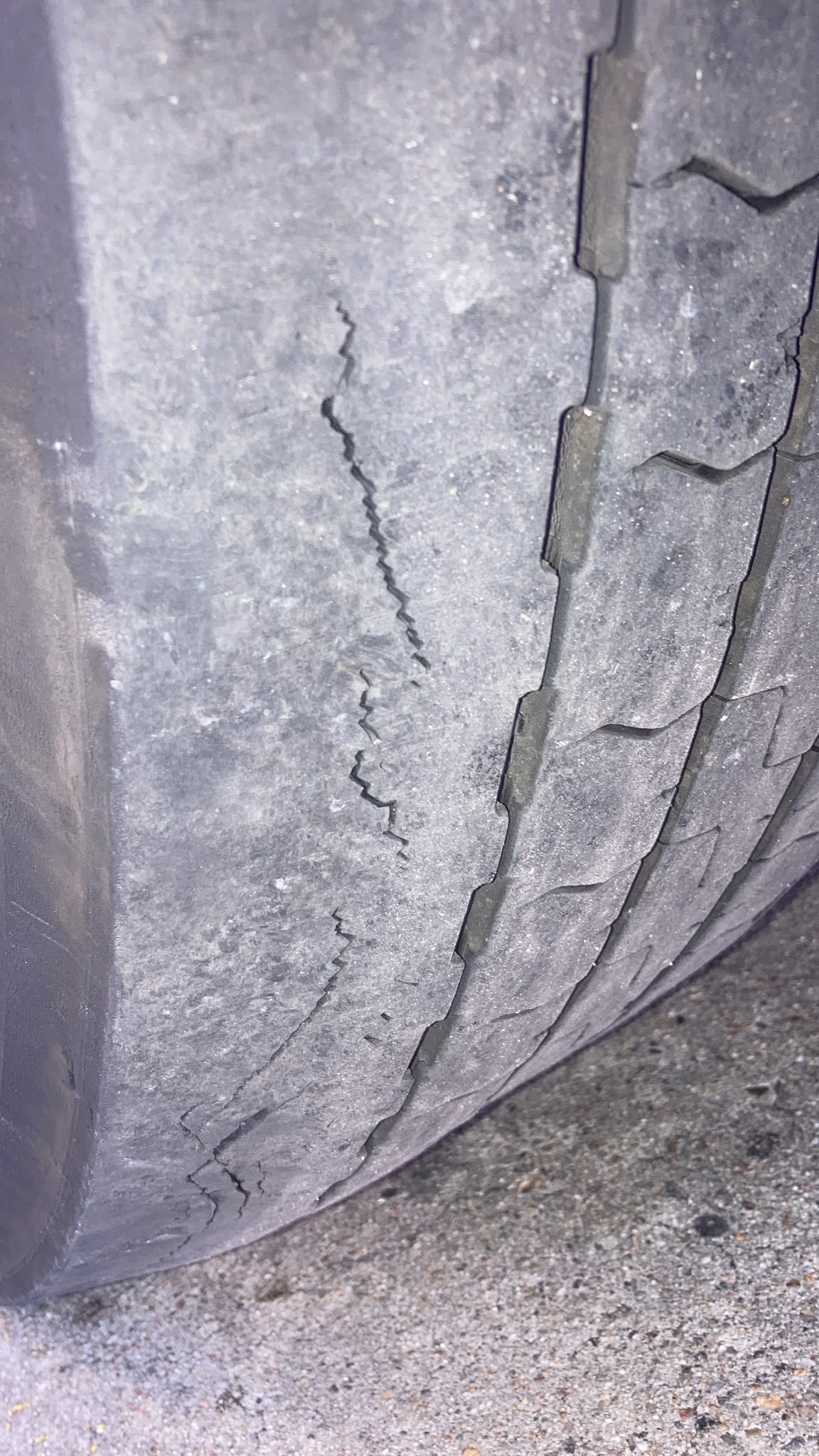
DOT age matters independently of tread depth. A tyre can look fine and still be structurally compromised by age — rubber hardens and the sidewall becomes prone to cracking, particularly on trailers that see uneven use.
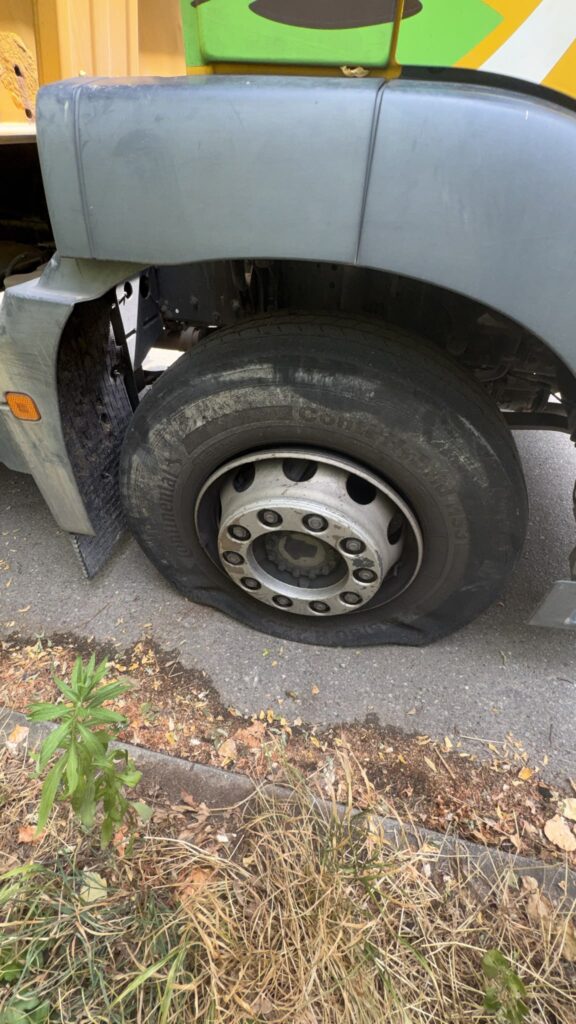
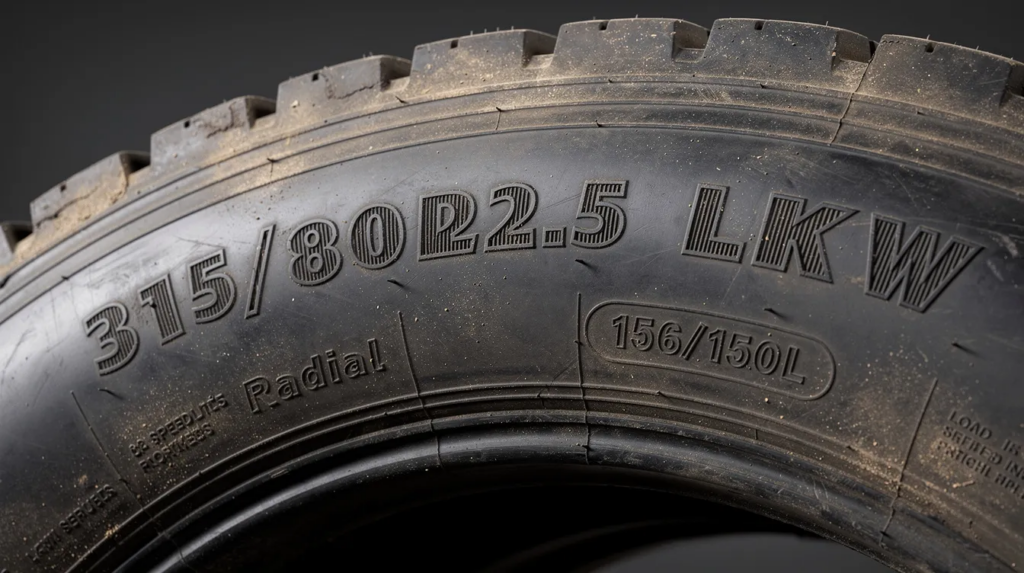
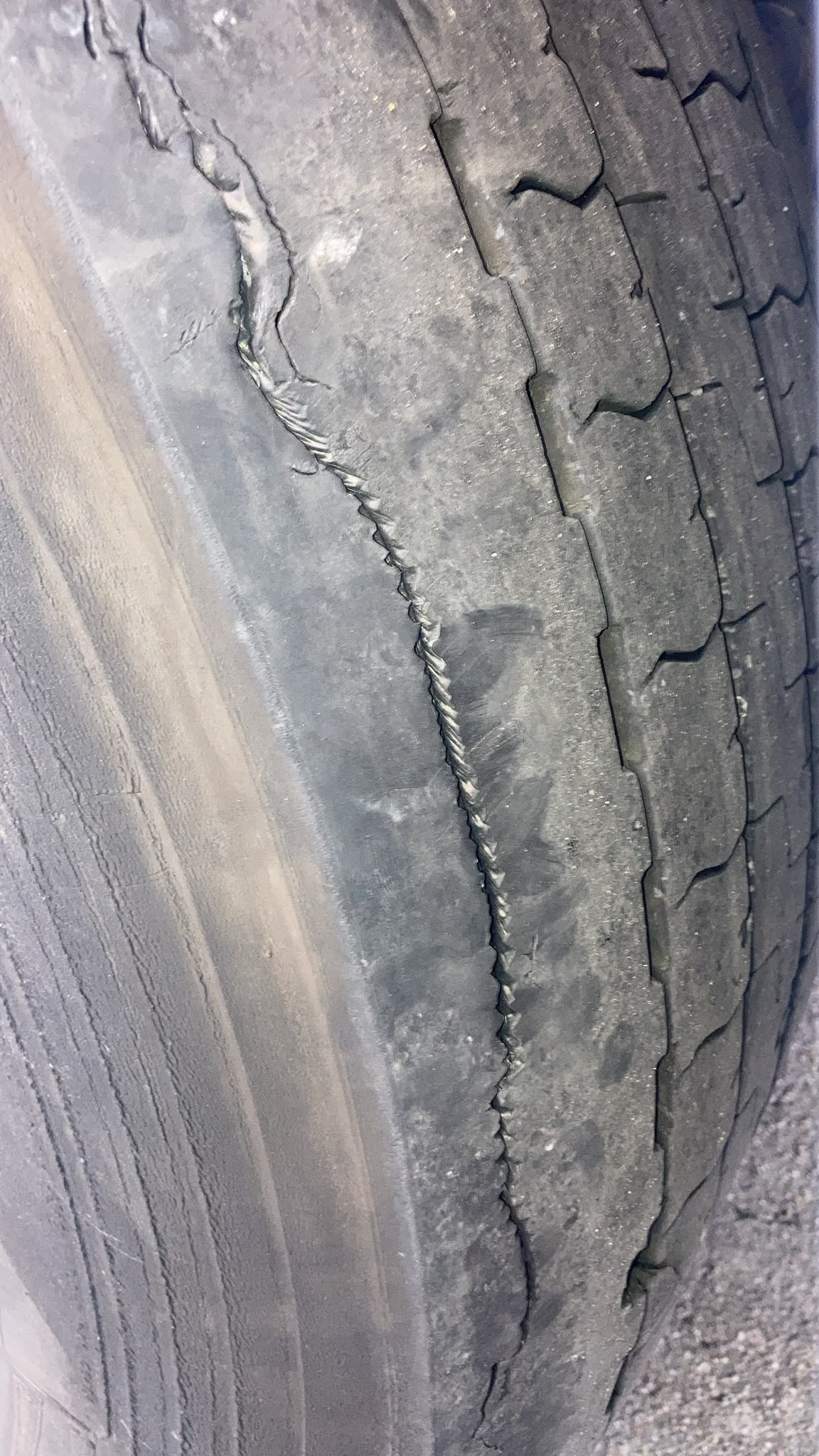
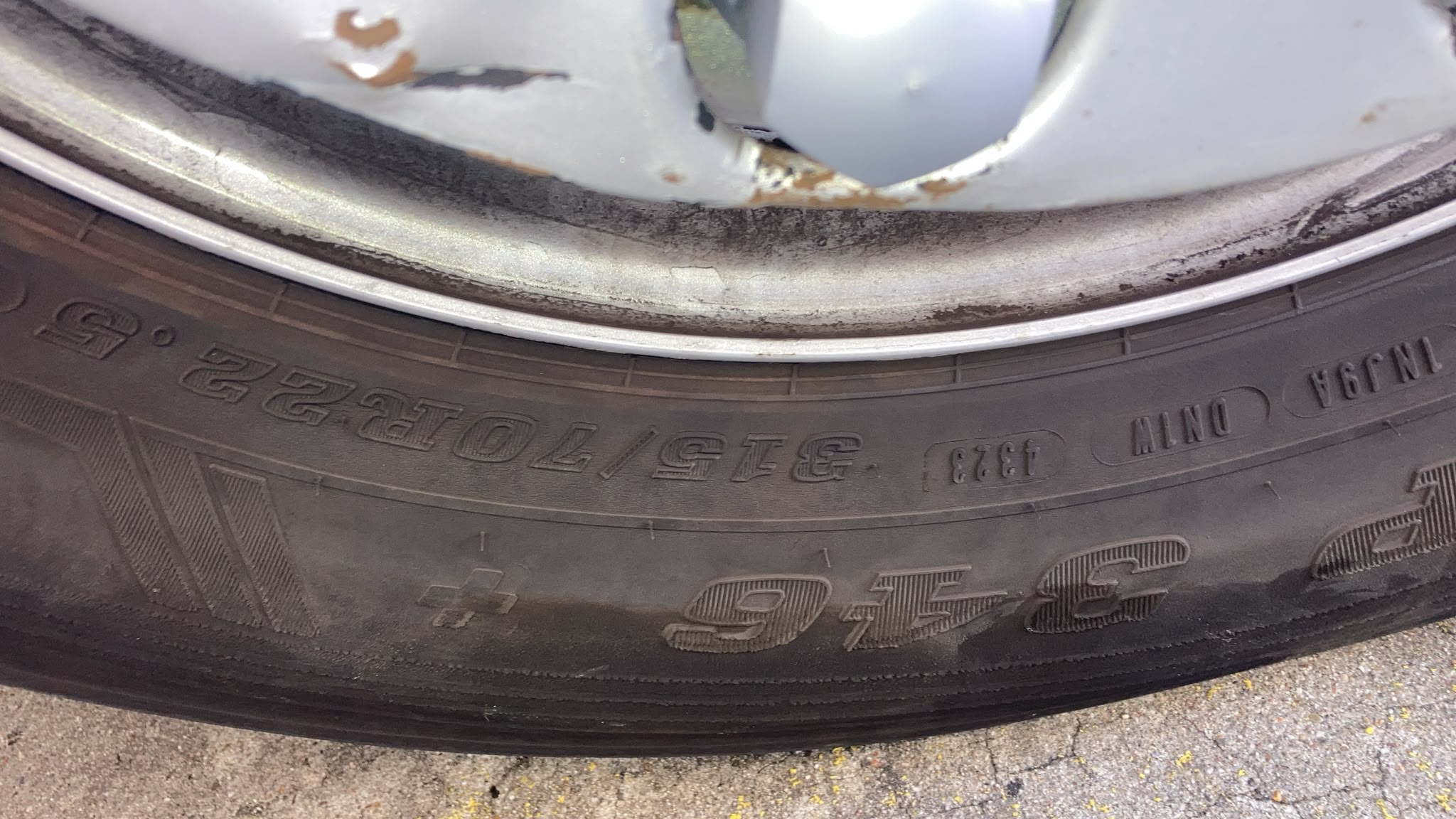
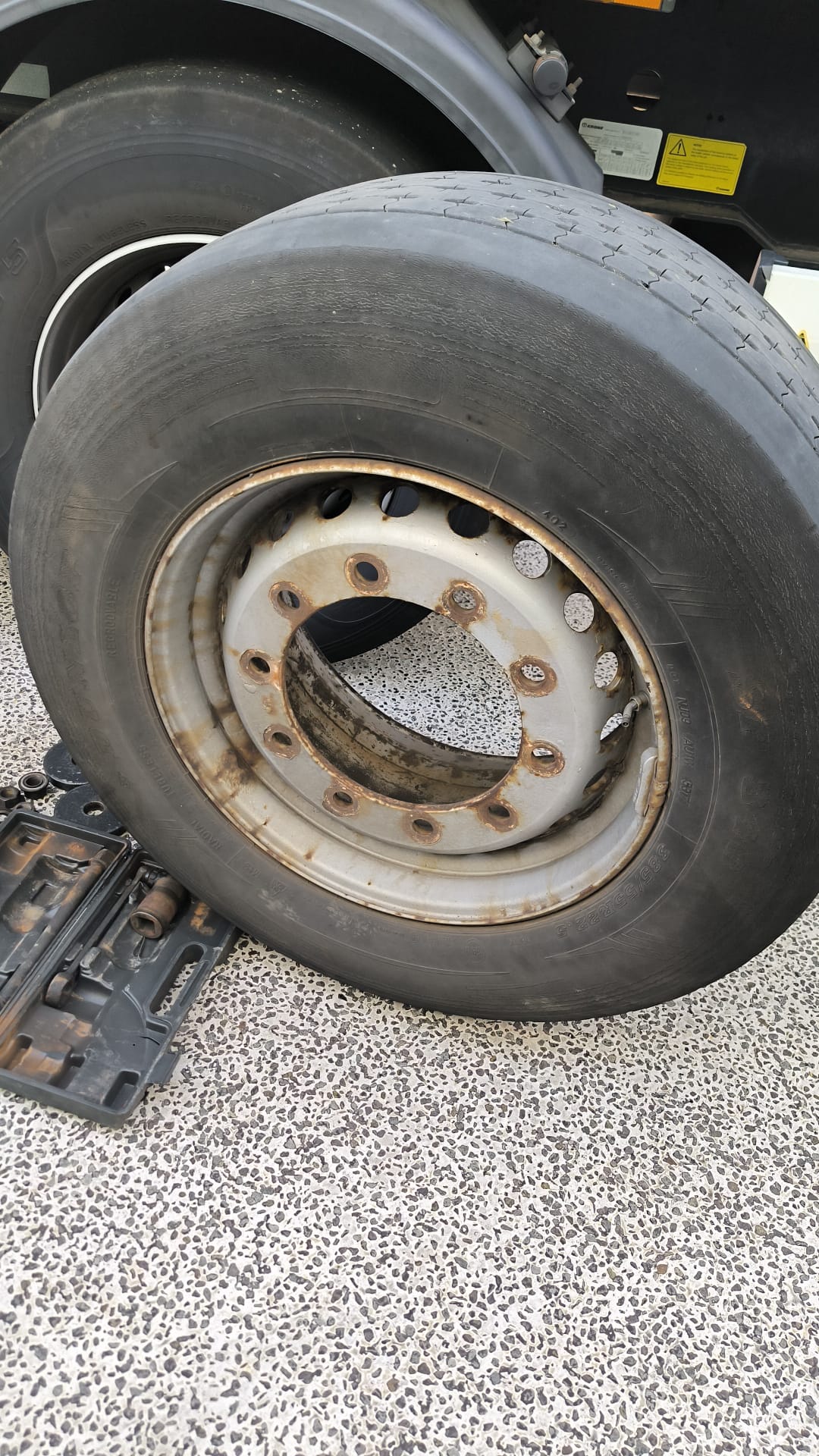
On this inspection, the tyre check ran from 11:10, covering all six positions checked: cold pressure, tread depth, DOT age, and a visual inspection for sidewall cracking. One tyre — a 315/60R22.5 — showed visible ageing cracks along the sidewall, consistent with age-related hardening rather than impact damage. It was flagged in the inspection report for monitoring and scheduled replacement, since the truck was cleared to continue on this occasion but the finding needed to be on record for the next service interval.
The Full Timeline: 09:00 to 11:40
Every stage of this pre-trip check was logged with a start and end point, which is standard practice for any inspection that produces a documented protocol at the end.
| Time | Phase | Action |
|---|---|---|
| 09:00 | Arrival | Arrival at the service point on the A7 near Uelzen, vehicle handover |
| 09:15 | Visual check | Extended walk-around check: lighting, tyres, attachments, load securing |
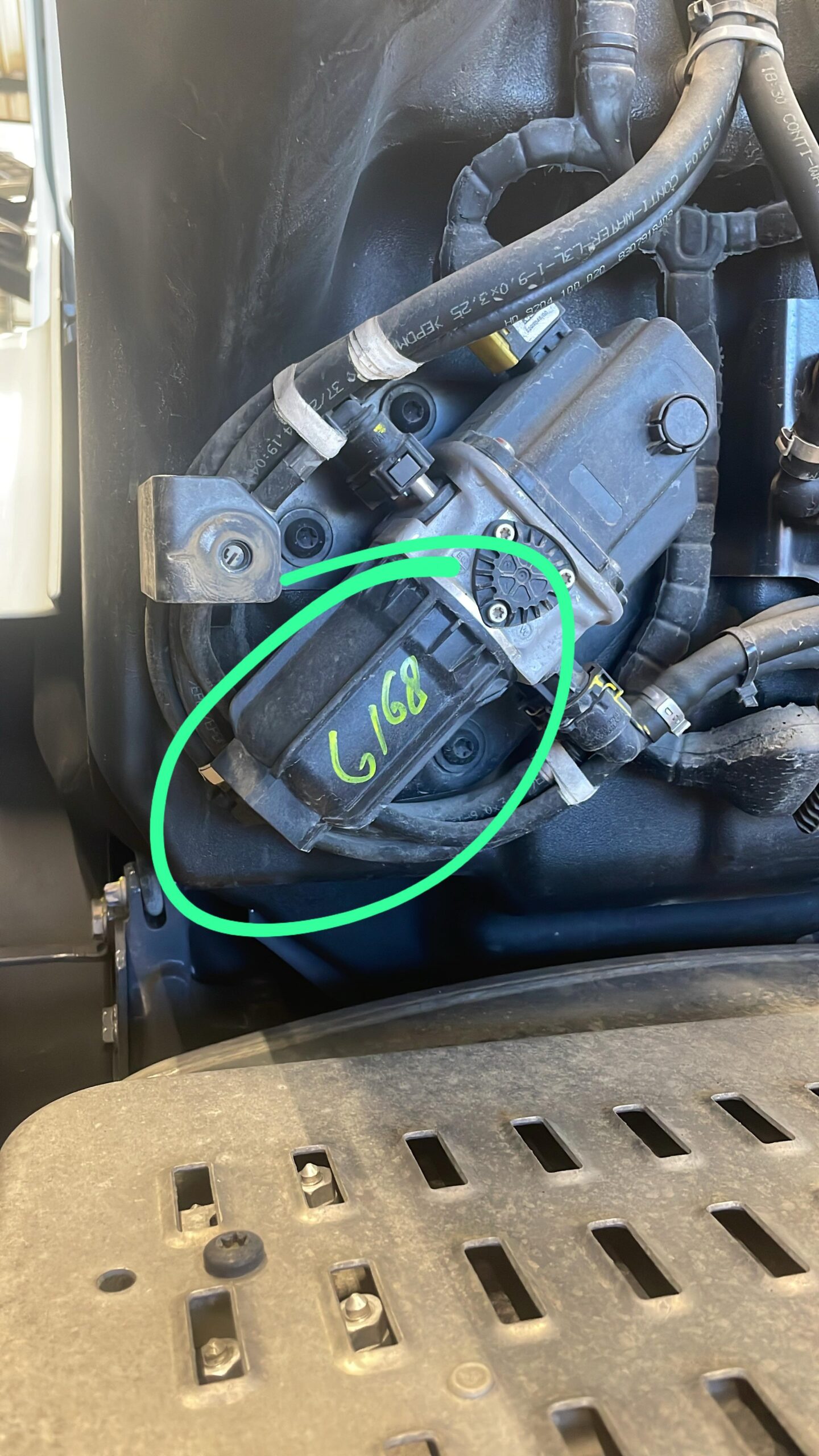
| 09:40 | Component diagnostic | Function and visual check on the chassis (marking G168), brake line connection inspection |
| 10:20 | Battery test | Resting voltage and cold cranking amps (CCA) under load, both batteries tested |
| 10:50 | Result/replacement | One battery below threshold — replaced with 225 Ah / 12 V / 1200 A unit |
| 11:10 | Tyre check | Cold pressure, tread depth, DOT age, visual check for sidewall cracking on 6 positions |
| 11:30 | Protocol | Final inspection report completed, cleared for the long-haul journey |
| 11:40 | Departure | Vehicle leaves the service point ready for the road |
Total time: 2 hours 40 minutes, from arrival at 09:00 to departure at 11:40. That window covered five distinct diagnostic stages plus one component replacement — a pace that would be difficult to match on the hard shoulder during an emergency callout, where the technician first has to travel to the vehicle before any work can start.
What It Cost: Full Breakdown
| Item | Price EUR (net, excl. VAT) |
|---|---|
| Callout/appointment coordination to service point | 120 |
| Extended pre-trip check (baseline inspection) | 90 |
| Battery test (resting voltage + CCA, 2 batteries) | 60 |
| Chassis component diagnostic (marking G168) | 140 |
| Tyre check, 6 positions (pressure, tread, DOT, visual) | 80 |
| Battery replacement 225 Ah / 12 V / 1200 A (parts + labour) | 340 |
| Old battery disposal | 20 |
| TOTAL (net) | 850 |
All prices are net, excluding VAT. The battery replacement accounts for exactly 40% of the total — parts plus fitting on a heavy-duty commercial unit are not cheap, but the alternative of that battery failing mid-route is considerably more expensive.
Why a Planned Check Is Cheaper Than a Breakdown
A planned pre-trip inspection costs less than a single emergency roadside callout, and the comparison is not close. A typical emergency truck tyre service on German motorways runs 750–1,400 €, largely because of night, weekend, and urgency surcharges plus the logistics of reaching a stranded vehicle wherever it happens to be. Add downtime cost on top — 800–1,200 € per day for a truck sitting idle instead of earning freight revenue — and a single breakdown can easily cost two to three times what this full 850 € pre-trip check delivered.
The comparison gets starker once you factor in what a breakdown actually interrupts: a delivery window, a driver’s remaining legal driving hours for the day, sometimes a connecting ferry or border crossing slot that cannot simply be rebooked. None of that shows up on the repair invoice, but it is real cost. A battery that fails at a depot costs a callout and a replacement part. The same battery failing on the autobahn at night, three hundred kilometres from the nearest depot, costs the callout, the replacement, the downtime, and often a missed delivery penalty.
Long-Haul and Border Crossings: Why This Matters More Abroad
A fault that would be a minor inconvenience near the home depot becomes a serious problem after crossing a border. Once a truck is running an international route, the driver’s own workshop is no longer thirty minutes away, language becomes a barrier when explaining a fault to a local mechanic, and every country has its own enforcement rules and roadside conventions.
This is precisely why the timing of a pre-trip check matters. Doing it before departure, while the vehicle is still within reach of a familiar service network, catches problems that would otherwise surface hundreds of kilometres from home — in a country where the driver does not speak the language, does not know which workshops handle heavy commercial vehicles, and cannot easily verify whether a quoted repair price is reasonable.
A mobile technical service that comes to the vehicle rather than requiring it to be driven to a workshop removes one layer of that risk domestically. But the more effective strategy is still catching the fault before the border, when a full diagnostic team and the right parts are still within easy reach.
Documentation: Protection During Roadside Checks
A written inspection protocol is not paperwork for its own sake — it is evidence that the carrier met its duty of care. Roadside enforcement checks, whether run under national rules or coordinated through frameworks tracked by the Bundesamt für Güterverkehr, can and do stop commercial vehicles for spot inspections. A driver who can produce a dated, itemised inspection report showing tyres, brakes, and electrical systems checked before departure is in a materially different position than one who cannot.
The same document matters for insurance. If an incident occurs later in the trip and a claim is filed, an inspection protocol from immediately before departure showing the vehicle was checked and cleared is direct evidence against any suggestion of negligence. This inspection concluded at 11:30 with exactly that: a final report completed and filed, confirming the vehicle was cleared for the long-haul journey with one battery replaced and one tyre flagged for future monitoring.
Why Professional Diagnostics Beat a DIY Check
Doing this kind of inspection without proper equipment and trained technicians carries real risk, and it is worth being specific about where:
- Battery load testers are specialised equipment — a multimeter reading resting voltage tells you almost nothing about CCA under load, which is the figure that actually predicts whether a battery survives a cold start three hundred kilometres from home.
- Chassis component diagnostics require trained eyes — a hairline crack or an early-stage fatigue point on a marked component like G168 is not something a quick visual pass reliably catches.
- Brake line connections under pressure need proper testing, not just a visual check — a slow leak can be invisible until pressure drops enough to affect stopping distance.
- Tyre sidewall ageing is easy to misjudge — cracking from age looks similar to superficial weathering at a glance, and the difference matters for whether a tyre is safe for another few thousand kilometres or needs replacing now.
- A DIY inspection produces no defensible documentation — if a roadside check or an insurance claim later asks for proof of a pre-trip inspection, a driver’s own notes carry far less weight than a technician’s signed protocol.
Typical Situations We Handle Across Germany
Pre-trip inspections are one part of a broader pattern of support fleets rely on across German motorways. Related cases from our network illustrate the range: a jump start on the A9 near Hermsdorf for a battery that failed without warning, an electrical fault breakdown near Erfurt, and a combined overheating and tyre failure on the A6 near Amberg. Every one of those emergency callouts shares a common thread with this case: the underlying fault — a weak battery, a failing electrical connection, ageing rubber — was almost certainly detectable in a planned inspection before it turned into a roadside emergency.
Prevention: What Fleets and Drivers Can Do
Building pre-trip checks into a fleet’s routine, rather than treating them as an occasional extra, is the single most effective way to cut emergency callouts:
- Schedule a full diagnostic check — not just the legal walk-around — before any route exceeding roughly 500 kilometres or crossing a border.
- Test battery CCA under load at fixed intervals, not just when a battery visibly struggles to start.
- Include alternator output in every battery-related check, since a failing charging system is what causes repeat battery failures.
- Track tyre DOT dates across the fleet and replace on age thresholds, not only on visible tread wear.
- Keep every inspection protocol on file — it protects the carrier at roadside checks and strengthens any future insurance claim.
Tyres, Batteries, and Fleet Maintenance: The Bigger Picture
Heavy commercial tyres run at far higher pressures than passenger vehicle tyres — typically in the region of 8.5 to 9.5 bar depending on axle position and load, which is why cold pressure checks matter so much more on a lorry than on a car. Major manufacturers publish detailed load and pressure tables for this reason, and matching the correct tyre to axle position and load rating is a routine part of any competent tyre service appointment.
Battery specification matters just as much. A 225 Ah / 12 V / 1200 A unit, as fitted in this case, is sized for the electrical demands of a modern articulated truck running auxiliary systems, telematics, and climate control alongside the engine’s own requirements — undersizing a replacement battery is a common shortcut that leads directly back to the “flat again within weeks” complaint.
Regular servicing through a proper truck workshop that combines chassis, electrical, and tyre diagnostics in one visit is consistently more cost-effective than treating each system in isolation. Independent testing organisations such as DEKRA and technology suppliers like Bosch Mobility both publish extensive data on commercial vehicle component failure patterns, and the consistent finding across that research is that batteries, brakes, and tyres account for the large majority of preventable roadside breakdowns.
Why Fleets Choose Our Network
Coordinating a pre-trip check across a national motorway network takes more than a single workshop — it takes a dispatch system that can place a vehicle at the right service point on schedule, with the right diagnostic equipment already available. Our regional service partner network covers routes across Germany, with multilingual dispatch handling bookings for international carriers who may not speak German or English fluently. Every inspection, planned or emergency, produces the same standard of documented protocol — the same report format whether the vehicle rolled in on schedule for a pre-trip check or was towed in after a fault on the hard shoulder.
Transparency on pricing works the same way for both. The 850 € total for this inspection was itemised before work began, not adjusted afterward — the same standard we apply to emergency towing and roadside callouts.
Summary
- Location: service point on the A7 near Uelzen, Lower Saxony
- Date: 30 July 2026
- Type: planned pre-trip inspection before a long-haul journey (not a breakdown)
- Duration: 2 hours 40 minutes (09:00–11:40)
- Findings: one battery below CCA threshold, replaced with 225 Ah / 12 V / 1200 A unit; one 315/60R22.5 tyre flagged for sidewall ageing cracks
- Total cost: 850 € net, excl. VAT
- Comparison: roughly 40–65% cheaper than a typical emergency roadside tyre callout (750–1,400 €), before factoring in avoided downtime (800–1,200 €/day)
FAQ
What does a pre-trip truck inspection include?
A full pre-trip inspection covers an extended walk-around (tyres, lights, load securing), a chassis component diagnostic, a battery test under load, and a tyre check across all positions for pressure, tread, and age. It goes well beyond the driver’s legal daily check.
How long does a full pre-trip check take?
In this case, the complete inspection took 2 hours 40 minutes, covering five diagnostic stages plus one component replacement. A basic version without a battery or chassis fault can run closer to 60–90 minutes.
Why did a battery that started the truck still need replacing?
Starting ability alone does not measure reserve capacity. A cold cranking amps (CCA) load test showed this battery below the acceptable threshold, meaning it could fail mid-route even though it started normally that morning.
Is a pre-trip check cheaper than waiting for a breakdown?
Yes. This full inspection cost 850 € net. A typical emergency roadside tyre callout runs 750–1,400 €, and downtime while a truck sits idle adds a further 800–1,200 € per day — a planned check is almost always the cheaper option.
Does the inspection report help with insurance or roadside checks?
Yes. A dated, itemised protocol showing tyres, brakes, and electrical systems checked before departure is direct evidence of due diligence, useful both for insurance claims and enforcement checks along the route.
How often should a fleet run this kind of inspection?
Before any route exceeding roughly 500 kilometres or crossing a border, and at minimum on a fixed interval matched to the fleet’s mileage — battery and tyre condition should never be assessed purely by how the vehicle feels to drive.
Book a Pre-Trip Inspection Before Your Next Long Haul
Do not wait for a battery or a tyre to fail on the autobahn. Book a full pre-trip technical check with our network before your next long-distance run and depart with a documented, roadworthy vehicle. Call +49 160 5753826 or visit www.lkwhelp24.com — coordinated 24/7 across all of Germany. For general enquiries, our contact page has full details for booking regional appointments in advance.
Keywords: truck pre-trip inspection | pre-trip check Germany | truck battery load test | CCA battery test lorry | tyre check before long haul | chassis component diagnostic | A7 Uelzen truck service | commercial vehicle inspection protocol | mobile truck service Germany | § 36 StVZO tyre tread depth
Related Articles
- Truck jump start on the A9 near Hermsdorf: Iveco Eurocargo battery failure
- Truck breakdown near Erfurt: Mercedes Actros electrical fault
- Truck workshop inspection, maintenance, and repair
- Electric truck charging in Germany