Skip to content
A cold morning, a full trailer, a delivery window ticking away, and an engine that simply refuses to turn over. For any HGV driver, that is one of the worst ways to start the day. For a foreign long-haul driver parked at an unfamiliar autohof on the A9 near Hermsdorf, in Thuringia, with no local contacts and no idea which workshop to call, it is worse still.
This is exactly what happened to the driver of a 7.5-tonne IVECO Eurocargo curtainsider fitted with a Cold Bear roof refrigeration unit, running on Bulgarian plates. He climbed into the cab, turned the key, and got nothing more than a dull click. No cranking, no start, no way forward. What follows is the full account of how LKWHelp24 coordinated a local mobile commercial-vehicle service to diagnose the fault, jump-start the truck, fit two new 24 V batteries, and release the vehicle back onto the road in under two hours from the first phone call.
A no-start at a truck stop is never just a mechanical inconvenience. It is lost driving time under EU drivers\’ hours rules, a delivery slot at risk, and, for a driver working far from home with limited German, a genuinely stressful situation. Every minute the truck sits still costs money and credibility with the customer waiting for the load. That is precisely the gap our 24 hour breakdown service exists to close, and it is why this case is worth walking through in detail.
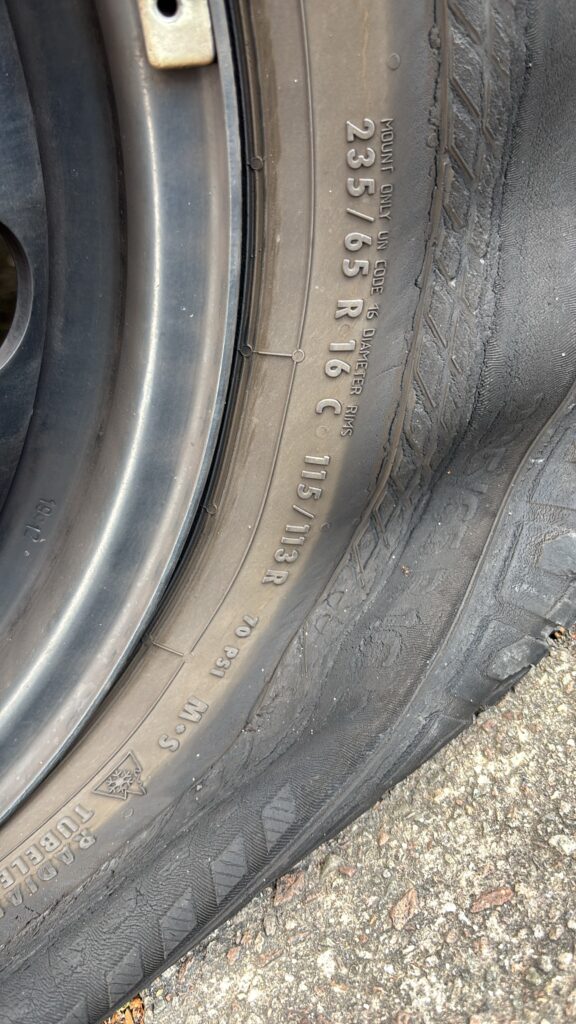
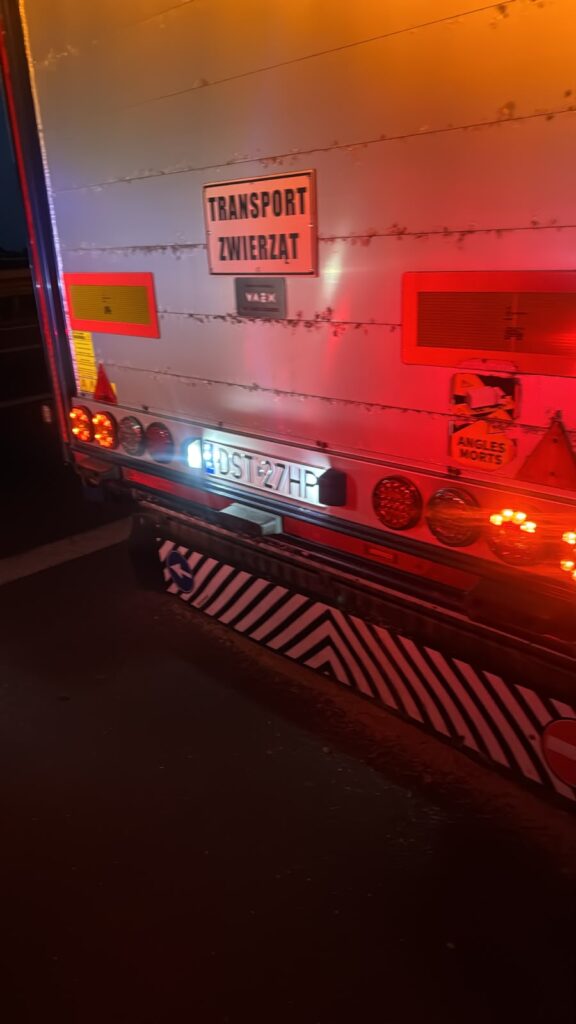
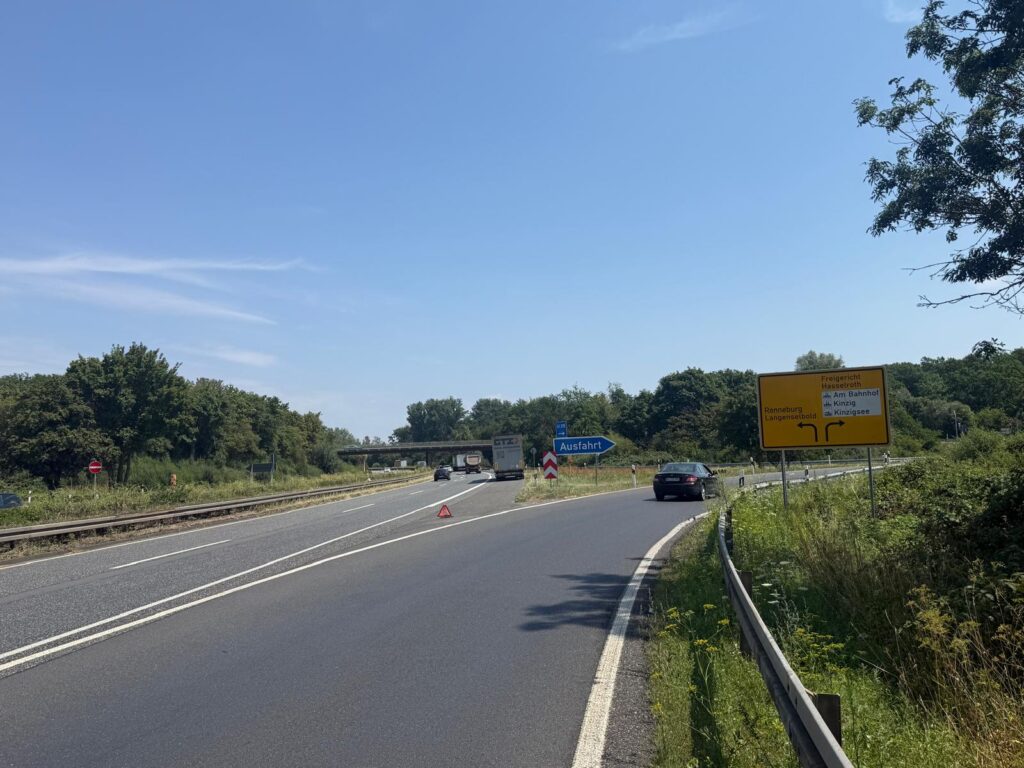
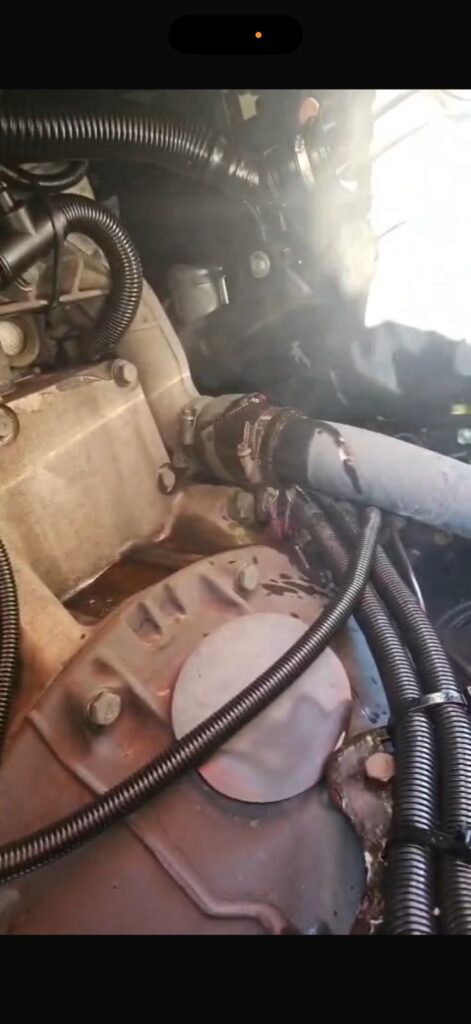
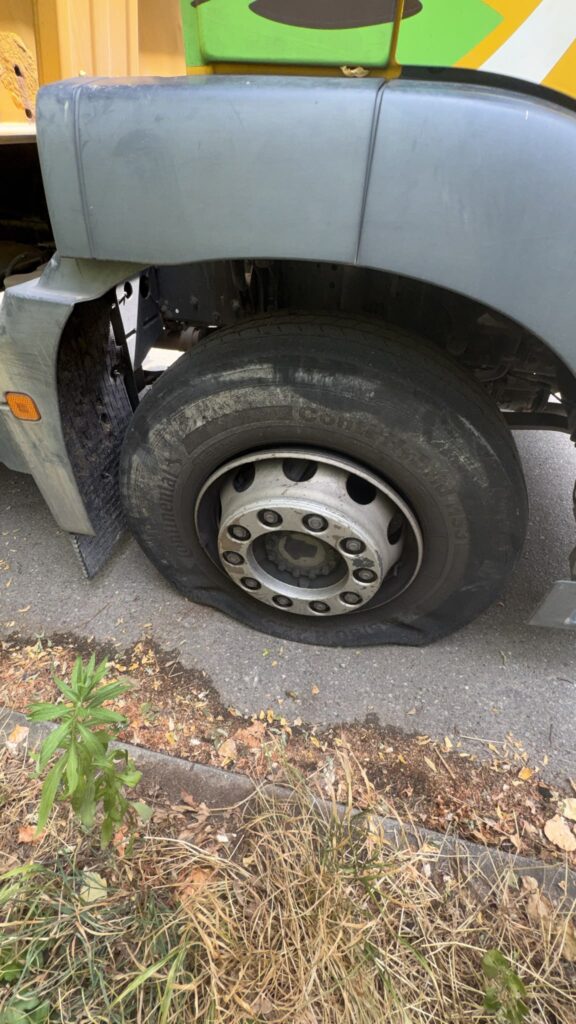
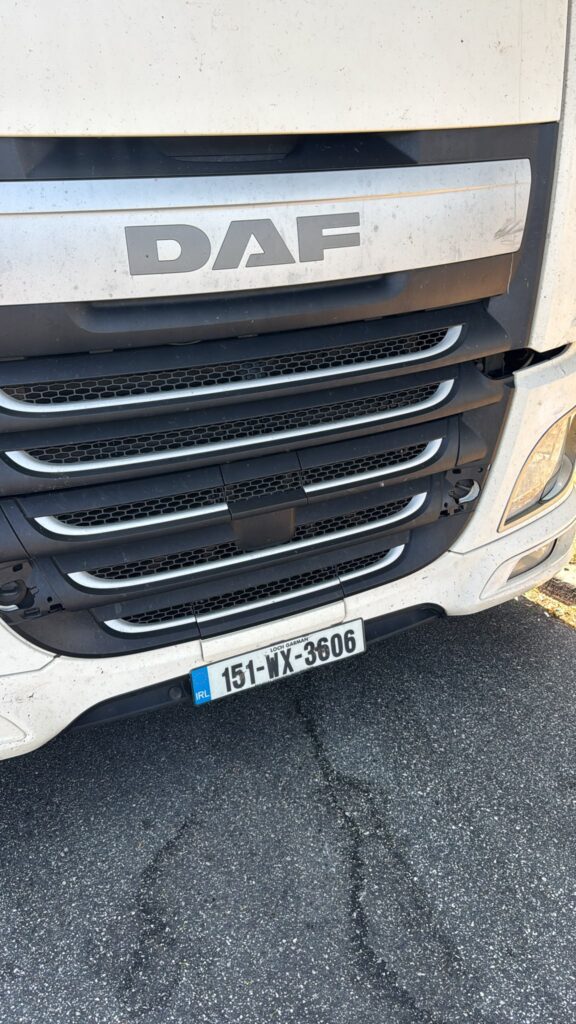
Photo caption (German): „Startproblem an einem IVECO Eurocargo eines bulgarischen Fahrers – mobile Batterie-/Starthilfe durch LKWHelp24 am Autohof an der A9 bei Hermsdorf.\”
The Emergency
At 07:30, the driver placed a call to LKWHelp24\’s dispatch line. The truck, an IVECO Eurocargo 7.5-tonne curtainsider with a Cold Bear refrigeration unit on the roof, was parked at an autohof just off the A9 near Hermsdorf. Overnight, the vehicle had been standing with the roof unit presumably drawing power, as many temperature-controlled setups do. In the morning, the driver turned the ignition key and the starter would not engage. No crank, no start, just a weak click from the solenoid and silence.
This is a textbook symptom pattern for anyone who has dealt with commercial vehicle electrics: when a diesel engine won\’t even attempt to turn over, the fault sits somewhere in the 24 V electrical system, most commonly the batteries, the starter, or the earth connections between them. The driver had no way of confirming which, and more importantly, no way of fixing it himself at a truck stop with no tools and no spares.
He was a foreign driver on an international haul, communicating in a language that was not his own, at a location he had never visited before. Unfamiliar surroundings, a language barrier, and a truck that will not move: this combination is one of the most common reasons hauliers and owner-drivers reach for a dedicated breakdown number rather than trying to sort things out on their own. LKWHelp24 exists for exactly this scenario.
How Help Was Organised
LKWHelp24 operates a partner network of mobile commercial-vehicle workshops spread across Germany, so that no matter where a truck breaks down, a qualified technician is never far away. For this call, dispatch identified a mobile service based in the Hermsdorf and East Thuringia area, already familiar with the A9 corridor and its truck stops.
The process ran as follows:
- 07:30: driver\’s call logged, location and symptoms confirmed (Eurocargo, no-start, 24 V system suspected)
- 07:45: nearest available mobile commercial vehicle service in the Hermsdorf/East Thuringia region dispatched, ETA given to the driver
- Technician briefed on the likely fault before departure: dead or failing batteries, starter not cranking, possible parasitic drain from the roof unit
- Driver kept informed of the ETA so he could plan his next steps and inform his dispatcher about the delay
Because the partner was already local to the area, the response time stayed tight. Rather than sending a technician on a long drive from a distant base, LKWHelp24\’s network model puts help close to where trucks actually break down, which on a route as busy as the A9 makes a measurable difference to how quickly a driver gets moving again.
The Situation On-Site
The technician arrived at the truck stop at 08:25, roughly fifty-five minutes after the initial call. First on the agenda was a proper electrical diagnosis rather than guesswork. Commercial vehicles like the Eurocargo run on a 24 V system built from two 12 V batteries wired in series, and a no-start can stem from several different points in that circuit: the batteries themselves, the starter motor, or a poor earth connection anywhere along the chain.
Using a multimeter and load-testing equipment, the technician checked battery voltage and state of charge, then examined the starter and earth connections for signs of corrosion or a loose fitting. The readings were conclusive: both batteries were flat and, on load testing, showing signs of internal failure rather than simple discharge. The starter itself was fine and the earth connections were sound, so the fault was isolated cleanly to the battery pair. It is a familiar story with 24 V electrical systems on commercial vehicles: once one battery in a series pair starts to fail, the whole start circuit can drop below the voltage needed to turn a diesel engine over, especially after a cold night with a roof unit drawing current in the background.
Step-by-Step
Step 1: Arrival and initial assessment. The technician reached the autohof at 08:25 and walked the driver through what was about to happen, checking the vehicle\’s basic details and confirming the fault as reported.
Step 2: Electrical diagnosis. The technician tested battery voltage, state of charge, starter draw, and earth connections systematically to locate the fault rather than assume it.
Step 3: Jump start. With the diagnosis pointing firmly at the batteries, the technician applied a mobile jump start to get the engine running, confirming that the starter motor and the rest of the drive train were healthy once sufficient voltage was available.
Step 4: Battery replacement. The technician fitted two commercial-grade 24 V batteries to replace the failed pair, then checked the cables and terminals to make sure the new units were properly seated and earthed.
Step 5: Start attempt and charging check. The technician started the engine on the new batteries alone and verified the charging voltage from the alternator and the resting voltage of the system before signing the truck off as roadworthy.
Full Timeline
| Time | Phase | Action |
|---|---|---|
| 07:30 | Call received | Driver reports no-start on IVECO Eurocargo at A9 autohof near Hermsdorf |
| 07:45 | Dispatch | Mobile commercial vehicle service (Hermsdorf/East Thuringia) assigned, ETA confirmed |
| 08:25 | On site | Technician arrives at the truck stop |
| 08:40 | Diagnosis | Batteries confirmed flat/failed; starter and earth checked and found sound |
| 09:10 | Repair | Two commercial 24 V batteries fitted |
| 09:20 | Verification | Start attempt successful; charging and resting voltage checked |
| 09:20 | Released | Truck cleared to continue its journey |
Total time from call to release: approximately 1 hour 50 minutes. Time on site: around 55 minutes.
Cost
| Item | Price (EUR) |
|---|---|
| Call-out / 24-7 service | 180 |
| Diagnosis & labour on site | 130 |
| 2× commercial battery (24 V) | 220 |
| Sundries / old-battery disposal | 30 |
| TOTAL | 560 |
The bulk of the bill, 220 EUR, sits with the two commercial 24 V batteries themselves, which is unsurprising given the specification these units need to meet for a 7.5-tonne truck running an auxiliary roof unit overnight. The call-out fee of 180 EUR reflects round-the-clock dispatch and travel to a truck stop rather than a fixed workshop, and the 130 EUR diagnosis and labour charge covers the technician\’s time testing the electrical system properly rather than simply swapping parts on a hunch.
It is worth setting this figure against the alternative: had the fault not been diagnosed correctly on-site, or had no mobile service been available, the only remaining option would have been to arrange a tow to the nearest workshop. Towing a 7.5-tonne curtainsider, plus the workshop\’s own call-out and labour charges, plus the lost hours while the truck sits in a queue for a bay, would very likely have cost more than 560 EUR and taken considerably longer, quite possibly the rest of the day rather than under two hours. A mobile jump start and on-site battery replacement, when the fault is genuinely limited to the batteries and starter, is almost always the faster and cheaper path back to the road.
Why a Professional Service Is Essential
There is a temptation, when a truck won\’t start, similar to the cooling and tyre issue on a DAF near Amberg, to assume any set of jump leads and a willing bystander will solve the problem. Sometimes that is true. But a 24 V commercial vehicle electrical system is not the same as a car\’s 12 V circuit, and getting it wrong, connecting leads incorrectly, using the wrong charging equipment, or ignoring a starter fault masquerading as a flat battery, can cause further damage or simply waste time on a fix that will fail again within hours.
A properly equipped mobile commercial vehicle service brings load-testing tools that actually confirm whether a battery is failing rather than just flat, the correct commercial-grade replacement batteries rated for the vehicle, and the experience to check the starter and earth path before assuming the batteries are the whole story. In this case, that systematic approach meant the driver left with a genuinely fixed truck, not a temporary jump start that might have stranded him again a few hours down the road.

Typical Breakdown Situations We Handle
LKWHelp24\’s partner network deals with this kind of situation daily across Germany, comparable to the AdBlue fault handled on a Ford F-Max near Bayreuth, alongside a wide range of other commercial vehicle emergencies:
- No-start faults linked to 24 V electrical systems, flat or failing batteries, or a faulty starter
- Mobile jump starts for trucks, trailers, and refrigerated units stranded at autohofs and rest areas
- Commercial vehicle battery replacement on-site, without the need for a tow
- Roadside assistance for foreign drivers who need support in an unfamiliar country
- Coolant hose failures, steering component faults, and other mechanical breakdowns on motorways such as the A9, A8, and A5
- Recovery and towing coordination when on-site repair is not possible
Prevention Tips
Battery failures like this one are rarely completely random, and a few habits can reduce the odds of a repeat no-start:
- Have the batteries and charging system checked at every service interval, particularly before winter, since cold weather is unforgiving on batteries that are already marginal
- Be aware of parasitic loads: roof units such as Cold Bear systems, telematics, and cab electronics all draw current even when the engine is off, and a battery pair nearing the end of its life may not cope with an overnight drain
- Monitor the state of charge rather than waiting for a warning sign, since a battery can appear to work fine right up until the morning it does not
- If the engine has been cranking more slowly than usual over recent days, treat that as an early warning rather than something to ignore until it fails completely
- Keep the breakdown number saved in the cab, as recommended after a parking-heater failure fixed near Nuremberg, so that if a no-start does happen, help is one call away rather than a search through unfamiliar options at an unfamiliar truck stop
Extended Notes on 24V Systems and Mobile Support for Foreign Drivers
Commercial vehicles rely on 24 V electrical systems built from two 12 V batteries in series, precisely because starting a large diesel engine and running auxiliary equipment like refrigeration units demands more current than a passenger car circuit can supply. When one battery in that pair begins to fail, the imbalance can bring the whole system down below the threshold needed to crank the starter, even though from the outside everything looks the same as a straightforward flat battery. That is why a proper diagnosis, rather than an assumption, matters every time a truck won\’t start.
Faulty starters, corroded earths, and genuinely dead batteries can all produce the same symptom at the roadside, and only a systematic check separates them. A mobile jump start can get a truck moving again as an immediate measure, but a mobile commercial vehicle service, done properly, similar to how a charge-air hose fault was resolved near Kassel, goes further: confirming charging voltage, resting voltage, and starter draw before releasing the vehicle, so the driver is not simply trading one roadside call for another a few hours later.
For foreign drivers, the value of a dedicated breakdown service goes beyond the technical fix. Being stranded on the A9 without local knowledge, without fluent German, and without a trusted contact is stressful in itself. A 24 hour breakdown service that can dispatch a local partner, communicate clearly about ETAs and costs, and get a truck back on the road quickly removes a significant part of that stress, and it matters just as much to fleet operators managing vehicles and drivers across borders, who need a single reliable number to call regardless of where in Germany a breakdown happens.
Manufacturers such as IVECO Germany and component specialists such as Bosch Mobility both publish guidance on maintaining 24 V systems and starter components, and the fundamentals they describe echo what played out at the Hermsdorf autohof: batteries and starters are wear items, and catching a failing pair before it becomes a full no-start is always cheaper than dealing with the breakdown itself.
Why LKWHelp24
LKWHelp24 built its network specifically around the reality that truck breakdowns do not happen conveniently near a workshop. They happen at autohofs, on hard shoulders, and at rest areas, often early in the morning or late at night, often to drivers a long way from home. The partner network across Germany means a mobile commercial vehicle service is rarely more than a short drive away, dispatch is available around the clock, and technicians arrive equipped to diagnose the fault properly rather than guess at it.
Summary
- Vehicle: IVECO Eurocargo 7.5-tonne curtainsider with Cold Bear roof unit, Bulgarian plates
- Fault: no-start caused by flat/failed 24 V batteries
- Location: autohof on the A9 near Hermsdorf, Thuringia
- Response: call at 07:30, technician on site at 08:25, truck released at 09:20
- Total time: approximately 1 hour 50 minutes; on-site time approximately 55 minutes
- Total cost: 560 EUR (call-out, diagnosis and labour, two commercial batteries, sundries)
- Outcome: truck fully repaired and back on the road with no secondary damage
Request Emergency Assistance Now
If your truck won\’t start, or you need mobile breakdown assistance anywhere in Germany, call LKWHelp24 now. Visit our contact page or read more on the blog.
+49 160 5753826
lkwhelp24.com
Available 24/7 across all of Germany.