Skip to content
TL;DR: On 13 July, an articulated lorry on the A9 near Hof, Upper Franconia, called our dispatch at 09:10 with a trailer tyre destroyed from the inside. The cause wasn’t a puncture — a seized brake had overheated the hub and cooked the 385/65 R22.5 tyre until the carcass broke down. Diagnosis, tyre replacement, and freeing the brake took 2 hours 40 minutes, total net cost 1,130 EUR.
A tyre that dies from heat rather than a cut or a nail behaves differently, and it scares drivers precisely because nothing visible caused it. There was no pothole, no debris on the carriageway, no obvious impact. One moment the lorry was running normally on the A9 towards Berlin; the next, the driver felt the trailer pulling and smelled something burning near the rear axle.
That smell is the first clue most drivers miss. A brake that won’t release keeps grinding against the disc for kilometres, generating heat that has nowhere to go except into the hub, the rim, and eventually the tyre sitting right next to it. By the time the tyre carcass gives way, the brake has usually been cooking it for twenty minutes or more.
This case matters for anyone running an Eastern European fleet through Germany: a sticking brake caliper is common on trailers that sit unused over a weekend or after a cold snap, and it can turn a routine trip into an expensive roadside stop if nobody catches the warning signs early.
What Happened on the A9 Near Hof?
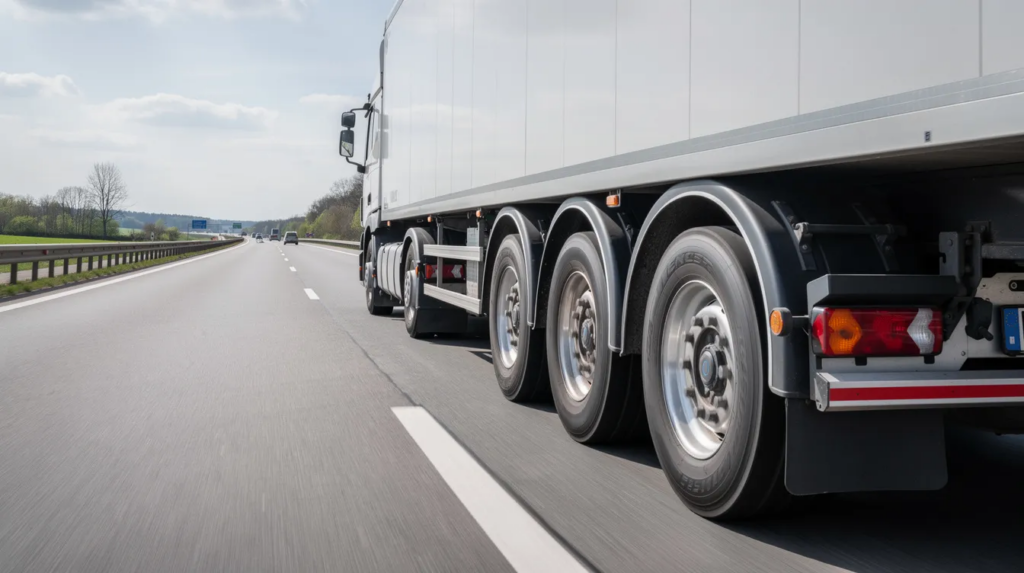
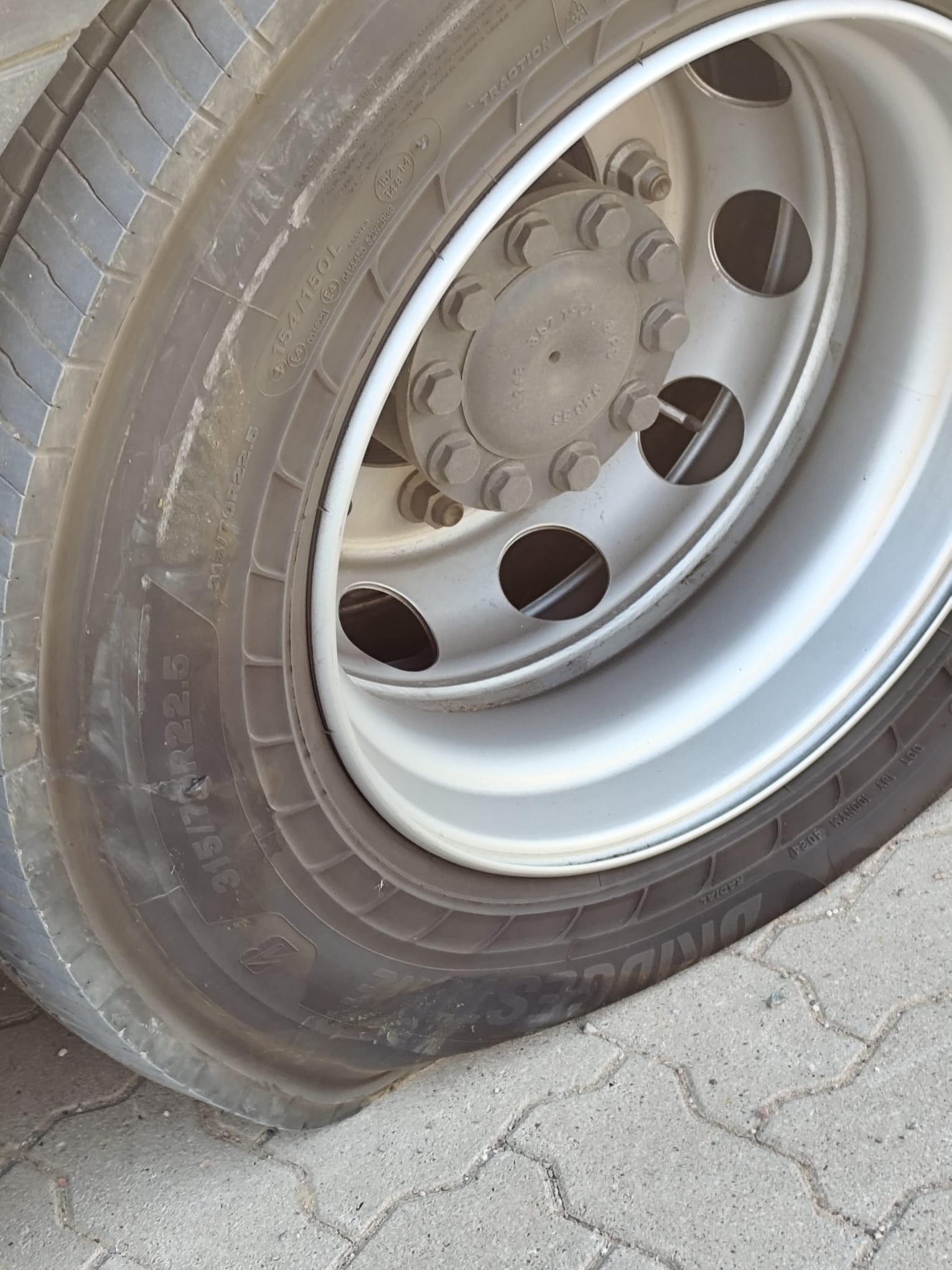
A tractor-trailer combination belonging to an Eastern European haulier was travelling on the A9 near Hof, Upper Franconia, heading towards Berlin, when the driver noticed the vehicle pulling slightly to one side and a burning smell from the trailer axle. He pulled onto the hard shoulder and called our dispatch at 09:10.
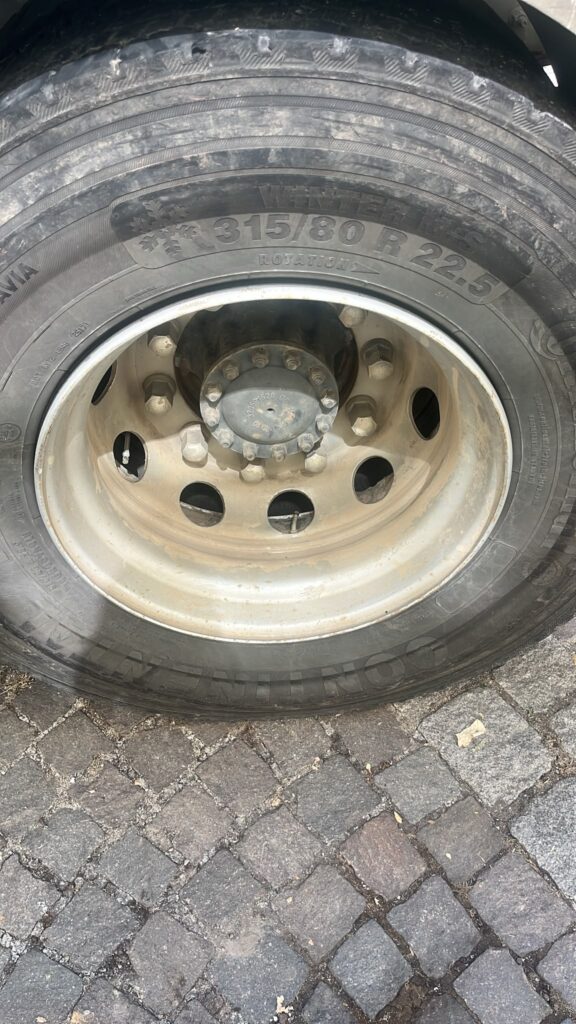
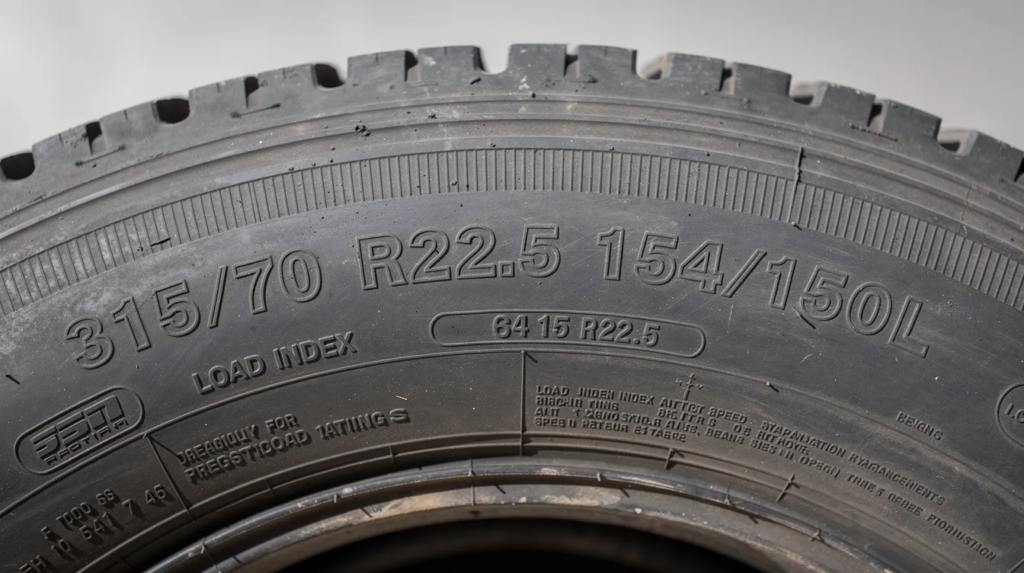
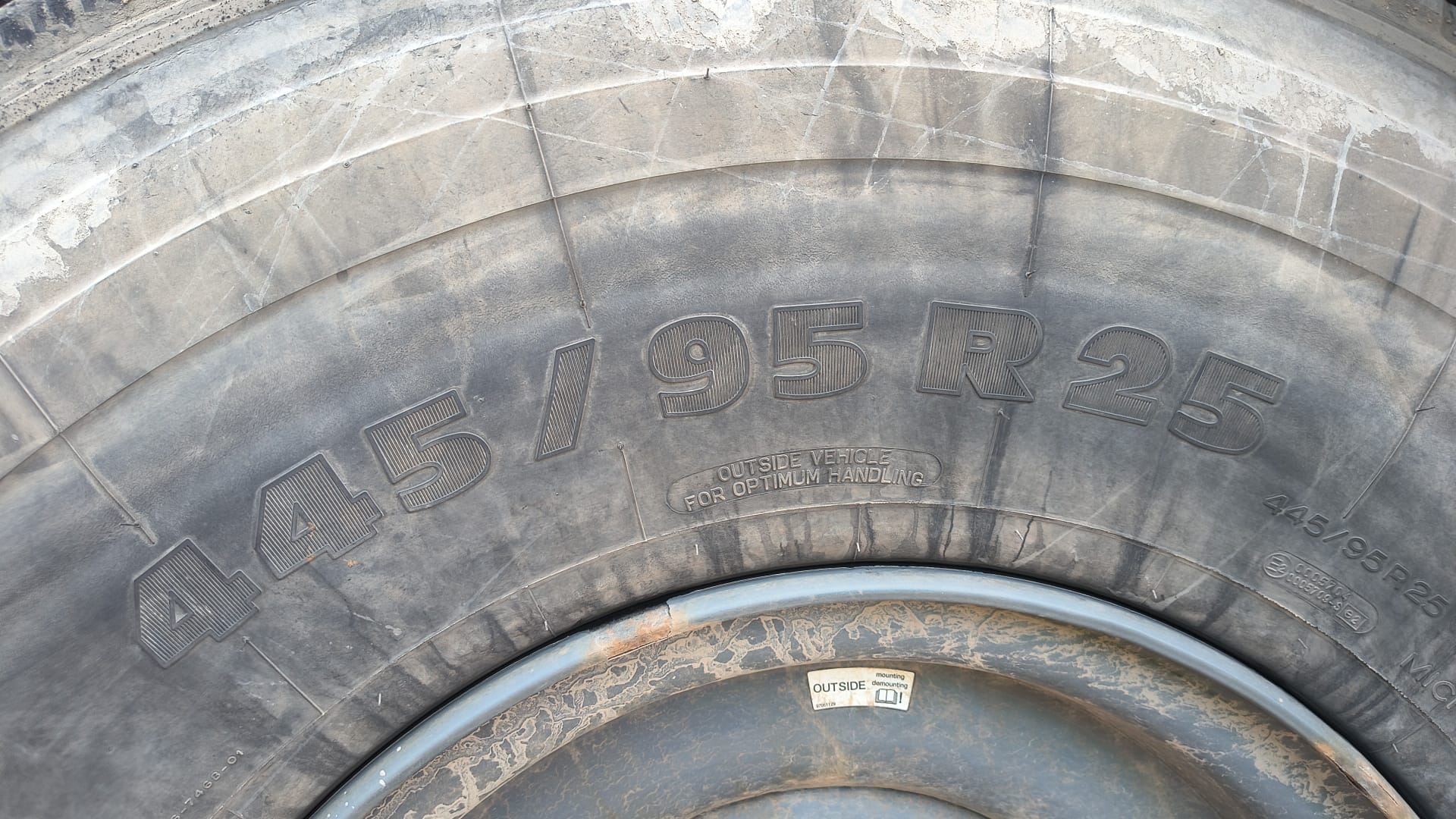
The vehicle was an articulated lorry with a semi-trailer, tyre size 385/65 R22.5. There was no collision, no visible object on the road, and no sudden bang typical of a blowout from impact. What had happened was mechanical, not accidental: a brake pad on the trailer axle had stopped releasing fully, so the wheel kept dragging against a partly applied brake for a stretch of motorway. The friction heated the hub and disc far beyond normal operating temperature, and that heat transferred straight into the tyre sitting on the same rim. The rubber compound and internal carcass cannot survive prolonged temperatures anywhere near what a stuck brake produces — the structure breaks down from the inside, and the tyre eventually loses integrity even without a cut or puncture. This is a heat failure, not a wear failure, and treating it as an ordinary tyre change would have sent the driver straight back onto the autobahn with the same fault still active.
How Did We Organise the Roadside Response?
Our dispatch treats any report of a burning smell or pulling vehicle as a combined brake-and-tyre case from the first phone call, not a routine tyre job, because the two failures are usually linked.
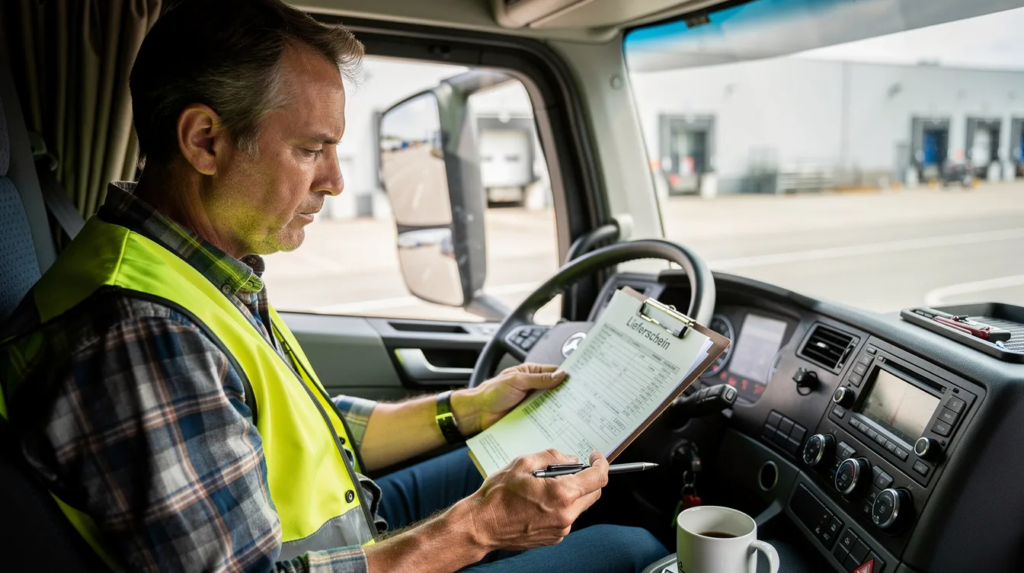
- Call received at 09:10 — the driver, speaking limited German, described the smell and the pulling sensation; our multilingual dispatcher confirmed the symptoms in his own language to avoid misdiagnosis over the phone.
- Phone triage — dispatch asked about smoke, wheel heat, and whether the brake pedal or trailer brake felt different, ruling out a simple flat before sending a crew.
- Team assigned by 09:25 — a response vehicle carrying trailer tyres in common HGV sizes and brake tools was dispatched from the regional base.
- Location confirmed — the hard shoulder position near Hof was pinned so the technician could find the vehicle without delay in daylight traffic.
- Driver instructed to wait clear of the wheel — given the fire risk of an overheated disc, dispatch told the driver not to touch the hub and to stay away from the trailer until the technician arrived.
A language barrier makes phone diagnosis genuinely difficult. A driver who cannot precisely describe “brake dragging” versus “tyre burst” in German or English can send a mobile crew out with the wrong parts on board. Our dispatch desk covers Romanian, Polish, Russian, and several other languages for exactly this reason — getting the fault described accurately in the first five minutes shapes everything that follows.
Why Does an Overheated Brake Destroy a Tyre?
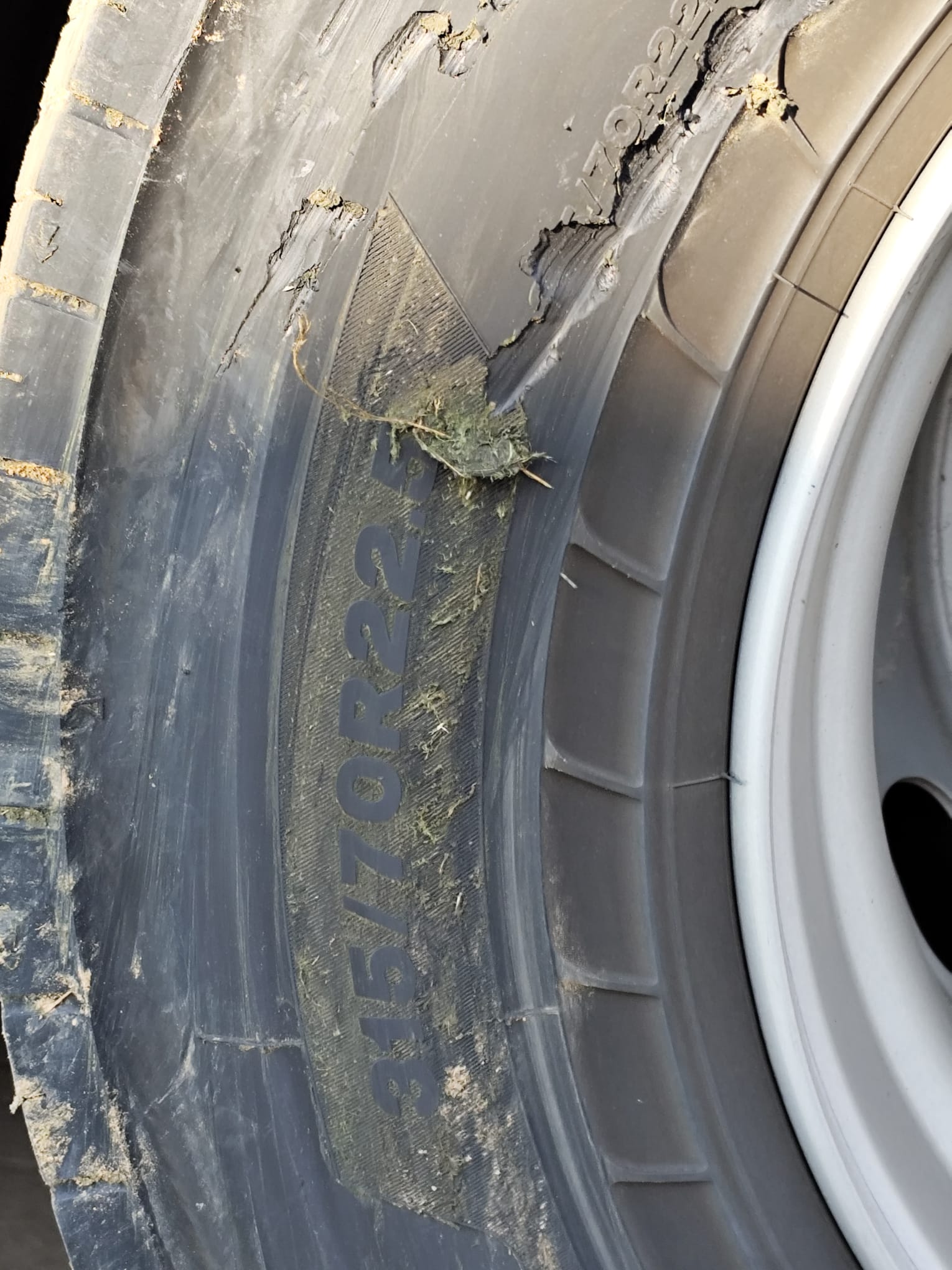
A seized brake does not just wear the pad — it turns the wheel into a heat source that the tyre cannot survive sitting next to for long. Heavy-goods trailer tyres run at 8.5–9.5 bar and are engineered for the heat of normal braking and rolling resistance, not for a hub running continuously hot from a dragging pad.
Once the rubber compound and steel-belt carcass are exposed to sustained heat well above normal, the bond between layers starts to fail internally, long before the outside shows obvious damage. A driver or bystander glancing at the tyre from a distance might see nothing wrong at all — no bulge, no visible tear — while the structure underneath is already compromised and can fail suddenly under load. That is what makes this fault more dangerous than a slow puncture: the tyre can look fine and still be minutes from a catastrophic failure at motorway speed.
There’s also a fire risk that a normal flat tyre doesn’t carry. A hub and disc hot enough to cook a tyre can also ignite oil residue, brake dust, or, in the worst case, the tyre itself. Technicians never pour water on a red-hot disc — the thermal shock can crack it further and, on a wheel with residual pressure or trapped air pockets, create a genuine hazard. The correct approach is to let it cool under controlled conditions while the rest of the diagnosis proceeds.
What Are the Warning Signs of a Sticking Brake Before the Tyre Fails?
A brake that’s about to cook a tyre usually announces itself for several minutes before the tyre actually gives way, and drivers who know what to check can stop before it gets that far.
- The vehicle pulls to one side — a dragging brake on one wheel slows that side down more than the others, and the lorry drifts even on a straight road.
- A burning or hot-metal smell — distinct from diesel or exhaust smell, often noticeable through the cab vents before it’s visible outside.
- Visible smoke or haze from a wheel — usually seen in a mirror or by another driver flashing to warn you.
- Uneven wheel heat at a stop — at a rest area, touching the rim (carefully, never the disc) on each wheel of an axle shows an obvious difference if one brake is dragging.
- A slight vibration or drag felt through the cab — subtle, easy to dismiss as road surface, but worth checking if it persists.
Any one of these on its own is worth a stop. Two together, especially smell plus pulling, mean stop immediately and call for a diagnosis rather than continuing to the next services.
What Usually Causes a Trailer Brake to Stick?
Trailer brakes seize for a handful of predictable mechanical reasons, and knowing which one applies changes how the repair is done on-site versus back at a workshop.
| Cause | What happens | Typical fix location |
|---|---|---|
| Seized caliper piston | Piston doesn’t retract after braking, pad stays in contact | Roadside if parts available, otherwise workshop |
| Failed spring brake actuator | Spring-applied mechanism fails to release fully | Usually needs workshop replacement |
| Pads frozen or stuck after cold/wet parking | Corrosion or moisture bonds pad to disc temporarily | Often freed roadside |
| Worn or corroded guide pins | Caliper doesn’t retract evenly, one pad drags | Roadside inspection, part replacement varies |
| Brake valve fault (air system) | Air pressure doesn’t fully vent from the chamber | Diagnosis roadside, repair depends on part availability |
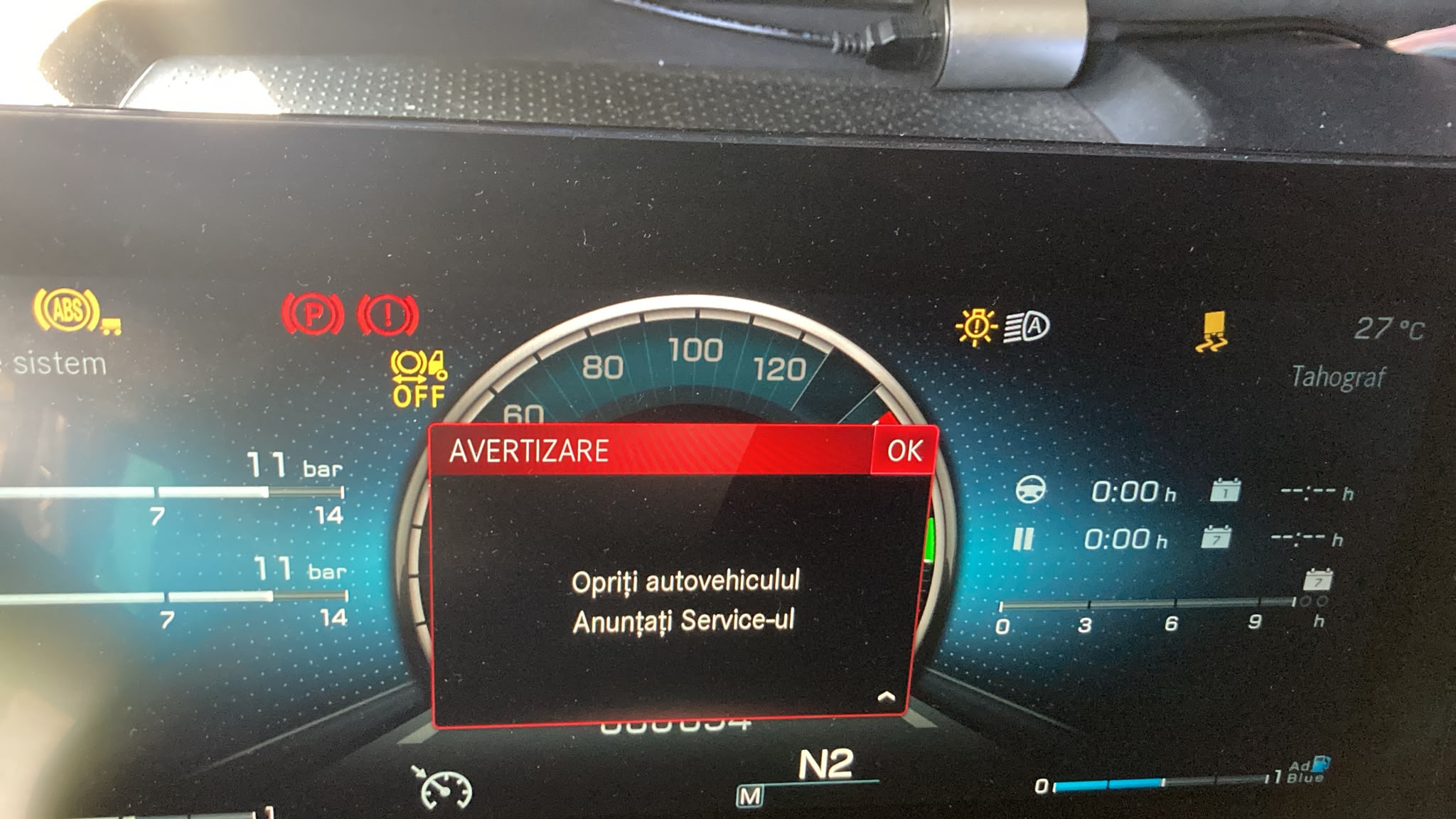
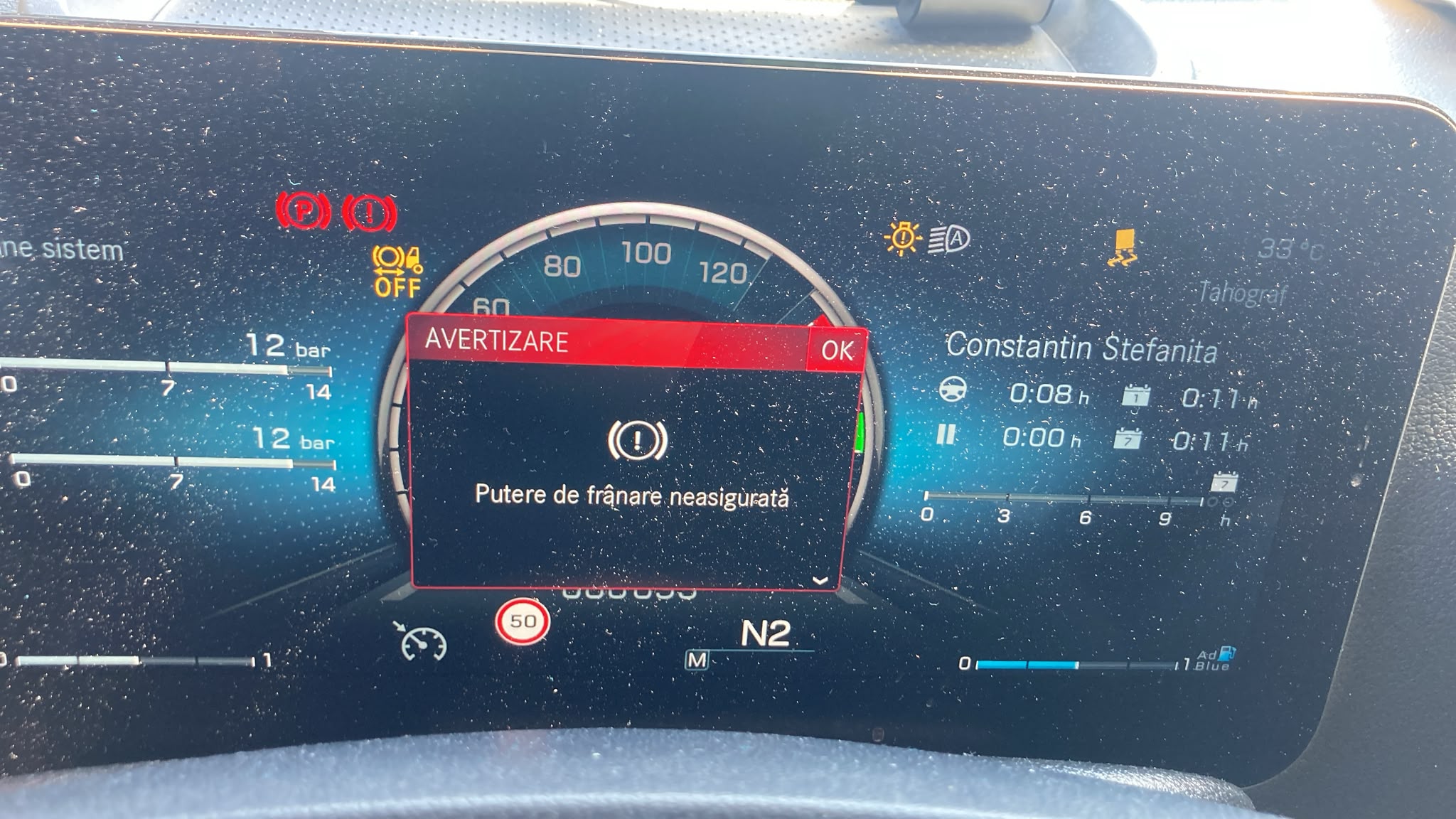
Understanding air-brake logic explains why this fault can appear suddenly. Truck and trailer air brakes are “fail-safe” by design: compressed air holds the brake released, and a spring applies the brake when air pressure is removed. That means a leak, a stuck valve, or a partial air loss in the system doesn’t disable braking — it applies it, sometimes only on one wheel, without any warning light necessarily coming on. A brake that’s meant to release fully can end up dragging because the air side of the system isn’t doing its job properly, and the driver only notices once the heat and smell show up.
Step-by-Step: How the Brake and Tyre Were Fixed
- Secure the site — hazard triangle placed, hi-vis worn, vehicle positioned safely on the hard shoulder before any work started.
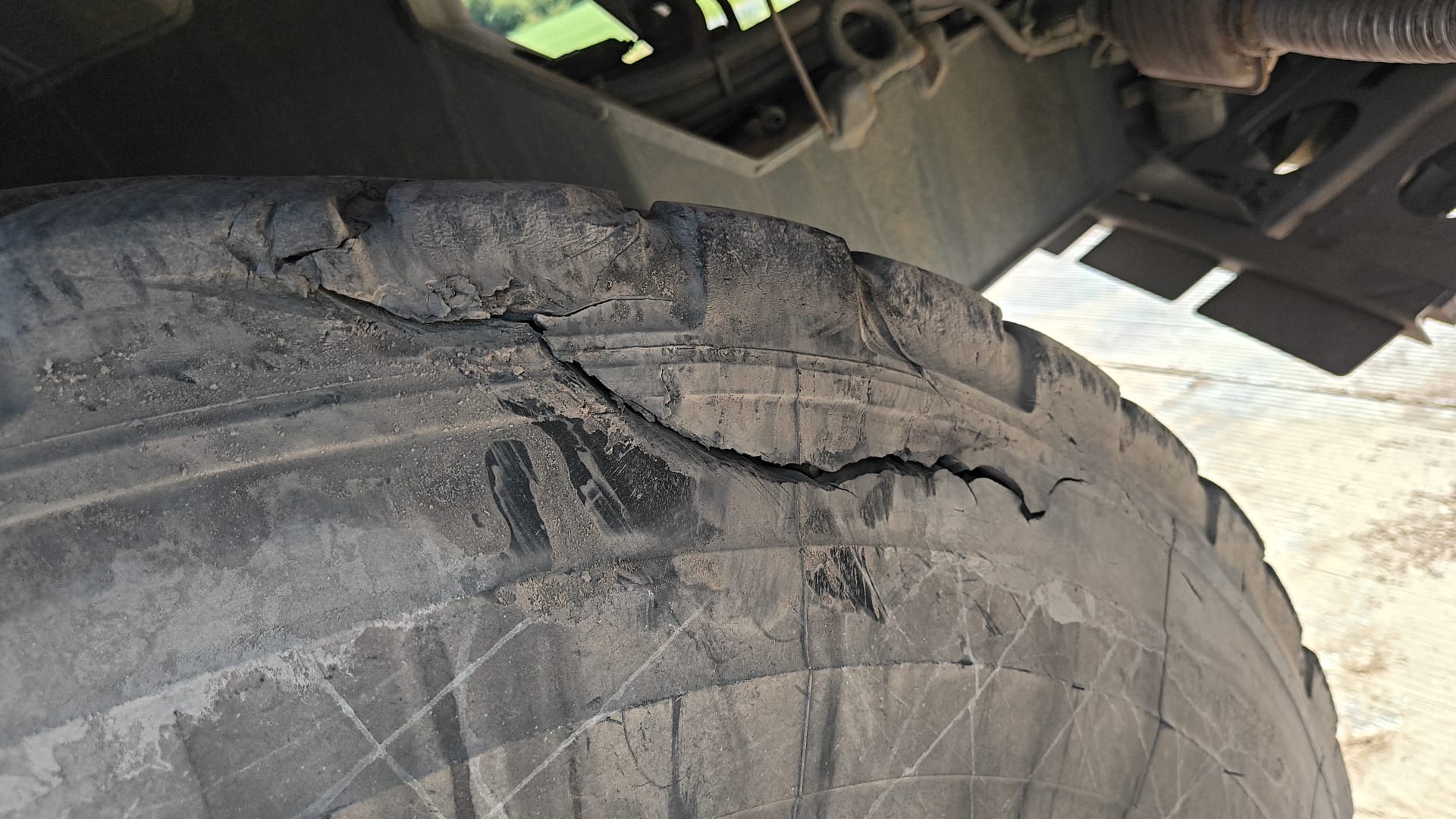
- Check the brake, hub, and tyre — technician confirmed the pad wasn’t releasing, checked hub temperature, and inspected the tyre carcass for the extent of heat damage.
- Free the seized brake mechanism — the sticking pad was released and the caliper inspected for the underlying cause before any tyre work began, since fitting a new tyre onto a still-dragging brake would only repeat the failure.
- Remove and replace the damaged tyre — the 385/65 R22.5 trailer tyre was swapped once the brake fault was resolved, torqued to spec in a star pattern.
- Test run and documentation — a short drive confirmed the wheel ran cool and true, torque was rechecked, and the fault plus repair were documented for the haulier’s records.
Fitting the tyre before fixing the brake would have meant a second callout within hours, because a new tyre sitting against the same dragging pad heats up exactly the same way. The order of operations here is what actually gets the lorry back on the road safely rather than just temporarily.
What’s the Full Timeline From Call to Departure?
| Time | Phase | Action |
|---|---|---|
| 09:10 | Call | Emergency call received at dispatch |
| 09:10–09:25 (15 min) | Diagnosis & dispatch | Phone diagnosis, response team assigned |
| 09:25–10:20 (55 min) | Response drive | Drive to the A9 near Hof |
| 10:20–10:40 (20 min) | On-site diagnosis | Checking brake, hub, tyre |
| 10:40–11:30 (50 min) | Repair | Tyre replacement 385/65 R22.5 + freeing the seized brake |
| 11:30–11:50 (20 min) | Verification | Test run, torque check, documentation |
| 11:50 | Done | Vehicle back in service |
Total time from call to vehicle ready: 2 hours 40 minutes (160 minutes). That figure covers both faults — most single-issue tyre callouts finish faster, but this one needed the brake resolved first, which added the extra diagnosis and labour step before the tyre could even be fitted properly.
What Did the Repair Cost?
| Item | Price (EUR, net) |
|---|---|
| Callout/response | 260 |
| On-site diagnosis (brake/wheel) | 150 |
| Tyre 385/65 R22.5 incl. fitting | 480 |
| On-site brake labour (freeing the seizure, inspection) | 220 |
| Old tyre disposal | 20 |
| TOTAL | 1130 |
All figures are net, excluding VAT. This total sits above a routine trailer tyre callout because it combines two repairs and the extra diagnostic time to confirm the brake was properly freed, not just masked. It remains far below the alternative: towing a laden semi-trailer typically runs 850–1,600 EUR depending on distance, and a day of downtime for a haulier costs roughly 800–1,200 EUR in lost freight capacity and driver time. Fixing both faults on the hard shoulder kept the vehicle earning instead of sitting on a low-loader.
Why Not Just Replace the Tyre and Move On?
Swapping the tyre without addressing the brake would have looked like a complete repair for a few hours at most, and then failed again, possibly at a worse moment.
- The root cause stays active — a dragging brake keeps generating heat regardless of how new the tyre is.
- A repeat failure often happens at higher speed — the second time, there may be no warning smell if the driver already associates the smell with “fixed.”
- Uneven braking is a safety risk on its own — a trailer axle that brakes unevenly can affect stability under hard braking, independent of tyre condition.
- Insurance and liability exposure — a documented brake fault that wasn’t repaired properly can complicate claims if a related incident happens later.
- It costs more in the long run — a second roadside call plus a second tyre is more expensive than fixing both issues in one visit.
What Other Brake-and-Tyre Cases Do We See Across Germany?
Sticking brakes on HGVs and trailers aren’t rare, and they show up in a few recurring patterns across the German motorway network.
- Trailers parked over a weekend in wet or cold weather — pads corrode slightly onto the disc surface and don’t release cleanly on the first braking cycles.
- Spring brake actuators failing gradually — a slow leak in the actuator diaphragm lets the spring apply partial force even when the driver expects full release.
- Mismatched maintenance between tractor and trailer — trailers swapped between operators sometimes carry a brake fault the current driver never had serviced.
- Long descents on routes through Franconia and Thuringia — repeated braking on hilly stretches near the A9 corridor can push an already marginal brake component past its limit.
- Guide pin seizure after high-mileage runs without lubrication service — common on older trailers running long-haul routes from Eastern Europe into Germany.
How Can Drivers and Fleets Prevent This?
- Check wheel temperature at every rest stop — a quick hand check (never on the disc itself) across all wheels on an axle catches an early drag before it becomes a fire risk.
- Log any pulling sensation immediately — don’t wait for the next scheduled stop if the lorry drifts to one side.
- Service brake calipers and guide pins on schedule, especially before winter and after any period the trailer sat unused.
- Keep a tyre pressure and tread routine — a tyre already near the end of its life has less margin to survive extra heat stress from a marginal brake.
- Brief drivers on the smell test — a hot-metal or burning-rubber smell is not something to “monitor for a few more kilometres.”
Trailer Tyres, Load, and Why Fleet Maintenance Matters
Trailer tyres like the 385/65 R22.5 fitted in this case are built for high load capacity at speed, and manufacturers such as Continental and Michelin design their heavy-duty ranges with heat dissipation in mind precisely because axle-level heat sources — brakes, bearings — are a known operating risk, not an edge case. A tyre in good condition with correct tread depth and pressure has some resilience against a short spike in heat, but it has no defence against a brake that keeps dragging for tens of kilometres.
Fleet maintenance schedules that treat brake and tyre checks as separate line items miss this interaction. A trailer due for a brake inspection but running acceptable tyre tread still needs the brake checked on schedule, because the tyre’s condition today says nothing about what a failing brake will do to it next week. Components such as those from Knorr-Bremse and Bosch, which supply braking and chassis systems widely used across European trailer fleets, are engineered with defined service intervals for exactly this reason — a caliper or actuator that’s overdue for inspection is the more likely origin of a heat-related tyre failure than the tyre itself.
Why Choose LKWHelp24 for This Kind of Callout?
A combined brake-and-tyre fault needs a technician who diagnoses both systems on-site rather than treating the tyre as the whole problem, and a dispatch desk that can get an accurate description of the fault from a driver in his own language in the first few minutes.
We run mobile response across Germany around the clock, with a partner network that carries common HGV tyre sizes and brake parts rather than sending a crew back for a second visit. Pricing is quoted transparently before work starts, in net figures the haulier can pass straight to their accounts. For an Eastern European driver stuck on a foreign motorway with a fault he can smell but struggles to describe, having dispatch confirm the symptoms in his own language is often what prevents a misdiagnosed callout.
Frequently Asked Questions
Can a stuck brake really destroy a tyre without a puncture?
Yes. Sustained heat from a dragging brake transfers into the hub and rim, cooking the tyre carcass from the inside until the structure fails, even though the tread and sidewall may show no visible cut or puncture.
How long does a combined brake-and-tyre repair take on the hard shoulder?
In this case, 2 hours 40 minutes from the 09:10 call to the vehicle being back in service at 11:50, covering diagnosis, freeing the brake, and fitting the trailer tyre. A single-fault tyre callout is usually faster.
What does it cost to fix a seized brake and replace a trailer tyre roadside?
This callout totalled 1,130 EUR net, covering the response, on-site diagnosis, the 385/65 R22.5 tyre with fitting, brake labour, and disposal of the old tyre. Costs vary with tyre size, location, and time of day.
Is it safe to keep driving if the lorry pulls to one side and smells hot?
No. Stop as soon as it’s safe, on the hard shoulder or nearest rest area, and call for a diagnosis. Continuing risks a sudden tyre failure at speed or a wheel fire from the overheated brake.
Can the brake be fixed at the roadside, or does it always need a workshop?
Many sticking brakes — corroded pads, seized guide pins — can be freed and inspected on-site. Failed spring brake actuators or valve faults sometimes need parts that require a workshop visit, which our technician will flag during diagnosis.
Why does dispatch ask so many questions before sending a crew?
Because a burning smell plus a pulling vehicle usually means a brake fault, not a simple flat, and the crew needs to bring tyre stock and brake tools together. Getting the description right on the phone avoids a second trip.
Summary
- Location: A9 near Hof, Upper Franconia, direction Berlin
- Vehicle: Articulated lorry (tractor-trailer), semi-trailer
- Fault: Seized brake overheated the hub, destroying the tyre carcass from the inside
- Tyre: 385/65 R22.5
- Call received: 09:10
- Response time to site: 55 minutes
- Total time, call to ready: 2 hours 40 minutes (160 minutes)
- Total cost: 1,130 EUR net
- Secondary damage avoided: repeat tyre failure and potential wheel fire from an unresolved brake fault
Need Roadside Help on the Autobahn?
If your lorry or trailer is pulling to one side, smells hot, or a tyre has failed without warning, call us before continuing to the next exit. We run mobile truck tyre service and full truck workshop support 24/7 across Germany, with towing available if the fault can’t be fixed on-site. Call +49 160 5753826 or visit www.lkwhelp24.com — we’re on call 24/7 across Germany, in your language.
Keywords: truck tyre service near me | trailer tyre blowout | brake fault truck tyre | mobile truck tyre service Germany | A9 Hof truck breakdown | HGV brake overheating | 385/65 R22.5 trailer tyre | roadside truck repair Germany
Related Articles
- Truck Tyre Blowout on the A6 near Amberg: DAF Overheating and Tyre Damage Fixed On-Site
- How We Got a DAF Artic Back on the Road in 2 Hours After a Tyre Blowout on the Autobahn Near Hof
- Winter Tyres for HGVs in Germany – Legal Requirements, Safety & Service
- Load Index for Truck and Commercial Vehicle Tyres
- Effective Solutions for CAN Bus Truck Repair – Fault Diagnosis and Mobile Help