Skip to content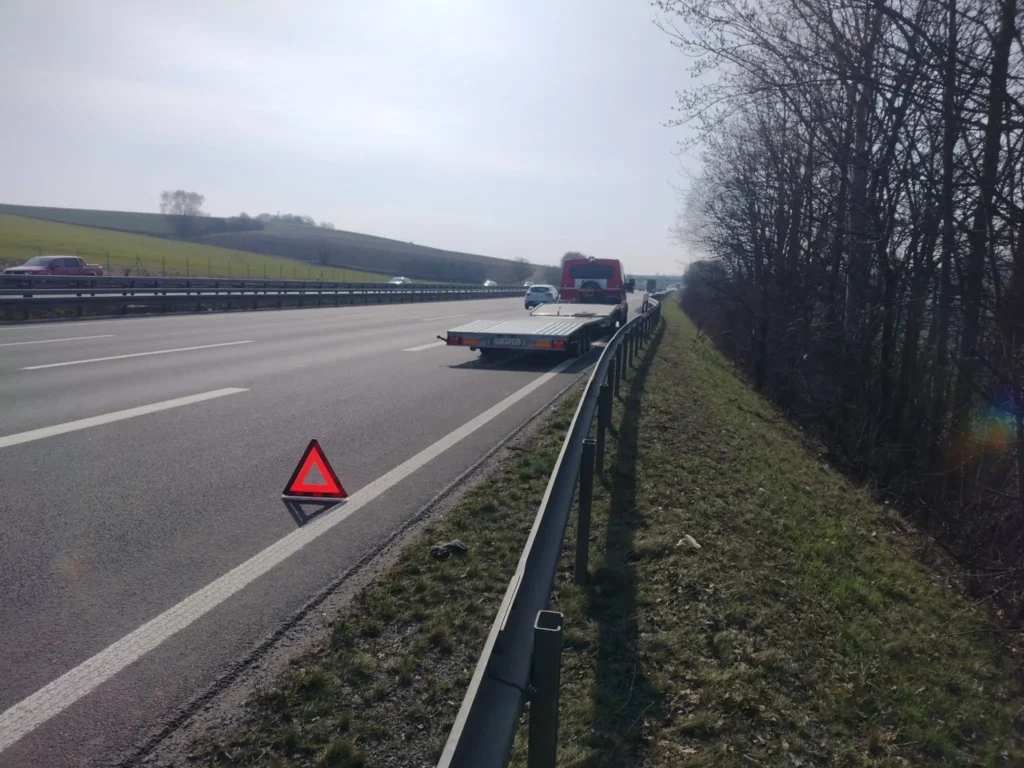
A heavy truck stranded on the hard shoulder is never a small problem. Even when the driver walks away without a scratch, the vehicle itself is sitting in one of the most dangerous places on a German motorway, and every minute it stays there is a minute of risk for the driver, for other road users, and for the vehicle itself. This case shows exactly how that risk is managed properly: a fast response, a heavy-duty flatbed recovery truck instead of a tow bar, and a handover at a workshop within roughly two hours of the first phone call.
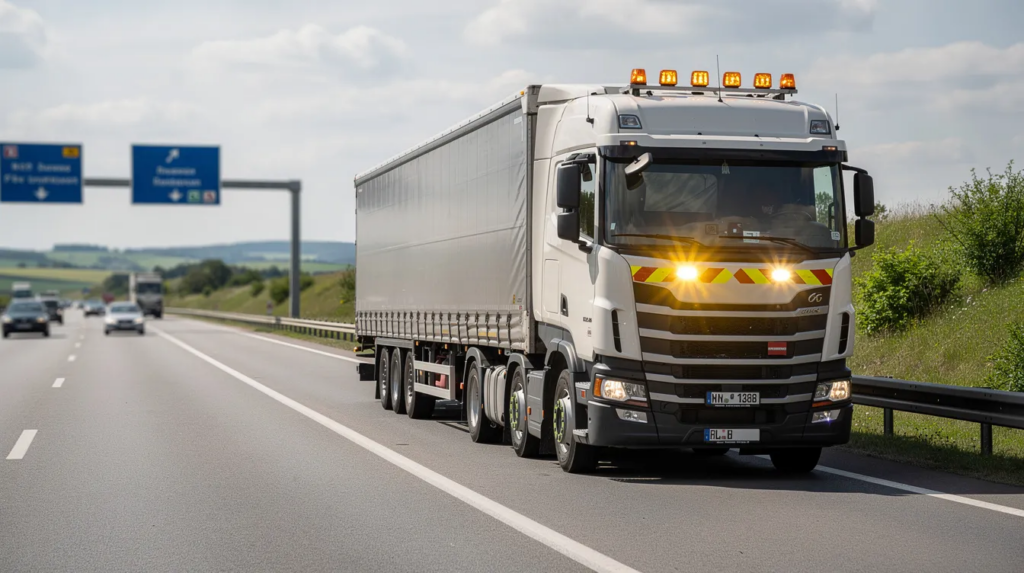
The breakdown happened on the A4 near Bautzen in Saxony, an east-west transit route that carries a steady stream of commercial traffic towards the Polish border. A heavy truck, a Mercedes Actros on a long-haul run, suffered an engine failure and came to a stop on the hard shoulder in daylight. It could not be driven and, more importantly for the recovery method, it could not even be rolled. That single detail decided everything about how the job had to be done.
This article walks through the full case: how the emergency call was handled, how LKWHelp24’s partner network dispatched a heavy-duty flatbed truck, what the crew found on-site, the exact recovery steps, the timeline, and the final cost breakdown. It also covers the broader picture of why professional truck recovery on German motorways is worth calling for immediately, rather than attempting a shortcut.
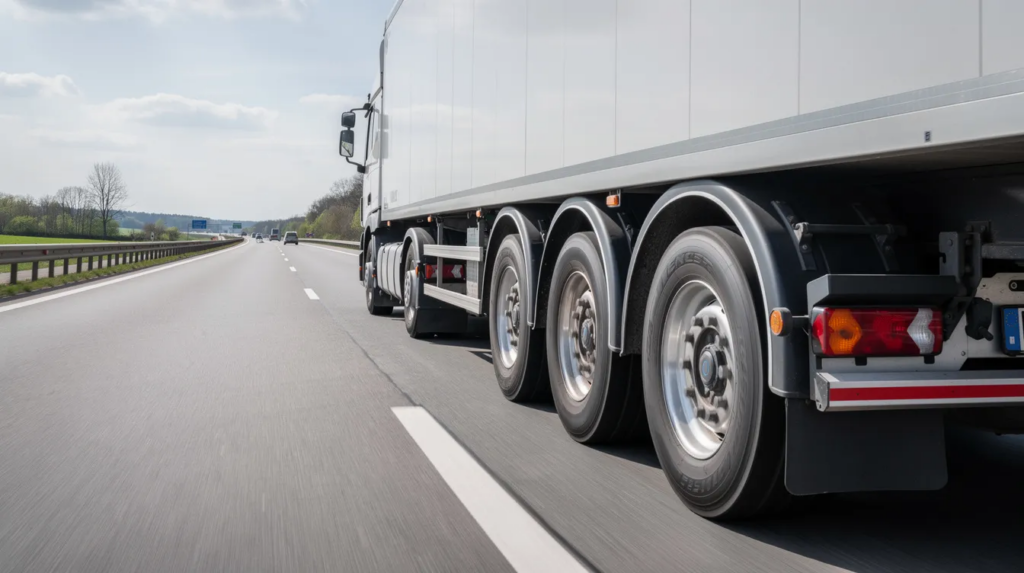
Roadside assistance and truck recovery by heavy-duty flatbed on the A4 near Bautzen — LKWHelp24 on site.
The emergency
The driver of the heavy truck was travelling on the A4 near Bautzen when the engine failed. There was no collision, no secondary damage, and no injury, but the truck rolled to a stop on the hard shoulder in the middle of the day, in full view of fast-moving traffic. A stationary heavy vehicle on a busy transit route is a hazard the moment it stops moving, and the driver did the right thing: they called for professional roadside assistance rather than attempting to diagnose or move the vehicle themselves, and avoided any improvised towing attempt.
Engine failures of this kind are particularly awkward from a recovery standpoint. Unlike a flat tyre or a dead battery, a failed engine often means the wheels will not turn freely, or the vehicle cannot be safely rolled even a short distance. That immediately rules out towing with a rigid bar or a rope, because both methods rely on the casualty vehicle being able to roll under its own wheels. The only realistic option was a heavy-duty flatbed truck with a winch, capable of lifting a vehicle of this weight clear off the road surface entirely.
How help was organised
LKWHelp24 operates a round-the-clock breakdown and recovery service across Germany, built on a network of local and cross-border partners who can reach almost any stretch of motorway within a reasonable window. For this case, the nearest suitable unit was a Polish roadside-assistance partner running a heavy-duty flatbed recovery truck, a vehicle purpose-built for exactly this kind of situation: trucks that cannot be towed conventionally.
The dispatch process followed a consistent pattern:
- The call was logged immediately, with location, vehicle type, and fault description confirmed.
- The nearest available heavy-duty flatbed unit was identified through the partner network rather than a single in-house fleet, which keeps response times low even in border regions.
- The crew was given an estimated time of arrival and briefed on the fault (engine failure, non-rolling vehicle) so they arrived with the right equipment already prepared.
- The driver was kept informed of progress while waiting on the hard shoulder.
This partner-network model is one of the reasons LKWHelp24 can offer genuine 24-hour recovery service coverage across the country, with a typical response time of 30 to 60 minutes, including stretches near international borders where a single regional operator might struggle to respond quickly.
The situation on-site
When the flatbed arrived on the A4 near Bautzen, the crew found the truck exactly where it had stopped: on the hard shoulder, engine dead, unable to roll. Daylight conditions helped visibility, but the road was still a live transit route with fast-moving lorries and cars passing within metres of the stranded vehicle. The hard shoulder is not a safe parking spot; it is a narrow strip of road surface designed for emergencies, and every second spent working there carries risk from passing traffic, particularly on a route as heavily used as the A4.
The non-rolling condition of the truck confirmed what the dispatch team had already anticipated: this was a flatbed job, not a tow-bar job. Attempting to tow a heavy vehicle that cannot roll freely risks damaging the drivetrain further, and in some cases can make the vehicle uncontrollable behind the tow vehicle. Loading it fully onto a flatbed avoids that risk entirely, since the truck’s wheels never need to turn during transport.
Safety on the hard shoulder came first, before any recovery work began.
Step by step: how the recovery was carried out
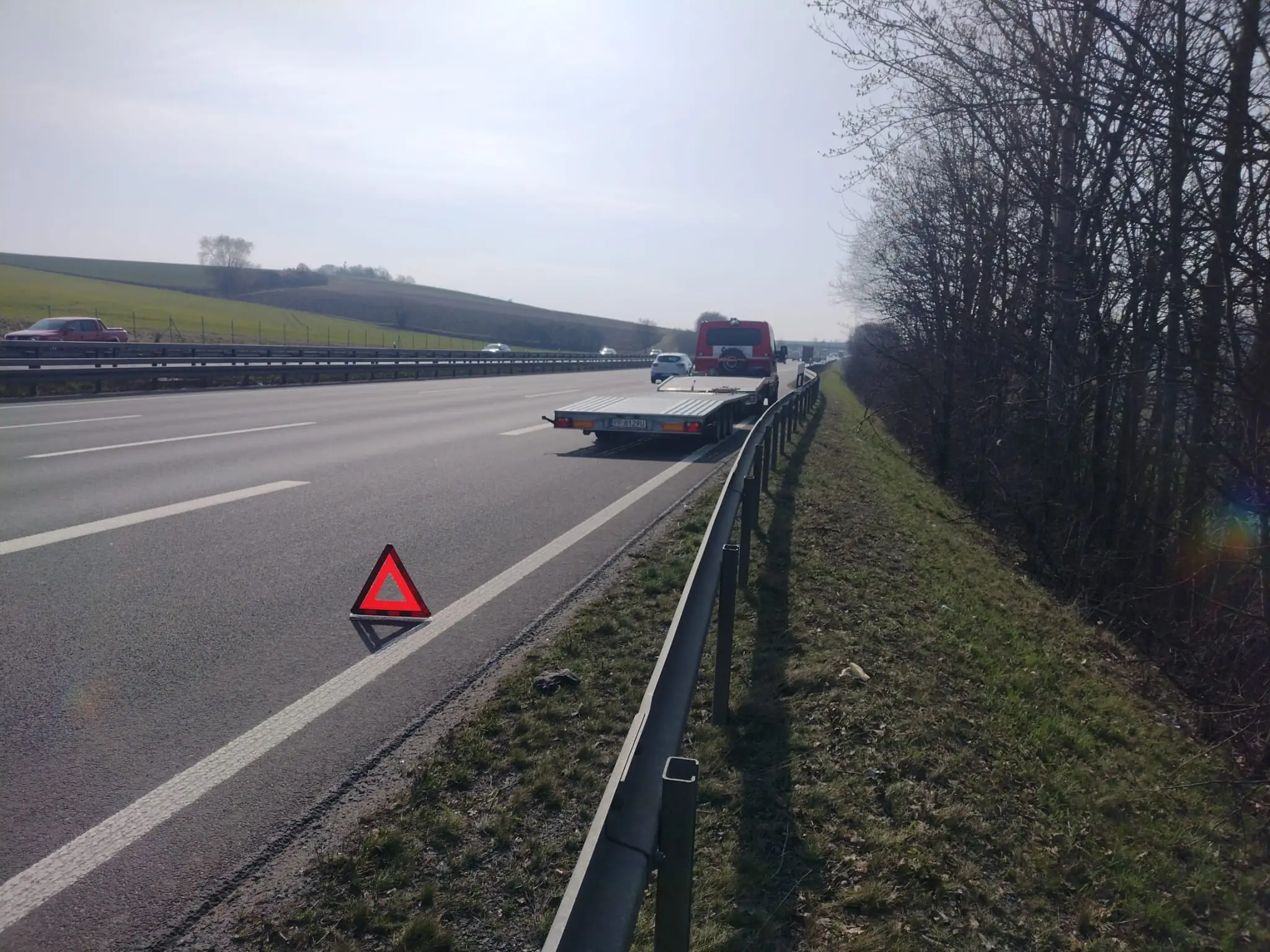
Step 1: secure the scene. Before any equipment was deployed, the crew placed a warning triangle to alert approaching traffic, giving both the recovery team and the stranded truck visible warning distance. On a motorway carrying this volume of traffic, this step is not optional. It is the first thing that happens on every job.
Step 2: position the flatbed. The heavy-duty flatbed truck was manoeuvred into position on the hard shoulder, angled to allow safe access to the rear loading ramp without the crew needing to step further into the live carriageway than necessary.
Step 3: winch the truck onto the bed. With the truck unable to roll under its own power, the crew used the transporter’s built-in winch to draw the vehicle up the ramp and onto the flatbed. A vehicle that is dead weight, with no engine assistance and no free-rolling wheels, has to be pulled rather than driven, which is exactly what a winch-equipped flatbed is for.
Step 4: strap down with lashing straps. Once the truck was fully on the bed, it was secured with heavy-duty lashing straps at multiple points to prevent any movement during transport. This step matters as much as the winching itself. An unsecured heavy vehicle on a moving flatbed is its own hazard on the autobahn.
Step 5: transport to the workshop and handover. With the truck secured, the flatbed left the A4 and transported the vehicle directly to the nearest suitable commercial-vehicle workshop, where it was handed over for diagnosis and repair of the engine fault.
No secondary damage occurred at any point in this sequence.
Full timeline
| Time | Phase | Action |
|---|---|---|
| 10:20 | Call received | Driver reports engine failure, truck stranded on A4 hard shoulder near Bautzen |
| 10:35 | Flatbed dispatched | Nearest partner unit (heavy-duty flatbed) assigned, ETA confirmed |
| 11:15 | On site | Flatbed arrives on the A4 near Bautzen, 55 minutes after the call |
| 11:30 | Winched onto bed | Truck winched from hard shoulder onto flatbed |
| 11:45 | Strapped & secured | Truck secured with lashing straps for transport |
| 12:20 | Handed over | Truck delivered and handed over at nearest commercial-vehicle workshop |
Total time from call to handover: around two hours. Time spent working on-site at the roadside: around 25 to 30 minutes, from arrival at 11:15 to departure shortly after 11:45. Keeping the on-site window this short is itself a safety measure, since less time on the hard shoulder means less exposure to passing traffic. The 55-minute response fell within LKWHelp24’s usual 30 to 60 minute window nationwide.
Cost breakdown
| Item | Price (EUR) |
|---|---|
| Call-out / 24-7 service (daytime job, from 290 EUR) | 290 |
| Recovery / winching onto bed with heavy-duty flatbed | 300 |
| Transport to commercial-vehicle workshop (loading + km) | 250 |
| Securing / straps / sundries | 50 |
| TOTAL (fixed price) | 890 |
The fixed price of 890 EUR was agreed with the driver before the flatbed even left for the scene, that is how LKWHelp24 always works: the price is confirmed up front, not estimated after arrival. The total reflects four distinct components rather than a single flat fee. The call-out charge covers the round-the-clock availability of the service and the dispatch of a suitable heavy-duty unit at short notice. The winching charge reflects the specialist equipment and time needed to load a non-rolling truck safely. Transport cost is distance-dependent, covering both the loading process and the kilometres driven to the workshop. The securing and sundries charge covers straps, warning equipment, and the incidental materials used to complete the job safely.
It is worth comparing this to the alternative many drivers consider: waiting for a generic towing service that only carries a tow bar. In this case, that alternative was never viable, because the truck could not roll. Attempting to force a tow-bar recovery on a non-rolling heavy vehicle typically causes additional drivetrain damage, turning a single repair bill into two. The flatbed truck costs somewhat more upfront in loading time, but it avoids that risk entirely and is very often the cheaper option once secondary damage is factored in.
Why professional recovery matters
A vehicle stopped on the hard shoulder of a busy autobahn is exposed to real danger every minute it remains there. Passing traffic on routes like the A4 regularly moves at speeds well above 100 km/h, and the hard shoulder offers only a narrow margin of separation. Drivers who attempt to inspect the fault themselves, or worse, attempt to move the vehicle without the right equipment, are taking on risk that a trained recovery crew is equipped to remove.
Self-recovery attempts on a non-rolling heavy truck carry specific dangers. Trying to push, roll, or improvise a tow on a vehicle with a failed engine can worsen the mechanical damage, and doing so on the hard shoulder of a motorway adds a serious personal-safety risk on top of the mechanical one. Professional recovery crews carry warning equipment, work to a defined safety sequence, and use the correct loading method for the vehicle’s condition, which is precisely what happened in this case: triangle first, safe positioning second, winch and straps third, transport last.
There is also a legal and organisational dimension. German motorway breakdown protocol expects a hazard to be marked and cleared promptly, and organisations such as the Autobahn GmbH des Bundes publish guidance on exactly this kind of roadside procedure. Following that established sequence, rather than an improvised one, is what keeps both the driver and the recovery crew safe.
Typical breakdown and recovery situations we handle
LKWHelp24’s partner network regularly deals with situations very similar to this one, including:
- Trucks with engine or drivetrain failure on the autobahn hard shoulder
- Heavy vehicles that cannot roll and require flatbed rather than tow-bar recovery
- Truck tyre repairs and blowouts, including via our emergency tyre service
- Breakdown recovery on transit routes near the Polish and Czech borders, including Saxony
- Vehicles that need direct transport to the nearest suitable commercial-vehicle workshop rather than a general garage
- Roadside assistance calls where the driver has no local contacts and needs a partner network to respond quickly
Prevention tips
While engine and drivetrain failures are not always foreseeable, a few habits reduce the risk of being caught out on a motorway hard shoulder:
- Keep up with scheduled servicing for the engine and drivetrain, particularly on trucks doing high motorway mileage
- Watch for early warning signs such as unusual noises, vibration, or dashboard alerts, and act on them before a long-distance run rather than after
- Carry a warning triangle and high-visibility vest in an accessible spot in the cab, not buried under cargo
- Save a 24-hour recovery service number in your phone before you need it, so there is no delay searching for help while stopped on a live carriageway
- If Mercedes-Benz trucks are part of your fleet, Mercedes-Benz Trucks publishes maintenance and service network information that is worth keeping on file, and Autobahn GmbH provides live traffic updates for routes like the A4
Heavy-duty flatbed vs tow bar: why the choice matters
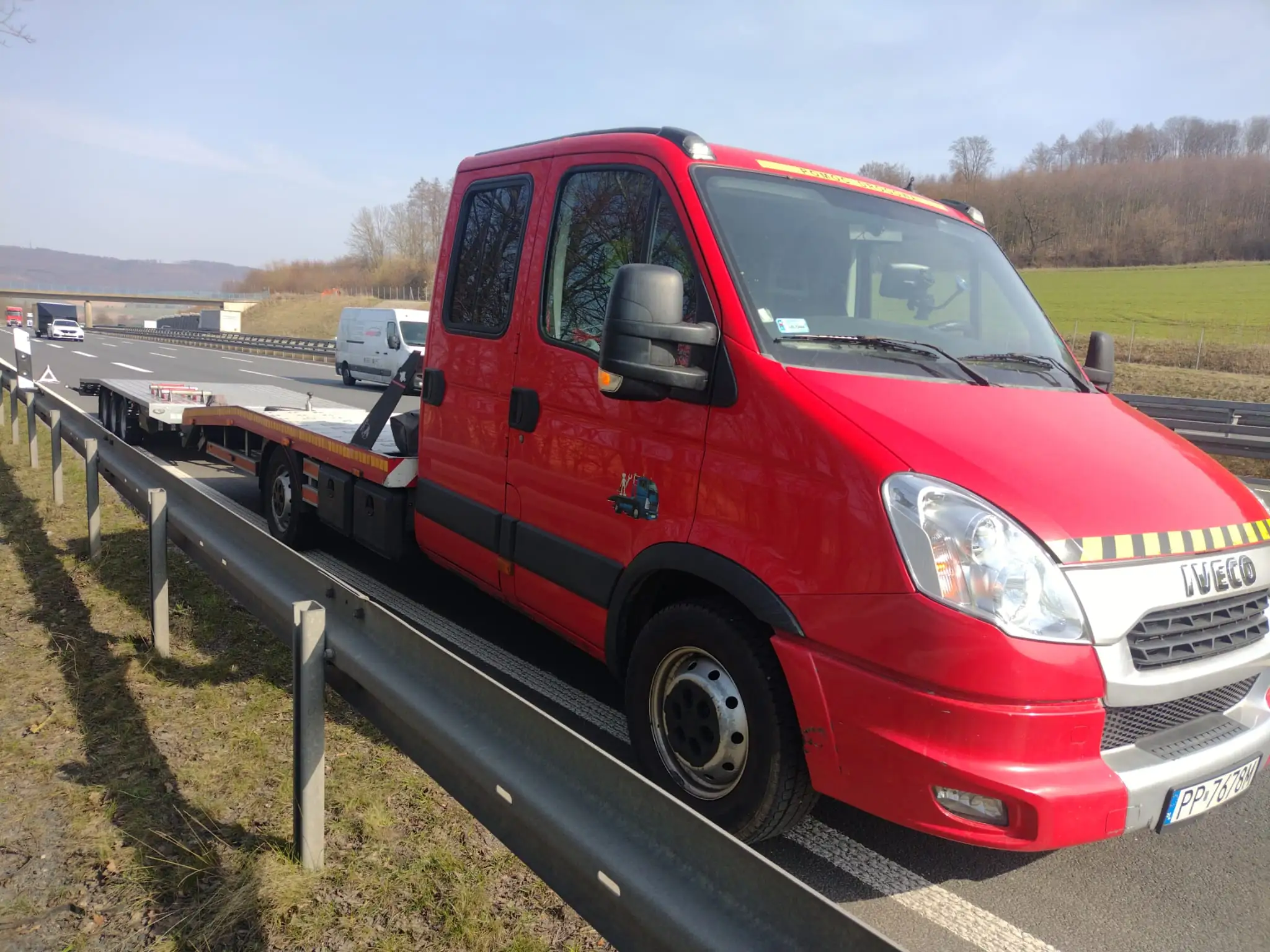
The distinction between a heavy-duty flatbed truck and a tow bar is not a matter of preference; it is dictated by the condition of the casualty vehicle. A tow bar depends on the vehicle being able to roll freely on its own wheels, with a functioning steering and braking system, since it is essentially being pulled along the road behind another vehicle. That works well for many straightforward roadside assistance autobahn calls, such as a flat battery or a blown tyre where the truck can still roll normally.
A flatbed recovery, by contrast, lifts the vehicle entirely off the road surface. This is the correct method whenever the wheels will not turn, the drivetrain is compromised, or there is any doubt about the vehicle’s ability to be safely pulled. In this case, the truck’s engine failure made rolling impossible, so a heavy-duty flatbed with a winch was the only appropriate choice from the outset. Choosing correctly between the two methods, and having the right equipment already on the way, is a core part of what separates a professional breakdown recovery service from a generic call-out.
Recovering heavy trucks: what makes it different
Recovering a heavy truck of 7.5 tonnes or more is not identical to recovering a passenger car or a light van. These vehicles carry far more weight, often have a longer wheelbase, and may be loaded with cargo that affects the vehicle’s balance during winching and transport. The flatbed and winch used need to be rated for the vehicle’s actual weight, and the lashing straps need to be positioned at points that will hold securely under motorway transport speeds and braking forces.
This case involved a long-haul tractor unit, but the same principle scales across the fleet: the recovery method has to match the vehicle class and its weight, not just the fault. That is one reason LKWHelp24 works through a partner network with a range of heavy-duty equipment, including flatbed recovery trucks like the one used here, rather than relying on a single type of recovery vehicle for every call.
Fleet service: why businesses rely on a dedicated recovery partner
For haulage companies running trucks on regular routes through Saxony and along east-west transit corridors like the A4, an unplanned breakdown is not just a mechanical problem but a scheduling and delivery problem. Having a single, reliable contact for commercial vehicle recovery in Saxony and beyond means fleet operators do not need to search for a suitable provider mid-crisis. A known partner that already understands flatbed versus tow-bar decisions, workshop handover procedures, and transparent pricing removes a layer of stress from an already stressful moment, and keeps the vehicle moving towards repair rather than sitting exposed on the hard shoulder for longer than necessary.
Why LKWHelp24
LKWHelp24 is built around a straightforward set of advantages for drivers and fleet operators facing a breakdown anywhere in Germany:
- Round-the-clock 24-hour recovery service availability, every day of the year
- Typical response time of 30 to 60 minutes nationwide
- A certified partner network covering the whole country, including border regions near Poland and the Czech Republic
- Correct equipment matched to the fault, including heavy-duty flatbed trucks for non-rolling vehicles like the truck in this case
- A fixed price confirmed before dispatch, with no surprises at handover
- Multilingual support (DE/EN/PL/RU) for drivers travelling across borders on transit routes
Summary
The truck broke down on the A4 near Bautzen, Saxony. The flatbed reached the scene 55 minutes after the call (10:20 call, 11:15 on site), within LKWHelp24’s usual 30 to 60 minute response window. The whole job, from call to handover at the workshop, took about two hours, with the crew on the roadside for only 25 to 30 minutes of that. The total cost was a fixed 890 EUR, agreed before dispatch, and there was no secondary damage to the vehicle.
Request emergency assistance now
If you are dealing with a truck breakdown on any German motorway right now, LKWHelp24 is available around the clock for trucks and heavy commercial vehicles from 7.5 tonnes.
WhatsApp / Call +49 160 5753826 | lkwhelp24.com
Available 24/7 across all of Germany.
You might also be interested in:
– Truck Towing Regensburg: Breakdown to Workshop
– Truck Recovery on the A7 near Kassel: Charge Air Hose Failure
– Heavy Haulage Breakdown on the A7 near Göttingen: Low-Loader Recovery
– Car Carrier Transport: Mercedes B-Class Recovery in Wiesbaden