Skip to content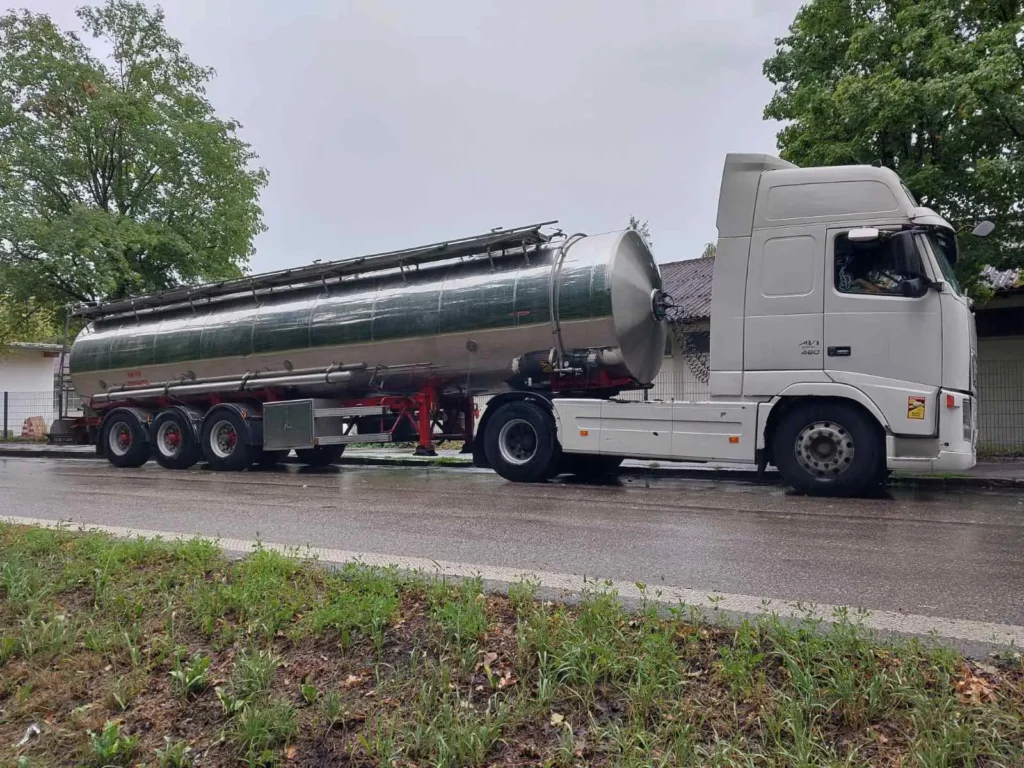
When a heavy tanker unit gives up on the road, the phone call that follows is rarely calm. A driver stuck near Munich with an unroadworthy Volvo FH 460 tractor unit and a stainless-steel tank trailer full of liquid cargo has one question, and it isn’t about the weather: how fast can someone get this vehicle off the hard shoulder and back to a workshop that can actually fix it. This case is about exactly that situation, and about what happens when the answer requires a low-loader, a border crossing, and a lot of coordination in a short window of time.
n
We handle breakdowns across the whole of Germany, 24 hours a day, seven days a week, and calls like this one arrive without warning. There is no scheduling a driveline failure. The unit was simply not fit to move under its own power, and every kilometre it needed to travel from Bavaria into Austria had to happen on a flatbed, not on the truck’s own wheels. That single fact changes the entire recovery plan — it is no longer a repair job, it becomes a logistics job, and logistics jobs live or die on how quickly the first phone call turns into a dispatched vehicle.
n
The value in a case like this isn’t drama. It’s the opposite: a driver whose cargo sat safely for a few hours while professionals worked out the fastest, safest, fully compliant way to get a 40-tonne-class combination out of Germany and into an Austrian workshop without a single extra mile of downtime than necessary.
n
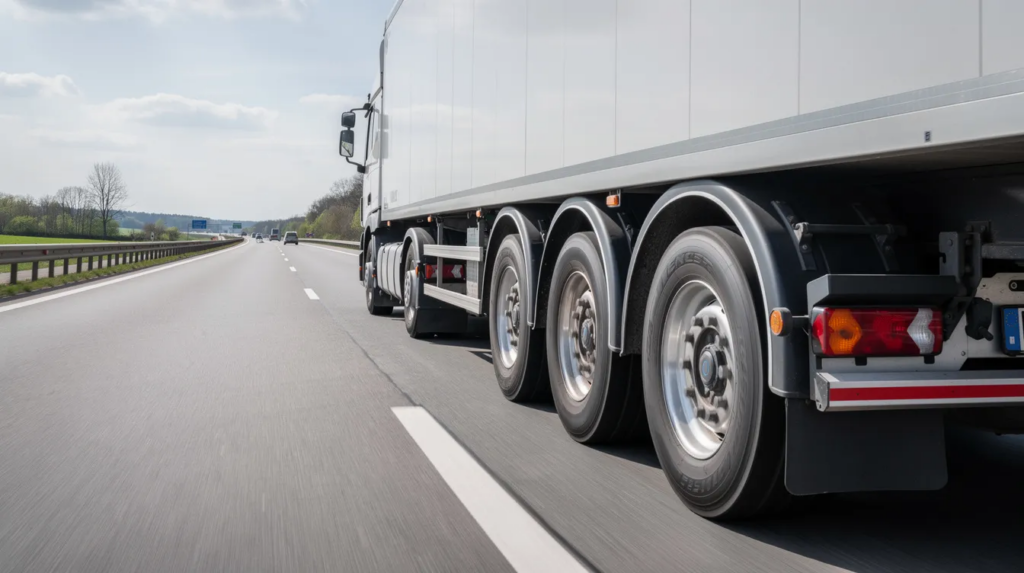
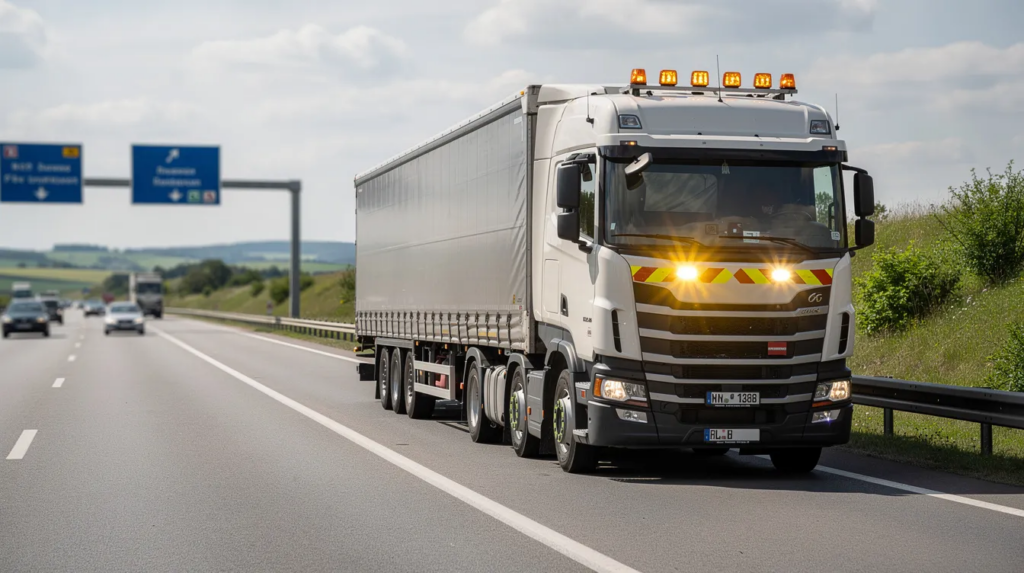
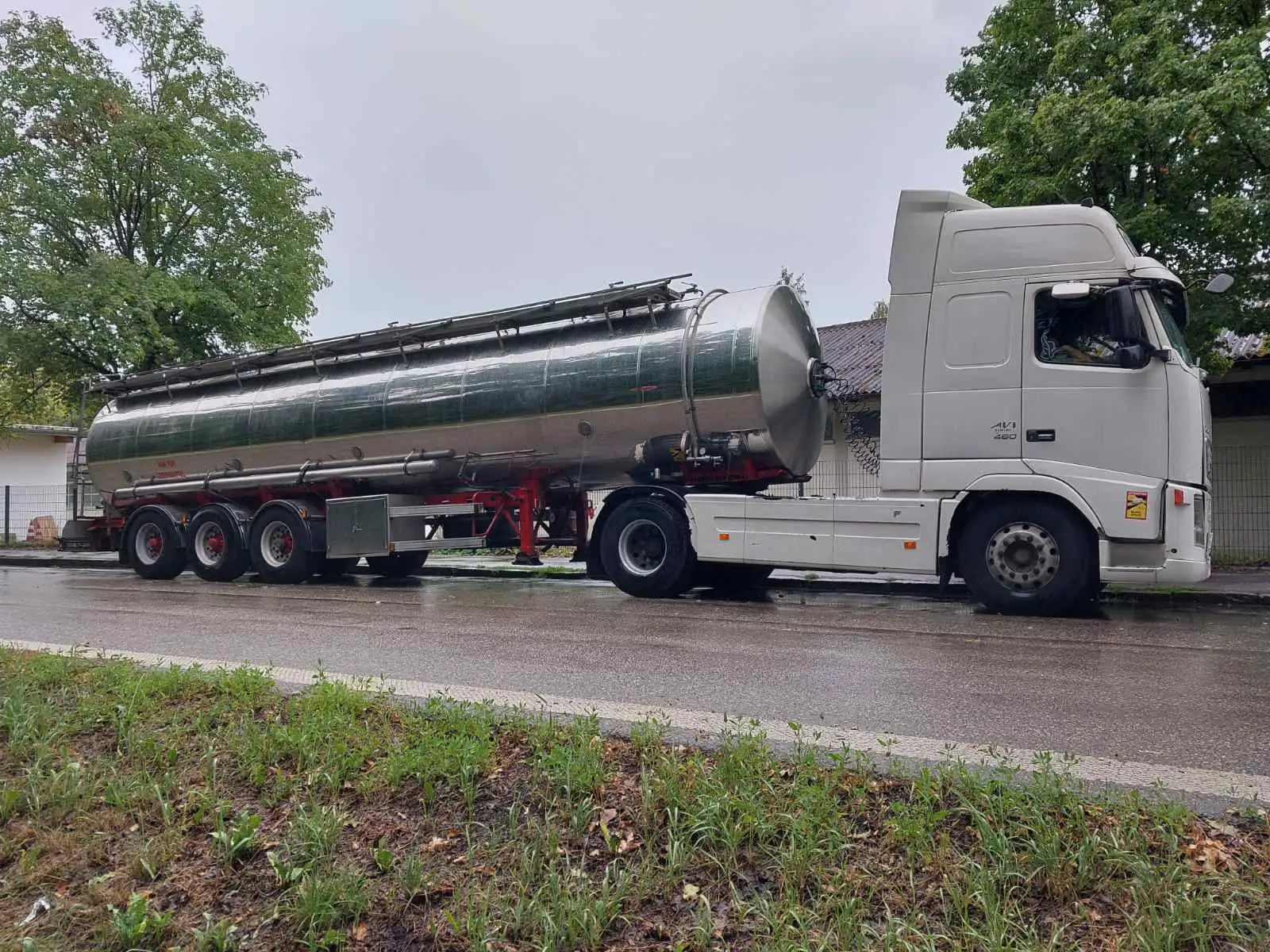
Volvo FH 460 tanker truck – transferred on a low-loader from Germany to Austria by LKWHelp24.
n
The Emergency
n
The breakdown happened in the Munich area of Bavaria — a heavily trafficked corridor for freight moving south towards the Austrian border, and one of the busiest stretches of autobahn in the country. The vehicle involved was a Volvo FH 460 tractor unit, white livery, paired with a stainless-steel tank semi-trailer used for food-grade or liquid transport. This is not a rig you leave sitting on a hard shoulder any longer than absolutely necessary; tank trailers carrying sensitive cargo need to keep moving, and every hour of exposure on the roadside adds risk and cost.
n
The diagnosis on site was blunt: a technical fault in the drivetrain meant the tractor unit could not move under its own power. No amount of roadside troubleshooting was going to change that outcome. Repairing a driveline fault of this kind at the roadside simply isn’t sensible — not for the vehicle, not for the driver, and not for the schedule. The only realistic option was to take the whole combination off the road and transport it, as a unit, on a low-loader to the operator’s home workshop across the border in Austria, in the direction of Salzburg and Tirol.
n
This is where a job stops being a standard call-out and becomes something closer to a small logistics operation: securing a semi low-loader with the correct permits for a long-distance haul, planning a route that crosses an international border, loading and lashing a multi-tonne combination correctly, and then driving it several hundred kilometres to a destination workshop — all while the clock is running and a driver is waiting.
n
How Help Was Organised
n
LKWHelp24 works through a nationwide network of vetted heavy-recovery and low-loader partners, which is precisely what makes a job like this possible on short notice. Within minutes of the initial call, our dispatch team was already working the problem from three angles at once.
n
● The call came in and was logged immediately, with vehicle type, trailer type, cargo, and exact breakdown location confirmed on the spot.
n● A semi low-loader partner with proven experience in cross-border, long-distance transport was identified and briefed — not just any flatbed, but a unit and crew qualified for international haulage with the correct permits already in place.
n● Route and permit questions for the Germany-to-Austria leg were resolved before the low-loader even left its yard, so there would be no delay once the vehicle was on the road.
n● The driver on scene was kept informed at every stage, so there was no uncertainty about when help would arrive or what would happen next.
n● Once loading was confirmed, the destination workshop in Austria was given a realistic arrival window so the handover could be planned properly.
n
This is the part of the job that a driver rarely sees, but it’s the part that decides whether a cross-border recovery takes nine hours or two days. Getting the right low-loader, with the right paperwork, moving on the right route, without a wasted trip or a permit hold-up, is a coordination exercise as much as a mechanical one.
n
The Situation On-Site
n
By the time the low-loader arrived, the priority was straightforward but not simple: get a heavy tractor-and-tank-trailer combination onto a flatbed safely, without damaging the vehicle, the trailer, or the cargo system, and without putting the loading crew or passing traffic at risk.
n
Loading a non-drivable tractor unit with a tank semi-trailer attached is not the same as loading a car or a light van. The combined weight runs into many tonnes, the trailer’s own axle group needs to be handled correctly during the loading ramp approach, and a tank body — even an empty or partially loaded one — shifts its centre of gravity differently to a box trailer. Get the approach angle wrong, or under-secure the axle group, and you risk damage that turns a straightforward transport into a much bigger insurance claim.
n
The crew worked through the loading procedure methodically: winching and guiding the disabled combination up the ramps under controlled power, positioning the unit correctly on the bed for weight distribution across the low-loader’s axles, and then applying a full set of load-rated lashing straps combined with dedicated axle securing points. This isn’t a job you rush. A combination this size, moving on public autobahns for several hundred kilometres including a border crossing, has to be secured to a standard that holds under braking, cornering, and the vibration of a long haul — not just for the first ten kilometres out of the breakdown site.
n
Step-by-Step: How the Recovery Was Carried Out
n
Step 1 — Diagnosis and decision. The technician on site confirmed the drivetrain fault meant the vehicle was not fit to be driven, ruling out any roadside repair and confirming a low-loader transport was the only viable option.
n
Step 2 — Low-loader dispatch and route planning. A semi low-loader partner qualified for long-distance, cross-border haulage was booked, with the Germany-to-Austria route and any permit requirements confirmed before departure.
n
Step 3 — Arrival and site assessment. On arrival, the crew assessed the combination’s weight distribution, trailer type, and ramp approach angle to plan a safe, damage-free loading sequence.
n
Step 4 — Loading and securing. The disabled tractor and tank trailer were winched onto the low-loader bed under controlled conditions, positioned for correct axle weight distribution, and secured using load-rated straps and dedicated axle anchor points.
n
Step 5 — Departure and long-distance transport. With the unit fully secured and checked, the low-loader departed towards the Austrian border, maintaining the agreed route and schedule.
n
Step 6 — Border crossing and onward transport. The combination crossed into Austria and continued towards the destination region near Salzburg and Tirol without incident.
n
Step 7 — Handover at destination workshop. The vehicle was delivered and handed over to the operator’s home workshop in Austria, completing the recovery.
n
Full Timeline
n
| Time | Phase | Action |
|---|---|---|
| 08:30 | Call received | Driver reports non-drivable Volvo FH 460 tanker combination near Munich |
| 08:45 | Dispatch | Semi low-loader partner booked; route and permits for DE→AT clarified |
| 11:45 | On site | Low-loader arrives at the breakdown location |
| 12:40 | Loading complete | Combination winched, positioned and fully secured on the low-loader |
| 13:00 | Departure | Transport sets off towards Austria |
| 16:40 | Border crossing | Unit crosses into Austria, continues towards destination region |
| 17:30 | Handover | Vehicle delivered to the operator’s workshop in Austria |
n
Total time: roughly 9 hours from first call to workshop handover, including the full cross-border long-distance transport. On-site loading and securing alone took around 55 minutes.
n
Cost Breakdown
n
| Item | Price (EUR) |
|---|---|
| Call-out & dispatch of semi low-loader | 250 |
| Loading, securing & recovery work on site | 320 |
| Long-distance transport, semi low-loader, Germany → Austria | 1,450 |
| TOTAL | 2,020 EUR |
n
The final figure reflects the distance covered, the cross-border permit requirements, and the standing time involved in a long-distance, international transport job. Pricing on jobs like this varies with distance, route complexity, waiting time, and whether special permits are needed for the specific combination being moved — a short domestic tow costs a fraction of what a cross-border low-loader transport of a multi-tonne combination will run to. Compared with the alternative — leaving a tank trailer stranded roadside for days while a mobile technician attempts repairs that may not even be possible on site, or arranging separate transport for tractor and trailer — a single coordinated low-loader transport, priced and scheduled up front, is almost always the more economical route once lost time, cargo risk, and secondary breakdown costs are factored in.
n
Why a Professional Service Is Essential
n
Attempting to manage a situation like this without an experienced heavy-recovery partner carries real risk, and not just to the vehicle.
n
-
n
- Incorrect loading technique can damage the chassis, axle group, or the tank body itself, turning a transport job into a costly repair bill on top of the original fault.
- Inadequate securing on a long-distance, motorway-speed haul risks load shift, which is dangerous for the transport crew, for other road users, and for the cargo system.
- Missing or incorrect permits for cross-border heavy transport can result in the vehicle being held at the border, adding hours or days of delay and additional cost.
- Using a low-loader partner without long-distance experience increases the chance of route errors, missed weight restrictions, or non-compliance with either country’s transport regulations.
- Underestimating combined weight during ramp loading can cause the low-loader itself to be damaged or overloaded, creating a second incident on top of the first.
n
n
n
n
n
n
A qualified operator brings the right equipment, the right paperwork, and the judgement to make loading and route decisions safely under time pressure — none of which can be improvised on the hard shoulder.
n
n
Typical Breakdown Situations We Handle
n
LKWHelp24’s partner network covers the full range of truck and commercial vehicle breakdowns across Germany, including:
n
-
n
- Driveline, gearbox and engine failures that leave a tractor unit non-drivable
- Tyre blowouts and tyre damage requiring mobile tyre service
- Battery failure and starting problems on the road or at rest stops
- Accident recovery and heavy recovery for trucks, buses and specialist trailers
- Cross-border low-loader transport for non-drivable units, as in this case
- Coach and passenger vehicle breakdown recovery, including mountain and difficult-access routes
- Horsebox and livestock transporter breakdowns requiring urgent attention
- Full vehicle transport and car-carrier logistics across Europe
n
n
n
n
n
n
n
n
n
Whatever the cause, our dispatch process is the same: assess the situation honestly, decide quickly whether repair or transport is the right call, and get a qualified partner moving without delay.
n
Prevention Tips for Drivers and Fleet Operators
n
-
n
- Schedule regular drivetrain and transmission inspections, particularly for high-mileage tractor units running international routes.
- Keep detailed service records so a roadside technician can quickly rule out known issues versus a new fault.
- Brief drivers on what information to gather immediately at breakdown — exact location, trailer type, cargo status, and access conditions — since this shortens dispatch time significantly.
- For cross-border operations, keep transport and cargo documentation up to date and easily accessible; this speeds up any permit checks if a low-loader transport becomes necessary.
- Build a relationship with a 24/7 breakdown and heavy-recovery provider before you need one — deciding who to call under pressure always costs time.
n
n
n
n
n
n
Fleet Maintenance and Long-Distance Transport Planning
n
For fleet operators running tank trailers, refrigerated units, or other specialist trailers across German and Austrian routes, a driveline failure like the one in this case is a reminder that maintenance planning has to account for worst-case scenarios, not just routine servicing. A single non-drivable combination on a busy corridor near Munich doesn’t just cost the transport fee — it costs schedule disruption, potential cargo delay, and driver downtime. Building a maintenance calendar around manufacturer service intervals, tracking driveline wear indicators, and keeping a standing relationship with a heavy-recovery and low-loader network reduces both the frequency and the cost impact of incidents like this one.
n
It’s also worth planning routes with recovery access in mind. Corridors like the Munich–Salzburg–Tirol axis carry heavy freight traffic in both directions, and knowing in advance which stretches have realistic low-loader access and which don’t can shape decisions on where to schedule fuel and rest stops, and where a breakdown would be hardest to resolve quickly.
n
LKWHelp24: Your Truck Emergency Partner
n
LKWHelp24 exists for exactly this kind of situation — the ones that don’t fit a standard roadside fix and need a coordinated, professional response instead.
n
-
n
- Available 24/7, across the whole of Germany, with cross-border capability into neighbouring countries when a job requires it, as this case shows.
- A certified network of recovery, towing, and low-loader partners, vetted for the specific job type — from a simple tyre change to a full cross-border heavy transport.
- Transparent, upfront pricing, with cost breakdowns like the one above so drivers and fleet managers know exactly what they’re paying for.
- Multilingual dispatch and support, built for an industry where drivers, fleet operators, and destination workshops rarely share one language.
- Fast decision-making, because every hour a truck sits broken down on a major route adds cost, risk, and disruption for everyone involved.
n
n
n
n
n
n
Summary
n
-
n
- Vehicle: Volvo FH 460 tractor unit with stainless-steel tank semi-trailer
- Location: Munich area, Bavaria, Germany
- Fault: Drivetrain failure — vehicle not roadworthy
- Solution: Cross-border low-loader transport, Germany to Austria (Salzburg/Tirol region)
- Response time: Low-loader on site 3 hours 15 minutes after the call
- Loading and securing time: ~55 minutes
- Total time, call to workshop handover: ~9 hours
- Total cost: 2,020 EUR
- Secondary damage: None
n
n
n
n
n
n
n
n
n
n
Request Emergency Assistance Now
n
If your truck, tractor unit, or trailer combination has broken down anywhere in Germany, or needs cross-border low-loader transport, call +49 160 5753826 or visit lkwhelp24.com. Available 24/7 across all of Germany.
n
n
You might also be interested in
n
-
n
- Heavy Recovery on the A8 Near Stuttgart: Scania and Car Transporter Combination Rescue
- Coach Transport on a Low-Loader: Mountain Route Recovery with LKWHelp24
- Horsebox Breakdown on the A8 Near Munich: Recovery Case
- Auto Transport Across Europe: Vehicle Logistics and Car Carrier Job Report
n
n
n
n
n
n
Sources: Volvo Trucks Germany · ADAC Truck Breakdown Assistance