Effective Solutions for CAN Bus Truck Repair – Fault Diagnosis and Mobile Help
This article is aimed at truck drivers, fleet operators, and workshops looking for fast solutions to CAN bus problems. You’ll learn how to recognise faults, fix them on the spot, and avoid future breakdowns. A modern truck has long stopped being a purely mechanical vehicle. Electronics, control units, and networked systems now handle central functions — from the engine and transmission to the braking system and driver-assistance features. The CAN bus is a communication system used in vehicles to connect the various control units and allow them to exchange data. When communication over the CAN bus is interrupted, the entire vehicle often grinds to a halt. Problems in the CAN bus can cause the vehicle’s control units to receive faulty data or lose the connection entirely. In this article you’ll learn how CAN bus problems in trucks are diagnosed and professionally repaired on site. That’s exactly the kind of case we dealt with recently.
CAN bus failure in a truck: fast diagnosis and a successful on-site repair
Emergency call from a customer: vehicle undrivable
A regular customer called our 24-hour hotline and reported that several error messages had suddenly appeared on his truck’s dashboard:
ABS fault (anti-lock braking system)
Engine warning light
Transmission fault — all at once
Shortly afterwards, the vehicle would no longer start. A faulty CAN bus can trigger numerous warning lights on the vehicle’s dashboard. The initial phone diagnosis pointed to a data transmission problem. When several control units fail at the same time, or report “no connection”, it raises a strong suspicion: a fault in the CAN bus system, with the corresponding errors logged in the system memory. We immediately dispatched a service team with a professional diagnostic tester and measuring equipment to the location.
What is the CAN bus and why is it so important?
Developed by Bosch, the CAN bus (Controller Area Network) is the central communication system in a vehicle. All the important control units — the engine control unit, transmission control unit, ABS, EBS (electronic braking system), exhaust after-treatment, dashboard — are connected to each other via two twisted wires: CAN-High and CAN-Low.
Data packets are continuously transmitted over these wires. The CAN bus system is critical to the flawless operation of the vehicle’s various systems, including the engine and brakes. If this connection is interrupted, individual control units can no longer send or receive information. The result is a CAN bus fault:
Several error messages at once
Limp-home programs
Engine refuses to start
Complete failure of individual systems
Common CAN bus problems in trucks arise from physical defects such as cable damage, corrosion, or incorrect resistance values. In which systems do CAN bus problems occur most often? Engine management, braking systems, and the dashboard are especially affected. Typical problems are communication errors and individual control units failing to respond correctly.
Important note: A CAN fault is not a “minor electrical issue”. It can paralyse the entire operation. That’s why it’s essential to carefully check the system in order to quickly identify and fix the sources of the fault.
CAN bus failure in a truck fast diagnosis and successful CAN bus truck repair on site
Work on site: a systematic search for the fault
Overview
After arriving at the customer’s location, we began a structured diagnosis. When checking control units, it’s crucial not to swap parts “on a hunch” but to proceed systematically. Electrical measurements should always be carried out before replacing any control units. This is often where difficulties arise, especially when the fault needs to be pinpointed within the wiring harness or when a control unit has an internal defect. After the usual steps, it’s advisable to check and clean the earth connections, since this can often resolve CAN bus communication problems.
Diagnostic steps
Reading out all control unitsUsing our professional diagnostic system, we first tried to read data from all the important control units. The result was unambiguous:
Several modules were “unreachable”
Others reported “no connection to control unit X-Y” — each of the affected control units had a fault code stored, pointing to communication problems or a complete failure. Diagnostic trouble codes are generated by the vehicle’s control units as soon as a problem is detected. These codes are essential for troubleshooting and diagnostics in commercial vehicles. This pattern confirmed the suspicion of a fault in the CAN network.
Measuring bus resistanceIn the next step, we checked the physical layer. The correct overall resistance of a healthy CAN bus is around 60 ohms (two 120-ohm terminating resistors in parallel). Our measurement showed a value significantly out of range. This was a clear sign of a break or short circuit in the line. Typical wiring problems are line breaks, short circuits to earth or positive, and swapped CAN-High and CAN-Low lines. In such cases there’s no guarantee that the affected control units or sensors can function or communicate correctly. In practice, this means:
The line has a break
Short circuit to earth or positive
Faulty terminating resistor
Damaged control unit with an internal short circuit
It’s worth noting that with faulty CAN bus communication, diagnostic trouble codes often can’t be cleared properly, even once the root cause has already been fixed.
Root cause analysis: a cable break near the chassis frame
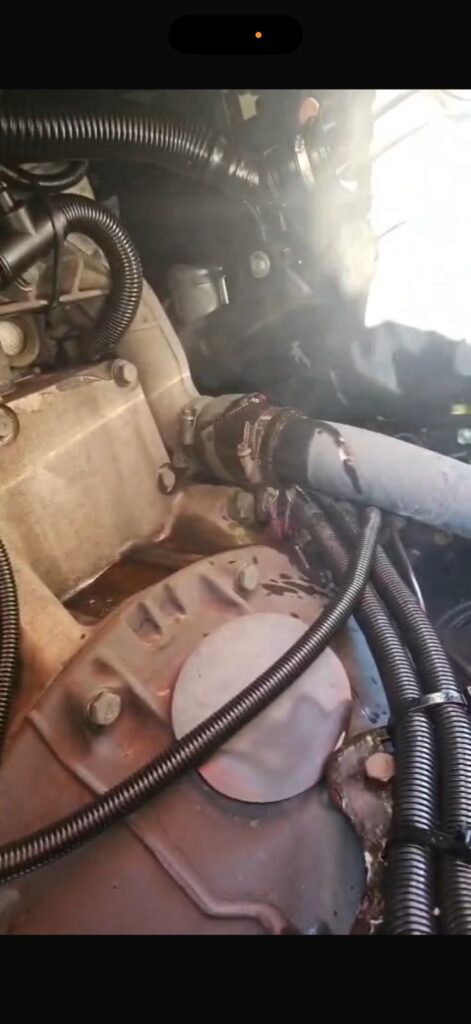
By disconnecting individual control units one at a time, we were able to narrow down the search area for the fault. This procedure requires experience, since incorrect steps can create additional faults. After careful inspection, it turned out that in the area of the vehicle’s chassis frame, the 95-X type wiring harness had been mechanically damaged. It’s likely that, over time, vibration and friction wore through the insulation, which ultimately led to a short circuit in the CAN wire pair.
The problem with this kind of damage is that there’s often nothing visible from the outside. Without targeted measurements, the fault can remain undetected for a long time. In addition, some fault codes are linked to other systems or control units, so the problems there must be fixed first before the fault code can be cleared.
Expert CAN bus repair on site
Repair steps
After locating the source of the fault, our technicians:
Exposed the damaged section of cable
Professionally replaced the faulty wires
Applied new protective insulation and corrugated conduit
Secured the wiring harness with vibration protection
Control units are often restored directly on the vehicle, which speeds up both diagnosis and repair.
Benefits of repair
We offer you fast, precise on-site help with CAN bus problems and complex electronic faults.
Repairing control units is usually considerably cheaper than replacing them with new parts.
This makes repair often the more economical choice, saving both time and money.
The bus resistance was then measured again — this time it was within the normal range. A follow-up system scan showed: all control units were reachable again. No communication errors were left in memory. After clearing the fault memory, the truck started without any problems.
Functional test and final check
A repair is only considered complete once it’s been verified under real-world conditions. That’s why we:
Carried out a full system diagnosis
Checked the real-time data
Carried out a test drive with a simulated load after the repair, to ensure all safety standards were met
Checked the voltage supply under operating conditions
The final check confirmed that all systems were working flawlessly. It’s worth noting that software faults in control units can prevent fault codes from being cleared, which may require an update or reprogramming. The customer was able to continue his journey without a workshop visit.
Why CAN faults are especially critical
A defective component is, in many cases, easy to identify. A CAN fault, by contrast, can behave like “electronic dominoes”. A single short circuit can paralyse several systems at once.
Typical symptoms:
Sporadic failures
Several warning lights at once
Communication errors in the fault memory
Unexplained limp-home states
In such cases, a professional diagnosis should always be carried out to pinpoint the cause and avoid unnecessary repairs. Diagnostic trouble codes are essential here for finding the root causes of vehicle problems. Without professional measuring equipment and experience, one control unit after another is often replaced without justification — at high cost and with no guarantee of success.
Mobile diagnostics instead of expensive towing
Mobile service offerings
In this case, thanks to our mobile diagnostic equipment, a costly tow was avoided altogether. Mobile repair services for heavy commercial vehicles such as trucks and buses provide on-site support for a wide range of technical problems.
More than 50% of breakdowns can be fixed right on the spot if the cause is correctly diagnosed.
Mobile workshops are equipped with all the necessary tools, diagnostic computers, and electronic repair equipment.
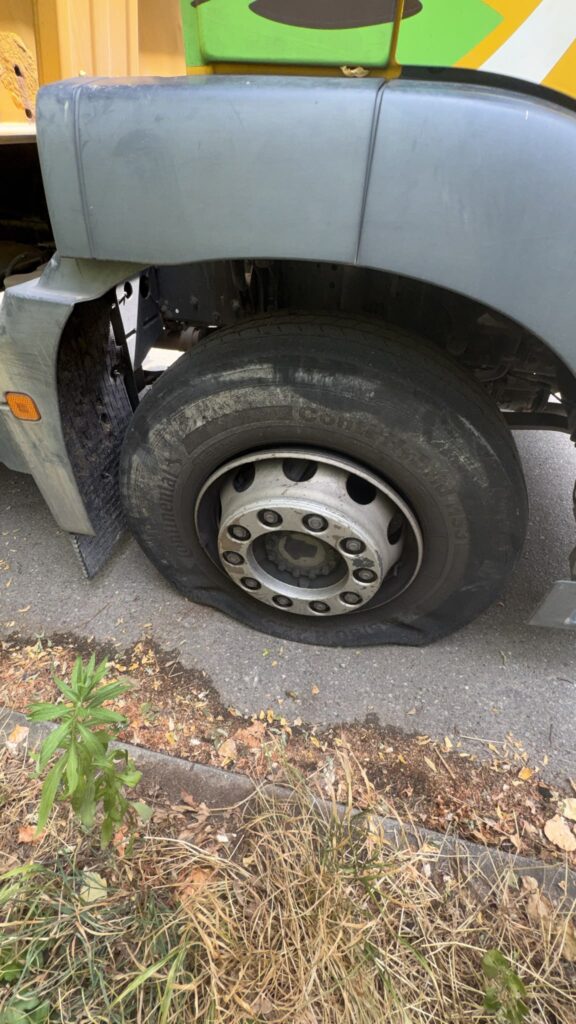
Minor repairs such as wheel changes, coolant hose replacement, or brake repairs can be carried out directly at the location.
This often makes towing unnecessary and minimises downtime. Mobile breakdown assistance for trucks and buses is available around the clock throughout Germany.
Common on-site problems
The most common problems with trucks include:
Tyre damage
Engine failures
Electrical system faults
Repairing control units for trucks and buses is a cost-effective solution that avoids buying expensive new parts. Repairing control units also helps reduce electronic waste and is more environmentally friendly. Professional repair services offer fast availability of control units, which often have long lead times from the manufacturer. Repair also allows the existing coding to be preserved, making integration into the vehicle easier.
For commercial vehicles, every hour of downtime counts. Downtime means:
Contractual penalties
Delivery delays
Production disruptions
Loss of reputation
Our philosophy is: repair on site whenever technically possible. If a driver has starting problems, they should first check the battery and electrical connections. In the event of a breakdown, it’s advisable to contact the mobile service first, before calling out a tow truck.
Prevention: how to avoid CAN bus damage
This kind of damage can’t be avoided entirely, but the risk can be significantly reduced by:
Regular visual inspection of wiring harnesses, especially on models such as the MAN TGX, where CAN bus problems tend to occur more often.
Checking for chafing points and inspecting key control units such as the exhaust after-treatment module, the transmission control unit, and the driving/safety control units.
Professional retrofitting of additional devices and careful inspection after repairs, to ensure all safety regulations are met.
Protection against moisture and corrosion, especially in trailer ABS systems such as the WABCO Vario C.
Additional tip: with starting problems, drivers should always check the battery and electrical connections first. The risk of mechanical cable damage is significantly higher on older vehicles or those used at construction sites.
Outlook: the evolution of CAN bus technology and mobile repair
CAN bus technology is advancing rapidly, opening up new possibilities for mobile repairs to trucks, buses, and trailers. For a modern commercial vehicle fleet, reliable communication between control units is essential — whether that’s the engine control unit, the ABS system, or the transmission control unit. When the CAN bus stops functioning, or a control unit can’t establish a connection with the engine control unit, the entire vehicle often grinds to a halt. This is exactly where our mobile solutions come in.
We’ve equipped our mobile workshops with the latest diagnostic technology and specialist tools to solve even the most complex problems directly on site. Whether it’s Mercedes-Benz, Iveco, DAF, Volvo, or other brands — we offer fast, efficient repairs for the widest range of vehicle types. Our experienced technicians instantly recognise typical faults such as a broken CAN bus line, a defective control unit, or communication problems within the bus system, and can intervene in a targeted way.
The future of mobile repair lies in intelligent interaction: thanks to advanced diagnostic methods and digital connectivity, we can quickly read out, analyse, and fix control unit faults. The integration of new technologies such as the Internet of Things and artificial intelligence will speed up diagnosis and repair even further. This saves not only time but also money — since expensive towing is often no longer necessary.
We offer you a wide range of mobile repair solutions — from free diagnostics to individually tailored repairs. Our service is available around the clock, so your truck, bus, or trailer is back in working order quickly and you can continue your journey without delay. Communicating with international drivers is no problem for us either: our team speaks several languages and is always ready to help.
If you’re having problems with the CAN bus, the engine control unit, or other electronic systems, don’t hesitate to contact us. We’ll help you find and fix the fault — whether it’s a Mercedes, Iveco, DAF, or Volvo. Trust our experience and our mobile workshop to get your vehicle back on the road safely and reliably. Contact us today for fast diagnostics and tailored solutions — we’re there whenever the technology fails, the control unit won’t communicate, or the vehicle won’t start. LKW Help 24 is your partner for mobile repair and reliable help with all CAN bus and control unit problems affecting your vehicle.
Conclusion: experience and technology make all the difference
The case described here clearly shows how important systematic troubleshooting and in-depth knowledge of vehicle electronics really are. A CAN bus fault may look complex at first glance, but with the right diagnostic strategy it can be effectively narrowed down and fixed. Thanks to modern measuring equipment, a structured approach, and years of experience, the truck was fully restored right at the scene.
For our customers, this means above all one thing: minimal downtime and maximum operational reliability. If your commercial vehicle shows unexplained faults or several systems fail at the same time, disrupted CAN bus communication could be the cause. In such cases, fast, professional action is crucial. We’re ready — anytime, anywhere.
 Skip to content