Skip to content
 In January 2024, a Polish truck driver found himself in a difficult spot on the A2 autobahn near Hanover with a fully loaded 40-tonne combination. The curtainside trailer was carrying FMCG goods destined for timely delivery to a distribution centre in the Ruhr region. With limited German, no contact with his dispatcher, and a looming delivery deadline, the driver searched online for “truck breakdown help in Germany” and, after weighing a handful of options, turned to LKW Help 24.
This case study walks through the entire vehicle towing and recovery process — from the first emergency call to handover at the repair shop. It shows how LKW Help 24 organised a safe recovery, minimised downtime for a commercial vehicle, and provided multilingual support in a high-stress situation. For fleet managers, logistics coordinators, and international truck drivers operating in Germany, this is a practical, step-by-step example of what professional heavy-vehicle recovery looks like when things go wrong far from home.
The breakdown and the risks on a busy German autobahn
The breakdown occurred at around 3:40 a.m. under difficult conditions that amplified every risk associated with an immobilised heavy vehicle on a major transit route.
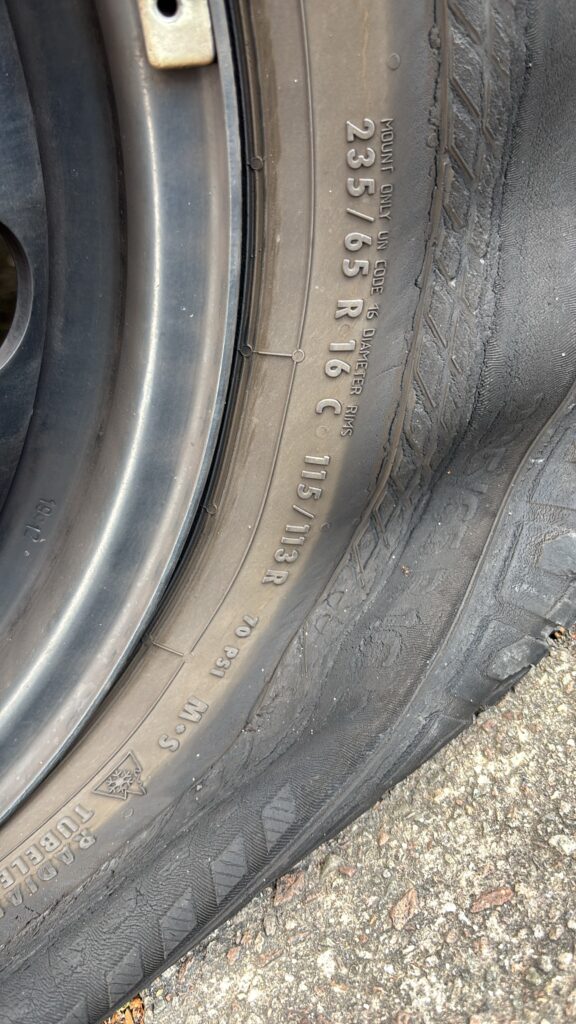
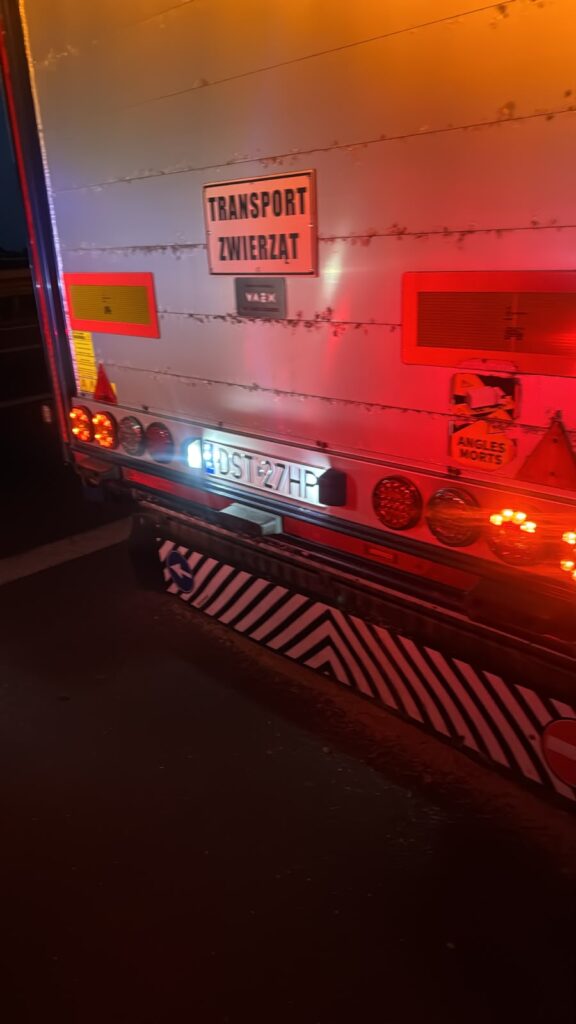
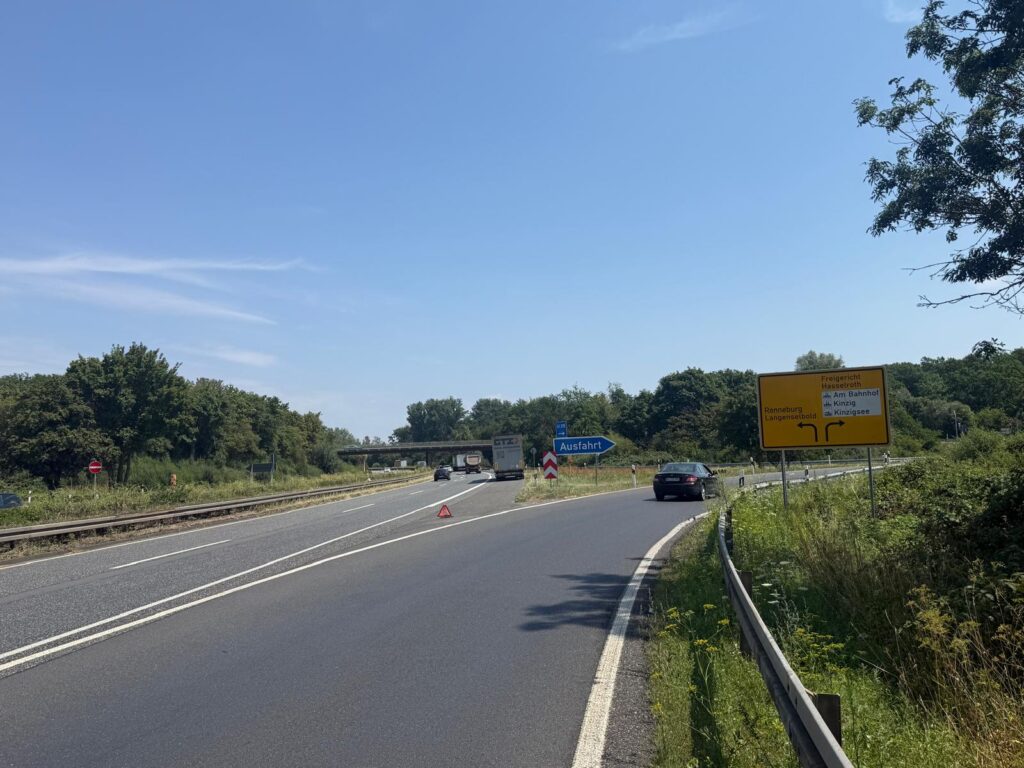
The articulated combination consisted of a Euro 6 tractor unit with an 18-speed gearbox and a loaded curtainside trailer, with a combined weight of about 37 tonnes at the time of the incident. The driver felt a sudden loss of traction and heard a strange noise from the rear axle, forcing him to pull onto the hard shoulder immediately, between the Lehrte and Hannover-Ost junctions. Before he even called a tow truck, poor visibility and a wet road surface after light rain had already made the situation especially dangerous. The shoulder was narrow, and heavy truck traffic never let up. Moving the vehicle under its own power was impossible, ruling out any chance of reaching a safer spot. Delivery-schedule pressure was high: the chilled goods had to reach the warehouse in Duisburg by 11:00, with possible penalties for delay. The driver’s German was basic, local emergency services had not yet been called, and his dispatcher in Poznań was unreachable due to the late hour — leaving him, for the time being, entirely on his own on a foreign motorway.

Fast response: how LKW Help 24 took and handled the emergency call
The line between a managed incident and a costly disaster is often drawn in the first few minutes. LKW Help 24’s dispatch centre, staffed around the clock every day of the year, showed why multilingual support matters for international fleets crossing Germany at all hours.
The LKW Help 24 hotline took the call at 3:47 a.m. Central European Time and answered after three rings. The dispatcher first greeted the caller in German and English, then smoothly switched to Polish after noticing the driver’s accent and hesitation. Within the first 5 minutes, the dispatcher gathered the key details: the exact autobahn number (A2) and the kilometre marker, the truck’s registration number, trailer type, cargo type (non-flammable food products), approximate weight, the suspected technical fault, and the driver’s phone number with WhatsApp.
The dispatcher immediately checked live traffic and weather conditions around Hanover through online systems, working out the fastest, safest route for the tow truck to reach the scene. Using LKW Help 24’s internal CRM, the incident was classified as “recovery of a heavy combination vehicle with a loaded semi-trailer, no ADR, priority: safety and lane protection.” The commitment given to the driver and his dispatcher in Poland was clear: an estimated tow truck arrival time of 45–60 minutes, with confirmation sent by SMS and WhatsApp in Polish and English.
Professional coordination of the towing and recovery operation
Recovering a 40-tonne vehicle on a busy autobahn takes far more than just dispatching a truck. LKW Help 24 follows established, repeatable procedures that ensure safety, legal compliance, and speed at every stage of the operation.
At 3:55 a.m., LKW Help 24 contacted a vetted heavy-recovery partner near Hanover — a company operating around the clock, with a fleet of rotators and low-loader platforms. A heavy-duty tow truck with a 40-tonne lifting capacity was dispatched immediately, equipped with light signals, cones, and additional lighting for on-site safety. On arrival, the vehicle was carefully loaded onto the tow truck for further transport, with the crew taking extra care not to damage the trailer’s cargo during the lift.
Before confirming dispatch, LKW Help 24 ran through its internal checklist: permission to recover on the autobahn, valid liability insurance, and confirmation that the operator had at least basic English to communicate with the Polish driver. The dispatcher sent precise GPS coordinates and photos from the driver’s phone to the recovery partner through a secure digital platform, ruling out any confusion over location.
Proactive contact was made with the autobahn police: LKW Help 24 reported the stranded heavy vehicle on the A2, gave the expected removal time, and confirmed that no additional traffic restrictions beyond standard hard-shoulder rules were needed. While waiting for the tow truck, LKW Help 24 tracked its position in real time and updated the driver on arrival time every 15–20 minutes.
The driver was given clear safety instructions in Polish: correct use of the warning triangle where possible, wearing a high-visibility vest, and staying behind the safety barrier until the tow truck arrived. If he had any questions, the dispatcher stayed on the line.
On-site work: safe loading, towing, and choosing a repair shop
When the tow truck arrived at around 4:42 a.m. — within the promised window — the recovery work began with systematic precision.
The tow truck operator’s first move was to set up hazard lights and cones to secure the work area, then briefly went over the sequence of events leading to the breakdown with the driver in English. The operator checked the air system and brakes to determine whether a partial or full tow under load would be needed.
The decision was clear-cut: a roadside repair was not possible, and the tractor with its loaded trailer had to be fully towed to the nearest specialist workshop with hands-on experience handling this truck brand and enough yard space for loaded trailers.
Preparation for towing included disconnecting and securing the drive shaft, safely lifting the front axle with the tow truck’s lifting system, checking height restrictions along the route, and arranging onward transport to the workshop. The driver was allowed to ride in the tow truck cab in line with German legal requirements and the arrangement with the recovery partner.
The combination was delivered to the yard of the chosen workshop on the outskirts of Hanover at around 6:00 a.m., ahead of the morning rush.

Rules for towing commercial vehicles in Germany
Towing a commercial vehicle in Germany is strictly governed by local law and traffic regulations, and it pays for fleet operators to understand these rules well before they end up needing them. In the event of a violation — such as parking in a disabled space, on a pedestrian crossing, at a public transport stop, or on the pavement — a vehicle can be towed away to an impound lot immediately. To do this, traffic police or municipal authorities call in a specialist tow truck, which then loads the vehicle and takes it to the impound facility.
Special attention is paid to cases where parking at a public transport stop or on the pavement creates a genuine road-safety hazard or obstructs municipal services. Commercial vehicles left in such spots are, in particular, subject to towing to an impound lot without prior notice to the owner. After the tow, the driver or the company must pay not only the traffic fine but also all costs related to the towing and storage of the vehicle at the impound lot.
Parking in a disabled space, on a pedestrian crossing, or in a public transport stop zone is among the most common reasons for a vehicle to be towed to an impound lot. To avoid such situations, drivers and fleet managers are advised to watch signage and road markings closely and plan routes and parking spots for commercial vehicles in advance. Once a vehicle has been towed, it can only be returned after all accrued fees and fines have been paid.
Minimising downtime and protecting the customer’s delivery schedule
The real value of professional heavy-truck recovery shows up not on the roadside but in the hours that follow, when every decision affects delivery schedules, contracts, insurance claims, and customer relationships alike.
At around 6:15 a.m., LKW Help 24 contacted the carrier’s dispatcher in Poland by email and phone, providing a full report with precise timestamps. This proactive communication let the Polish transport company start planning contingency options before the start of the business day.
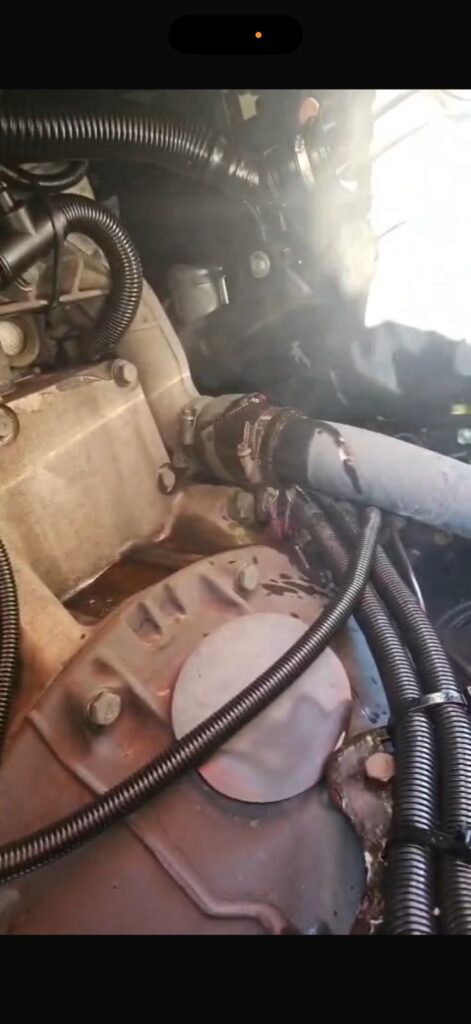
By 8:00 a.m., the workshop had confirmed the initial diagnosis — a rear differential failure, a serious fault requiring several hours of repair but not a total loss. LKW Help 24 helped the dispatcher weigh two options: same-day repair at the workshop, or a replacement tractor unit from a depot in Magdeburg.
The carrier chose the replacement tractor. The spare truck arrived around midday, the trailer was re-coupled after a careful inspection, and the load continued on its way to Duisburg. The total delay came to around 4 hours from breakdown to departure — an impressive result given the severity of the breakdown.
LKW Help 24 helped arrange a revised unloading slot at the Duisburg warehouse, providing an official delay notice in German and English. On the strength of this documentation, the warehouse accepted the revised arrival time without penalties.
Financial transparency was maintained throughout: LKW Help 24 sent a detailed cost estimate (towing, roadside safety measures, workshop admission) before any additional work began, helping the dispatcher control costs and obtain the necessary approvals. Supporting documentation must be provided for insurance claims or cost control — a mandatory condition for transparency and the successful settlement of any financial matters.
Thanks to the fast response and well-coordinated towing, the customer avoided penalties for missed deadlines and kept vehicle downtime to a single working day — a significant saving compared with unplanned recovery scenarios.
Multilingual support and communication with international drivers
Language barriers during roadside emergencies can turn a manageable incident into a costly, drawn-out disaster. LKW Help 24’s approach to communication shows why multilingual support is not a “nice to have” but a genuine operational necessity.
From the first call to the final paperwork, the driver received updates in Polish by SMS and WhatsApp, while the dispatcher received official reports in English by email. This dual communication channel kept both the person on the ground and the decision-makers in Poland fully informed.
LKW Help 24’s dispatch team includes staff fluent in German, English, Polish, and Russian — a combination that matters especially for carriers from Central and Eastern Europe, who make up a significant share of commercial traffic on German autobahns. Support in other languages can be arranged through interpreters when needed.
Documents such as the towing order, workshop admission confirmation, and time logs are issued in English so the carrier can pass them straight to accounting and insurance. For this, LKW Help 24 uses standardised templates that include all legally required information while remaining easy for non-specialists to understand.
Specific moments where language support prevented misunderstandings included: explaining to the driver the German police’s requirements for safety on the autobahn shoulder; clarifying to the workshop the need for careful handling of the cargo and the requirement not to open the trailer without the customer’s consent; and confirming repair spending limits with the dispatcher before ordering parts.
The driver later noted in a review that being able to speak his own language reduced the stress of an already difficult situation. Tired and uncertain, he found this human factor just as important as the technical recovery itself.
Working with vetted local towing and recovery partners
LKW Help 24 does not rely on random service providers found online during an emergency. Instead, the company works through a carefully vetted network of approved heavy-recovery companies positioned along Germany’s main transit corridors.
The partner-selection criteria for this Hanover case included: 24/7 availability near the main routes (A2, A3, A4, A7); heavy tow trucks with a lifting capacity of 40+ tonnes; and experience handling semi-trailers, refrigerated units, buses, and construction equipment. In particular, partners need to be able to handle loaded combinations — a significantly more demanding task than standard recovery work.
The Hanover-area partner undergoes regular performance reviews: licence checks, insurance verification, response-time statistics, and feedback from international customers. If quality drops below standard, backup providers are activated.
This partnership model speeds up the entire process. At 4 a.m. there’s no need to negotiate terms or check paperwork — fixed framework agreements mean a tow truck can be dispatched the moment LKW Help 24 makes the call. Close ties with workshops and storage yards ensure quick access to parking space for loaded trailers awaiting extended repairs.
As a result, LKW Help 24 guarantees speed and quality standards that individual carriers cannot achieve by calling random services on their own.

Financial transparency and documentation for fleet managers
Managers and logistics directors evaluating an emergency-recovery partnership need predictable costs and clear, itemised documentation. Hidden fees and vague invoices add administrative burden and make every hour of downtime more expensive than it needs to be.
After the A2 incident, LKW Help 24 provided the Polish carrier with a detailed report: exact times of the call, arrival, towing, and workshop admission; a description of the damage assessment; and the decisions made at each stage. This kind of detailed timeline should really be standard practice, but many providers don’t offer it consistently.
Invoices are broken down into clearly separate line items: heavy-vehicle towing, autobahn safety measures, downtime at the workshop, and additional services such as translation or dealing with authorities. This level of detail removes any ambiguity.
Transparent documentation helps carriers justify costs to their customers and insurers, and to compare actual downtime against alternative scenarios. When filing an insurance claim, having complete documentation with photos and timestamps significantly speeds up processing.
On request, LKW Help 24 maintains communication with German insurers or leasing companies, providing technical details in German. This is especially useful when the vehicle owner is based outside Germany and unfamiliar with local administrative requirements.
Fleet managers note that predictable costs and the absence of hidden fees build trust and support long-term partnerships between the carrier and the recovery provider. Knowing the approximate budget before an incident occurs makes it far easier to plan and set aside funds for emergency expenses.
What to do after a tow: recommendations for drivers and managers
If a vehicle is towed and ends up at an impound lot, it’s important to act quickly and methodically. The driver should first contact the local police station or municipal authority that issued the violation. The impound lot the vehicle was taken to can usually be found by calling the emergency service line or checking the city’s official portal.
To retrieve a vehicle from an impound lot, you will need to present the administrative offence notice, the vehicle registration certificate, a driving licence, and proof of liability insurance. After that, the traffic fine must be paid, along with all towing and storage costs at the impound lot. Only once all of these conditions have been met will the vehicle be released and returned to its owner or an authorised fleet representative.
Fleet managers should inform drivers in advance about the possible consequences of parking violations and the need to carry all required documents when operating a vehicle. It is also important to regularly check that driving licences, registration certificates, and insurance policies are up to date, to avoid additional delays when retrieving a vehicle from an impound lot. When a vehicle is towed, prompt coordination between the driver and dispatcher helps minimise downtime and financial losses for the company.
Liability for damage during towing: key points for fleets
The question of liability for damage to a vehicle during towing or while it is stored at an impound lot matters greatly to fleets and commercial vehicle owners. If a vehicle is damaged during towing or while at the impound lot, liability for the damage rests with the towing company or the impound lot’s operator. As soon as the vehicle is retrieved from the impound lot, it should be inspected carefully, and if damage is found, a report should be drawn up with photographic evidence.
If you encounter vehicle damage caused by a tow, you can approach an insurance company or a lawyer to protect your interests. You will need to provide the damage report, the vehicle’s documents, and receipts for the towing and storage fees paid. If a dispute cannot be resolved amicably, the matter may ultimately need to be settled in court.
Fleets should arrange in advance for insurance cover that adequately addresses the risks associated with towing and storage of a vehicle at an impound lot. Drivers need to know the correct procedure to follow when a vehicle is towed, as well as the rules for paying the traffic fine and the impound lot’s storage costs. This approach helps minimise financial losses and allows any claims to be resolved quickly and fairly when a vehicle is towed anywhere in Germany.
Takeaways for international fleets operating in Germany
This A2 case offers concrete, practical lessons for transport companies moving trucks through Germany, whether they run large fleets or operate as independent owner-drivers.
Having one reliable contact for towing and emergency assistance removes the dangerous delay of searching for help while stranded during a breakdown, at any hour of the day or night. In a recovery situation, every minute of delay on a busy autobahn increases the risk — both to safety and to the business. Keeping LKW Help 24’s contact details in driver instructions and onboard documents speeds up the response considerably.
Multilingual support is not a “nice to have” but a genuine requirement for safety and decision-making when drivers and managers are in different countries and time zones. A driving licence and liability insurance may well be in order, but without effective communication with recovery operators and workshops, misunderstandings drive up costs.
Predefined procedures agreed in advance between the carrier and the recovery partner — spending limits, preferred workshops, communication channels — cut downtime further still. Managers should periodically review their current emergency-recovery plans and storage procedures to make sure they properly cover night-time incidents on German autobahns as well as daytime ones.
Drivers should be briefed in advance on what to do if there’s a risk of being towed: if parked in a tow-risk zone, the driver should act immediately to prevent the vehicle from being removed.
This case shows LKW Help 24’s genuine, demonstrated ability to combine fast response, professional coordination, vetted partners, and clear communication to keep commercial traffic moving safely.
How to reach LKW Help 24 for truck towing and recovery in Germany
LKW Help 24 provides round-the-clock emergency towing and roadside assistance for heavy vehicles — including trucks, buses, trailers, and construction equipment — across the whole of Germany. A vehicle gets towed safely and efficiently, with minimum fuss, when you reach out to the right partner from the very first minute.
Drivers and fleet managers can call the hotline or request a callback via the LKW Help 24 website. Support is readily available in German, English, Polish, and Russian, with translation into other languages arranged on request. Traffic violations or parking at public transport stops can also require a vehicle to be moved — LKW Help 24 handles these situations too, including recovery from an impound lot.
Transport companies should add LKW Help 24’s contact details to driver instructions and onboard documents in advance, so the number is already on hand the moment something goes wrong, rather than something drivers have to search for under pressure. Reliable towing and recovery support for trucks protects people, cargo, and delivery schedules on German roads — exactly when it matters most.